Search Result
Results for "
urinary+tract+infections
" in MedChemExpress (MCE) Product Catalog:
1
Biochemical Assay Reagents
23
Isotope-Labeled Compounds
| Cat. No. |
Product Name |
Target |
Research Areas |
Chemical Structure |
-
- HY-B0322
-
|
Ro 4-2130
|
Antibiotic
Bacterial
|
Infection
Cancer
|
|
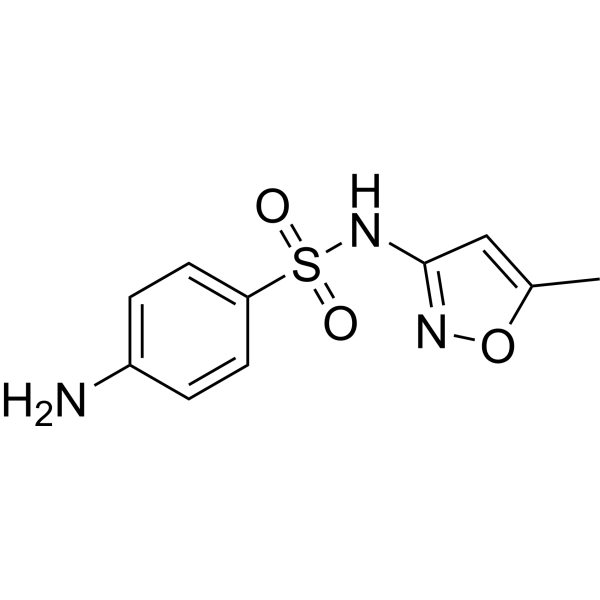
Sulfamethoxazole (Ro 4-2130) is a sulfonamide antibiotic with a widespread antibacterial activity. Sulfamethoxazole inhibits bacterial folate metabolism by competing with 4-Aminobenzoic acid (HY-B1008) (PABA) to act on dihydropteroate synthetase and dihydropteroate reductase. Sulfamethoxazole can be used for the study of urinary tract infections (UTIs), prostatitis, and bronchitis .
|
-
-
- HY-A0090
-
|
|
Bacterial
Antibiotic
|
Infection
|
|
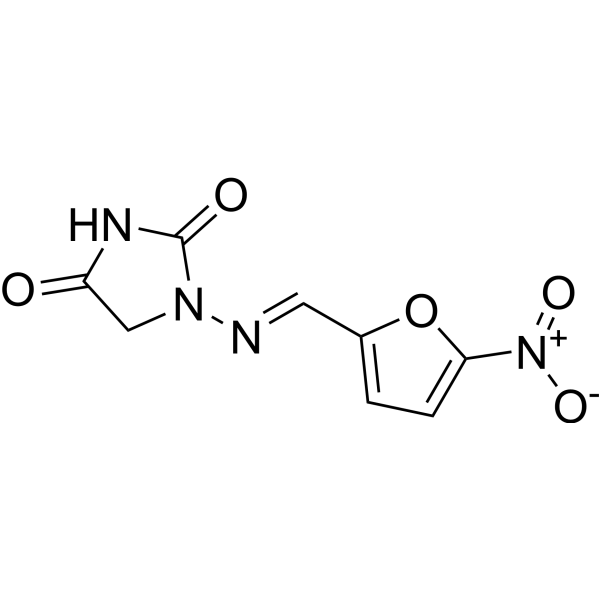
Nitrofurantoin is a potent and orally active broad-spectrum beta-lactamase antimicrobial agent. Nitrofurantoin acts as an antibiotic and can be used for the study of urinary tract infections (UTIs), including cystitis and kidney infections .
|
-
-
- HY-B0510
-
|
|
Antifolate
Bacterial
Antibiotic
Influenza Virus
|
Infection
Cancer
|
|
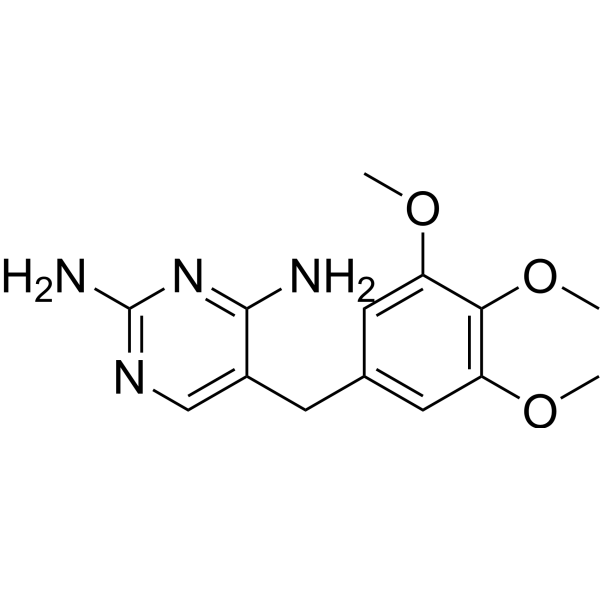
Trimethoprim is a bacteriostatic antibiotic and an orally active dihydrofolate reductase inhibitor. Trimethoprim is active against a wide range of Gram-positive and Gram-negative aerobic bacteria. Trimethoprim has the potential for the research of urinary tract infections, Shigellosis and Pneumocystis pneumonia. Trimethoprim can inhibit infection of Influenza A virus in chick embryo when combinated with zinc .
|
-
-
- HY-B1235
-
|
N-Hydroxyacetamide
|
Bacterial
HIV
|
Infection
Inflammation/Immunology
|
|
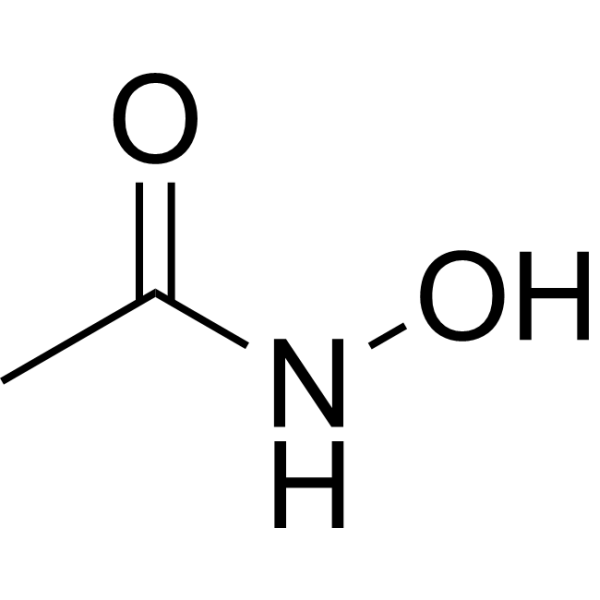
Acetohydroxamic acid is the inhibitor for bacterial and plant urease that can be used for chronic urinary tract infections. Acetohydroxamic acid selectively inhibits arachidonic acid 5-lipoxygenase that is useful in the research of asthma. Acetohydroxamic acid inhibits the formation of advanced glycation end products, and reduces oxidative stress and inflammatory responses. Acetohydroxamic acid exhibits antiviral activity against HIV .
|
-
-
- HY-B1159
-
|
8-Hydroxy-5-nitroquinoline; 5-Nitro-8-quinolinol
|
Bacterial
Antibiotic
Apoptosis
Autophagy
|
Infection
Cancer
|
|
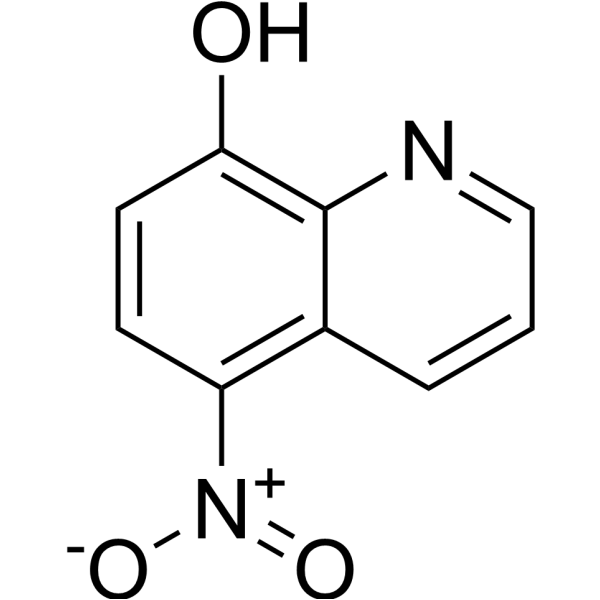
Nitroxoline (8-Hydroxy-5-nitroquinoline), an antibiotic, is an orally active antibiofilm agent. Nitroxoline reduces the formation and induces the dispersal of Pseudomonas aeruginosa biofilms by chelation of iron and zinc. Nitroxoline can be used for the urinary tract infections and cancer research .
|
-
-
- HY-B1085
-
|
Compound 64716
|
Bacterial
Antibiotic
DNA/RNA Synthesis
|
Infection
|
|
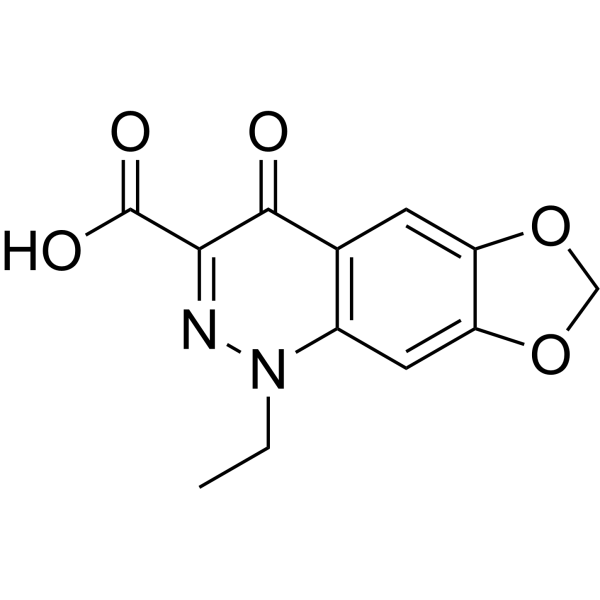
Cinoxacin (Compound 64716), a synthetic antimicrobial related to the quinolone class of orally active antibacterial agent. Cinoxacin has antibacterial activity against many gram-negative aerobic bacteria and inhibits bacterial DNA synthesis. Cinoxacin can be used for the research of urinary tract infections and bacterial prostatitis .
|
-
-
- HY-105284
-
|
CP-70429
|
Beta-lactamase
Bacterial
Antibiotic
|
Infection
|
|
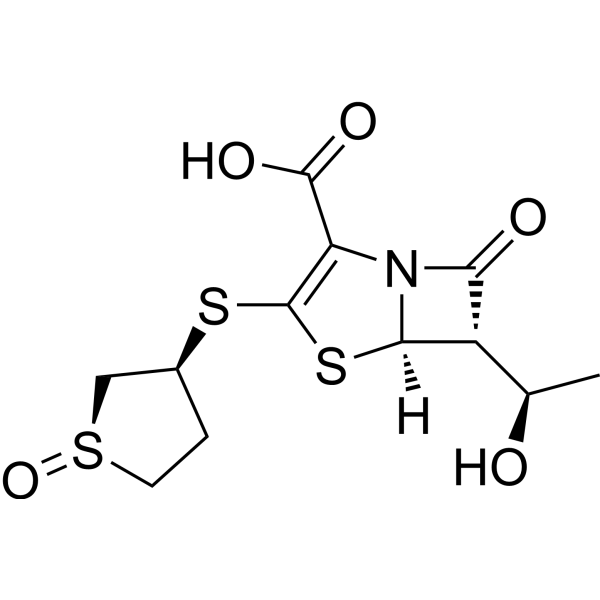
Sulopenem (CP-70429) is an orally active, parenteral penem antibiotic with broad-spectrum activities against Gram-positive and Gram-negative bacteria. Sulopenem has the potential for urinary tract infections and intra-abdominal infections treatment. Sulopenem is inactive against Pseudomonas aeruginosa and Xanthomonas maltophilia .
|
-
-
- HY-B0322S
-
|
Ro 4-2130-d4
|
Isotope-Labeled Compounds
Antibiotic
Bacterial
|
Infection
|
|
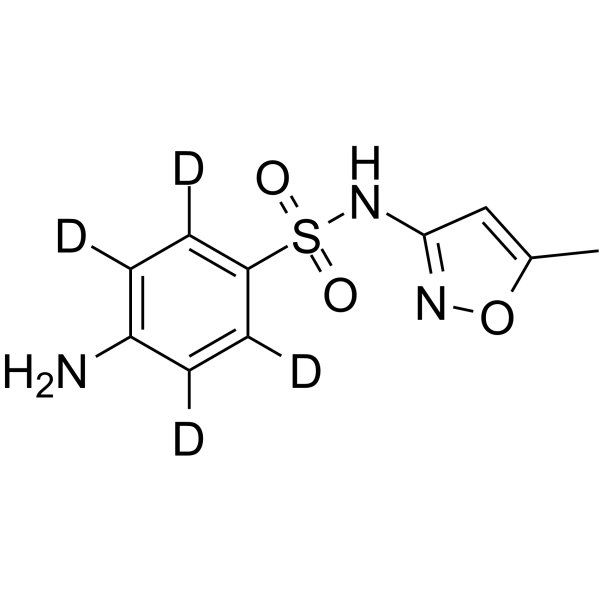
Sulfamethoxazole-d4 (Ro 4-2130-d4) is a deuterium labeled Sulfamethoxazole (HY-B0322). Sulfamethoxazole (Ro 4-2130) is a sulfonamide antibiotic with a widespread antibacterial activity. Sulfamethoxazole inhibits bacterial folate metabolism by competing with 4-Aminobenzoic acid (HY-B1008) (PABA) to act on dihydropteroate synthetase and dihydropteroate reductase. Sulfamethoxazole can be used for the study of urinary tract infections (UTIs), prostatitis, and bronchitis .
|
-
-
- HY-14865
-
Omadacycline
Maximum Cited Publications
32 Publications Verification
PTK 0796; Amadacycline
|
Bacterial
Antibiotic
|
Infection
|
|
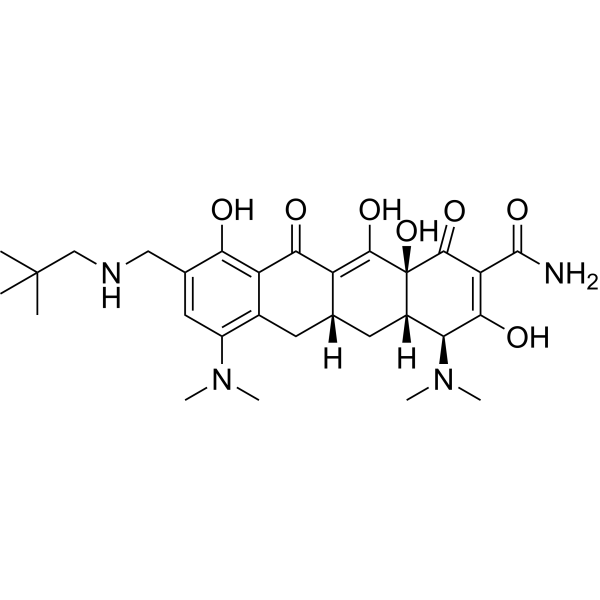
Omadacycline (PTK 0796), a first-in-class orally active aminomethylcycline antibacterial, is a member of the tetracycline class of antibiotics. Omadacycline acts through the inhibition of bacterial protein synthesis by binding to the 30S ribosomal subunit. Omadacycline possesses broad-spectrum antibacterial activity against aerobic and anaerobic Gram-positive and Gram-negative bacteria, as well as atypical bacteria. Omadacycline can be used for the research of acute bacterial skin and skin-structure infections, community-acquired pneumonia, and urinary tract infections .
|
-
-
- HY-B1002
-
|
|
Bacterial
Antibiotic
DNA/RNA Synthesis
|
Infection
|
|
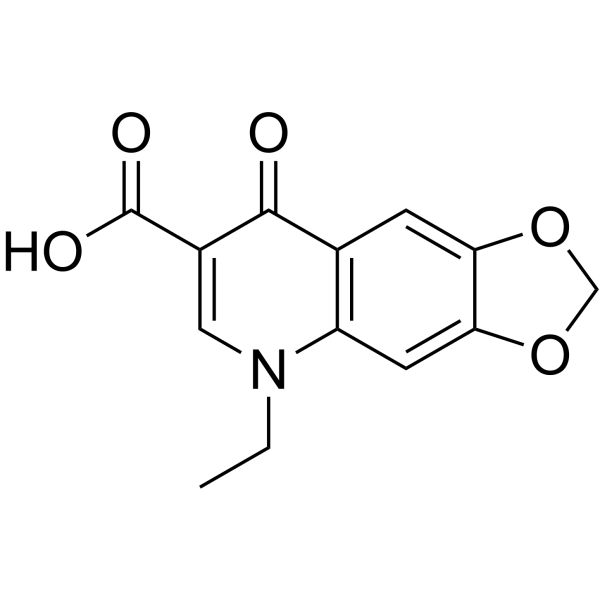
Oxolinic acid is an antibiotic against both Gram-negative and Gram-positive bacteria. Oxolinic acid can be used for the research of acute and chronic urinary tract infections. Oxolinic acid is a DNA/RNA synthesis inhibitor. Oxolinic acid acts a dopamine uptake inhibitor and stimulants locomotor effect in mice .
|
-
-
- HY-B0395C
-
|
DU6859a hydrate
|
Bacterial
Antibiotic
|
Infection
|
|
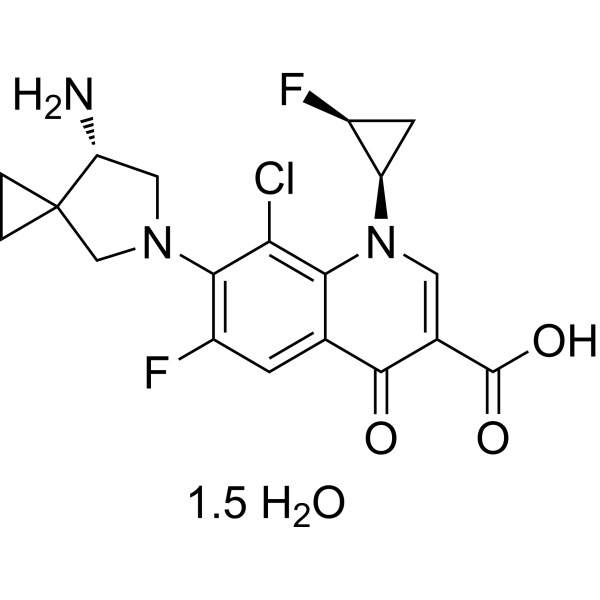
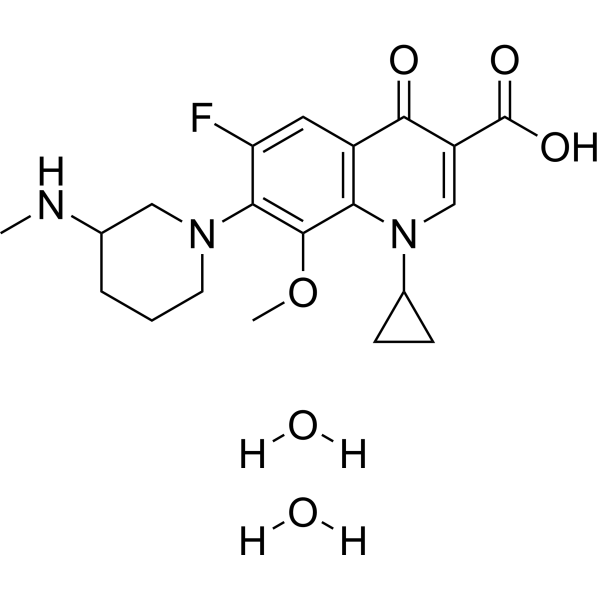
Sitafloxacin (DU6859a) hydrate is an orally active fluoroquinolone antibiotic (antibiotic) with in vitro activity against a wide range of Gram-positive and -negative bacteria, including anaerobic bacteria, as well as atypical pathogens. Sitafloxacin is used in the study of respiratory tract infections and urinary tract infections .
|
-
-
- HY-77036
-
Furagin
1 Publications Verification
Furazidine; Furazidin
|
Antibiotic
Bacterial
Carbonic Anhydrase
|
Infection
Cancer
|
|
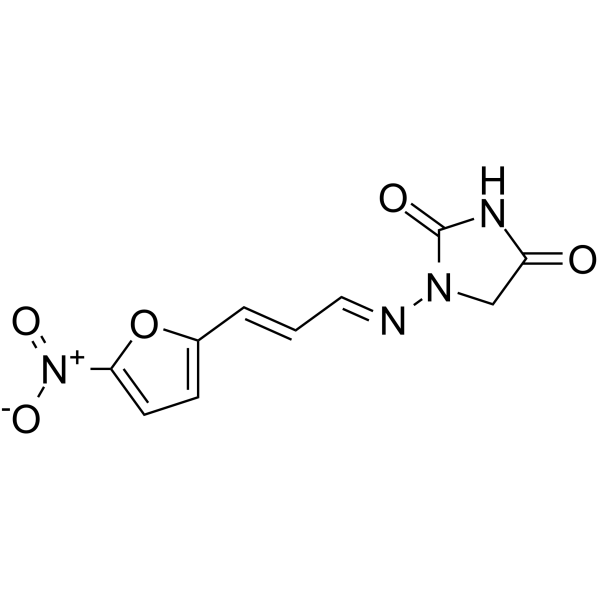
Furagin (Furazidine), an analogue of Nitrofurantoin (HY-A0090), is an antibiotic with antibacterial activity against ESKAPE pathogens with MIC values of 0-32 µg/mL. Furagin inhibits human Carbonic anhydrases . Furagin is promising for research of cancer and urinary tract infections (UTIs) .
|
-
-
- HY-A0208
-
|
Acrosoxacin
|
Bacterial
Antibiotic
|
Infection
|
|
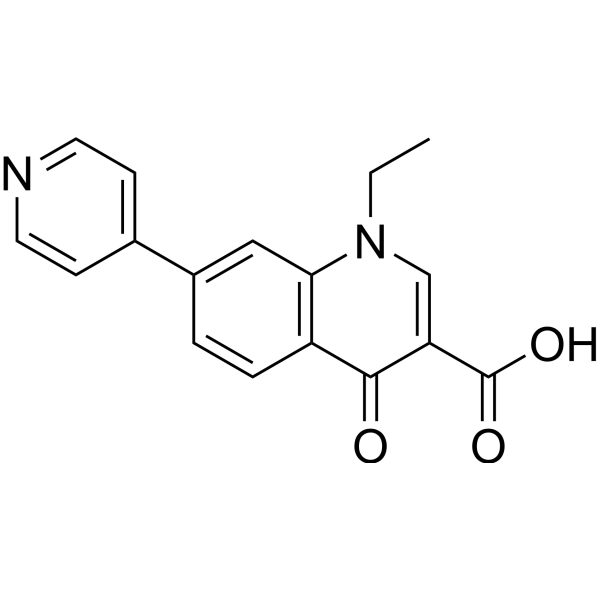
Rosoxacin (Acrosoxacin) is an orally active and broad-spectrum antibacterial quinolone antibiotic. Rosoxacin inhibits Gram-negative bacteria, including N. gonorrhoeae (MIC range=0.03-0.125 µg/mL).Rosoxacin can be used in studies of urinary tract infections and certain sexually transmitted diseases .
|
-
-
- HY-W015591
-
|
(±)-Mandelic acid; DL-Mandelic acid
|
Bacterial
Endogenous Metabolite
|
Infection
|
|
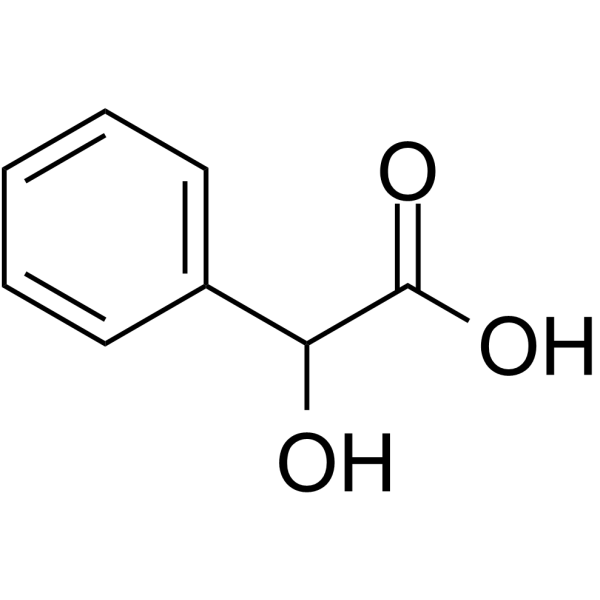
Mandelic acid ((±)-Mandelic acid), an alpha-hydroxycarboxylic acid, has been widely used as an intermediate of pharmaceutical and fine chemicals. Mandelic acid shows antimicrobial activity and has been used for the research of urinary tract infections and vaginal trichomoniasis. Mandelic acid exhibits high sperm-immobilizing activity and low vaginal irritation .
|
-
-
- HY-B0510S
-
|
|
Antifolate
Bacterial
Antibiotic
|
Infection
|
|
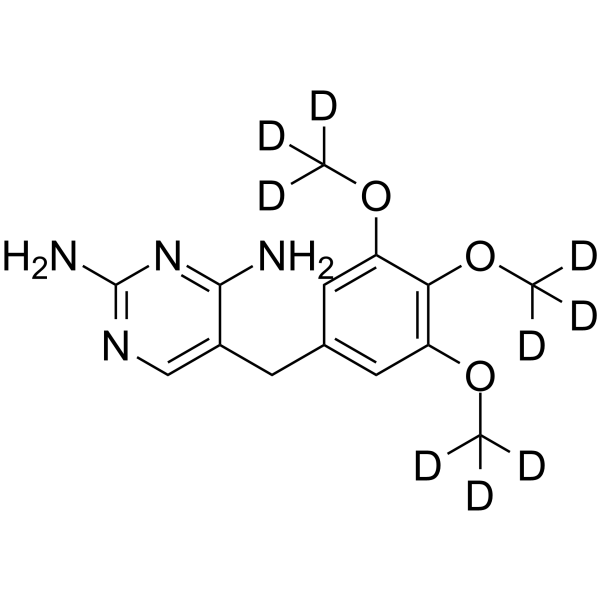
Trimethoprim-d9 is the deuterium labeled Trimethoprim. Trimethoprim is a bacteriostatic antibiotic and an orally active dihydrofolate reductase inhibitor. Trimethoprim is active against a wide range of Gram-positive and Gram-negative aerobic bacteria. Trimethoprim has the potential for urinary tract infections, Shigellosis and Pneumocystis pneumonia treatment .
|
-
-
- HY-B0322A
-
|
Ro 4-2130 sodium
|
Antibiotic
Bacterial
|
Infection
|
|
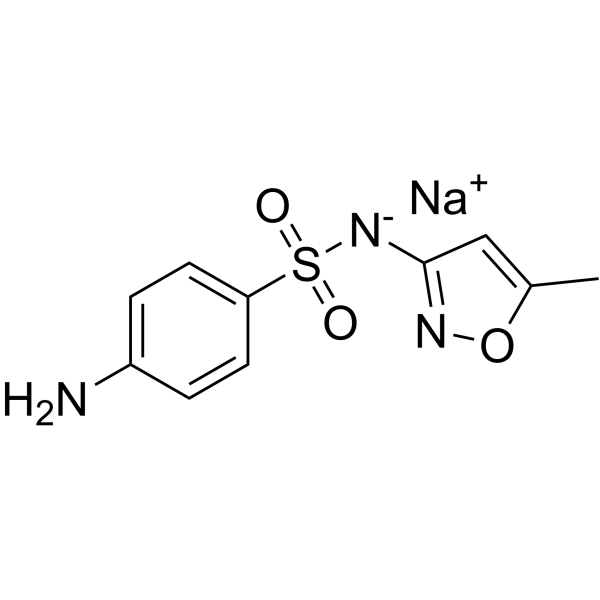
Sulfamethoxazole (Ro 4-2130) sodium is a sulfonamide antibiotic with a widespread antibacterial activity. Sulfamethoxazole sodium inhibits bacterial folate metabolism by competing with 4-Aminobenzoic acid (HY-B1008) (PABA) to act on dihydropteroate synthetase and dihydropteroate reductase. Sulfamethoxazole sodium can be used for the study of urinary tract infections (UTIs), prostatitis, and bronchitis .
|
-
-
- HY-14865B
-
|
PTK 0796 tosylate; Amadacycline tosylate
|
Bacterial
Antibiotic
|
Infection
|
|
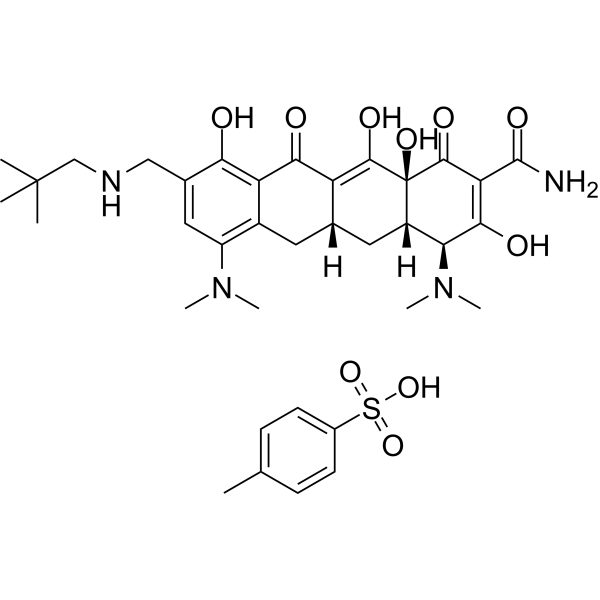
Omadacycline (PTK 0796) tosylate, a first-in-class orally active aminomethylcycline antibacterial, is a member of the tetracycline class of antibiotics. Omadacycline tosylate acts through the inhibition of bacterial protein synthesis by binding to the 30S ribosomal subunit. Omadacycline tosylate possesses broad-spectrum antibacterial activity against aerobic and anaerobic Gram-positive and Gram-negative bacteria, as well as atypical bacteria. Omadacycline tosylate can be used for the research of acute bacterial skin and skin-structure infections, community-acquired pneumonia, and urinary tract infections .
|
-
-
- HY-A0024
-
|
(R)-(+)-Tolterodine; (+)-Tolterodine; (R)-Tolterodine; PNU-200583
|
mAChR
Cytochrome P450
|
Neurological Disease
Cancer
|
|
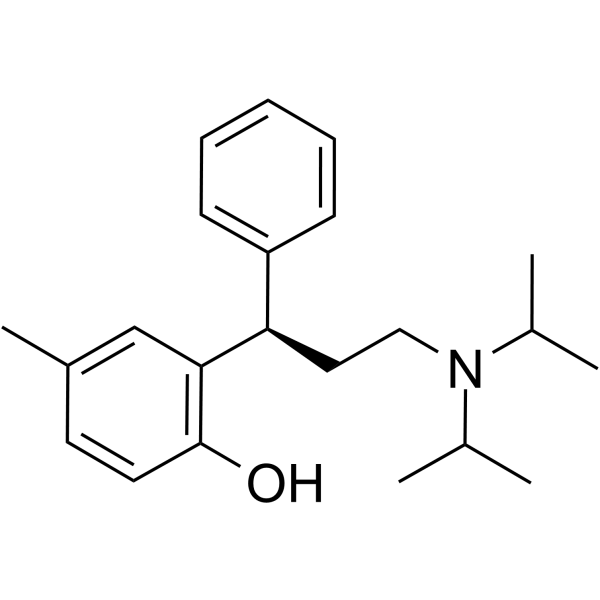
Tolterodine ((R)-(+)-Tolterodine) is a mAChR inhibitor and substrate for cytochrome P450 enzymes. Tolterodine competitively binds acetylcholine, reduces sympathetic excitation, and inhibits involuntary bladder muscle contraction. Tolterodine restores the Nrf2/NF-κB signaling pathway, mediates protection against inflammatory response and ferroptosis. Tolterodine ameliorates LPS (HY-D1056)-induced reactive oxygen species production and lipid oxidation. Tolterodine can be used for the research of urinary tract infections and overactive bladder .
|
-
-
- HY-90010
-
|
Kabi-2234; PNU-200583E
|
mAChR
Cytochrome P450
|
Neurological Disease
Cancer
|
|
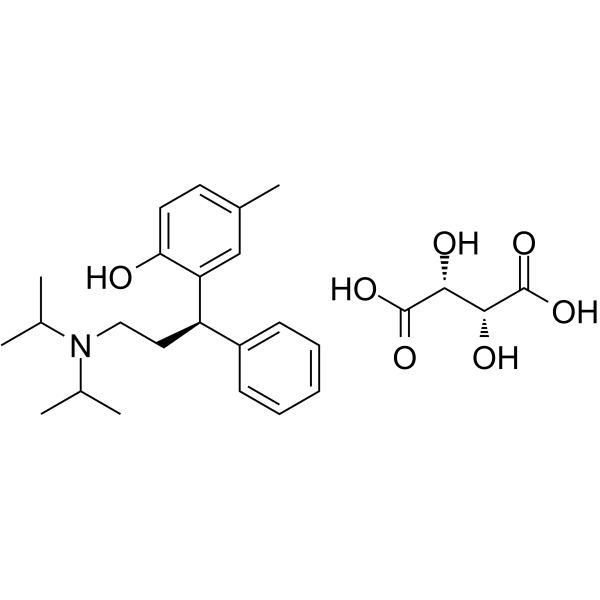
Tolterodine tartrate (Kabi-2234) is a mAChR inhibitor and substrate for cytochrome P450 enzymes. Tolterodine tartrate competitively binds acetylcholine, reduces sympathetic excitation, and inhibits involuntary bladder muscle contraction. Tolterodine tartrate restores the Nrf2/NF-κB signaling pathway, mediates protection against inflammatory response and ferroptosis. Tolterodine tartrate ameliorates LPS (HY-D1056)-induced reactive oxygen species production and lipid oxidation. Tolterodine tartrate can be used for the research of urinary tract infections and overactive bladder .
|
-
-
- HY-B0333
-
|
|
Antibiotic
Bacterial
|
Infection
|
|
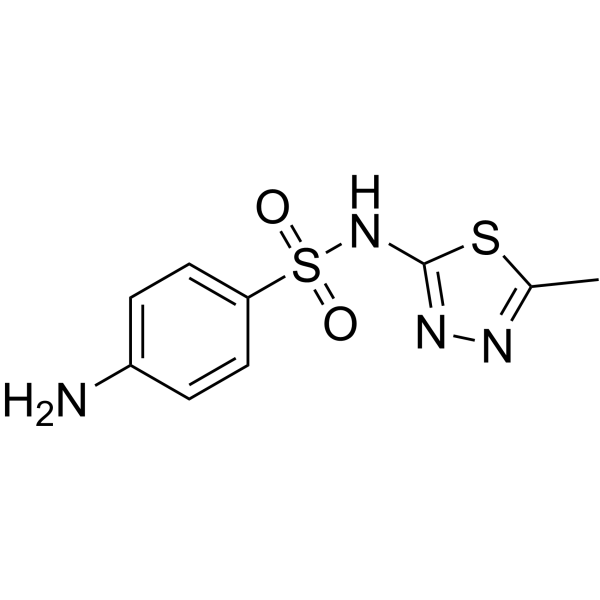
Sulfamethizole is a sulfathiazole antibiotic. Sulfamethizole inhibits the synthesis of folic acid and thymine, and selectively suppresses Photobacterium phosphoreum bioluminescence. Sulfamethizole exerts antibacterial activity against Escherichia coli-mediated urinary tract infections but no activity against sulII gene-positive Escherichia coli. Sulfamethizole is applicable for the research of urinary tract infections and Photobacterium phosphoreum bioluminescence mechanisms .
|
-
-
- HY-B0213
-
|
Sulfametoxydiazine; 5-Methoxysulfadiazine; NSC 683528
|
Antibiotic
Bacterial
|
Infection
|
|
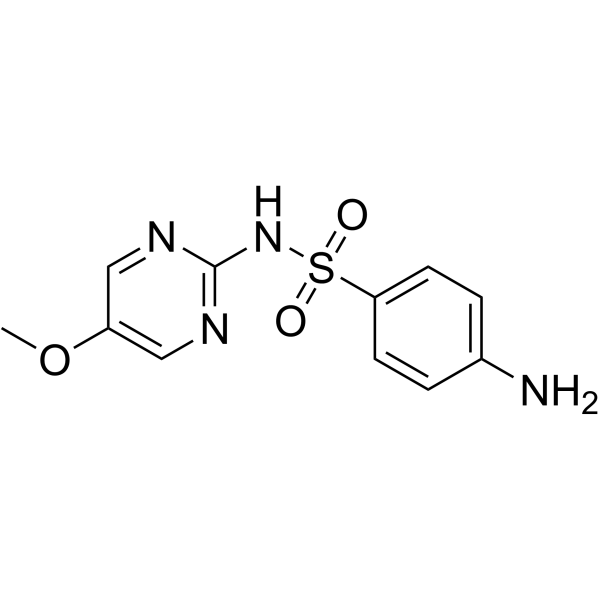
Sulfameter (Sulfametoxydiazine) is an orally active long-acting sulfonamide antibiotic. Sulfameter is active against both Gram-positive and Gram-negative bacteria. Sulfameter can be used for the research of diseases such as respiratory and urinary tract infections .
|
-
-
- HY-B0024
-
|
NM441
|
Bacterial
Antibiotic
|
Infection
|
|
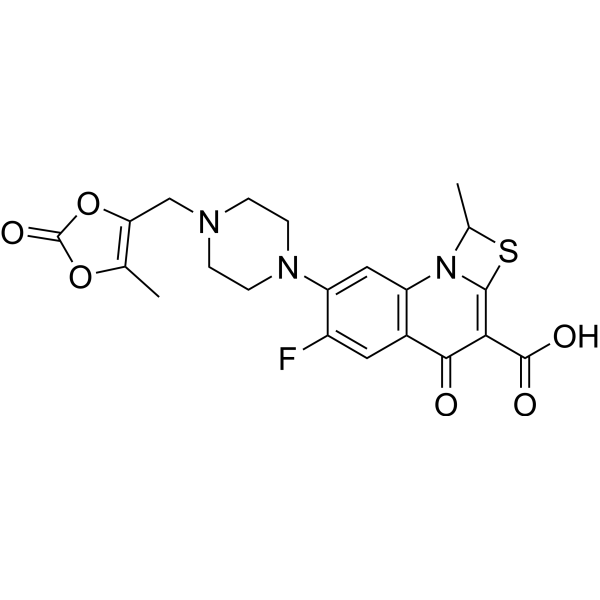
Prulifloxacin (NM441) is an orally active fluoroquinolone antibiotic with a broad spectrum of activity against Gram-positive and -negative bacteria. Prulifloxacin is a proagent of a thiazeto-quinoline carboxylic acid derivative Ulifloxacin (NM394). Prulifloxacin has the potential for lower urinary tract infections and exacerbations of chronic bronchitis .
|
-
-
- HY-B0395
-
|
DU6859a
|
Bacterial
Antibiotic
|
Infection
|
|
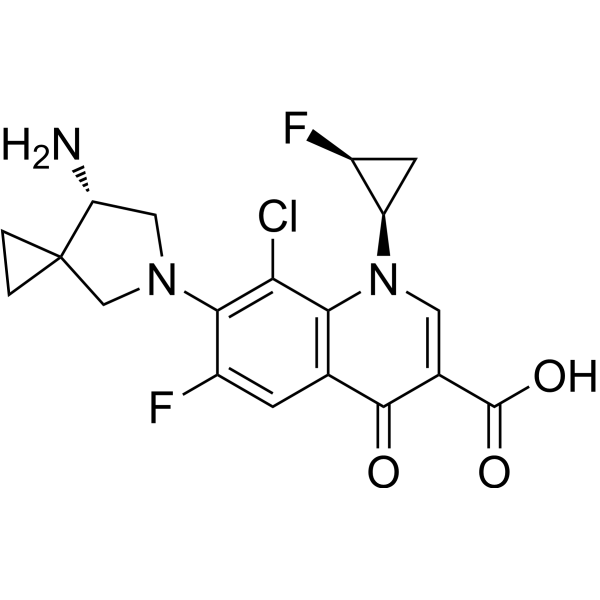
Sitafloxacin (DU6859a) is a potent, orally active fluoroquinolone antibiotic. Sitafloxacin shows antichlamydial activity and antibacterial activities against a broad range of gram-positive and gram-negative bacteria, including anaerobic bacteria, as well as against atypical pathogens. Sitafloxacin can be used for the research of respiratory tract infection and urinary tract infection .
|
-
-
- HY-B0510C
-
|
|
Antifolate
Bacterial
Antibiotic
|
Infection
Cancer
|
|
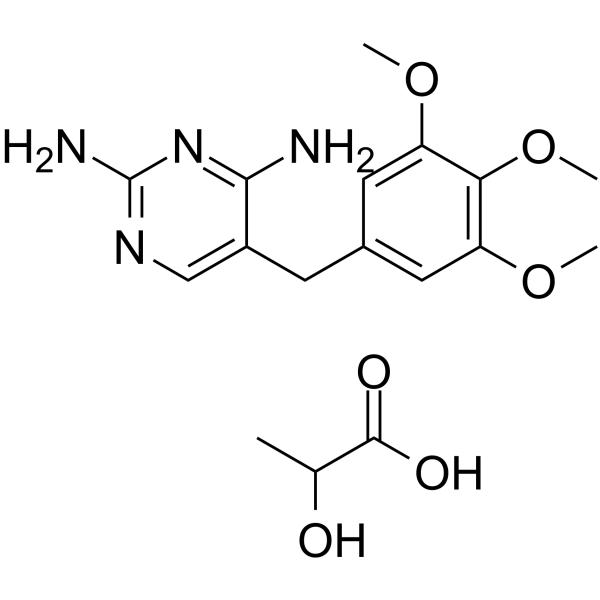
Trimethoprim lactate is a bacteriostatic antibiotic and an orally active dihydrofolate reductase inhibitor. Trimethoprim lactate is active against a wide range of Gram-positive and Gram-negative aerobic bacteria. Trimethoprim lactate has the potential for the research of urinary tract infections, Shigellosis and Pneumocystis pneumonia. Trimethoprim lactate can inhibit infection of Influenza A virus in chick embryo when combinated with zinc .
|
-
-
- HY-B1415
-
|
Chlorofibrinic acid
|
PPAR
Bacterial
SOD
|
Infection
Metabolic Disease
Cancer
|
|
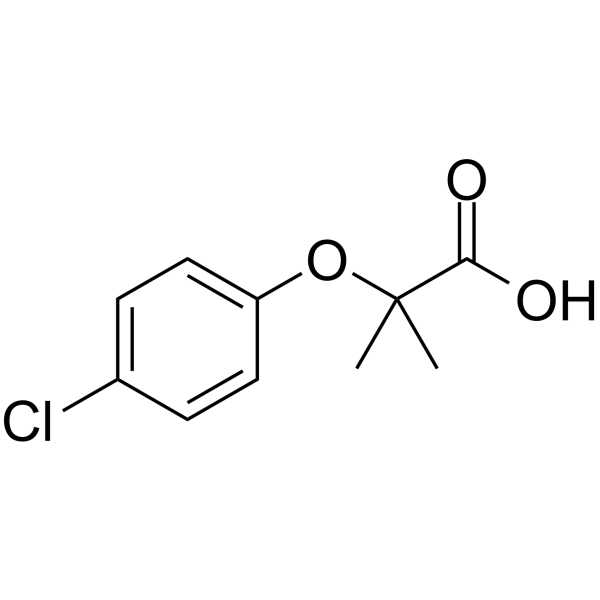
Clofibric acid (Chlorofibrinic acid) is an orally active PPARα agonist. Clofibric acid inhibits the fimbriation of Escherichia coli. Clofibric acid increases SOD activity. Clofibric acid lowers blood lipids and prevents experimental pyelonephritis. Clofibric acid has anticancer activity against ovarian cancer. Clofibric acid is also a herbicide. Clofibric acid is used in ovarian cancer, liver cancer, obesity, and urinary tract infection research .
|
-
-
- HY-14865C
-
|
PTK0796 hydrochloride; Amadacycline hydrochloride
|
Bacterial
Antibiotic
|
Infection
|
|
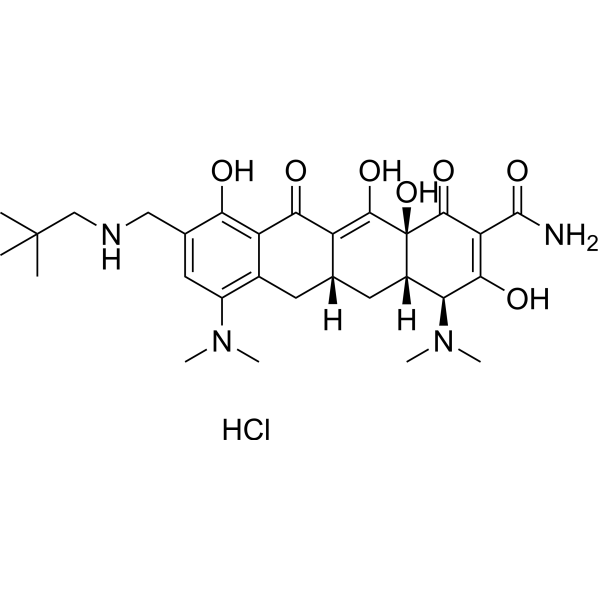
Omadacycline (PTK 0796) hydrochloride, a first-in-class orally active aminomethylcycline antibacterial, is a member of the tetracycline class of antibiotics. Omadacycline hydrochloride acts through the inhibition of bacterial protein synthesis by binding to the 30S ribosomal subunit. Omadacycline hydrochloride possesses broad-spectrum antibacterial activity against aerobic and anaerobic Gram-positive and Gram-negative bacteria, as well as atypical bacteria. Omadacycline hydrochloride can be used for the research of acute bacterial skin and skin-structure infections, community-acquired pneumonia, and urinary tract infections .
|
-
-
- HY-B0724A
-
|
T-3762; Pazufloxacin methanesulfonate; Pazufloxacin mesilate
|
Bacterial
DNA/RNA Synthesis
|
Infection
|
|
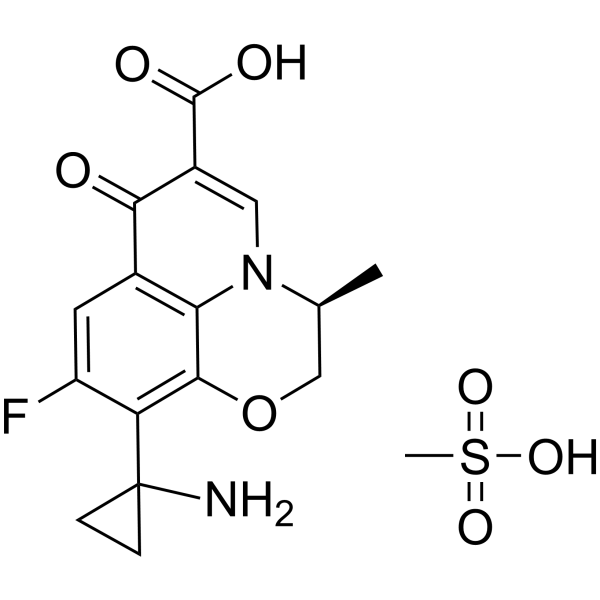
Pazufloxacin mesylate is an orally active fluoroquinolone antimicrobial agent. Pazufloxacin mesylate inhibits DNA gyrase with IC50 values of 0.88 μg/mL (E. coli) and 1.9 μg/mL (P. aeruginosa). Pazufloxacin mesylate exhibits broad-spectrum antimicrobial activity, with MIC90 values ranging from 0.025 to 100 μg/mL against Gram-positive and Gram-negative bacteria, non-fermenting bacteria, Legionella spp., and anaerobic bacteria. Pazufloxacin mesylate is indicated for research on systemic infections, lung infections, urinary tract infections, and Legionella pneumonia .
|
-
-
- HY-B1784
-
|
Sulfaisodimidine
|
Bacterial
Antibiotic
|
Infection
|
|
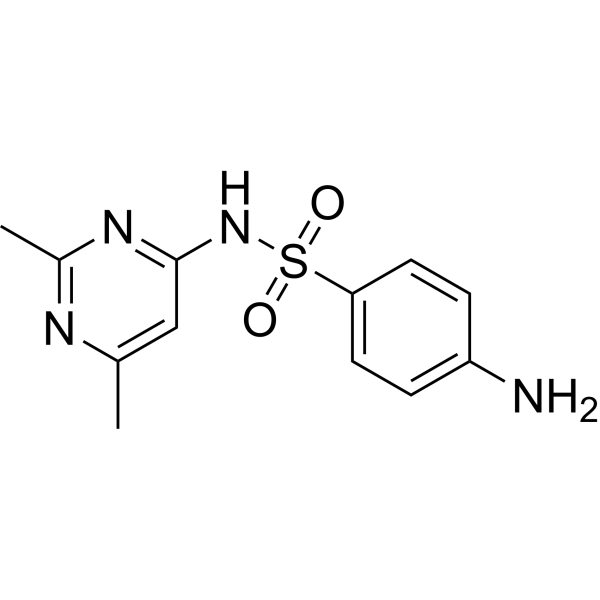
Sulfisomidin (Sulfaisodimidine) is an orally active short-acting sulfonamide antibacterial. Sulfisomidin can be used for the research of lower urinary tract infections .
|
-
-
- HY-157536
-
|
|
Bacterial
|
Infection
Inflammation/Immunology
|
|
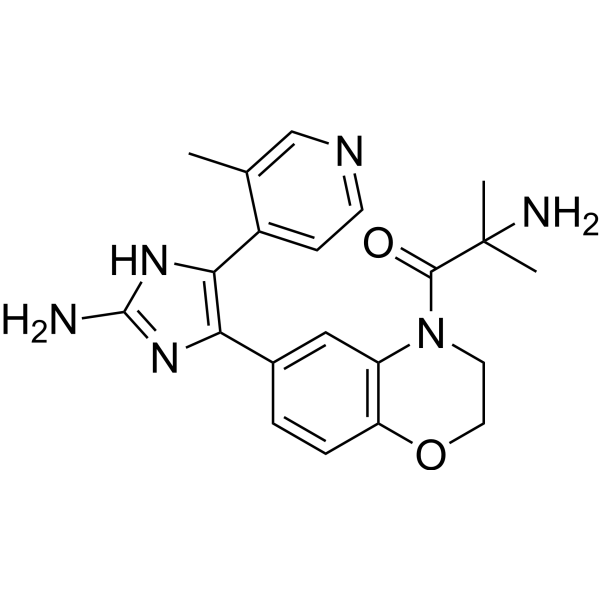
SMT-738 is a bacterial bactericide. SMT-738 targets the small molecules responsible for lipoprotein transport in Enterobacteriaceae, causing abnormal lipoprotein localization and bacterial cell death. SMT-738 inhibits the growth of E. coli and K. pneumoniae. SMT-738 reduces bacterial loads in mouse models of urinary tract infection, bloodstream infection, and pulmonary infection caused by Enterobacterales. SMT-738 can be used in the research of Enterobacteriaceae infections, urinary tract infections, bloodstream infections, and pneumonia .
|
-
-
- HY-B0337A
-
|
Sulphadimethoxine sodium
|
Bacterial
Antibiotic
|
Infection
|
|
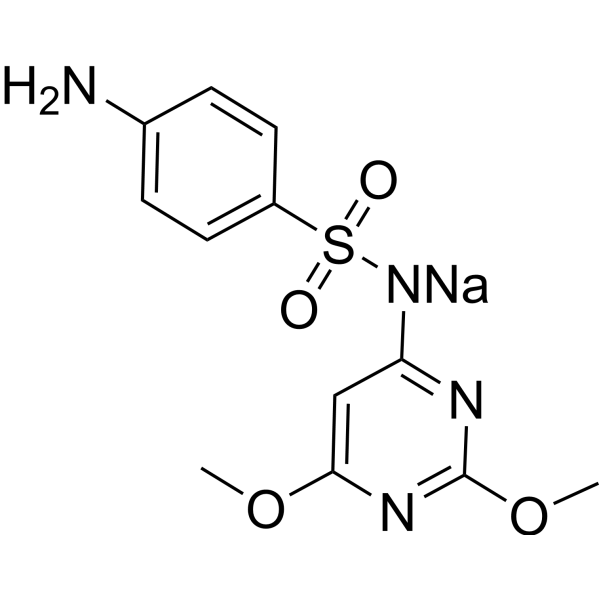
Sulfadimethoxine sodium (Sulphadimethoxine sodium) is a sulfonamide antibiotic. Sulfadimethoxine sodium causes a displacement of Thiopental in plasma protein binding in rats. Sulfadimethoxine sodium is used in a variety of infection studies including urinary tract infections .
|
-
-
- HY-132987
-
|
ARX-1796; AV-006
|
Beta-lactamase
Bacterial
Drug Intermediate
|
Infection
|
|
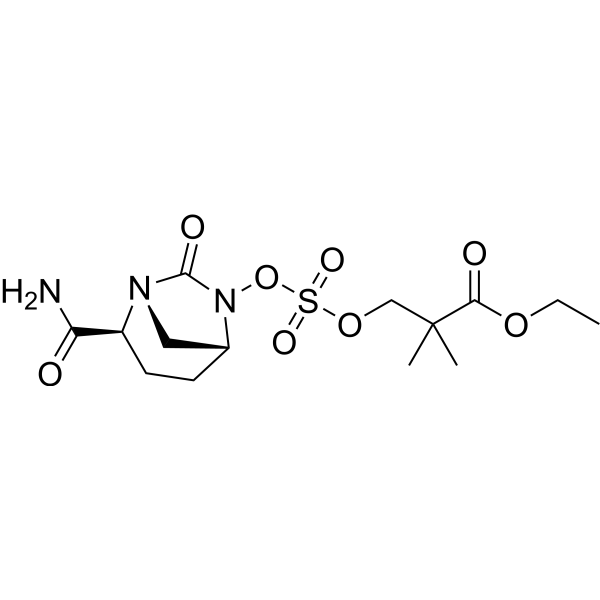
Avibactam tomilopil (ARX-1796, AV-006) is an orally active prodrug of Avibactam and a β-lactamase inhibitor. Avibactam tomilopil can be used in the study of diseases such as urinary tract infections .
|
-
-
- HY-B0159
-
|
Q-35
|
Bacterial
Antibiotic
|
Infection
|
|
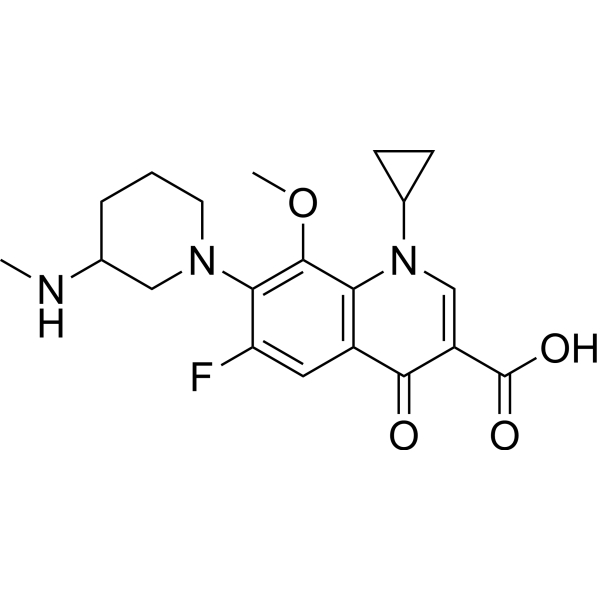
Balofloxacin (Q-35) is an orally active fluoroquinolone antibiotic with broad-spectrum antibacterial activity against gram-negative, gram-positive, and anaerobic bacteria. Balofloxacin can be used for the research of respiratory, intestinal, and urinary tract infections .
|
-
-
- HY-W015591S
-
|
(±)-Mandelic acid-2,3,4,5,6-d5; DL-Mandelic acid-2,3,4,5,6-d5
|
Isotope-Labeled Compounds
Bacterial
Endogenous Metabolite
|
Infection
|
|
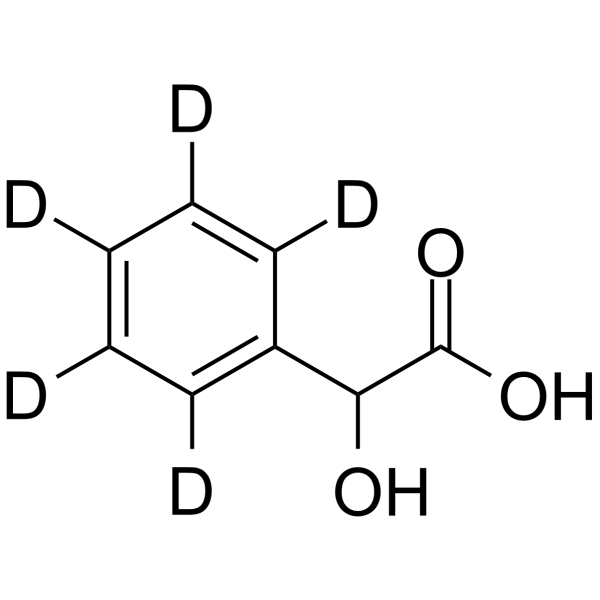
Mandelic acid-2,3,4,5,6-d5 is the deuterium labeled Mandelic acid. Mandelic acid ((±)-Mandelic acid), an alpha-hydroxycarboxylic acid, has been widely used as an intermediate of pharmaceutical and fine chemicals. Mandelic acid shows antimicrobial activity and has been used for the research of urinary tract infections and vaginal trichomoniasis. Mandelic acid exhibits high sperm-immobilizing activity and low vaginal irritation .
|
-
-
- HY-B1387
-
|
|
Antibiotic
Bacterial
|
Inflammation/Immunology
|
|
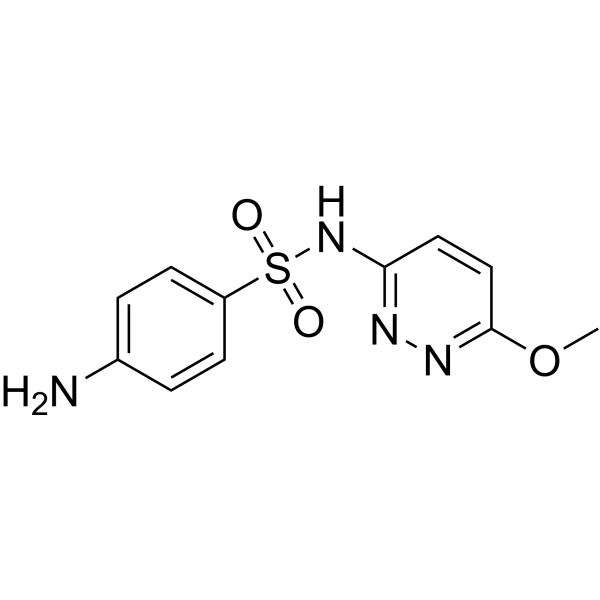
Sulfamethoxypyridazine is an orally active and brain-penetrant sulfonamide antibiotic. Sulfamethoxypyridazine exhibits antibacterial activity and inhibits growth of susceptible bacterial strains. Sulfamethoxypyridazine can be used for the research of pyelonephritis, urinary tract infections, and dermatitis herpetiformis .
|
-
-
- HY-107329
-
|
|
Bacterial
Antibiotic
|
Infection
|
|
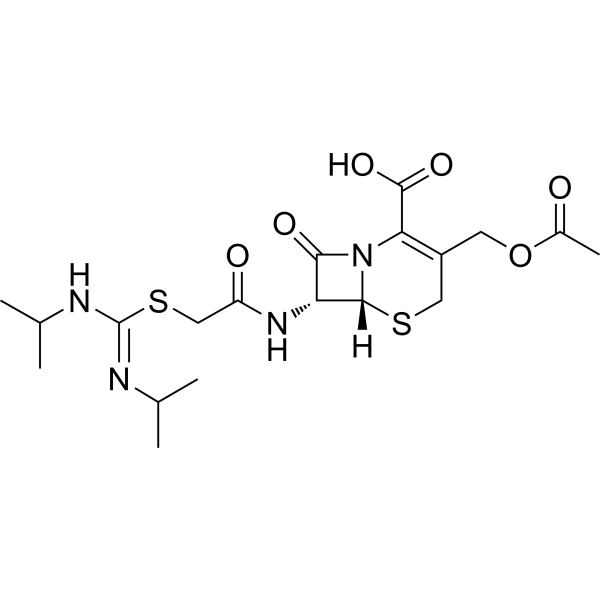
Cefathiamidine is a first-generation cephalosporin antibacterial agent and is used to treat infections caused by susceptible bacteria. Cefathiamidine exhibits a wide spectrum of antimicrobial activity against bacteria. Cefathiamidine is used for the treatment of respiratory, liver, five senses, urinary tract infections, endocarditis and sepsis .
|
-
-
- HY-19964
-
|
Potassium clavulanate:cellulose (1:1)
|
Beta-lactamase
Bacterial
Antibiotic
|
Infection
|
|
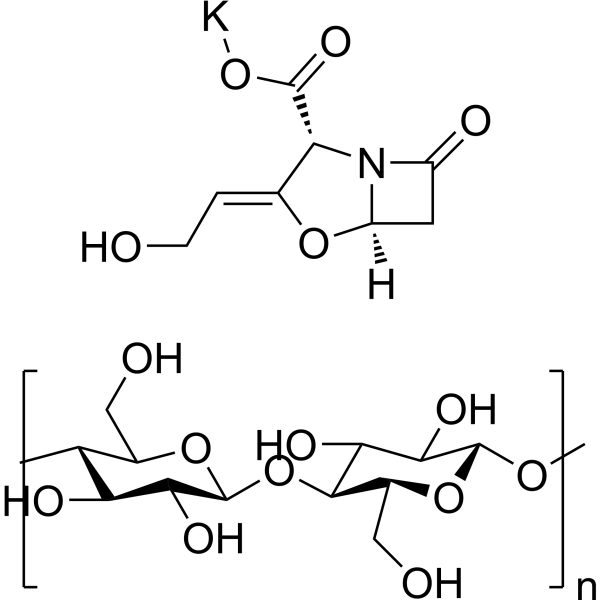
Potassium clavulanate cellulose (Potassium clavulanate:cellulose (1:1)) is a mixture of potassium clavulanate and cellulose, is a bacterial β-lactamase inhibitor. Clavulanate potassium is a form of Clavulanic acid. Clavulanate potassium fights bacteria that resistant to penicillins and other antibiotics. Potassium clavulanate with the combination of amoxicillin can be used for the research of different infections caused by bacteria, such as sinusitis, pneumonia, ear infections, bronchitis, urinary tract infections, and infections of the skin .
|
-
-
- HY-B0510R
-
|
|
Reference Standards
Antifolate
Bacterial
Antibiotic
Influenza Virus
|
Infection
|
|
Trimethoprim (Standard) is the analytical standard of Trimethoprim. This product is intended for research and analytical applications. Trimethoprim is a bacteriostatic antibiotic and an orally active dihydrofolate reductase inhibitor. Trimethoprim is active against a wide range of Gram-positive and Gram-negative aerobic bacteria. Trimethoprim has the potential for the research of urinary tract infections, Shigellosis and Pneumocystis pneumonia. Trimethoprim can inhibit infection of Influenza A virus in chick embryo when combinated with zinc .
|
-

-
- HY-108880
-
|
Carbenicillin indanyl sodium; CP-15464-2
|
Bacterial
|
Infection
|
|
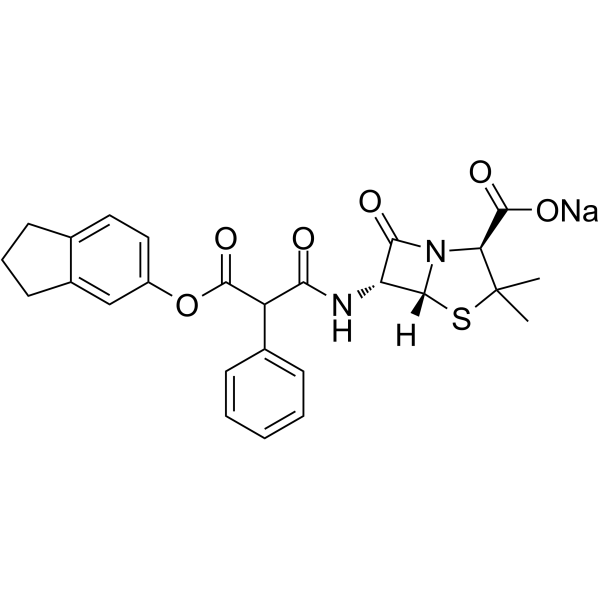
Carindacillin (Carbenicillin indanyl) sodium is an orally active and broad-spectrum antimicrobial agent. Carindacillin sodium can be hydrolyzed to Carbenicillin in vivo. Carindacillin sodium can be used for the research of urinary-tract infection .
|
-
-
- HY-120568
-
|
|
Bacterial
|
Infection
Inflammation/Immunology
|
|
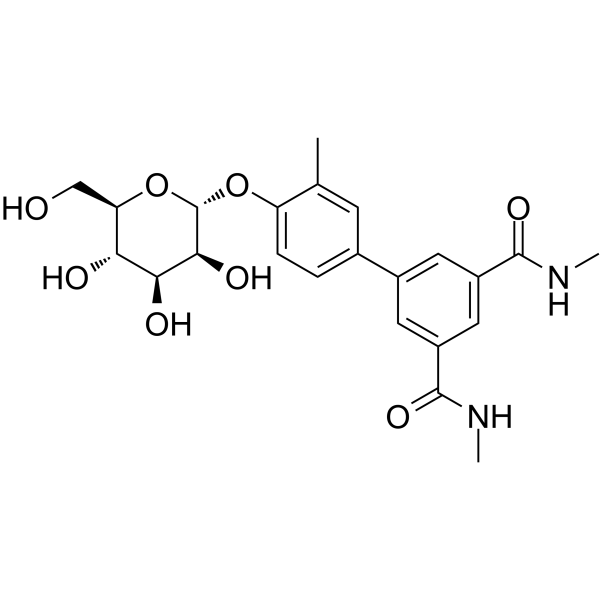
M4284 is a selective and orally active biphenyl mannoside FimH antagonist. M4284 has activities against different UPEC (Urinary tract infections (UTI) caused by uropathogenic E. coli) strains in different host genetic backgrounds and gut microbial community contexts .
|
-
-
- HY-A0090R
-
|
|
Reference Standards
Bacterial
Antibiotic
|
Infection
|
|
Nitrofurantoin (Standard) is the analytical standard of Nitrofurantoin. This product is intended for research and analytical applications. Nitrofurantoin is a potent and orally active broad-spectrum beta-lactamase antimicrobial agent. Nitrofurantoin acts as an antibiotic and can be used for the study of urinary tract infections (UTIs), including cystitis and kidney infections .
|
-

-
- HY-B0510S2
-
|
|
Antifolate
Bacterial
Antibiotic
|
Infection
|
|
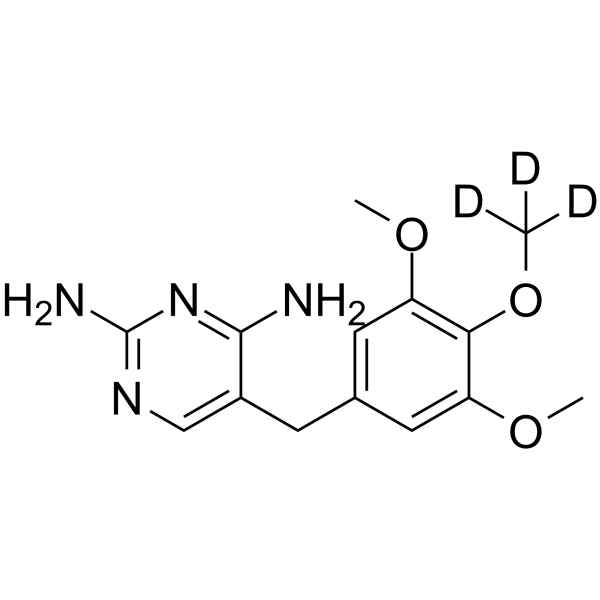
Trimethoprim-d3is the deuterium labeled Trimethoprim. Trimethoprim is a bacteriostatic antibiotic and an orally active dihydrofolate reductase inhibitor. Trimethoprim is active against a wide range of Gram-positive and Gram-negative aerobic bacteria. Trimethoprim has the potential for urinary tract infections, Shigellosis and Pneumocystis pneumonia treatment .
|
-
-
- HY-B0510B
-
|
|
Antifolate
Bacterial
Antibiotic
Influenza Virus
|
Infection
Cancer
|
|
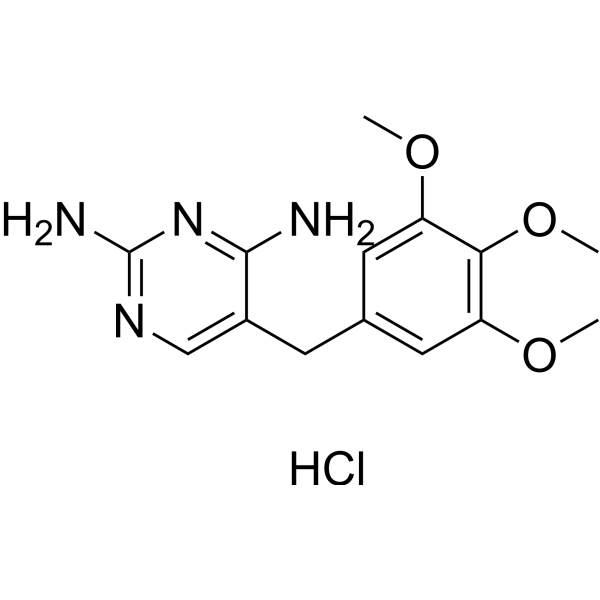
Trimethoprim hydrochloride is a bacteriostatic antibiotic and an orally active dihydrofolate reductase inhibitor. Trimethoprim hydrochloride is active against a wide range of Gram-positive and Gram-negative aerobic bacteria. Trimethoprim hydrochloride has the potential for the research of urinary tract infections, Shigellosis and Pneumocystis pneumonia. Trimethoprim hydrochloride can inhibit infection of Influenza A virus in chick embryo when combinated with zinc .
|
-
-
- HY-B0322R
-
|
Ro 4-2130 (Standard)
|
Reference Standards
Antibiotic
Bacterial
|
Infection
|
|
Sulfamethoxazole (Standard) (Ro 4-2130 (Standard)) is the analytical standard of Sulfamethoxazole (HY-B0322). This product is intended for research and analytical applications. Sulfamethoxazole (Ro 4-2130) is a sulfonamide antibiotic with a widespread antibacterial activity. Sulfamethoxazole inhibits bacterial folate metabolism by competing with 4-Aminobenzoic acid (HY-B1008) (PABA) to act on dihydropteroate synthetase and dihydropteroate reductase. Sulfamethoxazole can be used for the study of urinary tract infections (UTIs), prostatitis, and bronchitis.
|
-

-
- HY-B0322AR
-
|
Ro 4-2130 sodium (Standard)
|
Reference Standards
Antibiotic
Bacterial
|
Infection
Cancer
|
|
Sulfamethoxazole (Standard) (Ro 4-2130 (Standard)) sodium is the analytical standard of Sulfamethoxazole sodium (HY-B0322A). This product is intended for research and analytical applications. Sulfamethoxazole (Ro 4-2130) sodium is a sulfonamide antibiotic with a widespread antibacterial activity. Sulfamethoxazole sodium inhibits bacterial folate metabolism by competing with 4-Aminobenzoic acid (HY-B1008) (PABA) to act on dihydropteroate synthetase and dihydropteroate reductase. Sulfamethoxazole sodium can be used for the study of urinary tract infections (UTIs), prostatitis, and bronchitis.
|
-

-
- HY-B0322S1
-
|
Ro 4-2130-13C6
|
Isotope-Labeled Compounds
Antibiotic
Bacterial
|
Infection
|
|
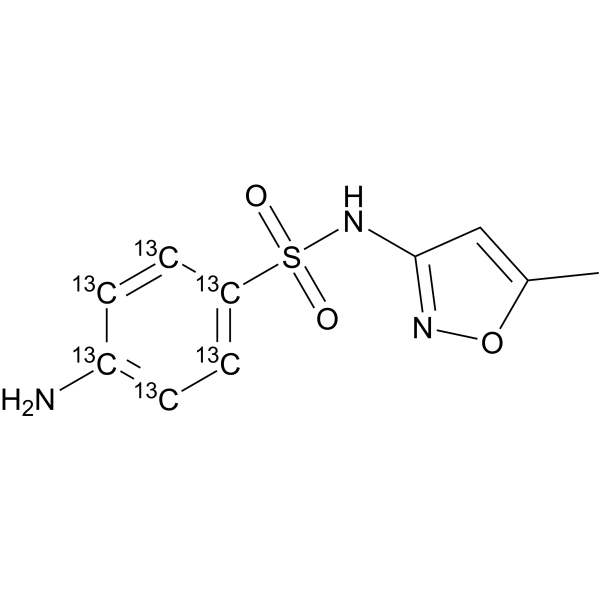
Sulfamethoxazole- 13C6 (Ro 4-2130- 13C6) is a 13C labeled Sulfamethoxazole (HY-B0322). Sulfamethoxazole (Ro 4-2130) is a sulfonamide antibiotic with a widespread antibacterial activity. Sulfamethoxazole inhibits bacterial folate metabolism by competing with 4-Aminobenzoic acid (HY-B1008) (PABA) to act on dihydropteroate synthetase and dihydropteroate reductase. Sulfamethoxazole can be used for the study of urinary tract infections (UTIs), prostatitis, and bronchitis .
|
-
-
- HY-16472
-
|
|
Antibiotic
Bacterial
|
Infection
|
|
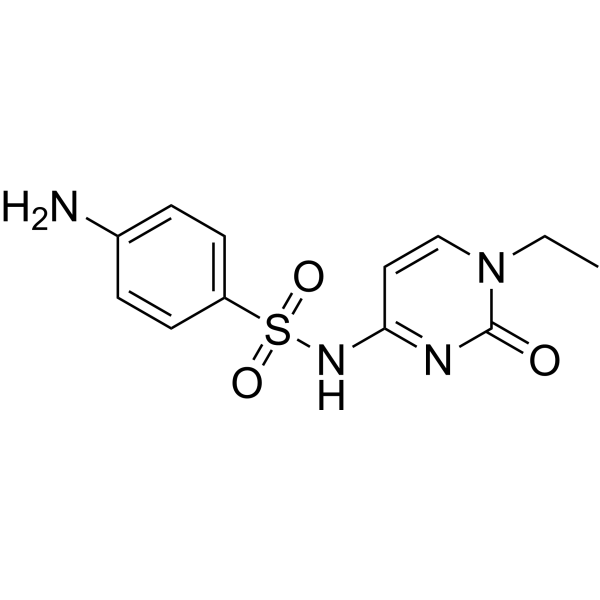
Sulfacytine is a short-acting sulfonamide antibiotic. Sulfacytine is active against bacteria and is an effective agent for the research of acute uncomplicated urinary tract infections .
|
-
-
- HY-133937
-
|
|
Bacterial
HIV
|
Infection
|
|
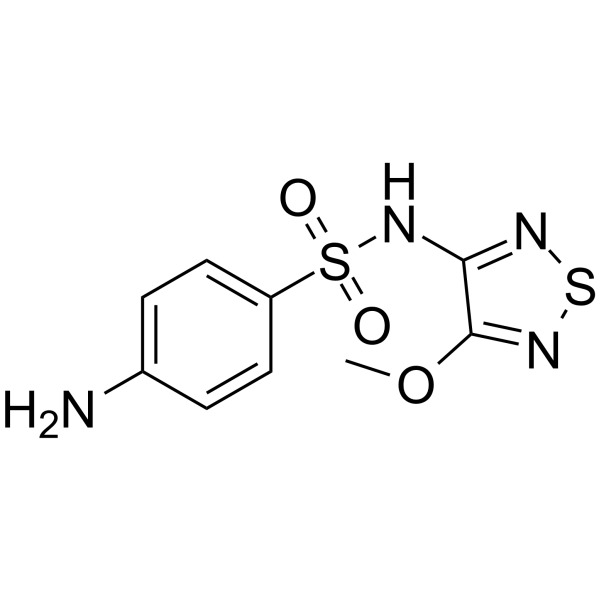
Sulfametrole is an orally active and potent antibacterial. Sulfametrole can be used for infections research, such as HIV, severe pneumonia and UTIs (urinary tract infections) .
|
-
-
- HY-A0090A
-
|
|
Antibiotic
Bacterial
|
Infection
|
|
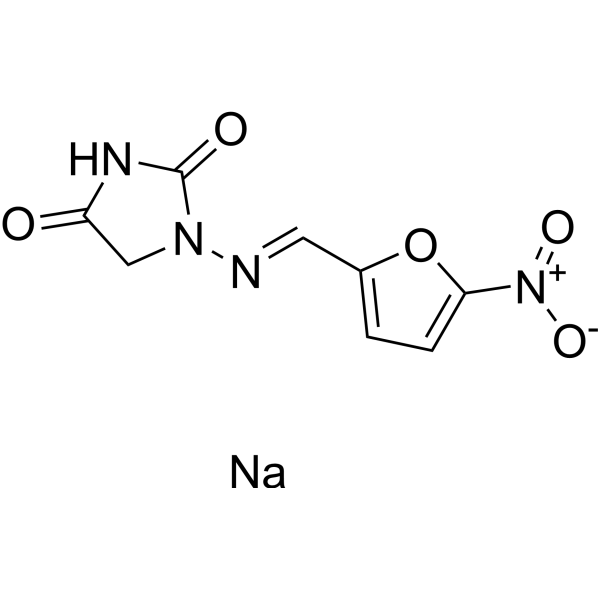
Nitrofurantoin sodium is a potent and orally active antibacterial agent. Nitrofurantoin sodium acts as an antibiotic. Nitrofurantoin sodium can be used for the study of urinary tract infections (UTIs), including cystitis and kidney infections .
|
-
-
- HY-W015591R
-
|
(±)-Mandelic acid (Standard); DL-Mandelic acid (Standard)
|
Reference Standards
Bacterial
Endogenous Metabolite
|
Infection
|
|
Mandelic acid (Standard) is the analytical standard of Mandelic acid. This product is intended for research and analytical applications. Mandelic acid ((±)-Mandelic acid), an alpha-hydroxycarboxylic acid, has been widely used as an intermediate of pharmaceutical and fine chemicals. Mandelic acid shows antimicrobial activity and has been used for the research of urinary tract infections and vaginal trichomoniasis. Mandelic acid exhibits high sperm-immobilizing activity and low vaginal irritation .
|
-

-
- HY-B0322B
-
|
Ro 4-2130 1000 µg/mL in methanol
|
Antibiotic
Bacterial
|
Infection
|
|
Sulfamethoxazole (Ro 4-2130) 1000 μg/mL in methanol is a sulfonamide antibiotic with a widespread antibacterial activity. Sulfamethoxazole 1000 μg/mL in methanol inhibits bacterial folate metabolism by competing with 4-Aminobenzoic acid (HY-B1008) (PABA) to act on dihydropteroate synthetase and dihydropteroate reductase. Sulfamethoxazole 1000 μg/mL in methanol can be used for the study of urinary tract infections (UTIs), prostatitis, and bronchitis .
|
-

- HY-B1235R
-
|
N-Hydroxyacetamide (Standard)
|
Reference Standards
Bacterial
HIV
|
Infection
Inflammation/Immunology
|
|
Acetohydroxamic acid (Standard) is the analytical standard of Acetohydroxamic acid. This product is intended for research and analytical applications. Acetohydroxamic acid is the inhibitor for bacterial and plant urease that can be used for chronic urinary tract infections. Acetohydroxamic acid selectively inhibits arachidonic acid 5-lipoxygenase that is useful in the research of asthma. Acetohydroxamic acid inhibits the formation of advanced glycation end products, and reduces oxidative stress and inflammatory responses. Acetohydroxamic acid exhibits antiviral activity against HIV .
|
-

- HY-B0159A
-
|
Q-35 dihydrate
|
Bacterial
Antibiotic
|
Infection
|
|
Balofloxacin dihydrate (Q-35 dihydrate) is an orally active fluoroquinolone antibiotic with broad-spectrum antibacterial activity against gram-negative, gram-positive, and anaerobic bacteria. Balofloxacin dihydrate can be used for the research of respiratory, intestinal, and urinary tract infections .
|
-
- HY-N12973
-
-

- HY-A0090S
-
|
|
Isotope-Labeled Compounds
Antibiotic
Bacterial
|
Others
|
|
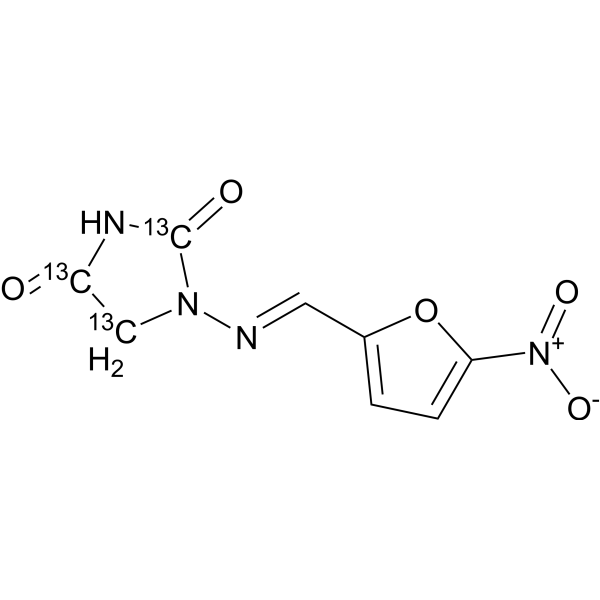
Nitrofurantoin- 13C3 is the 13C labeled Nitrofurantoin (HY-A0090) . Nitrofurantoin is a potent and orally active broad-spectrum beta-lactamase antimicrobial agent. Nitrofurantoin acts as an antibiotic and can be used for the study of urinary tract infections (UTIs), including cystitis and kidney infections .
|
-
- HY-B1002R
-
|
|
Reference Standards
Bacterial
Antibiotic
DNA/RNA Synthesis
|
Infection
|
|
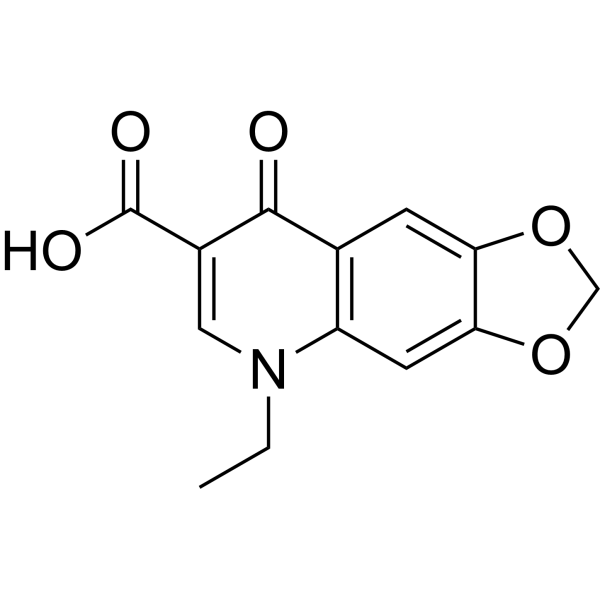
Oxolinic acid (Standard) is the analytical standard of Oxolinic acid. This product is intended for research and analytical applications. Oxolinic acid is an antibiotic against both Gram-negative and Gram-positive bacteria. Oxolinic acid can be used for the research of acute and chronic urinary tract infections. Oxolinic acid is a DNA/RNA synthesis inhibitor. Oxolinic acid acts a dopamine uptake inhibitor and stimulants locomotor effect in mice .
|
-
- HY-B0395CR
-
|
DU6859a hydrate (Standard)
|
Bacterial
Antibiotic
Reference Standards
|
Infection
|
|
Sitafloxacin (hydrate) (Standard) is the analytical standard of Sitafloxacin (hydrate). This product is intended for research and analytical applications. Sitafloxacin (DU6859a) hydrate is an orally active fluoroquinolone antibiotic (antibiotic) with in vitro activity against a wide range of Gram-positive and -negative bacteria, including anaerobic bacteria, as well as atypical pathogens. Sitafloxacin is used in the study of respiratory tract infections and urinary tract infections .
|
-

- HY-139805
-
|
|
Antibiotic
Bacterial
|
Infection
|
|
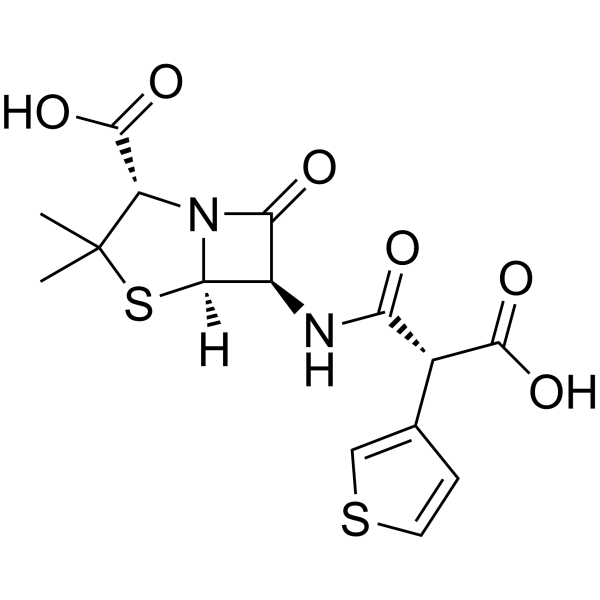
Ticarcillin is a semisynthetic, extended-spectrum, carboxypenicillin antibacterial agent, and is active against gram-positive cocci, including streptococci and staphylococci. Ticarcillin is also effective against most gram-negative organisms, including Pseudomonas aeruginosa. Ticarcillin can be used in lower respiratory tract infections, skin and skin structure infections, urinary tract infections, and intraabdominal infections research .
|
-
- HY-B0439S1
-
|
Sulphadoxine d3
|
Parasite
Antibiotic
|
Infection
|
|
Sulfadoxine-d3 is a deuterium labeled Sulfadoxine (HY-B0439). Sulfadoxine is a sulfonamide that is used, usually in combination with Pyrimethamine(HY-18062), for multidrug-resistant Plasmodium falciparum and P. vivax inhibition. Unlike PYR, Sulfadoxine has no impact on HIV replication or MT-2 cell cycle progression. But also Sulfadoxine exhibits suppression on respiratory, and urinary tract infections .
|
-
- HY-W654255
-
|
(±)-Mandelic acid-13C8; DL-Mandelic acid-13C8
|
Isotope-Labeled Compounds
Bacterial
Endogenous Metabolite
|
Infection
|
|
Mandelic Acid- 13C8 ((±)-Mandelic acid- 13C8) is the 13C-labeled Mandelic acid (HY-W015591). Mandelic acid ((±)-Mandelic acid), an alpha-hydroxycarboxylic acid, has been widely used as an intermediate of pharmaceutical and fine chemicals. Mandelic acid shows antimicrobial activity and has been used for the research of urinary tract infections and vaginal trichomoniasis. Mandelic acid exhibits high sperm-immobilizing activity and low vaginal irritation .
|
-

- HY-B0724B
-
|
T3761
|
Bacterial
DNA/RNA Synthesis
|
Infection
|
|
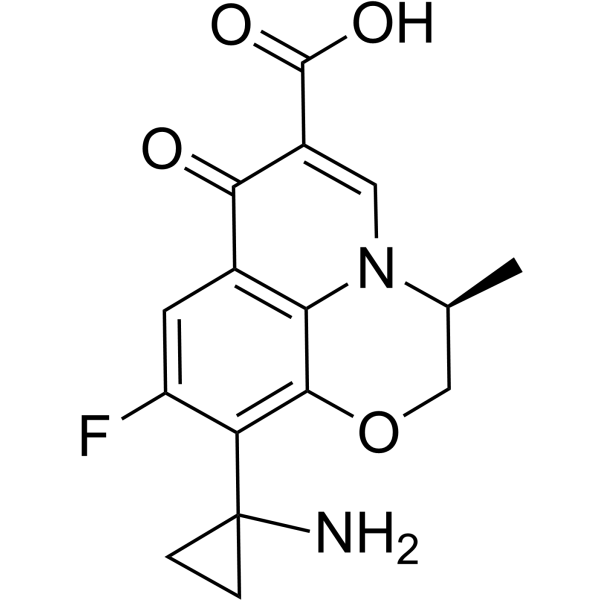
Pazufloxacin is an orally active fluoroquinolone antimicrobial agent. Pazufloxacin inhibits DNA gyrase with IC50 values of 0.88 μg/mL (E. coli) and 1.9 μg/mL (P. aeruginosa). Pazufloxacin exhibits broad-spectrum antimicrobial activity, with MIC90 values ranging from 0.025 to 100 μg/mL against Gram-positive and Gram-negative bacteria, non-fermenting bacteria, Legionella spp., and anaerobic bacteria. Pazufloxacin is indicated for research on systemic infections, lung infections, urinary tract infections, and Legionella pneumonia .
|
-
- HY-128502
-
|
|
Bacterial
Antibiotic
|
Infection
|
|
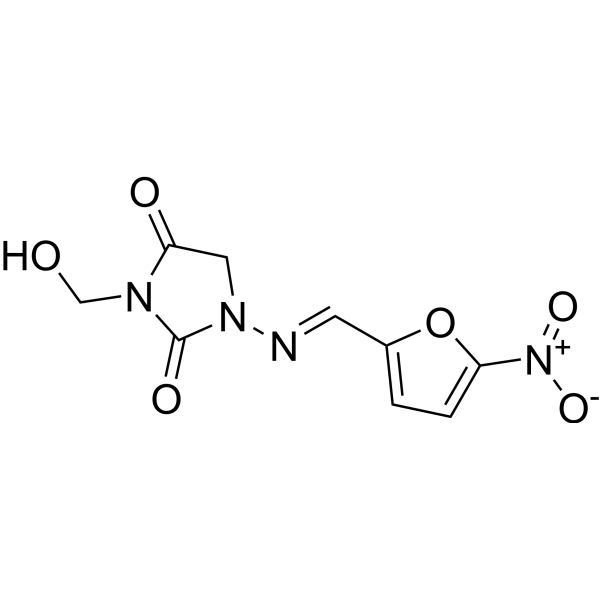
Nifurtoinol is a nitrofuran-derivative antibiotic with antibacterial effects. Nifurtoinol can be used for the research of urinary tract infections .
|
-
- HY-Y1150
-
|
Trimethylmethanecarboxylic acid; Versatic 5 acid; tert-Pentanoic acid
|
Antibiotic
|
Inflammation/Immunology
|
|
Pivalic acid (Trimethylmethanecarboxylic acid) is a carboxylic acid. Pivalic acid induces Carnitine deficiency. Pivalic acid conjugated with Antibiotics, such as Pivmecillinam (HY-B0810) and Pivampicillin (HY-119011), are used in urinary tract infection. Pivalic acid can be used in physical exercise research .
|
-

- HY-105284A
-
|
CP-70429 sodium
|
Antibiotic
Bacterial
|
Inflammation/Immunology
|
|
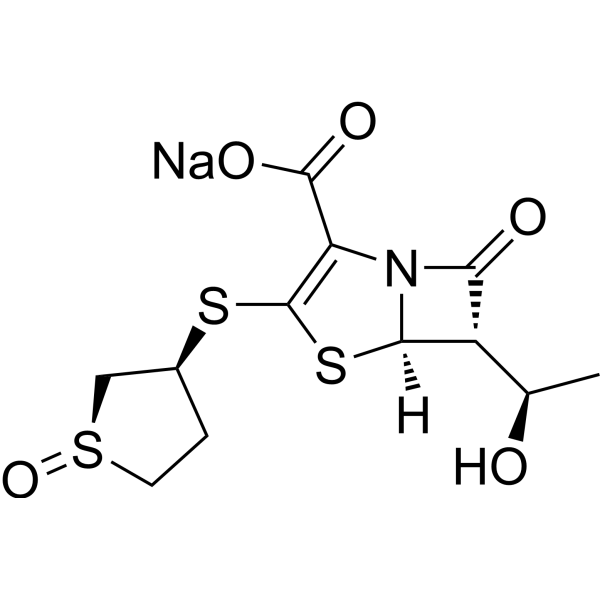
Sulopenem (sodium)(CP-70429 (sodium)) is an orally active, parenteral penem antibiotic with broad-spectrum activities against Gram-positive and Gram-negative bacteria. Sulopenem has the potential for urinary tract infections and intra-abdominal infections treatment. Sulopenem is inactive against Pseudomonas aeruginosa and Xanthomonas maltophilia .
|
-
- HY-B0395A
-
|
DU6859a hydrochloride
|
Antibiotic
Bacterial
|
Infection
|
|
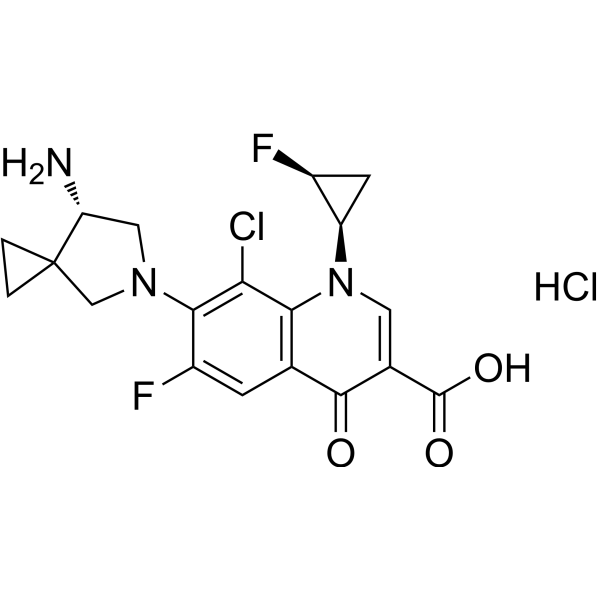
Sitafloxacin (DU6859a) hydrochloride is a potent, orally active fluoroquinolone antibiotic. Sitafloxacin hydrochloride shows antichlamydial activity and antibacterial activities against a broad range of gram-positive and gram-negative bacteria, including anaerobic bacteria, as well as against atypical pathogens. Sitafloxacin hydrochloride can be used for the research of respiratory tract infection and urinary tract infection .
|
-
- HY-B1002S
-
|
|
Isotope-Labeled Compounds
Bacterial
Antibiotic
DNA/RNA Synthesis
|
Infection
|
|
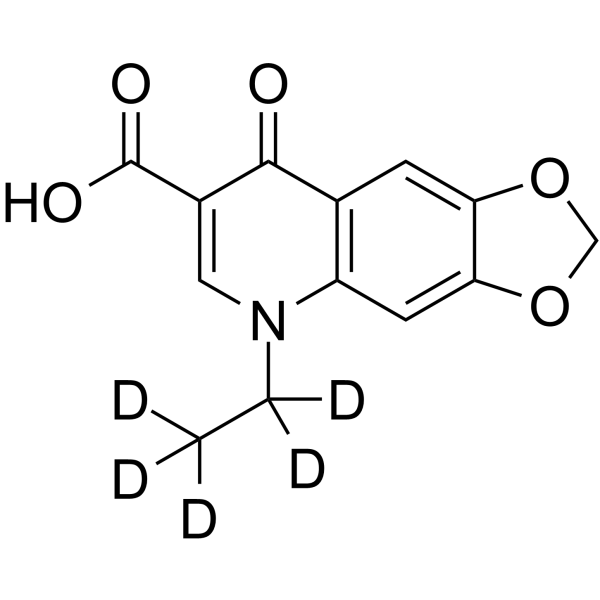
Oxolinic acid-d5 is the deuterium labeled Oxolinic acid. Oxolinic acid is an antibiotic against both Gram-negative and Gram-positive bacteria. Oxolinic acid can be used for the research of acute and chronic urinary tract infections. Oxolinic acid is a DNA/RNA synthesis inhibitor. Oxolinic acid acts a dopamine uptake inhibitor and stimulants locomotor effect in mice .
|
-
- HY-101829
-
|
Sulfaproxylin; Sulfaproxyline
|
Antibiotic
Bacterial
|
Infection
|
|
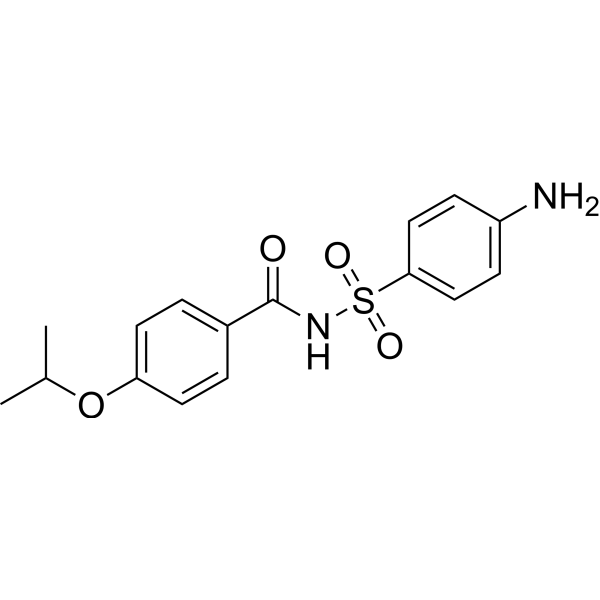
Sulfaproxyline (Sulfaproxylin; Sulfaproxyline) is a sulfonamide antibiotic that inhibits bacterial dihydropteroate synthase, thereby blocking folate biosynthesis required for nucleic acid production. Sulfaproxyline shows antimicrobial activity primarily against Staphylococcus species and common uropathogens. Sulfaproxyline reduces bacterial growth by impairing DNA and protein synthesis. Sulfaproxyline can be used for research of staphylococcal and urinary tract infections .
|
-
- HY-B1159R
-
|
8-Hydroxy-5-nitroquinoline (Standard); 5-Nitro-8-quinolinol (Standard)
|
Reference Standards
Bacterial
Antibiotic
Apoptosis
Autophagy
|
Infection
Cancer
|
|
Nitroxoline (Standard) is the analytical standard of Nitroxoline. This product is intended for research and analytical applications. Nitroxoline (8-Hydroxy-5-nitroquinoline), an antibiotic, is an orally active antibiofilm agent. Nitroxoline reduces the formation and induces the dispersal of Pseudomonas aeruginosa biofilms by chelation of iron and zinc. Nitroxoline can be used for the urinary tract infections and cancer research .
|
-

- HY-B0510A
-
|
|
Antifolate
Bacterial
Antibiotic
Influenza Virus
|
Infection
Cancer
|
|
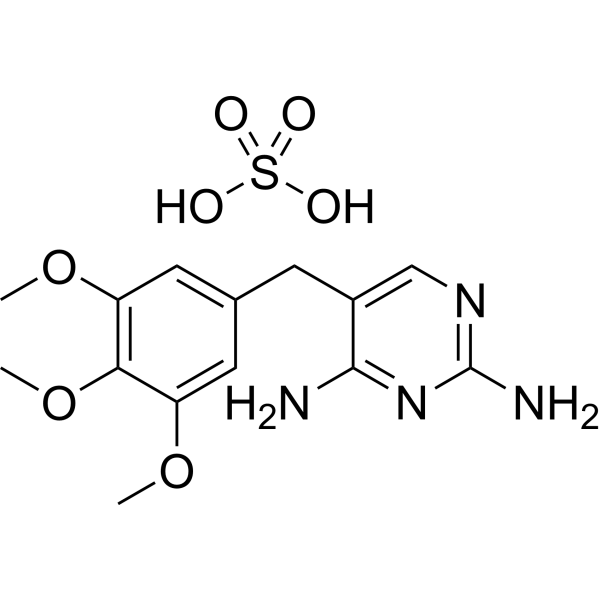
Trimethoprim sulfate is a bacteriostatic antibiotic and an orally active dihydrofolate reductase inhibitor. Trimethoprim sulfate is active against a wide range of Gram-positive and Gram-negative aerobic bacteria. Trimethoprim sulfate has the potential for the research of urinary tract infections, Shigellosis and Pneumocystis pneumonia. Trimethoprim sulfate can inhibit infection of Influenza A virus in chick embryo when combinated with zinc .
|
-
- HY-B0510S3
-
|
|
Isotope-Labeled Compounds
Antibiotic
Bacterial
Antifolate
Influenza Virus
|
Others
|
|
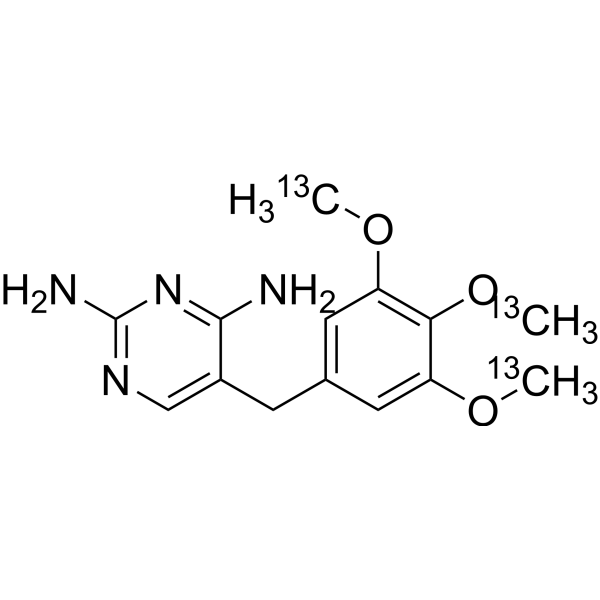
Trimethoprim- 13C3 is the deuterium labeled Trimethoprim (HY-B0510) . Trimethoprim is a bacteriostatic antibiotic and an orally active dihydrofolate reductase inhibitor. Trimethoprim is active against a wide range of Gram-positive and Gram-negative aerobic bacteria. Trimethoprim has the potential for the research of urinary tract infections, Shigellosis and Pneumocystis pneumonia. Trimethoprim can inhibit infection of Influenza A virus in chick embryo when combinated with zinc .
|
-
- HY-122362
-
|
BRL-3475 sodium; Carbenicillin phenyl sodium
|
Bacterial
|
Infection
|
|
Carfecillin (BRL-3475) sodium is an orally active phenyl ester of carbenicillin with antibacterial activity. Carfecillin can be used for the study of urinary tract infections .
|
-

- HY-B0333S
-
|
|
Isotope-Labeled Compounds
Androgen Receptor
|
Infection
|
|
Sulfamethizole-d4 is the deuterium labeled Sulfamethizole (HY-B0333). Sulfamethizole is a sulfathiazole antibiotic. Sulfamethizole inhibits the synthesis of folic acid and thymine, and selectively suppresses Photobacterium phosphoreum bioluminescence. Sulfamethizole exerts antibacterial activity against Escherichia coli-mediated urinary tract infections but no activity against sulII gene-positive Escherichia coli. Sulfamethizole is applicable for the research of urinary tract infections and Photobacterium phosphoreum bioluminescence mechanisms .
|
-
- HY-B0333S2
-
|
|
Isotope-Labeled Compounds
Androgen Receptor
Bacterial
Antibiotic
|
Infection
|
|
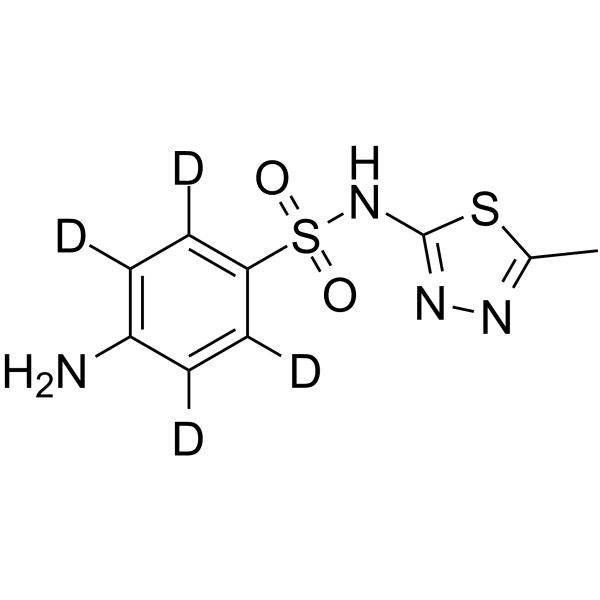
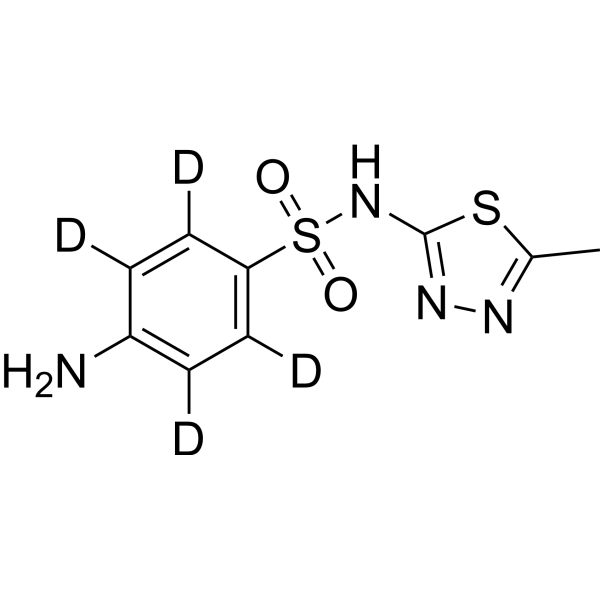
Sulfamethizole-d4-1 is the deuterium labeled Sulfamethizole (HY-B0333). Sulfamethizole is a sulfathiazole antibiotic. Sulfamethizole inhibits the synthesis of folic acid and thymine, and selectively suppresses Photobacterium phosphoreum bioluminescence. Sulfamethizole exerts antibacterial activity against Escherichia coli-mediated urinary tract infections but no activity against sulII gene-positive Escherichia coli. Sulfamethizole is applicable for the research of urinary tract infections and Photobacterium phosphoreum bioluminescence mechanisms .
|
-
- HY-B0333R
-
|
|
Reference Standards
Antibiotic
Bacterial
|
Infection
|
|
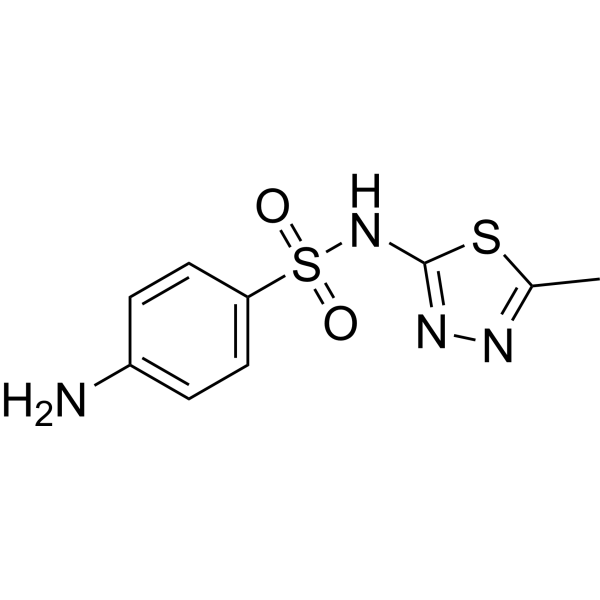
Sulfamethizole (Standard) is the analytical standard of Sulfamethizole (HY-B0333). This product is intended for research and analytical applications. Sulfamethizole is a sulfathiazole antibiotic. Sulfamethizole inhibits the synthesis of folic acid and thymine, and selectively suppresses Photobacterium phosphoreum bioluminescence. Sulfamethizole exerts antibacterial activity against Escherichia coli-mediated urinary tract infections but no activity against sulII gene-positive Escherichia coli. Sulfamethizole is applicable for the research of urinary tract infections and Photobacterium phosphoreum bioluminescence mechanisms .
|
-
- HY-B1784R
-
|
Sulfaisodimidine (Standard)
|
Reference Standards
Bacterial
Antibiotic
|
Infection
|
|
Sulfisomidin (Standard) is the analytical standard of Sulfisomidin. This product is intended for research and analytical applications. Sulfisomidin (Sulfaisodimidine) is an orally active short-acting sulfonamide antibacterial. Sulfisomidin can be used for the research of lower urinary tract infections .
|
-

- HY-W719074
-
|
Sulfaisodimidine-d4
|
Isotope-Labeled Compounds
Antibiotic
Bacterial
|
Infection
|
|
Sulfisomidin-d4 (Sulfaisodimidine-d4) is deuterium labeled Sulfisomidin. Sulfisomidin (Sulfaisodimidine) is an orally active short-acting sulfonamide antibacterial. Sulfisomidin can be used for the research of lower urinary tract infections .
|
-

- HY-B0337AR
-
|
Sulphadimethoxine sodium (Standard)
|
Reference Standards
Bacterial
Antibiotic
|
Infection
|
|
Sulfadimethoxine (sodium) (Standard) is the analytical standard of Sulfadimethoxine sodium (HY-B0337A). This product is intended for research and analytical applications. Sulfadimethoxine sodium (Sulphadimethoxine sodium) is a sulfonamide antibiotic. Sulfadimethoxine sodium causes a displacement of Thiopental in plasma protein binding in rats. Sulfadimethoxine sodium is used in a variety of infection studies including urinary tract infections .
|
-

- HY-B0395B
-
|
DU6859a monohydrate
|
Bacterial
Antibiotic
|
Infection
|
|
Sitafloxacin (DU6859a) monohydrate is a potent, orally active fluoroquinolone antibiotic. Sitafloxacin monohydrate shows antichlamydial activity and antibacterial activities against a broad range of gram-positive and gram-negative bacteria, including anaerobic bacteria, as well as against atypical pathogens. Sitafloxacin monohydrate can be used for the research of respiratory tract infection and urinary tract infection .
|
-
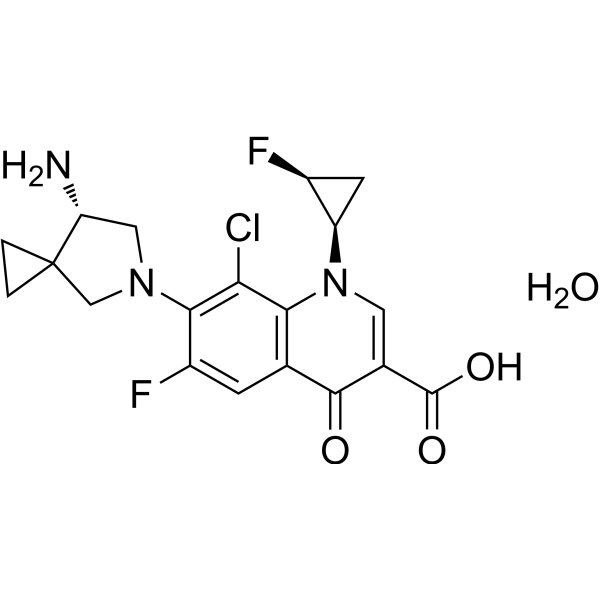
- HY-B0159R
-
|
Q-35 (Standard)
|
Reference Standards
Bacterial
Antibiotic
|
Infection
|
|
Balofloxacin (Standard) is the analytical standard of Balofloxacin. This product is intended for research and analytical applications. Balofloxacin (Q-35) is an orally active fluoroquinolone antibiotic with broad-spectrum antibacterial activity against gram-negative, gram-positive, and anaerobic bacteria. Balofloxacin can be used for the research of respiratory, intestinal, and urinary tract infections .
|
-

- HY-B0213S
-
|
Sulfametoxydiazine-d4; 5-Methoxysulfadiazine-d4; NSC 683528-d4
|
Isotope-Labeled Compounds
Antibiotic
Bacterial
|
Infection
|
|
Sulfameter-d4 (Sulfametoxydiazine-d4) is the deuterium labeled Sulfameter (HY-B0213) . Sulfameter (Sulfametoxydiazine) is an orally active long-acting sulfonamide antibiotic. Sulfameter is active against both Gram-positive and Gram-negative bacteria. Sulfameter can be used for the research of diseases such as respiratory and urinary tract infections .
|
-
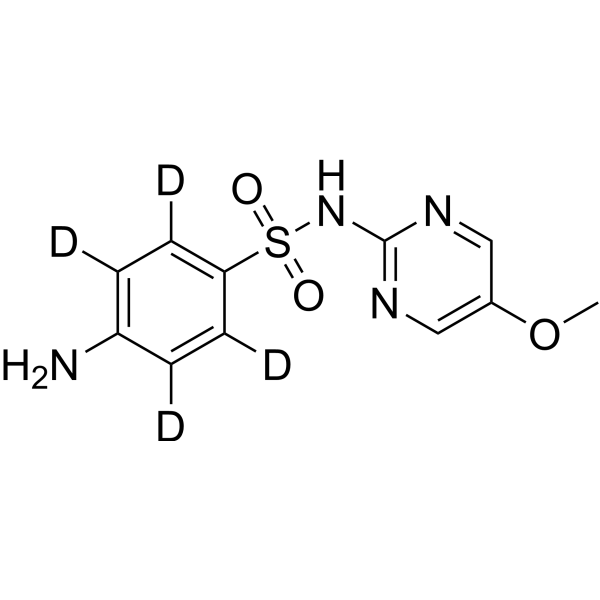
- HY-107329R
-
|
|
Reference Standards
Bacterial
Antibiotic
|
Infection
|
|
Cefathiamidine (Standard) is the analytical standard of Cefathiamidine. This product is intended for research and analytical applications. Cefathiamidine is a first-generation cephalosporin antibacterial agent and is used to treat infections caused by susceptible bacteria. Cefathiamidine exhibits a wide spectrum of antimicrobial activity against bacteria. Cefathiamidine is used for the treatment of respiratory, liver, five senses, urinary tract infections, endocarditis and sepsis[1][2].
|
-

- HY-B0213R
-
|
Sulfametoxydiazine (Standard); 5-Methoxysulfadiazine (Standard); NSC 683528 (Standard)
|
Reference Standards
Antibiotic
Bacterial
|
Infection
|
|
Sulfameter (Standard) (Sulfametoxydiazine (Standard)) is the analytical standard of Sulfameter (HY-B0213). This product is intended for research and analytical applications. Sulfameter (Sulfametoxydiazine) is an orally active long-acting sulfonamide antibiotic. Sulfameter is active against both Gram-positive and Gram-negative bacteria. Sulfameter can be used for the research of diseases such as respiratory and urinary tract infections .
|
-

- HY-A0208R
-
|
Acrosoxacin (Standard)
|
Bacterial
Antibiotic
Reference Standards
|
Infection
|
|
Rosoxacin (Standard) is the analytical standard of Rosoxacin. This product is intended for research and analytical applications. Rosoxacin (Acrosoxacin) is an orally active and broad-spectrum antibacterial quinolone antibiotic. Rosoxacin inhibits Gram-negative bacteria, including N. gonorrhoeae (MIC range=0.03-0.125 μg/mL).Rosoxacin can be used in studies of urinary tract infections and certain sexually transmitted diseases .
|
-

- HY-B0213S1
-
|
Sulfametoxydiazine-13C6; 5-Methoxysulfadiazine-13C6; NSC 683528-13C6
|
Isotope-Labeled Compounds
Antibiotic
Bacterial
|
Infection
|
|
Sulfameter- 13C6 (Sulfametoxydiazine- 13C6) is the 13C6 labeled Sulfameter (HY-B0213). Sulfameter (Sulfametoxydiazine) is an orally active long-acting sulfonamide antibiotic. Sulfameter is active against both Gram-positive and Gram-negative bacteria. Sulfameter can be used for the research of diseases such as respiratory and urinary tract infections .
|
-
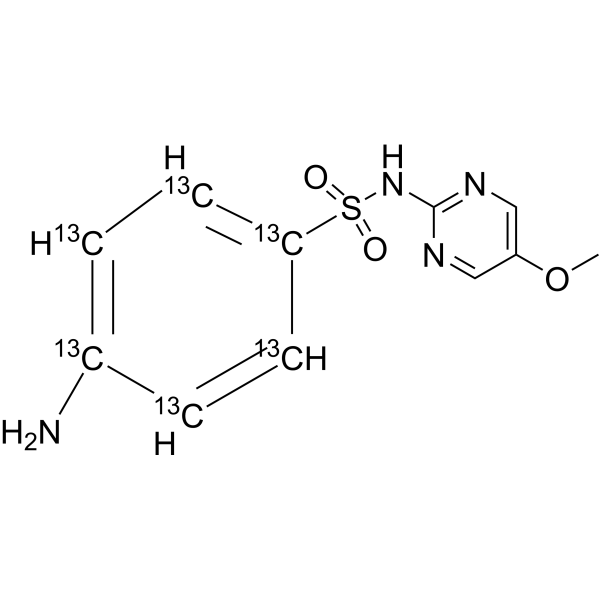
- HY-B0024R
-
|
NM441 (Standard)
|
Reference Standards
Bacterial
Antibiotic
|
Infection
|
|
Prulifloxacin (Standard) is the analytical standard of Prulifloxacin. This product is intended for research and analytical applications. Prulifloxacin (NM441) is an orally active fluoroquinolone antibiotic with a broad spectrum of activity against Gram-positive and -negative bacteria. Prulifloxacin is a proagent of a thiazeto-quinoline carboxylic acid derivative Ulifloxacin (NM394). Prulifloxacin has the potential for lower urinary tract infections and exacerbations of chronic bronchitis .
|
-

- HY-B1085R
-
|
Compound 64716 (Standard)
|
Reference Standards
Bacterial
Antibiotic
DNA/RNA Synthesis
|
Infection
|
|
Cinoxacin (Standard) is the analytical standard of Cinoxacin. This product is intended for research and analytical applications. Cinoxacin (Compound 64716), a synthetic antimicrobial related to the quinolone class of orally active antibacterial agent. Cinoxacin has antibacterial activity against many gram-negative aerobic bacteria and inhibits bacterial DNA synthesis. Cinoxacin can be used for the research of urinary tract infections and bacterial prostatitis .
|
-

- HY-139805A
-
|
|
Bacterial
Antibiotic
|
Cancer
|
|
Ticarcillin monosodium is a semisynthetic, extended-spectrum, carboxypenicillin antibacterial agent, and is active against gram-positive cocci, including streptococci and staphylococci. Ticarcillin monosodium is also effective against most gram-negative organisms, including Pseudomonas aeruginosa. Ticarcillin monosodium can be used in lower respiratory tract infections, skin and skin structure infections, urinary tract infections, and intraabdominal infections research .
|
-
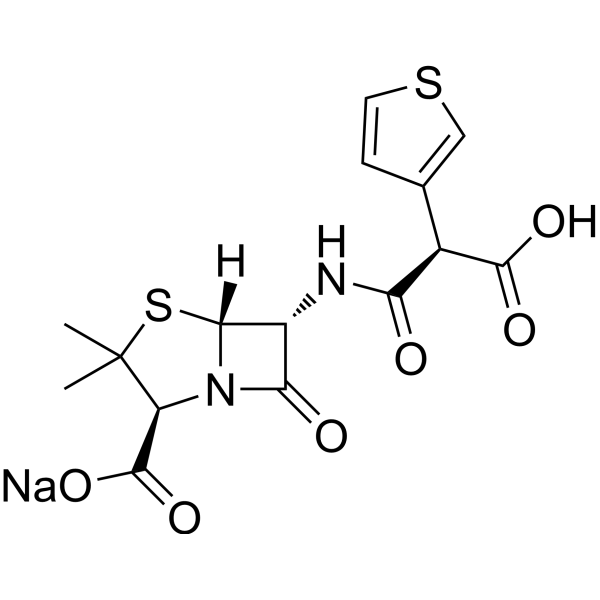
- HY-B1085S
-
|
|
Isotope-Labeled Compounds
|
Infection
|
|
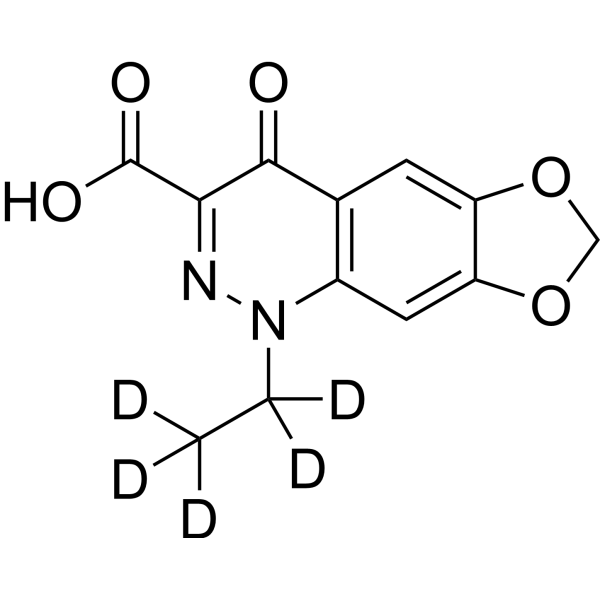
Cinoxacin-d5 is the deuterium-labeled Cinoxacin (HY-B1085) . Cinoxacin (Compound 64716),a synthetic antimicrobial related to the quinolone class of orally active antibacterial agent. Cinoxacin has antibacterial activity against many gram-negative aerobic bacteria and inhibits bacterial DNA synthesis. Cinoxacin can be used for the research of urinary tract infections and bacterial prostatitis .
|
-
- HY-W748430
-
|
Furazidine-13C3; Furazidin-13C3
|
Isotope-Labeled Compounds
Carbonic Anhydrase
Bacterial
Antibiotic
|
Infection
|
|
Furagin- 13C3 (Furazidine- 13C3) is the 13C-labeled Furagin (HY-77036). Furagin (Furazidine), an analogue of Nitrofurantoin (HY-A0090), is an antibiotic with antibacterial activity against ESKAPE pathogens with MIC values of 0-32 μg/mL. Furagin inhibits human Carbonic anhydrases . Furagin is promising for research of cancer and urinary tract infections (UTIs) .
|
-

- HY-B0395S
-
|
DU6859a-d4
|
Isotope-Labeled Compounds
Bacterial
Antibiotic
|
Infection
|
|
Sitafloxacin-d4 (DU6859a-d4) is deuterium labeled Sitafloxacin. Sitafloxacin (DU6859a) is a potent, orally active fluoroquinolone antibiotic. Sitafloxacin shows antichlamydial activity and antibacterial activities against a broad range of gram-positive and gram-negative bacteria, including anaerobic bacteria, as well as against atypical pathogens. Sitafloxacin can be used for the research of respiratory tract infection and urinary tract infection .
|
-

- HY-14865A
-
|
PTK 0796 mesylate; Amadacycline mesylate
|
Bacterial
Antibiotic
|
Infection
|
|
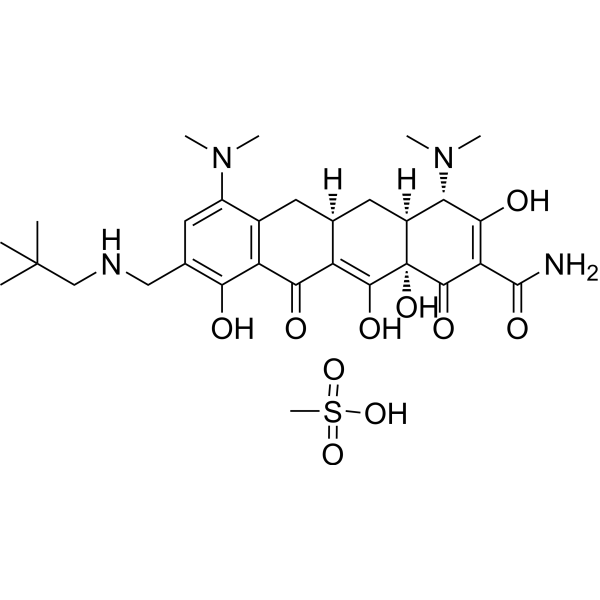
Omadacycline (PTK 0796) mesylate, a first-in-class orally active aminomethylcycline antibacterial, is a member of the tetracycline class of antibiotics. Omadacycline mesylate acts through the inhibition of bacterial protein synthesis by binding to the 30S ribosomal subunit. Omadacycline mesylate possesses broad-spectrum antibacterial activity against aerobic and anaerobic Gram-positive and Gram-negative bacteria, as well as atypical bacteria. Omadacycline mesylate can be used for the research of acute bacterial skin and skin-structure infections, community-acquired pneumonia, and urinary tract infections .
|
-
- HY-B1415R
-
|
Chlorofibrinic acid (Standard)
|
Reference Standards
PPAR
Bacterial
SOD
|
Infection
Metabolic Disease
Cancer
|
|
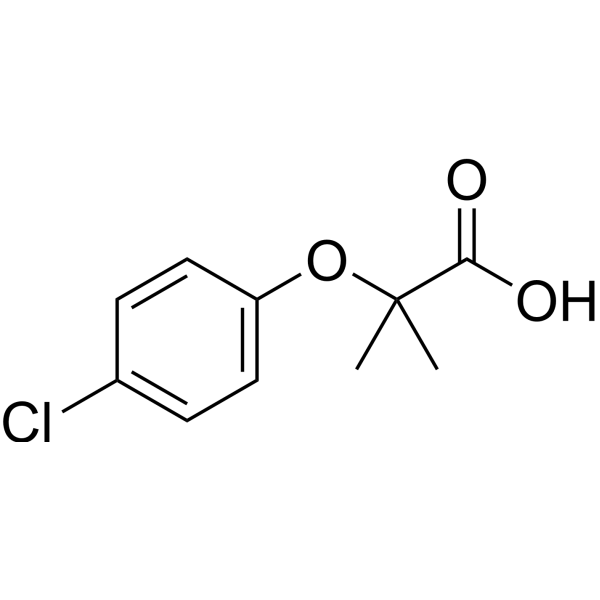
Clofibric acid (Standard) is the analytical standard of Clofibric acid (HY-B1415). This product is intended for research and analytical applications. Clofibric acid (Chlorofibrinic acid) is an orally active PPARα agonist. Clofibric acid inhibits the fimbriation of Escherichia coli. Clofibric acid increases SOD activity. Clofibric acid lowers blood lipids and prevents experimental pyelonephritis. Clofibric acid has anticancer activity against ovarian cancer. Clofibric acid is also a herbicide. Clofibric acid is used in ovarian cancer, liver cancer, obesity, and urinary tract infection research .
|
-
- HY-B1415S
-
|
Chlorofibrinic acid-d4
|
Isotope-Labeled Compounds
PPAR
Bacterial
SOD
|
Infection
Metabolic Disease
Cancer
|
|
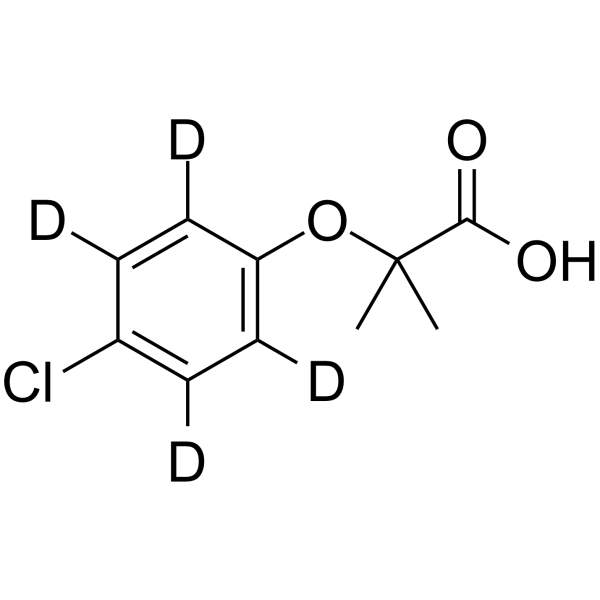
Clofibric acid-d4 is the deuterium labeled Clofibric acid (HY-B1415). Clofibric acid also is an herbicideClofibric acid (Chlorofibrinic acid) is an orally active PPARα agonist. Clofibric acid inhibits the fimbriation of Escherichia coli. Clofibric acid increases SOD activity. Clofibric acid lowers blood lipids and prevents experimental pyelonephritis. Clofibric acid has anticancer activity against ovarian cancer. Clofibric acid is also a herbicide. Clofibric acid is used in ovarian cancer, liver cancer, obesity, and urinary tract infection research .
|
-
- HY-A0024S
-
|
(R)-(+)-Tolterodine-d14 hydrochloride; (+)-Tolterodine-d14 hydrochloride; (R)-Tolterodine-d14 hydrochloride; PNU-200583-d14 hydrochloride
|
Isotope-Labeled Compounds
mAChR
Cytochrome P450
|
Neurological Disease
|
|
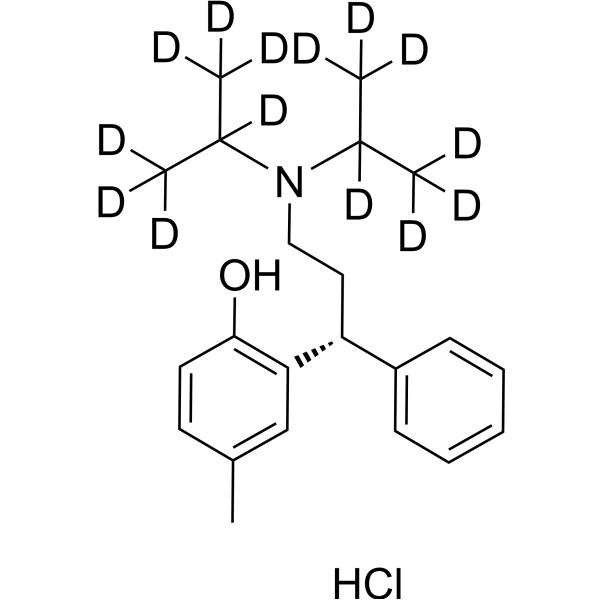
Tolterodine-d14 (hydrochloride) is the deuterium labeled Tolterodine hydrochloride . Tolterodine ((R)-(+)-Tolterodine) is a mAChR inhibitor and substrate for cytochrome P450 enzymes. Tolterodine competitively binds acetylcholine, reduces sympathetic excitation, and inhibits involuntary bladder muscle contraction. Tolterodine restores the Nrf2/NF-κB signaling pathway, mediates protection against inflammatory response and ferroptosis. Tolterodine ameliorates LPS (HY-D1056)-induced reactive oxygen species production and lipid oxidation. Tolterodine can be used for the research of urinary tract infections and overactive bladder.
|
-
- HY-A0024R
-
|
(R)-(+)-Tolterodine (Standard); (+)-Tolterodine (Standard); (R)-Tolterodine (Standard); PNU-200583 (Standard)
|
Reference Standards
mAChR
Cytochrome P450
|
Neurological Disease
Cancer
|
|
Tolterodine (Standard) is the analytical standard of Tolterodine. This product is intended for research and analytical applications. Tolterodine ((R)-(+)-Tolterodine) is a mAChR inhibitor and substrate for cytochrome P450 enzymes. Tolterodine competitively binds acetylcholine, reduces sympathetic excitation, and inhibits involuntary bladder muscle contraction. Tolterodine restores the Nrf2/NF-κB signaling pathway, mediates protection against inflammatory response and ferroptosis. Tolterodine ameliorates LPS (HY-D1056)-induced reactive oxygen species production and lipid oxidation. Tolterodine can be used for the research of urinary tract infections and overactive bladder.
|
-

- HY-14865R
-
|
PTK 0796 (Standard); Amadacycline (Standard)
|
Reference Standards
Bacterial
Antibiotic
|
Infection
|
|
Omadacycline (Standard) is the analytical standard of Omadacycline. This product is intended for research and analytical applications. Omadacycline (PTK 0796), a first-in-class orally active aminomethylcycline antibacterial, is a member of the tetracycline class of antibiotics. Omadacycline acts through the inhibition of bacterial protein synthesis by binding to the 30S ribosomal subunit. Omadacycline possesses broad-spectrum antibacterial activity against aerobic and anaerobic Gram-positive and Gram-negative bacteria, as well as atypical bacteria. Omadacycline can be used for the research of acute bacterial skin and skin-structure infections, community-acquired pneumonia, and urinary tract infections .
|
-

- HY-14865CR
-
|
PTK0796 hydrochloride (Standard); Amadacycline hydrochloride (Standard)
|
Reference Standards
Bacterial
Antibiotic
|
Infection
|
|
Omadacycline (hydrochloride) (Standard) is the analytical standard of Omadacycline (hydrochloride). This product is intended for research and analytical applications. Omadacycline (PTK 0796) hydrochloride, a first-in-class orally active aminomethylcycline antibacterial, is a member of the tetracycline class of antibiotics. Omadacycline hydrochloride acts through the inhibition of bacterial protein synthesis by binding to the 30S ribosomal subunit. Omadacycline hydrochloride possesses broad-spectrum antibacterial activity against aerobic and anaerobic Gram-positive and Gram-negative bacteria, as well as atypical bacteria. Omadacycline hydrochloride can be used for the research of acute bacterial skin and skin-structure infections, community-acquired pneumonia, and urinary tract infections[1][2][3][4].
|
-

- HY-106773
-
|
|
Bacterial
|
Infection
|
|
Norfloxacin succinil is a quinolone antibacterial agent. Norfloxacin succinil can be used in the research of infectious diseases such as urinary tract infections .
|
-

- HY-123448
-
|
|
Bacterial
Antibiotic
|
Infection
|
|
CCG-120304 is a TonB system inhibitor and bacteriostatic agent. CCG-120304 inhibits TonB-dependent functions. CCG-120304 is applicable to research related to urinary tract infections .
|
-

- HY-119555
-
|
|
Bacterial
|
Infection
|
|
Nifurpipone is an orally active broad-spectrum antimicrobial agent. Nifurpipone acts against Gram-positive and Gram-negative bacteria, and reduces bacterial loads in systemic, intramuscular and urinary tract infections in mouse models. Nifurpipone can be used in studies related to bacterial infections .
|
-

- HY-174852
-
|
|
Antibiotic
Bacterial
|
Infection
|
|
Antibacterial agent 285 (Compound 3) is a cephalosporin antibiotic. Antibacterial agent 285 has significant antibacterial activity against gram-negative bacterium with MICs of 0.125-0.5, 0.125-0.5 and 0.125-2 μg/mL for carbapenem-resistant Acinetobacter baumannii (CRAB), Klebsiella pneumoniae (CRE) and Pseudomonas aeruginosa (CRPA), respectively. Antibacterial agent 285 can be used for bacterial infection research, such as complicated urinary tract infections (cUTI) and kidney infections .
|
-

- HY-W018143
-
|
|
Bacterial
Fungal
|
Infection
|
|
1-Methyl-4-nitroimidazole is an antibacterial agent. 1-Methyl-4-nitroimidazole is reduced by bacterial nitroreductases to form toxic derivatives, which cause DNA damage, inhibit bacterial nucleic acid synthesis, generate toxic superoxides through futile cycling of reduced radical anions, and induce bacterial cell death. 1-Methyl-4-nitroimidazole exhibits moderate in vitro activity against bacteria and fungal. 1-Methyl-4-nitroimidazole can be used in the research of skin infections, purulent infections and urinary tract infections .
|
-

- HY-90010R
-
|
Kabi-2234 (Standard); PNU-200583E (Standard)
|
Reference Standards
mAChR
Cytochrome P450
|
Neurological Disease
Cancer
|
|
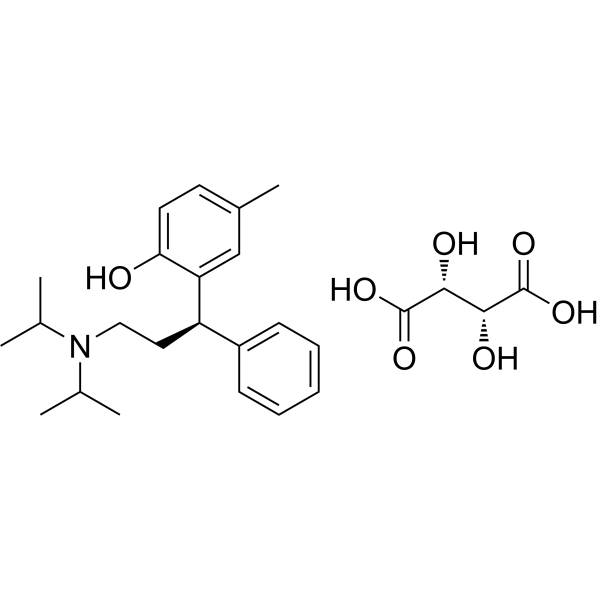
Tolterodine (tartrate) (Standard) is the analytical standard of Tolterodine tartrate. This product is intended for research and analytical applications. Tolterodine ((R)-(+)-Tolterodine) is a mAChR inhibitor and substrate for cytochrome P450 enzymes. Tolterodine competitively binds acetylcholine, reduces sympathetic excitation, and inhibits involuntary bladder muscle contraction. Tolterodine restores the Nrf2/NF-κB signaling pathway, mediates protection against inflammatory response and ferroptosis. Tolterodine ameliorates LPS (HY-D1056)-induced reactive oxygen species production and lipid oxidation. Tolterodine can be used for the research of urinary tract infections and overactive bladder.
|
-
- HY-14865BR
-
|
PTK 0796 tosylate (Standard); Amadacycline tosylate (Standard)
|
Reference Standards
Bacterial
Antibiotic
|
Infection
|
|
Omadacycline (tosylate) (Standard) is the analytical standard of Omadacycline (tosylate). This product is intended for research and analytical applications. Omadacycline (PTK 0796) tosylate, a first-in-class orally active aminomethylcycline antibacterial, is a member of the tetracycline class of antibiotics. Omadacycline tosylate acts through the inhibition of bacterial protein synthesis by binding to the 30S ribosomal subunit. Omadacycline tosylate possesses broad-spectrum antibacterial activity against aerobic and anaerobic Gram-positive and Gram-negative bacteria, as well as atypical bacteria. Omadacycline tosylate can be used for the research of acute bacterial skin and skin-structure infections, community-acquired pneumonia, and urinary tract infections .
|
-

- HY-90010S
-
|
Kabi-2234-d14; PNU-200583E-d14
|
Isotope-Labeled Compounds
mAChR
Cytochrome P450
|
Neurological Disease
Cancer
|
|
Tolterodine tartrate-d14 (Kabi-2234-d14) is deuterium labeled Tolterodine tartrate. Tolterodine ((R)-(+)-Tolterodine) is a mAChR inhibitor and substrate for cytochrome P450 enzymes. Tolterodine competitively binds acetylcholine, reduces sympathetic excitation, and inhibits involuntary bladder muscle contraction. Tolterodine restores the Nrf2/NF-κB signaling pathway, mediates protection against inflammatory response and ferroptosis. Tolterodine ameliorates LPS (HY-D1056)-induced reactive oxygen species production and lipid oxidation. Tolterodine can be used for the research of urinary tract infections and overactive bladder.
|
-

- HY-N7101
-
|
U-76,252; CS-807
|
Bacterial
Antibiotic
Penicillin-binding protein (PBP)
|
Infection
|
|
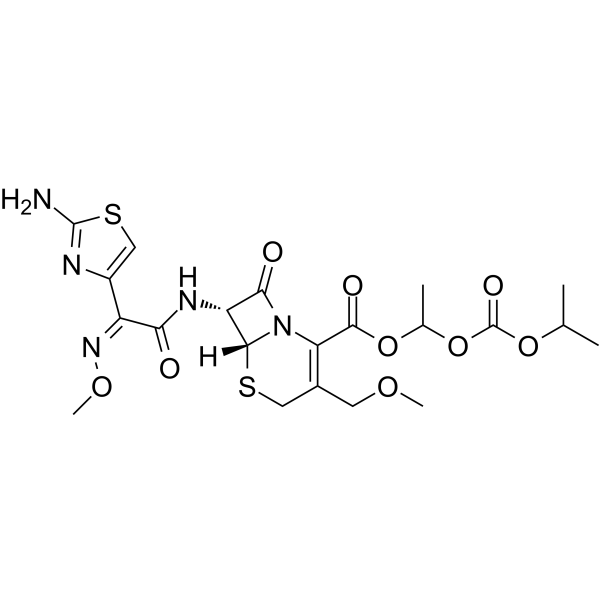
Cefpodoxime Proxetil is an orally active broad spectrum third-generation cephalosporin with potent antibacterial activity against both Gram-positive and Gram-negative bacteria including staphylococci, streptococci, Haemophilus influenzae, Neisseria gonorrhoeae, Escherichia coli, Klebsiella pnuemoniae, Citrobacter spp, and Proteus spp. Cefpodoxime Proxetil binds to penicillin binding proteins (PBPs), which inhibits peptidoglycan synthesis, finally results in interfering bacterial cell wall biosynthesis. Cefpodoxime Proxetil can be used against skin structure infections, acute otitis media, pharyngitis, tonsillitis, upper respiratory tract infection, urinary tract infections and sexually transmitted diseases .
|
-
- HY-B0724AR
-
|
T-3762 (Standard); Pazufloxacin methanesulfonate (Standard); Pazufloxacin mesilate (Standard)
|
Reference Standards
Bacterial
DNA/RNA Synthesis
|
Infection
|
|
Pazufloxacin (mesylate) (Standard) is the analytical standard of Pazufloxacin mesylate (HY-B0724A). This product is intended for research and analytical applications. Pazufloxacin mesylate is an orally active fluoroquinolone antimicrobial agent. Pazufloxacin mesylate inhibits DNA gyrase with IC50 values of 0.88 μg/mL (E. coli) and 1.9 μg/mL (P. aeruginosa). Pazufloxacin mesylate exhibits broad-spectrum antimicrobial activity, with MIC90 values ranging from 0.025 to 100 μg/mL against Gram-positive and Gram-negative bacteria, non-fermenting bacteria, Legionella spp., and anaerobic bacteria. Pazufloxacin mesylate is indicated for research on systemic infections, lung infections, urinary tract infections, and Legionella pneumonia .
|
-

- HY-B0724BS
-
|
T3761-d4
|
Isotope-Labeled Compounds
Bacterial
DNA/RNA Synthesis
|
Infection
|
|
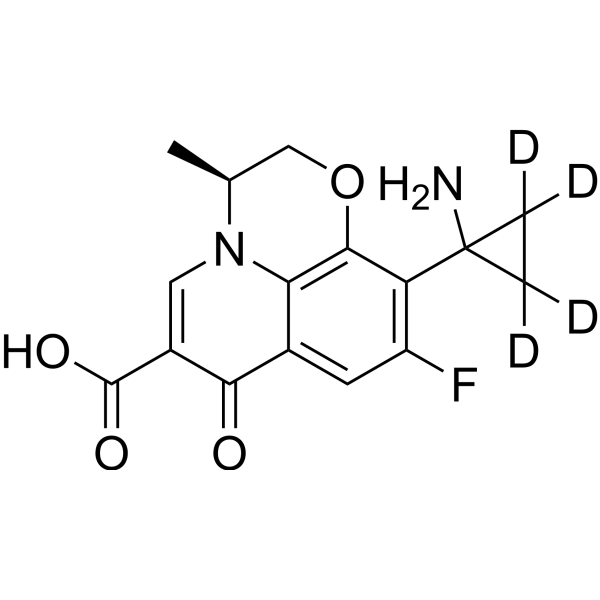
Pazufloxacin-d4 is deuterium labeled Pazufloxacin (HY-B0724B). Pazufloxacin is an orally active fluoroquinolone antimicrobial agent. Pazufloxacin inhibits DNA gyrase with IC50 values of 0.88 μg/mL (E. coli) and 1.9 μg/mL (P. aeruginosa). Pazufloxacin exhibits broad-spectrum antimicrobial activity, with MIC90 values ranging from 0.025 to 100 μg/mL against Gram-positive and Gram-negative bacteria, non-fermenting bacteria, Legionella spp., and anaerobic bacteria. Pazufloxacin is indicated for research on systemic infections, lung infections, urinary tract infections, and Legionella pneumonia .
|
-
- HY-18257
-
|
|
Antibiotic
Bacterial
Dengue Virus
Amyloid-β
HIV Integrase
|
Infection
Neurological Disease
Inflammation/Immunology
|
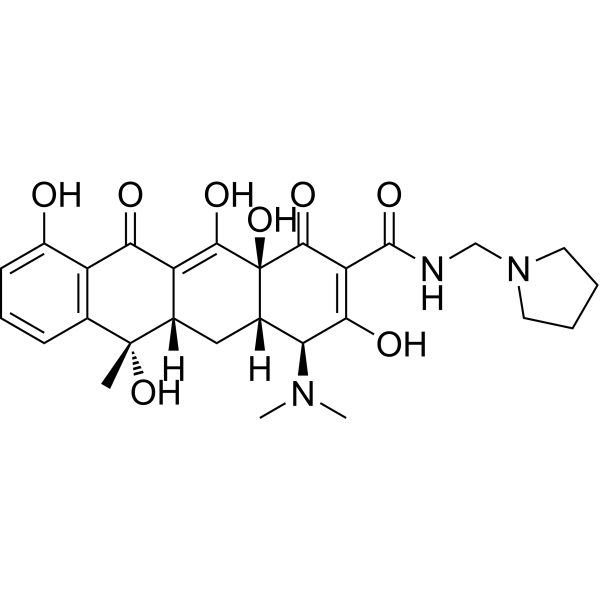
Rolitetracycline is a highly soluble, broad-spectrum antibiotic derived from tetracycline. Rolitetracycline binds to and stabilizes bovine serum albumin, and also inhibits HIV-1 integrase, blocks Aβ fibril formation and suppresses dengue virus proliferation. Rolitetracycline mediates the inhibition of Aβ fibrils via a specific three-dimensional pharmacophore conformation, and exerts bacteriostatic and bactericidal activities. Rolitetracycline acts synergistically with Penicillin G (HY-N7139) or Cephalothin (HY-B1275A) to alter the effects on microbial growth. Rolitetracycline serves as an important tool compound for the study of bacterial infections (urinary tract infections, sepsis), HIV-1 and dengue virus infections, as well as Alzheimer's disease .
|
-
- HY-N7101R
-
|
U-76,252 (Standard); CS-807 (Standard)
|
Reference Standards
Bacterial
Antibiotic
Penicillin-binding protein (PBP)
|
Infection
|
|
Cefpodoxime Proxetil (Standard) is the analytical standard of Cefpodoxime Proxetil. This product is intended for research and analytical applications. Cefpodoxime Proxetil is an orally active broad spectrum third-generation cephalosporin with potent antibacterial activity against both Gram-positive and Gram-negative bacteria including staphylococci, streptococci, Haemophilus influenzae, Neisseria gonorrhoeae, Escherichia coli, Klebsiella pnuemoniae, Citrobacter spp, and Proteus spp. Cefpodoxime Proxetil binds to penicillin binding proteins (PBPs), which inhibits peptidoglycan synthesis, finally results in interfering bacterial cell wall biosynthesis. Cefpodoxime Proxetil can be used against skin structure infections, acute otitis media, pharyngitis, tonsillitis, upper respiratory tract infection, urinary tract infections and sexually transmitted diseases .
|
-

- HY-W040128
-
|
|
Antibiotic
Autophagy
JNK
Bcl-2 Family
|
Infection
|
|
Kanamycins sulfate is a blood-brain barrier-permeable JNK1 and Bcl-2 modulator as well as an antibiotic, with broad-spectrum antibacterial, and biofilm-inhibiting activities, and it induces autophagy. Kanamycins sulfate promotes Bcl-2 phosphorylation to upregulate autophagy levels, triggering changes such as mitochondrial swelling and endoplasmic reticulum expansion. Consequently, it causes reversible neuronal damage in the dorsal cochlear nucleus without inducing significant neuronal apoptosis. In the presence of exogenous alanine or glucose, Kanamycins sulfate effectively kills drug-resistant bacteria, restores drug sensitivity of multidrug-resistant bacteria, and alleviates urinary tract and kidney infections in mice. Kanamycins sulfate can be applied to scientific research related to Mycobacterium tuberculosis, salmonellosis, brucellosis, shigellosis, urinary tract infections, and reversible neurotoxicity .
|
-

- HY-D1056B2
-
|
LPS, from bacterial (Proteus mirabilis)
|
Toll-like Receptor (TLR)
|
Inflammation/Immunology
|
Lipopolysaccharides, from Proteus mirabilis are lipopolysaccharide endotoxins and TLR-4 activators derived from Proteus mirabilis, classified as S-type LPS, which can activate pathogen-associated molecular patterns (PAMP) of the immune system and induce cellular secretion of migrasomes. Lipopolysaccharides, from Proteus mirabilis exhibit a typical three-part structure: O-antigen, core oligosaccharide, and lipid A. Proteus mirabilis is a major pathogen causing urinary tract infections and may also contribute to rheumatoid arthritis. Lipopolysaccharides, from Proteus mirabilis also exhibit potential anti-tumor effects, demonstrating in vivo inhibitory activity against solid tumors such as meningosarcoma and Walker carcinosarcoma .
It is recommended to prepare a solution with concentration ≥2 mg/mL. Vortex thoroughly for more than 10 minutes. Due to the adsorption characteristics of LPS, silanized container or low adsorption centrifuge tubes should be used for aliquoting and storage, and mix thoroughly before use.
|
-

- HY-N7101S
-
|
U-76-d7,252-d7; CS-807-d7
|
Isotope-Labeled Compounds
Bacterial
Antibiotic
Penicillin-binding protein (PBP)
|
Infection
|
|
Cefpodoxime proxetil-d7 (U-76-d7,252-d7; CS-807-d7) is the deuterium labeled Cefpodoxime Proxetil (HY-N7101). Cefpodoxime Proxetil is an orally active broad spectrum third-generation cephalosporin with potent antibacterial activity against both Gram-positive and Gram-negative bacteria including staphylococci, streptococci, Haemophilus influenzae, Neisseria gonorrhoeae, Escherichia coli, Klebsiella pnuemoniae, Citrobacter spp, and Proteus spp. Cefpodoxime Proxetil binds to penicillin binding proteins (PBPs), which inhibits peptidoglycan synthesis, finally results in interfering bacterial cell wall biosynthesis. Cefpodoxime Proxetil can be used against skin structure infections, acute otitis media, pharyngitis, tonsillitis, upper respiratory tract infection, urinary tract infections and sexually transmitted diseases .
|
-

| Cat. No. |
Product Name |
Type |
-
- HY-D1056B2
-
|
LPS, from bacterial (Proteus mirabilis)
|
Biochemical Assay Reagents
|
Lipopolysaccharides, from Proteus mirabilis are lipopolysaccharide endotoxins and TLR-4 activators derived from Proteus mirabilis, classified as S-type LPS, which can activate pathogen-associated molecular patterns (PAMP) of the immune system and induce cellular secretion of migrasomes. Lipopolysaccharides, from Proteus mirabilis exhibit a typical three-part structure: O-antigen, core oligosaccharide, and lipid A. Proteus mirabilis is a major pathogen causing urinary tract infections and may also contribute to rheumatoid arthritis. Lipopolysaccharides, from Proteus mirabilis also exhibit potential anti-tumor effects, demonstrating in vivo inhibitory activity against solid tumors such as meningosarcoma and Walker carcinosarcoma .
It is recommended to prepare a solution with concentration ≥2 mg/mL. Vortex thoroughly for more than 10 minutes. Due to the adsorption characteristics of LPS, silanized container or low adsorption centrifuge tubes should be used for aliquoting and storage, and mix thoroughly before use.
|
| Cat. No. |
Product Name |
Category |
Target |
Chemical Structure |
| Cat. No. |
Product Name |
Chemical Structure |
-
- HY-B0322S
-
1 Publications Verification
|
|
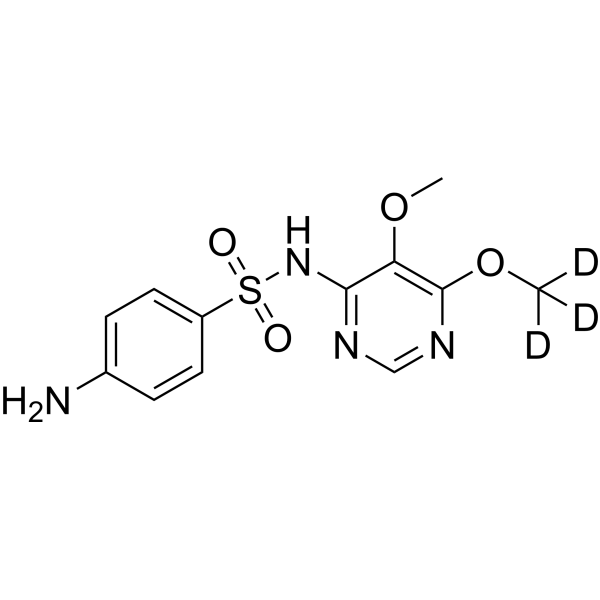
Sulfamethoxazole-d4 (Ro 4-2130-d4) is a deuterium labeled Sulfamethoxazole (HY-B0322). Sulfamethoxazole (Ro 4-2130) is a sulfonamide antibiotic with a widespread antibacterial activity. Sulfamethoxazole inhibits bacterial folate metabolism by competing with 4-Aminobenzoic acid (HY-B1008) (PABA) to act on dihydropteroate synthetase and dihydropteroate reductase. Sulfamethoxazole can be used for the study of urinary tract infections (UTIs), prostatitis, and bronchitis .
|
-
-
- HY-B0510S
-
|
|
|
Trimethoprim-d9 is the deuterium labeled Trimethoprim. Trimethoprim is a bacteriostatic antibiotic and an orally active dihydrofolate reductase inhibitor. Trimethoprim is active against a wide range of Gram-positive and Gram-negative aerobic bacteria. Trimethoprim has the potential for urinary tract infections, Shigellosis and Pneumocystis pneumonia treatment .
|
-
-
- HY-W015591S
-
|
|
|
Mandelic acid-2,3,4,5,6-d5 is the deuterium labeled Mandelic acid. Mandelic acid ((±)-Mandelic acid), an alpha-hydroxycarboxylic acid, has been widely used as an intermediate of pharmaceutical and fine chemicals. Mandelic acid shows antimicrobial activity and has been used for the research of urinary tract infections and vaginal trichomoniasis. Mandelic acid exhibits high sperm-immobilizing activity and low vaginal irritation .
|
-
-
- HY-B0510S2
-
|
|
|
Trimethoprim-d3is the deuterium labeled Trimethoprim. Trimethoprim is a bacteriostatic antibiotic and an orally active dihydrofolate reductase inhibitor. Trimethoprim is active against a wide range of Gram-positive and Gram-negative aerobic bacteria. Trimethoprim has the potential for urinary tract infections, Shigellosis and Pneumocystis pneumonia treatment .
|
-
-
- HY-B0322S1
-
|
|
|
Sulfamethoxazole- 13C6 (Ro 4-2130- 13C6) is a 13C labeled Sulfamethoxazole (HY-B0322). Sulfamethoxazole (Ro 4-2130) is a sulfonamide antibiotic with a widespread antibacterial activity. Sulfamethoxazole inhibits bacterial folate metabolism by competing with 4-Aminobenzoic acid (HY-B1008) (PABA) to act on dihydropteroate synthetase and dihydropteroate reductase. Sulfamethoxazole can be used for the study of urinary tract infections (UTIs), prostatitis, and bronchitis .
|
-
-
- HY-A0090S
-
|
|
|
Nitrofurantoin- 13C3 is the 13C labeled Nitrofurantoin (HY-A0090) . Nitrofurantoin is a potent and orally active broad-spectrum beta-lactamase antimicrobial agent. Nitrofurantoin acts as an antibiotic and can be used for the study of urinary tract infections (UTIs), including cystitis and kidney infections .
|
-
-
- HY-B0439S1
-
|
|
|
Sulfadoxine-d3 is a deuterium labeled Sulfadoxine (HY-B0439). Sulfadoxine is a sulfonamide that is used, usually in combination with Pyrimethamine(HY-18062), for multidrug-resistant Plasmodium falciparum and P. vivax inhibition. Unlike PYR, Sulfadoxine has no impact on HIV replication or MT-2 cell cycle progression. But also Sulfadoxine exhibits suppression on respiratory, and urinary tract infections .
|
-
-
- HY-W654255
-
|
|
|
Mandelic Acid- 13C8 ((±)-Mandelic acid- 13C8) is the 13C-labeled Mandelic acid (HY-W015591). Mandelic acid ((±)-Mandelic acid), an alpha-hydroxycarboxylic acid, has been widely used as an intermediate of pharmaceutical and fine chemicals. Mandelic acid shows antimicrobial activity and has been used for the research of urinary tract infections and vaginal trichomoniasis. Mandelic acid exhibits high sperm-immobilizing activity and low vaginal irritation .
|
-
-
- HY-B1002S
-
|
|
|
Oxolinic acid-d5 is the deuterium labeled Oxolinic acid. Oxolinic acid is an antibiotic against both Gram-negative and Gram-positive bacteria. Oxolinic acid can be used for the research of acute and chronic urinary tract infections. Oxolinic acid is a DNA/RNA synthesis inhibitor. Oxolinic acid acts a dopamine uptake inhibitor and stimulants locomotor effect in mice .
|
-
-
- HY-B0510S3
-
|
|
|
Trimethoprim- 13C3 is the deuterium labeled Trimethoprim (HY-B0510) . Trimethoprim is a bacteriostatic antibiotic and an orally active dihydrofolate reductase inhibitor. Trimethoprim is active against a wide range of Gram-positive and Gram-negative aerobic bacteria. Trimethoprim has the potential for the research of urinary tract infections, Shigellosis and Pneumocystis pneumonia. Trimethoprim can inhibit infection of Influenza A virus in chick embryo when combinated with zinc .
|
-
-
- HY-B0724BS
-
|
|
|
Pazufloxacin-d4 is deuterium labeled Pazufloxacin (HY-B0724B). Pazufloxacin is an orally active fluoroquinolone antimicrobial agent. Pazufloxacin inhibits DNA gyrase with IC50 values of 0.88 μg/mL (E. coli) and 1.9 μg/mL (P. aeruginosa). Pazufloxacin exhibits broad-spectrum antimicrobial activity, with MIC90 values ranging from 0.025 to 100 μg/mL against Gram-positive and Gram-negative bacteria, non-fermenting bacteria, Legionella spp., and anaerobic bacteria. Pazufloxacin is indicated for research on systemic infections, lung infections, urinary tract infections, and Legionella pneumonia .
|
-
-
- HY-B0333S
-
|
|
|
Sulfamethizole-d4 is the deuterium labeled Sulfamethizole (HY-B0333). Sulfamethizole is a sulfathiazole antibiotic. Sulfamethizole inhibits the synthesis of folic acid and thymine, and selectively suppresses Photobacterium phosphoreum bioluminescence. Sulfamethizole exerts antibacterial activity against Escherichia coli-mediated urinary tract infections but no activity against sulII gene-positive Escherichia coli. Sulfamethizole is applicable for the research of urinary tract infections and Photobacterium phosphoreum bioluminescence mechanisms .
|
-
-
- HY-B0333S2
-
|
|
|
Sulfamethizole-d4-1 is the deuterium labeled Sulfamethizole (HY-B0333). Sulfamethizole is a sulfathiazole antibiotic. Sulfamethizole inhibits the synthesis of folic acid and thymine, and selectively suppresses Photobacterium phosphoreum bioluminescence. Sulfamethizole exerts antibacterial activity against Escherichia coli-mediated urinary tract infections but no activity against sulII gene-positive Escherichia coli. Sulfamethizole is applicable for the research of urinary tract infections and Photobacterium phosphoreum bioluminescence mechanisms .
|
-
-
- HY-W719074
-
|
|
|
Sulfisomidin-d4 (Sulfaisodimidine-d4) is deuterium labeled Sulfisomidin. Sulfisomidin (Sulfaisodimidine) is an orally active short-acting sulfonamide antibacterial. Sulfisomidin can be used for the research of lower urinary tract infections .
|
-
-
- HY-B0213S
-
|
|
|
Sulfameter-d4 (Sulfametoxydiazine-d4) is the deuterium labeled Sulfameter (HY-B0213) . Sulfameter (Sulfametoxydiazine) is an orally active long-acting sulfonamide antibiotic. Sulfameter is active against both Gram-positive and Gram-negative bacteria. Sulfameter can be used for the research of diseases such as respiratory and urinary tract infections .
|
-
-
- HY-B0213S1
-
|
|
|
Sulfameter- 13C6 (Sulfametoxydiazine- 13C6) is the 13C6 labeled Sulfameter (HY-B0213). Sulfameter (Sulfametoxydiazine) is an orally active long-acting sulfonamide antibiotic. Sulfameter is active against both Gram-positive and Gram-negative bacteria. Sulfameter can be used for the research of diseases such as respiratory and urinary tract infections .
|
-
-
- HY-B1085S
-
|
|
|
Cinoxacin-d5 is the deuterium-labeled Cinoxacin (HY-B1085) . Cinoxacin (Compound 64716),a synthetic antimicrobial related to the quinolone class of orally active antibacterial agent. Cinoxacin has antibacterial activity against many gram-negative aerobic bacteria and inhibits bacterial DNA synthesis. Cinoxacin can be used for the research of urinary tract infections and bacterial prostatitis .
|
-
-
- HY-W748430
-
|
|
|
Furagin- 13C3 (Furazidine- 13C3) is the 13C-labeled Furagin (HY-77036). Furagin (Furazidine), an analogue of Nitrofurantoin (HY-A0090), is an antibiotic with antibacterial activity against ESKAPE pathogens with MIC values of 0-32 μg/mL. Furagin inhibits human Carbonic anhydrases . Furagin is promising for research of cancer and urinary tract infections (UTIs) .
|
-
-
- HY-B0395S
-
|
|
|
Sitafloxacin-d4 (DU6859a-d4) is deuterium labeled Sitafloxacin. Sitafloxacin (DU6859a) is a potent, orally active fluoroquinolone antibiotic. Sitafloxacin shows antichlamydial activity and antibacterial activities against a broad range of gram-positive and gram-negative bacteria, including anaerobic bacteria, as well as against atypical pathogens. Sitafloxacin can be used for the research of respiratory tract infection and urinary tract infection .
|
-
-
- HY-B1415S
-
|
|
|
Clofibric acid-d4 is the deuterium labeled Clofibric acid (HY-B1415). Clofibric acid also is an herbicideClofibric acid (Chlorofibrinic acid) is an orally active PPARα agonist. Clofibric acid inhibits the fimbriation of Escherichia coli. Clofibric acid increases SOD activity. Clofibric acid lowers blood lipids and prevents experimental pyelonephritis. Clofibric acid has anticancer activity against ovarian cancer. Clofibric acid is also a herbicide. Clofibric acid is used in ovarian cancer, liver cancer, obesity, and urinary tract infection research .
|
-
-
- HY-A0024S
-
|
|
|
Tolterodine-d14 (hydrochloride) is the deuterium labeled Tolterodine hydrochloride . Tolterodine ((R)-(+)-Tolterodine) is a mAChR inhibitor and substrate for cytochrome P450 enzymes. Tolterodine competitively binds acetylcholine, reduces sympathetic excitation, and inhibits involuntary bladder muscle contraction. Tolterodine restores the Nrf2/NF-κB signaling pathway, mediates protection against inflammatory response and ferroptosis. Tolterodine ameliorates LPS (HY-D1056)-induced reactive oxygen species production and lipid oxidation. Tolterodine can be used for the research of urinary tract infections and overactive bladder.
|
-
-
- HY-N7101S
-
|
|
|
Cefpodoxime proxetil-d7 (U-76-d7,252-d7; CS-807-d7) is the deuterium labeled Cefpodoxime Proxetil (HY-N7101). Cefpodoxime Proxetil is an orally active broad spectrum third-generation cephalosporin with potent antibacterial activity against both Gram-positive and Gram-negative bacteria including staphylococci, streptococci, Haemophilus influenzae, Neisseria gonorrhoeae, Escherichia coli, Klebsiella pnuemoniae, Citrobacter spp, and Proteus spp. Cefpodoxime Proxetil binds to penicillin binding proteins (PBPs), which inhibits peptidoglycan synthesis, finally results in interfering bacterial cell wall biosynthesis. Cefpodoxime Proxetil can be used against skin structure infections, acute otitis media, pharyngitis, tonsillitis, upper respiratory tract infection, urinary tract infections and sexually transmitted diseases .
|
-
-
- HY-90010S
-
|
|
|
Tolterodine tartrate-d14 (Kabi-2234-d14) is deuterium labeled Tolterodine tartrate. Tolterodine ((R)-(+)-Tolterodine) is a mAChR inhibitor and substrate for cytochrome P450 enzymes. Tolterodine competitively binds acetylcholine, reduces sympathetic excitation, and inhibits involuntary bladder muscle contraction. Tolterodine restores the Nrf2/NF-κB signaling pathway, mediates protection against inflammatory response and ferroptosis. Tolterodine ameliorates LPS (HY-D1056)-induced reactive oxygen species production and lipid oxidation. Tolterodine can be used for the research of urinary tract infections and overactive bladder.
|
-
Your information is safe with us. * Required Fields.
Inquiry Information
- Product Name:
- Cat. No.:
- Quantity:
- MCE Japan Authorized Agent:








