



Clofibric acid
Based on 1 publication(s) in Google Scholar
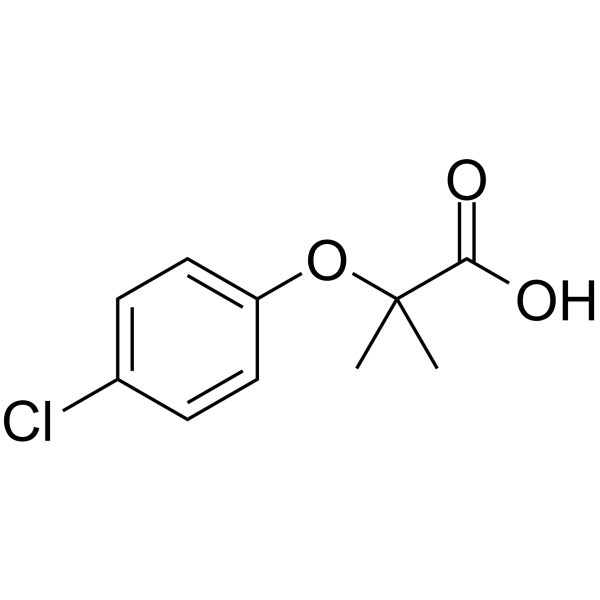
Clofibric acid (Chlorofibrinic acid) is an orally active PPARα agonist. Clofibric acid inhibits the fimbriation of Escherichia coli. Clofibric acid increases SOD activity. Clofibric acid lowers blood lipids and prevents experimental pyelonephritis. Clofibric acid has anticancer activity against ovarian cancer. Clofibric acid is also a herbicide. Clofibric acid is used in ovarian cancer, liver cancer, obesity, and urinary tract infection research.
연구목적의 판매만을 진행합니다. 환자를 대상으로 한 판매는 하지 않습니다.
- Purity : 99.92%
- CAS No.: 882-09-7
- 화학식: C10H11ClO3
- 분자량:214.65
-
보관:Powder -20°C, 3 years , 4°C, 2 years ; In solvent -80°C, 2 years , -20°C, 1 year

To place orders, for customer services and technical support, please contact: MedChemExpress USA
Tel: 609-228-6898 E-mail: [email protected] [email protected]


-
 Biological Activity
-
Chemical Information
-
용액&용해도
- Protocol
- 순도&문서
- References
-
 Help & FAQs


-
HY-B0258
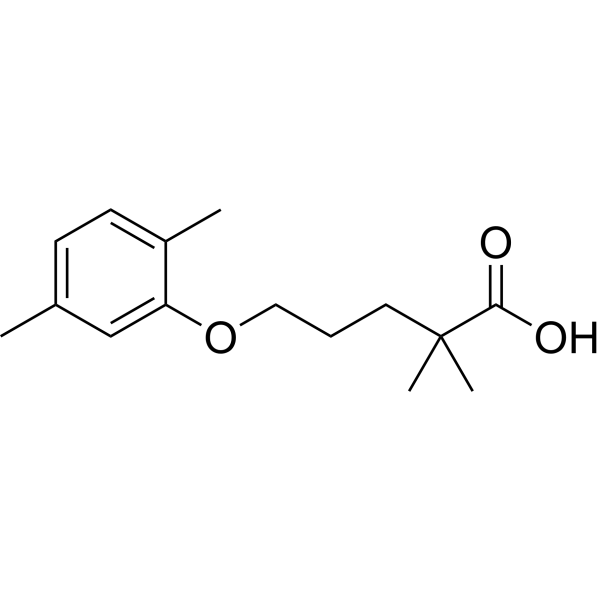
GemfibrozilCytochrome P450 Inhibitor -
HY-17386
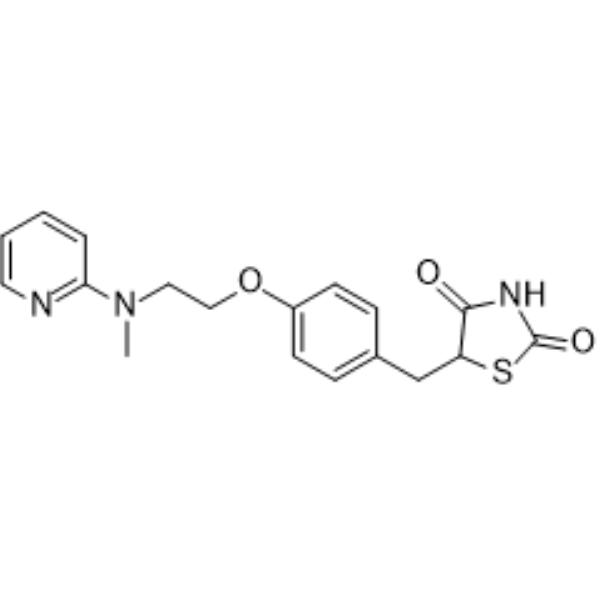
RosiglitazonePPARγ Agonist -
HY-B0287
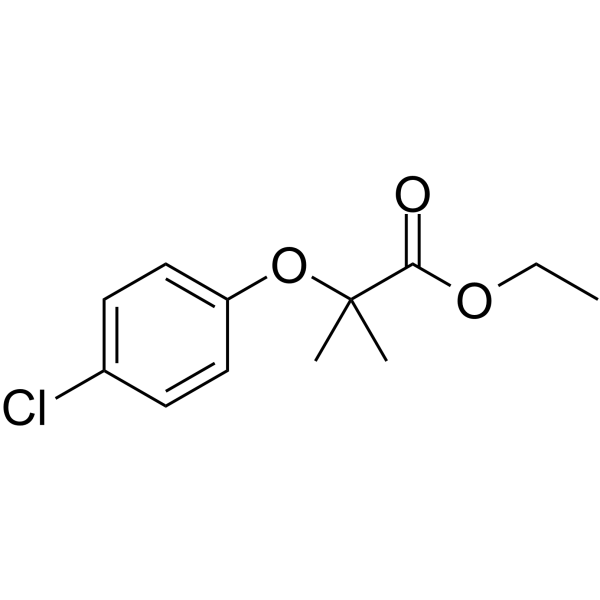
ClofibratePPAR Agonist -
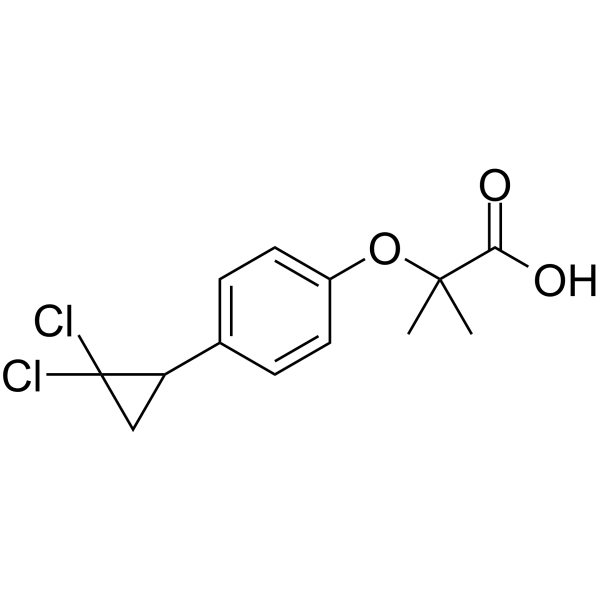
HY-B0664
CiprofibratePeroxisome Proliferator -
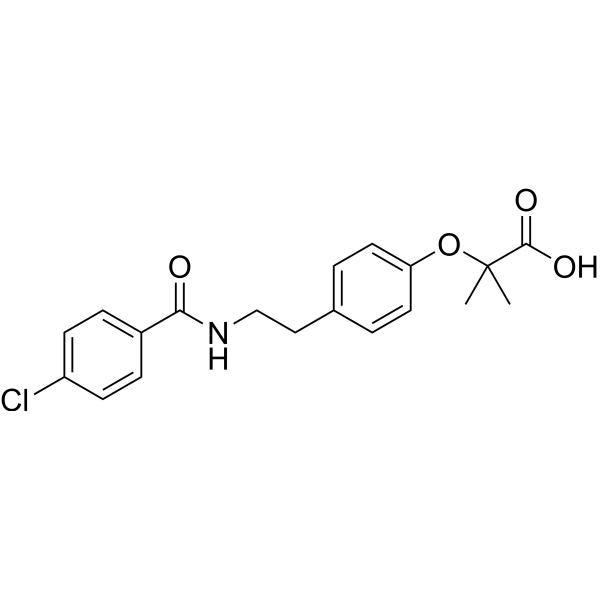
HY-B0637
BezafibratePPAR Agonist -
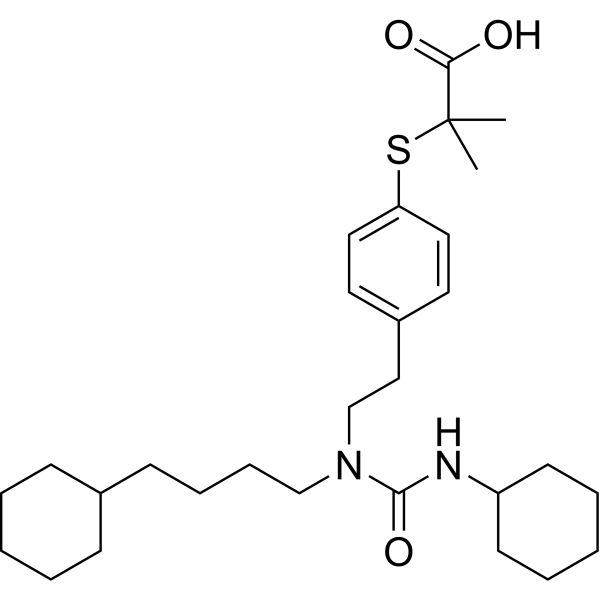
HY-13861
GW7647PPAR Agonist -
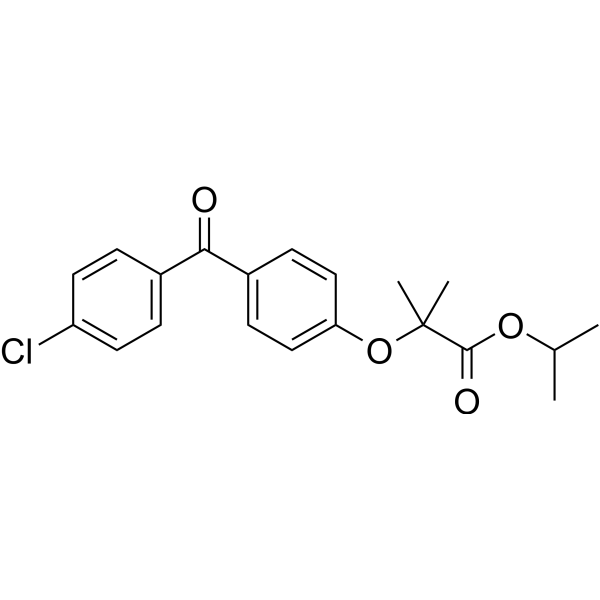
HY-17356
Fenofibrate -
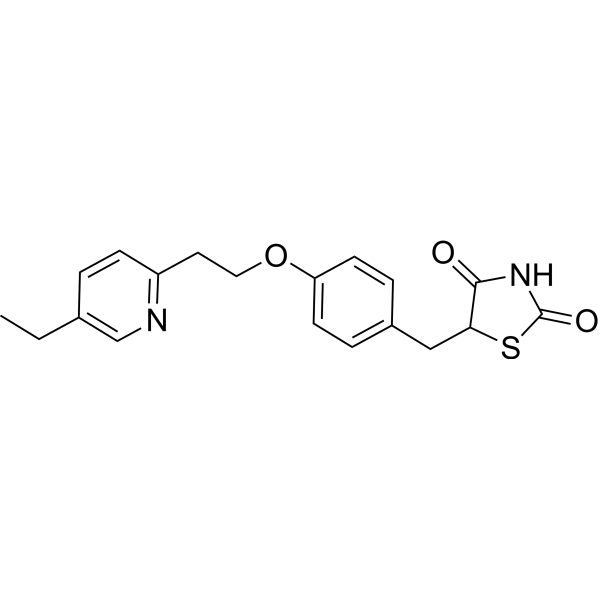
HY-13956
PioglitazonePPARγ Agonist -
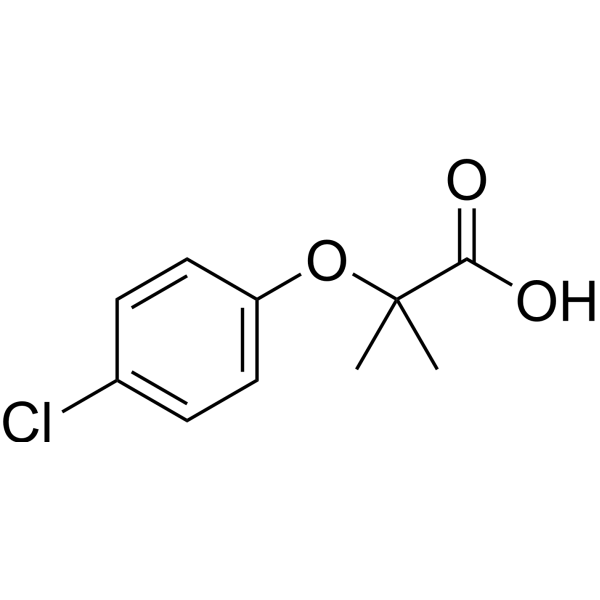
HY-B1415R
Clofibric acid (Standard)Standard of Clofibric Acid -
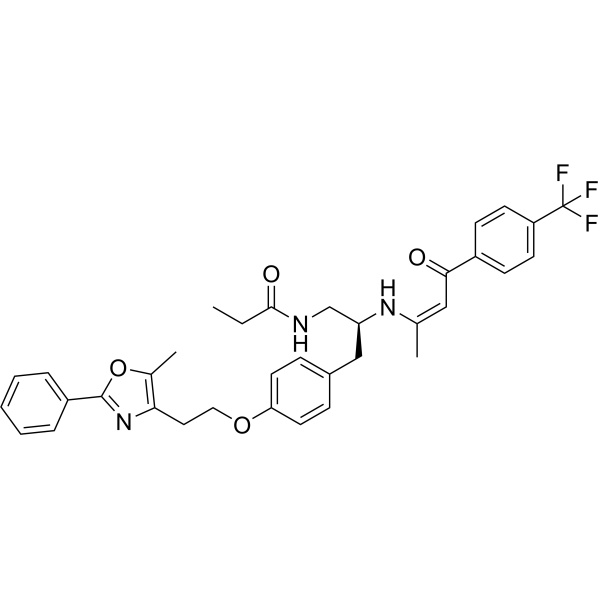
HY-15372
GW6471PPARα Antagonist -
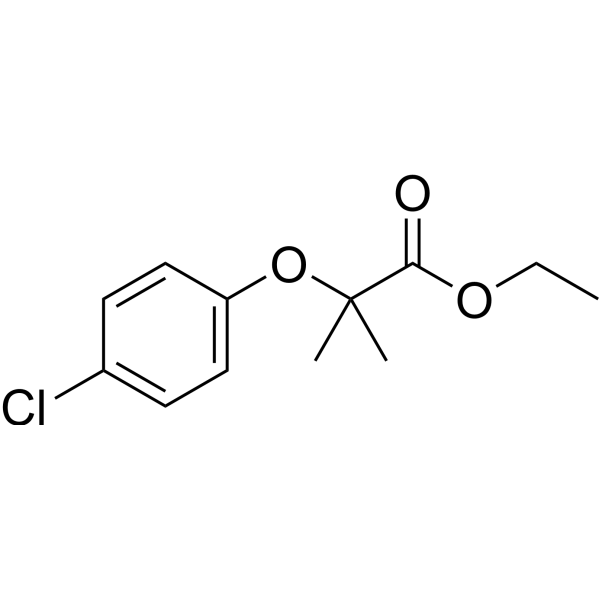
HY-B0287R
Clofibrate (Standard) -
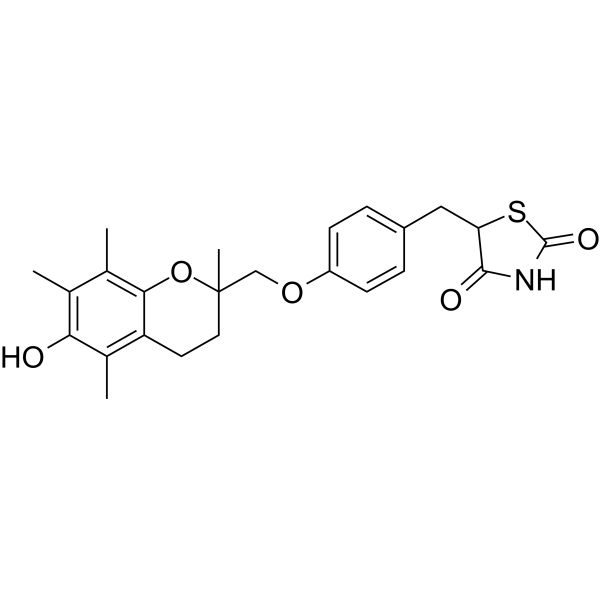
HY-50935
TroglitazonePPARγ Agonist
Publications Citing Use of MedChemExpress (MCE) Clofibric acid
More

Biological Activity
제품 설명
IC50 & Target
PPARα[1]
Cellular Effect
|
Cell Line

|
Type | Value | Description | References |
|---|---|---|---|---|
| CV-1 | EC50 |
>300 μM
Compound: 1b
|
Compound was tested for agonist activity on human Peroxisome proliferator activated receptor gamma-Gal4 chimeric receptor in transfected CV-1 cells
Compound was tested for agonist activity on human Peroxisome proliferator activated receptor gamma-Gal4 chimeric receptor in transfected CV-1 cells
|
[PMID: 10508427] |
| CV-1 | EC50 |
>300 μM
Compound: 1b
|
Compound was tested for its agonist activity against murine Peroxisome proliferator activated receptor gamma-Gal4 chimeric receptor in transfected CV-1 cells
Compound was tested for its agonist activity against murine Peroxisome proliferator activated receptor gamma-Gal4 chimeric receptor in transfected CV-1 cells
|
[PMID: 10508427] |
| CV-1 | EC50 |
50 μM
Compound: 1b
|
Compound was tested for its agonist activity against murine Peroxisome proliferator activated receptor alpha-Gal4 chimeric receptor transfected CV-1 cells
Compound was tested for its agonist activity against murine Peroxisome proliferator activated receptor alpha-Gal4 chimeric receptor transfected CV-1 cells
|
[PMID: 10508427] |
| CV-1 | EC50 |
51 μM
Compound: 1b
|
In vitro transcriptional activation of peroxisome proliferator activated alpha-receptor (PPAR) expressed in CV-1 cells
In vitro transcriptional activation of peroxisome proliferator activated alpha-receptor (PPAR) expressed in CV-1 cells
|
[PMID: 8576907] |
| CV-1 | EC50 |
55 μM
Compound: 1b
|
Compound was tested for agonist activity on human Peroxisome proliferator activated receptor alpha-Gal4 chimeric receptor in transfected CV-1 cells
Compound was tested for agonist activity on human Peroxisome proliferator activated receptor alpha-Gal4 chimeric receptor in transfected CV-1 cells
|
[PMID: 10508427] |
| CV-1 | EC50 |
600 μM
Compound: 1b
|
In vitro transcriptional activation of Peroxisome proliferator activated receptor gamma (PPAR) expressed in CV-1 cells
In vitro transcriptional activation of Peroxisome proliferator activated receptor gamma (PPAR) expressed in CV-1 cells
|
[PMID: 8576907] |
| HEK293 | EC50 |
55 μM
Compound: 2
|
Transactivation of human GAL4-fused PPARalpha ligand binding domain transfected in HEK293 cells after 18 hrs by dual luciferase reporter gene assay
Transactivation of human GAL4-fused PPARalpha ligand binding domain transfected in HEK293 cells after 18 hrs by dual luciferase reporter gene assay
|
[PMID: 23102891] |
| HEK293 | EC50 |
55 μM
Compound: 7
|
Agonist activity at human PPARalpha expressed in HEK293 cells assessed as receptor transactivation at by luciferase reporter gene assay
Agonist activity at human PPARalpha expressed in HEK293 cells assessed as receptor transactivation at by luciferase reporter gene assay
|
[PMID: 19791744] |
| HEK293 | EC50 |
55 μM
Compound: Clofibric acid
|
Agonist activity at PPARalpha ligand binding domain expressed in HEK293 cells co-expressing GAL4 after 18 hrs by dual-luciferase activity based transactivation assay
Agonist activity at PPARalpha ligand binding domain expressed in HEK293 cells co-expressing GAL4 after 18 hrs by dual-luciferase activity based transactivation assay
|
[PMID: 21742490] |
| HEK293-A | EC50 |
55 μM
Compound: 7
|
Transactivation of PPARalpha expressed in HEK293A cells co-expressing GAL4 after 16 to 18 hrs by luciferase reporter gene assay
Transactivation of PPARalpha expressed in HEK293A cells co-expressing GAL4 after 16 to 18 hrs by luciferase reporter gene assay
|
[PMID: 23137448] |
| HepG2 | EC50 |
309 μM
Compound: Clofibric acid
|
Effective concentration against human PPARgamma expressed in HepG2 cells
Effective concentration against human PPARgamma expressed in HepG2 cells
|
[PMID: 16107150] |
| HepG2 | EC50 |
39.6 μM
Compound: Clofibric acid
|
Effective concentration against human PPARalpha expressed in HepG2 cells
Effective concentration against human PPARalpha expressed in HepG2 cells
|
[PMID: 16107150] |
| HepG2 | EC50 |
50 μM
Compound: Clofibric acid
|
Transactivation of GAL4-tagged human PPARalpha LBD expressed in human HepG2 cells at 100 nM to 100 uM incubated for 20 to 22 hrs by luciferase reporter gene assay
Transactivation of GAL4-tagged human PPARalpha LBD expressed in human HepG2 cells at 100 nM to 100 uM incubated for 20 to 22 hrs by luciferase reporter gene assay
|
[PMID: 30996794] |
In Vitro
Clofibric acid (0-500 μM; 72 h) inhibits the proliferation of OVCAR-3 and DISS cells dose-dependently[1].
Clofibric acid (0.25-0.75 mM; 5 days) increases total SOD and MnSOD activities, as well as the enzyme apoprotein and MnSOD mRNA levels in HepG2 cells[2].
Clofibric acid (10-1000 μM; 72 h after 24-h pre-incubation) increases peroxisomal β-oxidation, the relative number of peroxisomes and the mean size of peroxisomes in primary cultures of rat hepatocytes[3].
Clofibric acid (0.1-5 mM) decreases the growth rate of uropathogenic E. coli T149 in urine[5].
MedChemExpress (MCE) has not independently confirmed the accuracy of these methods. They are for reference only.
In Vivo
Clofibric acid (200 mg/kg body weight; s.c.; daily; from 6-36 weeks of age) significantly lowers fasted serum cholesterol levels in obese Zucker rats, and has various effects on the weights and lipid/cholesterol levels of different organs[4].
Clofibric acid (29 mg/kg bw; p.o.; daily) abolishes renal infection in mice with ascending urinary tract infection caused by E. coli and does not produce adverse effects on the renal parenchyma[5].
Clofibric acid (100 mg/kg; i.p.; single) attenuates Carbon tetrachloride (HY-Y0298)-induced necrosis in rats[6].
MedChemExpress (MCE) has not independently confirmed the accuracy of these methods. They are for reference only.


Chemical Information
-
CAS No. 882-09-7
-
Appearance Solid
-
분자량 214.65
-
화학식 C10H11ClO3
-
Color White to off-white
-
SMILES
CC(C)(OC1=CC=C(Cl)C=C1)C(O)=O
-
Synonyms
Chlorofibrinic acid
-
선적
Room temperature in continental US; may vary elsewhere.
-
보관
Powder -20°C 3 years 4°C 2 years In solvent -80°C 2 years -20°C 1 year


Publications (1)
-
Journal Impact Factor
-
Most Recent


용액&용해도
In Vitro:
DMSO : ≥ 100 mg/mL (465.87 mM; Hygroscopic DMSO has a significant impact on the solubility of product, please use newly opened DMSO)
H2O : 1 mg/mL (4.66 mM; ultrasonic and warming and heat to 80°C)
* "≥" means soluble, but saturation unknown.
Please refer to the solubility information to select the appropriate solvent. Once prepared, please aliquot and store the solution to prevent product inactivation from repeated freeze-thaw cycles.
Storage method and period of stock solution: -80°C, 2 years; -20°C, 1 year. When stored at -80°C, please use it within 2 years. When stored at -20°C, please use it within 1 year.
* Note: If you choose water as the stock solution, please dilute it to the working solution, then filter and sterilize it with a 0.22 μm filter before use.
Please refer to the solubility information to select the appropriate solvent. Once prepared, please aliquot and store the solution to prevent product inactivation from repeated freeze-thaw cycles.
Storage method and period of stock solution: -80°C, 2 years; -20°C, 1 year. When stored at -80°C, please use it within 2 years. When stored at -20°C, please use it within 1 year.
* Note: If you choose water as the stock solution, please dilute it to the working solution, then filter and sterilize it with a 0.22 μm filter before use.
Concentration (start) × Volume (start) = Concentration (final) × Volume (final)
In Vivo:
Select the appropriate dissolution method based on your experimental animal and administration route.
- For the following dissolution methods, please ensure to first prepare a clear stock solution using an In Vitro approach and then sequentially add co-solvents:
- To ensure reliable experimental results, the clarified stock solution can be appropriately stored based on storage conditions. As for the working solution for In Vivo experiments, it is recommended to prepare freshly and use it on the same day.
- The percentages shown for the solvents indicate their volumetric ratio in the final prepared solution. If precipitation or phase separation occurs during preparation, heat and/or sonication can be used to aid dissolution.
Add each solvent one by one: 10% DMSO 40% PEG300 5% Tween-80 45% Saline
Solubility: ≥ 2.5 mg/mL (11.65 mM); Clear solution
This protocol yields a clear solution of ≥ 2.5 mg/mL (saturation unknown).
Taking 1 mL working solution as an example, add 100 μL DMSO stock solution (25.0 mg/mL) to 400 μL PEG300, and mix evenly; then add 50 μL Tween-80 and mix evenly; then add 450 μL Saline to adjust the volume to 1 mL.
Preparation of Saline: Dissolve 0.9 g sodium chloride in ddH₂O and dilute to 100 mL to obtain a clear Saline solution.
Add each solvent one by one: 10% DMSO 90% (20% SBE-β-CD in Saline)
Solubility: ≥ 2.5 mg/mL (11.65 mM); Clear solution
This protocol yields a clear solution of ≥ 2.5 mg/mL (saturation unknown).
Taking 1 mL working solution as an example, add 100 μL DMSO stock solution (25.0 mg/mL) to 900 μL 20% SBE-β-CD in Saline, and mix evenly.
Preparation of 20% SBE-β-CD in Saline (4°C, storage for one week): 2 g SBE-β-CD powder is dissolved in 10 mL Saline, completely dissolve until clear.
In Vivo Dissolution Calculator
Please enter the basic information of animal experiments:
-
-
-
-
Recommended: Prepare an additional quantity of animals to account for potential losses during experiments.
Please enter your animal formula composition:
-
%DMSO +
Recommended: Keep the proportion of DMSO in working solution below 2% if your animal is weak.
-
%+
-
+%Tween-80 + +
-
%Saline +
The co-solvents required include: DMSO, . All of co-solvents are available by MedChemExpress (MCE). , Tween 80. All of co-solvents are available by MedChemExpress (MCE).
Working solution concentration: 0.22 mg/mL
Method for preparing stock solution: mg drug dissolved in μL DMSO. Stock solution concentration: mg/mL.
1. Take μL DMSO stock solution;
2. Add μL .
μL , mix evenly;
3. Then add μL Tween 80, mix evenly;
4. Then add μL
Please ensure that the stock solution in the first step is dissolved to a clear state, and add co-solvents in sequence. You can use ultrasonic heating (ultrasonic cleaner, recommended frequency 20-40 kHz), vortexing, etc. to assist dissolution.


순도&문서
-
Data Sheet (297 KB)
-
SDS (393 KB)
- English - EN (393 KB)
- Français - FR (393 KB)
- Deutsch - DE (393 KB)
- Norwegian - NO (393 KB)
- Español - ES (393 KB)
- Swedish - SV (393 KB)
- Italian - IT (393 KB)
- Korean - KR (393 KB)
- Portuguese - PT (393 KB)
-
Handling Instructions (2659 KB)
References
[1]. Yokoyama Y, et al. Clofibric acid, a peroxisome proliferator-activated receptor alpha ligand, inhibits growth of human ovarian cancer. Mol Cancer Ther. 2007 Apr;6(4):1379-86. [Content Brief]
[2]. Bécuwe P, et al. Effects of the peroxisome proliferator clofibric acid on superoxide dismutase expression in the human HepG2 hepatoma cell line. Biochem Pharmacol. 1999 Sep 15;58(6):1025-33. [Content Brief]
[4]. Cleary MP, et al. Effect of long-term clofibric acid treatment on serum and tissue lipid and cholesterol levels in obese Zucker rats. Atherosclerosis. 1987 Jul;66(1-2):107-12. [Content Brief]
[5]. Balagué CE, et al. Clofibric and ethacrynic acids prevent experimental pyelonephritis by Escherichia coli in mice. FEMS Immunol Med Microbiol. 2004 Nov 1;42(3):313-9. [Content Brief]
[6]. Yamakawa Y, et al. A single pretreatment with clofibric acid attenuates carbon tetrachloride-induced necrosis, but not steatosis, in rat liver. Food Chem Toxicol. 2020 Nov;145:111591. [Content Brief]
[7]. Forman BM, et, al. Hypolipidemic drugs, polyunsaturated fatty acids, and eicosanoids are ligands for peroxisome proliferator-activated receptors alpha and delta. Proc Natl Acad Sci U S A. 1997 Apr 29;94(9):4312-7. [Content Brief]
[8]. Salgado R, et, al. Biodegradation of clofibric acid and identification of its metabolites. J Hazard Mater. 2012 Nov 30;241-242:182-9. [Content Brief]
[9]. Kawashima Y, et, al. Increased activity of stearoyl-CoA desaturation in liver from rat fed clofibric acid. Biochim Biophys Acta. 1982 Dec 13;713(3):622-8. [Content Brief]


Complete Stock Solution Preparation Table
Please refer to the solubility information to select the appropriate solvent. Once prepared, please aliquot and store the solution to prevent product inactivation from repeated freeze-thaw cycles.
Storage method and period of stock solution: -80°C, 2 years; -20°C, 1 year. When stored at -80°C, please use it within 2 years. When stored at -20°C, please use it within 1 year.
| Optional Solvent | Concentration Solvent Mass | 1 mg | 5 mg | 10 mg | 25 mg |
|---|---|---|---|---|---|
| H2O / DMSO | 1 mM | 4.6587 mL | 23.2937 mL | 46.5875 mL | 116.4687 mL |
| DMSO | 5 mM | 0.9317 mL | 4.6587 mL | 9.3175 mL | 23.2937 mL |
| 10 mM | 0.4659 mL | 2.3294 mL | 4.6587 mL | 11.6469 mL | |
| 15 mM | 0.3106 mL | 1.5529 mL | 3.1058 mL | 7.7646 mL | |
| 20 mM | 0.2329 mL | 1.1647 mL | 2.3294 mL | 5.8234 mL | |
| 25 mM | 0.1863 mL | 0.9317 mL | 1.8635 mL | 4.6587 mL | |
| 30 mM | 0.1553 mL | 0.7765 mL | 1.5529 mL | 3.8823 mL | |
| 40 mM | 0.1165 mL | 0.5823 mL | 1.1647 mL | 2.9117 mL | |
| 50 mM | 0.0932 mL | 0.4659 mL | 0.9317 mL | 2.3294 mL | |
| 60 mM | 0.0776 mL | 0.3882 mL | 0.7765 mL | 1.9411 mL | |
| 80 mM | 0.0582 mL | 0.2912 mL | 0.5823 mL | 1.4559 mL | |
| 100 mM | 0.0466 mL | 0.2329 mL | 0.4659 mL | 1.1647 mL |
* Note: If you choose water as the stock solution, please dilute it to the working solution, then filter and sterilize it with a 0.22 μm filter before use.


Clofibric acid Related Classifications
HY-B1415 Related Classifications
 Powered by Bioz