



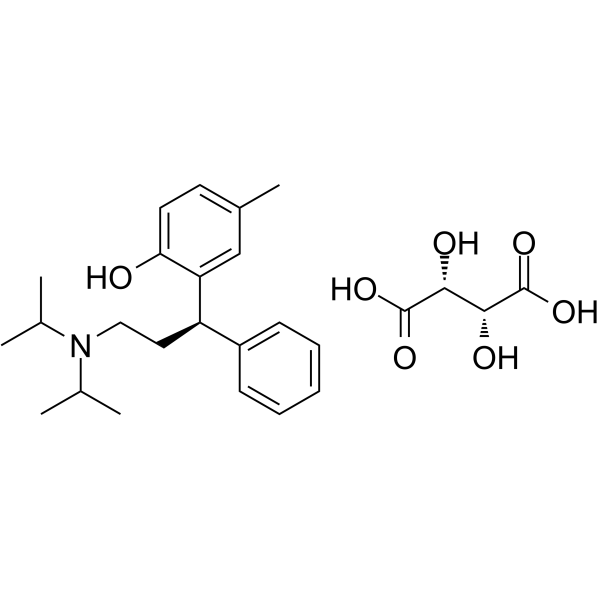
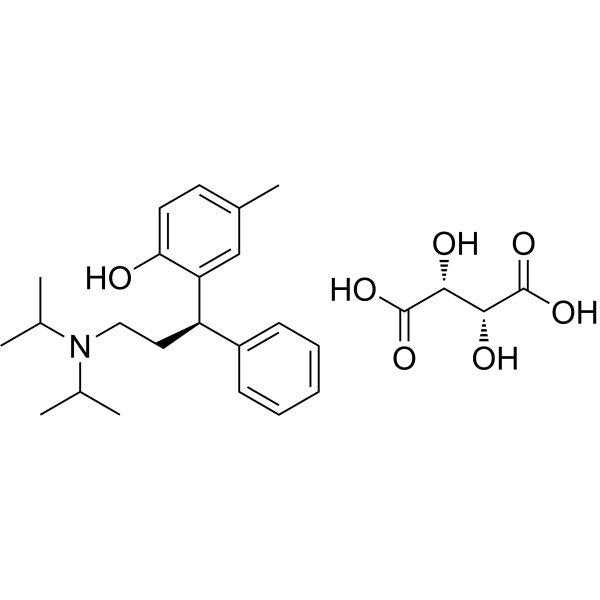
Tolterodine tartrate

Based on 1 Customer Validation
Tolterodine tartrate (Kabi-2234) is a mAChR inhibitor and substrate for cytochrome P450 enzymes. Tolterodine tartrate competitively binds acetylcholine, reduces sympathetic excitation, and inhibits involuntary bladder muscle contraction. Tolterodine tartrate restores the Nrf2/NF-κB signaling pathway, mediates protection against inflammatory response and ferroptosis. Tolterodine tartrate ameliorates LPS (HY-D1056)-induced reactive oxygen species production and lipid oxidation. Tolterodine tartrate can be used for the research of urinary tract infections and overactive bladder.
For research use only. We do not sell to patients.
- Purity : 98.64%
- CAS No.: 124937-52-6
- Formula: C26H37NO7
- Molecular Weight:475.57
-
Storage:
4°C, sealed storage, away from moisture
* In solvent : -80°C, 6 months; -20°C, 1 month (sealed storage, away from moisture)

To place orders, for customer services and technical support, please contact: MedChemExpress USA
Tel: 609-228-6898 E-mail: [email protected] [email protected]


-
 Biological Activity
-
Chemical Information
-
Solvent & Solubility
- Purity & Documentation
- References
-
 Help & FAQs


-
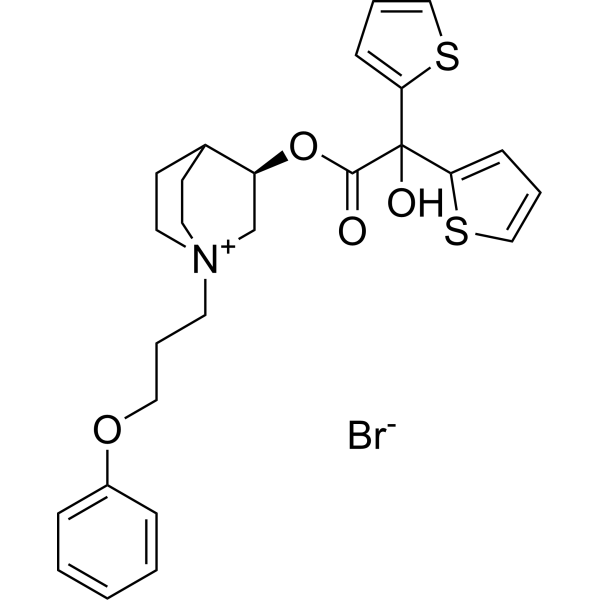
HY-14144
Aclidinium Bromide -
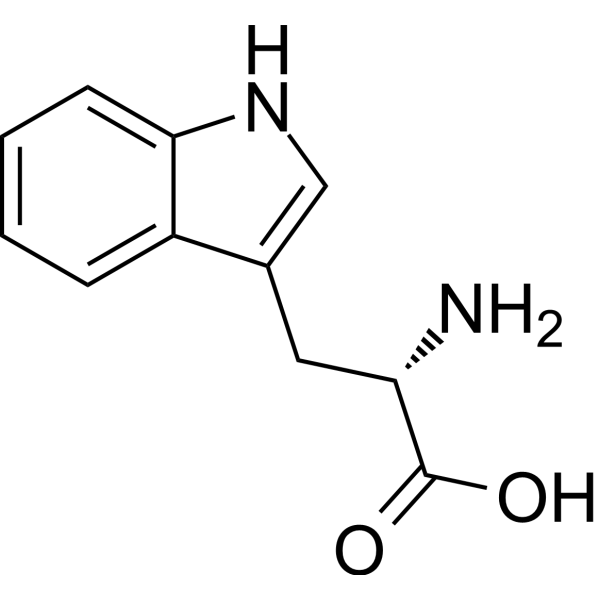
HY-N0623
L-Tryptophan -
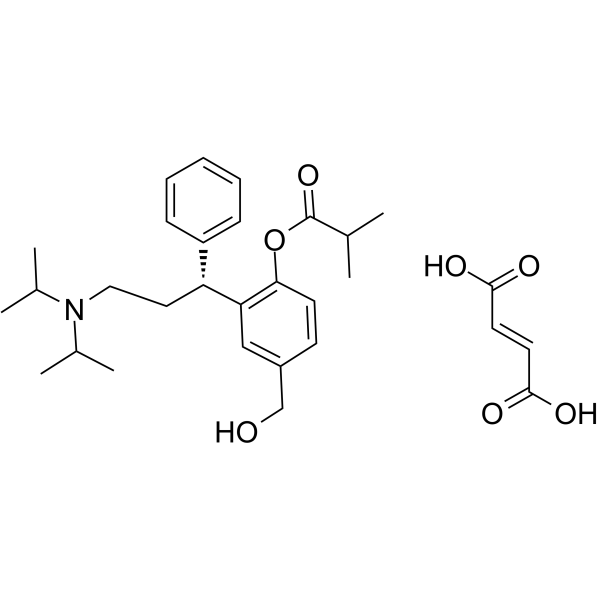
HY-A0030
Fesoterodine fumarate -
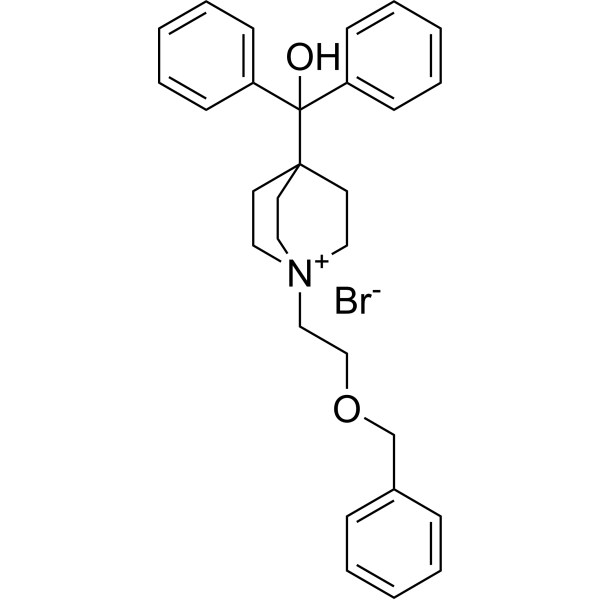
HY-12100
Umeclidinium bromide -
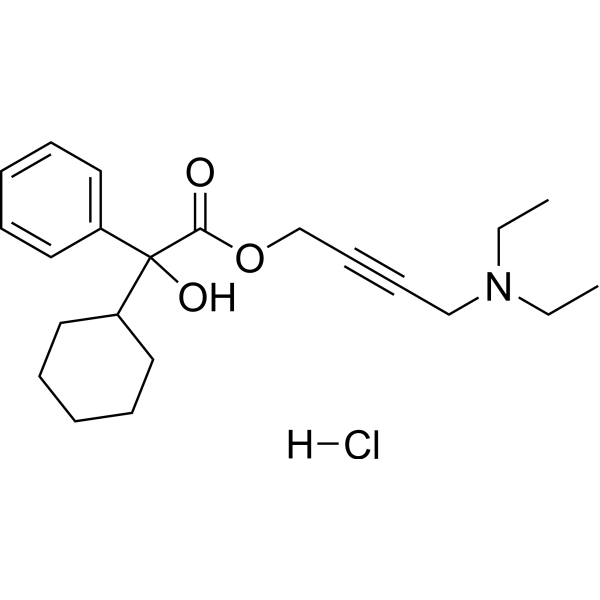
HY-B0267A
Oxybutynin chloride -
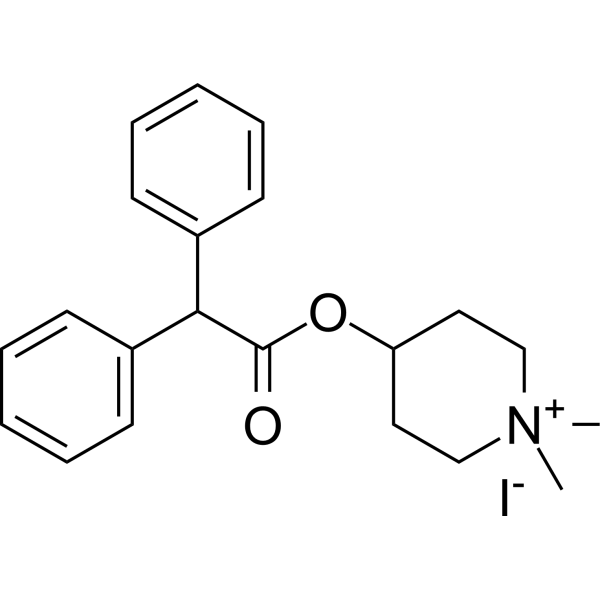
HY-100958
4-DAMP -
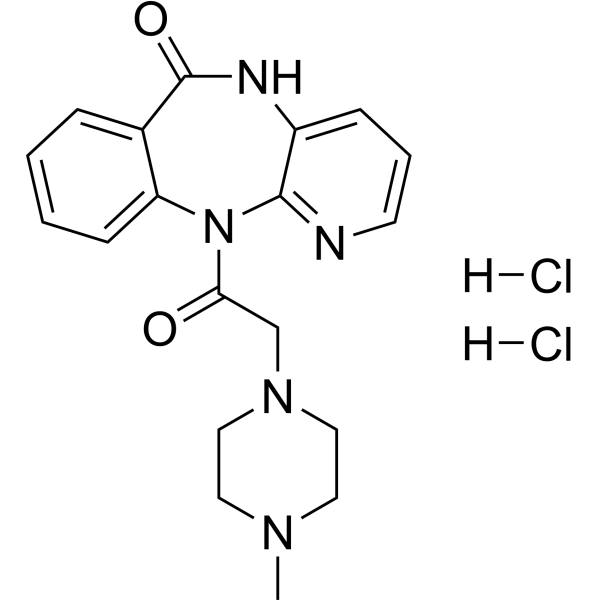
HY-17037
Pirenzepine dihydrochloride -
HY-90010R
Tolterodine tartrate (Standard) -
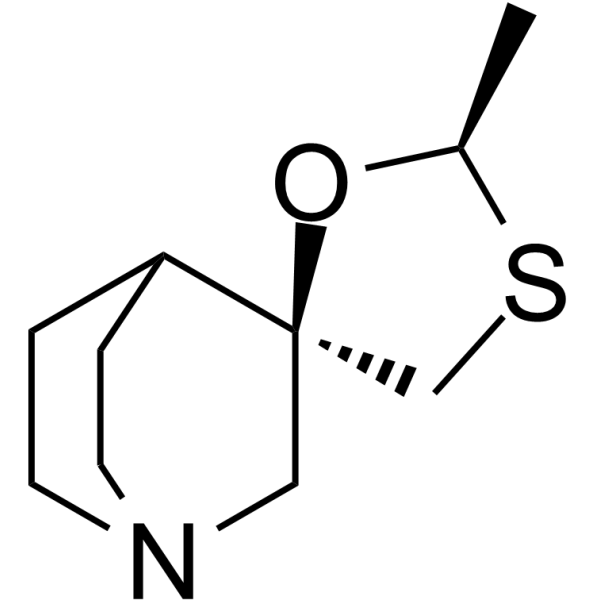
HY-70020
Cevimeline -
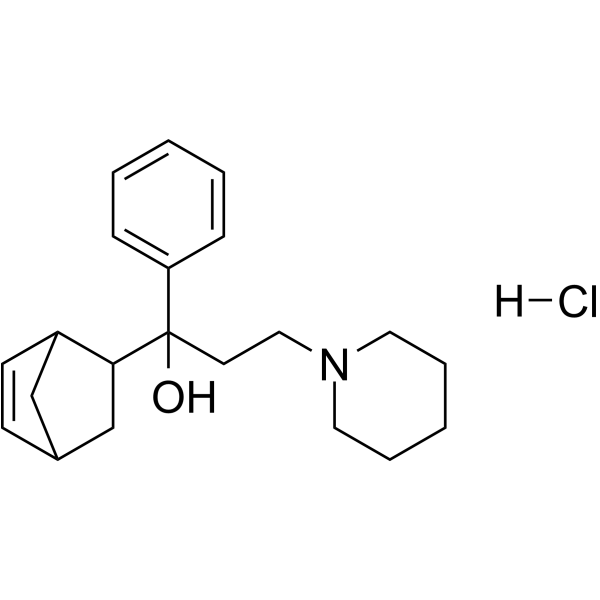
HY-13204
Biperiden hydrochloride -
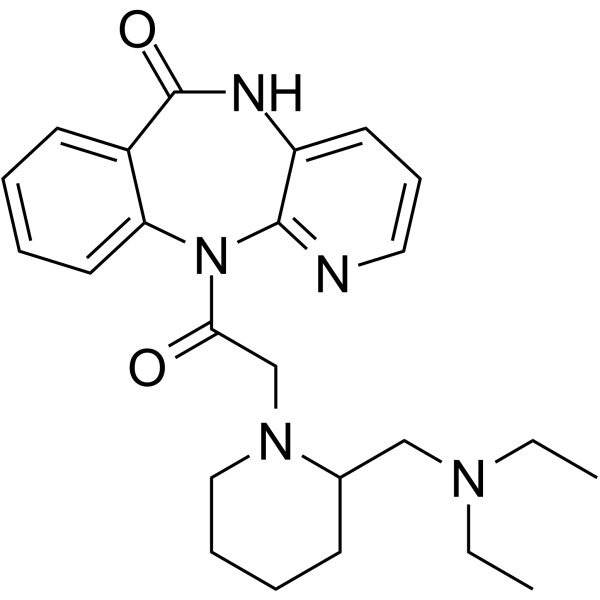
HY-101381
Otenzepad -
HY-A0012
Darifenacin hydrobromide


Biological Activity
Description
In Vitro
Tolterodine (0-500 μM; 4 h) tartrate induced a concentration-dependent reduction in viability of HepG2-CYP3A4 cells, with a TC50 of 414 μM[1].
Tolterodine (20-40 μM; 24 h, co-treated with 10 mg/L LPS) tartrate dose-dependently ameliorates LPS-induced oxidative stress in hBEC 5637 cells by reducing intracellular ROS and lipid oxidation (MDA) levels after 24 h of co-treatment with LPS[2].
Tolterodine (20-40 μM; 24 h, co-treated with 10 mg/L LPS) tartrate dose-dependently inhibits LPS-induced production of IL-6, IL-1β, and TNF-α in hBEC 5637 cells after 24 h of co-treatment with LPS[2].
Tolterodine (20-40 μM; 24 h, co-treated with 10 mg/L LPS) tartrate reduces LPS-induced intracellular Fe2+ accumulation and reverses dysregulated iron homeostasis markers (Ferritin, TFR1) in hBEC 5637 cells after 24 h of co-treatment with LPS[2].
Tolterodine (20-40 μM; 24 h, co-treated with 10 mg/L LPS) tartrate dose-dependently attenuates LPS-induced ferroptosis in hBEC 5637 cells by normalizing ferroptosis marker levels and restoring cell viability after 24 h of co-treatment with LPS[2].
Tolterodine (20-40 μM; 24 h, co-treated with 10 mg/L LPS) tartrate restores the Nrf2/NF-κB signaling balance in LPS-challenged hBEC 5637 cells after 24 h of co-treatment with LPS[2].
MedChemExpress (MCE) has not independently confirmed the accuracy of these methods. They are for reference only.
-
Cell Line:LPS-challenged hBEC 5637
-
Concentration:20 μM, 40 μM (co-treated with 10 mg/L LPS)
-
Incubation Time:24 h
-
Result:Reduced LPS-increased IL-6 levels.
Reduced LPS-increased IL-1β levels.
Reduced LPS-increased TNF-α levels.
-
Cell Line:LPS-challenged hBEC 5637
-
Concentration:20 μM, 40 μM (co-treated with 10 mg/L LPS)
-
Incubation Time:24 h
-
Result:Reversed LPS-induced downregulation of Nrf2 protein levels at 20 and 40 μM.
Reversed LPS-induced upregulation of p-NF-κB p65 protein levels at 20 and 40 μM.
In Vivo
MedChemExpress (MCE) has not independently confirmed the accuracy of these methods. They are for reference only.


Chemical Information
-
CAS No. 124937-52-6
-
Appearance Solid
-
Molecular Weight 475.57
-
Formula C26H37NO7
-
Color White to off-white
-
SMILES
OC1=CC=C(C=C1[C@H](CCN(C(C)C)C(C)C)C2=CC=CC=C2)C.O=C([C@@H]([C@H](C(O)=O)O)O)O
-
Synonyms
Kabi-2234; PNU-200583E
-
Shipping
Room temperature in continental US; may vary elsewhere.
-
Storage
4°C, sealed storage, away from moisture
* In solvent : -80°C, 6 months; -20°C, 1 month (sealed storage, away from moisture)


Solvent & Solubility
In Vitro:
DMSO : 100 mg/mL (210.27 mM; Need ultrasonic; Hygroscopic DMSO has a significant impact on the solubility of product, please use newly opened DMSO)
H2O : 16.67 mg/mL (35.05 mM; Need ultrasonic)
Please refer to the solubility information to select the appropriate solvent. Once prepared, please aliquot and store the solution to prevent product inactivation from repeated freeze-thaw cycles.
Storage method and period of stock solution: -80°C, 6 months; -20°C, 1 month (sealed storage, away from moisture). When stored at -80°C, please use it within 6 months. When stored at -20°C, please use it within 1 month.
* Note: If you choose water as the stock solution, please dilute it to the working solution, then filter and sterilize it with a 0.22 μm filter before use.
Please refer to the solubility information to select the appropriate solvent. Once prepared, please aliquot and store the solution to prevent product inactivation from repeated freeze-thaw cycles.
Storage method and period of stock solution: -80°C, 6 months; -20°C, 1 month (sealed storage, away from moisture). When stored at -80°C, please use it within 6 months. When stored at -20°C, please use it within 1 month.
* Note: If you choose water as the stock solution, please dilute it to the working solution, then filter and sterilize it with a 0.22 μm filter before use.
Concentration (start) × Volume (start) = Concentration (final) × Volume (final)
In Vivo:
Select the appropriate dissolution method based on your experimental animal and administration route.
- For the following dissolution methods, please ensure to first prepare a clear stock solution using an In Vitro approach and then sequentially add co-solvents:
- To ensure reliable experimental results, the clarified stock solution can be appropriately stored based on storage conditions. As for the working solution for In Vivo experiments, it is recommended to prepare freshly and use it on the same day.
- The percentages shown for the solvents indicate their volumetric ratio in the final prepared solution. If precipitation or phase separation occurs during preparation, heat and/or sonication can be used to aid dissolution.
Add each solvent one by one: 10% DMSO 40% PEG300 5% Tween-80 45% Saline
Solubility: ≥ 2.5 mg/mL (5.26 mM); Clear solution
This protocol yields a clear solution of ≥ 2.5 mg/mL (saturation unknown).
Taking 1 mL working solution as an example, add 100 μL DMSO stock solution (25.0 mg/mL) to 400 μL PEG300, and mix evenly; then add 50 μL Tween-80 and mix evenly; then add 450 μL Saline to adjust the volume to 1 mL.
Preparation of Saline: Dissolve 0.9 g sodium chloride in ddH₂O and dilute to 100 mL to obtain a clear Saline solution.
Add each solvent one by one: 10% DMSO 90% (20% SBE-β-CD in Saline)
Solubility: ≥ 2.5 mg/mL (5.26 mM); Clear solution
This protocol yields a clear solution of ≥ 2.5 mg/mL (saturation unknown).
Taking 1 mL working solution as an example, add 100 μL DMSO stock solution (25.0 mg/mL) to 900 μL 20% SBE-β-CD in Saline, and mix evenly.
Preparation of 20% SBE-β-CD in Saline (4°C, storage for one week): 2 g SBE-β-CD powder is dissolved in 10 mL Saline, completely dissolve until clear.
In Vivo Dissolution Calculator
Please enter the basic information of animal experiments:
-
-
-
-
Recommended: Prepare an additional quantity of animals to account for potential losses during experiments.
Working solution concentration: 0.22 mg/mL
This product has good water solubility, please refer to the measured solubility data in water/PBS/Saline for details.


Purity & Documentation
-
Data Sheet (297 KB)
-
SDS (787 KB)
- English - EN (787 KB)
- Français - FR (787 KB)
- Deutsch - DE (787 KB)
- Norwegian - NO (787 KB)
- Español - ES (787 KB)
- Swedish - SV (787 KB)
- Italian - IT (787 KB)
- Korean - KR (787 KB)
- Portuguese - PT (787 KB)
-
Handling Instructions (2659 KB)
References
[1]. Stock V, et al. Tolterodine is a novel candidate for assessing CYP3A4 activity through metabolic volatiles to predict drug responses. Sci Rep. 2025;15(1):2462. Published 2025 Jan 20. [Content Brief]
[2]. Wang X, et al. Tolterodine ameliorates inflammatory response and ferroptosis against LPS in human bladder epithelial cells. J Biochem Mol Toxicol. 2024;38(1):e23517. [Content Brief]
[3]. Påhlman I, et al. Pharmacokinetics of tolterodine, a muscarinic receptor antagonist, in mouse, rat and dog. Interspecies relationship comparing with human pharmacokinetics. Arzneimittelforschung. 2001 Feb;51(2):134-44. [Content Brief]


Complete Stock Solution Preparation Table
Please refer to the solubility information to select the appropriate solvent. Once prepared, please aliquot and store the solution to prevent product inactivation from repeated freeze-thaw cycles.
Storage method and period of stock solution: -80°C, 6 months; -20°C, 1 month (sealed storage, away from moisture). When stored at -80°C, please use it within 6 months. When stored at -20°C, please use it within 1 month.
| Optional Solvent | Concentration Solvent Mass | 1 mg | 5 mg | 10 mg | 25 mg |
|---|---|---|---|---|---|
| H2O / DMSO | 1 mM | 2.1027 mL | 10.5137 mL | 21.0274 mL | 52.5685 mL |
| 5 mM | 0.4205 mL | 2.1027 mL | 4.2055 mL | 10.5137 mL | |
| 10 mM | 0.2103 mL | 1.0514 mL | 2.1027 mL | 5.2568 mL | |
| 15 mM | 0.1402 mL | 0.7009 mL | 1.4018 mL | 3.5046 mL | |
| 20 mM | 0.1051 mL | 0.5257 mL | 1.0514 mL | 2.6284 mL | |
| 25 mM | 0.0841 mL | 0.4205 mL | 0.8411 mL | 2.1027 mL | |
| 30 mM | 0.0701 mL | 0.3505 mL | 0.7009 mL | 1.7523 mL | |
| DMSO | 40 mM | 0.0526 mL | 0.2628 mL | 0.5257 mL | 1.3142 mL |
| 50 mM | 0.0421 mL | 0.2103 mL | 0.4205 mL | 1.0514 mL | |
| 60 mM | 0.0350 mL | 0.1752 mL | 0.3505 mL | 0.8761 mL | |
| 80 mM | 0.0263 mL | 0.1314 mL | 0.2628 mL | 0.6571 mL | |
| 100 mM | 0.0210 mL | 0.1051 mL | 0.2103 mL | 0.5257 mL |
* Note: If you choose water as the stock solution, please dilute it to the working solution, then filter and sterilize it with a 0.22 μm filter before use.


Tolterodine tartrate Related Classifications
HY-90010 Related Classifications
 Powered by Bioz