Search Result
Results for "
D1-receptors
" in MedChemExpress (MCE) Product Catalog:
14
Isotope-Labeled Compounds
| Cat. No. |
상품명 |
Target |
연구분야 |
Chemical Structure |
-
- HY-12987
-
-
-
- HY-12520A
-
|
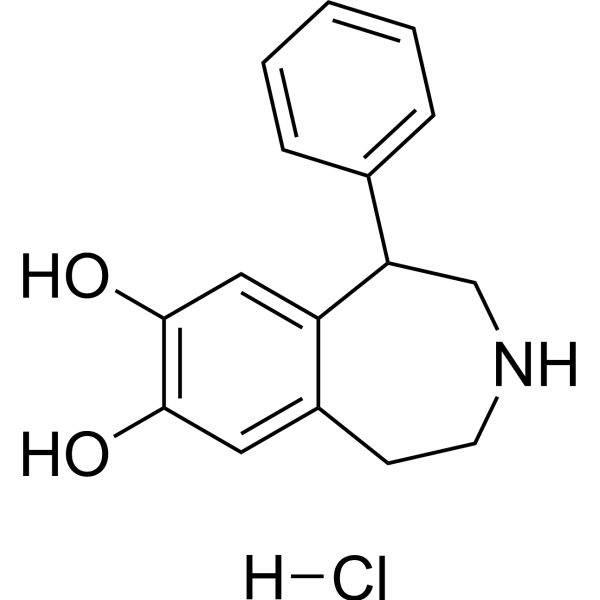
(±)-SKF-38393 hydrochloride; SKF-38393A
|
Dopamine Receptor
|
Neurological Disease
|
|
SKF 38393 hydrochloride is a selective agonist of the dopamine D1 receptor (D1DR) with an IC50 of 110 nM [1].
|
-
-
- HY-B0623A
-
|
SKF 101468 hydrochloride
|
Dopamine Receptor
|
Neurological Disease
|
|
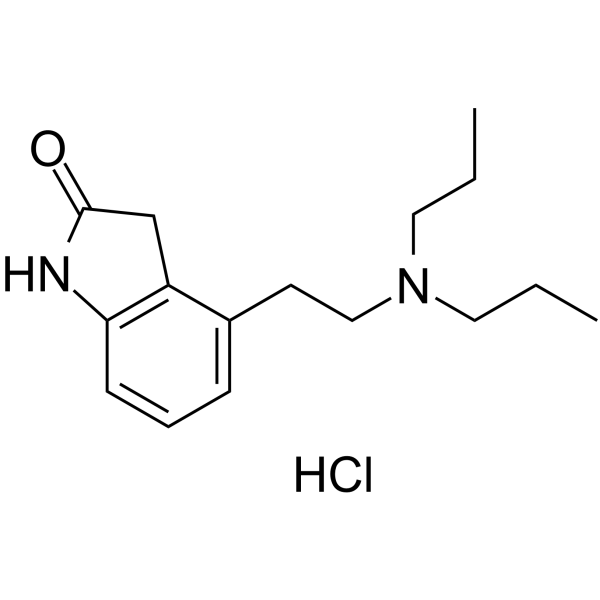
Ropinirole (SKF 101468) hydrochloride is an orally active, potent D3/D2 receptor agonist with a Ki of 29 nM for D2 receptor. Ropinirole hydrochloride has pEC50s of 7.4, 8.4 and 6.8 for hD2, hD3 and hD4 receptors, respectively. Ropinirole hydrochloride has no affinity for the D1 receptors. Ropinirole hydrochloride has the potential for Parkinson's disease [1] .
|
-
-
- HY-17637
-
|
ITI-007
|
Dopamine Receptor
5-HT Receptor
|
Neurological Disease
Cancer
|
|
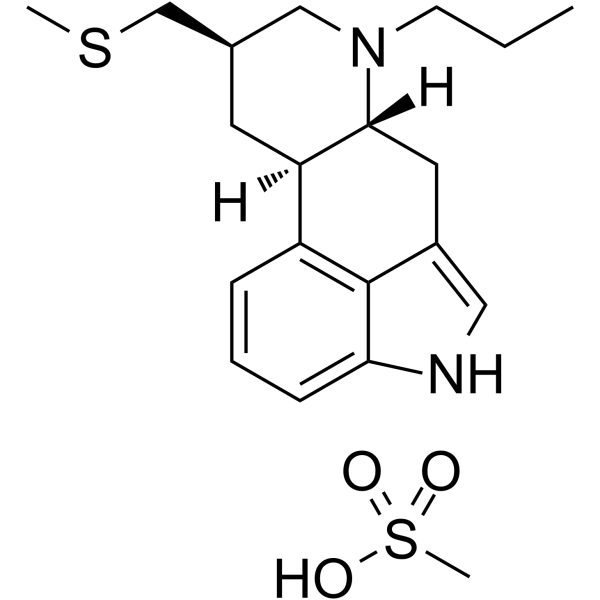
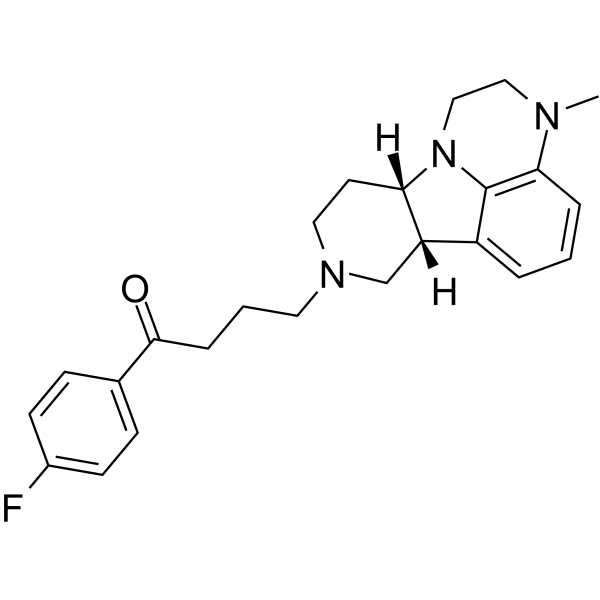
Lumateperone (ITI-007) is an orally active 5-HT2A receptor antagonist (Ki = 0.54 nM), a partial agonist of presynaptic D2 receptors and an antagonist of postsynaptic D2 receptors (Ki = 32 nM), and a dopamine D1 receptor modulator. Lumateperone has anticancer activity and can also be used for the study of schizophrenia and bipolar depression [1] .
|
-
-
- HY-75502
-
|
N-0923; (-)-N 0437
|
Dopamine Receptor
Adrenergic Receptor
5-HT Receptor
|
Neurological Disease
Endocrinology
|
|
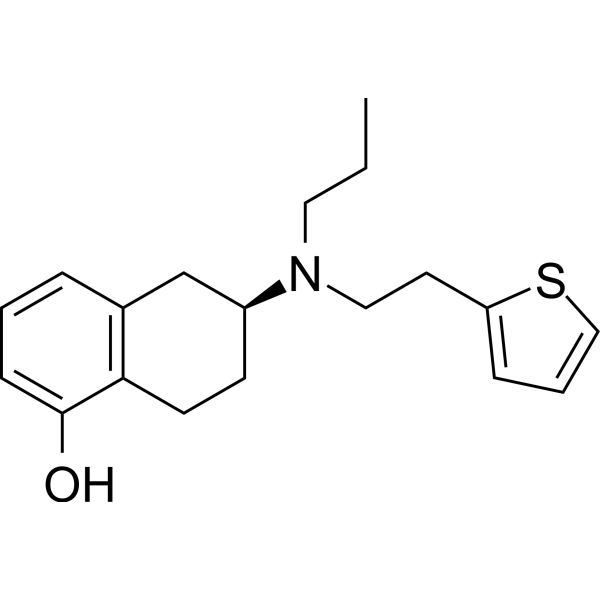
Rotigotine is a potent dopamine receptor agonist with Ki values of 0.71 nM, 4-15 nM, and 83 nM for the dopamine D3 receptor and D2, D5, D4 receptors and dopamine D1 receptor. Rotigotine a partial agonist of the 5-HT1A receptor, and an antagonist of the α2B-adrenergic receptor. Rotigotine can be used for parkinson's disease (PD) research [1] .
|
-
-
- HY-13720A
-
-
-
- HY-12236
-
-
-
- HY-10435A
-
|
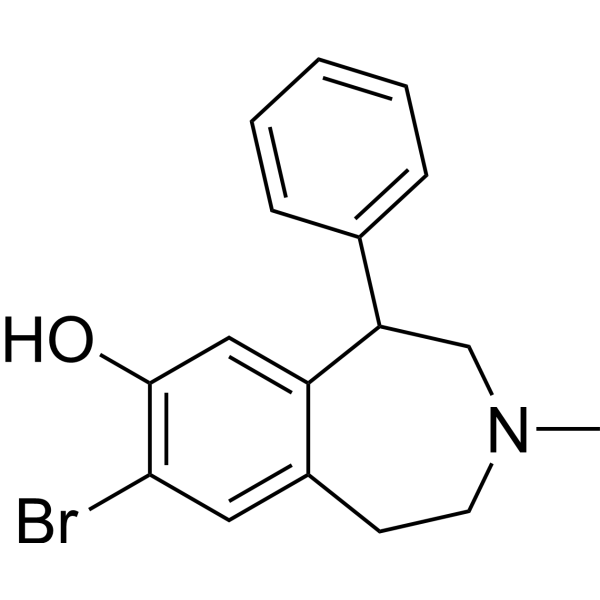
(±)-SKF-82958 hydrobromide; Chloro-APB hydrobromide
|
Dopamine Receptor
|
Neurological Disease
|
|
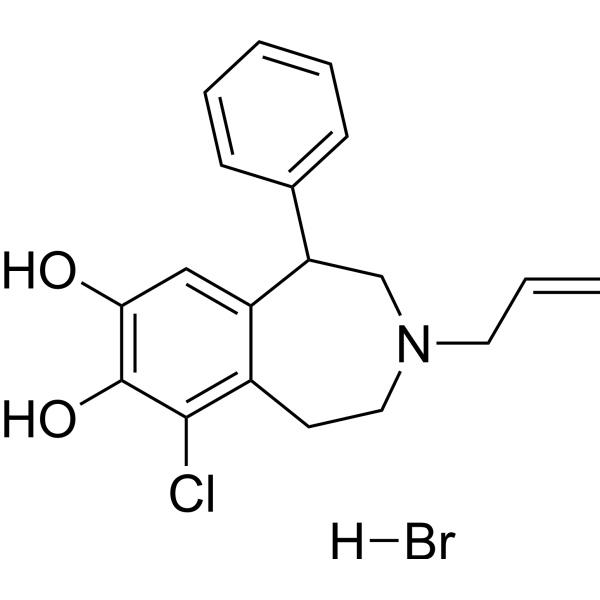
SKF-82958 ((±)-SKF 82958) hydrobromide is a dopamine D1 receptor full agonist (K0.5=4 nM), displays selective for D1 over D2 receptors (K0.5=73 nM). SKF-82958 hydrobromide induces dopamine D1 receptor-dependent adenylate cyclase activity in rat striatal membranes (EC50=491 nM) [1].
|
-
-
- HY-B0735A
-
|
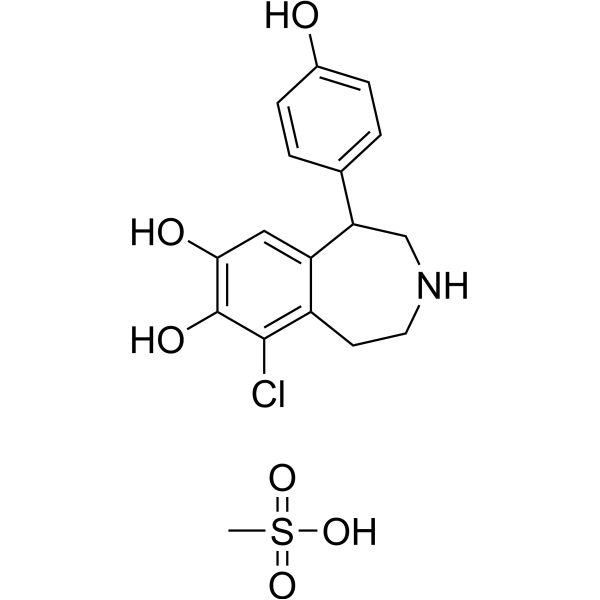
Fenoldopam methanesulfonate; SKF-82526 mesylate
|
Dopamine Receptor
Apoptosis
|
Cardiovascular Disease
Cancer
|
|
Fenoldopam mesylate (SKF-82526) is a D1 receptor agonist and a novel lysine-specific demethylase 1 (LSD1) inhibitor (IC50=0.8974 μM). Fenoldopam mesylate shows anti-hypertensive effects, anti-cancer cell proliferation activity and can induce cells apoptosis [1] .
|
-
-
- HY-12236A
-
-
-
- HY-128770
-
|
|
Dopamine Receptor
|
Neurological Disease
|
|
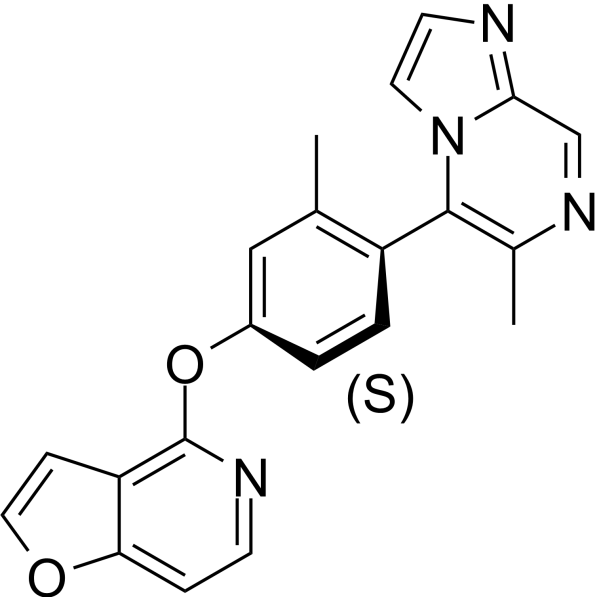
LY3154207 is a potent, subtype selective, and orally available human dopamine D1 receptor
positive allosteric modulator (PAM) with minimal allosteric agonist activity (EC50=3 nM) [1].
|
-
-
- HY-19733
-
|
ITI-007 tosylate
|
5-HT Receptor
Dopamine Receptor
|
Neurological Disease
Cancer
|
|
Lumateperone (ITI-007) tosylate is a 5-HT2A receptor antagonist (Ki = 0.54 nM), a partial agonist of presynaptic D2 receptors and an antagonist of postsynaptic D2 receptors (Ki = 32 nM), and a dopamine D1 receptor modulator. Lumateperone tosylate has anticancer activity and can also be used in studies of psychiatric disorders such as schizophrenia [1] .
|
-
-
- HY-A0007
-
|
N-0923 Hydrochloride
|
Dopamine Receptor
Adrenergic Receptor
5-HT Receptor
|
Neurological Disease
|
|
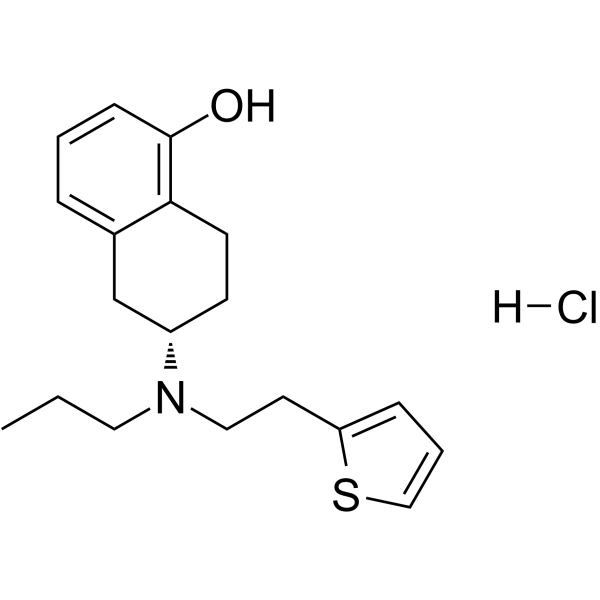
Rotigotine Hydrochloride (N-0923 Hydrochloride) is a full agonist of dopamine receptor, a partial agonist of the 5-HT1A receptor, and an antagonist of the α2B-adrenergic receptor, with Ki of 0.71 nM, 4-15 nM, and 83 nM for the dopamine D3 receptor and D2, D5, D4 receptors, and dopamine D1 receptor.
|
-
-
- HY-103431
-
|
|
Dopamine Receptor
|
Others
|
|
A68930 hydrochloride, as a dopamine D1 receptor agonist, can be used for the research of bronchiectasis [1].
|
-
-
- HY-106094
-
-
-
- HY-N6960
-
|
Stepholidine; (-)-Stepholidine; L-SPD
|
Dopamine Receptor
|
Neurological Disease
|
|
L-Stepholidine (Stepholidine) is an alkaloid. L-Stepholidine exhibits mixed dopamine D1 receptor agonist and D2 antagonist properties. L-Stepholidine has neuroprotective effect. L-Stepholidine can be used for the researches of neurological disease, such as Parkinson disease, Alzheimer's disease and opiate addiction [1] .
|
-
-
- HY-101299B
-
|
DAR-0100 hydrochloride
|
Dopamine Receptor
|
Neurological Disease
|
|
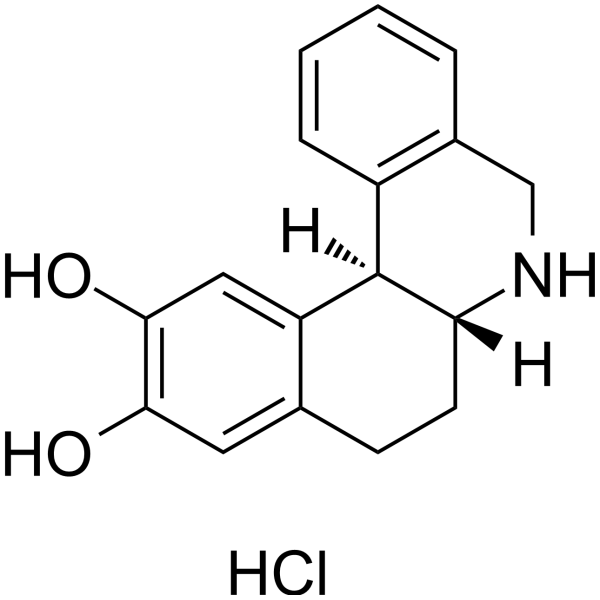
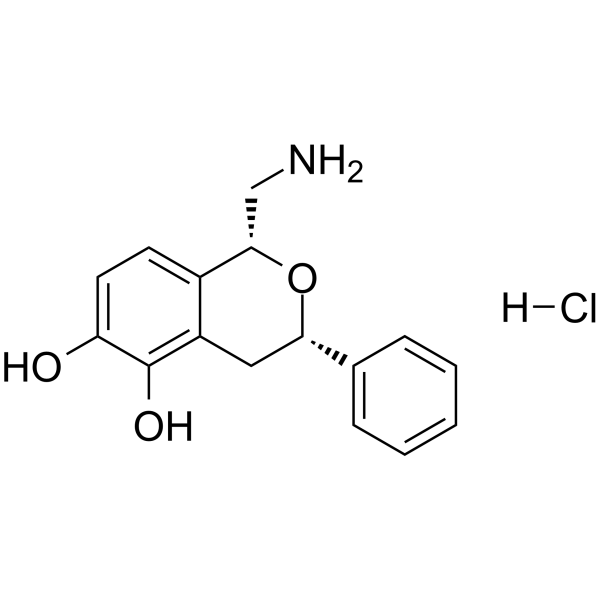
Dihydrexidine hydrochloride (DAR-0100 hydrochloride) is a high potent, selective and full efficacy D1-like dopamine receptor (D1/D5) agonist, with an IC50 of 10 nM for D1 receptor. Dihydrexidine hydrochloride exhibits potent antiparkinsonian activity [1] . Dihydrexidine hydrochloride can stimulate YAP phosphorylation .
|
-
-
- HY-119943
-
|
|
Dopamine Receptor
|
Neurological Disease
|
|
PF-06256142 is a potent, selective, CNS-penetrant and orally active agonist of the D1 receptor, with an EC50 and Ki of 33 nM and 12 nM, respectively. PF-06256142 has the potential for the research of schizophrenia and Parkinson's disease [1].
|
-
-
- HY-N2003
-
|
|
Dopamine Receptor
|
Metabolic Disease
|
|
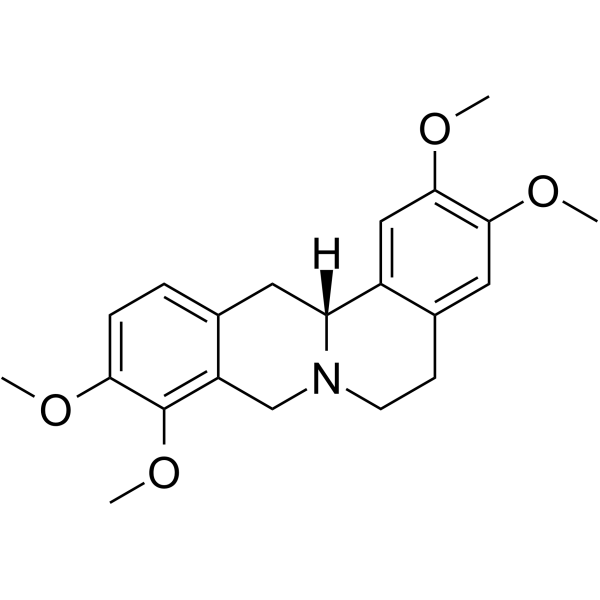
D-Tetrahydropalmatine is an isoquinoline alkaloid, mainly in the genus Corydalis [1]. D-Tetrahydropalmatine is a dopamine (DA) receptor antagonist with preferential affinity toward the D1 receptors . D-Tetrahydropalmatine is a potent organic cation transporter 1 (OCT1) inhibitor .
|
-
-
- HY-116874
-
|
|
Dopamine Receptor
|
Neurological Disease
|
|
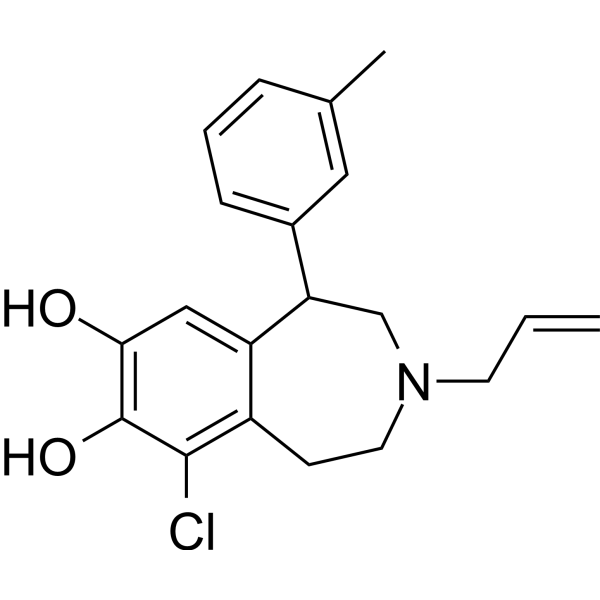
SKF 83822 is an atypical agonist of dopamine D1 receptor. SKF 83822 activates adenylyl cyclase (AC), but not phospholipase C (PLC). SKF 83822 is also proved to stimulate AC via cAMP production. SKF 83822 can be used for research of schizophrenia [1] .
|
-
-
- HY-115553
-
|
|
Dopamine Receptor
|
Neurological Disease
|
|
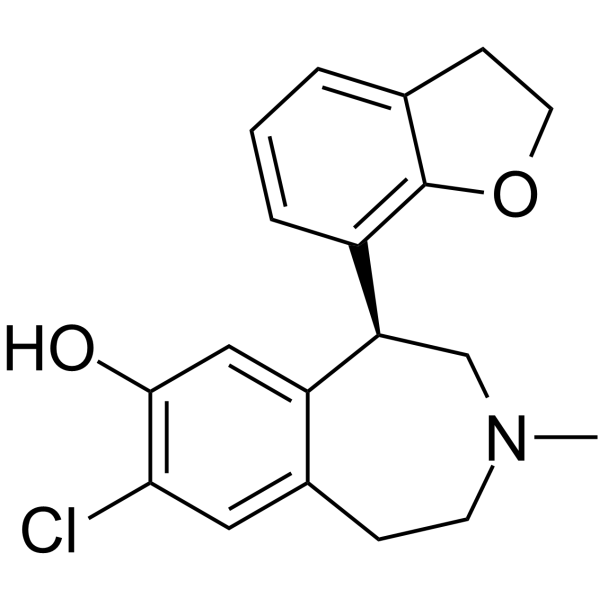
DETQ is a selective, allosteric and orally active dopamine D1 receptor (Dopamine Receptor) potentiator. In HEK293 cells expressing the human D1 receptor, DETQ increases cAMP with an EC50 of 5.8 nM and a Kb of 26 nM. DETQ shows ~30-fold less potent at rat and mouse D1 receptors and is inactive at the human D5 receptor [1].
|
-
-
- HY-148867
-
|
|
Dopamine Receptor
|
Neurological Disease
|
|
UCM-1306 is a potent and orally active human dopamine D1 receptor allosteric modulator (PAM). UCM-1306 increases the endogenous dopamine (DA) maximal effect both in human and mouse D1 receptors. UCM-1306 is not only for improving motor symptoms but also for addressing the key comorbid cognitive impairment associated with long-term Parkinson’s disease (PD) [1].
|
-
-
- HY-B0623
-
|
SKF 101468
|
Dopamine Receptor
|
Neurological Disease
|
|
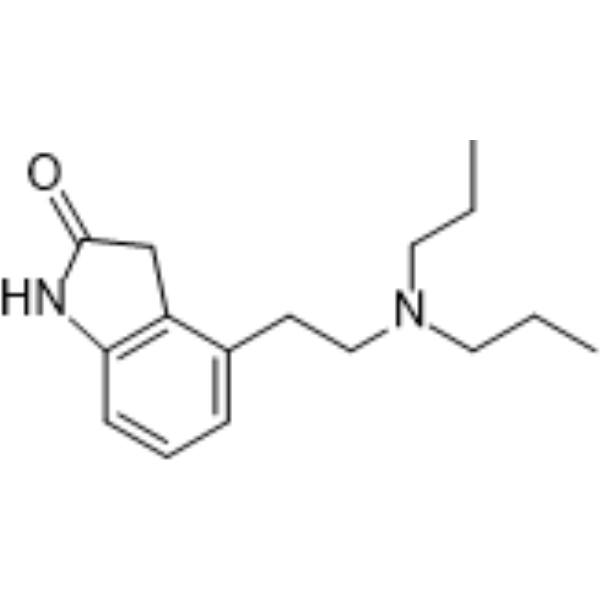
Ropinirole (SKF 101468) is an orally active, potent D3/D2 receptor agonist with a Ki of 29 nM for D2 receptor. Ropinirole has pEC50s of 7.4, 8.4 and 6.8 for hD2, hD3 and hD4 receptors, respectively. Ropinirole has no affinity for the D1 receptors. Ropinirole has the potential for Parkinson's disease [1] .
|
-
-
- HY-119486A
-
|
(Rac)-PF-06649751; (Rac)-CVL-751
|
Dopamine Receptor
Arrestin
|
Neurological Disease
|
|
(Rac)-Tavapadon ((Rac)-PF-06649751) is a potent and selective noncatechol dopamine D1 receptor agonist. (Rac)-Tavapadon displays potent full agonism in the GS activation assay as well as partial agonism in the β-arrestin2 recruitment assay (GS-cAMP, EC50=0.8 nM; β-arrestin2, EC50=68 nM). (Rac)-Tavapadon has antiparkinsonian activity [1].
|
-
-
- HY-N5140
-
|
Bacopaside VII
|
Dopamine Receptor
|
Others
|
|
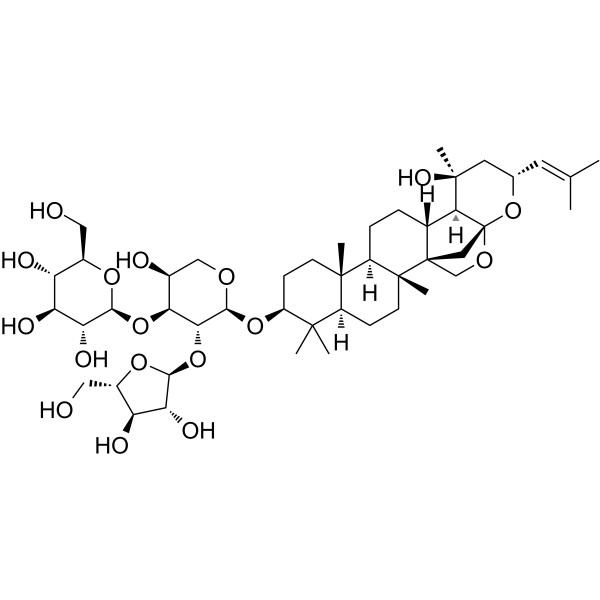
Bacopaside X is found in Bacopa monnieri, and shows a binding affinity toward the D1 receptor [1].
|
-
-
- HY-103417
-
|
|
Dopamine Receptor
|
Neurological Disease
|
|
SKF 77434 hydrobromide is a selective dopamine D1 receptor partial agonist. SKF 77434 hydrobromide has the potential to study cocaine addiction [1].
|
-
-
- HY-103416
-
|
|
Dopamine Receptor
|
Neurological Disease
|
|
A-77636 hydrochloride is a potent, orally active, selective and long acting dopamine D1 receptor agonist (pKi=7.40; Ki=39.8 nM) with antiparkinsonian activity. A-77636 hydrochloride is functionally inactive at dopamine D2 receptor [1] .
|
-
-
- HY-118956
-
|
ABT-431 hydrochloride; DAS-431 hydrochloride
|
Dopamine Receptor
|
Neurological Disease
|
|
Adrogolide hydrochloride (ABT-431 hydrochloride) is a chemically stable prodrug that can convert to the dopamine D1 receptor agonist A-86929. Adrogolide hydrochloride ameliorates the MPTP (HY-15608)-induced Parkinson's Disease in marmoset model, reduces the dyskinesias tendency. Adrogolide hydrochloride reverses Risperidone (HY-11018)-induced cognitive deficits in monkey [1].
|
-
-
- HY-15394
-
|
N-0437 hydrochloride
|
Dopamine Receptor
Adrenergic Receptor
5-HT Receptor
|
Neurological Disease
Endocrinology
|
|
(Rac)-Rotigotine hydrochloride is a racemate of Rotigotine. Rotigotine is a full agonist of dopamine receptor, a partial agonist of the 5-HT1A receptor, and an antagonist of the α2B-adrenergic receptor, with Kis of 0.71 nM, 4-15 nM, and 83 nM for the dopamine D3 receptor and D2, D5, D4 receptors, and dopamine D1 receptor.
|
-
-
- HY-159527
-
|
Glovadalen
|
Dopamine Receptor
|
Neurological Disease
|
|
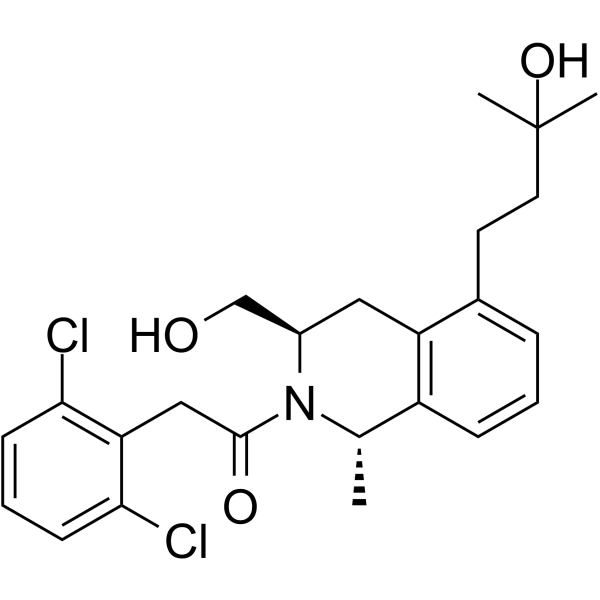
Glovadalenum (Glovadalen) is an orally active, selective, blood-brain barrier permeable positive allosteric modulator of dopamine D1 receptor. Glovadalenum selectively enhances the efficacy of dopamine in activating dopamine D1 receptor. Glovadalenum can be used for the research of Parkinson's disease [1].
|
-
-
- HY-B0735
-
-
-
- HY-12237
-
|
(±)-SKF-38393 hydrobromide
|
Dopamine Receptor
|
Neurological Disease
|
|
SKF 38393 ((±)-SKF-38393) hydrobromide is a selective agonist of the dopamine D1 receptor (D1DR) with an IC50 of 110 nM [1].
|
-
-
- HY-103427
-
|
|
Dopamine Receptor
|
Neurological Disease
|
|
NPEC-caged-dopamine is a caged version of dopamine. NPEC-caged-Dopamine was used by applying focal photolysis with UV light (360 nm) to releases dopamine, which leads to D1 receptor activation [1].
|
-
-
- HY-119943A
-
|
|
Dopamine Receptor
|
Neurological Disease
|
|
(Rac)-PF-06256142 is the less effective enantiomer of PF-06256142 (HY-119943). (Rac)-PF-06256142 is an agonist of D1 receptor, with an EC50 of 107 nM. (Rac)-PF-06256142 can be used for the research of schizophrenia and Parkinson's disease [1].
|
-
-
- HY-101299A
-
|
DAR-0100
|
Dopamine Receptor
YAP
|
Neurological Disease
|
|
Dihydrexidine (DAR-0100) is a high potent, selective and full efficacy D1-like dopamine receptor (D1/D5) agonist with an IC50 of 10 nM for D1 receptor. Dihydrexidine exhibits potent antiparkinsonian activity [1] . Dihydrexidine can stimulate YAP phosphorylation .
|
-
-
- HY-12987R
-
-
-
- HY-144291
-
|
|
Dopamine Receptor
|
Neurological Disease
|
|
LY3154885 is an orally active dopamine D1 receptor positive allosteric modulator (PAM). LY3154885 has an improved agent-agent interactions (DDI) risk profile [1].
|
-
-
- HY-129059
-
|
NNC 756
|
Dopamine Receptor
|
Neurological Disease
|
|
Odapipam (NNC 756) is a selective, high affinity and benzazepine dopamine D1 receptor antagonist with a Kd of 0.18 nM. Odapipam is also a superior positron emission tomography (PET) radiotracer [1] .
|
-
-
- HY-114549
-
|
|
Dopamine Receptor
|
Neurological Disease
|
|
(R)-SCH-23982 hydrochloride is the R-enantiomer of SCH-23982 hydrochloride. SCH-23982 hydrochloride is a selective dopamine D1 receptor antagonist. (R)-SCH-23982 hydrochloride is promising for research of central nervous system disorders such as schizophrenia, Parkinson’s disease [1].
|
-
-
- HY-120687
-
|
|
Dopamine Receptor
|
Cancer
|
|
A68930, as a dopamine D1 receptor agonist, can be used for the research of bronchiectasis [1].
|
-
-
- HY-101299
-
|
(+)-DAR-0100 hydrochloride
|
Dopamine Receptor
|
Neurological Disease
|
|
(+)-Dihydrexidine hydrochloride ((+)-DAR-0100 hydrochloride) is a dopamine D1 receptor agonist with an EC50 of 72± 21 nM.
|
-
-
- HY-141496
-
|
|
Dopamine Receptor
|
Neurological Disease
|
|
A-77636 is an orally active, potent, selective and long-acting dopamine D1 receptor agonist (pEC50 = 8.13; EC50 = 1.1 nM). A-77636 shows the highest affinity (pKi = 7.40 ± 0.09; Ki = 39.8 nM) for the dopamine D1 receptor. A-77636 shows antiparkinsonian activity [1].
|
-
-
- HY-14690B
-
-
-
- HY-10435
-
|
(±)-SKF-82958; Chloro-APB
|
Dopamine Receptor
|
Neurological Disease
|
|
SKF-82958 ((±)-SKF 82958) is a dopamine D1 receptor full agonist (K0.5=4 nM), displays selective for D1 over D2 receptors (K0.5=73 nM). SKF-82958 induces dopamine D1 receptor-dependent adenylate cyclase activity in rat striatal membranes (EC50=491 nM) [1].
|
-
-
- HY-119943B
-
|
|
Dopamine Receptor
|
Neurological Disease
|
|
(R)-PF-06256142 is the R enantiomer of PF-06256142 with low active. PF-06256142 is a potent and selective orthosteric D1 receptor agonist that can reduce receptor desensitization relative to dopamine and other catechol-containing agonists [1].
|
-
-
- HY-116430
-
|
(S)-APB
|
Dopamine Receptor
Drug Isomer
|
Neurological Disease
|
|
(S)-SKF-77434 (Compound 11) ((S)-APB) is an enantiomer of SKF-77434 (HY-103417). (S)-SKF-77434 shows an affinity for the D1 receptor with an IC50 of 2800 nM. (S)-SKF-77434 can be used in the research of neuropsychiatric disorders [1].
|
-
-
- HY-160718
-
|
ABT-431; DAS-431
|
Dopamine Receptor
|
Neurological Disease
|
|
Adrogolide is an A-86929 (HY-171472) prodrug and dopamine D1 receptor agonist. Adrogolide is converted rapidly in plasma to A-86929. Adrogolide improves behavioral disability and locomotor activity scores. Adrogolide can also attenuate the ability of Cocaine to induce Cocaine-seeking behavior. Adrogolide can be used in the research of Parkinson's disease [1].
|
-
-
- HY-12987S
-
-
-
- HY-164703
-
|
|
Drug Metabolite
Dopamine Receptor
5-HT Receptor
|
Neurological Disease
|
|
Lumateperone metabolite 1 (Formula T) is a metabolite of Lumateperone (HY-17637) [1]. Lumateperone (ITI-007) is an orally active 5-HT2A receptor antagonist (Ki = 0.54 nM), a partial agonist of presynaptic D2 receptors and an antagonist of postsynaptic D2 receptors (Ki = 32 nM), and a dopamine D1 receptor modulator
|
-
-
- HY-12987S1
-
-
- HY-12520
-
|
|
Dopamine Receptor
|
Neurological Disease
Cancer
|
|
SKF 38393 is a selective dopamine D1 receptor agonist. SKF 38393 activates the cAMP signaling pathway and promotes dopamine release in the developing rat striatum. SKF 38393 inhibits MCF-7 breast cancer cell proliferation (IC50=0.1 μM). SKF 38393 is promising for research of neurodevelopmental disorders, dopamine-related diseases (e.g., Parkinson’s, dopamine deficiency), and cancers [1] .
|
-
- HY-179241
-
|
|
Dopamine Receptor
|
Neurological Disease
|
|
UNC10062 is a dopamine D1 receptor (D1R) positive allosteric modulator. UNC10062 specifically binds to the extracellular allosteric pocket (upper pocket) at the interface of transmembrane helices (TM) 1 and 7 of D1R. UNC10062 can increase dopamine potency and D1R-mediated cAMP production. UNC10062 can be used for the research of neurological disease, such as Parkinson's disease [1].
|
-
- HY-17637R
-
|
ITI-007 (Standard)
|
Dopamine Receptor
5-HT Receptor
Reference Standards
|
Neurological Disease
Cancer
|
|
Lumateperone (Standard) is the analytical standard of Lumateperone. This product is intended for research and analytical applications. Lumateperone (ITI-007) is an orally active 5-HT2A receptor antagonist (Ki = 0.54 nM), a partial agonist of presynaptic D2 receptors and an antagonist of postsynaptic D2 receptors (Ki = 32 nM), and a dopamine D1 receptor modulator. Lumateperone has anticancer activity and can also be used for the study of schizophrenia and bipolar depression [1] .
|
-
- HY-102091
-
|
(2R,4R)-4-Aminopyrrolidine-2,4-dicarboxylic acid
|
mGluR
|
Neurological Disease
|
|
(2R,4R)-APDC is a group II metabotropic glutamate receptor (mGluR) agonist. (2R,4R)-APDC affects cell proliferation by inhibiting glutamate release, enhancing motor responses produced by D1 receptor activation, or reducing brain-derived neurotrophic factor (BDNF) levels. (2R,4R)-APDC can be used in the study of epilepsy and other neurological diseases [1] .
|
-
- HY-17637S2
-
|
ITI-007-d4
|
Isotope-Labeled Compounds
Dopamine Receptor
5-HT Receptor
|
Neurological Disease
Cancer
|
|
Lumateperone-d4 (ITI-007-d4) is deuterium labeled Lumateperone. Lumateperone (ITI-007) is an orally active 5-HT2A receptor antagonist (Ki = 0.54 nM), a partial agonist of presynaptic D2 receptors and an antagonist of postsynaptic D2 receptors (Ki = 32 nM), and a dopamine D1 receptor modulator. Lumateperone has anticancer activity and can also be used for the study of schizophrenia and bipolar depression [1] .
|
-
- HY-15394S
-
|
N-0437-d7 (hydrochloride)
|
Isotope-Labeled Compounds
Dopamine Receptor
Adrenergic Receptor
5-HT Receptor
|
Neurological Disease
Endocrinology
|
|
(Rac)-Rotigotine-d7 (hydrochloride) is deuterium labeled (Rac)-Rotigotine (hydrochloride). (Rac)-Rotigotine hydrochloride is a racemate of Rotigotine. Rotigotine is a full agonist of dopamine receptor, a partial agonist of the 5-HT1A receptor, and an antagonist of the α2B-adrenergic receptor, with Kis of 0.71 nM, 4-15 nM, and 83 nM for the dopamine D3 receptor and D2, D5, D4 receptors, and dopamine D1 receptor.
|
-
- HY-A0007S
-
|
N-0923 D7 Hydrochloride
|
Isotope-Labeled Compounds
Dopamine Receptor
|
Neurological Disease
|
|
Rotigotine-d7 (N-0923-d7) hydrochloride is the deuterium labeled Rotigotine(HY-75502). Rotigotine is a potent dopamine receptor agonist with Ki values of 0.71 nM, 4-15 nM, and 83 nM for the dopamine D3 receptor and D2, D5, D4 receptors and dopamine D1 receptor. Rotigotine a partial agonist of the 5-HT1A receptor, and an antagonist of the α2B-adrenergic receptor. Rotigotine can be used for parkinson's disease (PD) research.
|
-
- HY-13720AR
-
|
Pergolide methanesulfonate (Standard); LY127809 (Standard)
|
Reference Standards
Dopamine Receptor
|
Neurological Disease
|
|
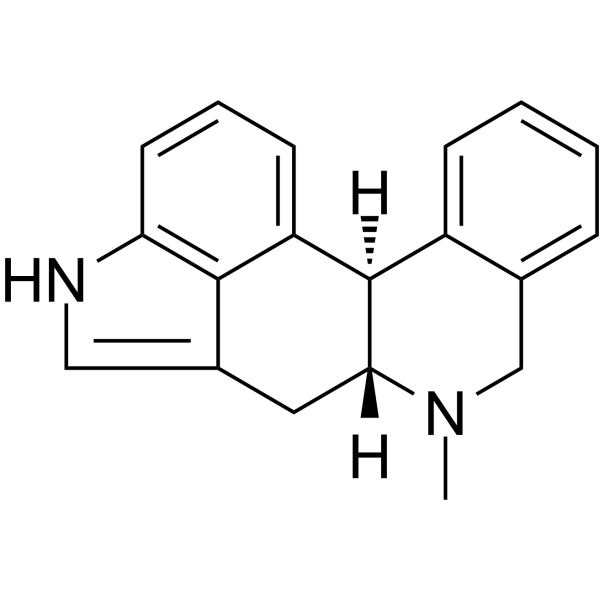
Pergolide (mesylate) (Standard) is the analytical standard of Pergolide (mesylate). This product is intended for research and analytical applications. Pergolide mesylate (Pergolide methanesulfonate), an Ergoline derivative, is a potent and orally active dopamine D1 and D2 receptors agonist. Pergolide mesylate can be used for Parkinson's disease and hyperprolactinaemia research [1] .
|
-
- HY-116773
-
|
|
Dopamine Receptor
|
Neurological Disease
|
|
A-69024 is a selectivity dopamine D-1 receptor antagonist with the Ki values of 12.6 nM and 1290 nM for dopamine D-1 receptor and dopamine D-2 receptor, respectively [1].
|
-
- HY-103411
-
|
|
Dopamine Receptor
|
Neurological Disease
|
|
SKF83822 hydrobromide is a potent dopamine D1 receptor agonist. SKF83822 hydrobromide activates Gs/olf/adenylyl cyclase (AC)-coupled D1 receptors, but not phospholipase C (PLC)-coupled D1-like receptors [1].
|
-
- HY-137254
-
-
- HY-107081
-
|
|
Dopamine Receptor
UGT
|
Neurological Disease
|
|
Berupipam hemifumarate is a selective antagonist of the dopamine D1 receptor (dopamine D1 receptor). Berupipam hemifumarate is a substrate of UDP-glucuronosyltransferase (UGT) and has a high affinity for UGT enzymes but a relatively low conversion rate. The glucuronidation rate of Berupipam hemifumarate varies among different species and genders. Berupipam hemifumarate can be used for the study of psychotic disorders [1].
|
-
- HY-U00077
-
-
- HY-125043
-
-
- HY-12236B
-
-
- HY-125020
-
|
|
Arrestin
|
Inflammation/Immunology
|
|
NCGC00135472 is a potent agonist of resolvin D1 receptor (DRV1), with the EC50 of 0.37 nM and 0.05 μM for β-arrestin and cAMP activities, respectively [1].
|
-
- HY-10435AR
-
|
(±)-SKF-82958 hydrobromide (Standard); Chloro-APB hydrobromide (Standard)
|
Reference Standards
Dopamine Receptor
|
Neurological Disease
|
|
SKF-82958 (hydrobromide) (Standard) is the analytical standard of SKF-82958 (hydrobromide). This product is intended for research and analytical applications. SKF-82958 ((±)-SKF 82958) hydrobromide is a dopamine D1 receptor full agonist (K0.5=4 nM), displays selective for D1 over D2 receptors (K0.5=73 nM). SKF-82958 hydrobromide induces dopamine D1 receptor-dependent adenylate cyclase activity in rat striatal membranes (EC50=491 nM) [1].
|
-
- HY-N5140R
-
|
Bacopaside VII (Standard)
|
Reference Standards
Dopamine Receptor
|
Others
|
|
Bacopaside X (Standard) is the analytical standard of Bacopaside X. This product is intended for research and analytical applications. Bacopaside X is found in Bacopa monnieri, and shows a binding affinity toward the D1 receptor [1].
|
-
- HY-12520AR
-
|
(±)-SKF-38393 hydrochloride (Standard); SKF-38393A (Standard)
|
Dopamine Receptor
Reference Standards
|
Neurological Disease
|
|
SKF 38393 (hydrochloride) (Standard) is the analytical standard of SKF 38393 (hydrochloride). This product is intended for research and analytical applications. SKF 38393 hydrochloride is a selective agonist of the dopamine D1 receptor (D1DR) with an IC50 of 110 nM [1].
|
-
- HY-106889A
-
|
YM435 anhydrous
|
Dopamine Receptor
|
Neurological Disease
|
|
Zelandopam (YM435) anhydrous is an orally active and selective agonist of the dopamine D1 receptor. Zelandopam anhydrous possesses potent renal vasodilatory properties and can effectively alleviate Cisplatin (HY-17394)-induced acute renal failure [1].
|
-
- HY-106889
-
|
YM435 free base
|
Dopamine Receptor
|
Neurological Disease
|
|
Zelandopam (YM435) free base is an orally active and selective agonist of the dopamine D1 receptor. Zelandopam free base possesses potent renal vasodilatory properties and can effectively alleviate Cisplatin (HY-17394)-induced acute renal failure [1].
|
-
- HY-120879
-
|
|
Dopamine Receptor
|
Neurological Disease
|
|
PF2562 (Example 6), a dopamine D1 ligand, ascts as a dopamine D1 agonist or partial agonist. PF2562 binds to human D1 receptor with a Ki of 113 nM. PF2562 exhibits activity against human D1 cAMP with an EC50 of 568 nM in HTRF assay [1].
|
-
- HY-110021
-
|
SKF 82526 hydrochloride
|
Dopamine Receptor
Histone Demethylase
Apoptosis
|
Cardiovascular Disease
Cancer
|
|
Fenoldopam (SKF 82526) hydrochloride is a D1 receptor agonist and a novel lysine-specific demethylase 1 (LSD1) inhibitor (IC50=0.8974 μM). Fenoldopam hydrochloride shows anti-hypertensive effects, anti-cancer cell proliferation activity and can induce cells apoptosis [1] .
|
-
- HY-19100
-
|
CEE 03-310; NNC 687
|
Dopamine Receptor
Adenylate Cyclase
|
Neurological Disease
|
|
ADX-10061 (compound NNC 687) is a dopamine D1 receptor antagonist with the Ki values of 9.1 nM, 5.8 nM, > 10 000 nM and 355 nM for adenylyl cyclase, D1, D2 and 5-HT2 receptor, respectively. ADX-10061 can be used for study of schizophrenia [1].
|
-
- HY-12987S2
-
-
- HY-B0735AR
-
|
Fenoldopam methanesulfonate (Standard); SKF-82526 mesylate (Standard)
|
Reference Standards
Dopamine Receptor
Apoptosis
|
Cardiovascular Disease
Cancer
|
|
Fenoldopam (mesylate) (Standard) is the analytical standard of Fenoldopam (mesylate). This product is intended for research and analytical applications. Fenoldopam mesylate (SKF-82526) is a D1 receptor agonist and a novel lysine-specific demethylase 1 (LSD1) inhibitor (IC50=0.8974 μM). Fenoldopam mesylate shows anti-hypertensive effects, anti-cancer cell proliferation activity and can induce cells apoptosis [1] .
|
-
- HY-15394A
-
|
N-0437
|
Adrenergic Receptor
5-HT Receptor
Dopamine Receptor
|
Neurological Disease
Endocrinology
|
|
(Rac)-Rotigotine (N-0437) is a racemate of Rotigotine. Rotigotine is a full agonist of dopamine receptor, a partial agonist of the 5-HT1A receptor, and an antagonist of the α2B-adrenergic receptor, with Kis of 0.71 nM, 4-15 nM, and 83 nM for the dopamine D3 receptor and D2, D5, D4 receptors, and dopamine D1 receptor.
|
-
- HY-W704363
-
-
- HY-A0007R
-
|
N-0923 Hydrochloride (Standard)
|
Reference Standards
Dopamine Receptor
Adrenergic Receptor
5-HT Receptor
|
Neurological Disease
|
|
Rotigotine (Hydrochloride) (Standard) is the analytical standard of Rotigotine (Hydrochloride). This product is intended for research and analytical applications. Rotigotine Hydrochloride (N-0923 Hydrochloride) is a full agonist of dopamine receptor, a partial agonist of the 5-HT1A receptor, and an antagonist of the α2B-adrenergic receptor, with Ki of 0.71 nM, 4-15 nM, and 83 nM for the dopamine D3 receptor and D2, D5, D4 receptors, and dopamine D1 receptor.
|
-
- HY-B0623AS1
-
|
SKF 101468-d7 hydrochloride
|
Dopamine Receptor
|
Neurological Disease
|
|
Ropinirole-d7 hydrochloride is the deuterium labeled Ropinirole hydrochloride [1]. Ropinirole (SKF 101468) hydrochloride is an orally active, potent D3/D2 receptor agonist with a Ki of 29 nM for D2 receptor. Ropinirole hydrochloride has pEC50s of 7.4, 8.4 and 6.8 for hD2, hD3 and hD4 receptors, respectively. Ropinirole hydrochloride has no affinity for the D1 receptors. Ropinirole hydrochloride has the potential for Parkinson's disease .
|
-
- HY-B0623AS2
-
|
SKF 101468-d3 hydrochloride
|
Dopamine Receptor
|
Neurological Disease
|
|
Ropinirole-d3 hydrochloride is the deuterium labeled Ropinirole hydrochloride [1]. Ropinirole (SKF 101468) hydrochloride is an orally active, potent D3/D2 receptor agonist with a Ki of 29 nM for D2 receptor. Ropinirole hydrochloride has pEC50s of 7.4, 8.4 and 6.8 for hD2, hD3 and hD4 receptors, respectively. Ropinirole hydrochloride has no affinity for the D1 receptors. Ropinirole hydrochloride has the potential for Parkinson's disease .
|
-
- HY-15394S1
-
|
N-0437-d3 hydrochloride
|
Isotope-Labeled Compounds
Adrenergic Receptor
Dopamine Receptor
5-HT Receptor
|
Endocrinology
|
|
(Rac)-Rotigotine-d3 hydrochloride is a deuterium labeled (Rac)-Rotigotine (hydrochloride) (HY-15394). (Rac)-Rotigotine hydrochloride is a racemate of Rotigotine. Rotigotine is a full agonist of dopamine receptor, a partial agonist of the 5-HT1A receptor, and an antagonist of the α2B-adrenergic receptor, with Kis of 0.71 nM, 4-15 nM, and 83 nM for the dopamine D3 receptor and D2, D5, D4 receptors, and dopamine D1 receptor.
|
-
- HY-B0623AR
-
|
SKF 101468 hydrochloride (Standard)
|
Reference Standards
Dopamine Receptor
|
Neurological Disease
|
|
Ropinirole (hydrochloride) (Standard) is the analytical standard of Ropinirole (hydrochloride). This product is intended for research and analytical applications. Ropinirole (SKF 101468) hydrochloride is an orally active, potent D3/D2 receptor agonist with a Ki of 29 nM for D2 receptor. Ropinirole hydrochloride has pEC50s of 7.4, 8.4 and 6.8 for hD2, hD3 and hD4 receptors, respectively. Ropinirole hydrochloride has no affinity for the D1 receptors. Ropinirole hydrochloride has the potential for Parkinson's disease [1] .
|
-
- HY-15394R
-
|
N-0437 hydrochloride (Standard)
|
Dopamine Receptor
Adrenergic Receptor
5-HT Receptor
Reference Standards
|
Neurological Disease
Endocrinology
|
|
(Rac)-Rotigotine (hydrochloride) (Standard) is the analytical standard of (Rac)-Rotigotine (hydrochloride). This product is intended for research and analytical applications. (Rac)-Rotigotine hydrochloride is a racemate of Rotigotine. Rotigotine is a full agonist of dopamine receptor, a partial agonist of the 5-HT1A receptor, and an antagonist of the α2B-adrenergic receptor, with Kis of 0.71 nM, 4-15 nM, and 83 nM for the dopamine D3 receptor and D2, D5, D4 receptors, and dopamine D1 receptor.
|
-
- HY-B0623AS
-
|
SKF 101468-d4 hydrochloride
|
Isotope-Labeled Compounds
Dopamine Receptor
|
Neurological Disease
|
|
Ropinirole-d4 (SKF 101468-d4) hydrochloride is the deuterium labeled Ropinirole hydrochloride. Ropinirole hydrochloride is a potent D3/D2 receptor agonist with a Kiof 29 nM for D2 receptor. Ropinirole hydrochloride has pEC50s of 7.4, 8.4 and 6.8 for hD2, hD3 and hD4 receptors, respectively. Ropinirole hydrochloride has no affinity for the D1 receptors. Ropinirole hydrochloride has the potential for Parkinson's disease [1] .
|
-
- HY-B0623AS3
-
|
SKF 101468-D14 hydrochloride
|
Dopamine Receptor
Isotope-Labeled Compounds
|
Neurological Disease
|
|
Ropinirole-d14 hydrochloride is deuterated labeled Ropinirole hydrochloride (HY-B0623A). Ropinirole (SKF 101468) hydrochloride is an orally active, potent D3/D2 receptor agonist with a Ki of 29 nM for D2 receptor. Ropinirole hydrochloride has pEC50s of 7.4, 8.4 and 6.8 for hD2, hD3 and hD4 receptors, respectively. Ropinirole hydrochloride has no affinity for the D1 receptors. Ropinirole hydrochloride has the potential for Parkinson's disease [1] .
|
-
- HY-19733S
-
|
ITI-007-13C,d3 tosylate
|
Isotope-Labeled Compounds
Dopamine Receptor
5-HT Receptor
|
Neurological Disease
Cancer
|
|
Lumateperone- 13C,d3 (ITI-007- 13C,d3) tosylate is 13C and deuterium labeled Lumateperone (tosylate). Lumateperone (ITI-007) tosylate is a 5-HT2A receptor antagonist (Ki = 0.54 nM), a partial agonist of presynaptic D2 receptors and an antagonist of postsynaptic D2 receptors (Ki = 32 nM), and a dopamine D1 receptor modulator. Lumateperone tosylate has anticancer activity and can also be used in studies of psychiatric disorders such as schizophrenia [1] .
|
-
- HY-75502R
-
|
N-0923 (Standard); (-)-N 0437 (Standard)
|
Reference Standards
Dopamine Receptor
Adrenergic Receptor
5-HT Receptor
|
Neurological Disease
Endocrinology
|
|
Rotigotine (Standard) is the analytical standard of Rotigotine. This product is intended for research and analytical applications. Rotigotine is a potent dopamine receptor agonist with Ki values of 0.71 nM, 4-15 nM, and 83 nM for the dopamine D3 receptor and D2, D5, D4 receptors and dopamine D1 receptor. Rotigotine a partial agonist of the 5-HT1A receptor, and an antagonist of the α2B-adrenergic receptor. Rotigotine can be used for parkinson's disease (PD) research [1] .
|
-
- HY-B0623S1
-
|
SKF 101468-d3
|
Isotope-Labeled Compounds
Dopamine Receptor
|
Neurological Disease
|
|
Ropinirole-d3 (SKF 101468-d3) is deuterium labeled Ropinirole. Ropinirole (SKF 101468) is an orally active, potent D3/D2 receptor agonist with a Ki of 29 nM for D2 receptor. Ropinirole has pEC50s of 7.4, 8.4 and 6.8 for hD2, hD3 and hD4 receptors, respectively. Ropinirole has no affinity for the D1 receptors. Ropinirole has the potential for Parkinson's disease [1] .
|
-
- HY-116450
-
|
|
Dopamine Receptor
|
Neurological Disease
|
|
TISCH is a potent and selective iodinated ligand with high affinity and selectivity for CNS D1 dopamine receptors. TISCH showed a Kd value of 0.205 nM in rat striatal tissue, indicating its effectiveness in biological activity. TISCH is able to easily cross the blood-brain barrier and show distribution in specific areas with D1 receptor density. TISCH is considered to be useful as a pharmacological tool for characterizing D1 dopamine receptors. When labeled with I-123, TISCH has the potential to be used as an in vivo imaging agent for CNS D1 dopamine receptors [1].
|
-
- HY-102091A
-
|
(2R,4R)-4-Aminopyrrolidine-2,4-dicarboxylic acid hydrate
|
mGluR
|
Neurological Disease
|
|
(2R,4R)-APDC hydrate ((2R,4R)-4-Aminopyrrolidine-2,4-dicarboxylic acid hydrate) is a group II metabotropic glutamate receptor (mGluR) agonist. (2R,4R)-APDC hydrate affects cell proliferation by inhibiting glutamate release, enhancing motor responses produced by D1 receptor activation, or reducing brain-derived neurotrophic factor (BDNF) levels. (2R,4R)-APDC hydrate can be used in the study of epilepsy and other neurological diseases [1].
|
-
- HY-171472
-
|
|
Dopamine Receptor
|
Neurological Disease
|
|
A-86929 is a highly potent and selective dopamine D1 receptor agonist with a pKi value of 7.3. In the 6-OHDA (HY-B1081)-induced unilateral nigrostriatal lesion rat model, A-86929 significantly induces rotational behavior. It also improves motor function in the MPTP (HY-15608)-induced Parkinson's disease marmoset model. Additionally, A-86929 demonstrates potential therapeutic value in reducing cocaine-seeking behavior in rats and reversing Haloperidol (HY-14538)-induced cognitive deficits in rhesus monkeys. A-86929 can be used for research in neurological disorders [1].
|
-
- HY-182437
-
|
|
Dopamine Receptor
|
Neurological Disease
|
|
ASP4345 free base is a blood-brain barrier-permeable dopamine D1 receptor modulator. ASP4345 free base binds to the allosteric site of the dopamine D1 receptor, thereby enhancing dopamine activity. ASP4345 free base can be used in the research of schizophrenia and Parkinson's disease [1].
|
-
- HY-182585
-
-
- HY-103431R
-
|
|
Reference Standards
Dopamine Receptor
|
Others
|
|
A68930 hydrochloride (Standard) is the analytical standard of A68930 hydrochloride (HY-103431). This product is intended for research and analytical applications. A68930 hydrochloride, as a dopamine D1 receptor agonist, can be used for the research of bronchiectasis [1].
|
-
- HY-182327
-
-
- HY-19029
-
|
|
5-HT Receptor
Dopamine Receptor
|
Neurological Disease
|
|
SDZ 208-912 is a dual-action 5-HT1A/2 receptor agonist and dopamine D1 receptor antagonist. SDZ 208-912 exhibits partial dopamine agonism and atypical neurosedative effects in rodent models. SDZ 208-912 can be used in research on neurological disorders such as schizophrenia [1].
|
-
- HY-101299BR
-
|
DAR-0100 hydrochloride (Standard)
|
Dopamine Receptor
Reference Standards
|
Neurological Disease
|
|
Dihydrexidine (hydrochloride) (Standard) is the analytical standard of Dihydrexidine (hydrochloride) (HY-101299B). This product is intended for research and analytical applications. Dihydrexidine hydrochloride (DAR-0100 hydrochloride) is a high potent, selective and full efficacy D1-like dopamine receptor (D1/D5) agonist, with an IC50 of 10 nM for D1 receptor. Dihydrexidine hydrochloride exhibits potent antiparkinsonian activity [1] . Dihydrexidine hydrochloride can stimulate YAP phosphorylation .
|
-
- HY-183927
-
|
|
Dopamine Receptor
|
Neurological Disease
|
|
Spectramide is a blood-brain barrier-permeable, reversible, and selective dopamine D2 receptor ligand. Spectramide shows no strong interactions with dopamine D1 receptors, dopamine uptake sites, adrenergic receptor systems, cholinergic receptor systems, or 5-HTR systems. Spectramide can be labeled with 11C or 123I isotopes for use in PET or SPECT. Spectramide preferentially accumulates in the striatum with low uptake in other brain regions, and its accumulation can be blocked by pre-administration of Haloperidol (HY-14538) [1].
|
-
- HY-182381
-
|
|
Dopamine Receptor
|
Neurological Disease
|
|
FLA-797 is a brain-penetrant dopamine D2 receptor blocker and very low affinity for dopamine D1 receptors. FLA-797 selectively binds to and blocks postsynaptic dopamine D2 receptors. FLA-797 induces catalepsy in male rats. FLA-797 blocks dopamine agonist-induced hypothermia in male rats. FLA-797 contributes marginally to the dopamine D2 receptor-blocking activity of Remoxipride (HY-101313) in male rats. FLA-797 does not mimic the atypical antipsychotic profile of Remoxipride. FLA-797 can be used for research on mental disorders [1] .
|
-
- HY-180814
-
|
|
Drug Derivative
Dopamine Receptor
|
Cancer
|
|
SKF-83566-PEG1-pomalidomide is an anti-tumor agent and is formed by the covalent connection of SKF-83566 (HY-103430A) (dopamine D1 receptor antagonist) and Pomalidomide (HY-10984) (immunomodulatory agent). SKF-83566-PEG1-pomalidomide can inhibit cancer cells invasion, migration and colony formation. SKF-83566-PEG1-pomalidomide can inhibit tumor growth and angiogenesis in MDA-MB-231 cell chicken embryo chorioallantoic membrane (CAM) xenograft model. SKF-83566-PEG1-pomalidomide can be used for research of breast cancer [1].
|
-
| Cat. No. |
상품명 |
Category |
Target |
Chemical Structure |
| Cat. No. |
상품명 |
Chemical Structure |
-
- HY-12987S
-
|
|
|
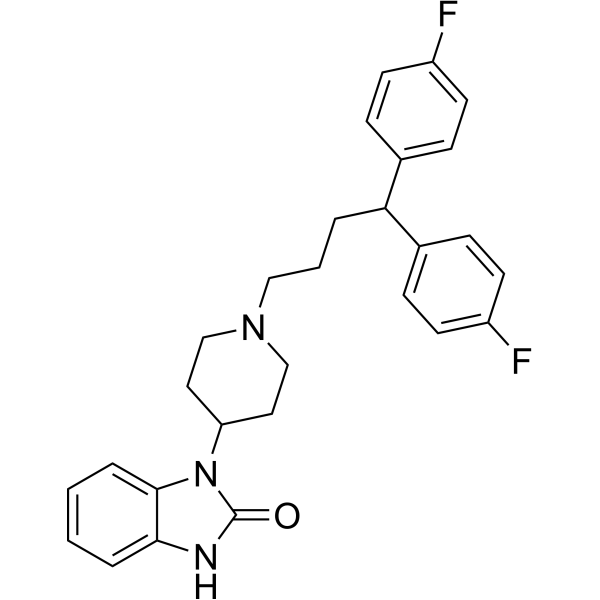
Pimozide-d4 is a deuterium labeled Pimozide. Pimozide is a dopamine receptor antagonist, with Kis of 1.4 nM, 2.5 nM and 588 nM for dopamine D2, D3 and D1 receptors, respectively, and also has affinity at α1-adrenoceptor, with a Ki of 39 nM; Pimozide also inhibits STAT3 and STAT5 [1] .
|
-
-
- HY-12987S1
-
|
|
|
Pimozide-d5 N-Oxide is the deuterium labeled Pimozide. Pimozide is a dopamine receptor antagonist, with Kis of 1.4 nM, 2.5 nM and 588 nM for dopamine D2, D3 and D1 receptors, respectively, and also has affinity at α1-adrenoceptor, with a Ki of 39 nM; Pimozide also inhibits STAT3 and STAT5 [1] .
|
-
-
- HY-17637S2
-
|
|
|
Lumateperone-d4 (ITI-007-d4) is deuterium labeled Lumateperone. Lumateperone (ITI-007) is an orally active 5-HT2A receptor antagonist (Ki = 0.54 nM), a partial agonist of presynaptic D2 receptors and an antagonist of postsynaptic D2 receptors (Ki = 32 nM), and a dopamine D1 receptor modulator. Lumateperone has anticancer activity and can also be used for the study of schizophrenia and bipolar depression [1] .
|
-
-
- HY-15394S
-
|
|
|
(Rac)-Rotigotine-d7 (hydrochloride) is deuterium labeled (Rac)-Rotigotine (hydrochloride). (Rac)-Rotigotine hydrochloride is a racemate of Rotigotine. Rotigotine is a full agonist of dopamine receptor, a partial agonist of the 5-HT1A receptor, and an antagonist of the α2B-adrenergic receptor, with Kis of 0.71 nM, 4-15 nM, and 83 nM for the dopamine D3 receptor and D2, D5, D4 receptors, and dopamine D1 receptor.
|
-
-
- HY-A0007S
-
|
|
|
Rotigotine-d7 (N-0923-d7) hydrochloride is the deuterium labeled Rotigotine(HY-75502). Rotigotine is a potent dopamine receptor agonist with Ki values of 0.71 nM, 4-15 nM, and 83 nM for the dopamine D3 receptor and D2, D5, D4 receptors and dopamine D1 receptor. Rotigotine a partial agonist of the 5-HT1A receptor, and an antagonist of the α2B-adrenergic receptor. Rotigotine can be used for parkinson's disease (PD) research.
|
-
-
- HY-12987S2
-
|
|
|
Pimozide-d4-1 is the deuterium labeled Pimozide. Pimozide is a dopamine receptor antagonist, with Kis of 1.4 nM, 2.5 nM and 588 nM for dopamine D2, D3 and D1 receptors, respectively, and also has affinity at α1-adrenoceptor, with a Ki of 39 nM; Pimozide also inhibits STAT3 and STAT5 [1] .
|
-
-
- HY-W704363
-
|
|
|
Pimozide-d5 (R6238-d5) is the deuterium labeled Pimozide (HY-12987). Pimozide is a dopamine receptor antagonist, with Kis of 1.4 nM, 2.5 nM and 588 nM for dopamine D2, D3 and D1 receptors, respectively, and also has affinity at α1-adrenoceptor, with a Ki of 39 nM; Pimozide also inhibits STAT3 and STAT5.
|
-
-
- HY-B0623AS1
-
|
|
|
Ropinirole-d7 hydrochloride is the deuterium labeled Ropinirole hydrochloride [1]. Ropinirole (SKF 101468) hydrochloride is an orally active, potent D3/D2 receptor agonist with a Ki of 29 nM for D2 receptor. Ropinirole hydrochloride has pEC50s of 7.4, 8.4 and 6.8 for hD2, hD3 and hD4 receptors, respectively. Ropinirole hydrochloride has no affinity for the D1 receptors. Ropinirole hydrochloride has the potential for Parkinson's disease .
|
-
-
- HY-B0623AS2
-
|
|
|
Ropinirole-d3 hydrochloride is the deuterium labeled Ropinirole hydrochloride [1]. Ropinirole (SKF 101468) hydrochloride is an orally active, potent D3/D2 receptor agonist with a Ki of 29 nM for D2 receptor. Ropinirole hydrochloride has pEC50s of 7.4, 8.4 and 6.8 for hD2, hD3 and hD4 receptors, respectively. Ropinirole hydrochloride has no affinity for the D1 receptors. Ropinirole hydrochloride has the potential for Parkinson's disease .
|
-
-
- HY-15394S1
-
|
|
|
(Rac)-Rotigotine-d3 hydrochloride is a deuterium labeled (Rac)-Rotigotine (hydrochloride) (HY-15394). (Rac)-Rotigotine hydrochloride is a racemate of Rotigotine. Rotigotine is a full agonist of dopamine receptor, a partial agonist of the 5-HT1A receptor, and an antagonist of the α2B-adrenergic receptor, with Kis of 0.71 nM, 4-15 nM, and 83 nM for the dopamine D3 receptor and D2, D5, D4 receptors, and dopamine D1 receptor.
|
-
-
- HY-B0623AS
-
|
|
|
Ropinirole-d4 (SKF 101468-d4) hydrochloride is the deuterium labeled Ropinirole hydrochloride. Ropinirole hydrochloride is a potent D3/D2 receptor agonist with a Kiof 29 nM for D2 receptor. Ropinirole hydrochloride has pEC50s of 7.4, 8.4 and 6.8 for hD2, hD3 and hD4 receptors, respectively. Ropinirole hydrochloride has no affinity for the D1 receptors. Ropinirole hydrochloride has the potential for Parkinson's disease [1] .
|
-
-
- HY-B0623AS3
-
|
|
|
Ropinirole-d14 hydrochloride is deuterated labeled Ropinirole hydrochloride (HY-B0623A). Ropinirole (SKF 101468) hydrochloride is an orally active, potent D3/D2 receptor agonist with a Ki of 29 nM for D2 receptor. Ropinirole hydrochloride has pEC50s of 7.4, 8.4 and 6.8 for hD2, hD3 and hD4 receptors, respectively. Ropinirole hydrochloride has no affinity for the D1 receptors. Ropinirole hydrochloride has the potential for Parkinson's disease [1] .
|
-
-
- HY-19733S
-
|
|
|
Lumateperone- 13C,d3 (ITI-007- 13C,d3) tosylate is 13C and deuterium labeled Lumateperone (tosylate). Lumateperone (ITI-007) tosylate is a 5-HT2A receptor antagonist (Ki = 0.54 nM), a partial agonist of presynaptic D2 receptors and an antagonist of postsynaptic D2 receptors (Ki = 32 nM), and a dopamine D1 receptor modulator. Lumateperone tosylate has anticancer activity and can also be used in studies of psychiatric disorders such as schizophrenia [1] .
|
-
-
- HY-B0623S1
-
|
|
|
Ropinirole-d3 (SKF 101468-d3) is deuterium labeled Ropinirole. Ropinirole (SKF 101468) is an orally active, potent D3/D2 receptor agonist with a Ki of 29 nM for D2 receptor. Ropinirole has pEC50s of 7.4, 8.4 and 6.8 for hD2, hD3 and hD4 receptors, respectively. Ropinirole has no affinity for the D1 receptors. Ropinirole has the potential for Parkinson's disease [1] .
|
-
Your information is safe with us. * Required Fields.
Inquiry Information
- 상품명:
- Cat. No.:
- 수량:
- MCE Japan Authorized Agent:

