



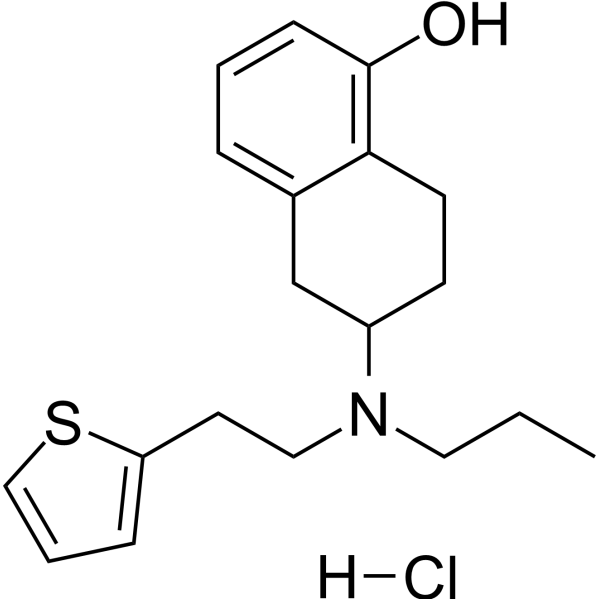
(Rac)-Rotigotine hydrochloride

Based on 1 Customer Validation
(Rac)-Rotigotine hydrochloride is a racemate of Rotigotine. Rotigotine is a full agonist of dopamine receptor, a partial agonist of the 5-HT1A receptor, and an antagonist of the α2B-adrenergic receptor, with Kis of 0.71 nM, 4-15 nM, and 83 nM for the dopamine D3 receptor and D2, D5, D4 receptors, and dopamine D1 receptor.
For research use only. We do not sell to patients.
- Purity : 98.11%
- CAS No.: 102120-99-0
- Formula: C19H26ClNOS
- Molecular Weight:351.93
-
Storage:
4°C, sealed storage, away from moisture
* In solvent : -80°C, 6 months; -20°C, 1 month (sealed storage, away from moisture)

To place orders, for customer services and technical support, please contact: MedChemExpress USA
Tel: 609-228-6898 E-mail: [email protected] [email protected]


-
 Biological Activity
-
Chemical Information
-
Solvent & Solubility
- Purity & Documentation
- References
-
 Help & FAQs


-
HY-A0007
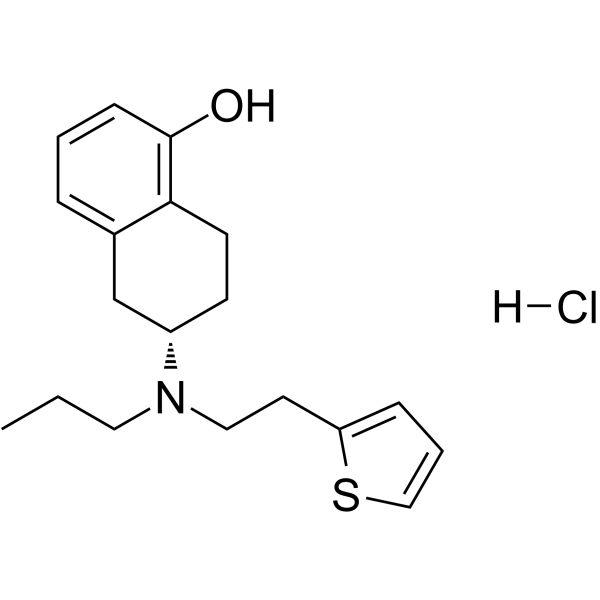
Rotigotine HydrochlorideDopamine Receptor Agonist -
HY-14538
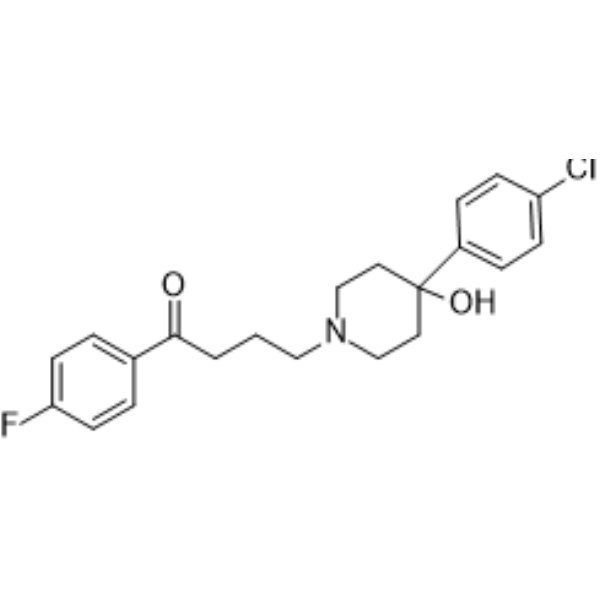
HaloperidolDopamine Receptor Antagonist -

HY-15394R
(Rac)-Rotigotine hydrochloride (Standard)D2 Receptor Agonist -
HY-19545A
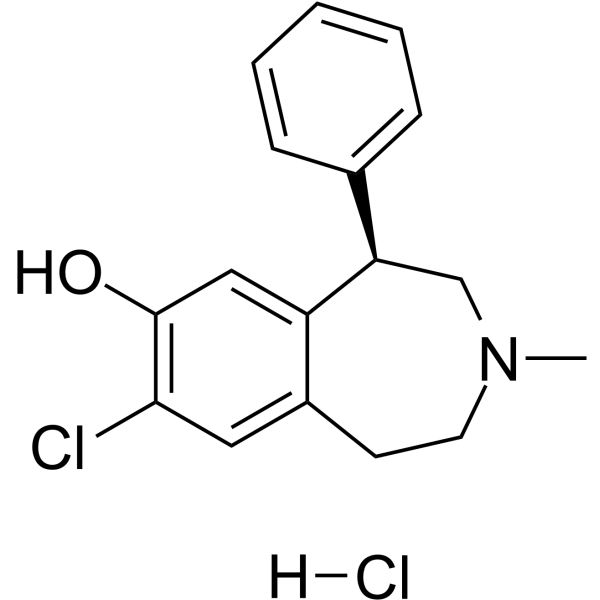
SCH-23390 hydrochlorideDopamine D1 Receptor Antagonist -
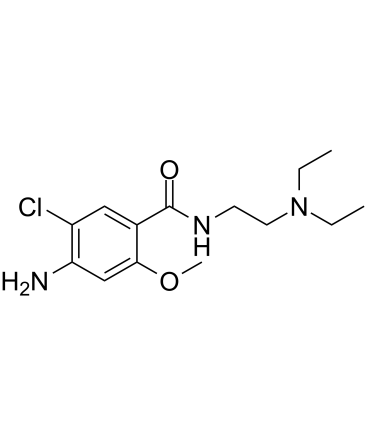
HY-17382
Metoclopramide5-HT3/D2 Receptor Antagonist -
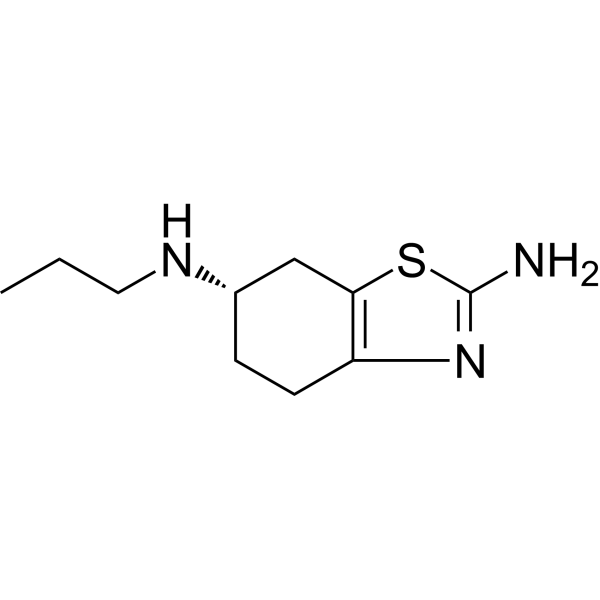
HY-B0410
PramipexoleDopamine Receptor Agonist -
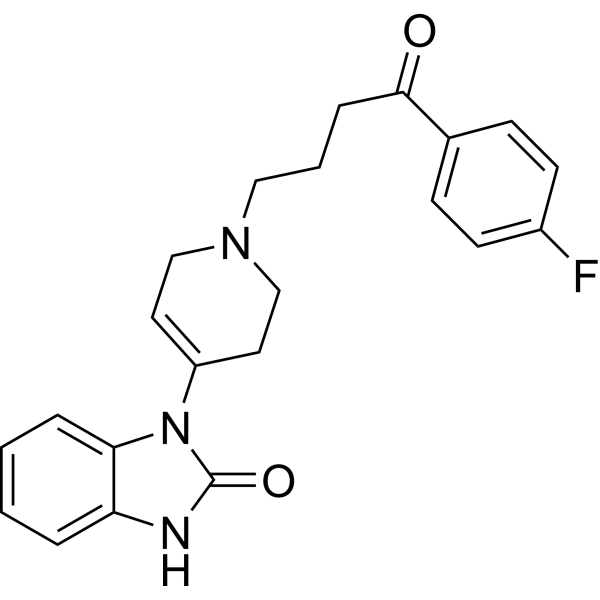
HY-B1240
DroperidolDopamine Receptor Antagonist -
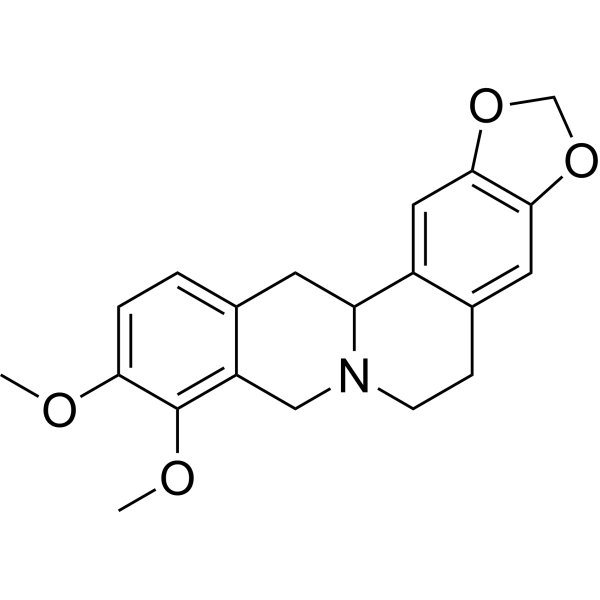
HY-N0925
TetrahydroberberineDopamine Receptor Antagonist -
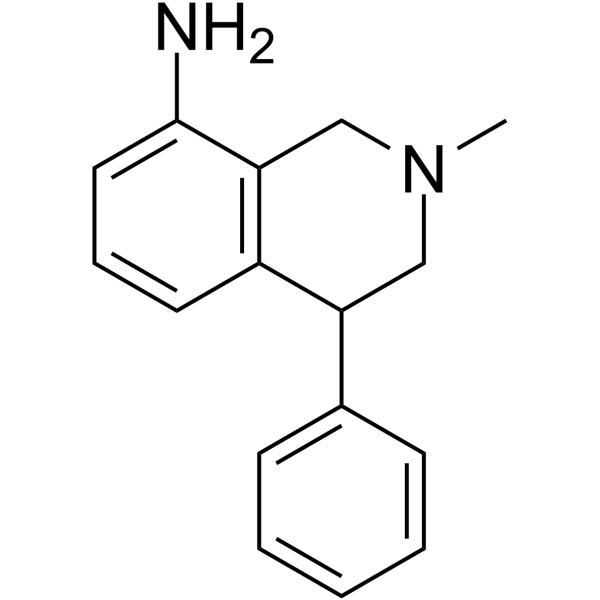
HY-B1110
NomifensineNorepinephrine/Dopamine Reuptake Inhibitor -
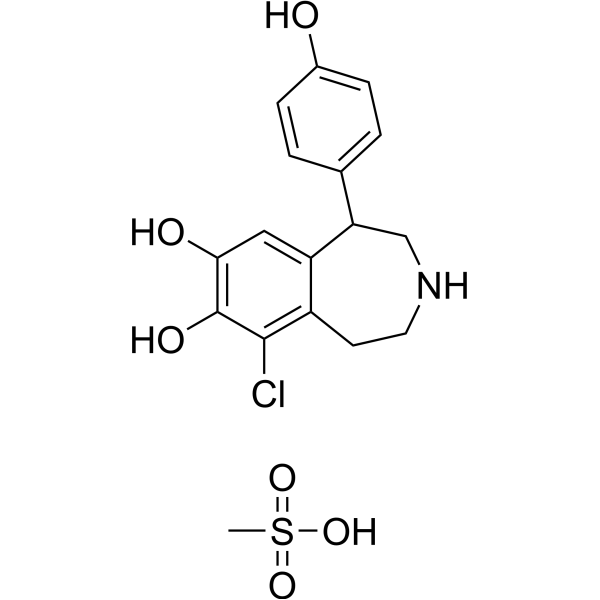
HY-B0735A
Fenoldopam mesylateDopamine DA Receptor Agonist -
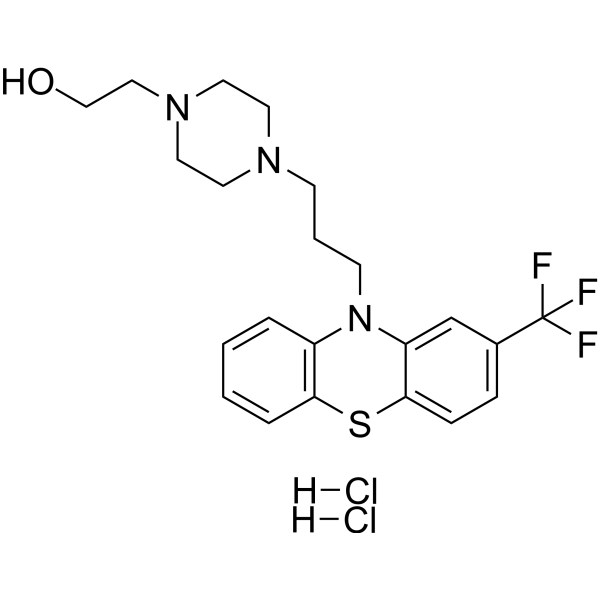
HY-A0081
Fluphenazine dihydrochlorideDopamine Receptor Inhibitor -
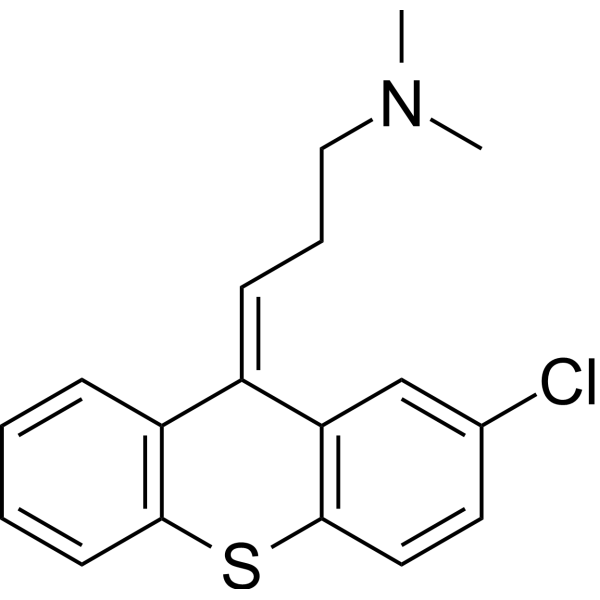
HY-B0274
ChlorprothixeneNeuroprotective Agent
All Dopamine Receptor Isoforms
MoreAll Adrenergic Receptor Isoforms
MoreAll 5-HT Receptor Isoforms
More

Biological Activity
Description
|
D3 Receptor 0.71 nM (Ki) |
5-HT1A Receptor |
D2 Receptor 13.5 nM (Ki) |
D4 Receptor 3.9-15 nM (Ki) |
D5 Receptor 5.4 nM (Ki) |
D1 Receptor 83 nM (Ki) |
5-HT1A Receptor 30 nM (Ki) |
5-HT2B Receptor 27 nM (Ki) |
Alpha-2B adrenergic receptor |
In Vitro
Rotigotine has a 10-fold selectivity for D3 (pKi=9.2) receptors compared with D2, D4 and D5 (pKi=8.5-8.0) and a 100-fold selectivity compared with D1 receptors (pKi=7.2). In functional studies, Rotigotine behaves as full agonist at all dopamine receptors but notably the potency for stimulation of D1 receptors is similar to that for D2 and D3 receptors (pEC50 respectively: 9.0, 9.4-8.6, 9.7)[1]. Rotigotine (10 μM) decreases the number of THir neurons by 40% in primary mesencephalic cell culture. Rotigotine (0.01 μM) slightly protects dopaminergic neurons against MPP+ toxicity, significantly protects dopaminergic neurons against rotenone-induced cell death, and significantly inhibits ROS production by rotenone[4]. .
MedChemExpress (MCE) has not independently confirmed the accuracy of these methods. They are for reference only. .


Chemical Information
-
CAS No. 102120-99-0
-
Appearance Solid
-
Molecular Weight 351.93
-
Formula C19H26ClNOS
-
Color Light yellow to yellow
-
SMILES
OC1=C2CCC(N(CCC)CCC3=CC=CS3)CC2=CC=C1.[H]Cl
-
Synonyms
N-0437 hydrochloride
-
Shipping
Room temperature in continental US; may vary elsewhere.
-
Storage
4°C, sealed storage, away from moisture
* In solvent : -80°C, 6 months; -20°C, 1 month (sealed storage, away from moisture)


Solvent & Solubility
In Vitro:
DMSO : ≥ 50 mg/mL (142.07 mM; Hygroscopic DMSO has a significant impact on the solubility of product, please use newly opened DMSO)
H2O : < 0.1 mg/mL (insoluble)
* "≥" means soluble, but saturation unknown.
Please refer to the solubility information to select the appropriate solvent. Once prepared, please aliquot and store the solution to prevent product inactivation from repeated freeze-thaw cycles.
Storage method and period of stock solution: -80°C, 6 months; -20°C, 1 month (sealed storage, away from moisture). When stored at -80°C, please use it within 6 months. When stored at -20°C, please use it within 1 month.
Please refer to the solubility information to select the appropriate solvent. Once prepared, please aliquot and store the solution to prevent product inactivation from repeated freeze-thaw cycles.
Storage method and period of stock solution: -80°C, 6 months; -20°C, 1 month (sealed storage, away from moisture). When stored at -80°C, please use it within 6 months. When stored at -20°C, please use it within 1 month.
Concentration (start) × Volume (start) = Concentration (final) × Volume (final)
In Vivo:
Select the appropriate dissolution method based on your experimental animal and administration route.
- For the following dissolution methods, please ensure to first prepare a clear stock solution using an In Vitro approach and then sequentially add co-solvents:
- To ensure reliable experimental results, the clarified stock solution can be appropriately stored based on storage conditions. As for the working solution for In Vivo experiments, it is recommended to prepare freshly and use it on the same day.
- The percentages shown for the solvents indicate their volumetric ratio in the final prepared solution. If precipitation or phase separation occurs during preparation, heat and/or sonication can be used to aid dissolution.
Add each solvent one by one: 10% DMSO 40% PEG300 5% Tween-80 45% Saline
Solubility: ≥ 2.5 mg/mL (7.10 mM); Clear solution
This protocol yields a clear solution of ≥ 2.5 mg/mL (saturation unknown).
Taking 1 mL working solution as an example, add 100 μL DMSO stock solution (25.0 mg/mL) to 400 μL PEG300, and mix evenly; then add 50 μL Tween-80 and mix evenly; then add 450 μL Saline to adjust the volume to 1 mL.
Preparation of Saline: Dissolve 0.9 g sodium chloride in ddH₂O and dilute to 100 mL to obtain a clear Saline solution.
Add each solvent one by one: 10% DMSO 90% (20% SBE-β-CD in Saline)
Solubility: ≥ 2.5 mg/mL (7.10 mM); Clear solution
This protocol yields a clear solution of ≥ 2.5 mg/mL (saturation unknown).
Taking 1 mL working solution as an example, add 100 μL DMSO stock solution (25.0 mg/mL) to 900 μL 20% SBE-β-CD in Saline, and mix evenly.
Preparation of 20% SBE-β-CD in Saline (4°C, storage for one week): 2 g SBE-β-CD powder is dissolved in 10 mL Saline, completely dissolve until clear.
In Vivo Dissolution Calculator
Please enter the basic information of animal experiments:
-
-
-
-
Recommended: Prepare an additional quantity of animals to account for potential losses during experiments.
Please enter your animal formula composition:
-
%DMSO +
Recommended: Keep the proportion of DMSO in working solution below 2% if your animal is weak.
-
%+
-
+%Tween-80 + +
-
%Saline +
The co-solvents required include: DMSO, . All of co-solvents are available by MedChemExpress (MCE). , Tween 80. All of co-solvents are available by MedChemExpress (MCE).
Working solution concentration: 0.22 mg/mL
Method for preparing stock solution: mg drug dissolved in μL DMSO. Stock solution concentration: mg/mL. * In solvent : -80°C, 6 months; -20°C, 1 month (sealed storage, away from moisture)
1. Take μL DMSO stock solution;
2. Add μL .
μL , mix evenly;
3. Then add μL Tween 80, mix evenly;
4. Then add μL
Please ensure that the stock solution in the first step is dissolved to a clear state, and add co-solvents in sequence. You can use ultrasonic heating (ultrasonic cleaner, recommended frequency 20-40 kHz), vortexing, etc. to assist dissolution.


Purity & Documentation
-
Data Sheet (279 KB)
-
SDS (252 KB)
- English - EN (252 KB)
- Français - FR (252 KB)
- Deutsch - DE (252 KB)
- Norwegian - NO (252 KB)
- Español - ES (252 KB)
- Swedish - SV (252 KB)
- Italian - IT (252 KB)
- Korean - KR (252 KB)
- Portuguese - PT (252 KB)
-
Handling Instructions (2659 KB)
References
[1]. Wood M, et al. Rotigotine is a potent agonist at dopamine D1 receptors as well as at dopamine D2 and D3 receptors. Br J Pharmacol. 2015 Feb;172(4):1124-35. [Content Brief]
[2]. Scheller D, et al. The in vitro receptor profile of rotigotine: a new agent for the treatment of Parkinson's disease. Naunyn Schmiedebergs Arch Pharmacol. 2009 Jan;379(1):73-86. [Content Brief]
[3]. Fenu S, et al. In vivo dopamine agonist properties of rotigotine: Role of D1 and D2 receptors. Eur J Pharmacol. 2016 Oct 5;788:183-91. [Content Brief]
[4]. Radad K, et al. Neuroprotective effect of rotigotine against complex I inhibitors, MPP+ and rotenone, in primary mesencephalic cell culture. Folia Neuropathol. 2014;52(2):179-86. [Content Brief]


Complete Stock Solution Preparation Table
Please refer to the solubility information to select the appropriate solvent. Once prepared, please aliquot and store the solution to prevent product inactivation from repeated freeze-thaw cycles.
Storage method and period of stock solution: -80°C, 6 months; -20°C, 1 month (sealed storage, away from moisture). When stored at -80°C, please use it within 6 months. When stored at -20°C, please use it within 1 month.
| Optional Solvent | Concentration Solvent Mass | 1 mg | 5 mg | 10 mg | 25 mg |
|---|---|---|---|---|---|
| DMSO | 1 mM | 2.8415 mL | 14.2074 mL | 28.4147 mL | 71.0369 mL |
| 5 mM | 0.5683 mL | 2.8415 mL | 5.6829 mL | 14.2074 mL | |
| 10 mM | 0.2841 mL | 1.4207 mL | 2.8415 mL | 7.1037 mL | |
| 15 mM | 0.1894 mL | 0.9472 mL | 1.8943 mL | 4.7358 mL | |
| 20 mM | 0.1421 mL | 0.7104 mL | 1.4207 mL | 3.5518 mL | |
| 25 mM | 0.1137 mL | 0.5683 mL | 1.1366 mL | 2.8415 mL | |
| 30 mM | 0.0947 mL | 0.4736 mL | 0.9472 mL | 2.3679 mL | |
| 40 mM | 0.0710 mL | 0.3552 mL | 0.7104 mL | 1.7759 mL | |
| 50 mM | 0.0568 mL | 0.2841 mL | 0.5683 mL | 1.4207 mL | |
| 60 mM | 0.0474 mL | 0.2368 mL | 0.4736 mL | 1.1839 mL | |
| 80 mM | 0.0355 mL | 0.1776 mL | 0.3552 mL | 0.8880 mL | |
| 100 mM | 0.0284 mL | 0.1421 mL | 0.2841 mL | 0.7104 mL |


(Rac)-Rotigotine hydrochloride Related Classifications
HY-15394 Related Classifications
 Powered by Bioz