Search Result
Results for "
R-Enantiomer
" in MedChemExpress (MCE) Product Catalog:
14
Isotope-Labeled Compounds
| Cat. No. |
Product Name |
Target |
Research Areas |
Chemical Structure |
-
- HY-121203
-
|
|
Serotonin Transporter
|
Neurological Disease
Cancer
|
|
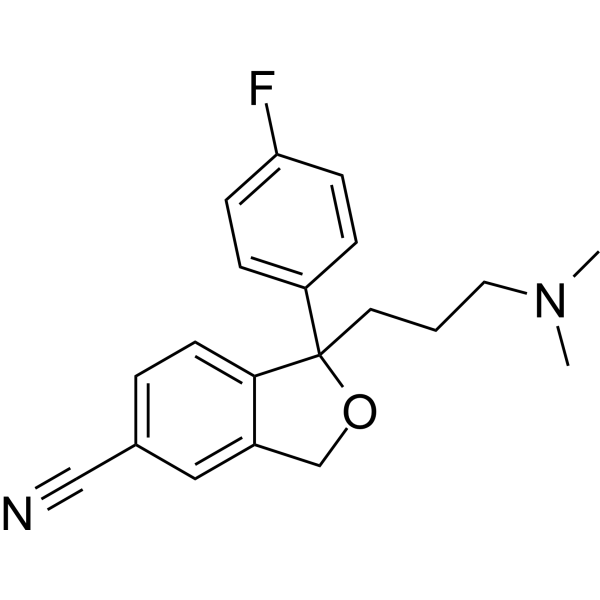
Citalopram is a racemate mixture of the active S(+)-enantiomer (Escitalopram; HY-14258) and R(-)-enantiomer. Citalopram is an orally active selective serotonin reuptake inhibitor (SSRI). Citalopram is an antidepressant and enhances serotoninergic neurotransmission .
|
-
-
- HY-B0573A
-
|
|
Adrenergic Receptor
|
Cardiovascular Disease
|
|
(S)-(-)-Propranolol hydrochloride is a chiral antihypertensive agent with approximately 100-fold higher potency than its R-enantiomer. (S)-(-)-Propranolol hydrochloride can be used for studies on hypertension, angina pectoris and arrhythmia .
|
-
-
- HY-10291
-
-
-
- HY-W010841
-
|
(R)-Cetirizine dihydrochloride
|
Histamine Receptor
|
Inflammation/Immunology
Endocrinology
Cancer
|
|
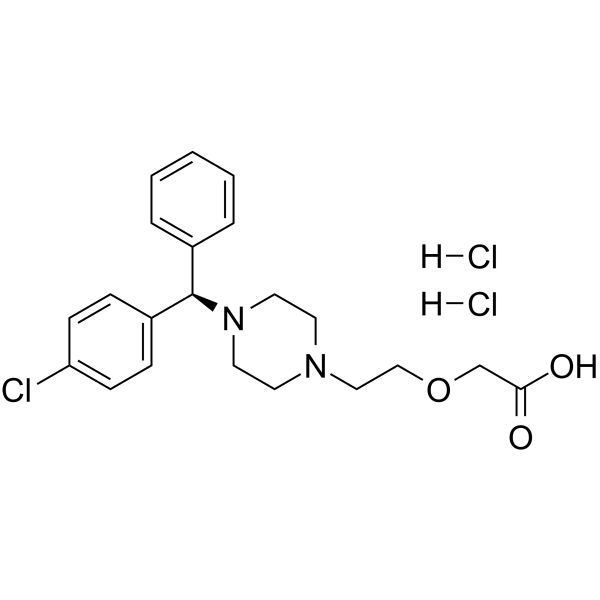
Levocetirizine dihydrochloride ((R)-Cetirizine dihydrochloride) is a third-generation peripheral H1-receptor antagonist. Levocetirizine dihydrochloride is an antihistaminic agent which is the R-enantiomer of Cetirizine. Levocetirizine dihydrochloride has a higher affinity for the histamine H1-receptor than (S)-Cetirizine and can effectively treat allergic rhinitis and chronic idiopathic urticaria .
|
-
-
- HY-B0814
-
|
(R)-Cetirizine
|
Histamine Receptor
|
Inflammation/Immunology
Endocrinology
Cancer
|
|
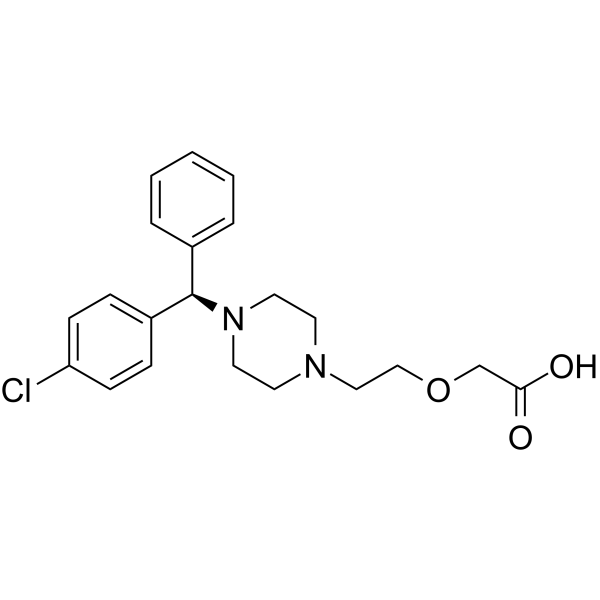
Levocetirizine ((R)-Cetirizine) is a third-generation peripheral H1-receptor antagonist. Levocetirizine is an antihistaminic agent which is the R-enantiomer of Cetirizine. Levocetirizine has a higher affinity for the histamine H1-receptor than (S)-Cetirizine and can effectively treat allergic rhinitis and chronic idiopathic urticaria .
|
-
-
- HY-14658B
-
-
-
- HY-16900A
-
|
(R)-Rolipram; (-)-Rolipram
|
Phosphodiesterase (PDE)
|
Neurological Disease
|
|
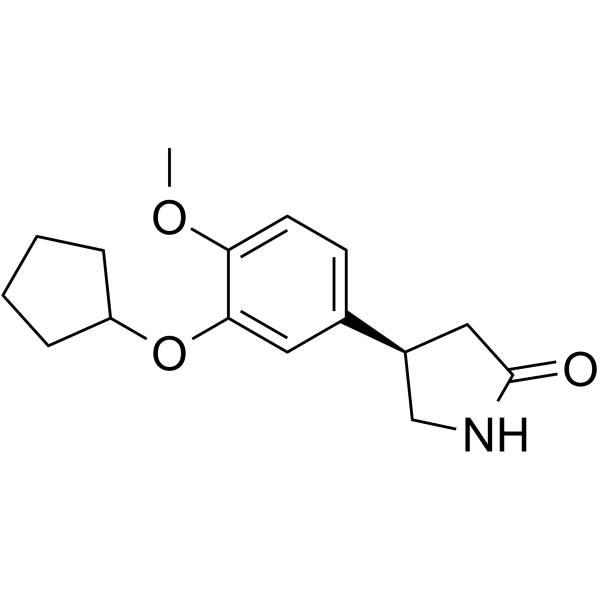
(R)-(-)-Rolipram is the R-enantiomer of Rolipram. Rolipram is a selective inhibitor of phosphodiesterases PDE4 with IC50 of 3 nM, 130 nM and 240 nM for PDE4A, PDE4B, and PDE4D, respectively.
|
-
-
- HY-B1675A
-
|
(R)-Albuterol hydrochloride; (R)-Salbutamol hydrochloride; Levosalbutamol hydrochloride
|
Adrenergic Receptor
|
Inflammation/Immunology
|
|
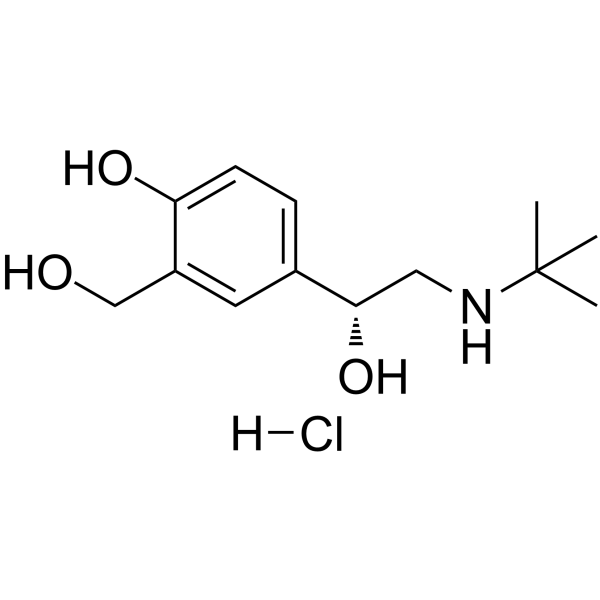
Levalbuterol ((R)-Albuterol) hydrochloride is a short-acting β2-adrenergic receptor agonist and the active (R)-enantiomer of Salbutamol. Levalbuterol hydrochloride is a more potent bronchodilator than Salbutamol and has the potential for the treatment of COPD .
|
-
-
- HY-10619D
-
|
MK 4827 (R-Enantiomer)
|
PARP
|
Cancer
|
|
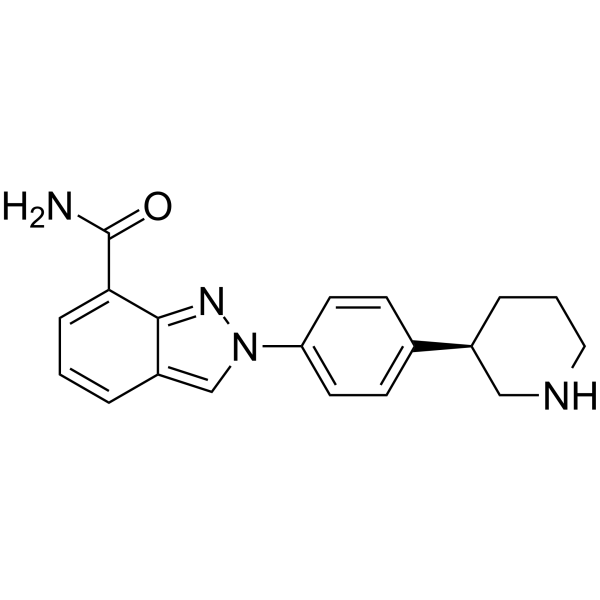
Niraparib R-enantiomer (MK-4827 R-enantiomer) is an excellent PARP1 inhibitor with IC50 of 2.4 nM.
|
-
-
- HY-108250
-
|
|
Androgen Receptor
|
Cancer
|
|
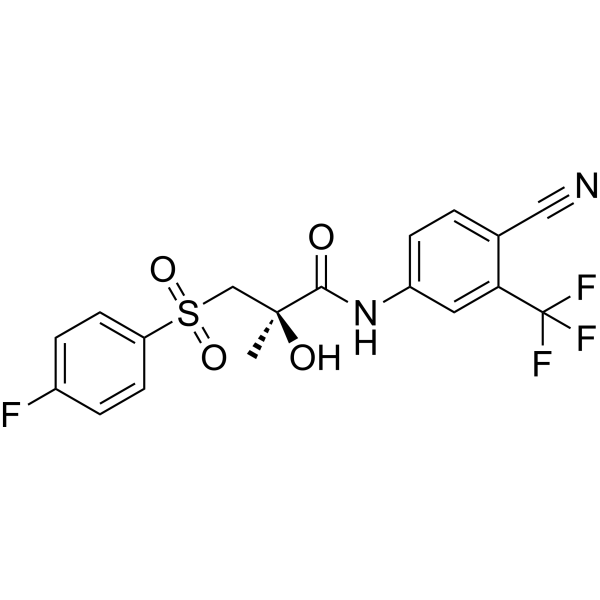
(R)-Bicalutamide is the (R)-enantiomer of Bicalutamide (HY-14249). (R)-Bicalutamide is an androgen receptor (AR) antagonist, with antineoplastic activity. (R)-Bicalutamide is widely used for the research of prostate cancer .
|
-
-
- HY-15431A
-
|
(R)-AZD5363
|
Akt
|
Cancer
|
|
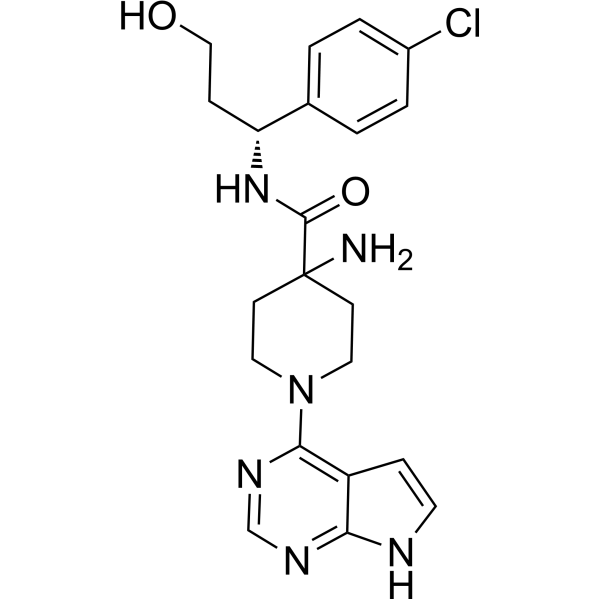
(R)-Capivasertib ((R)-AZD5363) is the R-enantiomer of Capivasertib (HY-15431) .
|
-
-
- HY-139664A
-
|
|
DNA Methyltransferase
|
Cancer
|
|
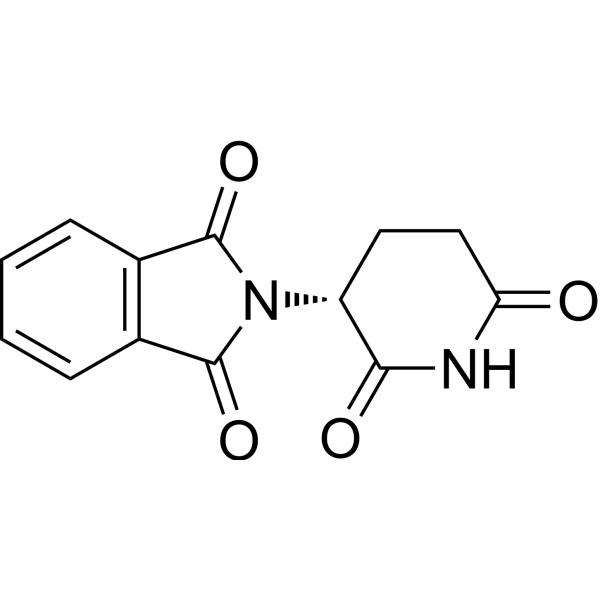
(R)-GSK-3685032 is the R-enantiomer of GSK-3685032. GSK-3685032 is a non-time-dependent, noncovalently, first-in-class reversible DNMT1-selective inhibitor, with an IC50 of 0.036 μM. GSK-3685032 induces robust loss of DNA methylation, transcriptional activation, and cancer cell growth inhibition .
|
-
-
- HY-B0317D
-
-
-
- HY-15187A
-
|
(R)-ARRY-520
|
Kinesin
|
Cancer
|
|
(R)-Filanesib ((R)-ARRY-520) is the R-enantiomer of Filanesib (HY-15187). Filanesib is a synthetic kinesin spindle protein (KSP) inhibitor with an IC50 of 6 nM.
|
-
-
- HY-100888A
-
|
(R)-TAK-931
|
CDK
|
Others
|
|
(R)-Simurosertib ((R)-TAK-931) is the (R)-enantiomer of Simurosertib. Simurosertib (TAK-931) is an orally active, selective and ATP-competitive cell division cycle 7 (CDC7) kinase inhibitor, with an IC50 of <0.3 nM .
|
-
-
- HY-158302A
-
|
|
GLUT
Apoptosis
|
Cancer
|
|
(R)-Glutor is the R-enantiomer of Glutor (HY-158302). Glutor is a selective GLUT 1/2/3 inhibitor that can suppress glucose uptake. Glutor can inhibit glycolysis and has anti-tumor activity, inducing cell apoptosis .
|
-
-
- HY-17554
-
|
(R)-(+)-Oxiracetam; (R)-ISF2522
|
Others
|
Neurological Disease
|
|
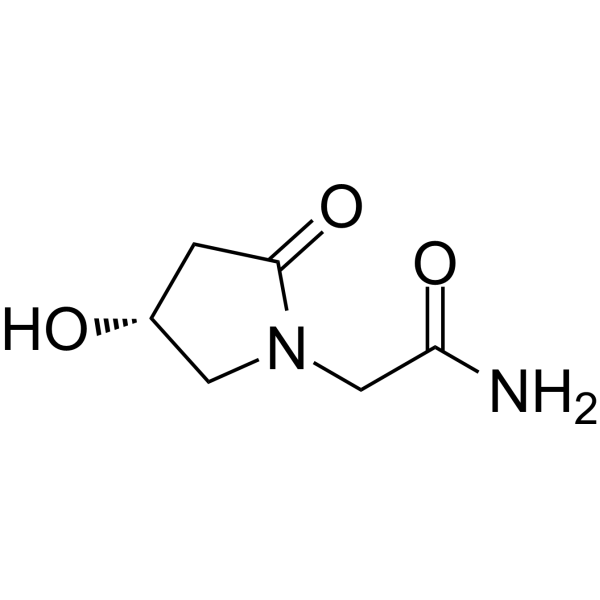
(R)-Oxiracetam is the (R)-enantiomer of the nootropic drug oxiracetam.
|
-
-
- HY-15452B
-
|
(R)-EX-527
|
Sirtuin
|
Cancer
|
|
(R)-Selisistat ((R)-EX-527) is a R-enantiomer of Selisistat. Selisistat (EX-527) is a potent and selective SIRT1 inhibitor with IC50 of 98 nM.
|
-
-
- HY-76948
-
|
|
Factor Xa
|
Cardiovascular Disease
|
|
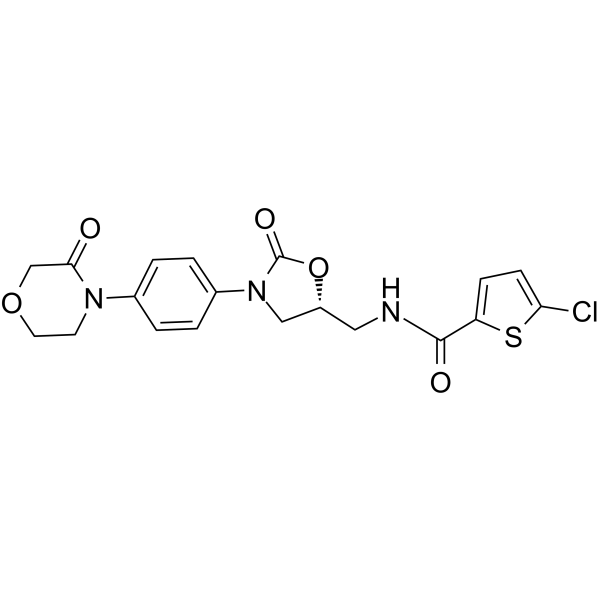
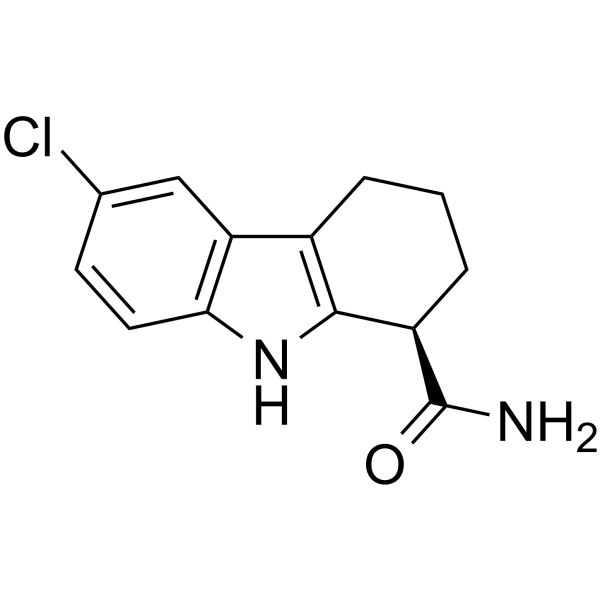
5-R-Rivaroxaban is (R)-enantiomer of Rivaroxaban. Rivaroxaban (BAY 59-7939) is a highly potent and selective, direct Factor Xa (FXa) inhibitor, achieving a strong gain in anti-FXa potency (IC50 0.7 nM; Ki 0.4 nM).
|
-
-
- HY-15677A
-
-
-
- HY-136838
-
-
-
- HY-19939S2
-
|
(R)-M9831
|
DNA-PK
|
Others
|
|
(R)-VX-984 ((R)-M9831) is the (R)-enantiomer of VX-984. VX-984 is a potent DNA-PK inhibitor.
|
-
-
- HY-13079
-
|
GDC-0973 (R-Enantiomer); XL-518 (R-Enantiomer)
|
MEK
|
Cancer
|
|
Cobimetinib R-enantiomer is the less active R-enantiomer of Cobimetinib. Cobimetinib is a potent and selective MEK inhibitor.
|
-
-
- HY-19414A
-
-
-
- HY-15792
-
|
10,11-(Methylenedioxy)-20(R)-camptothecin
|
Drug Derivative
|
Cancer
|
|
(R)-FL118 (10,11-(Methylenedioxy)-20(R)-camptothecin) is the R-enantiomer of FL118 (HY-12486). (R)-FL118 shows anticancer activity .
|
-
-
- HY-N6020A
-
|
|
Drug Isomer
|
Cardiovascular Disease
Inflammation/Immunology
|
|
(+)-Butin is the R-enantiomer of Butin (HY-N6020B). Butin is a bioactive flavonoid. Butin can be isolated from the heartwood of Dalbergia cocos. Butin exhibits potent antioxidant, antiplatelet, and anti-inflammatory activities.
|
-
-
- HY-125922
-
-
-
- HY-132821B
-
|
(R)-E2027
|
Phosphodiesterase (PDE)
|
Neurological Disease
|
|
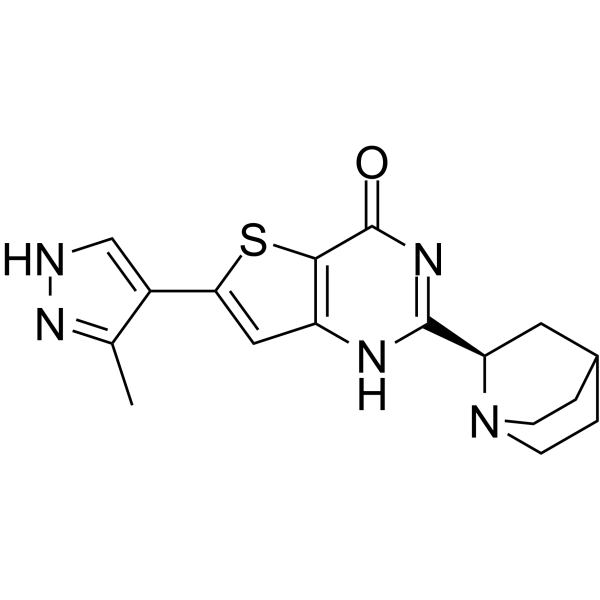
(R)-Irsenontrine ((R)-E2027), the R-enantiomer of Irsenontrine (HY-132821), is a potent phosphodiesterase 9 (PDE9) inhibitor with an IC50 value of 0.041 μM. (R)-Irsenontrine can be used for the research of neurological diseases .
|
-
-
- HY-16723A
-
|
(R)-TV 45070; (R)-XEN402
|
Sodium Channel
|
Neurological Disease
Inflammation/Immunology
|
|
(R)-Funapide ((R)-TV 45070) is the less active R-enantiomer of Funapide. Funapide is a potent inhibitor of the sodium channel Nav1.7, Nav1.8 and other Nav channels expressed in the peripheral nervous system. Fornabil is an orally effective analgesic agent .
|
-
-
- HY-100181B
-
|
|
Drug Isomer
|
Metabolic Disease
|
|
(R)-PF-04991532 is the R-enantiomer of PF-04991532 (HY-100181). PF-04991532 is a potent, hepatoselective glucokinase activator .
|
-
-
- HY-170362A
-
-
-
- HY-111407B
-
|
(R)-SCH900353
|
ERK
|
Cancer
|
|
(R)-MK-8353 ((R)-SCH900353) is the R-enantiomer of MK-8353 (HY-111407). MK-8353 (SCH900353) is a potent, selective and orally active ERK1 and ERK2 inhibitor with IC50s of 23.0 nM and 8.8 nM, respectively .
|
-
-
- HY-114549
-
|
|
Dopamine Receptor
|
Neurological Disease
|
|
(R)-SCH-23982 hydrochloride is the R-enantiomer of SCH-23982 hydrochloride. SCH-23982 hydrochloride is a selective dopamine D1 receptor antagonist. (R)-SCH-23982 hydrochloride is promising for research of central nervous system disorders such as schizophrenia, Parkinson’s disease .
|
-
-
- HY-12993B
-
|
A-60444 (R Enantiomer)
|
RSV
|
Infection
|
|
RSV604 R enantiomer is the R-enantiomer of RSV604. RSV604 is an inhibitor of respiratory syncytial virus (RSV) replication. R-enantiomer is less active against RSV.
|
-
-
- HY-153728A
-
|
|
WDR5
|
Others
|
|
(R)-WM-586 is the R-enantiomer of WM-586 .
|
-
-
- HY-B0612D
-
-
-
- HY-15832A
-
|
|
Phosphatase
|
Others
|
|
(R)-GSK 2830371 is the R-enantiomer of GSK 2830371 (HY-15832). GSK 2830371 is a highly selective Wip1 phosphatase inhibitor with IC50 of 6 nM .
|
-
-
- HY-B1675
-
|
(R)-Albuterol; (R)-Salbutamol; Levosalbutamol
|
Adrenergic Receptor
|
Inflammation/Immunology
|
|
Levalbuterol ((R)-Albuterol; (R)-Salbutamol) is a short-acting β2-adrenergic receptor agonist and the active (R)-enantiomer of Salbutamol. Levalbuterol is a more potent bronchodilator than Salbutamol and has the potential for the treatment of COPD .
|
-
-
- HY-114060A
-
-
-
- HY-130248B
-
|
|
GnRH Receptor
|
Others
|
|
(R)-BAY-899 is the R-enantiomer of BAY-899. BAY-899 is an orally active and selective luteinizing hormone receptor (LH-R) antagonist with IC50s of 185 nM and 46nM for hLH (human LH) and rLH (rat LH), respectively .
|
-
-
- HY-B1675AR
-
|
(R)-Albuterol hydrochloride (Standard); (R)-Salbutamol hydrochloride (Standard); Levosalbutamol hydrochloride (Standard)
|
Reference Standards
Adrenergic Receptor
|
Inflammation/Immunology
|
|
Levalbuterol (hydrochloride) (Standard) is the analytical standard of Levalbuterol (hydrochloride). This product is intended for research and analytical applications. Levalbuterol ((R)-Albuterol) hydrochloride is a short-acting β2-adrenergic receptor agonist and the active (R)-enantiomer of Salbutamol. Levalbuterol hydrochloride is a more potent bronchodilator than Salbutamol and has the potential for the treatment of COPD .
|
-
-
- HY-111191A
-
|
|
Drug Isomer
|
Neurological Disease
|
|
(R)-ONO-2952 is a R-enantiomer of ONO-2952. ONO-2952 is a potent, selective and orally active TSPO antagonist with Kis of 0.33-9.30 nM for rat and human TSPO. ONO-2952 is more selective for TSPO than other receptors, transporters, ion channels and enzymes .
|
-
-
- HY-12279F
-
|
TGR-1202 R-Enantiomer; RP5264 R-Enantiomer
|
PI3K
|
Cancer
|
|
Umbralisib R-enantiomer (TGR-1202 R-enantiomer) is a PI3Kδ inhibitor, which is the less active enantiomer of TGR-1202.
|
-
-
- HY-112164A
-
|
IDO/TDO Inhibitor (R-Enantiomer)
|
Indoleamine 2,3-Dioxygenase (IDO)
|
Cancer
|
|
IACS-8968 (R-enantiomer) is the R-enantiomer of IACS-8968. IACS-8968 is a dual IDO and TDO inhibitor, with pIC50s of 6.43 for IDO and <5 for TDO, respectively.
|
-
-
- HY-100604A
-
-
-
- HY-105138
-
|
(6R)-BG9719; (6R)-CVT-124
|
Adenosine Receptor
|
Cardiovascular Disease
|
|
(6R)-Naxifylline ((6R)-BG9719) (ENX R-enantiomer) is the R-enantiomer of Naxifylline (HY-19240). (6R)-Naxifylline is a A1-adenosine antagonist with saluretic activity. (6R)-Naxifylline induces relaxation of spontaneous tone in guinea pig trachea .
|
-
-
- HY-W756217
-
|
(R)-AAD1566
|
nAChR
|
Others
|
|
(R)-Monepantel (AAD2224) is the optical R-enantiomer of monepantel. (R)-Monepantel has no nematocidal effect, is inactive .
|
-
-
- HY-10809A
-
|
RG1678 (R Enantiomer); RO4917838 (R Enantiomer)
|
GlyT
|
Neurological Disease
|
|
Bitopertin R enantiomer (RG1678 R enantiomer; RO4917838 R enantiomer) is the R-enantiomer of Bitopertin. Bitopertin is a potent, noncompetitive glycine reuptake inhibitor, inhibits glycine uptake at human GlyT1 with a concentration exhibiting IC50 of 25 nM.
|
-
-
- HY-112134A
-
|
|
AP-1
|
Cancer
|
|
(R)-CSN5i-3 is the (R)-enantiomer of CSN5i-3. CSN5i-3 is a potent, selective and orally available inhibitor of CSN5 .
|
-
-
- HY-128856
-
|
|
Drug Derivative
|
Neurological Disease
|
|
P7C3-OMe is a pro-neurogenic compound, has therapeutic benefits in neuropsychiatric and/or neurodegenerative disease. The R-enantiomer of P7C3-OMe is far more active than the S-enantiomer .
|
-
- HY-121203S4
-
|
|
Serotonin Transporter
Isotope-Labeled Compounds
|
Neurological Disease
Cancer
|
|
Citalopram-d3 hydrochloride is deuterated labeled Citalopram (HY-121203). Citalopram is a racemate mixture of the active S(+)-enantiomer (Escitalopram; HY-14258) and R(-)-enantiomer. Citalopram is an orally active selective serotonin reuptake inhibitor (SSRI). Citalopram is an antidepressant and enhances serotoninergic neurotransmission .
|
-
- HY-B0612C
-
|
|
Calcium Channel
|
Others
|
|
(R)-Lercanidipine is the R-enantiomer of Lercanidipine. (R)-lercanidipine is a calcium channel blocker .
|
-
- HY-14948A
-
|
(R)-RWJ-333369
|
Drug Isomer
|
Neurological Disease
|
|
(R)-Carisbamate ((R)-RWJ-333369) is the R-Enantiomer of Carisbamate (HY-14948). Carisbamate is an orally active neuromodulator .
|
-
- HY-114635
-
|
Retorphan
|
Neprilysin
|
Metabolic Disease
|
|
Dexecadotril (Retorphan) is a powerful and selective neprilysin (NEP) inhibitor. Dexecadotril is a prodrug of the R-enantiomers of Thiorphan (HY-W013375). Dexecadotril shows intestinal antisecretatory action .
|
-
- HY-136860
-
|
(R)-Wy 45030
|
5-HT Receptor
|
Neurological Disease
|
|
(R)-Venlafaxine is the R-enantiomer of venlafaxine (HY-B0196), an orally active and potent dual inhibitor of serotonin (5-HT) and norepinephrine (NE) reuptake. (R)-Venlafaxine can be utilized in antidepressant research .
|
-
- HY-152775A
-
|
|
Histone Methyltransferase
|
Metabolic Disease
|
|
RK-0133114 is a G9a inhibitor and a R-enantiomer of RK-701 (HY-152775). RK-0133114 inhibits G9a with an IC50 value of 3.7 μM. RK-0133114 can be used for the research of sickle cell disease (SCD) .
|
-
- HY-134956B
-
|
|
YAP
|
Cancer
|
|
(R)-VT104 is the R-enantiomer of VT104. (R)-VT104 shows an IC50 value of 0.1-1 μΜ for firefly luciferase. VT104 is an orally active and pan-TEAD auto-palmitoylation inhibitor .
|
-
- HY-126047B
-
|
|
NF-κB
Amyloid-β
nAChR
|
Neurological Disease
Inflammation/Immunology
|
|
(R)-(+)-Anatabine is an less active R-enantiomer of Anatabine. Anatabine is a potent α4β2 nAChR agonist . Anatabine inhibits NF-κB activation lower amyloid-β (Aβ) production by preventing the β-cleavage of amyloid precursor protein (APP). Anatabine has anti-inflammatory effects and has the potential for neurodegenerative disorders treatment .
|
-
- HY-107443A
-
|
(R)-Molibresib carboxylic acid; (R)-GSK525762A carboxylic acid; (R)-PROTAC BRD4-binding moiety 2
|
Ligands for Target Protein for PROTAC
Epigenetic Reader Domain
|
Cancer
|
|
(R)-I-BET762 carboxylic acid, the R-enantiomer of I-BET762 carboxylic acid (HY-107443). I-BET762 carboxylic acid is an I-BET762-based warhead ligand for conjugation reactions of PROTAC targeting on BET. I-BET762 carboxylic acid is a BRD4 inhibitor with a pIC50 value of 5.1 .
|
-
- HY-126043
-
-
- HY-122300
-
|
Levoprotiline hydrochloride
|
Adrenergic Receptor
|
Neurological Disease
|
|
R-(-)-Oxaprotiline (Levoprotiline) hydrochloride is the R-enantiomer of Oxaprotiline. Oxaprotiline is a tetracyclic antidepressant agent .
|
-
- HY-155030
-
|
|
Glycosidase
|
Metabolic Disease
|
|
α-Glucosidase-IN-25 (Compound (R)-8k) is a competitive inhibitor of α-glucosidase, with an IC50 of 1.19μM and can be used for anti-diabetic research .
|
-
- HY-117791
-
|
|
Antifolate
|
Cancer
|
|
(R)-Pralatrexate is the (R)-enantiomer of Pralatrexate (HY-10446). Pralatrexate is an antifolate and is a potent dihydrofolate reductasean (DHFR) inhibitor .
|
-
- HY-106615
-
-
- HY-120207
-
-
- HY-108698A
-
|
(+)-3-PPP hydrochloride
|
Dopamine Receptor
|
Neurological Disease
|
|
(R)-Preclamol hydrochloride ((+)-3-PPP hydrochloride) is the R-enantiomer of Preclamol hydrochloride. (R)-Preclamol hydrochloride is a DA agonist with autoreceptor as well as postsynaptic receptor stimulatory properties .
|
-
- HY-B0612DS
-
|
|
Calcium Channel
|
Cardiovascular Disease
|
|
(R)-lercanidipine D3 hydrochloride is a deuterium labeled (R)-Lercanidipine hydrochloride. (R)-Lercanidipine-d3 (hydrochloride), the R-enantiomer of Lercanidipine, is a calcium channel blocker .
|
-
- HY-U00092B
-
|
|
Bacterial
|
Infection
|
|
(R,R)-BAY-Y 3118 is the R-enantiomer of BAY-Y 3118. (R,R)-BAY-Y 3118 shows weak bactericidal activity .
|
-
- HY-101281B
-
|
|
mAChR
|
Neurological Disease
|
|
(R)-VU 6008667, the less active (R)-enantiomer to VU 6008667, is devoid of M5 NAM activity (IC50>10 μM) .
|
-
- HY-124779
-
|
(S)-GEA 654; (S)-A03
|
iGluR
|
Neurological Disease
Metabolic Disease
|
|
(S)-Alaproclate ((S)-GEA 654) is more potent than the R-(+)-enantiomer both in blocking the NMDA receptor currents in vitro and in antagonizing the cGMP increase in vivo .
|
-
- HY-B0317DR
-
-
- HY-10013B
-
|
MK0364 (1R,2R)stereoisomer
|
Cannabinoid Receptor
|
Others
|
|
Taranabant (1R,2R)stereoisomer is the R-enantiomer of Taranabant. Taranabant is a highly potent and selective cannabinoid 1 (CB1) receptor inverse agonist.
|
-
- HY-133171
-
|
|
Serotonin Transporter
|
Neurological Disease
|
|
(R)-Norfluoxetine is the (R)-enantiomer of Norfluoxetine (HY-135556). (R)-Norfluoxetine is a potent serotonin re-uptake inhibitor, with a Ki of 13 nM. (R)-Norfluoxetine can be used for the research of depression .
|
-
- HY-12236B
-
-
- HY-124281
-
|
|
NF-κB
Akt
Autophagy
PI3K
|
Others
|
|
9(R)-PAHSA is a R-enantiomer of 9-PAHSA. 9-PAHSA is an orally available anti-inflammatory lipid that lowers blood sugar and reduces inflammation .
|
-
- HY-108418A
-
-
- HY-157294A
-
|
(R)-GSK47866A
|
Glucocorticoid Receptor
|
Cancer
|
|
(R)-GSK866 ((R)-GSK47866A) is the (R)-enantiomer of GSK866 (HY-157294). GSK866 is a selective agonist for glucocorticoid receptor with an IC50 of 4.6 nM .
|
-
- HY-114937
-
|
BIA 2-059; (R)-Licarbazepine acetate
|
Beta-secretase
Sodium Channel
|
Neurological Disease
|
|
(R)-Eslicarbazepine acetate (BIA 2-059) is the R-enantiomer of Eslicarbazepine acetate (HY-B0703). Eslicarbazepine acetate is an antiepileptic agent, is a dual a dual Inhibitor of β-Secretase and voltage-gated sodium channel .
|
-
- HY-12422E
-
|
|
CDK
|
Cancer
|
|
rel-(2S,3R)-Voruciclib hydrochloride is the rel-(2S,3R)-enantiomer of Voruciclib. Voruciclib is an orally active CDK inhibitor .
|
-
- HY-120308
-
|
SR140603
|
Neurokinin Receptor
|
Neurological Disease
|
|
(R)-Nolpitantium is the R-enantiomer of Nolpitantium (HY-108479). Nolpitantium (SR140333) is a potent, selective, competitive, non-peptide tachykinin NK1 receptor antagonist. Nolpitantium blocks the activation of rat thalamic neurons after nociceptive stimulation .
|
-
- HY-12422C
-
|
|
CDK
|
Cancer
|
|
rel-(2S,3R)-Voruciclib is the (2S,3R)-enantiomer of Voruciclib. (2S,3R)-Voruciclib is an orally active CDK inhibitor .
|
-
- HY-124679A
-
|
|
Bacterial
|
Others
|
|
(R)-DS86760016 is the R-enantiomer of DS86760016 (HY-124679). DS86760016 is a potent leucyl-tRNA synthetase (LeuRS) inhibitor with activity against multidrug-resistant (MDR) Gram-negative bacteria, such as Escherichia coli, Klebsiella pneumoniae, and Pseudomonas aeruginosa .
|
-
- HY-113533A
-
|
17(R)-RvD4
|
Bacterial
|
Inflammation/Immunology
|
17(R)-Resolvin D4 (17(R)-RvD4) is the R-enantiomer of Resolvin D4. Resolvin D4 (RvD4), a specialized proresolving mediator, can be produced in bioactive levels during S. aureus infection .
|
-
- HY-13956A
-
|
(R)-U 72107-d1
|
Endogenous Metabolite
|
Inflammation/Immunology
|
|
(R)-Pioglitazone-d1 ((R)-U 72107-d1) is a stabilized and deuterated R-enantiomer of pioglitazone, exhibiting pharmacological properties that are beneficial for NASH treatment, including modulation of mitochondrial function, non-steroidal anti-inflammatory effects, and glucose-lowering capabilities.
|
-
- HY-121203R
-
|
|
Reference Standards
Serotonin Transporter
|
Neurological Disease
Cancer
|
|
Citalopram (Standard) is the analytical standard of Citalopram. This product is intended for research and analytical applications. Citalopram is a racemate mixture of the active S(+)-enantiomer (Escitalopram; HY-14258) and R(-)-enantiomer. Citalopram is an orally active selective serotonin reuptake inhibitor (SSRI). Citalopram is an antidepressant and enhances serotoninergic neurotransmission .
|
-
- HY-B0352BS
-
|
(R)-Org3770 d3; (R)-6-Azamianserin d3
|
Isotope-Labeled Compounds
5-HT Receptor
|
Neurological Disease
|
|
(R)-Mirtazapine-d3 is a deuterium labeled (R)-Mirtazapine. (R)-Mirtazapine is a R(−)-enantiomer of Mirtazapine with antinociceptive properties in an animal model of acute thermal nociception. (R)-Mirtazapine is a 5-HT3 receptor antagonist. (R)-Mirtazapine is mainly metabolized by CYP3A4[1].
|
-
- HY-10619DR
-
|
MK 4827 (R-Enantiomer) (Standard)
|
Reference Standards
PARP
|
Cancer
|
|
Niraparib (R-enantiomer) (Standard) is the analytical standard of Niraparib (R-enantiomer) (HY-10619D). This product is intended for research and analytical applications. Niraparib R-enantiomer (MK-4827 R-enantiomer) is an excellent PARP1 inhibitor with IC50 of 2.4 nM.
|
-
- HY-132001A
-
|
(R)-KO-539
|
Epigenetic Reader Domain
|
Cancer
|
|
(R)-Ziftomenib ((R)-KO-539) is the R-enantiomer of Ziftomenib (HY-132001). Ziftomenib (KO-539) is an orally active menin-MLL interaction inhibitor with antitumor activities .
|
-
- HY-107443AR
-
|
(R)-Molibresib carboxylic acid (Standard); (R)-GSK525762A carboxylic acid (Standard); (R)-PROTAC BRD4-binding moiety 2 (Standard)
|
Reference Standards
Ligands for Target Protein for PROTAC
Epigenetic Reader Domain
|
Cancer
|
|
(R)-I-BET762 carboxylic acid (Standard) is the analytical standard of (R)-I-BET762 carboxylic acid (HY-107443A). This product is intended for research and analytical applications. (R)-I-BET762 carboxylic acid, the R-enantiomer of I-BET762 carboxylic acid (HY-107443). I-BET762 carboxylic acid is an I-BET762-based warhead ligand for conjugation reactions of PROTAC targeting on BET. I-BET762 carboxylic acid is a BRD4 inhibitor with a pIC50 value of 5.1 .
|
-
- HY-138439
-
|
|
Mitochondrial Metabolism
|
Infection
|
|
Mandestrobin is a mitochondrial respiratory chain complex III inhibitor with bactericidal activity. The enantiomers of Mandestrobin exhibit differential bactericidal activity, with the R-enantiomer showing higher activity than the S-enantiomer .
|
-
- HY-153369A
-
|
(R)-BAY 1165747
|
Drug Isomer
|
Others
|
|
(R)-BAY-747 ((R)-BAY 1165747) is the (R)-enantiomer of BAY-747 (HY-153369). BAY-747 is an orally active and brain-penetrant stimulator of soluble guanylate cyclase (sGC) .
|
-
- HY-15954C
-
|
(R)-CGM097
|
MDM-2/p53
|
Cancer
|
|
(R)-NVP-CGM097 is the R-enantiomer of NVP-CGM097 (HY-15954). NVP-CGM097 is a potent and selective MDM2 inhibitor with an IC50 of 1.7 nM for hMDM2 .
|
-
- HY-B1296B
-
|
|
Drug Isomer
|
Others
|
|
(R)-Promethazine is the R-enantiomer of Promethazine (HY-B1296). Promethazine is an orally active histamine receptor antagonist. Promethazine is first-generation antihistamine of the phenothiazine family, shows strong sedative and weak antipsychotic effects .
|
-
- HY-100604AR
-
|
|
Amyloid-β
γ-secretase
Reference Standards
|
Others
|
|
(R)-JNJ-40418677 (Standard) is the analytical standard of (R)-JNJ-40418677 (HY-100604A). This product is intended for research and analytical applications. (R)-JNJ-40418677 is the R-enantiomer of JNJ-40418677 (HY-100604) .
|
-
- HY-E71099
-
|
|
Biochemical Assay Reagents
|
Others
|
|
(R)-Dichlorprop dioxygenase (2-oxoglutarate) (EC 1.14.11.44) is a Fe2+-dependent enzyme. (R)-Dichlorprop dioxygenase (2-oxoglutarate) (EC 1.14.11.44) is involved in the degradation of the (R)-enantiomer of the phenoxyalkanoic acid herbicides mecoprop and dichlorprop.
|
-
- HY-108698AR
-
|
(+)-3-PPP hydrochloride (Standard)
|
Reference Standards
Dopamine Receptor
|
Neurological Disease
|
|
(R)-Preclamol hydrochloride (Standard) is the analytical standard of (R)-Preclamol (hydrochloride) (HY-108698A). This product is intended for research and analytical applications. (R)-Preclamol hydrochloride ((+)-3-PPP hydrochloride) is the R-enantiomer of Preclamol hydrochloride. (R)-Preclamol hydrochloride is a DA agonist with autoreceptor as well as postsynaptic receptor stimulatory properties .
|
-
- HY-184117
-
|
|
Ser/Thr Protease
|
Others
|
|
pMeO-Bz-SF is a covalent, stereoselective α-chymotrypsin inhibitor with an IC50 value of 133 nM. The (R)-enantiomer of pMeO-Bz-SF inhibits α-chymotrypsin with an IC50 of 101 nM. The (S)-enantiomer of pMeO-Bz-SF shows low activity against α-chymotrypsin, with an IC50 of 2965 nM .
|
-
- HY-N15934A
-
|
|
C-type Lectin-like Receptors (CTLRs)
|
Others
|
|
(R)-MMG-1 is the R-enantiomer of MMG-1. MMG-1, a monomycoloyl glycerol, is a C-type lectin receptor agonist. MMG-1, a lipid membrane stabilizer, is an immunopotentiator in liposomes. MMG-1 can be used to prepare lipid nanoparticles for drug delivery .
|
-
- HY-101281BR
-
|
|
mAChR
Reference Standards
|
Neurological Disease
|
|
(R)-VU 6008667 (Standard) is the analytical standard of (R)-VU 6008667 (HY-101281B). This product is intended for research and analytical applications. (R)-VU 6008667, the less active (R)-enantiomer to VU 6008667, is devoid of M5 NAM activity (IC50>10 μM) .
|
-
- HY-108250R
-
|
|
Reference Standards
Androgen Receptor
|
Cancer
|
|
(R)-Bicalutamide (Standard) is the analytical standard of (R)-Bicalutamide (HY-108250). This product is intended for research and analytical applications. (R)-Bicalutamide is the (R)-enantiomer of Bicalutamide (HY-14249). (R)-Bicalutamide is an androgen receptor (AR) antagonist, with antineoplastic activity. (R)-Bicalutamide is widely used for the research of prostate cancer .
|
-
- HY-N6020AR
-
|
|
Reference Standards
Drug Isomer
|
Cardiovascular Disease
Inflammation/Immunology
|
|
(+)-Butin (Standard) is the analytical standard of (+)-Butin (HY-N6020A). This product is intended for research and analytical applications. (+)-Butin is the R-enantiomer of Butin (HY-N6020B). Butin is a bioactive flavonoid. Butin can be isolated from the heartwood of Dalbergia cocos. Butin exhibits potent antioxidant, antiplatelet, and anti-inflammatory activities.
|
-
- HY-109854A
-
|
(R)-Lisophylline
|
STAT
|
Metabolic Disease
Inflammation/Immunology
|
|
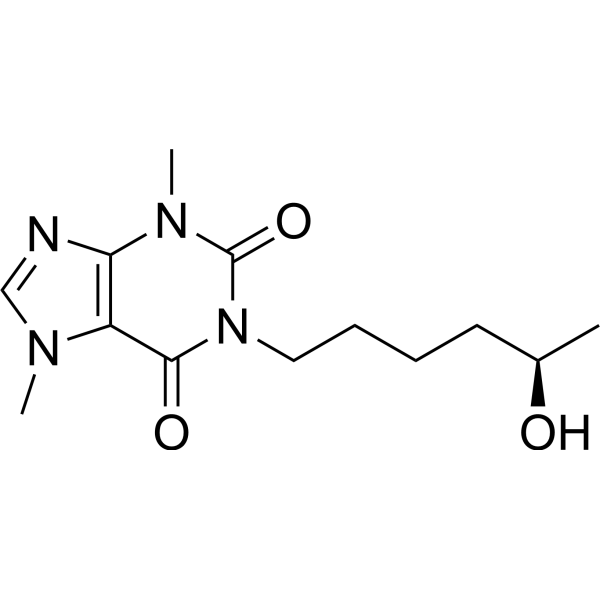
(R)-Lisofylline ((R)-Lisophylline) is a (R)-enantiomer of the metabolite of Pentoxifylline with anti-inflammatory properties. (R)-Lisofylline is a lysophosphatidic acid acyltransferase inhibitor with an IC50 of 0.6 μM and interrupts IL-12 signaling-mediated STAT4 activation. (R)-Lisofylline has the potential for type 1 diabetes, autoimmune disorders research .
|
-
- HY-B0371B
-
|
|
Adrenergic Receptor
|
Endocrinology
|
|
(R)-Terazosin is an active R-enantiomer of Terazosin. (R)-Terazosin is a potent α1-adrenoceptor antagonist with Ki values of 6.51 nM, 1.01 nM and 1.97 nM for α1a, α1b and α1d-adrenoceptor, respectively .
|
-
- HY-10291R
-
|
(R)-Flurbiprofen (Standard); MPC7869 (Standard)
|
Reference Standards
RAR/RXR
Autophagy
|
Neurological Disease
Inflammation/Immunology
Cancer
|
|
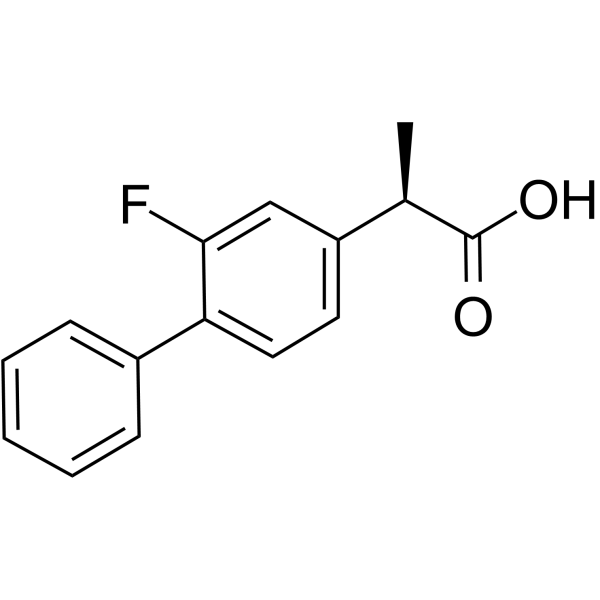
Tarenflurbil (Standard) is the analytical standard of Tarenflurbil. This product is intended for research and analytical applications. Tarenflurbil ((R)-Flurbiprofen) is the R-enantiomer of the racemate NSAID Flurbiprofen, Tarenflurbil ((R)-Flurbiprofen) inhibits the binding of [3H]9-cis-RA to RXRα LBD with IC50 of 75 μM. Tarenflurbil can be used for Alzheimer's disease research.
|
-
- HY-14258
-
|
(S)-Citalopram; (S)-(+)-Citalopram
|
Serotonin Transporter
|
Neurological Disease
|
|
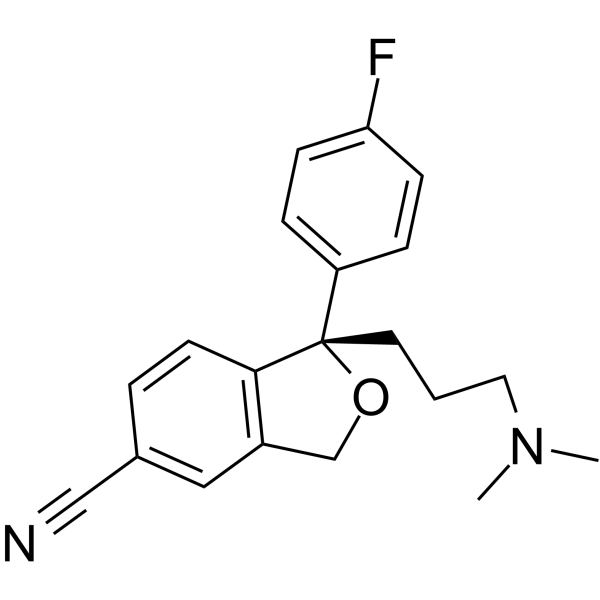
Escitalopram ((S)-Citalopram), the S-enantiomer of racemic Citalopram, is a selective serotonin reuptake inhibitor (SSRI) with a Ki of 0.89 nM. Escitalopram has ∼30 fold higher binding affinity than its R(-)-enantiomer and shows selectivity over both dopamine transporter (DAT) and norepinephrine transporter (NET). Escitalopram is an antidepressant for the research of major depression .
|
-
- HY-108235C
-
|
(R)-AZD6765
|
iGluR
|
Neurological Disease
|
|
(R)-Lanicemine ((R)-AZD6765) is the less active R-enantiomer of Lanicemine. Lanicemine (AZD6765) is a low-trapping NMDA channel blocker (Ki of 0.56-2.1 μM for NMDA receptor; IC50s of 4-7 μM and 6.4 μM in CHO and Xenopus oocyte cells, respectively). Antidepressant effects .
|
-
- HY-14258A
-
|
(S)-Citalopram oxalate; (S)-(+)-Citalopram oxalate
|
Serotonin Transporter
|
Neurological Disease
Cancer
|
|
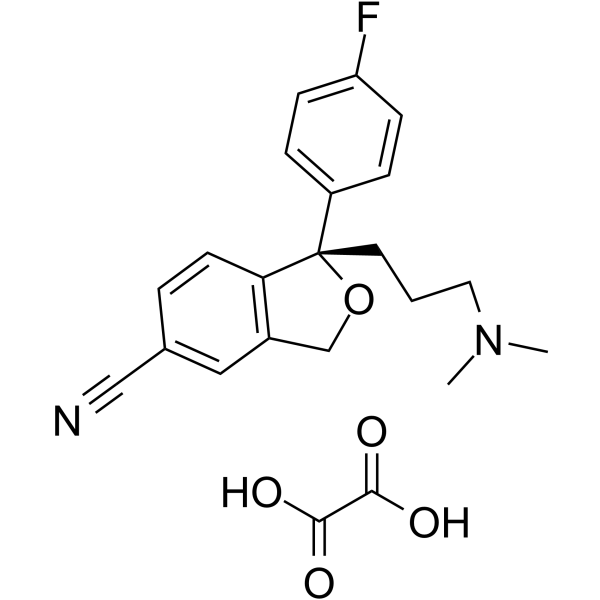
Escitalopram ((S)-Citalopram) oxalate, the S-enantiomer of racemic Citalopram, is a selective serotonin reuptake inhibitor (SSRI) with a Ki of 0.89 nM. Escitalopram oxalate has ∼30 fold higher binding affinity than its R(-)-enantiomer and shows selectivity over both dopamine transporter (DAT) and norepinephrine transporter (NET). Escitalopram oxalate is an antidepressant for the research of major depression .
|
-
- HY-76948R
-
|
|
Reference Standards
Factor Xa
|
Cardiovascular Disease
|
|
5-R-Rivaroxaban (Standard) is the analytical standard of 5-R-Rivaroxaban. This product is intended for research and analytical applications. 5-R-Rivaroxaban is (R)-enantiomer of Rivaroxaban. Rivaroxaban (BAY 59-7939) is a highly potent and selective, direct Factor Xa (FXa) inhibitor, achieving a strong gain in anti-FXa potency (IC50 0.7 nM; Ki 0.4 nM).
|
-
- HY-125922S
-
-
- HY-100888AR
-
|
|
CDK
Reference Standards
|
Others
|
|
(R)-Simurosertib (Standard) is the analytical standard of (R)-Simurosertib (HY-100888A). This product is intended for research and analytical applications. (R)-Simurosertib ((R)-TAK-931) is the (R)-enantiomer of Simurosertib. Simurosertib (TAK-931) is an orally active, selective and ATP-competitive cell division cycle 7 (CDC7) kinase inhibitor, with an IC50 of <0.3 nM .
|
-
- HY-B1175
-
|
|
Antibiotic
Bacterial
|
Infection
|
|
(2S,5R,6R)-Ticarcillin disodium is a semisynthetic antibiotic with bactericidal activities. (2S,5R,6R)-Ticarcillin disodium is the (2S,5R,6R)-enantiomer of Ticarcillin (HY-139805) .
|
-
- HY-182543
-
|
|
CaSR
|
Others
|
|
NPS-467 is a calcium-sensing receptor (CaR) activator and stereospecific agent with only its R-enantiomer active. NPS-467 increases the sensitivity of the CaR to activation by extracellular calcium. NPS-467 stimulates stanniocalcin (STC) secretion in trout and induces inhibition of gill calcium transport in trout. NPS-467 has no effect on serum calcitonin levels in trout .
|
-
- HY-166480S
-
-
- HY-B0814S
-
|
(R)-Cetirizine-d4 dihydrochloride
|
Isotope-Labeled Compounds
Histamine Receptor
|
Inflammation/Immunology
Endocrinology
|
|
Levocetirizine-d4 (dihydrochloride) is the deuterium labeled Levocetirizine. Levocetirizine ((R)-Cetirizine) is a third-generation peripheral H1-receptor antagonist. Levocetirizine is an antihistaminic agent which is the R-enantiomer of Cetirizine. Levocetirizine has a higher affinity for the histamine H1-receptor than (S)-Cetirizine and can effectively treat allergic rhinitis and chronic idiopathic urticaria[1].
|
-
- HY-131531B
-
|
(R)-5-Hydroxy-DPAT
|
Drug Isomer
|
Endocrinology
|
|
(R)-5-OH-DPAT ((R)-5-Hydroxy-DPAT) is the R-enantiomer of 5-OH-DPAT (HY-131531A). 5-OH-DPAT is a weak antagonist of the dopamine D2 receptor (dopamine D2-receptor). 5-OH-DPAT moderately promotes sexual behavior in male rats .
|
-
- HY-B0814R
-
|
(R)-Cetirizine (Standard)
|
Histamine Receptor
Reference Standards
|
Inflammation/Immunology
Endocrinology
Cancer
|
|
Levocetirizine (Standard) is the analytical standard of Levocetirizine. This product is intended for research and analytical applications. Levocetirizine ((R)-Cetirizine) is a third-generation peripheral H1-receptor antagonist. Levocetirizine is an antihistaminic agent which is the R-enantiomer of Cetirizine. Levocetirizine has a higher affinity for the histamine H1-receptor than (S)-Cetirizine and can effectively treat allergic rhinitis and chronic idiopathic urticaria .
|
-
- HY-14258R
-
|
(S)-Citalopram (Standard); (S)-(+)-Citalopram (Standard)
|
Serotonin Transporter
Reference Standards
|
Neurological Disease
Cancer
|
|
Escitalopram (Standard) is the analytical standard of Escitalopram. This product is intended for research and analytical applications. Escitalopram ((S)-Citalopram), the S-enantiomer of racemic Citalopram, is a selective serotonin reuptake inhibitor (SSRI) with a Ki of 0.89 nM. Escitalopram has ~30 fold higher binding affinity than its R(-)-enantiomer and shows selectivity over both dopamine transporter (DAT) and norepinephrine transporter (NET). Escitalopram is an antidepressant for the research of major depression .
|
-
- HY-12798E
-
|
(R)-AR-13324 M1 metabolite
|
PKC
ROCK
Drug Metabolite
|
Cardiovascular Disease
|
|
(R)-AR-13503 ((R)-AR-13324 M1 metabolite) is the the (R)-enantiomer of AR-13503 (HY-12798C). AR-13503 is the hydrolytic metabolite of AR-13324 mesylate. AR-13324 is a ROCK kinase and PKC inhibitor with anti-angiogenic and retinal health-improving effects, showing potential for use in retinal disease research .
|
-
- HY-176444A
-
|
|
Molecular Glues
CDK
|
Cancer
|
|
(R)-CDK2 degrader 6 is the R-enantiomer of CDK2 degrader 6 (HY-176444), a cereblon-based molecular glue degrader of CDK2 with a DC50 of 27 nM. (R)-CDK2 degrader 6 induces ubiquitination and proteasomal degradation of CDK2 by bridging cereblon and CDK2. (R)-CDK2 degrader 6 is applicable for cancer research .
|
-
- HY-W010841R
-
|
(R)-Cetirizine dihydrochloride (Standard)
|
Reference Standards
Histamine Receptor
|
Inflammation/Immunology
Endocrinology
|
|
Levocetirizine (dihydrochloride) (Standard) is the analytical standard of Levocetirizine (dihydrochloride). This product is intended for research and analytical applications. Levocetirizine dihydrochloride ((R)-Cetirizine dihydrochloride) is a third-generation peripheral H1-receptor antagonist. Levocetirizine dihydrochloride is an antihistaminic agent which is the R-enantiomer of Cetirizine. Levocetirizine dihydrochloride has a higher affinity for the histamine H1-receptor than (S)-Cetirizine and can effectively treat allergic rhinitis and chronic idiopathic urticaria .
|
-
- HY-77490
-
|
|
Endogenous Metabolite
|
Metabolic Disease
|
|
(R)-(-)-1,3-Butanediol is the R-enantiomer of 1,3-Butanediol (HY-77490A). (R)-(-)-1,3-Butanediol exhibits anti-diabetic property in rats. (R)-(-)-1,3-Butanediol can be used as flavoring and fragrance agents. (R)-(-)-1,3-Butanediol is used to regulate the metabolism of carbohydrate and lipid. .
|
-
- HY-I0169
-
|
|
Drug Metabolite
|
Neurological Disease
|
|
(R)-Amino-N-benzyl-3-methoxypropionamide is a key intermediate for the synthesis of the antiepileptic agent (R)-Lacosamide. To improve its chiral purity and chemical stability, (R)-Amino-N-benzyl-3-methoxypropionamide can react with phosphoric acid to form a phosphate salt. Detected by high performance liquid chromatography (HPLC), this phosphate salt exhibits extremely high chiral purity, with the content of the R-enantiomer reaching up to 99.37% .
|
-
- HY-10013BR
-
|
MK0364 (1R,2R)stereoisomer (Standard)
|
Cannabinoid Receptor
Reference Standards
|
Others
|
|
Taranabant ((1R,2R)stereoisomer) (Standard) is the analytical standard of Taranabant ((1R,2R)stereoisomer) (HY-10013B). This product is intended for research and analytical applications. Taranabant (1R,2R)stereoisomer is the R-enantiomer of Taranabant. Taranabant is a highly potent and selective cannabinoid 1 (CB1) receptor inverse agonist.
|
-
- HY-172967A
-
|
|
Toll-like Receptor (TLR)
|
Neurological Disease
Inflammation/Immunology
|
|
(R)-SARM1-IN-5 is the (R)-enantiomer of SARM1-IN-5 (HY-172967). SARM1-IN-5 (compound 1-23-a) is a SARM1 inhibitor. SARM1-IN-5 can be used in the study of axonal degeneration related diseases such as Alzheimer’s disease, Parkinson’s disease, amyotrophic lateral sclerosis (ALS), and multiple sclerosis (MS) .
|
-
- HY-14258AS
-
|
|
Serotonin Transporter
|
Neurological Disease
|
|
Escitalopram-d6 (oxalate) is the deuterium labeled Escitalopram oxalate. Escitalopram ((S)-Citalopram) oxalate, the S-enantiomer of racemic Citalopram, is a selective serotonin reuptake inhibitor (SSRI) with a Ki of 0.89 nM. Escitalopram oxalate has ~30 fold higher binding affinity than its R(-)-enantiomer and shows selectivity over both dopamine transporter (DAT) and norepinephrine transporter (NET). Escitalopram oxalate is an antidepressant for the research of major depression .
|
-
- HY-W401531S
-
|
|
Dopamine Receptor
Endogenous Metabolite
|
Neurological Disease
|
|
(R)-3-O-Methyldopa-d3 is a deuterium labeled (R)-3-O-Methyldopa, and (R)-3-O-Methyldopa is an R-enantiomer of 3-O-Methyldopa. 3-O-Methyldopa is a metabolite of L-DOPA which is formed by catechol-O-methyltransferase (COMT). 3-O-Methyldopa competitively inhibits the pharmacodynamics of L-DOPA and dopamine .
|
-
- HY-W401531S1
-
|
|
Dopamine Receptor
Endogenous Metabolite
|
Neurological Disease
|
|
(R)-3-O-Methyldopa-d3 (hydrochloride) is a deuterium labeled (R)-3-O-Methyldopa, and (R)-3-O-Methyldopa is an R-enantiomer of 3-O-Methyldopa. 3-O-Methyldopa is a metabolite of L-DOPA which is formed by catechol-O-methyltransferase (COMT). 3-O-Methyldopa competitively inhibits the pharmacodynamics of L-DOPA and dopamine .
|
-
- HY-14258AS1
-
|
(S)-Citalopram-d4 oxalate; (S)-(+)-Citalopram-d4 oxalate
|
Isotope-Labeled Compounds
Serotonin Transporter
|
Neurological Disease
|
|
Escitalopram-d4 (oxalate) is deuterium labeled Escitalopram (oxalate). Escitalopram ((S)-Citalopram) oxalate, the S-enantiomer of racemic Citalopram, is a selective serotonin reuptake inhibitor (SSRI) with a Ki of 0.89 nM. Escitalopram oxalate has ~30 fold higher binding affinity than its R(-)-enantiomer and shows selectivity over both dopamine transporter (DAT) and norepinephrine transporter (NET). Escitalopram oxalate is an antidepressant for the research of major depression .
|
-
- HY-14258AR
-
|
(S)-Citalopram oxalate (Standard); (S)-(+)-Citalopram oxalate (Standard)
|
Reference Standards
Serotonin Transporter
|
Neurological Disease
Cancer
|
|
Escitalopram (oxalate) (Standard) is the analytical standard of Escitalopram (oxalate). This product is intended for research and analytical applications. Escitalopram ((S)-Citalopram) oxalate, the S-enantiomer of racemic Citalopram, is a selective serotonin reuptake inhibitor (SSRI) with a Ki of 0.89 nM. Escitalopram oxalate has ∼30 fold higher binding affinity than its R(-)-enantiomer and shows selectivity over both dopamine transporter (DAT) and norepinephrine transporter (NET). Escitalopram oxalate is an antidepressant for the research of major depression .
|
-
- HY-B0814S1
-
|
(R)-Cetirizine-d4
|
Isotope-Labeled Compounds
|
Inflammation/Immunology
|
|
Levocetirizine-d4 ((R)-Cetirizine-d4) is the deuterium-labeled Levocetirizine (HY-B0814) . Levocetirizine ((R)-Cetirizine) is a third-generation peripheral H1-receptor antagonist. Levocetirizine is an antihistaminic agent which is the R-enantiomer of Cetirizine. Levocetirizine has a higher affinity for the histamine H1-receptor than (S)-Cetirizine and can effectively treat allergic rhinitis and chronic idiopathic urticaria .
|
-
- HY-19202
-
|
rac-EMA401; rac-PD-126055; EMA400
|
Angiotensin Receptor
|
Neurological Disease
|
|
rac-Olodanrigan (rac-EMA401; EMA400) is a racemic mixture of the S-enantiomer (EMA401; HY-13106) and R-enantiomer (EMA402). rac-Olodanrigan is a potent and selective AT2 receptor antagonist with IC50s of 75.2 nM and 2918 nM for AT2R and AT1R, respectively. rac-Olodanrigan evokes dose-dependent relief of mechanical allodynia in the ipsilateral hind paws of rats with a chronic constriction injury (CCI) of the sciatic nerve .
|
-
- HY-W021008
-
|
Dimethylhydroxyfuranone
|
Fungal
|
Infection
|
|
Sotolone (Dimethylhydroxyfuranone) is an activator of the human olfactory receptor OR8D1. Sotolone activates the human olfactory receptor OR8D1, with EC50 values of 84.98 μM and 167.2 μM for its S-enantiomer and R-enantiomer, respectively. Sotolone has unique aroma profiles: (R)-sotolone exhibits smoky, burnt, herbal and grassy notes; (S)-sotolone presents sweet, milky, sour and nutty notes. Sotolone also acts as an antifungal agent, showing moderate inhibitory activity against Magnaporthe oryzae in vitro .
|
-
- HY-17504D
-
|
|
HMG-CoA Reductase (HMGCR)
Potassium Channel
Autophagy
|
Cardiovascular Disease
Metabolic Disease
|
|
(3S,5R)-Rosuvastatin is the (3S,5R)-enantiomer of Rosuvastatin. Rosuvastatin is a competitive HMG-CoA reductase inhibitor with an IC50 of 11 nM . Rosuvastatin potently blocks human ether-a-go-go related gene (hERG) current with an IC50 of 195 nM . Rosuvastatin reduces the expression of the mature hERG and the interaction of heat shock protein 70 (Hsp70) with the hERG protein. Rosuvastatin is very effective in lowering low-density lipoprotein (LDL) cholesterol, triglycerides, and C-reactive protein levels .
|
-
- HY-132304A
-
|
|
PKC
|
Inflammation/Immunology
|
|
(1S,4R)-CC-90005 is the (1S,4R)-enantiomer of CC-90005 (HY-132304). CC-90005 is a potent, selective and orally active inhibitor of protein kinase C-θ (PKC-θ), with an IC50 of 8 nM. CC-90005 shows selectivity for PKC-θ over PKC-δ (IC50 = 4440 nM). CC-90005 can inhibit T cell activation by inhibiting IL-2 expression .
|
-
- HY-17504C
-
|
|
HMG-CoA Reductase (HMGCR)
Potassium Channel
Autophagy
|
Cardiovascular Disease
Metabolic Disease
|
|
(3R,5R)-Rosuvastatin is the (3R,5R)-enantiomer of Rosuvastatin. Rosuvastatin is a competitive HMG-CoA reductase inhibitor with an IC50 of 11 nM . Rosuvastatin potently blocks human ether-a-go-go related gene (hERG) current with an IC50 of 195 nM . Rosuvastatin reduces the expression of the mature hERG and the interaction of heat shock protein 70 (Hsp70) with the hERG protein. Rosuvastatin is very effective in lowering low-density lipoprotein (LDL) cholesterol, triglycerides, and C-reactive protein levels .
|
-
- HY-159681
-
|
|
Others
|
Metabolic Disease
|
|
AASS-IN-1 is a 2-aminoadipic semialdehyde synthase (AASS) inhibitor with a human IC50 of 142 µM. AASS-IN-1 inhibits AASS activity by binding to the LOR domain of AASS. AASS-IN-1 can be used for the research of glutaric aciduria type 1 .
|
-
- HY-B1175R
-
|
|
Reference Standards
Antibiotic
Bacterial
|
Infection
|
|
(2S,5R,6R)-Ticarcillin disodium (Standard) is the analytical standard of (2S,5R,6R)-Ticarcillin disodium. This product is intended for research and analytical applications. (2S,5R,6R)-Ticarcillin disodium is a semisynthetic antibiotic with bactericidal activities. (2S,5R,6R)-Ticarcillin disodium is the (2S,5R,6R)-enantiomer of Ticarcillin (HY-139805).
|
-
- HY-W021008S
-
|
Dimethylhydroxyfuranone-d2
|
Isotope-Labeled Compounds
Fungal
|
Infection
|
|
Sotolone-d2 (Dimethylhydroxyfuranone-d2) is deuterated labeled Sotolone. Sotolone is an activator of the human olfactory receptor OR8D1. Sotolone activates the human olfactory receptor OR8D1, with EC50 values of 84.98 μM and 167.2 μM for its S-enantiomer and R-enantiomer, respectively. Sotolone has unique aroma profiles: (R)-sotolone exhibits smoky, burnt, herbal and grassy notes; (S)-sotolone presents sweet, milky, sour and nutty notes. Sotolone also acts as an antifungal agent, showing moderate inhibitory activity against Magnaporthe oryzae in vitro .
|
-
- HY-106203B
-
|
(R)-SSR-125543
|
CFTR
|
Metabolic Disease
|
|
(R)-Crinecerfont is the R-enantiomer of Crinecerfont (HY-106203). Crinecerfont (SSR-125543) is an orally effective corticotropin-releasing factor receptor type-1 (CRF1 receptor) antagonist. Crinecerfont blocks CRF1 receptor signaling to reduce adrenocorticotropic hormone secretion. Crinecerfont improves hypothalamic-pituitary-adrenal axis negative feedback sensitivity in chronically stressed mice. Crinecerfont can be used for the research of chronic stress conditions and classic congenital adrenal hyperplasia due to 21-hydroxylase deficiency . Crinecerfont is a click chemistry reagent, it contains an Alkyne group and can undergo copper-catalyzed azide-alkyne cycloaddition (CuAAc) with molecules containing Azide groups.
|
-
- HY-W787758
-
|
4-yn-VPA
|
HDAC
P-glycoprotein
|
Neurological Disease
Cancer
|
|
2-Propylpent-4-ynoic acid (4-yn-VPA) is a HDAC inhibitor (with an IC50 of 0.5 mM against human HDAC). 2-Propylpent-4-ynoic acid also induces P-glycoprotein function, and exhibits teratogenicity, fetal growth inhibition and neurotoxicity. 2-Propylpent-4-ynoic acid shows significant stereospecific teratogenic effects, with the S-enantiomer being more teratogenic than the R-enantiomer and other analogs. The neurotoxicity of 2-Propylpent-4-ynoic acid is independent of its stereochemical structure. 2-Propylpent-4-ynoic acid has been used in studies related to the pathogenesis of colon cancer and neural tube defects such as exencephaly .
|
-
- HY-112749B
-
|
|
Heme Oxygenase (HO)
Reactive Oxygen Species (ROS)
Mitochondrial Metabolism
|
Cancer
|
|
(3S,4R)-ME-344 is the (3S,4R)-enantiomer of ME-344 (HY-112749). ME-344 is a mitochondrial Heme oxygenase 1 (HO-1) inhibitor. ME-344 specifically binds and alters HO-1 structure, and increases HO-1 translocation from the rough endoplasmic reticulum to mitochondria, but only in drug-sensitive cells (such as H460 and SHP-77 cells). ME-344 decreases mitochondrial ATP production and induces ROS, with subsequent disruption of redox homeostasis and mitochondrial function. ME-344 has significant antitumor activity, and can be used for cancers like breast cancer research .
|
-
- HY-165624A
-
|
|
Drug Isomer
Drug Derivative
5-HT Receptor
|
Neurological Disease
|
|
(S)-LY-41, R-enantiomer of LY-41 (HY-165624), is 2-Sminotetralin (HY-W022362) derivative and 8-OH-DPAT (HY-112061) analogue. (S)-LY-41 is a potent and selective 5-HT1A receptor agonist. (S)-LY-41 can reduce the accumulation of 5-hydroxytryptophan (the precursor for 5-HT synthesis) in the rat brain induced by decarboxylase inhibitors (NSD 1015). (S)-LY-41 can lower the body temperature of rats and inhibit the escape response from the cage. (S)-LY-41 can induce the 5-HT behavioral syndrome. (S)-LY-41can be used for the research of neurological disease, such as depression and anxiety .
|
-
- HY-165624B
-
|
|
Drug Isomer
Drug Derivative
5-HT Receptor
|
Neurological Disease
|
|
(R)-LY-41, R-enantiomer of LY-41 (HY-165624), is 2-Sminotetralin (HY-W022362) derivative and 8-OH-DPAT (HY-112061) analogue. (R)-LY-41 is a potent and selective 5-HT1A receptor agonist. (R)-LY-41 can reduce the accumulation of 5-hydroxytryptophan (the precursor for 5-HT synthesis) in the rat brain induced by decarboxylase inhibitors (NSD 1015). (R)-LY-41 can lower the body temperature of rats and inhibit the escape response from the cage. (R)-LY-41 can induce the 5-HT behavioral syndrome but is weaker than (S)-LY-41 (HY-165624A). (R)-LY-41 can be used for the research of neurological disease, such as depression and anxiety .
|
-
- HY-146066A
-
|
|
nAChR
JAK
STAT
NO Synthase
|
Others
|
|
(R)-α7 nAchR-JAK2-STAT3 agonist 1 is the R-enantiomer of α7 nAchR-JAK2-STAT3 agonist 1 (HY-146066). α7 nAchR-JAK2-STAT3 agonist 1 is a potent α7 nAchR-JAK2-STAT3 agonist, with an IC50 value of 0.32 μM for nitric oxide (NO). α7 nAchR-JAK2-STAT3 agonist 1 effectively suppresses the expression of iNOS, IL-1β, and IL-6 in murine RAW264.7 macrophages. α7 nAchR-JAK2-STAT3 agonist 1 can inhibit LPS-induced NO release, NF-κB activation and cytokine production. α7 nAchR-JAK2-STAT3 can be used for researching sepsis .
|
-
| Cat. No. |
Product Name |
Category |
Target |
Chemical Structure |
-
- HY-14258
-
|
(S)-Citalopram; (S)-(+)-Citalopram
|
Natural Products
Endogenous metabolite
Source Classification
|
Serotonin Transporter
|
|
Escitalopram ((S)-Citalopram), the S-enantiomer of racemic Citalopram, is a selective serotonin reuptake inhibitor (SSRI) with a Ki of 0.89 nM. Escitalopram has ∼30 fold higher binding affinity than its R(-)-enantiomer and shows selectivity over both dopamine transporter (DAT) and norepinephrine transporter (NET). Escitalopram is an antidepressant for the research of major depression .
|
-
-
- HY-77490
-
-
-
- HY-N6020A
-
-
-
- HY-N6020AR
-
-
-
- HY-14258R
-
|
(S)-Citalopram (Standard); (S)-(+)-Citalopram (Standard)
|
Structural Classification
Natural Products
Endogenous metabolite
Source Classification
|
Serotonin Transporter
Reference Standards
|
|
Escitalopram (Standard) is the analytical standard of Escitalopram. This product is intended for research and analytical applications. Escitalopram ((S)-Citalopram), the S-enantiomer of racemic Citalopram, is a selective serotonin reuptake inhibitor (SSRI) with a Ki of 0.89 nM. Escitalopram has ~30 fold higher binding affinity than its R(-)-enantiomer and shows selectivity over both dopamine transporter (DAT) and norepinephrine transporter (NET). Escitalopram is an antidepressant for the research of major depression .
|
-
-
- HY-W021008
-
|
Dimethylhydroxyfuranone
|
Structural Classification
Natural Products
Grona styracifolia (Osbeck) H. Ohashi & K. Ohashi
Plants
Fabaceae
Source Classification
|
Fungal
|
|
Sotolone (Dimethylhydroxyfuranone) is an activator of the human olfactory receptor OR8D1. Sotolone activates the human olfactory receptor OR8D1, with EC50 values of 84.98 μM and 167.2 μM for its S-enantiomer and R-enantiomer, respectively. Sotolone has unique aroma profiles: (R)-sotolone exhibits smoky, burnt, herbal and grassy notes; (S)-sotolone presents sweet, milky, sour and nutty notes. Sotolone also acts as an antifungal agent, showing moderate inhibitory activity against Magnaporthe oryzae in vitro .
|
-
| Cat. No. |
Product Name |
Chemical Structure |
-
- HY-19939S2
-
|
|
|
(R)-VX-984 ((R)-M9831) is the (R)-enantiomer of VX-984. VX-984 is a potent DNA-PK inhibitor.
|
-
-
- HY-14258AS
-
|
|
|
Escitalopram-d6 (oxalate) is the deuterium labeled Escitalopram oxalate. Escitalopram ((S)-Citalopram) oxalate, the S-enantiomer of racemic Citalopram, is a selective serotonin reuptake inhibitor (SSRI) with a Ki of 0.89 nM. Escitalopram oxalate has ~30 fold higher binding affinity than its R(-)-enantiomer and shows selectivity over both dopamine transporter (DAT) and norepinephrine transporter (NET). Escitalopram oxalate is an antidepressant for the research of major depression .
|
-
-
- HY-B0814S1
-
|
|
|
Levocetirizine-d4 ((R)-Cetirizine-d4) is the deuterium-labeled Levocetirizine (HY-B0814) . Levocetirizine ((R)-Cetirizine) is a third-generation peripheral H1-receptor antagonist. Levocetirizine is an antihistaminic agent which is the R-enantiomer of Cetirizine. Levocetirizine has a higher affinity for the histamine H1-receptor than (S)-Cetirizine and can effectively treat allergic rhinitis and chronic idiopathic urticaria .
|
-
-
- HY-121203S4
-
|
|
|
Citalopram-d3 hydrochloride is deuterated labeled Citalopram (HY-121203). Citalopram is a racemate mixture of the active S(+)-enantiomer (Escitalopram; HY-14258) and R(-)-enantiomer. Citalopram is an orally active selective serotonin reuptake inhibitor (SSRI). Citalopram is an antidepressant and enhances serotoninergic neurotransmission .
|
-
-
- HY-W401531S
-
|
|
|
(R)-3-O-Methyldopa-d3 is a deuterium labeled (R)-3-O-Methyldopa, and (R)-3-O-Methyldopa is an R-enantiomer of 3-O-Methyldopa. 3-O-Methyldopa is a metabolite of L-DOPA which is formed by catechol-O-methyltransferase (COMT). 3-O-Methyldopa competitively inhibits the pharmacodynamics of L-DOPA and dopamine .
|
-
-
- HY-W401531S1
-
|
|
|
(R)-3-O-Methyldopa-d3 (hydrochloride) is a deuterium labeled (R)-3-O-Methyldopa, and (R)-3-O-Methyldopa is an R-enantiomer of 3-O-Methyldopa. 3-O-Methyldopa is a metabolite of L-DOPA which is formed by catechol-O-methyltransferase (COMT). 3-O-Methyldopa competitively inhibits the pharmacodynamics of L-DOPA and dopamine .
|
-
-
- HY-14258AS1
-
|
|
|
Escitalopram-d4 (oxalate) is deuterium labeled Escitalopram (oxalate). Escitalopram ((S)-Citalopram) oxalate, the S-enantiomer of racemic Citalopram, is a selective serotonin reuptake inhibitor (SSRI) with a Ki of 0.89 nM. Escitalopram oxalate has ~30 fold higher binding affinity than its R(-)-enantiomer and shows selectivity over both dopamine transporter (DAT) and norepinephrine transporter (NET). Escitalopram oxalate is an antidepressant for the research of major depression .
|
-
-
- HY-B0612DS
-
|
|
|
(R)-lercanidipine D3 hydrochloride is a deuterium labeled (R)-Lercanidipine hydrochloride. (R)-Lercanidipine-d3 (hydrochloride), the R-enantiomer of Lercanidipine, is a calcium channel blocker .
|
-
-
- HY-13956A
-
|
|
|
(R)-Pioglitazone-d1 ((R)-U 72107-d1) is a stabilized and deuterated R-enantiomer of pioglitazone, exhibiting pharmacological properties that are beneficial for NASH treatment, including modulation of mitochondrial function, non-steroidal anti-inflammatory effects, and glucose-lowering capabilities.
|
-
-
- HY-B0352BS
-
|
|
|
(R)-Mirtazapine-d3 is a deuterium labeled (R)-Mirtazapine. (R)-Mirtazapine is a R(−)-enantiomer of Mirtazapine with antinociceptive properties in an animal model of acute thermal nociception. (R)-Mirtazapine is a 5-HT3 receptor antagonist. (R)-Mirtazapine is mainly metabolized by CYP3A4[1].
|
-
-
- HY-125922S
-
|
|
|
(22R)-Budesonide-d6 (Dexbudesonide-d6) is deuterium labeled (22R)-Budesonide. (22R)-Budesonide ((22R)-BUD) is the (22R)-enantiomer of Budesonide (HY-13580). (22R)-Budesonide is a non-halogenated glucocorticoid with high local anti-inflammatory activity .
|
-
-
- HY-B0814S
-
|
|
|
Levocetirizine-d4 (dihydrochloride) is the deuterium labeled Levocetirizine. Levocetirizine ((R)-Cetirizine) is a third-generation peripheral H1-receptor antagonist. Levocetirizine is an antihistaminic agent which is the R-enantiomer of Cetirizine. Levocetirizine has a higher affinity for the histamine H1-receptor than (S)-Cetirizine and can effectively treat allergic rhinitis and chronic idiopathic urticaria[1].
|
-
-
- HY-W021008S
-
|
|
|
Sotolone-d2 (Dimethylhydroxyfuranone-d2) is deuterated labeled Sotolone. Sotolone is an activator of the human olfactory receptor OR8D1. Sotolone activates the human olfactory receptor OR8D1, with EC50 values of 84.98 μM and 167.2 μM for its S-enantiomer and R-enantiomer, respectively. Sotolone has unique aroma profiles: (R)-sotolone exhibits smoky, burnt, herbal and grassy notes; (S)-sotolone presents sweet, milky, sour and nutty notes. Sotolone also acts as an antifungal agent, showing moderate inhibitory activity against Magnaporthe oryzae in vitro .
|
-
-
- HY-166480S
-
|
|
|
(22R)-Budesonide-d8 ((22R)-BUD-d8) is the deuterium labeled (22R)-Budesonide. (22R)-Budesonide ((22R)-BUD) is the (22R)-enantiomer of Budesonide (HY-13580). (22R)-Budesonide is a non-halogenated glucocorticoid with high local anti-inflammatory activity .
|
-
| Cat. No. |
Product Name |
|
Classification |
-
- HY-106203B
-
|
(R)-SSR-125543
|
|
Alkynes
|
|
(R)-Crinecerfont is the R-enantiomer of Crinecerfont (HY-106203). Crinecerfont (SSR-125543) is an orally effective corticotropin-releasing factor receptor type-1 (CRF1 receptor) antagonist. Crinecerfont blocks CRF1 receptor signaling to reduce adrenocorticotropic hormone secretion. Crinecerfont improves hypothalamic-pituitary-adrenal axis negative feedback sensitivity in chronically stressed mice. Crinecerfont can be used for the research of chronic stress conditions and classic congenital adrenal hyperplasia due to 21-hydroxylase deficiency . Crinecerfont is a click chemistry reagent, it contains an Alkyne group and can undergo copper-catalyzed azide-alkyne cycloaddition (CuAAc) with molecules containing Azide groups.
|
Your information is safe with us. * Required Fields.
Inquiry Information
- Product Name:
- Cat. No.:
- Quantity:
- MCE Japan Authorized Agent:

