Search Result
Results for "
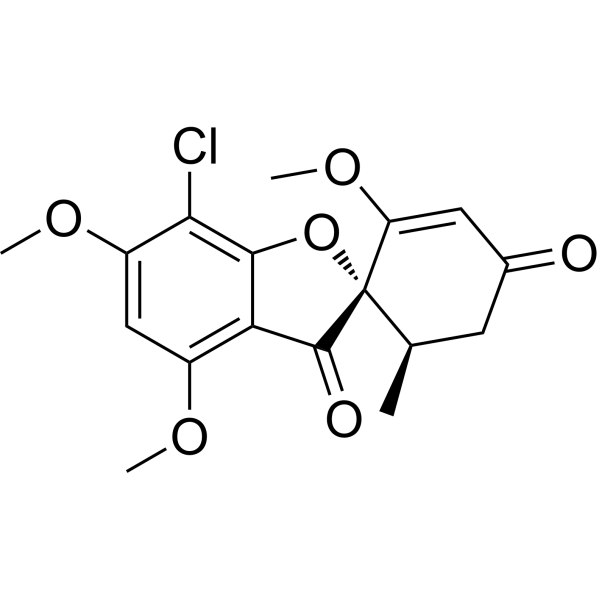
antifungal antibiotic
" in MedChemExpress (MCE) Product Catalog:
1
Biochemical Assay Reagents
8
Isotope-Labeled Compounds
| Cat. No. |
상품명 |
Target |
연구분야 |
Chemical Structure |
-
- HY-N6716
-
|
|
Fungal
Antibiotic
|
Infection
|
|
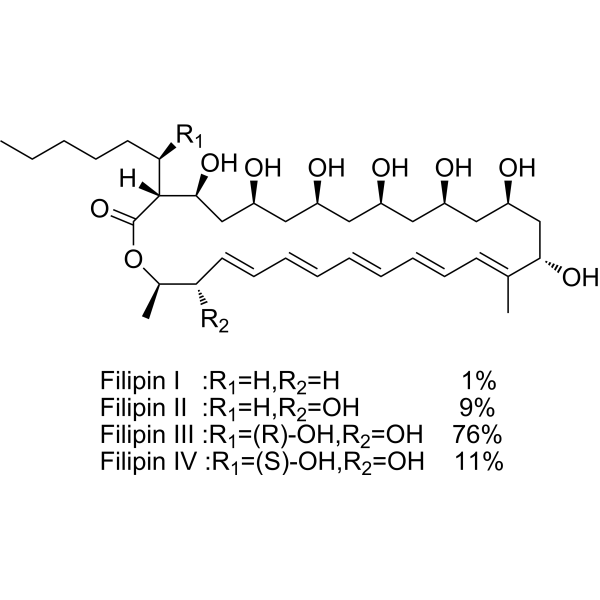
Filipin complex is a potent polyene macrolide antifungal antibiotic. Filipin complex inserts into membranes and sequester cholesterol into complexes and inhibits PRRSV entry. The Filipin complex consists of about 75.8% Filipin III (HY-N6718), 10.8% Filipin IV, 9.1% Filipin II, and 1.2% Filipin I (Ex/Em = 380/430 nm) .
|
-
-
- HY-N6693
-
|
NSC 122023
|
Apoptosis
Antibiotic
Autophagy
Fungal
|
Infection
Others
Cancer
|
|
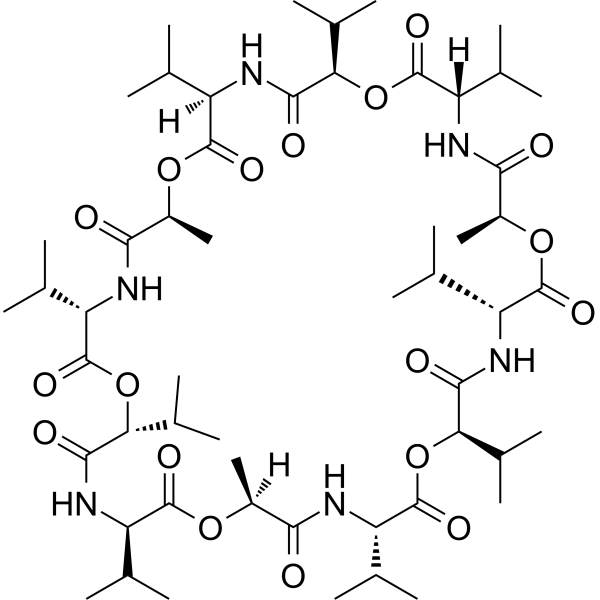
Valinomycin is a potassium-specific ionophore, the valinomycin-K + complex can be incorporated into biological bilayer membranes with the hydrophobic surface of valinomycin, destroys the normal K + gradient across the membrane, and as a result kills the cells, incorporating into liposomes can significantly reduces the cytotoxicity and enhances the targeting effect. Valinomycin exhibits antibiotic, antifungal, antiviral, antitumor and insecticidal efficacy, thus can be used for relevant research .
|
-
-
- HY-P1975
-
|
Basifungin
|
Antibiotic
Fungal
Parasite
|
Infection
Inflammation/Immunology
|
|
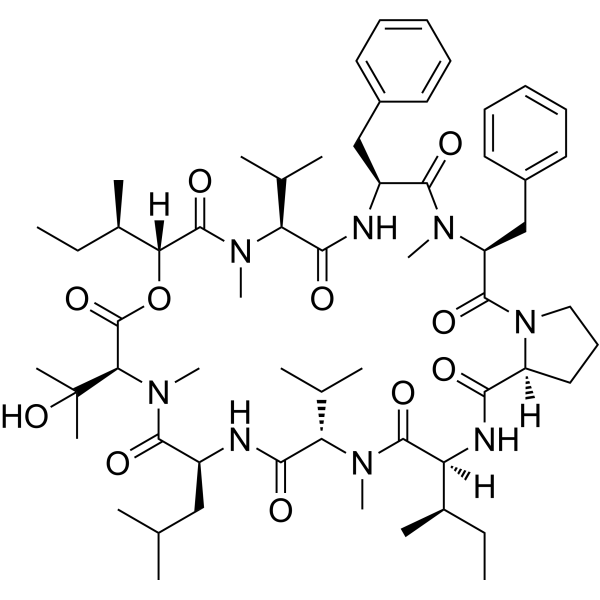
Aureobasidin A (Basifungin) is a cyclic peptide antibiotic with oral activity. Aureobasidin A is an inhibitor of inositol phosphorylated ceramide synthetase AUR1. Aureobasidin A has antifungal and antiparasitic activity .
|
-
-
- HY-N6769
-
|
Monorden
|
HSP
Bacterial
Antibiotic
Parasite
|
Infection
|
|
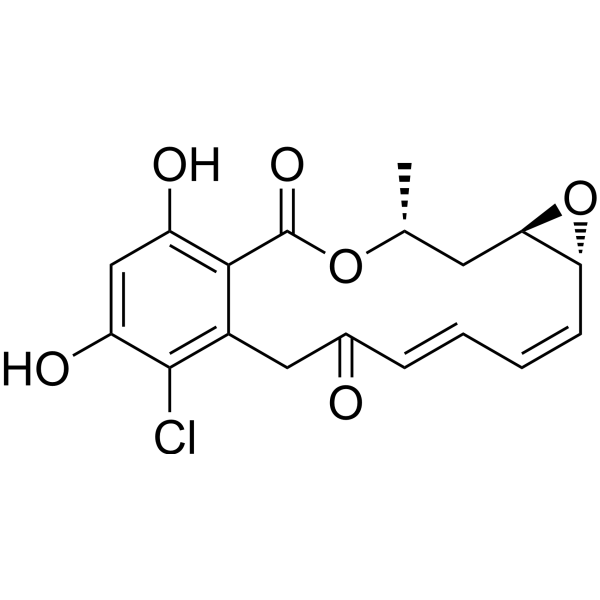
Radicicol is an inhibitor of Hsp90 with an IC50 value < 1 μM, and leads to proteasomal degradation . Radicicol exhibits inhibition on PDK with IC50s of 230 μM (PDK1) and 400 μM (PDK3). Radicicol is an antifungal and antimalarial antibiotic, impairs mitochondrial replication by targeting P. falciparum topoisomerase VIB . Radicicol is also an inhibitor of fat mass and obesity-associated protein (FTO), with an IC50 value of 16.04 μM .
|
-
-
- HY-112177
-
|
|
Fungal
Mitochondrial Metabolism
Antibiotic
|
Infection
|
|
Myxothiazol, an antifungal antibiotic, is a mitochondrial electron transport chain complex III (bc1 complex) inhibitor. Myxothiazol inhibits the growth of many yeasts and fungi at concentrations between 0.01 and 3 μg/ml .
|
-
-
- HY-14283
-
|
NND 502
|
Fungal
Antibiotic
|
Infection
|
|
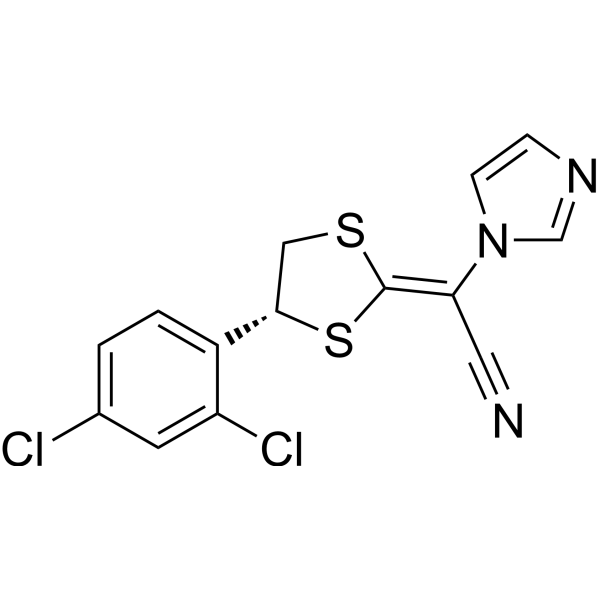
Luliconazole (NND 502) is a topical antifungal imidazole antibiotic with broad-spectrum and potent antifungal activity. Luliconazole can be used for the research of skin infection, including dermatophytosis, tinea corporis, tinea pedis et al .
|
-
-
- HY-B0518A
-
|
|
Fungal
Antibiotic
|
Infection
|
|
Naftifine hydrochloride is an antibiotic. Naftifine hydrochloride has antifungal activity against dermatophytes, aspergilli, Sporothrix schenckii, and yeasts of the genus Candida. Naftifine hydrochloride can be used for the research of superficial dermatomycoses inhibition .
|
-
-
- HY-N7151
-
|
|
Antibiotic
Bacterial
Fungal
|
Infection
|
|
Aurachin D is an antibiotic. Aurachin D inhibits Gram-positive bacteria and a few funguses. Aurachin D blocks NADH oxidation in beef heart submitochondrial particles .
|
-
-
- HY-126396
-
|
|
Antibiotic
CaMK
Fungal
|
Infection
|
|
Sordarin sodium is an eEF2 inhibitor and antibiotic. Sordarin sodium's function is dependent on the diphthamide modification on eEF2. Sordarin sodium inhibits protein synthesis by preventing the binding of eEF2 to the ribosome complex. Sordarin sodium has antifungal activity .
|
-
-
- HY-106681
-
|
Fungichromin; Pentamycin; Cogomycin
|
Antibiotic
Fungal
|
Cancer
|
|
Lagosin (Fungichromin) is a polyene macrolide antibiotic. Lagosin has demonstrated broad-spectrum antifungal activity and is impervious to agent resistance .
|
-
-
- HY-DY1017
-
|
|
Antibiotic
Fungal
|
Infection
|
Filipin complex (solution) is a potent polyene macrolide antifungal antibiotic. Filipin complex inserts into membranes and sequester cholesterol into complexes and inhibits PRRSV entry. The Filipin complex consists of about 75.8% Filipin III (HY-N6718) , 10.8% Filipin IV, 9.1% Filipin II, and 1.2% Filipin I (Ex/Em = 380/430 nm) . Solvent and concentration: DMSO: 5 mg/mL
|
-
-
- HY-108874
-
|
Levorin; Vanobid; Candimon
|
Antibiotic
Fungal
Bacterial
|
Infection
|
|
Candicidin is a polyene antifungal antibiotic agent and can be isolated from Streptomyces griseus or Actinomyces levoris .
|
-
-
- HY-19965
-
|
antibiotic UK 2A
|
Antibiotic
Fungal
|
Infection
|
|
UK-2A (Antibiotic UK 2A) is a potent antifungal antibiotic. UK-2A shows antifungal activity .
|
-
-
- HY-119759A
-
|
|
Antibiotic
Fungal
|
Infection
|
|
Lipoxamycin hemisulfate is an antifungal antibiotic and a potent serine palmitoyltransferase inhibitor with an IC50 of 21 nM .
|
-
-
- HY-B0576
-
-
-
- HY-B0888
-
|
Sulphacetamide sodium monohydrate
|
Antibiotic
Bacterial
Fungal
|
Infection
Inflammation/Immunology
|
|
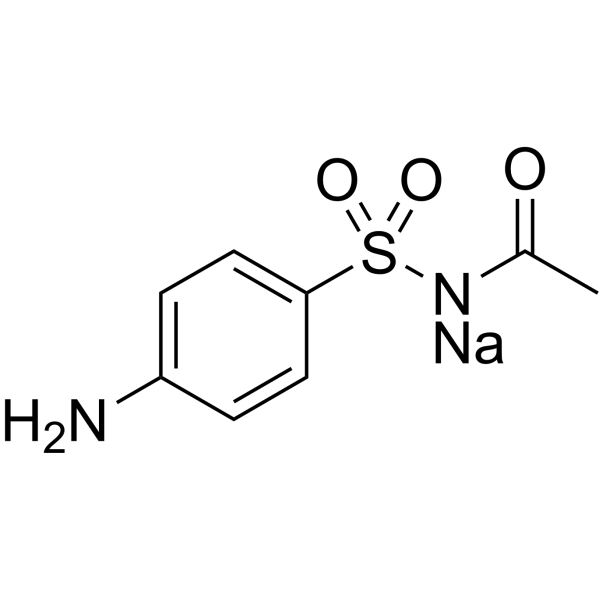
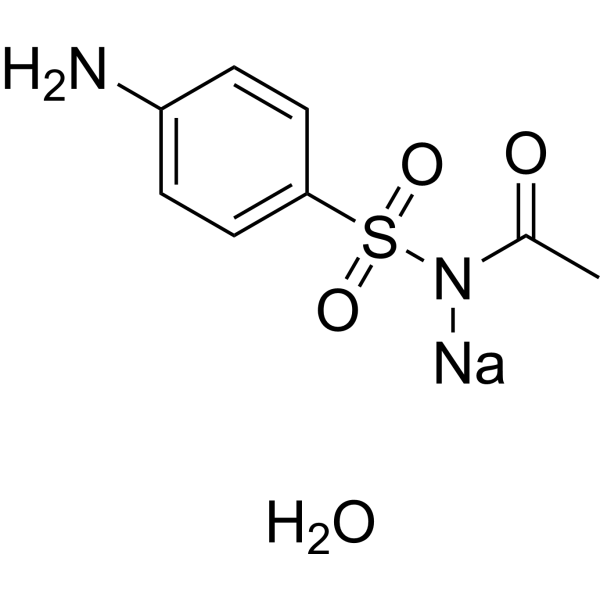
Sulfacetamide (Sulphacetamide) sodium monohydrate is a sulfonamide antibiotic that can be used for the study of ocular infections. Sulfacetamide sodium monohydrate has antifungal and antibacterial activities .
|
-
-
- HY-N14690
-
|
|
Fungal
Antibiotic
Bacterial
|
Infection
|
|
Piperazinomycin is an antifungal and antibacterial antibiotic. Piperazinomycin is isolated from the culture broth of Streptoverticillium olivoreticuli subsp. neoenacticus. Piperazinomycin inhibits the growth of fungi, yeasts and some Mycobacterium species. Piperazinomycin exhibits inhibitory activity against Trichophyton species .
|
-
-
- HY-N12201
-
|
|
Antibiotic
Fungal
|
Infection
|
|
Funiculosin is a neutral lipophilic antibiotic that inhibits DNA and RNA viruses. Funiculosin also has antifungal activity. Funiculosin inhibits infections caused by pathogenic fungi in primary chicken embryo fibroblasts .
|
-
-
- HY-121780
-
|
|
Fungal
Antibiotic
|
Infection
|
|
Aranorosin, a potent antifungal antibiotic, has been isolated from the culture filtrate and mycelium of a strain of Pseudoarachniotus roseus Kuehn .
|
-
-
- HY-W715444
-
-
-
- HY-N14544
-
|
|
Fungal
|
Infection
|
|
Orchinol is an aromatic derivative of antibiotic and has antifungal activity .
|
-
-
- HY-126559
-
|
Mycotrienin I
|
Antibiotic
Fungal
|
Infection
|
|
Ansatrienin A is an antifungal antibiotic that can be isolated from Streptomyces collinus .
|
-
-
- HY-N14216
-
|
|
Antibiotic
Fungal
|
Infection
|
|
Polyoxin L is a nucleoside antifungal antibiotic and has significant effects on rice sheath blight .
|
-
-
- HY-119759
-
|
|
Fungal
|
Infection
|
|
Lipoxamycin is an antifungal antibiotic and a potent serine palmitoyltransferase inhibitor with an IC50 of 21 nM .
|
-
-
- HY-N15107
-
|
|
Antibiotic
Fungal
|
Infection
|
|
Polyoxin M is a nucleoside antifungal antibiotic and has significant effects on rice sheath blight .
|
-
-
- HY-N14212
-
|
|
Antibiotic
Fungal
|
Infection
|
|
Polyoxin G is a nucleoside antifungal antibiotic and has significant effects on rice sheath blight .
|
-
-
- HY-N14208
-
|
|
Antibiotic
Fungal
|
Infection
|
|
Polyoxin E is a nucleoside antifungal antibiotic and has significant effects on rice sheath blight .
|
-
-
- HY-N14213
-
|
|
Antibiotic
Fungal
|
Infection
|
|
Polyoxin H is a nucleoside antifungal antibiotic and has significant effects on rice sheath blight .
|
-
-
- HY-N14211
-
|
|
Antibiotic
Fungal
|
Infection
|
|
Polyoxin F is a nucleoside antifungal antibiotic and has significant effects on rice sheath blight .
|
-
-
- HY-P5572
-
-
-
- HY-113560
-
-
-
- HY-14283R
-
|
NND 502 (Standard)
|
Reference Standards
Fungal
Antibiotic
|
Infection
|
|
Luliconazole (Standard) is the analytical standard of Luliconazole. This product is intended for research and analytical applications. Luliconazole (NND 502) is a topical antifungal imidazole antibiotic with broad-spectrum and potent antifungal activity. Luliconazole can be used for the research of skin infection, including dermatophytosis, tinea corporis, tinea pedis et al .
|
-
-
- HY-14283S1
-
|
NND 502-d3
|
Isotope-Labeled Compounds
Antibiotic
Fungal
|
Infection
|
|
Luliconazole-d3 (NND 502-d3) is deuterium labeled Luliconazole. Luliconazole (NND 502)?is a topical antifungal imidazole antibiotic with broad-spectrum and potent antifungal activity. Luliconazole can be used for the research of skin infection, including?dermatophytosis, tinea corporis, tinea pedis?et al .
|
-
-
- HY-125637
-
|
Aabomycin A2
|
Antibiotic
Fungal
ATP Synthase
|
Infection
|
|
Venturicidin B (Aabomycin A2) is a macrolide antibiotic isolated from Streptomyces sp., used as an antifungal agent, a potent inhibitor of the mitochondrial F0-ATP synthase complex .
|
-
-
- HY-14603R
-
|
Iodochlorohydroxyquinoline (Standard)
|
Reference Standards
Fungal
Autophagy
Mitophagy
Antibiotic
Parasite
|
Infection
Cancer
|
|
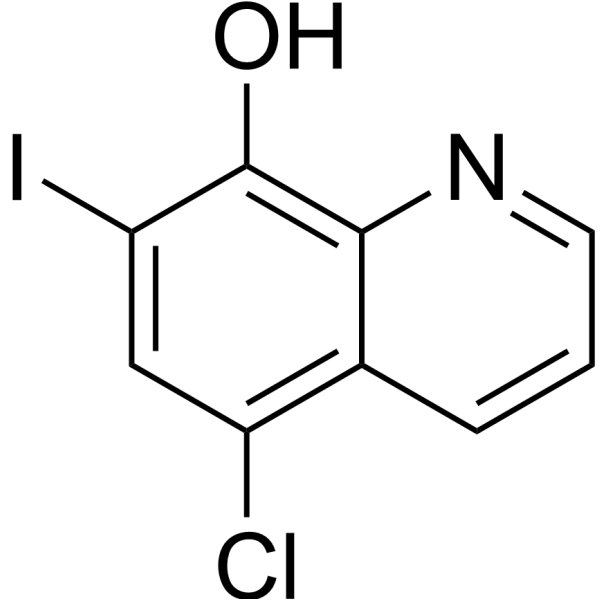
Clioquinol (Standard) is the analytical standard of Clioquinol. This product is intended for research and analytical applications. Clioquinol (Iodochlorhydroxyquin) is a topical antifungal agent with anticancer activity. Clioquinol acts as an oral antimicrobial agent for the research of diarrhea and skin infections. Antibiotic .
|
-
-
- HY-137085
-
|
|
Antibiotic
Fungal
|
Infection
|
|
Antibiotic AB023b is part of macrocyclic pentaene antibiotic complex, forming the main components with Antibiotic AB023a (HY-137084). Antibiotic AB023b exhibits antifungal activity against Candida albicans, and plant pathogenic fungi, Botrytis cinerea, Fusarium moniliforme and Pythium ultimum .
|
-
-
- HY-137084
-
|
|
Antibiotic
Fungal
|
Infection
|
|
Antibiotic AB023a is part of macrocyclic pentaene antibiotic complex, forming the main components with Antibiotic AB023b (HY-137085). Antibiotic AB023a exhibits antifungal activity against Candida albicans, and plant pathogenic fungi, Botrytis cinerea (MIC= 5 μg/mL), Fusarium moniliforme and Pythium ultimum .
|
-
-
- HY-126602
-
|
|
Antibiotic
Fungal
|
Infection
|
|
Kinamycin B is an antibiotic found in Streptomyces murayamaensis of the genus Streptomyces that exhibits antifungal activity .
|
-
-
- HY-125358
-
|
MK 2266 B
|
Antibiotic
Fungal
|
Infection
|
|
Dactylfungin B (MK 2266 B) is an antifungal antibiotic that is active against Candida pseudotropicalis and other fungi, with an MIC value at <10 μg/mL .
|
-
-
- HY-113799
-
-
-
- HY-N13154
-
|
|
Antibiotic
Fungal
|
Infection
|
|
Malolactomycin C (compound 1) is a macrolide antifungal antibiotic isolated from Streptomyces strain KP-3144. Malolactomycin C is an effective inhibitor of Botrytis cinerea and thus controls a variety of plant diseases including gray mold .
|
-
-
- HY-N10273
-
|
|
Fungal
|
Infection
|
|
Deoxyfusapyrone is an antifungal alpha-pyrone from Fusarium semitectum. Deoxyfusapyrone shows a strong antibiotic activity towards Geotrichum candidum in disk diffusion assays, but is not toxic to Artemia salina larvae .
|
-
-
- HY-N5160
-
|
|
Antibiotic
Fungal
|
Infection
|
|
Arborcandin A is a 1,3-β-glucan synthase inhibitor that serves as an antifungal antibiotic. Arborcandin A exhibits IC50 values of 0.25 μg/mL and 0.05 μg/mL against Candida albicans and Aspergillus fumigatus, respectively. Additionally, Arborcandin A has an MIC of 4-8 μg/mL against the genus Candida .
|
-
-
- HY-N5165
-
|
|
Antibiotic
Fungal
|
Infection
|
|
Arborcandin F is a 1,3-β-glucan synthase inhibitor that serves as an antifungal antibiotic. Arborcandin F exhibits IC50 values of 0.012 μg/mL against both Candida albicans and Aspergillus fumigatus. Additionally, Arborcandin F has an MIC of 2-4 μg/mL against the genus Candida .
|
-
-
- HY-N5163
-
|
|
Antibiotic
Fungal
|
Infection
|
|
Arborcandin D is a 1,3-β-glucan synthase inhibitor that serves as an antifungal antibiotic. Arborcandin D exhibits IC50 values of 3 μg/mL and 0.35 μg/mL against Candida albicans and Aspergillus fumigatus, respectively. Additionally, Arborcandin D has an MIC of 4 μg/mL against the genus Candida .
|
-
-
- HY-N5162
-
|
|
Antibiotic
Fungal
|
Infection
|
|
Arborcandin C is a 1,3-β-glucan synthase inhibitor that serves as an antifungal antibiotic. Arborcandin C exhibits IC50 values of 0.15 μg/mL and 0.015 μg/mL against Candida albicans and Aspergillus fumigatus, respectively. Additionally, Arborcandin C has an MIC of 1-2 μg/mL against the genus Candida .
|
-
-
- HY-N5161
-
|
|
Antibiotic
Fungal
|
Infection
|
|
Arborcandin B is a 1,3-β-glucan synthase inhibitor that serves as an antifungal antibiotic. Arborcandin B exhibits IC50 values of 0.30 μg/mL and 0.025 μg/mL against Candida albicans and Aspergillus fumigatus, respectively. Additionally, Arborcandin B has an MIC of 2-4 μg/mL against the genus Candida .
|
-
-
- HY-N5164
-
|
|
Antibiotic
Fungal
|
Infection
|
|
Arborcandin E is a 1,3-β-glucan synthase inhibitor that serves as an antifungal antibiotic. Arborcandin E exhibits IC50 values of 0.1 μg/mL and 0.012 μg/mL against Candida albicans and Aspergillus fumigatus, respectively. Additionally, Arborcandin E has an MIC of 0.5-2 μg/mL against the genus Candida .
|
-
-
- HY-N14960
-
|
|
Antibiotic
|
|
|
Clavariopsin A is a cyclic depsipeptide antibiotic. Clavariopsin A shows antifungal activity for Candida albicans IFO 0583, Candida albicans ATCC 10231, Aspergillus niger AJ117374, Aspergillus fumigatus AJ117190, Aspergillus fumigatus JCM1739 with MIC values of 8, 8, 16, 2, 4 μg/mL, respectively .
|
-
-
- HY-N16445
-
|
(-)-Strevertene A
|
Endogenous Metabolite
Antibiotic
Fungal
|
Infection
|
|
Strevertene A ((-)-Strevertene A) (Compound 1), a pentaene macrolide, is a microbial secondary metabolite. Strevertene A is an antibiotic and has a potent antifungal activity. Strevertene A significantly inhibits the mycelial growth of phytopathogenic fungi (such as Alternaria mali, Aspergillus oryzae and Cylindrocarpon destructans) with IC50s of 4-16 μg/mL. Strevertenes A can strongly prevent Fusarium wilt development on tomato plants .
|
-
- HY-N14961
-
|
|
Antibiotic
|
Infection
|
|
Clavariopsin B is a cyclic depsipeptide antibiotic. Clavariopsin B shows antifungal activity for Candida albicans IFO 0583, Candida albicans ATCC 10231, Aspergillus niger AJ117374, Aspergillus fumigatus AJ117190, Aspergillus fumigatus JCM1739 with MIC values of 8, 8, 16, 4, 4 μg/mL, respectively .
|
-
- HY-N13197
-
-
- HY-N14888
-
-
- HY-N13929
-
-
- HY-N14322
-
-
- HY-N14799
-
-
- HY-N14282
-
-
- HY-123474
-
-
- HY-N15064
-
-
- HY-N15350
-
|
|
Fungal
Antibiotic
|
Infection
|
|
Demethylblasticidin S is an antifungal antibiotic that can be synthesized by Streptomyces griseochromogenes .
|
-
- HY-N14979
-
|
|
Antibiotic
Fungal
|
Infection
|
|
Dermostatin A is a polyene antibiotic with antifungal activity that can be used in the study of fungal infections .
|
-
- HY-N14434
-
-
- HY-N15024
-
-
- HY-115441
-
|
(Rac)-NND 502
|
Antibiotic
Fungal
|
Infection
|
|
(Rac)-Luliconazole ((Rac)-NND 502) is the racemic isomer of Luliconazole (HY-14283). Luliconazole is a topical antifungal imidazole antibiotic with broad-spectrum and potent antifungal activity .
|
-
- HY-152909
-
|
|
Fungal
|
Infection
|
|
Nystatin A2 is an active component of antifungal agent, Nystatin (HY-17409). Nystatin is an orally active polyene antifungal antibiotic effective against yeast and mycoplasma .
|
-
- HY-N14980
-
|
|
Antibiotic
Fungal
|
Infection
|
|
Dermostatin B is a polyene antibiotic with antifungal activity that can be used in the study of fungal infections .
|
-
- HY-N14856
-
|
|
Antibiotic
Fungal
|
Infection
|
|
Verlamelin is a depsipeptide antibiotic. Verlamelin has anti-fungal activity against plant pathogens .
|
-
- HY-126783
-
|
11-Deoxycandicidin D
|
Fungal
|
|
|
Levorin A0 is a Levorin component. Levorin is an aromatic polyene (heptaene) antibiotic with high antifungal activity.
|
-
- HY-N12913
-
|
|
Antibiotic
Fungal
|
Infection
|
|
Antibiotic WB is an antibioticwith antifungal activity and can be isolated from the soil fungus strain 38 .
|
-
- HY-129728
-
-
- HY-N14763
-
|
|
Antibiotic
Fungal
|
Infection
|
|
3'-O-Decarbamoylirumamycin is a 20-membered macrolide antibiotic produced by Streptomyces subflavus subsp.Irumaensis . 3'-O-Decarbamoylirumamycin has certain inhibitory effect on plant pathogenic fungi such as Piricularia oryzae, and Sclerotinia cinerea .
|
-
- HY-N14192
-
|
|
Antibiotic
Fungal
|
Infection
|
|
Maltophilin is a broad-spectrum antifungal antibiotic that has no antibacterial effect against Gram-positive and Gram-negative bacteria .
|
-
- HY-N13951
-
|
|
Antibiotic
Bacterial
Fungal
|
Infection
|
|
Aranochlor A is an antibiotic found in Pseudoarachniotus roseus (HIL Y-30499). Aranochlor A exhibits antibacterial and antifungal activities .
|
-
- HY-N14248
-
|
|
Antibiotic
Fungal
|
Infection
|
|
Melithiazol A is an antibiotic. Melithiazole A is a β-methoxyacrylate (MOA) inhibitor with strong anti-agent activity. Antifungal and cytotoxic agent .
|
-
- HY-109125A
-
|
SPA-S-753; SPA-S-752 L-aspartate
|
Antibiotic
Fungal
|
Infection
|
|
Amcipatricin diaspartate (SPA-S-753) is a semi-synthetic polyene antibiotic, with potent broad-spectrum antifungal activity .
|
-
- HY-105267
-
|
|
Fungal
Antibiotic
|
Infection
|
|
LY 121019 is a semi-synthetic antifungal antibiotic with strong anticandida activity with MIC50 value of 0.625 μg/mL .
|
-
- HY-N13905
-
-
- HY-N14250
-
|
|
Antibiotic
Fungal
|
Infection
|
|
Melithiazol C is an antibiotic. Melithiazole C is a β-methoxyacrylate (MOA) inhibitor with strong anti-agent activity. Antifungal agent .
|
-
- HY-N14905
-
|
|
Antibiotic
Bacterial
Fungal
|
Infection
|
|
α-Prumycin hydrochloride is a carbohydrate antibiotic. α-Prumycin hydrochloride has anti-fungal activity and weak anti-individual bacterial activity.
|
-
- HY-N14912
-
|
|
Antibiotic
Bacterial
Fungal
|
Infection
|
|
β-Prumycin hydrochloride is a carbohydrate antibiotic. β-Prumycin hydrochloride has anti-fungal activity and weak anti-individual bacterial activity.
|
-
- HY-N14249
-
|
|
Antibiotic
Fungal
|
Infection
|
|
Melithiazol B is an antibiotic. Melithiazole B is a β-methoxyacrylate (MOA) inhibitor with strong anti-agent activity. Antifungal and cytotoxic agent .
|
-
- HY-N15062
-
|
|
Antibiotic
Fungal
|
Infection
|
|
2-Hydroxymethylclavam is a β-lactam antibiotic. 2-Hydroxymethylclavam has antifungal activity, especially for plant pathogenic fungi .
|
-
- HY-N14731
-
-
- HY-N13906
-
-
- HY-N7151R
-
|
|
Reference Standards
Antibiotic
Bacterial
Fungal
|
Infection
|
|
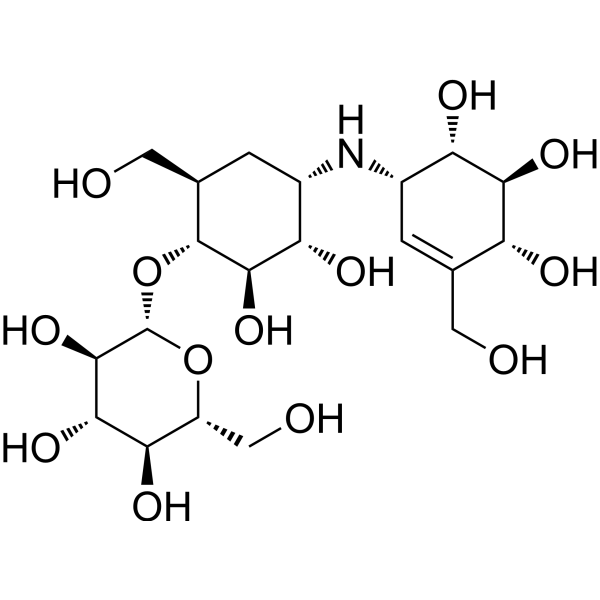
Kasugamycin (hydrochloride) (Standard) is the analytical standard of Kasugamycin (hydrochloride). This product is intended for research and analytical applications. Kasugamycin hydrochloride (Ksg hydrochloride) is an antibiotic which binds both the 30S and 70S ribosome but not isolated 50S subunits. Kasugamycin hydrochloride (Ksg hydrochloride) mimics mRNA nucleotides to destabilize tRNA binding and inhibit canonical translation initiation .
|
-
- HY-N15184
-
|
Pradimicin C
|
Bacterial
Fungal
|
Infection
|
|
Benanomicin B (Pradimicin C) is an antifungal antibiotic that also has antibacterial activity against two Gram-positive bacteria: Micrococcus luteus and Corynebacterium bovis .
|
-
- HY-N14324
-
|
|
Antibiotic
Fungal
Herbicide
|
Infection
|
|
Hydranthomycin is an antibiotic. Hydranthomycin has moderate antifungal activity, and the MIC of Pyricularia oryzae is 25 μg/mL. Hydranthomycin inhibits the growth of Euglena gracilis and has herbicidal activity .
|
-
- HY-19584
-
|
|
Fungal
|
Infection
|
|
Variotin is an Anti-Fungal Agent. Variotin has a strong antibiotic activity on dermatophytes such as Trichophyton, Microsporum, and Epidermophyton, and also pathogenic fungi in internal mycosis such as Blastomyces and Cryptococcus .
|
-
- HY-N14582
-
|
|
Antibiotic
Fungal
|
Infection
|
|
Glomosporin is a cyclic ester peptide antifungal antibiotic, and it has moderate anti-Aspergillus flavus (including Aspergillus Niger and Aspergillus Niger), yeast activity (MIC is 16 μg/mL) .
|
-
- HY-N13880
-
|
|
Antibiotic
Fungal
|
Infection
|
|
Adustin, an antifungal antibiotic, is a polypeptide with translation-inhibiting activity. Adustin inhibits translation in a cell-free rabbit reticulocyte lysate system with an IC50 of 0.34 μM .
|
-
- HY-122414
-
|
|
Antibiotic
Bacterial
Fungal
|
Infection
|
|
Phosalacine is a phosphorouscontaining tripeptide herbicidal antibiotic that can be isolated from soil isolate Kitasatosporia phosalacinea KA-338. Phosalacine also shows antibacterial and antifungal activity .
|
-
- HY-N14269
-
|
|
Antibiotic
Fungal
|
Infection
|
|
Ezomycin A2 is an antifungal antibiotic. Ezomycin A2 is mainly active against phytopathogens such as Sclerotinia sclerotiorum and Botrytis, and has a control effect on Sclerotinia, Botrytis and Candidiasis of crops .
|
-
- HY-N14283
-
|
|
Antibiotic
Fungal
|
Infection
|
|
Ezomycin D2 is an antifungal antibiotic. Ezomycin D2 is mainly active against phytopathogens such as Sclerotinia sclerotiorum and Botrytis, and has a control effect on Sclerotinia, Botrytis and Candidiasis of crops .
|
-
- HY-W736195
-
|
|
Antibiotic
Bacterial
|
Infection
|
|
5-Hydroxy-4-oxo-L-norvaline is an antifungal antibiotic. 5-Hydroxy-4-oxo-L-norvaline can inhibit protein biosynthesis .
|
-
- HY-14283S
-
|
NND 502-13C7
|
Isotope-Labeled Compounds
|
Infection
|
|
Luliconazole- 13C7 (NND 502- 13C7) is 13C labeled Luliconazole. Luliconazole (NND 502)?is a topical antifungal imidazole antibiotic with broad-spectrum and potent antifungal activity. Luliconazole can be used for the research of skin infection, including?dermatophytosis, tinea corporis, tinea pedis?et al .
|
-
- HY-119759AR
-
|
|
Antibiotic
Reference Standards
Fungal
|
Infection
|
|
Lipoxamycin (hemisulfate) (Standard) is the analytical standard of Lipoxamycin (hemisulfate). This product is intended for research and analytical applications. Lipoxamycin hemisulfate is an antifungal antibiotic and a potent serine palmitoyltransferase inhibitor with an IC50 of 21 nM[1][2].
|
-
- HY-N15077
-
|
|
Antibiotic
Bacterial
|
Infection
|
|
11-Deacetoxywortmannin is an antibiotic found in Aspergillus janus NRRL 3807 and Penicillum funiculosum NRRL 3363. 11-Deacetoxywortmannin has a strong anti-fungal and anti-inflammatory effect, and has an anti-edema effect .
|
-
- HY-N14173
-
|
|
Antibiotic
Fungal
|
Infection
|
|
Epiderstatin is a glutarimide antibiotic. Epiderstatin has the activity of inhibiting the filamentous division induced by epidermal growth factor (EGF), but does not inhibit EGF-receptor kinase. Epiderstatin has only weak antifungal activity and no antibacterial effect .
|
-
- HY-108874A
-
|
Levorin (≥50%); Vanobid (≥50%); Candimon (≥50%)
|
Antibiotic
Fungal
|
Infection
|
|
Candicidin (≥50%) (Levorin (≥50%)) is an Antifungal antibiotic. Candicidin (≥50%) exhibits potent antifungal activity against yeasts and yeast-like fungi, such as Candida albicans and Saccharomyces cerevisiae. Low concentrations of Candicidin (≥50%) do not adversely affect pea seed germination .
|
-
- HY-B0518S1
-
|
|
Isotope-Labeled Compounds
|
Infection
|
|
Naftifine-d3 is the deuterium labeled Naftifine. Naftifine hydrochloride is an antibiotic. Naftifine hydrochloride has antifungal activity against dermatophytes, aspergilli, Sporothrix schenckii, and yeasts of the genus Candida. Naftifine hydrochloride can be used for the research of superficial dermatomycoses inhibition .
|
-
- HY-N6782
-
-
- HY-B0518AS
-
|
|
Isotope-Labeled Compounds
Fungal
Antibiotic
|
Infection
|
|
Naftifine-d3 (hydrochloride) is the deuterium labeled Naftifine hydrochloride. Naftifine hydrochloride is an antibiotic. Naftifine hydrochloride has antifungal activity against dermatophytes, aspergilli, Sporothrix schenckii, and yeasts of the genus Candida. Naftifine hydrochloride can be used for the research of superficial dermatomycoses inhibition .
|
-
- HY-N6718
-
|
|
Antibiotic
Fungal
|
Inflammation/Immunology
|
|
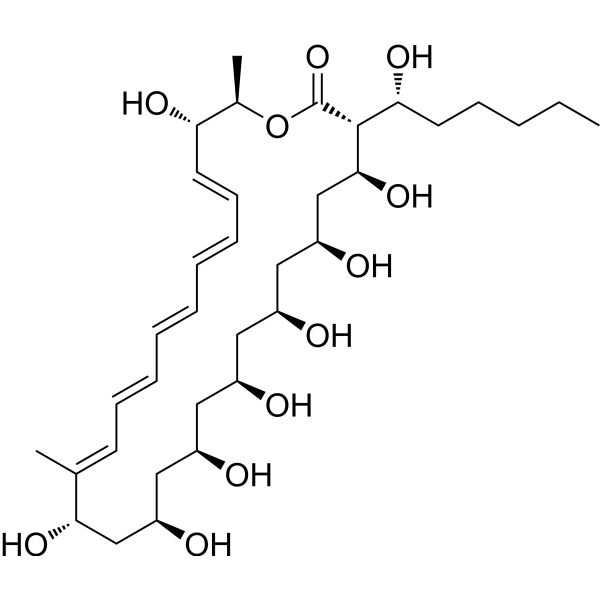
Filipin III is the major component of Filipin, a 28-membered ring pentaene macrolide antifungal antibiotic produced by S. filipinensis, S. avermitilis and S. miharaensis. Filipin interacts with membrane sterols causing the alteration of membrane structure .
|
-
- HY-N7123S
-
-
- HY-130772
-
|
|
Antibiotic
Fungal
|
Infection
|
|
Filipin II is an antibiotic, which exhibits antifungal efficacy. Filipin II interacts with membrane sterols, leads to changes in membrane structure, inhibits Candida utilis and Saccharomyces cerevisiae with the MIC of 0.03 mg/L and 0.2 μg/L .
|
-
- HY-B0576R
-
|
Sulphacetamide sodium (Standard)
|
Reference Standards
Antibiotic
Bacterial
Fungal
|
Infection
Inflammation/Immunology
|
|
Sulfacetamide (Standard) (Sulphacetamide (Standard)) sodium is the analytical standard of Sulfacetamide sodium (HY-B0576). This product is intended for research and analytical applications. Sulfacetamide sodium is a sulfonamide antibiotic that can be used for the study of ocular infections. Sulfacetamide sodium has antifungal and antibacterial activities .
|
-
- HY-N14220
-
|
|
Antibiotic
Fungal
|
Infection
|
|
Epoformin, is a fungal cyclohexene epoxide that can be isolated from Diplodia quercivora. Epoformin is an antibiotic and exhibits weak inhibitory activity against rye seedling sheath growth. Epoformin exhibits antifungal activity, inhibits Phytophthora cinnamomi and Phytophthora plurivora .
|
-
- HY-B0888R
-
|
Sulphacetamide sodium monohydrate (Standard)
|
Reference Standards
Antibiotic
Bacterial
Fungal
|
Infection
Inflammation/Immunology
|
|
Sulfacetamide (Standard) (Sulphacetamide (Standard)) sodium monohydrate is the analytical standard of Sulfacetamide sodium monohydrate (HY-B0888). This product is intended for research and analytical applications. Sulfacetamide sodium monohydrate is a sulfonamide antibiotic that can be used for the study of ocular infections. Sulfacetamide sodium monohydrate has antifungal and antibacterial activities .
|
-
- HY-N8336
-
|
|
Antibiotic
Bacterial
Fungal
|
Infection
Cancer
|
|
IT-143A is an antibiotic, that exhibits antibacterial and antifungal activity against Micrococcus luteus and Aspergillus fumigatus with MIC of 6.25-25 μg/mL. IT-143A inhibits growth of cancer cell KB with an IC50 of 0.36 ng/mL .
|
-
- HY-N15375
-
|
|
Antibiotic
Fungal
Parasite
|
Infection
|
|
Trichomycin B is a polyene macrolide antibiotic that can be isolated from the fermentation products of Streptomyces hachijoensis. Trichomycin B exhibits antibacterial activity against fungi, yeasts, and trichomonas. Trichomycin B can be used in research on antifungal and anti-trichomoniasis infection .
|
-
- HY-59097
-
|
(E/Z)-WBI-1001; (E/Z)-Benvitimod; (E/Z)-GSK2894512
|
Antibiotic
Bacterial
Fungal
|
Infection
|
|
(E/Z)-Tapinarof ((E/Z)-WBI-1001; 3,5-dihydroxy-4-isopropylstilbene) is a broad-spectrum antibiotic. (E/Z)-Tapinarof has anti-bacterial, anti-fungal and anti-nematode activities .
|
-
- HY-B0518AR
-
|
|
Reference Standards
Fungal
Antibiotic
|
Infection
|
|
Naftifine (hydrochloride) (Standard) is the analytical standard of Naftifine (hydrochloride). This product is intended for research and analytical applications. Naftifine hydrochloride is an antibiotic. Naftifine hydrochloride has antifungal activity against dermatophytes, aspergilli, Sporothrix schenckii, and yeasts of the genus Candida. Naftifine hydrochloride can be used for the research of superficial dermatomycoses inhibition .
|
-
- HY-125152
-
|
CndD
|
Antibiotic
Fungal
|
Infection
|
|
Candicidin D (CndD) is an antibiotic, which exhibits antifungal activity through interaction with steroids in cell membranes. Candicidin D inhibits S. cerevisiae, Candida albicans and other Candida spp. with MIC of 0.25-1 μg/mL in RPMI-1640 medium.
|
-
- HY-N7123S1
-
-
- HY-16909
-
|
CI 940; LMB
|
CRM1
Fungal
Antibiotic
|
Infection
Cancer
|
|
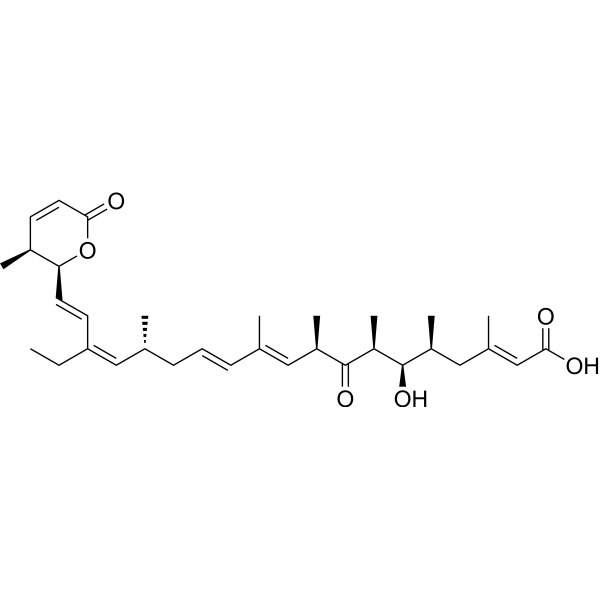
Leptomycin B (CI 940; LMB) is a potent inhibitor of the nuclear export of proteins. Leptomycin B inactivates CRM1/exportin 1 by covalent modification at a cysteine residue. Leptomycin B is a potent antifungal antibiotic blocking the eukaryotic cell cycle .
|
-
- HY-129337
-
|
|
Antibiotic
Fungal
Apoptosis
|
Infection
Cancer
|
|
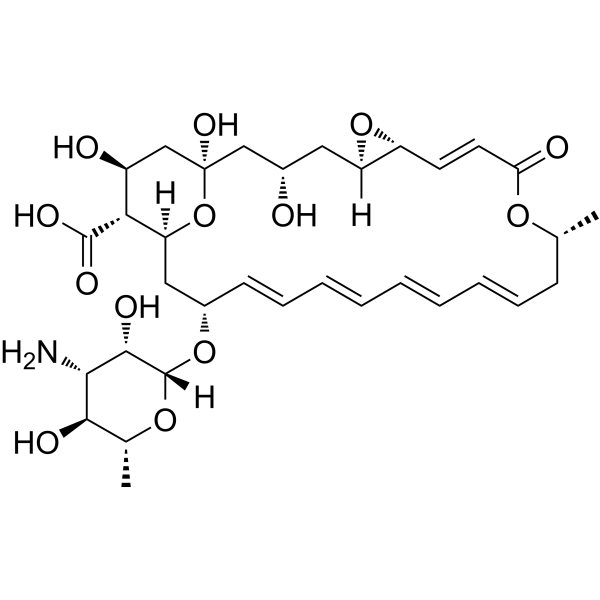
Reveromycin A, a benzoquinoid antibiotic isolated from the genus Streptomyces, is a selective inhibitor of protein synthesis in eukaryotic cells. Reveromycin A inhibits bone resorption by inducing apoptosis specifically in osteoclasts. Reveromycin A has antiproliferative activity against tumor cell lines and antifungal activity .
|
-
- HY-127130
-
|
|
Bcl-2 Family
Apoptosis
Fungal
Antibiotic
|
Infection
Cancer
|
|
Spicamycin, an adenine nucleoside antibiotic with antifungal and antitumor activities. Spicamycin is also a potent inducer of differentiation of myeloid leukemia cells. Spicamycin induces apoptosis in NB4 cells via down-regulation of Bcl-2 expression and modulation of PML protein .
|
-
- HY-B0133
-
|
Pimaricin
|
Environmental Pollutants
Antibiotic
Endogenous Metabolite
Fungal
Bacterial
|
Infection
|
|
Natamycin (Pimaricin) is a macrolide antibiotic agent produced by several Streptomyces strains. Natamycin inhibits the growth of fungi via inhibition of amino acid and glucose transport across the plasma membrane. Natamycin is a food preservative, an antifungal agent in agriculture, and is widely used for fungal keratitis research .
|
-
- HY-159666
-
|
|
Antibiotic
Fungal
|
Infection
|
|
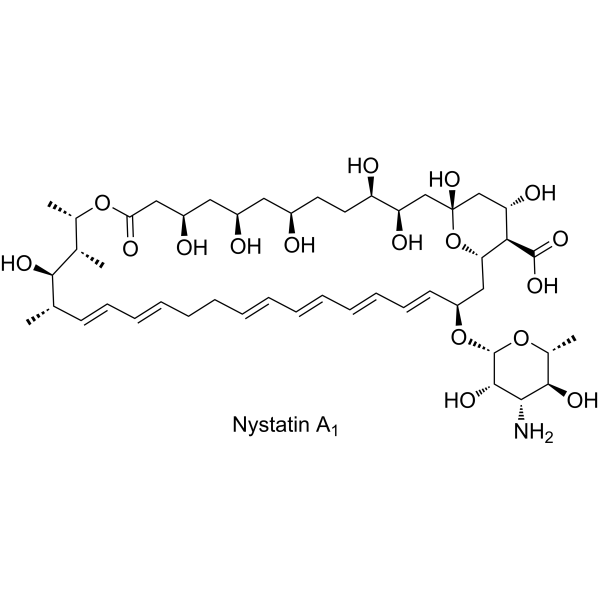
Nystatin A1 is a polyene macrolide antifungal antibiotic that can be isolated from Streptomyces noursei. Nystatin A1 binds to ergosterol on the fungal cell membrane, increasing the permeability of the cell membrane and causing leakage of cell contents, thereby inhibiting the growth and reproduction of fungi .
|
-
- HY-B0518S3
-
|
|
Isotope-Labeled Compounds
Antibiotic
Fungal
|
Infection
|
|
Naftifine- 13C,d3 is the 13C- and deuterium labeled Naftifine. Naftifine hydrochloride is an antibiotic. Naftifine hydrochloride has antifungal activity against dermatophytes, aspergilli, Sporothrix schenckii, and yeasts of the genus Candida. Naftifine hydrochloride can be used for the research of superficial dermatomycoses inhibition .
|
-
- HY-N15042
-
|
|
Fungal
|
Infection
|
|
9-Hydroxyoudemansin A is an antibiotic. 9-Hydroxyoudemansin A has antifungal activity, has an MIC of 12.5 μg/mL against ochre-like yeast, and is resistant to fungi such as Candida albicans, Crimson Yeast, Penicillium and Streptomyces with MICs are all> 50 μg/mL. No anti-bacterial effect .
|
-
- HY-N14685
-
|
|
Antibiotic
Fungal
|
Infection
|
|
Heptaibin is a peptaibol antifungal antibiotic. Heptaibin has the activity against Gram-positive bacteria (MIC is 8 μg/mL) such as Staphylococcus aureus and fungi (MIC is 13-32 μg/mL) such as Aspergillus, Candida albicans and cryptococcus neofordii, and it has moderate anti-Rhabditella pseudoelongata activity (MIC is 50 μg/mL) .
|
-
- HY-136767
-
|
|
Antibiotic
Fungal
Bacterial
Parasite
DNA/RNA Synthesis
|
Infection
|
|
Cladosporin is an antibiotic and an an antifungal metabolite that can be produced in good yield in the mycelium of Cladosporium cladosporioid. Cladosporin exhibits inhibitory activity against various dermatophytes, plant pathogens, and bacteria. Cladosporin also exhibits antimalarial activity through inhibition of cytoplasmic lysine-tRNA synthetase of Plasmodium (PfKrs1) .
|
-
- HY-P5016A
-
|
|
Antibiotic
Fungal
Bacterial
|
Infection
Cancer
|
|
CRAMP-18 (mouse) acetate is an antibiotic peptide without hemolytic activity. CRAMP-18 (mouse) acetate has good inhibitory activity against Gram-negative bacteria, such as S. typhimurium and P. aeruginosa. CRAMP-18 (mouse) acetate has the potential to study antifungal, antibacterial and antitumor .
|
-
- HY-P5016
-
|
|
Antibiotic
Bacterial
Fungal
|
Infection
Cancer
|
|
CRAMP-18 (mouse) is an antibiotic peptide without hemolytic activity. CRAMP-18 (mouse) has good inhibitory activity against Gram-negative bacteria, such as S. typhimurium and P. aeruginosa. CRAMP-18 (mouse) has the potential to study antifungal, antibacterial and antitumor .
|
-
- HY-135327A
-
|
|
HIV
Fungal
|
Infection
|
|
Amphotericin B methyl ester hydrochloride is the methyl ester derivative of the polyene antibiotic Amphotericin B (A634250). Amphotericin B methyl ester hydrochloride is the cholesterol-binding compound possesses significant antifungal activity. Amphotericin B methyl ester hydrochloride disrupts HIV-1 particle production and potently inhibits HIV-1 replication .
|
-
- HY-135327
-
|
|
HIV
Fungal
|
Infection
|
|
Amphotericin B methyl ester is the methyl ester derivative of the polyene antibiotic Amphotericin B (A634250). Amphotericin B methyl ester is the cholesterol-binding compound possesses significant antifungal activity. Amphotericin B methyl ester disrupts HIV-1 particle production and potently inhibits HIV-1 replication .
|
-
- HY-105476
-
|
|
Antibiotic
Fungal
iGluR
|
Infection
Neurological Disease
|
|
TAN 950A is antifungal amino acid antibiotic. TAN 950A has affinity for three excitatory amino acid (EAA) receptor and can inhibit [3H]AMPA, [3H]kainite and [3H]CPP binding competitively. TAN 950A can be used for the researches of infection and neurological disease .
|
-
- HY-125300
-
|
|
Fungal
Antibiotic
|
Cancer
|
|
Oligomycin E is a antitumor antibiotic that can be isolated from Streptomyces. Oligomycin E has significant antifungal activity, showing minimal inhibitory concentrations (MICs) values between 2 and 75μg/mL. Oligomycin E has strong antitumor activity against HeLa cells, with an IC50 of 0.014 μg/mL .
|
-
- HY-125723
-
|
SL 7810; A-30912 A
|
Endogenous Metabolite
Fungal
Antibiotic
|
Infection
|
|
Echinocandin B (SL 7810) is a lipopeptide antifungal antibiotic. Echinocandin B is produced by Aspergillus nidulans. Echinocandin B inhibits β-1,3-glucan activity, thereby blocking the biosynthesis of fungal cell walls. Echinocandin B exhibits activity against a variety of Aspergillus species .
|
-
- HY-13557
-
|
Immunomycin; FR-900520; FK520
|
FKBP
Parasite
Fungal
Antibiotic
|
Infection
Neurological Disease
Inflammation/Immunology
|
|
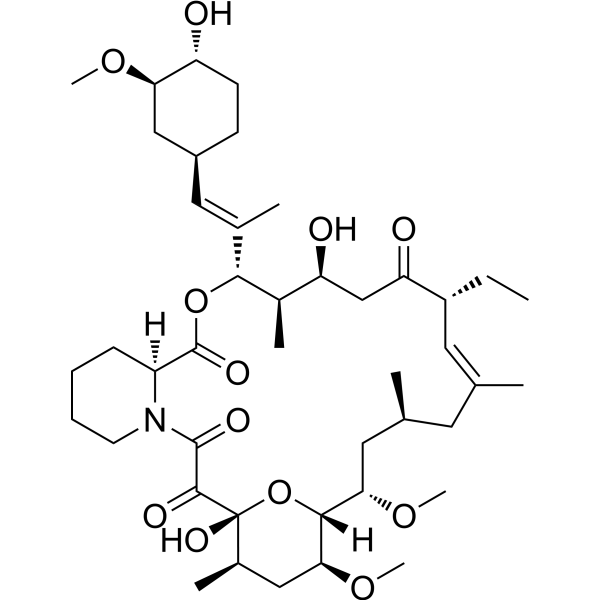
Ascomycin (Immunomycin; FR-900520; FK520) is an ethyl analog of Tacrolimus (FK506) with strong immunosuppressant properties. Ascomycin is also a macrocyclic polyketide antibiotic with multiple biological activities such as anti-malarial, anti-fungal and anti-spasmodic. Ascomycin prevents graft rejection and has potential for varying skin ailments research .
|
-
- HY-129260
-
|
3-Amino-3-deoxyglucose
|
Fungal
|
Infection
|
|
Kanosamine (3-Amino-3-deoxyglucose) is an antibiotic against Saccharomyces cerevisiae and human pathogenic fungi Candida albicans. Kanosamine exhibits antifungal activity through inhibition of cell wall synthesis and inhibition of GlcN-6-P synthase with phosphorylated kanosamine-6-phosphate in cytoplasma .
|
-
- HY-B0856
-
|
|
Fungal
Tyrosinase
Antibiotic
|
Infection
|
|
Validamycin A, a fungicidal, is an agricultural antibiotic. Validamycin A is originally isolated from Streptomyces hygroscopicus var. limoneus. Validamycin A inhibits the growth of A. flavus, with a MIC of 1?μg/mL . Validamycin A shows potent inhibitory activity against trehalase of Rhizoctonia solani, with an IC50 of 72 μM . Validamycin A is a reversible tyrosinase inhibitor, with a Ki of 5.893 mM .
|
-
- HY-17409
-
|
|
Fungal
Antibiotic
Apoptosis
Bacterial
|
Infection
Cancer
|
|
Nystatin is an orally active polyene antifungal antibiotic effective against yeast and mycoplasma. Nystatin increases the permeability of plasma membranes to small monovalent ions, including chloridion . Nystatin is a cholesterol-sequestering agent , partially prevents Oxaliplatin-induced lipid raft aggregation, DR4 and DR5 clustering, and thereby reduces apoptosis .
|
-
- HY-B0133R
-
|
Pimaricin (Standard)
|
Reference Standards
Fungal
Endogenous Metabolite
Antibiotic
Bacterial
|
Infection
|
|
Natamycin (Standard) is the analytical standard of Natamycin. This product is intended for research and analytical applications. Natamycin (Pimaricin) is a macrolide antibiotic agent produced by several Streptomyces strains. Natamycin inhibits the growth of fungi via inhibition of amino acid and glucose transport across the plasma membrane. Natamycin is a food preservative, an antifungal agent in agriculture, and is widely used for fungal keratitis research .
|
-
- HY-N12264
-
|
|
Antibiotic
Bacterial
Fungal
|
Infection
|
|
Burnettramic acid A is an antibiotic, which can be isolated from Aspergillus burnettii. Burnettramic acid A exhibits antibacterial and antifungal activities, with IC50 of 0.2, 0.5, 2.3 and 5.9 μg/mL, for Saccharomyces cerevisiae, Candida albicans, Bacillus subtilis and Staphylococcus aureus, respectively. Burnettramic acid A exhibits cytotoxicity in cancer cell NS-1 with IC50 of 13.8 μg/mL .
|
-
- HY-14603
-
-
- HY-129548
-
|
|
Antibiotic
|
Infection
|
|
Prumycin is an antifungal antibiotic with activity against cucumber powdery mildew. Prumycin significantly inhibited the disease, whereas other metabolites such as bacillomycin D and surfactin did not. Prumycin did not induce the expression of plant defense genes, indicating that its effects were not through plant defense responses. Observation of cucumber cotyledons treated with prumycin showed that it could inhibit spore germination of P. fusca .
|
-
- HY-129548A
-
|
|
Fungal
|
Infection
|
|
Prumycin dihydrochloride is an antifungal antibiotic with activity against cucumber powdery mildew. Prumycin dihydrochloride significantly inhibited the disease, whereas other metabolites such as bacillomycin D and surfactin did not. Prumycin dihydrochloride did not induce the expression of plant defense genes, indicating that its effects were not through plant defense responses. Observation of cucumber cotyledons treated with prumycin showed that it could inhibit spore germination of P. fusca .
|
-
- HY-17583
-
-
- HY-W002458
-
|
|
Drug Intermediate
|
Others
|
|
4-Nitropyrazole is a five-membered nitrogen-containing heterocyclic compound that can be used as a drug intermediate. 4-Nitropyrazole can be synthesized into antibiotics/antifungal/antiviral agents containing pyrazole rings. 4-Nitropyrazole is synthesized through C-H activation reactions to produce LRRK2 inhibitors, which are used in the research of Parkinson's disease .
|
-
- HY-120435
-
|
|
Environmental Pollutants
Antibiotic
Bacterial
Influenza Virus
Fungal
|
Infection
|
|
Tyrothricin is a polypeptide antibiotic mixture isolated from Bacillus brevis and consists of tyrocidines and gramicidins. Tyrothricin shows activity against bacteria, fungi and some viruses. Tyrothricin containing formulations are used in sore throat agents and in agents for the healing of infected superficial and small-area wounds .
|
-
- HY-N17385
-
|
|
Bacterial
Fungal
|
Infection
|
|
Chrysophanol dimethyl ether is an anthraquinone-type natural product. Chrysophanol dimethyl ether acts as a bioavailability enhancer for antibacterial and antifungal antibiotics. Chrysophanol dimethyl ether serves as a chemical marker for differentiating raw and processed medicinal Rheum palmatum, with lower signal intensity detected in raw samples and higher signal intensity in processed samples. Chrysophanol dimethyl ether is applicable to research related to bacterial and fungal infections .
|
-
- HY-13557R
-
|
Immunomycin (Standard); FR-900520 (Standard); FK520 (Standard)
|
Reference Standards
FKBP
Parasite
Fungal
Antibiotic
|
Infection
Neurological Disease
Inflammation/Immunology
|
|
Ascomycin (Standard) is the analytical standard of Ascomycin. This product is intended for research and analytical applications. Ascomycin (Immunomycin; FR-900520; FK520) is an ethyl analog of Tacrolimus (FK506) with strong immunosuppressant properties. Ascomycin is also a macrocyclic polyketide antibiotic with multiple biological activities such as anti-malarial, anti-fungal and anti-spasmodic. Ascomycin prevents graft rejection and has potential for varying skin ailments research[1][2].
|
-
- HY-N7123
-
|
Sulphacetamide
|
Environmental Pollutants
Antibiotic
Bacterial
Fungal
|
Infection
Inflammation/Immunology
|
|
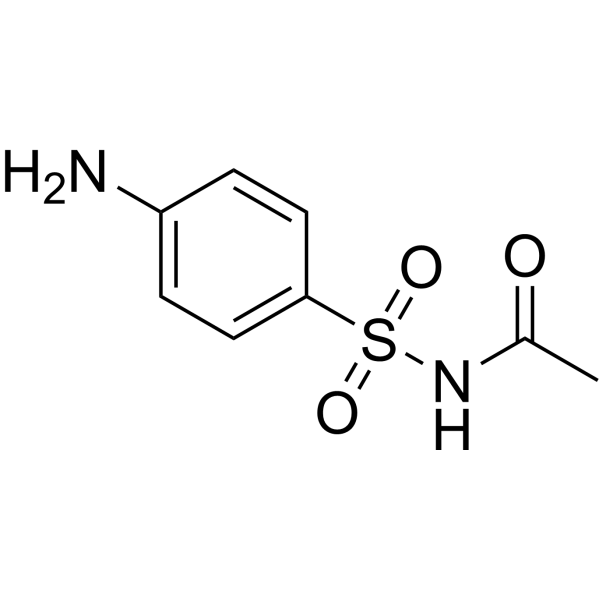
Sulfacetamide (Sulphacetamide) is a sulfonamide antibiotic. Sulfacetamide has antifungal and antibacterial activities. Sulfacetamide is employed as a topical formulation in various ophthalmic, dermatological, and hair solutions against bacterial infections, acne and scalp conditions. Sulfacetamide targets bacterial folic acid synthesis and is effective against various gram-positive and gram-negative bacteria. Sulfacetamide inhibits the synthesis of both dihydro-folic acid and para-aminobenzoic acid. Sulfacetamide can be used for the study of ocular infections .
|
-
- HY-N14853
-
|
|
Bacterial
Fungal
|
Infection
|
|
Ossamycin is a macrolide antibiotic. Ossamycin has anti-fungal effect, and it has weaker anti-Gram-positive bacterial effect. Ossamycin inhibits L cells, Epstein-Barr ascites cancer cells, KB cells, sarcoma-180 cells, L-1210 cells, HeLa cells in cell culture with IC50s (μg/mL) of 0.007, 0.008, 0.005, 0.008, 0.003, 0.005, respectively .
|
-
- HY-125723A
-
|
SL 7810 (purity>85%); A-30912 A (purity>85%)
|
Antibiotic
Fungal
Endogenous Metabolite
|
Infection
|
|
Echinocandin B (purity>85%) (SL 7810 (purity>85%)) is a lipopeptide antifungal antibiotic. Echinocandin B (purity>85%) is produced by Aspergillus nidulans. Echinocandin B (purity>85%) inhibits β-1,3-glucan activity, thereby blocking the biosynthesis of fungal cell walls. Echinocandin B (purity>85%) exhibits activity against a variety of Aspergillus species .
|
-
- HY-125723B
-
|
SL 7810 (purity>65%); A-30912 A (purity>65%)
|
Antibiotic
Fungal
Endogenous Metabolite
|
Infection
|
|
Echinocandin B (purity>65%) (SL 7810 (purity>65%)) is a lipopeptide antifungal antibiotic. Echinocandin B (purity>65%) is produced by Aspergillus nidulans. Echinocandin B (purity>65%) inhibits β-1,3-glucan activity, thereby blocking the biosynthesis of fungal cell walls. Echinocandin B (purity>65%) exhibits activity against a variety of Aspergillus species .
|
-
- HY-P2098
-
|
|
Antibiotic
Bacterial
Fungal
|
Infection
|
|
Alamethicin F 50 is an antibiotic. Alamethicin F 50 is composed of membrane-active peptide, containing 75% Alamethicin F 50/5 and 10% Alamethicin F 50/7. Alamethicin F 50 is exhibits antifungal and antibacterial activity by disrupting the integrity of microbial cell membranes, resulting in leakage of cell contents and death of the microorganisms. Alamethicin F 50 is able to reduce the surface tension of water, which can be used as a surfactant or detergent .
|
-
- HY-117092
-
|
|
Antibiotic
Fungal
|
Infection
|
|
BE-31405 is an antifungal antibiotic. BE-31405 can be isolated from the culture broth of the fungal strains such as Penicillium minioluteum F31405, Talaromyces siamensis FKA-61, and Phomopsis sp. FKA-62. BE-31405 exhibits potent growth inhibitory activity against pathogenic fungal strains including Candida albicans, Candida glabrata, and Cryptococcus neoformans. BE-31405 shows no cytotoxicity against mammalian cells .
|
-
- HY-174394S
-
|
|
Isotope-Labeled Compounds
Fungal
Cytochrome P450
|
Infection
|
|
CYP51-IN-25 is a orally active broad spectrum antifungal agent with the MIC80 of 0.00625-0.05 μg/mL. is a CYP51-IN-25 is a deuterated compound with antibiotic properties. CYP51-IN-25 can inhibit the fungal CYP51 enzyme, block ergosterol synthesis, and disrupt cell membrane integrity. CYP51-IN-25 can be used for research on fungal infections.
|
-
- HY-B0277
-
|
Ara-A; Adenine Arabinoside; 9-β-D-Arabinofuranosyladenine
|
Apoptosis
Fungal
Reactive Oxygen Species (ROS)
EBV
HSV
Antibiotic
DNA/RNA Synthesis
Drug Metabolite
|
Infection
Cancer
|
|
Vidarabine (Ara-A) is a nucleoside antibiotic isolated from Streptomyces, and a metabolite of Vidarabine phosphate (HY-B0277A). Vidarabine selectively inhibits viral DNA polymerase and cellular ribonucleotide reductase, thereby blocking viral replication. Vidarabine phosphate also exhibits antifungal activity, induces late-stage cellular apoptosis, and causes cell cycle arrest. Vidarabine phosphate can be used in research related to severe chronic active Epstein-Barr virus (EBV) infection, herpes infection, and candidiasis .
|
-
- HY-136926
-
|
FR-008I
|
Fungal
|
Infection
|
|
Candicidin A3 (FR-008I) is an antifungal antibiotic with significant biological activity. Candicidin A3 can effectively inhibit the growth of fungi through its unique three-dimensional structure and seven-membered ring geometry. The absolute configuration of Candicidin A3 is a specific arrangement of multiple chiral centers, which may affect its biological activity and interaction with targets. Candicidin A3 can be used as a potential drug to inhibit fungal infections .
|
-
- HY-181404
-
|
|
Fungal
P-glycoprotein
|
Infection
|
|
PA36-2 is an Mdr1 inhibitor and azole resistance reversal agent, with a IC50 of 1.0 μg/mL and a Kd of 4.209 μM against Candida albicans Mdr1. By effectively inhibiting the activity of the Mdr1 efflux pump, PA36-2 prevents the pumping of substrates out of cells, enhances the intracellular accumulation of azole antibiotics, and exerts a synergistic effect with antifungal agents such as Fluconazole (FLC) (HY-B0101). PA36-2 can be used in the research of azole-resistant candidiasis .
|
-
- HY-B0277R
-
|
Ara-A (Standard); Adenine Arabinoside (Standard); 9-β-D-Arabinofuranosyladenine (Standard)
|
Reference Standards
Apoptosis
Fungal
Reactive Oxygen Species (ROS)
EBV
HSV
Antibiotic
DNA/RNA Synthesis
Drug Metabolite
|
Infection
|
|
Vidarabine (Ara-A) (Standard) is the analytical standard of Vidarabine. This product is intended for research and analytical applications. Vidarabine is a nucleoside antibiotic isolated from Streptomyces, and a metabolite of Vidarabine phosphate (HY-B0277A). Vidarabine selectively inhibits viral DNA polymerase and cellular ribonucleotide reductase, thereby blocking viral replication. Vidarabine phosphate also exhibits antifungal activity, induces late-stage cellular apoptosis, and causes cell cycle arrest. Vidarabine phosphate can be used in research related to severe chronic active Epstein-Barr virus (EBV) infection, herpes infection, and candidiasis .
|
-
- HY-N7123R
-
|
Sulphacetamide (Standard)
|
Reference Standards
Antibiotic
Bacterial
Fungal
|
Infection
Inflammation/Immunology
|
|
Sulfacetamide (Standard) (Sulphacetamide (Standard)) is the analytical standard of Sulfacetamide (HY-N7123). This product is intended for research and analytical applications. Sulfacetamide (Sulphacetamide) is a sulfonamide antibiotic. Sulfacetamide has antifungal and antibacterial activities. Sulfacetamide is employed as a topical formulation in various ophthalmic, dermatological, and hair solutions against bacterial infections, acne and scalp conditions. Sulfacetamide targets bacterial folic acid synthesis and is effective against various gram-positive and gram-negative bacteria. Sulfacetamide inhibits the synthesis of both dihydro-folic acid and para-aminobenzoic acid. Sulfacetamide can be used for the study of ocular infections .
|
-
- HY-W718262
-
|
(Rac)-CGP 52547
|
Antibiotic
Fungal
Bacterial
|
Infection
Cancer
|
|
Dihydroaeruginoic acid ((Rac)-CGP 52547), an antifungal antibiotic, is a thiazoline iron chelator. Dihydroaeruginoic acid is the condensation product of salicylate and one cysteine residue. Dihydroaeruginoic acid chelates Fe(III), inhibits DNA replication via ribonucleotide reductase, induces G1/S cell cycle block, reduces leukemia cell clonogenic viability. Dihydroaeruginoic acid inhibits phytopathogenic fungi and bacteria, suppresses Candida albicans development, and inhibits Agrobacterium tumefaciens biofilm formation via extracellular iron sequestration. Dihydroaeruginoic acid can be used for the research of phytopathogenic fungal and bacterial infections, and leukemia .
|
-
- HY-N3307
-
-
- HY-125539
-
|
|
Antibiotic
Phosphatase
Fungal
|
Infection
|
|
Roridin E is a glucose-6-phosphatase (G6Pase) inhibitor and antibiotic, and is a metabolic byproduct of Roridin A (HY-N9599). Roridin E induces significant oxidative stress, characterized by depletion of glutathione in vivo, induction of hepatic lipid peroxidation, and inhibition of renal superoxide dismutase activity. Roridin E reduces blood glucose levels in rats, but exhibits acute toxicity (which is enhanced when co-administered with linoleic acid (HY-N0729)) and causes hepatotoxicity in male albino mice. Roridin E induces a decrease in total blood protein and increases in the levels of total lipids, γ-glutamyltransferase, alkaline phosphatase, and 5'-nucleotidase. Roridin E can be isolated from molds, and possesses cytostatic and antifungal activities similar to those of Verrucarin A (HY-107426) and Roridin A. Roridin E exhibits in vivo activity in rodents and is commonly used in hepatotoxicity-related studies .
|
-
-
- HY-N6716
-
|
|
Fluorescent Dyes
|
|
Filipin complex is a potent polyene macrolide antifungal antibiotic. Filipin complex inserts into membranes and sequester cholesterol into complexes and inhibits PRRSV entry. The Filipin complex consists of about 75.8% Filipin III (HY-N6718), 10.8% Filipin IV, 9.1% Filipin II, and 1.2% Filipin I (Ex/Em = 380/430 nm) .
|
-
- HY-DY1017
-
|
|
Fluorescent Dyes
|
Filipin complex (solution) is a potent polyene macrolide antifungal antibiotic. Filipin complex inserts into membranes and sequester cholesterol into complexes and inhibits PRRSV entry. The Filipin complex consists of about 75.8% Filipin III (HY-N6718) , 10.8% Filipin IV, 9.1% Filipin II, and 1.2% Filipin I (Ex/Em = 380/430 nm) . Solvent and concentration: DMSO: 5 mg/mL
|
-
- HY-W002458
-
|
|
Biochemical Assay Reagents
|
|
4-Nitropyrazole is a five-membered nitrogen-containing heterocyclic compound that can be used as a drug intermediate. 4-Nitropyrazole can be synthesized into antibiotics/antifungal/antiviral agents containing pyrazole rings. 4-Nitropyrazole is synthesized through C-H activation reactions to produce LRRK2 inhibitors, which are used in the research of Parkinson's disease .
|
| Cat. No. |
상품명 |
Target |
Research Area |
-
- HY-N6693
-
|
NSC 122023
|
Apoptosis
Antibiotic
Autophagy
Fungal
|
Infection
Others
Cancer
|
|
Valinomycin is a potassium-specific ionophore, the valinomycin-K + complex can be incorporated into biological bilayer membranes with the hydrophobic surface of valinomycin, destroys the normal K + gradient across the membrane, and as a result kills the cells, incorporating into liposomes can significantly reduces the cytotoxicity and enhances the targeting effect. Valinomycin exhibits antibiotic, antifungal, antiviral, antitumor and insecticidal efficacy, thus can be used for relevant research .
|
-
- HY-P1975
-
|
Basifungin
|
Antibiotic
Fungal
Parasite
|
Infection
Inflammation/Immunology
|
|
Aureobasidin A (Basifungin) is a cyclic peptide antibiotic with oral activity. Aureobasidin A is an inhibitor of inositol phosphorylated ceramide synthetase AUR1. Aureobasidin A has antifungal and antiparasitic activity .
|
-
- HY-P5016A
-
|
|
Antibiotic
Fungal
Bacterial
|
Infection
Cancer
|
|
CRAMP-18 (mouse) acetate is an antibiotic peptide without hemolytic activity. CRAMP-18 (mouse) acetate has good inhibitory activity against Gram-negative bacteria, such as S. typhimurium and P. aeruginosa. CRAMP-18 (mouse) acetate has the potential to study antifungal, antibacterial and antitumor .
|
-
- HY-P5572
-
-
- HY-113560
-
-
- HY-105267
-
|
|
Fungal
Antibiotic
|
Infection
|
|
LY 121019 is a semi-synthetic antifungal antibiotic with strong anticandida activity with MIC50 value of 0.625 μg/mL .
|
-
- HY-P5016
-
|
|
Antibiotic
Bacterial
Fungal
|
Infection
Cancer
|
|
CRAMP-18 (mouse) is an antibiotic peptide without hemolytic activity. CRAMP-18 (mouse) has good inhibitory activity against Gram-negative bacteria, such as S. typhimurium and P. aeruginosa. CRAMP-18 (mouse) has the potential to study antifungal, antibacterial and antitumor .
|
-
- HY-P2098
-
|
|
Antibiotic
Bacterial
Fungal
|
Infection
|
|
Alamethicin F 50 is an antibiotic. Alamethicin F 50 is composed of membrane-active peptide, containing 75% Alamethicin F 50/5 and 10% Alamethicin F 50/7. Alamethicin F 50 is exhibits antifungal and antibacterial activity by disrupting the integrity of microbial cell membranes, resulting in leakage of cell contents and death of the microorganisms. Alamethicin F 50 is able to reduce the surface tension of water, which can be used as a surfactant or detergent .
|
-
- HY-K1058
-
5 Publications Verification
|
|
MCE Antibiotic-Antifungal (100 ×), Sterile contains 10 KU/mL of penicillin, 10 mg/mL of streptomycin, and 25 μg/mL of Amphotericin B. The antibiotics penicillin and streptomycin prevent bacterial contamination, and Amphotericin B prevents fungal contamination.
|
-
- HY-K1052
-
2 Publications Verification
|
|
MCE Amphotericin B, Sterile (250 μg/mL) is a filtered and sterilized antibiotic solution that can be used directly in cell culture. Amphotericin B is a polyene antifungal antibiotic produced by Streptomyces nodosus. It can bind with sterols to form transmembrane channels, resulting in the leakage of intracellular substances, thus inhibiting fungal and yeast contamination.
|
| Cat. No. |
상품명 |
Category |
Target |
Chemical Structure |
-
- HY-N6716
-
-
-
- HY-N6782
-
-
-
- HY-N6693
-
-
-
- HY-17409
-
-
-
- HY-N6718
-
-
-
- HY-B0133
-
-
-
- HY-P1975
-
-
-
- HY-17583
-
-
-
- HY-N6769
-
-
-
- HY-112177
-
-
-
- HY-13557
-
-
-
- HY-B0856
-
-
-
- HY-120435
-
-
-
- HY-N7151
-
-
-
- HY-N7123
-
|
Sulphacetamide
|
Infection
Classification of Application Fields
Disease Research Fields
|
Environmental Pollutants
Antibiotic
Bacterial
Fungal
|
|
Sulfacetamide (Sulphacetamide) is a sulfonamide antibiotic. Sulfacetamide has antifungal and antibacterial activities. Sulfacetamide is employed as a topical formulation in various ophthalmic, dermatological, and hair solutions against bacterial infections, acne and scalp conditions. Sulfacetamide targets bacterial folic acid synthesis and is effective against various gram-positive and gram-negative bacteria. Sulfacetamide inhibits the synthesis of both dihydro-folic acid and para-aminobenzoic acid. Sulfacetamide can be used for the study of ocular infections .
|
-
-
- HY-106681
-
-
-
- HY-136767
-
-
-
- HY-19965
-
-
-
- HY-N14690
-
-
-
- HY-125723
-
-
-
- HY-B0133R
-
-
-
- HY-N12201
-
-
-
- HY-129337
-
-
-
- HY-125300
-
|
|
Natural Products
Microorganisms
Source Classification
|
Fungal
Antibiotic
|
|
Oligomycin E is a antitumor antibiotic that can be isolated from Streptomyces. Oligomycin E has significant antifungal activity, showing minimal inhibitory concentrations (MICs) values between 2 and 75μg/mL. Oligomycin E has strong antitumor activity against HeLa cells, with an IC50 of 0.014 μg/mL .
|
-
-
- HY-13557R
-
-
-
- HY-121780
-
-
-
- HY-N14544
-
-
-
- HY-126559
-
-
-
- HY-N14216
-
-
-
- HY-119759
-
-
-
- HY-N15107
-
-
-
- HY-N14212
-
-
-
- HY-N14208
-
-
-
- HY-N14213
-
-
-
- HY-N14211
-
-
-
- HY-129260
-
|
3-Amino-3-deoxyglucose
|
Microorganisms
Source Classification
|
Fungal
|
|
Kanosamine (3-Amino-3-deoxyglucose) is an antibiotic against Saccharomyces cerevisiae and human pathogenic fungi Candida albicans. Kanosamine exhibits antifungal activity through inhibition of cell wall synthesis and inhibition of GlcN-6-P synthase with phosphorylated kanosamine-6-phosphate in cytoplasma .
|
-
-
- HY-126602
-
-
-
- HY-125358
-
-
-
- HY-N13154
-
-
-
- HY-N10273
-
-
-
- HY-N5160
-
|
|
Natural Products
Microorganisms
Source Classification
|
Antibiotic
Fungal
|
|
Arborcandin A is a 1,3-β-glucan synthase inhibitor that serves as an antifungal antibiotic. Arborcandin A exhibits IC50 values of 0.25 μg/mL and 0.05 μg/mL against Candida albicans and Aspergillus fumigatus, respectively. Additionally, Arborcandin A has an MIC of 4-8 μg/mL against the genus Candida .
|
-
-
- HY-N5165
-
|
|
Natural Products
Microorganisms
Source Classification
|
Antibiotic
Fungal
|
|
Arborcandin F is a 1,3-β-glucan synthase inhibitor that serves as an antifungal antibiotic. Arborcandin F exhibits IC50 values of 0.012 μg/mL against both Candida albicans and Aspergillus fumigatus. Additionally, Arborcandin F has an MIC of 2-4 μg/mL against the genus Candida .
|
-
-
- HY-N5163
-
|
|
Natural Products
Microorganisms
Source Classification
|
Antibiotic
Fungal
|
|
Arborcandin D is a 1,3-β-glucan synthase inhibitor that serves as an antifungal antibiotic. Arborcandin D exhibits IC50 values of 3 μg/mL and 0.35 μg/mL against Candida albicans and Aspergillus fumigatus, respectively. Additionally, Arborcandin D has an MIC of 4 μg/mL against the genus Candida .
|
-
-
- HY-N5162
-
|
|
Natural Products
Microorganisms
Source Classification
|
Antibiotic
Fungal
|
|
Arborcandin C is a 1,3-β-glucan synthase inhibitor that serves as an antifungal antibiotic. Arborcandin C exhibits IC50 values of 0.15 μg/mL and 0.015 μg/mL against Candida albicans and Aspergillus fumigatus, respectively. Additionally, Arborcandin C has an MIC of 1-2 μg/mL against the genus Candida .
|
-
-
- HY-N5161
-
-
-
- HY-N5164
-
|
|
Natural Products
Microorganisms
Source Classification
|
Antibiotic
Fungal
|
|
Arborcandin E is a 1,3-β-glucan synthase inhibitor that serves as an antifungal antibiotic. Arborcandin E exhibits IC50 values of 0.1 μg/mL and 0.012 μg/mL against Candida albicans and Aspergillus fumigatus, respectively. Additionally, Arborcandin E has an MIC of 0.5-2 μg/mL against the genus Candida .
|
-
-
- HY-N14960
-
|
|
Microorganisms
Antibiotics
Other Antibiotics
Source Classification
|
Antibiotic
|
|
Clavariopsin A is a cyclic depsipeptide antibiotic. Clavariopsin A shows antifungal activity for Candida albicans IFO 0583, Candida albicans ATCC 10231, Aspergillus niger AJ117374, Aspergillus fumigatus AJ117190, Aspergillus fumigatus JCM1739 with MIC values of 8, 8, 16, 2, 4 μg/mL, respectively .
|
-
-
- HY-N16445
-
-
-
- HY-N14961
-
|
|
Microorganisms
Antibiotics
Other Antibiotics
Source Classification
|
Antibiotic
|
|
Clavariopsin B is a cyclic depsipeptide antibiotic. Clavariopsin B shows antifungal activity for Candida albicans IFO 0583, Candida albicans ATCC 10231, Aspergillus niger AJ117374, Aspergillus fumigatus AJ117190, Aspergillus fumigatus JCM1739 with MIC values of 8, 8, 16, 4, 4 μg/mL, respectively .
|
-
-
- HY-N13197
-
-
- HY-N14888
-
-
- HY-N13929
-
-
- HY-N14322
-
-
- HY-N14799
-
-
- HY-N14282
-
-
- HY-123474
-
-
- HY-N15064
-
-
- HY-N15350
-
-
- HY-N14979
-
-
- HY-N14434
-
-
- HY-N15024
-
-
- HY-152909
-
-
- HY-N14980
-
-
- HY-N14856
-
-
- HY-126783
-
-
- HY-N12913
-
-
- HY-129728
-
-
- HY-N14763
-
-
- HY-N14192
-
-
- HY-N13951
-
-
- HY-N14248
-
-
- HY-N13905
-
-
- HY-N14250
-
-
- HY-N14905
-
-
- HY-N14912
-
-
- HY-N14249
-
-
- HY-N15062
-
-
- HY-N14731
-
-
- HY-N13906
-
-
- HY-N7151R
-
-
- HY-N15184
-
-
- HY-N14324
-
-
- HY-19584
-
-
- HY-N14582
-
-
- HY-N13880
-
-
- HY-122414
-
-
- HY-N14269
-
-
- HY-N14283
-
-
- HY-W736195
-
-
- HY-N15077
-
-
- HY-N14173
-
-
- HY-130772
-
-
- HY-N14220
-
-
- HY-N8336
-
-
- HY-N15375
-
|
|
Microorganisms
Antibiotics
Source Classification
|
Antibiotic
Fungal
Parasite
|
|
Trichomycin B is a polyene macrolide antibiotic that can be isolated from the fermentation products of Streptomyces hachijoensis. Trichomycin B exhibits antibacterial activity against fungi, yeasts, and trichomonas. Trichomycin B can be used in research on antifungal and anti-trichomoniasis infection .
|
-
- HY-59097
-
-
- HY-N14685
-
|
|
Natural Products
Microorganisms
Source Classification
|
Antibiotic
Fungal
|
|
Heptaibin is a peptaibol antifungal antibiotic. Heptaibin has the activity against Gram-positive bacteria (MIC is 8 μg/mL) such as Staphylococcus aureus and fungi (MIC is 13-32 μg/mL) such as Aspergillus, Candida albicans and cryptococcus neofordii, and it has moderate anti-Rhabditella pseudoelongata activity (MIC is 50 μg/mL) .
|
-
- HY-N12264
-
|
|
Microorganisms
Antibiotics
Source Classification
|
Antibiotic
Bacterial
Fungal
|
|
Burnettramic acid A is an antibiotic, which can be isolated from Aspergillus burnettii. Burnettramic acid A exhibits antibacterial and antifungal activities, with IC50 of 0.2, 0.5, 2.3 and 5.9 μg/mL, for Saccharomyces cerevisiae, Candida albicans, Bacillus subtilis and Staphylococcus aureus, respectively. Burnettramic acid A exhibits cytotoxicity in cancer cell NS-1 with IC50 of 13.8 μg/mL .
|
-
- HY-N15042
-
|
|
Microorganisms
Antibiotics
Other Antibiotics
Source Classification
|
Fungal
|
|
9-Hydroxyoudemansin A is an antibiotic. 9-Hydroxyoudemansin A has antifungal activity, has an MIC of 12.5 μg/mL against ochre-like yeast, and is resistant to fungi such as Candida albicans, Crimson Yeast, Penicillium and Streptomyces with MICs are all> 50 μg/mL. No anti-bacterial effect .
|
-
- HY-N17385
-
|
|
Quinones
Structural Classification
Anthraquinones
Senna occidentalis (L.) Link
Plants
Fabaceae
Source Classification
|
Bacterial
Fungal
|
|
Chrysophanol dimethyl ether is an anthraquinone-type natural product. Chrysophanol dimethyl ether acts as a bioavailability enhancer for antibacterial and antifungal antibiotics. Chrysophanol dimethyl ether serves as a chemical marker for differentiating raw and processed medicinal Rheum palmatum, with lower signal intensity detected in raw samples and higher signal intensity in processed samples. Chrysophanol dimethyl ether is applicable to research related to bacterial and fungal infections .
|
-
- HY-N14853
-
|
|
Microorganisms
Macrolide Antibiotics
Antibiotics
Source Classification
|
Bacterial
Fungal
|
|
Ossamycin is a macrolide antibiotic. Ossamycin has anti-fungal effect, and it has weaker anti-Gram-positive bacterial effect. Ossamycin inhibits L cells, Epstein-Barr ascites cancer cells, KB cells, sarcoma-180 cells, L-1210 cells, HeLa cells in cell culture with IC50s (μg/mL) of 0.007, 0.008, 0.005, 0.008, 0.003, 0.005, respectively .
|
-
- HY-125723A
-
-
- HY-125723B
-
-
- HY-B0277
-
-
- HY-B0277R
-
-
- HY-N3307
-
-
- HY-125539
-
|
|
Structural Classification
Natural Products
Microorganisms
Source Classification
|
Antibiotic
Phosphatase
Fungal
|
|
Roridin E is a glucose-6-phosphatase (G6Pase) inhibitor and antibiotic, and is a metabolic byproduct of Roridin A (HY-N9599). Roridin E induces significant oxidative stress, characterized by depletion of glutathione in vivo, induction of hepatic lipid peroxidation, and inhibition of renal superoxide dismutase activity. Roridin E reduces blood glucose levels in rats, but exhibits acute toxicity (which is enhanced when co-administered with linoleic acid (HY-N0729)) and causes hepatotoxicity in male albino mice. Roridin E induces a decrease in total blood protein and increases in the levels of total lipids, γ-glutamyltransferase, alkaline phosphatase, and 5'-nucleotidase. Roridin E can be isolated from molds, and possesses cytostatic and antifungal activities similar to those of Verrucarin A (HY-107426) and Roridin A. Roridin E exhibits in vivo activity in rodents and is commonly used in hepatotoxicity-related studies .
|
-
| Cat. No. |
상품명 |
Chemical Structure |
-
- HY-N7123S
-
|
|
|
Sulfacetamide-d4 (Sulphacetamide-d4) is the deuterium labeled Sulfacetamide (HY-N7123). Sulfacetamide (Sulphacetamide) is a sulfonamide antibiotic that can be used for the study of ocular infections. Sulfacetamide has antifungal and antibacterial activities .
|
-
-
- HY-14283S1
-
|
|
|
Luliconazole-d3 (NND 502-d3) is deuterium labeled Luliconazole. Luliconazole (NND 502)?is a topical antifungal imidazole antibiotic with broad-spectrum and potent antifungal activity. Luliconazole can be used for the research of skin infection, including?dermatophytosis, tinea corporis, tinea pedis?et al .
|
-
-
- HY-14283S
-
|
|
|
Luliconazole- 13C7 (NND 502- 13C7) is 13C labeled Luliconazole. Luliconazole (NND 502)?is a topical antifungal imidazole antibiotic with broad-spectrum and potent antifungal activity. Luliconazole can be used for the research of skin infection, including?dermatophytosis, tinea corporis, tinea pedis?et al .
|
-
-
- HY-B0518AS
-
|
|
|
Naftifine-d3 (hydrochloride) is the deuterium labeled Naftifine hydrochloride. Naftifine hydrochloride is an antibiotic. Naftifine hydrochloride has antifungal activity against dermatophytes, aspergilli, Sporothrix schenckii, and yeasts of the genus Candida. Naftifine hydrochloride can be used for the research of superficial dermatomycoses inhibition .
|
-
-
- HY-N7123S1
-
|
|
|
Sulfacetamide- 13C6 (Sulphacetamide 13C6) is the 13C6 labeled Sulfacetamide (HY-N7123). Sulfacetamide (Sulphacetamide) is a sulfonamide antibiotic that can be used for the study of ocular infections. Sulfacetamide has antifungal and antibacterial activities .
|
-
-
- HY-174394S
-
|
|
|
CYP51-IN-25 is a orally active broad spectrum antifungal agent with the MIC80 of 0.00625-0.05 μg/mL. is a CYP51-IN-25 is a deuterated compound with antibiotic properties. CYP51-IN-25 can inhibit the fungal CYP51 enzyme, block ergosterol synthesis, and disrupt cell membrane integrity. CYP51-IN-25 can be used for research on fungal infections.
|
-
-
- HY-B0518S1
-
|
|
|
Naftifine-d3 is the deuterium labeled Naftifine. Naftifine hydrochloride is an antibiotic. Naftifine hydrochloride has antifungal activity against dermatophytes, aspergilli, Sporothrix schenckii, and yeasts of the genus Candida. Naftifine hydrochloride can be used for the research of superficial dermatomycoses inhibition .
|
-
-
- HY-B0518S3
-
|
|
|
Naftifine- 13C,d3 is the 13C- and deuterium labeled Naftifine. Naftifine hydrochloride is an antibiotic. Naftifine hydrochloride has antifungal activity against dermatophytes, aspergilli, Sporothrix schenckii, and yeasts of the genus Candida. Naftifine hydrochloride can be used for the research of superficial dermatomycoses inhibition .
|
-
Your information is safe with us. * Required Fields.
Inquiry Information
- 상품명:
- Cat. No.:
- 수량:
- MCE Japan Authorized Agent:

