



Tyrothricin

Based on 1 Customer Validation
Tyrothricin is a polypeptide antibiotic mixture isolated from Bacillus brevis and consists of tyrocidines and gramicidins. Tyrothricin shows activity against bacteria, fungi and some viruses. Tyrothricin containing formulations are used in sore throat agents and in agents for the healing of infected superficial and small-area wounds.
For research use only. We do not sell to patients.
- Purity : 96.40%
- CAS No.: 1404-88-2
-
Storage:Powder -20°C, 3 years ; In solvent -80°C, 6 months , -20°C, 1 month

To place orders, for customer services and technical support, please contact: MedChemExpress USA
Tel: 609-228-6898 E-mail: [email protected] [email protected]


-
 Biological Activity
-
Chemical Information
-
Solvent & Solubility
- Purity & Documentation
- References
-
 Help & FAQs


-
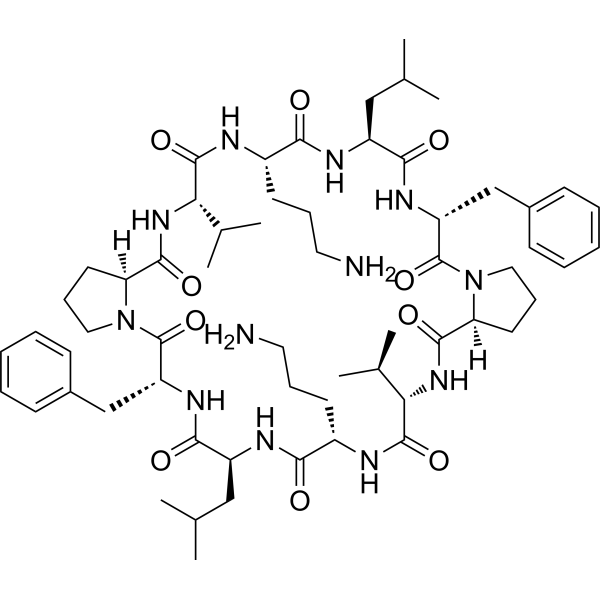
HY-P5712
Gramicidin SAntibiotic -
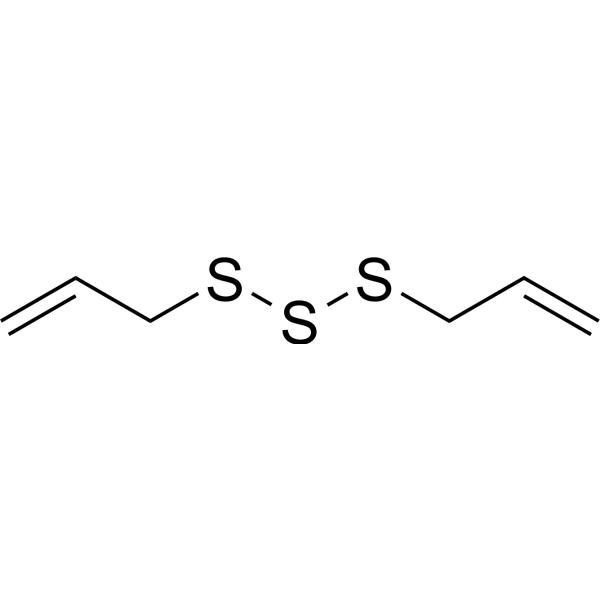
HY-117235
Diallyl TrisulfideAnticancer Agent -
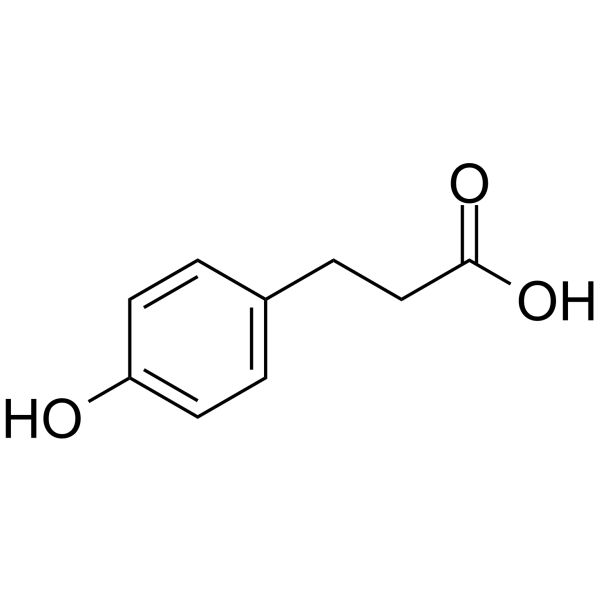
HY-W015346
Desaminotyrosine -
HY-N4118
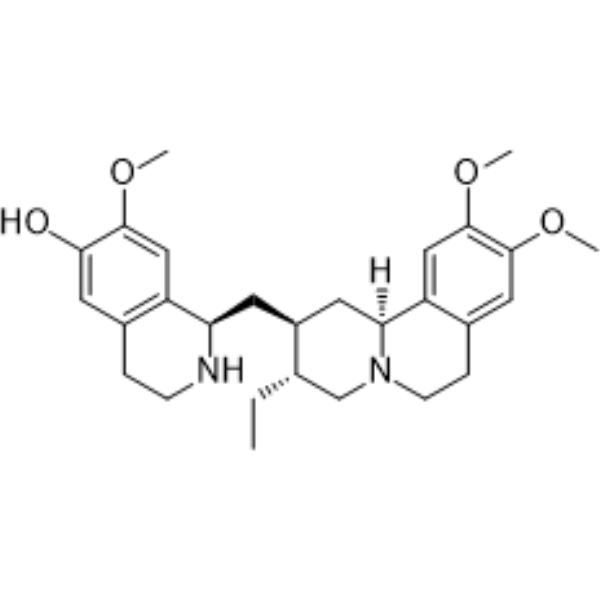
CephaelineFerroptosis Inducer -
HY-126113
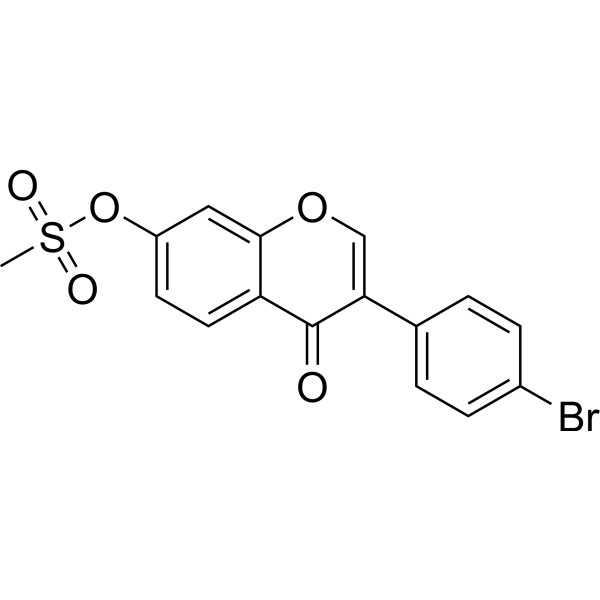
KIN101RNA Viral Inhibitor -
HY-124618A
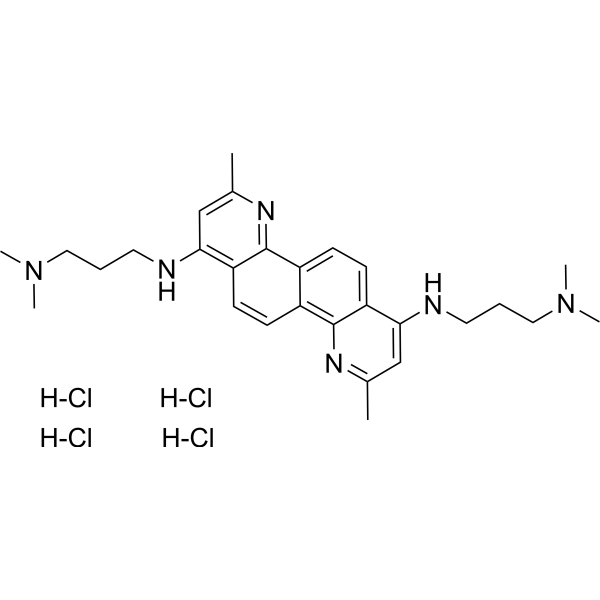
FGI-106 tetrahydrochlorideAntiviral Agent -

HY-117235R
Diallyl Trisulfide (Standard)Anticancer Agent -

HY-W015346R
Desaminotyrosine (Standard) -

HY-N4118R
Cephaeline (Standard)ZIKV And EBOV Inhibitor, Histone H3 Acetylation Inductor, Ferroptosis Inductor
All Antibiotic Isoforms
More

Biological Activity
Description
In Vitro
Tyrothricin is a mixture of polypeptides, consisting of 50%-70% tyrocidines and 25%-50% gramicidins. The group of tyrocidines is basic, cyclic peptides, whereas the fraction of gramicidins is neutral, linear peptides. Besides physiological and essential L-amino acids, the components of Tyrothricin also contain D-amino acids[1].
Tyrothricin is produced by the gram-positive aerobic sporeforming bacterium Bacillus brevis (Strain ATCC 8185) during its sporulation phase via the nonribosomal pathway[1].
The efficacy spectrum of Tyrothricin mainly covers gram-positive but also several gram-negative bacteria. Corynebacteria and staphylococci show a broader range of Tyrothricin concentrations for inhibition (2-256 μg/mL). In contrast to the gramicidin fraction alone, Tyrothricin is able to inhibit all Staphylococcus strains at a maximum concentration of 128 μg/mL. Among the gram-negative organisms, gonococci and meningococci were the most sensitive germs (96 μg/mL)[1].
Tyrothricin exerts fungicidal effects on a variety of Candida species.
Tyrothricin shows an anti-infectious activity against parainfluenza virus (type Sendai)[1].
MedChemExpress (MCE) has not independently confirmed the accuracy of these methods. They are for reference only. .
In Vivo
Nevertheless disruption of the integrity of eukaryotic membranes is observed at higher Tyrothricin concentrations in vitro. This effect is exemplified as hemolytic activity of Tyrothricin in in vitro studies and when applied to animals i.v.. In contrast to an intravenous (LD50 mouse: 3,7 mg/kg) and an intraperitoneal (LD50 mouse: 20-45 mg/kg) application the oral application is very well tolerated, as Tyrothricin is destroyed in the gastro-intestinal tract[1].
MedChemExpress (MCE) has not independently confirmed the accuracy of these methods. They are for reference only.


Chemical Information
-
CAS No. 1404-88-2
-
Appearance Solid
-
Color White to off-white
-
SMILES
[Tyrothricin]
-
Initial Source
Bacillus brevis
-
Shipping
Room temperature in continental US; may vary elsewhere.
-
Storage
Powder -20°C 3 years In solvent -80°C 6 months -20°C 1 month


Solvent & Solubility
In Vitro:
DMSO : 100 mg/mL (Need ultrasonic; Hygroscopic DMSO has a significant impact on the solubility of product, please use newly opened DMSO)


Purity & Documentation
-
Data Sheet (268 KB)
-
SDS (252 KB)
- English - EN (252 KB)
- Français - FR (252 KB)
- Deutsch - DE (252 KB)
- Norwegian - NO (252 KB)
- Español - ES (252 KB)
- Swedish - SV (252 KB)
- Italian - IT (252 KB)
- Korean - KR (252 KB)
- Portuguese - PT (252 KB)
-
Handling Instructions (2659 KB)
References

Calculators
Concentration (start) × Volume (start) = Concentration (final) × Volume (final)


Tyrothricin Related Classifications
HY-120435 Related Classifications
 Powered by Bioz