



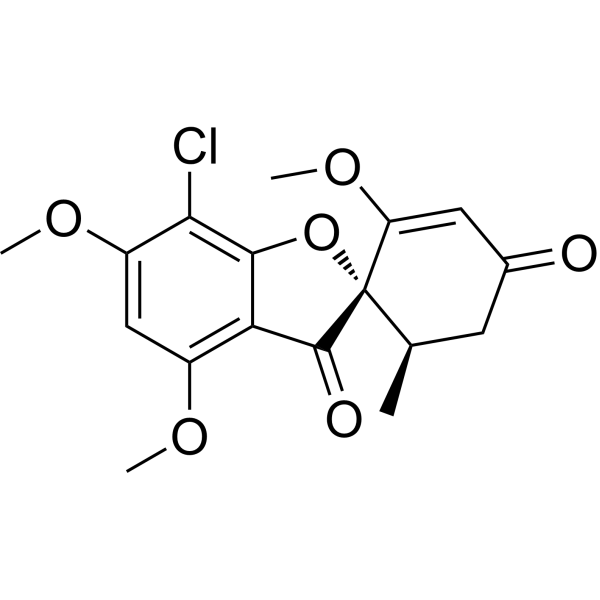
グリセオフルビン
Based on 2 publication(s) in Google Scholar
Griseofulvin is an orally active antifungal antibiotic with antitumor activity. Griseofulvin induces apoptosis and G2/M cell cycle arrest in cancer cells. Griseofulvin also has cardiovascular modulatory activity, reducing angina pectoris, relieving hand artery spasm associated with onychomycosis, and peripheral vascular diseases such as shoulder-hand syndrome.
商品は「研究用試薬」です。人や動物の医療用・臨床診断用・食品用の製品ではありません。
研究用途以外に使用した場合、当社は一切の責任を負いかねます。
- 純度 : 99.07%
- CAS 番号: 126-07-8
- 分子式: C17H17ClO6
- 分子量:352.77
-
保管条件:Powder -20°C, 3 years , 4°C, 2 years ; In solvent -80°C, 2 years , -20°C, 1 year

To place orders, for customer services and technical support, please contact: MedChemExpress USA
Tel: 609-228-6898 E-mail: [email protected] [email protected]


-
 生物活性
生物活性
-
化学情報
-
溶剤 & 溶解度
- プロトコル
- 純度とドキュメンテーション
- 参考文献
-
 Help & FAQs


-
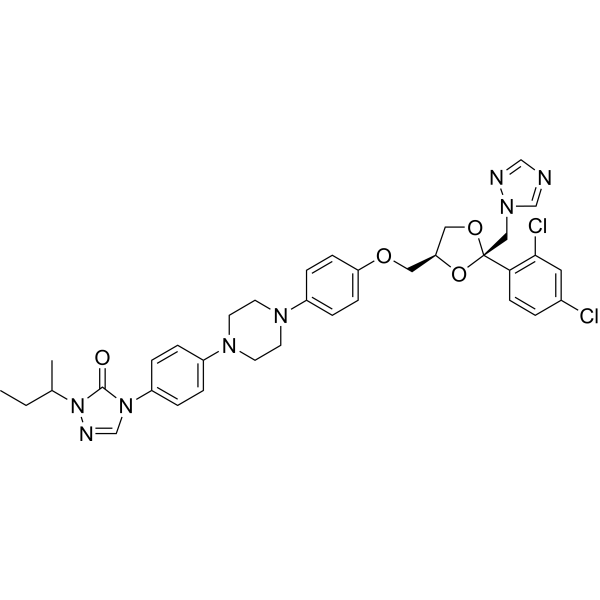
HY-17514
ItraconazoleAntifungal Agent -
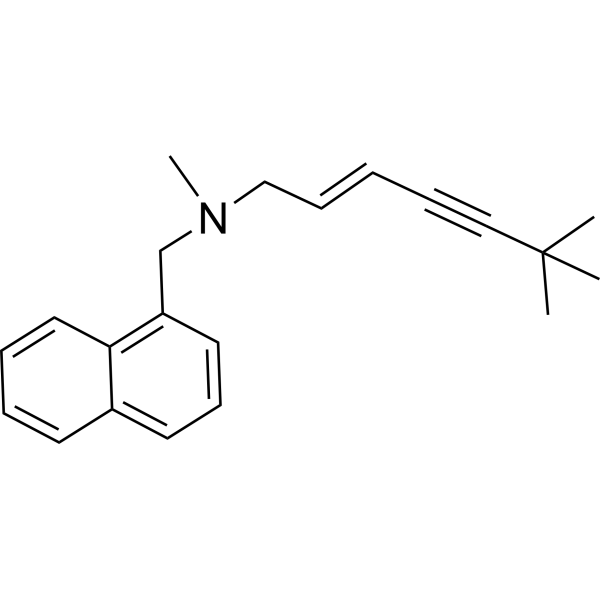
HY-17395A
TerbinafineAntimicrobial Agent -
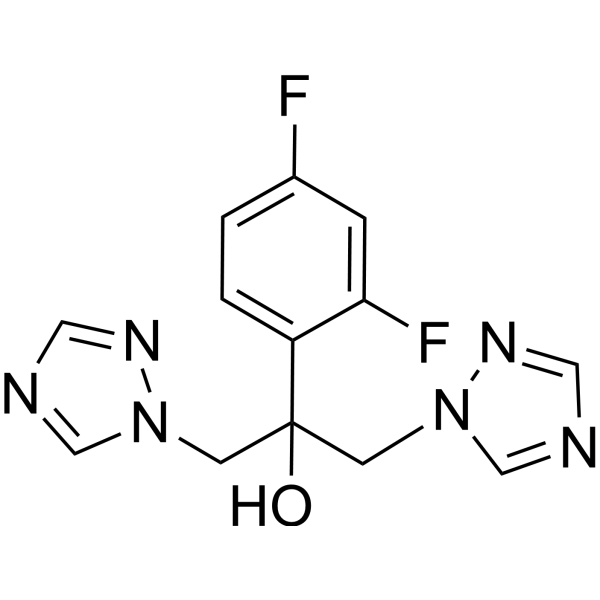
HY-B0101
FluconazoleAntifungal Agent -
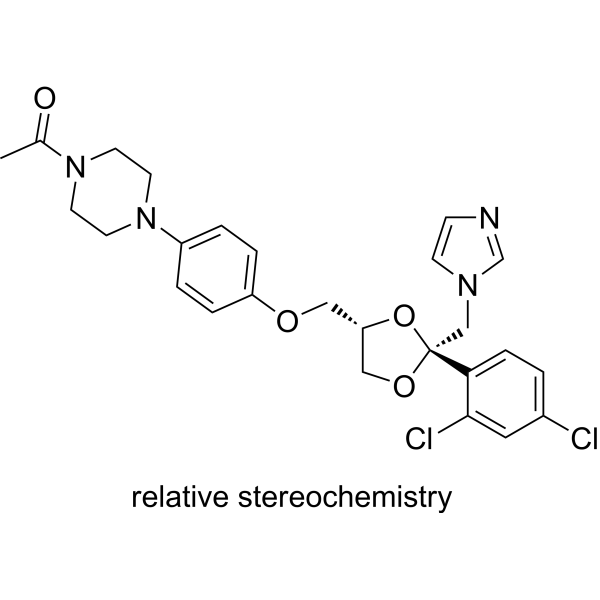
HY-B0105
KetoconazoleCYP3A4 Inhibitor -
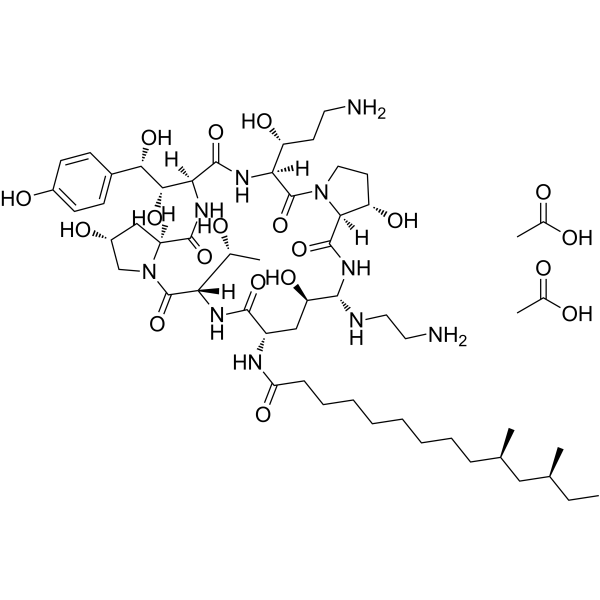
HY-17006
Caspofungin diacetateAntifungal Agent -
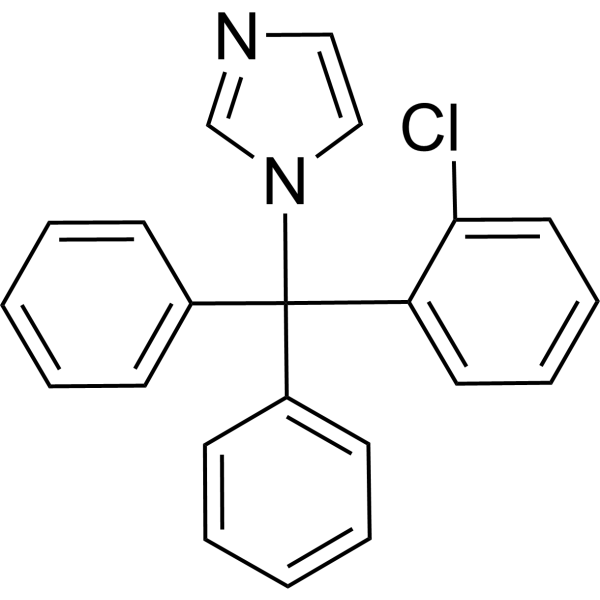
HY-10882
ClotrimazoleAutophagy Inhibitor -
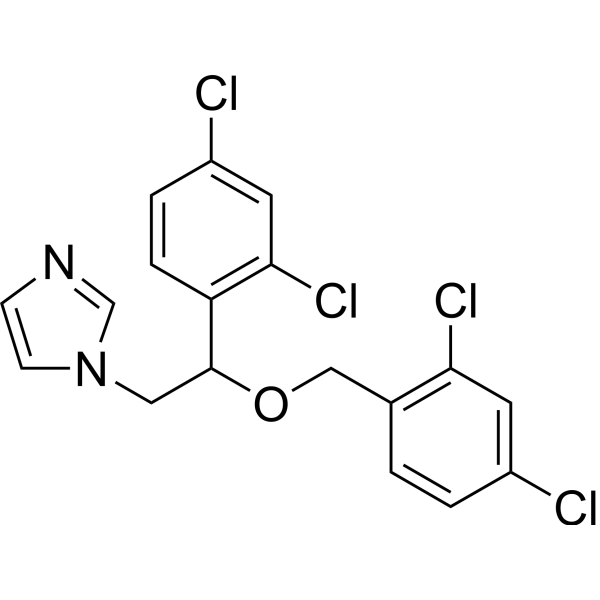
HY-B0454
MiconazoleAntifungal Agent -
HY-B0238
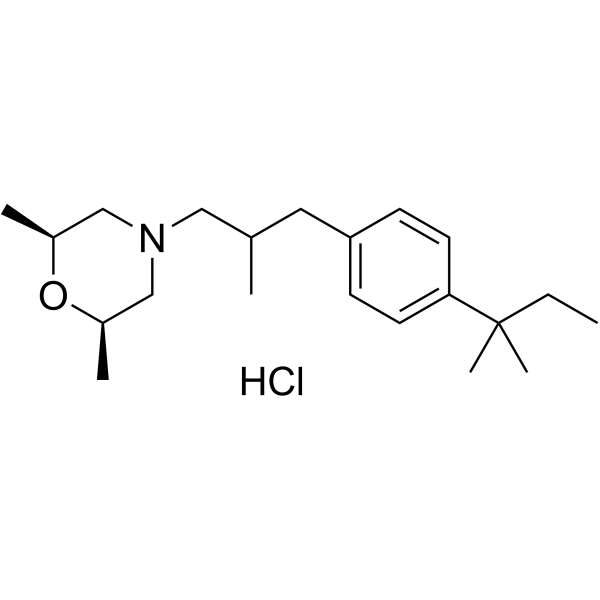
Amorolfine hydrochlorideAnti-fungal Agent -
HY-P0018
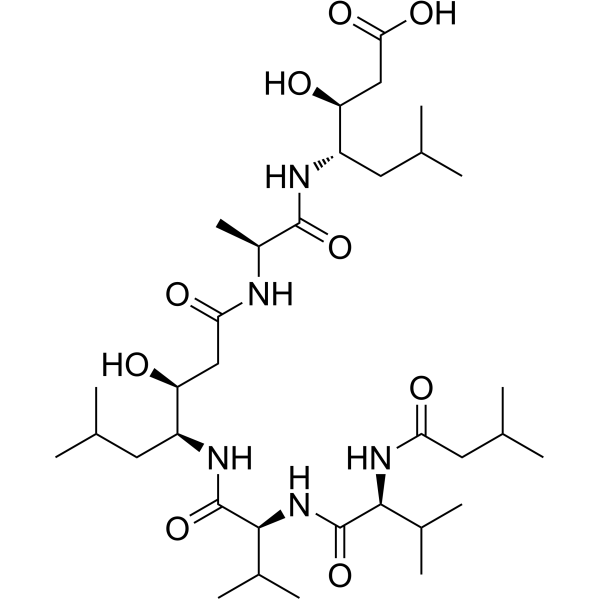
PepstatinAspartic Protease Inhibitor -
HY-14273
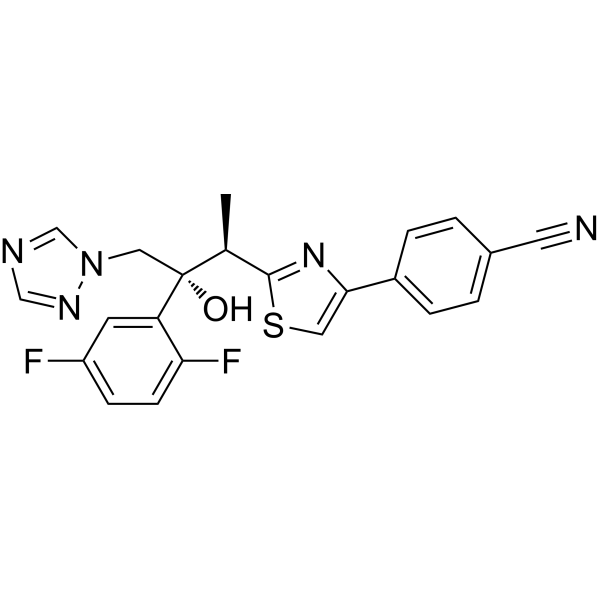
IsavuconazoleTriazole Antifungal -
HY-17583R
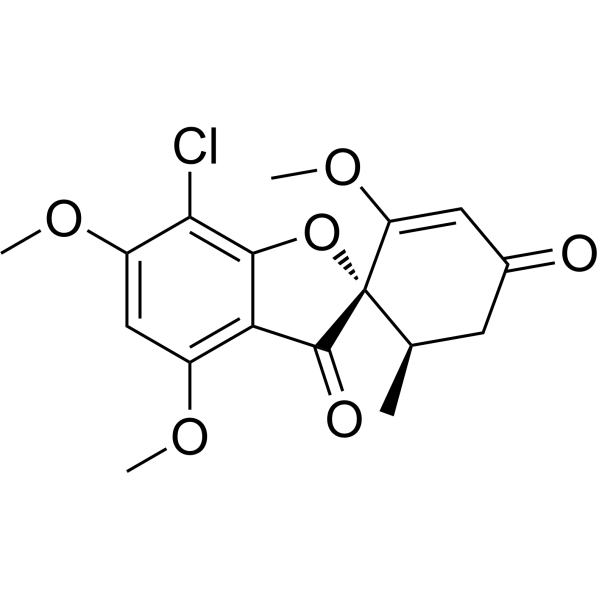
Griseofulvin (Standard) -
HY-76200
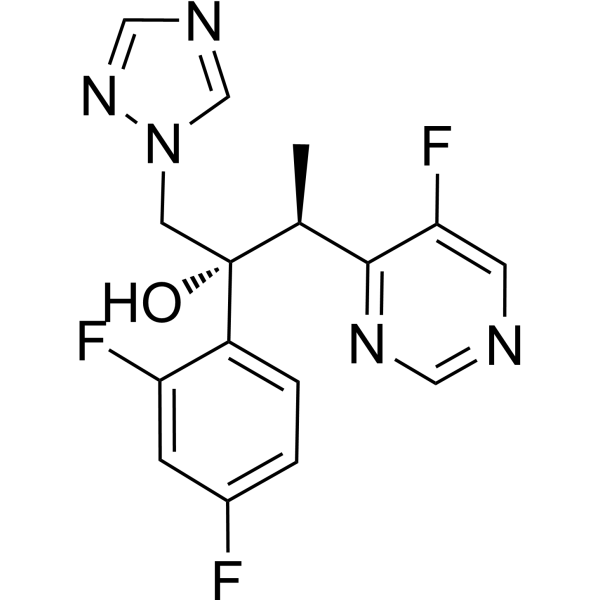
VoriconazoleAntifungal Agent
MedChemExpress(MCE)の使用を引用している文献 Griseofulvin
MoreCaspase アイソフォーム固有の製品をすべて表示
MoreAntibiotic アイソフォーム固有の製品をすべて表示
MoreEndogenous Metabolite アイソフォーム固有の製品をすべて表示
More

生物活性
製品説明
IC50 & Target
|
Microbial Metabolite |
Cellular Effect
|
Cell Line

|
Type | Value | Description | References |
|---|---|---|---|---|
| A2780 | IC50 |
>10 μM
Compound: 8
|
Cytotoxicity against human A2780 cells assessed as reduction in cell viability incubated for 72 hrs by MTT assay
Cytotoxicity against human A2780 cells assessed as reduction in cell viability incubated for 72 hrs by MTT assay
|
[PMID: 31359750] |
| CCRF-CEM | IC50 |
10 μM
Compound: Griseofulvin
|
Cytotoxicity against human CEM cells after 96 hrs
Cytotoxicity against human CEM cells after 96 hrs
|
[PMID: 16124785] |
| HCC1937 | IC50 |
>10 μM
Compound: Griseofulvin
|
Antiproliferative activity against exponentially growing adherent human HCC1937 cells assessed as inhibition of cell proliferation after 72 hrs by luminescence detection based ATPlite assay
Antiproliferative activity against exponentially growing adherent human HCC1937 cells assessed as inhibition of cell proliferation after 72 hrs by luminescence detection based ATPlite assay
|
[PMID: 25872984] |
| HEK293 | IC50 |
7.3 μM
Compound: Griseofulvin
|
Inhibition of human OCT1 expressed in HEK293 cells assessed as decrease in uptake of ASP+ after 2 mins by fluorescence assay
Inhibition of human OCT1 expressed in HEK293 cells assessed as decrease in uptake of ASP+ after 2 mins by fluorescence assay
|
[PMID: 28230985] |
| HeLa | IC50 |
25 μM
Compound: 1
|
Cytotoxicity against human HeLa cells
Cytotoxicity against human HeLa cells
|
[PMID: 22191585] |
| HeLa | IC50 |
25 μM
Compound: 18
|
Antimitotic activity against human HeLa cells
Antimitotic activity against human HeLa cells
|
[PMID: 32652407] |
| HeLa | IC50 |
75 μM
Compound: 1
|
Cytotoxicity against human HeLa cells assessed as reduction in cell viability after 24 hrs by MTT assay
Cytotoxicity against human HeLa cells assessed as reduction in cell viability after 24 hrs by MTT assay
|
[PMID: 27061984] |
| HT-29 | IC50 |
>20 μM
Compound: 15
|
Cytotoxicity against human HT-29 cells after 3 days by sulforhodamine B assay
Cytotoxicity against human HT-29 cells after 3 days by sulforhodamine B assay
|
[PMID: 28409637] |
| Huh7.5.1 | IC50 |
10 μM
Compound: 1; isolated
|
Cytotoxicity against human Huh7.5.1 cells assessed as reduction in cell viability by cell titer 96 aqueous one solution cell proliferation assay
Cytotoxicity against human Huh7.5.1 cells assessed as reduction in cell viability by cell titer 96 aqueous one solution cell proliferation assay
|
[PMID: 28802670] |
| L5178Y | IC50 |
>10 μM
Compound: 8
|
Cytotoxicity against mouse L5178Y cells assessed as reduction in cell viability incubated for 72 hrs by MTT assay
Cytotoxicity against mouse L5178Y cells assessed as reduction in cell viability incubated for 72 hrs by MTT assay
|
[PMID: 31359750] |
| MCF7 | IC50 |
13.9 μM
Compound: 15
|
Cytotoxicity against human MCF7 cells after 3 days by sulforhodamine B assay
Cytotoxicity against human MCF7 cells after 3 days by sulforhodamine B assay
|
[PMID: 28409637] |
| MDA-MB-231 | IC50 |
18 μM
Compound: 1
|
Cytotoxicity against human MDA-MB-231 cells assessed as cell viability after 48 hrs by MTT assay
Cytotoxicity against human MDA-MB-231 cells assessed as cell viability after 48 hrs by MTT assay
|
[PMID: 22191585] |
| MDA-MB-231 | IC50 |
25 μM
Compound: 1
|
Antiproliferative activity against human MDA-MB-231 cells after 72 hrs by CellTiter-Glo luminescent assay
Antiproliferative activity against human MDA-MB-231 cells after 72 hrs by CellTiter-Glo luminescent assay
|
[PMID: 28258034] |
| MDA-MB-231 | IC50 |
25.33 μM
Compound: 1
|
Cytotoxicity against human MDA-MB-231 cells assessed as reduction in cell viability after 72 hrs by celltiter Glo assay
Cytotoxicity against human MDA-MB-231 cells assessed as reduction in cell viability after 72 hrs by celltiter Glo assay
|
[PMID: 27061984] |
| MDA-MB-435 | IC50 |
6.4 μM
Compound: 1; isolated
|
Cytotoxicity against human MDA-MB-435 cells assessed as reduction in cell viability by cell titer 96 aqueous one solution cell proliferation assay
Cytotoxicity against human MDA-MB-435 cells assessed as reduction in cell viability by cell titer 96 aqueous one solution cell proliferation assay
|
[PMID: 28802670] |
| OVCAR-3 | IC50 |
48.5 μM
Compound: 1; isolated
|
Cytotoxicity against human OVCAR3 cells assessed as reduction in cell viability by cell titer 96 aqueous one solution cell proliferation assay
Cytotoxicity against human OVCAR3 cells assessed as reduction in cell viability by cell titer 96 aqueous one solution cell proliferation assay
|
[PMID: 28802670] |
| U2OS | IC50 |
22.4 μM
Compound: 1
|
Antiproliferative activity against human U2OS cells after 72 hrs by CellTiter-Glo luminescent assay
Antiproliferative activity against human U2OS cells after 72 hrs by CellTiter-Glo luminescent assay
|
[PMID: 28258034] |
| U2OS | IC50 |
22.44 μM
Compound: 1
|
Cytotoxicity against human U2OS cells assessed as reduction in cell viability after 72 hrs by celltiter Glo assay
Cytotoxicity against human U2OS cells assessed as reduction in cell viability after 72 hrs by celltiter Glo assay
|
[PMID: 27061984] |
| V79 | IC50 |
8 μM
Compound: 1
|
Cytotoxicity against Chinese hamster V79 cells
Cytotoxicity against Chinese hamster V79 cells
|
[PMID: 22191585] |
体外実験
The minimum inhibitory concentrations (MICs) of Griseofulvin against T. rubrum, T tonsurans, and T mentagrophytes in planktonic and biofilm growth were 0.0078-0.0156 μg/ml, 1-4 μg/mL, and 1-4 μg/mL, respectively[1]. Griseofulvin inhibits the growth of KMS 18, OPM-2, RPMI-8226, U-266, MPC-11, Primary CLL cells, Raji, RAW 264,7, Oci Ly 8 Lam 53, SU DHL 4 cell lines with IC50 values of 9 μM, 45 μM, 26 μM, 18 μM, 44 μM, 80 μM, 33 μM, 28 μM, 30 μM and 22 μM[2]. Griseofulvin (10-100 µM; 72 h) inhibits the viability of human myeloma cells in a concentration-dependent manner[2]. Griseofulvin (0-50 µM; 30 h) dose-dependently induces apoptosis in colon cancer cells (COLO 205 and HT 29), liver cancer cells (Hep G2 and Hep 3B) and leukemia cells HL 60[6]. Griseofulvin (0-20 µM; 24 h) induces abnormal microtubule polymerization in HT 29 cells[6]. Griseofulvin (5-60 µM; 24 h) induces apoptosis at lower doses[6].
MedChemExpress (MCE) has not independently confirmed the accuracy of these methods. They are for reference only. Further protocols information, click here.
-
Cell Line:OPM-2 and KMS-18 cells
-
Concentration:10, 50 and 100 µM
-
Incubation Time:72 h
-
Result:Induced apoptosis in KMS-18 cells at a dose of 10 mM.
-
Cell Line:HT 29 cells
-
Concentration:0, 1, 10, 20, 30, 40, 50 and 60 µM
-
Incubation Time:24 h
-
Result:Down-regulated myt-1 protein expression, activated caspase 3 and caused hyperphosphorylation of Bcl-2.
体内実験
MedChemExpress (MCE) has not independently confirmed the accuracy of these methods. They are for reference only.


化学情報
-
CAS 番号 126-07-8
-
性状 Solid
-
分子量 352.77
-
分子式 C17H17ClO6
-
Color White to off-white
-
SMILES
O=C1[C@]2(C(OC)=CC(C[C@H]2C)=O)OC3=C(Cl)C(OC)=CC(OC)=C13
-
別名
Griseofulvin
-
Structure Classification
-
Initial Source
Penicillium
-
輸送条件
Room temperature in continental US; may vary elsewhere.
-
保管条件
Powder -20°C 3 years 4°C 2 years In solvent -80°C 2 years -20°C 1 year


Publications (2)
-
Journal Impact Factor
-
Most Recent
-
Signal Transduct Target Ther
Large-scale and high-resolution mass spectrometry-based proteomics defines molecular subtypes of nasopharyngeal carcinoma for therapeutic targeting. [Abstract]2026 Jun 23;11(1):244. PMID: 42331772 -
J Cell Sci
Selective disruption of microtubule formation at the nuclear envelope impairs the bone resorption capacity of osteoclasts. [Abstract]2025 Dec 8:jcs.264166. PMID: 41355489


溶剤 & 溶解度
体外:
DMSO : 33.33 mg/mL (94.48 mM; Need ultrasonic; Hygroscopic DMSO has a significant impact on the solubility of product, please use newly opened DMSO)
Please refer to the solubility information to select the appropriate solvent. Once prepared, please aliquot and store the solution to prevent product inactivation from repeated freeze-thaw cycles.
Storage method and period of stock solution: -80°C, 2 years; -20°C, 1 year. When stored at -80°C, please use it within 2 years. When stored at -20°C, please use it within 1 year.
Please refer to the solubility information to select the appropriate solvent. Once prepared, please aliquot and store the solution to prevent product inactivation from repeated freeze-thaw cycles.
Storage method and period of stock solution: -80°C, 2 years; -20°C, 1 year. When stored at -80°C, please use it within 2 years. When stored at -20°C, please use it within 1 year.
濃度 (開始) × 体積 (開始) = 濃度 (終了) × 体積 (終了)
体内:
Select the appropriate dissolution method based on your experimental animal and administration route.
- For the following dissolution methods, please ensure to first prepare a clear stock solution using an In Vitro approach and then sequentially add co-solvents:
- To ensure reliable experimental results, the clarified stock solution can be appropriately stored based on storage conditions. As for the working solution for In Vivo experiments, it is recommended to prepare freshly and use it on the same day.
- The percentages shown for the solvents indicate their volumetric ratio in the final prepared solution. If precipitation or phase separation occurs during preparation, heat and/or sonication can be used to aid dissolution.
Add each solvent one by one: 10% DMSO 40% PEG300 5% Tween-80 45% Saline
Solubility: ≥ 2.5 mg/mL (7.09 mM); Clear solution
This protocol yields a clear solution of ≥ 2.5 mg/mL (saturation unknown).
Taking 1 mL working solution as an example, add 100 μL DMSO stock solution (25.0 mg/mL) to 400 μL PEG300, and mix evenly; then add 50 μL Tween-80 and mix evenly; then add 450 μL Saline to adjust the volume to 1 mL.
Preparation of Saline: Dissolve 0.9 g sodium chloride in ddH₂O and dilute to 100 mL to obtain a clear Saline solution.
Add each solvent one by one: 10% DMSO 90% (20% SBE-β-CD in Saline)
Solubility: ≥ 2.5 mg/mL (7.09 mM); Clear solution
This protocol yields a clear solution of ≥ 2.5 mg/mL (saturation unknown).
Taking 1 mL working solution as an example, add 100 μL DMSO stock solution (25.0 mg/mL) to 900 μL 20% SBE-β-CD in Saline, and mix evenly.
Preparation of 20% SBE-β-CD in Saline (4°C, storage for one week): 2 g SBE-β-CD powder is dissolved in 10 mL Saline, completely dissolve until clear.
In Vivo Dissolution Calculator
Please enter the basic information of animal experiments:
-
-
-
-
Recommended: Prepare an additional quantity of animals to account for potential losses during experiments.
Please enter your animal formula composition:
-
%DMSO +
Recommended: Keep the proportion of DMSO in working solution below 2% if your animal is weak.
-
%+
-
+%Tween-80 + +
-
%Saline +
The co-solvents required include: DMSO, . All of co-solvents are available by MedChemExpress (MCE). , Tween 80. All of co-solvents are available by MedChemExpress (MCE).
Working solution concentration: 0.22 mg/mL
Method for preparing stock solution: mg drug dissolved in μL DMSO. Stock solution concentration: mg/mL.
1. Take μL DMSO stock solution;
2. Add μL .
μL , mix evenly;
3. Then add μL Tween 80, mix evenly;
4. Then add μL
Please ensure that the stock solution in the first step is dissolved to a clear state, and add co-solvents in sequence. You can use ultrasonic heating (ultrasonic cleaner, recommended frequency 20-40 kHz), vortexing, etc. to assist dissolution.

プロトコル
-
Apoptosis
Apoptosis, also called programmed cell death, is generally characterized by distinct morphological characteristics.
-
TUNEL staining for apoptotic DNA fragmentation
TUNEL staining detects DNA strand breaks by using terminal deoxynucleotidyl transferase to add labeled nucleotides to exposed 3′-OH DNA termini, generating either microscopic staining in fixed cells or tissue sections, or fluorescence/cytometric signal in cell suspensions. TUNEL positivity reflects DNA fragmentation but should not be interpreted alone as definitive apoptosis, because TUNEL can also label necrotic, autolytic, mechanically damaged, or DNA-repair-associated DNA breaks.
-
Flow cytometric DNA-content cell-cycle staining
Flow cytometric DNA-content cell-cycle staining measures the fluorescence intensity of DNA-bound fluorochromes in single cells or nuclei to estimate DNA content distributions, allowing assignment of populations to G0/G1, S, and G2/M phases by DNA histogram deconvolution. Propidium iodide (PI) intercalates into DNA, and PI fluorescence is proportional to cellular DNA content when staining is performed under conditions that make DNA accessible and minimize non-DNA signal. Cells with G2/M DNA content are expected to show approximately twice the fluorescence intensity of G0/G1 cells, while S-phase cells occupy intermediate fluorescence values. PI-based DNA-content analysis can also detect cells with fractional DNA content, often reported as sub-G1, when DNA fragmentation and extraction during staining reduce retained DNA signal in apoptotic cells. DAPI is an alternative DNA fluorochrome for univariate DNA-content analysis, while bivariate approaches combining DNA content with proliferation
-
Annexin V plus membrane-impermeant dye apoptosis staining
Annexin V-based apoptosis assays rely on the detection of phosphatidylserine (PS) externalization from the inner leaflet of the plasma membrane to the outer leaflet, an early biochemical hallmark of apoptosis. Fluorescently labeled Annexin V binds PS in a calcium-dependent manner, enabling identification of early apoptotic cells by flow cytometry or fluorescence microscopy. When combined with a membrane-impermeant DNA-binding dye (e. g. , propidium iodide), this approach allows discrimination between viable (Annexin V−/dye−), early apoptotic (Annexin V+/dye−), and late apoptotic or necrotic (Annexin V+/dye+) cell populations by assessing membrane integrity and PS exposure.
-
BrdU Incorporation Assay
Bromodeoxyuridine (BrdU) incorporation assay is based on the principle that BrdU, a thymidine analog, is incorporated into newly synthesized DNA during the S phase of the cell cycle, thereby serving as a marker of DNA replication and cellular proliferation. Incorporated BrdU can be detected using anti-BrdU antibodies following DNA denaturation, enabling visualization or quantification of proliferating cells through immunochemical detection methods such as immunofluorescence or immunohistochemistry.
-
Apoptosis Solutions
Apoptosis is a regulated, generally non-lytic cell-death pathway that removes unwanted, damaged, infected, or abnormal cells through coordinated morphological changes, caspase activation, DNA fragmentation, and membrane remodeling. The intrinsic apoptosis pathway is controlled mainly by mitochondrial outer membrane permeabilization, BCL-2 family proteins, cytochrome c release, apoptosome formation, caspase-9 activation, and downstream executioner caspase-3/7 activation. The extrinsic apoptosis pathway is initiated by death receptors such as Fas, TNFR, and TRAIL receptors, which recruit adaptor proteins and activate caspase-8 before engaging executioner caspases or mitochondrial amplification through BID cleavage. Apoptosis is linked to many phenotypes, including cancer cell killing, tissue homeostasis, immune regulation, neurodegeneration, infection response, and treatment-induced cytotoxicity; unresolved questions include how apoptosis interacts with necroptosis, pyroptosis, ferroptos
-
Protocol for Cell Cycle
Cell-cycle analysis by flow cytometry measures DNA content in single cells to estimate the fraction of cells in G0/G1, S, and G2/M phases. Propidium iodide intercalates into DNA, and after RNA removal with RNase, fluorescence intensity reflects cellular DNA content: 2N cells are assigned to G0/G1, cells between 2N and 4N to S phase, and 4N cells to G2/M. DNA-content analysis alone cannot reliably separate G0 from G1 or G2 from M. Ki-67 can distinguish quiescent G0 cells from cycling cells, EdU or BrdU incorporation marks active DNA synthesis in S phase, and phospho-histone H3 staining identifies mitotic cells within the 4N population.
-
Subcutaneous Cell-Line-Derived Xenograft
Subcutaneous cell-line-derived xenograft (CDX) models are established by implanting cultured human cancer cell lines into immunodeficient mice, where the injected cells form localized tumors that can be monitored in vivo as a measure of tumorigenic potential, growth kinetics, and treatment response. These models are widely used in oncology research because they allow reproducible tumor formation and enable comparative assessment of tumor growth between different cell lines or genetic manipulations in a controlled in vivo microenvironment. Subcutaneous implantation of cancer cells in immunodeficient mice is a standard approach for evaluating tumor growth behavior and therapeutic response across multiple cancer types, including prostate, esophageal, pancreatic, and colon cancer models.


純度とドキュメンテーション
-
データシート (284 KB)
-
SDS (419 KB)
- English - EN (419 KB)
- Français - FR (419 KB)
- Deutsch - DE (419 KB)
- Norwegian - NO (419 KB)
- Español - ES (419 KB)
- Swedish - SV (419 KB)
- Italian - IT (419 KB)
- Korean - KR (419 KB)
- Portuguese - PT (419 KB)
-
取扱説明書 (2659 KB)
参考文献
[1]. Brilhante RSN, et al. In vitro activity of azole derivatives and griseofulvin against planktonic and biofilm growth of clinical isolates of dermatophytes. Mycoses. 2018 Jul;61(7):449-454. [Content Brief]
[2]. Schmeel LC, et al. Griseofulvin Efficiently Induces Apoptosis in In Vitro Treatment of Lymphoma and Multiple Myeloma. Anticancer Res. 2017 May;37(5):2289-2295. [Content Brief]
[3]. Knasmüller S, et al. Toxic effects of griseofulvin: disease models, mechanisms, and risk assessment[J]. Critical reviews in toxicology, 1997, 27(5): 495-537. [Content Brief]
[4]. BEDFORD C, et al. Studies on the biological disposition of griseofulvin, an oral antifungal agent[J]. AMA Archives of Dermatology, 1960, 81(5): 735-745. [Content Brief]
[5]. Aldinger E E. Cardiovascular effects of griseofulvin[J]. Circulation Research, 1968, 22(5): 589-593. [Content Brief]
[6]. Ho Y S, et al. Griseofulvin potentiates antitumorigenesis effects of nocodazole through induction of apoptosis and G2/M cell cycle arrest in human colorectal cancer cells[J]. International journal of cancer, 2001, 91(3): 393-401. [Content Brief]


Complete Stock Solution Preparation Table
Please refer to the solubility information to select the appropriate solvent. Once prepared, please aliquot and store the solution to prevent product inactivation from repeated freeze-thaw cycles.
Storage method and period of stock solution: -80°C, 2 years; -20°C, 1 year. When stored at -80°C, please use it within 2 years. When stored at -20°C, please use it within 1 year.
| Optional Solvent | Concentration Solvent Mass | 1 mg | 5 mg | 10 mg | 25 mg |
|---|---|---|---|---|---|
| DMSO | 1 mM | 2.8347 mL | 14.1735 mL | 28.3471 mL | 70.8677 mL |
| 5 mM | 0.5669 mL | 2.8347 mL | 5.6694 mL | 14.1735 mL | |
| 10 mM | 0.2835 mL | 1.4174 mL | 2.8347 mL | 7.0868 mL | |
| 15 mM | 0.1890 mL | 0.9449 mL | 1.8898 mL | 4.7245 mL | |
| 20 mM | 0.1417 mL | 0.7087 mL | 1.4174 mL | 3.5434 mL | |
| 25 mM | 0.1134 mL | 0.5669 mL | 1.1339 mL | 2.8347 mL | |
| 30 mM | 0.0945 mL | 0.4725 mL | 0.9449 mL | 2.3623 mL | |
| 40 mM | 0.0709 mL | 0.3543 mL | 0.7087 mL | 1.7717 mL | |
| 50 mM | 0.0567 mL | 0.2835 mL | 0.5669 mL | 1.4174 mL | |
| 60 mM | 0.0472 mL | 0.2362 mL | 0.4725 mL | 1.1811 mL | |
| 80 mM | 0.0354 mL | 0.1772 mL | 0.3543 mL | 0.8858 mL |


Griseofulvin 関連分類
HY-17583 関連分類
 Powered by Bioz