



Clioquinol
Based on 6 publication(s) in Google Scholar
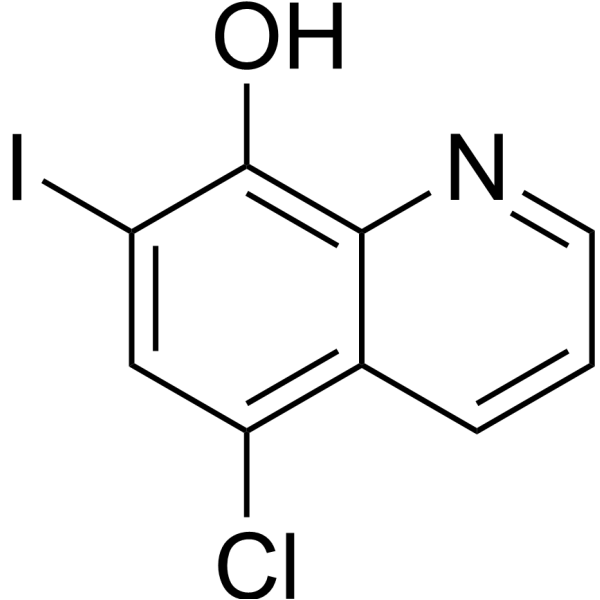
Clioquinol (Iodochlorhydroxyquin) is a topical antifungal agent with anticancer activity. Clioquinol acts as an oral antimicrobial agent for the research of diarrhea and skin infections. Antibiotic. Clioquinol is a chelator that binds to Zn2+ and Cu2+ with a greater affinity than it binds to Ca2+ and Mg2+. Clioquinol freely crosses the blood-brain barrier. Clioquinol can be used for the study of Alzheimer's disease.
Nur für Forschungszwecke. Wir verkaufen nicht an Patienten.
- Reinheit : 99.84%
- CAS. Nr.: 130-26-7
- Formel: C9H5ClINO
- Molecular Weight:305.50
-
Speicherung:Powder -20°C, 3 years , 4°C, 2 years ; In solvent -80°C, 2 years , -20°C, 1 year

To place orders, for customer services and technical support, please contact: MedChemExpress USA
Tel: 609-228-6898 E-mail: [email protected] [email protected]


-
 Biologische Aktivität
-
Chemical Information
-
Lösungsmittel & Löslichkeit
- Protokoll
- Reinheit & Dokumentation
- Verweise
-
 Help & FAQs


-
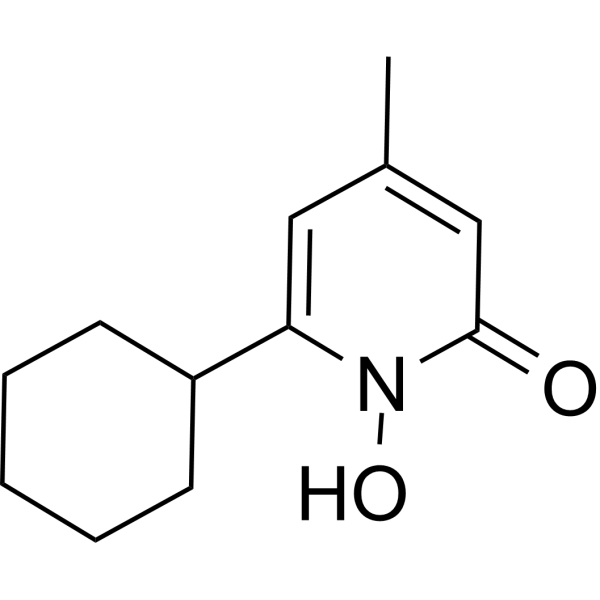
HY-B0450
CiclopiroxAntifungal Agent -
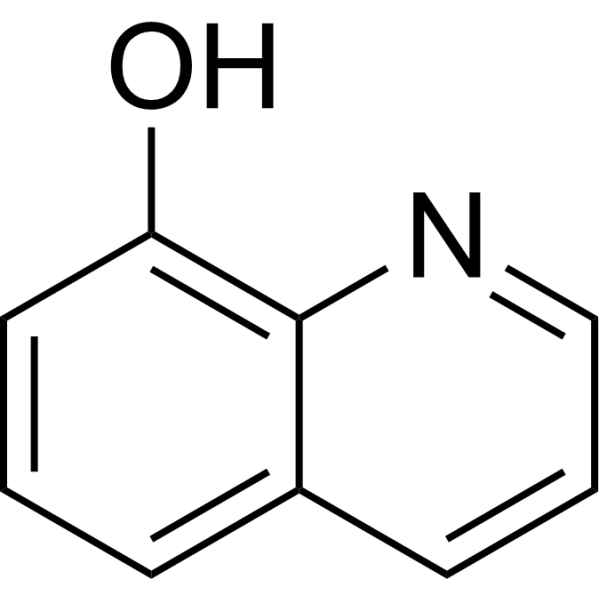
HY-B1005
8-HydroxyquinolineFungicide -
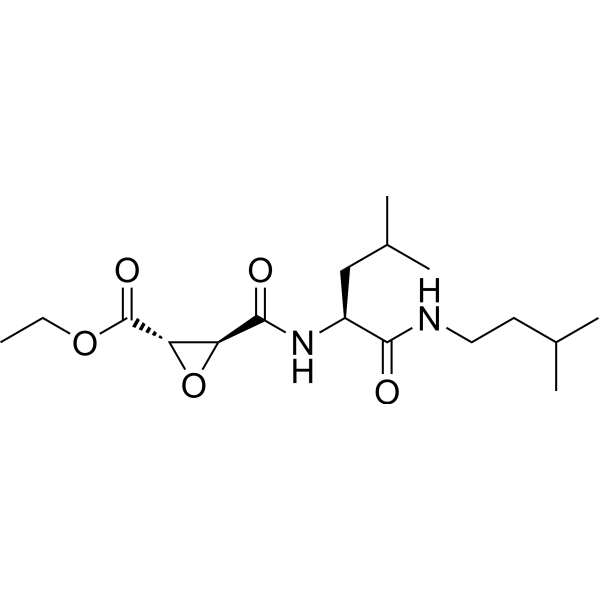
HY-100229
AloxistatinCysteine Protease Inhibitor -
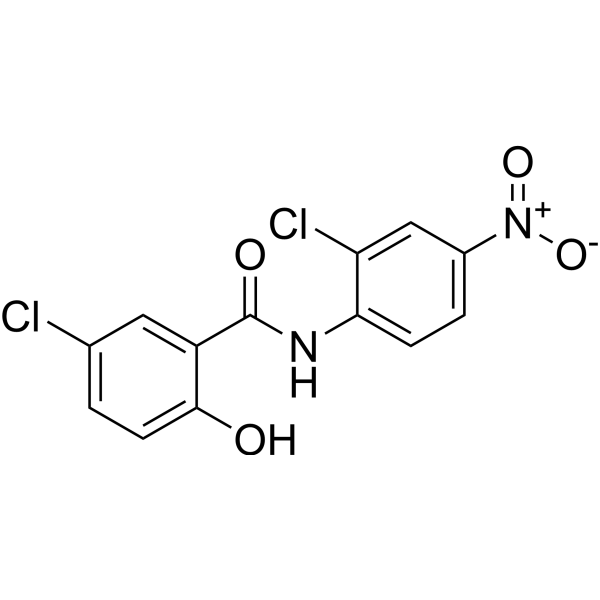
HY-B0497
NiclosamideAntihelminthic Agent -
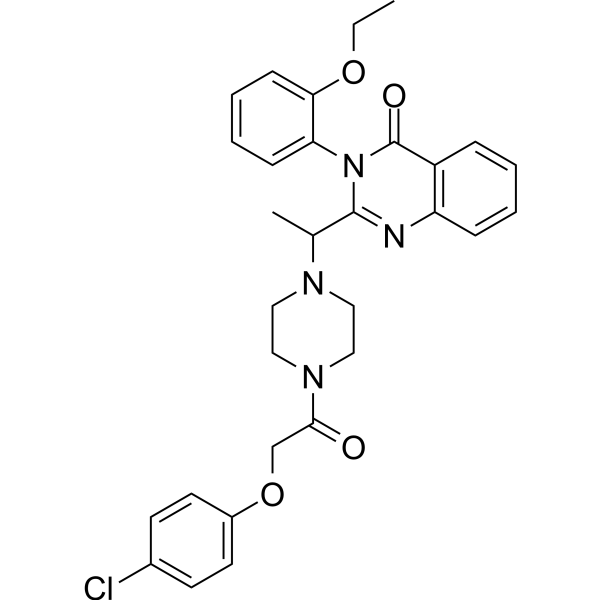
HY-15763
ErastinFerroptosis Inducer -
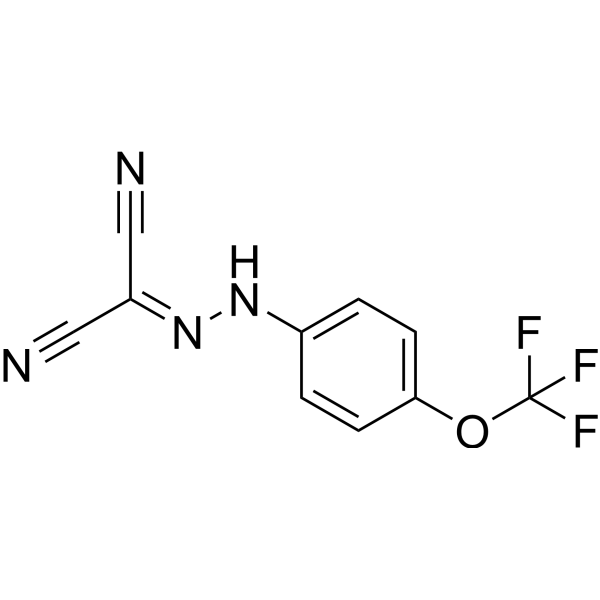
HY-100410
FCCPOXPHOS Uncoupler -
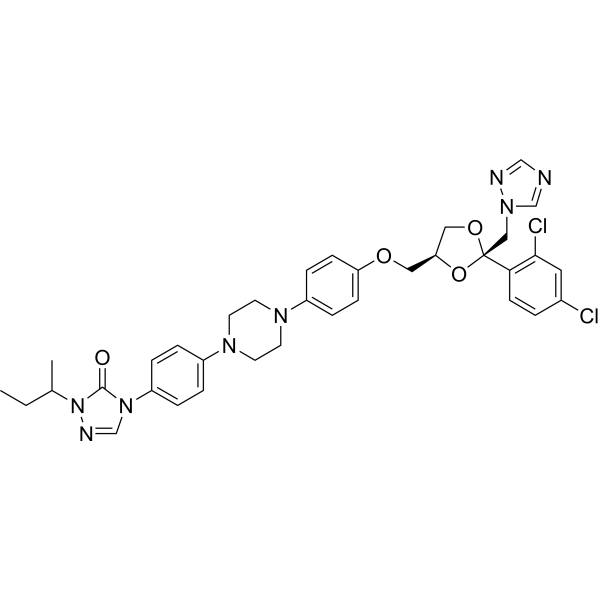
HY-17514
ItraconazoleAntifungal Agent -
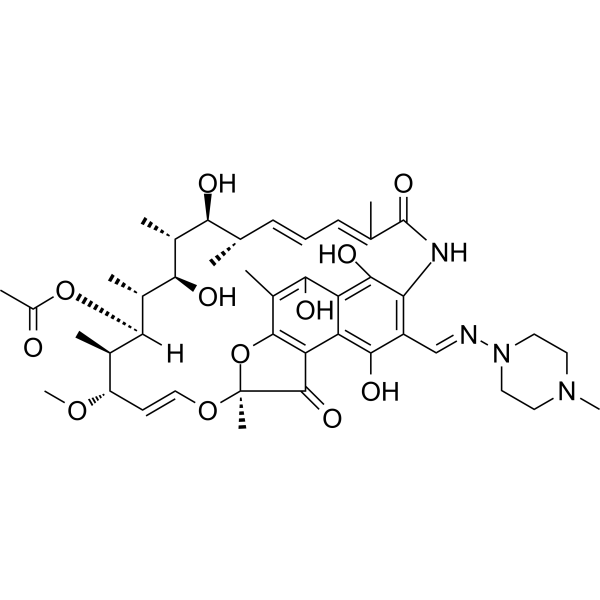
HY-B0272
RifampicinAntivirus Agent -
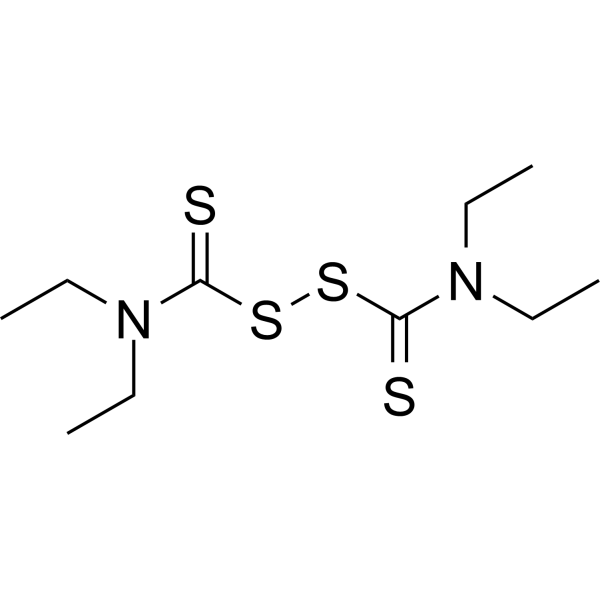
HY-B0240
DisulfiramALDH1 Inhibitor -
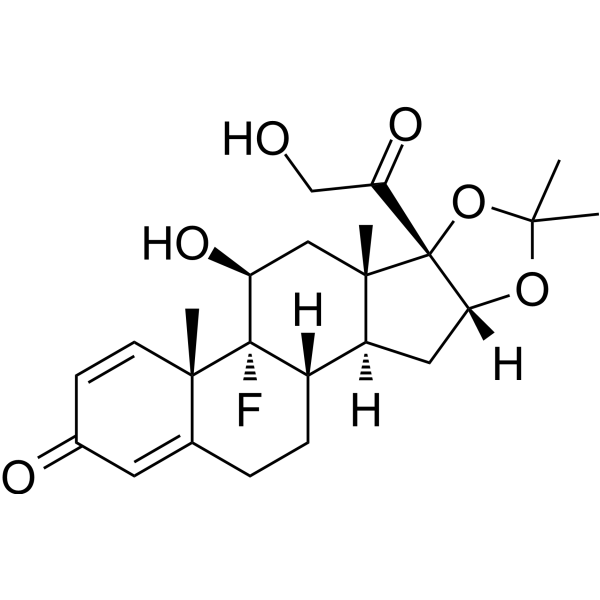
HY-B0636
Triamcinolone acetonideAnti-Inflammatory Agent -
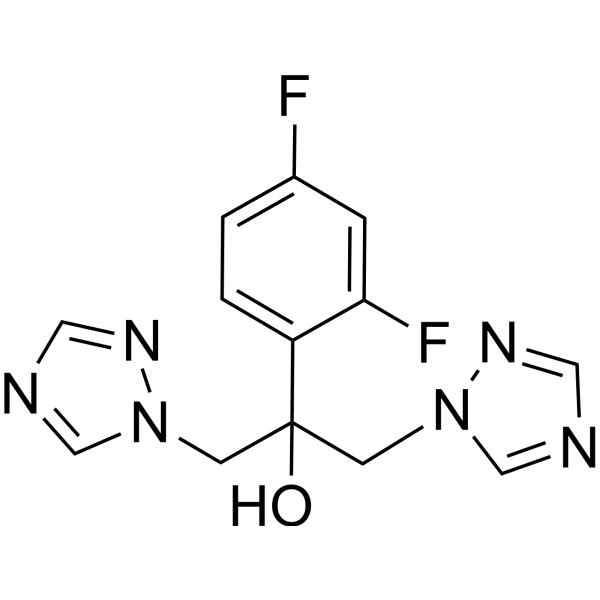
HY-B0101
FluconazoleAntifungal Agent -
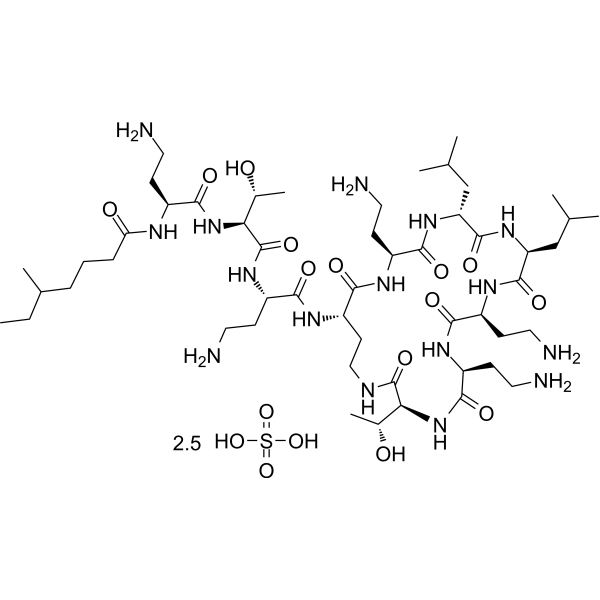
HY-A0089
Colistin sulfateAntibiotic
Publications Citing Use of MedChemExpress (MCE) Clioquinol
More- J Transl Med. 2024 Dec 3;22(1):1095. [Abstract]
- Oncogene. 2025 Dec 16. [Abstract]
- Anal Chem. 2025 Jun 3;97(21):11099-11109. [Abstract]
- Int Immunopharmacol. 2025 Jul 28:160:114984. [Abstract]
- Am J Respir Cell Mol Biol. 2021 Aug;65(2):189-200. [Abstract]
- Front Mol Neurosci. 2022 Jan 12:14:768731. [Abstract]
 Customer Validation & Images

-
WB

-
IF

-
Cell Proliferation/Viability Assay

-
In Vivo Efficacy Study

-
RT-PCR

Alle Parasite Isoform-spezifische Produkte anzeigen
MoreAlle Antibiotic Isoform-spezifische Produkte anzeigen
More

Biologische Aktivität
Beschreibung
Cellular Effect
|
Cell Line

|
Type | Value | Description | References |
|---|---|---|---|---|
| BV-2 | EC50 |
>30 μM
Compound: CQ
|
Antineuroinflammatory activity in mouse BV2 cells assessed as inhibition of LPS-stimulated NO production after 24 hrs by Griess assay
Antineuroinflammatory activity in mouse BV2 cells assessed as inhibition of LPS-stimulated NO production after 24 hrs by Griess assay
|
[PMID: 26473791] |
| Caco-2 | IC50 |
19.29 μg/mL
Compound: Cq
|
Cytotoxicity against human Caco-2 cells assessed as cell growth inhibition incubated for 24 hrs by CCK8 assay
Cytotoxicity against human Caco-2 cells assessed as cell growth inhibition incubated for 24 hrs by CCK8 assay
|
[PMID: 37975824] |
| PBMC | CC50 |
2 μM
Compound: 2, Clioquinol
|
Cytotoxicity against PBMC
Cytotoxicity against PBMC
|
[PMID: 17000109] |
| SH-SY5Y | EC50 |
>1 μM
Compound: Clioquinol
|
Neuroprotective activity against t-BuOOH-induced oxidative stress in human SH-SY5Y cells assessed as inhibition ROS accumulation pre-incubated for 24 hrs before t-BuOOH challnge for 30 mins by DCFH-DA probe based fluorescence assay
Neuroprotective activity against t-BuOOH-induced oxidative stress in human SH-SY5Y cells assessed as inhibition ROS accumulation pre-incubated for 24 hrs before t-BuOOH challnge for 30 mins by DCFH-DA probe based fluorescence assay
|
[PMID: 29420891] |
In Vitro
Clioquinol (0.01-1000 uM; 72 hours) shows anticancer activity against U251, and MV-4-11 cells[1].
MedChemExpress (MCE) has not independently confirmed the accuracy of these methods. They are for reference only. Further protocols information, click here.
-
Cell Line:The MV-4-11, and U-251 cell lines
-
Concentration:0.01, 0.1, 1, 10, 100, 1000 uM
-
Incubation Time:72 hours
-
Result:The IC50s were 32 and 46 μM in U251 and MV-4-11 cells, respectively.
Clinical Trial
| NCT Number | Sponsor | Condition | Start Date |
Phase
|
|---|---|---|---|---|
| NCT01329991 | Plexxikon| | 2011-05 | PHASE1 |


Chemical Information
-
CAS. Nr. 130-26-7
-
Appearance Solid
-
Molecular Weight 305.50
-
Formel C9H5ClINO
-
Color Light yellow to brown
-
SMILES
ClC1=C(C=CC=N2)C2=C(O)C(I)=C1
-
Synonyms
Iodochlorohydroxyquinoline
-
Versand
Room temperature in continental US; may vary elsewhere.
-
Speicherung
Powder -20°C 3 years 4°C 2 years In solvent -80°C 2 years -20°C 1 year


Publications (6)
-
Journal Impact Factor
-
Most Recent
-
J Transl Med
Doxorubicin synergizes bortezomib-induced multiple myeloma cell death by inhibiting aggresome formation and augmenting endoplasmic reticulum/Golgi stress and apoptosis. [Abstract]2024 Dec 3;22(1):1095. PMID: 39623468
Clioquinol purchased from MedChemExpress. Usage Cited in: J Transl Med. 2024 Dec 3;22(1):1095. [Abstract]
Clioquinol does not stimulate aggresome formation. U266B1 cells treated with no compound, 6.25 nM bortezomib, or 25 μΜ Clioquinol for 24 h, which resulted in ~ 30% cell death, were analyzed for aggresome formation by immunofluorescence. The percentage of cells with aggresomes was counted and plotted.
Clioquinol purchased from MedChemExpress. Usage Cited in: J Transl Med. 2024 Dec 3;22(1):1095. [Abstract]
Clioquinol does not synergize with Doxorubicin to enhance cell death. U266B1 cells treated with no chemical, 25 μΜ Clioquinol, or Clioquinol plus 1 μΜ doxorubicin for 24 h were analyzed for cell death using the trypan blue exclusion assay.
-
Oncogene
2025 Dec 16. PMID: 41402633
Clioquinol purchased from MedChemExpress. Usage Cited in: Oncogene. 2025 Dec 16. [Abstract]
The protein expression of YTHDC2 and SLC31A1 in H1650 and H1975 cells after 8-hydroxyquinoline (HQ), clioquinol (CQ; 10 μM), and disulfiram (DSF) treatment by WB.
-
Anal Chem
Exposome-Scale Investigation of Cl-/Br-Containing Chemicals Using High-Resolution Mass Spectrometry, Multistage Machine Learning, and Cloud Computing. [Abstract]2025 Jun 3;97(21):11099-11109. PMID: 40401576 -
Int Immunopharmacol
Mitophagy-mtROS axis contributes to anti-tuberculosis-induced liver injury through activation of the cGAS-STING pathway in rat hepatocytes. [Abstract]2025 Jul 28:160:114984. PMID: 40449272 -
Am J Respir Cell Mol Biol
Clioquinol Attenuates Pulmonary Fibrosis through Inactivation of Fibroblasts via Iron Chelation. [Abstract]2021 Aug;65(2):189-200. PMID: 33861690 -
Front Mol Neurosci
The Role of Transient Receptor Potential A1 and G Protein-Coupled Receptor 39 in Zinc-Mediated Acute and Chronic Itch in Mice. [Abstract]2022 Jan 12:14:768731. PMID: 35095413
Clioquinol purchased from MedChemExpress. Usage Cited in: Front Mol Neurosci. 2022 Jan 12:14:768731. [Abstract]
Rotarod test was performed after i.p. injection of TPEN (10 mg/kg), pyrithione (10 mg/kg), and clioquinol (10 mg/kg).
Clioquinol purchased from MedChemExpress. Usage Cited in: Front Mol Neurosci. 2022 Jan 12:14:768731. [Abstract]
Zn2+ chelators pyrithione (5 mg/kg) and clioquinol (5 mg/kg) can decrease Trpa1 mRNA level, but not for TPEN (3 mg/kg) .


Lösungsmittel & Löslichkeit
In Vitro:
DMSO : ≥ 50 mg/mL (163.67 mM; Hygroscopic DMSO has a significant impact on the solubility of product, please use newly opened DMSO)
* "≥" means soluble, but saturation unknown.
Please refer to the solubility information to select the appropriate solvent. Once prepared, please aliquot and store the solution to prevent product inactivation from repeated freeze-thaw cycles.
Storage method and period of stock solution: -80°C, 2 years; -20°C, 1 year. When stored at -80°C, please use it within 2 years. When stored at -20°C, please use it within 1 year.
Please refer to the solubility information to select the appropriate solvent. Once prepared, please aliquot and store the solution to prevent product inactivation from repeated freeze-thaw cycles.
Storage method and period of stock solution: -80°C, 2 years; -20°C, 1 year. When stored at -80°C, please use it within 2 years. When stored at -20°C, please use it within 1 year.
Konzentration (Stammlösung) × Volumen (Stammlösung) = Konzentration (Ziellösung) × Volumen (Ziellösung)
In Vivo:
Select the appropriate dissolution method based on your experimental animal and administration route.
- For the following dissolution methods, please ensure to first prepare a clear stock solution using an In Vitro approach and then sequentially add co-solvents:
- To ensure reliable experimental results, the clarified stock solution can be appropriately stored based on storage conditions. As for the working solution for In Vivo experiments, it is recommended to prepare freshly and use it on the same day.
- The percentages shown for the solvents indicate their volumetric ratio in the final prepared solution. If precipitation or phase separation occurs during preparation, heat and/or sonication can be used to aid dissolution.
Add each solvent one by one: 10% DMSO 40% PEG300 5% Tween-80 45% Saline
Solubility: 2.08 mg/mL (6.81 mM); Suspended solution; Need ultrasonic and warming
This protocol yields a suspended solution of 2.08 mg/mL. Suspended solution can be used for oral and intraperitoneal injection.
Taking 1 mL working solution as an example, add 100 μL DMSO stock solution (20.8 mg/mL) to 400 μL PEG300, and mix evenly; then add 50 μL Tween-80 and mix evenly; then add 450 μL Saline to adjust the volume to 1 mL.
Preparation of Saline: Dissolve 0.9 g sodium chloride in ddH₂O and dilute to 100 mL to obtain a clear Saline solution.
For the following dissolution methods, please prepare the working solution directly:
It is recommended to prepare fresh solutions and use them promptly within a short period of time.
The percentages shown for the solvents indicate their volumetric ratio in the final prepared solution. If precipitation or phase separation occurs during preparation, heat and/or sonication can be used to aid dissolution.
Add each solvent one by one: 50% PEG300 50% Saline
Solubility: 2 mg/mL (6.55 mM); Suspended solution; Need ultrasonic
In Vivo Dissolution Calculator
Please enter the basic information of animal experiments:
-
-
-
-
Recommended: Prepare an additional quantity of animals to account for potential losses during experiments.
Please enter your animal formula composition:
-
%DMSO +
Recommended: Keep the proportion of DMSO in working solution below 2% if your animal is weak.
-
%+
-
+%Tween-80 + +
-
%Saline +
The co-solvents required include: DMSO, . All of co-solvents are available by MedChemExpress (MCE). , Tween 80. All of co-solvents are available by MedChemExpress (MCE).
Working solution concentration: 0.22 mg/mL
Method for preparing stock solution: mg drug dissolved in μL DMSO. Stock solution concentration: mg/mL.
1. Take μL DMSO stock solution;
2. Add μL .
μL , mix evenly;
3. Then add μL Tween 80, mix evenly;
4. Then add μL
Please ensure that the stock solution in the first step is dissolved to a clear state, and add co-solvents in sequence. You can use ultrasonic heating (ultrasonic cleaner, recommended frequency 20-40 kHz), vortexing, etc. to assist dissolution.

Protokoll
-
Research Protocol for Infectious Diseases
Infectious-disease experiments test how pathogens interact with host barriers, innate immune receptors, inflammatory signaling, pathogen replication, and tissue injury; pattern-recognition receptors such as TLRs, RIG-I-like receptors, NOD-like receptors, and inflammasomes detect microbial molecules and activate NF-κB, interferon, and cytokine responses. The central hypothesis is that infection severity reflects the balance between pathogen burden and host response: protective inflammation restricts pathogen growth, whereas excessive or mislocalized inflammation contributes to tissue damage and disease phenotype. Unresolved questions include which host pathways are protective versus pathogenic, why some infection models fail to translate to human disease, and which combined readouts best predict clinically relevant infection outcomes.
-
Ca2+ Staining Technique
Ca2+ staining is an experimental technique that utilizes specific fluorescent probes (such as Fluo-4 AM, Fura-2, etc.) to qualitatively or quantitatively detect dynamic changes in intracellular Ca2+ concentrations; this is achieved by monitoring the changes in fluorescent signals generated when these probes bind to free intracellular calcium ions. The underlying principle relies primarily on the presence of chelating groups within the probe's molecular structure that possess high affinity for calcium ions.
-
Alzheimer’s Disease Modeling
Alzheimer’s Disease (AD) is a neurodegenerative disorder characterized by a progressive decline in cognitive functions and loss of specific types of neurons and synapses. Alzheimer's symptoms can be simulated in mice by injecting drugs (such as Aβ) or genetically modified.


Reinheit & Dokumentation
-
Data Sheet (278 KB)
-
SDS (423 KB)
- English - EN (423 KB)
- Français - FR (423 KB)
- Deutsch - DE (423 KB)
- Norwegian - NO (423 KB)
- Español - ES (423 KB)
- Swedish - SV (423 KB)
- Italian - IT (423 KB)
- Korean - KR (423 KB)
- Portuguese - PT (423 KB)
-
Handling Instructions (2659 KB)
Verweise
[1]. Moe Wehbe, et al. Development of a copper-clioquinol formulation suitable for intravenous use. Drug Deliv Transl Res. 2018 Feb;8(1):239-251. [Content Brief]
[2]. Regland B, et al. Treatment of Alzheimer's disease with clioquinol. Dement Geriatr Cogn Disord. 2001 Nov-Dec;12(6):408-14. [Content Brief]


Complete Stock Solution Preparation Table
Please refer to the solubility information to select the appropriate solvent. Once prepared, please aliquot and store the solution to prevent product inactivation from repeated freeze-thaw cycles.
Storage method and period of stock solution: -80°C, 2 years; -20°C, 1 year. When stored at -80°C, please use it within 2 years. When stored at -20°C, please use it within 1 year.
| Optional Solvent | Concentration Solvent Mass | 1 mg | 5 mg | 10 mg | 25 mg |
|---|---|---|---|---|---|
| DMSO | 1 mM | 3.2733 mL | 16.3666 mL | 32.7332 mL | 81.8331 mL |
| 5 mM | 0.6547 mL | 3.2733 mL | 6.5466 mL | 16.3666 mL | |
| 10 mM | 0.3273 mL | 1.6367 mL | 3.2733 mL | 8.1833 mL | |
| 15 mM | 0.2182 mL | 1.0911 mL | 2.1822 mL | 5.4555 mL | |
| 20 mM | 0.1637 mL | 0.8183 mL | 1.6367 mL | 4.0917 mL | |
| 25 mM | 0.1309 mL | 0.6547 mL | 1.3093 mL | 3.2733 mL | |
| 30 mM | 0.1091 mL | 0.5456 mL | 1.0911 mL | 2.7278 mL | |
| 40 mM | 0.0818 mL | 0.4092 mL | 0.8183 mL | 2.0458 mL | |
| 50 mM | 0.0655 mL | 0.3273 mL | 0.6547 mL | 1.6367 mL | |
| 60 mM | 0.0546 mL | 0.2728 mL | 0.5456 mL | 1.3639 mL | |
| 80 mM | 0.0409 mL | 0.2046 mL | 0.4092 mL | 1.0229 mL | |
| 100 mM | 0.0327 mL | 0.1637 mL | 0.3273 mL | 0.8183 mL |


Clioquinol Related Classifications
HY-14603 Related Classifications
 Powered by Bioz