Delivery of temperature sensitive items including proteins and kits will be paused on 6/19 for the Juneteenth holiday. For urgent orders please contact customer service.
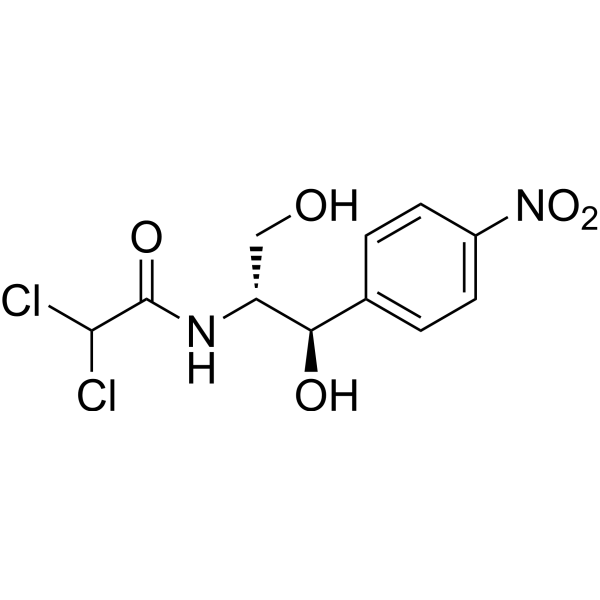
Chloramphenicol is an orally active, potent and broad-spectrum antibiotic. Chloramphenicol shows antibacterial activity. Chloramphenicol represses the oxygen-labile transcription factor and hypoxia inducible factor-1 alpha (HIF-1α) in hypoxic A549 and H1299 cells. Chloramphenicol suppresses the mRNA levels of vascularendothelialgrowthfactor(VEGF) and glucose transporter 1, eventually decreasing VEGF release. Chloramphenicol can be used for anaerobic infections and lung cancer research .
Faricimab, an overall good safety and tolerability profile, is a bispecific antibody targeting Angiopoietin-2 (Ang-2) and vascularendothelialgrowthfactor-A (VEGF-A). Faricimab prevents retinal vascular leakage, cell death and inflammation in retinal ischemia/reperfusion (I/R) injury and sCNV mouse models. Faricimab demonstrates statistically superior visual acuity gains versus Ranibizumab (HY-P9951). Faricimab can be used for retinal diseases, such as age-related macular degeneration (w-AMD), diabetic macular edema (DME) and macular edema following retinal vein occlusion (RVO) .
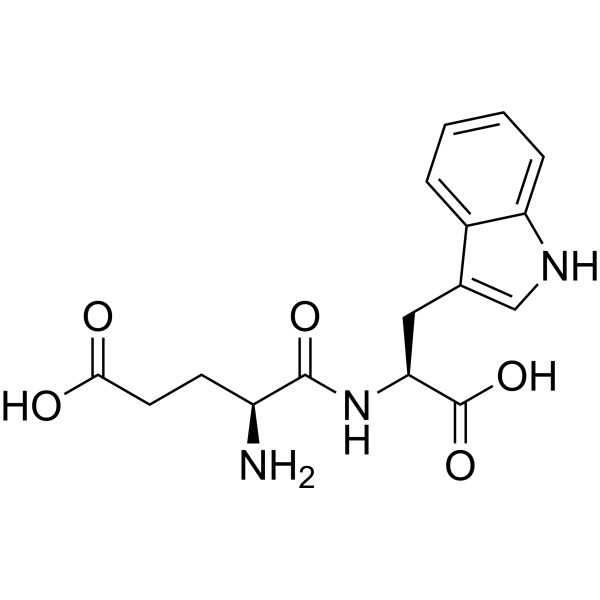
Oglufanide (H-Glu-Trp-OH) is a dipeptide immunomodulator isolated from calf thymus. Oglufanide inhibits vascularendothelialgrowthfactor(VEGF). Oglufanide can stimulate the immune response to hepatitic C virus (HCV) and intracellular bacterial infections. Oglufanide shows antitumor and anti-angiogenesis activities .
Pegaptanib sodium is an RNA aptamer with polyethylene glycol modifications, which is directed against vascularendothelialgrowthfactor (VEGF)-165. Pegaptanib could be used for the study of neovascular age-related macular degeneration (AMD) .
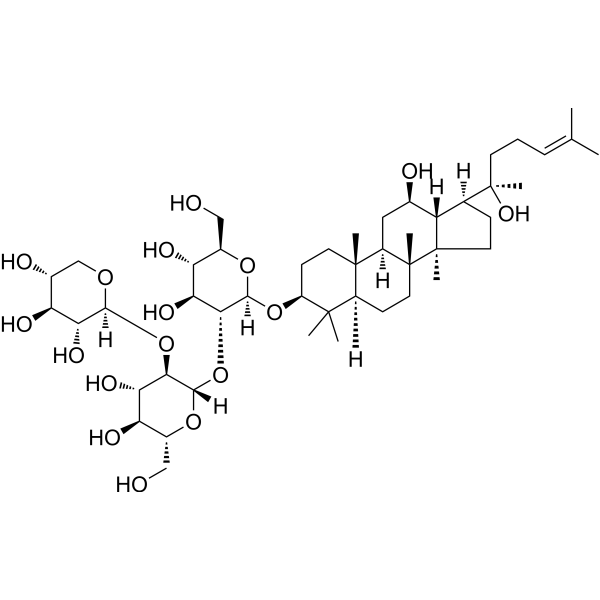
Notoginsenoside Ft1 is an orally active bioactive saponin. Notoginsenoside Ft1 inhibits the PI3K/AKT/mTOR signaling pathway, activates the p38 MAPK and ERK1/2 signaling pathways, and increases the proportion of CD8 + T cells, thereby inducing apoptosis and lysosomal cell death in various cancer cells, and promoting angiogenesis. Notoginsenoside Ft1 causes vasodilation by activating glucocorticoid receptors (GR) and estrogen receptor beta (ERβ) in endothelial cells. Notoginsenoside Ft1 increases intracellular Ca 2+ accumulation, reduces cAMP levels by activating a signaling network mediated through P2Y12 receptors, and promotes platelet aggregation, thereby exerting a procoagulant effect. Notoginsenoside Ft1 inhibits ferroptosis (ferroptosis) in renal tubular epithelial cells by activating the TGR5 receptor, thereby demonstrating a renal protective effect. Notoginsenoside Ft1 acts as a TGR5 agonist and an FXR antagonist to combat obesity and insulin resistance .
Parsatuzumab (Anti-EGFL7; RG 7414) is a humanized monoclonal antibody, acts as an immunomodulator and binds to EGFL7. Parsatuzumab selectively blocks the interaction between EGFL7 and endothelial cells, potentially inhibiting vascular regrowth and reducing vascularendothelialgrowthfactor(VEGF) inhibition .
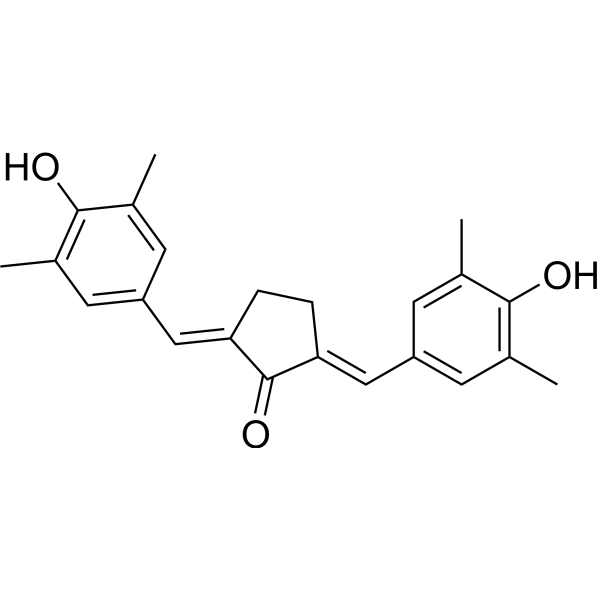
Pentagamavunon-1 (PGV-1), a Curcumin analog with oral activity, targets on several molecular mechanisms to induce apoptosis including inhibition of angiogenic factors cyclooxygenase-2 (COX-2) and vascularendothelialgrowthfactor(VEGF). PGV-1 inhibits NF-κB activation .
SLMP53-1 is a wild-type and mutant p53 reactivator with promising antitumor activity. SLMP53-1 mediates the reprograming of glucose metabolism in cancer cells. SLMP53-1 depletes angiogenesis, decreasing endothelial cell tube formation and vascularendothelialgrowthfactor (VEGF) expression levels .
Chloramphenicol (Standard) is the analytical standard of Chloramphenicol. This product is intended for research and analytical applications. Chloramphenicol is an orally active, potent and broad-spectrum antibiotic. Chloramphenicol shows antibacterial activity. Chloramphenicol represses the oxygen-labile transcription factor and hypoxia inducible factor-1 alpha (HIF-1α) in hypoxic A549 and H1299 cells. Chloramphenicol suppresses the mRNA levels of vascularendothelialgrowthfactor (VEGF) and glucose transporter 1, eventually decreasing VEGF release. Chloramphenicol can be used for anaerobic infections and lung cancer research .
Bevasiranib sodium is a siRNA designed to silence the genes that produce vascularendothelialgrowthfactor(VEGF). It is widely accepted that vascularendothelialgrowthfactor (VEGF) is a key component in the pathogenesis of choroidal neo-vascularization (CNV), which is a precursor to wet age-related macular degeneration (wet AMD).
Ziv-aflibercept is a soluble inhibitor of vascularendothelialgrowthfactor(VEGF). Ziv-aflibercept is an adaptive variant of Aflibercept (HY-108801), Ziv-aflibercept has a low PH value and high osmotic pressure when compared to Aflibercept. Ziv-aflibercept has potential applications in metastatic colorectal carcinoma and retinal diseases .
Boc-Phe-Leu-Phe-Leu-Phe (Boc-FLFLF) is a N-formyl peptide receptors (FPR) inhibitor. Boc-Phe-Leu-Phe-Leu-Phe abolishes the FMLP-induced release of peptide leukotrienes. Boc-Phe-Leu-Phe-Leu-Phe inhibits the sprouting of human umbilical vein endothelial cell (HUVEC) spheroids mediated by proliferative diabetic retinopathy (PDR) vitreous and vascularendothelialgrowthfactor (VEGF) respectively in a three-dimensional fibrin gel. Boc-Phe-Leu-Phe-Leu-Phe inhibits the anti-inflammatory and antifibrotic effects of Ac2-26 (HY-P1098). Boc-Phe-Leu-Phe-Leu-Phe can be used for the study of immunology .
Bevasiranib is a siRNA designed to silence the genes that produce vascularendothelialgrowthfactor(VEGF). It is widely accepted that vascularendothelialgrowthfactor (VEGF) is a key component in the pathogenesis of choroidal neo-vascularization (CNV), which is a precursor to wet age-related macular degeneration (wet AMD).
Human VEGFA mRNA encodes the human vascularendothelialgrowthfactor A (VEGFA) protein, a member of the PDGF/VEGFgrowthfactor family. VEGFA could induce proliferation and migration of vascularendothelial cells, and is essential for both physiological and pathological angiogenesis.
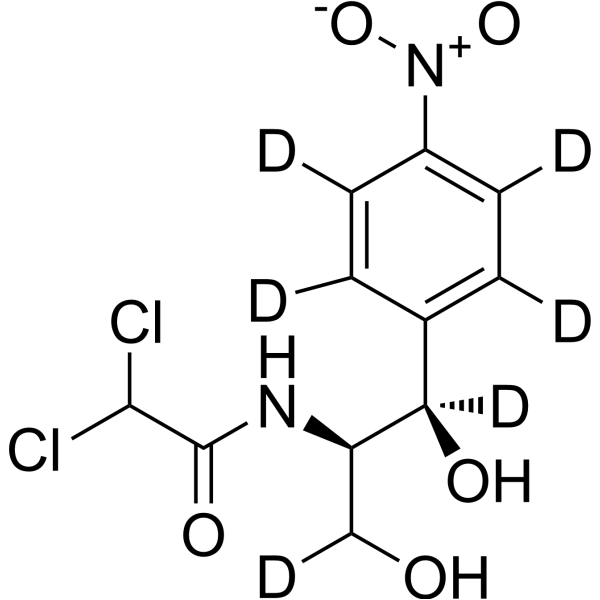
Threo-Chloramphenicol-d6 is the deuterium labeled Chloramphenicol . Chloramphenicol is an orally active, potent and broad-spectrum antibiotic. Chloramphenicol shows antibacterial activity. Chloramphenicol represses the oxygen-labile transcription factor and hypoxia inducible factor-1 alpha (HIF-1α) in hypoxic A549 and H1299 cells. Chloramphenicol suppresses the mRNA levels of vascularendothelialgrowthfactor (VEGF) and glucose transporter 1, eventually decreasing VEGF release. Chloramphenicol can be used for anaerobic infections and lung cancer research .
YF-452 is a potent inhibitor of vascularendothelialgrowthfactor receptor 2 (VEGFR2). YF-452 remarkably inhibits the migration, invasion and tube-like structure formation of human umbilical vein endothelial cells (HUVECs) with little toxicity. YF-452 inhibits VEGF-induced phosphorylation of VEGFR2 kinase and the downstream protein kinases including extracellular signal regulated kinase (ERK), focal adhesion kinase (FAK) and Src. YF-452 is a potential antiangiogenic agent candidate for cancer research .
Human VEGFB mRNA encodes the human vascularendothelialgrowthfactor B (VEGFB) protein, a member of the platelet-derived growthfactor (PDGF)/ vascularendothelialgrowthfactor (VEGF) family. VEGFB is a growthfactor for endothelial cells.
Human VEGFD mRNA encodes the human vascularendothelialgrowthfactor D (VEGFD) protein, a member of the platelet-derived growthfactor/vascularendothelialgrowthfactor (PDGF/VEGF) family. VEGFD is structurally and functionally similar to vascularendothelialgrowthfactor C (VEGFC).
Human VEGFC mRNA encodes the human vascularendothelialgrowthfactor C (VEGFC) protein, a member of the platelet-derived growthfactor/vascularendothelialgrowthfactor (PDGF/VEGF) family. VEGFC promotes angiogenesis and endothelial cell growth, and can also affect the permeability of blood vessels.
Human KDR mRNA encodes the human kinase insert domain receptor (KDR) protein, a receptor of vascularendothelialgrowthfactor (VEGF). KDR functions as the main mediator of VEGF-induced endothelial proliferation, survival, migration, tubular morphogenesis and sprouting.
Azaspirene ((-)-Azaspirene) is an angiogenesis and Raf-1 activation inhibitor isolated from the fungus Neosartorya sp. Azaspirene inhibits vascularendothelialgrowthfactor(VEGF)-induced human umbilical vein endothelial cell (HUVEC) migration and Raf-1 activation, but has no effect on the activation of kinase insert domain-containing receptor/fetal liver kinase 1 (VEGF receptor 2) .
Inlecitug is a chimeric monoclonal antibody targeting human KDR (kinase insert domain receptor). Inlecitug specifically binds to KDR, blocking the binding of vascularendothelialgrowthfactor (VEGF) to KDR and inhibiting angiogenesis, thus exerting antitumor activity. Inlecitug is promising for research of cancers .
YLL545 is a type of vascularendothelialgrowthfactor receptor 2 (VEGFR2) inhibitor. YLL545 can inhibit VEGF-induced phosphorylation of VEGFR2 and the activation of downstream signaling factors (like phosphorylated STAT3 and phosphorylated ERK1/2) in human umbilical vein endothelial cells (HUVEC). YLL545 can suppress the proliferation, migration, invasion, and angiogenesis of HUVEC. YLL545 can induce apoptosis in breast cancer mice and inhibit tumor growth .
Oglufanide (H-Glu-Trp-OH) disodium is a dipeptide immunomodulator isolated from calf thymus. Oglufanide disodium inhibits vascularendothelialgrowthfactor(VEGF). Oglufanide disodium can stimulate the immune response to hepatitic C virus (HCV) and intracellular bacterial infections. Oglufanide disodium shows antitumor and anti-angiogenesis activities .
(rac)-ZK-304709 is an isoform of ZK-304709 and is an orally active multi-targeted tumor growth inhibitor that inhibits multiple cell cycle-dependent kinases (CDKs), vascularendothelialgrowthfactor receptor kinases (VEGF-RTKs), and platelet-derived growthfactor receptor kinase β (PDGF-RTKβ). (rac)-ZK-304709 can dose-dependently inhibit the proliferation and colony formation of neuroendocrine tumor (NET) cells. (rac)-ZK-304709 directly acts on NET cells by inducing G2 cell cycle arrest and apoptosis, while reducing the expression of MCL1, survivin, and HIF1α. (rac)-ZK-304709 effectively controls tumor growth by inducing apoptosis and inhibiting tumor-induced angiogenesis, and may become a potential agent for inhibiting NET .
CEP-5214, derived from a new indenopyrrolocarbazole template, is a potent inhibitor of vascularendothelialgrowthfactor R2 (VEGF-R2) tyrosine kinase. Structurally, it features optimal substitutions at positions 9 (ethoxymethyl) and 12 (hydroxypropyl) on the indeno[2,1-a]pyrrolo[3,4-c]carbazole-5-one scaffold, leading to high potency against VEGF-R2 (IC50 8 nM). Compound 21 (CEP-5214) exhibits low-nanomolar inhibition of human VEGF-R tyrosine kinases (IC50 4 nM for VEGF-R2/KDR), with good selectivity over other kinases. The compound demonstrated significant cellular and in vivo antitumor activity across various models and advanced into phase I clinical trials as a water-soluble prodrug (CEP-7055) to enhance oral bioavailability .
22-(4′-py)-JA is a semisynthetic derivative of junamycin A (JA) that can be isolated from the Thai blue sponge (Xestospongia sp.). 22-(4′-py)-JA has antimetastatic activity and can inhibit AKT/mTOR/p70S6K signaling. 22-(4′-py)-JA inhibits tumor cell invasion and tube formation in human umbilical vein endothelial cells (HUVEC), downregulates metalloproteinases (MMP-2 and MMP-9), hypoxia-inducible factor 1α (HIF-1α) and vascularendothelialgrowthfactor (VEGF). 22-(4′-py)-JA has potent anticancer activity against non-small cell lung cancer (NSCLC) .
CEP-7055 (compound 21) is a novel vascularendothelialgrowthfactor R2 (VEGF-R2) tyrosine kinase inhibitor with potent inhibitory activity. Studies have found that the inhibitor activity can be significantly improved by optimizing the R9 substituent. Compound 21 has potent low nanomolar inhibition of human VEGF-R tyrosine kinase and shows good selectivity against multiple tyrosine and serine/threonine kinases. N,N-dimethylglycine ester 40 was prepared to improve its water solubility and oral bioavailability. In animal pharmacokinetic studies, a significant increase in the plasma level of 21 was observed after oral administration of 40. Compound 21 showed significant in vivo antitumor activity in multiple tumor models and has entered phase I clinical trials as a water-soluble N,N-dimethylglycine ester proagent of 40 (CEP-7055).
hPV19 is a humanized inhibitory monoclonal antibody targeting vascularendothelialgrowthfactor(VEGF) with a unique binding site. hPV19 can be used for the research of advanced solid tumors .
Anti-Human/Rat VEGF Antibody (A.4.6.1) is an antibody targeting human and rat vascularendothelialgrowthfactor(VEGF) that potently inhibits tumor growth in various animal models. Anti-Human/Rat VEGF Antibody (A.4.6.1) is the parent antibody of Bevacizumab (HY-P9906), and it exhibits high affinity and high selectivity for binding to human VEGF . The isotype control for Anti-Human/Rat VEGF Antibody (A.4.6.1) is Mouse IgG1 kappa, Isotype Control (HY-P99977).
Apolipoprotein KV domain (67-77) is an 11-amino acid peptide identified from the KV domain of human apolipoprotein a (ApoA) with antiangiogenic and antitumor activities. Apolipoprotein KV domain (67-77) targets the angiogenic c-Src/ERK pathway by blocking activation signals received from vascularendothelialgrowthfactor(VEGF). Apolipoprotein KV domain (67-77) can be used in cancer research .
Clausenidin is a selective inhibitor targeting apoptosis-related pathways, including the mitochondrial pathway and death receptor pathway, and vascularendothelialgrowthfactor(VEGF). Clausenidin induces mitochondrial membrane depolarization by activating caspase-3, caspase-8 and caspase-9, upregulating the pro-apoptotic protein Bax and downregulating the anti-apoptotic protein Bcl-2. Clausenidin also inhibits VEGF expression and blocks angiogenesis, exerting anti-tumor activity. Clausenidin has inhibitory effects against Mycobacterium tuberculosis (MIC=200 μg/mL). Clausenidin can induce apoptosis in liver cancer cells, arrest the cell cycle in the G2/M phase, and inhibit tumor angiogenesis. Clausenidin can be used in the research of malignant tumors such as liver cancer .
Angiogenesis is the physiological process through which new blood vessels are formed from pre-existing vessels. It occurs in various physiological processes e.g. embryonic development, menstrual cycle, exercise and wound healing etc. Angiogenesis is regulated by both endogenous activators and inhibitors. Some key activators of angiogenesis include vascularendothelialgrowthfactor (VEGF), basic fibroblast growthfactor (bFGF), angiogenin, TGF-β, etc. whereas angiogenesis inhibitors are angiostatin, endostatin, interferon, platelet factor 4, etc. The loss of balance between these opposing signals leads to life threatening diseases like cancer, cardiovascular and ischemic diseases etc. which are thus controlled by exogenous angiogenesis activators (for cardiovascular/ischemic disorders) and inhibitors (for cancer).
MCE offers a unique collection of 3,481 compounds with validated angiogenesis targets modulating properties. MCE angiogenesis-related compound library is an effective tool for angiogenesis research and discovery of angiogenesis-related drugs.
Oglufanide (H-Glu-Trp-OH) is a dipeptide immunomodulator isolated from calf thymus. Oglufanide inhibits vascularendothelialgrowthfactor(VEGF). Oglufanide can stimulate the immune response to hepatitic C virus (HCV) and intracellular bacterial infections. Oglufanide shows antitumor and anti-angiogenesis activities .
Boc-Phe-Leu-Phe-Leu-Phe (Boc-FLFLF) is a N-formyl peptide receptors (FPR) inhibitor. Boc-Phe-Leu-Phe-Leu-Phe abolishes the FMLP-induced release of peptide leukotrienes. Boc-Phe-Leu-Phe-Leu-Phe inhibits the sprouting of human umbilical vein endothelial cell (HUVEC) spheroids mediated by proliferative diabetic retinopathy (PDR) vitreous and vascularendothelialgrowthfactor (VEGF) respectively in a three-dimensional fibrin gel. Boc-Phe-Leu-Phe-Leu-Phe inhibits the anti-inflammatory and antifibrotic effects of Ac2-26 (HY-P1098). Boc-Phe-Leu-Phe-Leu-Phe can be used for the study of immunology .
Apolipoprotein KV domain (67-77) is an 11-amino acid peptide identified from the KV domain of human apolipoprotein a (ApoA) with antiangiogenic and antitumor activities. Apolipoprotein KV domain (67-77) targets the angiogenic c-Src/ERK pathway by blocking activation signals received from vascularendothelialgrowthfactor(VEGF). Apolipoprotein KV domain (67-77) can be used in cancer research .
Faricimab, an overall good safety and tolerability profile, is a bispecific antibody targeting Angiopoietin-2 (Ang-2) and vascularendothelialgrowthfactor-A (VEGF-A). Faricimab prevents retinal vascular leakage, cell death and inflammation in retinal ischemia/reperfusion (I/R) injury and sCNV mouse models. Faricimab demonstrates statistically superior visual acuity gains versus Ranibizumab (HY-P9951). Faricimab can be used for retinal diseases, such as age-related macular degeneration (w-AMD), diabetic macular edema (DME) and macular edema following retinal vein occlusion (RVO) .
Parsatuzumab (Anti-EGFL7; RG 7414) is a humanized monoclonal antibody, acts as an immunomodulator and binds to EGFL7. Parsatuzumab selectively blocks the interaction between EGFL7 and endothelial cells, potentially inhibiting vascular regrowth and reducing vascularendothelialgrowthfactor(VEGF) inhibition .
Ziv-aflibercept is a soluble inhibitor of vascularendothelialgrowthfactor(VEGF). Ziv-aflibercept is an adaptive variant of Aflibercept (HY-108801), Ziv-aflibercept has a low PH value and high osmotic pressure when compared to Aflibercept. Ziv-aflibercept has potential applications in metastatic colorectal carcinoma and retinal diseases .
Inlecitug is a chimeric monoclonal antibody targeting human KDR (kinase insert domain receptor). Inlecitug specifically binds to KDR, blocking the binding of vascularendothelialgrowthfactor (VEGF) to KDR and inhibiting angiogenesis, thus exerting antitumor activity. Inlecitug is promising for research of cancers .
hPV19 is a humanized inhibitory monoclonal antibody targeting vascularendothelialgrowthfactor(VEGF) with a unique binding site. hPV19 can be used for the research of advanced solid tumors .
Anti-Human/Rat VEGF Antibody (A.4.6.1) is an antibody targeting human and rat vascularendothelialgrowthfactor(VEGF) that potently inhibits tumor growth in various animal models. Anti-Human/Rat VEGF Antibody (A.4.6.1) is the parent antibody of Bevacizumab (HY-P9906), and it exhibits high affinity and high selectivity for binding to human VEGF . The isotype control for Anti-Human/Rat VEGF Antibody (A.4.6.1) is Mouse IgG1 kappa, Isotype Control (HY-P99977).
Chloramphenicol is an orally active, potent and broad-spectrum antibiotic. Chloramphenicol shows antibacterial activity. Chloramphenicol represses the oxygen-labile transcription factor and hypoxia inducible factor-1 alpha (HIF-1α) in hypoxic A549 and H1299 cells. Chloramphenicol suppresses the mRNA levels of vascularendothelialgrowthfactor(VEGF) and glucose transporter 1, eventually decreasing VEGF release. Chloramphenicol can be used for anaerobic infections and lung cancer research .
Oglufanide (H-Glu-Trp-OH) is a dipeptide immunomodulator isolated from calf thymus. Oglufanide inhibits vascularendothelialgrowthfactor(VEGF). Oglufanide can stimulate the immune response to hepatitic C virus (HCV) and intracellular bacterial infections. Oglufanide shows antitumor and anti-angiogenesis activities .
Notoginsenoside Ft1 is an orally active bioactive saponin. Notoginsenoside Ft1 inhibits the PI3K/AKT/mTOR signaling pathway, activates the p38 MAPK and ERK1/2 signaling pathways, and increases the proportion of CD8 + T cells, thereby inducing apoptosis and lysosomal cell death in various cancer cells, and promoting angiogenesis. Notoginsenoside Ft1 causes vasodilation by activating glucocorticoid receptors (GR) and estrogen receptor beta (ERβ) in endothelial cells. Notoginsenoside Ft1 increases intracellular Ca 2+ accumulation, reduces cAMP levels by activating a signaling network mediated through P2Y12 receptors, and promotes platelet aggregation, thereby exerting a procoagulant effect. Notoginsenoside Ft1 inhibits ferroptosis (ferroptosis) in renal tubular epithelial cells by activating the TGR5 receptor, thereby demonstrating a renal protective effect. Notoginsenoside Ft1 acts as a TGR5 agonist and an FXR antagonist to combat obesity and insulin resistance .
Chloramphenicol (Standard) is the analytical standard of Chloramphenicol. This product is intended for research and analytical applications. Chloramphenicol is an orally active, potent and broad-spectrum antibiotic. Chloramphenicol shows antibacterial activity. Chloramphenicol represses the oxygen-labile transcription factor and hypoxia inducible factor-1 alpha (HIF-1α) in hypoxic A549 and H1299 cells. Chloramphenicol suppresses the mRNA levels of vascularendothelialgrowthfactor (VEGF) and glucose transporter 1, eventually decreasing VEGF release. Chloramphenicol can be used for anaerobic infections and lung cancer research .
Azaspirene ((-)-Azaspirene) is an angiogenesis and Raf-1 activation inhibitor isolated from the fungus Neosartorya sp. Azaspirene inhibits vascularendothelialgrowthfactor(VEGF)-induced human umbilical vein endothelial cell (HUVEC) migration and Raf-1 activation, but has no effect on the activation of kinase insert domain-containing receptor/fetal liver kinase 1 (VEGF receptor 2) .
Clausenidin is a selective inhibitor targeting apoptosis-related pathways, including the mitochondrial pathway and death receptor pathway, and vascularendothelialgrowthfactor(VEGF). Clausenidin induces mitochondrial membrane depolarization by activating caspase-3, caspase-8 and caspase-9, upregulating the pro-apoptotic protein Bax and downregulating the anti-apoptotic protein Bcl-2. Clausenidin also inhibits VEGF expression and blocks angiogenesis, exerting anti-tumor activity. Clausenidin has inhibitory effects against Mycobacterium tuberculosis (MIC=200 μg/mL). Clausenidin can induce apoptosis in liver cancer cells, arrest the cell cycle in the G2/M phase, and inhibit tumor angiogenesis. Clausenidin can be used in the research of malignant tumors such as liver cancer .
The VEGF164 protein is a growth factor critical for vasculogenesis, vasculogenesis, and endothelial cell growth, inducing proliferation, promoting migration, inhibiting apoptosis, and enhancing vascular permeability. It binds to FLT1/VEGFR1, KDR/VEGFR2, heparan sulfate, heparin, NRP1 and DEAR/FBXW7-AS1 receptors. VEGF164 Protein, Rat (P.pastoris) is the recombinant rat-derived VEGF164 protein, expressed by P. pastoris , with tag free and A36T mutation.
VEGF183 Protein is a subtype of Vascular Endothelial Growth Factor A (VEGF-A). VEGF-A is a key member of the VEGF family of cytokines that can promote neovascularization and increase vascular permeability. VEGF183 Protein, Human (sf9) is the recombinant human-derived VEGF183 protein, expressed by Sf9 insect cells , with tag free. The total length of VEGF183 Protein, Human (sf9) is 183 a.a., with molecular weight of ~21 KDa.
VEGF121 Protein is a subtype of Vascular Endothelial Growth Factor A (VEGF-A). VEGF-A is a key member of the VEGF family of cytokines that can promote neovascularization and increase vascular permeability. VEGF121 Protein, Human (121a.a, HEK293, His) is the recombinant human-derived VEGF121 protein, expressed by HEK293 , with C-6*His labeled tag. The total length of VEGF121 Protein, Human (121a.a, HEK293, His) is 121 a.a., with molecular weight of 16-18 kDa.
VEGF-A Protein is a key member of the VEGF family of cytokines.VEGF-A participates in angiogenesis, vasculogenesis, and endothelial cell growth, inducing endothelial cell proliferation, promoting cell migration, inhibiting cell apoptosis, and inducing vascular permeability.VEGF-A stimulates endothelial cell mitogenesis and cell migration.VEGF120 Protein, Mouse is the recombinant mouse-derived VEGF120 protein, expressed by E.coli , with tag free.
The VEGF-A protein is a multifunctional growth factor that is essential for promoting angiogenesis, vasculogenesis, and endothelial cell growth. Its multiple effects include inducing endothelial cell proliferation, promoting migration, inhibiting apoptosis, and increasing vascular permeability. VEGF-A Protein, Rabbit (His-SUMO) is the recombinant Rabbit-derived VEGF-A protein, expressed by E. coli , with N-SUMO, N-6*His labeled tag.
VEGFA Protein is a vascular endothelial growth factor that is active in angiogenesis and endothelial cell growth. VEGFA Protein induces endothelial cell proliferation, promotes cell migration, inhibits cell apoptosis, and induces vascular permeability. VEGF164 Protein, Canine (HEK293) is the recombinant canine-derived VEGF164 protein, expressed by HEK293 , with tag free.
The VEGF164 protein is a growth factor critical for vasculogenesis, vasculogenesis, and endothelial cell growth, inducing proliferation, promoting migration, inhibiting apoptosis, and enhancing vascular permeability. It binds to FLT1/VEGFR1, KDR/VEGFR2, heparan sulfate, heparin, NRP1 and DEAR/FBXW7-AS1 receptors. VEGF164 Protein, Rat (sf9) is the recombinant rat-derived VEGF164 protein, expressed by Sf9 insect cells , with tag free.
The VEGF-A protein is a multifunctional growth factor that is essential for promoting angiogenesis, vasculogenesis, and endothelial cell growth. Its multiple effects include inducing endothelial cell proliferation, promoting migration, inhibiting apoptosis, and increasing vascular permeability. VEGF-A Protein, Rabbit (P. pastoris, His) is the recombinant Rabbit-derived VEGF-A protein, expressed by P. pastoris , with N-6*His labeled tag.
VEGF-B protein is an endothelial cell-specific growth factor with VEGF-B167 and VEGF-B186 isoforms and has a unique binding ability to heparin and Neuropilin-1. VEGF-B Protein, Human (HEK293, Fc) is the recombinant human-derived VEGF-B protein, expressed by HEK293 , with N-hFc labeled tag.
VEGF-D Protein, a versatile growth factor, orchestrates angiogenesis, lymphangiogenesis, and endothelial cell growth. It stimulates proliferation, migration, and influences vessel permeability. VEGF-D binds VEGFR-3, triggering crucial signaling for vascular development. Structurally, VEGF-D is a non-covalent homodimer, emphasizing its intricate role in vascular processes. VEGF-D Protein, Mouse (HEK293, His) is the recombinant mouse-derived VEGF-D protein, expressed by HEK293 , with C-6*His labeled tag.
VEGF-D Protein, a versatile growth factor, orchestrates angiogenesis, lymphangiogenesis, and endothelial cell growth. It stimulates proliferation, migration, and influences vessel permeability. VEGF-D binds VEGFR-3, triggering crucial signaling for vascular development. Structurally, VEGF-D is a non-covalent homodimer, emphasizing its intricate role in vascular processes. VEGF-D Protein, Mouse (HEK293, Fc) is the recombinant mouse-derived VEGF-D protein, expressed by HEK293 , with N-hFc labeled tag.
VEGF-D, a growth factor, stimulates proliferation, migration, and vessel permeability. It is crucial for vascular development and maintenance of lymphatic endothelium. VEGF-D binds and activates VEGFR-3, initiating essential signaling pathways. Structurally, it forms a non-covalent homodimer, playing an intricate role in vascular processes. VEGF-D Protein, Rat (HEK293, Fc) is the recombinant rat-derived VEGF-D protein, expressed by HEK293 , with N-hFc labeled tag.
The VEGF-A protein is a multifunctional growth factor that is essential for promoting angiogenesis, vasculogenesis, and endothelial cell growth. Its multiple effects include inducing endothelial cell proliferation, promoting migration, inhibiting apoptosis, and increasing vascular permeability. VEGF-A Protein, Pig (His) is the recombinant pig-derived VEGF-A protein, expressed by E. coli , with N-6*His labeled tag.
Vascular Endothelial Growth Factor A (VEGF-A) is a key member of the VEGF family of cytokines that can promote neovascularization and increase vascular permeability. VEGF206 Protein, Human (His) is the recombinant human-derived VEGF206 protein, expressed by E. coli, with N-6*His labeled tag.
The VEGF-A protein is a multifunctional growth factor that is essential for promoting angiogenesis, vasculogenesis, and endothelial cell growth. Its multiple effects include inducing endothelial cell proliferation, promoting migration, inhibiting apoptosis, and increasing vascular permeability. Animal-Free VEGF Protein, Pig (His) is the recombinant pig-derived animal-FreeVEGF protein, expressed by E. coli , with C-His labeled tag. This product is for cell culture use only.
VEGF121 Protein is a subtype of Vascular Endothelial Growth Factor A (VEGF-A). VEGF-A is a key member of the VEGF family of cytokines that can promote neovascularization and increase vascular permeability. VEGF121 Protein, Human (HEK293) is the recombinant human-derived VEGF121 protein, expressed by HEK293 , with tag free. The total length of VEGF121 Protein, Human (HEK293) is 147 a.a., with molecular weight of ~19.9 & 17.0 kDa, respectively.
VEGF-D protein is a potent growth factor in angiogenesis, lymphangiogenesis, and endothelial cell growth, playing a key role in stimulating cell proliferation, migration, and affecting vascular permeability. It may be involved in the formation of veins and lymphatic vasculature during embryogenesis, suggesting that it plays a key role in vascular development. VEGF-D Protein, Human (HEK293, His) is the recombinant human-derived VEGF-D protein, expressed by HEK293 , with C-6*His labeled tag.
VEGF-A Protein is a key member of the VEGF family of cytokines.VEGF-A participates in angiogenesis, vasculogenesis, and endothelial cell growth, inducing endothelial cell proliferation, promoting cell migration, inhibiting cell apoptosis, and inducing vascular permeability.VEGF-A stimulates endothelial cell mitogenesis and cell migration.VEGF164 Protein, Mouse (P.pastoris) is the recombinant mouse-derived VEGF164 protein, expressed by P.pastoris , with tag free.
The VEGF-C protein is a potent growth factor in angiogenesis and endothelial cell growth, stimulating cell proliferation and migration while affecting vascular permeability. It plays a critical role in embryonic vein and lymphangiogenesis and maintains adult differentiated lymphatic endothelium. VEGF-C Protein, Human (196a.a, HEK293, His) is the recombinant human-derived VEGF-C protein, expressed by HEK293 , with C-6*His labeled tag.
VEGF145 Protein is a subtype of Vascular Endothelial Growth Factor A (VEGF-A). VEGF-A is a key member of the VEGF family of cytokines that can promote neovascularization and increase vascular permeability. VEGF145 Protein, Human (HEK293) is the recombinant human-derived VEGF145 protein, expressed by HEK293 , with tag free. The total length of VEGF145 Protein, Human (HEK293) is 145 a.a., with molecular weight of ~16.92 kDa.
VEGF121 Protein is a subtype of Vascular Endothelial Growth Factor A (VEGF-A). VEGF-A is a key member of the VEGF family of cytokines that can promote neovascularization and increase vascular permeability. VEGF121 Protein, Human (HEK293, His-Avi) is the recombinant human-derived VEGF121 protein, expressed by HEK293 , with C-Avi, C-His labeled tag. The total length of VEGF121 Protein, Human (HEK293, His-Avi) is 121 a.a., with molecular weight of ~18 kDa & 22-25 kDa, respectively.
Vascular Endothelial Growth Factor A (VEGF-A) is a key member of the VEGF family of cytokines that can promote neovascularization and increase vascular permeability. VEGF121 Protein, Human (HEK293, N-His) is the recombinant human-derived VEGF121 protein, expressed by HEK293, with N-His labeled tag.
VEGF165 Protein is a subtype of Vascular Endothelial Growth Factor A (VEGF-A). VEGF-A is a key member of the VEGF family of cytokines that can promote neovascularization and increase vascular permeability. VEGF165 Protein, Human (HEK293, C-His) is the recombinant human-derived VEGF165 protein, expressed by HEK293 , with C-10*His labeled tag. The total length of VEGF165 Protein, Human (HEK293, C-His) is 165 a.a., with molecular weight of 20-23 kDa.
VEGF-C protein stimulates cell proliferation, migration, and vascular permeability, which are critical for angiogenesis and endothelial cell dynamics. It plays a crucial role in the development of the venous and lymphatic vasculature during embryogenesis and in the maintenance of adult lymphatic endothelium. VEGF-C Protein, Mouse/Rat (HEK293, His) is the recombinant mouse, rat-derived VEGF-C protein, expressed by HEK293 , with C-6*His labeled tag.
VEGF-C protein stimulates cell proliferation, migration, and vascular permeability, which are critical for angiogenesis and endothelial cell dynamics. It plays a crucial role in the development of the venous and lymphatic vasculature during embryogenesis and in the maintenance of adult lymphatic endothelium. VEGF-C Protein, Mouse/Rat (HEK293, Fc) is the recombinant rat, mouse-derived VEGF-C protein, expressed by HEK293 , with N-hFc labeled tag.
VEGF-C Protein, Human (116a.a, HEK293) functions in lymphangiogenesis, where it acts on lymphatic endothelial cells (LECs) primarily via its receptor VEGFR-3 promoting survival, growth and migration.
The VEGF-C protein is a potent growth factor in angiogenesis and endothelial cell growth, stimulating cell proliferation and migration while affecting vascular permeability. It plays a critical role in embryonic vein and lymphangiogenesis and maintains adult differentiated lymphatic endothelium. VEGF-C Protein, Human (125a.a, HEK293, His) is the recombinant human-derived VEGF-C protein, expressed by HEK293 , with C-His labeled tag.
The VEGF-C protein is a potent growth factor in angiogenesis and endothelial cell growth, stimulating cell proliferation and migration while affecting vascular permeability. It plays a critical role in embryonic vein and lymphangiogenesis and maintains adult differentiated lymphatic endothelium. VEGF-C Protein, Human (116a.a, HEK293, His) is the recombinant human-derived VEGF-C protein, expressed by HEK293 , with C-6*His labeled tag.
Prokineticin-1/EG-VEGF protein is a potent regulator of gastrointestinal smooth muscle contraction and affects intestinal motility. Its multifaceted effects extend to capillary endothelial cells, inducing proliferation, migration, and fenestration and are specific to certain cell types. Prokineticin-1/EG-VEGF Protein, Human is the recombinant human-derived Prokineticin-1/EG-VEGF protein, expressed by E. coli , with tag free.
VEGFR-2 is a tyrosine-protein kinase of the cell surface receptors of VEGFA, VEGFC, and VEGFD that mediates activation of the MAPK1/ERK2, MAPK3/ERK1, and MAP kinase signaling pathways, as well as the AKT1 signaling pathway. VEGFR-2 can promote the proliferation, survival, migration and differentiation of endothelial cells. Overexpression of VEGFR-2 is associated with the development of tumors. VEGFR-2 Protein, Human (HEK293, His) is the recombinant human-derived VEGFR-2 protein, expressed by HEK293 , with C-His labeled tag.
VEGFR-2 protein is a tyrosine protein kinase receptor for VEGFA, VEGFC and VEGFD and is critical in angiogenesis, blood vessel development and embryonic hematopoiesis. It promotes endothelial cell function and actin cytoskeletal reorganization. VEGFR-2 Protein, Human (HEK293, His-Avi) is the recombinant human-derived VEGFR-2 protein, expressed by HEK293 , with C-Avi, C-6*His labeled tag.
VEGFR-2 protein is a tyrosine protein kinase receptor for VEGFA, VEGFC and VEGFD and is critical in angiogenesis, blood vessel development and embryonic hematopoiesis. It promotes endothelial cell function and actin cytoskeletal reorganization. VEGFR-2 Protein, Human (745a.a, HEK293, Fc) is the recombinant human-derived VEGFR-2 protein, expressed by HEK293 , with C-hFc labeled tag.
Neuropilin-1 protein is a cell surface receptor that plays multiple roles in cardiovascular development, angiogenesis, and neuronal circuit formation. It mediates chemical repulsion by recognizing ligands with CendR motifs, leading to internalization and vascular leakage. Neuropilin-1 Protein, Rat (HEK293, His) is the recombinant rat-derived Neuropilin-1 protein, expressed by HEK293 , with C-6*His labeled tag and K811R, P812-G828 delet.
Threo-Chloramphenicol-d6 is the deuterium labeled Chloramphenicol . Chloramphenicol is an orally active, potent and broad-spectrum antibiotic. Chloramphenicol shows antibacterial activity. Chloramphenicol represses the oxygen-labile transcription factor and hypoxia inducible factor-1 alpha (HIF-1α) in hypoxic A549 and H1299 cells. Chloramphenicol suppresses the mRNA levels of vascularendothelialgrowthfactor (VEGF) and glucose transporter 1, eventually decreasing VEGF release. Chloramphenicol can be used for anaerobic infections and lung cancer research .
Pegaptanib sodium is an RNA aptamer with polyethylene glycol modifications, which is directed against vascularendothelialgrowthfactor (VEGF)-165. Pegaptanib could be used for the study of neovascular age-related macular degeneration (AMD) .
Bevasiranib sodium is a siRNA designed to silence the genes that produce vascularendothelialgrowthfactor(VEGF). It is widely accepted that vascularendothelialgrowthfactor (VEGF) is a key component in the pathogenesis of choroidal neo-vascularization (CNV), which is a precursor to wet age-related macular degeneration (wet AMD).
Bevasiranib is a siRNA designed to silence the genes that produce vascularendothelialgrowthfactor(VEGF). It is widely accepted that vascularendothelialgrowthfactor (VEGF) is a key component in the pathogenesis of choroidal neo-vascularization (CNV), which is a precursor to wet age-related macular degeneration (wet AMD).
Human VEGFA mRNA encodes the human vascularendothelialgrowthfactor A (VEGFA) protein, a member of the PDGF/VEGFgrowthfactor family. VEGFA could induce proliferation and migration of vascularendothelial cells, and is essential for both physiological and pathological angiogenesis.
Human VEGFB mRNA encodes the human vascularendothelialgrowthfactor B (VEGFB) protein, a member of the platelet-derived growthfactor (PDGF)/ vascularendothelialgrowthfactor (VEGF) family. VEGFB is a growthfactor for endothelial cells.
Human VEGFD mRNA encodes the human vascularendothelialgrowthfactor D (VEGFD) protein, a member of the platelet-derived growthfactor/vascularendothelialgrowthfactor (PDGF/VEGF) family. VEGFD is structurally and functionally similar to vascularendothelialgrowthfactor C (VEGFC).
Human VEGFC mRNA encodes the human vascularendothelialgrowthfactor C (VEGFC) protein, a member of the platelet-derived growthfactor/vascularendothelialgrowthfactor (PDGF/VEGF) family. VEGFC promotes angiogenesis and endothelial cell growth, and can also affect the permeability of blood vessels.
Human KDR mRNA encodes the human kinase insert domain receptor (KDR) protein, a receptor of vascularendothelialgrowthfactor (VEGF). KDR functions as the main mediator of VEGF-induced endothelial proliferation, survival, migration, tubular morphogenesis and sprouting.
온라인 문의
Your information is safe with us. * Required Fields.
Western blot analysis of extracts from THP-1(lane 2(20μg), Jurkat (lane 3(20μg) and NIH3T3(lane 4(20μg) using FOXO1A (HY-P80132) Rabbit mAb. Proteins were transferred
to a PVDF membrane and blocked with 5% non-fat milk in TBST for 2 hour at room temperature. The primary antibody (1/1000) and Loading control antibody (Beta Actin, HY-P80438, 1/10000) was
used in 5% non-fat milk in TBST at 4°C overnight. Goat Anti-Mouse/Rabbit IgG-HRP Secondary Antibody (1/10000) was used for 1 hour at room temperature.
Western blot analysis of extracts from THP-1(lane 2(20μg), Jurkat (lane 3(20μg) and NIH3T3(lane 4(20μg) using FOXO1A (HY-P80132) Rabbit mAb. Proteins were transferred
to a PVDF membrane and blocked with 5% non-fat milk in TBST for 2 hour at room temperature. The primary antibody (1/1000) and Loading control antibody (Beta Actin, HY-P80438, 1/10000) was
used in 5% non-fat milk in TBST at 4°C overnight. Goat Anti-Mouse/Rabbit IgG-HRP Secondary Antibody (1/10000) was used for 1 hour at room temperature.
Western blot analysis of extracts from THP-1(lane 2(20μg), Jurkat (lane 3(20μg) and NIH3T3(lane 4(20μg) using FOXO1A (HY-P80132) Rabbit mAb. Proteins were transferred
to a PVDF membrane and blocked with 5% non-fat milk in TBST for 2 hour at room temperature. The primary antibody (1/1000) and Loading control antibody (Beta Actin, HY-P80438, 1/10000) was
used in 5% non-fat milk in TBST at 4°C overnight. Goat Anti-Mouse/Rabbit IgG-HRP Secondary Antibody (1/10000) was used for 1 hour at room temperature.
Western blot analysis of extracts from THP-1(lane 2(20μg), Jurkat (lane 3(20μg) and NIH3T3(lane 4(20μg) using FOXO1A (HY-P80132) Rabbit mAb. Proteins were transferred
to a PVDF membrane and blocked with 5% non-fat milk in TBST for 2 hour at room temperature. The primary antibody (1/1000) and Loading control antibody (Beta Actin, HY-P80438, 1/10000) was
MedchemExpress Validation 03
Western blot analysis of extracts from THP-1(lane 2(20μg), Jurkat (lane 3(20μg) and NIH3T3(lane 4(20μg) using FOXO1A (HY-P80132) Rabbit mAb. Proteins were transferred
MedchemExpress Validation 04
Western blot analysis of extracts from THP-1(lane 2(20μg), Jurkat (lane 3(20μg) and NIH3T3(lane 4(20μg) using FOXO1A (HY-P80132) Rabbit mAb. Proteins were transferred
to a PVDF membrane and blocked with 5% non-fat milk in TBST for 2 hour at room temperature. The primary antibody (1/1000) and Loading control antibody (Beta Actin, HY-P80438, 1/10000) was
used in 5% non-fat milk in TBST at 4°C overnight. Goat Anti-Mouse/Rabbit IgG-HRP Secondary Antibody (1/10000) was used for 1 hour at room temperature.
MedchemExpress Validation
Western blot analysis of extracts from THP-1(lane 2(20μg), Jurkat (lane 3(20μg) and NIH3T3(lane 4(20μg) using FOXO1A (HY-P80132) Rabbit mAb. Proteins were transferred
to a PVDF membrane and blocked with 5% non-fat milk in TBST for 2 hour at room temperature. The primary antibody (1/1000) and Loading control antibody (Beta Actin, HY-P80438, 1/10000) was
used in 5% non-fat milk in TBST at 4°C overnight. Goat Anti-Mouse/Rabbit IgG-HRP Secondary Antibody (1/10000) was used for 1 hour at room temperature.
Western blot analysis of extracts from THP-1(lane 2(20μg), Jurkat (lane 3(20μg) and NIH3T3(lane 4(20μg) using FOXO1A (HY-P80132) Rabbit mAb. Proteins were transferred
to a PVDF membrane and blocked with 5% non-fat milk in TBST for 2 hour at room temperature. The primary antibody (1/1000) and Loading control antibody (Beta Actin, HY-P80438, 1/10000) was
used in 5% non-fat milk in TBST at 4°C overnight. Goat Anti-Mouse/Rabbit IgG-HRP Secondary Antibody (1/10000) was used for 1 hour at room temperature.
MedchemExpress Validation
Western blot analysis of extracts from THP-1(lane 2(20μg), Jurkat (lane 3(20μg) and NIH3T3(lane 4(20μg) using FOXO1A (HY-P80132) Rabbit mAb. Proteins were transferred
to a PVDF membrane and blocked with 5% non-fat milk in TBST for 2 hour at room temperature. The primary antibody (1/1000) and Loading control antibody (Beta Actin, HY-P80438, 1/10000) was
used in 5% non-fat milk in TBST at 4°C overnight. Goat Anti-Mouse/Rabbit IgG-HRP Secondary Antibody (1/10000) was used for 1 hour at room temperature.
MedchemExpress Validation
Western blot analysis of extracts from THP-1(lane 2(20μg), Jurkat (lane 3(20μg) and NIH3T3(lane 4(20μg) using FOXO1A (HY-P80132) Rabbit mAb. Proteins were transferred
to a PVDF membrane and blocked with 5% non-fat milk in TBST for 2 hour at room temperature. The primary antibody (1/1000) and Loading control antibody (Beta Actin, HY-P80438, 1/10000) was
used in 5% non-fat milk in TBST at 4°C overnight. Goat Anti-Mouse/Rabbit IgG-HRP Secondary Antibody (1/10000) was used for 1 hour at room temperature.
MedchemExpress Validation
Western blot analysis of extracts from THP-1(lane 2(20μg), Jurkat (lane 3(20μg) and NIH3T3(lane 4(20μg) using FOXO1A (HY-P80132) Rabbit mAb. Proteins were transferred
to a PVDF membrane and blocked with 5% non-fat milk in TBST for 2 hour at room temperature. The primary antibody (1/1000) and Loading control antibody (Beta Actin, HY-P80438, 1/10000) was
used in 5% non-fat milk in TBST at 4°C overnight. Goat Anti-Mouse/Rabbit IgG-HRP Secondary Antibody (1/10000) was used for 1 hour at room temperature.
MedchemExpress Validation
Western blot analysis of extracts from THP-1(lane 2(20μg), Jurkat (lane 3(20μg) and NIH3T3(lane 4(20μg) using FOXO1A (HY-P80132) Rabbit mAb. Proteins were transferred
to a PVDF membrane and blocked with 5% non-fat milk in TBST for 2 hour at room temperature. The primary antibody (1/1000) and Loading control antibody (Beta Actin, HY-P80438, 1/10000) was
used in 5% non-fat milk in TBST at 4°C overnight. Goat Anti-Mouse/Rabbit IgG-HRP Secondary Antibody (1/10000) was used for 1 hour at room temperature.
MedchemExpress Validation
Western blot analysis of extracts from THP-1(lane 2(20μg), Jurkat (lane 3(20μg) and NIH3T3(lane 4(20μg) using FOXO1A (HY-P80132) Rabbit mAb. Proteins were transferred
to a PVDF membrane and blocked with 5% non-fat milk in TBST for 2 hour at room temperature. The primary antibody (1/1000) and Loading control antibody (Beta Actin, HY-P80438, 1/10000) was
used in 5% non-fat milk in TBST at 4°C overnight. Goat Anti-Mouse/Rabbit IgG-HRP Secondary Antibody (1/10000) was used for 1 hour at room temperature.
MedchemExpress Validation
Western blot analysis of extracts from THP-1(lane 2(20μg), Jurkat (lane 3(20μg) and NIH3T3(lane 4(20μg) using FOXO1A (HY-P80132) Rabbit mAb. Proteins were transferred
to a PVDF membrane and blocked with 5% non-fat milk in TBST for 2 hour at room temperature. The primary antibody (1/1000) and Loading control antibody (Beta Actin, HY-P80438, 1/10000) was
used in 5% non-fat milk in TBST at 4°C overnight. Goat Anti-Mouse/Rabbit IgG-HRP Secondary Antibody (1/10000) was used for 1 hour at room temperature.
MedChemExpress values your privacy and your trust is important to us. We use cookies to enhance your website experience. Some cookies are necessary to run the website.
Privacy and Cookie Policy