



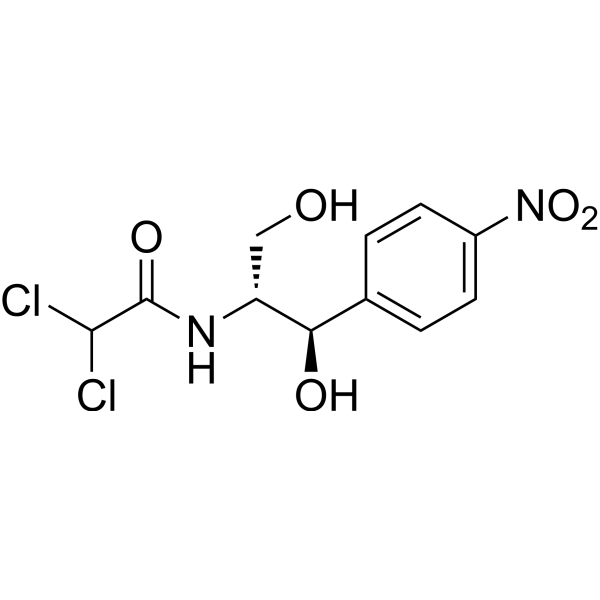
Chloramphenicol (Standard)

Based on 1 Customer Validation
Chloramphenicol (Standard) is the analytical standard of Chloramphenicol. This product is intended for research and analytical applications. Chloramphenicol is an orally active, potent and broad-spectrum antibiotic. Chloramphenicol shows antibacterial activity. Chloramphenicol represses the oxygen-labile transcription factor and hypoxia inducible factor-1 alpha (HIF-1α) in hypoxic A549 and H1299 cells. Chloramphenicol suppresses the mRNA levels of vascular endothelial growth factor (VEGF) and glucose transporter 1, eventually decreasing VEGF release. Chloramphenicol can be used for anaerobic infections and lung cancer research.
商品は「研究用試薬」です。人や動物の医療用・臨床診断用・食品用の製品ではありません。
研究用途以外に使用した場合、当社は一切の責任を負いかねます。
- 純度 : 99.67%
- CAS 番号: 56-75-7
- 分子式: C₁₁H₁₂Cl₂N₂O₅
- 分子量:323.13
-
保管条件:
Please store the product under the recommended conditions in the Certificate of Analysis.


To place orders, for customer services and technical support, please contact: MedChemExpress USA
Tel: 609-228-6898 E-mail: [email protected] [email protected]


-
 Product Information
-
化学情報
- 純度とドキュメンテーション
-
 Help & FAQs


-
HY-B0239
ChloramphenicolHIF-1α Inhibitor -
HY-17498R
Atenolol (Standard) -
HY-17498
Atenololβ1-Adrenergic Receptor Blocker -
HY-17503
MetoprololBeta1-adrenoceptor Antagonist -

HY-17503R
Metoprolol (Standard)Beta1-adrenoceptor Antagonist -
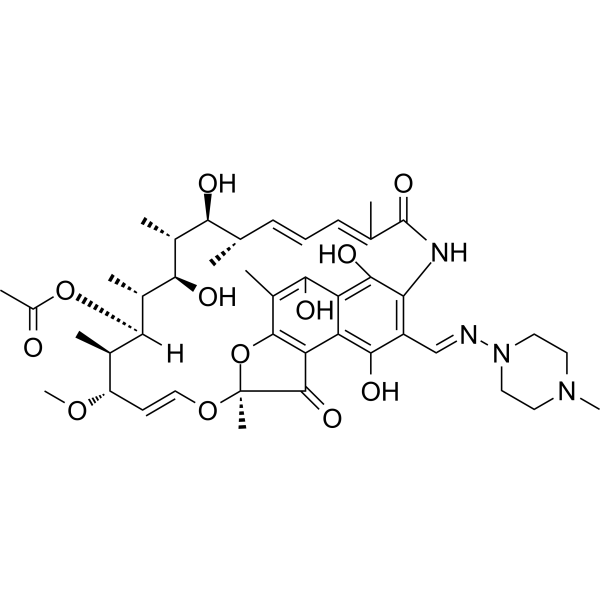
HY-B0272
RifampicinAntivirus Agent -
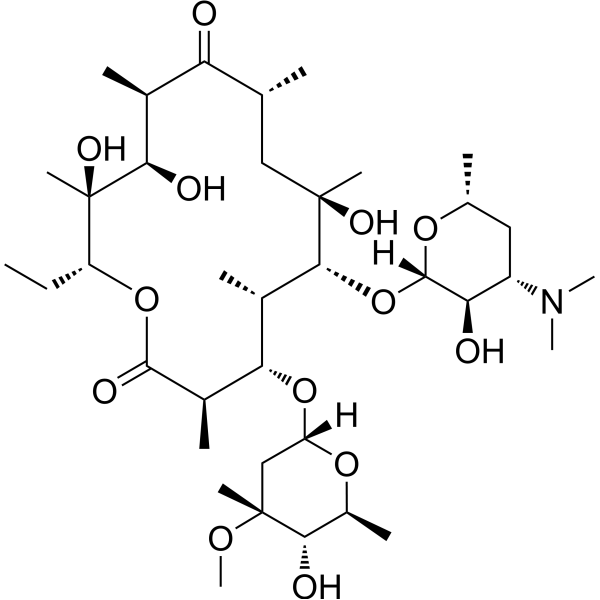
HY-B0220
ErythromycinAntibiotic -
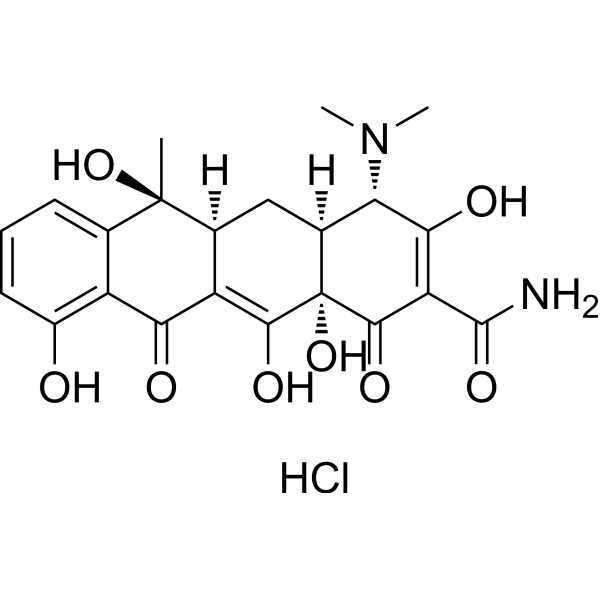
HY-B0474
Tetracycline hydrochlorideAntibiotic -
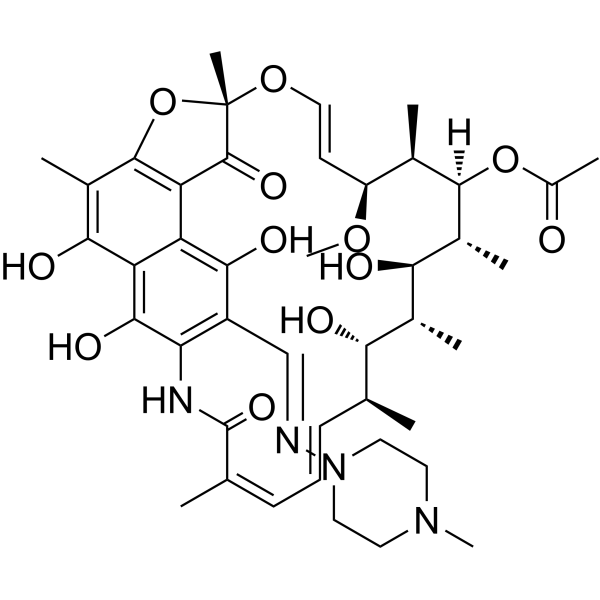
HY-B0272R
Rifampicin (Standard)Antivirus Agent -
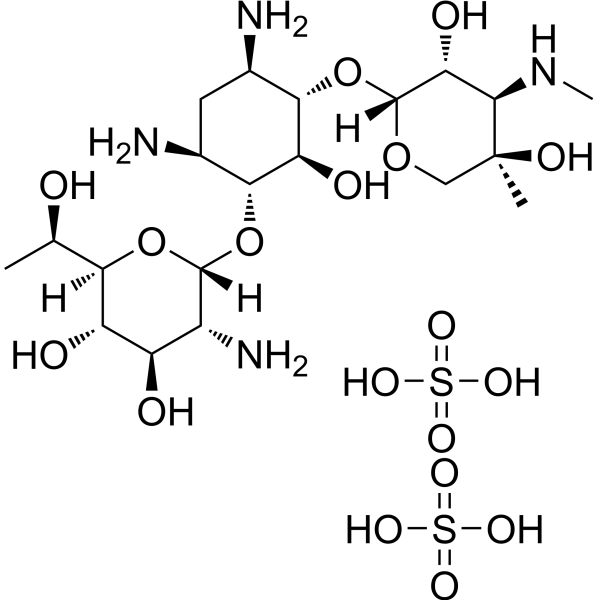
HY-17561
G-418 disulfateAminoglycoside Antibiotic -
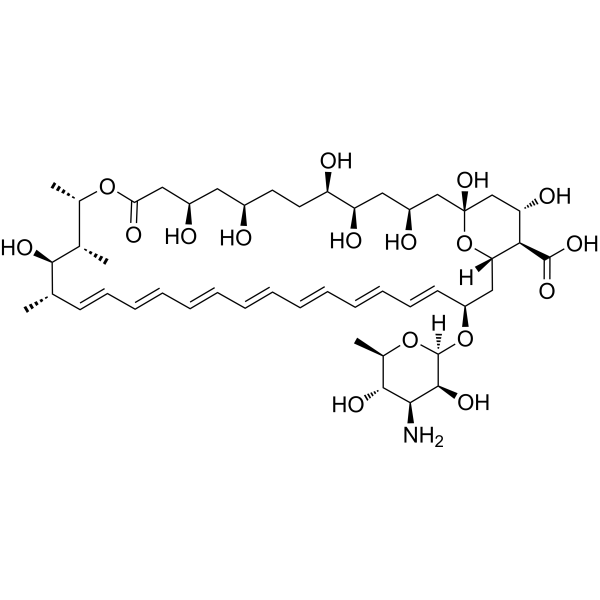
HY-B0221
Amphotericin BAntifungal Agent -
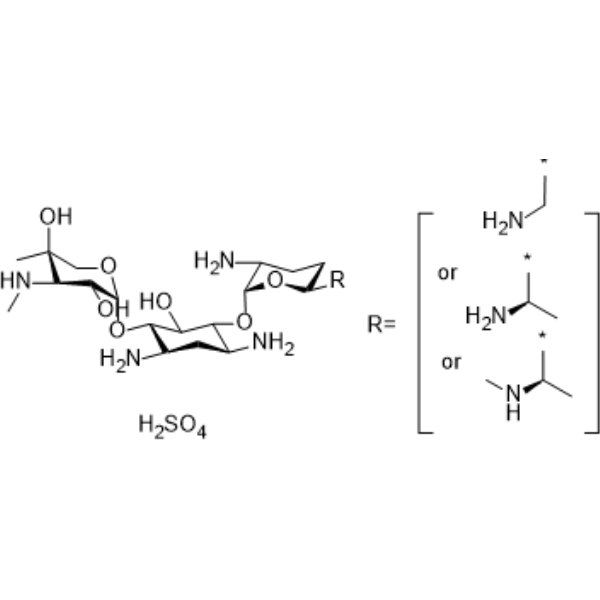
HY-A0276
Gentamicin sulfateAminoglycoside Antibiotic


Product Information
説明
アプリケーション
The compound is the grade of analytical standard, which is the reference standard supplied assay. It is commonly used in qualitative, quantitative and methodological research experiments in HPLC, GC and MS.


化学情報
-
CAS 番号 56-75-7
-
性状 Solid
-
分子量 323.13
-
分子式 C₁₁H₁₂Cl₂N₂O₅
-
Color Off-white to light yellow
-
SMILES
O=C(N[C@H](CO)[C@H](O)C1=CC=C([N+]([O-])=O)C=C1)C(Cl)Cl
-
Initial Source
-
輸送条件
Room temperature in continental US; may vary elsewhere.
-
保管条件
Please store the product under the recommended conditions in the Certificate of Analysis.


純度とドキュメンテーション
-
SDS (580 KB)
- English - EN (580 KB)
- Français - FR (580 KB)
- Deutsch - DE (580 KB)
- Norwegian - NO (580 KB)
- Español - ES (580 KB)
- Swedish - SV (580 KB)
- Italian - IT (580 KB)
- Korean - KR (580 KB)
- Portuguese - PT (580 KB)
-
取扱説明書 (2659 KB)
参考文献
[1]. Hsu HL, et al. Chloramphenicol Induces Autophagy and Inhibits the Hypoxia Inducible Factor-1 Alpha Pathway in Non-Small Cell Lung Cancer Cells. Int J Mol Sci. 2019 Jan 3;20(1):157. [Content Brief]
[2]. Yuan ZR, et al. Chloramphenicol induces abnormal differentiation and inhibits apoptosis in activated T cells. Cancer Res. 2008 Jun 15;68(12):4875-81. [Content Brief]
[3]. Li CH, et al. Chloramphenicol causes mitochondrial stress, decreases ATP biosynthesis, induces matrix metalloproteinase-13 expression, and solid-tumor cell invasion. Toxicol Sci. 2010 Jul;116(1):140-50. [Content Brief]
[4]. Turton JA, et al. Characterization of the myelotoxicity of chloramphenicol succinate in the B6C3F1 mouse. Int J Exp Pathol. 2006 Apr;87(2):101-12. [Content Brief]
[5]. Bartlett JG. Chloramphenicol. Med Clin North Am. 1982;66(1):91-102. [Content Brief]

Calculators
濃度 (開始) × 体積 (開始) = 濃度 (終了) × 体積 (終了)


Chloramphenicol (Standard) 関連分類
HY-B0239R 関連分類
 Powered by Bioz