Search Result
Results for "
analgesic properties
" in MedChemExpress (MCE) Product Catalog:
1
Biochemical Assay Reagents
24
Isotope-Labeled Compounds
| Cat. No. |
Product Name |
Target |
Research Areas |
Chemical Structure |
-
- HY-15550
-
-
-
- HY-B0363
-
|
R805
|
COX
|
Inflammation/Immunology
Cancer
|
|
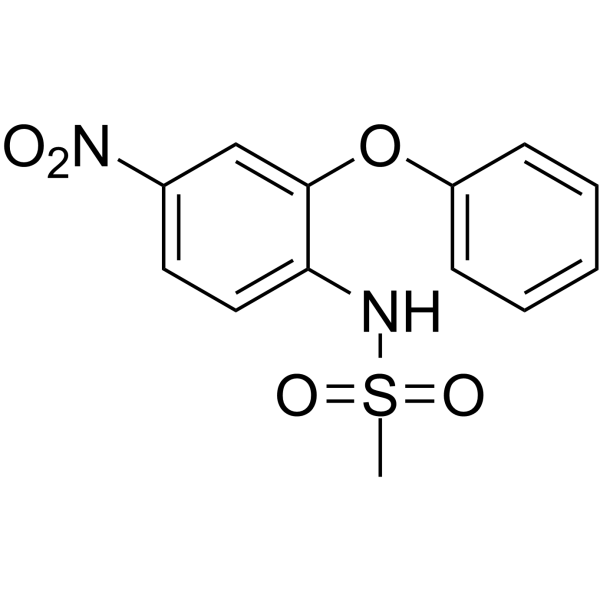
Nimesulide is a selective COX-2 inhibitor, with IC50s of 70 nM-70 μM in a time-dependent manner, but it shows no effect on COX-1 (IC50 >100 μM). Nimesulide has potent anti-inflammatory, analgesic and antipyretic properties.
|
-
-
- HY-18342
-
|
MK-647
|
COX
|
Inflammation/Immunology
Cancer
|
|
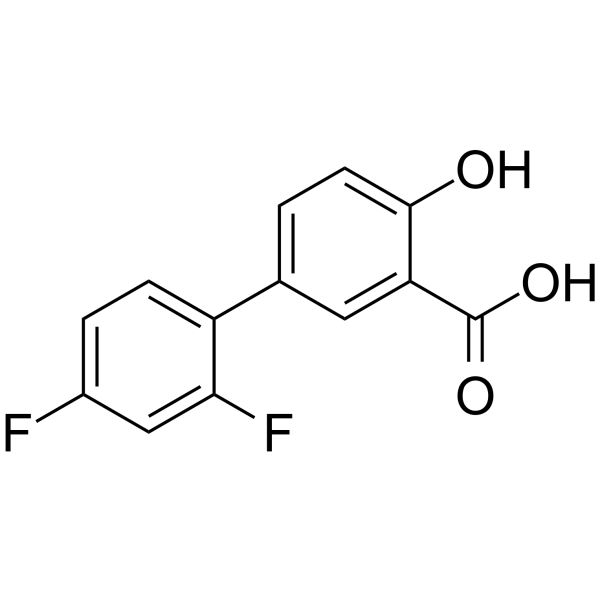
Diflunisal (MK-647) is a salicylate derivative with nonsteroidal anti-inflammatory and uricosuric properties, which is used alone as an analgesic and in rheumatoid arthritis patients. The mechanism of action of diflunisal is as a Cyclooxygenase (COX) Inhibitor.
|
-
-
- HY-30235A
-
|
|
PGE synthase
Bacterial
TNF Receptor
|
Inflammation/Immunology
Cancer
|
|
Benzydamine hydrochloride is an orally administered prostaglandin synthesis inhibitor that has anti-inflammatory, analgesic, antipyretic, and antibacterial properties. Benzydamine hydrochloride can inhibit TNF-α, stabilize cell membranes, and reduce oxidative stress within cells .
|
-
-
- HY-17001A
-
|
D 9998
|
Potassium Channel
iGluR
GABA Receptor
|
Neurological Disease
Inflammation/Immunology
|
|
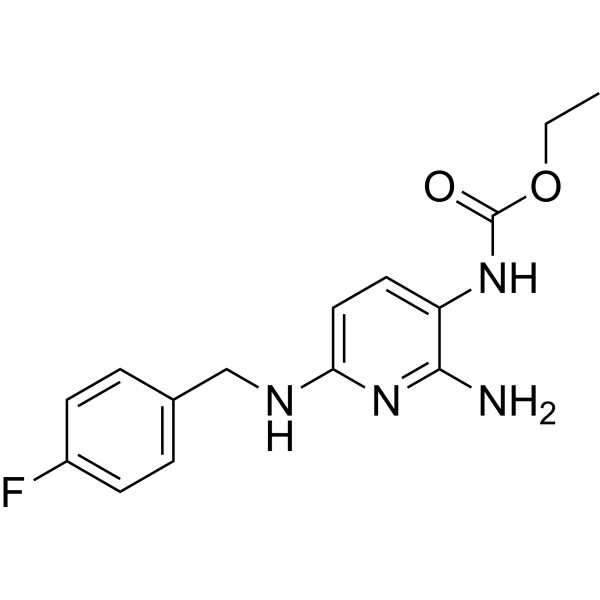
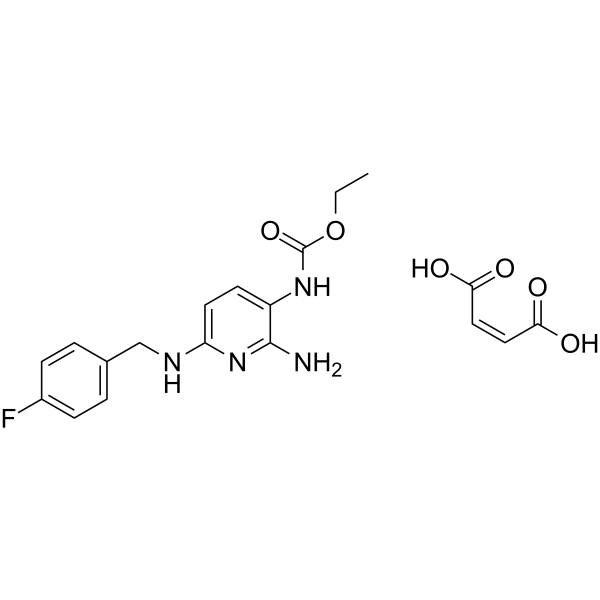
Flupirtine (D 9998) is an orally active, blood-brain barrier-crossing non-opioid analgesic and neuroprotective agent. Flupirtine is a neuronal potassium channel opener (Kv7 activator), a NMDA receptor antagonist and a GABA receptor activator. Flupirtine stabilizes blood-brain-barrier integrity, reduces oxidative stress and brain leukocyte infiltration, enhances angioneurogenesis, suppresses calcium influx, stabilizes neuronal resting membrane potential, and counteracts focal cerebral ischemia. Flupirtine exhibits analgesic, muscle relaxant properties, protects neurons from excitotoxic, ischemic, or cytokine-mediated death. Flupirtine functions as a non-opioid analgesic without antipyretic or antiphlogistic properties, shows no relevant affinity to opiate receptor. Flupirtine can be used for the research of focal cerebral ischemia, pain, Alzheimer’s disease, or multiple sclerosis .
|
-
-
- HY-17001
-
|
D 9998 Maleate
|
Potassium Channel
iGluR
GABA Receptor
|
Neurological Disease
Inflammation/Immunology
|
|
Flupirtine (D 9998) Maleate is an orally active, blood-brain barrier-crossing non-opioid analgesic and neuroprotective agent. Flupirtine Maleate is a neuronal potassium channel opener (Kv7 activator), a NMDA receptor antagonist and a GABA receptor activator. Flupirtine Maleate stabilizes blood-brain-barrier integrity, reduces oxidative stress and brain leukocyte infiltration, enhances angioneurogenesis, suppresses calcium influx, stabilizes neuronal resting membrane potential, and counteracts focal cerebral ischemia. Flupirtine Maleate exhibits analgesic, muscle relaxant properties, protects neurons from excitotoxic, ischemic, or cytokine-mediated death. Flupirtine Maleate functions as a non-opioid analgesic without antipyretic or antiphlogistic properties, shows no relevant affinity to opiate receptor. Flupirtine Maleate can be used for the research of focal cerebral ischemia, pain, Alzheimer’s disease, or multiple sclerosis .
|
-
-
- HY-135731
-
|
|
COX
Drug Metabolite
|
Inflammation/Immunology
|
|
4-Methylamino antipyrine is an active metabolite of Metamizole. Metamizole is a pyrazolone non-steroidal anti-inflammatory drug (NSAID) and inhibits COX. Metamizole is an nonopioid analgesic agent and can be used for pain and fever . 4-Methylamino antipyrine has analgesic, antipyretic, and relatively weak antiinflammatory properties .
|
-
-
- HY-N1082
-
-
-
- HY-N0301
-
|
|
GABA Receptor
|
Neurological Disease
Inflammation/Immunology
|
|
Thiocolchicoside is a competitive γ-aminobutyric acid type A (GABAA) receptor antagonist and glycine receptor agonist in the central nervous system. Thiocolchicoside is a semisynthetic sulfur derivative of colchicoside. Thiocolchicoside is a muscle relaxant and has anti-inflammatory, and analgesic properties .
|
-
-
- HY-126382
-
|
|
NF-κB
|
Inflammation/Immunology
|
|
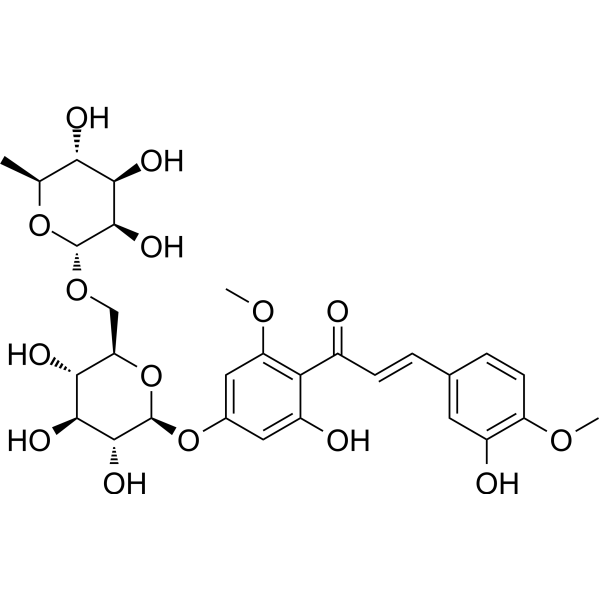
Hesperidin methylchalcone (Hesperidin methyl chalcone) is an orally active flavonoid that has analgesic, anti-inflammatory and antioxidant properties. Hesperidin methylchalcone exhibits vasoprotective activity. Hesperidin methylchalcone inhibits oxidative stress, cytokine production and NF-κB activation. Hesperidin methylchalcone can be used for the research of gout disease .
|
-
-
- HY-B0440
-
|
Ro-12-0068
|
COX
|
Inflammation/Immunology
|
|
Tenoxicam (Ro-12-0068), an antiinflammatory agent with analgesic and antipyretic properties.
|
-
-
- HY-N0343
-
|
Helicide; Helicidum; 4-Formylphenyl-β-D-allopyranoside
|
Others
|
Neurological Disease
|
|
Helicid (Helicide) is a major constituent of Helicia nilgirica Bedd. Helicid has been used to treat psychoneurosis for its analgesic properties .
|
-
-
- HY-B0634
-
|
|
COX
|
Inflammation/Immunology
|
|
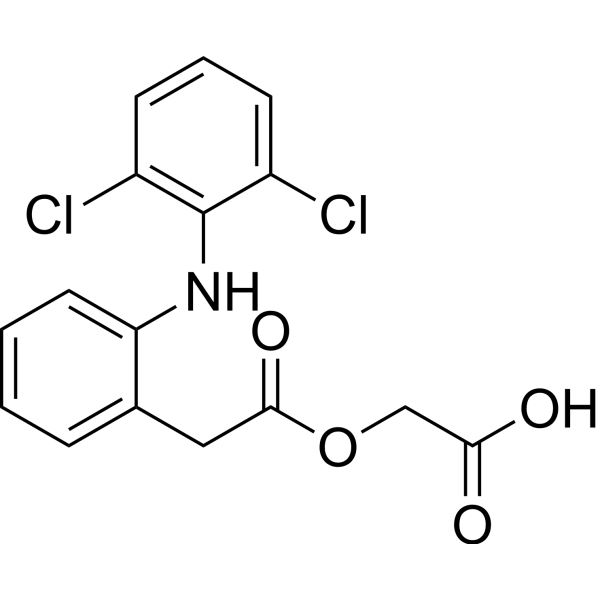
Aceclofenac is an orally active nonsteroidal anti-inflammatory agent (NSAID), with analgesic and anti-inflammatory properties. Aceclofenac is used for the research of osteoarthritis, ankylosing spondylitis, rheumatoid arthritis .
|
-
-
- HY-17361
-
|
|
COX
|
Inflammation/Immunology
|
|
Etofenamate, a non-steroid anti-inflammatory agent (NSAID) and a non-selective COX inhibitor, possesses analgesic, anti-rheumatic, antipyretic and anti-inflammatory properties. Etofenamate is used in the research for osteoarthritis, arthritis and other inflammatory diseases .
|
-
-
- HY-N3544
-
-
-
- HY-108249
-
-
-
- HY-122381
-
|
|
Bacterial
Endogenous Metabolite
|
Neurological Disease
|
|
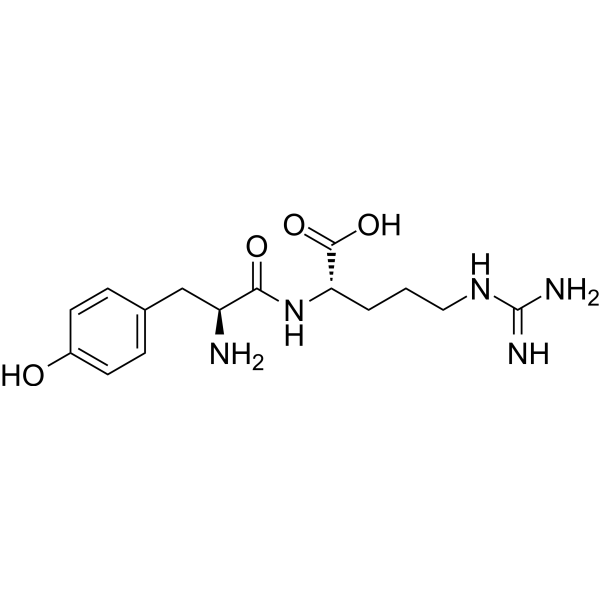
Kyotorphin is an endogenou neuroactive dipeptide with analgesic properties. Kyotorphin possesses anti-inflammatory and antimicrobial activity. Kyotorphin levels in cerebro-spinal fluid correlate negatively with the progression of neurodegeneration in Alzheimer's Disease patients .
|
-
-
- HY-100488
-
|
|
Cannabinoid Receptor
|
Cancer
|
|
Bay 59-3074 is a selective cannabinoid CB1/CB2 receptor partial agonist with Ki values of 48.3 and 45.5 nM at human CB1 and CB2 receptors, respectively. Bay 59-3074 has analgesic properties .
|
-
-
- HY-107795
-
|
Salipran
|
Prostaglandin Receptor
|
Inflammation/Immunology
Endocrinology
|
|
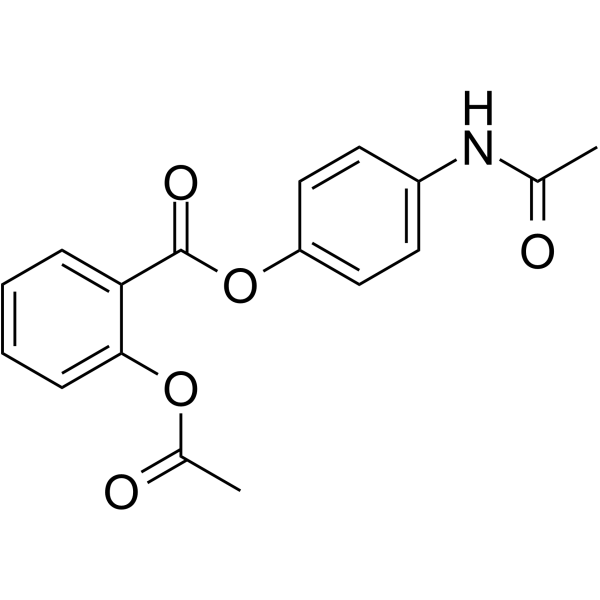
Benorylate (Salipran) is the esterification product of paracetamol and acetylsalicylic acid. Benorylate has anti-inflammatory, analgesic and antipyretic properties. Benorylate could also inhibit prostaglandin (PG) synthesis .
|
-
-
- HY-110099
-
|
|
CXCR
|
Inflammation/Immunology
|
|
(±)-NBI-74330 is a potent and selective CXCR3 antagonist. (±)-NBI-74330 not only reduces tactile and thermal hypersensitivity but also enhances the analgesic properties of morphine. (±)-NBI-74330 can reduce microglial cell activation, increase astroglial cell activation, and downregulate the expression of some CXCR3 ligands in a rat neuropathic pain model .
|
-
-
- HY-N2136
-
-
-
- HY-119404
-
-
-
- HY-P2626
-
|
|
Opioid Receptor
|
Neurological Disease
|
|
[D-Ala2]-Met-Enkephalin, an opioid peptide, is a potent opioid agonist. [D-Ala2]-Met-Enkephalin inhibits ACh-induced and suckling-induced oxytocin (OT) release .
|
-
-
- HY-P1866A
-
|
|
Opioid Receptor
|
Neurological Disease
|
|
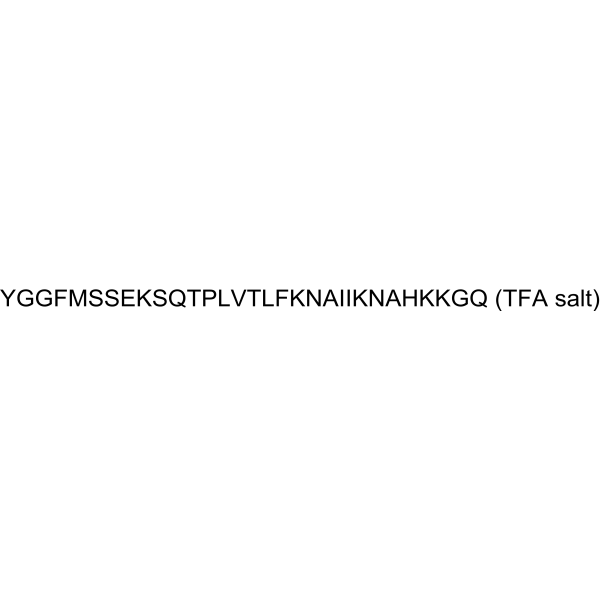
β-Endorphin, equine TFA is an endogenous opioid peptide, which binds at high affinity to both μ/δ opioid receptors. β-Endorphin, equine TFA has analgesic properties .
|
-
-
- HY-N0329
-
|
|
Others
|
Neurological Disease
|
|
Deltaline is a diterpenoid alkaloid and isolated from plants of the genus Delphinium delavayi Franch. Deltaline itself has analgesic properties, and plants of the genus Delphinium delavayi Franch have also been therapeutically used to treat rheumaticpain, paralysis due to stroke, rheumatoid arthritis .
|
-
-
- HY-107795R
-
|
Salipran (Standard)
|
Reference Standards
Prostaglandin Receptor
|
Inflammation/Immunology
Endocrinology
|
|
Benorilate (Standard) is the analytical standard of Benorilate. This product is intended for research and analytical applications. Benorylate (Salipran) is the esterification product of paracetamol and acetylsalicylic acid. Benorylate has anti-inflammatory, analgesic and antipyretic properties. Benorylate could also inhibit prostaglandin (PG) synthesis .
|
-
-
- HY-P2572
-
-
-
- HY-P3548
-
|
|
Opioid Receptor
|
Neurological Disease
|
|
[D-Ala2]-Met-Enkephalinamide, an opioid peptide, is a potent opioid agonist. [D-Ala2]-Met-Enkephalinamide decreases bile flow by a central mechanism. [D-Ala2]-Met-Enkephalinamide has analgesic properties .
|
-
-
- HY-P3550
-
-
-
- HY-U00031
-
|
EN3324
|
Opioid Receptor
|
Neurological Disease
|
|
Axomadol (EN3324) is a centrally active analgesic agent with opioid agonistic properties and inhibitory effects on the reuptake of monoamines .
|
-
-
- HY-135731A
-
|
|
COX
Drug Metabolite
|
Inflammation/Immunology
|
|
4-Methylamino antipyrine hydrochloride is an active metabolite of Metamizole. Metamizole is a pyrazolone non-steroidal anti-inflammatory drug (NSAID) and inhibits COX. Metamizole is an nonopioid analgesic agent and can be used for pain and fever . 4-Methylamino antipyrine hydrochloride has analgesic, antipyretic, and relatively weak antiinflammatory properties .
|
-
-
- HY-110065
-
|
|
Cannabinoid Receptor
|
Neurological Disease
|
|
SER-601 is a potent and selective peripheral cannabinoid (CB2) receptor agonist with a Ki of 6.3 nM. SER-601 has analgesic and antidiabetic properties and can be used for relevant research .
|
-
-
- HY-17479BS
-
|
|
Isotope-Labeled Compounds
|
Others
|
|
Amfenac-d5 sodium is deuterated-labeled Amfenac sodium. Amfenac Sodium is an orally active and potent anti-inflammatory compound possessing antipyretic and analgesic properties. Amfenac Sodium can be used for the research of acute and chronic inflammation .
|
-
-
- HY-17479S
-
|
|
Isotope-Labeled Compounds
|
Others
|
|
Amfenac-d5 is the deuterium labeled Amfenac. Amfenac is an orally active and potent anti-inflammatory compound possessing antipyretic and analgesic properties. Amfenac can be used for the research of acute and chronic inflammation .
|
-
-
- HY-18342S
-
|
MK-647-d3
|
Isotope-Labeled Compounds
COX
|
Inflammation/Immunology
Cancer
|
|
Diflunisal-d3 is the deuterium labeled Diflunisal. Diflunisal (MK-647) is a salicylate derivative with nonsteroidal anti-inflammatory and uricosuric properties, which is used alone as an analgesic and in rheumatoid arthritis patients. The mechanism of action of diflunisal is as a Cyclooxygenase (COX) Inhibitor.
|
-
-
- HY-110230
-
|
D 9998-d4 hydrochloride
|
Isotope-Labeled Compounds
Potassium Channel
iGluR
GABA Receptor
|
Neurological Disease
Inflammation/Immunology
|
|
Flupirtine-d4 (D 9998-d4) hydrochloride is the deuterium labeled Flupirtine hydrochloride (HY-W709349). Flupirtine hydrochloride is an orally active, blood-brain barrier-crossing non-opioid analgesic and neuroprotective agent. Flupirtine hydrochloride is a neuronal potassium channel opener (Kv7 activator), a NMDA receptor antagonist and a GABA receptor activator. Flupirtine hydrochloride stabilizes blood-brain-barrier integrity, reduces oxidative stress and brain leukocyte infiltration, enhances angioneurogenesis, suppresses calcium influx, stabilizes neuronal resting membrane potential, and counteracts focal cerebral ischemia. Flupirtine hydrochloride exhibits analgesic, muscle relaxant properties, protects neurons from excitotoxic, ischemic, or cytokine-mediated death. Flupirtine hydrochloride functions as a non-opioid analgesic without antipyretic or antiphlogistic properties, shows no relevant affinity to opiate receptor. Flupirtine hydrochloride can be used for the research of focal cerebral ischemia, pain, Alzheimer’s disease, or multiple sclerosis .
|
-
-
- HY-106756
-
|
U-62066
|
Opioid Receptor
|
Neurological Disease
|
|
Spiradoline (U-62066), an arylacetamide, is a selective kappa opioid receptor (KOR) agonist with a Ki of 8.6 nM in guinea pig. The Ki values of Spiradoline for μ and δ receptors are 252 nM and 9400 nM, respectively. Spiradoline has potent diuretic, analgesic, antiarrythmic, antitussive, neuroprotective properties and easily penetrates the blood-brain barrier .
|
-
-
- HY-121132
-
-
-
- HY-P1866
-
-
-
- HY-106907
-
|
|
PGE synthase
|
Inflammation/Immunology
Endocrinology
|
|
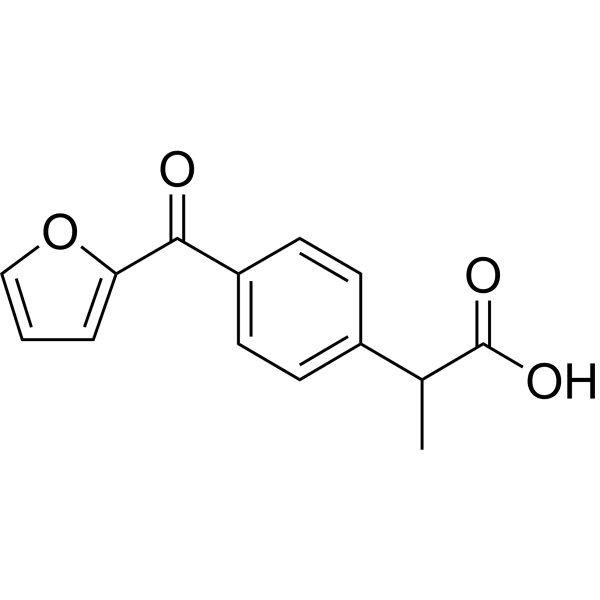
Furprofen is an non-steroidal anti-inflammatory drug (NSAID) with analgesic properties . Furprofen acts via the inhibition of prostaglandin (PGE) synthesis. Furprofen can be treated orally for the relief of pain .
|
-
-
- HY-136653
-
|
WY 15705
|
UGT
|
Neurological Disease
|
|
Ciramadol (WY 15705) is a potent and orally active analgesic agent with both narcotic agonist and UDP-glucuronyltransferase modulator properties . Ciramadol (WY 15705) can be used for postoperative pain research research.
|
-
-
- HY-30235
-
|
|
PGE synthase
TNF Receptor
Bacterial
|
Inflammation/Immunology
Cancer
|
|
Benzydamine is an orally administered prostaglandin synthesis inhibitor that has anti-inflammatory, analgesic, antipyretic, and antibacterial properties. Benzydamine can inhibit TNF-α, stabilize cell membranes, and reduce oxidative stress within cells .
|
-
-
- HY-135731AS
-
|
|
Isotope-Labeled Compounds
COX
Drug Metabolite
|
Inflammation/Immunology
|
|
4-Methylamino antipyrine-d3 (hydrochloride) is deuterium labeled 4-Methylamino antipyrine (hydrochloride). 4-Methylamino antipyrine hydrochloride is an active metabolite of Metamizole. Metamizole is a pyrazolone non-steroidal anti-inflammatory drug (NSAID) and inhibits COX. Metamizole is an nonopioid analgesic agent and can be used for pain and fever . 4-Methylamino antipyrine hydrochloride has analgesic, antipyretic, and relatively weak antiinflammatory properties .
|
-
-
- HY-100827
-
|
LF22-0542
|
Bradykinin Receptor
|
Inflammation/Immunology
|
|
Safotibant (LF22-0542) is a selective antagonist for kinin B1 receptor (BKB1R), with Ki of 0.35 and 6.5 nM, for human and mouse BKB1R, respectively. Safotibant exhibits analgesic and anti-inflammatory property in mice model .
|
-
-
- HY-124959
-
|
U-62066 mesylate
|
Opioid Receptor
|
Neurological Disease
|
|
Spiradoline mesylate (U-62066 mesylate), an arylacetamide, is a selective kappa opioid receptor (KOR) agonist with a Ki of 8.6 nM in guinea pig. The Ki values of Spiradoline mesylate for μ and δ receptors are 252 nM and 9400 nM, respectively. Spiradoline mesylate has potent diuretic, analgesic, antiarrythmic, antitussive, neuroprotective properties and easily penetrates the blood-brain barrier .
|
-
-
- HY-N0301R
-
|
|
Reference Standards
GABA Receptor
|
Neurological Disease
Inflammation/Immunology
|
|
Thiocolchicoside (Standard) is the analytical standard of Thiocolchicoside. This product is intended for research and analytical applications. Thiocolchicoside is a competitive γ-aminobutyric acid type A (GABAA) receptor antagonist and glycine receptor agonist in the central nervous system. Thiocolchicoside is a semisynthetic sulfur derivative of colchicoside. Thiocolchicoside is a muscle relaxant and has anti-inflammatory, and analgesic properties .
|
-
-
- HY-P3647
-
-
-
- HY-106823
-
-
-
- HY-101696
-
-
-
- HY-N9504
-
-
- HY-123001
-
-
- HY-119517
-
-
- HY-107527A
-
|
|
GlyT
|
Inflammation/Immunology
|
|
Org 25543 is a selective inhibitor of the glycine transporter 2, exhibiting analgesic properties in a rat model of chronic pain.
|
-
- HY-W839383
-
-
- HY-12384
-
|
|
COX
|
Inflammation/Immunology
|
|
Tenosal is a new compound obtained by esterifying salicylic acid with 2-thiophene-carboxylic acid and displays anti-inflammatory, analgesic and antipyretic properties.
|
-
- HY-W707972
-
|
|
Histamine Receptor
|
Neurological Disease
|
|
Methapyrilene fumarate is a histamine receptor H1 antagonist. Methapyrilene fumarate has sedative effects. Methapyrilene fumarate is being studied for its analgesic properties .
|
-
- HY-B0440S
-
-
- HY-W725190A
-
|
|
Opioid Receptor
|
Neurological Disease
|
|
Piperidylthiambutene is a potent µ-opioid receptor (MOR) agonist with a Ki of 2.75 nM. Piperidylthiambutene exhibits analgesic and antitussive properties and can be utilized in relevant research .
|
-
- HY-17482
-
|
Z-876
|
Drug Derivative
|
Inflammation/Immunology
|
|
Difenpiramide (Z-876) is a bisphenylalcanoic derivative with marked anti-inflammatory, analgesic, antipyretic and uricosuric properties. Difenpiramide has platelet anti-aggregation activity .
|
-
- HY-B0440R
-
|
Ro-12-0068 (Standard)
|
Reference Standards
COX
|
Inflammation/Immunology
|
|
Tenoxicam (Standard) is the analytical standard of Tenoxicam. This product is intended for research and analytical applications. Tenoxicam (Ro-12-0068), an antiinflammatory agent with analgesic and antipyretic properties.
|
-
- HY-17479
-
|
|
COX
|
Inflammation/Immunology
|
|
Amfenac (AHR 5850) is an orally active and potent anti-inflammatory compound possessing antipyretic and analgesic properties. Amfenac can be used for the research of acute and chronic inflammation .
|
-
- HY-17479B
-
|
AHR 5850 sodium
|
COX
|
Inflammation/Immunology
|
|
Amfenac sodium (AHR 5850 sodium) is an orally active and potent anti-inflammatory compound possessing antipyretic and analgesic properties. Amfenac sodium can be used for the research of acute and chronic inflammation .
|
-
- HY-W087207
-
|
|
Drug Derivative
|
Inflammation/Immunology
|
|
Loxoprofen L-menthol ester is a degradation product Loxoprofen sodium (HY-B0578A). Loxoprofen sodium is a non-steroidal, orally active anti-inflammatory agent with analgesic and anti-pyretic properties .
|
-
- HY-N12121
-
|
|
Others
|
Infection
Inflammation/Immunology
|
|
Piperundecalidine is an amide alkaloids that can be purified from Piper longum L. Piperundecalidine shows various biological properties, such as anti-inammatory, analgesic, anti-amoebic, anti-depressant, hepatoprotective,etc. .
|
-
- HY-B0548AS
-
-
- HY-133976
-
-
- HY-N0377R
-
-
- HY-108249R
-
|
|
Histamine Receptor
Reference Standards
|
Inflammation/Immunology
Cancer
|
|
Tribenoside (Standard) is the analytical standard of Tribenoside. This product is intended for research and analytical applications. Tribenoside is a vasoprotective agent, can be used for the research of hemorrhoids. Tribenoside has mild anti-inflammatory, analgesic, and wound healing properties .
|
-
- HY-N0343R
-
|
Helicide (Standard); Helicidum (Standard); 4-Formylphenyl-β-D-allopyranoside (Standard)
|
Reference Standards
Others
|
Neurological Disease
|
|
Helicid (Standard) is the analytical standard of Helicid. This product is intended for research and analytical applications. Helicid (Helicide) is a major constituent of Helicia nilgirica Bedd. Helicid has been used to treat psychoneurosis for its analgesic properties .
|
-
- HY-170654
-
|
|
Opioid Receptor
|
Neurological Disease
|
|
Opioid receptor antagonist 1 (Compound 10) is an Orvinol (HY-D0168)-based opioid receptor antagonist. Opioid receptor antagonist 1 has antagonistic activity to the analgesic properties of Morphine .
|
-
- HY-W702634
-
-
- HY-W741411
-
-
- HY-B0634S
-
|
|
Isotope-Labeled Compounds
COX
|
Inflammation/Immunology
|
|
Aceclofenac-d4 is the deuterium labeled Aceclofenac. Aceclofenac is an orally active nonsteroidal anti-inflammatory agent (NSAID), with analgesic and anti-inflammatory properties. Aceclofenac is used for the research of osteoarthritis, ankylosing spondylitis, rheumatoid arthritis .
|
-
- HY-173471
-
|
|
TRP Channel
|
Neurological Disease
|
|
TRPA1 agonist-1 (compound 21) is a potent and selective TAAR1 agonist with an EC50 of 25.47 μM. TRPA1 agonist-1 shows effective analgesic properties without irritation in mice .
|
-
- HY-P3647A
-
|
|
Opioid Receptor
Adenylate Cyclase
|
Neurological Disease
|
|
[DPro10] Dynorphin A (1-11), porcine hydrochloride, a N-Alkylated derivative, is a potent κ-opioid receptor agonist with a Ki value of 0.13 nM. [DPro10] Dynorphin A (1-11), porcine hydrochloride has analgesic property .
|
-
- HY-W709349
-
|
D 9998 hydrochloride
|
Potassium Channel
iGluR
GABA Receptor
|
Neurological Disease
Inflammation/Immunology
|
|
Flupirtine (D 9998) hydrochloride is an orally active, blood-brain barrier-crossing non-opioid analgesic and neuroprotective agent. Flupirtine hydrochloride is a neuronal potassium channel opener (Kv7 activator), a NMDA receptor antagonist and a GABA receptor activator. Flupirtine hydrochloride stabilizes blood-brain-barrier integrity, reduces oxidative stress and brain leukocyte infiltration, enhances angioneurogenesis, suppresses calcium influx, stabilizes neuronal resting membrane potential, and counteracts focal cerebral ischemia. Flupirtine hydrochloride exhibits analgesic, muscle relaxant properties, protects neurons from excitotoxic, ischemic, or cytokine-mediated death. Flupirtine hydrochloride functions as a non-opioid analgesic without antipyretic or antiphlogistic properties, shows no relevant affinity to opiate receptor. Flupirtine hydrochloride can be used for the research of focal cerebral ischemia, pain, Alzheimer’s disease, or multiple sclerosis .
|
-
- HY-B0634R
-
|
|
Reference Standards
COX
|
Inflammation/Immunology
|
|
Aceclofenac (Standard) is the analytical standard of Aceclofenac. This product is intended for research and analytical applications. Aceclofenac is an orally active nonsteroidal anti-inflammatory agent (NSAID), with analgesic and anti-inflammatory properties. Aceclofenac is used for the research of osteoarthritis, ankylosing spondylitis, rheumatoid arthritis .
|
-
- HY-17001R
-
|
D 9998 Maleate (Standard)
|
Reference Standards
Potassium Channel
iGluR
GABA Receptor
|
Neurological Disease
Inflammation/Immunology
|
|
Flupirtine Maleate (Standard) is the analytical standard of Flupirtine Maleate (HY-17001). This product is intended for research and analytical applications. Flupirtine Maleate is an orally active, blood-brain barrier-crossing non-opioid analgesic and neuroprotective agent. Flupirtine Maleate is a neuronal potassium channel opener (Kv7 activator), a NMDA receptor antagonist and a GABA receptor activator. Flupirtine Maleate stabilizes blood-brain-barrier integrity, reduces oxidative stress and brain leukocyte infiltration, enhances angioneurogenesis, suppresses calcium influx, stabilizes neuronal resting membrane potential, and counteracts focal cerebral ischemia. Flupirtine Maleate exhibits analgesic, muscle relaxant properties, protects neurons from excitotoxic, ischemic, or cytokine-mediated death. Flupirtine Maleate functions as a non-opioid analgesic without antipyretic or antiphlogistic properties, shows no relevant affinity to opiate receptor. Flupirtine Maleate can be used for the research of focal cerebral ischemia, pain, Alzheimer’s disease, or multiple sclerosis .
|
-
- HY-135731AR
-
|
|
Reference Standards
COX
Drug Metabolite
|
Inflammation/Immunology
|
|
4-Methylamino antipyrine (hydrochloride) (Standard) is the analytical standard of 4-Methylamino antipyrine (hydrochloride). This product is intended for research and analytical applications. 4-Methylamino antipyrine hydrochloride is an active metabolite of Metamizole. Metamizole is a pyrazolone non-steroidal anti-inflammatory drug (NSAID) and inhibits COX. Metamizole is an nonopioid analgesic agent and can be used for pain and fever . 4-Methylamino antipyrine hydrochloride has analgesic, antipyretic, and relatively weak antiinflammatory properties .
|
-
- HY-135731R
-
|
|
Reference Standards
COX
Drug Metabolite
|
Inflammation/Immunology
|
|
4-Methylamino antipyrine (Standard) is the analytical standard of 4-Methylamino antipyrine. This product is intended for research and analytical applications. 4-Methylamino antipyrine is an active metabolite of Metamizole. Metamizole is a pyrazolone non-steroidal anti-inflammatory drug (NSAID) and inhibits COX. Metamizole is an nonopioid analgesic agent and can be used for pain and fever . 4-Methylamino antipyrine has analgesic, antipyretic, and relatively weak antiinflammatory properties .
|
-
- HY-18342R
-
|
MK-647 (Standard)
|
Reference Standards
COX
|
Inflammation/Immunology
Cancer
|
|
Diflunisal (Standard) is the analytical standard of Diflunisal. This product is intended for research and analytical applications. Diflunisal (MK-647) is a salicylate derivative with nonsteroidal anti-inflammatory and uricosuric properties, which is used alone as an analgesic and in rheumatoid arthritis patients. The mechanism of action of diflunisal is as a Cyclooxygenase (COX) Inhibitor.
|
-
- HY-122381R
-
|
|
Bacterial
Endogenous Metabolite
Reference Standards
|
Neurological Disease
|
|
Kyotorphin (Standard) is the analytical standard of Kyotorphin. This product is intended for research and analytical applications. Kyotorphin is an endogenou neuroactive dipeptide with analgesic properties. Kyotorphin possesses anti-inflammatory and antimicrobial activity. Kyotorphin levels in cerebro-spinal fluid correlate negatively with the progression of neurodegeneration in Alzheimer's Disease patients .
|
-
- HY-17001AR
-
|
D 9998 (Standard)
|
Reference Standards
Potassium Channel
iGluR
GABA Receptor
|
Neurological Disease
Inflammation/Immunology
|
|
Flupirtine (Standard) (D 9998 (Standard)) is the analytical standard of Flupirtine (HY-17001A). This product is intended for research and analytical applications. Flupirtine is an orally active, blood-brain barrier-crossing non-opioid analgesic and neuroprotective agent. Flupirtine is a neuronal potassium channel opener (Kv7 activator), a NMDA receptor antagonist and a GABA receptor activator. Flupirtine stabilizes blood-brain-barrier integrity, reduces oxidative stress and brain leukocyte infiltration, enhances angioneurogenesis, suppresses calcium influx, stabilizes neuronal resting membrane potential, and counteracts focal cerebral ischemia. Flupirtine exhibits analgesic, muscle relaxant properties, protects neurons from excitotoxic, ischemic, or cytokine-mediated death. Flupirtine functions as a non-opioid analgesic without antipyretic or antiphlogistic properties, shows no relevant affinity to opiate receptor. Flupirtine can be used for the research of focal cerebral ischemia, pain, Alzheimer’s disease, or multiple sclerosis .
|
-
- HY-17361S
-
|
|
Isotope-Labeled Compounds
COX
|
Inflammation/Immunology
|
|
Etofenamate-d4 is the deuterium labeled Etofenamate. Etofenamate, a non-steroid anti-inflammatory agent (NSAID) and a non-selective COX inhibitor, possesses analgesic, anti-rheumatic, antipyretic and anti-inflammatory properties. Etofenamate is used in the research for osteoarthritis, arthritis and other inflammatory diseases .
|
-
- HY-B0578S
-
|
|
Isotope-Labeled Compounds
COX
|
Inflammation/Immunology
|
|
Loxoprofen-d4 is deuterium labeled Loxoprofen. Loxoprofen is a non-steroidal anti-inflammatory agent with analgesic and anti-pyretic properties. Loxoprofen sodium is a nonselective COX inhibitor with IC50s of 6.5 and 13.5 μM for COX-1 and COX-2, respectively .
|
-
- HY-18342S1
-
|
MK-647-13C6
|
Isotope-Labeled Compounds
COX
|
Inflammation/Immunology
Cancer
|
|
Diflunisal- 13C6 (MK-647- 13C6) is 13C labeled Diflunisal. Diflunisal (MK-647) is a salicylate derivative with nonsteroidal anti-inflammatory and uricosuric properties, which is used alone as an analgesic and in rheumatoid arthritis patients. The mechanism of action of diflunisal is as a Cyclooxygenase (COX) Inhibitor.
|
-
- HY-179462
-
|
|
Drug Metabolite
|
Neurological Disease
|
|
Despropionyl-bezitramide is an orally active analgesic and a metabolite of Bezitramide. Despropionyl-bezitramide possesses analgesic properties comparable to those of its parent compound, Bezitramide .
|
-
- HY-N18762
-
-
- HY-U00031A
-
|
EN3324 hydrochloride
|
Endogenous Metabolite
|
Neurological Disease
|
|
Axomadol hydrochloride is a centrally active analgesic agent with opioid agonistic properties and inhibitory effects on the reuptake of monoamines .
|
-
- HY-N18755
-
-
- HY-N18743
-
|
|
Others
|
Neurological Disease
Inflammation/Immunology
|
|
Achyranthes aspera extract is a versatile plant extract highly regarded for its many medicinal properties, including analgesic, anti-inflammatory, diuretic, antipyretic, and anthelmintic effects.
|
-
- HY-N18775
-
|
|
Bacterial
|
Infection
Neurological Disease
|
|
Gloriosa superba seed extract contains various bioactive compounds, such as alkaloids (particularly colchicine and gloriosine). Gloriosa superba seed extract possesses analgesic, antibacterial, and antifungal properties.
|
-
- HY-105525
-
|
NIH 10908 free base
|
Opioid Receptor
|
Neurological Disease
|
|
Sameridine (NIH-10908 free base) is a weak partial agonist of the μ-opioid receptor. Sameridine shows local anesthetic and analgesic properties. Sameridine has minimal respiratory depression at low doses, but can suppress ventilatory response at high doses. Sameridine can be used for the study of analgesic effect .
|
-
- HY-N1082R
-
-
- HY-N19060
-
|
|
Others
|
Inflammation/Immunology
|
|
Boswellia serrata extract is rich in boswellic acid, which is the main bioactive component responsible for its medicinal effects. Boswellia serrata extract has anti-inflammatory and analgesic properties and can be used in research on osteoarthritis, rheumatoid arthritis, and other inflammatory diseases.
|
-
- HY-105592
-
-
- HY-W709349S
-
|
D 9998-d6 hydrochloride
|
Isotope-Labeled Compounds
Potassium Channel
iGluR
GABA Receptor
|
Neurological Disease
|
|
Flupirtine-d6 (D 9998-d6) hydrochloride is the deuterium labeled Flupirtine hydrochloride (HY-W709349). Flupirtine hydrochloride is an orally active, blood-brain barrier-crossing non-opioid analgesic and neuroprotective agent. Flupirtine hydrochloride is a neuronal potassium channel opener (Kv7 activator), a NMDA receptor antagonist and a GABA receptor activator. Flupirtine hydrochloride stabilizes blood-brain-barrier integrity, reduces oxidative stress and brain leukocyte infiltration, enhances angioneurogenesis, suppresses calcium influx, stabilizes neuronal resting membrane potential, and counteracts focal cerebral ischemia. Flupirtine hydrochloride exhibits analgesic, muscle relaxant properties, protects neurons from excitotoxic, ischemic, or cytokine-mediated death. Flupirtine hydrochloride functions as a non-opioid analgesic without antipyretic or antiphlogistic properties, shows no relevant affinity to opiate receptor. Flupirtine hydrochloride can be used for the research of focal cerebral ischemia, pain, Alzheimer’s disease, or multiple sclerosis .
|
-
- HY-W701503
-
|
|
Isotope-Labeled Compounds
COX
Drug Metabolite
|
Inflammation/Immunology
|
|
4-Methylamino antipyrine-d3-1 is the deuterium labeled 4-Methylamino antipyrine-1. 4-Methylamino antipyrine is an active metabolite of Metamizole. Metamizole is a pyrazolone non-steroidal anti-inflammatory drug (NSAID) and inhibits COX. Metamizole is an nonopioid analgesic agent and can be used for pain and fever . 4-Methylamino antipyrine has analgesic, antipyretic, and relatively weak antiinflammatory properties .
|
-
- HY-N15447
-
|
|
Drug Derivative
|
Cardiovascular Disease
Neurological Disease
Inflammation/Immunology
|
|
Visnaginone is the derivative of Visnagin (HY-N1082). Visnagin, an antioxidant furanocoumarin derivative, possess anti-inflammatory and analgesic properties. Visnagin has substantial potential to prevent Cerulein induced acute pancreatitis (AP). Visnagin possess promising vasodilator effects in vascular smooth muscles .
|
-
- HY-106907R
-
|
|
Reference Standards
PGE synthase
|
Inflammation/Immunology
Endocrinology
|
|
Furprofen (Standard) is the analytical standard of Furprofen (HY-106907). This product is intended for research and analytical applications. Furprofen is an non-steroidal anti-inflammatory drug (NSAID) with analgesic properties . Furprofen acts via the inhibition of prostaglandin (PGE) synthesis. Furprofen can be treated orally for the relief of pain .
|
-
- HY-W322573
-
|
|
COX
|
Inflammation/Immunology
|
|
(R)-Ketoprofen is an orally active nonsteroidal anti-inflammatory drug (NSAID) with analgesic properties. (R)-Ketoprofen does not significantly amplify the increase of inflammatory cytokines (such as tumor necrosis factor (TNF) and interleukin-1 (IL-1)) induced by LPS, but it can inhibit the anti-inflammatory activity of (S)-Ketoprofen .
|
-
- HY-17361R
-
|
|
Reference Standards
COX
|
Inflammation/Immunology
|
|
Etofenamate (Standard) is the analytical standard of Etofenamate. This product is intended for research and analytical applications. Etofenamate, a non-steroid anti-inflammatory agent (NSAID) and a non-selective COX inhibitor, possesses analgesic, anti-rheumatic, antipyretic and anti-inflammatory properties. Etofenamate is used in the research for osteoarthritis, arthritis and other inflammatory diseases .
|
-
- HY-B0578
-
|
|
COX
|
Cardiovascular Disease
Inflammation/Immunology
Cancer
|
|
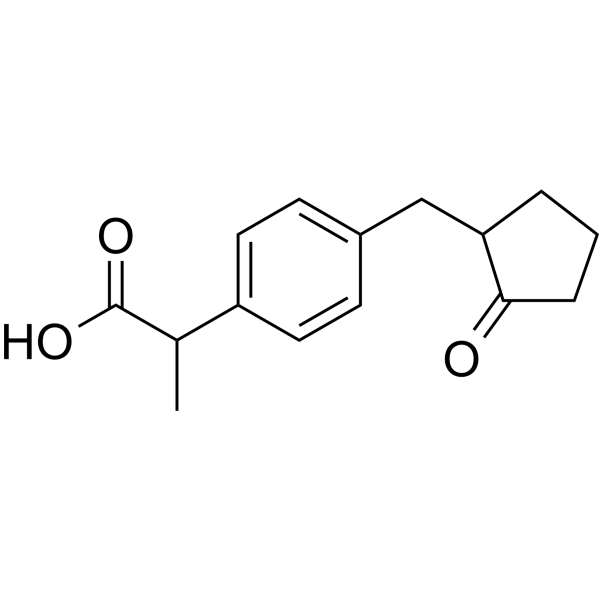
Loxoprofen is a non-steroidal, orally active anti-inflammatory agent with analgesic and anti-pyretic properties. Loxoprofen is a nonselective COX inhibitor with IC50s of 6.5 and 13.5 μM for COX-1 and COX-2, respectively. Loxoprofen can reduce atherosclerosis and shows antitumor activity .
|
-
- HY-B0363R
-
|
R805 (Standard)
|
Reference Standards
COX
|
Inflammation/Immunology
Cancer
|
|
Nimesulide (Standard) is the analytical standard of Nimesulide. This product is intended for research and analytical applications. Nimesulide is a selective COX-2 inhibitor, with IC50s of 70 nM-70 μM in a time-dependent manner, but it shows no effect on COX-1 (IC50 >100 μM). Nimesulide has potent anti-inflammatory, analgesic and antipyretic properties.
|
-
- HY-B1288A
-
|
Benoxinate; Novesinol; Oxybucaine
|
Sodium Channel
|
Cardiovascular Disease
Neurological Disease
|
|
Oxybuprocaine is a short-acting ester anesthetic. Oxybuprocaine binds to sodium channels and reversibly stabilizes neuronal membranes. Oxybuprocaine has cutaneous analgesic properties. Oxybuprocaine is less potent than Bupivacaine (HY-B0405) at producing central nervous system and cardiovascular toxicity. Oxybuprocaine can be used in ophthalmology and otolaryngology .
|
-
- HY-N2041
-
-
- HY-B0578A
-
|
|
COX
|
Cardiovascular Disease
Inflammation/Immunology
Cancer
|
|
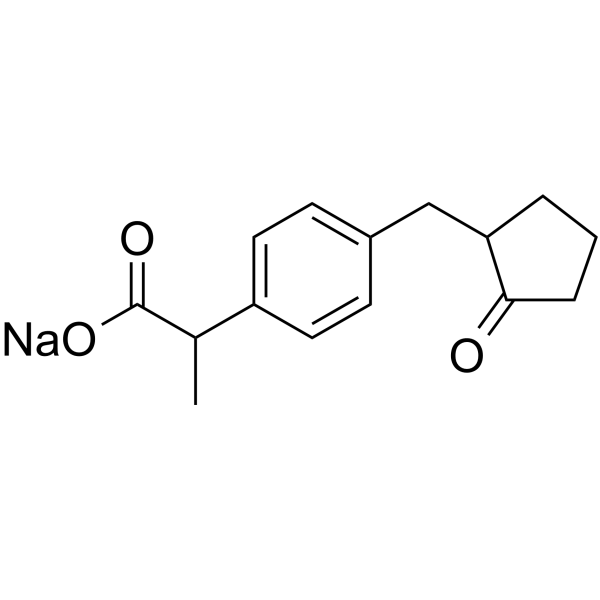
Loxoprofen sodium is a non-steroidal, orally active anti-inflammatory agent with analgesic and anti-pyretic properties. Loxoprofen sodium is a nonselective COX inhibitor with IC50s of 6.5 and 13.5 μM for COX-1 and COX-2, respectively. Loxoprofen sodium can reduce atherosclerosis and shows antitumor activity .
|
-
- HY-B0363S
-
|
|
Isotope-Labeled Compounds
COX
|
Inflammation/Immunology
|
|
Nimesulide-d5 is a deuterium labeled Nimesulide. Nimesulide is a selective COX-2 inhibitor, with IC50s of 70 nM-70 μM in a time-dependent manner, but it shows no effect on COX-1 (IC50 >100 μM). Nimesulide has potent anti-inflammatory, analgesic and antipyretic properties .
|
-
- HY-W017100
-
|
6-Methoxysalicylic acid
|
Drug Derivative
|
Neurological Disease
|
|
2-Hydroxy-6-methoxybenzoic acid (6-Methoxysalicylic acid) is an orally active derivative of Salicylic acid (HY-B0167). 2-Hydroxy-6-methoxybenzoic acid can be isolated from the plant Brickellia veronicifolia. 2-Hydroxy-6-methoxybenzoic acid has analgesic properties .
|
-
- HY-101955
-
|
(2S,6S)-HNK hydrochloride
|
mTOR
nAChR
|
Neurological Disease
|
|
(2S,6S)-Hydroxynorketamine hydrochloride is a neurorelaxant with potential antidepressant and analgesic effects. (2S,6S)-Hydroxynorketamine hydrochloride can activate the mTOR pathway, increase the phosphorylation level of downstream targets, and antagonize α7-nicotinic acetylcholine receptor (nAChR) to exert neuroactive properties .
|
-
- HY-B0578B
-
|
|
COX
|
Cardiovascular Disease
Inflammation/Immunology
Cancer
|
|
Loxoprofen sodium dihydrate is a non-steroidal, orally active anti-inflammatory agent with analgesic and anti-pyretic properties. Loxoprofen sodium dihydrate is a nonselective COX inhibitor with IC50s of 6.5 and 13.5 μM for COX-1 and COX-2, respectively. Loxoprofen sodium dihydrate can reduce atherosclerosis and shows antitumor activity .
|
-
- HY-15550S
-
|
|
Drug Metabolite
|
Neurological Disease
Inflammation/Immunology
|
|
4'-Hydroxy diclofenac-d4 is the deuterium labeled 4'-Hydroxy diclofenac. 4'-Hydroxy diclofenac is an orally active metabolite of Diclofenac (HY-15036) by cytochrome P450 2C9 (CYP2C9). 4'-Hydroxy diclofenac has anti-inflammatory and analgesic properties .
|
-
- HY-B0363S1
-
|
R805-13C6
|
Isotope-Labeled Compounds
COX
|
Inflammation/Immunology
Cancer
|
|
Nimesulide- 13C6 (R805- 13C6) is 13C labeled Nimesulide. Nimesulide is a selective COX-2 inhibitor, with IC50s of 70 nM-70 μM in a time-dependent manner, but it shows no effect on COX-1 (IC50 >100 μM). Nimesulide has potent anti-inflammatory, analgesic and antipyretic properties.
|
-
- HY-15550S1
-
|
|
Drug Metabolite
|
Inflammation/Immunology
|
|
4'-Hydroxy diclofenac- 13C6 is the 13C labeled 4'-Hydroxy diclofenac . 4'-Hydroxy diclofenac is an orally active metabolite of Diclofenac (HY-15036) by cytochrome P450 2C9 (CYP2C9). 4'-Hydroxy diclofenac has anti-inflammatory and analgesic properties .
|
-
- HY-W009706A
-
|
Allopydin sodium; W-7320 sodium
|
Prostaglandin Receptor
|
Neurological Disease
Inflammation/Immunology
|
|
Alclofenac (Allopydin) sodium is an orally active prostaglandin synthase inhibitor with anti-inflammatory, analgesic and antipyretic activities. Alclofenac sodium irreversibly inhibits platelet aggregation. Alclofenac can be used in research related to rheumatoid arthritis, osteoarthritis, ankylosing spondylitis, low back pain and sciatica .
|
-
- HY-W009706B
-
|
Allopydin (lysinate); W-7320 (lysinate)
|
Prostaglandin Receptor
|
Neurological Disease
Inflammation/Immunology
|
|
Alclofenac (Allopydin) lysinate is an orally active prostaglandin synthase inhibitor with anti-inflammatory, analgesic and antipyretic activities. Alclofenac lysinate irreversibly inhibits platelet aggregation. Alclofenac lysinate can be used in research related to rheumatoid arthritis, osteoarthritis, ankylosing spondylitis, low back pain and sciatica .
|
-
- HY-N6652
-
|
Uracil 1-β-D-arabinofuranoside
|
Others
|
Cardiovascular Disease
Inflammation/Immunology
Cancer
|
|
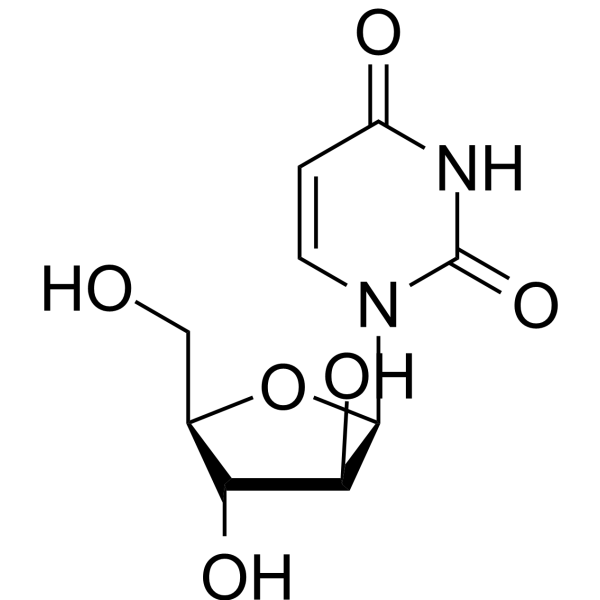
1-beta-D-Arabinofuranosyluracil (Uracil 1-β-D-arabinofuranoside) isolated from the Caribbean sponge Tectitethya crypta, is a methoxyadenosine derivative. 1-beta-D-Arabinofuranosyluracil has demonstrated a diverse bioactivity profile including anti-inflammatory activity, analgesic and vasodilation properties . 1-beta-D-Arabinofuranosyluracil reduces a proliferation of mouse lymphoma cells .
|
-
- HY-15550R
-
|
|
Reference Standards
Drug Metabolite
|
Neurological Disease
Inflammation/Immunology
|
|
4'-Hydroxy diclofenac (Standard) is the analytical standard of 4'-Hydroxy diclofenac. This product is intended for research and analytical applications. 4'-Hydroxy diclofenac is an orally active metabolite of Diclofenac (HY-15036) by cytochrome P450 2C9 (CYP2C9). 4'-Hydroxy diclofenac has anti-inflammatory and analgesic properties .
|
-
- HY-N3544R
-
|
(-)-Caryophyllene oxide (Standard)
|
Reference Standards
Apoptosis
Bacterial
Fungal
Parasite
|
Infection
Neurological Disease
Inflammation/Immunology
Cancer
|
|
Caryophyllene oxide (Standard) ((-)-Caryophyllene oxide (Standard)) is the analytical standard of Caryophyllene oxide (HY-N3544). This product is intended for research and analytical applications. Caryophyllene oxide is a bicyclic sesquiterpene with anticancer effects. Caryophyllene oxide induces apoptosis of PC-3 cells. Caryophyllene oxide shows analgesic and anti-inflammatory activities. Caryophyllene oxide has insecticidal, antioxidant, antimicrobial, antifungal, and antiparasitic properties.
|
-
- HY-W654009
-
|
|
Isotope-Labeled Compounds
COX
|
Inflammation/Immunology
|
|
Loxoprofen-d3 is deuterium labeled Loxoprofen. Loxoprofen is a non-steroidal, orally active anti-inflammatory agent with analgesic and anti-pyretic properties. Loxoprofen is a nonselective COX inhibitor with IC50s of 6.5 and 13.5 μM for COX-1 and COX-2, respectively. Loxoprofen can reduce atherosclerosis and shows antitumor activity .
|
-
- HY-B0578AR
-
|
|
Reference Standards
COX
|
Cardiovascular Disease
Inflammation/Immunology
Cancer
|
|
Loxoprofen (sodium) (Standard) is the analytical standard of Loxoprofen (sodium). This product is intended for research and analytical applications. Loxoprofen sodium is a non-steroidal, orally active anti-inflammatory agent with analgesic and anti-pyretic properties. Loxoprofen sodium is a nonselective COX inhibitor with IC50s of 6.5 and 13.5 μM for COX-1 and COX-2, respectively. Loxoprofen sodium can reduce atherosclerosis and shows antitumor activity .
|
-
- HY-N2041R
-
|
|
Reference Standards
Endogenous Metabolite
NF-κB
Bacterial
|
Infection
Inflammation/Immunology
|
|
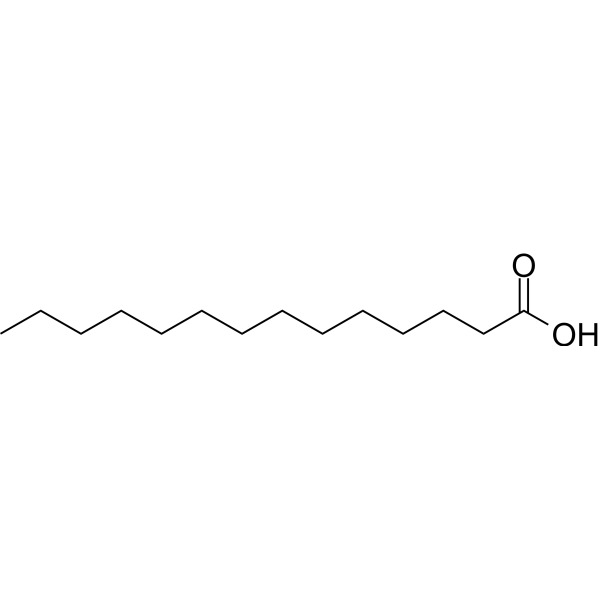
Myristic acid (Standard) is the analytical standard of Myristic acid. This product is intended for research and analytical applications. Myristic acid is an orally active saturated 14-carbon fatty acid found in most animal and plant fats, especially milk fat coconut oil, palm oil and nutmeg oil. Myristic acid exerts anti-inflammatory activity through the NF-κB pathway. Myristic acid has antibacterial, anti-inflammatory and analgesic properties .
|
-
- HY-B0578R
-
|
|
Reference Standards
COX
|
Cardiovascular Disease
Inflammation/Immunology
Cancer
|
|
Loxoprofen (Standard) is the analytical standard of Loxoprofen. This product is intended for research and analytical applications. Loxoprofen is a non-steroidal, orally active anti-inflammatory agent with analgesic and anti-pyretic properties. Loxoprofen is a nonselective COX inhibitor with IC50s of 6.5 and 13.5 μM for COX-1 and COX-2, respectively. Loxoprofen can reduce atherosclerosis and shows antitumor activity .
|
-
- HY-119413R
-
|
|
Reference Standards
Endogenous Metabolite
|
Neurological Disease
|
|
Loxoprofen (sodium) (Standard) is the analytical standard of Loxoprofen (sodium). This product is intended for research and analytical applications. Loxoprofen sodium is a non-steroidal, orally active anti-inflammatory agent with analgesic and anti-pyretic properties. Loxoprofen sodium is a nonselective COX inhibitor with IC50s of 6.5 and 13.5 μM for COX-1 and COX-2, respectively. Loxoprofen sodium can reduce atherosclerosis and shows antitumor activity .
|
-
- HY-N16538
-
|
|
Drug Derivative
|
Cardiovascular Disease
Neurological Disease
|
|
4-(Acetoxymethyl)phenyl glucoside is a type of gastrodin derivative that can cross the blood-brain barrier. 4-(Acetoxymethyl)phenyl glucoside exhibits sedative, anticonvulsant and analgesic effects in mouse models. 4-(Acetoxymethyl)phenyl glucoside can be used for research on senile cardiovascular and cerebrovascular diseases as well as brain nerve disorders .
|
-
- HY-N2041S8
-
-
- HY-174825
-
-
- HY-135495
-
|
|
Sodium Channel
Histamine Receptor
|
Inflammation/Immunology
|
|
AM-0466 is a sodium channel inhibitor with nanomolar levels of NaV1.7 inhibitory activity. AM-0466 exhibits potent pharmacodynamic activity in a NaV1.7-dependent histamine-induced itch model. AM-0466 also showed significant analgesic effects in capsaicin-induced pain models. After optimizing its pharmacokinetic properties, AM-0466 was advanced into in vivo targeting and efficacy models for testing .
|
-
- HY-106224B
-
|
Hypocretin-1 (human, rat, mouse) acetate
|
Orexin Receptor (OX Receptor)
|
Neurological Disease
|
|
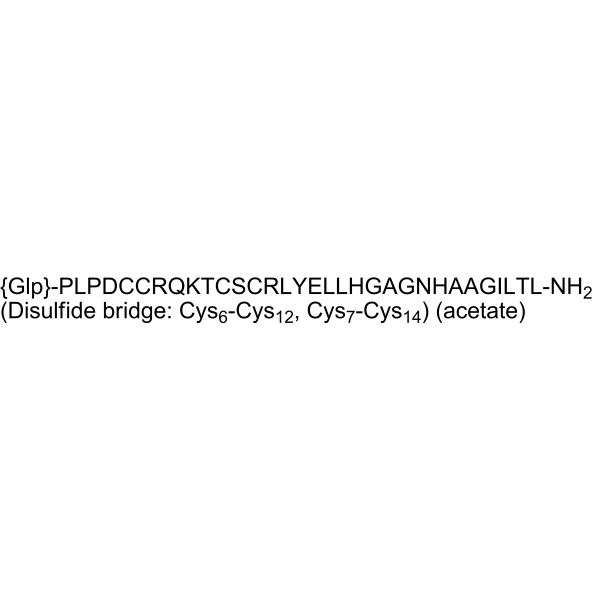
Orexin A (Hypocretin-1) (human, rat, mouse) acetate is a hypothalamic neuropeptide with analgesic properties (crosses the blood-brain barrier). Orexin A (human, rat, mouse) acetate binds and activates two types of G protein-coupled receptors, the orexin-1 receptor (OX1R) and the orexin-2 receptor (OX2R). Orexin A (human, rat, mouse) acetate can be used in studies of appetite regulation, neurodegenerative diseases and modulation of injurious messaging .
|
-
- HY-107825
-
|
|
Endogenous Metabolite
Bacterial
Cholinesterase (ChE)
|
Cardiovascular Disease
Metabolic Disease
Inflammation/Immunology
Cancer
|
|
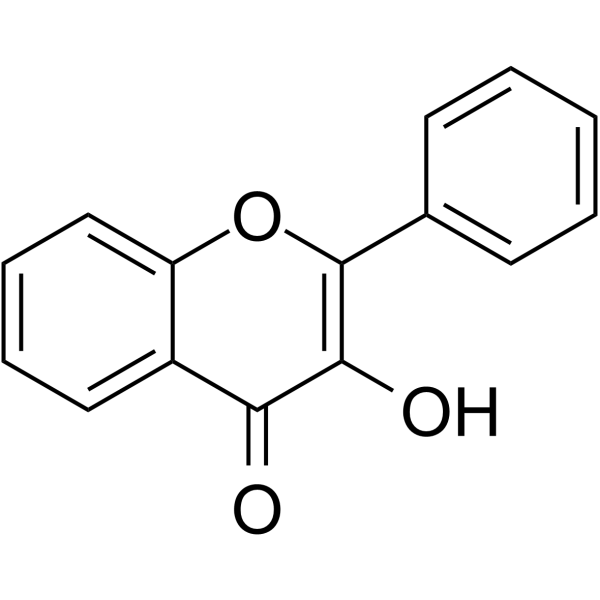
Flavonol is a cholinesterase (ChE) inhibitor, with an IC50 value of 120 μM and a Ki value of 74 μM. Flavonol has antioxidant, free radical-scavenging, antibacterial properties, and immune modulation functions. Flavonol inhibits the PriA helicase of Staphylococcus aureus. Flavonol can suppress the production of NO in LPS-activated RAW 264.7 cells by inhibiting the expression of the iNOS enzyme. Flavonol shows protective and analgesic effects in mice through various neuronal pathways. Flavonol can be used in research related to tumors and atherosclerosis diseases .
|
-
- HY-111011
-
|
JNJ 38488502 acetate; FE 200665 acetate
|
Opioid Receptor
|
Neurological Disease
|
|
CR 665 (JNJ 38488502) acetate is a kappa-opioid agonist that may effectively treat visceral pain by activating receptors on afferent nerves within the gut. CR 665 acetate exhibits peripheral selectivity, differentiating its pharmacokinetic profile from that of non-selective opioids like oxycodone. CR 665 acetate has demonstrated a beneficial effect on visceral pain tolerance thresholds without the delayed analgesic response characteristic of opioids that penetrate the brain. CR 665 acetate is proposed for use in managing postoperative pain due to its pain-relieving properties.
|
-
- HY-N6652R
-
|
Uracil 1-β-D-arabinofuranoside (Standard)
|
Reference Standards
Others
|
Cardiovascular Disease
Inflammation/Immunology
Cancer
|
|
1-beta-D-Arabinofuranosyluracil (Standard) is the analytical standard of 1-beta-D-Arabinofuranosyluracil. This product is intended for research and analytical applications. 1-beta-D-Arabinofuranosyluracil (Uracil 1-β-D-arabinofuranoside) isolated from the Caribbean sponge Tectitethya crypta, is a methoxyadenosine derivative. 1-beta-D-Arabinofuranosyluracil has demonstrated a diverse bioactivity profile including anti-inflammatory activity, analgesic and vasodilation properties . 1-beta-D-Arabinofuranosyluracil reduces a proliferation of mouse lymphoma cells .
|
-
- HY-163116
-
|
|
COX
Carbonic Anhydrase
|
Neurological Disease
Inflammation/Immunology
|
|
Anti-inflammatory agent 67 (compound 7a) is a dual inhibitor of carbonic anhydrase and COX-2, a sulfonamide derivative of Polmacoxib (HY-16726), and has anti-inflammatory properties and analgesic activity. Anti-inflammatory agent 67 has IC50s of 10.4 μM and 50 nM for COX-1 and COX-2, respectively. The Ki of anti-inflammatory agent 67 binding to different isoforms of carbonic anhydrase are 48.3 nM (CA I), 42.2 nM (CA II), 52.3 nM (CA IX), and 13.3 nM (CA XII) .
|
-
- HY-W017100R
-
|
6-Methoxysalicylic acid (Standard)
|
Drug Derivative
Reference Standards
|
Neurological Disease
|
|
2-Hydroxy-6-methoxybenzoic acid (Standard) is the analytical standard of 2-Hydroxy-6-methoxybenzoic acid (HY-W017100). This product is intended for research and analytical applications. 2-Hydroxy-6-methoxybenzoic acid (6-Methoxysalicylic acid) is an orally active derivative of Salicylic acid (HY-B0167). 2-Hydroxy-6-methoxybenzoic acid can be isolated from the plant Brickellia veronicifolia. 2-Hydroxy-6-methoxybenzoic acid has analgesic properties .
|
-
- HY-163117
-
|
|
COX
Carbonic Anhydrase
|
Neurological Disease
Inflammation/Immunology
|
|
Anti-inflammatory agent 68 (compound 7b) is a dual inhibitor of carbonic anhydrase and COX-2, a sulfonamide derivative of Polmacoxib (HY-16726), with anti-inflammatory properties and analgesic activity. Anti-inflammatory agent 68 has IC50s of 12.6 μM and 60 nM for COX-1 and COX-2, respectively. The Ki of anti-inflammatory agent 68 binding to different isoforms of carbonic anhydrase are 52.6 nM (CA I), 79.1 nM (CA II), 58.1 nM (CA IX), and 17.2 nM (CA XII) .
|
-
- HY-B0168
-
|
|
Serotonin Transporter
PERK
|
Neurological Disease
|
|
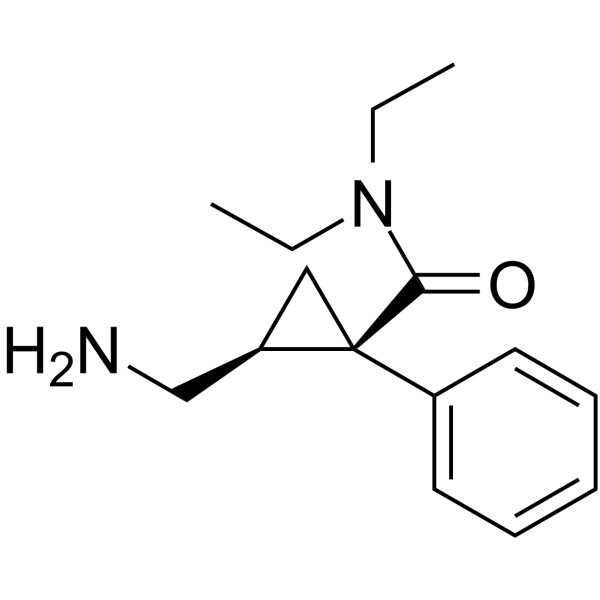
Milnacipran is an orally active Serotonin (HY-B1473A) and Norepinephrine (HY-13715) reuptake inhibitor. Milnacipran inhibits monoamine transporters, especially the norepinephrine transporter and the serotonin transporter (Ki values of 31 and 8.5 nM, respectively). Milnacipran inhibits pERK1/2 activation. Milnacipran has antidepressant, anxiolytic and analgesic properties. Milnacipran inhibits biting behavior in mice. Milnacipran can be used in the study of major depressive disorder, anxiety disorders, and neuropathic pain (e.g., fibromyalgia) .
|
-
- HY-B0168A
-
|
|
Serotonin Transporter
PERK
|
Neurological Disease
|
|
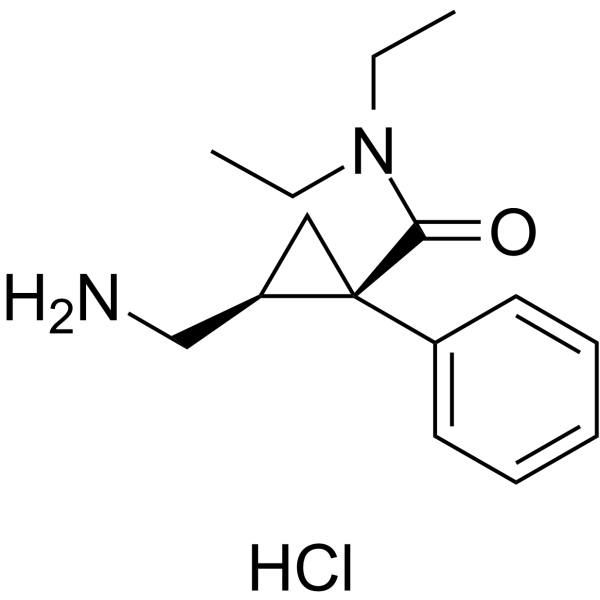
Milnacipran hydrochloride is an orally active Serotonin (HY-B1473A) and Norepinephrine (HY-13715) reuptake inhibitor. Milnacipran hydrochloride inhibits monoamine transporters, especially the norepinephrine transporter and the serotonin transporter (Ki values of 31 and 8.5 nM, respectively). Milnacipran hydrochloride inhibits pERK1/2 activation. Milnacipran hydrochloride has antidepressant, anxiolytic and analgesic properties. Milnacipran hydrochloride inhibits biting behavior in mice. Milnacipran hydrochloride can be used in the study of major depressive disorder, anxiety disorders, and neuropathic pain (e.g., fibromyalgia) .
|
-
- HY-107825R
-
|
|
Endogenous Metabolite
Bacterial
Cholinesterase (ChE)
Reference Standards
|
Cardiovascular Disease
Metabolic Disease
Inflammation/Immunology
Cancer
|
|
Flavonol (Standard) is the analytical standard of Flavonol. This product is intended for research and analytical applications. Flavonol is a cholinesterase (ChE) inhibitor, with an IC50 value of 120 μM and a Ki value of 74 μM. Flavonol has antioxidant, free radical-scavenging, antibacterial properties, and immune modulation functions. Flavonol inhibits the PriA helicase of Staphylococcus aureus. Flavonol can suppress the production of NO in LPS-activated RAW 264.7 cells by inhibiting the expression of the iNOS enzyme. Flavonol shows protective and analgesic effects in mice through various neuronal pathways. Flavonol can be used in research related to tumors and atherosclerosis diseases .
|
-
- HY-B0168S
-
|
|
Isotope-Labeled Compounds
Serotonin Transporter
PERK
|
Neurological Disease
|
|
Milnacipran-d10 (hydrochloride) is the deuterium labeled Milnacipran hydrochloride (HY-B0168A). Milnacipran hydrochloride is an orally active Serotonin (HY-B1473A) and Norepinephrine (HY-13715) reuptake inhibitor. Milnacipran hydrochloride inhibits monoamine transporters, especially the norepinephrine transporter and the serotonin transporter (Ki values of 31 and 8.5 nM, respectively). Milnacipran hydrochloride inhibits pERK1/2 activation. Milnacipran hydrochloride has antidepressant, anxiolytic and analgesic properties. Milnacipran hydrochloride inhibits biting behavior in mice. Milnacipran hydrochloride can be used in the study of major depressive disorder, anxiety disorders, and neuropathic pain (e.g., fibromyalgia) .
|
-
- HY-B0168AS
-
|
|
Isotope-Labeled Compounds
Serotonin Transporter
PERK
|
Neurological Disease
|
|
Milnacipran-d5 hydrochloride is deuterium labeled Milnacipran hydrochloride (HY-B0168A). Milnacipran hydrochloride is an orally active Serotonin (HY-B1473A) and Norepinephrine (HY-13715) reuptake inhibitor. Milnacipran hydrochloride inhibits monoamine transporters, especially the norepinephrine transporter and the serotonin transporter (Ki values of 31 and 8.5 nM, respectively). Milnacipran hydrochloride inhibits pERK1/2 activation. Milnacipran hydrochloride has antidepressant, anxiolytic and analgesic properties. Milnacipran hydrochloride inhibits biting behavior in mice. Milnacipran hydrochloride can be used in the study of major depressive disorder, anxiety disorders, and neuropathic pain (e.g., fibromyalgia) .
|
-
- HY-B0168AR
-
|
|
Reference Standards
Serotonin Transporter
PERK
|
Neurological Disease
|
|
Milnacipran (hydrochloride) (Standard) is the analytical standard of Milnacipran hydrochloride (HY-B0168A). This product is intended for research and analytical applications. Milnacipran hydrochloride is an orally active Serotonin (HY-B1473A) and Norepinephrine (HY-13715) reuptake inhibitor. Milnacipran hydrochloride inhibits monoamine transporters, especially the norepinephrine transporter and the serotonin transporter (Ki values of 31 and 8.5 nM, respectively). Milnacipran hydrochloride inhibits pERK1/2 activation. Milnacipran hydrochloride has antidepressant, anxiolytic and analgesic properties. Milnacipran hydrochloride inhibits biting behavior in mice. Milnacipran hydrochloride can be used in the study of major depressive disorder, anxiety disorders, and neuropathic pain (e.g., fibromyalgia) .
|
-
- HY-B1398
-
|
4-Aminophenazone
|
COX
Drug Metabolite
|
Neurological Disease
Inflammation/Immunology
Cancer
|
|
Ampyrone (4-Aminophenazone; 4-Aminoantipyrine) is a reversible and low-damage optical clearing agent and non-selective COX inhibitor based on UV absorption properties. Ampyrone can improve the optical transmittance of mouse skin and other tissues. Ampyrone can induce tissue refractive index matching by enhancing UV absorption, reduce light scattering, and achieve tissue transparency in vivo. Ampyrone reduces the synthesis of prostaglandin PGE2, thereby exerting anti-inflammatory, analgesic and antipyretic effects. Ampyrone inhibits DNA damage, cell apoptosis and immune cell phagocytosis induced by Doxorubicin (HY-15142A) and Cisplatin (HY-17394), etc., and participates in the regulation of toxicity in tumor chemotherapy .
|
-
- HY-W766078
-
|
1-b-D-Arabinofuranosyluracil-13C,15N2; Uracil 1-β-D-arabinofuranoside-13C,15N2
|
Isotope-Labeled Compounds
|
Infection
Cardiovascular Disease
Cancer
|
|
1-beta-D-Arabinofuranosyluracil- 13C, 15N2 (1-b-D-Arabinofuranosyluracil- 13C, 15N2; Uracil 1-β-D-arabinofuranoside- 13C, 15N2) is the 13C- and 15N-labeled labeled 1-beta-D-Arabinofuranosyluracil (HY-N6652). 1-beta-D-Arabinofuranosyluracil (Uracil 1-β-D-arabinofuranoside) isolated from the Caribbean sponge Tectitethya crypta, is a methoxyadenosine derivative. 1-beta-D-Arabinofuranosyluracil has demonstrated a diverse bioactivity profile including anti-inflammatory activity, analgesic and vasodilation properties . 1-beta-D-Arabinofuranosyluracil reduces a proliferation of mouse lymphoma cells .
|
-
- HY-N2081
-
|
|
Cholinesterase (ChE)
PI3K
Akt
NF-κB
|
Neurological Disease
Inflammation/Immunology
Cancer
|
|
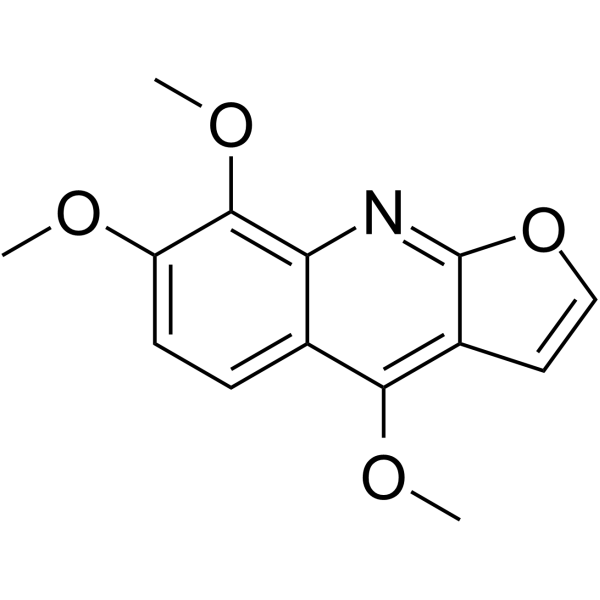
Skimmianine is an orally active furoquiniline alkaloid present mainly in the Rutaceae family. Skimmianine has analgesic, antispastic, sedative, and anti-inflammatory properties. Skimmianine inhibits acetylcholinesterase (AChE) (IC50 = 8.6 μg/mL). Skimmianine exhibits cytotoxicity against a variety of cancer cell lines and genotoxicity. Skimmianine has antioxidant and anti-inflammatory effects on ischemia-reperfusion (IR) injury. Skimmianine exerts anti-inflammatory effects through activation of the phosphatidylinositol-3-kinase (PI3K)-protein kinase B (AKT) pathway. Skimmianine is neuroprotective by targeting the NF-κB activation pathway to prevent neuroinflammation. Skimmianine inhibits the release of histamine, intracellular Ca 2+ signaling and protein kinase C signaling .
|
-
- HY-B1398S
-
|
4-Aminoantipyrine-d3
|
Isotope-Labeled Compounds
COX
Drug Metabolite
|
Neurological Disease
Inflammation/Immunology
Cancer
|
|
Ampyrone-d3 is the deuterium labeled Ampyrone (HY-B1398). Ampyrone (4-Aminophenazone; 4-Aminoantipyrine) is a reversible and low-damage optical clearing agent and non-selective COX inhibitor based on UV absorption properties. Ampyrone can improve the optical transmittance of mouse skin and other tissues. Ampyrone can induce tissue refractive index matching by enhancing UV absorption, reduce light scattering, and achieve tissue transparency in vivo. Ampyrone reduces the synthesis of prostaglandin PGE2, thereby exerting anti-inflammatory, analgesic and antipyretic effects. Ampyrone inhibits DNA damage, cell apoptosis and immune cell phagocytosis induced by Doxorubicin (HY-15142A) and Cisplatin (HY-17394), etc., and participates in the regulation of toxicity in tumor chemotherapy .
|
-
- HY-N2081R
-
|
|
Reference Standards
Cholinesterase (ChE)
PI3K
Akt
NF-κB
|
Neurological Disease
Inflammation/Immunology
Cancer
|
|
Skimmianine (Standard) is the analytical standard of Skimmianine. This product is intended for research and analytical applications. Skimmianine is an orally active furoquiniline alkaloid present mainly in the Rutaceae family. Skimmianine has analgesic, antispastic, sedative, and anti-inflammatory properties. Skimmianine inhibits acetylcholinesterase (AChE) (IC50 = 8.6 μg/mL). Skimmianine exhibits cytotoxicity against a variety of cancer cell lines and genotoxicity. Skimmianine has antioxidant and anti-inflammatory effects on ischemia-reperfusion (IR) injury. Skimmianine exerts anti-inflammatory effects through activation of the phosphatidylinositol-3-kinase (PI3K)-protein kinase B (AKT) pathway. Skimmianine is neuroprotective by targeting the NF-κB activation pathway to prevent neuroinflammation. Skimmianine inhibits the release of histamine, intracellular Ca 2+ signaling and protein kinase C signaling .
|
-
- HY-B1398R
-
|
4-Aminophenazone (Standard)
|
Reference Standards
COX
Drug Metabolite
|
Neurological Disease
Inflammation/Immunology
Cancer
|
|
Ampyrone (4-Aminophenazone) (Standard) is the analytical standard of Ampyrone (HY-B1398). This product is intended for research and analytical applications. Ampyrone (4-Aminophenazone; 4-Aminoantipyrine) is a reversible and low-damage optical clearing agent and non-selective COX inhibitor based on UV absorption properties. Ampyrone can improve the optical transmittance of mouse skin and other tissues. Ampyrone can induce tissue refractive index matching by enhancing UV absorption, reduce light scattering, and achieve tissue transparency in vivo. Ampyrone reduces the synthesis of prostaglandin PGE2, thereby exerting anti-inflammatory, analgesic and antipyretic effects. Ampyrone inhibits DNA damage, cell apoptosis and immune cell phagocytosis induced by Doxorubicin (HY-15142A) and Cisplatin (HY-17394), etc., and participates in the regulation of toxicity in tumor chemotherapy .
|
-
| Cat. No. |
Product Name |
Type |
-
- HY-174825
-
|
|
Biochemical Assay Reagents
|
|
TRPM8 antagonist 4 is a CB2R partial agonist (EC50=54.2 nM, Ki=3.2 μM) and TRPM8 antagonists (IC50=42.3 nM) with high functional selectivity and good physicochemical properties. TRPM8 antagonist 4 has significant anti-inflammatory and analgesic effects and good safety, reduces the mRNA expression of TNF-α, IL-6, and IL-1β .
|
| Cat. No. |
Product Name |
Target |
Research Area |
-
- HY-106224B
-
|
Hypocretin-1 (human, rat, mouse) acetate
|
Orexin Receptor (OX Receptor)
|
Neurological Disease
|
|
Orexin A (Hypocretin-1) (human, rat, mouse) acetate is a hypothalamic neuropeptide with analgesic properties (crosses the blood-brain barrier). Orexin A (human, rat, mouse) acetate binds and activates two types of G protein-coupled receptors, the orexin-1 receptor (OX1R) and the orexin-2 receptor (OX2R). Orexin A (human, rat, mouse) acetate can be used in studies of appetite regulation, neurodegenerative diseases and modulation of injurious messaging .
|
-
- HY-122381
-
|
|
Bacterial
Endogenous Metabolite
|
Neurological Disease
|
|
Kyotorphin is an endogenou neuroactive dipeptide with analgesic properties. Kyotorphin possesses anti-inflammatory and antimicrobial activity. Kyotorphin levels in cerebro-spinal fluid correlate negatively with the progression of neurodegeneration in Alzheimer's Disease patients .
|
-
- HY-P2626
-
|
|
Opioid Receptor
|
Neurological Disease
|
|
[D-Ala2]-Met-Enkephalin, an opioid peptide, is a potent opioid agonist. [D-Ala2]-Met-Enkephalin inhibits ACh-induced and suckling-induced oxytocin (OT) release .
|
-
- HY-P1866A
-
|
|
Opioid Receptor
|
Neurological Disease
|
|
β-Endorphin, equine TFA is an endogenous opioid peptide, which binds at high affinity to both μ/δ opioid receptors. β-Endorphin, equine TFA has analgesic properties .
|
-
- HY-P2572
-
-
- HY-P3548
-
|
|
Opioid Receptor
|
Neurological Disease
|
|
[D-Ala2]-Met-Enkephalinamide, an opioid peptide, is a potent opioid agonist. [D-Ala2]-Met-Enkephalinamide decreases bile flow by a central mechanism. [D-Ala2]-Met-Enkephalinamide has analgesic properties .
|
-
- HY-P3550
-
-
- HY-P1866
-
-
- HY-P3647
-
-
- HY-P3647A
-
|
|
Opioid Receptor
Adenylate Cyclase
|
Neurological Disease
|
|
[DPro10] Dynorphin A (1-11), porcine hydrochloride, a N-Alkylated derivative, is a potent κ-opioid receptor agonist with a Ki value of 0.13 nM. [DPro10] Dynorphin A (1-11), porcine hydrochloride has analgesic property .
|
-
- HY-122381R
-
|
|
Bacterial
Endogenous Metabolite
Reference Standards
|
Neurological Disease
|
|
Kyotorphin (Standard) is the analytical standard of Kyotorphin. This product is intended for research and analytical applications. Kyotorphin is an endogenou neuroactive dipeptide with analgesic properties. Kyotorphin possesses anti-inflammatory and antimicrobial activity. Kyotorphin levels in cerebro-spinal fluid correlate negatively with the progression of neurodegeneration in Alzheimer's Disease patients .
|
| Cat. No. |
Product Name |
Category |
Target |
Chemical Structure |
-
- HY-N2041
-
-
-
- HY-N2081
-
-
-
- HY-N1082
-
-
-
- HY-126382
-
-
-
- HY-107825
-
-
-
- HY-N0343
-
-
-
- HY-N3544
-
-
-
- HY-122381
-
-
-
- HY-W017100
-
-
-
- HY-N6652
-
-
-
- HY-N2041R
-
-
-
- HY-N2136
-
-
-
- HY-P1866A
-
-
-
- HY-N0329
-
-
-
- HY-N6652R
-
|
Uracil 1-β-D-arabinofuranoside (Standard)
|
Structural Classification
Natural Products
Animals
Source Classification
|
Reference Standards
Others
|
|
1-beta-D-Arabinofuranosyluracil (Standard) is the analytical standard of 1-beta-D-Arabinofuranosyluracil. This product is intended for research and analytical applications. 1-beta-D-Arabinofuranosyluracil (Uracil 1-β-D-arabinofuranoside) isolated from the Caribbean sponge Tectitethya crypta, is a methoxyadenosine derivative. 1-beta-D-Arabinofuranosyluracil has demonstrated a diverse bioactivity profile including anti-inflammatory activity, analgesic and vasodilation properties . 1-beta-D-Arabinofuranosyluracil reduces a proliferation of mouse lymphoma cells .
|
-
-
- HY-P1866
-
-
-
- HY-N2081R
-
|
|
Alkaloids
Structural Classification
Rutaceae
Quinoline Alkaloids
Plants
Skimmia reevesiana Fort.
Source Classification
|
Reference Standards
Cholinesterase (ChE)
PI3K
Akt
NF-κB
|
|
Skimmianine (Standard) is the analytical standard of Skimmianine. This product is intended for research and analytical applications. Skimmianine is an orally active furoquiniline alkaloid present mainly in the Rutaceae family. Skimmianine has analgesic, antispastic, sedative, and anti-inflammatory properties. Skimmianine inhibits acetylcholinesterase (AChE) (IC50 = 8.6 μg/mL). Skimmianine exhibits cytotoxicity against a variety of cancer cell lines and genotoxicity. Skimmianine has antioxidant and anti-inflammatory effects on ischemia-reperfusion (IR) injury. Skimmianine exerts anti-inflammatory effects through activation of the phosphatidylinositol-3-kinase (PI3K)-protein kinase B (AKT) pathway. Skimmianine is neuroprotective by targeting the NF-κB activation pathway to prevent neuroinflammation. Skimmianine inhibits the release of histamine, intracellular Ca 2+ signaling and protein kinase C signaling .
|
-
-
- HY-N9504
-
-
-
- HY-N12121
-
-
-
- HY-N0377R
-
-
-
- HY-N0343R
-
-
-
- HY-122381R
-
-
-
- HY-N3544R
-
-
-
- HY-119413R
-
|
|
Natural Products
Microorganisms
Source Classification
|
Reference Standards
Endogenous Metabolite
|
|
Loxoprofen (sodium) (Standard) is the analytical standard of Loxoprofen (sodium). This product is intended for research and analytical applications. Loxoprofen sodium is a non-steroidal, orally active anti-inflammatory agent with analgesic and anti-pyretic properties. Loxoprofen sodium is a nonselective COX inhibitor with IC50s of 6.5 and 13.5 μM for COX-1 and COX-2, respectively. Loxoprofen sodium can reduce atherosclerosis and shows antitumor activity .
|
-
-
- HY-107825R
-
|
|
Flavonols
Structural Classification
Flavonoids
Endogenous metabolite
Source Classification
|
Endogenous Metabolite
Bacterial
Cholinesterase (ChE)
Reference Standards
|
|
Flavonol (Standard) is the analytical standard of Flavonol. This product is intended for research and analytical applications. Flavonol is a cholinesterase (ChE) inhibitor, with an IC50 value of 120 μM and a Ki value of 74 μM. Flavonol has antioxidant, free radical-scavenging, antibacterial properties, and immune modulation functions. Flavonol inhibits the PriA helicase of Staphylococcus aureus. Flavonol can suppress the production of NO in LPS-activated RAW 264.7 cells by inhibiting the expression of the iNOS enzyme. Flavonol shows protective and analgesic effects in mice through various neuronal pathways. Flavonol can be used in research related to tumors and atherosclerosis diseases .
|
-
-
- HY-N18762
-
-
-
- HY-N18755
-
|
|
Structural Classification
Extract
|
Bacterial
|
|
Solanum xanthocarpum extract possesses anti-inflammatory, analgesic, antibacterial, and antiviral properties, and is rich in various bioactive compounds, such as alkaloids, triterpenoids, saponins, steroidal glycoalkaloids, and flavonoids.
|
-
-
- HY-N18743
-
|
|
Structural Classification
Extract
|
Others
|
|
Achyranthes aspera extract is a versatile plant extract highly regarded for its many medicinal properties, including analgesic, anti-inflammatory, diuretic, antipyretic, and anthelmintic effects.
|
-
-
- HY-N18775
-
|
|
Structural Classification
Extract
|
Bacterial
|
|
Gloriosa superba seed extract contains various bioactive compounds, such as alkaloids (particularly colchicine and gloriosine). Gloriosa superba seed extract possesses analgesic, antibacterial, and antifungal properties.
|
-
-
- HY-N1082R
-
-
-
- HY-N19060
-
|
|
Structural Classification
Extract
|
Others
|
|
Boswellia serrata extract is rich in boswellic acid, which is the main bioactive component responsible for its medicinal effects. Boswellia serrata extract has anti-inflammatory and analgesic properties and can be used in research on osteoarthritis, rheumatoid arthritis, and other inflammatory diseases.
|
-
-
- HY-N15447
-
-
-
- HY-N16538
-
-
-
- HY-W017100R
-
-
| Cat. No. |
Product Name |
Chemical Structure |
-
- HY-15550S
-
|
|
|
4'-Hydroxy diclofenac-d4 is the deuterium labeled 4'-Hydroxy diclofenac. 4'-Hydroxy diclofenac is an orally active metabolite of Diclofenac (HY-15036) by cytochrome P450 2C9 (CYP2C9). 4'-Hydroxy diclofenac has anti-inflammatory and analgesic properties .
|
-
-
- HY-17479BS
-
|
|
|
Amfenac-d5 sodium is deuterated-labeled Amfenac sodium. Amfenac Sodium is an orally active and potent anti-inflammatory compound possessing antipyretic and analgesic properties. Amfenac Sodium can be used for the research of acute and chronic inflammation .
|
-
-
- HY-17479S
-
|
|
|
Amfenac-d5 is the deuterium labeled Amfenac. Amfenac is an orally active and potent anti-inflammatory compound possessing antipyretic and analgesic properties. Amfenac can be used for the research of acute and chronic inflammation .
|
-
-
- HY-18342S
-
|
|
|
Diflunisal-d3 is the deuterium labeled Diflunisal. Diflunisal (MK-647) is a salicylate derivative with nonsteroidal anti-inflammatory and uricosuric properties, which is used alone as an analgesic and in rheumatoid arthritis patients. The mechanism of action of diflunisal is as a Cyclooxygenase (COX) Inhibitor.
|
-
-
- HY-135731AS
-
|
|
|
4-Methylamino antipyrine-d3 (hydrochloride) is deuterium labeled 4-Methylamino antipyrine (hydrochloride). 4-Methylamino antipyrine hydrochloride is an active metabolite of Metamizole. Metamizole is a pyrazolone non-steroidal anti-inflammatory drug (NSAID) and inhibits COX. Metamizole is an nonopioid analgesic agent and can be used for pain and fever . 4-Methylamino antipyrine hydrochloride has analgesic, antipyretic, and relatively weak antiinflammatory properties .
|
-
-
- HY-N2041S8
-
|
|
|
Myristic acid- 13C2 is the 13C-labeled Myristic acid (HY-N2041). Myristic acid is an orally active saturated 14-carbon fatty acid found in most animal and plant fats, especially milk fat coconut oil, palm oil and nutmeg oil. Myristic acid exerts anti-inflammatory activity through the NF-κB pathway. Myristic acid has antibacterial, anti-inflammatory and analgesic properties .
|
-
-
- HY-B0168S
-
|
|
|
Milnacipran-d10 (hydrochloride) is the deuterium labeled Milnacipran hydrochloride (HY-B0168A). Milnacipran hydrochloride is an orally active Serotonin (HY-B1473A) and Norepinephrine (HY-13715) reuptake inhibitor. Milnacipran hydrochloride inhibits monoamine transporters, especially the norepinephrine transporter and the serotonin transporter (Ki values of 31 and 8.5 nM, respectively). Milnacipran hydrochloride inhibits pERK1/2 activation. Milnacipran hydrochloride has antidepressant, anxiolytic and analgesic properties. Milnacipran hydrochloride inhibits biting behavior in mice. Milnacipran hydrochloride can be used in the study of major depressive disorder, anxiety disorders, and neuropathic pain (e.g., fibromyalgia) .
|
-
-
- HY-B0440S
-
|
|
|
Tenoxicam-d3 is the deuterium labeled Tenoxicam. Tenoxicam (Ro-12-0068), an antiinflammatory agent with analgesic and antipyretic properties.
|
-
-
- HY-B0548AS
-
|
|
|
Hydroxyzine-d4 (dihydrochloride) is deuterium labeled Hydroxyzine. Hydroxyzine is a heterocyclic histamine H1-receptor antagonist. Hydroxyzine has anticholinergic, anxiolytic and analgesic properties .
|
-
-
- HY-W702634
-
|
|
|
Butibufen-d5 is the deuterium labeled Butibufen (HY-121132). Butibufen is an orally active non-steroidal compound. Butibufen shows analgesic and antipyretic properties. Butibufen can be used for the research of inflammation .
|
-
-
- HY-W741411
-
|
|
|
Tenoxicam-d4 (Ro-12-0068-d4) is the deuterium labeled Tenoxicam (HY-B0440). Tenoxicam (Ro-12-0068), an antiinflammatory agent with analgesic and antipyretic properties.
|
-
-
- HY-B0634S
-
|
|
|
Aceclofenac-d4 is the deuterium labeled Aceclofenac. Aceclofenac is an orally active nonsteroidal anti-inflammatory agent (NSAID), with analgesic and anti-inflammatory properties. Aceclofenac is used for the research of osteoarthritis, ankylosing spondylitis, rheumatoid arthritis .
|
-
-
- HY-17361S
-
|
|
|
Etofenamate-d4 is the deuterium labeled Etofenamate. Etofenamate, a non-steroid anti-inflammatory agent (NSAID) and a non-selective COX inhibitor, possesses analgesic, anti-rheumatic, antipyretic and anti-inflammatory properties. Etofenamate is used in the research for osteoarthritis, arthritis and other inflammatory diseases .
|
-
-
- HY-B0578S
-
|
|
|
Loxoprofen-d4 is deuterium labeled Loxoprofen. Loxoprofen is a non-steroidal anti-inflammatory agent with analgesic and anti-pyretic properties. Loxoprofen sodium is a nonselective COX inhibitor with IC50s of 6.5 and 13.5 μM for COX-1 and COX-2, respectively .
|
-
-
- HY-18342S1
-
|
|
|
Diflunisal- 13C6 (MK-647- 13C6) is 13C labeled Diflunisal. Diflunisal (MK-647) is a salicylate derivative with nonsteroidal anti-inflammatory and uricosuric properties, which is used alone as an analgesic and in rheumatoid arthritis patients. The mechanism of action of diflunisal is as a Cyclooxygenase (COX) Inhibitor.
|
-
-
- HY-B0363S
-
|
|
|
Nimesulide-d5 is a deuterium labeled Nimesulide. Nimesulide is a selective COX-2 inhibitor, with IC50s of 70 nM-70 μM in a time-dependent manner, but it shows no effect on COX-1 (IC50 >100 μM). Nimesulide has potent anti-inflammatory, analgesic and antipyretic properties .
|
-
-
- HY-15550S1
-
|
|
|
4'-Hydroxy diclofenac- 13C6 is the 13C labeled 4'-Hydroxy diclofenac . 4'-Hydroxy diclofenac is an orally active metabolite of Diclofenac (HY-15036) by cytochrome P450 2C9 (CYP2C9). 4'-Hydroxy diclofenac has anti-inflammatory and analgesic properties .
|
-
-
- HY-B0363S1
-
|
|
|
Nimesulide- 13C6 (R805- 13C6) is 13C labeled Nimesulide. Nimesulide is a selective COX-2 inhibitor, with IC50s of 70 nM-70 μM in a time-dependent manner, but it shows no effect on COX-1 (IC50 >100 μM). Nimesulide has potent anti-inflammatory, analgesic and antipyretic properties.
|
-
-
- HY-W654009
-
|
|
|
Loxoprofen-d3 is deuterium labeled Loxoprofen. Loxoprofen is a non-steroidal, orally active anti-inflammatory agent with analgesic and anti-pyretic properties. Loxoprofen is a nonselective COX inhibitor with IC50s of 6.5 and 13.5 μM for COX-1 and COX-2, respectively. Loxoprofen can reduce atherosclerosis and shows antitumor activity .
|
-
-
- HY-B0168AS
-
|
|
|
Milnacipran-d5 hydrochloride is deuterium labeled Milnacipran hydrochloride (HY-B0168A). Milnacipran hydrochloride is an orally active Serotonin (HY-B1473A) and Norepinephrine (HY-13715) reuptake inhibitor. Milnacipran hydrochloride inhibits monoamine transporters, especially the norepinephrine transporter and the serotonin transporter (Ki values of 31 and 8.5 nM, respectively). Milnacipran hydrochloride inhibits pERK1/2 activation. Milnacipran hydrochloride has antidepressant, anxiolytic and analgesic properties. Milnacipran hydrochloride inhibits biting behavior in mice. Milnacipran hydrochloride can be used in the study of major depressive disorder, anxiety disorders, and neuropathic pain (e.g., fibromyalgia) .
|
-
-
- HY-W766078
-
|
|
|
1-beta-D-Arabinofuranosyluracil- 13C, 15N2 (1-b-D-Arabinofuranosyluracil- 13C, 15N2; Uracil 1-β-D-arabinofuranoside- 13C, 15N2) is the 13C- and 15N-labeled labeled 1-beta-D-Arabinofuranosyluracil (HY-N6652). 1-beta-D-Arabinofuranosyluracil (Uracil 1-β-D-arabinofuranoside) isolated from the Caribbean sponge Tectitethya crypta, is a methoxyadenosine derivative. 1-beta-D-Arabinofuranosyluracil has demonstrated a diverse bioactivity profile including anti-inflammatory activity, analgesic and vasodilation properties . 1-beta-D-Arabinofuranosyluracil reduces a proliferation of mouse lymphoma cells .
|
-
-
- HY-B1398S
-
|
|
|
Ampyrone-d3 is the deuterium labeled Ampyrone (HY-B1398). Ampyrone (4-Aminophenazone; 4-Aminoantipyrine) is a reversible and low-damage optical clearing agent and non-selective COX inhibitor based on UV absorption properties. Ampyrone can improve the optical transmittance of mouse skin and other tissues. Ampyrone can induce tissue refractive index matching by enhancing UV absorption, reduce light scattering, and achieve tissue transparency in vivo. Ampyrone reduces the synthesis of prostaglandin PGE2, thereby exerting anti-inflammatory, analgesic and antipyretic effects. Ampyrone inhibits DNA damage, cell apoptosis and immune cell phagocytosis induced by Doxorubicin (HY-15142A) and Cisplatin (HY-17394), etc., and participates in the regulation of toxicity in tumor chemotherapy .
|
-
-
- HY-W709349S
-
|
|
|
Flupirtine-d6 (D 9998-d6) hydrochloride is the deuterium labeled Flupirtine hydrochloride (HY-W709349). Flupirtine hydrochloride is an orally active, blood-brain barrier-crossing non-opioid analgesic and neuroprotective agent. Flupirtine hydrochloride is a neuronal potassium channel opener (Kv7 activator), a NMDA receptor antagonist and a GABA receptor activator. Flupirtine hydrochloride stabilizes blood-brain-barrier integrity, reduces oxidative stress and brain leukocyte infiltration, enhances angioneurogenesis, suppresses calcium influx, stabilizes neuronal resting membrane potential, and counteracts focal cerebral ischemia. Flupirtine hydrochloride exhibits analgesic, muscle relaxant properties, protects neurons from excitotoxic, ischemic, or cytokine-mediated death. Flupirtine hydrochloride functions as a non-opioid analgesic without antipyretic or antiphlogistic properties, shows no relevant affinity to opiate receptor. Flupirtine hydrochloride can be used for the research of focal cerebral ischemia, pain, Alzheimer’s disease, or multiple sclerosis .
|
-
-
- HY-W701503
-
|
|
|
4-Methylamino antipyrine-d3-1 is the deuterium labeled 4-Methylamino antipyrine-1. 4-Methylamino antipyrine is an active metabolite of Metamizole. Metamizole is a pyrazolone non-steroidal anti-inflammatory drug (NSAID) and inhibits COX. Metamizole is an nonopioid analgesic agent and can be used for pain and fever . 4-Methylamino antipyrine has analgesic, antipyretic, and relatively weak antiinflammatory properties .
|
-
| Cat. No. |
Product Name |
|
Classification |
-
- HY-N2041
-
|
|
|
Emulsifiers
|
|
Myristic acid is an orally active saturated 14-carbon fatty acid found in most animal and plant fats, especially milk fat coconut oil, palm oil and nutmeg oil. Myristic acid exerts anti-inflammatory activity through the NF-κB pathway. Myristic acid has antibacterial, anti-inflammatory and analgesic properties .
|
Your information is safe with us. * Required Fields.
Inquiry Information
- Product Name:
- Cat. No.:
- Quantity:
- MCE Japan Authorized Agent: