Search Result
Results for "
N-methyl-D-aspartate receptors
" in MedChemExpress (MCE) Product Catalog:
-
- HY-100807
-
-
-
- HY-N0215
-
|
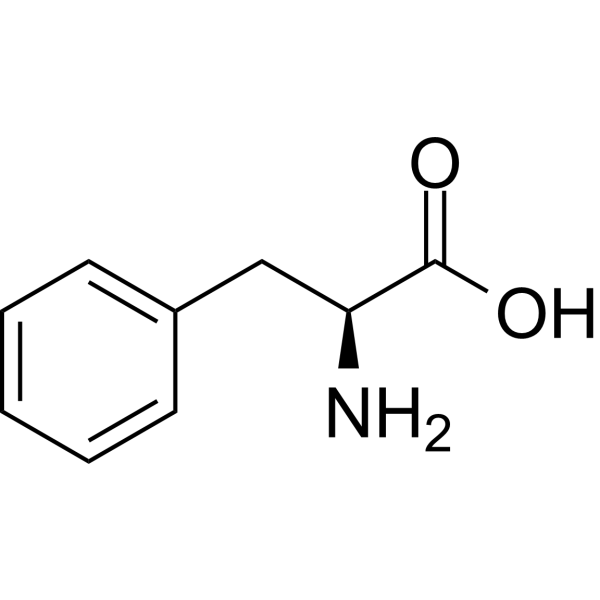
(S)-2-Amino-3-phenylpropionic acid
|
Calcium Channel
iGluR
Endogenous Metabolite
Ligands for E3 Ligase
|
Metabolic Disease
Cancer
|
|
L-Phenylalanine ((S)-2-Amino-3-phenylpropionic acid) is an essential amino acid isolated from Escherichia coli. L-Phenylalanine is a α2δ subunit of voltage-dependent Ca + channels antagonist with a Ki of 980 nM. L-phenylalanine is a competitive antagonist for the glycine- and glutamate-binding sites of N-methyl-D-aspartate receptors (NMDARs) (KB of 573 μM ) and non-NMDARs, respectively. L-Phenylalanine is widely used in the production of food flavors and pharmaceuticals .
|
-
-
- HY-B0591
-
Memantine
Maximum Cited Publications
10 Publications Verification
|
iGluR
|
Neurological Disease
|
|
Memantine is an orally active, noncompetitive N-methyl-D-aspartate receptor (NMDAR) antagonist. Memantine can be used for the research of moderate-to-severe Alzheimer's disease (AD) .
|
-

-
- HY-100714
-
DL-AP5
3 Publications Verification
2-APV; DL-2-Amino-5-phosphonovaleric acid
|
iGluR
|
Neurological Disease
Inflammation/Immunology
|
|
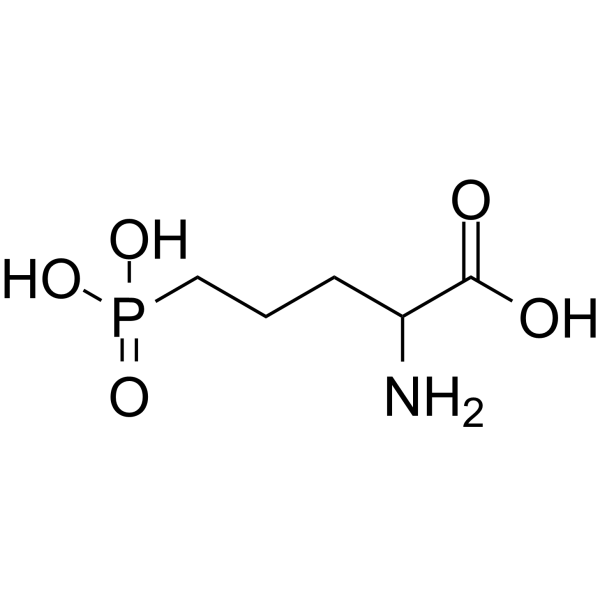
DL-AP5 (2-APV) is a competitive NMDA (N-methyl-D-aspartate) receptor antagonist. DL-AP5 shows significantly antinociceptive activity. DL-AP5 specifically blocks on channels in the rabbit retina .
|
-
-
- HY-101037
-
|
N-methylglycine; Sarcosin
|
Endogenous Metabolite
GlyT
|
Cancer
|
|
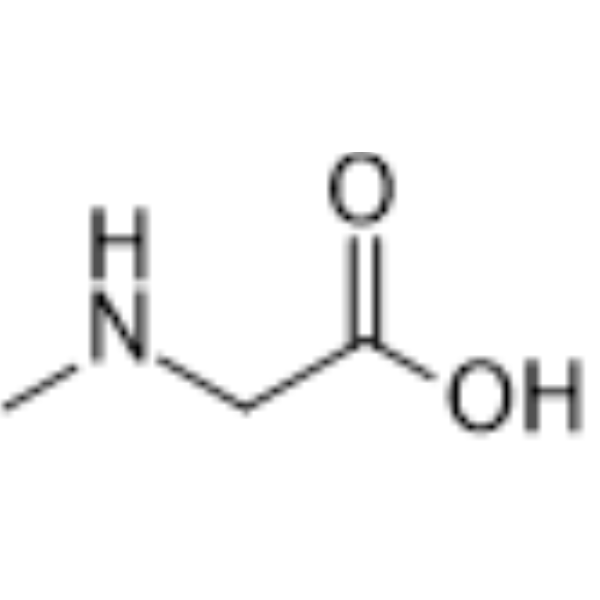
Sarcosine (N-Methylglycine), an endogenous amino acid, is a competitive glycine transporter type I (GlyT1) inhibitor and N-methyl-D-aspartate (NMDA) receptor co-agonist. Sarcosine increases the glycine concentration, resulting in an indirect potentiation of the NMDA receptor. Sarcosine is commonly used for the research of schizophrenia .
|
-
-
- HY-N2311
-
|
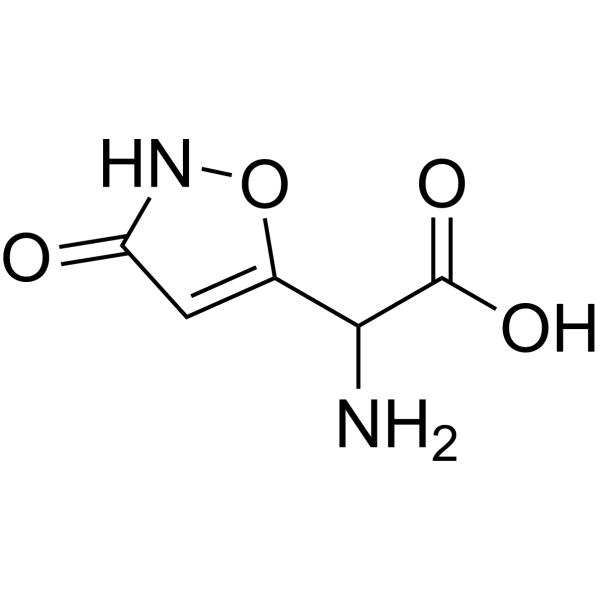
(RS)-Ibotenic acid; DL-Ibotenic acid
|
iGluR
|
Neurological Disease
|
|
Ibotenic acid has agonist activity at both the N-methyl-D-aspartate (NMDA) and trans-ACPD or metabolotropic quisqualate (Qm) receptor sites.
|
-
-
- HY-N0215S12
-
|
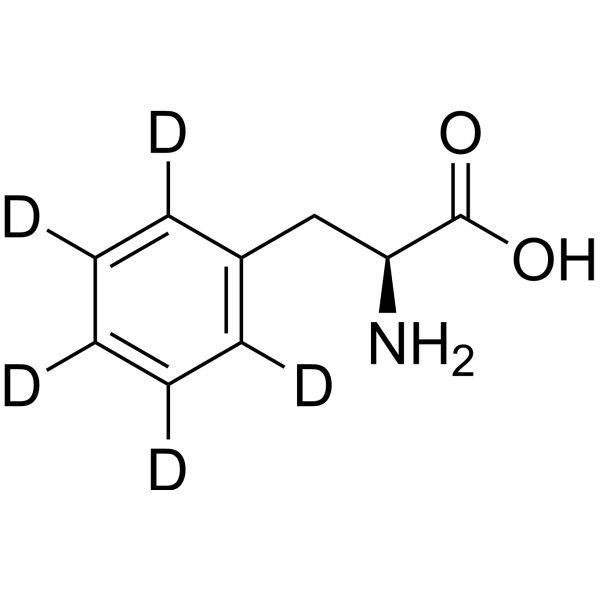
(S)-2-Amino-3-phenylpropionic acid-d5
|
Calcium Channel
iGluR
Endogenous Metabolite
|
Metabolic Disease
|
|
L-Phenylalanine-d5 is the deuterium labeled L-Phenylalanine. L-Phenylalanine ((S)-2-Amino-3-phenylpropionic acid) is an essential amino acid isolated from Escherichia coli. L-Phenylalanine is a α2δ subunit of voltage-dependent Ca+ channels antagonist with a Ki of 980 nM. L-phenylalanine is a competitive antagonist for the glycine- and glutamate-binding sites of N-methyl-D-aspartate receptors (NMDARs) (KB of 573 μM ) and non-NMDARs, respectively. L-Phenylalanine is widely used in the production of food flavors and pharmaceuticals .
|
-
-
- HY-B1487
-
|
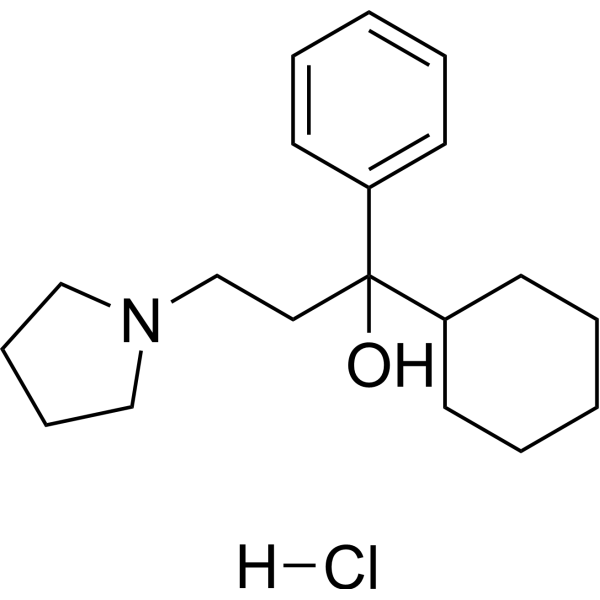
Tricyclamol hydrochloride; (±)-Procyclidine hydrochloride
|
iGluR
mAChR
|
Neurological Disease
|
|
Procyclidine (Tricyclamol, (±)-Procyclidine) hydrochloride , an anticholinergic agent, is a muscarinic receptor antagonist that also has the properties of an N-methyl-D-aspartate (NMDA) antagonist. Procyclidine hydrochloride can be used in studies of Parkinson's disease and related psychiatric disorders such as Soman-induced epilepsy .
|
-
-
- HY-100807S
-
-
-
- HY-G0021
-
|
Norclozapine; Desmethylclozapine; Normethylclozapine
|
mAChR
Opioid Receptor
Drug Metabolite
Virus Protease
|
Infection
|
|
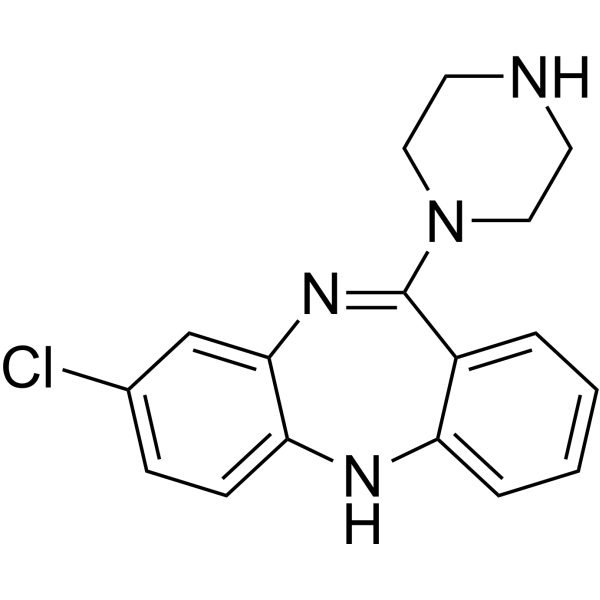
N-Desmethylclozapine is a major active metabolite of the atypical antipsychotic agent Clozapine. N-Desmethylclozapine is a potent, allosteric and partial M1 receptors agonist (EC50=115 nM) and is able to potentiate hippocampal N-methyl-d-aspartate (NMDA) receptor currents through M1 receptor activation. N-Desmethylclozapine is also a δ-opioid agonist .
|
-
-
- HY-B0340
-
|
DM9384; DZL-221
|
nAChR
iGluR
mGluR
PKC
GABA Receptor
Calcium Channel
|
Neurological Disease
|
|
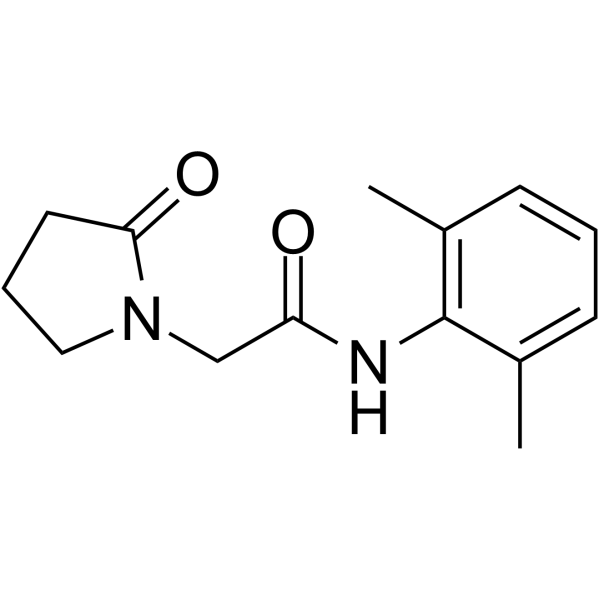
Nefiracetam is a cognition-enhancing agent. Nefiracetam is an activator of nAChR, N-methyl-D-aspartate receptor (NMDAR), mGluR5, PKC, gamma-aminobutyric acid (GABA), and N/L-type Ca 2+ channels. Nefiracetam promotes neuroplasticity and enhances neuroprotection. Nefiracetam can be used in Alzheimer's disease, epilepsy, and cerebral ischemia research .
|
-
-
- HY-17387
-
|
Huperzine A
|
Cholinesterase (ChE)
iGluR
|
Infection
Neurological Disease
Inflammation/Immunology
|
|
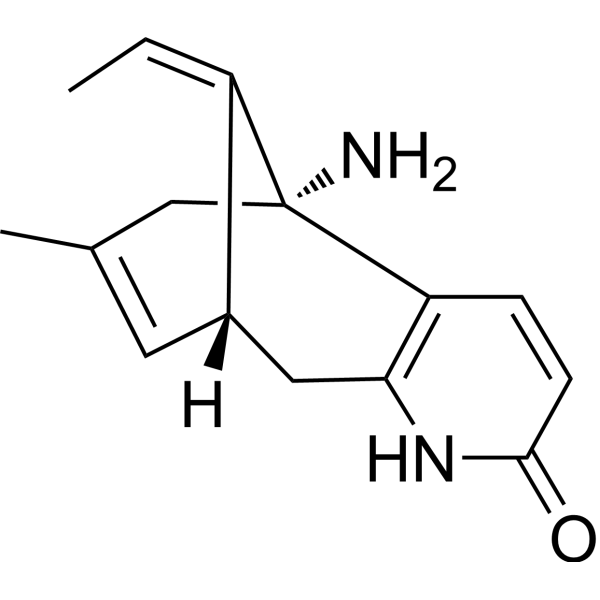
(-)-Huperzine A (Huperzine A) is an alkaloid isolated from Huperzia serrata, with neuroprotective activity. (-)-Huperzine A is a potent, highly specific, reversible and blood-brain barrier penetrant inhibitor of acetylcholinesterase (AChE), with an IC50 of 82 nM. (-)-Huperzine A also is non-competitive antagonist of N-methyl-D-aspartate glutamate (NMDA) receptor. (-)-Huperzine A is developed for the research of neurodegenerative diseases, including Alzheimer’s disease .
|
-
-
- HY-N0215S1
-
|
(S)-2-Amino-3-phenylpropionic acid-d8
|
Calcium Channel
iGluR
Endogenous Metabolite
|
Metabolic Disease
|
|
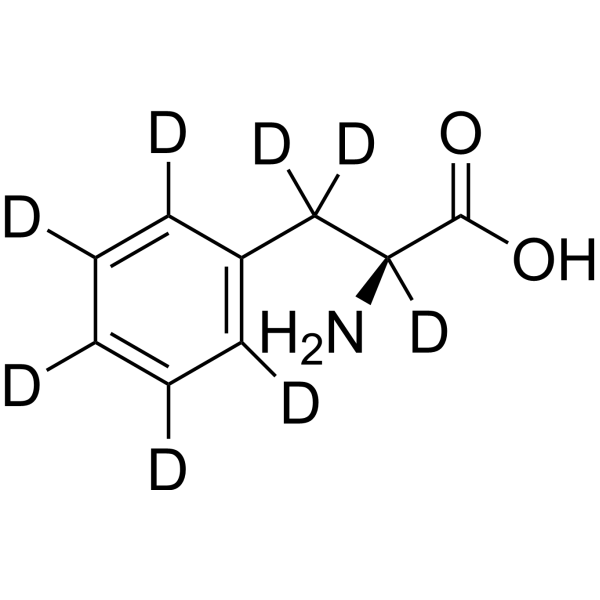
L-Phenylalanine-d8 is the deuterium labeled L-Phenylalanine. L-Phenylalanine ((S)-2-Amino-3-phenylpropionic acid) is an essential amino acid isolated from Escherichia coli. L-Phenylalanine is a α2δ subunit of voltage-dependent Ca+ channels antagonist with a Ki of 980 nM. L-phenylalanine is a competitive antagonist for the glycine- and glutamate-binding sites of N-methyl-D-aspartate receptors (NMDARs) (KB of 573 μM ) and non-NMDARs, respectively. L-Phenylalanine is widely used in the production of food flavors and pharmaceuticals .
|
-
-
- HY-109164
-
|
AGN-241751; GATE-251
|
iGluR
|
Neurological Disease
|
|
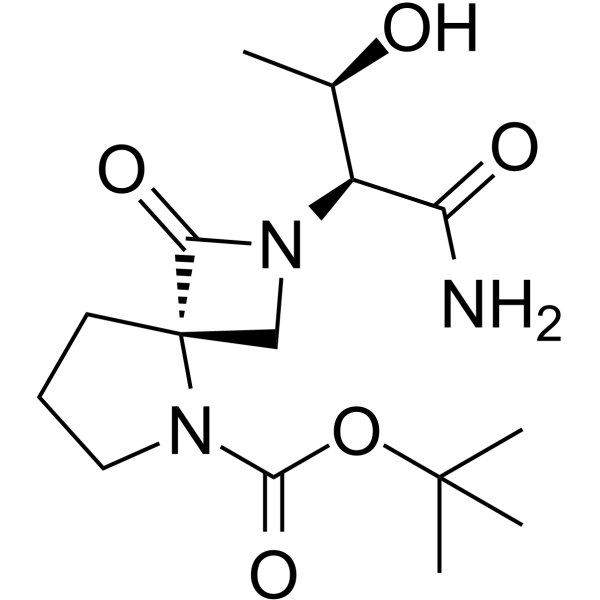
Zelquistinel (AGN-241751) is the orally active N-methyl-D-aspartate (NMDA) receptor partial agonist used for the research of depression, anxiety and other related psychiatric disorders .
|
-
-
- HY-100811
-
|
7-CKA
|
iGluR
|
Neurological Disease
|
|
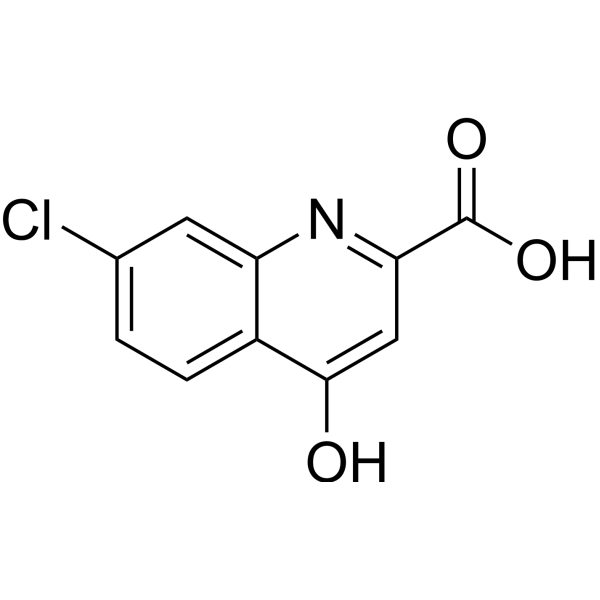
7-Chlorokynurenic acid (7-CKA) is a potent and selective antagonist of the glycine B coagonist site of the N-methyl-D-aspartate (NMDA) receptor (IC50=0.56 μM). 7-Chlorokynurenic acid is also a potent inhibitor of the reuptake of glutamate into synaptic vesicles with a Ki of 0.59 μM. 7-Chlorokynurenic acid has potent antinociceptive actions after neuraxial delivery .
|
-
-
- HY-100811A
-
|
7-CKA sodium salt
|
iGluR
|
Neurological Disease
|
|
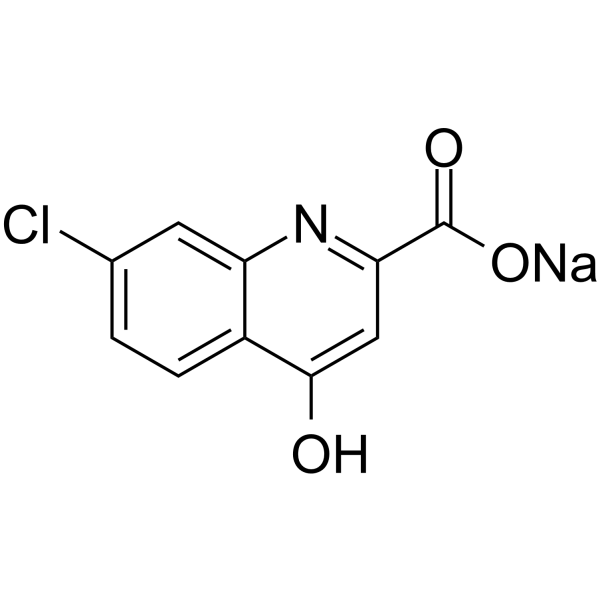
7-Chlorokynurenic acid sodium salt (7-CKA sodium salt) is a potent and selective antagonist of the glycine B coagonist site of the N-methyl-D-aspartate (NMDA) receptor (IC50=0.56 μM). 7-Chlorokynurenic acid sodium salt is also a potent inhibitor of the reuptake of glutamate into synaptic vesicles with a Ki of 0.59 μM. 7-Chlorokynurenic acid sodium salt has potent antinociceptive actions after neuraxial delivery .
|
-
-
- HY-139580
-
|
CAD-9303
|
iGluR
|
Neurological Disease
|
|
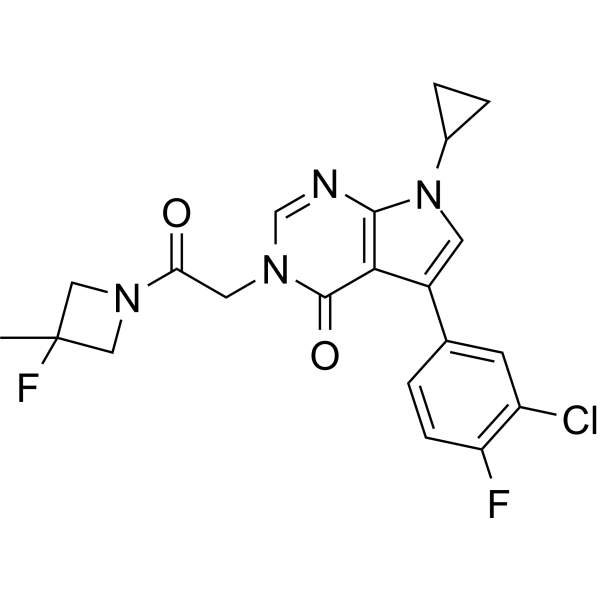
Plazinemdor (CAD-9303) is a positive allosteric modulator of N-methyl-D-aspartate (NMDA) receptors, which is used in the research of neurological diseases .
|
-
-
- HY-15084A
-
|
(-)-MK-801 maleate
|
iGluR
|
Neurological Disease
|
|
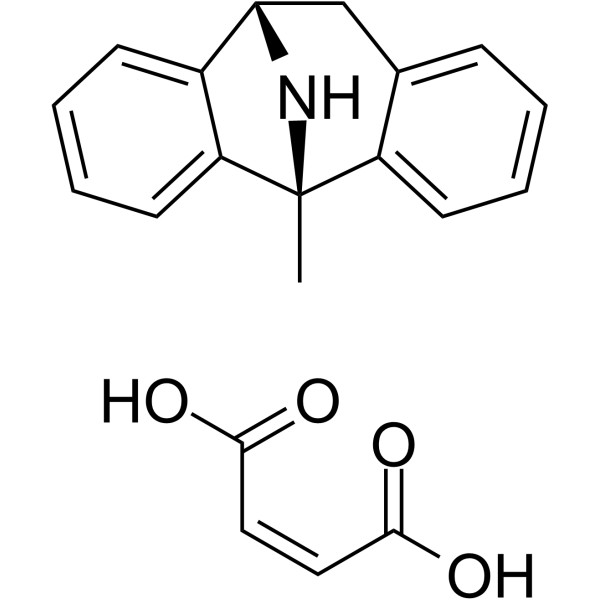
(-)-Dizocilpine maleate ((-)-MK-801 maleate) is a less active (-)-enantiomer of Dizocilpine. (-)-Dizocilpine maleate is a selective and non-competitive N-methyl-D-aspartate (NMDA) receptor antagonist with a Ki of 211.7 nM. (-)-Dizocilpine maleate has antidepressant effects .
|
-
-
- HY-106441A
-
|
MK-0657; CERC-301
|
iGluR
|
Neurological Disease
|
|
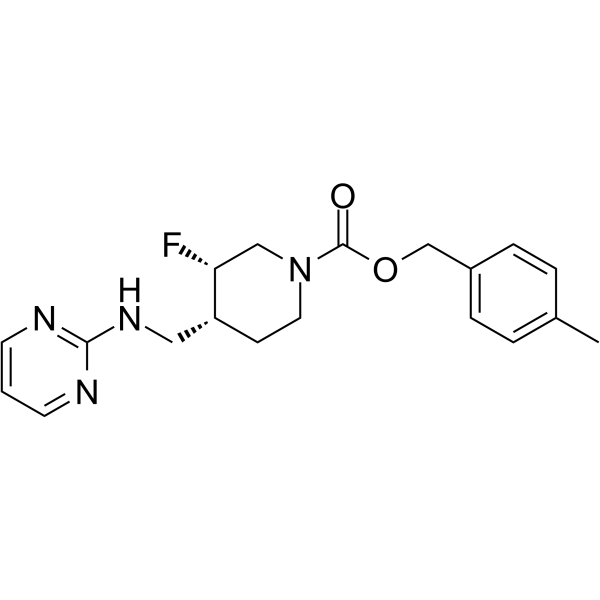
Rislenemdaz (CERC-301) is an orally bioavailable and selective N-methyl-D-aspartate (NMDA) receptor subunit 2B (GluN2B) antagonist with Ki and IC 50 of 8.1 nM and 3.6 nM, respectively.
|
-
-
- HY-100807R
-
-
-
- HY-17388
-
|
|
Drug Isomer
Cholinesterase (ChE)
iGluR
|
Neurological Disease
|
|
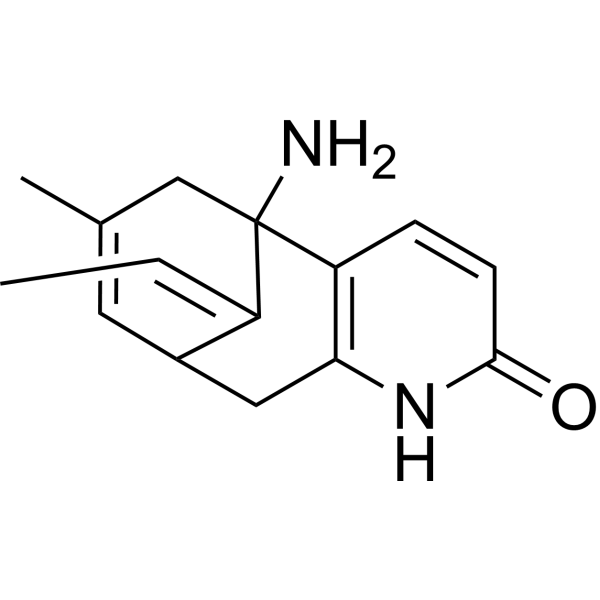
(±)-Huperzine A is the racemate of (-)-Huperzine A (HY-17387). (-)-Huperzine A is an alkaloid isolated from Huperzia serrata, with neuroprotective activity. (-)-Huperzine A is a potent, highly specific, reversible and blood-brain barrier penetrant inhibitor of acetylcholinesterase (AChE), with an IC50 of 82 nM. (-)-Huperzine A also is non-competitive antagonist of N-methyl-D-aspartate glutamate (NMDA) receptor. (-)-Huperzine A is developed for the research of neurodegenerative diseases, including Alzheimer’s disease .
|
-
-
- HY-101178
-
|
|
iGluR
|
Neurological Disease
|
|
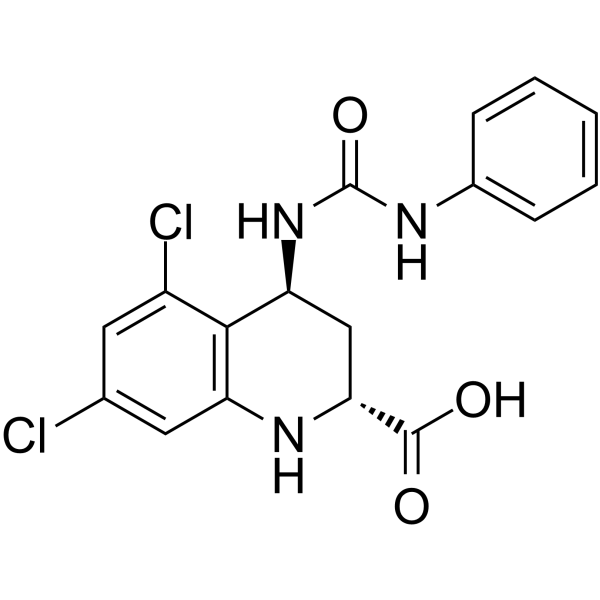
L-689560 is a potent N-methyl-D-aspartate (NMDA) receptor antagonist at the GluN1 glycine binding site. L-689560 is widely used as a radiolabeled ligand in binding studies and used for study the roles of NMDA receptors in normal neurological processes as well as in diseases .
|
-
-
- HY-41239
-
|
|
Drug Intermediate
|
Others
|
|
1-Bromo-3,5-dimethyladamantane is an intermediate for Memantine (HY-B0591). Memantine is an orally active, noncompetitive N-methyl-D-aspartate receptor (NMDAR) antagonist. Memantine can be used for the research of moderate-to-severe Alzheimer's disease (AD).
|
-

-
- HY-109097
-
|
SP-8203
|
MMP
iGluR
|
Neurological Disease
Inflammation/Immunology
Cancer
|
|
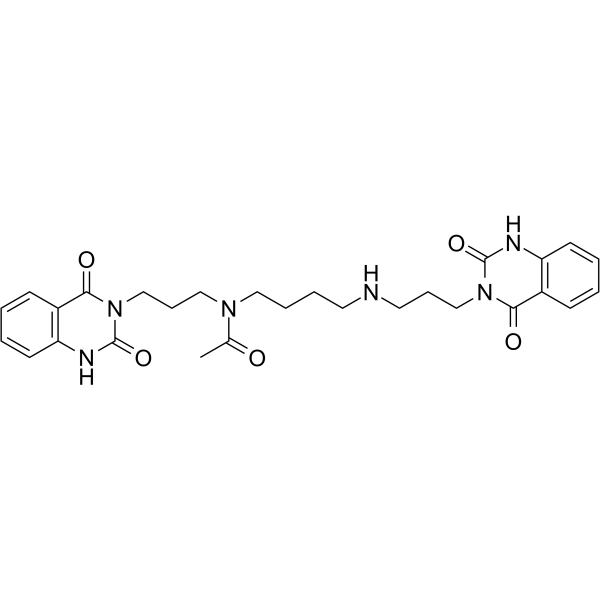
Otaplimastat (SP-8203), a matrix metalloproteinase (MMP) inhibitor, blocks N-methyl-D-aspartate (NMDA) receptor-mediated excitotoxicity in a competitive manner. Otaplimastat also exhibits anti-oxidant activity. Otaplimastat can be used for the research of brain ischemic injury .
|
-
-
- HY-136299
-
|
FUT-187 free base
|
iGluR
|
Neurological Disease
|
|
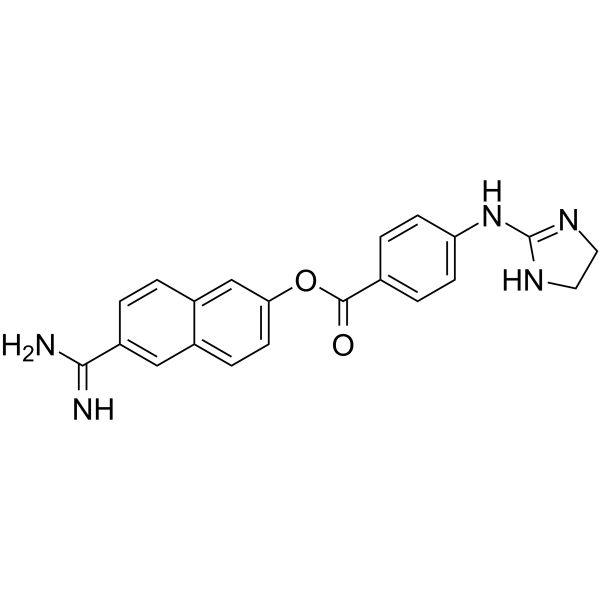
Sepimostat (FUT-187 free base) exhibits neuroprotective activity via NR2B N-methyl-D-aspartate receptor antagonism at the Ifenprodil-binding site of the NR2B subunit. Sepimostat inhibits the Ifenprodil binding with a Ki value of 27.7?μM .
|
-
-
- HY-101037S1
-
|
N-methylglycine-d3; Sarcosin-d3
|
Isotope-Labeled Compounds
Endogenous Metabolite
GlyT
|
Cancer
|
|
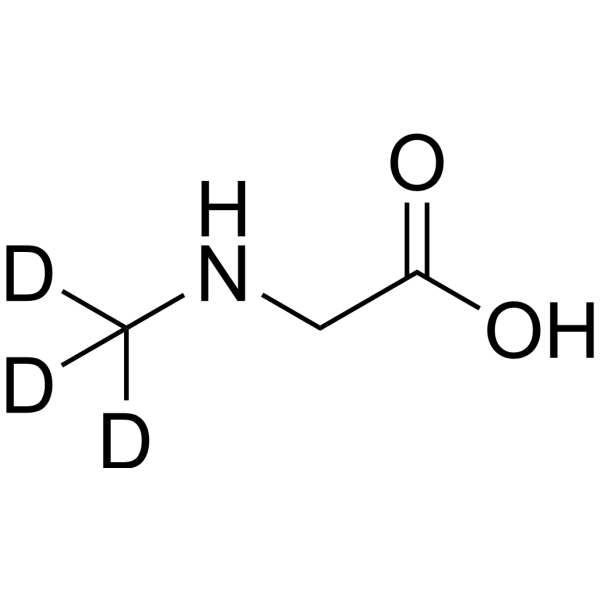
Sarcosine-d3 is the deuterium labeled Sarcosine. Sarcosine (N-Methylglycine), an endogenous amino acid, is a competitive glycine transporter type I (GlyT1) inhibitor and N-methyl-D-aspartate (NMDA) receptor co-agonist. Sarcosine increases the glycine concentration, resulting in an indirect potentiation of the NMDA receptor. Sarcosine is commonly used for the research of schizophrenia .
|
-
-
- HY-117483
-
|
|
iGluR
|
Neurological Disease
|
|
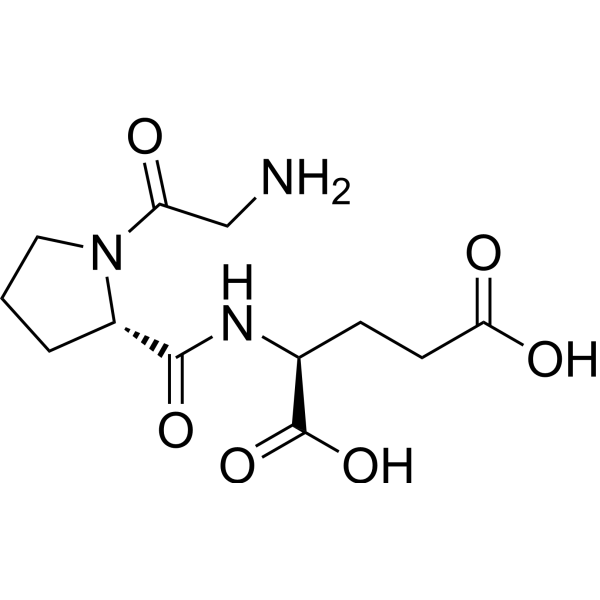
Gly-Pro-Glu is a neuroactive peptide with a potent action on acetylcholine release. Gly-Pro-Glu is the N-terminal tripeptide of insulin-like growth factor-I. Gly-Pro-Glu inhibits glutamate binds to N-methyl-D-aspartate (NMDA) receptor with an IC50 value of 14.7 μM. Gly-Pro-Glu can be used for the research of neuroprotection .
|
-
-
- HY-139048
-
|
|
iGluR
|
Neurological Disease
|
|
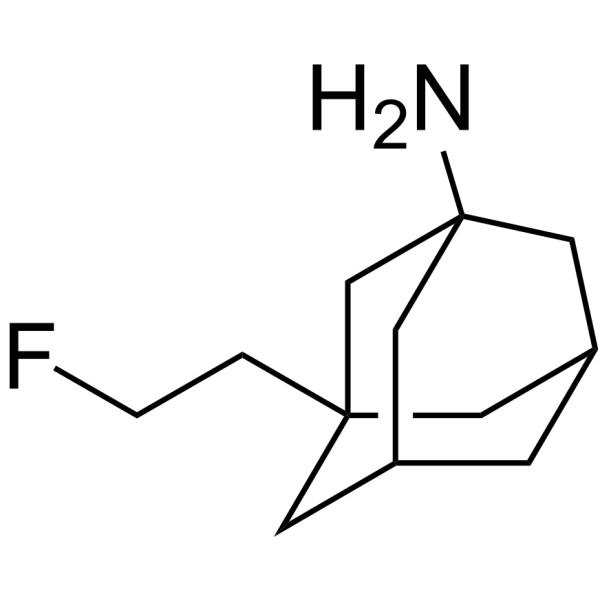
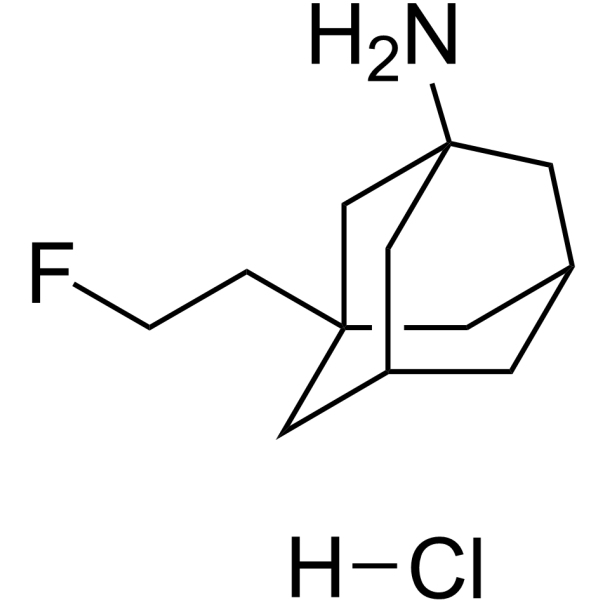
Fluoroethylnormemantine, a derivative of Memantine, is an antagonist of the N-methyl-D-aspartate (NMDA) receptor. [ 18F]-Fluoroethylnormemantine can be used as a positron emission tomography (PET) tracer. Fluoroethylnormemantine exhibits anti-amnesic, neuroprotective, antidepressant-like and fear-attenuating effects .
|
-
-
- HY-100714C
-
|
2-APV sodium; DL-2-Amino-5-phosphonovaleric acid sodium
|
iGluR
|
Neurological Disease
Inflammation/Immunology
|
|
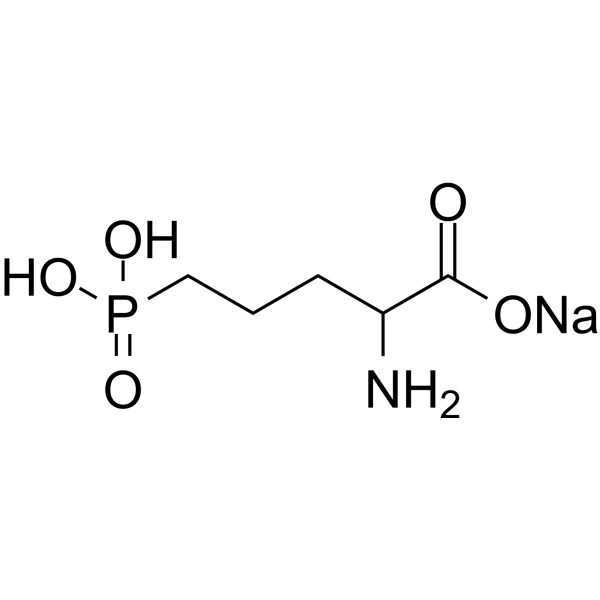
DL-AP5 (2-APV) sodium is a competitive NMDA (N-methyl-D-aspartate) receptor antagonist. DL-AP5 sodium shows significantly antinociceptive activity. DL-AP5 sodium specifically blocks on channels in the rabbit retina .
|
-
-
- HY-153129
-
|
|
Prostaglandin Receptor
|
Endocrinology
|
|
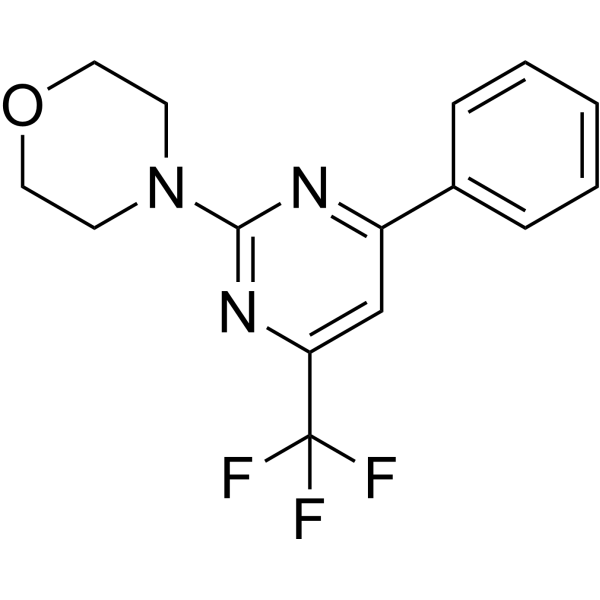
EP2 receptor antagonist-2 (CID891729) is an antagonist of EP2 receptor. EP2 receptor antagonist-2 inhibits the EP2 receptor activation induced by PGE2. EP2 receptor antagonist-2 also suppresses lactate dehydrogenase (LDH) release induced by N-methyl-D-aspartate (NMDA) .
|
-
-
- HY-100807S2
-
-
-
- HY-100822
-
|
(+)-HA-966
|
iGluR
|
Neurological Disease
|
|
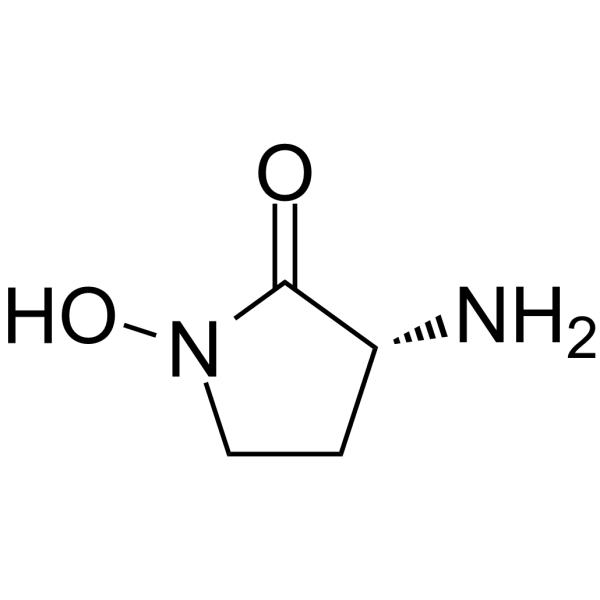
(R)-(+)-HA-966 ((+)-HA-966) is a partial agonist/antagonist of glycine site of the N-methyl-D-aspartate (NMDA) receptor complex. (R)-(+)-HA-966 selectively blocks the activation of the mesolimbic dopamine system by amphetamine . (R)-(+)-HA-966 can cross the blood-brain barrier and has the potential for neuropathic and acute pain .
|
-
-
- HY-148825
-
-
-
- HY-N0215R
-
|
(S)-2-Amino-3-phenylpropionic acid (Standard)
|
Reference Standards
Calcium Channel
iGluR
Endogenous Metabolite
|
Metabolic Disease
|
|
L-Phenylalanine (Standard) is the analytical standard of L-Phenylalanine. This product is intended for research and analytical applications. L-Phenylalanine ((S)-2-Amino-3-phenylpropionic acid) is an essential amino acid isolated from Escherichia coli. L-Phenylalanine is a α2δ subunit of voltage-dependent Ca+ channels antagonist with a Ki of 980 nM. L-phenylalanine is a competitive antagonist for the glycine- and glutamate-binding sites of N-methyl-D-aspartate receptors (NMDARs) (KB of 573 μM ) and non-NMDARs, respectively. L-Phenylalanine is widely used in the production of food flavors and pharmaceuticals .
|
-

-
- HY-W654331
-
|
2,3-Pyridinedicarboxylic Acid-13C3,15N
|
Isotope-Labeled Compounds
iGluR
Endogenous Metabolite
|
Inflammation/Immunology
|
|
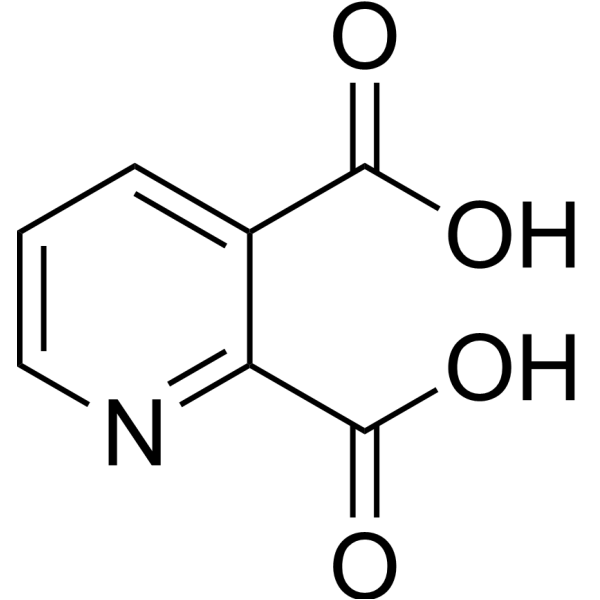
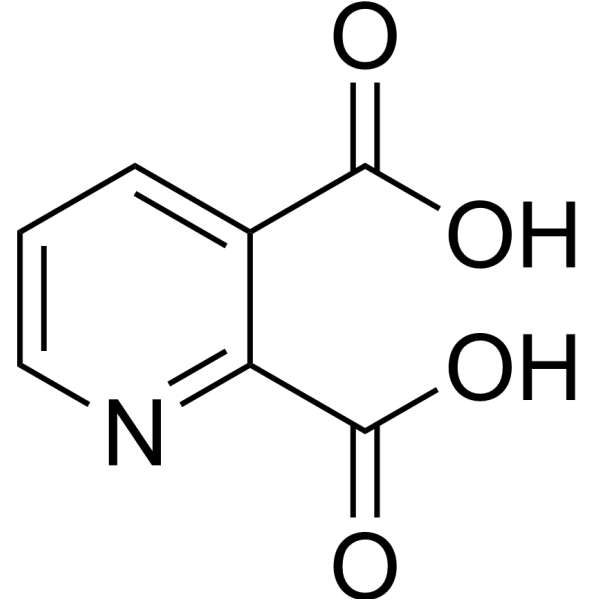
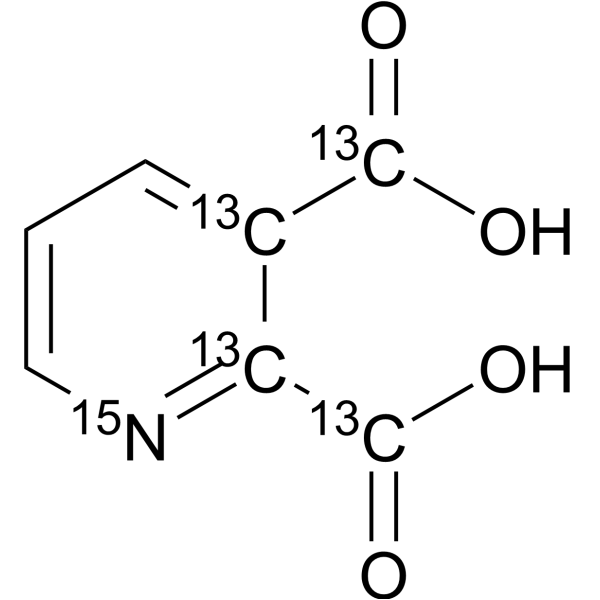
Quinolinic acid- 13C3, 15N (2,3-Pyridinedicarboxylic Acid- 13C3, 15N) is the 13C- and 15N-labeled Quinolinic acid (HY-100807). Quinolinic acid is an endogenous N-methyl-D-aspartate (NMDA) receptor agonist synthesized from L-tryptophan via the kynurenine pathway and thereby has the potential of mediating N-methyl-D-aspartate neuronal damage and dysfunction .
|
-

-
- HY-15086
-
|
CGS 19755
|
iGluR
|
Neurological Disease
|
|
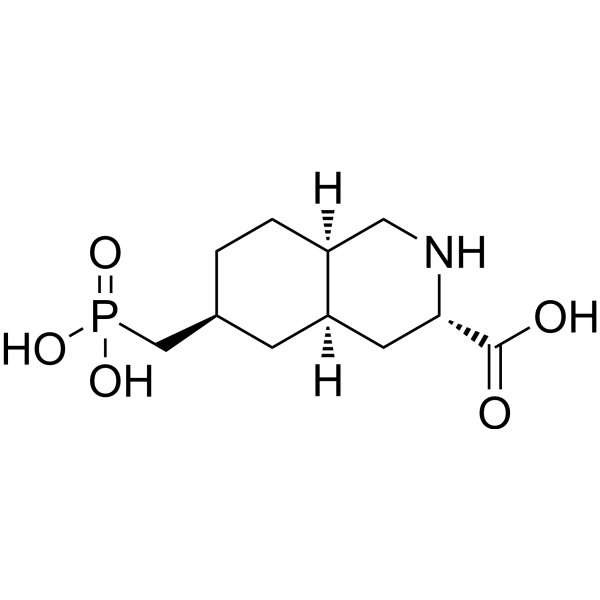
Selfotel (CGS 19755) is a selective and competitive antagonist at N-methyl-D-aspartate (NMDA)-preferring receptor. CGS 19755 inhibits the binding of [3H]-3-(2-carboxypiperazin-4-yl)propyl-1-phosphonic acid to NMDA-type receptors with an IC50 of 50 nM .
|
-

-
- HY-101037R
-
|
N-methylglycine (Standard); Sarcosin (Standard)
|
Reference Standards
Endogenous Metabolite
GlyT
|
Cancer
|
|
Sarcosine (Standard) is the analytical standard of Sarcosine. This product is intended for research and analytical applications. Sarcosine (N-Methylglycine), an endogenous amino acid, is a competitive glycine transporter type I (GlyT1) inhibitor and N-methyl-D-aspartate (NMDA) receptor co-agonist. Sarcosine increases the glycine concentration, resulting in an indirect potentiation of the NMDA receptor. Sarcosine is commonly used for the research of schizophrenia .
|
-

-
- HY-10711A
-
|
(R)-NFPS hydrochloride
|
GlyT
|
Neurological Disease
|
|
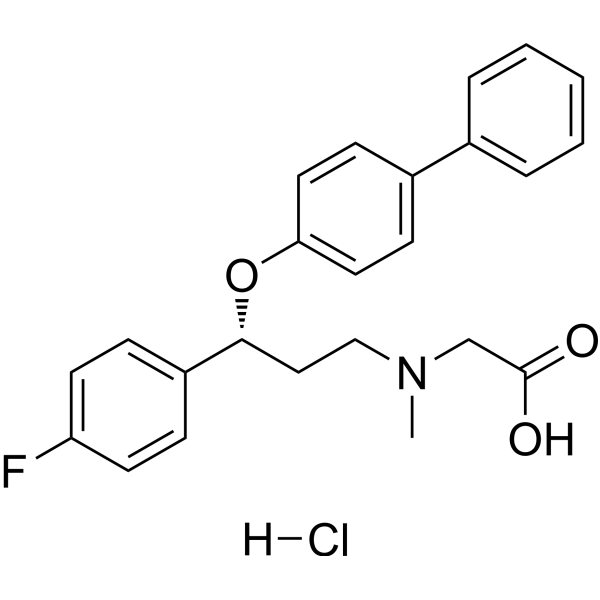
ALX-5407 ((R)-NFPS) hydrochloride is a selective and orally active glycine transporter GlyT1 inhibitor with an IC50 value of 3 nM. ALX-5407 hydrochloride can be used the research of N-methyl-D-aspartate-receptor function and schizophrenia .
|
-
-
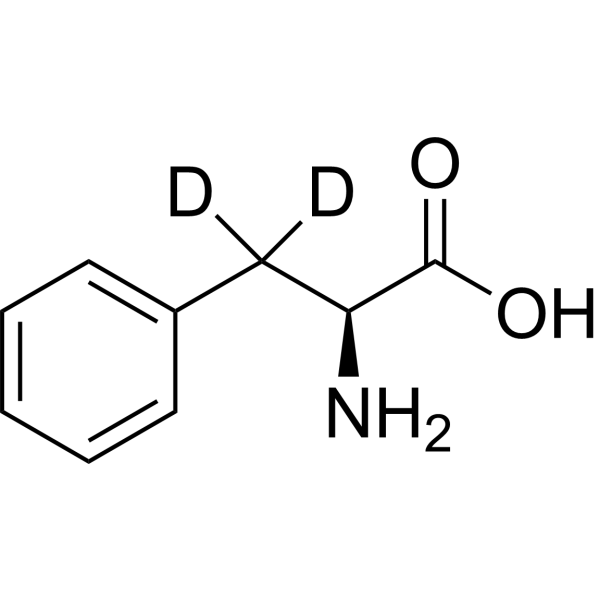
- HY-N0215S3
-
|
(S)-2-Amino-3-phenylpropionic acid-d2
|
Calcium Channel
iGluR
Endogenous Metabolite
|
Metabolic Disease
|
|
L-Phenylalanine-d2 is the deuterium labeled L-Phenylalanine. L-Phenylalanine ((S)-2-Amino-3-phenylpropionic acid) is an essential amino acid isolated from Escherichia coli. L-Phenylalanine is a α2δ subunit of voltage-dependent Ca+ channels antagonist with a Ki of 980 nM. L-phenylalanine is a competitive antagonist for the glycine- and glutamate-binding sites of N-methyl-D-aspartate receptors (NMDARs) (KB of 573 μM ) and non-NMDARs, respectively. L-Phenylalanine is widely used in the production of food flavors and pharmaceuticals .
|
-
-
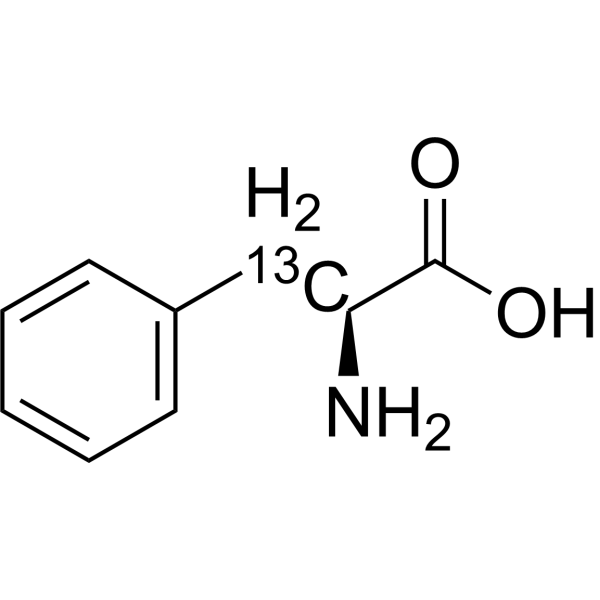
- HY-N0215S7
-
|
(S)-2-Amino-3-phenylpropionic acid-3-13C
|
Calcium Channel
iGluR
Endogenous Metabolite
|
Metabolic Disease
|
|
L-Phenylalanine-3- 13C is the 13C-labeled L-Phenylalanine. L-Phenylalanine ((S)-2-Amino-3-phenylpropionic acid) is an essential amino acid isolated from Escherichia coli. L-Phenylalanine is a α2δ subunit of voltage-dependent Ca+ channels antagonist with a Ki of 980 nM. L-phenylalanine is a competitive antagonist for the glycine- and glutamate-binding sites of N-methyl-D-aspartate receptors (NMDARs) (KB of 573 μM ) and non-NMDARs, respectively. L-Phenylalanine is widely used in the production of food flavors and pharmaceuticals .
|
-
-
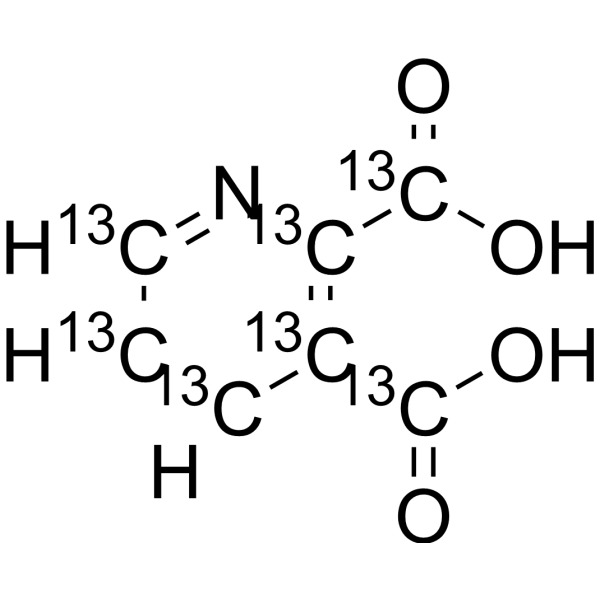
- HY-100807S1
-
-
-
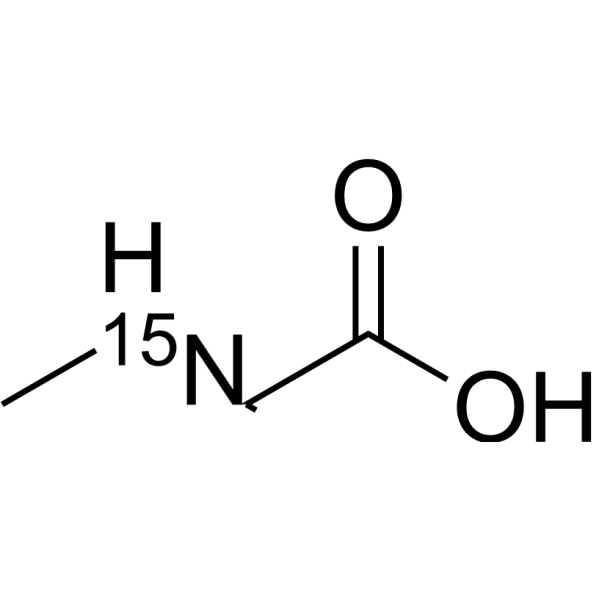
- HY-101037S
-
|
N-methylglycine-15N; Sarcosin-15N
|
Endogenous Metabolite
GlyT
|
Cancer
|
|
Sarcosine- 15N is the 15N-labeled Sarcosine. Sarcosine (N-Methylglycine), an endogenous amino acid, is a competitive glycine transporter type I (GlyT1) inhibitor and N-methyl-D-aspartate (NMDA) receptor co-agonist. Sarcosine increases the glycine concentration, resulting in an indirect potentiation of the NMDA receptor. Sarcosine is commonly used for the research of schizophrenia .
|
-
-
- HY-N0215S2
-
|
(S)-2-Amino-3-phenylpropionic acid-13C
|
Isotope-Labeled Compounds
Calcium Channel
iGluR
Endogenous Metabolite
|
Metabolic Disease
|
|
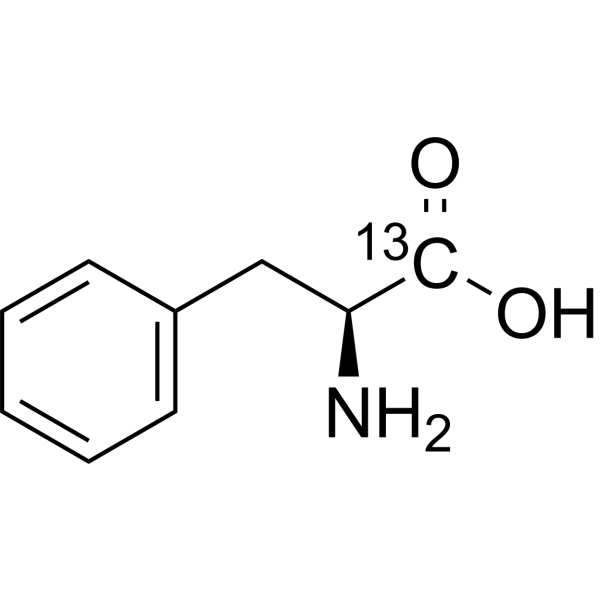
L-Phenylalanine- 13C is the 13C-labeled L-Phenylalanine. L-Phenylalanine ((S)-2-Amino-3-phenylpropionic acid) is an essential amino acid isolated from Escherichia coli. L-Phenylalanine is a α2δ subunit of voltage-dependent Ca+ channels antagonist with a Ki of 980 nM. L-phenylalanine is a competitive antagonist for the glycine- and glutamate-binding sites of N-methyl-D-aspartate receptors (NMDARs) (KB of 573 μM ) and non-NMDARs, respectively. L-Phenylalanine is widely used in the production of food flavors and pharmaceuticals .
|
-
-
- HY-177127
-
|
|
iGluR
|
Neurological Disease
|
|
Satoprodil (example 2) is a potent N-methyl-D-aspartate (NMDA) receptor negative allosteric modulator with an IC50 value of 123 nM for NR2B .
|
-

-
- HY-W835175
-
|
|
iGluR
|
Neurological Disease
|
|
Neramexane hydrochloride is an oral N-methyl-D-aspartate (NMDA) receptor antagonist, as a potential neuroprotectant for various central nervous system disorders, including Alzheimer's disease, and for the potential study of drug and alcohol dependence, and pain.
|
-

-
- HY-N11061
-
|
|
iGluR
|
Neurological Disease
|
|
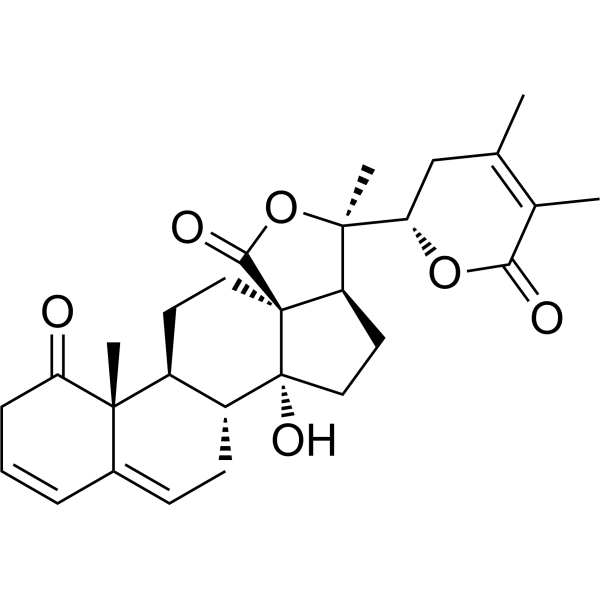
Withaphysalin D is a selective antagonist against the N-methyl-D-aspartate receptor (NMDAR) containing GluN2B. Withaphysalin D can be isolated from water lilies and has neuroprotective properties. Withaphysalin D is able to cross the blood-brain barrier .
|
-
-
- HY-B1487R
-
|
Tricyclamol hydrochloride (Standard); (±)-Procyclidine hydrochloride (Standard)
|
Reference Standards
iGluR
mAChR
|
Neurological Disease
|
|
Procyclidine (hydrochloride) (Standard) is the analytical standard of Procyclidine (hydrochloride). This product is intended for research and analytical applications. Procyclidine (Tricyclamol, (±)-Procyclidine) hydrochloride , an anticholinergic agent, is a muscarinic receptor antagonist that also has the properties of an N-methyl-D-aspartate (NMDA) antagonist. Procyclidine hydrochloride can be used in studies of Parkinson's disease and related psychiatric disorders such as Soman-induced epilepsy .
|
-

-
- HY-P1287
-
|
|
iGluR
|
Neurological Disease
|
|
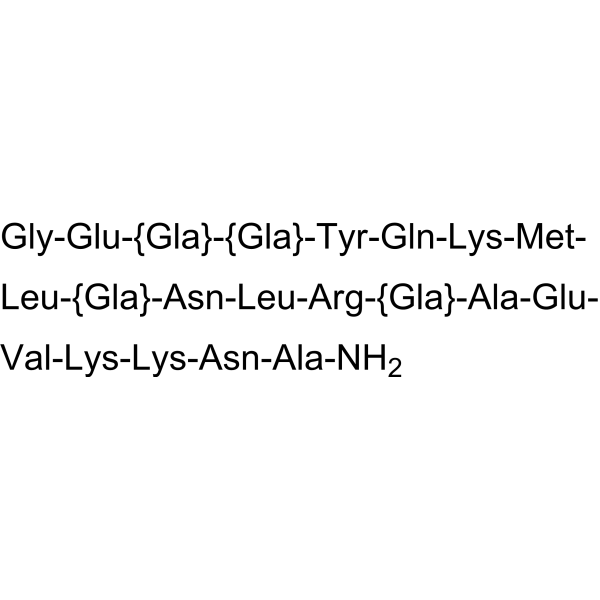
Conantokin-T is a γ-carboxyglutamate-containing, N-methyl-D-aspartate (NMDA) antagonist peptidewith an IC50 value of 2 μM. Conantokin-T inhibits NMDA receptor-mediated calcium influx in central nervous system neurons. Conantokin-T can be purified from the venom of the fish-hunting cone snail, Conus tulipa .
|
-
-
- HY-G0021S1
-
|
Norclozapine-d8 hydrochloride; Desmethylclozapine-d8 hydrochloride; Normethylclozapine-d8 hydrochloride
|
mAChR
Opioid Receptor
Drug Metabolite
Virus Protease
|
Infection
|
|
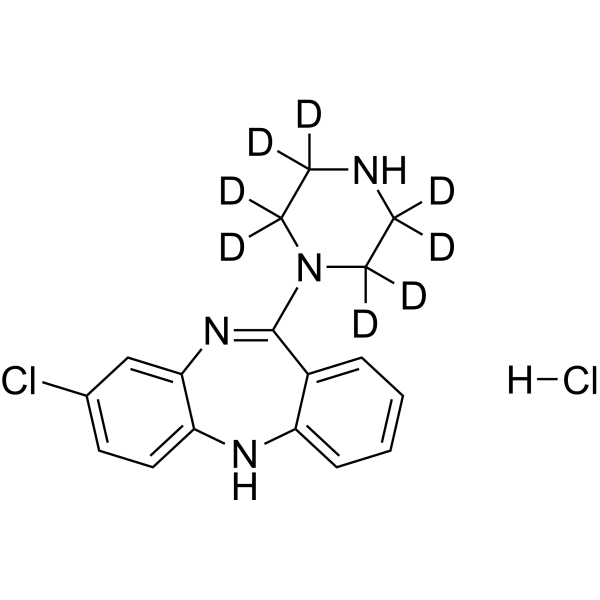
N-Desmethylclozapine-d8 (hydrochloride) is the deuterium labeled N-Desmethylclozapine hydrochloride. N-Desmethylclozapine hydrochloride is a major active metabolite of the atypical antipsychotic agent Clozapine. N-Desmethylclozapine hydrochloride is a potent, allosteric and partial M1 receptors agonist (EC50=115 nM) and is able to potentiate hippocampal N-methyl-d-aspartate (NMDA) receptor currents through M1 receptor activation. N-Desmethylclozapine hydrochloride is also a δ-opioid agonist .
|
-
-
- HY-100667
-
UBP608
1 Publications Verification
|
iGluR
|
Neurological Disease
|
|
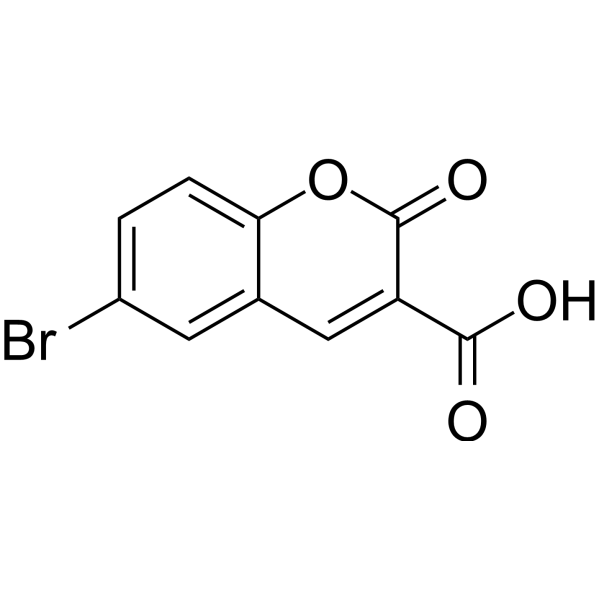
UBP608 is a potent N-Methyl-D-aspartate receptors (NMDARs) negative allosteric modulator. UBP608 has the potential for the research of neurological disorders .
|
-
- HY-114550
-
|
|
iGluR
|
Neurological Disease
|
|
LY339434 is a potent and selective agonist for the hydrochloride receptor GluR5. LY339434 affects the rapid death of neurons through n-methyl-D-aspartate (NMDA) receptors .
|
-

- HY-107702
-
|
|
iGluR
|
Neurological Disease
|
|
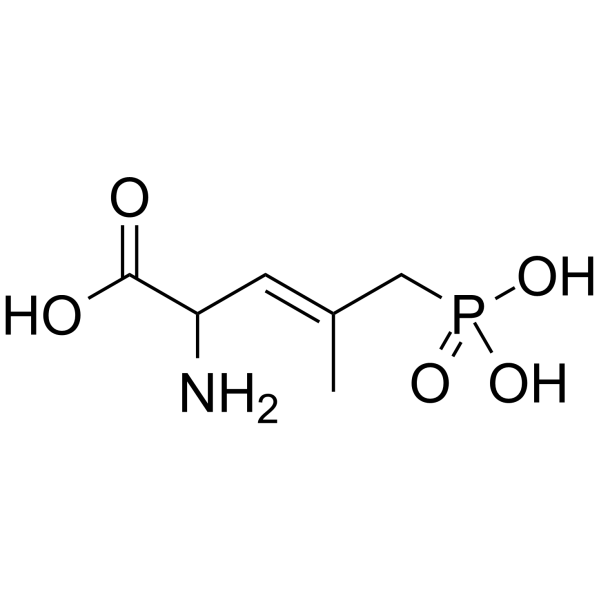
CGP 37849 is a potent, competitive and orally active N-methyl-D-aspartate (NMDA) receptor antagonist. CGP 37849 is an anticonvulsant in rodents and has antidepressant and anxiolytic-like effects .
|
-
- HY-B1487A
-
|
Tricyclamol; (±)-Procyclidine
|
mAChR
iGluR
|
Neurological Disease
|
|
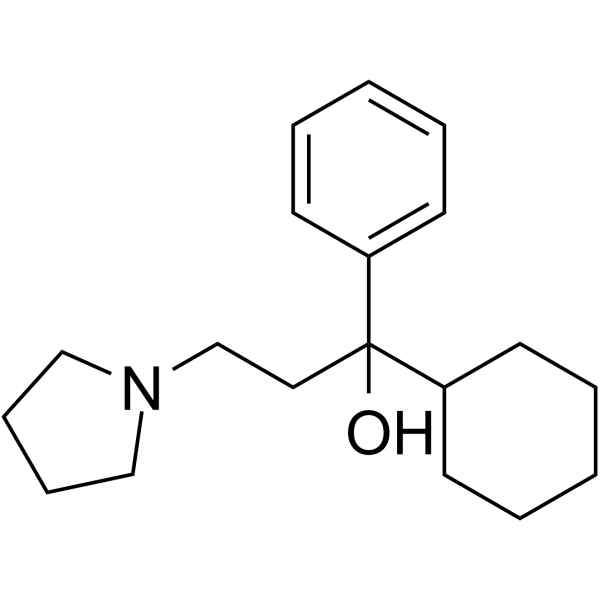
Procyclidine (Tricyclamol; (±)-Procyclidine), an anticholinergic agent, is a muscarinic receptor antagonist that also has the properties of an N-methyl-D-aspartate (NMDA) antagonist. Procyclidine can be used in studies of Parkinson's disease and related psychiatric disorders such as Soman-induced epilepsy .
|
-
- HY-156634
-
|
NYX-783
|
iGluR
|
Neurological Disease
|
|
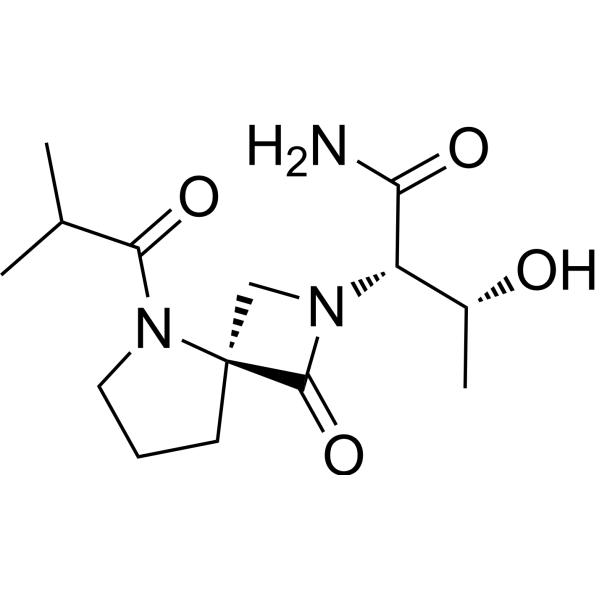
Risevistinel (NYX-783) is a positive allosteric modulator of N-methyl-D-aspartate (NMDA) receptor. Nevadistinel can be used to inhibit cognitive impairment associated with neurodegenerative diseases, such as mild cognitive impairment, mild Alzheimer's disease, Parkinson's disease, Lewy body disease .
|
-
- HY-P1293
-
|
|
iGluR
|
Neurological Disease
|
|
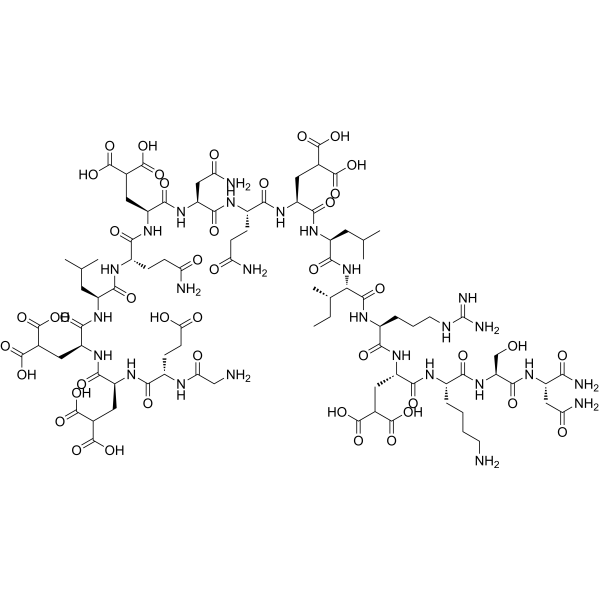
Conantokin G, a 17-amino-acid peptide, is a potent, selective and competitive antagonist of N-methyl-D-aspartate (NMDA) receptors. Conantokin G inhibits NMDA-evoked currents in murine cortical neurons with an IC50 of 480 nM. Conantokin G has neuroprotective properties .
|
-
- HY-136299A
-
|
FUT-187
|
iGluR
|
Neurological Disease
|
|
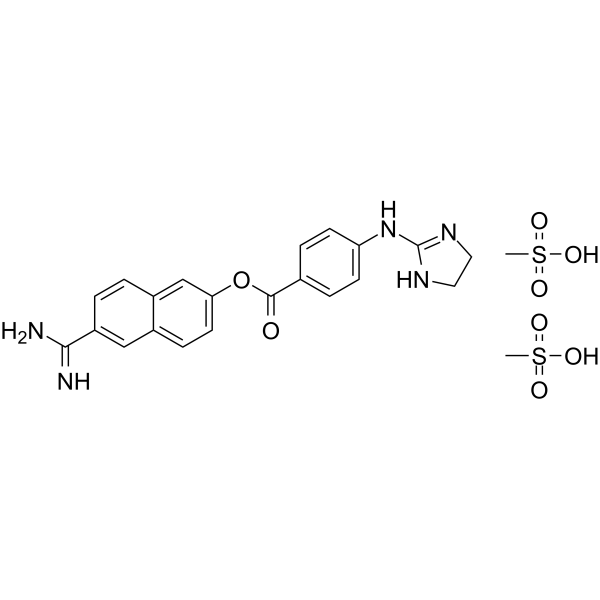
Sepimostat dimethanesulfonate (FUT-187) exhibits neuroprotective activity via NR2B N-methyl-D-aspartate receptor antagonism at the Ifenprodil-binding site of the NR2B subunit. Sepimostat dimethanesulfonate inhibits the Ifenprodil binding with a Ki value of 27.7 µM .
|
-
- HY-156626
-
|
NYX-458; NYX-3054
|
iGluR
|
Neurological Disease
|
|
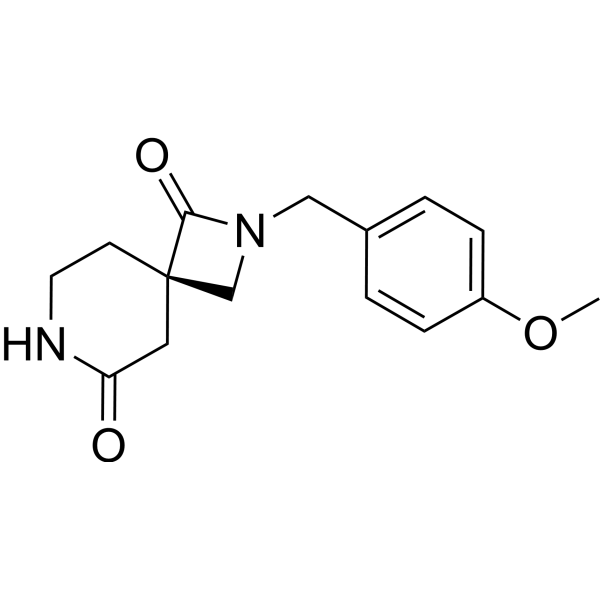
Nevadistinel (NYX-458; NYX-3054) is a positive allosteric modulator of N-methyl-D-aspartate (NMDA) receptor. Nevadistinel can be used to inhibit cognitive impairment associated with neurodegenerative diseases, such as mild cognitive impairment, mild Alzheimer's disease, Parkinson's disease, Lewy body disease .
|
-
- HY-114753
-
|
CR-2249; XY-2401
|
iGluR
|
Neurological Disease
|
|
Neboglamine (CR-2249; XY-2401) is a modulator for N-methyl-D-aspartate (NMDA) receptor. Neboglamine increases the levels of fos-like immunoreactivity (FLI)-positive cells in the prefrontal cortex, nucleus accumbens, and lateral septal nucleus in rat models, .restores NMDA (HY-17551) -mediated neurotransmitter release, and inhibits phencyclidine-induced hyperlocomotion .
|
-

- HY-G0021S
-
|
Norclozapine-d8; Desmethylclozapine-d8; Normethylclozapine-d8
|
mAChR
Opioid Receptor
Drug Metabolite
Virus Protease
|
Infection
|
|
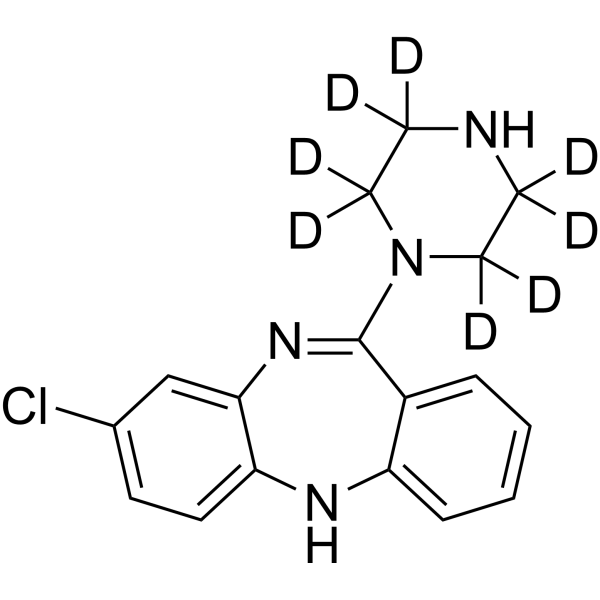
N-Desmethylclozapine-d8 is the deuterium labeled N-Desmethylclozapine. N-Desmethylclozapine is a major active metabolite of the atypical antipsychotic agent Clozapine. N-Desmethylclozapine is a potent, allosteric and partial M1 receptors agonist (EC50=115 nM) and is able to potentiate hippocampal N-methyl-d-aspartate (NMDA) receptor currents through M1 receptor activation. N-Desmethylclozapine is also a δ-opioid agonist .
|
-
- HY-W748519
-
|
N-methylglycine-13C3; Sarcosin-13C3
|
Isotope-Labeled Compounds
GlyT
Endogenous Metabolite
|
Cancer
|
|
Sarcosine- 13C3 (N-Methylglycine- 13C3; Sarcosin- 13C3) is the 13C-labeled Sarcosine (HY-101037). Sarcosine (N-Methylglycine), an endogenous amino acid, is a competitive glycine transporter type I (GlyT1) inhibitor and N-methyl-D-aspartate (NMDA) receptor co-agonist. Sarcosine increases the glycine concentration, resulting in an indirect potentiation of the NMDA receptor. Sarcosine is commonly used for the research of schizophrenia .
|
-

- HY-N0215S6
-
|
2-Amino-3-phenylpropionic acid-d5 hydrochloride
|
Isotope-Labeled Compounds
Calcium Channel
iGluR
Endogenous Metabolite
|
Metabolic Disease
|
|
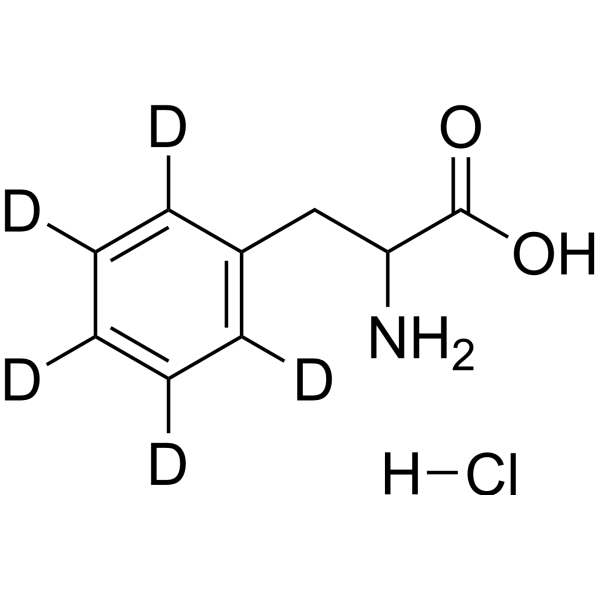
DL-Phenylalanine-d5 (hydrochloride) is the deuterium labeled DL-Phenylalanine hydrochloride. L-Phenylalanine hydrochloride is an essential amino acid isolated from Escherichia coli. L-Phenylalanine hydrochloride is a α2δ subunit of voltage-dependent Ca+ channels antagonist with a Ki of 980 nM. L-phenylalanine hydrochloride is a competitive antagonist for the glycine- and glutamate-binding sites of N-methyl-D-aspartate receptors (NMDARs) (KB of 573 μM ) and non-NMDARs, respectively. L-Phenylalanine hydrochloride is widely used in the production of food flavors and pharmaceuticals .
|
-
- HY-10711
-
|
(R)-NFPS
|
GlyT
|
Neurological Disease
|
|
ALX-5407 ((R)-NFPS) is a selective and orally active glycine transporter GlyT1 inhibitor with an IC50 value of 3 nM. ALX-5407 can be used the research of N-methyl-D-aspartate-receptor function and schizophrenia .
|
-

- HY-178251S
-
|
|
Isotope-Labeled Compounds
Calcium Channel
iGluR
Endogenous Metabolite
|
Metabolic Disease
Cancer
|
|
L-Phenylalanine-d is the deuterium labeled L-Phenylalanine (HY-N0215). L-Phenylalanine ((S)-2-Amino-3-phenylpropionic acid) is an essential amino acid isolated from Escherichia coli. L-Phenylalanine is a α2δ subunit of voltage-dependent Ca 2+ channels antagonist with a Ki of 980 nM. L-phenylalanine is a competitive antagonist for the glycine- and glutamate-binding sites of N-methyl-D-aspartate receptors (NMDARs) (KB of 573 μM ) and non-NMDARs, respectively. L-Phenylalanine is widely used in the production of food flavors and pharmaceuticals .
|
-

- HY-123655
-
|
|
iGluR
|
Neurological Disease
|
|
Fenazinel dihydrochloride, an N-methyl-D-aspartate (NMDA) receptor antagonist, shows promise as a potential treatment for ischemic stroke.
|
-

- HY-101353
-
|
(-)-LY 235959
|
iGluR
|
Neurological Disease
|
|
LY 235959 is a competitive N-methyl-D-aspartate (NMDA)-receptor antagonist. LY 235959 potentiates the anticonvulsant action of antiepileptics .
|
-
- HY-W724221
-
|
|
iGluR
|
Neurological Disease
|
|
3-Methoxyeticyclidine hydrochloride is a phencyclidine-type compound that has binding affinity for the N-methyl-D-aspartate receptor. 3-Methoxyeticyclidine hydrochloride has a certain degree of toxicity .
|
-

- HY-138973
-
|
|
iGluR
|
Neurological Disease
|
|
Neramexane is an oral N-methyl-D-aspartate (NMDA) receptor antagonist, as a potential neuroprotectant for various central nervous system disorders, including Alzheimer's disease, and for the potential treatment of drug and alcohol dependence, and pain.
|
-

- HY-138973A
-
|
|
iGluR
nAChR
|
Neurological Disease
|
|
Neramexane mesylate is an α9α10 cholinergic nicotinic receptors and N-methyl-D-aspartate receptors(NMDA) antagonist. Neramexane mesylate can improve moderate to severe tinnitus, and also shows neuroprotective effects .
|
-

- HY-15786
-
|
|
iGluR
|
Neurological Disease
|
|
SGE-201 is an allosteric modulator of N-methyl-D-aspartate receptors (NMDARs), demonstrating significant neuroprotective effects by enhancing NMDAR-mediated responses while differing in action among various blockers in neuronal networks.
|
-

- HY-171979
-
|
|
iGluR
|
Neurological Disease
|
|
Fluorolintane exhibits high affinity for N-methyl-D-aspartate (NMDA) receptors with a Ki of 87.92 nM. Fluorolintane inhibits prepulse inhibition in rats. Fluorolintane also inhibits NMDA receptor-induced field excitatory postsynaptic potentials in rat hippocampal slices .
|
-

- HY-107694
-
|
(Rac)-MK-801
|
iGluR
|
Others
|
|
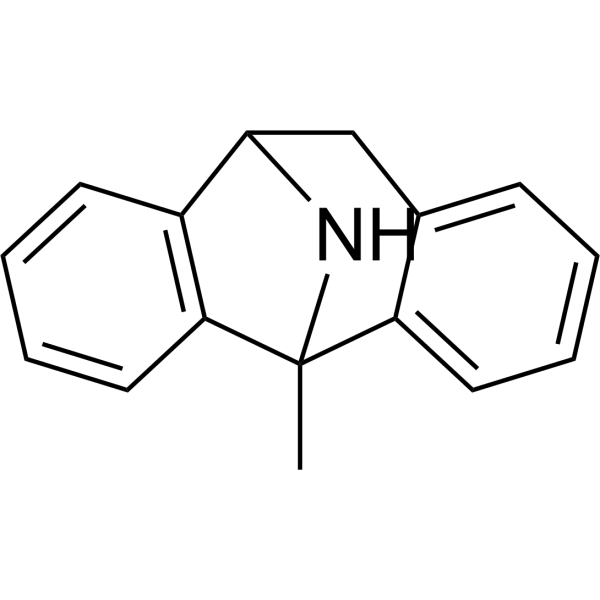
(Rac)-Dizocilpine ((Rac)-MK-801) is the racemate of Dizocilpine (HY-15084B). Dizocilpine (MK-801), a potent anticonvulsant, is a selective and non-competitive N-methyl-D-aspartate (NMDA) receptor antagonist .
|
-
- HY-P7060
-
|
TPPT
|
iGluR
|
Neurological Disease
|
|
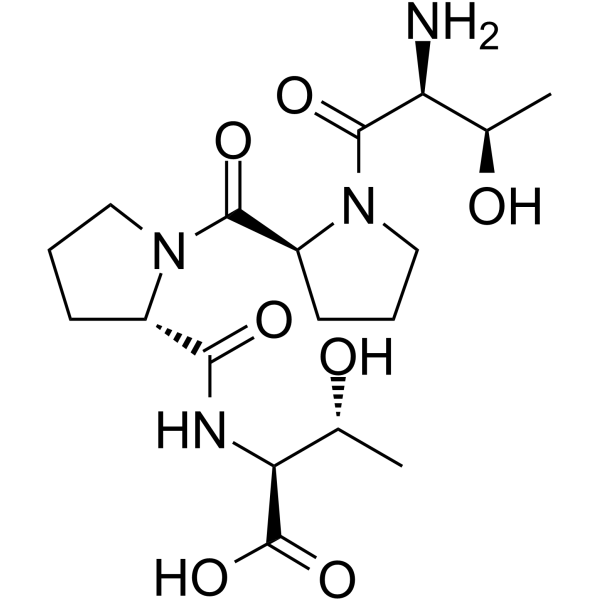
NT 13 (TPPT) is a tetrapeptide having the amino acid sequence L-threonyl-L-prolyl-L-prolyl-L-threonine amide. NT 13 is a partial N-methyl-D-aspartate receptor (NMDAR) agonist used in the study of depression, anxiety, and other related diseases.
|
-
- HY-B0591S
-
|
|
Isotope-Labeled Compounds
iGluR
|
Neurological Disease
|
|
Memantine-d3 (hydrochloride) is deuterium labeled Memantine. Memantine is an orally active, noncompetitive N-methyl-D-aspartate receptor (NMDAR) antagonist. Memantine can be used for the research of moderate-to-severe Alzheimer's disease (AD) .
|
-

- HY-105627A
-
|
CI-572 hydrochloride
|
GABA Receptor
iGluR
|
Cardiovascular Disease
|
|
Profadol (CI-572) hydrochloride is a potent analgesic agent. Profadol is a µ-opioid receptor (MOR) agonist. Profadol hydrochloride activates the γ-aminobutyric acid (GABA) receptors and inhibits the N-methyl-D-aspartate (NMDA) receptor. Profadol increases the mRNA and protein expression of MOR .
|
-

- HY-139048A
-
|
|
iGluR
|
Neurological Disease
|
|
Fluoroethylnormemantine hydrochloride, a derivative of Memantine, is an antagonist of the N-methyl-D-aspartate (NMDA) receptor. [ 18F]-Fluoroethylnormemantine hydrochloride can be used as a positron emission tomography (PET) tracer. Fluoroethylnormemantine hydrochloride exhibits anti-amnesic, neuroprotective, antidepressant-like and fear-attenuating effects .
|
-
- HY-107703
-
|
|
iGluR
|
Neurological Disease
|
|
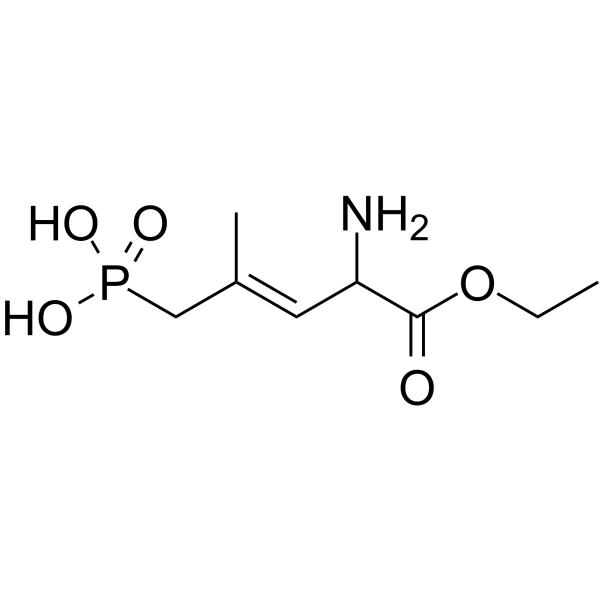
CGP 39551 is a potent, orally active, competitive N-methyl-D-aspartate (NMDA) receptor antagonist with potent anticonvulsant activity . CGP 39551 shows measurable inhibitory activity at both L-[ 3H]-glutamate (Ki=8.4 μM) .
|
-
- HY-P1293A
-
|
|
iGluR
|
Neurological Disease
|
|
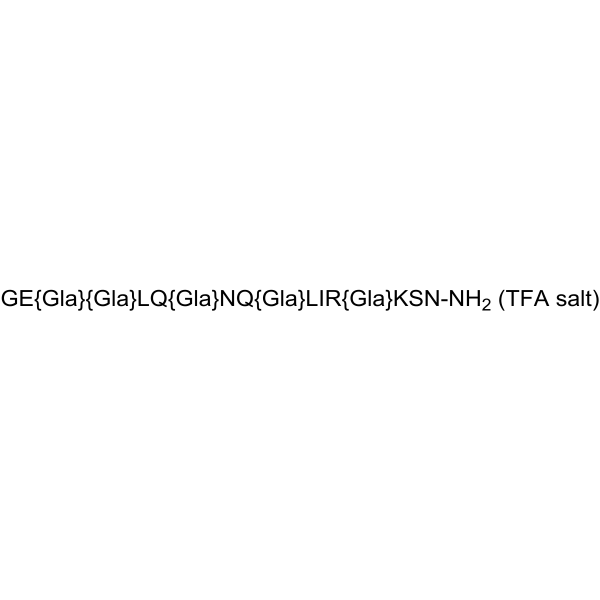
Conantokin G TFA, a 17-amino-acid peptide, is a potent, selective and competitive antagonist of N-methyl-D-aspartate (NMDA) receptors. Conantokin G TFA inhibits NMDA-evoked currents in murine cortical neurons with an IC50 of 480 nM. Conantokin G TFA has neuroprotective properties .
|
-
- HY-100714D
-
|
2-APV lithium; DL-2-Amino-5-phosphonovaleric acid lithium
|
iGluR
|
Neurological Disease
Inflammation/Immunology
|
|
DL-AP5 (2-APV) lithium is a competitive NMDA (N-methyl-D-aspartate) receptor antagonist. DL-AP5 lithium shows significantly antinociceptive activity. DL-AP5 lithium specifically blocks on channels in the rabbit retina .
|
-

- HY-B1487S1
-
|
Tricyclamol-d5; (±)-Procyclidine-d5
|
Isotope-Labeled Compounds
iGluR
mAChR
|
Neurological Disease
|
|
Procyclidine-d5 (Tricyclamol-d5) is deuterium labeled Procyclidine (hydrochloride). Procyclidine (Tricyclamol, (±)-Procyclidine) hydrochloride , an anticholinergic agent, is a muscarinic receptor antagonist that also has the properties of an N-methyl-D-aspartate (NMDA) antagonist. Procyclidine hydrochloride can be used in studies of Parkinson's disease and related psychiatric disorders such as Soman-induced epilepsy .
|
-

- HY-124779A
-
|
(S)-GEA 654 hydrochloride; (S)-A03 hydrochloride
|
Serotonin Transporter
|
Neurological Disease
|
|
(S)-Alaproclate ((S)-A03) hydrochloride is a potent selective serotonin reuptake inhibitor (SSRI), which is used as an antidepressant agent. (S)-Alaproclate (hydrochloride) also produces a potent block of N-methyl-d-aspartate (NMDA) receptor currents in hippocampal neurons (IC50=1.1 μM) with a potent blocker of K + currents .
|
-

- HY-W882667
-
|
|
iGluR
|
Neurological Disease
|
|
Pregn-5-en-3β-ol, a steroid compound, when formulated as the biscarboxylic acid hemiesters along with androst-5-en-3β-ol, serves as a potent positive allosteric modulator of NMDA (N-methyl-D-aspartate) receptors, making it applicable for research into psychiatric disorders .
|
-

- HY-136299R
-
|
FUT-187 free base (Standard)
|
iGluR
Reference Standards
|
Neurological Disease
|
|
Sepimostat (Standard) is the analytical standard of Sepimostat. This product is intended for research and analytical applications. Sepimostat (FUT-187 free base) exhibits neuroprotective activity via NR2B N-methyl-D-aspartate receptor antagonism at the Ifenprodil-binding site of the NR2B subunit. Sepimostat inhibits the Ifenprodil binding with a Ki value of 27.7 μM .
|
-

- HY-B0340R
-
|
DM9384 (Standard); DZL-221 (Standard)
|
Reference Standards
nAChR
iGluR
mGluR
PKC
GABA Receptor
Calcium Channel
|
Neurological Disease
|
|
Nefiracetam (Standard) is a cognition-enhancing agent. Nefiracetam is an activator of nAChR, N-methyl-D-aspartate receptor (NMDAR), mGluR5, PKC, gamma-aminobutyric acid (GABA), and N/L-type Ca 2+ channels. Nefiracetam promotes neuroplasticity and enhances neuroprotection. Nefiracetam can be used in Alzheimer's disease, epilepsy, and cerebral ischemia research .
|
-

- HY-G0021R
-
|
Norclozapine (Standard); Desmethylclozapine (Standard); Normethylclozapine (Standard)
|
Reference Standards
mAChR
Opioid Receptor
Drug Metabolite
Virus Protease
|
Infection
|
|
N-Desmethylclozapine (Standard) is the analytical standard of N-Desmethylclozapine. This product is intended for research and analytical applications. N-Desmethylclozapine is a major active metabolite of the atypical antipsychotic agent Clozapine. N-Desmethylclozapine is a potent, allosteric and partial M1 receptors agonist (EC50=115 nM) and is able to potentiate hippocampal N-methyl-d-aspartate (NMDA) receptor currents through M1 receptor activation. N-Desmethylclozapine is also a δ-opioid agonist .
|
-

- HY-100714R
-
|
2-APV (Standard); DL-2-Amino-5-phosphonovaleric acid (Standard)
|
Reference Standards
iGluR
|
Neurological Disease
Inflammation/Immunology
|
|
DL-AP5 (Standard) is the analytical standard of DL-AP5. This product is intended for research and analytical applications. DL-AP5 (2-APV) is a competitive NMDA (N-methyl-D-aspartate) receptor antagonist. DL-AP5 shows significantly antinociceptive activity. DL-AP5 specifically blocks on channels in the rabbit retina .
|
-

- HY-100714CR
-
|
2-APV sodium (Standard); DL-2-Amino-5-phosphonovaleric acid sodium (Standard)
|
Reference Standards
iGluR
|
Neurological Disease
Inflammation/Immunology
|
|
DL-AP5 (sodium) (Standard) is the analytical standard of DL-AP5 (sodium). This product is intended for research and analytical applications. DL-AP5 (2-APV) sodium is a competitive NMDA (N-methyl-D-aspartate) receptor antagonist. DL-AP5 sodium shows significantly antinociceptive activity. DL-AP5 sodium specifically blocks on channels in the rabbit retina .
|
-

- HY-P0221B
-
|
|
PACAP Receptor
|
Endocrinology
|
|
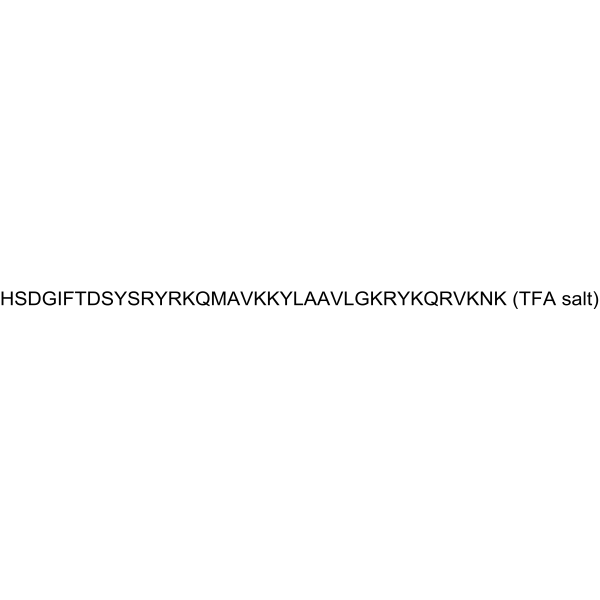
PACAP (1-38) free acid TFA is an endogenous neuropeptide. PACAP (1-38) free acid TFA potently stimulates antral motility and somatostatin secretion, inhibits the secretion of gastrin and stimulates the release of vasoactive intestinal polypeptide, gastrin releasing peptide and substance P. PACAP (1-38) free acid TFA also enhances N-methyl-D-aspartate receptor function and expression of brain-derived neurotrophic factor through RACK1 .
|
-
- HY-17387S1
-
|
Huperzine A-d4
|
iGluR
Cholinesterase (ChE)
Apoptosis
Isotope-Labeled Compounds
|
Neurological Disease
|
|
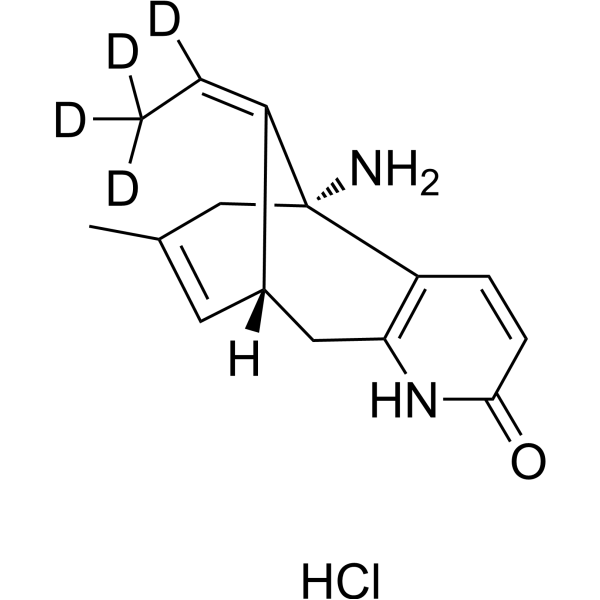
(-)-Huperzine A-d4 hydrochloride is deuterated labeled (-)-Huperzine A (HY-17387). (-)-Huperzine A (Huperzine A) is an alkaloid isolated from Huperzia serrata, with neuroprotective activity. (-)-Huperzine A is a potent, highly specific, reversible and blood-brain barrier penetrant inhibitor of acetylcholinesterase (AChE), with an IC50 of 82 nM. (-)-Huperzine A also is non-competitive antagonist of N-methyl-D-aspartate glutamate (NMDA) receptor. (-)-Huperzine A is developed for the research of neurodegenerative diseases, including Alzheimer’s disease .
|
-
- HY-100811AR
-
|
7-CKA sodium salt (Standard)
|
Reference Standards
iGluR
|
Neurological Disease
|
|
7-Chlorokynurenic acid (sodium salt) (Standard) is the analytical standard of 7-Chlorokynurenic acid (sodium salt). This product is intended for research and analytical applications. 7-Chlorokynurenic acid sodium salt (7-CKA sodium salt) is a potent and selective antagonist of the glycine B coagonist site of the N-methyl-D-aspartate (NMDA) receptor (IC50=0.56 μM). 7-Chlorokynurenic acid sodium salt is also a potent inhibitor of the reuptake of glutamate into synaptic vesicles with a Ki of 0.59 μM. 7-Chlorokynurenic acid sodium salt has potent antinociceptive actions after neuraxial delivery .
|
-

- HY-100811R
-
|
7-CKA (Standard)
|
Reference Standards
iGluR
|
Neurological Disease
|
|
7-Chlorokynurenic acid (Standard) is the analytical standard of 7-Chlorokynurenic acid. This product is intended for research and analytical applications. 7-Chlorokynurenic acid (7-CKA) is a potent and selective antagonist of the glycine B coagonist site of the N-methyl-D-aspartate (NMDA) receptor (IC50=0.56 μM). 7-Chlorokynurenic acid is also a potent inhibitor of the reuptake of glutamate into synaptic vesicles with a Ki of 0.59 μM. 7-Chlorokynurenic acid has potent antinociceptive actions after neuraxial delivery .
|
-

- HY-119886
-
|
|
iGluR
|
Neurological Disease
|
BMS-986169 is an inhibitor of the glutamate N-methyl-D-aspartate 2B receptor (GluN2B). BMS-986169 has a high binding affinity for the allosteric regulatory site of the GluN2B subunit, with a Ki value of 4.03-6.3 nM. BMS-986169 can inhibit the function of GluN2B receptors in Xenopus oocytes, with an IC50 value of 24.1 nM. BMS-986169 can also inhibit the activity of the hERG channel, with an IC50 value of 28.4 μM. BMS-986169 can be used in research on treatment-resistant depression .
|
-

- HY-N0215S
-
|
(S)-2-Amino-3-phenylpropionic acid-d7
|
Isotope-Labeled Compounds
Calcium Channel
iGluR
Endogenous Metabolite
|
Metabolic Disease
|
|
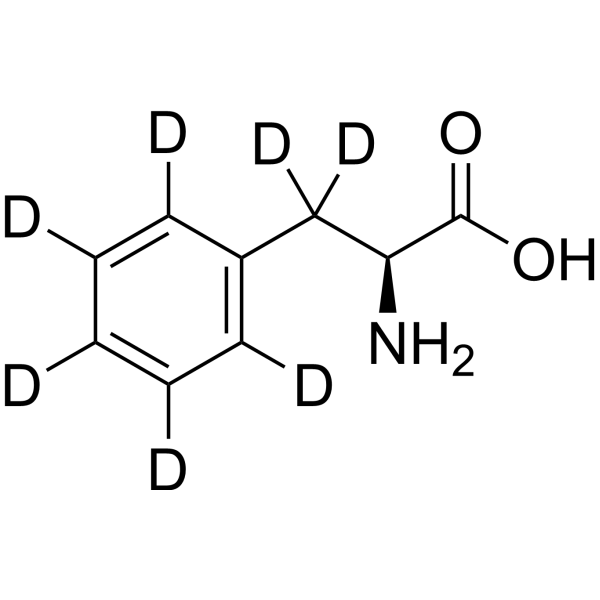
L-Phenylalanine-d7 is the deuterium labeled L-Phenylalanine. L-Phenylalanine ((S)-2-Amino-3-phenylpropionic acid) is an essential amino acid isolated from Escherichia coli. L-Phenylalanine is a α2δ subunit of voltage-dependent Ca+ channels antagonist with a Ki of 980 nM. L-phenylalanine is a competitive antagonist for the glycine- and glutamate-binding sites of N-methyl-D-aspartate receptors (NMDARs) (KB of 573 μM ) and non-NMDARs, respectively. L-Phenylalanine is widely used in the production of food flavors and pharmaceuticals .
|
-
- HY-N0215S13
-
|
(S)-2-Amino-3-phenylpropionic acid-d1
|
Isotope-Labeled Compounds
Calcium Channel
iGluR
Endogenous Metabolite
|
Metabolic Disease
|
|
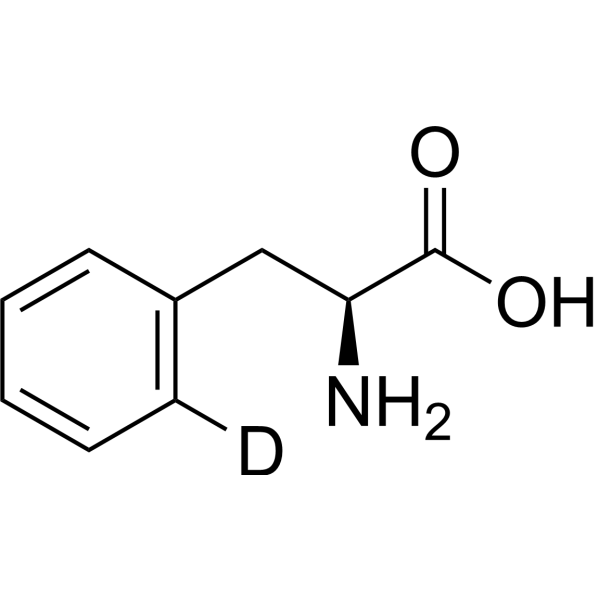
L-Phenylalanine-d is the deuterium labeled L-Phenylalanine. L-Phenylalanine ((S)-2-Amino-3-phenylpropionic acid) is an essential amino acid isolated from Escherichia coli. L-Phenylalanine is a α2δ subunit of voltage-dependent Ca+ channels antagonist with a Ki of 980 nM. L-phenylalanine is a competitive antagonist for the glycine- and glutamate-binding sites of N-methyl-D-aspartate receptors (NMDARs) (KB of 573 μM ) and non-NMDARs, respectively. L-Phenylalanine is widely used in the production of food flavors and pharmaceuticals .
|
-
- HY-100839
-
|
D,L-(tetrazol-5-yl)glycine; LY 285265
|
iGluR
|
Neurological Disease
|
|
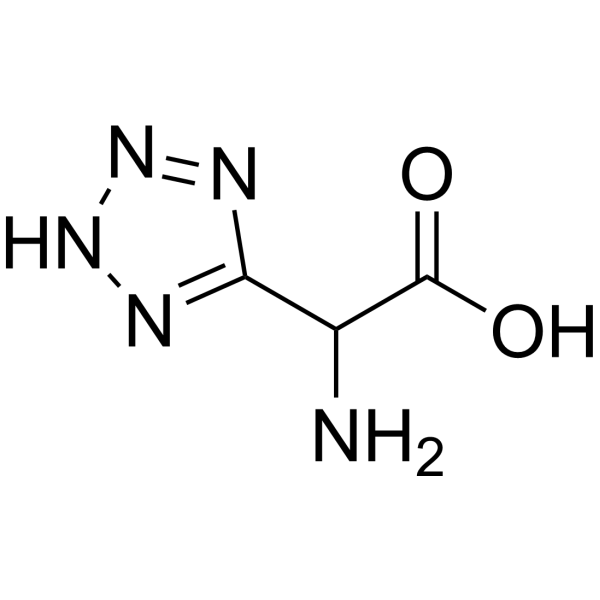
(RS)-(Tetrazol-5-yl)glycine (D,L-(tetrazol-5-yl)glycine) is a highly potent and selective N-methyl-D-aspartate (NMDA) receptor agonist . (RS)-(Tetrazol-5-yl)glycine has EC50s of 99 nM, 1.7 μM for GluN1/GluN2D and GluN1/GluN2A, respectively . (RS)-(Tetrazol-5-yl)glycine induces seizure responses and Fos in mice .
|
-
- HY-161211
-
|
|
17β-HSD
iGluR
|
Metabolic Disease
|
|
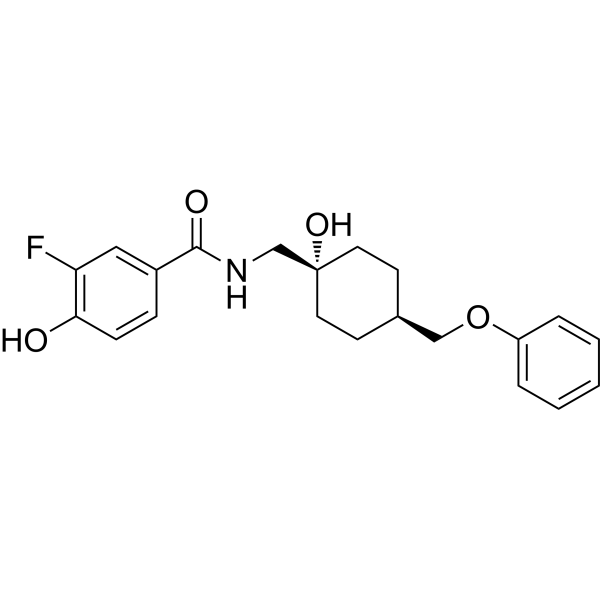
HSD17B13-IN-7 (compound 1), a fluorophenol-containing compound, is a potent HSD17B13 inhibitor with IC50s of 0.18 μM and 0.25 μM β-estradiol and Leukotriene B4 as substrates, respectively. HSD17B13-IN-7 is a potent N-methyl-D-aspartate (NMDA) NR2B receptor antagonist. HSD17B13-IN-7 has the potential for non-alcoholic fatty liver disease research .
|
-
- HY-136299B
-
|
FUT-187 trifluoroacetate
|
iGluR
|
Neurological Disease
|
|
Sepimostat (FUT-187) trifluoroacetate exhibits neuroprotective activity via NR2B N-methyl-D-aspartate receptor antagonism at the Ifenprodil-binding site of the NR2B subunit. Sepimostat trifluoroacetate inhibits the Ifenprodil binding with a Ki value of 27.7 μM .
|
-

- HY-100667R
-
|
|
iGluR
Reference Standards
|
Neurological Disease
|
|
UBP608 (Standard) is the analytical standard of UBP608 (HY-100667). This product is intended for research and analytical applications. UBP608 is a potent N-Methyl-D-aspartate receptors (NMDARs) negative allosteric modulator. UBP608 has the potential for the research of neurological disorders .
|
-

- HY-109097A
-
|
SP-8203 hydrochloride
|
MMP
iGluR
|
Cardiovascular Disease
Neurological Disease
|
|
Otaplimastat (SP-8203) hydrobromide, a matrix metalloproteinase (MMP) inhibitor, blocks N-methyl-D-aspartate (NMDA) receptor-mediated excitotoxicity in a competitive manner. Otaplimastat hydrobromide also exhibits anti-oxidant activity. Otaplimastat hydrobromide can be used for the research of brain ischemic injury .
|
-

- HY-106441AR
-
|
MK-0657 (Standard); CERC-301 (Standard)
|
Reference Standards
iGluR
|
Neurological Disease
|
|
Rislenemdaz (Standard) is the analytical standard of Rislenemdaz (HY-106441A). This product is intended for research and analytical applications. Rislenemdaz (CERC-301) is an orally bioavailable and selective N-methyl-D-aspartate (NMDA) receptor subunit 2B (GluN2B) antagonist with Ki and IC 50 of 8.1 nM and 3.6 nM, respectively.
|
-

- HY-100822R
-
|
(+)-HA-966 (Standard)
|
iGluR
Reference Standards
|
Neurological Disease
|
|
(R)-(+)-HA-966 (Standard) is the analytical standard of (R)-(+)-HA-966 (HY-100822). This product is intended for research and analytical applications. (R)-(+)-HA-966 ((+)-HA-966) is a partial agonist/antagonist of glycine site of the N-methyl-D-aspartate (NMDA) receptor complex. (R)-(+)-HA-966 selectively blocks the activation of the mesolimbic dopamine system by amphetamine . (R)-(+)-HA-966 can cross the blood-brain barrier and has the potential for neuropathic and acute pain .
|
-

- HY-N0215S5
-
|
(S)-2-Amino-3-phenylpropionic acid-15N
|
Isotope-Labeled Compounds
Calcium Channel
iGluR
Endogenous Metabolite
|
Metabolic Disease
|
|
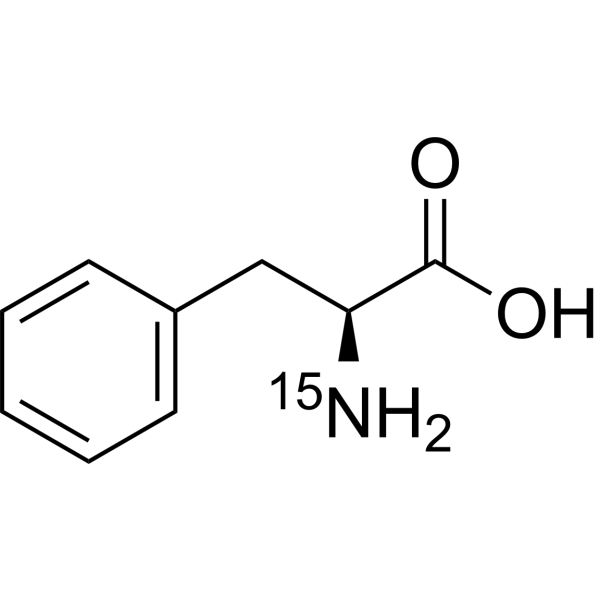
L-Phenylalanine- 15N is the 15N-labeled L-Phenylalanine. L-Phenylalanine ((S)-2-Amino-3-phenylpropionic acid) is an essential amino acid isolated from Escherichia coli. L-Phenylalanine is a α2δ subunit of voltage-dependent Ca+ channels antagonist with a Ki of 980 nM. L-phenylalanine is a competitive antagonist for the glycine- and glutamate-binding sites of N-methyl-D-aspartate receptors (NMDARs) (KB of 573 μM ) and non-NMDARs, respectively. L-Phenylalanine is widely used in the production of food flavors and pharmaceuticals .
|
-
- HY-N0215S8
-
|
(S)-2-Amino-3-phenylpropionic acid-13C6
|
Isotope-Labeled Compounds
Calcium Channel
iGluR
Endogenous Metabolite
|
Metabolic Disease
|
|
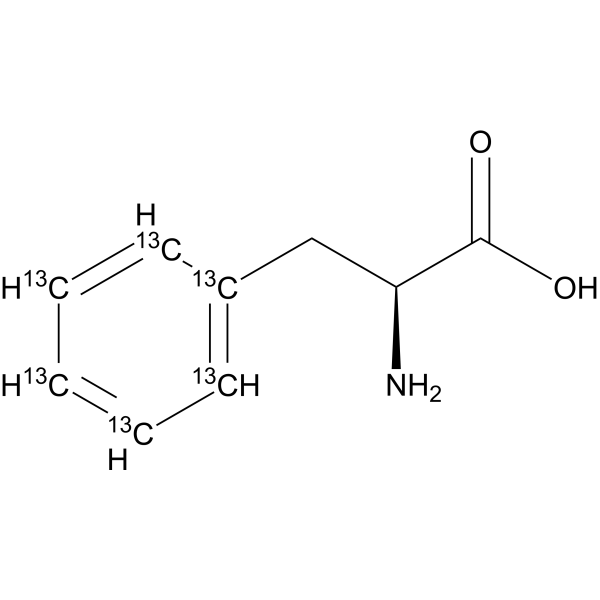
L-Phenylalanine- 13C6 is the 13C-labeled L-Phenylalanine. L-Phenylalanine ((S)-2-Amino-3-phenylpropionic acid) is an essential amino acid isolated from Escherichia coli. L-Phenylalanine is a α2δ subunit of voltage-dependent Ca+ channels antagonist with a Ki of 980 nM. L-phenylalanine is a competitive antagonist for the glycine- and glutamate-binding sites of N-methyl-D-aspartate receptors (NMDARs) (KB of 573 μM ) and non-NMDARs, respectively. L-Phenylalanine is widely used in the production of food flavors and pharmaceuticals .
|
-
- HY-N0215S10
-
|
(S)-2-Amino-3-phenylpropionic acid-13C9
|
Isotope-Labeled Compounds
Calcium Channel
iGluR
Endogenous Metabolite
|
Metabolic Disease
|
|
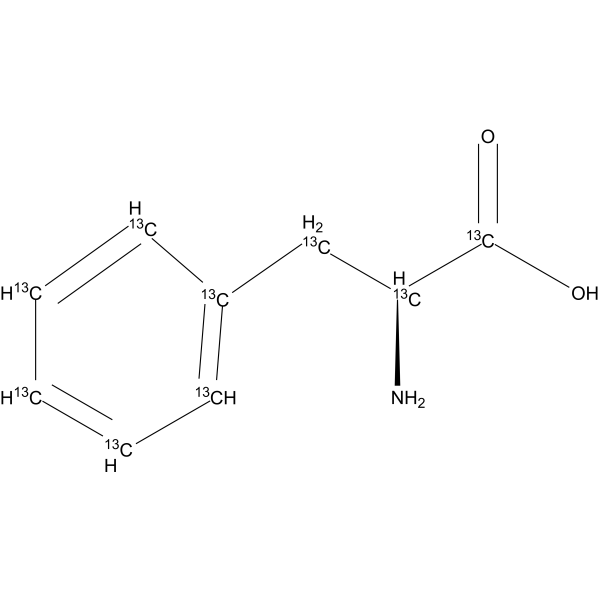
L-Phenylalanine- 13C9 is the 13C-labeled L-Phenylalanine. L-Phenylalanine ((S)-2-Amino-3-phenylpropionic acid) is an essential amino acid isolated from Escherichia coli. L-Phenylalanine is a α2δ subunit of voltage-dependent Ca+ channels antagonist with a Ki of 980 nM. L-phenylalanine is a competitive antagonist for the glycine- and glutamate-binding sites of N-methyl-D-aspartate receptors (NMDARs) (KB of 573 μM ) and non-NMDARs, respectively. L-Phenylalanine is widely used in the production of food flavors and pharmaceuticals .
|
-
- HY-P5911
-
|
|
iGluR
|
Inflammation/Immunology
|
|
GluN1 (359-378) is an anti-N-methyl-D-aspartate
receptor (NMDAR) peptide. GluN1 (359-378) can cross the blood-brain barrier.
GluN1 (359-378) can be used to study anti-NMDAR encephalitis therapy targeting
the immune system .
|
-

- HY-N0215S11
-
|
(S)-2-Amino-3-phenylpropionic acid-13C9,15N
|
Calcium Channel
iGluR
Endogenous Metabolite
|
Metabolic Disease
|
|
L-Phenylalanine- 13C9, 15N is the 13C- and 15N-labeled L-Phenylalanine. L-Phenylalanine ((S)-2-Amino-3-phenylpropionic acid) is an essential amino acid isolated from Escherichia coli. L-Phenylalanine is a α2δ subunit of voltage-dependent Ca+ channels antagonist with a Ki of 980 nM. L-phenylalanine is a competitive antagonist for the glycine- and glutamate-binding sites of N-methyl-D-aspartate receptors (NMDARs) (KB of 573 μM ) and non-NMDARs, respectively. L-Phenylalanine is widely used in the production of food flavors and pharmaceuticals .
|
-
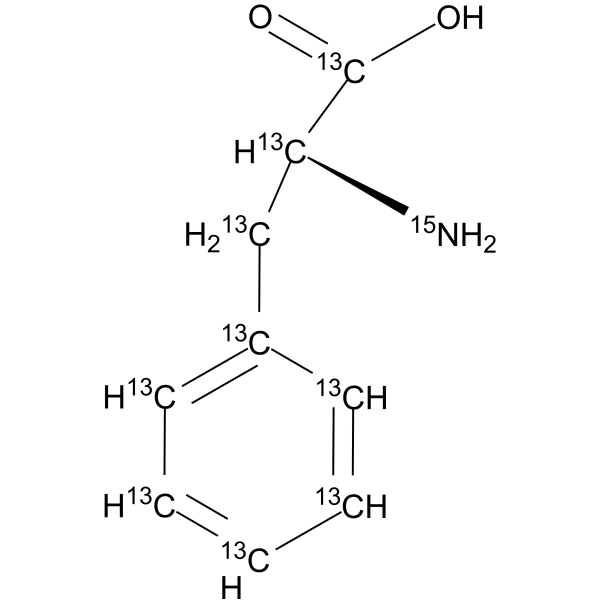
- HY-N0215S14
-
|
(S)-2-Amino-3-phenylpropionic acid-15N,d8
|
Isotope-Labeled Compounds
Calcium Channel
iGluR
Endogenous Metabolite
|
Metabolic Disease
|
|
L-Phenylalanine- 15N,d8 is the deuterium and 15N-labeled L-Phenylalanine. L-Phenylalanine ((S)-2-Amino-3-phenylpropionic acid) is an essential amino acid isolated from Escherichia coli. L-Phenylalanine is a α2δ subunit of voltage-dependent Ca2+ channels antagonist with a Ki of 980 nM. L-phenylalanine is a competitive antagonist for the glycine- and glutamate-binding sites of N-methyl-D-aspartate receptors (NMDARs) (KB of 573 μM ) and non-NMDARs, respectively. L-Phenylalanine is widely used in the production of food flavors and pharmaceuticals .
|
-
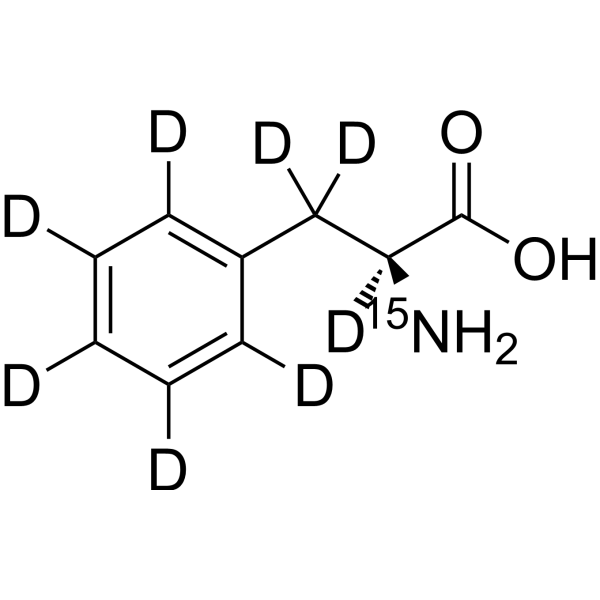
- HY-N0215S9
-
|
(S)-2-Amino-3-phenylpropionic acid-13C9,15N,d8
|
Isotope-Labeled Compounds
Calcium Channel
iGluR
Endogenous Metabolite
|
Metabolic Disease
|
|
L-Phenylalanine- 13C9, 15N,d8 is the deuterium, 13C-, and 15-labeled L-Phenylalanine. L-Phenylalanine ((S)-2-Amino-3-phenylpropionic acid) is an essential amino acid isolated from Escherichia coli. L-Phenylalanine is a α2δ subunit of voltage-dependent Ca+ channels antagonist with a Ki of 980 nM. L-phenylalanine is a competitive antagonist for the glycine- and glutamate-binding sites of N-methyl-D-aspartate receptors (NMDARs) (KB of 573 μM ) and non-NMDARs, respectively. L-Phenylalanine is widely used in the production of food flavors and pharmaceuticals .
|
-
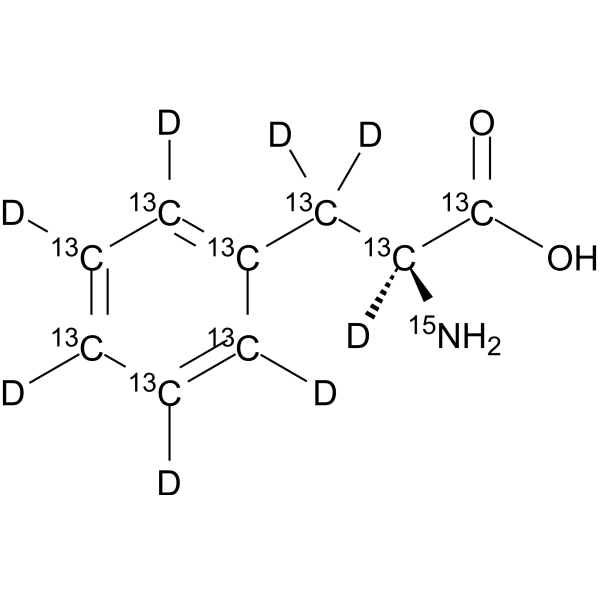
- HY-155811
-
|
|
iGluR
|
Neurological Disease
|
|
DQP-997-74 (compound 2i) is a selective negative allosteric modulator of N-methyl-d-aspartate receptor (NMDAR), specifically targeting GluN2C/D (IC50: 0.069 μM and 0.035 μM), with blood-brain barrier penetrability. Where DQP refers to dihydroquinoline-pyrazoline. DQP-997-74 acts synergistically with the agonist glutamate to exhibit time-dependent enhanced potency in inhibiting hypersynchronous activity driven by high-frequency excitatory synaptic transmission. DQP-997-74 reduces the number of epileptogenesis in a murine model of tuberous sclerosis complex (TSC)-induced epilepsy. DQP-997-74 can be used for research on NMDAR-related neurological diseases .
|
-
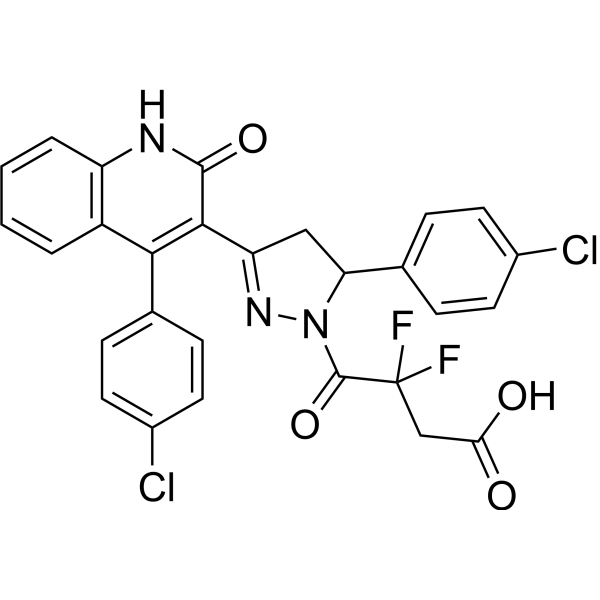
- HY-N0215S16
-
|
(S)-2-Amino-3-phenylpropionic acid-13C-1
|
Isotope-Labeled Compounds
Calcium Channel
iGluR
Endogenous Metabolite
Ligands for E3 Ligase
|
Metabolic Disease
Cancer
|
|
L-Phenylalanine- 13C-1 ((S)-2-Amino-3-phenylpropionic acid- 13C-1) is the 13C-labeled L-Phenylalanine (HY-N0215). L-Phenylalanine ((S)-2-Amino-3-phenylpropionic acid) is an essential amino acid isolated from Escherichia coli. L-Phenylalanine is a α2δ subunit of voltage-dependent Ca 2+ channels antagonist with a Ki of 980 nM. L-phenylalanine is a competitive antagonist for the glycine- and glutamate-binding sites of N-methyl-D-aspartate receptors (NMDARs) (Kb of 573 μM ) and non-NMDARs, respectively. L-Phenylalanine is widely used in the production of food flavors and pharmaceuticals.
|
-

- HY-183948
-
|
|
iGluR
|
Neurological Disease
|
|
CNS0042 is an allosteric modulator of NMDA receptor. CNS0042 can be used for the research of NMDA receptor-mediated neurological or psychiatric disease .
|
-

- HY-139192
-
|
NMDAR/TRPM4-IN-2
|
iGluR
TRP Channel
ERK
|
Neurological Disease
|
|
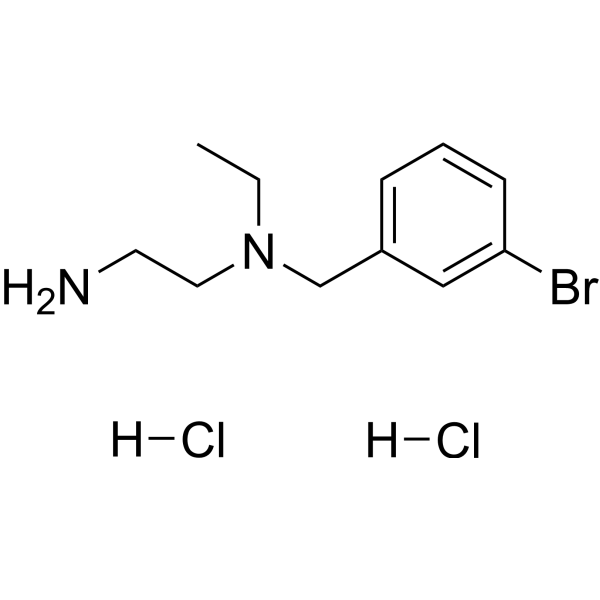
Brophenexin (compound 8) is a potent NMDAR/TRPM4 interaction interface inhibitor. Brophenexin shows neuroprotective activity. Brophenexin prevents NMDA-induced cell death and mitochondrial dysfunction in hippocampal neurons, with an IC50 of 2.1 μM. Brophenexin protects mice from MCAO-induced brain damage and NMDA-induced retinal ganglion cell loss .
|
-
- HY-139192A
-
|
NMDAR/TRPM4-IN-2 free base
|
iGluR
TRP Channel
ERK
|
Neurological Disease
|
|
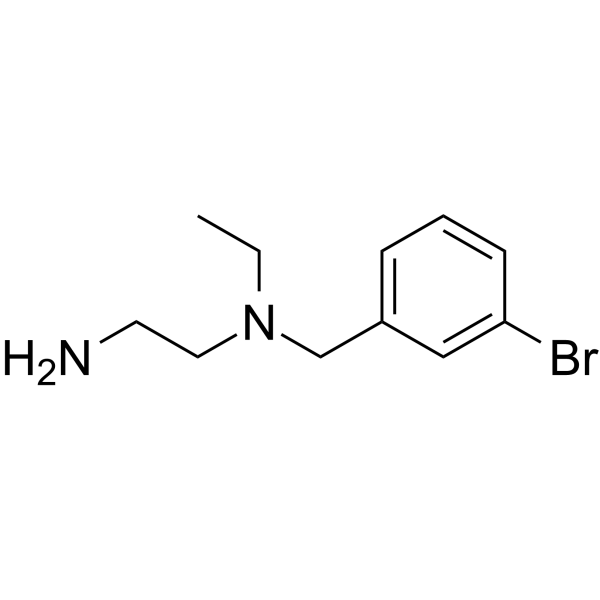
Brophenexin free base (compound 8) is a potent NMDAR/TRPM4 interaction interface inhibitor. Brophenexin free base shows neuroprotective activity. Brophenexin free base prevents NMDA-induced cell death and mitochondrial dysfunction in hippocampal neurons, with an IC50 of 2.1 μM. Brophenexin free base protects mice from MCAO-induced brain damage and NMDA-induced retinal ganglion cell loss .
|
-
- HY-17001A
-
|
D 9998
|
Potassium Channel
iGluR
GABA Receptor
|
Neurological Disease
Inflammation/Immunology
|
|
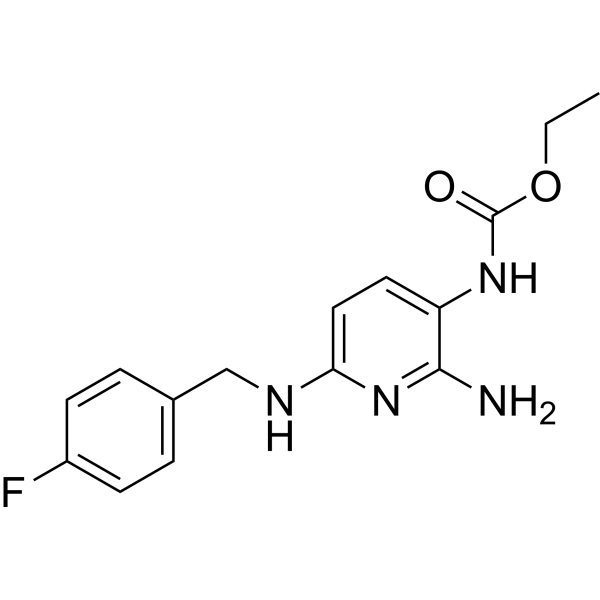
Flupirtine (D 9998) is an orally active, blood-brain barrier-crossing non-opioid analgesic and neuroprotective agent. Flupirtine is a neuronal potassium channel opener (Kv7 activator), a NMDA receptor antagonist and a GABA receptor activator. Flupirtine stabilizes blood-brain-barrier integrity, reduces oxidative stress and brain leukocyte infiltration, enhances angioneurogenesis, suppresses calcium influx, stabilizes neuronal resting membrane potential, and counteracts focal cerebral ischemia. Flupirtine exhibits analgesic, muscle relaxant properties, protects neurons from excitotoxic, ischemic, or cytokine-mediated death. Flupirtine functions as a non-opioid analgesic without antipyretic or antiphlogistic properties, shows no relevant affinity to opiate receptor. Flupirtine can be used for the research of focal cerebral ischemia, pain, Alzheimer’s disease, or multiple sclerosis .
|
-
- HY-W051199
-
|
o-Phosphohomoserine
|
Endogenous Metabolite
iGluR
|
Others
|
|
O-Phosphono-L-homoserine (o-Phosphohomoserine) is an intermediate in threonine synthesis in bacteria and plants, and can also be hijacked by MetM in some Streptomyces species to enter a novel methionine synthesis pathway. O-Phosphono-L-homoserine acts as a weak antagonist of the NMDA receptor. O-Phosphono-L-homoserine can be used as a substrate for studies on amino acid metabolism of the aspartate family, a control for mechanism studies of PLP enzymes, and a reference for structure-activity relationship studies of NMDA receptor ligands .
|
-

-
- HY-117483
-
|
|
iGluR
|
Neurological Disease
|
|
Gly-Pro-Glu is a neuroactive peptide with a potent action on acetylcholine release. Gly-Pro-Glu is the N-terminal tripeptide of insulin-like growth factor-I. Gly-Pro-Glu inhibits glutamate binds to N-methyl-D-aspartate (NMDA) receptor with an IC50 value of 14.7 μM. Gly-Pro-Glu can be used for the research of neuroprotection .
|
-
- HY-P5911
-
|
|
iGluR
|
Inflammation/Immunology
|
|
GluN1 (359-378) is an anti-N-methyl-D-aspartate
receptor (NMDAR) peptide. GluN1 (359-378) can cross the blood-brain barrier.
GluN1 (359-378) can be used to study anti-NMDAR encephalitis therapy targeting
the immune system .
|
-
- HY-P1287
-
|
|
iGluR
|
Neurological Disease
|
|
Conantokin-T is a γ-carboxyglutamate-containing, N-methyl-D-aspartate (NMDA) antagonist peptidewith an IC50 value of 2 μM. Conantokin-T inhibits NMDA receptor-mediated calcium influx in central nervous system neurons. Conantokin-T can be purified from the venom of the fish-hunting cone snail, Conus tulipa .
|
-
- HY-P1293
-
|
|
iGluR
|
Neurological Disease
|
|
Conantokin G, a 17-amino-acid peptide, is a potent, selective and competitive antagonist of N-methyl-D-aspartate (NMDA) receptors. Conantokin G inhibits NMDA-evoked currents in murine cortical neurons with an IC50 of 480 nM. Conantokin G has neuroprotective properties .
|
-
- HY-P7060
-
|
TPPT
|
iGluR
|
Neurological Disease
|
|
NT 13 (TPPT) is a tetrapeptide having the amino acid sequence L-threonyl-L-prolyl-L-prolyl-L-threonine amide. NT 13 is a partial N-methyl-D-aspartate receptor (NMDAR) agonist used in the study of depression, anxiety, and other related diseases.
|
-
- HY-P1293A
-
|
|
iGluR
|
Neurological Disease
|
|
Conantokin G TFA, a 17-amino-acid peptide, is a potent, selective and competitive antagonist of N-methyl-D-aspartate (NMDA) receptors. Conantokin G TFA inhibits NMDA-evoked currents in murine cortical neurons with an IC50 of 480 nM. Conantokin G TFA has neuroprotective properties .
|
-
- HY-P0221B
-
|
|
PACAP Receptor
|
Endocrinology
|
|
PACAP (1-38) free acid TFA is an endogenous neuropeptide. PACAP (1-38) free acid TFA potently stimulates antral motility and somatostatin secretion, inhibits the secretion of gastrin and stimulates the release of vasoactive intestinal polypeptide, gastrin releasing peptide and substance P. PACAP (1-38) free acid TFA also enhances N-methyl-D-aspartate receptor function and expression of brain-derived neurotrophic factor through RACK1 .
|
| 製品番号 |
製品名 |
Category |
Target |
構造式 |
-
- HY-100807
-
-
-
- HY-N0215
-
-
-
- HY-101037
-
-
-
- HY-N2311
-
-
-
- HY-17387
-
-
-
- HY-100807R
-
-
-
- HY-17388
-
-
-
- HY-N0215R
-
|
(S)-2-Amino-3-phenylpropionic acid (Standard)
|
Structural Classification
Microorganisms
Animals
Amino acids
Endogenous metabolite
Source Classification
|
Reference Standards
Calcium Channel
iGluR
Endogenous Metabolite
|
|
L-Phenylalanine (Standard) is the analytical standard of L-Phenylalanine. This product is intended for research and analytical applications. L-Phenylalanine ((S)-2-Amino-3-phenylpropionic acid) is an essential amino acid isolated from Escherichia coli. L-Phenylalanine is a α2δ subunit of voltage-dependent Ca+ channels antagonist with a Ki of 980 nM. L-phenylalanine is a competitive antagonist for the glycine- and glutamate-binding sites of N-methyl-D-aspartate receptors (NMDARs) (KB of 573 μM ) and non-NMDARs, respectively. L-Phenylalanine is widely used in the production of food flavors and pharmaceuticals .
|
-
-
- HY-101037R
-
-
-
- HY-N11061
-
-
-
- HY-P1293
-
|
|
天然物
Animals
Source Classification
|
iGluR
|
|
Conantokin G, a 17-amino-acid peptide, is a potent, selective and competitive antagonist of N-methyl-D-aspartate (NMDA) receptors. Conantokin G inhibits NMDA-evoked currents in murine cortical neurons with an IC50 of 480 nM. Conantokin G has neuroprotective properties .
|
-
-
- HY-P1293A
-
|
|
天然物
Animals
Source Classification
|
iGluR
|
|
Conantokin G TFA, a 17-amino-acid peptide, is a potent, selective and competitive antagonist of N-methyl-D-aspartate (NMDA) receptors. Conantokin G TFA inhibits NMDA-evoked currents in murine cortical neurons with an IC50 of 480 nM. Conantokin G TFA has neuroprotective properties .
|
-
-
- HY-W051199
-
|
o-Phosphohomoserine
|
Structural Classification
天然物
Human Gut Microbiota Metabolites
Microorganisms
Endogenous metabolite
Source Classification
|
Endogenous Metabolite
iGluR
|
|
O-Phosphono-L-homoserine (o-Phosphohomoserine) is an intermediate in threonine synthesis in bacteria and plants, and can also be hijacked by MetM in some Streptomyces species to enter a novel methionine synthesis pathway. O-Phosphono-L-homoserine acts as a weak antagonist of the NMDA receptor. O-Phosphono-L-homoserine can be used as a substrate for studies on amino acid metabolism of the aspartate family, a control for mechanism studies of PLP enzymes, and a reference for structure-activity relationship studies of NMDA receptor ligands .
|
-
-
- HY-N0215S12
-
1 Publications Verification
|
|
L-Phenylalanine-d5 is the deuterium labeled L-Phenylalanine. L-Phenylalanine ((S)-2-Amino-3-phenylpropionic acid) is an essential amino acid isolated from Escherichia coli. L-Phenylalanine is a α2δ subunit of voltage-dependent Ca+ channels antagonist with a Ki of 980 nM. L-phenylalanine is a competitive antagonist for the glycine- and glutamate-binding sites of N-methyl-D-aspartate receptors (NMDARs) (KB of 573 μM ) and non-NMDARs, respectively. L-Phenylalanine is widely used in the production of food flavors and pharmaceuticals .
|
-
-
- HY-100807S
-
2 Publications Verification
|
|
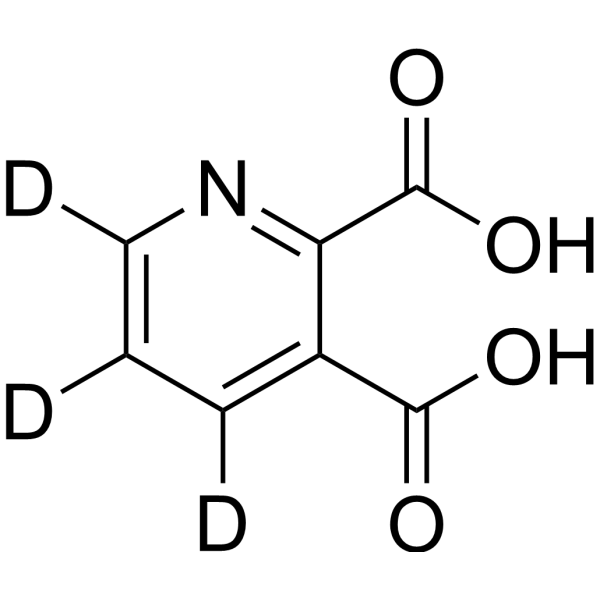
Quinolinic acid-d3 is the deuterium labeled Quinolinic acid. Quinolinic acid, an endogenous metabolite of tryptophan, is a N-methyl-D-aspartate receptor (NMDA receptor) agonist. Quinolinic acid increases glutamate efflux, induces the generation of ROS, activates nitric oxide synthase, produces excessive NO, leading to calcium ion influx and neuronal apoptosis.
|
-
-
- HY-N0215S1
-
1 Publications Verification
|
|
L-Phenylalanine-d8 is the deuterium labeled L-Phenylalanine. L-Phenylalanine ((S)-2-Amino-3-phenylpropionic acid) is an essential amino acid isolated from Escherichia coli. L-Phenylalanine is a α2δ subunit of voltage-dependent Ca+ channels antagonist with a Ki of 980 nM. L-phenylalanine is a competitive antagonist for the glycine- and glutamate-binding sites of N-methyl-D-aspartate receptors (NMDARs) (KB of 573 μM ) and non-NMDARs, respectively. L-Phenylalanine is widely used in the production of food flavors and pharmaceuticals .
|
-
-
- HY-N0215S8
-
1 Publications Verification
|
|
L-Phenylalanine- 13C6 is the 13C-labeled L-Phenylalanine. L-Phenylalanine ((S)-2-Amino-3-phenylpropionic acid) is an essential amino acid isolated from Escherichia coli. L-Phenylalanine is a α2δ subunit of voltage-dependent Ca+ channels antagonist with a Ki of 980 nM. L-phenylalanine is a competitive antagonist for the glycine- and glutamate-binding sites of N-methyl-D-aspartate receptors (NMDARs) (KB of 573 μM ) and non-NMDARs, respectively. L-Phenylalanine is widely used in the production of food flavors and pharmaceuticals .
|
-
-
- HY-101037S1
-
|
|
|
Sarcosine-d3 is the deuterium labeled Sarcosine. Sarcosine (N-Methylglycine), an endogenous amino acid, is a competitive glycine transporter type I (GlyT1) inhibitor and N-methyl-D-aspartate (NMDA) receptor co-agonist. Sarcosine increases the glycine concentration, resulting in an indirect potentiation of the NMDA receptor. Sarcosine is commonly used for the research of schizophrenia .
|
-
-
- HY-N0215S10
-
1 Publications Verification
|
|
L-Phenylalanine- 13C9 is the 13C-labeled L-Phenylalanine. L-Phenylalanine ((S)-2-Amino-3-phenylpropionic acid) is an essential amino acid isolated from Escherichia coli. L-Phenylalanine is a α2δ subunit of voltage-dependent Ca+ channels antagonist with a Ki of 980 nM. L-phenylalanine is a competitive antagonist for the glycine- and glutamate-binding sites of N-methyl-D-aspartate receptors (NMDARs) (KB of 573 μM ) and non-NMDARs, respectively. L-Phenylalanine is widely used in the production of food flavors and pharmaceuticals .
|
-
-
- HY-100807S2
-
|
|
|
Quinolinic acid-13C4, 15N is an isotopic labeled Quinolinic acid (HY-100807). Quinolinic acid, an endogenous metabolite of tryptophan, is a N-methyl-D-aspartate receptor (NMDA receptor) agonist. Quinolinic acid increases glutamate efflux, induces the generation of ROS, activates nitric oxide synthase, produces excessive NO, leading to calcium ion influx and neuronal apoptosis.
|
-
-
- HY-N0215S5
-
|
|
|
L-Phenylalanine- 15N is the 15N-labeled L-Phenylalanine. L-Phenylalanine ((S)-2-Amino-3-phenylpropionic acid) is an essential amino acid isolated from Escherichia coli. L-Phenylalanine is a α2δ subunit of voltage-dependent Ca+ channels antagonist with a Ki of 980 nM. L-phenylalanine is a competitive antagonist for the glycine- and glutamate-binding sites of N-methyl-D-aspartate receptors (NMDARs) (KB of 573 μM ) and non-NMDARs, respectively. L-Phenylalanine is widely used in the production of food flavors and pharmaceuticals .
|
-
-
- HY-N0215S11
-
|
|
|
L-Phenylalanine- 13C9, 15N is the 13C- and 15N-labeled L-Phenylalanine. L-Phenylalanine ((S)-2-Amino-3-phenylpropionic acid) is an essential amino acid isolated from Escherichia coli. L-Phenylalanine is a α2δ subunit of voltage-dependent Ca+ channels antagonist with a Ki of 980 nM. L-phenylalanine is a competitive antagonist for the glycine- and glutamate-binding sites of N-methyl-D-aspartate receptors (NMDARs) (KB of 573 μM ) and non-NMDARs, respectively. L-Phenylalanine is widely used in the production of food flavors and pharmaceuticals .
|
-
-
- HY-W654331
-
|
|
|
Quinolinic acid- 13C3, 15N (2,3-Pyridinedicarboxylic Acid- 13C3, 15N) is the 13C- and 15N-labeled Quinolinic acid (HY-100807). Quinolinic acid is an endogenous N-methyl-D-aspartate (NMDA) receptor agonist synthesized from L-tryptophan via the kynurenine pathway and thereby has the potential of mediating N-methyl-D-aspartate neuronal damage and dysfunction .
|
-
-
- HY-N0215S3
-
|
|
|
L-Phenylalanine-d2 is the deuterium labeled L-Phenylalanine. L-Phenylalanine ((S)-2-Amino-3-phenylpropionic acid) is an essential amino acid isolated from Escherichia coli. L-Phenylalanine is a α2δ subunit of voltage-dependent Ca+ channels antagonist with a Ki of 980 nM. L-phenylalanine is a competitive antagonist for the glycine- and glutamate-binding sites of N-methyl-D-aspartate receptors (NMDARs) (KB of 573 μM ) and non-NMDARs, respectively. L-Phenylalanine is widely used in the production of food flavors and pharmaceuticals .
|
-
-
- HY-N0215S7
-
1 Publications Verification
|
|
L-Phenylalanine-3- 13C is the 13C-labeled L-Phenylalanine. L-Phenylalanine ((S)-2-Amino-3-phenylpropionic acid) is an essential amino acid isolated from Escherichia coli. L-Phenylalanine is a α2δ subunit of voltage-dependent Ca+ channels antagonist with a Ki of 980 nM. L-phenylalanine is a competitive antagonist for the glycine- and glutamate-binding sites of N-methyl-D-aspartate receptors (NMDARs) (KB of 573 μM ) and non-NMDARs, respectively. L-Phenylalanine is widely used in the production of food flavors and pharmaceuticals .
|
-
-
- HY-100807S1
-
|
|
|
Quinolinic acid- 13C7 is the 13C labeled Quinolinic acid (HY-100807). Quinolinic acid, an endogenous metabolite of tryptophan, is a N-methyl-D-aspartate receptor (NMDA receptor) agonist. Quinolinic acid increases glutamate efflux, induces the generation of ROS, activates nitric oxide synthase, produces excessive NO, leading to calcium ion influx and neuronal apoptosis.
|
-
-
- HY-101037S
-
|
|
|
Sarcosine- 15N is the 15N-labeled Sarcosine. Sarcosine (N-Methylglycine), an endogenous amino acid, is a competitive glycine transporter type I (GlyT1) inhibitor and N-methyl-D-aspartate (NMDA) receptor co-agonist. Sarcosine increases the glycine concentration, resulting in an indirect potentiation of the NMDA receptor. Sarcosine is commonly used for the research of schizophrenia .
|
-
-
- HY-N0215S2
-
1 Publications Verification
|
|
L-Phenylalanine- 13C is the 13C-labeled L-Phenylalanine. L-Phenylalanine ((S)-2-Amino-3-phenylpropionic acid) is an essential amino acid isolated from Escherichia coli. L-Phenylalanine is a α2δ subunit of voltage-dependent Ca+ channels antagonist with a Ki of 980 nM. L-phenylalanine is a competitive antagonist for the glycine- and glutamate-binding sites of N-methyl-D-aspartate receptors (NMDARs) (KB of 573 μM ) and non-NMDARs, respectively. L-Phenylalanine is widely used in the production of food flavors and pharmaceuticals .
|
-
-
- HY-G0021S1
-
|
|
|
N-Desmethylclozapine-d8 (hydrochloride) is the deuterium labeled N-Desmethylclozapine hydrochloride. N-Desmethylclozapine hydrochloride is a major active metabolite of the atypical antipsychotic agent Clozapine. N-Desmethylclozapine hydrochloride is a potent, allosteric and partial M1 receptors agonist (EC50=115 nM) and is able to potentiate hippocampal N-methyl-d-aspartate (NMDA) receptor currents through M1 receptor activation. N-Desmethylclozapine hydrochloride is also a δ-opioid agonist .
|
-
-
- HY-N0215S14
-
|
|
|
L-Phenylalanine- 15N,d8 is the deuterium and 15N-labeled L-Phenylalanine. L-Phenylalanine ((S)-2-Amino-3-phenylpropionic acid) is an essential amino acid isolated from Escherichia coli. L-Phenylalanine is a α2δ subunit of voltage-dependent Ca2+ channels antagonist with a Ki of 980 nM. L-phenylalanine is a competitive antagonist for the glycine- and glutamate-binding sites of N-methyl-D-aspartate receptors (NMDARs) (KB of 573 μM ) and non-NMDARs, respectively. L-Phenylalanine is widely used in the production of food flavors and pharmaceuticals .
|
-
-
- HY-G0021S
-
|
|
|
N-Desmethylclozapine-d8 is the deuterium labeled N-Desmethylclozapine. N-Desmethylclozapine is a major active metabolite of the atypical antipsychotic agent Clozapine. N-Desmethylclozapine is a potent, allosteric and partial M1 receptors agonist (EC50=115 nM) and is able to potentiate hippocampal N-methyl-d-aspartate (NMDA) receptor currents through M1 receptor activation. N-Desmethylclozapine is also a δ-opioid agonist .
|
-
-
- HY-W748519
-
|
|
|
Sarcosine- 13C3 (N-Methylglycine- 13C3; Sarcosin- 13C3) is the 13C-labeled Sarcosine (HY-101037). Sarcosine (N-Methylglycine), an endogenous amino acid, is a competitive glycine transporter type I (GlyT1) inhibitor and N-methyl-D-aspartate (NMDA) receptor co-agonist. Sarcosine increases the glycine concentration, resulting in an indirect potentiation of the NMDA receptor. Sarcosine is commonly used for the research of schizophrenia .
|
-
-
- HY-N0215S6
-
|
|
|
DL-Phenylalanine-d5 (hydrochloride) is the deuterium labeled DL-Phenylalanine hydrochloride. L-Phenylalanine hydrochloride is an essential amino acid isolated from Escherichia coli. L-Phenylalanine hydrochloride is a α2δ subunit of voltage-dependent Ca+ channels antagonist with a Ki of 980 nM. L-phenylalanine hydrochloride is a competitive antagonist for the glycine- and glutamate-binding sites of N-methyl-D-aspartate receptors (NMDARs) (KB of 573 μM ) and non-NMDARs, respectively. L-Phenylalanine hydrochloride is widely used in the production of food flavors and pharmaceuticals .
|
-
-
- HY-178251S
-
|
|
|
L-Phenylalanine-d is the deuterium labeled L-Phenylalanine (HY-N0215). L-Phenylalanine ((S)-2-Amino-3-phenylpropionic acid) is an essential amino acid isolated from Escherichia coli. L-Phenylalanine is a α2δ subunit of voltage-dependent Ca 2+ channels antagonist with a Ki of 980 nM. L-phenylalanine is a competitive antagonist for the glycine- and glutamate-binding sites of N-methyl-D-aspartate receptors (NMDARs) (KB of 573 μM ) and non-NMDARs, respectively. L-Phenylalanine is widely used in the production of food flavors and pharmaceuticals .
|
-
-
- HY-B0591S
-
|
|
|
Memantine-d3 (hydrochloride) is deuterium labeled Memantine. Memantine is an orally active, noncompetitive N-methyl-D-aspartate receptor (NMDAR) antagonist. Memantine can be used for the research of moderate-to-severe Alzheimer's disease (AD) .
|
-
-
- HY-B1487S1
-
|
|
|
Procyclidine-d5 (Tricyclamol-d5) is deuterium labeled Procyclidine (hydrochloride). Procyclidine (Tricyclamol, (±)-Procyclidine) hydrochloride , an anticholinergic agent, is a muscarinic receptor antagonist that also has the properties of an N-methyl-D-aspartate (NMDA) antagonist. Procyclidine hydrochloride can be used in studies of Parkinson's disease and related psychiatric disorders such as Soman-induced epilepsy .
|
-
-
- HY-17387S1
-
|
|
|
(-)-Huperzine A-d4 hydrochloride is deuterated labeled (-)-Huperzine A (HY-17387). (-)-Huperzine A (Huperzine A) is an alkaloid isolated from Huperzia serrata, with neuroprotective activity. (-)-Huperzine A is a potent, highly specific, reversible and blood-brain barrier penetrant inhibitor of acetylcholinesterase (AChE), with an IC50 of 82 nM. (-)-Huperzine A also is non-competitive antagonist of N-methyl-D-aspartate glutamate (NMDA) receptor. (-)-Huperzine A is developed for the research of neurodegenerative diseases, including Alzheimer’s disease .
|
-
-
- HY-N0215S
-
|
|
|
L-Phenylalanine-d7 is the deuterium labeled L-Phenylalanine. L-Phenylalanine ((S)-2-Amino-3-phenylpropionic acid) is an essential amino acid isolated from Escherichia coli. L-Phenylalanine is a α2δ subunit of voltage-dependent Ca+ channels antagonist with a Ki of 980 nM. L-phenylalanine is a competitive antagonist for the glycine- and glutamate-binding sites of N-methyl-D-aspartate receptors (NMDARs) (KB of 573 μM ) and non-NMDARs, respectively. L-Phenylalanine is widely used in the production of food flavors and pharmaceuticals .
|
-
-
- HY-N0215S13
-
|
|
|
L-Phenylalanine-d is the deuterium labeled L-Phenylalanine. L-Phenylalanine ((S)-2-Amino-3-phenylpropionic acid) is an essential amino acid isolated from Escherichia coli. L-Phenylalanine is a α2δ subunit of voltage-dependent Ca+ channels antagonist with a Ki of 980 nM. L-phenylalanine is a competitive antagonist for the glycine- and glutamate-binding sites of N-methyl-D-aspartate receptors (NMDARs) (KB of 573 μM ) and non-NMDARs, respectively. L-Phenylalanine is widely used in the production of food flavors and pharmaceuticals .
|
-
-
- HY-N0215S9
-
|
|
|
L-Phenylalanine- 13C9, 15N,d8 is the deuterium, 13C-, and 15-labeled L-Phenylalanine. L-Phenylalanine ((S)-2-Amino-3-phenylpropionic acid) is an essential amino acid isolated from Escherichia coli. L-Phenylalanine is a α2δ subunit of voltage-dependent Ca+ channels antagonist with a Ki of 980 nM. L-phenylalanine is a competitive antagonist for the glycine- and glutamate-binding sites of N-methyl-D-aspartate receptors (NMDARs) (KB of 573 μM ) and non-NMDARs, respectively. L-Phenylalanine is widely used in the production of food flavors and pharmaceuticals .
|
-
-
- HY-N0215S16
-
|
|
|
L-Phenylalanine- 13C-1 ((S)-2-Amino-3-phenylpropionic acid- 13C-1) is the 13C-labeled L-Phenylalanine (HY-N0215). L-Phenylalanine ((S)-2-Amino-3-phenylpropionic acid) is an essential amino acid isolated from Escherichia coli. L-Phenylalanine is a α2δ subunit of voltage-dependent Ca 2+ channels antagonist with a Ki of 980 nM. L-phenylalanine is a competitive antagonist for the glycine- and glutamate-binding sites of N-methyl-D-aspartate receptors (NMDARs) (Kb of 573 μM ) and non-NMDARs, respectively. L-Phenylalanine is widely used in the production of food flavors and pharmaceuticals.
|
-
入力情報は安全に管理されます. ※ 必須入力項目.
Inquiry Information
- 製品名:
- 製品番号:
- 数量:
- MCE 日本正規代理店:





