Search Result
Results for "
antiarrhythmic+agent
" in MedChemExpress (MCE) Product Catalog:
20
Isotope-Labeled Compounds
| Cat. No. |
Product Name |
Target |
Research Areas |
Chemical Structure |
-
- HY-B0232
-
|
UK 68789
|
Potassium Channel
|
Cardiovascular Disease
|
|
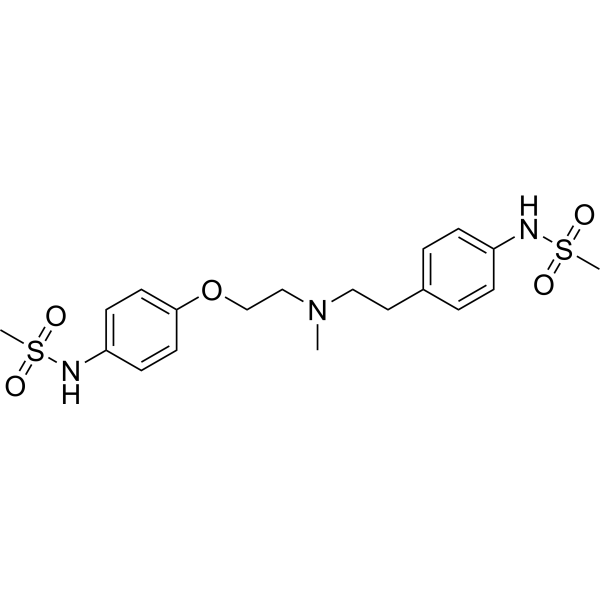
Dofetilide (UK 68789), as a class III antiarrhythmic agent, is an orally active, potent and specific IKr blocker. Dofetilide can be used for the research of cardiovascular disease .
|
-
-
- HY-B1751
-
-
-
- HY-17429
-
|
R-818
|
Sodium Channel
|
Cardiovascular Disease
|
|
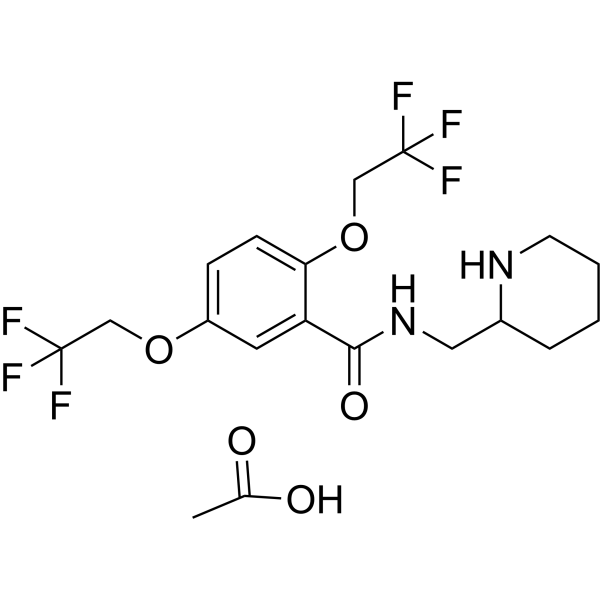
Flecainide acetate (R-818) is a class 1C antiarrhythmic agent especially used for the management of supraventricular arrhythmia; works by blocking the Nav1.5 sodium channel in the heart, causing prolongation of the cardiac action potential.
|
-
-
- HY-W010950
-
|
|
Potassium Channel
Sodium Channel
|
Cardiovascular Disease
|
|
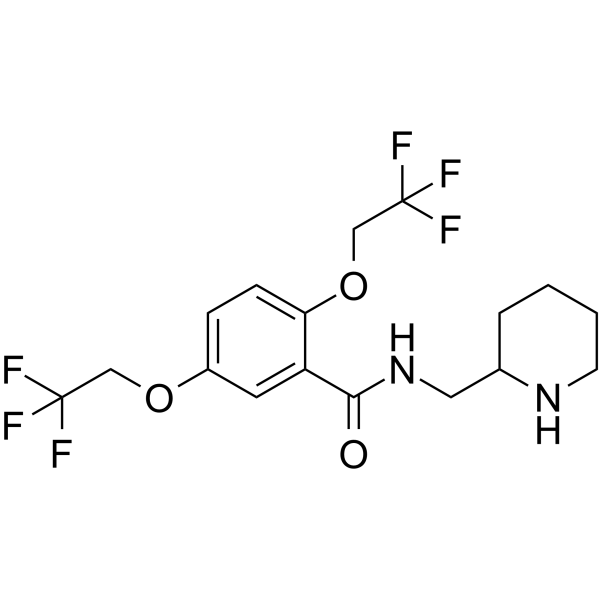
Flecainide is an orally active antiarrhythmic agent. Flecainide can block sodium channels and inhibit calcium ion release mediated by the cardiac ryanodine receptor (RyR2). Flecainide can be used in the research of diseases such as catecholaminergic polymorphic ventricular tachycardia (CPVT) .
|
-
-
- HY-B1751B
-
-
-
- HY-B0437
-
|
MJ 1999
|
Adrenergic Receptor
Potassium Channel
|
Cardiovascular Disease
Neurological Disease
|
|
Sotalol hydrochloride (MJ 1999) is an orally active, non-selective β-adrenergic receptor blocker. Sotalol hydrochloride is a potent antiarrhythmic agent that can be used for the research of pediatric arrhythmias. Sotalol hydrochloride blocks β-receptors, and potassium KCNH2 channels. Antiepileptic Agent .
|
-

-
- HY-12533
-
|
Dicorantil; SC-7031
|
Sodium Channel
Potassium Channel
|
Cardiovascular Disease
|
|
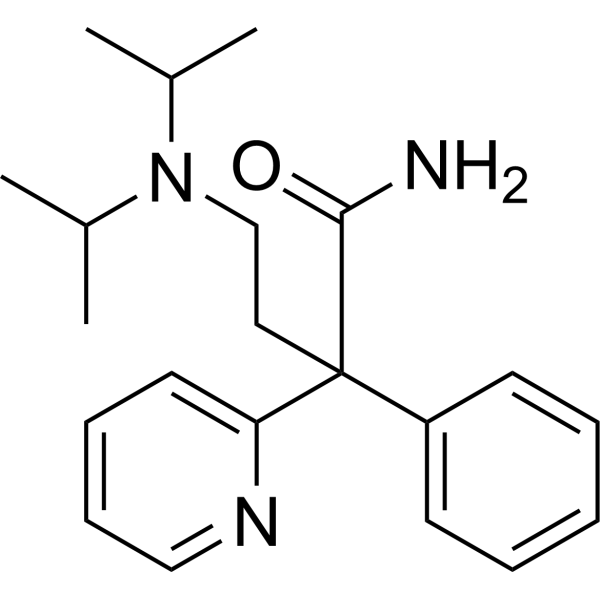
Disopyramide (Dicorantil) is a class IA antiarrhythmic agent with efficacy in ventricular and atrial arrhythmias. Disopyramide blocks the fast inward sodium current of cardiac muscle and prolongs the duration of cardiac action potentials. Disopyramide inhibits HERG encoded potassium channels. Disopyramide also exhibits complex protein binding, and has a potent negative inotropic action .
|
-
-
- HY-33350
-
-
-
- HY-135121
-
|
Ethacizin; NIK-244
|
Sodium Channel
|
Cardiovascular Disease
|
|
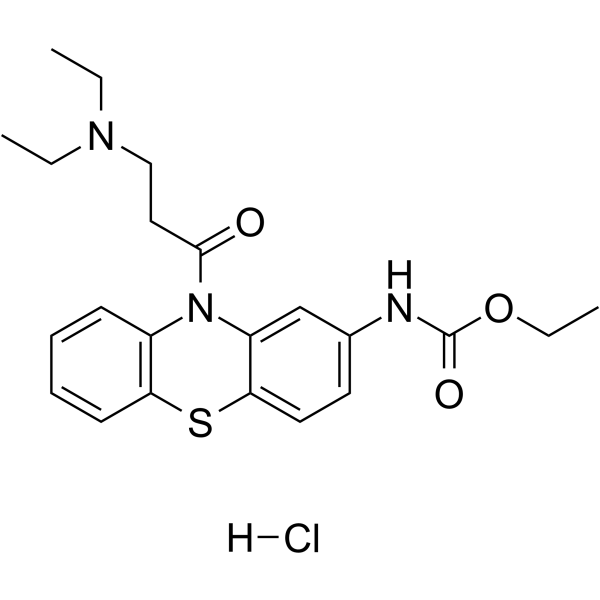
Ethacizine hydrochloride (Ethacizin; NIK-244) is a longer-lasting Class Ic antiarrhythmic agent than Flecainide . Ethacizine hydrochloride (Ethacizin; NIK-244) inhibits the depolarizing current responsible for the intraatrial and His-Purkinje-ventricular conduction .
|
-
-
- HY-12533A
-
|
Dicorantil phosphate; SC-7031 phosphate
|
Potassium Channel
Sodium Channel
|
Cardiovascular Disease
|
|
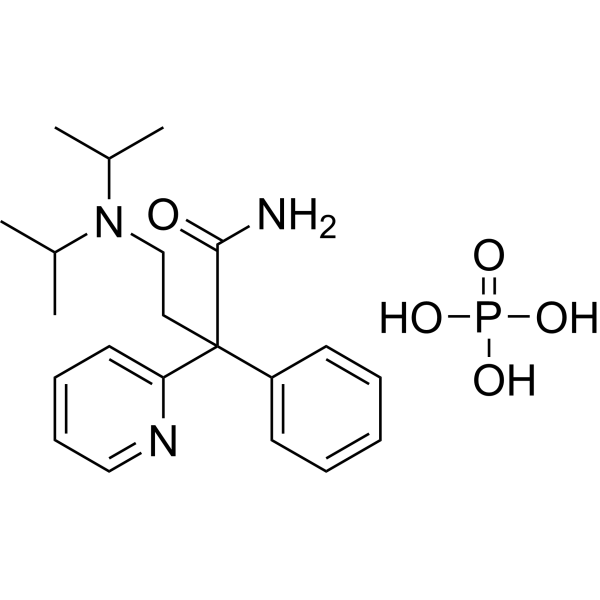
Disopyramide phosphate is a class IA antiarrhythmic agent with efficacy in ventricular and atrial arrhythmias. Disopyramide phosphate blocks the fast inward sodium current of cardiac muscle and prolongs the duration of cardiac action potentials. Disopyramide phosphate inhibits HERG encoded potassium channels. Disopyramide phosphate also exhibits complex protein binding, and has a potent negative inotropic action .
|
-
-
- HY-150123
-
-
-
- HY-W010950A
-
|
|
Potassium Channel
Sodium Channel
|
Cardiovascular Disease
|
|
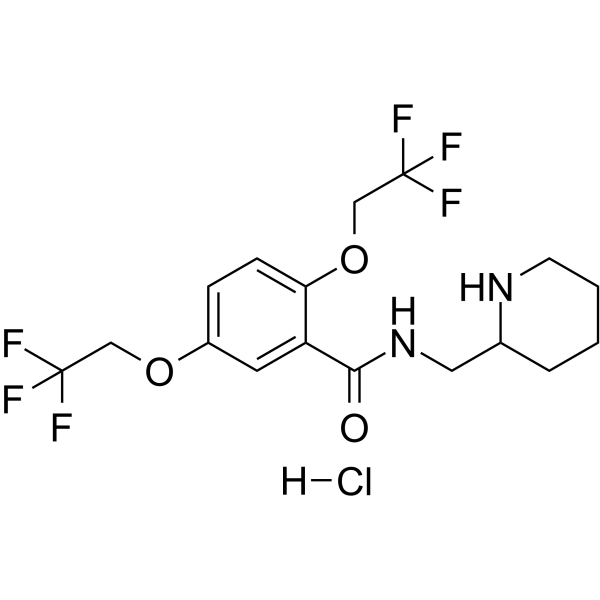
Flecainide hydrochloride is an orally active antiarrhythmic agent. Flecainide hydrochloride can block sodium channels and inhibit calcium ion release mediated by the cardiac ryanodine receptor (RyR2). Flecainide hydrochloride can be used in the research of diseases such as catecholaminergic polymorphic ventricular tachycardia (CPVT) .
|
-
-
- HY-B0772A
-
|
MS-551
|
Potassium Channel
|
Cardiovascular Disease
|
|
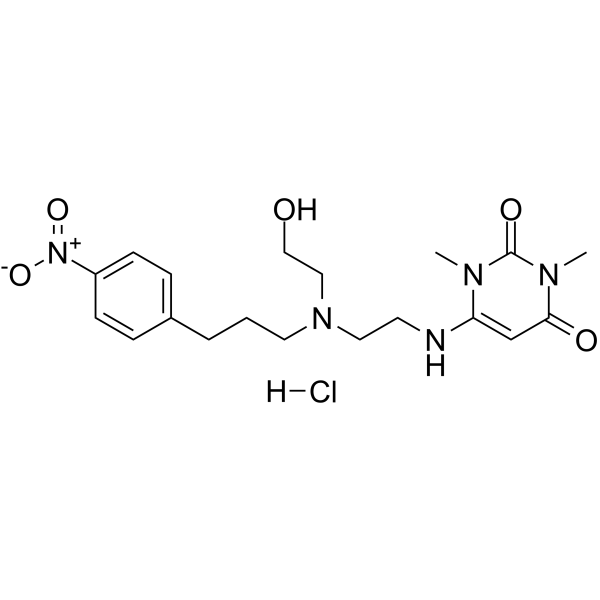
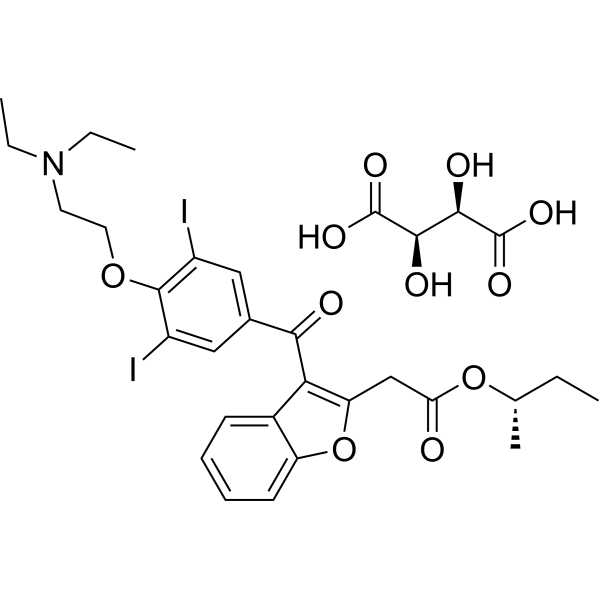
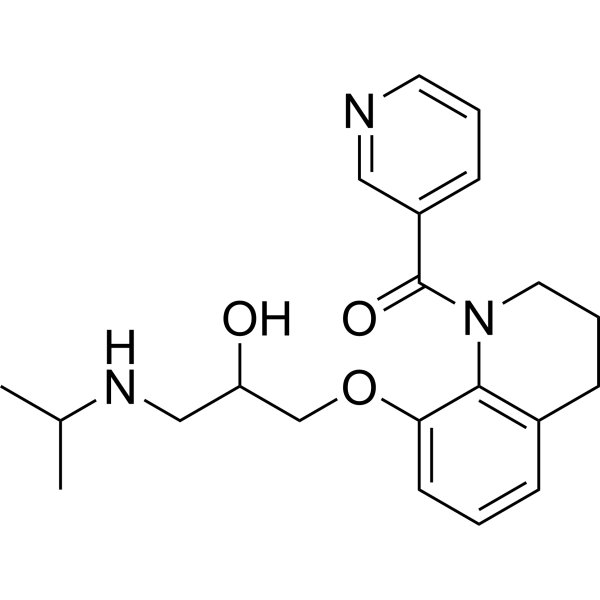
Nifekalant hydrochloride (MS-551), a class III antiarrhythmic agent, is a IKr potassium channel blocker with an IC50 of 10 µM. Nifekalant hydrochloride can be used for refractory ventricular tachyarrhythmias research .
|
-
-
- HY-14834A
-
-
-
- HY-16952
-
|
(±)-Bepridil; Org 5730
|
Calcium Channel
Sodium Channel
SARS-CoV
|
Infection
Cardiovascular Disease
|
|
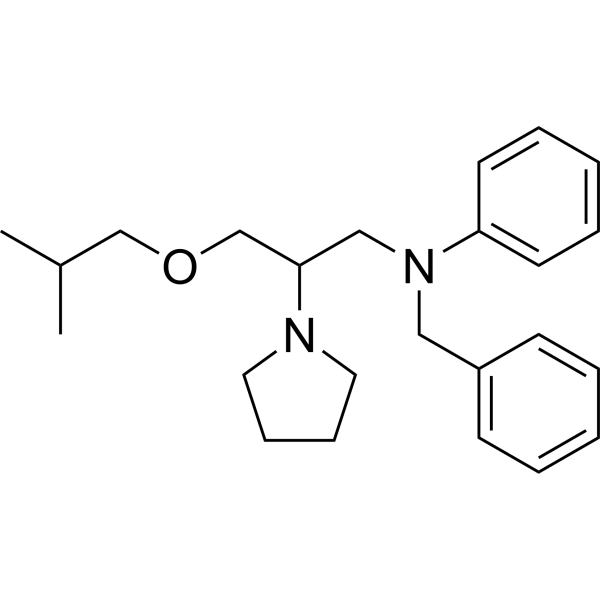
Bepridil ((±)-Bepridil) is a calcium channel blocking agent used as antiarrhythmic agent. Bepridil inhibits both calcium and sodium currents, has research potential in certain ischemia-induced ventricular arrhythmias. Bepridil also has strong inhibition of SARS-CoV-2 from entry and replication inside Vero E6 and A549 cells .
|
-
-
- HY-101723
-
-
-
- HY-101245
-
|
SUN-1165; Pilzicainidehydrochloride
|
Sodium Channel
|
Cardiovascular Disease
|
|
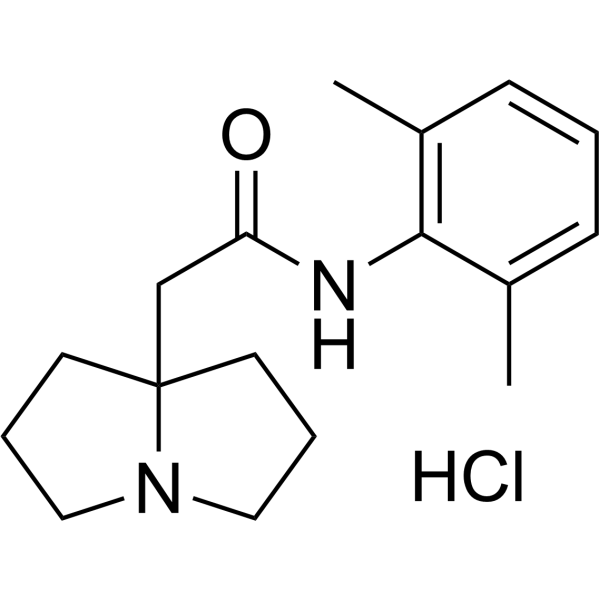
Pilsicainide hydrochloride (SUN-1165) is an orally active sodium channel blocker and potent class Ic antiarrhythmic agent .
|
-
-
- HY-B1751S
-
-
-
- HY-130353
-
|
N-desethylamiodarone hydrochloride; LB 33020 hydrochloride
|
Potassium Channel
Autophagy
|
Cardiovascular Disease
|
|
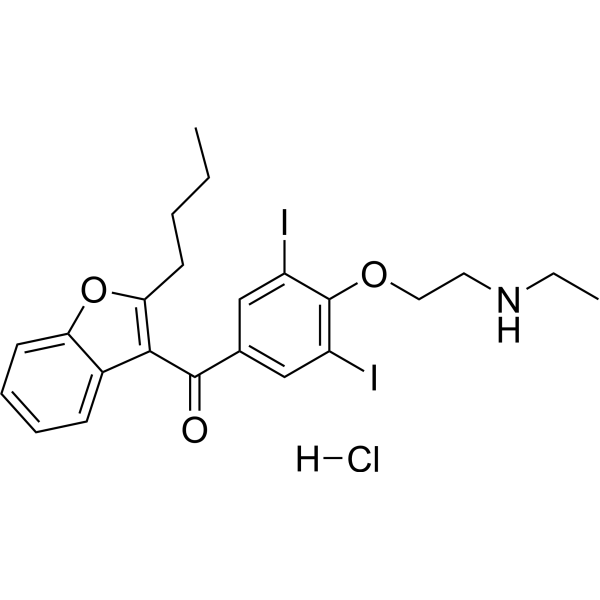
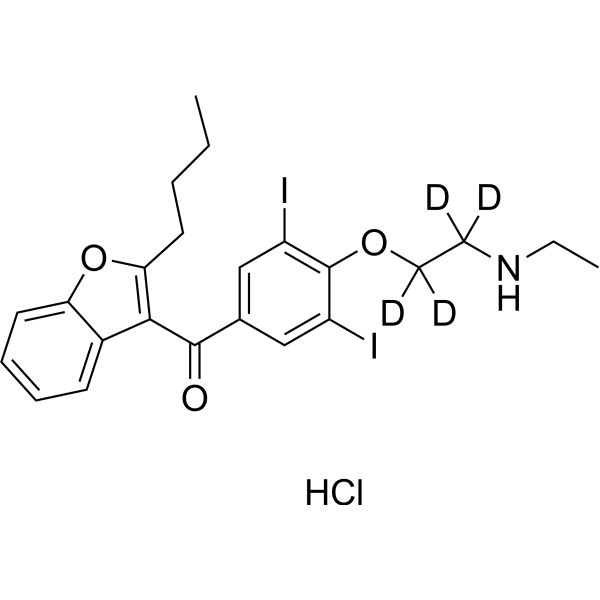
Desethylamiodarone hydrochloride (N-desethylamiodarone hydrochloride) is a major active metabolite of Amiodarone. Desethylamiodarone hydrochloride is formed by CYP3A isoenzymes. Amiodarone is an antiarrhythmic agent for inhibition of ATP-sensitive potassium channel with an IC50 of 19.1 μM .
|
-
-
- HY-107335
-
|
Creatinol O-phosphate; Creatinol phosphate; Creatinolfosfate
|
Biochemical Assay Reagents
|
Cardiovascular Disease
|
|
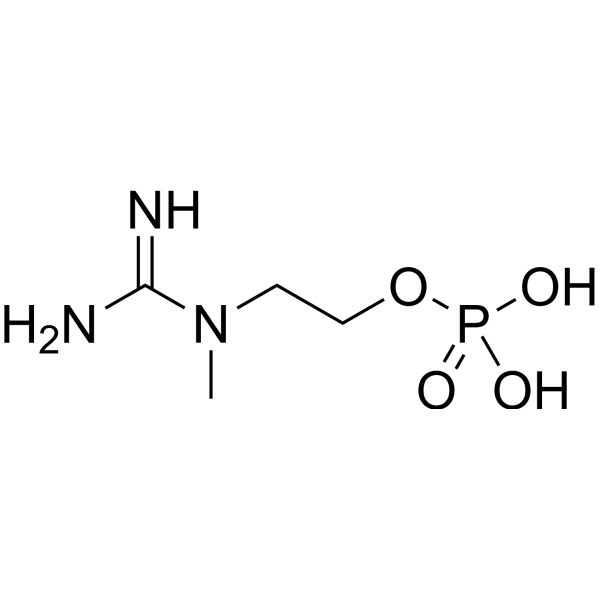
Aplodan (Creatinol O-phosphate) is an antiischemic and antiarrhythmic agent. Aplodan has a protective action on cell membrane. Aplodan has the potential for the research of ischemic heart or acute myocardial infarction .
|
-
-
- HY-130335
-
|
MJ9067
|
Sodium Channel
|
Cardiovascular Disease
|
|
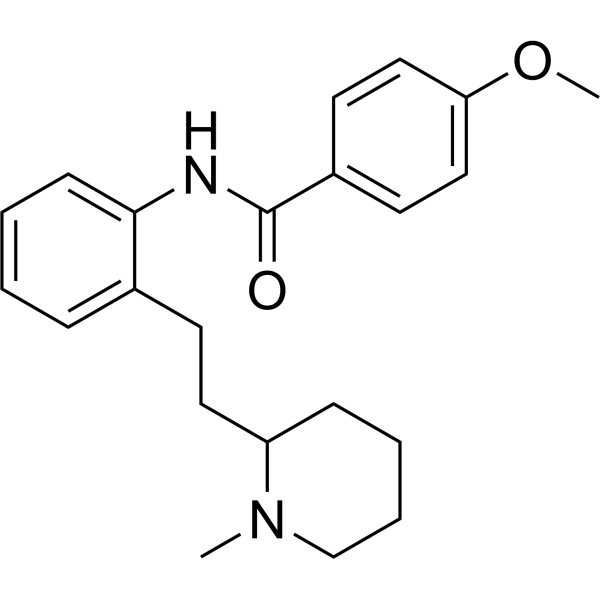
Encainide (MJ9067) is an antiarrhythmic agent with class IC activity. Encainide blocks voltage-dependent potassium channels. Encainide has the potential for life-threatening ventricular arrhythmias, symptomatic ventricular arrhythmias and supraventricular arrhythmias research .
|
-
-
- HY-126028A
-
|
(S)-Sotalol
|
Adrenergic Receptor
|
Cardiovascular Disease
Neurological Disease
|
|
(+)-Sotalol ((S)-Sotalol) is the S-isomer of Sotalol (HY-103196). Sotalol is an orally active, non-selective β-adrenergic receptor blocker. (+)-Sotalol is an antiarrhythmic agent. (+)-Sotalol can prolong action potential duration in isolated cardiac muscle .
|
-

-
- HY-131987S
-
-

-
- HY-100795A
-
|
(±)-Pirmenol hydrochloride; CI-845
|
mAChR
Potassium Channel
|
Cardiovascular Disease
|
|
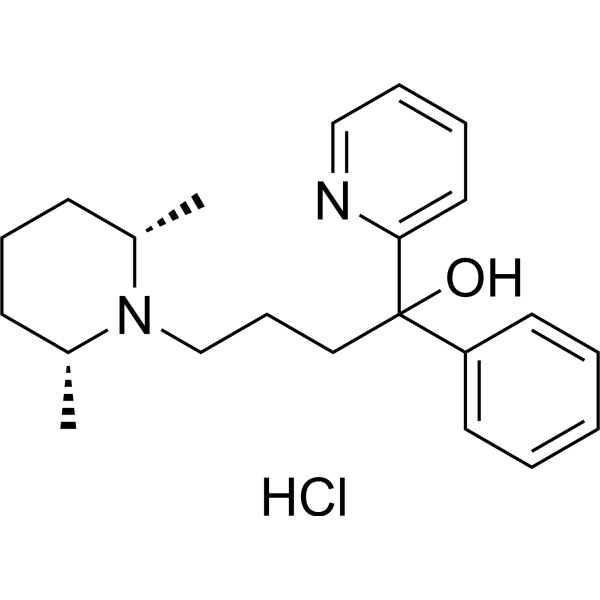
Pirmenol ((±)-Pirmenol) hydrochloride is an orally active antiarrhythmic agent. Pirmenol hydrochloride inhibits IK.ACh (IC50: 0.1 μM) by blocking mAchR. Pirmenol hydrochloride can be used in the research of cardiovascular disease, such as atrial fibrillation .
|
-
-
- HY-101436A
-
|
CK-1752 hydrochloride
|
Potassium Channel
|
Cardiovascular Disease
|
|
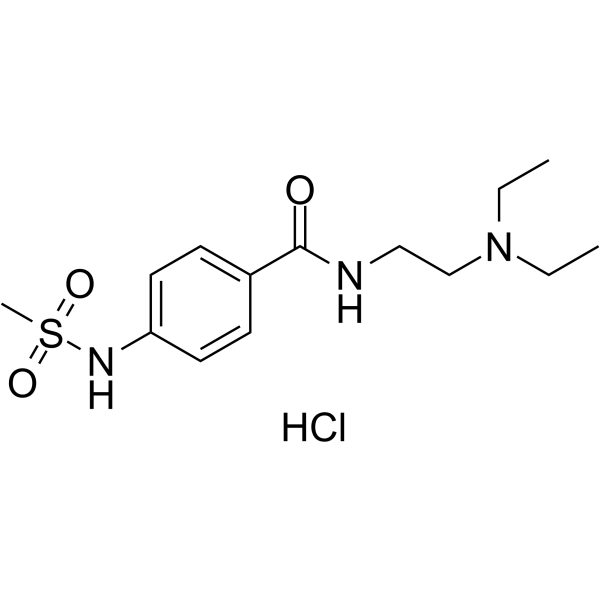
Sematilide hydrochloride (CK-1752 hydrochloride) is a selective IKr channel blocker. Sematilide causes a concentration-dependent inhibition of the delayed rectifier K + current (IC50=25 μM). Sematilide is a class III antiarrhythmic agent .
|
-
-
- HY-B0437AS
-
|
MJ 1999-d6 hydrochloride
|
Adrenergic Receptor
Potassium Channel
|
Cardiovascular Disease
Endocrinology
|
|
Sotalol-d6 (hydrochloride) is a deuterium labeled Sotalol hydrochloride. Sotalol hydrochloride is an orally active, non-selective competitive β-adrenergic receptor blocker. Sotalol hydrochloride is a potent antiarrhythmic agent that can be used for the research of pediatric arrhythmias. Sotalol hydrochloride blocks β-receptors, and potassium KCNH2 channels .
|
-

-
- HY-B1751D
-
-
-
- HY-100572
-
-
-
- HY-133715
-
|
SUN 1165 free base; Pilzicainide
|
Sodium Channel
|
Cardiovascular Disease
|
|
Pilsicainide (SUN 1165 free acid) is a potent sodium channel blocker and potent class Ic antiarrhythmic agent .
|
-
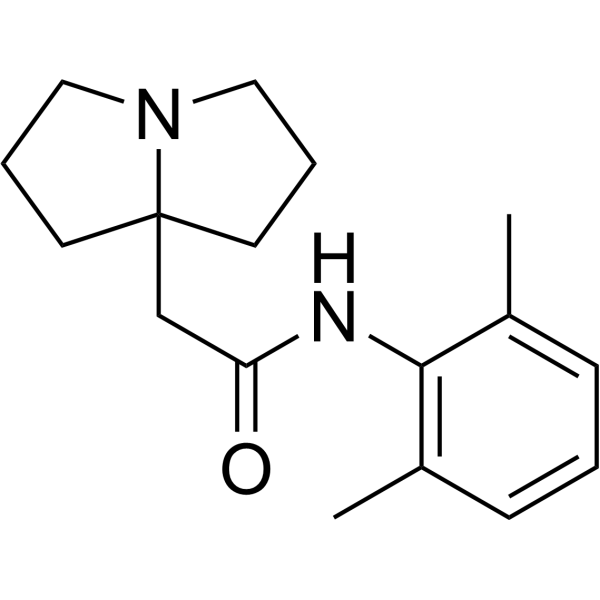
-
- HY-14187S
-
|
|
Potassium Channel
Autophagy
|
Cardiovascular Disease
|
|
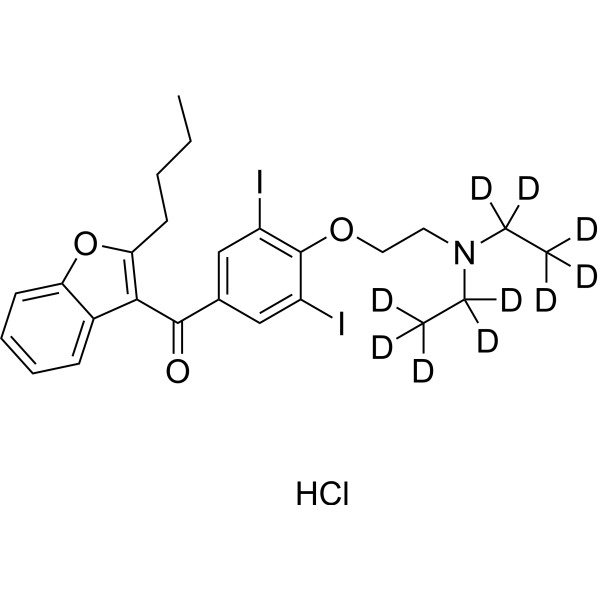
Amiodarone-d10 (hydrochloride) is the deuterium labeled Amiodarone. Amiodarone hydrochloride is an antiarrhythmic agent for inhibition of ATP-sensitive potassium channel with an IC50 of 19.1 μM .
|
-
-
- HY-106912A
-
|
MK 499 free base
|
Potassium Channel
|
Cardiovascular Disease
|
|
L-706000 (MK 499) free base is a potent hERG channel blocker with an IC50 of 32 nM. L-706000 free base is a class III antiarrhythmic agent that can be used for the study of malignant ventricular tachyarrhythmias .
|
-

-
- HY-W010950S
-
|
|
Potassium Channel
Sodium Channel
Isotope-Labeled Compounds
|
Cardiovascular Disease
|
|
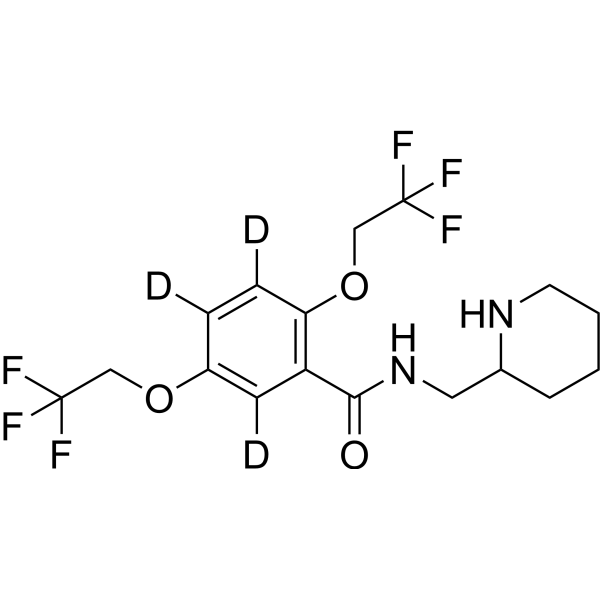
Flecainide-d3 is the deuterium labeled Flecainide. Flecainide is an orally active antiarrhythmic agent. Flecainide can block sodium channels and inhibit calcium ion release mediated by the cardiac ryanodine receptor (RyR2). Flecainide can be used in the research of diseases such as catecholaminergic polymorphic ventricular tachycardia (CPVT) .
|
-
-
- HY-B0615AS
-
|
EN 313-d8; Ethmozin-d8; Moracizine-d8
|
Isotope-Labeled Compounds
|
Cardiovascular Disease
|
|
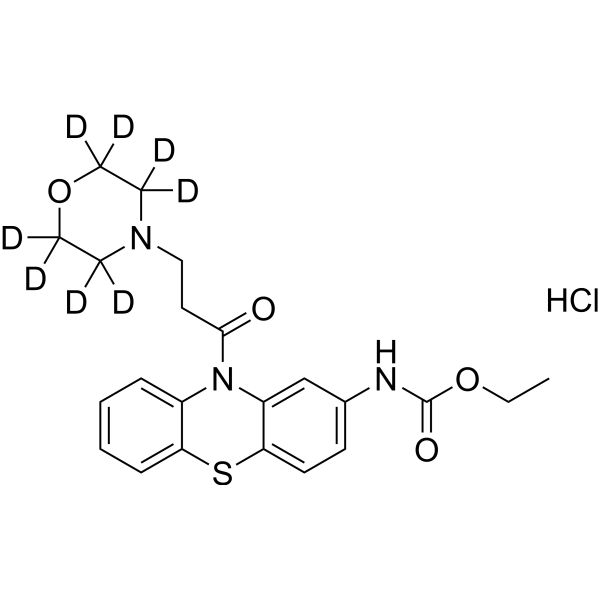
Moricizine-d8 Hydrochloride is the deuterium labeled Moricizine Hydrochloride (HY-B0615A). Moricizine Hydrochloride is an orally active Class I antiarrhythmic agent. Moricizine Hydrochloride decreases the maximum rate of phase 0 depolarization; increases rates of phase 2 and 3 repolarization, decreases action potential duration, and decreases effective refractory period .
|
-
-
- HY-117471
-
|
|
Endogenous Metabolite
|
Neurological Disease
|
|
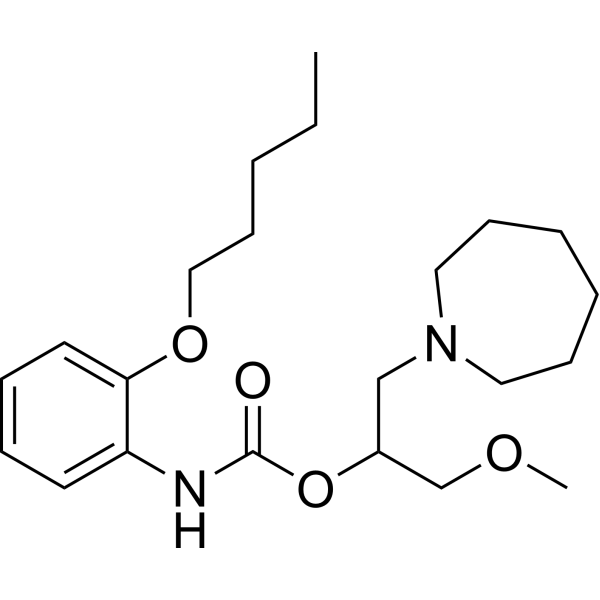
Antiarrhythmic agent-3 is an antiarrhythmic drug with the activity of enhancing antiarrhythmic efficacy and improving inhibition index. The antiarrhythmic effect of antiarrhythmic agent-3 is related to its hydrophobicity (log P). The central nervous system toxicity of antiarrhythmic agent-3 is related to the combined effect of its hydrophobicity and acid constant (pKa) .
|
-

-
- HY-116072
-
|
|
Calcium Channel
|
Cardiovascular Disease
|
|
Antiarrhythmic agent-2 is a nonspecific Ca 2+ inward current blocker that inhibits ionic currents in sensory neuron membranes. Antiarrhythmic agent-2 can be used in the study of cardiovascular diseases, such as arrhythmias .
|
-
-
- HY-U00274
-
-
-
- HY-U00232
-
-
-
- HY-131987
-
-

-
- HY-B0232S
-
-
-
- HY-19049
-
-

-
- HY-147256
-
|
Niferidil free base
|
Potassium Channel
|
Cardiovascular Disease
|
|
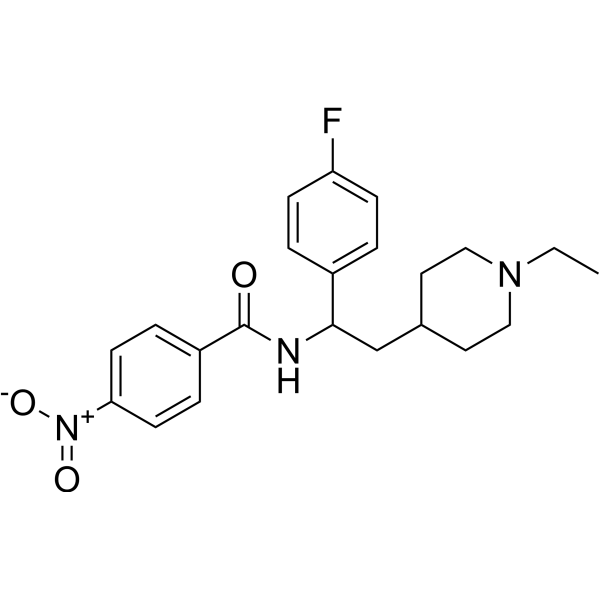
Cavutilide (Niferidil (free base)) is a class III antiarrhythmic agent that inhibits hERG K + channel. Cavutilide has the potential for the study of persistent atrial fibrillation .
|
-
-
- HY-177361
-
|
|
Sodium Channel
|
Cardiovascular Disease
|
|
Zocainone is an antiarrhythmic agent. Zocainone blocks sodium channels in cardiac tissue, stabilizing the cardiac action potential and reducing abnormal electrical activity. Zocainone is promising for research of cardiac arrhythmias .
|
-

-
- HY-B0772
-
|
MS-551 free base
|
Potassium Channel
|
Cardiovascular Disease
|
|
Nifekalant (MS-551), a class III antiarrhythmic agent, is a IKr potassium channel blocker with an IC50 of 10 μM. Nifekalant can be used for refractory ventricular tachyarrhythmias research .
|
-

-
- HY-100795
-
|
(±)-Pirmenol; CI-845 free base
|
mAChR
Potassium Channel
|
Cardiovascular Disease
|
|
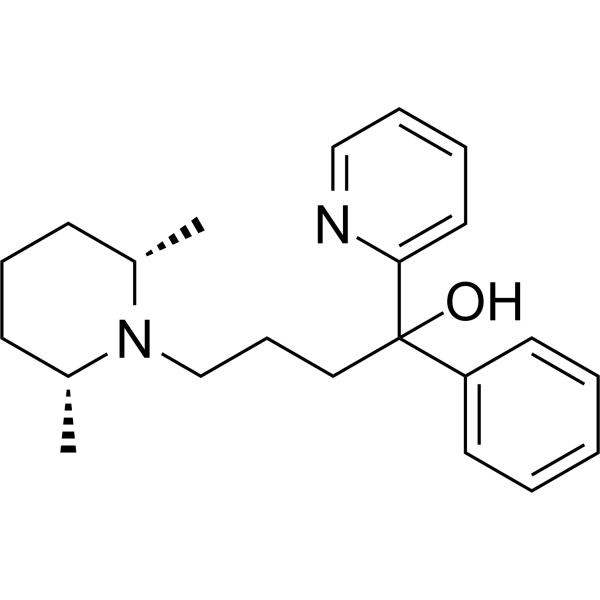
Pirmenol is an orally active antiarrhythmic agent. Pirmenol inhibits IK.ACh (IC50: 0.1 μM) by blocking mAchR. Pirmenol can be used in the research of cardiovascular disease, such as atrial fibrillation .
|
-
-
- HY-14834
-
-
-
- HY-103196
-
-

-
- HY-B1751C
-
|
|
Parasite
Cytochrome P450
Potassium Channel
|
Infection
|
|
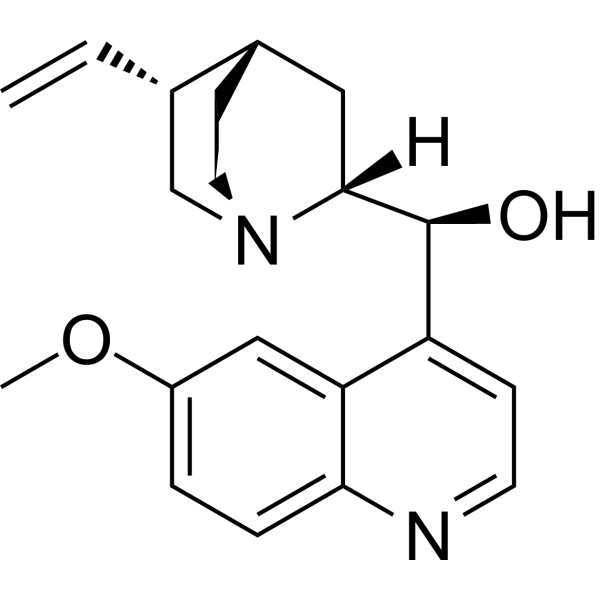
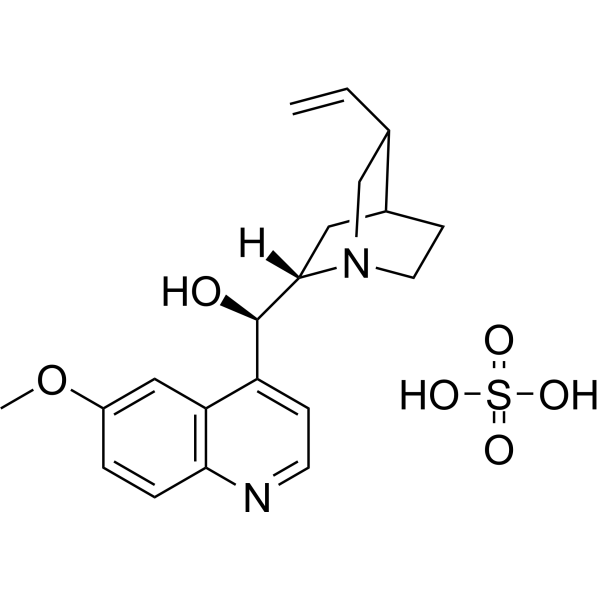
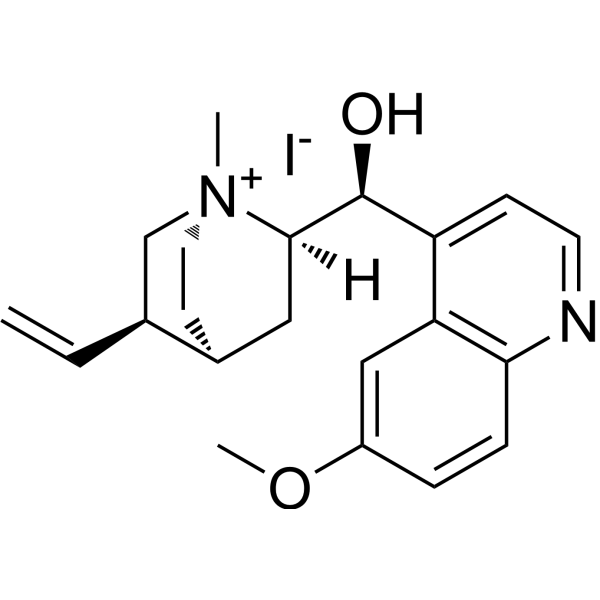
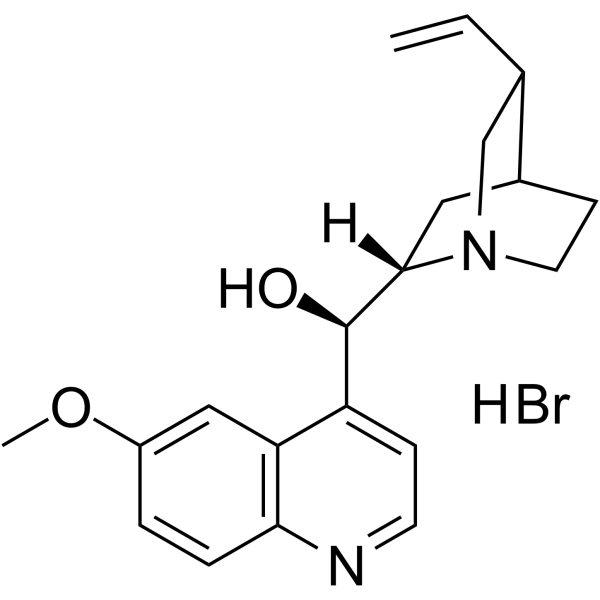
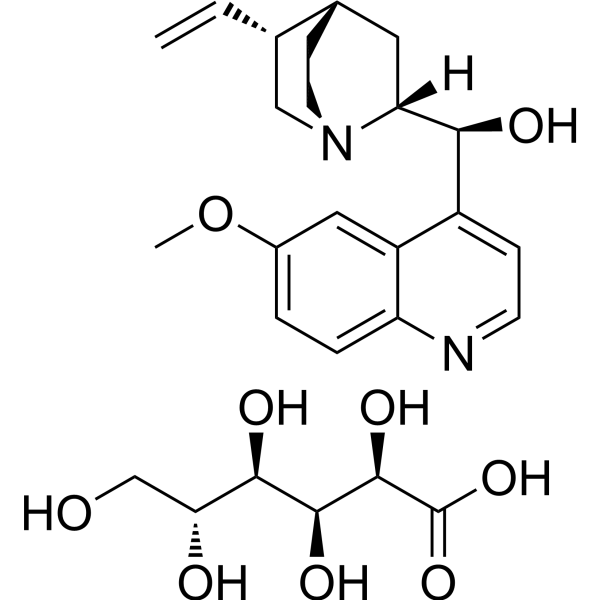
Quinidine hydrobromide is an antiarrhythmic agent. Quinidine is a potent, orally active, selective cytochrome P450db inhibitor. Quinidine hydrobromide is also a K + channel blocker with an IC50 of 19.9 μM. Quinidine hydrobromide can be used for malaria research .
|
-
-
- HY-130353S
-
|
|
Isotope-Labeled Compounds
Potassium Channel
Autophagy
|
Cardiovascular Disease
|
|
Desethyl Amiodarone-d4 (hydrochloride) is the deuterium labeled Desethylamiodarone hydrochloride. Desethylamiodarone hydrochloride (N-desethylamiodarone hydrochloride) is a major active metabolite of Amiodarone. Desethylamiodarone hydrochloride is formed by CYP3A isoenzymes. Amiodarone is an antiarrhythmic agent for inhibition of ATP-sensitive potassium channel with an IC50 of 19.1 μM .
|
-
-
- HY-B1751F
-
-
-
- HY-17429S
-
|
R-818-d4
|
Sodium Channel
|
Cardiovascular Disease
|
|
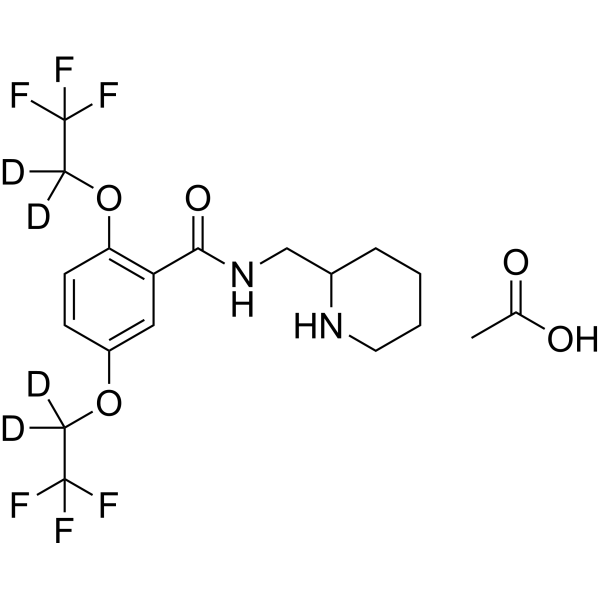
Flecainide-d4 (acetate) is the deuterium labeled Flecainide acetate. Flecainide acetate (R-818) is a class 1C antiarrhythmic agent especially used for the management of supraventricular arrhythmia; works by blocking the Nav1.5 sodium channel in the heart, causing prolongation of the cardiac action potential .
|
-
- HY-B1751A
-
-
- HY-B1751E
-
-
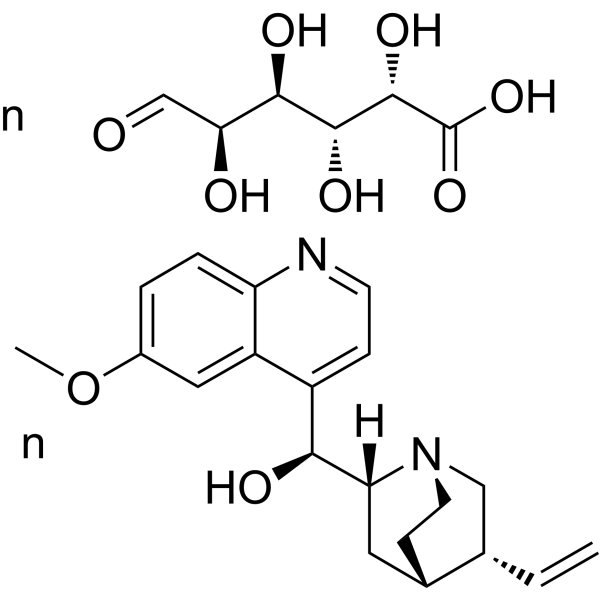
- HY-100145
-
-
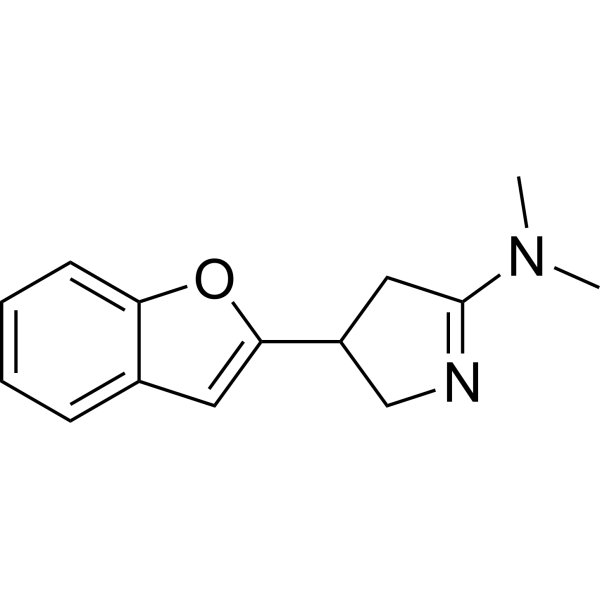
- HY-101617
-
-
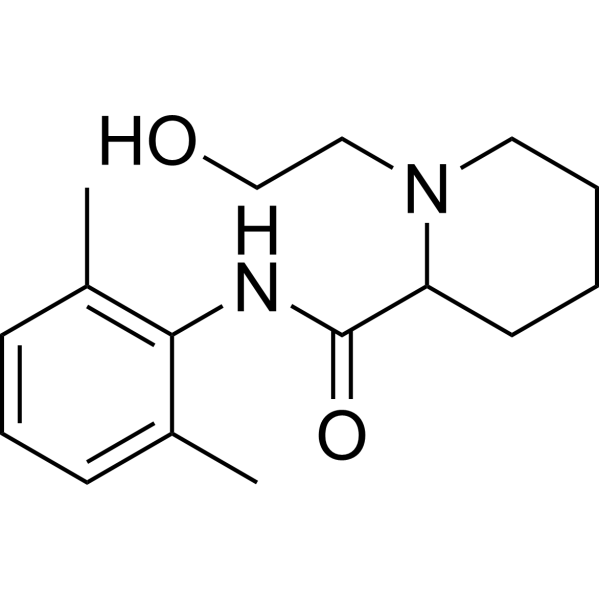
- HY-U00113
-
-
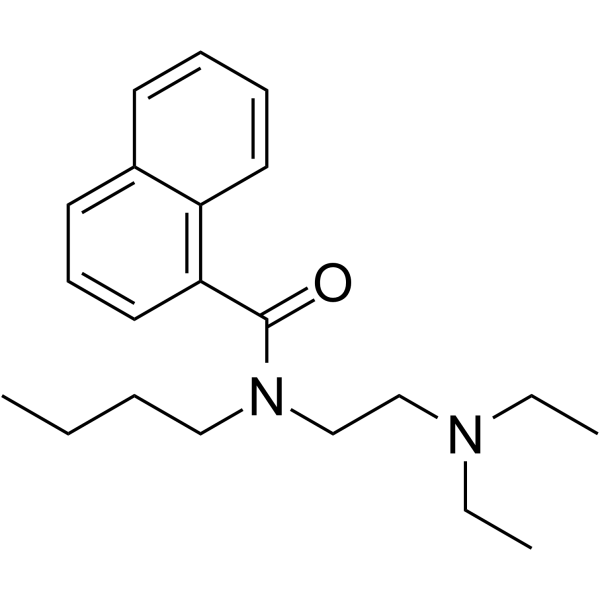
- HY-106577A
-
|
Escibenzoline; (-)-(S)-Cifenline; (-)-(S)-Ro 22-7796
|
Potassium Channel
|
Metabolic Disease
|
|
(-)-(S)-Cibenzoline (Escibenzoline), a S(+)-enantiomer of Cibenzoline, is an antiarrhythmic agent .
|
-
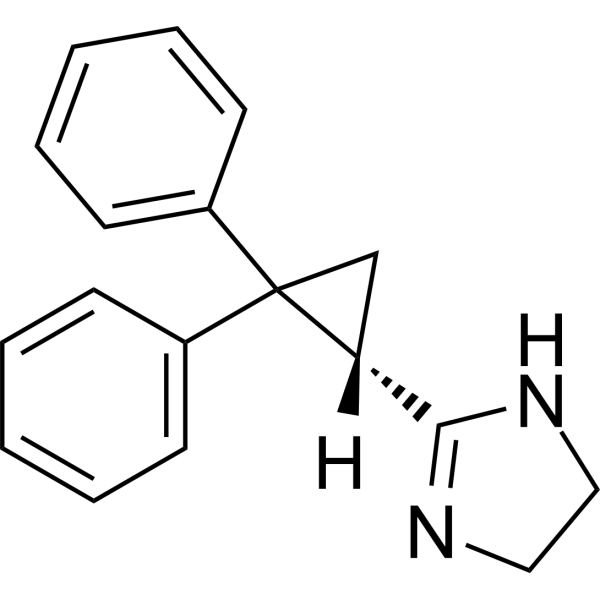
- HY-123427
-
-
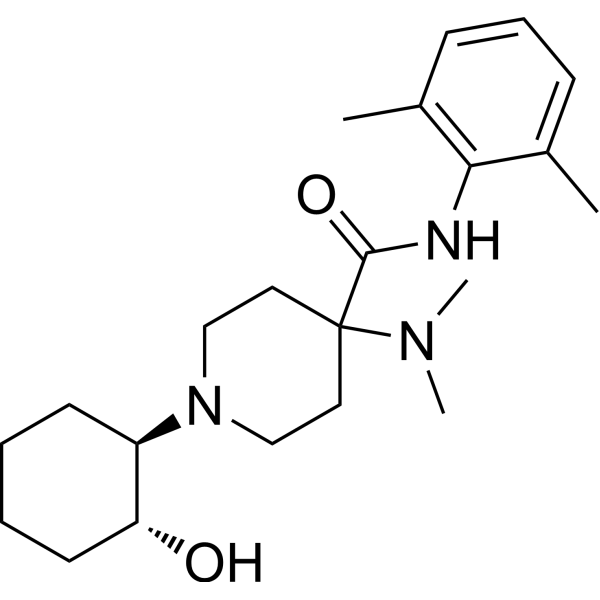
- HY-124883
-
-
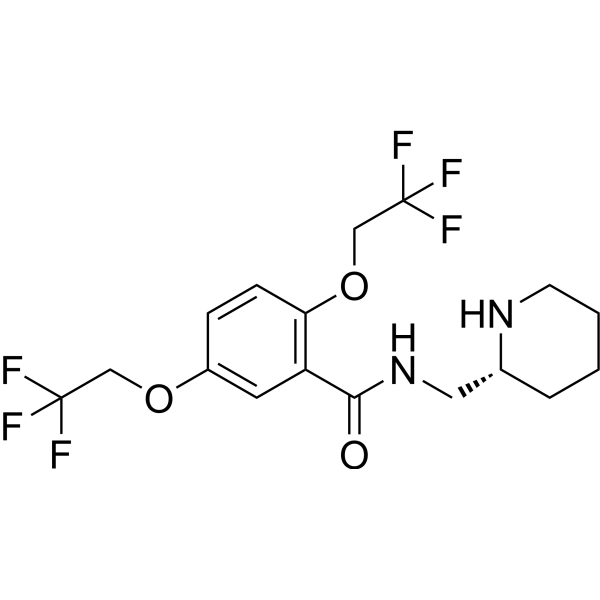
- HY-108304
-
-
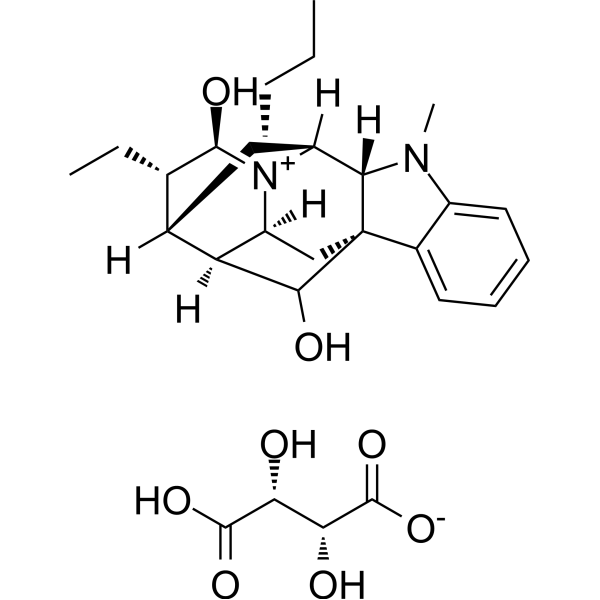
- HY-B1304
-
|
(-)-Lupinidine sulfate pentahydrate
|
Sodium Channel
|
Cardiovascular Disease
|
|
(-)-Sparteine sulfate pentahydrate ((-)-Lupinidine sulfate pentahydrate) is a class 1a antiarrhythmic agent and a sodium channel blocker.
|
-

- HY-A0084S
-
|
Procaine amide-d4 hydrochloride; SP 100-d4 hydrochloride
|
Isotope-Labeled Compounds
|
Cancer
|
|
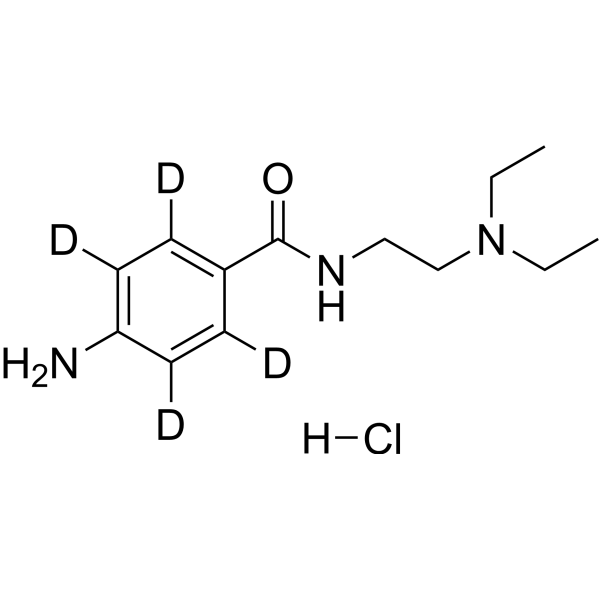
Procainamide-d4 hydrochloride is deuterated labeled Procainamide. Procainamide hydrochloride is an antiarrhythmic agent used in the study of cardiac arrhythmias.
|
-
- HY-121617
-
|
RHC G-233
|
Others
|
Cardiovascular Disease
|
|
Bucainide (RHC G-233) is an antiarrhythmic agent that enables the determination of Bucainide in plasma using the GLC method .
|
-

- HY-101723R
-
|
BMY 40327 (Standard); MJ 14030 (Standard)
|
Reference Standards
Drug Metabolite
|
Cardiovascular Disease
|
|
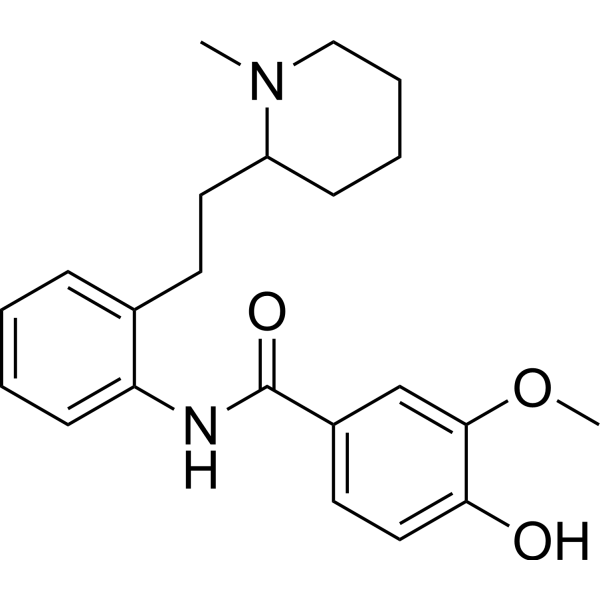
Modecainide (Standard) is the analytical standard of Modecainide. This product is intended for research and analytical applications. Modecainide is a major metabolite of Encainide, which is an antiarrhythmic agent.
|
-

- HY-100623
-
-
- HY-117528
-
-
- HY-156989
-
|
|
Dopamine β-hydroxylase
|
Cardiovascular Disease
|
|
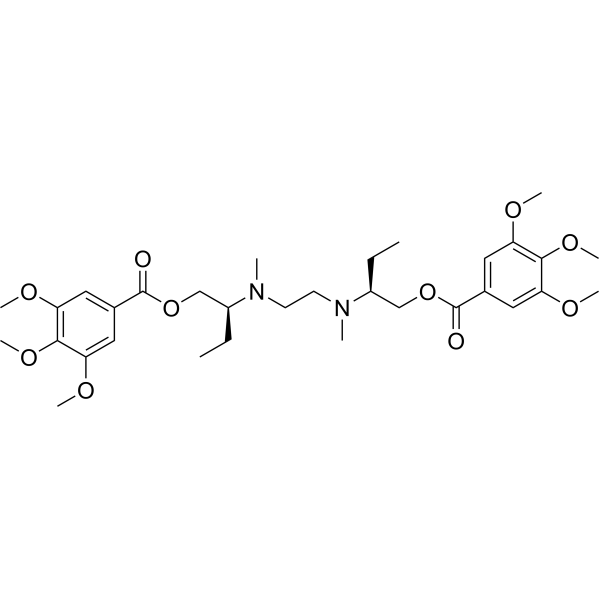
Butobendine, a double ester of 2-aminobutanol and trimethoxybenzoic acid, is an antiarrhythmic agent . Butobendine is a noncompetitive inhibitor of dopamine β-hydroxylase (DBH) .
|
-
- HY-106855
-
|
H 234/09
|
Potassium Channel
|
Cardiovascular Disease
|
|
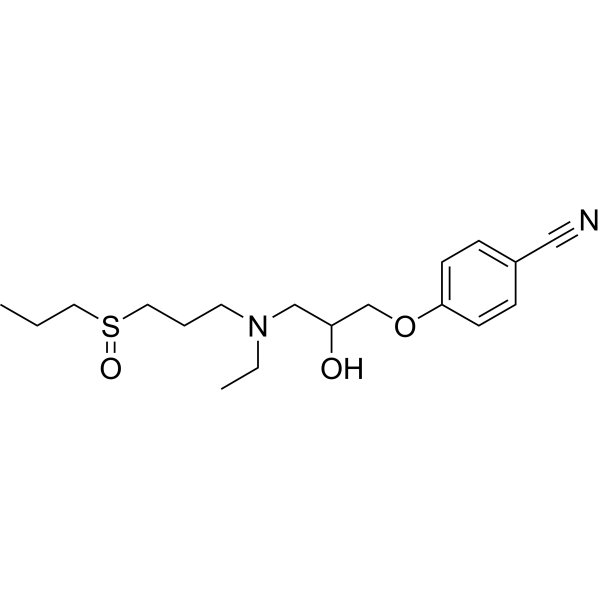
Almokalant is a class III antiarrhythmic agent, acts as a potassium channel blocker, and inhibits a specific component (Ikr) of the time-dependent delayed rectifier K + current.
|
-
- HY-16259
-
|
Ricainide hydrochloride; LY 135837
|
Sodium Channel
|
Cardiovascular Disease
|
|
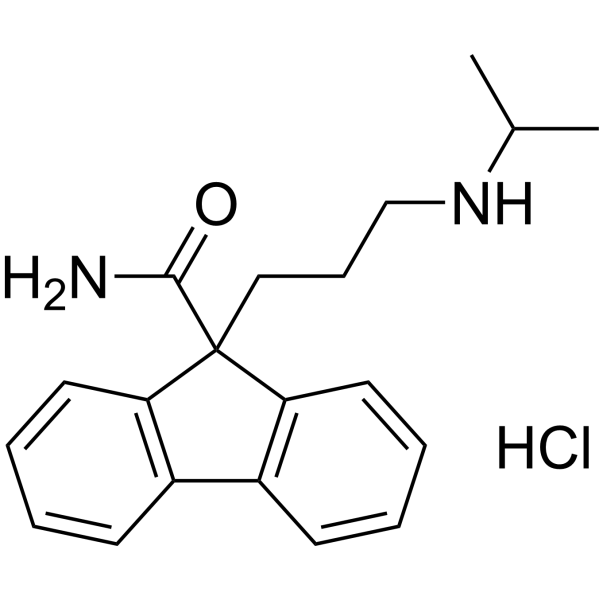
Indecainide hydrochloride is a potent and orally active class I local anesthetic antiarrhythmic agent. Indecainide hydrochloride has Na +-channel-blocking activity .
|
-
- HY-121598
-
|
SC-36602
|
Apoptosis
|
Cardiovascular Disease
|
|
Actisomide (SC-36602) is an antiarrhythmic agent. Absorption of actisomide in rats and its in vitro uptake in CaCo-2 cells are pH-dependent .
|
-

- HY-106330A
-
|
Win 54177-4 fumarate
|
Potassium Channel
|
Cardiovascular Disease
|
|
Ipazilide fumarate (Win 54177-4 fumarate) is an antiarrhythmic agent. Ipazilide fumarate reduces K +- depolarized tone. Ipazilide fumarate prolongs ventricular refractoriness and possesses antiectopic activity .
|
-

- HY-121306
-
|
Ricainide; LY 135837 free base
|
Sodium Channel
|
Neurological Disease
|
|
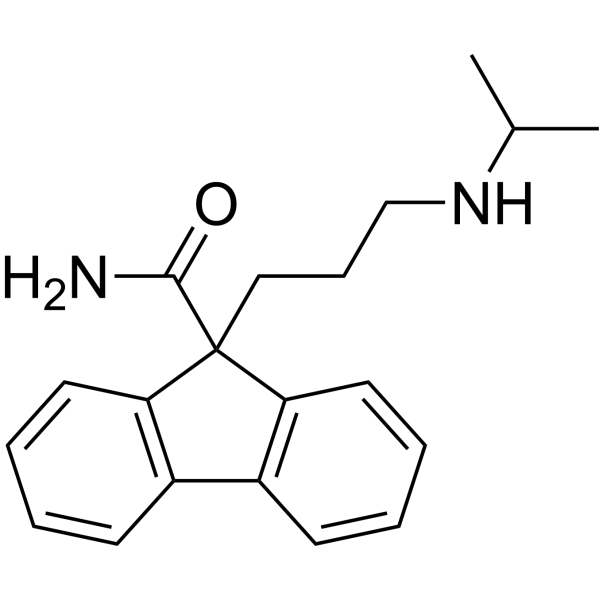
Indecainide (Ricainide) is an orally active antiarrhythmic agent. Indecainide can be used in the research of ventricular dysfunction. Indecainide has Na +-channel-blocking activity .
|
-
- HY-14187S1
-
-
- HY-106700
-
|
CM 7857; Penticainide; Propisomide
|
Sodium Channel
|
Cardiovascular Disease
|
|
Pentisomide (CM 7857), a is an orally active antiarrhythmic agent that blocks sodium channels. Pentisomide processes Vaughan-Williams class I (class I) antiarrhythmic actions .
|
-

- HY-106577AS
-
|
Escibenzoline-d4; (-)-(S)-Cifenline-d4; (-)-(S)-Ro 22-7796-d4
|
Isotope-Labeled Compounds
Potassium Channel
|
Metabolic Disease
|
|
(-)-(S)-Cibenzoline-d4 (Escibenzoline-d4) is deuterium labeled (-)-(S)-Cibenzoline. (-)-(S)-Cibenzoline (Escibenzoline), a S(+)-enantiomer of Cibenzoline, is an antiarrhythmic agent .
|
-

- HY-136876
-
|
|
Others
|
Cardiovascular Disease
|
|
AHR-12234 citrate is an orally active antiarrhythmic agent. AHR-12234 citrate is effective against arrhythmias caused by abnormal automaticity, triggered activity, and reentry .
|
-

- HY-119092
-
|
|
Sodium Channel
|
Cardiovascular Disease
|
|
Bisaramil is an orally active antiarrhythmic agent. Bisaramil exerts concentration dependent inhibitory effect on PMA-stimulated free radical generation and prolonged the time lag concentration dependently .
|
-

- HY-113841
-
|
|
Others
|
Cardiovascular Disease
|
|
RS-87337 is an orally active antiarrhythmic agent that increases the duration and the maximum rate of rise of cardiac muscle action potentials. RS-87337 is promising for research of antiarrhythmic and cardioprotective agents .
|
-

- HY-B0997R
-
|
Dihydroquinidine (Standard); (+)-Hydroquinidine (Standard); Hydroconquinine (Standard)
|
Reference Standards
Others
|
Cardiovascular Disease
|
|
Hydroquinidine (Standard) is the analytical standard of Hydroquinidine. This product is intended for research and analytical applications. Hydroquinidine (Dihydroquinidine) is a derivative of Quinidine (an antiarrhythmic agent). Hydroquinidine prolongs the QT interval and has antiarrhythmic efficacy .
|
-

- HY-12531
-
|
MJ9067 hydrochloride
|
Sodium Channel
|
Cardiovascular Disease
|
|
Encainide (MJ9067) hydrochloride is an antiarrhythmic agent with class IC activity. Encainide hydrochloride blocks voltage-dependent potassium channels. Encainide hydrochloride has the potential for life-threatening ventricular arrhythmias, symptomatic ventricular arrhythmias and supraventricular arrhythmias research .
|
-
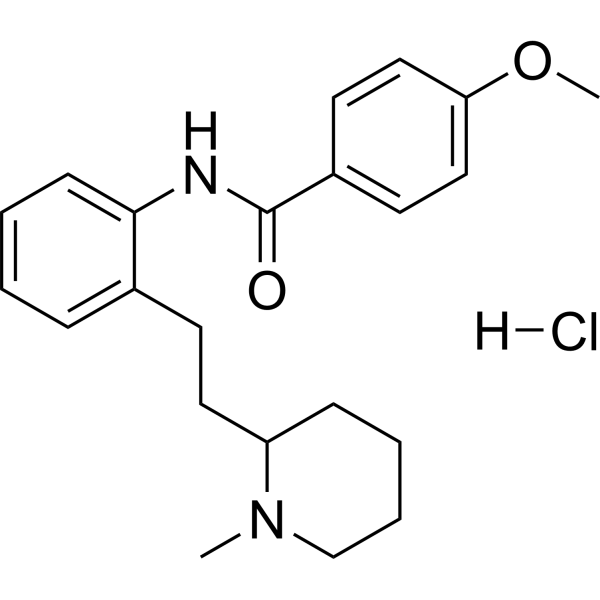
- HY-101436
-
|
CK-1752
|
Potassium Channel
|
Cardiovascular Disease
|
|
Sematilide (CK-1752) is a selective IKr channel blocker. Sematilide causes a concentration-dependent inhibition of the delayed rectifier K + current (IC50=25 μM). Sematilide is a class III antiarrhythmic agent .
|
-
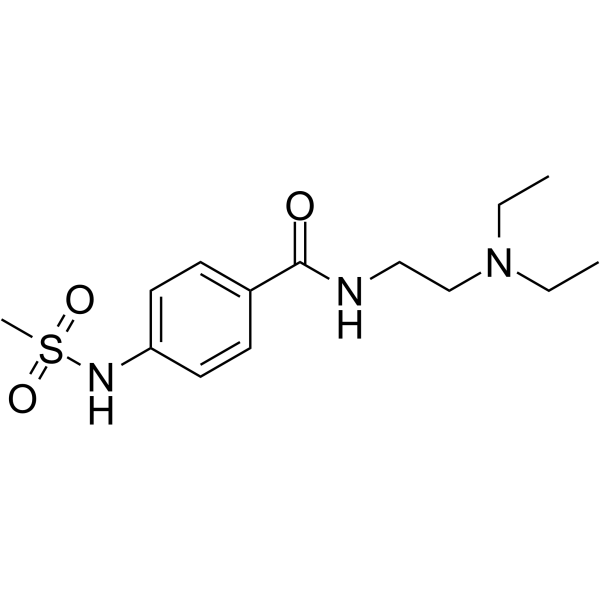
- HY-B0615A
-
|
EN 313; Ethmozin; Moracizine
|
Cytochrome P450
|
Cardiovascular Disease
|
|
Moricizine Hydrochloride (EN 313) is an orally active Class I antiarrhythmic agent. Moricizine Hydrochloride decreases the maximum rate of phase 0 depolarization; increases rates of phase 2 and 3 repolarization, decreases action potential duration, and decreases effective refractory period .
|
-
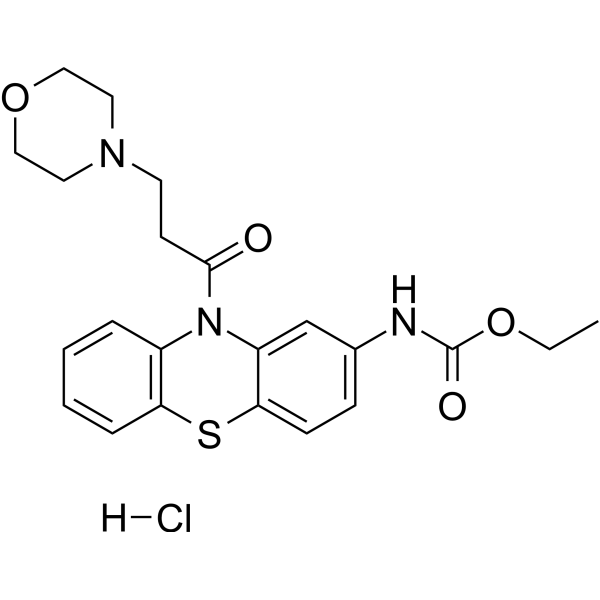
- HY-B0232R
-
|
UK 68789 (Standard)
|
Reference Standards
Potassium Channel
|
Cardiovascular Disease
|
|
Dofetilide (Standard) is the analytical standard of Dofetilide. This product is intended for research and analytical applications. Dofetilide (UK 68789), as a class III antiarrhythmic agent, is an orally active, potent and specific IKr blocker. Dofetilide can be used for the research of cardiovascular disease .
|
-
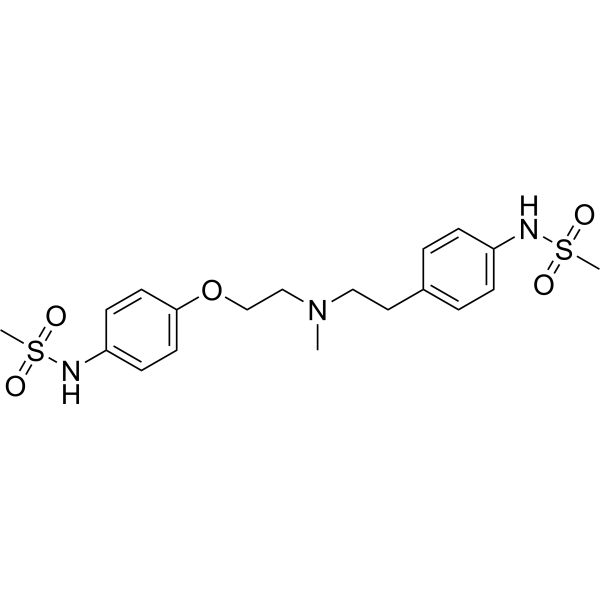
- HY-W010950AR
-
|
|
Reference Standards
Potassium Channel
Sodium Channel
|
Cardiovascular Disease
|
|
Flecainide hydrochloride is an orally active antiarrhythmic agent. Flecainide hydrochloride can block sodium channels and inhibit calcium ion release mediated by the cardiac ryanodine receptor (RyR2). Flecainide hydrochloride can be used in the research of diseases such as catecholaminergic polymorphic ventricular tachycardia (CPVT) .
|
-

- HY-B0772AR
-
|
MS-551 (Standard)
|
Reference Standards
Potassium Channel
|
Cardiovascular Disease
|
|
Nifekalant (hydrochloride) (Standard) is the analytical standard of Nifekalant (hydrochloride). This product is intended for research and analytical applications. Nifekalant hydrochloride (MS-551), a class III antiarrhythmic agent, is a IKr potassium channel blocker with an IC50 of 10 µM. Nifekalant hydrochloride can be used for refractory ventricular tachyarrhythmias research .
|
-

- HY-106819A
-
|
|
Sodium Channel
|
Cardiovascular Disease
|
|
AN-132 phosphate is an antiarrhythmic agent. AN-132 phosphate can inhibit Sodium Channel. AN-132 phosphate can prolong atrioventricular conduction time, decrease sinus rate and reduce the force of papillary muscle contraction. AN-132 phosphate can be used for the research of cardiovascular disease .
|
-

- HY-130353R
-
|
N-desethylamiodarone hydrochloride(Standard); LB 33020 hydrochloride (Standard)
|
Reference Standards
Potassium Channel
Autophagy
|
Cardiovascular Disease
|
|
Desethylamiodarone (hydrochloride) (Standard) is the analytical standard of Desethylamiodarone (hydrochloride). This product is intended for research and analytical applications. Desethylamiodarone hydrochloride (N-desethylamiodarone hydrochloride) is a major active metabolite of Amiodarone. Desethylamiodarone hydrochloride is formed by CYP3A isoenzymes. Amiodarone is an antiarrhythmic agent for inhibition of ATP-sensitive potassium channel with an IC50 of 19.1 μM .
|
-
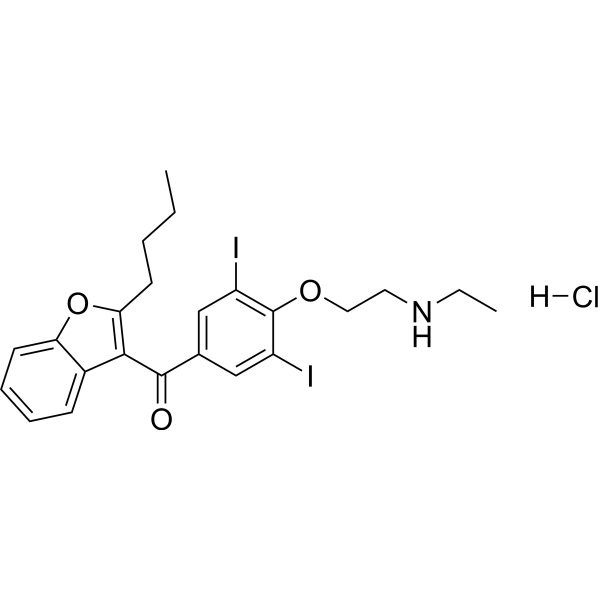
- HY-14186
-
|
WYE-160020
|
Potassium Channel
|
Cardiovascular Disease
|
|
KVI-020 is an orally active, potent and selective blocker of the atrial potassium channel Kv1.5, with an IC50 of 480 nM. KVI-020 can inhibits hERG, with an IC50 of 15100 nM. KVI-020 is a potent antiarrhythmic agent, and can be used for atrial fibrillation (AF) research .
|
-
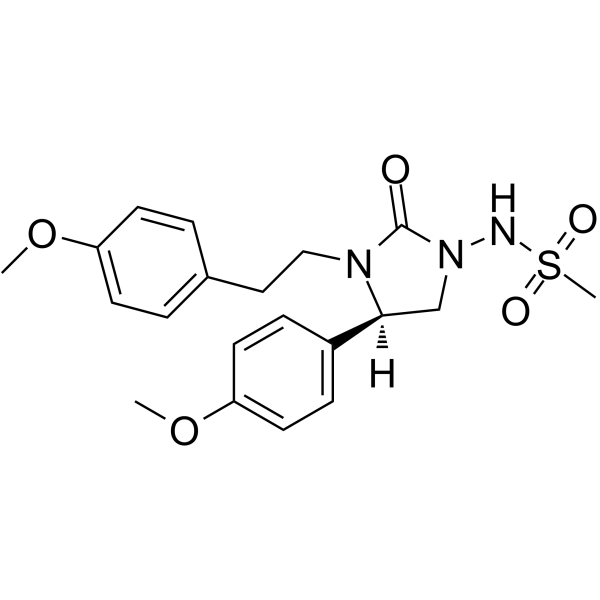
- HY-111245
-
-
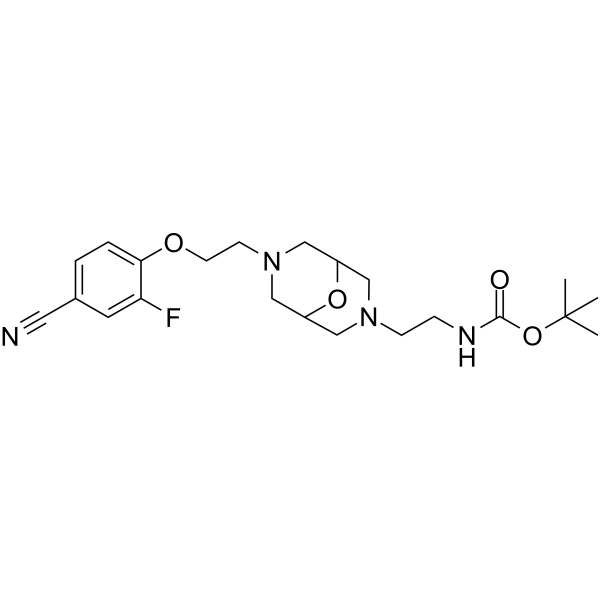
- HY-17429R
-
|
R-818 (Standard)
|
Reference Standards
Sodium Channel
|
Cardiovascular Disease
|
|
Flecainide (acetate) (Standard) is the analytical standard of Flecainide (acetate). This product is intended for research and analytical applications. Flecainide acetate (R-818) is a class 1C antiarrhythmic agent especially used for the management of supraventricular arrhythmia; works by blocking the Nav1.5 sodium channel in the heart, causing prolongation of the cardiac action potential.
|
-

- HY-101436AR
-
|
CK-1752 hydrochloride (Standard)
|
Reference Standards
Potassium Channel
|
Cardiovascular Disease
|
|
Sematilide (hydrochloride) (Standard) is the analytical standard of Sematilide (hydrochloride). This product is intended for research and analytical applications. Sematilide hydrochloride (CK-1752 hydrochloride) is a selective IKr channel blocker. Sematilide causes a concentration-dependent inhibition of the delayed rectifier K+ current (IC50=25 μM). Sematilide is a class III antiarrhythmic agent .
|
-

- HY-135121R
-
|
Ethacizin (Standard); NIK-244 (Standard)
|
Sodium Channel
Reference Standards
|
Cardiovascular Disease
|
|
Ethacizine (hydrochloride) (Standard) is the analytical standard of Ethacizine (hydrochloride). This product is intended for research and analytical applications. Ethacizine hydrochloride (Ethacizin; NIK-244) is a longer-lasting Class Ic antiarrhythmic agent than Flecainide . Ethacizine hydrochloride (Ethacizin; NIK-244) inhibits the depolarizing current responsible for the intraatrial and His-Purkinje-ventricular conduction .
|
-

- HY-12533B
-
|
Dicorantil hydrochloride; SC-7031 hydrochloride
|
Sodium Channel
Potassium Channel
|
Cardiovascular Disease
|
|
Disopyramide hydrochloride is a class IA antiarrhythmic agent with efficacy in ventricular and atrial arrhythmias. Disopyramide hydrochloride blocks the fast inward sodium current of cardiac muscle and prolongs the duration of cardiac action potentials. Disopyramide hydrochloride inhibits HERG encoded potassium channels. Disopyramide hydrochloride also exhibits complex protein binding, and has a potent negative inotropic action .
|
-

- HY-B0437S
-
-

- HY-114029
-
|
3-Epiquinine; Epivinylquinidine
|
Parasite
|
Infection
Cardiovascular Disease
|
|
Ep vinyl quinidine (3-Epiquinine) is an epi-vinyl stereoisomer of Quinidine. Quinidine is an antiarrhythmic agent. Quinidine is a potent, orally active, selective cytochrome P450db inhibitor. Quinidine is also a K+ channel blocker with an IC50 of 19.9 μM. Quinidine can be used for malaria research .
|
-
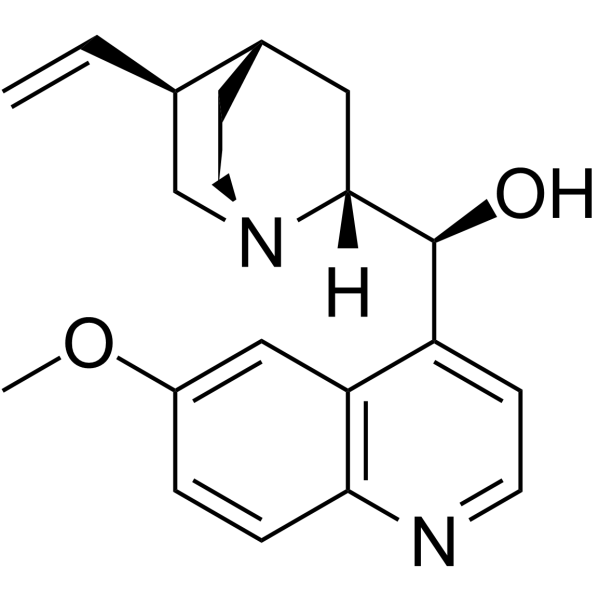
- HY-101617A
-
-

- HY-131987S1
-
-

- HY-147256A
-
|
Niferidil
|
Potassium Channel
|
Cardiovascular Disease
|
|
Cavutilide hydrochloride (Niferidil) is a class III antiarrhythmic agent that inhibits hERG K + channel. Cavutilide hydrochloride has the potential for the study of persistent atrial fibrillation .
|
-

- HY-106501A
-
|
Goe 4704 hydrochloride
|
Potassium Channel
|
Cardiovascular Disease
|
|
Asocainol hydrochloride (Goe 4704 hydrochloride) is an antiarrhythmic agent. Asocainol hydrochloride reduces the maximum rate of action potential rise and action potential amplitude. Asocainol hydrochloride is applicable for the research of arrhythmias .
|
-

- HY-130456
-
|
|
Sodium Channel
|
Cardiovascular Disease
|
|
AHR 10718 is an antiarrhythmic agent that suppresses cardiac arrhythmias induced by digitalis intoxication and myocardial infarction in the intact dog. AHR 10718 also depresses membrane responsiveness and conduction, shortens the effective refractory period of specialized conducting fibers less than action potential duration .
|
-

- HY-100795AR
-
|
(±)-Pirmenol hydrochloride (Standard); CI-845 (Standard)
|
mAChR
Reference Standards
Potassium Channel
|
Cardiovascular Disease
|
|
Pirmenol (hydrochloride) (Standard) is the analytical standard of Pirmenol (hydrochloride) (HY-100795A). This product is intended for research and analytical applications. Pirmenol ((±)-Pirmenol) hydrochloride is an orally active antiarrhythmic agent. Pirmenol hydrochloride inhibits IK.ACh (IC50: 0.1 μM) by blocking mAchR. Pirmenol hydrochloride can be used in the research of cardiovascular disease, such as atrial fibrillation .
|
-

- HY-107335R
-
|
Creatinol O-phosphate (Standard); Creatinol phosphate (Standard); Creatinolfosfate (Standard)
|
Biochemical Assay Reagents
Reference Standards
|
Cardiovascular Disease
|
|
Aplodan (Standard) (Creatinol O-phosphate (Standard)) is the analytical standard of Aplodan (HY-107335). This product is intended for research and analytical applications. Aplodan (Creatinol O-phosphate) is an antiischemic and antiarrhythmic agent. Aplodan has a protective action on cell membrane. Aplodan has the potential for the research of ischemic heart or acute myocardial infarction .
|
-

- HY-W010950R
-
|
|
Reference Standards
Potassium Channel
Sodium Channel
|
Cardiovascular Disease
|
|
Flecainide (Standard) is the analytical standard of Flecainide. This product is intended for research and analytical applications. Flecainide is an orally active antiarrhythmic agent. Flecainide can block sodium channels and inhibit calcium ion release mediated by the cardiac ryanodine receptor (RyR2). Flecainide can be used in the research of diseases such as catecholaminergic polymorphic ventricular tachycardia (CPVT) .
|
-

- HY-14187
-
|
|
Potassium Channel
Autophagy
|
Cardiovascular Disease
Infection
Neurological Disease
Cancer
|
|
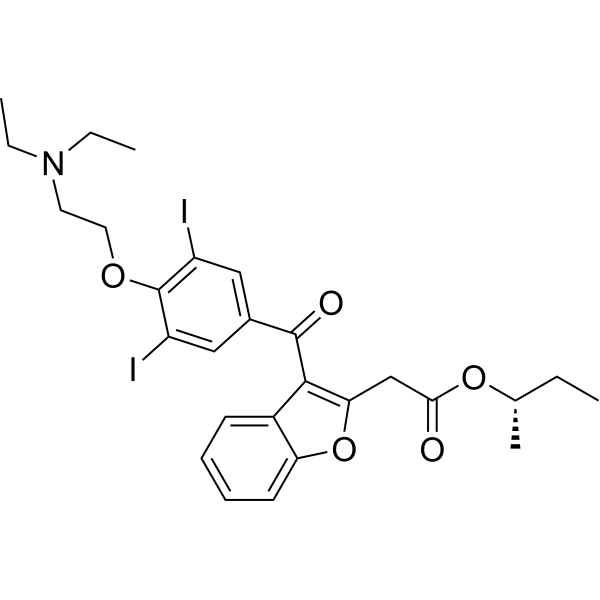
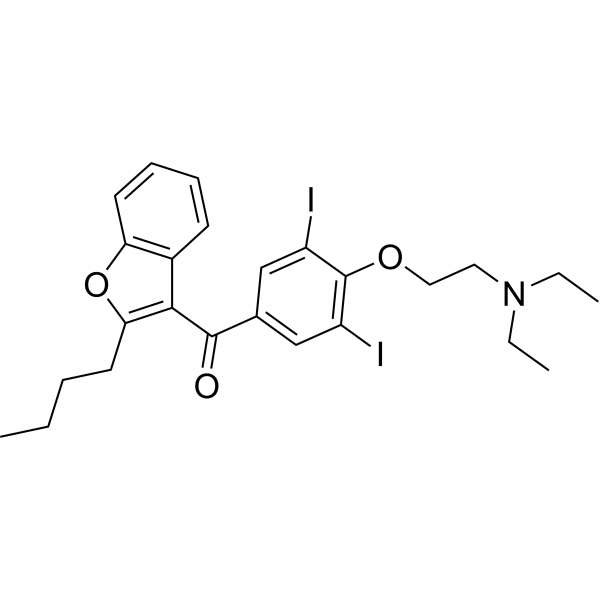
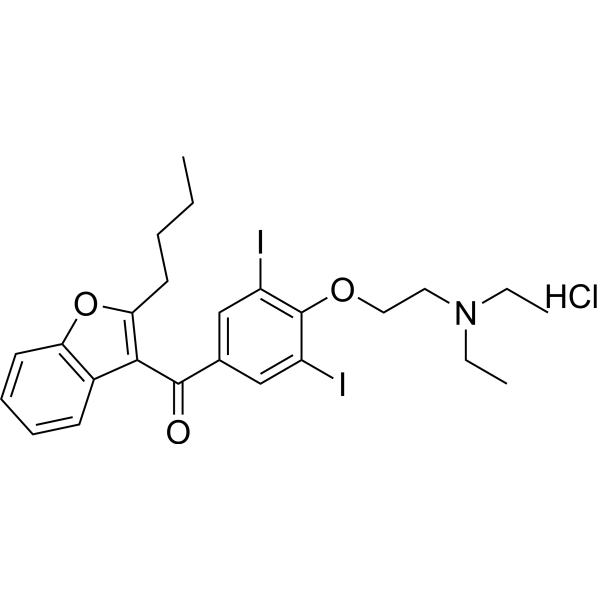
Amiodarone, a benzofuran-based Class III antiarrhythmic agent, inhibits WT outward ionic current (IhERG) tails with an IC50 of ∼45 nM . Amiodarone induces cell proliferation and myofibroblast differentiation via ERK1/2 and p38 MAPK signaling in fibroblasts . Amiodarone can be used in the research of both supraventricular and ventricular arrhythmias .
|
-
- HY-14188
-
|
|
Potassium Channel
Autophagy
|
Cardiovascular Disease
Infection
Neurological Disease
Cancer
|
|
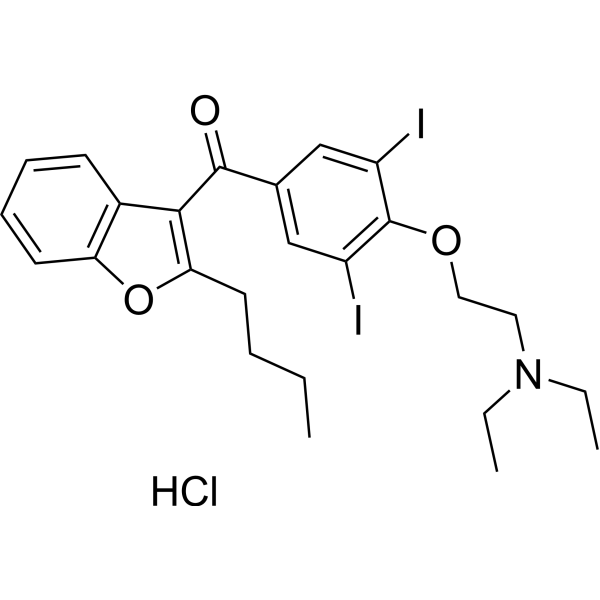
Amiodarone hydrochloride, a benzofuran-based Class III antiarrhythmic agent, inhibits WT outward ionic current (IhERG) tails with an IC50 of ∼45 nM . Amiodarone hydrochloride induces cell proliferation and myofibroblast differentiation via ERK1/2 and p38 MAPK signaling in fibroblasts . Amiodarone hydrochloride can be used in the research of both supraventricular and ventricular arrhythmias .
|
-
- HY-B0437R
-
|
MJ 1999 (Standard)
|
Reference Standards
Adrenergic Receptor
Potassium Channel
|
Cardiovascular Disease
Neurological Disease
|
|
Sotalol (hydrochloride) (Standard) is the analytical standard of Sotalol (hydrochloride). This product is intended for research and analytical applications. Sotalol hydrochloride (MJ 1999) is an orally active, non-selective β-adrenergic receptor blocker. Sotalol hydrochloride is a potent antiarrhythmic agent that can be used for the research of pediatric arrhythmias. Sotalol hydrochloride blocks β-receptors, and potassium KCNH2 channels. Antiepileptic Agent .
|
-

- HY-126562R
-
-

- HY-117712
-
|
|
Drug Derivative
|
Cardiovascular Disease
|
|
LG 6-101 is an orally active antiarrhythmic agent. LG 6-101 shows strong antiarrhythmic effects in a coronary-artery-ligation model of rats, better than Propafenone (HY-B0432). LG 6-101 also delays the occurence of ventricular premature beat (VPB)'s and has protective effects against cardiac arrest caused by aconitine .
|
-

- HY-119521
-
|
KOE-1173
|
Sodium Channel
|
Cardiovascular Disease
Neurological Disease
|
|
Mexiletine is an orally effective antiarrhythmic agent which has also been found to be effective for myotonia and neuropathic pain. Mexiletine exerts its efficacy through blocking sodium channels (IC50 : 75±8 μM for tonic block, 23.6±2.8 μM for use-dependent block), therefore can be used for cardiovascular and neurological research .
|
-

- HY-14188S
-
|
|
Potassium Channel
Autophagy
|
Cardiovascular Disease
Cancer
|
|
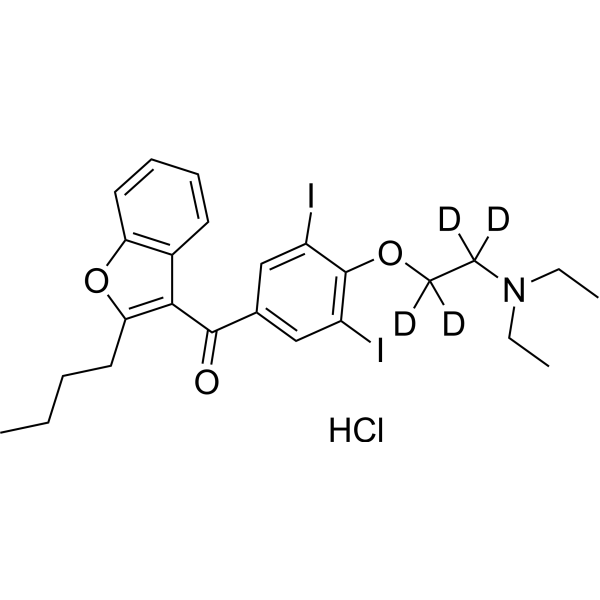
Amiodarone-d4 (hydrochloride) is the deuterium labeled Amiodarone hydrochloride. Amiodarone hydrochloride, a benzofuran-based Class III antiarrhythmic agent, inhibits WT outwardIhERG tails with an IC50 of ~45 nM . Amiodarone hydrochloride induces cell proliferation and myofibroblast differentiation via ERK1/2 and p38 MAPK signaling in fibroblasts . Amiodarone hydrochloride can be used in the research of both supraventricular and ventricular arrhythmias .
|
-
- HY-A0093
-
|
KOE-1173 hydrochloride
|
Sodium Channel
|
Cardiovascular Disease
Neurological Disease
|
|
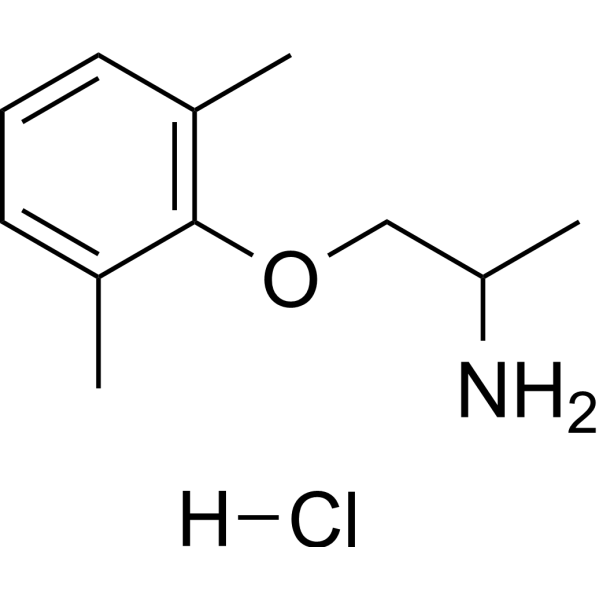
Mexiletine is an orally effective antiarrhythmic agent which has also been found to be effective for myotonia and neuropathic pain. Mexiletine exerts its efficacy through blocking sodium channels (IC50 : 75±8 μM for tonic block, 23.6±2.8 μM for use-dependent block), therefore can be used for cardiovascular and neurological research .
|
-
- HY-118148
-
|
|
Potassium Channel
|
Cardiovascular Disease
|
|
UK-66914, is a class III antiarrhythmic agent that specifically acts on the delayed rectifier potassium current (I_K). UK-66914 is designed to prolong action potential duration (APD) and increase cardiac refractory period, thereby potentially terminating the reentry mechanism in arrhythmias without affecting the serious side effects of antiarrhythmic drugs associated with other ion channels such as Na+ and Ca2+ currents .
|
-

- HY-A0016
-
|
SR 33589
|
mAChR
Sodium Channel
Calcium Channel
Adrenergic Receptor
Cytochrome P450
Autophagy
|
Cardiovascular Disease
|
|
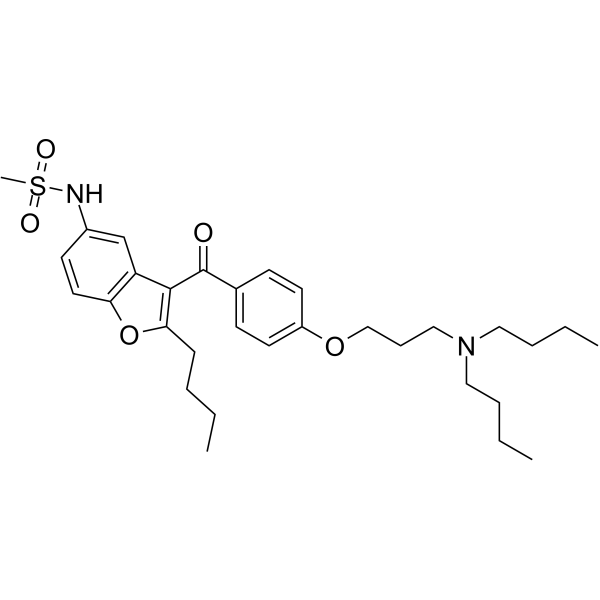
Dronedarone (SR 33589), a derivative of amiodarone (HY-14187), is a class III antiarrhythmic agent for the study of atrial fibrillation (AF) and atrial flutter. Dronedarone is a potent blocker of multiple ion currents, including potassium current, sodium current, and L-type calcium current, and exhibits antiadrenergic effects by noncompetitive binding to β-adrenergic receptors. Dronedarone is a substrate for and a moderate inhibitor of CYP3A4 .
|
-
- HY-19066
-
|
|
Potassium Channel
|
Cardiovascular Disease
|
|
KW-3407 is an antiarrhythmic agent. KW-3407 can inhibit two-stage (24 and 48 h) coronary ligation-, digitalis- and adrenaline-induced spontaneously occurring arrhythmias with IC50 values of 18.1, 14.4, 18.3 and 21.4 μg/mL. KW-3407 can decrease the sinoatrial rate and contractile force, and increase the coronary blood flow and AV conduction times .
|
-

- HY-14188R
-
|
|
Reference Standards
Potassium Channel
Autophagy
|
Cardiovascular Disease
Cancer
|
|
Amiodarone (hydrochloride) (Standard) is the analytical standard of Amiodarone (hydrochloride). This product is intended for research and analytical applications. Amiodarone hydrochloride, a benzofuran-based Class III antiarrhythmic agent, inhibits WT outwardIhERG tails with an IC50 of ∼45 nM . Amiodarone hydrochloride induces cell proliferation and myofibroblast differentiation via ERK1/2 and p38 MAPK signaling in fibroblasts . Amiodarone hydrochloride can be used in the research of both supraventricular and ventricular arrhythmias .
|
-
- HY-12533R
-
|
Dicorantil (Standard); SC-7031 (Standard)
|
Reference Standards
Sodium Channel
Potassium Channel
|
Cardiovascular Disease
|
|
Disopyramide (Standard) is the analytical standard of Disopyramide. This product is intended for research and analytical applications. Disopyramide (Dicorantil) is a class IA antiarrhythmic agent with efficacy in ventricular and atrial arrhythmias. Disopyramide blocks the fast inward sodium current of cardiac muscle and prolongs the duration of cardiac action potentials. Disopyramide inhibits HERG encoded potassium channels. Disopyramide also exhibits complex protein binding, and has a potent negative inotropic action .
|
-

- HY-B1751R
-
|
|
Reference Standards
Potassium Channel
Cytochrome P450
Apoptosis
Parasite
|
Infection
Cardiovascular Disease
Cancer
|
|
Quinidine (15% dihydroquinidine) (Standard) is the analytical standard of Quinidine (15% dihydroquinidine). This product is intended for research and analytical applications. Quinidine (15% dihydroquinidine) is an antiarrhythmic agent. Quinidine is a potent, orally active, selective cytochrome P450db inhibitor. Quinidine is also a K+ channel blocker with an IC50 of 19.9 μM, and can induce apoptosis. Quinidine can be used for malaria research .
|
-

- HY-12533AR
-
|
Dicorantil phosphate (Standard); SC-7031 phosphate (Standard)
|
Potassium Channel
Sodium Channel
Reference Standards
|
Cardiovascular Disease
|
|
Disopyramide (phosphate) (Standard) is the analytical standard of Disopyramide (phosphate). This product is intended for research and analytical applications. Disopyramide phosphate is a class IA antiarrhythmic agent with efficacy in ventricular and atrial arrhythmias. Disopyramide phosphate blocks the fast inward sodium current of cardiac muscle and prolongs the duration of cardiac action potentials. Disopyramide phosphate inhibits HERG encoded potassium channels. Disopyramide phosphate also exhibits complex protein binding, and has a potent negative inotropic action .
|
-

- HY-116500A
-
|
|
Calcium Channel
|
Cardiovascular Disease
|
|
AH-1058 is a newly synthesized antiarrhythmic agent that exhibits significant antiarrhythmic activity by delaying premature ventricular complexes and ventricular fibrillation in experimental arrhythmia models. AH-1058 effectively inhibits both ventricular tachycardia and ventricular fibrillation in the reperfusion-induced arrhythmia model in rats. AH-1058 demonstrates potent calcium channel-blocking effects, suppressing L-type Ca2+ currents in isolated cardiomyocytes.
|
-

- HY-B0432
-
|
SA-79
|
Sodium Channel
Adrenergic Receptor
Potassium Channel
|
Cardiovascular Disease
Cancer
|
|
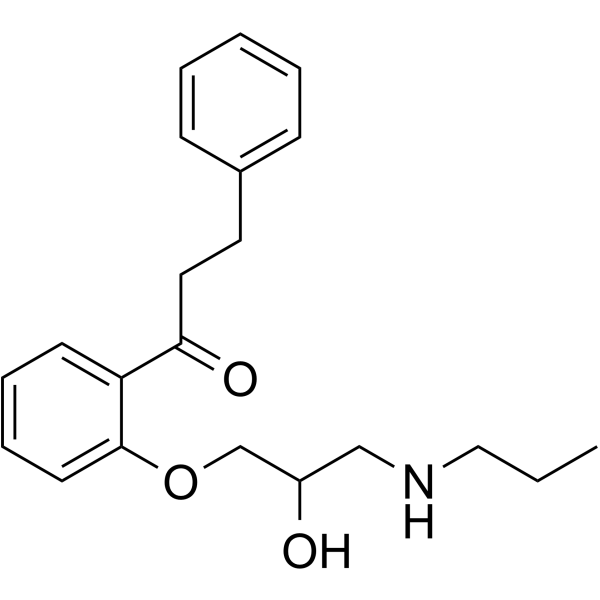
Propafenone (SA-79), a sodium-channel blocker, acts an antiarrhythmic agent. Propafenone also has high affinity for the β receptor (IC50=32 nM) . Propafenone blocks the transient outward current (Ito) and the sustained delayed rectifier K current (Isus) with IC50 values of 4.9 μm and 8.6 μm, respectively . Propafenone suppresses esophageal cancer proliferation through inducing mitochondrial dysfunction and induce apoptosis .
|
-
- HY-A0016R
-
|
SR 33589 (Standard)
|
Reference Standards
mAChR
Sodium Channel
Calcium Channel
Adrenergic Receptor
Cytochrome P450
Autophagy
|
Cardiovascular Disease
|
|
Dronedarone (Standard) is the analytical standard of Dronedarone. This product is intended for research and analytical applications. Dronedarone (SR 33589), a derivative of amiodarone (HY-14187), is a class III antiarrhythmic agent for the study of atrial fibrillation (AF) and atrial flutter. Dronedarone is a potent blocker of multiple ion currents, including potassium current, sodium current, and L-type calcium current, and exhibits antiadrenergic effects by noncompetitive binding to β-adrenergic receptors. Dronedarone is a substrate for and a moderate inhibitor of CYP3A4 .
|
-

- HY-A0016S
-
|
|
Isotope-Labeled Compounds
mAChR
Sodium Channel
Calcium Channel
Adrenergic Receptor
Cytochrome P450
Autophagy
|
Cardiovascular Disease
|
|
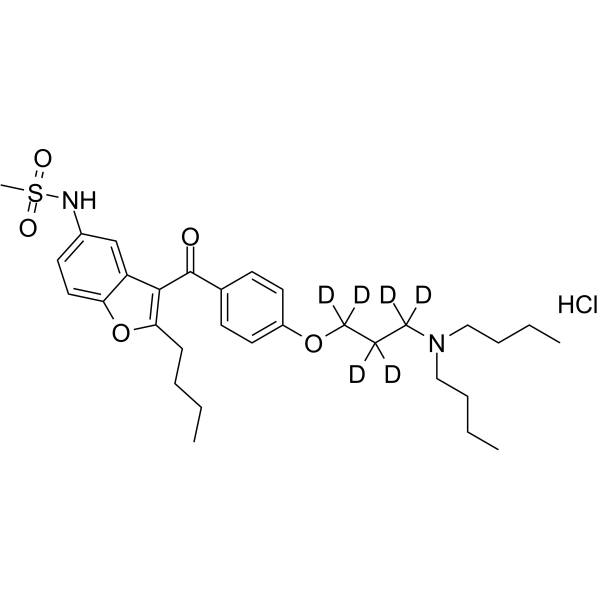
Dronedarone-d6 (hydrochloride) is the deuterium labeled Dronedarone. Dronedarone hydrochloride, a derivative of Amiodarone (HY-14187), is a class III antiarrhythmic agent for the study of atrial fibrillation (AF) and atrial flutter. Dronedarone hydrochloride is a potent blocker of multiple ion currents, including potassium current, sodium current, and L-type calcium current, and exhibits antiadrenergic effects by noncompetitive binding to β-adrenergic receptors. Dronedarone hydrochloride is a substrate for and a moderate inhibitor of CYP3A4 .
|
-
- HY-A0093R
-
|
KOE-1173 hydrochloride (Standard)
|
Sodium Channel
Reference Standards
|
Cardiovascular Disease
Neurological Disease
|
|
Mexiletine (hydrochloride) (Standard) is the analytical standard of Mexiletine (hydrochloride). This product is intended for research and analytical applications. Mexiletine is an orally effective antiarrhythmic agent which has also been found to be effective for myotonia and neuropathic pain. Mexiletine exerts its efficacy through blocking sodium channels (IC50 : 75±8 μM for tonic block, 23.6±2.8 μM for use-dependent block), therefore can be used for cardiovascular and neurological research .
|
-

- HY-119521S
-
|
KOE-1173-d3
|
Isotope-Labeled Compounds
|
Cardiovascular Disease
Neurological Disease
|
|
Mexiletine-d3 (KOE-1173-d3) is deuterium labeled Mexiletine. Mexiletine is an orally effective antiarrhythmic agent which has also been found to be effective for myotonia and neuropathic pain. Mexiletine exerts its efficacy through blocking sodium channels (IC50 : 75±8 μM for tonic block, 23.6±2.8 μM for use-dependent block), therefore can be used for cardiovascular and neurological research .
|
-

- HY-A0016S3
-
|
SR 33589-d6
|
Isotope-Labeled Compounds
Sodium Channel
Autophagy
Cytochrome P450
Adrenergic Receptor
mAChR
Calcium Channel
|
Cardiovascular Disease
|
|
Dronedarone-d6 (SR 33589-d6) is deuterium labeled Dronedarone. Dronedarone (SR 33589), a derivative of amiodarone (HY-14187), is a class III antiarrhythmic agent for the study of atrial fibrillation (AF) and atrial flutter. Dronedarone is a potent blocker of multiple ion currents, including potassium current, sodium current, and L-type calcium current, and exhibits antiadrenergic effects by noncompetitive binding to β-adrenergic receptors. Dronedarone is a substrate for and a moderate inhibitor of CYP3A4 .
|
-

- HY-119521S1
-
|
KOE-1173-d6
|
Isotope-Labeled Compounds
Sodium Channel
|
Cardiovascular Disease
Neurological Disease
|
|
Mexiletine-d6 (KOE-1173-d6) is deuterium labeled Mexiletine. Mexiletine is an orally effective antiarrhythmic agent which has also been found to be effective for myotonia and neuropathic pain. Mexiletine exerts its efficacy through blocking sodium channels (IC50 : 75±8 μM for tonic block, 23.6±2.8 μM for use-dependent block), therefore can be used for cardiovascular and neurological research .
|
-

- HY-118387
-
|
|
Potassium Channel
|
Cardiovascular Disease
|
|
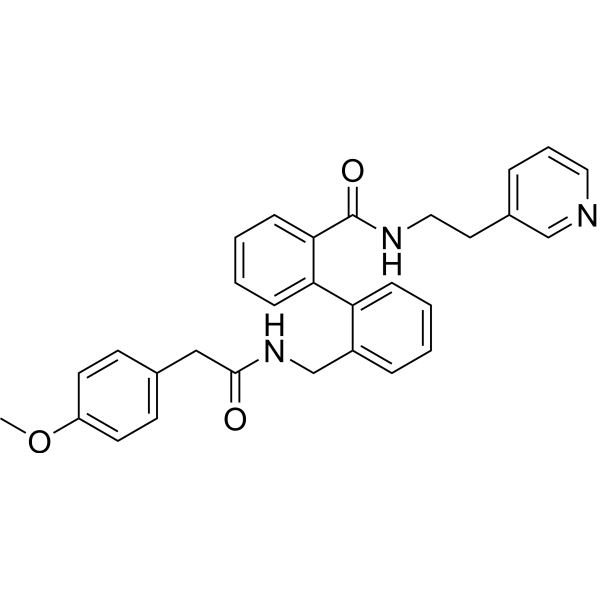
AVE-0118 is a Kv1.5 potassium channel blocker and antiarrhythmic agent. AVE-0118 blocks neuronal Kv1.5 potassium channels, thereby enhancing the release of norepinephrine. AVE-0118 enhances field stimulation-induced neurogenic contraction, an effect sensitive to α1-adrenergic receptor blockade. AVE-0118 terminates persistent atrial fibrillation in some dogs. AVE-0118 is applicable to research related to atrial fibrillation and persistent atrial fibrillation .
|
-
- HY-B0432R
-
|
SA-79 (Standard)
|
Reference Standards
Sodium Channel
Adrenergic Receptor
Potassium Channel
|
Cardiovascular Disease
Cancer
|
|
Propafenone (Standard) is the analytical standard of Propafenone. This product is intended for research and analytical applications. Propafenone (SA-79), a sodium-channel blocker, acts an antiarrhythmic agent. Propafenone also has high affinity for the β receptor (IC50=32 nM) . Propafenone blocks the transient outward current (Ito) and the sustained delayed rectifier K current (Isus) with IC50 values of 4.9 μm and 8.6 μm, respectively . Propafenone suppresses esophageal cancer proliferation through inducing mitochondrial dysfunction and induce apoptosis .
|
-

- HY-W115674
-
|
|
P-glycoprotein
PARP
Caspase
Apoptosis
Potassium Channel
|
Cardiovascular Disease
Neurological Disease
Cancer
|
|
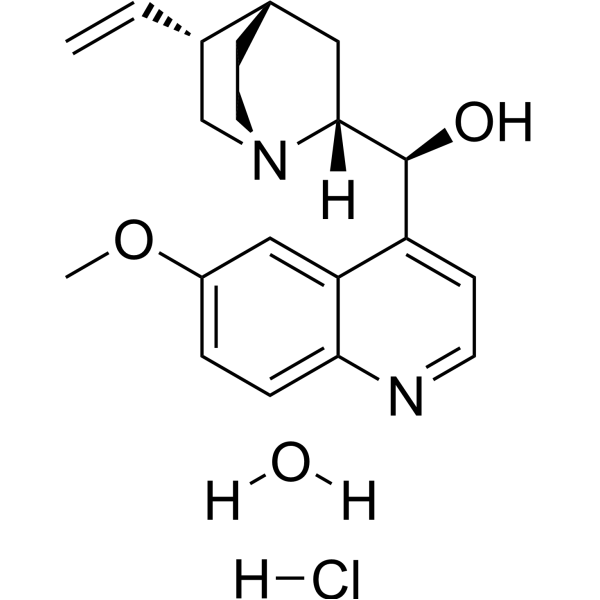
Quinidine hydrochloride is an orally active antiarrhythmic agent. Quinidine hydrochloride reduces the expression level of P-gp, inhibits P-gp-mediated efflux, increases the intracellular accumulation of P-gp substrates, induces PARP cleavage and Caspase-3 activation, and elevates the proportion of Apoptotic cells at the sub-G1 phase. Quinidine hydrochloride exerts sustained block and open-channel block effects on IK(f). Quinidine hydrochloride alters the urinary metabolic ratio of Amphetamine, modulates the Pentylenetetrazol-induced seizure threshold, and regulates the anticonvulsant effect of Dextromethorphan. Quinidine hydrochloride can be used in studies related to uterine sarcoma and seizures .
|
-

- HY-B1302
-
|
|
P-glycoprotein
PARP
Caspase
Apoptosis
Potassium Channel
|
Cardiovascular Disease
Neurological Disease
|
|
Quinidine hydrochloride monohydrate is an orally active antiarrhythmic agent. Quinidine hydrochloride monohydrate reduces the expression level of P-gp, inhibits P-gp-mediated efflux, increases the intracellular accumulation of P-gp substrates, induces PARP cleavage and Caspase-3 activation, and elevates the proportion of Apoptotic cells at the sub-G1 phase. Quinidine hydrochloride monohydrate exerts sustained block and open-channel block effects on IK(f). Quinidine hydrochloride monohydrate alters the urinary metabolic ratio of Amphetamine, modulates the Pentylenetetrazol-induced seizure threshold, and regulates the anticonvulsant effect of Dextromethorphan. Quinidine hydrochloride monohydrate can be used in studies related to uterine sarcoma and seizures .
|
-
- HY-18600
-
|
NE-10064
|
Potassium Channel
Calcium Channel
Sodium Channel
|
Cardiovascular Disease
|
|
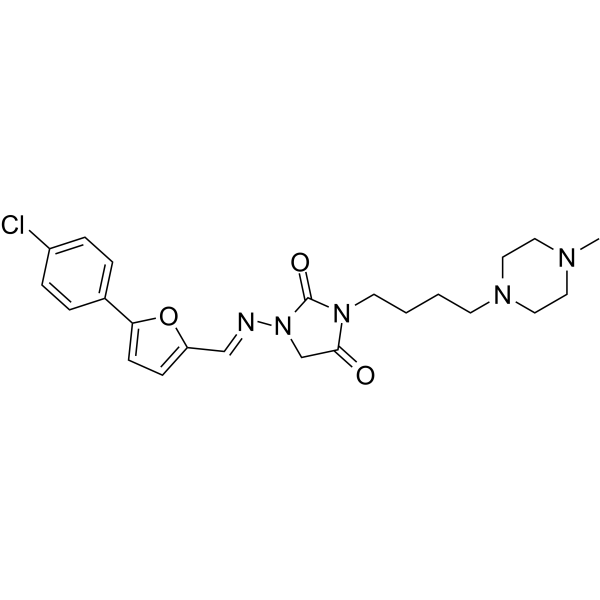
Azimilide (NE-10064) is a class III antiarrhythmic agent, which works by blocking potassium channels in the heart. Azimilide is a dual blocker of IKs (IC50 = 2.6 μM (2mM [K⁺]ₑ)) and IKr (IC50 = 1 μM (4 mM [K⁺])). Azimilide blocked HERG channel at 0.1 and 1 Hz with IC50s of 1.4 μM and 5.2 μM respectively. Azimilide also inhibits L-type calcium current (ICa) (IC50 = 17.8 μM) and sodium current (INa) (IC50 = 19 μM). Azimilide can be used for the study of atrial fibrillation and ventricular fibrillation .
|
-
- HY-18600A
-
|
NE-10064 dihydrochloride
|
Potassium Channel
Calcium Channel
Sodium Channel
|
Cardiovascular Disease
|
|
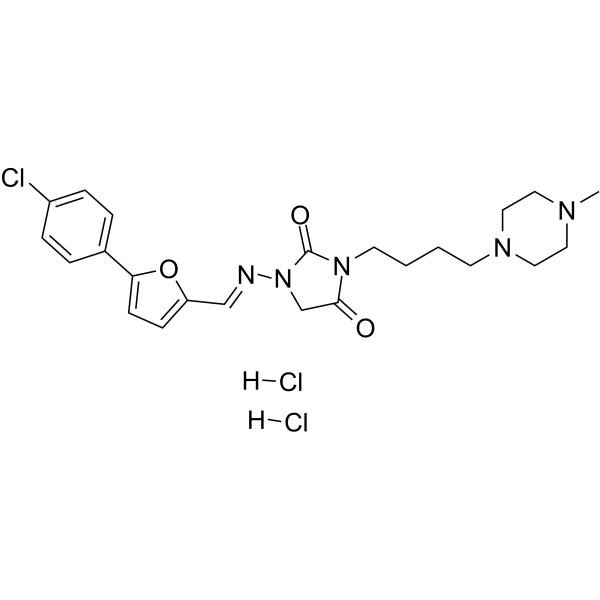
Azimilide (NE-10064) dihydrochloride is a class III antiarrhythmic agent, which works by blocking potassium channels in the heart. Azimilide dihydrochloride is a dual blocker of IKs (IC50 = 2.6 μM (2mM [K⁺]ₑ)) and IKr (IC50 = 1 μM (4 mM [K⁺])). Azimilide dihydrochloride blocked HERG channel at 0.1 and 1 Hz with IC50s of 1.4 μM and 5.2 μM respectively. Azimilide dihydrochloride also inhibits L-type calcium current (ICa) (IC50 = 17.8 μM) and sodium current (INa) (IC50 = 19 μM). Azimilide dihydrochloride can be used for the study of atrial fibrillation and ventricular fibrillation .
|
-
- HY-124940
-
|
|
Calcium Channel
Potassium Channel
|
Cardiovascular Disease
|
|
CPU-228 is a complex class III antiarrhythmic agent. CPU-228 concentration-dependently blocks the activities of the rapid component 50 of the delayed rectifier potassium channel (IKr) and the L-type calcium channel (ICa,L), with an IC50 value of 0.909 μM for ICa,L current. CPU-228 produces negative inotropic effects and induces mild, non-frequency-dependent prolongation of the effective refractory period (ERP) in isolated left atria. CPU-228 reduces the incidence of torsades de pointes (TDP) in anesthetized rabbits and inhibits ischemia/reperfusion-induced arrhythmias in rats. CPU-228 can be used in studies related to torsades de pointes .
|
-

- HY-B1167A
-
|
Cardiorythmine hydrochloride; (+)-Ajmaline hydrochloride
|
Others
|
Cardiovascular Disease
|
|
Ajmaline hydrochloride is a Class Ia antiarrhythmic agent. It inhibits HERG potassium channels with IC50s of 1.0 μmol/l and 42.3 μmol/l in HEK cells and moth spider oocytes respectively. The inhibitory effect of Ajmaline hydrochloride is rapid, reversible, and positive frequency dependent. It acts primarily on the open state of the HERG channel and may also be combined with the inactivated state. The inhibitory effect of ajmaline hydrochloride is dependent on aromatic residues in the S6 domain, and the sensitivity is significantly reduced in the inactivation-deficient HERG S620T channel. It can also slightly affect the activation voltage of HERG channels. Ajmaline hydrochloride's inhibitory effect on HERG channels may contribute to both its potent antiarrhythmic effects and its potential proarrhythmic risk.
|
-

- HY-18600AS
-
|
NE-10064-d8 dihydrochloride
|
Isotope-Labeled Compounds
Potassium Channel
Calcium Channel
Sodium Channel
|
Cardiovascular Disease
|
|
Azimilide-d8 (NE-10064-d8) dihydrochloride is the deuterium labeled Azimilide dihydrochloride (HY-18600A). Azimilide dihydrochloride is a class III antiarrhythmic agent, which works by blocking potassium channels in the heart. Azimilide dihydrochloride is a dual blocker of IKs (IC50 = 2.6 μM (2mM [K⁺]ₑ)) and IKr (IC50 = 1 μM (4 mM [K⁺])). Azimilide dihydrochloride blocked HERG channel at 0.1 and 1 Hz with IC50s of 1.4 μM and 5.2 μM respectively. Azimilide dihydrochloride also inhibits L-type calcium current (ICa) (IC50 = 17.8 μM) and sodium current (INa) (IC50 = 19 μM). Azimilide dihydrochloride can be used for the study of atrial fibrillation and ventricular fibrillation .
|
-
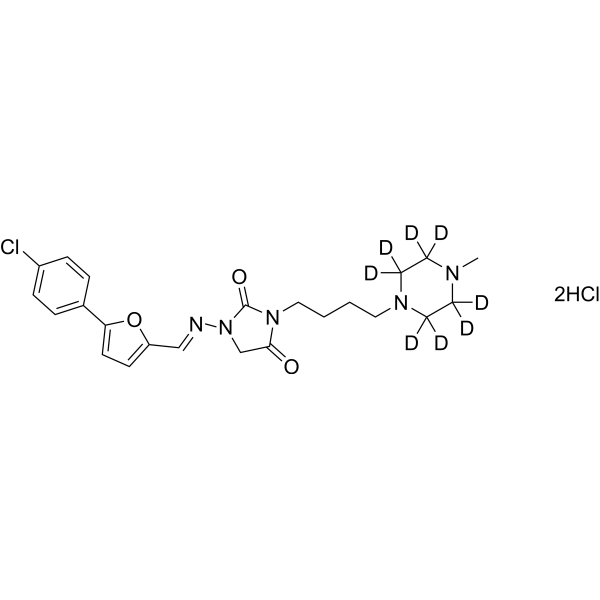
| Cat. No. |
Product Name |
Category |
Target |
Chemical Structure |
| Cat. No. |
Product Name |
Chemical Structure |
-
- HY-B1751S
-
|
|
|
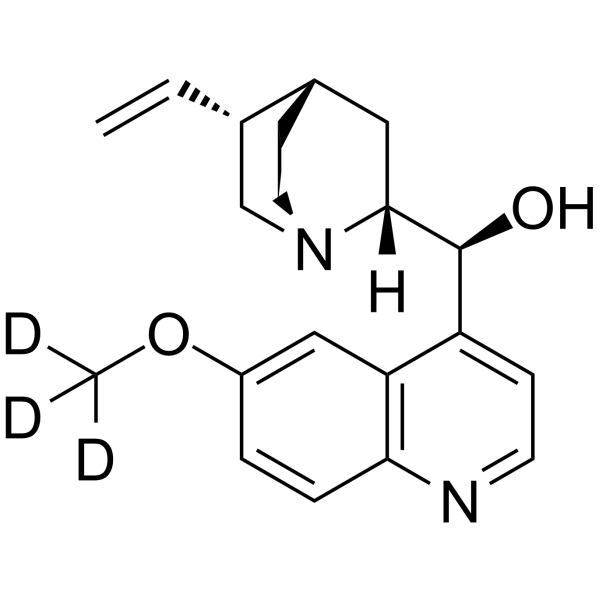
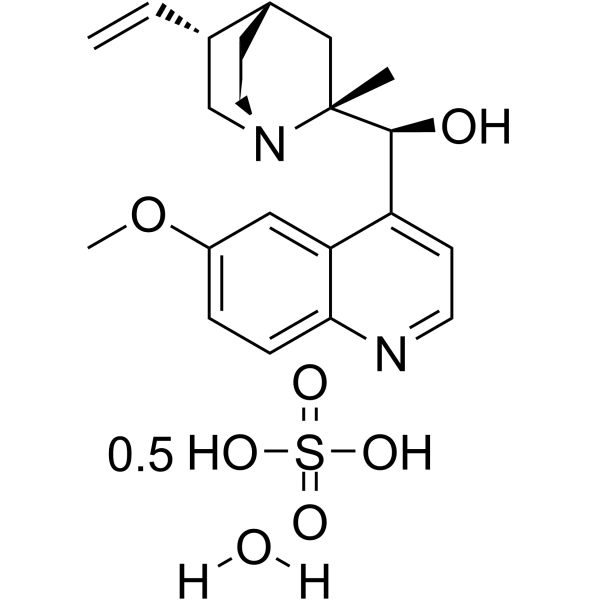
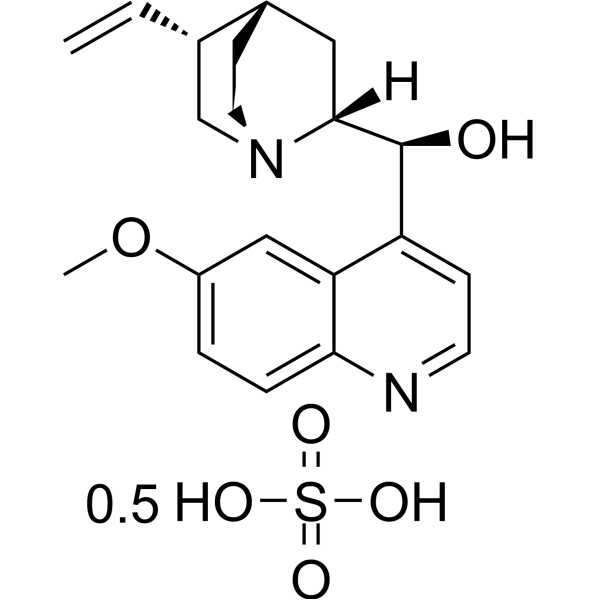
Quinidine-d3 is the deuterium labeled Quinidine. Quinidine is an antiarrhythmic agent for the treatment of abnormal heart rhythms and also malaria.
|
-
-
- HY-131987S
-
|
|
|
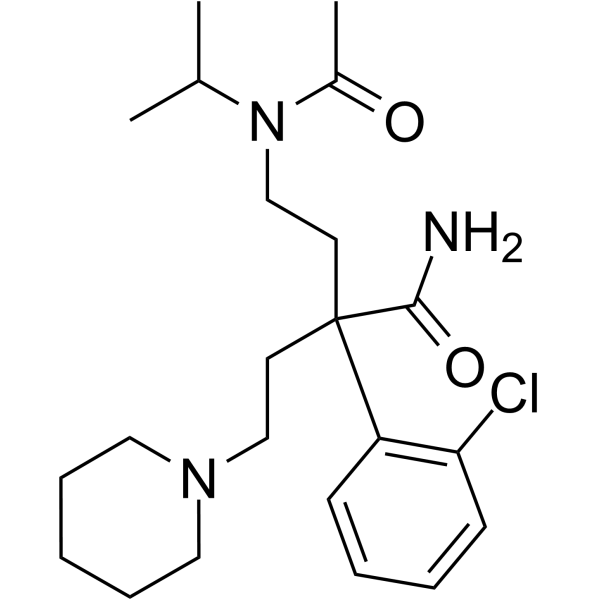
Ethacizine-d5 is the deuterium labeled Ethacizine (HY-131987). Ethacizine is an antiarrhythmic agent with inhibitory activity on sodium channels.
|
-
-
- HY-B0437AS
-
|
|
|
Sotalol-d6 (hydrochloride) is a deuterium labeled Sotalol hydrochloride. Sotalol hydrochloride is an orally active, non-selective competitive β-adrenergic receptor blocker. Sotalol hydrochloride is a potent antiarrhythmic agent that can be used for the research of pediatric arrhythmias. Sotalol hydrochloride blocks β-receptors, and potassium KCNH2 channels .
|
-
-
- HY-14187S
-
|
|
|
Amiodarone-d10 (hydrochloride) is the deuterium labeled Amiodarone. Amiodarone hydrochloride is an antiarrhythmic agent for inhibition of ATP-sensitive potassium channel with an IC50 of 19.1 μM .
|
-
-
- HY-W010950S
-
|
|
|
Flecainide-d3 is the deuterium labeled Flecainide. Flecainide is an orally active antiarrhythmic agent. Flecainide can block sodium channels and inhibit calcium ion release mediated by the cardiac ryanodine receptor (RyR2). Flecainide can be used in the research of diseases such as catecholaminergic polymorphic ventricular tachycardia (CPVT) .
|
-
-
- HY-B0615AS
-
|
|
|
Moricizine-d8 Hydrochloride is the deuterium labeled Moricizine Hydrochloride (HY-B0615A). Moricizine Hydrochloride is an orally active Class I antiarrhythmic agent. Moricizine Hydrochloride decreases the maximum rate of phase 0 depolarization; increases rates of phase 2 and 3 repolarization, decreases action potential duration, and decreases effective refractory period .
|
-
-
- HY-B0232S
-
|
|
|
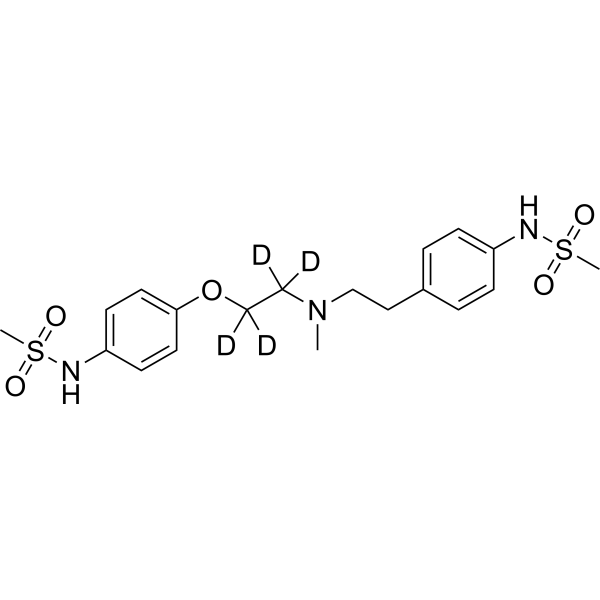
Dofetilide-d4 is a deuterium labeled Dofetilide. Dofetilide is a class III antiarrhythmic agent.
|
-
-
- HY-130353S
-
|
|
|
Desethyl Amiodarone-d4 (hydrochloride) is the deuterium labeled Desethylamiodarone hydrochloride. Desethylamiodarone hydrochloride (N-desethylamiodarone hydrochloride) is a major active metabolite of Amiodarone. Desethylamiodarone hydrochloride is formed by CYP3A isoenzymes. Amiodarone is an antiarrhythmic agent for inhibition of ATP-sensitive potassium channel with an IC50 of 19.1 μM .
|
-
-
- HY-17429S
-
|
|
|
Flecainide-d4 (acetate) is the deuterium labeled Flecainide acetate. Flecainide acetate (R-818) is a class 1C antiarrhythmic agent especially used for the management of supraventricular arrhythmia; works by blocking the Nav1.5 sodium channel in the heart, causing prolongation of the cardiac action potential .
|
-
-
- HY-14188S
-
|
|
|
Amiodarone-d4 (hydrochloride) is the deuterium labeled Amiodarone hydrochloride. Amiodarone hydrochloride, a benzofuran-based Class III antiarrhythmic agent, inhibits WT outwardIhERG tails with an IC50 of ~45 nM . Amiodarone hydrochloride induces cell proliferation and myofibroblast differentiation via ERK1/2 and p38 MAPK signaling in fibroblasts . Amiodarone hydrochloride can be used in the research of both supraventricular and ventricular arrhythmias .
|
-
-
- HY-A0016S
-
|
|
|
Dronedarone-d6 (hydrochloride) is the deuterium labeled Dronedarone. Dronedarone hydrochloride, a derivative of Amiodarone (HY-14187), is a class III antiarrhythmic agent for the study of atrial fibrillation (AF) and atrial flutter. Dronedarone hydrochloride is a potent blocker of multiple ion currents, including potassium current, sodium current, and L-type calcium current, and exhibits antiadrenergic effects by noncompetitive binding to β-adrenergic receptors. Dronedarone hydrochloride is a substrate for and a moderate inhibitor of CYP3A4 .
|
-
-
- HY-A0084S
-
|
|
|
Procainamide-d4 hydrochloride is deuterated labeled Procainamide. Procainamide hydrochloride is an antiarrhythmic agent used in the study of cardiac arrhythmias.
|
-
-
- HY-14187S1
-
|
|
|
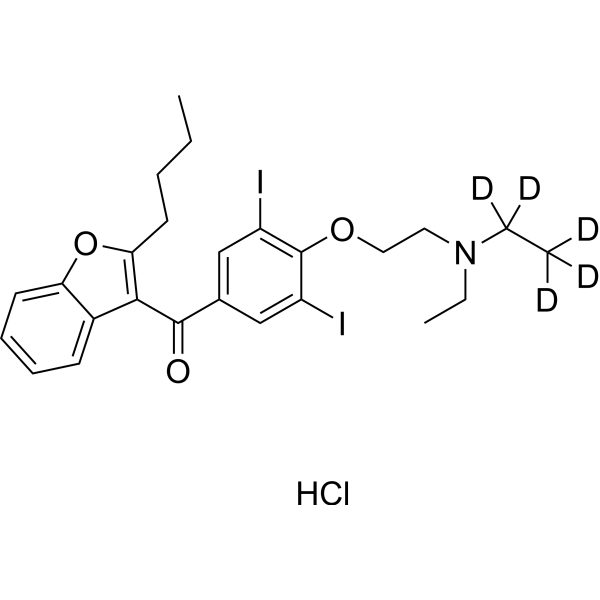
Amiodarone-d5 hydrochloride is deuterated labeled Amiodarone (HY-14187). Amiodarone is an antiarrhythmic agent for inhibition of ATP-sensitive potassium channel with an IC50 of 19.1 μM.
|
-
-
- HY-106577AS
-
|
|
|
(-)-(S)-Cibenzoline-d4 (Escibenzoline-d4) is deuterium labeled (-)-(S)-Cibenzoline. (-)-(S)-Cibenzoline (Escibenzoline), a S(+)-enantiomer of Cibenzoline, is an antiarrhythmic agent .
|
-
-
- HY-B0437S
-
|
|
|
Sotalol-d6 is the deuterium labeled Sotalol. Sotalol is an orally active, non-selective β-adrenergic receptor blocker. Sotalol is a potent antiarrhythmic agent that can be used for the research of pediatric arrhythmias. Sotalol blocks β-receptors, and potassium KCNH2 channels. Antiepileptic Agent .
|
-
-
- HY-119521S
-
|
|
|
Mexiletine-d3 (KOE-1173-d3) is deuterium labeled Mexiletine. Mexiletine is an orally effective antiarrhythmic agent which has also been found to be effective for myotonia and neuropathic pain. Mexiletine exerts its efficacy through blocking sodium channels (IC50 : 75±8 μM for tonic block, 23.6±2.8 μM for use-dependent block), therefore can be used for cardiovascular and neurological research .
|
-
-
- HY-A0016S3
-
|
|
|
Dronedarone-d6 (SR 33589-d6) is deuterium labeled Dronedarone. Dronedarone (SR 33589), a derivative of amiodarone (HY-14187), is a class III antiarrhythmic agent for the study of atrial fibrillation (AF) and atrial flutter. Dronedarone is a potent blocker of multiple ion currents, including potassium current, sodium current, and L-type calcium current, and exhibits antiadrenergic effects by noncompetitive binding to β-adrenergic receptors. Dronedarone is a substrate for and a moderate inhibitor of CYP3A4 .
|
-
-
- HY-119521S1
-
|
|
|
Mexiletine-d6 (KOE-1173-d6) is deuterium labeled Mexiletine. Mexiletine is an orally effective antiarrhythmic agent which has also been found to be effective for myotonia and neuropathic pain. Mexiletine exerts its efficacy through blocking sodium channels (IC50 : 75±8 μM for tonic block, 23.6±2.8 μM for use-dependent block), therefore can be used for cardiovascular and neurological research .
|
-
-
- HY-18600AS
-
|
|
|
Azimilide-d8 (NE-10064-d8) dihydrochloride is the deuterium labeled Azimilide dihydrochloride (HY-18600A). Azimilide dihydrochloride is a class III antiarrhythmic agent, which works by blocking potassium channels in the heart. Azimilide dihydrochloride is a dual blocker of IKs (IC50 = 2.6 μM (2mM [K⁺]ₑ)) and IKr (IC50 = 1 μM (4 mM [K⁺])). Azimilide dihydrochloride blocked HERG channel at 0.1 and 1 Hz with IC50s of 1.4 μM and 5.2 μM respectively. Azimilide dihydrochloride also inhibits L-type calcium current (ICa) (IC50 = 17.8 μM) and sodium current (INa) (IC50 = 19 μM). Azimilide dihydrochloride can be used for the study of atrial fibrillation and ventricular fibrillation .
|
-
-
- HY-131987S1
-
|
|
|
Ethacizine-d4 is the deuterium labeled Ethacizine (HY-131987). Ethacizine is an antiarrhythmic agent with inhibitory activity on sodium channels.
|
-
Your information is safe with us. * Required Fields.
Inquiry Information
- Product Name:
- Cat. No.:
- Quantity:
- MCE Japan Authorized Agent:








