



Dofetilide
Based on 6 publication(s) in Google Scholar
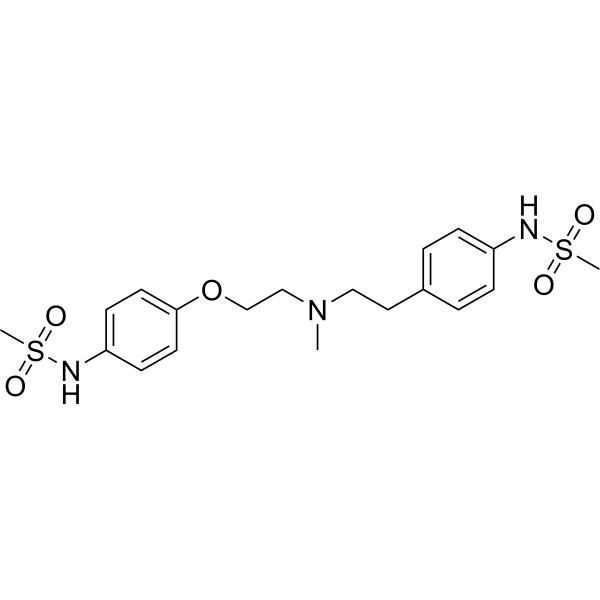
Dofetilide (UK 68789), as a class III antiarrhythmic agent, is an orally active, potent and specific IKr blocker. Dofetilide can be used for the research of cardiovascular disease.
Nur für Forschungszwecke. Wir verkaufen nicht an Patienten.
- Reinheit : 98.84%
- CAS. Nr.: 115256-11-6
- Formel: C19H27N3O5S2
- Molecular Weight:441.56
-
Speicherung:Powder -20°C, 3 years , 4°C, 2 years ; In solvent -80°C, 2 years , -20°C, 1 year

To place orders, for customer services and technical support, please contact: MedChemExpress USA
Tel: 609-228-6898 E-mail: [email protected] [email protected]


-
 Biologische Aktivität
-
Chemical Information
-
Lösungsmittel & Löslichkeit
- Protokoll
- Reinheit & Dokumentation
- Verweise
-
 Help & FAQs


-
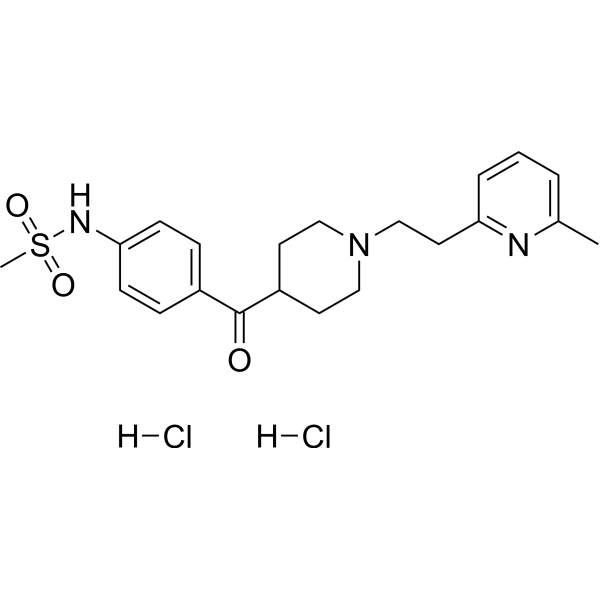
HY-15551
E-4031hERG Channels Blocker -
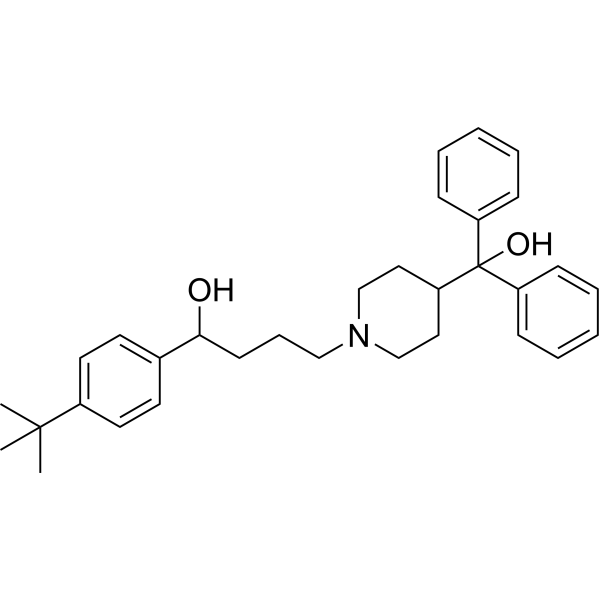
HY-B1193
TerfenadineCaspase Activator -
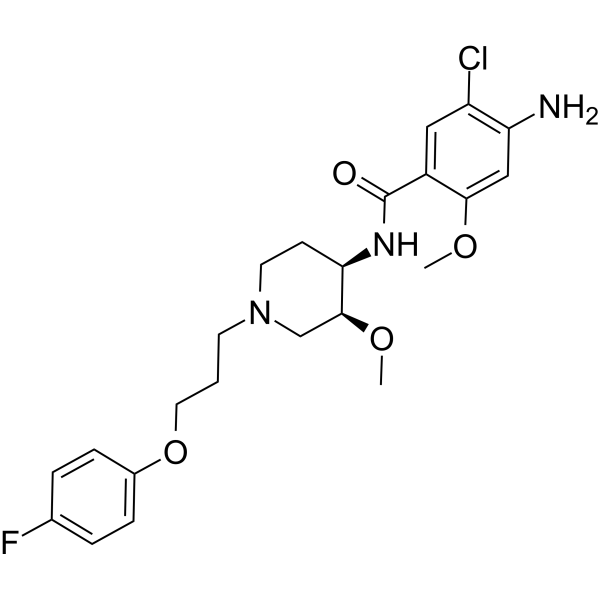
HY-14149
Cisapride5-HT4 Receptor Agonist/hERG Potassium Channel blocker -
HY-B1302
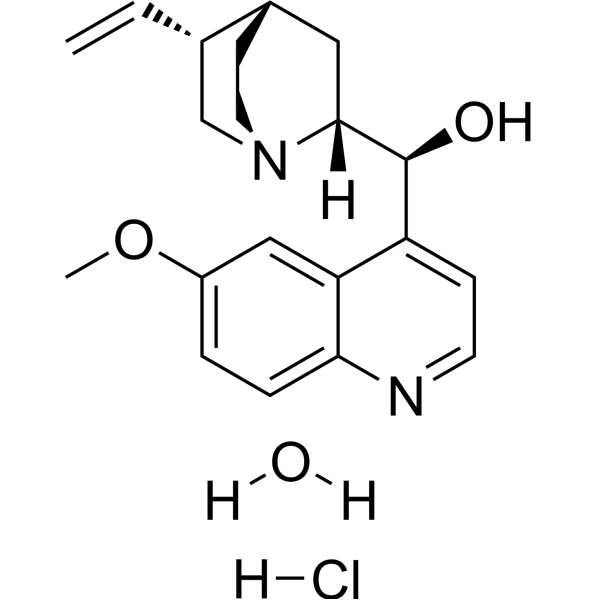
Quinidine hydrochloride monohydrateAnti-arrythmic Agent -
HY-14275
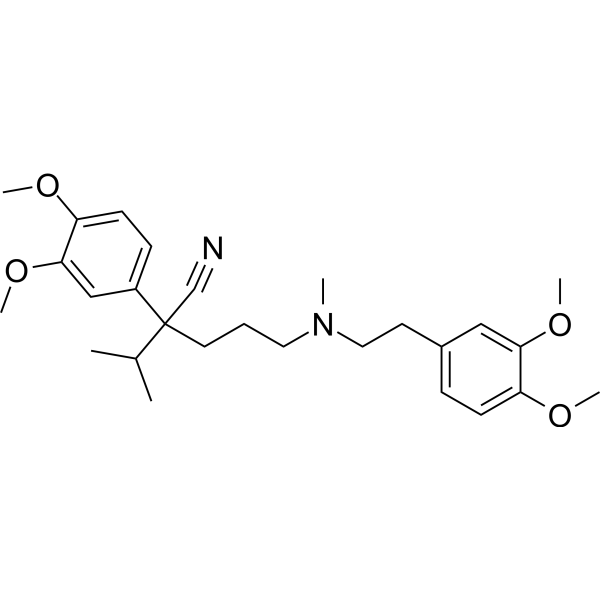
VerapamilCalcium Channel Blocker -
HY-B1751
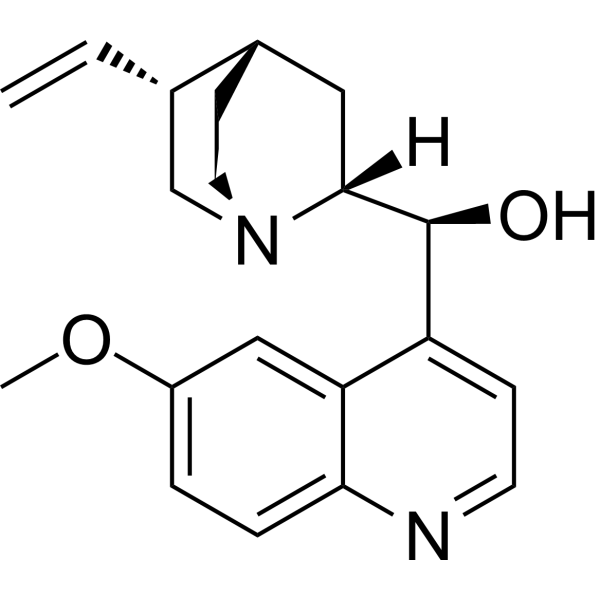
Quinidine (15% dihydroquinidine)Anti-arrythmic Agent -
HY-12532
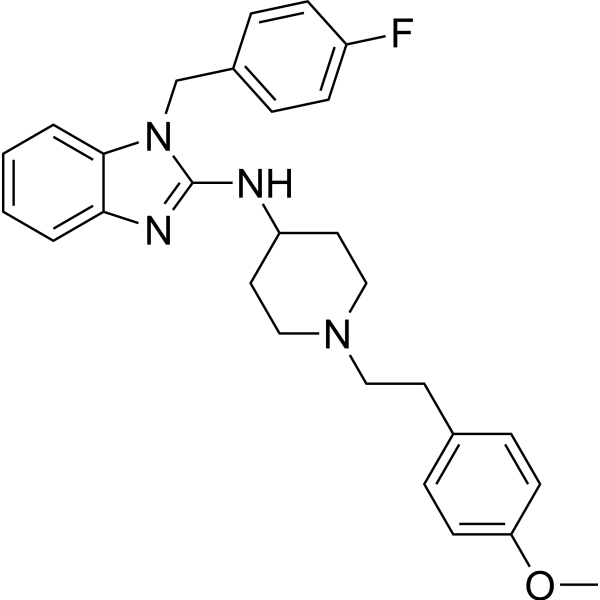
AstemizoleH1 Receptor Antagonist -
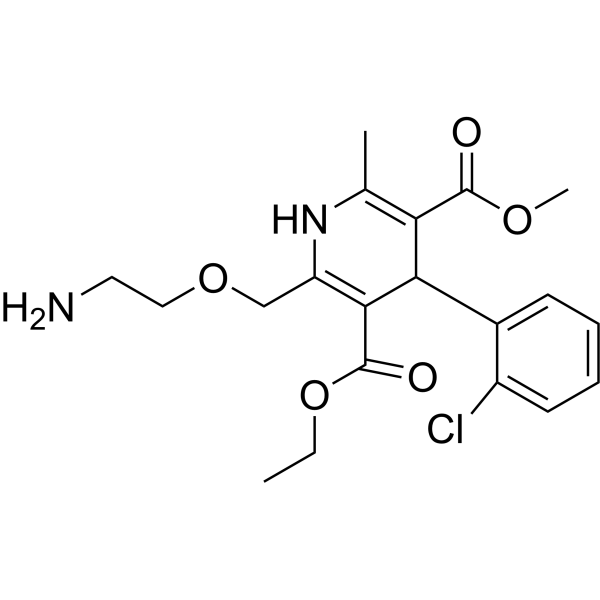
HY-B0317
AmlodipineCalcium Channel Blocker -
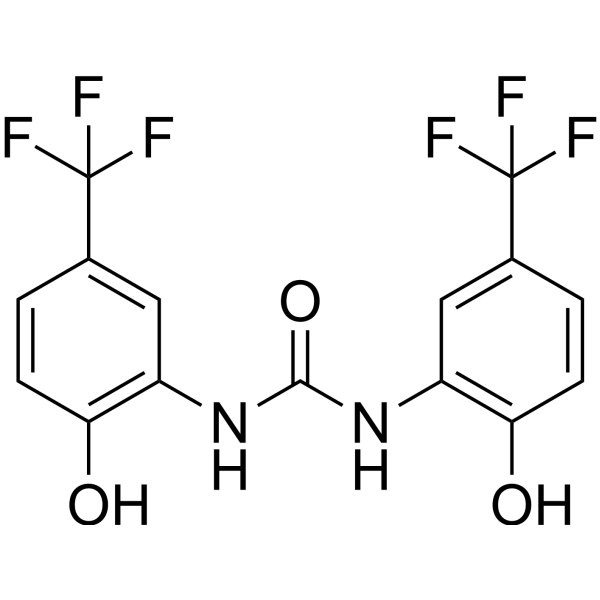
HY-16916
NS1643hERG Channels Agonist -
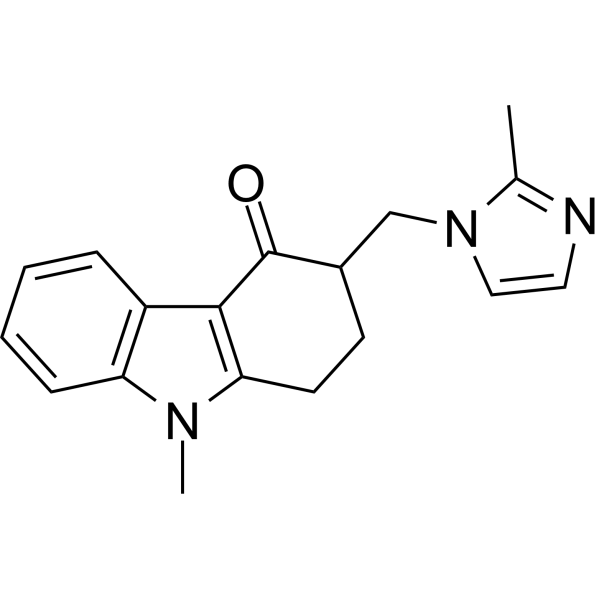
HY-B0002B
Ondansetron5-HT Receptor Antagonist -
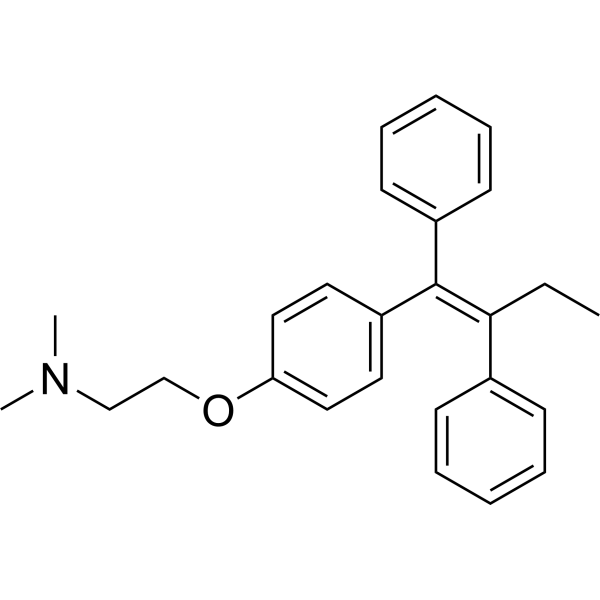
HY-13757A
TamoxifenEstrogen Receptor Modulator -

HY-15551R
E-4031 (Standard)hERG Channels Blocker
Publications Citing Use of MedChemExpress (MCE) Dofetilide
More- Nat Commun. 2024 Jun 19;15(1):5230. [Abstract]
- ACS Environ Au. 2025 Aug 5;5(6):573-582. [Abstract]
- Anal Chem. 2025 Jun 3;97(21):11099-11109. [Abstract]
- Eur J Pharm Sci. 2023 Aug 1:187:106475. [Abstract]
- Comput Struct Biotechnol J. 2023 Jul 7:21:3490-3502. [Abstract]
- J Physiol. 2025 Oct 9. [Abstract]
 Customer Validation & Images

-
WB
-
WB
-
WB


Biologische Aktivität
Beschreibung
IC50 & Target
IKr[1]
Cellular Effect
|
Cell Line

|
Type | Value | Description | References |
|---|---|---|---|---|
| CHO | IC50 |
10 nM
Compound: dofetilide
|
Inhibition of K+ channel activity in CHO cells expressing HERG Kv11.1
Inhibition of K+ channel activity in CHO cells expressing HERG Kv11.1
|
[PMID: 12729675] |
| CHO | IC50 |
26.7 μM
Compound: dofetilide
|
Inhibition of Cav1.2 current measured using QPatch automatic path clamp system in CHO cells expressing Cav1.2, beta-2 and alpha-2/delta-1 subunits
Inhibition of Cav1.2 current measured using QPatch automatic path clamp system in CHO cells expressing Cav1.2, beta-2 and alpha-2/delta-1 subunits
|
[PMID: 23812503] |
| HEK293 | IC50 |
0.015 μM
Compound: Dofetilide
|
Inhibition of human ERG stably expressed in HEK293 cells
Inhibition of human ERG stably expressed in HEK293 cells
|
[PMID: 32453591] |
| HEK293 | IC50 |
1023 μM
Compound: Dofetilide
|
Inhibition of L-type calcium channel measured using 2-electrode voltage-clamp in human embryonic kidney cells heterologically expressing alpha-1C subunit
Inhibition of L-type calcium channel measured using 2-electrode voltage-clamp in human embryonic kidney cells heterologically expressing alpha-1C subunit
|
[PMID: 22761000] |
| HEK293 | IC50 |
4.1 nM
Compound: 1
|
Displacement of [3H]astemizole from human ERG K+ channel expressed in HEK293 cells by scintillation spectrophotometric analysis
Displacement of [3H]astemizole from human ERG K+ channel expressed in HEK293 cells by scintillation spectrophotometric analysis
|
[PMID: 23473309] |
| HEK293 | IC50 |
9.2 nM
Compound: 1, dofetilide
|
Blockade of hERG expressed in HEK293 cells by whole-cell patch clamp method
Blockade of hERG expressed in HEK293 cells by whole-cell patch clamp method
|
[PMID: 17536794] |
| Oocyte | IC50 |
>300 μM
Compound: Dofetilide
|
Blockade of Na+ current in frog oocytes expressing human cardiac sodium channel (HH1)
Blockade of Na+ current in frog oocytes expressing human cardiac sodium channel (HH1)
|
[PMID: 7629795] |
| T-cell line | IC50 |
1 μM
Compound: 5
|
In vitro inhibition of Rb efflux in human T-cells; 1-10
In vitro inhibition of Rb efflux in human T-cells; 1-10
|
10.1016/S0960-894X(97)00163-7 |
In Vivo
Dofetilide is metabolized by CYP3A4 to a mixture of inactive polar metabolites that are then excreted by the kidney[1].
MedChemExpress (MCE) has not independently confirmed the accuracy of these methods. They are for reference only.
-
Animal Model:Adult beagle dogs (13-15 kg)[2]
-
Dosage:3~100 μg/kg
-
Administration:I.v.
-
Result:Increased repolarisation time via a selective prolongation of activation repolarisation interval, activation time being unchanged.
Clinical Trial
| NCT Number | Sponsor | Condition | Start Date |
Phase
|
|---|---|---|---|---|
| NCT01329991 | Plexxikon| | 2011-05 | PHASE1 |


Chemical Information
-
CAS. Nr. 115256-11-6
-
Appearance Solid
-
Molecular Weight 441.56
-
Formel C19H27N3O5S2
-
Color White to off-white
-
SMILES
CS(=O)(NC1=CC=C(CCN(C)CCOC2=CC=C(NS(=O)(C)=O)C=C2)C=C1)=O
-
Synonyms
UK 68789
-
Versand
Room temperature in continental US; may vary elsewhere.
-
Speicherung
Powder -20°C 3 years 4°C 2 years In solvent -80°C 2 years -20°C 1 year


Publications (6)
-
Journal Impact Factor
-
Most Recent
-
Nat Commun
Small molecule in situ resin capture provides a compound first approach to natural product discovery. [Abstract]2024 Jun 19;15(1):5230. PMID: 38898025 -
ACS Environ Au
Machine Learning-Assisted Recognition of Environmental Sulfur-Containing Chemicals in Nontargeted Mass Spectrometry Analysis of Inadequate Mass Resolution. [Abstract]2025 Aug 5;5(6):573-582. PMID: 41277996 -
Anal Chem
Exposome-Scale Investigation of Cl-/Br-Containing Chemicals Using High-Resolution Mass Spectrometry, Multistage Machine Learning, and Cloud Computing. [Abstract]2025 Jun 3;97(21):11099-11109. PMID: 40401576 -
Eur J Pharm Sci
Investigating the relevance of CYP2J2 inhibition for drugs known to cause intermediate to high risk torsades de pointes. [Abstract]2023 Aug 1:187:106475. PMID: 37225005 -
Comput Struct Biotechnol J
Drug repurposing screens to identify potential drugs for chronic kidney disease by targeting prostaglandin E2 receptor. [Abstract]2023 Jul 7:21:3490-3502. PMID: 37484490
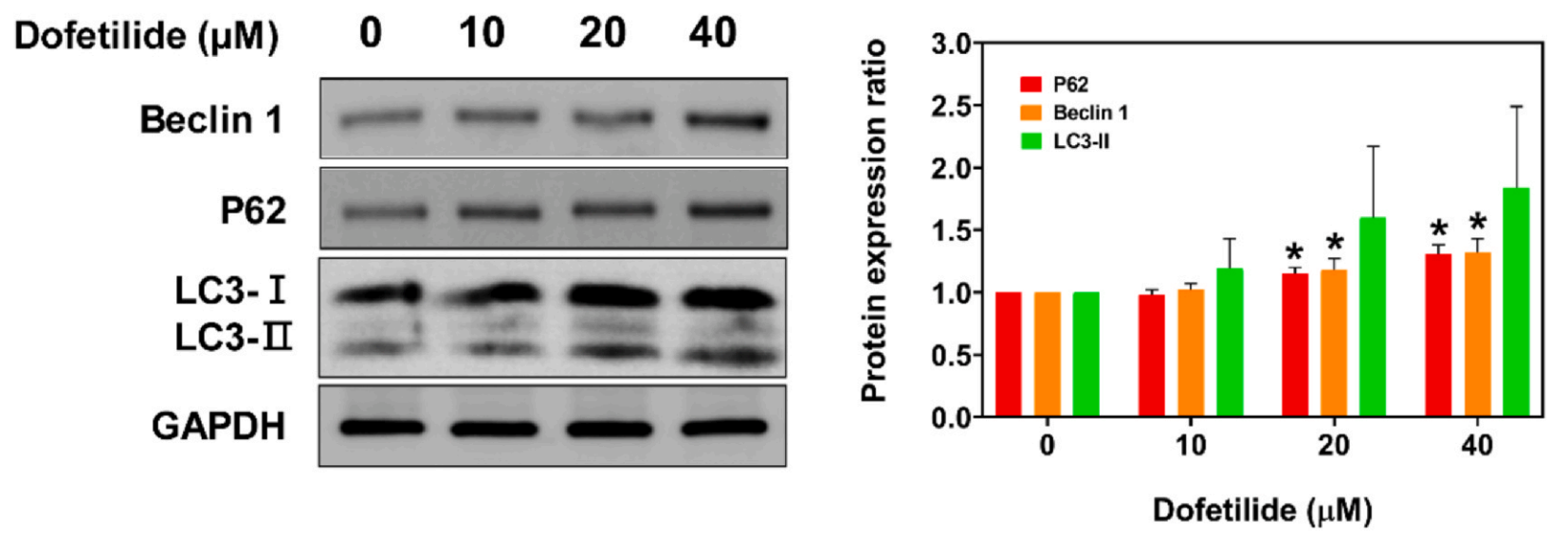
Dofetilide purchased from MedChemExpress. Usage Cited in: Comput Struct Biotechnol J. 2023 Jul 7:21:3490-3502. [Abstract]
Dofetilide (10-40 μM; 24 h) increased the autophagy-related protein levels of LC3-I, LC3-II, Beclin 1, and p62 in HK-2 cells.
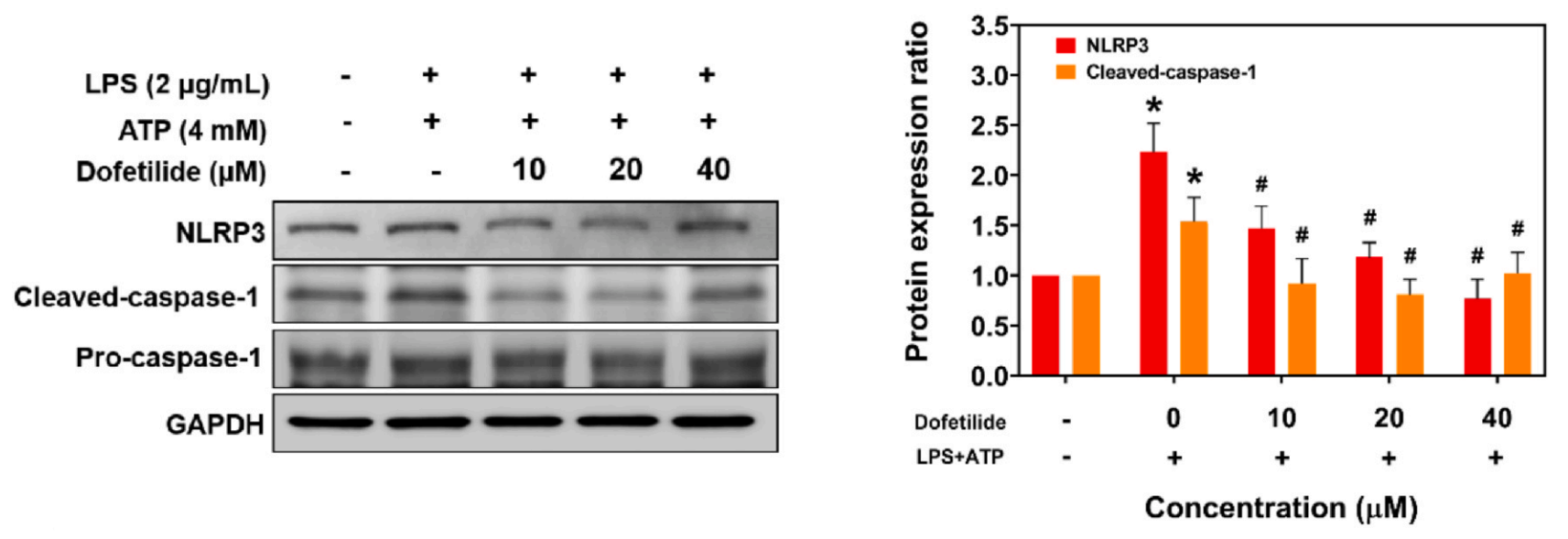
Dofetilide purchased from MedChemExpress. Usage Cited in: Comput Struct Biotechnol J. 2023 Jul 7:21:3490-3502. [Abstract]
Dofetilide (10-40 μM; 24 h) decreased NLRP3 inflammasome-related protein expression in HK-2 cells.
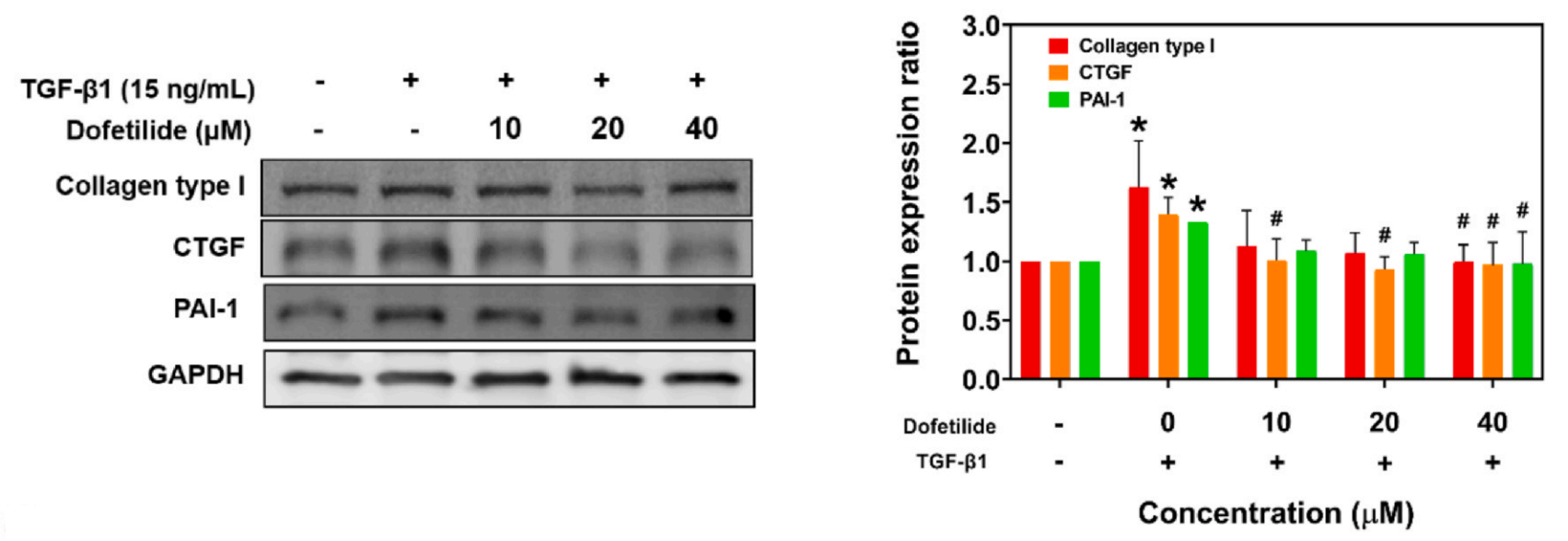
Dofetilide purchased from MedChemExpress. Usage Cited in: Comput Struct Biotechnol J. 2023 Jul 7:21:3490-3502. [Abstract]
Dofetilide (10–40 μM; 24 h) significantly suppressed the expression levels of fibrosis-related proteins in HK-2 cells.
-
J Physiol
2025 Oct 9. PMID: 41066225


Lösungsmittel & Löslichkeit
In Vitro:
DMSO : ≥ 100 mg/mL (226.47 mM; Hygroscopic DMSO has a significant impact on the solubility of product, please use newly opened DMSO)
* "≥" means soluble, but saturation unknown.
Please refer to the solubility information to select the appropriate solvent. Once prepared, please aliquot and store the solution to prevent product inactivation from repeated freeze-thaw cycles.
Storage method and period of stock solution: -80°C, 2 years; -20°C, 1 year. When stored at -80°C, please use it within 2 years. When stored at -20°C, please use it within 1 year.
Please refer to the solubility information to select the appropriate solvent. Once prepared, please aliquot and store the solution to prevent product inactivation from repeated freeze-thaw cycles.
Storage method and period of stock solution: -80°C, 2 years; -20°C, 1 year. When stored at -80°C, please use it within 2 years. When stored at -20°C, please use it within 1 year.
Konzentration (Stammlösung) × Volumen (Stammlösung) = Konzentration (Ziellösung) × Volumen (Ziellösung)
In Vivo:
Select the appropriate dissolution method based on your experimental animal and administration route.
- For the following dissolution methods, please ensure to first prepare a clear stock solution using an In Vitro approach and then sequentially add co-solvents:
- To ensure reliable experimental results, the clarified stock solution can be appropriately stored based on storage conditions. As for the working solution for In Vivo experiments, it is recommended to prepare freshly and use it on the same day.
- The percentages shown for the solvents indicate their volumetric ratio in the final prepared solution. If precipitation or phase separation occurs during preparation, heat and/or sonication can be used to aid dissolution.
Add each solvent one by one: 50% PEG400 50% Saline
Solubility: 10 mg/mL (22.65 mM); Clear solution; Need ultrasonic
Add each solvent one by one: 10% DMSO 40% PEG300 5% Tween-80 45% Saline
Solubility: ≥ 2.5 mg/mL (5.66 mM); Clear solution
This protocol yields a clear solution of ≥ 2.5 mg/mL (saturation unknown).
Taking 1 mL working solution as an example, add 100 μL DMSO stock solution (25.0 mg/mL) to 400 μL PEG300, and mix evenly; then add 50 μL Tween-80 and mix evenly; then add 450 μL Saline to adjust the volume to 1 mL.
Preparation of Saline: Dissolve 0.9 g sodium chloride in ddH₂O and dilute to 100 mL to obtain a clear Saline solution.
Add each solvent one by one: 10% DMSO 90% (20% SBE-β-CD in Saline)
Solubility: ≥ 2.5 mg/mL (5.66 mM); Clear solution
This protocol yields a clear solution of ≥ 2.5 mg/mL (saturation unknown).
Taking 1 mL working solution as an example, add 100 μL DMSO stock solution (25.0 mg/mL) to 900 μL 20% SBE-β-CD in Saline, and mix evenly.
Preparation of 20% SBE-β-CD in Saline (4°C, storage for one week): 2 g SBE-β-CD powder is dissolved in 10 mL Saline, completely dissolve until clear.
In Vivo Dissolution Calculator
Please enter the basic information of animal experiments:
-
-
-
-
Recommended: Prepare an additional quantity of animals to account for potential losses during experiments.
Please enter your animal formula composition:
-
%DMSO +
Recommended: Keep the proportion of DMSO in working solution below 2% if your animal is weak.
-
%+
-
+%Tween-80 + +
-
%Saline +
The co-solvents required include: DMSO, . All of co-solvents are available by MedChemExpress (MCE). , Tween 80. All of co-solvents are available by MedChemExpress (MCE).
Working solution concentration: 0.22 mg/mL
Method for preparing stock solution: mg drug dissolved in μL DMSO. Stock solution concentration: mg/mL.
1. Take μL DMSO stock solution;
2. Add μL .
μL , mix evenly;
3. Then add μL Tween 80, mix evenly;
4. Then add μL
Please ensure that the stock solution in the first step is dissolved to a clear state, and add co-solvents in sequence. You can use ultrasonic heating (ultrasonic cleaner, recommended frequency 20-40 kHz), vortexing, etc. to assist dissolution.


Reinheit & Dokumentation
-
Data Sheet (272 KB)
-
SDS (419 KB)
- English - EN (419 KB)
- Français - FR (419 KB)
- Deutsch - DE (419 KB)
- Norwegian - NO (419 KB)
- Español - ES (419 KB)
- Swedish - SV (419 KB)
- Italian - IT (419 KB)
- Korean - KR (419 KB)
- Portuguese - PT (419 KB)
-
Handling Instructions (2659 KB)
Verweise
[1]. Mounsey JP, et al. Cardiovascular drugs. Dofetilide. Circulation. 2000;102(21):2665-2670. [Content Brief]
[2]. Gwilt M, et al. Dofetilide, a new class III antiarrhythmic agent, reduces pacing induced heterogeneity of repolarisation in vivo. Cardiovasc Res. 1992;26(11):1102-1108. [Content Brief]


Complete Stock Solution Preparation Table
Please refer to the solubility information to select the appropriate solvent. Once prepared, please aliquot and store the solution to prevent product inactivation from repeated freeze-thaw cycles.
Storage method and period of stock solution: -80°C, 2 years; -20°C, 1 year. When stored at -80°C, please use it within 2 years. When stored at -20°C, please use it within 1 year.
| Optional Solvent | Concentration Solvent Mass | 1 mg | 5 mg | 10 mg | 25 mg |
|---|---|---|---|---|---|
| DMSO | 1 mM | 2.2647 mL | 11.3235 mL | 22.6470 mL | 56.6174 mL |
| 5 mM | 0.4529 mL | 2.2647 mL | 4.5294 mL | 11.3235 mL | |
| 10 mM | 0.2265 mL | 1.1323 mL | 2.2647 mL | 5.6617 mL | |
| 15 mM | 0.1510 mL | 0.7549 mL | 1.5098 mL | 3.7745 mL | |
| 20 mM | 0.1132 mL | 0.5662 mL | 1.1323 mL | 2.8309 mL | |
| 25 mM | 0.0906 mL | 0.4529 mL | 0.9059 mL | 2.2647 mL | |
| 30 mM | 0.0755 mL | 0.3774 mL | 0.7549 mL | 1.8872 mL | |
| 40 mM | 0.0566 mL | 0.2831 mL | 0.5662 mL | 1.4154 mL | |
| 50 mM | 0.0453 mL | 0.2265 mL | 0.4529 mL | 1.1323 mL | |
| 60 mM | 0.0377 mL | 0.1887 mL | 0.3774 mL | 0.9436 mL | |
| 80 mM | 0.0283 mL | 0.1415 mL | 0.2831 mL | 0.7077 mL | |
| 100 mM | 0.0226 mL | 0.1132 mL | 0.2265 mL | 0.5662 mL |


Dofetilide Related Classifications
HY-B0232 Related Classifications
 Powered by Bioz