Search Result
Results for "
human dopamine receptors
" in MedChemExpress (MCE) Product Catalog:
16
Isotope-Labeled Compounds
| Cat. No. |
Product Name |
Target |
Research Areas |
Chemical Structure |
-
- HY-17366
-
|
|
Drug Metabolite
mAChR
Dopamine Receptor
|
Neurological Disease
|
|
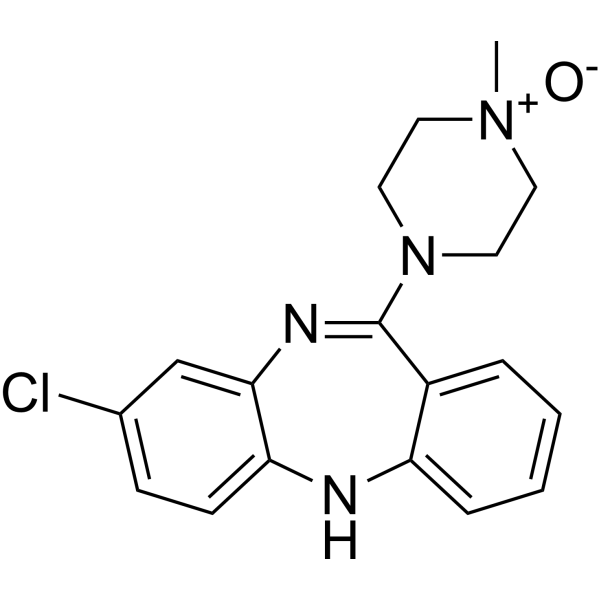
Clozapine N-oxide is a major metabolite of Clozapine and a human muscarinic designer receptors (DREADDs) agonist. Clozapine N-oxide activates the DREADD receptor hM3Dq and hM4Di. Clozapine N-oxide can't cross the blood-brain barrier . Clozapine is a potent dopamine antagonist and also a potent and selective muscarinic M4 receptor (EC50=11 nM) agonist .
|
-
-
- HY-17366A
-
|
|
mAChR
Dopamine Receptor
Drug Metabolite
|
Neurological Disease
|
|
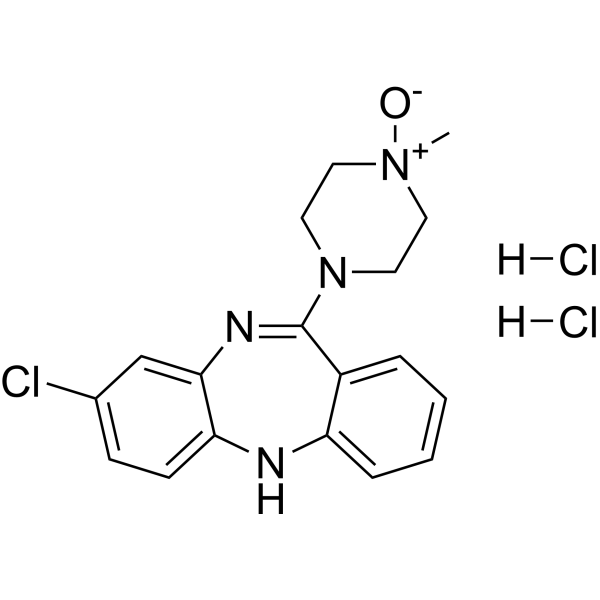
Clozapine N-oxide dihydrochloride is a major metabolite of Clozapine and a human muscarinic designer receptors (DREADDs) agonist. Clozapine N-oxide dihydrochloride activates the DREADD receptor hM3Dq and hM4Di. Clozapine N-oxide dihydrochloride cannot cross the blood-brain barrier . Clozapine is a potent dopamine antagonist and also a potent and selective muscarinic M4 receptor (EC50=11 nM) agonist .
|
-
-
- HY-19545A
-
|
R-(+)-SCH-23390 hydrochloride
|
Dopamine Receptor
5-HT Receptor
Potassium Channel
|
Neurological Disease
|
|
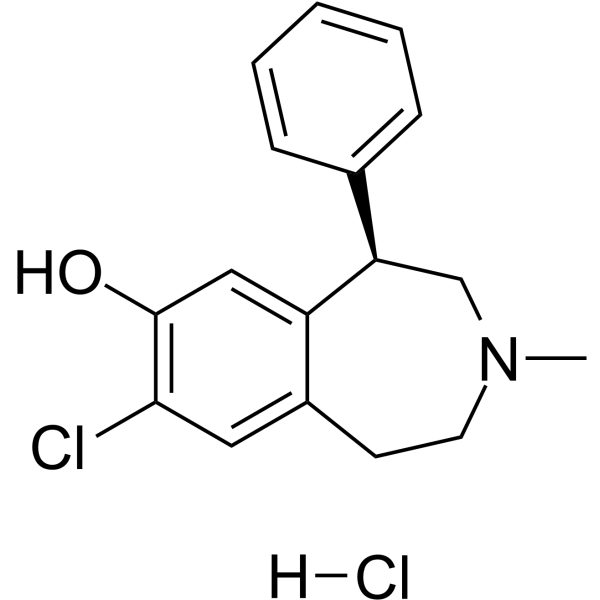
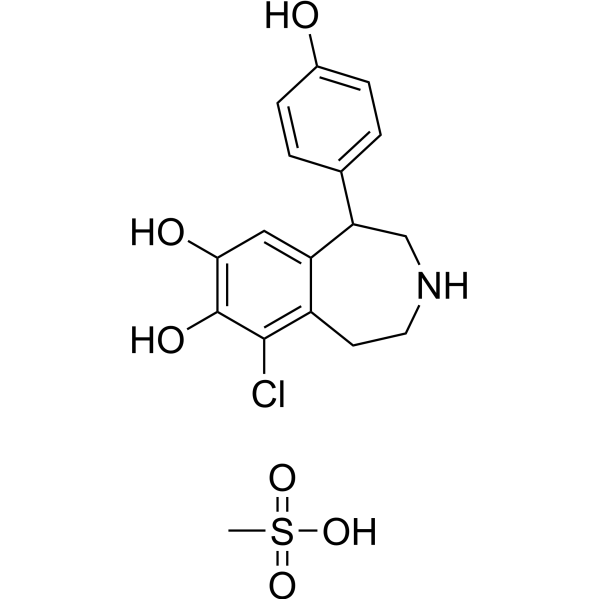
SCH-23390 hydrochloride (R-(+)-SCH-23390 hydrochloride) is a potent and selective dopamine D1-like receptor antagonist with Kis of 0.2 nM and 0.3 nM for the D1 and D5 receptor, respectively. SCH-23390 hydrochloride is a potent and high efficacy human 5-HT2C receptor agonist with a Ki of 9.3 nM. SCH-23390 hydrochloride also binds with high affinity to the 5-HT2 and 5-HT1C receptors. SCH-23390 hydrochloride inhibits G protein-coupled inwardly rectifying potassium (GIRK) channels with an IC50 of 268 nM .
|
-
-
- HY-14544
-
|
ICI204636
|
5-HT Receptor
Dopamine Receptor
|
Neurological Disease
|
|
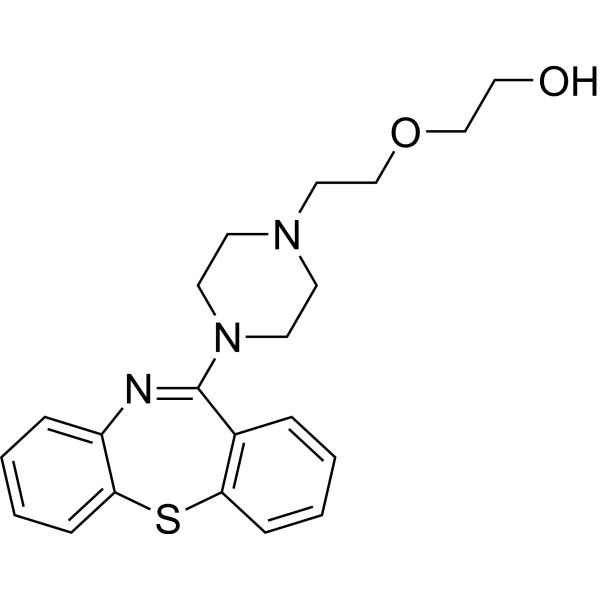
Quetiapine (ICI204636) is a 5-HT receptors agonist with a pEC50 of 4.77 for human 5-HT1A receptor. Quetiapine is a dopamine receptor antagonist with a pIC50 of 6.33 for human D2 receptor. Quetiapine has moderate to high affinity for the human D2, HT1A, 5-HT2A, 5-HT2C receptor with pKis of 7.25, 5.74, 7.54, 5.55. Antidepressant and anxiolytic effects .
|
-
-
- HY-15780
-
|
OPC-34712
|
5-HT Receptor
Dopamine Receptor
Adrenergic Receptor
|
Neurological Disease
|
|
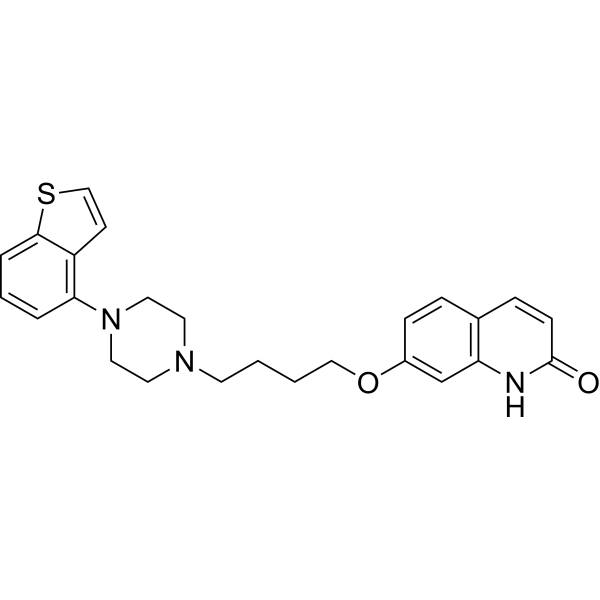
Brexpiprazole (OPC-34712), an atypical orally active antipsychotic agent, is a partial agonist of human 5-HT1A and dopamine D2L receptor with Kis of 0.12 nM and 0.3 nM, respectively. Brexpiprazole is also a 5-HT2A receptor antagonist with a Ki of 0.47 nM. Brexpiprazole also shows potent antagonist activity at human noradrenergic α1B (Ki=0.17 nM) and α2C receptors (Ki=0.59 nM) .
|
-
-
- HY-B0590
-
|
Ro 1-9569
|
Monoamine Transporter
Dopamine Receptor
|
Neurological Disease
|
|
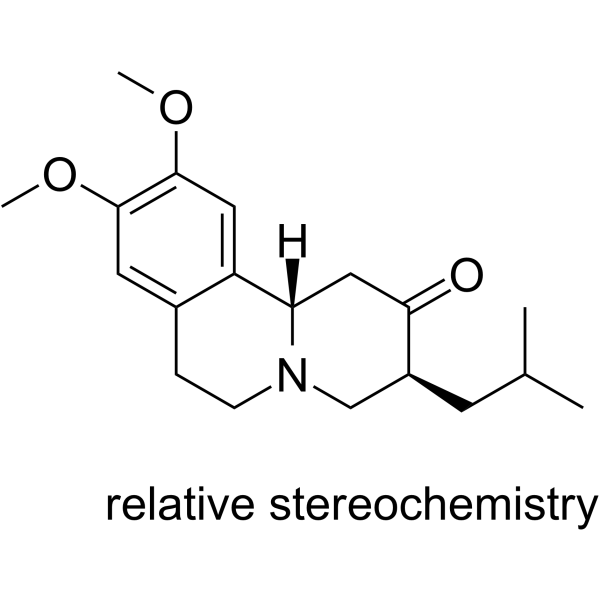
Tetrabenazine (Ro 1-9569) is a brain-penetrant and orally active VMAT2-selective ligand with human VMAT2 Ki 100 nM. Tetrabenazine binds VMAT2 to block monoamine uptake into synaptic vesicles, potentiates cytoplasmic monoamine degradation. Tetrabenazine weakly blocks dopamine D2 receptors, and increases dopamine turnover via elevated cerebrospinal fluid homovanillic acid. Tetrabenazine can be used for the research of Huntington’s disease, tardive dyskinesia, and Tourette’s syndrome .
|
-
-
- HY-B0520A
-
|
Benzatropine mesylate; Benzotropine mesylate; Benztropine methanesulfonate
|
Dopamine Receptor
mAChR
Histamine Receptor
|
Infection
Neurological Disease
Metabolic Disease
Cancer
|
|
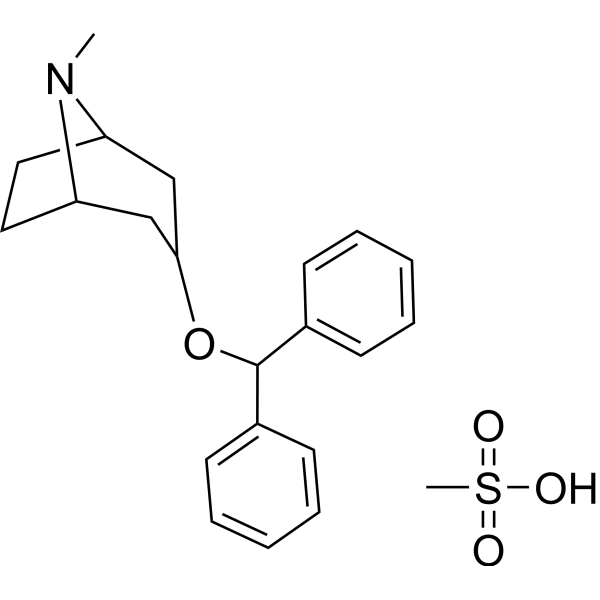
Benztropine mesylate (Benzatropine mesylate) is an orally active and BBB-permeable centrally acting anticholinergic agent that can be used for Parkinson's disease research. Benztropine mesylate is an anti-histamine agent and a dopamine re-uptake inhibitor. Benztropine mesylate is also a human D2 dopamine receptor allosteric antagonist. Benztropine mesylate also has anti-CSCs (cancer stem cells) effects .
|
-
-
- HY-B0590S
-
|
Ro 1-9569-d6
|
Monoamine Transporter
|
Neurological Disease
|
|
Tetrabenazine-d6 (Deutetrabenazine) is a deuterium-labled Tetrabenazine (HY-B0590). Tetrabenazine (Ro 1-9569) is a brain-penetrant and orally active VMAT2-selective ligand with human VMAT2 Ki 100 nM. Tetrabenazine binds VMAT2 to block monoamine uptake into synaptic vesicles, potentiates cytoplasmic monoamine degradation. Tetrabenazine weakly blocks dopamine D2 receptors, and increases dopamine turnover via elevated cerebrospinal fluid homovanillic acid. Tetrabenazine can be used for the research of Huntington’s disease, tardive dyskinesia, and Tourette’s syndrome .
|
-
-
- HY-B0031
-
|
|
5-HT Receptor
Dopamine Receptor
|
Neurological Disease
|
|
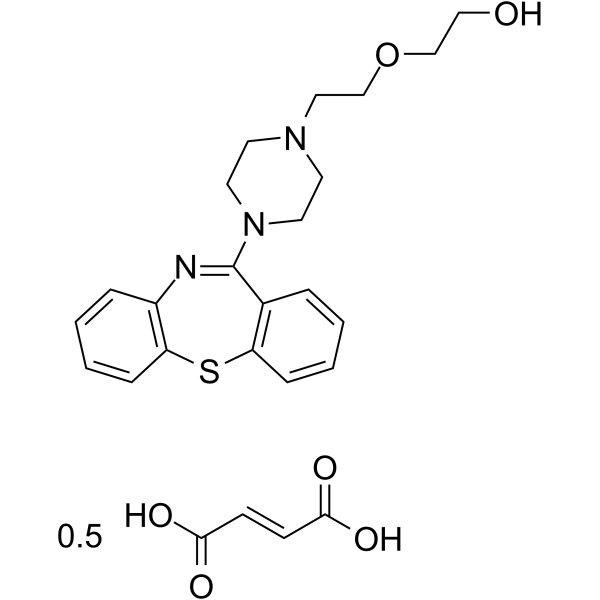
Quetiapine hemifumarate is a 5-HT receptors agonist with a pEC50 of 4.77 for human 5-HT1A receptor. Quetiapine hemifumarate is a dopamine receptor antagonist with a pIC50 of 6.33 for human D2 receptor. Quetiapine hemifumarate has moderate to high affinity for the human D2, HT1A, 5-HT2A, 5-HT2C receptor with pKis of 7.25, 5.74, 7.54, 5.55. Antidepressant and anxiolytic effects .
|
-
-
- HY-128770
-
|
|
Dopamine Receptor
|
Neurological Disease
|
|
LY3154207 is a potent, subtype selective, and orally available human dopamine D1 receptor
positive allosteric modulator (PAM) with minimal allosteric agonist activity (EC50=3 nM) .
|
-
-
- HY-100656
-
|
|
Dopamine Receptor
5-HT Receptor
|
Neurological Disease
|
|
Desmethyl cariprazine is a major active metabolite of cariprazine, with activities at human dopamine receptors and serotonin receptors, showing a pEC50 of 8.90 at human D2 receptors, a pEC50 of 8.09 at D3 receptors, and a pEC50 of 6.28 at 5-HT1A receptors. Desmethyl cariprazine inhibits forskolin-induced cAMP production at D2, D3 and 5-HT1A receptors, and suppresses serotonin-induced Ca 2+ release at 5-HT2B receptors. Desmethyl cariprazine is applicable to research related to schizophrenia, bipolar disorder type I and bipolar disorder.
|
-
-
- HY-101348
-
|
|
Dopamine Receptor
|
Neurological Disease
|
|
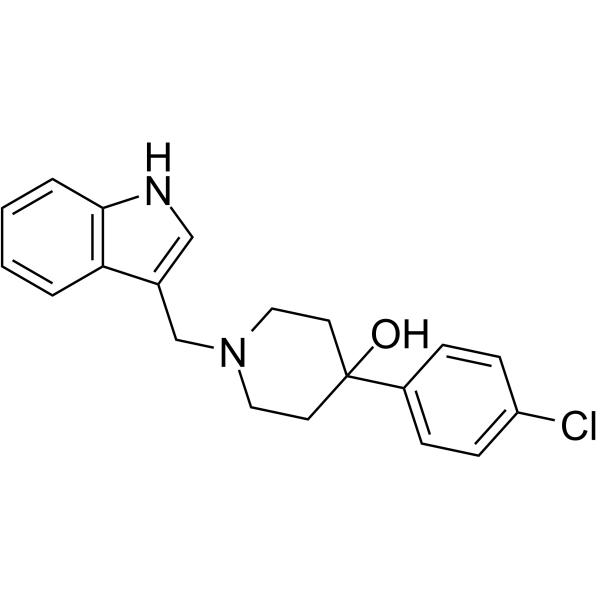
L-741626 is a selective D2 dopamine receptor antagonist, with the Ki values of 2.4, 100 and 220 nM for human D2, D3 and D4 receptors respectively .
|
-
-
- HY-14545
-
|
(Rac)-Aramisulpride; (Rac)-Esamisulpride; DAN 2163
|
Dopamine Receptor
5-HT Receptor
|
Neurological Disease
|
|
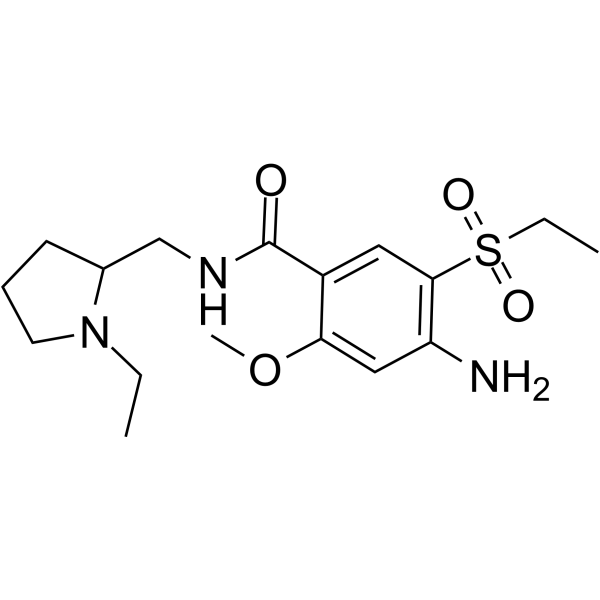
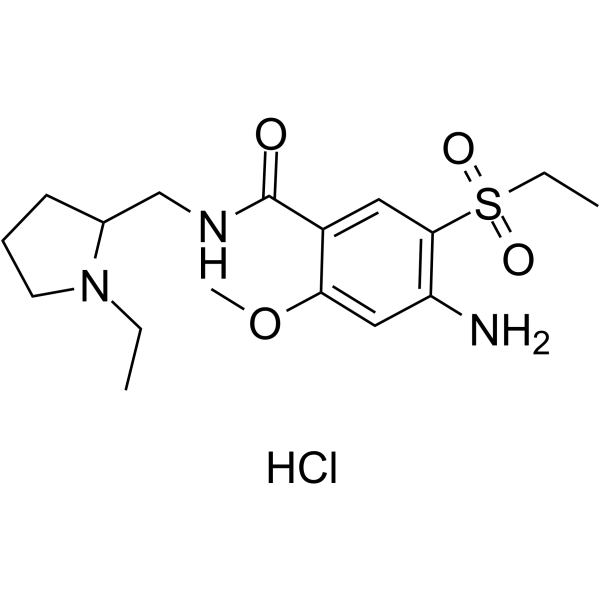
Amisulpride ((Rac)-Aramisulpride) is a racemic (50:50) mixture of the R-Amisulpride (HY-109167) and S-Amisulpride (HY-126068). Amisulpride is a dopamine D2/D3 receptor antagonist with Ki values of 2.8 and 3.2 nM for human dopamine b>D2 and b>D3, respectively. Amisulpride is a 5-HT7 receptor antagonist with a Ki of 44 nM. Amisulpride can be used in psychiatric research .
|
-
-
- HY-B0590A
-
|
Ro 1-9569 Racemate
|
Monoamine Transporter
Dopamine Receptor
|
Neurological Disease
|
|
Tetrabenazine (Ro 1-9569) Racemate is a brain-penetrant and orally active VMAT2-selective ligand with human VMAT2 Ki 100 nM. Tetrabenazine Racemate binds VMAT2 to block monoamine uptake into synaptic vesicles, potentiates cytoplasmic monoamine degradation. Tetrabenazine Racemate weakly blocks dopamine D2 receptors, and increases dopamine turnover via elevated cerebrospinal fluid homovanillic acid. Tetrabenazine Racemate can be used for the research of Huntington’s disease, tardive dyskinesia, and Tourette’s syndrome .
|
-
-
- HY-A0125A
-
-
-
- HY-101382
-
|
|
Dopamine Receptor
|
Neurological Disease
|
|
GR 103691 is a potent, selective dopamine D3 receptor antagonist with a Ki value of 0.4 nM. GR 103691 shows more than 100-fold selectivity for human dopamine human (h)D3 over hD4 and hD1 sites .
|
-
-
- HY-110000
-
|
|
Dopamine Receptor
|
Neurological Disease
|
|
(+)-PD 128907 hydrochloride is a selective dopamine D2/D3 receptor agonist, with Kis of 1.7, 0.84 nM for human and rat D3 receptors, 179, 770 n M for human and rat D3 receptors, respectively.
|
-
-
- HY-119093
-
-
-
- HY-B0520
-
|
Benzatropine; Benzotropine
|
Dopamine Receptor
mAChR
Histamine Receptor
|
Cancer
|
|
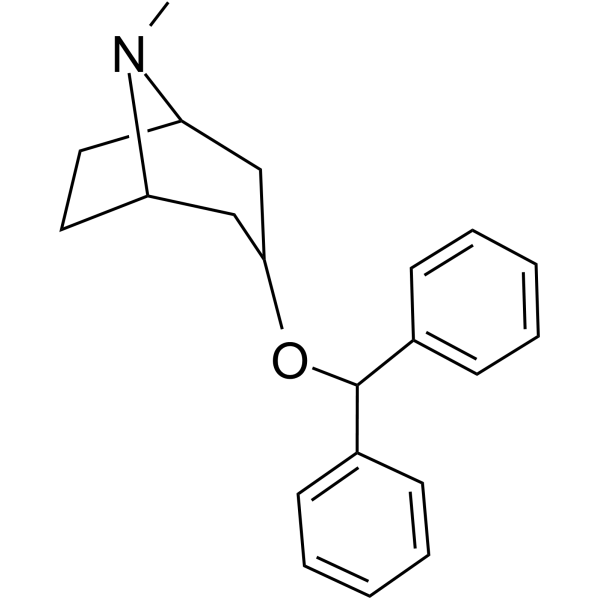
Benztropine (Benzatropine; Benzotropine) is an orally active and BBB-permeable centrally acting anticholinergic agent that can be used for Parkinson's disease research . Benztropine is an anti-histamine agent and a dopamine re-uptake inhibitor. Benztropine is also a human D2 dopamine receptor allosteric antagonist. Benztropine mesylate also has anti-CSCs (cancer stem cells) effects .
|
-
-
- HY-100820
-
|
EMD 128130
|
5-HT Receptor
Dopamine Receptor
|
Neurological Disease
|
|
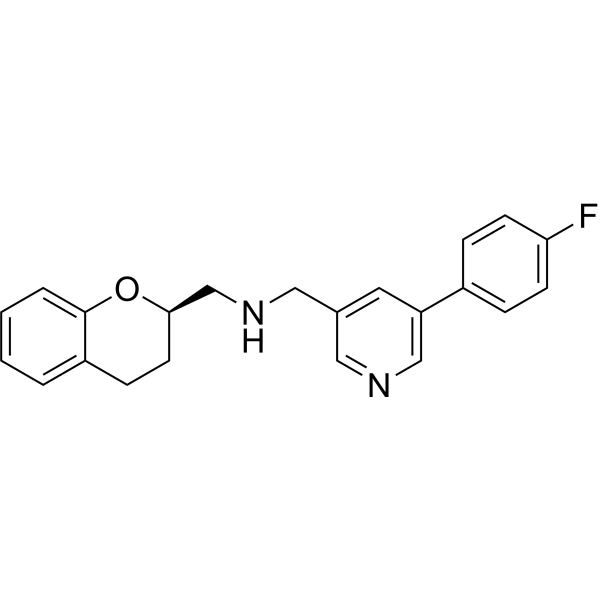
Sarizotan (EMD 128130) is an orally active serotonin 5-HT1A receptor and dopamine receptor agonist. Sarizotan (EMD 128130) exhibits IC50 values of 6.5 nM (rat 5-HT1A), 0.1 nM (human 5-HT1A), 15.1 nM (rat D2), 17 nM (human D2), 6.8 nM (human D3) and 2.4 nM (human D4.2), respectively .
|
-
-
- HY-10847B
-
|
SB-277011A hydrochloride
|
Dopamine Receptor
5-HT Receptor
|
Neurological Disease
|
|
SB-277011 hydrochloride (SB-277011A hydrochloride) is a potent, selective, orally bioavailable and brain penetrate dopamine D3 receptor (D3R) antagonist with Ki values of 10.7 nM and 11.2 nM at rodent and human D3R, respectively. SB-277011 hydrochloride displays 80- to 100-fold selectivity over other dopamine receptors with pKis of 8.0, 6.0, <5.2, and 5.9 for D3, D2, 5-HT1B, and 5-HT1D receptors, respectively .
|
-
-
- HY-N2411
-
|
|
5-HT Receptor
|
Neurological Disease
|
|
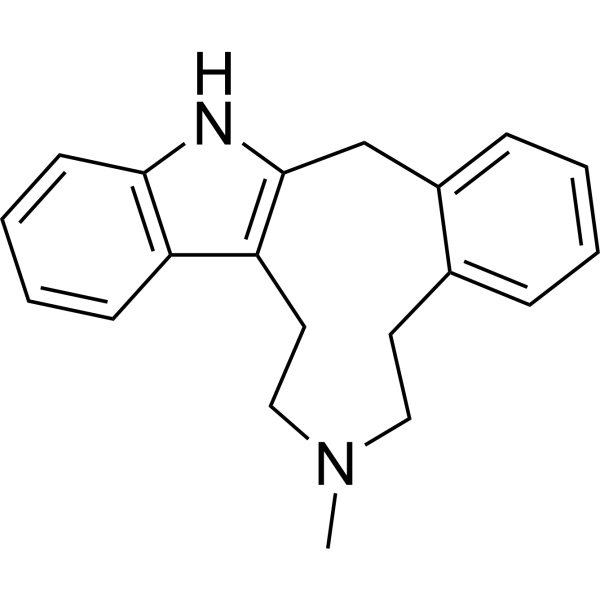
Geissoschizine methyl ether is an orally active, blood-brain barrier permeable alkaloid, and a partial agonist of the 5-HT1A receptor. It can be isolated from Uncaria hook. Geissoschizine methyl ether potently inhibits the binding of [ 3H]8-OH-DPAT to the 5-HT1A receptor in a concentration-dependent manner, with an IC50 of 0.904 μM. It ameliorates isolation-induced increased aggression and reduced sociability in mice. Geissoschizine methyl ether promotes oligodendrocyte differentiation and remyelination in the medial prefrontal cortex of adult mice .
|
-
-
- HY-115553
-
|
|
Dopamine Receptor
|
Neurological Disease
|
|
DETQ is a selective, allosteric and orally active dopamine D1 receptor (Dopamine Receptor) potentiator. In HEK293 cells expressing the human D1 receptor, DETQ increases cAMP with an EC50 of 5.8 nM and a Kb of 26 nM. DETQ shows ~30-fold less potent at rat and mouse D1 receptors and is inactive at the human D5 receptor .
|
-
-
- HY-14545A
-
|
(Rac)-Aramisulpride hydrochloride; (Rac)-Esamisulpride hydrochloride; (Rac)-DAN 2163 hydrochloride
|
Dopamine Receptor
|
Neurological Disease
|
|
Amisulpride hydrochloride is a dopamine D2/D3 receptor antagonist with Kis of 2.8 and 3.2 nM for human dopamine D2 and D3, respectively.
|
-
-
- HY-148867
-
|
|
Dopamine Receptor
|
Neurological Disease
|
|
UCM-1306 is a potent and orally active human dopamine D1 receptor allosteric modulator (PAM). UCM-1306 increases the endogenous dopamine (DA) maximal effect both in human and mouse D1 receptors. UCM-1306 is not only for improving motor symptoms but also for addressing the key comorbid cognitive impairment associated with long-term Parkinson’s disease (PD) .
|
-
-
- HY-14545S
-
|
(Rac)-Aramisulpride-d5; (Rac)-Esamisulpride-d5; DAN 2163-d5
|
Dopamine Receptor
|
Neurological Disease
Cancer
|
|
Amisulpride-d5 is the deuterium labeled Amisulpride. Amisulpride is a dopamine D2/D3 receptor antagonist with Kis of 2.8 and 3.2 nM for human dopamine D2 and D3, respectively .
|
-
-
- HY-116941
-
|
|
Dopamine Receptor
|
Neurological Disease
|
|
A-381393 is a potent, selective, brain penetrate dopamine D4 receptor antagonist, with Kis of 1.5, 1.9 and 1.6 nM for human dopamine D4.4, D4.2, and D4.7 receptor, respectively, >2700-fold selectivity over D1, D2, D3 and D5 dopamine receptors. A-381393 shows moderate affinity for 5-HT2A (Ki, 370 nM) .
|
-
-
- HY-14325
-
|
|
Dopamine Receptor
|
Neurological Disease
|
|
L-745870 is a potent, selective, brain-penetrant and orally active dopamine D4 receptor antagonist with a Ki of 0.43 nM. L-745870 shows weaker affinity for D2 (Ki of 960 nM) and D3 (Ki of 2300 nM) receptors, and exhibits moderate affinity for 5-HT2 receptors, sigma sites and α-adrenoceptors .
|
-
-
- HY-14325B
-
|
|
Dopamine Receptor
|
Neurological Disease
|
|
L-745870 hydrochloride is a potent, selective, brain-penetrant and orally active dopamine D4 receptor antagonist with a Ki of 0.43 nM. L-745870 hydrochloride shows weaker affinity for D2 (Ki of 960 nM) and D3 (Ki of 2300 nM) receptors, and exhibits moderate affinity for 5-HT2 receptors, sigma sites and α-adrenoceptors .
|
-
-
- HY-15780S1
-
|
OPC-34712-d8-1
|
Isotope-Labeled Compounds
Dopamine Receptor
Adrenergic Receptor
5-HT Receptor
|
Neurological Disease
|
|
Brexpiprazole-d8-1 (OPC-34712-d8-1) is the deuterium labeled Brexpiprazole (HY-15780) . Brexpiprazole (OPC-34712), an atypical orally active antipsychotic agent, is a partial agonist of human 5-HT1A and dopamine D2L receptor with Kis of 0.12 nM and 0.3 nM, respectively. Brexpiprazole is also a 5-HT2A receptor antagonist with a Ki of 0.47 nM. Brexpiprazole also shows potent antagonist activity at human noradrenergic α1B (Ki=0.17 nM) and α2C receptors (Ki=0.59 nM) .
|
-
-
- HY-W722043
-
-
-
- HY-103409
-
|
|
Dopamine Receptor
|
Neurological Disease
|
|
ABT-724 trihydrochloride is a potent and highly selective dopamine D4 receptor agonist with an EC50 of 12.4 nM for human dopamine D4 receptor. ABT-724 trihydrochloride is a potent partial agonist at the rat D4 (EC50 of 14.3 nM) and the ferret D4 receptor (EC50 of 23.2 nM), and has no effect on dopamine D1, D2, D3, or D5 receptors. ABT-724 trihydrochloride could be useful for the treatment of erectile dysfunction and has favorable side-effect profile .
|
-
-
- HY-103428
-
LE 300
2 Publications Verification
|
Dopamine Receptor
5-HT Receptor
|
Neurological Disease
|
|
LE 300 is a potent and selective dopamine D1-like receptor antagonist with Kis of 1.9 nM and 7.5 nM in CHO cell membranes expressing human dopamine D1 and D5 receptors, respectively. LE 300 is an antagonist of the 5-HT2A receptor with a pA2 of 8.32 in a rat tail artery assay .
|
-
-
- HY-14544R
-
|
ICI204636 (Standard)
|
Reference Standards
5-HT Receptor
Dopamine Receptor
|
Neurological Disease
|
|
Quetiapine (Standard) is the analytical standard of Quetiapine. This product is intended for research and analytical applications. Quetiapine (ICI204636) is a 5-HT receptors agonist with a pEC50 of 4.77 for human 5-HT1A receptor. Quetiapine is a dopamine receptor antagonist with a pIC50 of 6.33 for human D2 receptor. Quetiapine has moderate to high affinity for the human D2, HT1A, 5-HT2A, 5-HT2C receptor with pKis of 7.25, 5.74, 7.54, 5.55. Antidepressant and anxiolytic effects .
|
-
-
- HY-B0031R
-
|
|
Reference Standards
5-HT Receptor
Dopamine Receptor
|
Neurological Disease
|
|
Quetiapine (hemifumarate) (Standard) is the analytical standard of Quetiapine (hemifumarate). This product is intended for research and analytical applications. Quetiapine hemifumarate is a 5-HT receptors agonist with a pEC50 of 4.77 for human 5-HT1A receptor. Quetiapine hemifumarate is a dopamine receptor antagonist with a pIC50 of 6.33 for human D2 receptor. Quetiapine hemifumarate has moderate to high affinity for the human D2, HT1A, 5-HT2A, 5-HT2C receptor with pKis of 7.25, 5.74, 7.54, 5.55. Antidepressant and anxiolytic effects .
|
-
-
- HY-17366R
-
|
|
Reference Standards
mAChR
Dopamine Receptor
Drug Metabolite
|
Neurological Disease
|
|
Clozapine N-oxide (Standard) is the analytical standard of Clozapine N-oxide. This product is intended for research and analytical applications. Clozapine N-oxide is a major metabolite of Clozapine and a human muscarinic designer receptors (DREADDs) agonist. Clozapine N-oxide activates the DREADD receptor hM3Dq and hM4Di. Clozapine N-oxide cannot cross the blood-brain barrier[1][2][3][4]. Clozapine is a potent dopamine antagonist and also a potent and selective muscarinic M4 receptor (EC50=11 nM) agonist[5][6].
|
-
-
- HY-133152
-
|
DM-3411
|
5-HT Receptor
Dopamine Receptor
|
Neurological Disease
|
|
Brexpiprazole S-oxide (DM-3411) is a main metabolite of Brexpiprazole and is metabolized by cytochrome P450 3A4 (CYP3A4). Brexpiprazole is an atypical antipsychotic agent and a partial agonist of human 5-HT1A and dopamine receptor with Kis of 0.12 nM and 0.3 nM, respectively. Brexpiprazole is also a 5-HT2A receptor antagonist with a Ki of 0.47 nM .
|
-
-
- HY-15780R
-
|
OPC-34712 (Standard)
|
Reference Standards
5-HT Receptor
Dopamine Receptor
Adrenergic Receptor
|
Neurological Disease
|
|
Brexpiprazole (Standard) is the analytical standard of Brexpiprazole. This product is intended for research and analytical applications. Brexpiprazole (OPC-34712), an atypical orally active antipsychotic agent, is a partial agonist of human 5-HT1A and dopamine D2L receptor with Kis of 0.12 nM and 0.3 nM, respectively. Brexpiprazole is also a 5-HT2A receptor antagonist with a Ki of 0.47 nM. Brexpiprazole also shows potent antagonist activity at human noradrenergic α1B (Ki=0.17 nM) and α2C receptors (Ki=0.59 nM) .
|
-
-
- HY-135096
-
|
|
Serotonin Transporter
5-HT Receptor
Histamine Receptor
mAChR
Adrenergic Receptor
Sodium Channel
Trk Receptor
|
Neurological Disease
|
|
Amitriptyline-d3 hydrochloride is the deuterium labeled Amitriptyline (hydrochloride). Amitriptyline hydrochloride is an inhibitor of serotonin reuptake transporter (SERT) and noradrenaline reuptake transporter (NET), with Kis of 3.45 nM and 13.3 nM for human SERT and NET, respectively. Amitriptyline hydrochloride also weakly binds to dopamine reuptake transporter (DAT) with a Ki of 2.58 μM. Amitriptyline hydrochloride also inhibits adrenergic, muscarinic, histamine and 5-HT receptors. Amitriptyline hydrochloride is a TrkA and TrkB receptors agonist with potent neurotrophic activity. Amitriptyline hydrochloride has antidepressant activity .
|
-
-
- HY-15780S
-
|
OPC-34712-d8
|
Isotope-Labeled Compounds
5-HT Receptor
Dopamine Receptor
Adrenergic Receptor
|
Neurological Disease
|
|
Brexpiprazole-d8 (OPC-34712-d8) is the deuterium labeled Brexpiprazole (HY-15780). Brexpiprazole (OPC-34712), an atypical orally active antipsychotic agent, is a partial agonist of human 5-HT1A and dopamine D2L receptor with Kis of 0.12 nM and 0.3 nM, respectively. Brexpiprazole is also a 5-HT2A receptor antagonist with a Ki of 0.47 nM. Brexpiprazole also shows potent antagonist activity at human noradrenergic α1B (Ki=0.17 nM) and α2C receptors (Ki=0.59 nM) .
|
-
-
- HY-14330
-
|
|
Dopamine Receptor
|
Neurological Disease
|
|
ABT-724, a chemical probe, is a potent and highly selective dopamine D4 receptor agonist with an EC50 of 12.4 nM for human dopamine D4 receptor. ABT-724 is a potent partial agonist at the rat D4 (EC50 of 14.3 nM) and the ferret D4 receptor (EC50 of 23.2 nM). ABT-724 has no effect on dopamine D1, D2, D3, or D5 receptors. ABT-724 could be useful for the treatment of erectile dysfunction and has favorable side-effect profile .
|
-
-
- HY-15780A
-
|
OPC-34712 hydrochloride
|
5-HT Receptor
Dopamine Receptor
Adrenergic Receptor
|
Neurological Disease
|
|
Brexpiprazole (OPC-34712) hydrochloride, an atypical orally active antipsychotic agent, is a partial agonist of human 5-HT1A and dopamine D2L receptor with Kis of 0.12 nM and 0.3 nM, respectively. Brexpiprazole hydrochloride is also a 5-HT2A receptor antagonist with a Ki of 0.47 nM. Brexpiprazole hydrochloride also shows potent antagonist activity at human noradrenergic α1B (Ki=0.17 nM) and α2C receptors (Ki=0.59 nM) .
|
-
-
- HY-177122
-
|
|
Dopamine Receptor
|
Neurological Disease
|
|
Raxlaprazine etomoxil is a small molecule compound with dopamine D2 and D3 receptor modulating activity, which has potential application value in research related to mental illnesses. Raxlaprazine etomoxil exhibits high affinity for human recombinant D2L receptors, with an inhibition constant (Ki) of 1.95 nM. Raxlaprazine etomoxil effectively inhibits forskolin-stimulated cAMP accumulation, with an half maximal effective concentration (EC50) of 3.72 nM in functional activity experiments .
|
-
-
- HY-133152S
-
|
DM-3411 d8
|
Isotope-Labeled Compounds
5-HT Receptor
Dopamine Receptor
|
Neurological Disease
|
|
Brexpiprazole S-oxide-d8 (DM-3411 D8) is a deuterium labeled Brexpiprazole S-oxide (HY-133152). Brexpiprazole S-oxide is a main metabolite of Brexpiprazole and is metabolized by cytochrome P450 3A4 (CYP3A4). Brexpiprazole is an atypical antipsychotic agent and a partial agonist of human 5-HT1A and dopamine receptor with Kis of 0.12 nM and 0.3 nM, respectively. Brexpiprazole is also a 5-HT2A receptor antagonist with a Ki of 0.47 nM .
|
-
-
- HY-103405A
-
|
|
Dopamine Receptor
|
Neurological Disease
|
|
NGD 94-1 (dimaleate) is a potent and selective dopamine D4 receptor antagonist. NGD 94-1 (dimaleate) shows high affinity for the cloned human D4.2 receptor (Ki = 3.6 nM). NGD 94-1 (dimaleate) modulates the cognitive functions of the frontostriatal system and regulates dopaminergic transmission in Phencyclidine (PCP)-induced monkeys. NGD 94-1 (dimaleate) can be used for neurological disease research [1][2].
|
-
-
- HY-103104
-
|
RP 62203
|
5-HT Receptor
Dopamine Receptor
|
Neurological Disease
|
|
Fananserin (RP 62203) is an orally bioavailable, potent and selective 5-hydroxytryptamine2 (5-HT2) receptor antagonist, with a Ki of 0.37 nM for the rat 5-HT2A receptor. Fananserin also is a selective dopamine D4 receptor antagonist, with a Ki of 2.93 nM for the human dopamine D4 receptor .
|
-
-
- HY-A0125
-
-
-
- HY-14325R
-
|
|
Dopamine Receptor
|
Neurological Disease
|
|
L-745870 (Standard) is the analytical standard of L-745870. This product is intended for research and analytical applications. L-745870 is a potent, selective, brain-penetrant and orally active dopamine D4 receptor antagonist with a Ki of 0.43 nM. L-745870 shows weaker affinity for D2 (Ki of 960 nM) and D3 (Ki of 2300 nM) receptors, and exhibits moderate affinity for 5-HT2 receptors, sigma sites and α-adrenoceptors .
|
-
-
- HY-19483
-
|
|
Dopamine Receptor
|
Neurological Disease
|
|
ABT-670 is a selective, oral bioavailable agonist of dopamine D4 receptor, with EC50 of 89 nM, 160 nM, and 93 nM for human D4, ferret D4, and rat D4, respectively.
|
-
-
- HY-109150
-
|
IRL790
|
Dopamine Receptor
|
Neurological Disease
|
|
Mesdopetam (IRL790) is a dopamine D3 receptor antagonist (Ki=90 nM; IC50=9.8 μM for human recombinant D3 receptor) with psychomotor stabilizing properties. Mesdopetam is used for the research of motor and psychiatric complications in Parkinson disease .
|
-
- HY-B0031S2
-
|
|
Isotope-Labeled Compounds
5-HT Receptor
Dopamine Receptor
|
Neurological Disease
|
|
Quetiapine-d8 (fumarate) is the deuterium labeled Quetiapine. Quetiapine is a 5-HT receptors agonist with a pEC50 of 4.77 for human 5-HT1A receptor. Quetiapine is a dopamine receptor antagonist with a pIC50 of 6.33 for human D2 receptor. Quetiapine has moderate to high affinity for the human D2, HT1A, 5-HT2A, 5-HT2C receptor with pKis of 7.25, 5.74, 7.54, 5.55. Antidepressant and anxiolytic effects .
|
-
- HY-123663
-
|
PNU-101958 maleate
|
Dopamine Receptor
|
Neurological Disease
|
|
U-101958 (PNU-101958) maleate is a highly selective ligand and antagonist for dopamine D4 receptor, with an IC50 of 2.7 nM. U-101958 maleate behaves as an agonist in HEK-293 cells expressing the human recombinant D4.4 receptor. U-101958 maleate is an antipsychotic .
|
-
- HY-34763
-
|
7-Hydroxyquinolinone; 2,7-Dihydroxyquinoline
|
Drug Derivative
|
Others
|
|
7-Hydroxycarbostyril (7-Hydroxy-2(1H)-quinolinone) (Compound 7) is a quinolinone derivative. 7-Hydroxycarbostyril can be used for synthesis of Brexpiprazole (HY-15780). Brexpiprazole, a typical orally active antipsychotic agent, is a partial agonist of human 5-HT1A and dopamine D2L receptor .
|
-
- HY-108400
-
|
R-(+)-SCH-23390 maleate
|
Dopamine Receptor
5-HT Receptor
Potassium Channel
|
Neurological Disease
|
|
SCH-23390 maleate (R-(+)-SCH-23390 maleate) is a potent and selective dopamine D1-like receptor antagonist with Kis of 0.2 nM and 0.3 nM for the D1 and D5 receptor, respectively. SCH-23390 maleate is a potent and high efficacy human 5-HT2C receptor agonist with a Ki of 9.3 nM. SCH-23390 maleate also binds with high affinity to the 5-HT2 and 5-HT1C receptors. SCH-23390 maleate inhibits G protein-coupled inwardly rectifying potassium (GIRK) channels with an IC50 of 268 nM .
|
-
- HY-103405
-
|
|
Dopamine Receptor
|
Neurological Disease
|
|
NGD94-1 is a potent and selective dopamine D4 receptor antagonist. NGD94-1 shows high affinity for the cloned human D4.2 receptor (Ki = 3.6 nM). NGD94-1 modulates the cognitive functions of the frontostriatal system and regulates dopaminergic transmission in Phencyclidine (PCP)-induced monkeys. NGD94-1 can be used for neurological disease research [1][2].
|
-
- HY-101349
-
|
|
Dopamine Receptor
Apoptosis
Autophagy
PDGFR
ERK
mTOR
|
Neurological Disease
Cancer
|
|
L 741742 is a highly selective and brain-penetrant D4 dopamine receptor antagonist, with Ki values of 3.5 nM, 770 nM and >1700 nM for human D4, D3 and D2 receptors, respectively. L 741742 suppresses PDGFRβ, ERK1/2, and mTOR signaling pathways, and impairs autophagic flux while disrupting lysosomal function.L 741742 induces G0/G1 cell-cycle arrest and apoptosis, promotes neuronal differentiation of normal human neural stem cells, selectively inhibits growth and clonogenic potential of glioblastoma neural stem cells and primary glioblastoma tumor cells, exerts synergistic effects with Temozolomide (TMZ) (HY-17364) against glioblastoma neural stem cells in vitro, and inhibits glioblastoma neural stem cell xenograft growth in immunocompromised mice. L 741742 can be used for the research of schizophrenia and glioblastoma .
|
-
- HY-B0590E
-
|
Ro 1-9569 mesylate
|
Monoamine Transporter
Dopamine Receptor
|
Neurological Disease
|
|
Tetrabenazine (Ro 1-9569) mesylate is a brain-penetrant and orally active VMAT2-selective ligand with human VMAT2 Ki 100 nM. Tetrabenazine mesylate binds VMAT2 to block monoamine uptake into synaptic vesicles, potentiates cytoplasmic monoamine degradation. Tetrabenazine mesylate weakly blocks dopamine D2 receptors, and increases dopamine turnover via elevated cerebrospinal fluid homovanillic acid. Tetrabenazine mesylate can be used for the research of Huntington’s disease, tardive dyskinesia, and Tourette’s syndrome .
|
-
- HY-B0590R
-
|
Ro 1-9569 (Standard)
|
Reference Standards
Monoamine Transporter
Dopamine Receptor
|
Neurological Disease
|
|
Tetrabenazine (Standard) is the analytical standard of Tetrabenazine (HY-B0590). This product is intended for research and analytical applications. Tetrabenazine (Ro 1-9569) is a brain-penetrant and orally active VMAT2-selective ligand with human VMAT2 Ki 100 nM. Tetrabenazine binds VMAT2 to block monoamine uptake into synaptic vesicles, potentiates cytoplasmic monoamine degradation. Tetrabenazine weakly blocks dopamine D2 receptors, and increases dopamine turnover via elevated cerebrospinal fluid homovanillic acid. Tetrabenazine can be used for the research of Huntington’s disease, tardive dyskinesia, and Tourette’s syndrome .
|
-
- HY-B0590S3
-
|
TBZ-d7-d7; Ro 1-9569-d7
|
Isotope-Labeled Compounds
Monoamine Transporter
Dopamine Receptor
|
Neurological Disease
|
|
Tetrabenazine-d7 (TBZ-d7-d7) is deuterium labeled Tetrabenazine (HY-B0590). Tetrabenazine (Ro 1-9569) is a brain-penetrant and orally active VMAT2-selective ligand with human VMAT2 Ki 100 nM. Tetrabenazine binds VMAT2 to block monoamine uptake into synaptic vesicles, potentiates cytoplasmic monoamine degradation. Tetrabenazine weakly blocks dopamine D2 receptors, and increases dopamine turnover via elevated cerebrospinal fluid homovanillic acid. Tetrabenazine can be used for the research of Huntington’s disease, tardive dyskinesia, and Tourette’s syndrome .
|
-
- HY-171328
-
|
|
Dopamine Receptor
|
Neurological Disease
|
|
RG-15 is the orally active antagonist for dopamine receptor that exhibits goof affinity to human D2 receptor and human D3 receptor with pKi of 8.23 and 10.49. RG-15 inhibits dopamine-stimulated [ 35S]GTPγS binding with IC50 of 21.2 nM (rat striatal membranes), 36.7 nM (mouse A9 cells expressing human D2L receptors) and 7.2 nM (CHO cells expressing human D3 receptors). RG-15 increases the turnover and biosynthesis of dopamine in mouse striatum and olfactory bulb, exhibiting antipsychotic activity .
|
-
- HY-173431
-
|
|
Dopamine Receptor
Reactive Oxygen Species (ROS)
|
Cancer
|
|
Dopamine D4 receptor ligand 3 (Compound 16) is a dopamine D4 receptor (D4R) antagonist (pKi: 8.86). Dopamine D4 receptor ligand 3 has pIC50 values of 5.78, 5.55, and 6.17 for Go, Gi, and βArr2 sensors in HEK-293T cells, respectively. Dopamine D4 receptor ligand 3 inhibits the viability of three human glioma cell lines, U87 MG, T98G, and U251 MG. Dopamine D4 receptor ligand 3 induces ROS production and mitochondrial dysfunction in glioma cells .
|
-
- HY-120879
-
|
|
Dopamine Receptor
|
Neurological Disease
|
|
PF2562 (Example 6), a dopamine D1 ligand, ascts as a dopamine D1 agonist or partial agonist. PF2562 binds to human D1 receptor with a Ki of 113 nM. PF2562 exhibits activity against human D1 cAMP with an EC50 of 568 nM in HTRF assay .
|
-
- HY-14545R
-
|
(Rac)-Aramisulpride (Standard); (Rac)-Esamisulpride (Standard); DAN 2163 (Standard)
|
Reference Standards
Dopamine Receptor
|
Neurological Disease
Cancer
|
|
Amisulpride (Standard) is the analytical standard of Amisulpride. This product is intended for research and analytical applications. Amisulpride is a dopamine D2/D3 receptor antagonist with Kis of 2.8 and 3.2 nM for human dopamine D2 and D3, respectively.
|
-
- HY-14545S1
-
-
- HY-14325BR
-
|
|
Dopamine Receptor
|
Neurological Disease
|
|
L-745870 (hydrochloride) (Standard) is the analytical standard of L-745870 (hydrochloride). This product is intended for research and analytical applications. L-745870 hydrochloride is a potent, selective, brain-penetrant and orally active dopamine D4 receptor antagonist with a Ki of 0.43 nM. L-745870 hydrochloride shows weaker affinity for D2 (Ki of 960 nM) and D3 (Ki of 2300 nM) receptors, and exhibits moderate affinity for 5-HT2 receptors, sigma sites and α-adrenoceptors .
|
-
- HY-W329175
-
|
SKF-104557
|
Dopamine Receptor
|
Neurological Disease
|
|
N-Despropyl Ropinirole (SKF-104557) is an active metabolite of the dopamine D2 receptor agonist Ropinirole (HY-B0623). N-Despropyl Ropinirole is a full agonist at human D2 and D3 receptors. N-Despropyl Ropinirole is a partial agonistof the hD4 receptor .
|
-
- HY-129103
-
|
|
Dopamine Receptor
|
Neurological Disease
|
|
A-412997 is a selective Dopamine D4 agonist with Ki values of 12 and 7.9 nM for the rat and human receptors. A-412997 improves short term memory and cognitive properties in rodent models .
|
-
- HY-109150A
-
|
IRL790 hemitartrate
|
Dopamine Receptor
|
Neurological Disease
|
|
Mesdopetam (IRL790) hemitartrate is a dopamine D3 receptor antagonist (Ki=90 nM; IC50=9.8 μM for human recombinant D3 receptor) with psychomotor stabilizing properties. Mesdopetam hemitartrate is used for the research of motor and psychiatric complications in Parkinson disease .
|
-
- HY-B0520AS1
-
|
|
Dopamine Receptor
Histamine Receptor
mAChR
|
Cancer
|
|
Benztropine-d3 (mesylate) is the deuterium labeled Benztropine mesylate . Benztropine mesylate (Benzatropine mesylate) is an orally active centrally acting anticholinergic agent that can be used for Parkinson's disease research. Benztropine mesylate is an anti-histamine agent and a dopamine re-uptake inhibitor. Benztropine mesylate is also a human D2 dopamine receptor allosteric antagonist. Benztropine mesylate also has anti-CSCs (cancer stem cells) effects .
|
-
- HY-B0520AR
-
|
Benzatropine mesylate (Standard); Benzotropine mesylate (Standard); Benztropine methanesulfonate (Standard)
|
Reference Standards
Dopamine Receptor
mAChR
Histamine Receptor
|
Neurological Disease
Cancer
|
|
Benztropine (mesylate) (Standard) is the analytical standard of Benztropine (mesylate). This product is intended for research and analytical applications. Benztropine mesylate (Benzatropine mesylate) is an orally active centrally acting anticholinergic agent that can be used for Parkinson's disease research. Benztropine mesylate is an anti-histamine agent and a dopamine re-uptake inhibitor. Benztropine mesylate is also a human D2 dopamine receptor allosteric antagonist. Benztropine mesylate also has anti-CSCs (cancer stem cells) effects .
|
-
- HY-B0520AS
-
|
|
Isotope-Labeled Compounds
Dopamine Receptor
mAChR
Histamine Receptor
|
Neurological Disease
Cancer
|
|
Benztropine- 13C,d3 (mesylate) is the 13C- and deuterium labeled Benztropine (mesylate). Benztropine mesylate (Benzatropine mesylate) is an orally active centrally acting anticholinergic agent that can be used for Parkinson's disease research. Benztropine mesylate is an anti-histamine agent and a dopamine re-uptake inhibitor. Benztropine mesylate is also a human D2 dopamine receptor allosteric antagonist. Benztropine mesylate also has anti-CSCs (cancer stem cells) effects .
|
-
- HY-100820B
-
|
EMD 128130 dihydrochloride
|
5-HT Receptor
Dopamine Receptor
|
Neurological Disease
|
|
Sarizotan dihydrochloride (EMD 128130) is an orally active serotonin 5-HT1A receptor and dopamine receptor agonist. Sarizotan (EMD 128130) exhibits IC50 values of 6.5 nM (rat 5-HT1A), 0.1 nM (human 5-HT1A), 15.1 nM (rat D2), 17 nM (human D2), 6.8 nM (human D3) and 2.4 nM (human D4.2), respectively .
|
-
- HY-100820A
-
|
EMD 128130 hydrochloride
|
5-HT Receptor
Dopamine Receptor
|
Neurological Disease
|
|
Sarizotan hydrochloride is an orally active serotonin 5-HT1A receptor and dopamine receptor agonist. Sarizotan hydrochloride (EMD 128130) exhibits IC50 values of 6.5 nM (rat 5-HT1A), 0.1 nM (human 5-HT1A), 15.1 nM (rat D2), 17 nM (human D2), 6.8 nM (human D3) and 2.4 nM (human D4.2), respectively .
|
-
- HY-B0031S3
-
|
|
Isotope-Labeled Compounds
5-HT Receptor
Dopamine Receptor
|
Neurological Disease
|
|
Quetiapine-d8 (hemifumarate) is the deuterium labeled Quetiapine hemifumarate. Quetiapine hemifumarate is a 5-HT receptors agonist with a pEC50 of 4.77 for human 5-HT1A receptor. Quetiapine hemifumarate is a dopamine receptor antagonist with a pIC50 of 6.33 for human D2 receptor. Quetiapine hemifumarate has moderate to high affinity for the human D2, HT1A, 5-HT2A, 5-HT2C receptor with pKis of 7.25, 5.74, 7.54, 5.55. Antidepressant and anxiolytic effects .
|
-
- HY-B0031S4
-
|
|
Dopamine Receptor
5-HT Receptor
|
Neurological Disease
|
|
Quetiapine (hemifumarate)-d8 is the deuterium labeled Quetiapine hemifumarate . Quetiapine hemifumarate is a 5-HT receptors agonist with a pEC50 of 4.77 for human 5-HT1A receptor. Quetiapine hemifumarate is a dopamine receptor antagonist with a pIC50 of 6.33 for human D2 receptor. Quetiapine hemifumarate has moderate to high affinity for the human D2, HT1A, 5-HT2A, 5-HT2C receptor with pKis of 7.25, 5.74, 7.54, 5.55. Antidepressant and anxiolytic effects .
|
-
- HY-B0031S5
-
|
|
Dopamine Receptor
5-HT Receptor
Isotope-Labeled Compounds
|
Neurological Disease
|
|
Quetiapine-d4-1 fumarate is deuterated labeled Quetiapine (hemifumarate) (HY-B0031). Quetiapine hemifumarate is a 5-HT receptors agonist with a pEC50 of 4.77 for human 5-HT1A receptor. Quetiapine hemifumarate is a dopamine receptor antagonist with a pIC50 of 6.33 for human D2 receptor. Quetiapine hemifumarate has moderate to high affinity for the human D2, HT1A, 5-HT2A, 5-HT2C receptor with pKis of 7.25, 5.74, 7.54, 5.55. Antidepressant and anxiolytic effects .
|
-
- HY-119093R
-
|
|
Phospholipase
Dopamine Receptor
|
Neurological Disease
Cancer
|
|
Halopemide (Standard) is the analytical standard of Halopemide. This product is intended for research and analytical applications. Halopemide is a potent phospholipase D (PLD) inhibitor, with IC50s of 220 and 310 nM for human PLD1 and PLD2, respectively. Halopemid is a dopamine receptors antagonist, and acts a psychotropic agent .
|
-
- HY-14544AS
-
|
ICI204636-d4 hydrochloride
|
Isotope-Labeled Compounds
Dopamine Receptor
5-HT Receptor
|
Neurological Disease
|
|
Quetiapine-d4 (hydrochloride) (ICI204636-d4 (hydrochloride)) is deuterium labeled Quetiapine. Quetiapine (ICI204636) is a 5-HT receptors agonist with a pEC50 of 4.77 for human 5-HT1A receptor. Quetiapine is a dopamine receptor antagonist with a pIC50 of 6.33 for human D2 receptor. Quetiapine has moderate to high affinity for the human D2, HT1A, 5-HT2A, 5-HT2C receptor with pKis of 7.25, 5.74, 7.54, 5.55. Antidepressant and anxiolytic effects .
|
-
- HY-19186
-
|
CI 1007
|
Dopamine Receptor
|
Neurological Disease
|
|
PD-143188 (CI 1007) is a selective agonist targeting dopamine (DA) receptors, with Ki values of 25.5 nM and 16.6 nM for human D2 and D3 receptors, respectively and lower affinity for D4.2 receptors (Ki=90.9 nM). PD-143188 inhibits DA release, synthesis and metabolism, while reducing cellular cyclic AMP levels, exerting antipsychotic activity. PD-143188 is promising for research of psychopharmacology .
|
-
- HY-100820R
-
|
EMD 128130 (Standard)
|
Reference Standards
5-HT Receptor
Dopamine Receptor
|
Neurological Disease
|
|
Sarizotan (Standard) is the analytical standard of Sarizotan. This product is intended for research and analytical applications. Sarizotan (EMD 128130) is an orally active serotonin 5-HT1A receptor and dopamine receptor agonist. Sarizotan (EMD 128130) exhibits IC50 values of 6.5 nM (rat 5-HT1A), 0.1 nM (human 5-HT1A), 15.1 nM (rat D2), 17 nM (human D2), 6.8 nM (human D3) and 2.4 nM (human D4.2), respectively .
|
-
- HY-21995
-
|
|
5-HT Receptor
Dopamine Receptor
|
Neurological Disease
|
|
BGC20-761 is a selecvtive 5-HT6 and dopamine receptor antagonist (human receptor Ki values: 5-HT6 (20 nM), 5-HT2A (69 nM), D2 (140 nM). BGC20-761, can enhance long-term memory. BGC20-761 has potential utility as an antipsychotic agent .
|
-
- HY-155466
-
|
|
Dopamine Receptor
|
Neurological Disease
|
|
Boc-MIF-1-Am (compound 2) is a human dopamine D2 receptor enhancer (EC50=17.82 nM) and is a bioconjugate of melanostatin (MIF-1) and amantadine. Boc-MIF-1-Am (200 μM) exhibited mild neurotoxicity in SH-SY5Y cells .
|
-
- HY-116268
-
|
|
Neurokinin Receptor
|
Neurological Disease
|
|
GSK256471 is a non-peptide tachykinin NK3 receptor antagonist with a pKi of 8.9 for the human recombinant NK3 receptor and 8.4 for the guinea pig native receptor. GSK256471 exhibits >100-fold selectivity for NK1 (pKi = 5.2) and NK2 (pKi = 7.3) receptors. GSK256471 noncompetitively inhibits neurokinin B (NKB) (HY-P0242)-induced inositol phosphate accumulation, and this inhibition is irreversible. GSK256471 inhibits wet dog shaking behavior and suppresses dopamine release. GSK256471 could be used to study schizophrenia .
|
-
- HY-W424918
-
|
|
Dopamine Receptor
|
Neurological Disease
|
|
Opromazine hydrochloride is an antipsychotic medication that exhibits sedative and antiemetic pharmacological effects, making it effective for treating psychiatric disorders such as schizophrenia and psychosis. Opromazine hydrochloride functions by reducing dopaminergic activity through the blockade of dopamine receptors in the brain. Opromazine hydrochloride has been analyzed for its metabolites in various microsomal enzymes, revealing differences in formation rates that underscore the variability of drug-metabolizing enzymes in human liver and placenta microsomes.
|
-
- HY-W748582
-
|
|
Isotope-Labeled Compounds
Dopamine Receptor
mAChR
Drug Metabolite
|
Neurological Disease
|
|
Clozapine N-oxide-d8 is the deuterium labeled Clozapine N-oxide (HY-17366). Clozapine N-oxide is a major metabolite of Clozapine and a human muscarinic designer receptors (DREADDs) agonist. Clozapine N-oxide activates the DREADD receptor hM3Dq and hM4Di. Clozapine N-oxide can't cross the blood-brain barrier . Clozapine is a potent dopamine antagonist and also a potent and selective muscarinic M4 receptor (EC50=11 nM) agonist .
|
-
- HY-17366AR
-
|
|
Reference Standards
mAChR
Dopamine Receptor
Drug Metabolite
|
Neurological Disease
|
|
Clozapine N-oxide (dihydrochloride) (Standard) is the analytical standard of Clozapine N-oxide (dihydrochloride). This product is intended for research and analytical applications. Clozapine N-oxide dihydrochloride is a major metabolite of Clozapine and a human muscarinic designer receptors (DREADDs) agonist. Clozapine N-oxide dihydrochloride activates the DREADD receptor hM3Dq and hM4Di. Clozapine N-oxide dihydrochloride can cross the blood-brain barrier[1][2][3][4]. Clozapine is a potent dopamine antagonist and also a potent and selective muscarinic M4 receptor (EC50=11 nM) agonist[5][6].
|
-
- HY-B1213AR
-
|
|
Reference Standards
5-HT Receptor
Bacterial
|
Neurological Disease
|
|
Trimipramine (Standard) is the analytical standard of Trimipramine. This product is intended for research and analytical applications. Trimipramine is a 5-HT receptor antagonist, with pKi binding values of 6.39, 8.10, 4.66 for 5-HT1C, 5-HT2 and 5-HT1A, respectively. Trimipramine is also a potent and selective inhibitor targeting human noradrenaline (hNAT), serotonin (hSERT) and organic cation transporters (hOCT1, hOCT2) with IC50 values of 4.99 μM, 2.11 μM, 3.72 μM, 8.00 μM, respectively. Trimipramine has vascular activity and anxiolytic efficacy .
|
-
- HY-183666
-
|
|
nAChR
Serotonin Transporter
|
Neurological Disease
|
|
NS3956 is a blood-brain barrier-permeable human α4β2-nicotinic acetylcholine receptor (nAChR) agonist (Ki = 0.36 nM). NS3956 induces dopamine release, produces analgesic effects, modulates rotational behavior in 6-OHDA-lesioned rats, and potentiates the effects of SSRI/SNRI in the forced swim test in mice. NS3956 can be used in research related to depression, Parkinson's disease, and acute pain .
|
-
- HY-111241
-
|
|
Dopamine Receptor
|
Neurological Disease
|
|
SV 293 is a selective antagonist with neutral antagonist activity. SV 293 binds to human D2 receptors with 100-fold higher affinity and has lower affinity for human D3 and D4 dopamine receptor subtypes. SV 293 was found to block the effects of the full agonist quinpirole in forskolin-dependent adenylate acylase inhibition assays and electrophysiological assays. SV 293 can be used as a useful pharmacological tool to study the role of dopamine D2-like receptor subtypes in dopamine pathways associated with neurological, neuropsychiatric and movement disorders .
|
-
- HY-103104R
-
|
RP 62203 (Standard)
|
Reference Standards
5-HT Receptor
Dopamine Receptor
|
Neurological Disease
|
|
Fananserin (Standard) is the analytical standard of Fananserin (HY-103104). This product is intended for research and analytical applications. Fananserin (RP 62203) is an orally bioavailable, potent and selective 5-hydroxytryptamine2 (5-HT2) receptor antagonist, with a Ki of 0.37 nM for the rat 5-HT2A receptor. Fananserin also is a selective dopamine D4 receptor antagonist, with a Ki of 2.93 nM for the human dopamine D4 receptor .
|
-
- HY-W708196
-
|
|
Dopamine Receptor
|
Neurological Disease
|
|
Dehydrohaloperidol, Haloperidol (HY-14538) analogue, is a selective human dopamine D2 receptor antagonist with a pKd of 8 and a pki of 8. Dehydrohaloperidol can be used for the research of schizophrenia .
|
-
- HY-103409R
-
|
|
Reference Standards
Dopamine Receptor
|
Neurological Disease
|
|
ABT-724 trihydrochloride (Standard) is the analytical standard of ABT-724 trihydrochloride (HY-103409). This product is intended for research and analytical applications. ABT-724 trihydrochloride is a potent and highly selective dopamine D4 receptor agonist with an EC50 of 12.4 nM for human dopamine D4 receptor. ABT-724 trihydrochloride is a potent partial agonist at the rat D4 (EC50 of 14.3 nM) and the ferret D4 receptor (EC50 of 23.2 nM), and has no effect on dopamine D1, D2, D3, or D5 receptors. ABT-724 trihydrochloride could be useful for the treatment of erectile dysfunction and has favorable side-effect profile .
|
-
- HY-101382R
-
|
|
Dopamine Receptor
Reference Standards
|
Neurological Disease
|
|
GR 103691 (Standard) is the analytical standard of GR 103691 (HY-101382). This product is intended for research and analytical applications. GR 103691 is a potent, selective dopamine D3 receptor antagonist with a Ki value of 0.4 nM. GR 103691 shows more than 100-fold selectivity for human dopamine human (h)D3 over hD4 and hD1 sites .
|
-
- HY-W680886
-
|
|
Monoamine Transporter
Serotonin Transporter
Dopamine Transporter
5-HT Receptor
|
Neurological Disease
|
|
6-APDB is a class of monoamine neurotransmitter releaser and Monoamine Transporter modulator that exerts selective effects on human monoamine transporters and acts as a partial agonist at 5-HT2 family receptors. For NET, 6-APDB has an IC50 of 0.56 μM and a Ki of 18 μM; for SERT, it has an IC50 of 2.3 μM and a Ki of 23 μM; for DAT, it has an IC50 of 33 μM and a Ki of >30 μM, and affinity for rat and mouse TAAR1, with Ki values of 1.0 μM and 0.21 μM, respectively. 6-APDB inhibits norepinephrine and 5-HT reuptake, mediates the release of three types of monoamine neurotransmitters, shows a dose-dependent biphasic locomotor effect in mice, and fully substitutes the discriminative stimulus effect of MDMA. 6-APDB shows no significant cytotoxicity at high concentrations, and possesses empathogenic psychoactivity, potential hallucinogenic effects, and behavioral effects associated with intermittent abuse .
|
-
- HY-101348R
-
|
|
Reference Standards
Dopamine Receptor
|
Neurological Disease
|
|
L-741626 (Standard) is the analytical standard of L-741626. This product is intended for research and analytical applications. L-741626 is a selective D2 dopamine receptor antagonist, with the Ki values of 2.4, 100 and 220 nM for human D2, D3 and D4 receptors respectively .
|
-
- HY-10847BR
-
|
SB-277011A hydrochloride (Standard)
|
Reference Standards
Dopamine Receptor
5-HT Receptor
|
Neurological Disease
|
|
SB-277011 hydrochloride (Standard) is the analytical standard of SB-277011 (hydrochloride) (HY-10847B). This product is intended for research and analytical applications. SB-277011 hydrochloride (SB-277011A hydrochloride) is a potent, selective, orally bioavailable and brain penetrate dopamine D3 receptor (D3R) antagonist with Ki values of 10.7 nM and 11.2 nM at rodent and human D3R, respectively. SB-277011 hydrochloride displays 80- to 100-fold selectivity over other dopamine receptors with pKis of 8.0, 6.0, <5.2, and 5.9 for D3, D2, 5-HT1B, and 5-HT1D receptors, respectively .
|
-
- HY-100656AS
-
|
|
Isotope-Labeled Compounds
Dopamine Receptor
5-HT Receptor
|
Neurological Disease
|
|
Desmethyl cariprazine-d8 is the deuterium labeled Desmethyl cariprazine (HY-100656). Desmethyl cariprazine is a major active metabolite of cariprazine, with activities at human dopamine receptors and serotonin receptors, showing a pEC50 of 8.90 at human D2 receptors, a pEC50 of 8.09 at D3 receptors, and a pEC50 of 6.28 at 5-HT1A receptors. Desmethyl cariprazine inhibits forskolin-induced cAMP production at D2, D3 and 5-HT1A receptors, and suppresses serotonin-induced Ca 2+ release at 5-HT2B receptors. Desmethyl cariprazine is applicable to research related to schizophrenia, bipolar disorder type I and bipolar disorder.
|
-
- HY-183324
-
|
|
iGluR
Dopamine Transporter
|
Neurological Disease
|
|
AMPA receptor modulator-12 is an orally acrive AMPA receptor positive allosteric modulator. AMPA receptor modulator-12 also exhibits moderate binding affinity for the human dopamine transporter with a Kd of 1.57 μM. AMPA receptor modulator-12 enhances AMPA receptor-mediated ion currents, delays channel deactivation. AMPA receptor modulator-12 prolongs sleep latency, reduces sleep duration, extends forced swimming time, improves rotarod endurance, and alleviates acute sleep deprivation-related behavioral deficits. AMPA receptor modulator-12 does not increase spontaneous locomotion. AMPA receptor modulator-12 can be used for the research of narcolepsy and fatigue-related conditions .
|
-
- HY-183776
-
|
|
Dopamine Receptor
|
Others
|
|
Dopamine D3 receptor agonist-2 is a selective dopamine D3 receptor partial agonist with a Ki of 0.268 nM. Dopamine D3 receptor agonist-2 exhibits 29-fold selectivity over dopamine D2 receptor (Ki= 7.67nM) .
|
-
- HY-182585
-
-
- HY-B1213A
-
|
|
5-HT Receptor
Bacterial
|
Neurological Disease
|
|
Trimipramine is a 5-HT receptor antagonist, with pKi binding values of 6.39, 8.10, 4.66 for 5-HT1C, 5-HT2 and 5-HT1A, respectively. Trimipramine is also a potent and selective inhibitor targeting human noradrenaline (hNAT), serotonin (hSERT) and organic cation transporters (hOCT1, hOCT2) with IC50 values of 4.99 μM, 2.11 μM, 3.72 μM, 8.00 μM, respectively. Trimipramine has vascular activity and anxiolytic efficacy .
|
-
- HY-B1213R
-
|
|
Reference Standards
5-HT Receptor
Bacterial
|
Neurological Disease
|
|
Trimipramine (maleate) (Standard) is the analytical standard of Trimipramine (maleate). This product is intended for research and analytical applications. Trimipramine maleate is a 5-HT receptor antagonist, with pKi binding values of 6.39, 8.10, 4.66 for 5-HT1C, 5-HT2 and 5-HT1A, respectively . Trimipramine maleate is also a potent and selective inhibitor targeting human noradrenaline (hNAT), serotonin (hSERT) and organic cation transporters (hOCT1, hOCT2) with IC50 values of 4.99 μM, 2.11 μM, 3.72 μM, 8.00 μM, respectively . Trimipramine maleate has vascular activity and anxiolytic efficacy .
|
-
- HY-B1213
-
|
|
5-HT Receptor
Bacterial
|
Neurological Disease
|
|
Trimipramine maleate is a 5-HT receptor antagonist, with blood-brain barrier permeability. Trimipramine maleate has pKi binding values of 6.39, 8.10, 4.66 for 5-HT1C, 5-HT2 and 5-HT1A, respectively. Trimipramine maleate is also a potent and selective inhibitor targeting human noradrenaline (hNAT), serotonin (hSERT) and organic cation transporters (hOCT1, hOCT2) with IC50 values of 4.99 μM, 2.11 μM, 3.72 μM, 8.00 μM, respectively. Trimipramine maleate has vascular activity and anxiolytic efficacy .
|
-
- HY-181049
-
|
|
Dopamine Receptor
|
Neurological Disease
|
|
FMJ-01-054 is a selective dopamine D4 Receptor (D4R) antagonist with a Ki od 77.7 nM. FMJ-01-054 shows subtype selectivity over D2R and D3R. FMJ-01-054 inhibits D4R-mediated β-arrestin recruitment and cAMP production with IC50 values of 3800 nM and 134 nM, respectively. FMJ-01-054 has desirable plasma half-life and brain exposure in rats. FMJ-01-054 can be used for the research of neurological disorders .
|
-
- HY-N18249
-
|
|
Bacterial
|
Infection
|
|
Rehmaglupentasaccharide A is a pentasaccharide found in air-dried roots of Rehmannia glutinosa. Rehmaglupentasaccharide A promotes proliferation of Lactobacillus reuteri .
|
-
- HY-12716A
-
|
|
Adrenergic Receptor
ERK
p38 MAPK
Dopamine Receptor
|
Cardiovascular Disease
Neurological Disease
|
|
BRL-44408 maleate is a selective, blood-brain barrier-permeable α2A-adrenergic receptor antagonist with a Ki value of 8.56 nM against human targets. BRL-44408 maleate exhibits activities such as antidepressant, analgesic effects and attenuation of sepsis-induced acute lung injury by regulating the release of neurotransmitters such as norepinephrine and dopamine, or inhibiting signaling pathways including ERK1/2, p38MAPK and p65. BRL-44408 maleate can be used in studies related to acute respiratory distress syndrome, depression and visceral pain .
|
-
- HY-12716
-
|
|
Adrenergic Receptor
p38 MAPK
Dopamine Receptor
ERK
|
Cardiovascular Disease
Neurological Disease
|
|
BRL-44408 is a selective, blood-brain barrier-permeable α2A-adrenergic receptor antagonist with a Ki value of 8.56 nM against human targets. BRL-44408 exhibits activities such as antidepressant, analgesic effects and attenuation of sepsis-induced acute lung injury by regulating the release of neurotransmitters such as norepinephrine and dopamine, or inhibiting signaling pathways including ERK1/2, p38MAPK and p65. BRL-44408 can be used in studies related to acute respiratory distress syndrome, depression and visceral pain .
|
-
- HY-N3945R
-
|
O,O-Dimethylisoboldine (Standard); S-(+)-Glaucine (Standard); NSC 34396 (Standard)
|
Reference Standards
Phosphodiesterase (PDE)
Calcium Channel
Adrenergic Receptor
Dopamine Receptor
Influenza Virus
|
Infection
Inflammation/Immunology
|
|
Glaucine (Standard) is the analytical standard of Glaucine. This product is intended for research and analytical applications. Glaucine (O,O-Dimethylisoboldine) is an alkaloid isolated from Glaucium flavum with antitussive, bronchodilation and anti-inflammatory properties. Glaucine is a selective and orally active phosphodiesterase 4 (PDE4) inhibitor with Kis of 3.4 μM in human bronchus and polymorphonuclear leukocytes. Glaucine is also a non-selective α-adrenoceptor antagonist, a Ca2+ entry blocker, and a weak dopamine D1 and D2 receptor antagonist. Glaucine has antioxidative and antiviral activities .
|
-
- HY-121364
-
|
|
Histamine Receptor
Fluorescent Dye
|
Others
|
|
Bodilisant is a histamine H3 receptor (hH3R) ligand and imaging/labeling agent, with a Ki value of 6.51 nM for hH3R. Bodilisant binds to hH3R to produce strong green fluorescence, localizes to the extracellular membrane without internalization, and generates clear, displaceable fluorescent labeling of hH3R in native human brain tissues. Bodilisant serves as a pharmacological tool to visualize the distribution of hH3R via fluorescence confocal laser scanning microscopy .
|
-
- HY-47412
-
|
|
Dopamine Receptor
|
Neurological Disease
|
|
Cariprazine impurity 1 is a dopamine D2 receptor (D2R) agonist. Cariprazine impurity 1 modulates D2R-mediated Gi/o signaling pathway to inhibit cAMP production, and regulates D2R-mediated β-arrestin2 recruitment pathway .
|
-
- HY-101349A
-
|
|
Dopamine Receptor
Apoptosis
Autophagy
PDGFR
ERK
mTOR
|
Neurological Disease
Cancer
|
|
L 741742 hydrochloride is a highly selective and brain-penetrant D4 dopamine receptor antagonist, with Ki values of 3.5 nM, 770 nM and >1700 nM for human D4, D3 and D2 receptors, respectively. L 741742 hydrochloride suppresses PDGFRβ, ERK1/2, and mTOR signaling pathways, and impairs autophagic flux while disrupting lysosomal function.L 741742 hydrochloride induces G0/G1 cell-cycle arrest and apoptosis, promotes neuronal differentiation of normal human neural stem cells, selectively inhibits growth and clonogenic potential of glioblastoma neural stem cells and primary glioblastoma tumor cells, exerts synergistic effects with Temozolomide (TMZ) (HY-17364) against glioblastoma neural stem cells in vitro, and inhibits glioblastoma neural stem cell xenograft growth in immunocompromised mice. L 741742 hydrochloride can be used for the research of schizophrenia and glioblastoma .
|
-
- HY-100057
-
|
6-Hydroxybuspirone; 6'-Hydroxybuspirone; BMS 528215
|
5-HT Receptor
Drug Metabolite
Dopamine Receptor
|
Neurological Disease
|
|
BMY 28674 (6-Hydroxybuspirone) is the active metabolite of the anxiolytic buspirone (HY-B1115A) and is metabolized by CYP3A4.4. BMY 28674 binds to the serotonin (5-HT) receptor subtype 5-HT1A in the rat hippocampus and dorsal raphe (EC50s are 4 and 1 μM, respectively) and is an antagonist of dopamine D2, D3, and D4 receptors (IC50s are 3.1, 4.9, and 0.85 μM, respectively). BMY 28674 also inhibits organic cation transporter 1 (OCT1), OCT2, and OCT3 expressing human transporters in S2 proximal tubule cells in a concentration-dependent manner.
|
-
- HY-107081
-
|
|
Dopamine Receptor
UGT
|
Neurological Disease
|
|
Berupipam hemifumarate is a selective antagonist of the dopamine D1 receptor (dopamine D1 receptor). Berupipam hemifumarate is a substrate of UDP-glucuronosyltransferase (UGT) and has a high affinity for UGT enzymes but a relatively low conversion rate. The glucuronidation rate of Berupipam hemifumarate varies among different species and genders. Berupipam hemifumarate can be used for the study of psychotic disorders .
|
-
- HY-N18271
-
|
|
Bacterial
|
Infection
|
|
Rehmaglupentasaccharide B is a pentasaccharide which can be found in the roots of dried Rehmannia glutinosa. Rehmaglupentasaccharide B promotes the proliferation of Lactobacillus reuteri .
|
-
- HY-B0549A
-
|
Rec-7-0040; DW61
|
Calcium Channel
Adenosine Receptor
mAChR
Dopamine Receptor
Adrenergic Receptor
|
Cardiovascular Disease
Infection
Neurological Disease
Cancer
|
|
Flavoxate hydrochloride (Rec-7-0040; DW61) is an orally active L-type Ca 2+ channel inhibitor and antispasmodic. Flavoxate hydrochloride inhibits cyclic adenosine monophosphate production by blocking voltage-dependent inward Ba 2+ currents, regulating the brainstem micturition center, and stimulating G protein-coupled receptors. Consequently, Flavoxate hydrochloride induces relaxation of bladder smooth muscle and inhibits isovolumetric rhythmic contractions. Flavoxate hydrochloride effectively increases bladder capacity and alleviates symptoms of urgent urination frequency and pollakiuria caused by overactive bladder. Flavoxate hydrochloride can be used in research on overactive bladder and related voiding dysfunctions .
|
-
- HY-182247
-
|
|
Serotonin Transporter
Dopamine Transporter
|
Neurological Disease
|
|
D-473 is an orally active, blood-brain barrier penetrant and serotonin-preferring reuptake inhibitor. D-473 inhibits serotonin, dopamine and norepinephrine transporters, and significantly elevates the extracellular levels of these three neurotransmitters in rat brain regions. D-473 exhibits definite antidepressant-like activity without inducing motor activation. D-473 is widely used in studies related to major depressive disorder .
|
-
-
-
HY-L006
-
|
|
3,389 compounds
|
|
GPCRs are a large family of cell surface receptors that respond to a variety of external signals. Binding of a signaling molecule to a GPCR results in G protein activation, which in turn triggers the production of any number of second messengers. GPCRs play an important role in the human body, and increased understanding of these receptors has greatly affected modern medicine. In fact, researchers estimate that between one-third to one-half of all approved drugs act by binding to GPCRs. GPCRs are a large group of drug targets in drug discovery.
MCE provides a unique collection of 3,389 small molecules targeting GPCRs that can be used in the screening for various GPCRs-related research and drug development projects.
|
| Cat. No. |
Product Name |
Category |
Target |
Chemical Structure |
| Cat. No. |
Product Name |
Chemical Structure |
-
- HY-B0590S
-
|
|
|
Tetrabenazine-d6 (Deutetrabenazine) is a deuterium-labled Tetrabenazine (HY-B0590). Tetrabenazine (Ro 1-9569) is a brain-penetrant and orally active VMAT2-selective ligand with human VMAT2 Ki 100 nM. Tetrabenazine binds VMAT2 to block monoamine uptake into synaptic vesicles, potentiates cytoplasmic monoamine degradation. Tetrabenazine weakly blocks dopamine D2 receptors, and increases dopamine turnover via elevated cerebrospinal fluid homovanillic acid. Tetrabenazine can be used for the research of Huntington’s disease, tardive dyskinesia, and Tourette’s syndrome .
|
-
-
- HY-14545S
-
|
|
|
Amisulpride-d5 is the deuterium labeled Amisulpride. Amisulpride is a dopamine D2/D3 receptor antagonist with Kis of 2.8 and 3.2 nM for human dopamine D2 and D3, respectively .
|
-
-
- HY-15780S1
-
|
|
|
Brexpiprazole-d8-1 (OPC-34712-d8-1) is the deuterium labeled Brexpiprazole (HY-15780) . Brexpiprazole (OPC-34712), an atypical orally active antipsychotic agent, is a partial agonist of human 5-HT1A and dopamine D2L receptor with Kis of 0.12 nM and 0.3 nM, respectively. Brexpiprazole is also a 5-HT2A receptor antagonist with a Ki of 0.47 nM. Brexpiprazole also shows potent antagonist activity at human noradrenergic α1B (Ki=0.17 nM) and α2C receptors (Ki=0.59 nM) .
|
-
-
- HY-15780S
-
|
|
|
Brexpiprazole-d8 (OPC-34712-d8) is the deuterium labeled Brexpiprazole (HY-15780). Brexpiprazole (OPC-34712), an atypical orally active antipsychotic agent, is a partial agonist of human 5-HT1A and dopamine D2L receptor with Kis of 0.12 nM and 0.3 nM, respectively. Brexpiprazole is also a 5-HT2A receptor antagonist with a Ki of 0.47 nM. Brexpiprazole also shows potent antagonist activity at human noradrenergic α1B (Ki=0.17 nM) and α2C receptors (Ki=0.59 nM) .
|
-
-
- HY-133152S
-
|
|
|
Brexpiprazole S-oxide-d8 (DM-3411 D8) is a deuterium labeled Brexpiprazole S-oxide (HY-133152). Brexpiprazole S-oxide is a main metabolite of Brexpiprazole and is metabolized by cytochrome P450 3A4 (CYP3A4). Brexpiprazole is an atypical antipsychotic agent and a partial agonist of human 5-HT1A and dopamine receptor with Kis of 0.12 nM and 0.3 nM, respectively. Brexpiprazole is also a 5-HT2A receptor antagonist with a Ki of 0.47 nM .
|
-
-
- HY-B0031S2
-
|
|
|
Quetiapine-d8 (fumarate) is the deuterium labeled Quetiapine. Quetiapine is a 5-HT receptors agonist with a pEC50 of 4.77 for human 5-HT1A receptor. Quetiapine is a dopamine receptor antagonist with a pIC50 of 6.33 for human D2 receptor. Quetiapine has moderate to high affinity for the human D2, HT1A, 5-HT2A, 5-HT2C receptor with pKis of 7.25, 5.74, 7.54, 5.55. Antidepressant and anxiolytic effects .
|
-
-
- HY-B0590S3
-
|
|
|
Tetrabenazine-d7 (TBZ-d7-d7) is deuterium labeled Tetrabenazine (HY-B0590). Tetrabenazine (Ro 1-9569) is a brain-penetrant and orally active VMAT2-selective ligand with human VMAT2 Ki 100 nM. Tetrabenazine binds VMAT2 to block monoamine uptake into synaptic vesicles, potentiates cytoplasmic monoamine degradation. Tetrabenazine weakly blocks dopamine D2 receptors, and increases dopamine turnover via elevated cerebrospinal fluid homovanillic acid. Tetrabenazine can be used for the research of Huntington’s disease, tardive dyskinesia, and Tourette’s syndrome .
|
-
-
- HY-14545S1
-
|
|
|
Amisulpride-d5 N-Oxide is the deuterium labeled Amisulpride. Amisulpride is a dopamine D2/D3 receptor antagonist with Kis of 2.8 and 3.2 nM for human dopamine D2 and D3, respectively .
|
-
-
- HY-B0520AS1
-
|
|
|
Benztropine-d3 (mesylate) is the deuterium labeled Benztropine mesylate . Benztropine mesylate (Benzatropine mesylate) is an orally active centrally acting anticholinergic agent that can be used for Parkinson's disease research. Benztropine mesylate is an anti-histamine agent and a dopamine re-uptake inhibitor. Benztropine mesylate is also a human D2 dopamine receptor allosteric antagonist. Benztropine mesylate also has anti-CSCs (cancer stem cells) effects .
|
-
-
- HY-B0520AS
-
|
|
|
Benztropine- 13C,d3 (mesylate) is the 13C- and deuterium labeled Benztropine (mesylate). Benztropine mesylate (Benzatropine mesylate) is an orally active centrally acting anticholinergic agent that can be used for Parkinson's disease research. Benztropine mesylate is an anti-histamine agent and a dopamine re-uptake inhibitor. Benztropine mesylate is also a human D2 dopamine receptor allosteric antagonist. Benztropine mesylate also has anti-CSCs (cancer stem cells) effects .
|
-
-
- HY-B0031S3
-
|
|
|
Quetiapine-d8 (hemifumarate) is the deuterium labeled Quetiapine hemifumarate. Quetiapine hemifumarate is a 5-HT receptors agonist with a pEC50 of 4.77 for human 5-HT1A receptor. Quetiapine hemifumarate is a dopamine receptor antagonist with a pIC50 of 6.33 for human D2 receptor. Quetiapine hemifumarate has moderate to high affinity for the human D2, HT1A, 5-HT2A, 5-HT2C receptor with pKis of 7.25, 5.74, 7.54, 5.55. Antidepressant and anxiolytic effects .
|
-
-
- HY-B0031S4
-
|
|
|
Quetiapine (hemifumarate)-d8 is the deuterium labeled Quetiapine hemifumarate . Quetiapine hemifumarate is a 5-HT receptors agonist with a pEC50 of 4.77 for human 5-HT1A receptor. Quetiapine hemifumarate is a dopamine receptor antagonist with a pIC50 of 6.33 for human D2 receptor. Quetiapine hemifumarate has moderate to high affinity for the human D2, HT1A, 5-HT2A, 5-HT2C receptor with pKis of 7.25, 5.74, 7.54, 5.55. Antidepressant and anxiolytic effects .
|
-
-
- HY-B0031S5
-
|
|
|
Quetiapine-d4-1 fumarate is deuterated labeled Quetiapine (hemifumarate) (HY-B0031). Quetiapine hemifumarate is a 5-HT receptors agonist with a pEC50 of 4.77 for human 5-HT1A receptor. Quetiapine hemifumarate is a dopamine receptor antagonist with a pIC50 of 6.33 for human D2 receptor. Quetiapine hemifumarate has moderate to high affinity for the human D2, HT1A, 5-HT2A, 5-HT2C receptor with pKis of 7.25, 5.74, 7.54, 5.55. Antidepressant and anxiolytic effects .
|
-
-
- HY-14544AS
-
|
|
|
Quetiapine-d4 (hydrochloride) (ICI204636-d4 (hydrochloride)) is deuterium labeled Quetiapine. Quetiapine (ICI204636) is a 5-HT receptors agonist with a pEC50 of 4.77 for human 5-HT1A receptor. Quetiapine is a dopamine receptor antagonist with a pIC50 of 6.33 for human D2 receptor. Quetiapine has moderate to high affinity for the human D2, HT1A, 5-HT2A, 5-HT2C receptor with pKis of 7.25, 5.74, 7.54, 5.55. Antidepressant and anxiolytic effects .
|
-
-
- HY-W748582
-
|
|
|
Clozapine N-oxide-d8 is the deuterium labeled Clozapine N-oxide (HY-17366). Clozapine N-oxide is a major metabolite of Clozapine and a human muscarinic designer receptors (DREADDs) agonist. Clozapine N-oxide activates the DREADD receptor hM3Dq and hM4Di. Clozapine N-oxide can't cross the blood-brain barrier . Clozapine is a potent dopamine antagonist and also a potent and selective muscarinic M4 receptor (EC50=11 nM) agonist .
|
-
-
- HY-100656AS
-
|
|
|
Desmethyl cariprazine-d8 is the deuterium labeled Desmethyl cariprazine (HY-100656). Desmethyl cariprazine is a major active metabolite of cariprazine, with activities at human dopamine receptors and serotonin receptors, showing a pEC50 of 8.90 at human D2 receptors, a pEC50 of 8.09 at D3 receptors, and a pEC50 of 6.28 at 5-HT1A receptors. Desmethyl cariprazine inhibits forskolin-induced cAMP production at D2, D3 and 5-HT1A receptors, and suppresses serotonin-induced Ca 2+ release at 5-HT2B receptors. Desmethyl cariprazine is applicable to research related to schizophrenia, bipolar disorder type I and bipolar disorder.
|
-
Your information is safe with us. * Required Fields.
Inquiry Information
- Product Name:
- Cat. No.:
- Quantity:
- MCE Japan Authorized Agent:

