



Amisulpride
Based on 2 publication(s) in Google Scholar
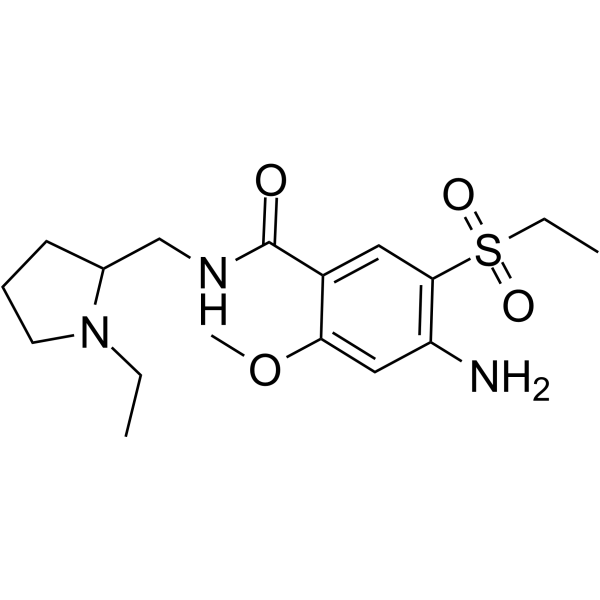
Amisulpride ((Rac)-Aramisulpride) is a racemic (50:50) mixture of the R-Amisulpride (HY-109167) and S-Amisulpride (HY-126068). Amisulpride is a dopamine D2/D3 receptor antagonist with Ki values of 2.8 and 3.2 nM for human dopamine b>D2 and b>D3, respectively. Amisulpride is a 5-HT7 receptor antagonist with a Ki of 44 nM. Amisulpride can be used in psychiatric research.
Nur für Forschungszwecke. Wir verkaufen nicht an Patienten.
- Reinheit : 99.77%
- CAS. Nr.: 71675-85-9
- Formel: C17H27N3O4S
- Molecular Weight:369.48
-
Speicherung:Powder -20°C, 3 years , 4°C, 2 years ; In solvent -80°C, 2 years , -20°C, 1 year

To place orders, for customer services and technical support, please contact: MedChemExpress USA
Tel: 609-228-6898 E-mail: [email protected] [email protected]


-
 Biologische Aktivität
-
Chemical Information
-
Lösungsmittel & Löslichkeit
- Reinheit & Dokumentation
- Verweise
-
 Help & FAQs


-
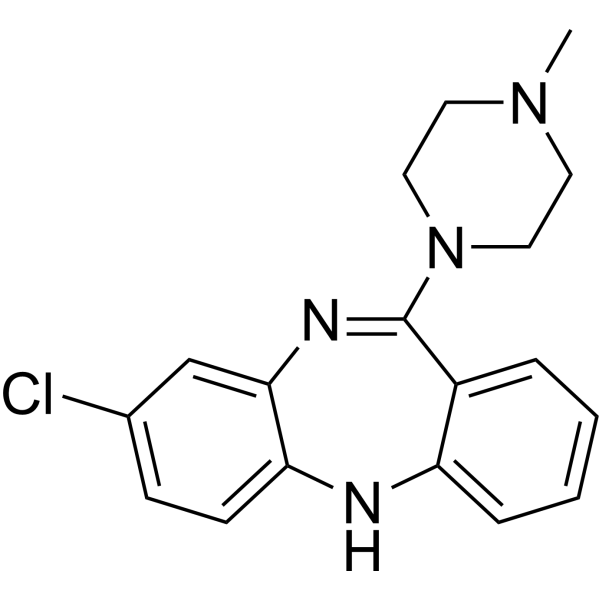
HY-14539
ClozapineAntipsychotic Agent -
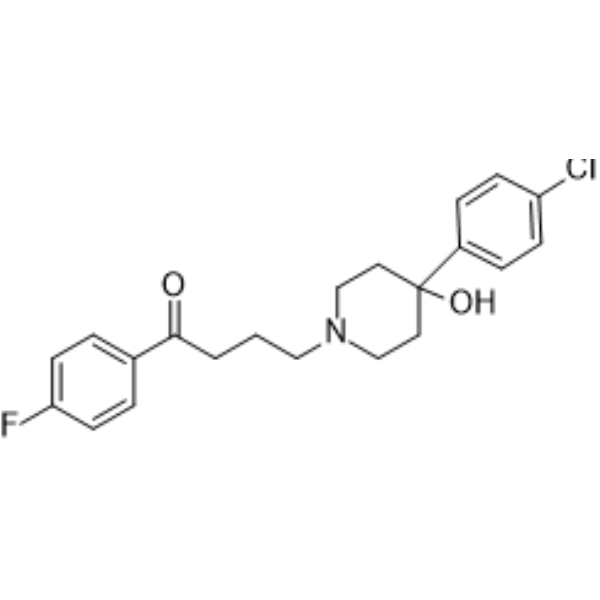
HY-14538
HaloperidolDopamine Receptor Antagonist -
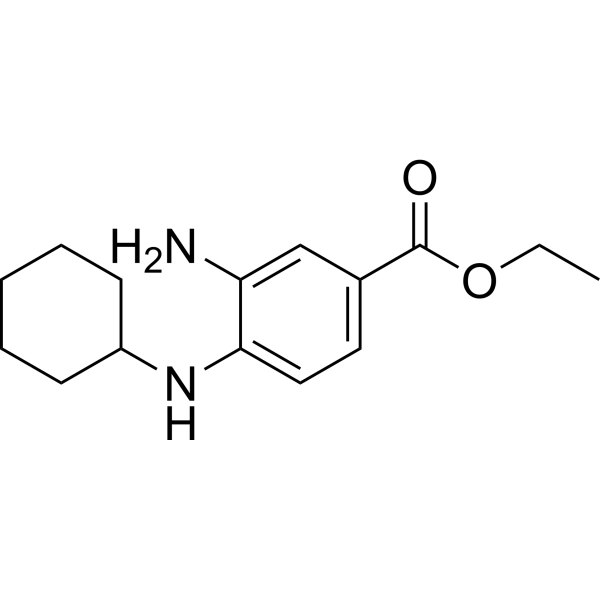
HY-100579
Ferrostatin-1Ferroptosis Inhibitor -
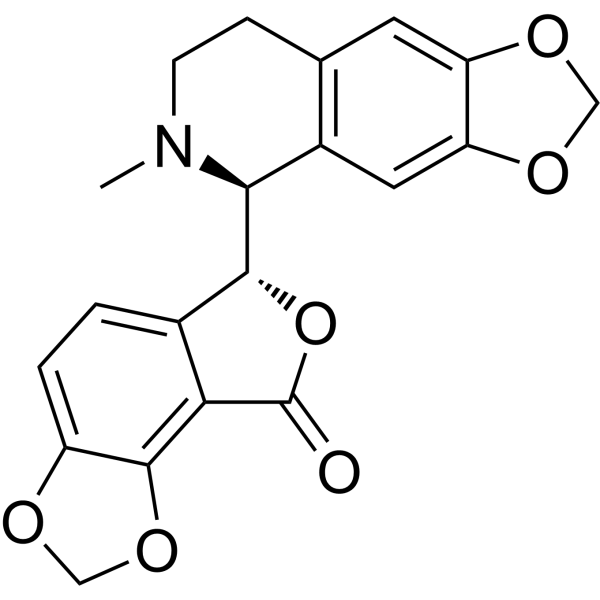
HY-N0219
BicucullineGABAA Receptor Antagonist -
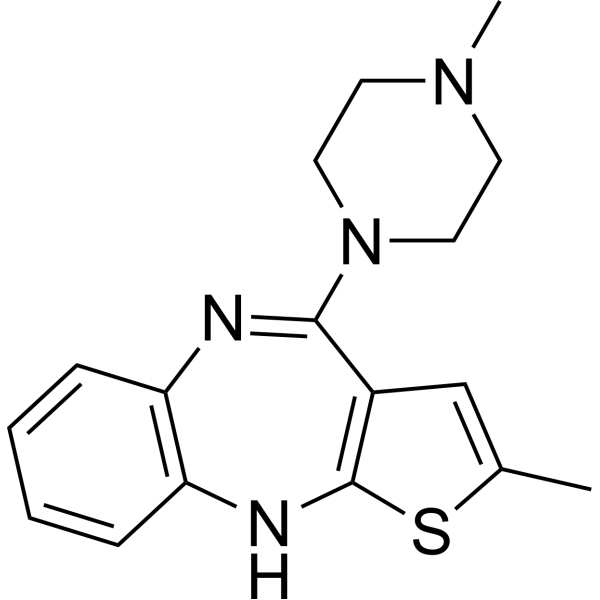
HY-14541
Olanzapine5-HT2/D1/D2 Antagonist -
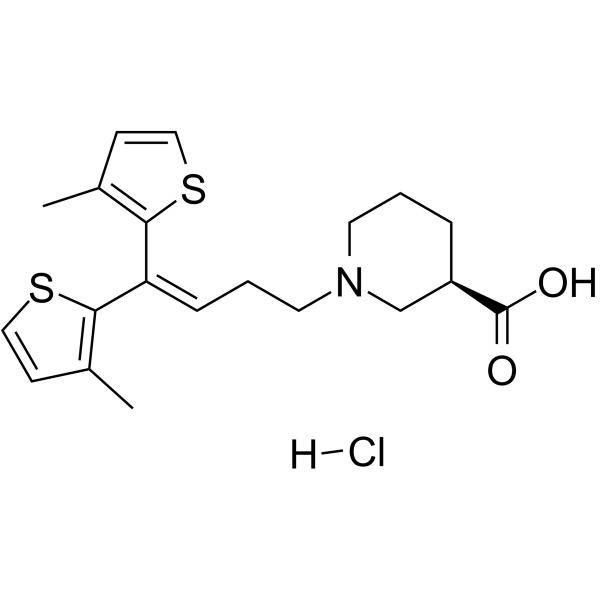
HY-B0696A
Tiagabine hydrochlorideGAT-1 Inhibitor -
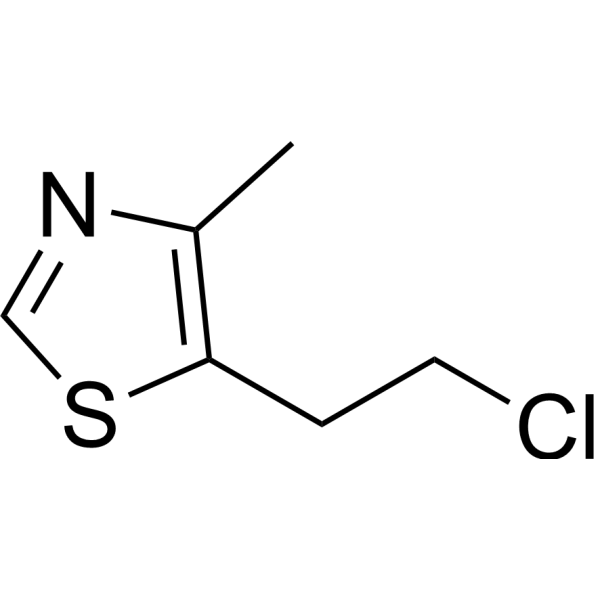
HY-129105
ClomethiazoleGABAA Agonist -
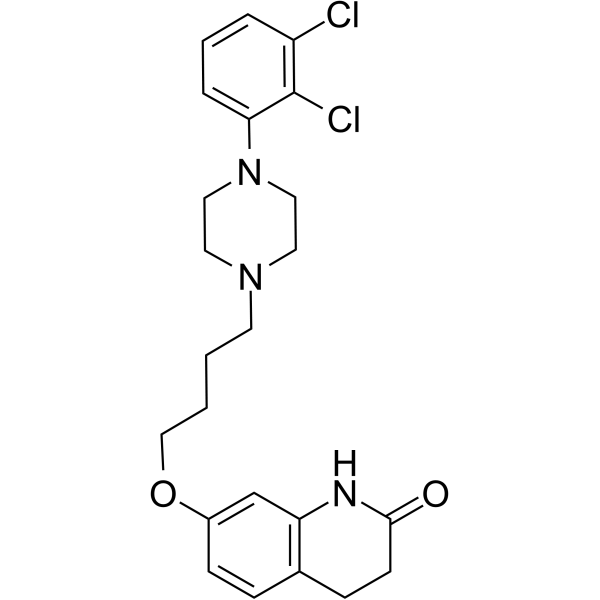
HY-14546
AripiprazoleD2/5-HT1A Agonist -
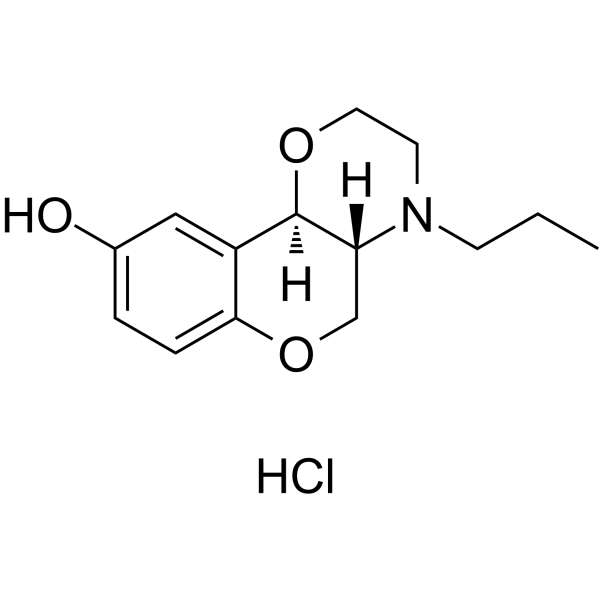
HY-110000
(+)-PD 128907 hydrochlorideDopamine Receptor Agonist -
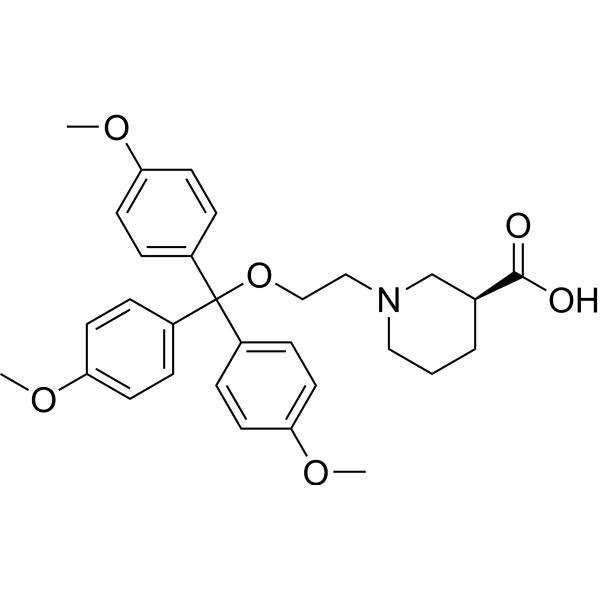
HY-103504
(S)-SNAP5114GABA Transporter Inhibitor -
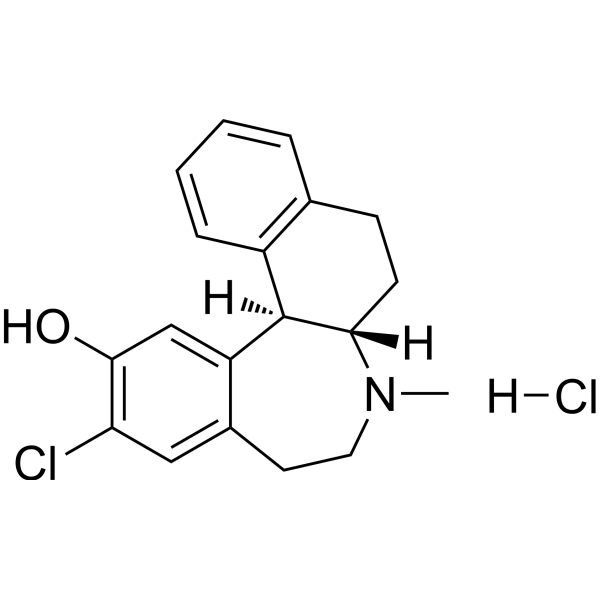
HY-14689
Ecopipam hydrochlorideD1/D5 Antagonist
Publications Citing Use of MedChemExpress (MCE) Amisulpride
MoreAlle Dopamine Receptor Isoform-spezifische Produkte anzeigen
MoreAlle 5-HT Receptor Isoform-spezifische Produkte anzeigen
More

Biologische Aktivität
Beschreibung
|
D3 Receptor 3.2 nM (Ki) |
Human D2 Receptor 2.8 nM (Ki) |
5-HT7 Receptor 44 nM (Ki) |
Cellular Effect
|
Cell Line

|
Type | Value | Description | References |
|---|---|---|---|---|
| CHO-K1 | IC50 |
3.04 nM
Compound: Amisulpride
|
Antagonistic activity at D2 receptor (unknown origin) expressed in CHOK1 cells co-expressing G-alpha 15 assessed as inhibition of dopamine-induced calcium flux by fluo-4 dye based FLIPR assay
Antagonistic activity at D2 receptor (unknown origin) expressed in CHOK1 cells co-expressing G-alpha 15 assessed as inhibition of dopamine-induced calcium flux by fluo-4 dye based FLIPR assay
|
[PMID: 27487565] |
In Vitro
Amisulpride is an atypical dopamine D2/D3 receptor antagonist with Kis of 2.8 and 3.2 nM for human dopamine D2 and D3, respectively. Amisulpride (100 nM) inhibits quinpirole-elicited [3H]thymidine incorporation with an IC50 value of 22±3 nM (n=3). Amisulpride slightly but significantly increases [3H]dopamine release from slices of the rat striatum (S2/S1=0.88±0.04 under control conditions, n=6; 1.04±0.08 in the presence of 100 nM Amisulpride,n=4; P<0.05) and opposes the inhibitory effects of 7-OH-DPAT in both brain areas[1].
MedChemExpress (MCE) has not independently confirmed the accuracy of these methods. They are for reference only.
In Vivo
MedChemExpress (MCE) has not independently confirmed the accuracy of these methods. They are for reference only.


Chemical Information
-
CAS. Nr. 71675-85-9
-
Appearance Solid
-
Molecular Weight 369.48
-
Formel C17H27N3O4S
-
Color White to off-white
-
SMILES
CCN1C(CNC(C2=CC(S(=O)(CC)=O)=C(N)C=C2OC)=O)CCC1
-
Synonyms
(Rac)-Aramisulpride; (Rac)-Esamisulpride; DAN 2163
-
Versand
Room temperature in continental US; may vary elsewhere.
-
Speicherung
Powder -20°C 3 years 4°C 2 years In solvent -80°C 2 years -20°C 1 year


Publications (2)
-
Journal Impact Factor
-
Most Recent
-
ACS Environ Au
Machine Learning-Assisted Recognition of Environmental Sulfur-Containing Chemicals in Nontargeted Mass Spectrometry Analysis of Inadequate Mass Resolution. [Abstract]2025 Aug 5;5(6):573-582. PMID: 41277996 -
Anal Chem
Exposome-Scale Investigation of Cl-/Br-Containing Chemicals Using High-Resolution Mass Spectrometry, Multistage Machine Learning, and Cloud Computing. [Abstract]2025 Jun 3;97(21):11099-11109. PMID: 40401576


Lösungsmittel & Löslichkeit
In Vitro:
DMSO : 50 mg/mL (135.33 mM; Need ultrasonic; Hygroscopic DMSO has a significant impact on the solubility of product, please use newly opened DMSO)
H2O : 0.2 mg/mL (0.54 mM; Need ultrasonic)
Please refer to the solubility information to select the appropriate solvent. Once prepared, please aliquot and store the solution to prevent product inactivation from repeated freeze-thaw cycles.
Storage method and period of stock solution: -80°C, 2 years; -20°C, 1 year. When stored at -80°C, please use it within 2 years. When stored at -20°C, please use it within 1 year.
* Note: If you choose water as the stock solution, please dilute it to the working solution, then filter and sterilize it with a 0.22 μm filter before use.
Please refer to the solubility information to select the appropriate solvent. Once prepared, please aliquot and store the solution to prevent product inactivation from repeated freeze-thaw cycles.
Storage method and period of stock solution: -80°C, 2 years; -20°C, 1 year. When stored at -80°C, please use it within 2 years. When stored at -20°C, please use it within 1 year.
* Note: If you choose water as the stock solution, please dilute it to the working solution, then filter and sterilize it with a 0.22 μm filter before use.
Konzentration (Stammlösung) × Volumen (Stammlösung) = Konzentration (Ziellösung) × Volumen (Ziellösung)
In Vivo:
Select the appropriate dissolution method based on your experimental animal and administration route.
- For the following dissolution methods, please ensure to first prepare a clear stock solution using an In Vitro approach and then sequentially add co-solvents:
- To ensure reliable experimental results, the clarified stock solution can be appropriately stored based on storage conditions. As for the working solution for In Vivo experiments, it is recommended to prepare freshly and use it on the same day.
- The percentages shown for the solvents indicate their volumetric ratio in the final prepared solution. If precipitation or phase separation occurs during preparation, heat and/or sonication can be used to aid dissolution.
Add each solvent one by one: 10% DMSO 40% PEG300 5% Tween-80 45% Saline
Solubility: ≥ 2.5 mg/mL (6.77 mM); Clear solution
This protocol yields a clear solution of ≥ 2.5 mg/mL (saturation unknown).
Taking 1 mL working solution as an example, add 100 μL DMSO stock solution (25.0 mg/mL) to 400 μL PEG300, and mix evenly; then add 50 μL Tween-80 and mix evenly; then add 450 μL Saline to adjust the volume to 1 mL.
Preparation of Saline: Dissolve 0.9 g sodium chloride in ddH₂O and dilute to 100 mL to obtain a clear Saline solution.
Add each solvent one by one: 10% DMSO 90% (20% SBE-β-CD in Saline)
Solubility: ≥ 2.5 mg/mL (6.77 mM); Clear solution
This protocol yields a clear solution of ≥ 2.5 mg/mL (saturation unknown).
Taking 1 mL working solution as an example, add 100 μL DMSO stock solution (25.0 mg/mL) to 900 μL 20% SBE-β-CD in Saline, and mix evenly.
Preparation of 20% SBE-β-CD in Saline (4°C, storage for one week): 2 g SBE-β-CD powder is dissolved in 10 mL Saline, completely dissolve until clear.
In Vivo Dissolution Calculator
Please enter the basic information of animal experiments:
-
-
-
-
Recommended: Prepare an additional quantity of animals to account for potential losses during experiments.
Please enter your animal formula composition:
-
%DMSO +
Recommended: Keep the proportion of DMSO in working solution below 2% if your animal is weak.
-
%+
-
+%Tween-80 + +
-
%Saline +
The co-solvents required include: DMSO, . All of co-solvents are available by MedChemExpress (MCE). , Tween 80. All of co-solvents are available by MedChemExpress (MCE).
Working solution concentration: 0.22 mg/mL
Method for preparing stock solution: mg drug dissolved in μL DMSO. Stock solution concentration: mg/mL.
1. Take μL DMSO stock solution;
2. Add μL .
μL , mix evenly;
3. Then add μL Tween 80, mix evenly;
4. Then add μL
Please ensure that the stock solution in the first step is dissolved to a clear state, and add co-solvents in sequence. You can use ultrasonic heating (ultrasonic cleaner, recommended frequency 20-40 kHz), vortexing, etc. to assist dissolution.


Reinheit & Dokumentation
-
Data Sheet (281 KB)
-
SDS (396 KB)
- English - EN (396 KB)
- Français - FR (396 KB)
- Deutsch - DE (396 KB)
- Norwegian - NO (396 KB)
- Español - ES (396 KB)
- Swedish - SV (396 KB)
- Italian - IT (396 KB)
- Korean - KR (396 KB)
- Portuguese - PT (396 KB)
-
Handling Instructions (2659 KB)
Verweise
[1]. Schoemaker H, et al. Neurochemical characteristics of amisulpride, an atypical dopamine D2/D3 receptor antagonist with both presynaptic and limbic selectivity. J Pharmacol Exp Ther. 1997 Jan;280(1):83-97. [Content Brief]
[2]. Pawar GR, et al. Evaluation of antidepressant like property of amisulpride per se and its comparison with fluoxetine and olanzapine using forced swimming test in albino mice. Acta Pol Pharm. 2009 May-Jun;66(3):327-31. [Content Brief]


Complete Stock Solution Preparation Table
Please refer to the solubility information to select the appropriate solvent. Once prepared, please aliquot and store the solution to prevent product inactivation from repeated freeze-thaw cycles.
Storage method and period of stock solution: -80°C, 2 years; -20°C, 1 year. When stored at -80°C, please use it within 2 years. When stored at -20°C, please use it within 1 year.
| Optional Solvent | Concentration Solvent Mass | 1 mg | 5 mg | 10 mg | 25 mg |
|---|---|---|---|---|---|
| DMSO | 1 mM | 2.7065 mL | 13.5325 mL | 27.0651 mL | 67.6627 mL |
| 5 mM | 0.5413 mL | 2.7065 mL | 5.4130 mL | 13.5325 mL | |
| 10 mM | 0.2707 mL | 1.3533 mL | 2.7065 mL | 6.7663 mL | |
| 15 mM | 0.1804 mL | 0.9022 mL | 1.8043 mL | 4.5108 mL | |
| 20 mM | 0.1353 mL | 0.6766 mL | 1.3533 mL | 3.3831 mL | |
| 25 mM | 0.1083 mL | 0.5413 mL | 1.0826 mL | 2.7065 mL | |
| 30 mM | 0.0902 mL | 0.4511 mL | 0.9022 mL | 2.2554 mL | |
| 40 mM | 0.0677 mL | 0.3383 mL | 0.6766 mL | 1.6916 mL | |
| 50 mM | 0.0541 mL | 0.2707 mL | 0.5413 mL | 1.3533 mL | |
| 60 mM | 0.0451 mL | 0.2255 mL | 0.4511 mL | 1.1277 mL | |
| 80 mM | 0.0338 mL | 0.1692 mL | 0.3383 mL | 0.8458 mL | |
| 100 mM | 0.0271 mL | 0.1353 mL | 0.2707 mL | 0.6766 mL |
* Note: If you choose water as the stock solution, please dilute it to the working solution, then filter and sterilize it with a 0.22 μm filter before use.


Amisulpride Related Classifications
HY-14545 Related Classifications
 Powered by Bioz