Search Result
Results for "
cy5-
" in MedChemExpress (MCE) Product Catalog:
19
Biochemical Assay Reagents
| Cat. No. |
Product Name |
Target |
Research Areas |
Chemical Structure |
-
- HY-D0821
-
|
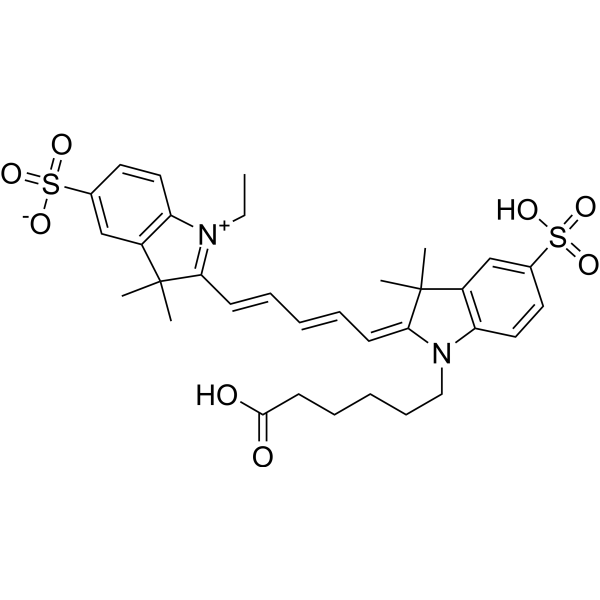
Sulfo-cyanine5
|
Fluorescent Dye
|
Others
|
|
CY5 is a CY dye. CY, short for Cyanine, is a compound consisting of two nitrogen atoms connected by an odd number of methyl units. Cyanine compounds have the characteristics of long wavelength, adjustable absorption and emission, high extinction coefficient, good water solubility and relatively simple synthesis . CY dyes are of en used for the labeling of proteins, antibodies and small molecular compounds. For the labeling of protein antibodies, the combination can be completed through a simple mixing reaction. Below, we introduce the labeling method of protein antibody labeling, which has certain reference significance .
|
-
-
- HY-D0819
-
|
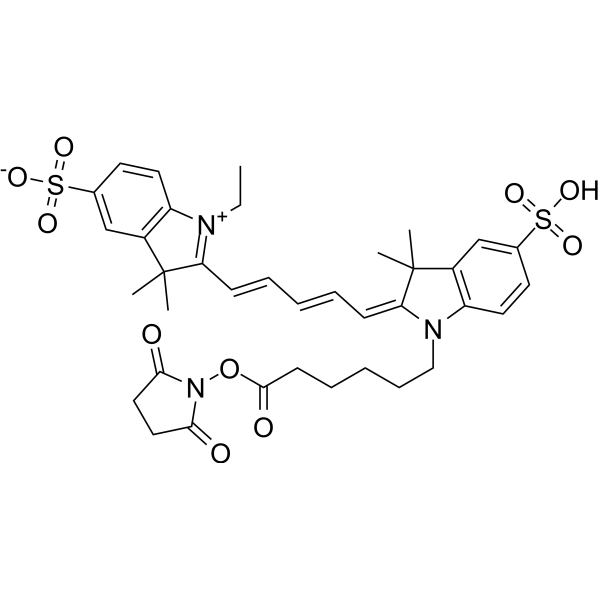
cy5 NHS Ester; Sulfo-cyanine5 Succinimidyl Ester
|
Fluorescent Dye
|
Others
|
|
Cy5-SE (Cy5 NHS Ester) is a reactive dye for the labeling of amino-groups in peptides, proteins, and oligonucleotides. This dye requires small amount of organic co-solvent (such as DMF or DMSO) to be used in labeling reaction. This reagent is ideal for very cost-efficient labeling of soluble proteins, as well as all kinds of peptides and oligonucleotides. This reagent also works well in organic solvents for small molecule labeling.
Excitation (nm):649, Emission (nm): 670.
|
-
-
- HY-138200
-
|
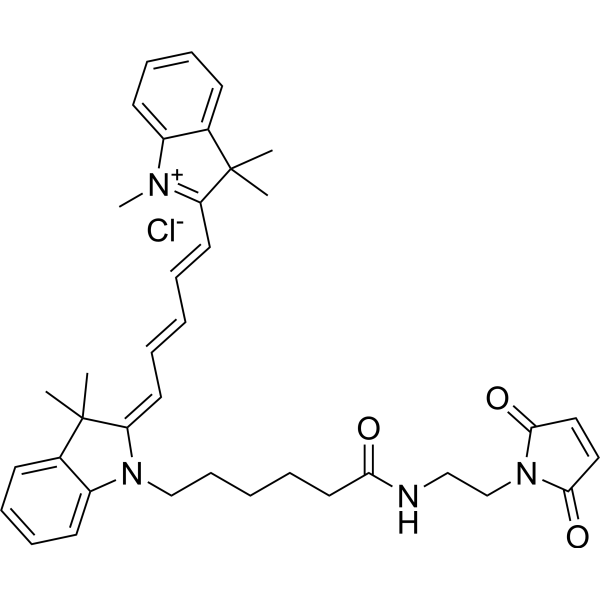
cyanine5 maleimide
|
DNA Stain
Fluorescent Dye
|
Others
|
|
Cy5 maleimide (Cyanine5 maleimide) is a single-reactive dye containing a maleimide group and a CY5 fluorescent group, which can selectively couple with a thiol group. Cy5 maleimide can be used to label antibodies, peptides, or proteins (Ex/Em = 646/664 nm).
|
-
-
- HY-D1068
-
|
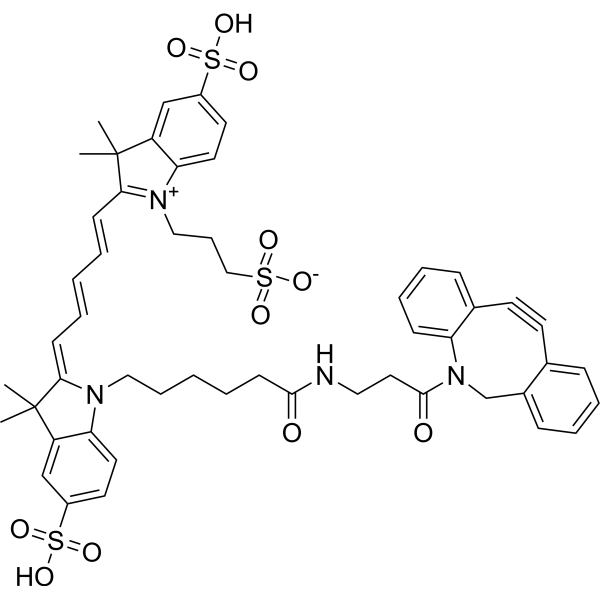
DBCO-Sulfo-cy5
|
Fluorescent Dye
|
Others
|
|
Cy5-DBCO (DBCO-Sulfo-Cy5) is a near-infrared (NIR)red fluorescent dye with λabsand λem of 646nm and 670 nm, respectively. Cy5-DBCO (DBCO-Sulfo-Cy5) is not suitable for staining intracellular components of permeabilezed cell, it may exhibits a high background. Cy5-DBCO is a click chemistry reagent, it contains a DBCO group that can undergo strain-promoted alkyne-azide cycloaddition (SPAAC) with molecules containing Azide groups.
|
-
-
- HY-D0819A
-
|
cy5 NHS Ester triethylamine salt; Sulfo-cyanine5 Succinimidyl Ester triethylamine salt
|
Fluorescent Dye
|
Others
|
|
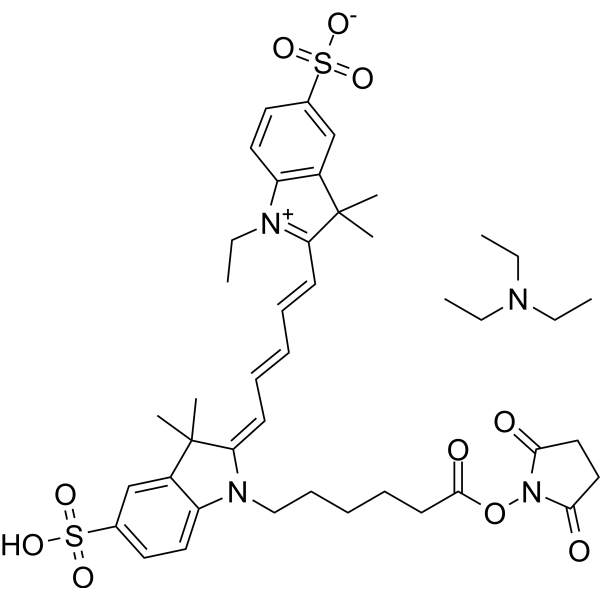
Cy5-SE (Cy5 NHS Ester) triethylamine salt is a reactive dye for the labeling of amino-groups in peptides, proteins, and oligonucleotides. Cy5-SE triethylamine salt is ideal for very cost-efficient labeling of soluble proteins, as well as all kinds of peptides and oligonucleotides Ex=649 nm; Em=670 nm) .
|
-
-
- HY-150145A
-
|
|
Nucleoside Antimetabolite/Analog
Fluorescent Dye
|
Others
|
|
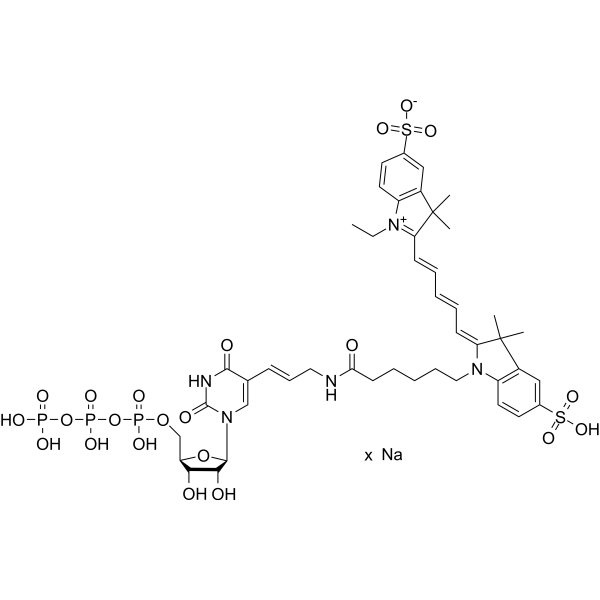
Cy5-UTP sodium (10 mM in water) is a fluorescently labeled ribonucleotide triphosphate that can be used as a substrate for terminal deoxynucleotide transferase (TdT). Cy5-UTP sodium can be used to label RNA probes generated in vitro (Ex/Em: 650/665 nm). Cy5-UTP sodium can be applied in FISH, multi-color fluorescence analysis, especially in dual-color expression arrays combined with Cy5-UTP .
|
-
-
- HY-D0832
-
CY5-N3
1 Publications Verification
Sulfo-cyanine5-azide
|
DNA Stain
Fluorescent Dye
|
Infection
|
|
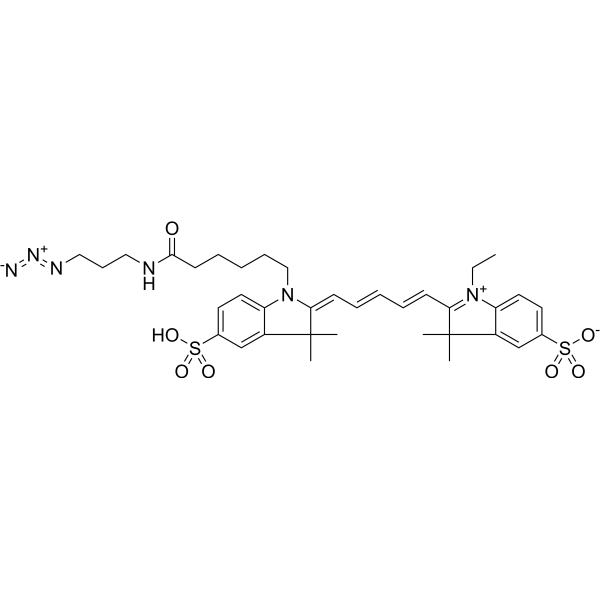
CY5-N3 (Sulfo-Cyanine5-azide) is a Cy5-azide, which is a fluorescent dye (ex/em: 646/662 nm). CY5-N3 is cell membrane permeable and can be used for live cell imaging. CY5-N3 can be used in cell imagine by Click reaction .
|
-
-
- HY-112624F1
-
|
|
Fluorescent Dye
|
Others
|
|
CY5-Dextran (MW 4000) is a fluorescent dye CY5 (HY-D0821)-labeled Dextran (HY-112624). Dextran-CY5 (MW 4000) can be used to visualize the specific subcellular distribution of dextran at the nanoscale .
|
-

-
- HY-D1720
-
|
|
DNA/RNA Synthesis
|
Others
|
|
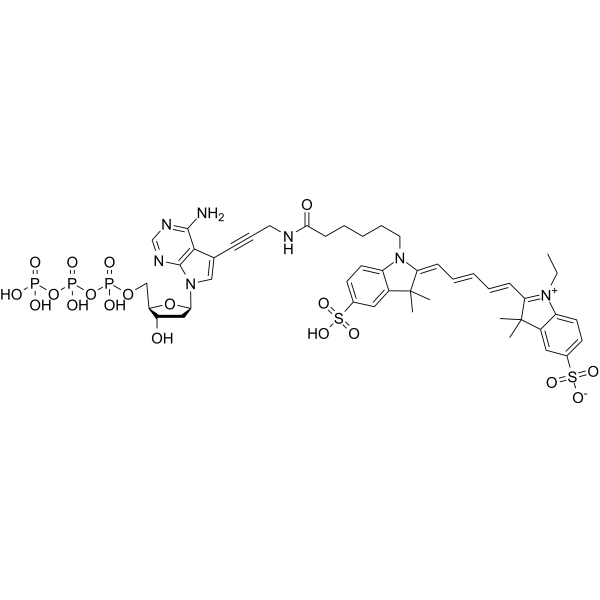
Cy5-dATP is a Cy5?(HY-D0821)-labeled dATP?(HY-136648). Cy5-dATP can be incorporated into a DNA primer .
|
-
-
- HY-D0967
-
|
|
Fluorescent Dye
|
Others
|
|
Cy5-bifunctional dye is a bifunctional dye used for covalent labeling of primary amines on proteins or oligonucleotides (Ex/Em = 649 nm/670 nm). Cy5-bifunctional dye can label recombinant annexin-V to assess phosphatidylserine exposure on the cell surface via flow cytometry. Cy5-bifunctional dye can label anti-human IgG (H + L) secondary antibodies. Cy5-bifunctional dye is applicable to studies of glanders and melioidosis .
|
-

-
- HY-D2100B
-
|
|
Fluorescent Dye
|
Others
|
|
Cy5-DSPE chloride is a far-infrared fluorescent phospholipid (λex/λem = 600/665 nm). Cy5-DSPE chloride is used to label liposomes, membranes and lipid nanoparticles, and can be applied to tracking and imaging studies of liposomes .
|
-

-
- HY-D1321A
-
|
cyanine5 amine TFA
|
Fluorescent Dye
|
Others
|
|
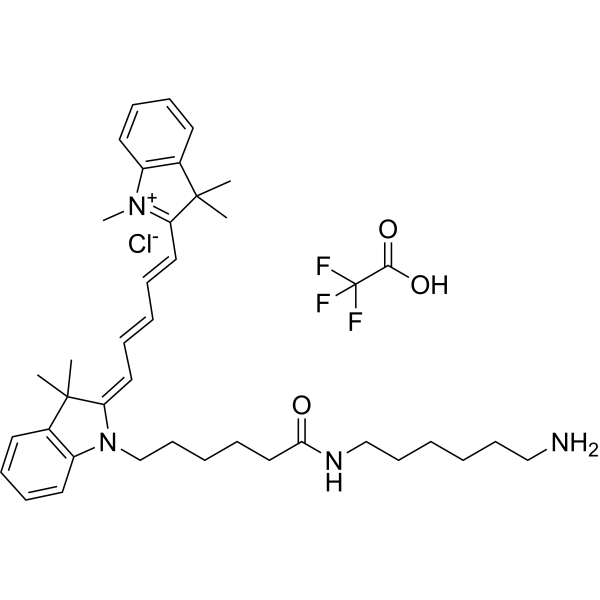
Cy 5 amine (Cyanine5 amine) TFA is a fluorescent dye. Cy 5 amine TFA can be used in the preparation of Cy5.5-labeled compound or polymers, which can be used for imaging cellular process and trafficking .
|
-
-
- HY-DY1067
-
|
|
Fluorescent Dye
DNA Stain
|
Others
|
Cy5 maleimide (solution) is a CY dye. CY, short for Cyanine, is a compound consisting of two nitrogen atoms connected by an odd number of methyl units. Cyanine compounds have the characteristics of long wavelength, adjustable absorption and emission, high extinction coefficient, good water solubility and relatively simple synthesis . CY dyes are of en used for the labeling of proteins, antibodies and small molecular compounds. For the labeling of protein antibodies, the combination can be completed through a simple mixing reaction. Below, we introduce the labeling method of protein antibody labeling, which has certain reference significance .
Solvent and concentration: DMSO: 10 mM
|
-

-
- HY-150145
-
|
|
Nucleoside Antimetabolite/Analog
Fluorescent Dye
|
Others
|
|
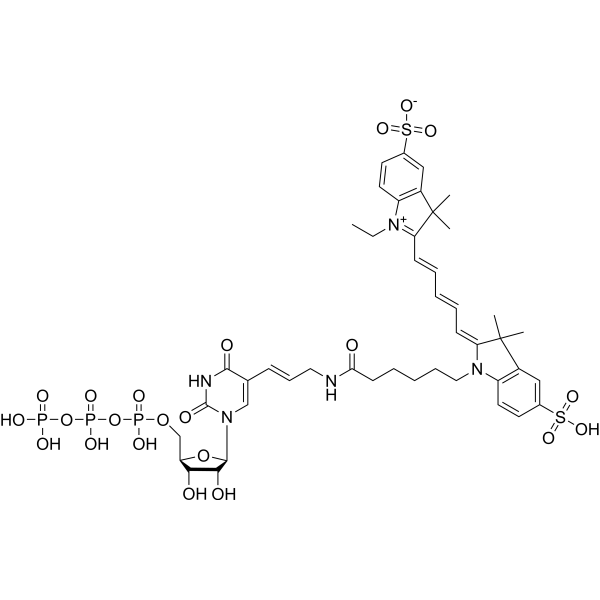
Cy5-UTP is a fluorescently labeled ribonucleotide triphosphate that can be used as a substrate for terminal deoxynucleotidyl transferase (TdT). Cy5-UTP can be employed to label RNA probes generated in vitro (Ex/Em: 650/665 nm). Cy5-UTP can be applied in FISH, multi-color fluorescence analysis, especially in dual-color expression arrays that combine with Cy5-UTP .
|
-
-
- HY-D2100
-
|
|
Fluorescent Dye
|
Others
|
|
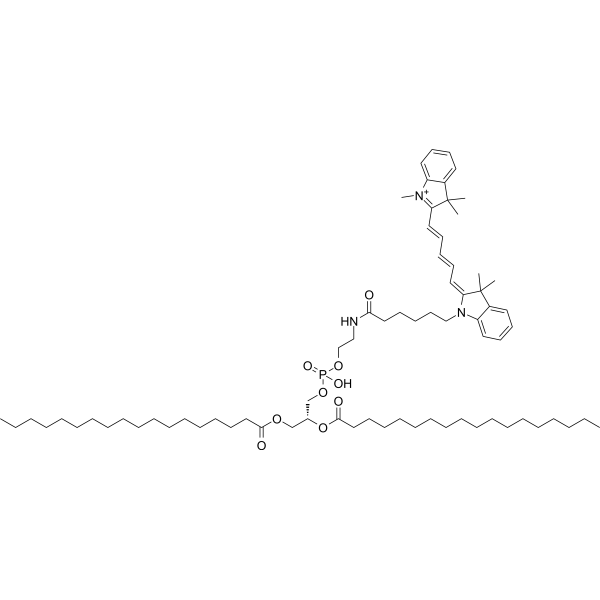
Cy5-DSPE is a far-infrared fluorescent phospholipid (λex/λem = 600/665 nm). Cy5-DSPE is used to label liposomes, membranes and lipid nanoparticles, and can be applied to tracking and imaging studies of liposomes .
|
-
-
- HY-D2465
-
|
|
Fluorescent Dye
|
Others
|
|
CY5-Dextran is a fluorescent dye CY5 (HY-D0821)- labeled Dextran (HY-112624). CY5 exhibits a maximal excitation wavelength of 633 nm, and a maximal emission wavelength of 670 nm. Dextran-CY5 can be used to visualize the specific subcellular distribution of dextran at the nanoscale .
|
-

-
- HY-149618
-
|
|
Fluorescent Dye
|
Others
|
|
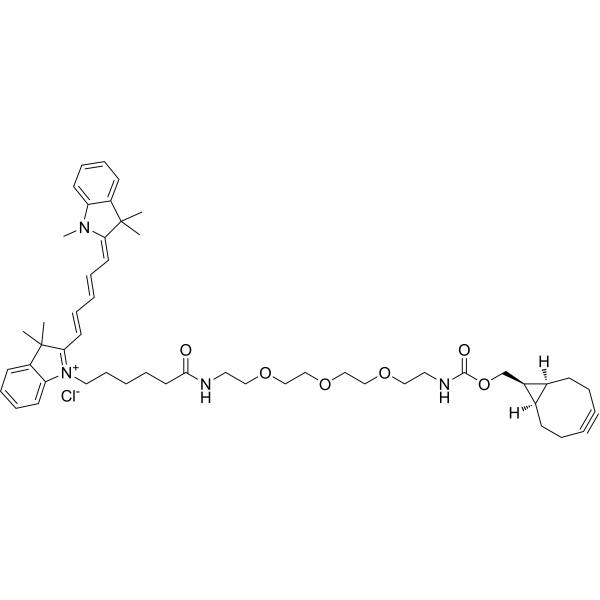
Cy5-PEG3-endo-BCN is a derivative of the Cyanine 5 (Cy5) (HY-D0821) dye bearing 3 PEG units. Cy5-PEG3-endo-BCN contains the lyophilic bidentate macrocyclic ligand endo-BCN, which allows for further synthesis of macrocyclic complexes. In click chemistry, endo-BCN forms stable triazoles with azide-containing molecules under catalyst-free conditions .
|
-
-
- HY-D2640
-
|
|
Fluorescent Dye
|
Others
|
|
Cy5 HA (MW 5000) is a hyaluronic acid labeled with CY5 (HY-D0821). Cy5 HA (MW 5000) is widely used for cell imaging and in vivo imaging of shallow tissue (Ex/Em = 633/670 nm).
|
-

-
- HY-D2422A
-
-

-
- HY-D2401F
-
|
|
Fluorescent Dye
|
Others
|
|
Cy5-Polystyrene microsphere (100 nm) is a Cy5 (HY-D0821)-labeled microsphere that can be used for bioimaging and drug delivery .
|
-

-
- HY-P1362F
-
|
cy5-Amyloid β Peptide (42-1)(human) Tris
|
Amyloid-β
|
Neurological Disease
|
|
Cy5-β-Amyloid (42-1), human is a Cy5 fluorescently-labelled β-Amyloid (42-1, human) peptide (λex= 633 nm and λem= 670 nm) .
|
-
-
- HY-D2647
-
|
|
Fluorescent Dye
|
Others
|
|
Cy5 HA (MW 500000) is a hyaluronic acid labeled with CY5 (HY-D0821). Cy5 HA (MW 500000) is widely used for cell imaging and in vivo imaging of shallow tissue (Ex/Em = 633/670 nm).
|
-

-
- HY-148947
-
|
|
Fluorescent Dye
Phosphoramidites
|
Others
|
|
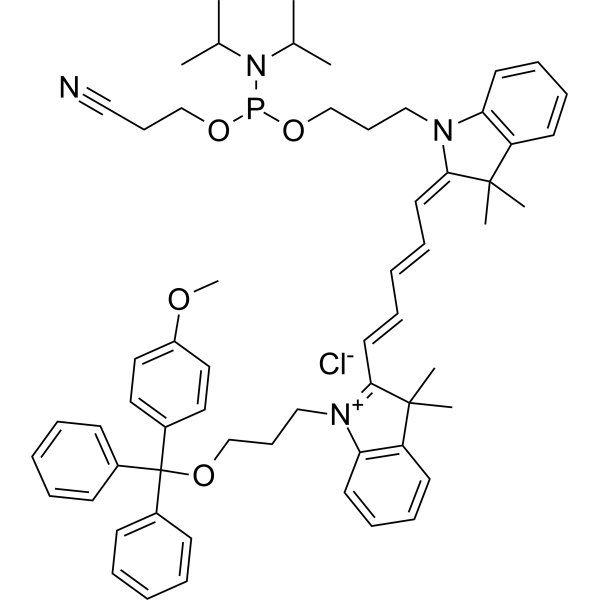
Cy5 Phosphoramidite is a fluorescent labeling reagent . Cy5 Phosphoramidite serves as a fluorescent tag for 3' terminal labeling of single-stranded DNA, enabling fluorescence-based nucleic acid detection, monitoring, quantification, and in vitro study .
|
-
-
- HY-D2489
-
|
|
Fluorescent Dye
|
Others
|
|
Cy5-tetrazine is a fluorescent dye. Cy5-tetrazine is a CY5 (HY-D0821) derivative contains a tetrazine moiety. Cyanine5.5 tetrazine can be used for in vivo imaging and low background applications. Cy5-tetrazine is a click chemistry reagent, it contains a Tetrazine group that can undergo an inverse electron demand Diels-Alder reaction (iEDDA) with molecules containing TCO groups .
|
-

-
- HY-D2143
-
|
|
Fluorescent Dye
|
Others
|
|
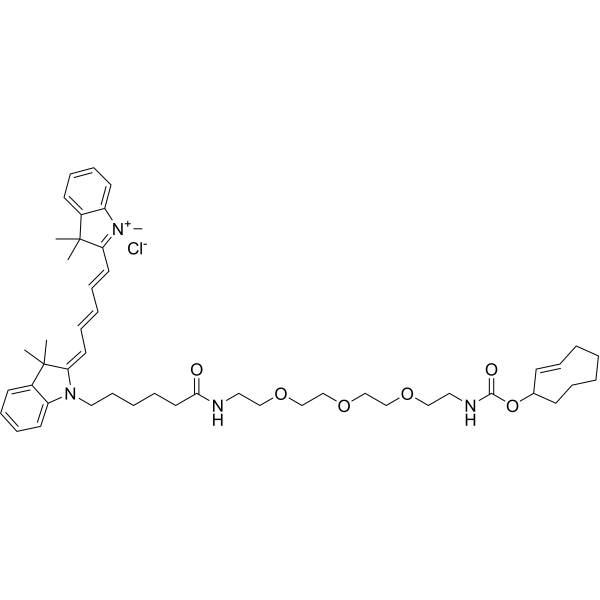
Cy5-PEG3-TCO is a dye derivative of Cyanine 5 (Cy5) (HY-D0821) containing 3 PEG units. Cy5-PEG3-TCO utilizes its own TCO group to undergo an inverse electron demand Diels-Alder reaction (iEDDA) with molecules bearing Tetrazine groups.
|
-
-
- HY-D2401F1
-
|
|
Fluorescent Dye
|
Others
|
|
Cy5-Polystyrene microsphere (20um) is a Cy5 (HY-D0821)-labeled microsphere that can be used for bioimaging and drug delivery .
|
-

-
- HY-137100
-
|
cyanine5 hydrazide
|
Fluorescent Dye
|
Others
|
|
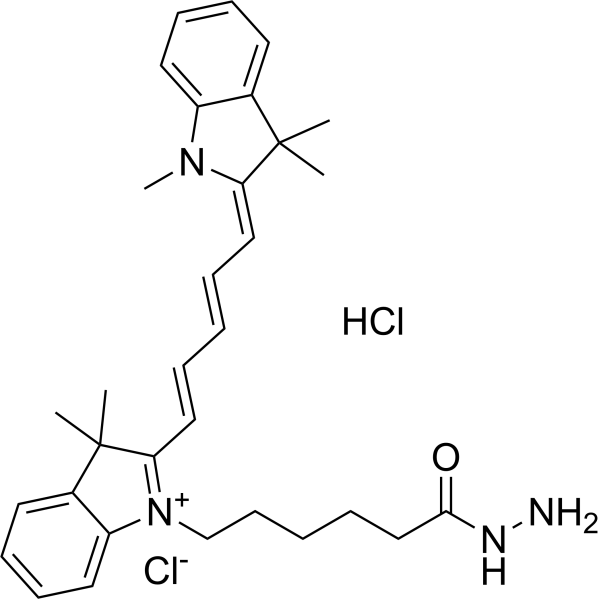
Cy 5 hydrazide (Cyanine5 hydrazide) is a fluorescent dye for aldehydes and ketones. Cy 5 hydrazide can be used for labeling proteins .
|
-
-
- HY-D2645
-
|
|
Fluorescent Dye
|
Others
|
|
Cy5 HA (MW 100000) is a hyaluronic acid labeled with CY5 (HY-D0821). Cy5 HA (MW 100000) is widely used for cell imaging and in vivo imaging of shallow tissue (Ex/Em = 633/670 nm).
|
-

-
- HY-D2638
-
|
|
Fluorescent Dye
|
Others
|
|
Cy5 HA (MW 3000) is a hyaluronic acid labeled with CY5 (HY-D0821). Cy5 HA (MW 3000) is widely used for cell imaging and in vivo imaging of shallow tissue (Ex/Em = 633/670 nm).
|
-

-
- HY-D1625
-
|
|
Fluorescent Dye
|
Others
|
|
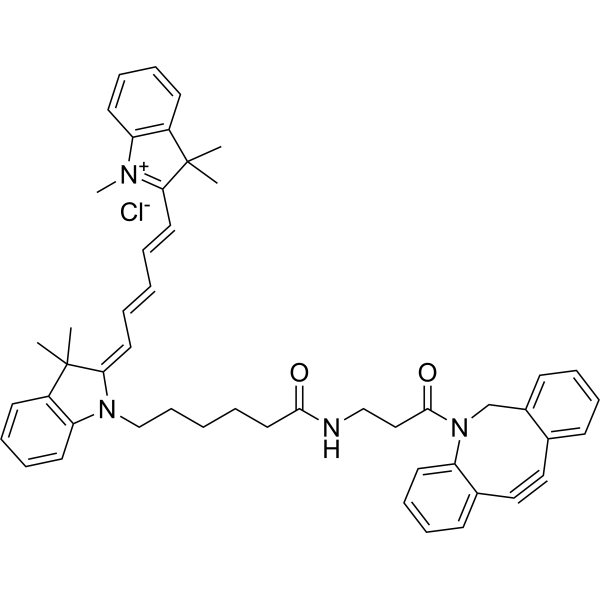
Cy5 DBCO chloride is an azide reaction probe and the addition of DBCO molecules allows the imaging of azide-labelled biomolecules by a copper-free "Click Chemistry" reaction . Cy5 DBCO (chloride) is a click chemistry reagent, it contains a DBCO group that can undergo strain-promoted alkyne-azide cycloaddition (SPAAC) with molecules containing Azide groups.
|
-
-
- HY-W998687
-
|
|
Fluorescent Dye
|
Others
|
|
Cy5 dimethyl is a free non-activated dye. This dye has limited water solubility, but can be dissolved in mixtures of water with organic phase (DMF, DMSO, alcohols) to obtain useful concentrations of the material in solution. This molecule can be considered non-reactive dye for the use in control samples, and for instrument calibration.
|
-

-
- HY-DY1064
-
|
|
Fluorescent Dye
|
Others
|
CY5 (solution) is a CY dye. CY, short for Cyanine, is a compound consisting of two nitrogen atoms connected by an odd number of methyl units. Cyanine compounds have the characteristics of long wavelength, adjustable absorption and emission, high extinction coefficient, good water solubility and relatively simple synthesis . CY dyes are of en used for the labeling of proteins, antibodies and small molecular compounds. For the labeling of protein antibodies, the combination can be completed through a simple mixing reaction. Below, we introduce the labeling method of protein antibody labeling, which has certain reference significance .
Solvent and concentration: DMSO: 10 mM
|
-

-
- HY-D2133
-
|
Alendronate-cy5
|
Fluorescent Dye
|
Others
|
|
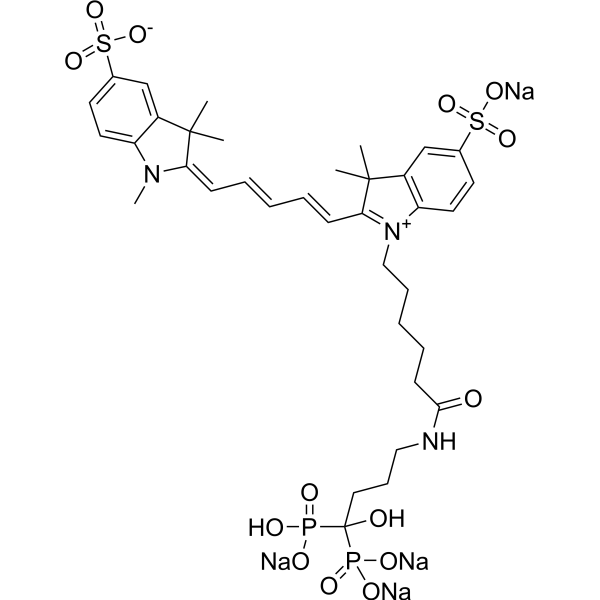
Cy5-ALN (Alendronate-Cy5) is a fluorescently labeled bisphosphonate probe .
|
-
-
- HY-D2147
-
|
|
Fluorescent Dye
|
Others
|
|
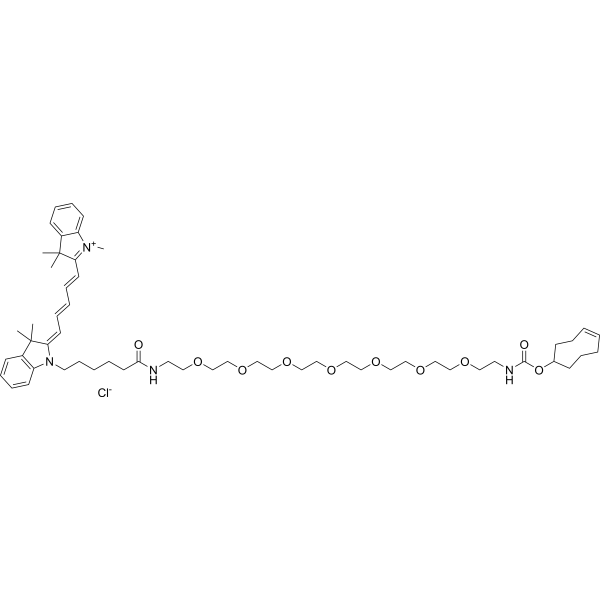
Cy5-PEG7-TCO4 is a dye derivative of Cyanine 5 (Cy5) (HY-D0821) containing 7 PEG units. Cy5-PEG7-TCO4 utilizes its own TCO group to undergo an inverse electron demand Diels-Alder reaction (iEDDA) with molecules bearing Tetrazine groups.
|
-
-
- HY-D2642
-
|
|
Fluorescent Dye
|
Others
|
|
Cy5 HA (MW 10000) is a hyaluronic acid labeled with CY5 (HY-D0821). Cy5 HA (MW 10000) is widely used for cell imaging and in vivo imaging of shallow tissue (Ex/Em = 633/670 nm).
|
-

-
- HY-D2646
-
|
|
Fluorescent Dye
|
Others
|
|
Cy5 HA (MW 200000) is a hyaluronic acid labeled with CY5 (HY-D0821). Cy5 HA (MW 200000) is widely used for cell imaging and in vivo imaging of shallow tissue (Ex/Em = 633/670 nm).
|
-

-
- HY-D2653
-
|
|
Fluorescent Dye
|
Others
|
|
Cy5 HA biotin 3000 is a biotinylated hyaluronic acid labeled with CY5 (HY-D0821). Cy5 HA biotin 3000 is widely used for cell imaging and in vivo imaging of shallow tissues (Ex/Em = 633/670 nm).
|
-

-
- HY-W753198
-
|
|
Fluorescent Dye
|
Others
|
|
CY5 triethylamine is a CY dye. CY, short for Cyanine, is a compound consisting of two nitrogen atoms connected by an odd number of methyl units. Cyanine compounds have the characteristics of long wavelength, adjustable absorption and emission, high extinction coefficient, good water solubility and relatively simple synthesis . CY dyes are of en used for the labeling of proteins, antibodies and small molecular compounds. For the labeling of protein antibodies, the combination can be completed through a simple mixing reaction. Below, we introduce the labeling method of protein antibody labeling, which has certain reference significance .
|
-

-
- HY-D2142
-
|
|
Fluorescent Dye
|
Others
|
|
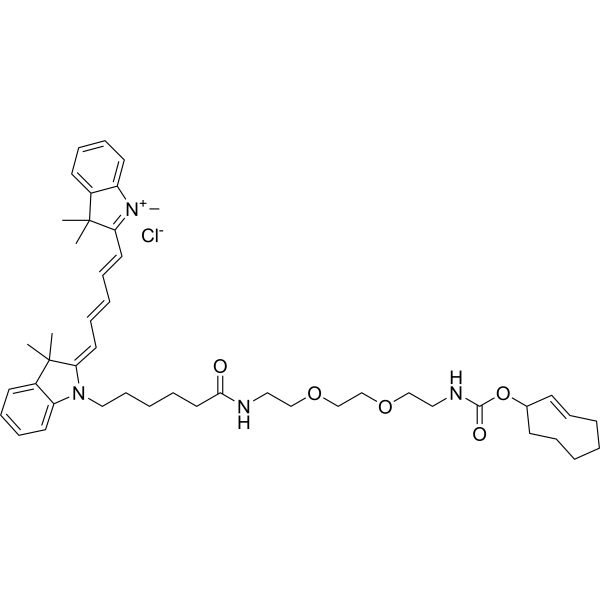
Cy5-PEG2-TCO is a fluorescent dye that reacts with tetrazines. Cy5-PEG2-TCO contains a TCO group that can undergo an inverse electron demand Diels-Alder reaction (iEDDA) with molecules containing a Tetrazine group.
|
-
-
- HY-D2663
-
|
|
Fluorescent Dye
|
Others
|
|
Cy5.5 HA (MW 500000) is a hyaluronic acid labeled with CY5.5 (HY-D0924). Cy5.5 HA (MW 200000) is widely used for cell imaging and in vivo imaging of shallow tissue (Ex/Em = 680/710 nm).
|
-

-
- HY-149620
-
|
|
Fluorescent Dye
|
Others
|
|
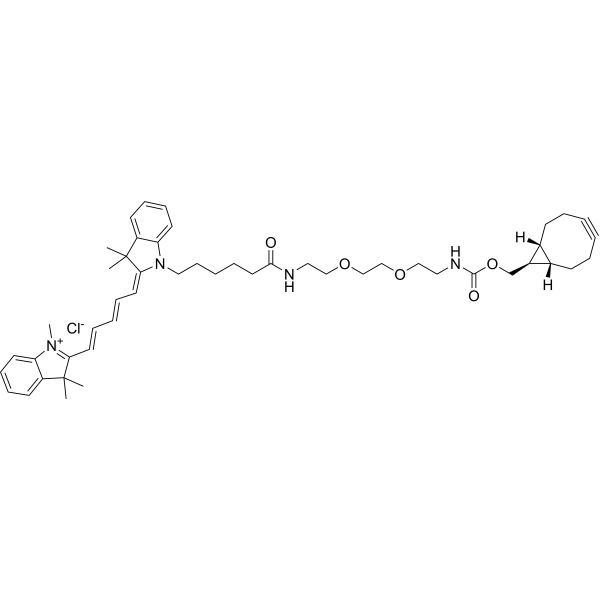
Cy5-PEG2-exo-BCN is a dye derivative of Cyanine 5 (Cy5) (HY-D0821) containing 2 PEG units. Cy5-PEG2-exo-BCN contains the lyophilic bidentate macrocyclic ligand BCN, which can further synthesize macrocyclic complexes. In click chemistry, BCN reacts with molecules containing azide groups to form stable triazoles in the absence of catalysts.
|
-
-
- HY-D2554
-
|
|
Fluorescent Dye
|
Others
|
|
Cy5.5-PEG5000-NH2 is a polyethylene glycol derivative containing Cy5.5 (HY-D0924) fluorescent dye and polyethylene glycol (PEG) and an amino group. The Cy5.5 fluorophore is commonly used in applications such as immunolabeling, nucleic acid labeling, fluorescence microscopy, and flow cytometry. Cy5.5 has an emission maximum around 710 nm. Cy5.5-PEG5000-NH2 can be used for fluorescence imaging, fluorescence tracing and fluorescence labeling.
|
-

-
- HY-D2553
-
|
|
Fluorescent Dye
|
Others
|
|
Cy5.5-PEG3400-NH2 is a polyethylene glycol derivative containing Cy5.5 (HY-D0924) fluorescent dye and polyethylene glycol (PEG) and an amino group. The Cy5.5 fluorophore is commonly used in applications such as immunolabeling, nucleic acid labeling, fluorescence microscopy, and flow cytometry. Cy5.5 has an emission maximum around 710 nm. Cy5.5-PEG3400-NH2 can be used for fluorescence imaging, fluorescence tracing and fluorescence labeling.
|
-

-
- HY-D2552
-
|
|
Fluorescent Dye
|
Others
|
|
Cy5.5-PEG1000-NH2 is a polyethylene glycol derivative containing Cy5.5 (HY-D0924) fluorescent dye and polyethylene glycol (PEG) and an amino group. The Cy5.5 fluorophore is commonly used in applications such as immunolabeling, nucleic acid labeling, fluorescence microscopy, and flow cytometry. Cy5.5 has an emission maximum around 710 nm. Cy5.5-PEG1000-NH2 can be used for fluorescence imaging, fluorescence tracing and fluorescence labeling.
|
-

-
- HY-D2555
-
|
|
Fluorescent Dye
|
Others
|
|
Cy5.5-PEG10000-NH2 is a polyethylene glycol derivative containing Cy5.5 (HY-D0924) fluorescent dye and polyethylene glycol (PEG) and an amino group. The Cy5.5 fluorophore is commonly used in applications such as immunolabeling, nucleic acid labeling, fluorescence microscopy, and flow cytometry. Cy5.5 has an emission maximum around 710 nm. Cy5.5-PEG10000-NH2 can be used for fluorescence imaging, fluorescence tracing and fluorescence labeling.
|
-

-
- HY-D2671
-
|
|
Fluorescent Dye
|
Others
|
|
Cy5.5 HA biotin 10000 is a biotinylated hyaluronic acid labeled with CY5.5 (HY-D0924). Cy5.5 HA biotin 10000 is widely used for cell imaging and in vivo imaging of shallow tissues (Ex/Em = 680/710 nm).
|
-

-
- HY-D2641
-
|
|
Fluorescent Dye
|
Others
|
|
Cy5 HA (MW 7000) is a hyaluronic acid labeled with CY5 (HY-D0821). Cy5 HA (MW 7000) is widely used for cell imaging and in vivo imaging of shallow tissue (Ex/Em = 633/670 nm).
|
-

-
- HY-D2643
-
|
|
Fluorescent Dye
|
Others
|
|
Cy5 HA (MW 50000) is a hyaluronic acid labeled with CY5 (HY-D0821). Cy5 HA (MW 50000) is widely used for cell imaging and in vivo imaging of shallow tissue (Ex/Em = 633/670 nm).
|
-

-
- HY-D2651
-
|
|
Fluorescent Dye
|
Others
|
|
Cy5 HA MA (MW 50000) is a hyaluronic acid methacrylate labeled with CY5 (HY-D0821). Cy5 HA MA (MW 50000) is widely used in the fields of biolabeling and imaging, drug delivery and tissue engineering and regenerative medicine (Ex/Em = 633/670 nm).
|
-

-
- HY-D2649
-
|
|
Fluorescent Dye
|
Others
|
|
Cy5 HA MA (MW 5000) is a hyaluronic acid methacrylate labeled with CY5 (HY-D0821). Cy5 HA MA (MW 5000) is widely used in the fields of biolabeling and imaging, drug delivery and tissue engineering and regenerative medicine (Ex/Em = 633/670 nm).
|
-

- HY-D2650
-
|
|
Fluorescent Dye
|
Others
|
|
Cy5 HA MA (MW 10000) is a hyaluronic acid methacrylate labeled with CY5 (HY-D0821). Cy5 HA MA (MW 10000) is widely used in the fields of biolabeling and imaging, drug delivery and tissue engineering and regenerative medicine (Ex/Em = 633/670 nm).
|
-

- HY-D2648
-
|
|
Fluorescent Dye
|
Others
|
|
Cy5 HA MA (MW 3000) is a hyaluronic acid methacrylate labeled with CY5 (HY-D0821). Cy5 HA MA (MW 3000) is widely used in the fields of biolabeling and imaging, drug delivery and tissue engineering and regenerative medicine (Ex/Em = 633/670 nm).
|
-

- HY-D2655
-
|
|
Fluorescent Dye
|
Others
|
|
Cy5 HA biotin 10000 is a biotinylated hyaluronic acid labeled with CY5 (HY-D0821). Cy5 HA biotin 10000 is widely used for cell imaging and in vivo imaging of shallow tissues (Ex/Em = 633/670 nm).
|
-

- HY-D2654
-
|
|
Fluorescent Dye
|
Others
|
|
Cy5 HA biotin 5000 is a biotinylated hyaluronic acid labeled with CY5 (HY-D0821). Cy5 HA biotin 5000 is widely used for cell imaging and in vivo imaging of shallow tissues (Ex/Em = 633/670 nm).
|
-

- HY-D148410F
-
|
cy5-STK-001 negative control
|
Fluorescent Dye
|
Neurological Disease
|
|
Cy5-Zorevunensen negative control (Cy5-STK-001 negative control) is an antisense oligonucleotide labeled with the fluorescent molecule Cy5, which can be used as a negative control for Zorevunersen (HY-148410) .
|
-

- HY-D2551
-
|
|
Fluorescent Dye
|
Others
|
|
Cy5-PEG5000-FA is a fluorescently labeled biomolecule consisting of Cy5 (HY-D0821) fluorescent dye, polyethylene glycol (PEG), and Folic acid (FA) (HY-16637). Cy5 is commonly used in applications such as immunolabeling and nucleic acid labeling. The maximum emission wavelength of Cy5 is approximately 670 nm.
|
-

- HY-D2550
-
|
|
Fluorescent Dye
|
Others
|
|
Cy5-PEG2000-FA is a fluorescently labeled biomolecule consisting of Cy5 (HY-D0821) fluorescent dye, polyethylene glycol (PEG), and Folic acid (FA) (HY-16637). Cy5 is commonly used in applications such as immunolabeling and nucleic acid labeling. The maximum emission wavelength of Cy5 is approximately 670 nm.
|
-

- HY-D2548
-
|
|
Fluorescent Dye
|
Others
|
|
Cy5-PEG2000-DBCO is a fluorescent probe containing Cy5 (HY-D0821) dye. Cy5-PEG2000-DBCO contains a DBCO group that can undergo strain-promoted alkyne-azide cycloaddition (SPAAC) with molecules containing Azide groups.
|
-

- HY-D2549
-
|
|
Fluorescent Dye
|
Others
|
|
Cy5-PEG5000-DBCO is a fluorescent probe containing Cy5 (HY-D0821) dye. Cy5-PEG5000-DBCO contains a DBCO group that can undergo strain-promoted alkyne-azide cycloaddition (SPAAC) with molecules containing Azide groups.
|
-

- HY-D2100A
-
|
|
Fluorescent Dye
|
Others
|
|
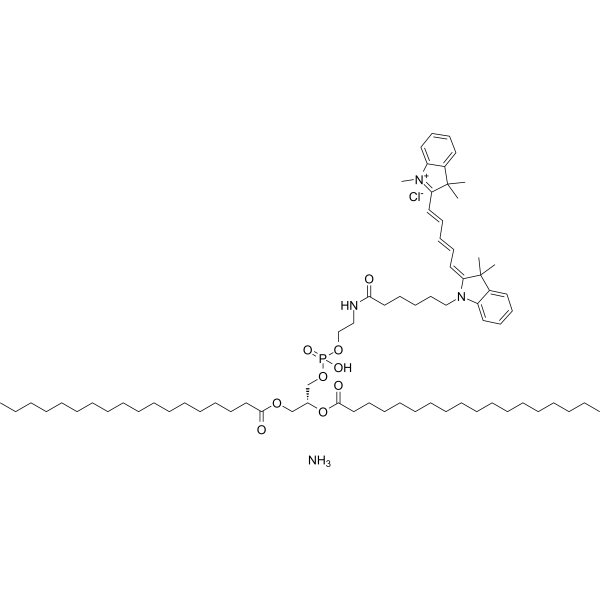
Cy5-DSPE chloride ammonium is a far-infrared fluorescent phospholipid (λex/λem = 600/665 nm). Cy5-DSPE chloride ammonium is used to label liposomes, membranes and lipid nanoparticles, and can be applied to tracking and imaging studies of liposomes .
|
-
- HY-D2546
-
|
|
Fluorescent Dye
|
Others
|
|
Cy5-PEG2000-biotin is a polyethylene glycol derivative containing Cy5 (HY-D0821) fluorescent dye and polyethylene glycol (PEG) and a Biotin. Biotin can bind with high affinity to streptavidin or avidin. Cy5-PEG2000-biotin plays an important role in the specific capture and detection of biomolecules.
|
-

- HY-D2547
-
|
|
Fluorescent Dye
|
Others
|
|
Cy5-PEG5000-biotin is a polyethylene glycol derivative containing Cy5 (HY-D0821) fluorescent dye and polyethylene glycol (PEG) and a Biotin. Biotin can bind with high affinity to streptavidin or avidin. Cy5-PEG5000-biotin plays an important role in the specific capture and detection of biomolecules.
|
-

- HY-D2134
-
|
|
Fluorescent Dye
|
Others
|
|
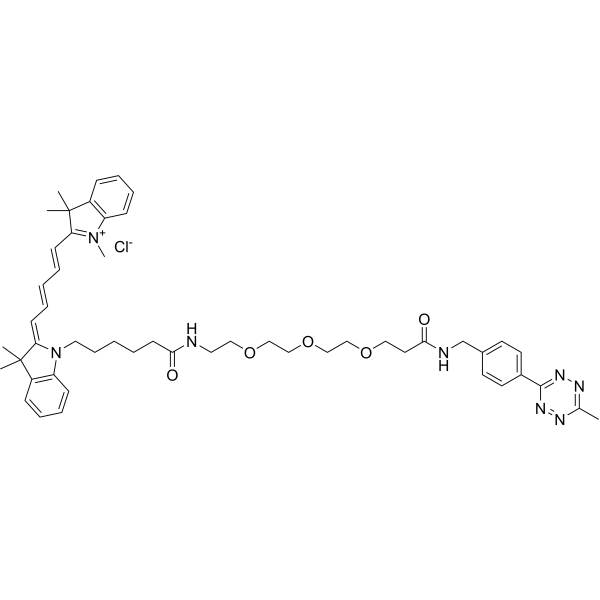
Cy5-PEG3-Tetrazin is a dye derivative of Cyanine 5 (Cy5) (HY-D0821) containing 3 PEG units. Cy5-PEG3-Tetrazin contains a Tetrazine group that can undergo an inverse electron demand Diels-Alder reaction (iEDDA) with molecules containing TCO groups.
|
-
- HY-D2144
-
|
|
Fluorescent Dye
|
Others
|
|
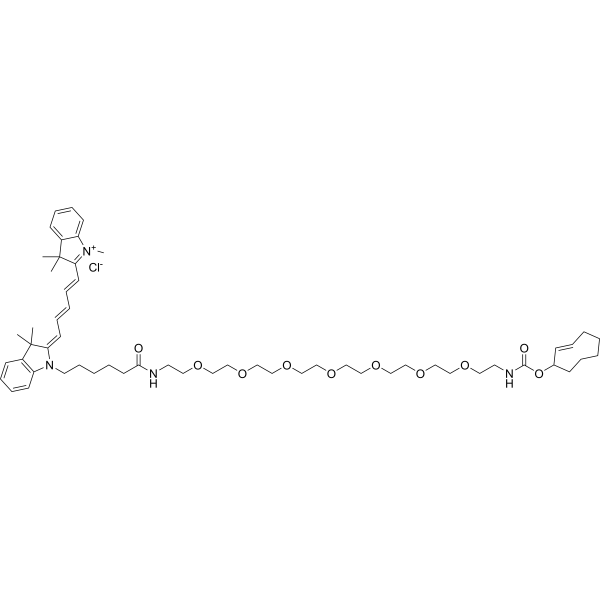
Cy5-PEG7-TCO is a dye derivative of Cyanine 5 (Cy5) (HY-D0821) containing 7 PEG units. Cy5-PEG7-TCO utilizes its own TCO group to undergo an inverse electron demand Diels-Alder reaction (iEDDA) with molecules bearing Tetrazine groups.
|
-
- HY-D2159
-
|
|
Fluorescent Dye
|
Others
|
|
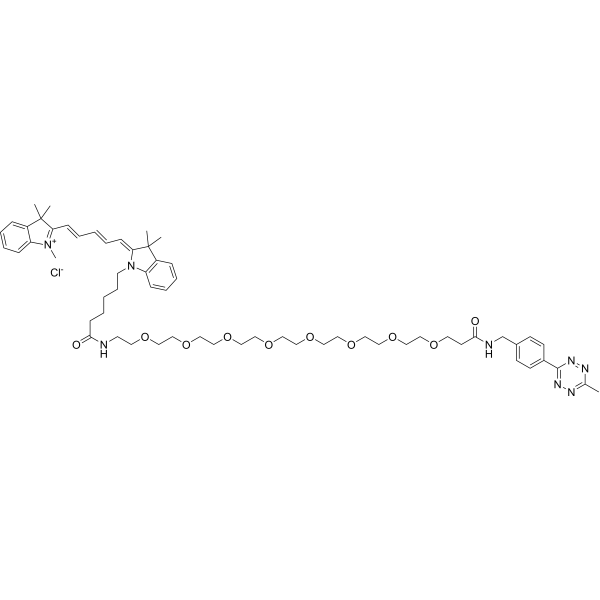
Cy5-PEG8-Tetrazin is a dye derivative of Cyanine 5 (Cy5) (HY-D0821) containing 7 PEG units. Cy5-PEG8-Tetrazin contains a Tetrazine group that can undergo an inverse electron demand Diels-Alder reaction (iEDDA) with molecules containing TCO groups.
|
-
- HY-D2544
-
|
|
Fluorescent Dye
|
Others
|
|
Cy5-PEG5000-DSPE is a PEG phospholipid with Cy5 (HY-D0821) dye used in protein/nucelic acid labeling and fluorescence microscopy. Cy5-PEG5000-DSPE can self-assemble in aqueous solution to form micelles/lipid bilayer and used to prepare liposomes or nanoparticles for nutrients delivery such as mRNA or DNA vaccine.
|
-

- HY-D2542
-
|
|
Fluorescent Dye
|
Others
|
|
Cy5-PEG2000-DSPE is a PEG phospholipid with Cy5 (HY-D0821) dye used in protein/nucelic acid labeling and fluorescence microscopy. Cy5-PEG2000-DSPE can self-assemble in aqueous solution to form micelles/lipid bilayer and used to prepare liposomes or nanoparticles for nutrients delivery such as mRNA or DNA vaccine.
|
-

- HY-D2158
-
|
|
Fluorescent Dye
|
Others
|
|
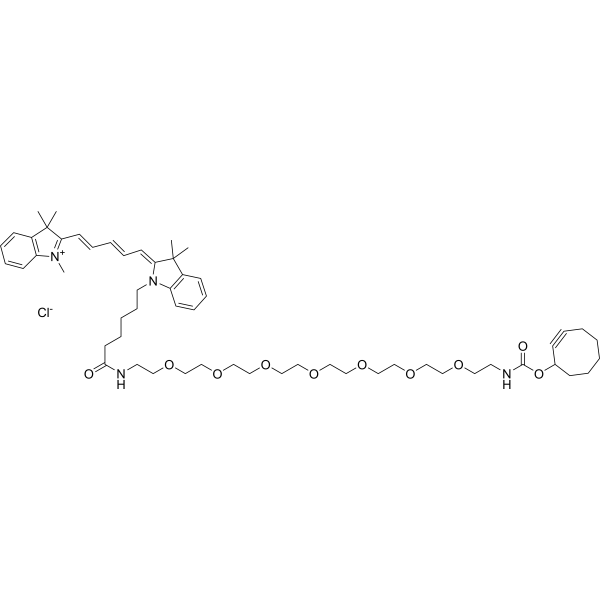
Cy5-PEG7-SCO is a dye derivative of Cyanine 5 (Cy5) (HY-D0821) containing 7 PEG units. Cy5-PEG7-SCO has a SCO group that can be covalently bonded to the amino group. SCO is often used to react with amino acid residues of proteins or peptides, particularly lysine.
|
-
- HY-D2152
-
|
|
Fluorescent Dye
|
Others
|
|
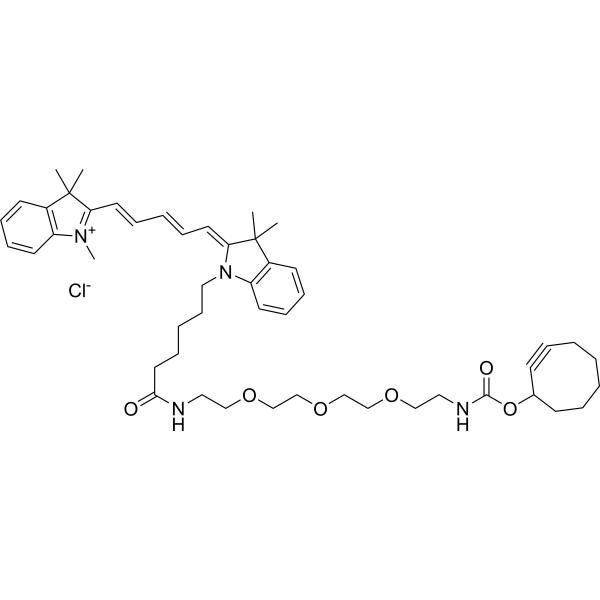
Cy5-PEG3-SCO is a dye derivative of Cyanine 5 (Cy5) (HY-D0821) containing 3 PEG units. Cy5-PEG3-SCO has a SCO group that can be covalently bonded to the amino group. SCO is often used to react with amino acid residues of proteins or peptides, particularly lysine.
|
-
- HY-D2153
-
|
|
Fluorescent Dye
|
Others
|
|
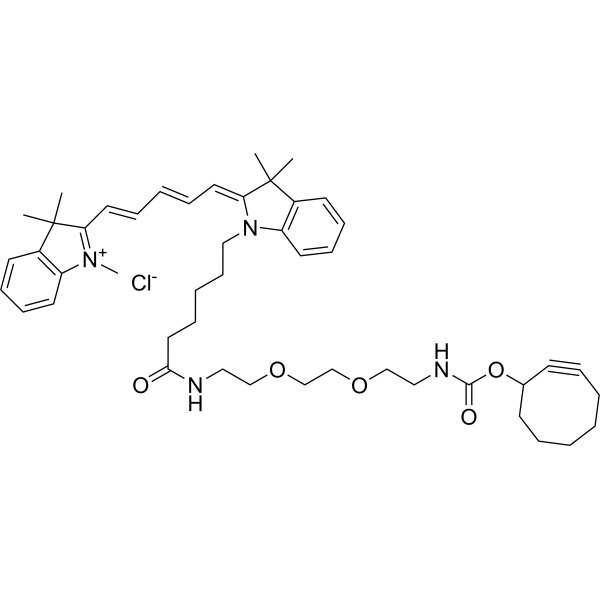
Cy5-PEG2-SCO is a dye derivative of Cyanine 5 (Cy5) (HY-D0821) containing 2 PEG units. Cy5-PEG2-SCO has a SCO group that can be covalently bonded to the amino group. SCO is often used to react with amino acid residues of proteins or peptides, particularly lysine.
|
-
- HY-D1882
-
|
|
Fluorescent Dye
|
Others
|
|
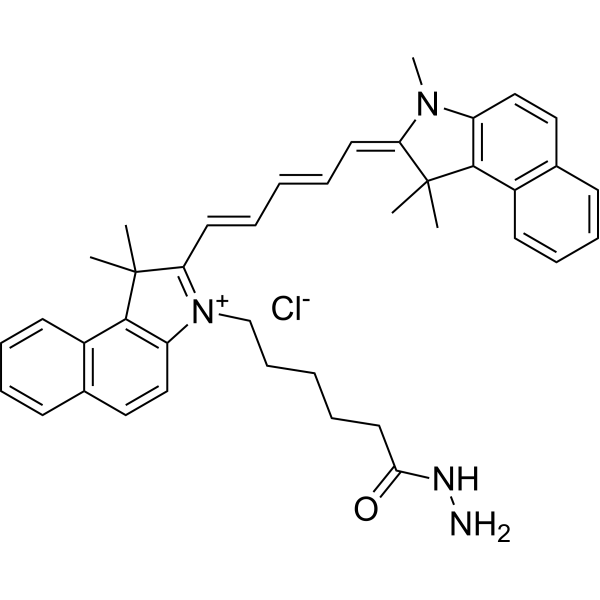
Cy5.5 hydrazide is a fluorescent dye containing a hydrazide functionality. Cy5.5 hydrazide can be used to label aldehydes and ketones .
|
-
- HY-D2573
-
|
|
Fluorescent Dye
|
Others
|
|
Cy5.5-PEG2000-FA is a fluorescently labeled biomolecule consisting of Cy5.5 (HY-D0924) fluorescent dye, polyethylene glycol (PEG), and Folic acid (FA) (HY-16637). Cy5.5 is commonly used in applications such as immunolabeling and nucleic acid labeling. The maximum emission wavelength of Cy5.5 is approximately 710 nm.
|
-

- HY-D2146
-
|
|
Fluorescent Dye
|
Others
|
|
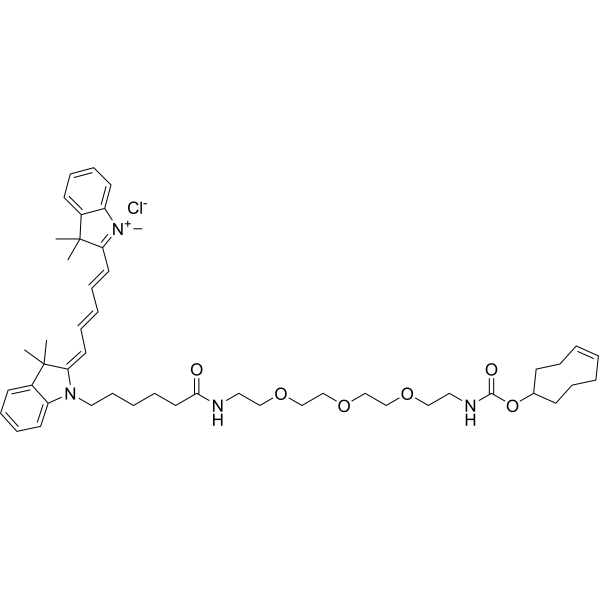
Cy5-PEG3-TCO4 is a dye derivative of Cyanine 5 (Cy5) (HY-D0821) containing 3 PEG units. Cy5-PEG3-TCO4 utilizes its own TCO group to undergo an inverse electron demand Diels-Alder reaction (iEDDA) with molecules bearing Tetrazine groups.
|
-
- HY-D2145
-
|
|
Fluorescent Dye
|
Others
|
|
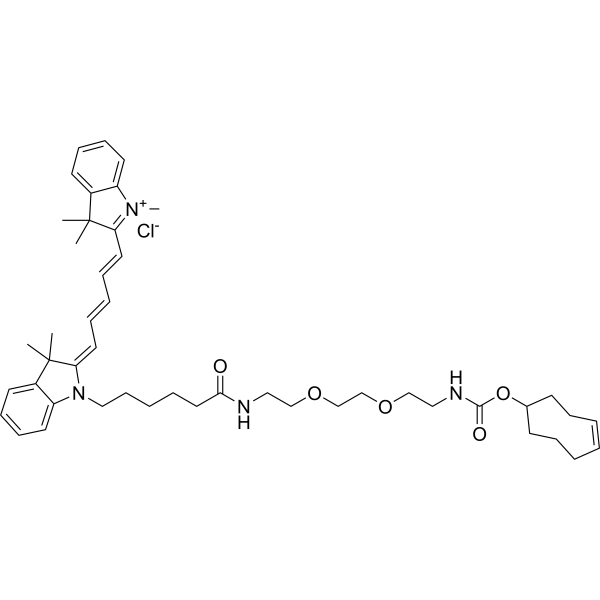
Cy5-PEG2-TCO4 is a dye derivative of Cyanine 5 (Cy5) (HY-D0821) containing 2 PEG units. Cy5-PEG2-TCO4 utilizes its own TCO group to undergo an inverse electron demand Diels-Alder reaction (iEDDA) with molecules bearing Tetrazine groups.
|
-
- HY-D2661
-
|
|
Fluorescent Dye
|
Others
|
|
Cy5.5 HA (MW 100000) is a hyaluronic acid labeled with CY5.5 (HY-D0924). Cy5.5 HA (MW 100000) is widely used for cell imaging and in vivo imaging of shallow tissue (Ex/Em = 680/710 nm).
|
-

- HY-D2656
-
|
|
Fluorescent Dye
|
Others
|
|
Cy5.5 HA (MW 3000) is a hyaluronic acid labeled with CY5.5 (HY-D0924). Cy5.5 HA (MW 3000) is widely used for cell imaging and in vivo imaging of shallow tissue (Ex/Em = 680/710 nm).
|
-

- HY-D2660
-
|
|
Fluorescent Dye
|
Others
|
|
Cy5.5 HA (MW 50000) is a hyaluronic acid labeled with CY5.5 (HY-D0924). Cy5.5 HA (MW 50000) is widely used for cell imaging and in vivo imaging of shallow tissue (Ex/Em = 680/710 nm).
|
-

- HY-D2657
-
|
|
Fluorescent Dye
|
Others
|
|
Cy5.5 HA (MW 5000) is a hyaluronic acid labeled with CY5.5 (HY-D0924). Cy5.5 HA (MW 5000) is widely used for cell imaging and in vivo imaging of shallow tissue (Ex/Em = 680/710 nm).
|
-

- HY-D2662
-
|
|
Fluorescent Dye
|
Others
|
|
Cy5.5 HA (MW 200000) is a hyaluronic acid labeled with CY5.5 (HY-D0924). Cy5.5 HA (MW 200000) is widely used for cell imaging and in vivo imaging of shallow tissue (Ex/Em = 680/710 nm).
|
-

- HY-D2422C
-
|
|
Fluorescent Dye
Microtubule/Tubulin
Autophagy
|
Cancer
|
|
Cy5-Paclitaxel bromide is the bromide of Cy5-Paclitaxel (HY-D2422B). Cy5-Paclitaxel is a Cyanine5 carboxylic acid bromide (HY-D1319) labeled Paclitaxel (HY-B0015) conjugate. Cyanine5 carboxylic acid bromide is a fluorescent dye containing a non-activated carboxylic acid (Ex=646 nm, Em=662 nm) that can be used for molecular labeling and microscopy imaging. Paclitaxel stabilizes tubulin polymerization. Paclitaxel can cause both mitotic arrest and apoptotic cell death. Paclitaxel also induces autophagy .
|
-

- HY-141034
-
|
|
PROTAC Linkers
|
Cancer
|
|
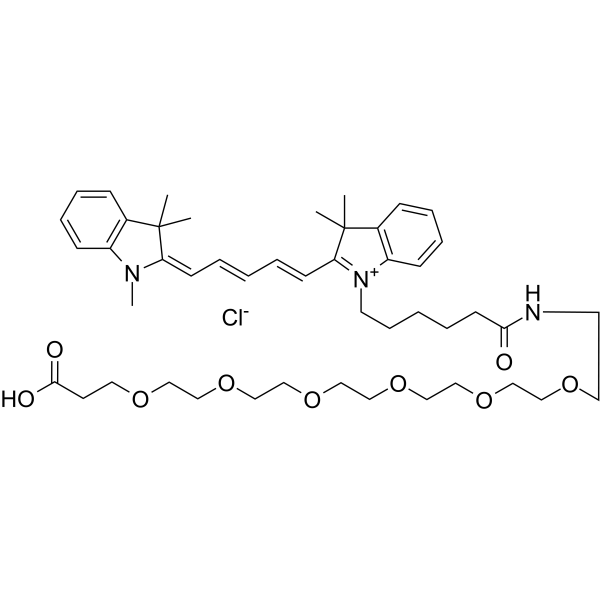
Cy5-PEG6-acid is a PEG-based PROTAC linker that can be used in the synthesis of PROTACs .
|
-
- HY-141033
-
|
|
PROTAC Linkers
|
Cancer
|
|
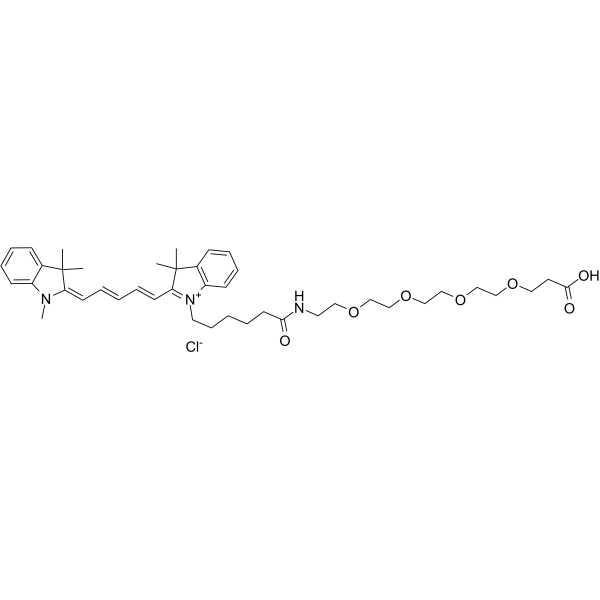
Cy5-PEG4-acid (chloride) is a PEG-based PROTAC linker that can be used in the synthesis of PROTACs .
|
-
- HY-D2149
-
|
|
Fluorescent Dye
|
Others
|
|
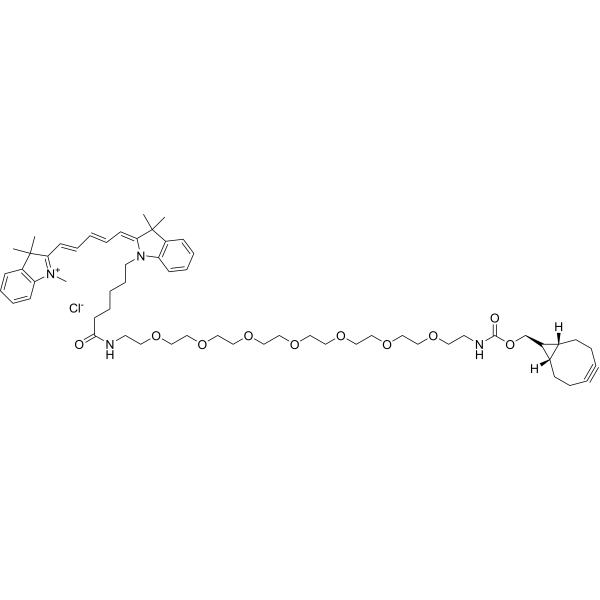
Cy5-PEG7-exo-BCN is a dye derivative of Cyanine 5 (Cy5) (HY-D0821) containing 7 PEG units. Cy5-PEG7-exo-BCN contains the lyophilic bidentate macrocyclic ligand BCN, which can further synthesize macrocyclic complexes. In click chemistry, exo-BCN can react with molecules containing azide groups to form stable triazoles in the absence of catalysts.
|
-
- HY-149619
-
|
|
Fluorescent Dye
|
Others
|
|
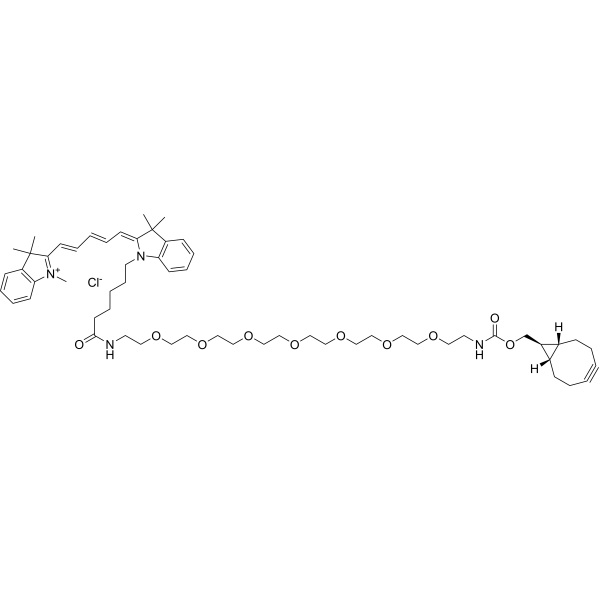
Cy5-PEG7-endo-BCN is a dye derivative of Cyanine 5 (Cy5) (HY-D0821) containing 7 PEG units. Cy5-PEG7-endo-BCN contains the lyophilic bidentate macrocyclic ligand endo-BCN, which can further synthesize macrocyclic complexes. In click chemistry, endo-BCN can react with molecules containing azide groups to form stable triazoles in the absence of catalysts.
|
-
- HY-D2670
-
|
|
Fluorescent Dye
|
Others
|
|
Cy5.5 HA biotin 5000 is a biotinylated hyaluronic acid labeled with CY5.5 (HY-D0924). Cy5.5 HA biotin 5000 is widely used for cell imaging and in vivo imaging of shallow tissues (Ex/Em = 680/710 nm).
|
-

- HY-P0281F
-
|
cy5-TAT(47-57) acetate; cy5-HIV-1 TAT protein (47-57) acetate
|
Fluorescent Dye
|
Others
|
|
Cy5-TAT acetate is a TAT peptide labeled with CY5 (HY-D0821) (Ex= 600-620 nm, Em= 670 nm). Cy5-TAT acetate can be used for fluorescence microscopy especially single-molecule fluorescence imaging .
|
-

- HY-D2652
-
|
|
Fluorescent Dye
|
Others
|
|
Cy5 HA MA (MW 100000) is a hyaluronic acid methacrylate labeled with CY5 (HY-D0821). Cy5 HA MA (MW 100000) is widely used in the fields of biolabeling and imaging, drug delivery and tissue engineering and regenerative medicine (Ex/Em = 633/670 nm).
|
-

- HY-182934
-
|
|
Biochemical Assay Reagents
DNA/RNA Synthesis
|
Others
|
|
Cy5 MMTr CPG 1000 is a type of fluorescently labeled solid-phase carrier used for the automated synthesis of solid-phase oligonucleotides. During the synthesis process, the Cy5 fluorescent dye can be directly covalently attached to the 3′-end of the oligonucleotide without the need for subsequent liquid-phase labeling. Cy5 MMTr CPG 1000 can be used for the synthesis of 3′-Cy5 labeled oligonucleotides.
|
-

- HY-D3019
-
|
|
Fluorescent Dye
|
Others
|
|
CY5-Alginate is a CY5 (HY-D0821)-labeled alginate.CY5-Alginate combines the polysaccharide properties of alginate with the fluorescence properties of CY5, playing an important role in fields such as fluorescent labeling, cell imaging, and drug delivery research (Ex/Em = 633/670 nm).
|
-

- HY-182240
-
|
|
PSMA
|
Cancer
|
|
Cy5-ZW2-617 is a PSMA ligand with a IC50 of 4.39 nM. Cy5-ZW2-617 specifically binds to PSMA and is thereby internalized by PSMA-positive cells. Cy5-ZW2-617 shows uptake in PSMA-positive tumor cells and tumor xenografts in mice. Cy5-ZW2-617 can be used for the research of prostate cancer .
|
-

- HY-D3020
-
|
|
Fluorescent Dye
|
Others
|
|
CY5.5-Alginate is a CY5.5 (HY-D0924)-labeled alginate. CY5.5-Alginate combines the polysaccharide properties of alginate with the fluorescence properties of CY5.5, playing an important role in fields such as fluorescent labeling, cell imaging, and drug delivery research (Ex/Em = 680/710 nm).
|
-

- HY-D2541
-
|
|
Fluorescent Dye
|
Others
|
|
Cy5-PEG1000-DSPE is a PEG phospholipid with Cy5 (HY-D0821) dye used in protein/nucelic acid labeling and fluorescence microscopy. Cy5-PEG1000-DSPE can self-assemble in aqueous solution to form micelles/lipid bilayer and used to prepare liposomes or nanoparticles for nutrients delivery such as mRNA or DNA vaccine.
|
-

- HY-D2543
-
|
|
Fluorescent Dye
|
Others
|
|
Cy5-PEG3400-DSPE is a PEG phospholipid with Cy5 (HY-D0821) dye used in protein/nucelic acid labeling and fluorescence microscopy. Cy5-PEG3400-DSPE can self-assemble in aqueous solution to form micelles/lipid bilayer and used to prepare liposomes or nanoparticles for nutrients delivery such as mRNA or DNA vaccine.
|
-

- HY-D2545
-
|
|
Fluorescent Dye
|
Others
|
|
Cy5-PEG10000-DSPE is a PEG phospholipid with Cy5 (HY-D0821) dye used in protein/nucelic acid labeling and fluorescence microscopy. Cy5-PEG10000-DSPE can self-assemble in aqueous solution to form micelles/lipid bilayer and used to prepare liposomes or nanoparticles for nutrients delivery such as mRNA or DNA vaccine.
|
-

- HY-166993
-
|
|
Biochemical Assay Reagents
|
Others
|
|
Cy5-PEG5000-methyltetrazine is a PEG derivative that modulates the release of drugs from microparticle systems for parenteral administration. Cy5-PEG5000-methyltetrazine can be used in drug delivery studies .
|
-

- HY-D2574
-
|
|
Fluorescent Dye
|
Others
|
|
Cy5.5-PEG5000-FA is a fluorescently labeled biomolecule consisting of Cy5.5 (HY-D0924) fluorescent dye, polyethylene glycol (PEG), and Folic acid (FA) (HY-16637). Cy5.5 is commonly used in applications such as immunolabeling and nucleic acid labeling. The maximum emission wavelength of Cy5.5 is approximately 710 nm.
|
-

- HY-D2659
-
|
|
Fluorescent Dye
|
Others
|
|
Cy5.5 HA (MW 10000) is a hyaluronic acid labeled with CY5.5 (HY-D0924). Cy5.5 HA (MW 10000) is widely used for cell imaging and in vivo imaging of shallow tissue (Ex/Em = 680/710 nm).
|
-

- HY-D2658
-
|
|
Fluorescent Dye
|
Others
|
|
Cy5.5 HA (MW 7000) is a hyaluronic acid labeled with CY5.5 (HY-D0924). Cy5.5 HA (MW 7000) is widely used for cell imaging and in vivo imaging of shallow tissue (Ex/Em = 680/710 nm).
|
-

- HY-D3013
-
|
|
Fluorescent Dye
|
Others
|
|
Cy5.5 bis-COOH bromide is a derivative of Cy5.5 (HY-D0924) dye. Sulfo Cy5.5 bis-COOH bromide contains carboxyl groups, which can condense ammonia to form covalent bonds (Ex/Em = 680/710 nm).
|
-

- HY-D2669
-
|
|
Fluorescent Dye
|
Others
|
|
Cy5.5 HA biotin 3000 is a biotinylated hyaluronic acid labeled with CY5.5 (HY-D0924). Cy5.5 HA biotin 3000 is widely used for cell imaging and in vivo imaging of shallow tissues (Ex/Em = 680/710 nm).
|
-

- HY-D2571
-
|
|
Fluorescent Dye
|
Others
|
|
Cy5.5-PEG2000-DBCO is a fluorescent probe containing Cy5.5 (HY-D0924) dye. Cy5.5-PEG2000-DBCO contains a DBCO group that can undergo strain-promoted alkyne-azide cycloaddition (SPAAC) with molecules containing Azide groups.
|
-

- HY-D2572
-
|
|
Fluorescent Dye
|
Others
|
|
Cy5.5-PEG5000-DBCO is a fluorescent probe containing Cy5.5 (HY-D0924) dye. Cy5.5-PEG5000-DBCO contains a DBCO group that can undergo strain-promoted alkyne-azide cycloaddition (SPAAC) with molecules containing Azide groups.
|
-

- HY-141044
-
|
|
PROTAC Linkers
|
Cancer
|
|
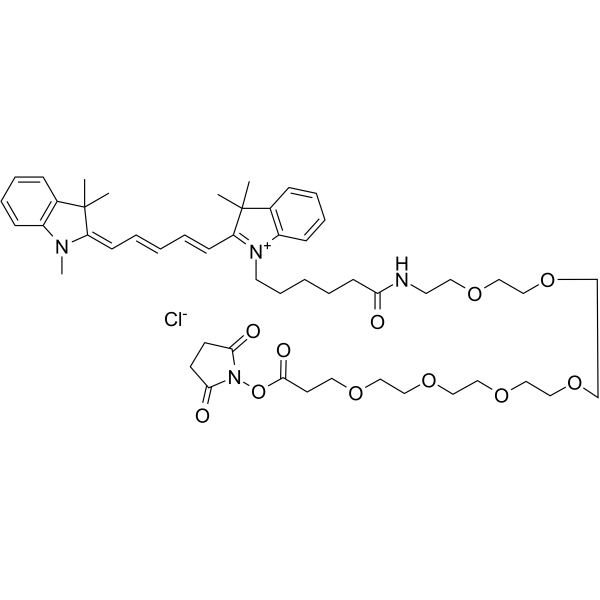
Cy5-PEG6-NHS ester is a PEG-based PROTAC linker that can be used in the synthesis of PROTACs .
|
-
- HY-141055
-
|
|
PROTAC Linkers
|
Cancer
|
|
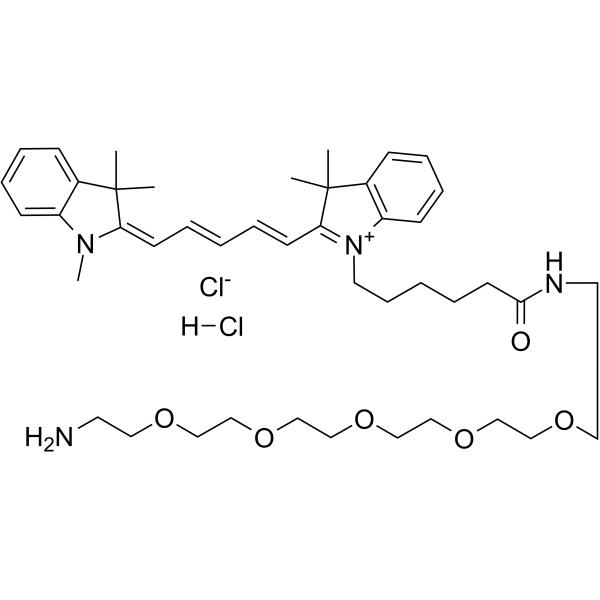
Cy5-PEG5-amine (hydrochloride) is a PEG-based PROTAC linker that can be used in the synthesis of PROTACs .
|
-
- HY-D2666
-
|
|
Fluorescent Dye
|
Others
|
|
Cy5.5 HA MA (MW 10000) is a hyaluronic acid methacrylate labeled with CY5.5 (HY-D0924). Cy5.5 HA MA (MW 10000) is widely used in the fields of biolabeling and imaging, drug delivery and tissue engineering and regenerative medicine (Ex/Em = 680/710 nm).
|
-

- HY-D2664
-
|
|
Fluorescent Dye
|
Others
|
|
Cy5.5 HA MA (MW 3000) is a hyaluronic acid methacrylate labeled with CY5.5 (HY-D0924). Cy5.5 HA MA (MW 3000) is widely used in the fields of biolabeling and imaging, drug delivery and tissue engineering and regenerative medicine (Ex/Em = 680/710 nm).
|
-

- HY-D2665
-
|
|
Fluorescent Dye
|
Others
|
|
Cy5.5 HA MA (MW 5000) is a hyaluronic acid methacrylate labeled with CY5.5 (HY-D0924). Cy5.5 HA MA (MW 5000) is widely used in the fields of biolabeling and imaging, drug delivery and tissue engineering and regenerative medicine (Ex/Em = 680/710 nm).
|
-

- HY-D2667
-
|
|
Fluorescent Dye
|
Others
|
|
Cy5.5 HA MA (MW 50000) is a hyaluronic acid methacrylate labeled with CY5.5 (HY-D0924). Cy5.5 HA MA (MW 50000) is widely used in the fields of biolabeling and imaging, drug delivery and tissue engineering and regenerative medicine (Ex/Em = 680/710 nm).
|
-

- HY-D2668
-
|
|
Fluorescent Dye
|
Others
|
|
Cy5.5 HA MA (MW 100000) is a hyaluronic acid methacrylate labeled with CY5.5 (HY-D0924). Cy5.5 HA MA (MW 100000) is widely used in the fields of biolabeling and imaging, drug delivery and tissue engineering and regenerative medicine (Ex/Em = 680/710 nm).
|
-

- HY-D2534
-
|
|
Fluorescent Dye
|
Others
|
|
Cy5-PEG3400-N3 is a Cy5 (HY-D0821)-azide fluorescent dye used to label for protein and nucleic acid. Cy5-PEG3400-N3 is a click chemistry reagent, it contains an Azide group and can undergo copper-catalyzed azide-alkyne cycloaddition reaction (CuAAc) with molecules containing Alkyne groups. It can also undergo strain-promoted alkyne-azide cycloaddition (SPAAC) reactions with molecules containing DBCO or BCN groups.
|
-

- HY-D2536
-
|
|
Fluorescent Dye
|
Others
|
|
Cy5-PEG10000-N3 is a Cy5 (HY-D0821)-azide fluorescent dye used to label for protein and nucleic acid. Cy5-PEG10000-N3 is a click chemistry reagent, it contains an Azide group and can undergo copper-catalyzed azide-alkyne cycloaddition reaction (CuAAc) with molecules containing Alkyne groups. It can also undergo strain-promoted alkyne-azide cycloaddition (SPAAC) reactions with molecules containing DBCO or BCN groups.
|
-

- HY-D2533
-
|
|
Fluorescent Dye
|
Others
|
|
Cy5-PEG2000-N3 is a Cy5 (HY-D0821)-azide fluorescent dye used to label for protein and nucleic acid. Cy5-PEG2000-N3 is a click chemistry reagent, it contains an Azide group and can undergo copper-catalyzed azide-alkyne cycloaddition reaction (CuAAc) with molecules containing Alkyne groups. It can also undergo strain-promoted alkyne-azide cycloaddition (SPAAC) reactions with molecules containing DBCO or BCN groups.
|
-

- HY-D2535
-
|
|
Fluorescent Dye
|
Others
|
|
Cy5-PEG5000-N3 is a Cy5 (HY-D0821)-azide fluorescent dye used to label for protein and nucleic acid. Cy5-PEG5000-N3 is a click chemistry reagent, it contains an Azide group and can undergo copper-catalyzed azide-alkyne cycloaddition reaction (CuAAc) with molecules containing Alkyne groups. It can also undergo strain-promoted alkyne-azide cycloaddition (SPAAC) reactions with molecules containing DBCO or BCN groups.
|
-

- HY-D2530
-
|
|
Fluorescent Dye
|
Others
|
|
Cy5-PEG3400-SH is a fluorescent labeling reagent that combines Cy5 (HY-D0821) fluorescent dye, polyethylene glycol (PEG) and sulfhydryl (SH) derivatives, and is suitable for molecular coupling. SH is highly reactive and can react with a variety of functional groups (such as maleimide) to form stable thioether bonds.
|
-

- HY-D2532
-
|
|
Fluorescent Dye
|
Others
|
|
Cy5-PEG10000-SH is a fluorescent labeling reagent that combines Cy5 (HY-D0821) fluorescent dye, polyethylene glycol (PEG) and sulfhydryl (SH) derivatives, and is suitable for molecular coupling. SH is highly reactive and can react with a variety of functional groups (such as maleimide) to form stable thioether bonds.
|
-

- HY-D2529
-
|
|
Fluorescent Dye
|
Others
|
|
Cy5-PEG2000-SH is a fluorescent labeling reagent that combines Cy5 (HY-D0821) fluorescent dye, polyethylene glycol (PEG) and sulfhydryl (SH) derivatives, and is suitable for molecular coupling. SH is highly reactive and can react with a variety of functional groups (such as maleimide) to form stable thioether bonds.
|
-

- HY-D2531
-
|
|
Fluorescent Dye
|
Others
|
|
Cy5-PEG5000-SH is a fluorescent labeling reagent that combines Cy5 (HY-D0821) fluorescent dye, polyethylene glycol (PEG) and sulfhydryl (SH) derivatives, and is suitable for molecular coupling. SH is highly reactive and can react with a variety of functional groups (such as maleimide) to form stable thioether bonds.
|
-

- HY-151720
-
|
|
ADC Linker
|
Others
|
|
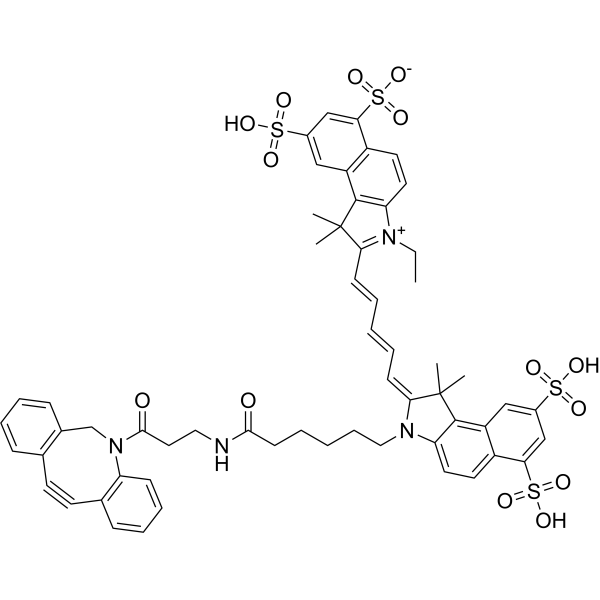
Cy5.5 DBCO is a click chemistry reagent containing an cycloalkynes group. Cy5.5 DBCO is a linker of Cyanine5.5 fluorophore. DBCO group enables copper free biocompatible click chemistry with fast reaction kinetics and good stability .
|
-
- HY-D0820
-
|
Sulfo-cyanine5-alkyne
|
Fluorescent Dye
|
Others
|
|
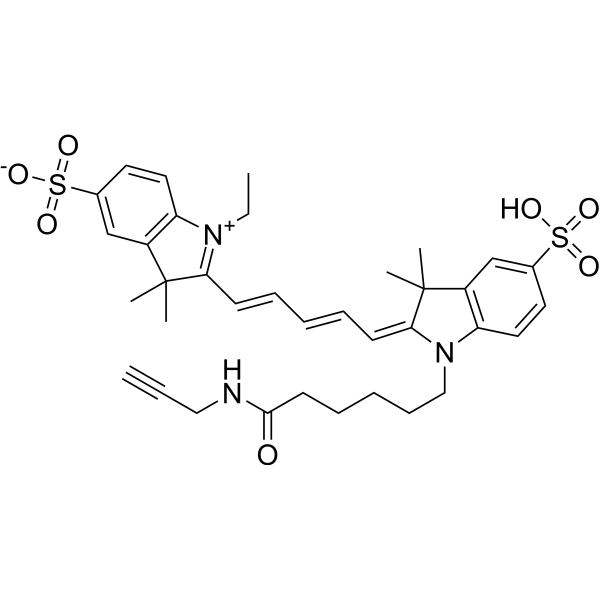
CY5-YNE (Sulfo-Cyanine5-alkyne) is a reactive dye for the labeling of amino-groups in peptides, proteins, and oligonucleotides (Ex: 650 nM; Em: 680 nm). CY5-YNE is a click chemistry reagent, it contains an Alkyne group and can undergo copper-catalyzed azide-alkyne cycloaddition (CuAAc) with molecules containing Azide groups.
|
-
- HY-D2570
-
|
|
Fluorescent Dye
|
Others
|
|
Cy5.5-PEG5000-Biotin is a polyethylene glycol derivative containing Cy5.5 (HY-D0924) fluorescent dye and polyethylene glycol (PEG) and a Biotin. Biotin can bind with high affinity to streptavidin or avidin. Cy5.5-PEG5000-Biotin plays an important role in the specific capture and detection of biomolecules.
|
-

- HY-D2569
-
|
|
Fluorescent Dye
|
Others
|
|
Cy5.5-PEG2000-Biotin is a polyethylene glycol derivative containing Cy5.5 (HY-D0924) fluorescent dye and polyethylene glycol (PEG) and a Biotin. Biotin can bind with high affinity to streptavidin or avidin. Cy5.5-PEG2000-Biotin plays an important role in the specific capture and detection of biomolecules.
|
-

- HY-D2567
-
|
|
Fluorescent Dye
|
Others
|
|
Cy5.5-PEG5000-DSPE is a PEG phospholipid with Cy5.5 (HY-D0924) dye used in protein/nucelic acid labeling and fluorescence microscopy. Cy5.5-PEG5000-DSPE can self-assemble in aqueous solution to form micelles/lipid bilayer and used to prepare liposomes or nanoparticles for nutrients delivery such as mRNA or DNA vaccine.
|
-

- HY-D2566
-
|
|
Fluorescent Dye
|
Others
|
|
Cy5.5-PEG3400-DSPE is a PEG phospholipid with Cy5.5 (HY-D0924) dye used in protein/nucelic acid labeling and fluorescence microscopy. Cy5.5-PEG3400-DSPE can self-assemble in aqueous solution to form micelles/lipid bilayer and used to prepare liposomes or nanoparticles for nutrients delivery such as mRNA or DNA vaccine.
|
-

- HY-D2565
-
|
|
Fluorescent Dye
|
Others
|
|
Cy5.5-PEG2000-DSPE is a PEG phospholipid with Cy5.5 (HY-D0924) dye used in protein/nucelic acid labeling and fluorescence microscopy. Cy5.5-PEG2000-DSPE can self-assemble in aqueous solution to form micelles/lipid bilayer and used to prepare liposomes or nanoparticles for nutrients delivery such as mRNA or DNA vaccine.
|
-
- HY-D2564
-
|
|
Fluorescent Dye
|
Others
|
|
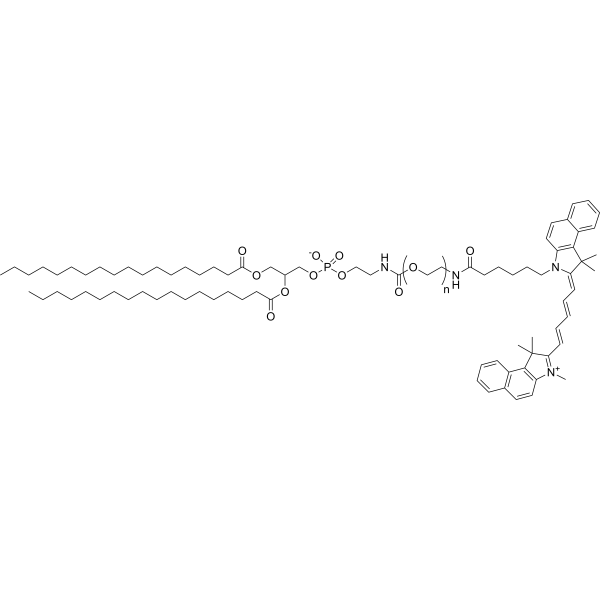
Cy5.5-PEG1000-DSPE is a PEG phospholipid with Cy5.5 (HY-D0924) dye used in protein/nucelic acid labeling and fluorescence microscopy. Cy5.5-PEG1000-DSPE can self-assemble in aqueous solution to form micelles/lipid bilayer and used to prepare liposomes or nanoparticles for nutrients delivery such as mRNA or DNA vaccine.
|
-

- HY-D2568
-
|
|
Fluorescent Dye
|
Others
|
|
Cy5.5-PEG10000-DSPE is a PEG phospholipid with Cy5.5 (HY-D0924) dye used in protein/nucelic acid labeling and fluorescence microscopy. Cy5.5-PEG10000-DSPE can self-assemble in aqueous solution to form micelles/lipid bilayer and used to prepare liposomes or nanoparticles for nutrients delivery such as mRNA or DNA vaccine.
|
-

- HY-D1040
-
|
cyanine 5.5 carboxylic acid
|
Fluorescent Dye
|
Others
|
|
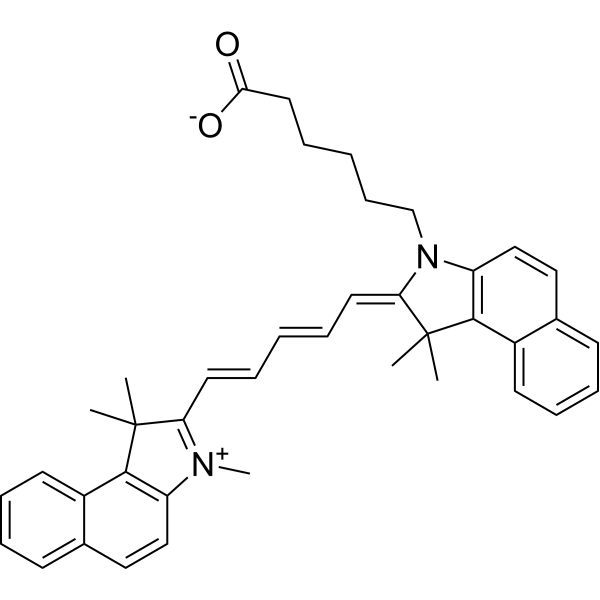
Cy5.5-COOH (Cyanine 5.5 carboxylic acid) is a fluorescent dye that emits fluorescence at 710 nm upon excitation at 650 nm. Cy5.5-COOH possesses excellent spectral properties, including a narrow absorption spectrum, high sensitivity, and stability. Cy5.5-COOH can be used for bioimaging and disease diagnosis .
|
-
- HY-D1040A
-
|
cyanine 5.5 carboxylic acid chloride
|
Fluorescent Dye
|
Others
|
|
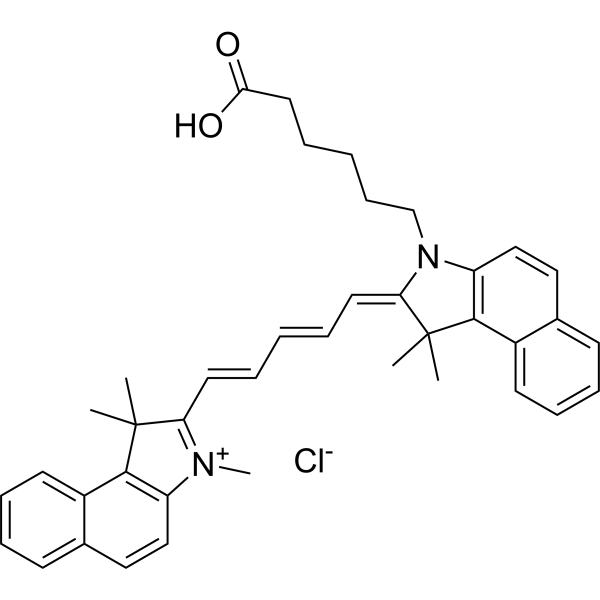
Cy5.5-COOH (Cyanine 5.5 carboxylic acid) chloride is a fluorescent dye that emits fluorescence at 710 nm upon excitation at 650 nm. Cy5.5-COOH chloride possesses excellent spectral properties, including a narrow absorption spectrum, high sensitivity, and stability. Cy5.5-COOH chloride can be used for bioimaging and disease diagnosis .
|
-
- HY-D1540
-
|
cy 5.5 amine; Lumiprobe cy 5.5 amine
|
Fluorescent Dye
|
Others
|
|
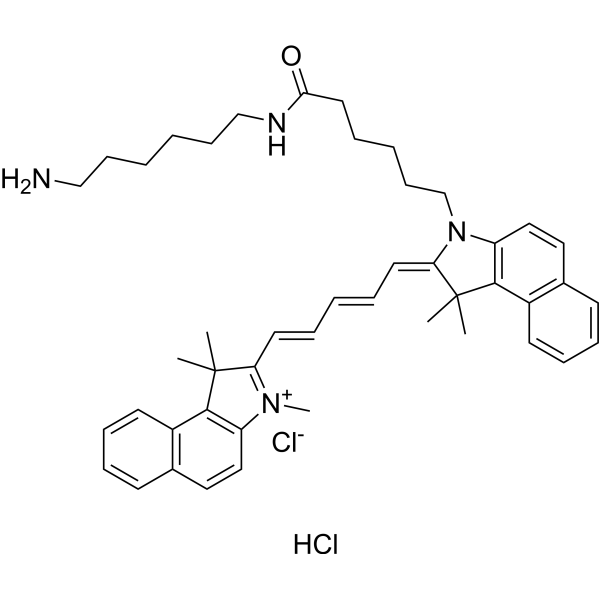
Cyanine5.5 amine (Cy 5.5 amine), a Cy5.5 Analogue, is a near-infrared (NIR) fluorescent dye (Ex=648 nm, Em=710 nm). Cyanine5.5 amine can be used in the preparation of Cy5.5-labeled nanoparticles, which can be tracked and imaged with low fluorescence background using confocal microscopy .
|
-
- HY-141058
-
|
|
Fluorescent Dye
|
Cancer
|
|
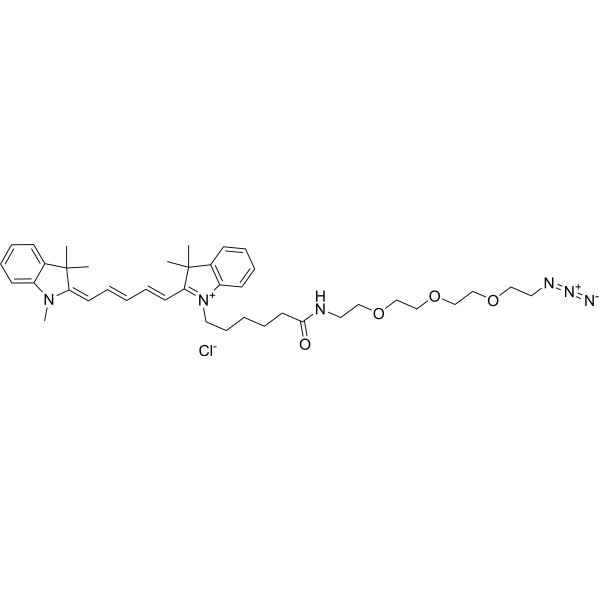
Cy5-PEG3-azide is a PEG-based PROTAC linker that can be used in the synthesis of PROTACs . Cy5-PEG3-azide is a click chemistry reagent, it contains an Azide group and can undergo copper-catalyzed azide-alkyne cycloaddition reaction (CuAAc) with molecules containing Alkyne groups. It can also undergo strain-promoted alkyne-azide cycloaddition (SPAAC) reactions with molecules containing DBCO or BCN groups.
|
-
- HY-D2373
-
|
|
Fluorescent Dye
|
Others
|
|
CY5.5-PEG2000-Mal is used for preparing fluorescently labeled molecules. It is formed by condensing maleimide groups (Mal), PEG2000, and fluorescent dye CY5.5 (HY-D0924) .
|
-

- HY-D2374
-
|
|
Fluorescent Dye
|
Others
|
|
CY5.5-PEG5000-Mal is used for preparing fluorescently labeled molecules. It is formed by condensing maleimide groups (Mal), PEG5000, and fluorescent dye CY5.5 (HY-D0924) .
|
-

- HY-DY1063
-
|
|
Fluorescent Dye
|
Others
|
Cy5-SE (Cy5 NHS Ester) (solution) is a reactive dye for the labeling of amino-groups in peptides, proteins, and oligonucleotides. This dye requires small amount of organic co-solvent (such as DMF or DMSO) to be used in labeling reaction. This reagent is ideal for very cost-efficient labeling of soluble proteins, as well as all kinds of peptides and oligonucleotides. This reagent also works well in organic solvents for small molecule labeling.
Excitation (nm) :649, Emission (nm) : 670.
Solvent and concentration: DMSO: 10 mM
|
-

- HY-141059
-
|
|
PROTAC Linkers
|
Cancer
|
|
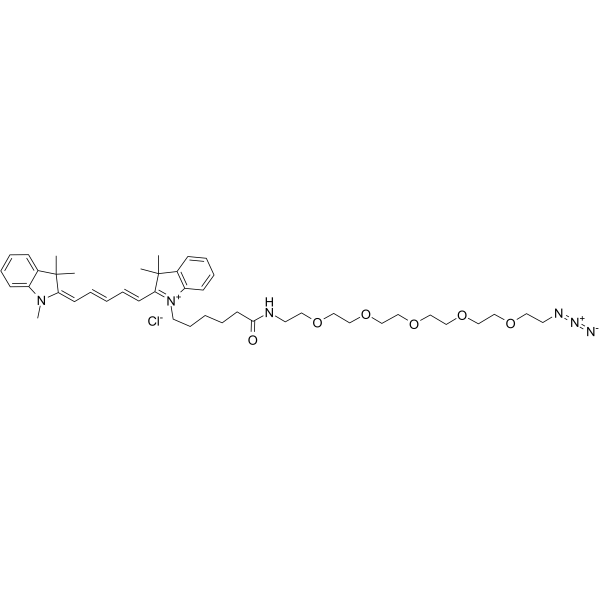
Cy5-PEG5-azide is a PEG-based PROTAC linker that can be used in the synthesis of PROTACs . Cy5-PEG5-azide is a click chemistry reagent, it contains an Azide group and can undergo copper-catalyzed azide-alkyne cycloaddition reaction (CuAAc) with molecules containing Alkyne groups. It can also undergo strain-promoted alkyne-azide cycloaddition (SPAAC) reactions with molecules containing DBCO or BCN groups.
|
-
- HY-D2245
-
|
|
Fluorescent Dye
|
Others
|
|
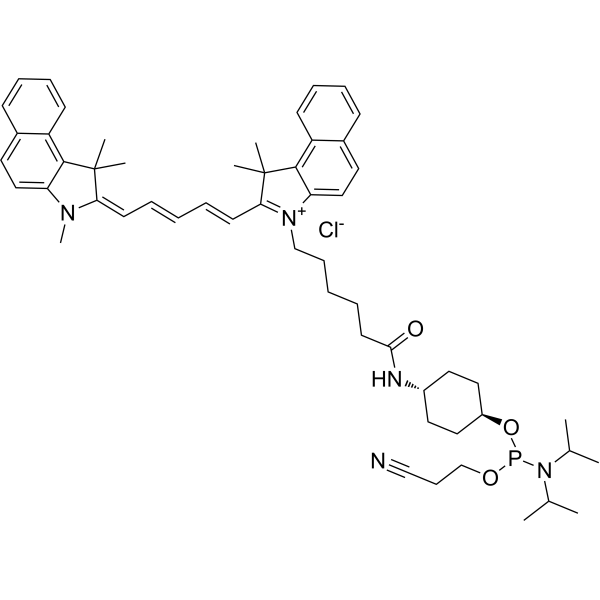
Cy5.5 phosphoramidite, a cyanine derivative, is a fluorescent labeling reagent for preparing fluorescence-labeled oligonucleotides .
|
-
- HY-D0820A
-
|
Sulfo-cyanine5-alkyne triethylamine
|
Fluorescent Dye
|
Others
|
|
CY5-YNE (Sulfo-Cyanine5-alkyne) triethylamine is a reactive dye for the labeling of amino-groups in peptides, proteins, and oligonucleotides (Ex: 650 nM; Em: 680 nm). CY5-YNE triethylamine is a click chemistry reagent, it contains an Alkyne group and can undergo copper-catalyzed azide-alkyne cycloaddition (CuAAc) with molecules containing Azide groups.
|
-

- HY-R04602F1
-
|
|
MicroRNA
|
Cancer
|
|
Cy5-MicroRNA Mimic Negative Control is a Cy5 labeled MicroRNA Mimic Negative Control (HY-R04602). MicroRNA Mimic Negative Control is a miRNA mimic of 21-nucleotides, and can be used as a negative control. The sequence of MicroRNA Mimic Negative Control is derived from cel-mir-239b. It has minimal sequence identity with miRNAs in human, mouse, and rat.
|
-
Cy5-MicroRNA Mimic Negative Control
Cy5-MicroRNA Mimic Negative Control
- HY-D2556
-
|
|
Fluorescent Dye
|
Others
|
|
Cy5.5-PEG1000-SH is a fluorescent labeling reagent that combines Cy5.5 (HY-D0924) fluorescent dye, polyethylene glycol (PEG) and sulfhydryl (SH) derivatives, and is suitable for molecular coupling. SH is highly reactive and can react with a variety of functional groups (such as maleimide) to form stable thioether bonds.
|
-

- HY-D2557
-
|
|
Fluorescent Dye
|
Others
|
|
Cy5.5-PEG3400-SH is a fluorescent labeling reagent that combines Cy5.5 (HY-D0924) fluorescent dye, polyethylene glycol (PEG) and sulfhydryl (SH) derivatives, and is suitable for molecular coupling. SH is highly reactive and can react with a variety of functional groups (such as maleimide) to form stable thioether bonds.
|
-

- HY-D2559
-
|
|
Fluorescent Dye
|
Others
|
|
Cy5.5-PEG10000-SH is a fluorescent labeling reagent that combines Cy5.5 (HY-D0924) fluorescent dye, polyethylene glycol (PEG) and sulfhydryl (SH) derivatives, and is suitable for molecular coupling. SH is highly reactive and can react with a variety of functional groups (such as maleimide) to form stable thioether bonds.
|
-

- HY-D2558
-
|
|
Fluorescent Dye
|
Others
|
|
Cy5.5-PEG5000-SH is a fluorescent labeling reagent that combines Cy5.5 (HY-D0924) fluorescent dye, polyethylene glycol (PEG) and sulfhydryl (SH) derivatives, and is suitable for molecular coupling. SH is highly reactive and can react with a variety of functional groups (such as maleimide) to form stable thioether bonds.
|
-

- HY-D2561
-
|
|
Fluorescent Dye
|
Others
|
|
Cy5.5-PEG3400-N3 is a Cy5.5 (HY-D0924)-azide fluorescent dye used to label for protein and nucleic acid. Cy5.5-PEG3400-N3 is a click chemistry reagent, it contains an Azide group and can undergo copper-catalyzed azide-alkyne cycloaddition reaction (CuAAc) with molecules containing Alkyne groups. It can also undergo strain-promoted alkyne-azide cycloaddition (SPAAC) reactions with molecules containing DBCO or BCN groups.
|
-

- HY-D2560
-
|
|
Fluorescent Dye
|
Others
|
|
Cy5.5-PEG2000-N3 is a Cy5.5 (HY-D0924)-azide fluorescent dye used to label for protein and nucleic acid. Cy5.5-PEG2000-N3 is a click chemistry reagent, it contains an Azide group and can undergo copper-catalyzed azide-alkyne cycloaddition reaction (CuAAc) with molecules containing Alkyne groups. It can also undergo strain-promoted alkyne-azide cycloaddition (SPAAC) reactions with molecules containing DBCO or BCN groups.
|
-

- HY-D2562
-
|
|
Fluorescent Dye
|
Others
|
|
Cy5.5-PEG5000-N3 is a Cy5.5 (HY-D0924)-azide fluorescent dye used to label for protein and nucleic acid. Cy5.5-PEG5000-N3 is a click chemistry reagent, it contains an Azide group and can undergo copper-catalyzed azide-alkyne cycloaddition reaction (CuAAc) with molecules containing Alkyne groups. It can also undergo strain-promoted alkyne-azide cycloaddition (SPAAC) reactions with molecules containing DBCO or BCN groups.
|
-

- HY-D2563
-
|
|
Fluorescent Dye
|
Others
|
|
Cy5.5-PEG10000-N3 is a Cy5.5 (HY-D0924)-azide fluorescent dye used to label for protein and nucleic acid. Cy5.5-PEG10000-N3 is a click chemistry reagent, it contains an Azide group and can undergo copper-catalyzed azide-alkyne cycloaddition reaction (CuAAc) with molecules containing Alkyne groups. It can also undergo strain-promoted alkyne-azide cycloaddition (SPAAC) reactions with molecules containing DBCO or BCN groups.
|
-

- HY-D2746
-
|
|
Fluorescent Dye
|
Others
|
|
Cy5.5 bis-NHS ester is a reactive cyanine dye containing NHS ester which can be used to label amine groups in peptides, proteins, and oligonucleotides.
|
-

- HY-W739603
-
|
|
Fluorescent Dye
|
Others
|
|
Cy5-bifunctional dye potassium is a water soluble bifunctional dye possessing two terminal NHS ester functions. The NHS esters can react specifically and efficiently with primary amines such as the side chain of lysine residue or aminosilane-coated surfaces at neutral or slight basic conditions to form a covalent bond. The dye is useful for the cross-conjugation of amines, and for other advanced labeling applications.
|
-

- HY-D2752
-
|
|
Fluorescent Dye
|
Others
|
|
Cy5.5 dimethyl is a free non-activated dye and can be used as a non-reactive fluorophore for experiment controls and instrument calibration. It is a non-sulfonated reagent with good solubility in organic solvents and limited aquous solubility.
|
-

- HY-D2422B
-
|
|
Fluorescent Dye
Microtubule/Tubulin
|
Cancer
|
|
Cy5-Paclitaxel is a Cyanine5 carboxylic acid bromide (HY-D1319) labeled Paclitaxel (HY-B0015) conjugate. Cyanine5 carboxylic acid bromide is a fluorescent dye containing a non-activated carboxylic acid (Ex=646 nm, Em=662 nm) that can be used for molecular labeling and microscopy imaging. Paclitaxel stabilizes tubulin polymerization. Paclitaxel can cause both mitotic arrest and apoptotic cell death. Paclitaxel also induces autophagy .
|
-

- HY-D2200
-
|
|
Fluorescent Dye
|
Others
|
|
Cy5.5(Me)-C3-DBCO is a click chemistry reagent containing an cycloalkynes group. DBCO group enables copper free biocompatible click chemistry with fast reaction kinetics and good stability .
|
-
- HY-W559684
-
|
cy5 DIC18
|
Fluorescent Dye
|
Others
|
|
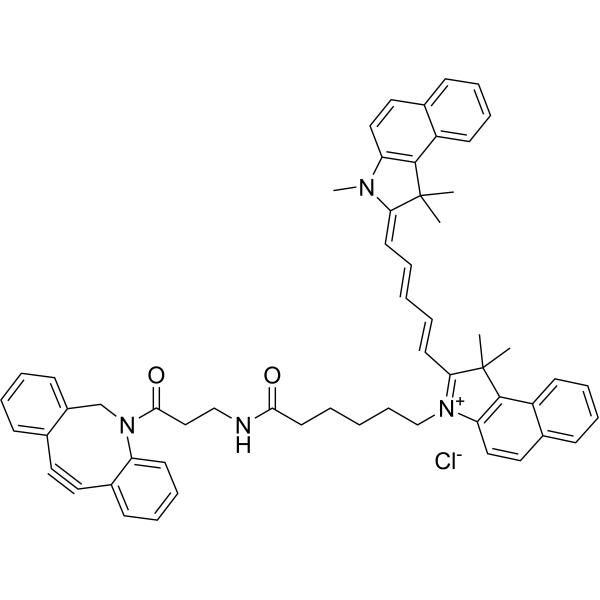
DiD is a long-chain carbocyanine dye. Carbocyanine dyes are widely used as Di to label cells, organelles, liposomes, viruses and lipoproteins (Ex/Em = 633/665 nm) .
|
-

- HY-DY1062
-
|
|
Fluorescent Dye
|
Cardiovascular Disease
Neurological Disease
Metabolic Disease
Inflammation/Immunology
Cancer
|
Cy5.5 (solution) is a CY dye. CY, short for Cyanine, is a compound consisting of two nitrogen atoms connected by an odd number of methyl units. Cyanine compounds have the characteristics of long wavelength, adjustable absorption and emission, high extinction coefficient, good water solubility and relatively simple synthesis . CY dyes are of en used for the labeling of proteins, antibodies and small molecular compounds. For the labeling of protein antibodies, the combination can be completed through a simple mixing reaction. Below, we introduce the labeling method of protein antibody labeling, which has certain reference significance .
Solvent and concentration: DMSO: 10 mM
|
-

- HY-D1319A
-
|
cy5 acid bromide
|
Fluorescent Dye
|
Others
|
|
Cyanine5 carboxylic acid (bromide) is a fluorescent dye containing a non-activated carboxylic acid (Ex=646 nm, Em=662 nm). Cyanine5 carboxylic acid chloride is an non-reactive dye that can be used in control samples .
|
-

- HY-D0924
-
Cy5.5
Maximum Cited Publications
63 Publications Verification
Sulfo-cyanine5.5
|
Fluorescent Dye
|
Cardiovascular Disease
Neurological Disease
Metabolic Disease
Inflammation/Immunology
Cancer
|
|
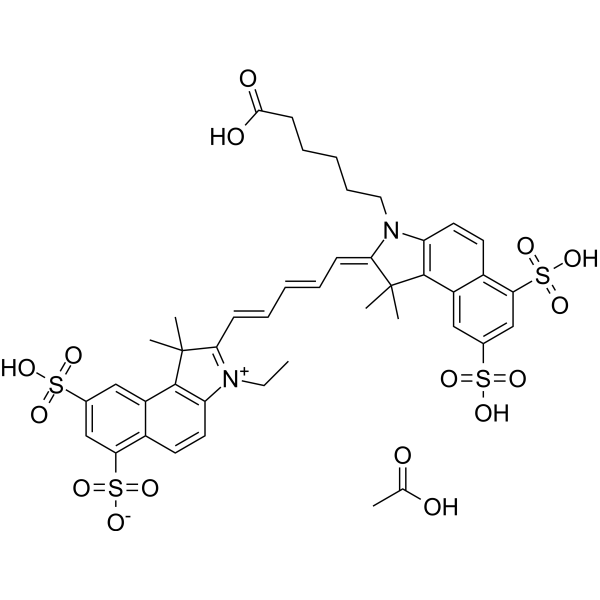
Cy5.5 is a CY dye. CY, short for Cyanine, is a compound consisting of two nitrogen atoms connected by an odd number of methyl units. Cyanine compounds have the characteristics of long wavelength, adjustable absorption and emission, high extinction coefficient, good water solubility and relatively simple synthesis . CY dyes are of en used for the labeling of proteins, antibodies and small molecular compounds. For the labeling of protein antibodies, the combination can be completed through a simple mixing reaction. Below, we introduce the labeling method of protein antibody labeling, which has certain reference significance .
|
-
- HY-D0924A
-
|
Sulfo-cyanine5.5 acetate
|
Fluorescent Dye
|
Cardiovascular Disease
Neurological Disease
Metabolic Disease
Inflammation/Immunology
Cancer
|
|
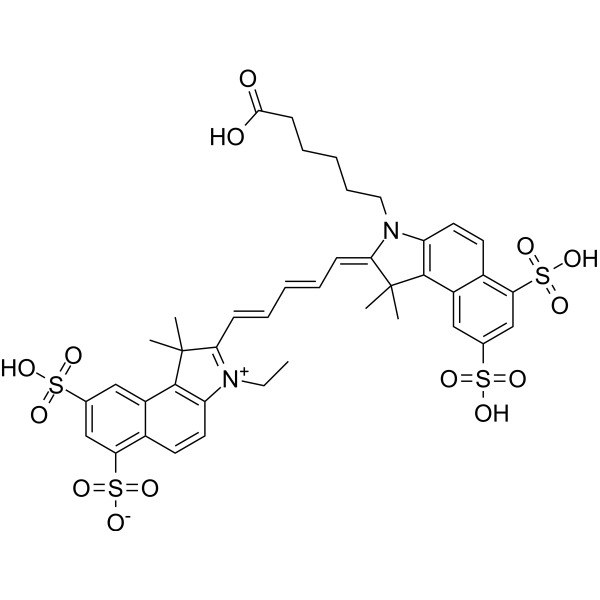
Cy5.5 acetate is a CY dye. CY, short for Cyanine, is a compound consisting of two nitrogen atoms connected by an odd number of methyl units. Cyanine compounds have the characteristics of long wavelength, adjustable absorption and emission, high extinction coefficient, good water solubility and relatively simple synthesis . CY dyes are of en used for the labeling of proteins, antibodies and small molecular compounds. For the labeling of protein antibodies, the combination can be completed through a simple mixing reaction. Below, we introduce the labeling method of protein antibody labeling, which has certain reference significance .
|
-
- HY-D1321
-
|
cyanine5 amine hydrochloride
|
Fluorescent Dye
|
Others
|
|
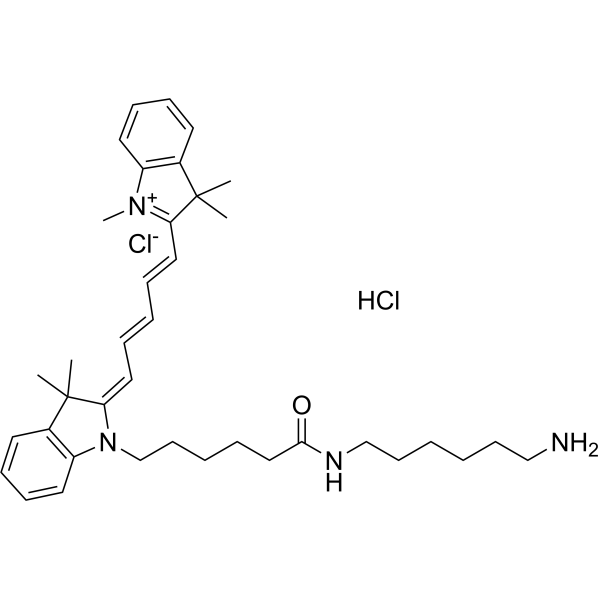
Cyanine5 amine hydrochloride is a potent fluorescent dye. Cyanine5 amine hydrochloride can be reacted with terminal alkynes via a copper-catalyzed click reaction (CuAAC). (λex=646 nm, λem=662 nm) .
|
-
- HY-D0924B
-
|
Sulfo-cyanine5.5 TEA
|
Fluorescent Dye
|
Cardiovascular Disease
Neurological Disease
Metabolic Disease
Inflammation/Immunology
Cancer
|
|
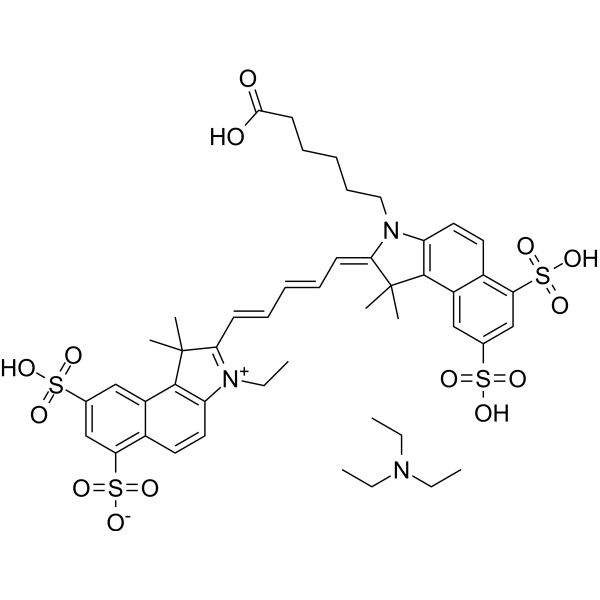
Cy5.5 TEA is a CY dye. CY, short for Cyanine, is a compound consisting of two nitrogen atoms connected by an odd number of methyl units. Cyanine compounds have the characteristics of long wavelength, adjustable absorption and emission, high extinction coefficient, good water solubility and relatively simple synthesis . CY dyes are of en used for the labeling of proteins, antibodies and small molecular compounds. For the labeling of protein antibodies, the combination can be completed through a simple mixing reaction. Below, we introduce the labeling method of protein antibody labeling, which has certain reference significance .
|
-
- HY-D0925
-
|
cyanine5.5 NHS ester
|
Biochemical Assay Reagents
|
Others
|
|
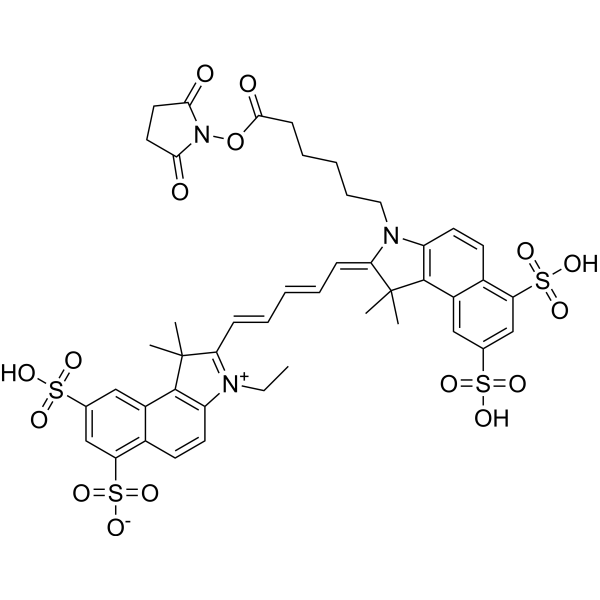
Cy5.5-SE (Cyanine5.5 NHS ester) is a CY dye. CY, short for Cyanine, is a compound consisting of two nitrogen atoms connected by an odd number of methyl units. Cyanine compounds have the characteristics of long wavelength, adjustable absorption and emission, high extinction coefficient, good water solubility and relatively simple synthesis . CY dyes are of en used for the labeling of proteins, antibodies and small molecular compounds. For the labeling of protein antibodies, the combination can be completed through a simple mixing reaction. Below, we introduce the labeling method of protein antibody labeling, which has certain reference significance . Storage: protect from light.
|
-
- HY-D0925B
-
|
cyanine5.5 NHS ester TEA
|
Fluorescent Dye
|
Others
|
|
Cy5.5-SE TEA (Cyanine5.5 NHS ester TEA) is a CY dye. CY, short for Cyanine, is a compound consisting of two nitrogen atoms connected by an odd number of methyl units. Cyanine compounds have the characteristics of long wavelength, adjustable absorption and emission, high extinction coefficient, good water solubility and relatively simple synthesis . CY dyes are of en used for the labeling of proteins, antibodies and small molecular compounds. For the labeling of protein antibodies, the combination can be completed through a simple mixing reaction. Below, we introduce the labeling method of protein antibody labeling, which has certain reference significance . Storage: protect from light.
|
-
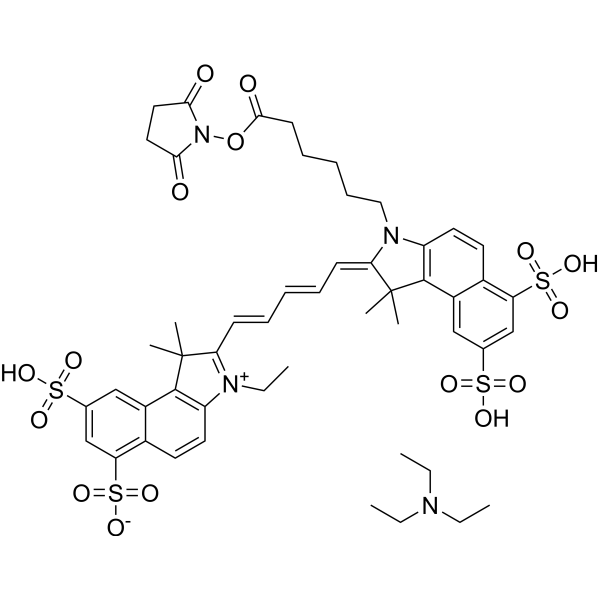
- HY-D1539
-
|
cy 5.5 azide; Lumiprobe cy 5.5 azide
|
Fluorescent Dye
|
Others
|
|
Cyanine 5.5 azide (CY 5.5 azide) is a potent fluorescent dye. Cyanine 5.5 azide can label DNA. Cyanine 5.5 azide can be used for NIR live organism imaging. (λex=684 nm, λem=710 nm) . Cyanine 5.5 azide is a click chemistry reagent, it contains an Azide group and can undergo copper-catalyzed azide-alkyne cycloaddition reaction (CuAAc) with molecules containing Alkyne groups. It can also undergo strain-promoted alkyne-azide cycloaddition (SPAAC) reactions with molecules containing DBCO or BCN groups.
|
-
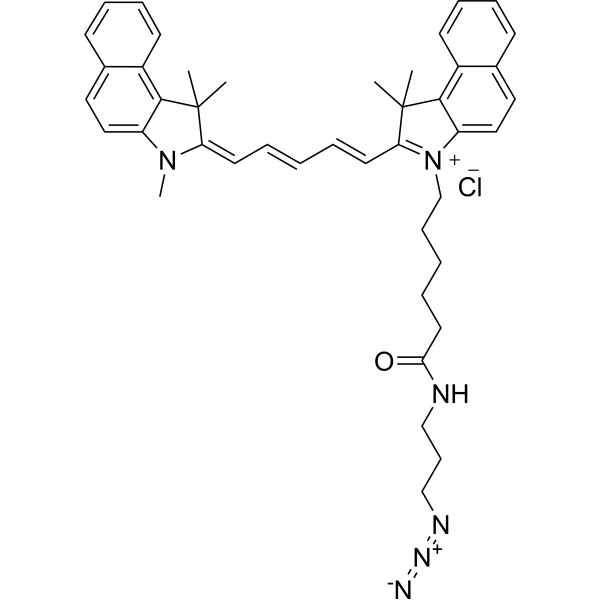
- HY-D3359
-
-

- HY-D1323
-
|
cy5.5 maleimide chloride
|
Fluorescent Dye
|
Others
|
|
Cyanine5.5 maleimide chloride is a CY dye. CY, short for Cyanine, is a compound consisting of two nitrogen atoms connected by an odd number of methyl units. Cyanine compounds have the characteristics of long wavelength, adjustable absorption and emission, high extinction coefficient, good water solubility and relatively simple synthesis . CY dyes are of en used for the labeling of proteins, antibodies and small molecular compounds. For the labeling of protein antibodies, the combination can be completed through a simple mixing reaction. Below, we introduce the labeling method of protein antibody labeling, which has certain reference significance .
|
-
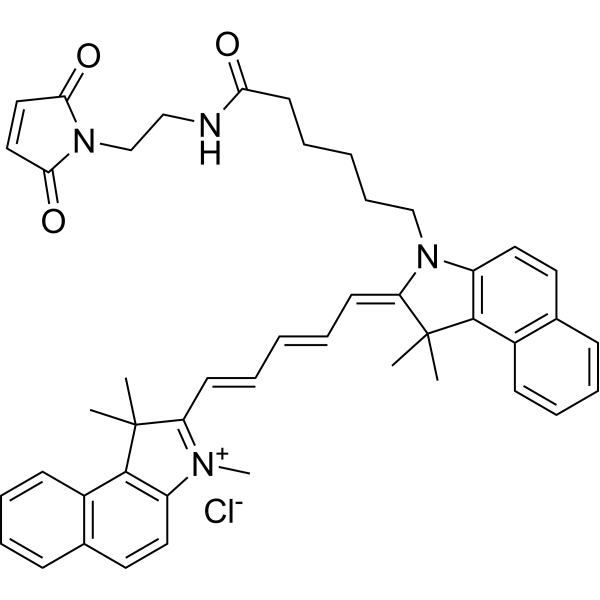
- HY-114118F5
-
-

- HY-D2487
-
|
|
Fluorescent Dye
|
Others
|
|
Sulfo Cy5 bis COOH is a derivative of Cy5 (HY-D0821) dye containing sulfonate ions. Sulfo Cy5 bis COOH contains carboxyl groups, which can condense ammonia to form covalent bonds.
|
-

- HY-13443F2
-
|
Exendin-4-cys(cy5)
|
Fluorescent Dye
|
Metabolic Disease
|
|
Exendin-4, Cy5-labeled (Exendin-4-Cys(Cy5)) is a covalently linked Cy5 fluorescent group to Exendin-4 (HY-13443), a GLP-1 receptor agonist. Exendin-4, Cy5-labeled enables the visualization imaging of β cells in vivo, especially for evaluating the expression dynamics of GLP-1R in type 2 diabetes models .
|
-

- HY-NP094
-
|
SNA (cy5)
|
Fluorescent Dye
|
Others
|
|
Sambucus Nigra Lectin (SNA) CY5 is a plant lectin that can be used as a probe to specifically bind biomolecules (such as polysaccharides, peptides, etc.).Sambucus Nigra Lectin (SNA) CY5 is a biological material or organic compound that can be used in life science research .
|
-

- HY-N16251
-
|
|
Others
|
Others
|
|
C16 Cy5 SM chloride is a lipid that can be used to prepare lipid nanoparticles (LNPs) for drug delivery.
|
-

- HY-NP146
-
|
|
Fluorescent Dye
|
Others
|
|
Peanut Agglutinin CY5 is a plant lectin that can be used as a probe to specifically bind biomolecules (such as polysaccharides, peptides, etc.). Peanut Agglutinin CY5 is a biological material or organic compound that can be used in life science research .
|
-

- HY-141043
-
|
|
PROTAC Linkers
|
Cancer
|
|
N,N'-bis-(Acid-PEG3)-benzothiazole Cy5 is a PEG-based PROTAC linker that can be used in the synthesis of PROTACs .
|
-
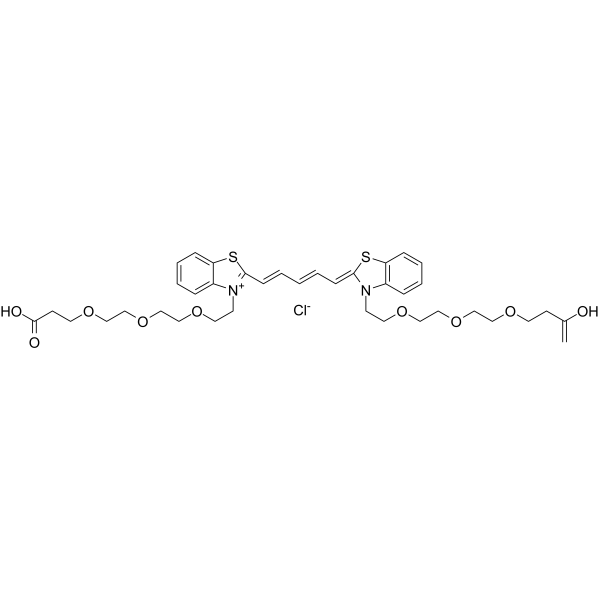
- HY-141038
-
|
|
PROTAC Linkers
|
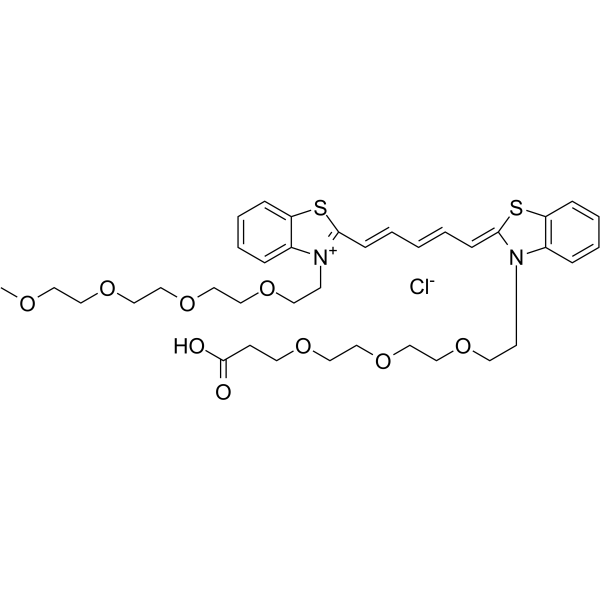
Cancer
|
|
N-(m-PEG4)-N'-(Acid-PEG3)-benzothiazole Cy5 is a PEG-based PROTAC linker that can be used in the synthesis of PROTACs .
|
-
- HY-141064
-
|
|
PROTAC Linkers
|
Cancer
|
|
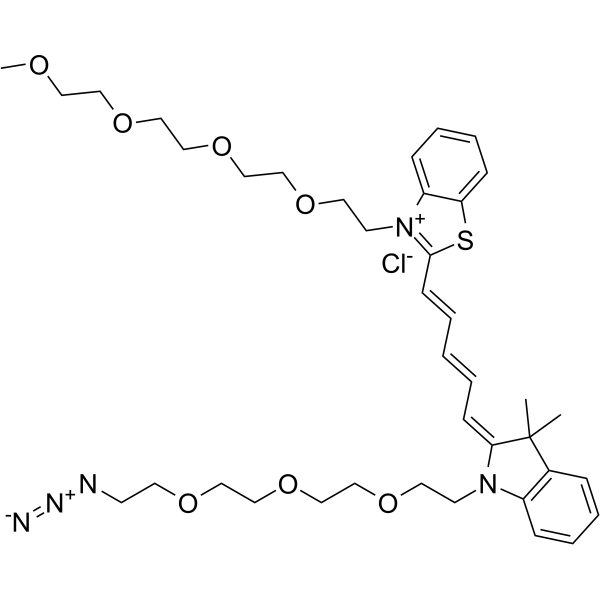
N-(azide-PEG3)-N'-(m-PEG4)-Benzothiazole Cy5 is a PEG-based PROTAC linker that can be used in the synthesis of PROTACs . N-(azide-PEG3)-N'-(m-PEG4)-Benzothiazole Cy5 is a click chemistry reagent, it contains an Azide group and can undergo copper-catalyzed azide-alkyne cycloaddition reaction (CuAAc) with molecules containing Alkyne groups. It can also undergo strain-promoted alkyne-azide cycloaddition (SPAAC) reactions with molecules containing DBCO or BCN groups.
|
-
- HY-NP055
-
-

- HY-D2357
-
-

- HY-D2978
-
-

- HY-D1374
-
|
|
Fluorescent Dye
|
|
|
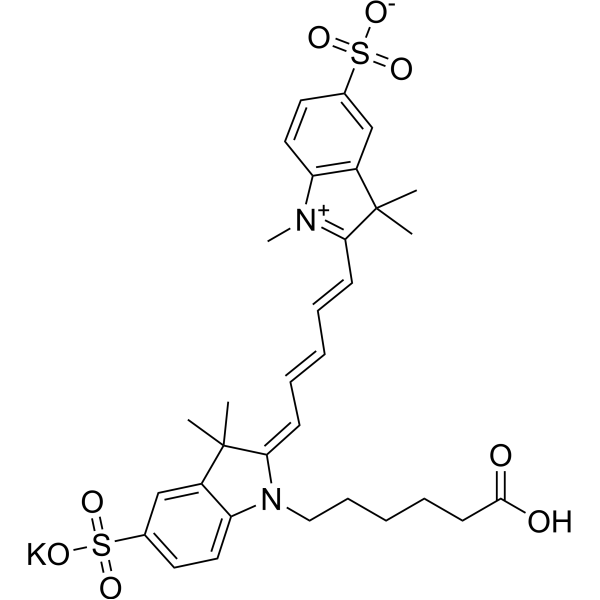
Sulfo-Cy5 carboxylic acid potassium is a water-soluble, inactive Cy5 carboxylic acid.
|
-
- HY-D1096
-
|
|
Fluorescent Dye
|
|
|
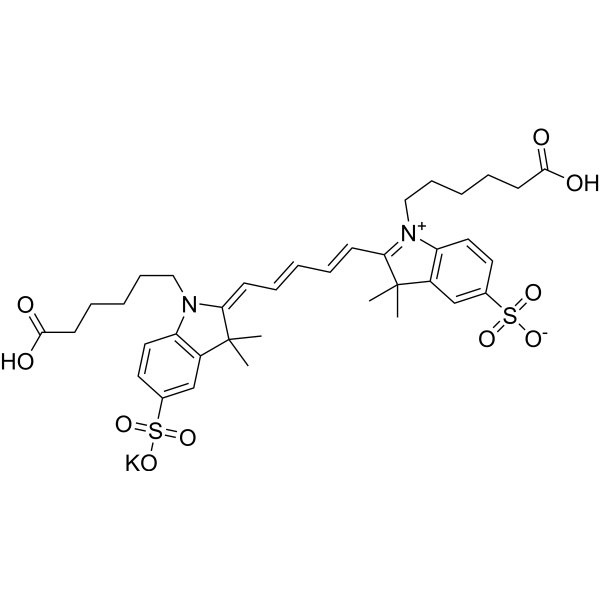
Sulfo-Cy5 diacid potassium is a water-soluble, inactive Cy5 carboxylic acid.
|
-
- HY-D3029
-
|
HSA-cy5.5
|
Fluorescent Dye
|
Others
|
|
Human Serum Albumin-CY5.5 (HSA-CY5.5) is a CY5.5 (HY-D0924) labeled serum albumin. Human Serum Albumin-CY5.5 plays an important role in fluorescent labeling, drug delivery research, and other fields (Ex/Em = 680/710 nm) .
|
-

- HY-D2223
-
|
|
Fluorescent Dye
|
Others
|
|
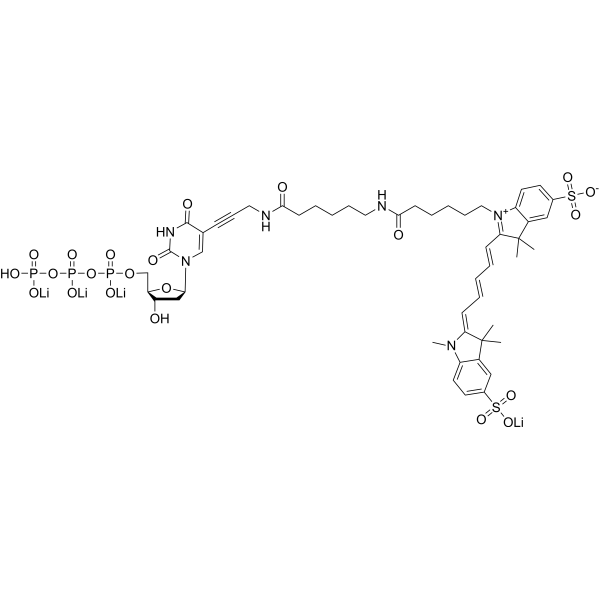
Sulfo-Cy5 dUTP is a modified nucleoside triphosphate used for DNase labeling. Sulfo-Cy5 dUTP is a bright far-red emitting dye for the Cy5 channel .
|
-
- HY-D1853
-
|
|
Fluorescent Dye
|
Others
|
|
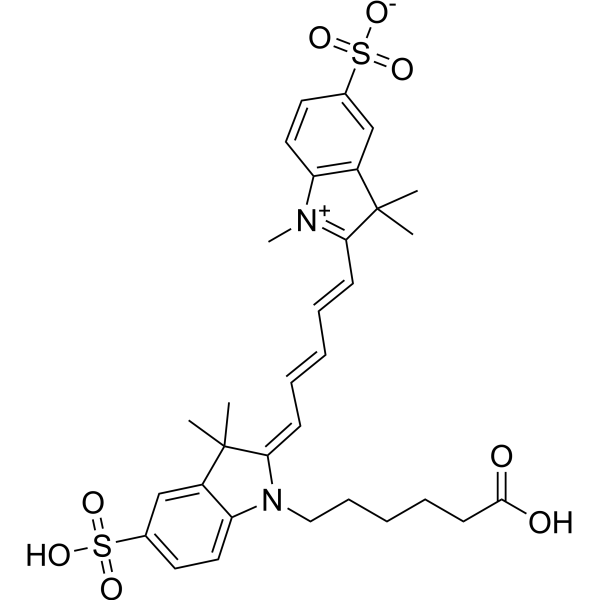
Sulfo-Cy5 carboxylic acid is a Cy5 derivative that can be used for chemical synthesis. Cy5 is a red fluorescent label dye for imaging (Ex/Em=642/670 nm) .
|
-
- HY-D2849
-
|
|
Fluorescent Dye
|
Others
|
|
Heparin-Cy5 is a fluorescent dye composed of CY5 (HY-D0821) and heparin. Heparin-CY5 is used to study the localization and distribution of heparin in vivo and its interaction with other biomolecules (Ex/Em = 633/670 nm).
|
-

- HY-D2358
-
|
|
Fluorescent Dye
|
Metabolic Disease
|
|
Glucosamine-CY5.5 is CY5.5-labeled Glucosamine (HY-B1125). Glucosamine-CY5.5 can be used to localize Glucosamine in living cells .
|
-

- HY-D1482A
-
|
|
Fluorescent Dye
|
Others
|
|
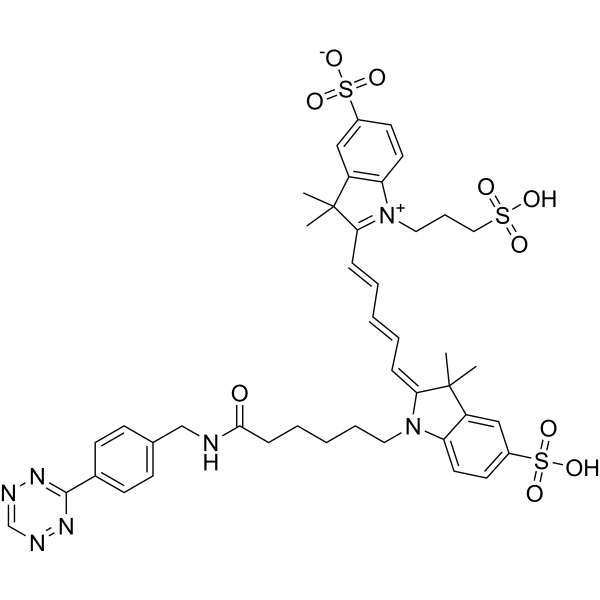
Sulfo Cy5-tetrazine sodium is a tetrazine-coupled Cy5 (HY-D0821) derivative dye with fluorescence properties similar to CY5 (Ex/Em=633/647 nm). Sulfo-Cy5-tetrazine sodium is a click chemistry reagent, it contains a Tetrazine group that can undergo an inverse electron demand Diels-Alder reaction (iEDDA) with molecules containing TCO groups .
|
-

- HY-D1482
-
|
|
Fluorescent Dye
|
Others
|
|
Sulfo Cy5-tetrazine is a tetrazine-coupled Cy5 (HY-D0821) derivative dye with fluorescence properties similar to CY5 (Ex/Em=633/647 nm). Sulfo-Cy5-tetrazine is a click chemistry reagent, it contains a Tetrazine group that can undergo an inverse electron demand Diels-Alder reaction (iEDDA) with molecules containing TCO groups .
|
-
- HY-D1537
-
|
DBCO-cy5.5; cyanine5.5 DBCO
|
Fluorescent Dye
|
Others
|
|
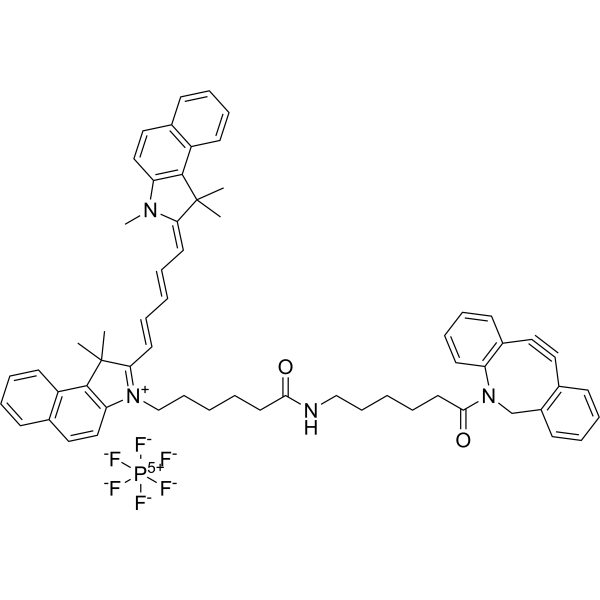
Dibenzocyclooctyne-Cy5.5 (DBCO-Cy5.5) is a fluorescent dye. Dibenzocyclooctyne-Cy5.5 can be used to syntheses calcium-binding near-infrared fluorescent nanoprobe for bone tissue imaging .
|
-
- HY-149380
-
|
|
Raf
|
Cancer
|
|
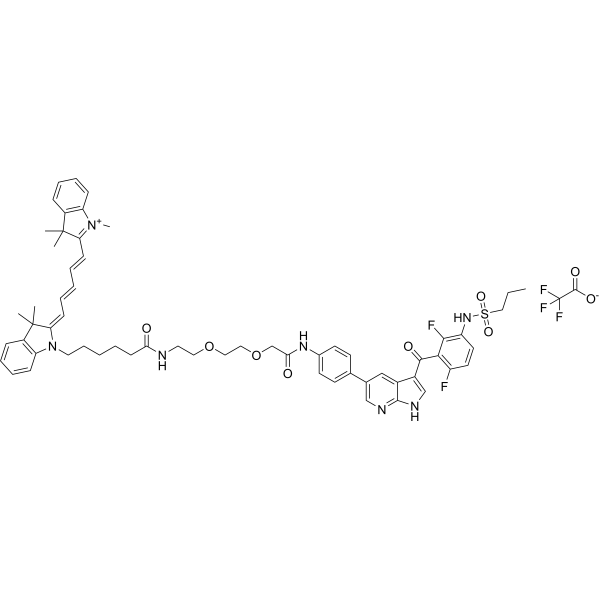
Vem-L-Cy5 (compound 3),modified with the NIR fluorophore cyanine-5 (Cy5),is a Vemurafenib (HY-12057)-based inhibitor of BRAF. Vem-L-Cy5 targets to BRAF V600E,and also inhibits MEK phosphorylation. Vem-L-Cy5 has cell permeability,and inhibits cell growth of many types of cancer .
|
-
- HY-D1853A
-
|
|
Fluorescent Dye
|
Others
|
|
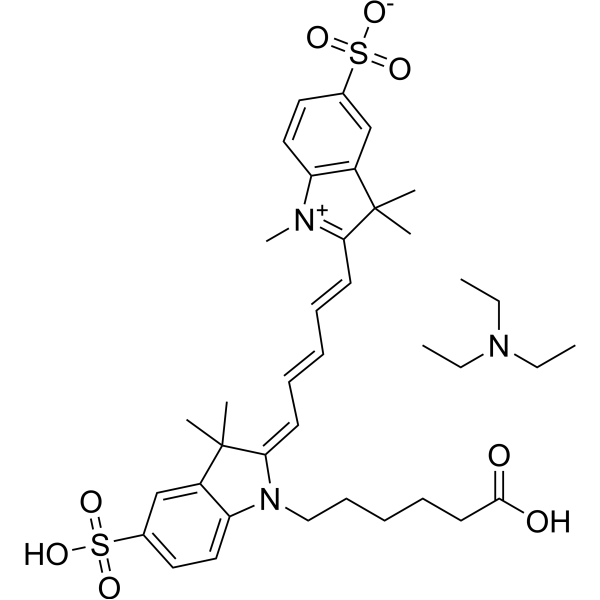
Sulfo-Cy5 carboxylic acid TEA is a Cy5 derivative that can be used for chemical synthesis. Cy5 is a red fluorescent label dye for imaging (Ex/Em=642/670 nm) .
|
-
- HY-D1375
-
|
|
Fluorescent Dye
|
Others
|
|
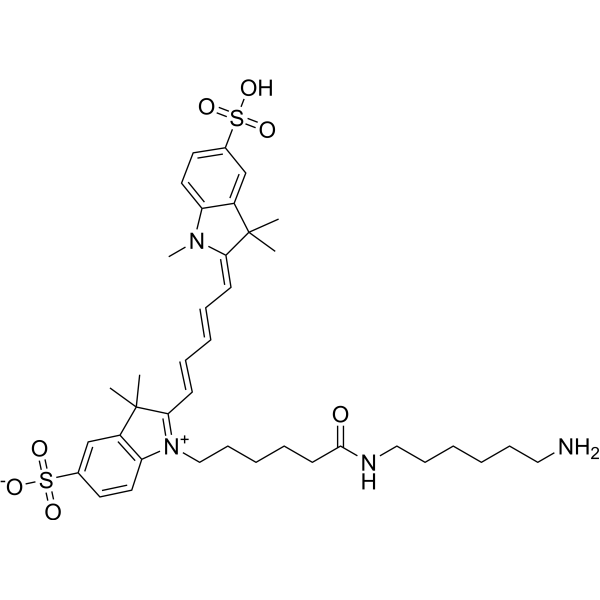
Sulfo-Cy5 amine is a dye derivative of Cyanine 5 (Cy5) (HY-D0821) bearing an amine group. The sulfonate ion increases the water solubility of the compound, making it suitable for use in aqueous solutions. Cy5 is a near-infrared fluorescent dye commonly used in biolabeling and cell imaging. The amine functionality of Sulfo-Cy5 amine can react with carboxyl groups to form covalent bonds. Sulfo-Cy5 amine can bind to biomolecules such as proteins and antibodies to track their location and dynamic changes in biological samples.
|
-
- HY-D1390
-
|
|
Fluorescent Dye
|
Others
|
|
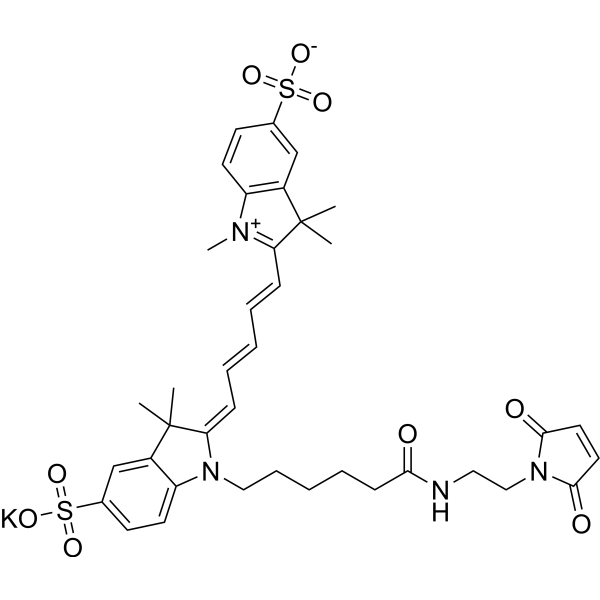
Sulfo-Cy5-Mal potassium is a fluorescent dye derivative composed of a CY5 dye and a maleimide functional group. Sulfo-Cy5-Mal potassium specifically covalently binds to thiol-containing (-SH) biomolecules. Sulfo-Cy5-Mal potassium can be used for protein labeling, antibody conjugation, molecular imaging, and drug delivery studies (Ex/Em = 633 nm/670 nm) .
|
-
- HY-D1390A
-
|
|
Fluorescent Dye
|
Others
|
|
Sulfo-Cy5-Mal is a fluorescent dye derivative composed of a CY5 dye and a maleimide functional group. Sulfo-Cy5-Mal specifically covalently binds to thiol-containing (-SH) biomolecules. Sulfo-Cy5-Mal can be used for protein labeling, antibody conjugation, molecular imaging, and drug delivery studies (Ex/Em = 633 nm/670 nm) .
|
-

- HY-154927
-
|
|
Liposome
|
Cancer
|
|
DSPE-PEG-Cy5 is a fluorescent lipophilic PEG lipid. DSPE-PEG-Cy5 can insert into cell membranes and localize uniformly on them. DSPE-PEG-Cy5 can serve as a fluorescent model molecule to optimize and validate membrane insertion conditions for cell surface functionalization. DSPE-PEG-Cy5 can be used in research on drug delivery, cancer, and other fields .
|
-

- HY-D2850
-
|
|
Fluorescent Dye
|
Others
|
|
Heparin-Cy5.5 is a fluorescent dye composed of CY5.5 (HY-D0924) and heparin. Heparin-CY5.5 is used to study the localization and distribution of heparin in vivo and its interaction with other biomolecules (Ex/Em = 680/710 nm).
|
-

- HY-W440911
-
|
|
Liposome
Fluorescent Dye
|
Cancer
|
|
DSPE-PEG2000-Cy5 is a Cy5 (HY-D0821) fluorophore-labeled conjugate of distearoylphosphatidylethanolamine and polyethylene glycol, as well as a liposome component. The Cy5 fluorophore is commonly used for labeling proteins and nucleic acids in imaging, flow cytometry and genomic applications. DSPE-PEG2000-Cy5 supports cell membrane modification, in vivo tumor targeting research and long-term in vivo circulation of its liposomal formulations (Ex/Em=633/670 nm) .
|
-
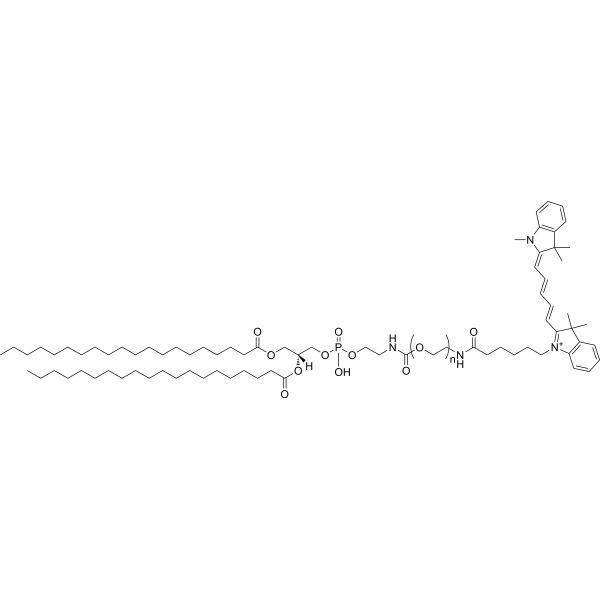
- HY-151759
-
|
|
Fluorescent Dye
|
Cancer
|
|
Sulfo-Cy5-TCO is a water-soluble sulfonated Cy5 fluorescent reagent containing trans-cyclooctene (TCO). Sulfo-Cy5-TCO undergoes an inverse electron demand Diels‑Alder reaction with tetrazine-labeled fixed breast cancer cells to achieve cell labeling. Sulfo-Cy5-TCO is used for fluorescent labeling and imaging of biological samples such as proteins and cells .
|
-
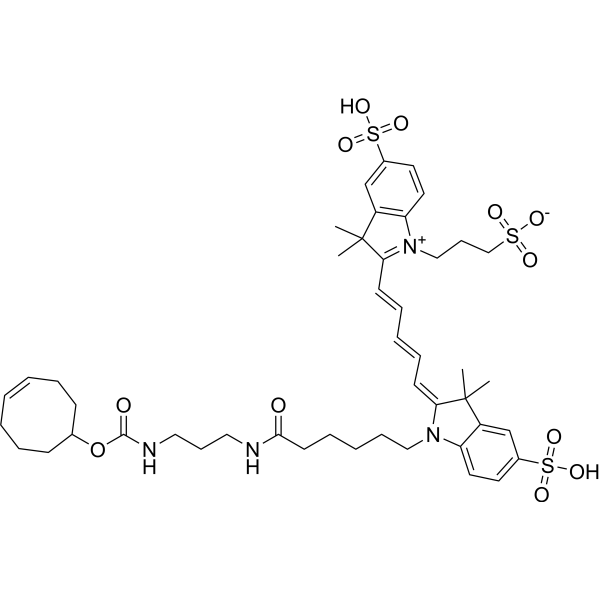
- HY-151757
-
|
|
Fluorescent Dye
|
Others
|
|
Trisulfo-Cy5-Alkyne is a click chemistry reagent containing an azide group. Trisulfo-Cy5-Alkyne can participate in copper-catalyzed Click Chemistry reactions. Trisulfo-Cy5-Alkyne is a near infrared (NIR) fluorescent dye .
|
-
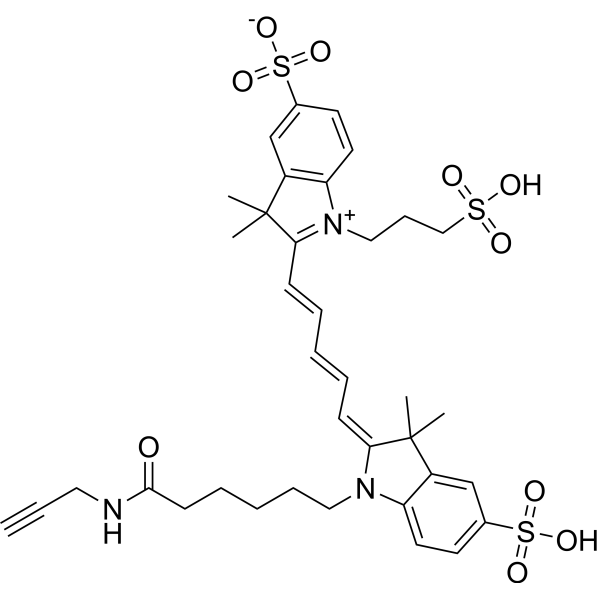
- HY-D3260
-
|
|
Fluorescent Dye
|
Others
|
|
PerCP-Cy5.5 is a tandem fluorescent dye composed of a polydinoflavin-chlorophyll protein complex (PerCP) coupled with the anthocyanin dye Cy5.5. PerCP-Cy5.5 is widely used in multicolor flow cytometry analysis (Ex/Em = 48/677-695 nm).
|
-

- HY-D1375A
-
|
|
Fluorescent Dye
|
Others
|
|
Sulfo-Cy5 amine hydrochloride is a near-infrared (NIR) amino fluorescent dye. Sulfo-Cy5 amine hydrochloride reacts with electrophilic substances .
|
-
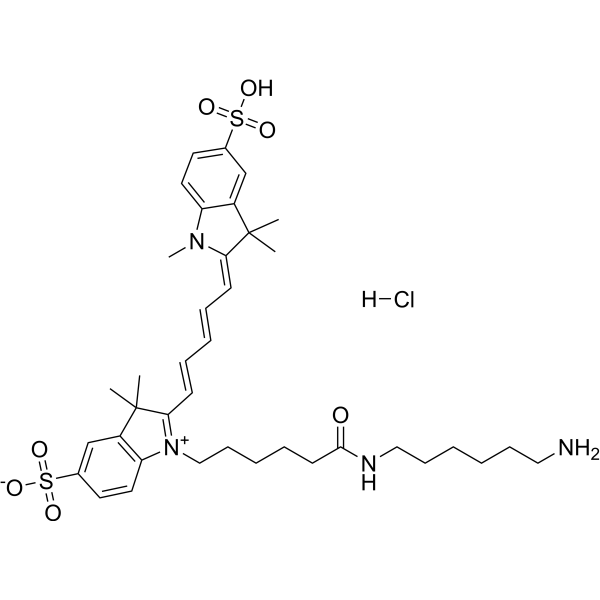
- HY-D2846
-
|
|
Fluorescent Dye
|
Others
|
|
m-PEG-PEI800-Cy5 is a fluorescent dye composed of CY5 (HY-D0821), methoxypolyethylene glycol (mPEG), and polyethyleneimine (PEI). m-PEG-PEI8800-Cy5 is used for gene delivery, nanodrug delivery, cell imaging and biosensing and bioanalysis (Ex/Em = 633/670 nm).
|
-

- HY-151801
-
|
|
mAChR
|
Others
|
|
DIBA-Cy5 is a fluorescent DIBA antagonist made up be DIBA-alkyne binding Cyanine5 fluorophores (Cy5) and polyethylene glycol (PEG) biomolecules. DIBA-Cy5 can serve as a fluorescent ligand, suitable for probe attachment through click chemistry. DIBA-Cy5 exerts a high binding affinity to type-2 mAChR (M2R) with the Kd value of 1.80 nM, can directly stain M2R receptors in the sinoatrial node of a mouse heart .
|
-
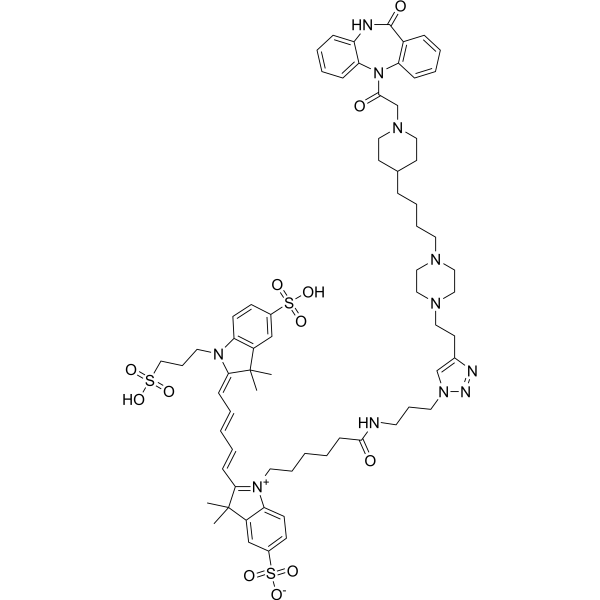
- HY-NP164O
-
|
Con A-cy5
|
Fluorescent Dye
|
Cancer
|
|
Concanavalin A-Cy5 (Con A-Cy5) is a Cy5 (HY-D0821)-labled Concanavalin A (HY-P2149). Concanavalin A is a Ca 2+/Mn 2+-dependent and mannose/glucose-binding plant lectin. Concanavalin A binds the N- and O-glycosylated proteins of head and neck carcinoma cells glycoproteins (Ex/Em = 630/670 nm) .
|
-

- HY-NP062
-
|
BSA-cy5.5
|
Fluorescent Dye
|
Others
|
|
Bovine Serum Albumin-Cy5.5 is Cy5.5-labeled Bovine Serum Albumin (BSA) (HY-D0842). Bovine Serum Albumin-Cy5.5 can be used in fields such as bioimaging, molecular tracing, drug delivery research, and in vitro and in vivo fluorescence detection (Ex/Em = 680/710 nm) .
|
-

- HY-D3275
-
|
|
Fluorescent Dye
|
Others
|
|
PE-Cy5.5 is a far-red emitting tandem dye designed based on the principle of fluorescence resonance energy transfer (FRET), and is widely used in multicolor flow cytometry. PE-Cy5.5 consists of phycoerythrin (PE) as the energy donor and the cyanine dye Cy5.5 as the energy acceptor. Upon excitation by blue or green laser light, PE absorbs energy and transfers it to Cy5.5 via FRET, ultimately resulting in Cy5.5 emitting characteristic far-red fluorescence (Ex/Em = 450-500 nm/698 nm) .
|
-

- HY-W835383
-
|
|
Fluorescent Dye
|
Others
|
|
Sulfo-Cy5.5-COOH is a sulfonated Cy5.5 fluorescent dye containing a sulfonic acid group and a carboxylic acid group. The fluorescence wavelength of Sulfo-Cy5.5-COOH is in the near-infrared region and has strong penetrating power.
|
-

- HY-151712
-
|
|
Fluorescent Dye
|
Others
|
|
Sulfo-Cy5-Methyltetrazine is a click chemistry reagent containing a methyltetrazine group. Sulfo-Cy5-Methyltetrazine acts as a fluorophore linker for trans-cyclooctene-based labeling. Sulfo-Cy5-Methyltetrazine shows good stability at physiological pH and is also highly reactive towards cyclooctene.
|
-
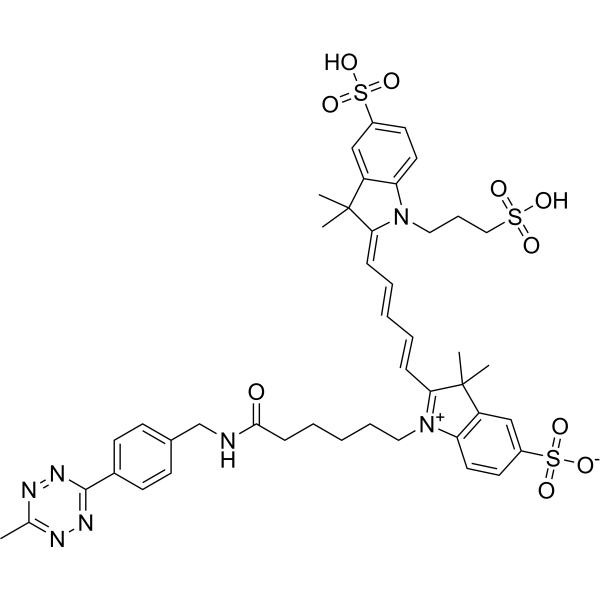
- HY-D2132
-
|
|
Fluorescent Dye
|
Cancer
|
|
Sulfo-Cy5.5-ALN is a fluorescent labeled alendronate, which targets bone. Sulfo-Cy5.5-ALN binds to hydroxyapatite and differentiated osteoblasts in vitro. Sulfo-Cy5.5-ALN selectively binds to the mineralized areas of the tumor. Sulfo-Cy5.5-ALN can be used to detect bone overgrowth in prostate bone metastasis .
|
-
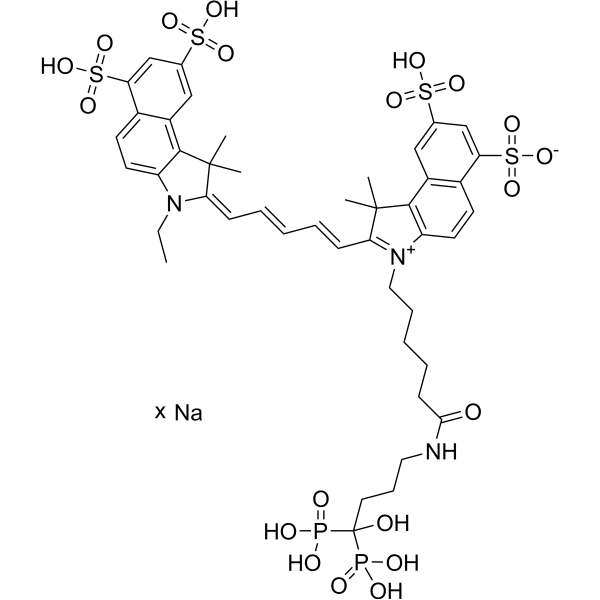
- HY-W879234
-
|
Sulfo cy5.5-DBCO
|
Fluorescent Dye
|
Others
|
|
TriSulfo-Cy5.5 DBCO is a near infrared (NIR) fluorescent anthocyanin fluorescent dye.TriSulfo-Cy5.5 DBCO can be used to label proteins, antibodies, peptides, nucleic acid molecules.
|
-

- HY-D2388A
-
|
|
Fluorescent Dye
|
Others
|
|
Sulfo Cy5.5-hydrazide sodium is a Cy5.5 (HY-D0924) dye derivative with hydrazine functionality. The hydrazide group of Sulfo Cy5.5-hydrazide sodium can form hydrazinone coupling with molecules containing aldehydes or ketones to form covalent bonds .
|
-

- HY-151753
-
|
|
Fluorescent Dye
|
Others
|
|
Trisulfo-Cy5.5-Alkyne is a click chemistry reagent containing an azide group. Trisulfo-Cy5.5-Alkyne can participate in copper-catalyzed Click Chemistry reactions. Trisulfo-Cy5.5-Alkyne is a near infrared (NIR) fluorescent anthocyanin fluorescent dye.
|
-
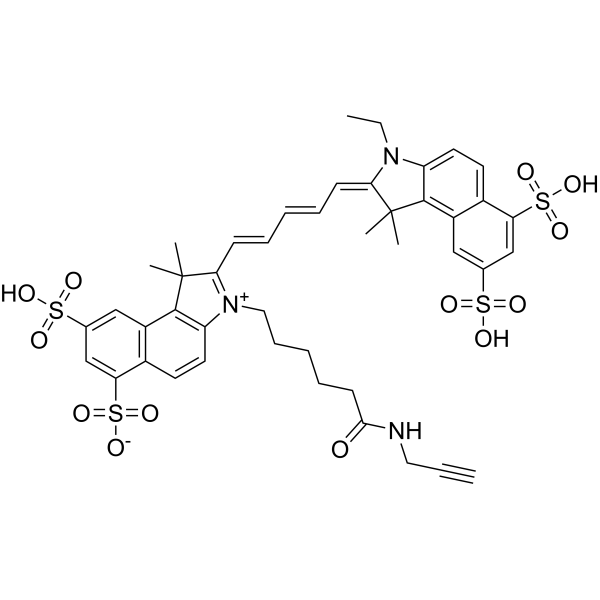
- HY-D2388
-
|
|
Fluorescent Dye
|
Others
|
|
Sulfo Cy5.5-hydrazide is a Cy5.5 (HY-D0924) dye derivative with hydrazine functionality. The hydrazide group of Sulfo Cy5.5-hydrazide can form hydrazinone coupling with molecules containing aldehydes or ketones to form covalent bonds .
|
-

- HY-NP164A
-
|
Con A-cy5.5
|
Fluorescent Dye
|
Cancer
|
|
Concanavalin A-Cy5.5 (Con A-Cy5.5) is a Cy5.5 (HY-D0924)-labled Concanavalin A (HY-P2149). Concanavalin A is a Ca 2+/Mn 2+-dependent and mannose/glucose-binding plant lectin. Concanavalin A binds the N- and O-glycosylated proteins of head and neck carcinoma cells glycoproteins .
|
-

- HY-W440913
-
|
|
Liposome
Fluorescent Dye
|
Cancer
|
|
DSPE-PEG-Cy5, MW 5000 is a fluorescently labeled PEGylated phospholipid with a molecular weight of 5000 Da. After intravenous injection, DSPE-PEG-Cy5, MW 5000 shows only extremely low fluorescence accumulation at tumor sites in orthotopic tumor-bearing mice, and can be used as a negative control for evaluating tumor accumulation of nanoparticles. DSPE-PEG-Cy5, MW 5000 can serve as a fluorescent marker to prepare Cy5-labeled NPs-DPPA and NPs-DPPA (C3F8) for pharmacokinetic and biodistribution studies in mice. DSPE-PEG-Cy5, MW 5000 is widely applicable to research in fields related to triple-negative breast cancer, hepatocellular carcinoma and so on .
|
-
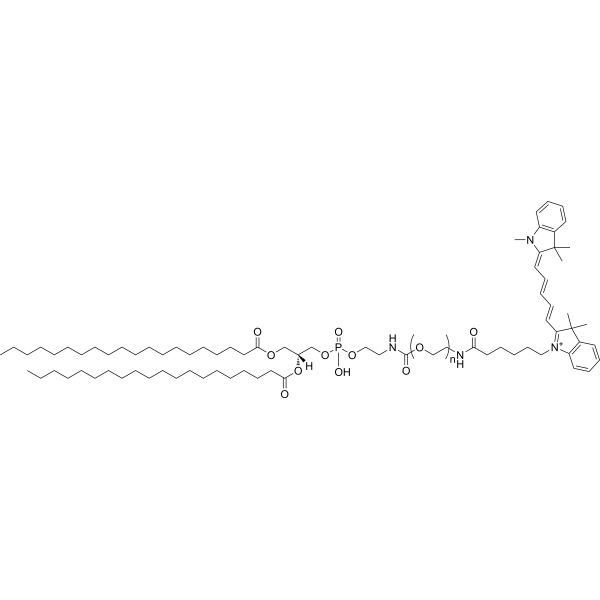
- HY-145746
-
|
|
Fluorescent Dye
PD-1/PD-L1
|
Inflammation/Immunology
Cancer
|
|
Sulfo-Cy5 azide is a near-infrared fluorescent probe with favorable click chemistry reactivity. Sulfo-Cy5 azide enables fluorescence imaging, tissue and cellular visualization of PD-L1 in tumors, and site-specific modification of anti-PD-L1 antibodies. Sulfo-Cy5 azide has been employed for RNA labeling and imaging. Sulfo-Cy5 azide can be conjugated to targeting agents for fluorescence imaging in atherosclerosis and breast cancer models (Ex/Em = 645/670 nm) .
|
-
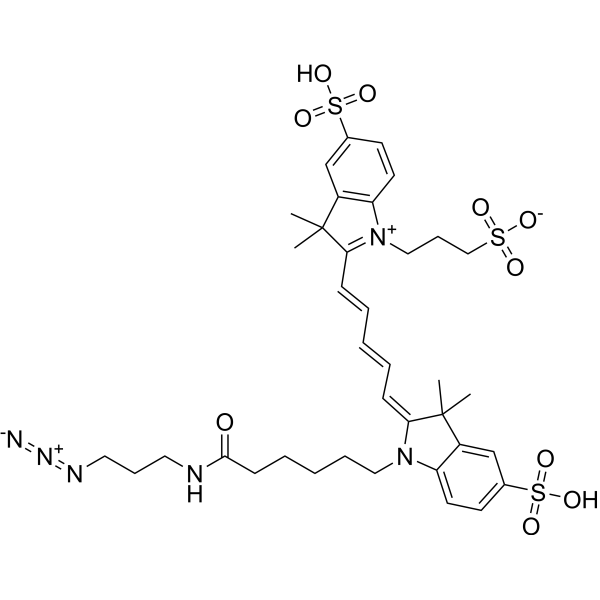
- HY-D2421
-
|
|
Fluorescent Dye
|
Cardiovascular Disease
Cancer
|
|
DEAE-dex-Cy5 is a fluorescent labeling reagent that combines Cy5 (HY-D0821) fluorescent dye, Dextran (dex) and Diethylaminoethyl (DEAE). Cy5 is a Cyanine dye (with a long wavelength about 662nm) that can be used for molecular labeling and microscopy imaging. Dex has an inhibitory effect on thrombocyte aggregation and coagulation factors and is used as a plasma volume expander .
|
-

- HY-D2848C
-
|
|
Fluorescent Dye
|
Others
|
|
Chitosan-Cy5.5 (MW 100000) is a fluorescent dye composed of CY5.5 (HY-D0924) and chitosan. Chitosan-Cy5.5 (MW 100000) can be used for bioimaging, drug delivery and biomaterial research (Ex/Em = 680/710 nm) .
|
-

- HY-D2848B
-
|
|
Fluorescent Dye
|
Others
|
|
Chitosan-Cy5.5 (MW 1000) is a fluorescent dye composed of CY5.5 (HY-D0924) and chitosan. Chitosan-Cy5.5 (MW 1000) can be used for bioimaging, drug delivery and biomaterial research (Ex/Em = 680/710 nm) .
|
-

- HY-D2848
-
|
|
Fluorescent Dye
|
Others
|
|
Chitosan-Cy5.5 (MW 2000) is a fluorescent dye composed of CY5.5 (HY-D0924) and chitosan. Chitosan-Cy5.5 (MW 2000) can be used for bioimaging, drug delivery and biomaterial research (Ex/Em = 680/710 nm) .
|
-

- HY-D2848A
-
|
|
Fluorescent Dye
|
Others
|
|
Chitosan-Cy5.5 (MW 55000) is a fluorescent dye composed of CY5.5 (HY-D0924) and chitosan. Chitosan-Cy5.5 (MW 55000) can be used for bioimaging, drug delivery and biomaterial research (Ex/Em = 680/710 nm) .
|
-

- HY-D2839
-
|
|
Fluorescent Dye
|
Others
|
|
m-PEG10000-PEI-Cy5 is a fluorescent dye composed of polyethylene glycol (PEG), Cy5 (HY-D0821) and Polyethyleneimine (PEI). m-PEG10000-PEI-Cy5 can be used for fluorescent labeling and imaging .
|
-

- HY-D2846B
-
|
|
Fluorescent Dye
|
Others
|
|
m-PEG5000-PEI5000-Cy5 is a fluorescent dye composed of CY5 (HY-D0821), methoxypolyethylene glycol (mPEG), and polyethyleneimine (PEI). m-PEG5000-PEI5000-Cy5 is used for gene delivery, nanodrug delivery, cell imaging and biosensing and bioanalysis (Ex/Em=633/670 nm).
|
-

- HY-D2846A
-
|
|
Fluorescent Dye
|
Others
|
|
m-PEG2000-PEI2000-Cy5 is a fluorescent dye composed of CY5 (HY-D0821), methoxypolyethylene glycol (mPEG), and polyethyleneimine (PEI). m-PEG2000-PEI2000-Cy5 is used for gene delivery, nanodrug delivery, cell imaging and biosensing and bioanalysis (Ex/Em=633/670 nm).
|
-

- HY-D2750
-
|
|
Fluorescent Dye
|
Others
|
|
Sulfo-Cy5 Picolyl Azide is a fluorophore featuring a sulfonate group and an azide. Azide groups are click chemistry handles which are reactive towards terminal alkynes and strained cyclooctynes such as BCN or DBCO. Cy5 is a cyanine dye with excitation and emission maxima at 651 nm and 670 nm respectively. The sulfonate group on the Cy5 dye increases this compound’s water solubility.
|
-

- HY-D3274
-
|
|
Fluorescent Dye
|
Others
|
|
PE-Cy5 is a tandem fluorescent dye commonly used in flow cytometry, immunofluorescence, and cell biology research. It is formed by the covalent linkage of two fluorescent molecules, namely phycoerythrin and CY5. PE-Cy5 binds to human FcγRI (CD64), and this binding can be blocked by human pooled serum, anti-CD64 monoclonal antibodies targeting the ligand-binding region, or aggregated IgG. PE-Cy5 supports three-color flow cytometry analysis, and whole blood staining can partially reduce its non-specific binding (Ex/Em = 450-500 nm/665 nm) .
|
-

- HY-D2460
-
|
|
Fluorescent Dye
|
Cardiovascular Disease
Cancer
|
|
Dextran-CY5.5 is a CY5.5 (HY-D0924) labeled Dextran (HY-112624) conjugate. CY5.5 is a Cyanine dye (The excitation wavelength is usually 673 nm and the emission wavelength is 707 nm) that can be used for the labeling of proteins, antibodies and small molecular compounds. Dextran has an inhibitory effect on thrombocyte aggregation and coagulation factors and is used as a plasma volume expander .
|
-

- HY-W440912
-
|
|
Liposome
|
Others
|
|
DSPE-PEG3400-Cy5 is a PEG phospholipid with Cy5 dye used in protein/nucelic acid labeling and fluorescence microscopy. The polymer can self-assemble in aqueous solution to form micelles/lipid bilayer and used to prepare liposomes or nanoparticles for nutrients delivery such as mRNA or DNA vaccine.
|
-
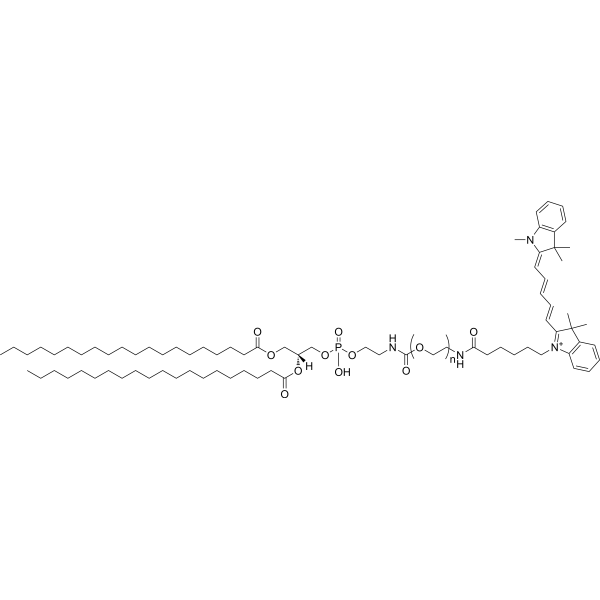
- HY-D2749
-
|
|
Fluorescent Dye
|
Others
|
|
Sulfo-Bis-(N,N'-carboxylic acid)-Cy5 is a free unactivated carboxylic acid. Its absorbance and emission spectra are identical with Cy5 fluorophore.
|
-

- HY-D2181
-
|
|
Fluorescent Dye
|
Others
|
|
Preactivated PE-Cy5.5 Maleimide is a Preactivated PE-Cy5.5 Maleimide, which is a dye that can be used to label molecules such as dye that can be used to label molecules such as antibodies .
|
-

- HY-D3328
-
|
|
Fluorescent Dye
|
Others
|
|
APC-Cy5.5 is a tandem dye widely used in flow cytometry. It consists of the energy donor allophycocyanin (APC) and the energy acceptor Cy5.5, and operates via the fluorescence resonance energy transfer mechanism (Ex/Em = 650 nm/690 nm) .
|
-

- HY-D2182
-
|
|
Fluorescent Dye
|
Others
|
|
Preactivated PE-Cy5 Maleimide is a sulfhydryl reactive dye that reacts with free sulfhydryl groups on proteins. Preactivated APC-Cy5.5 Maleimide binds easily to proteins or antibodies, and does not change the spectral characteristics of APC-Cy/YF after activation.
|
-
- HY-D2460A
-
|
|
Fluorescent Dye
|
Cardiovascular Disease
Cancer
|
|
Dextran-CY5.5 (MW 10000) is a CY5.5 (HY-D0924) labeled Dextran (HY-112624) conjugate. CY5.5 is a Cyanine dye (The excitation wavelength is usually 673 nm and the emission wavelength is 707 nm) that can be used for the labeling of proteins, antibodies and small molecular compounds. Dextran has an inhibitory effect on thrombocyte aggregation and coagulation factors and is used as a plasma volume expander .
|
-

- HY-D2460B
-
|
|
Fluorescent Dye
|
Cardiovascular Disease
Cancer
|
|
Dextran-CY5.5 (MW 40000) is a CY5.5 (HY-D0924) labeled Dextran (HY-112624) conjugate. CY5.5 is a Cyanine dye (The excitation wavelength is usually 673 nm and the emission wavelength is 707 nm) that can be used for the labeling of proteins, antibodies and small molecular compounds. Dextran has an inhibitory effect on thrombocyte aggregation and coagulation factors and is used as a plasma volume expander .
|
-

- HY-151701
-
|
|
Fluorescent Dye
|
Others
|
|
DiSulfo-Cy5 alkyne is a fluorescent dye can be used as a click chemistry reagent .
|
-
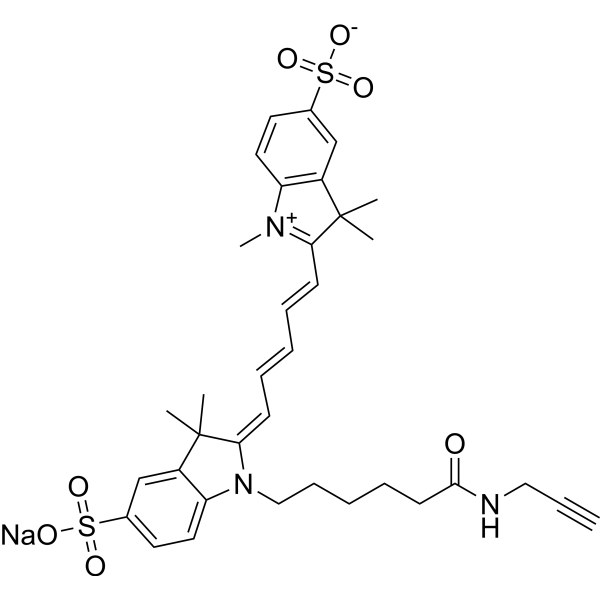
- HY-159194
-
|
|
Liposome
|
Cancer
|
|
DSPE-PEG2000-Cy5.5 is a phospholipid-fluorophore conjugate consisting of Cy5.5 covalently linked to 1,2-distearoyl-sn-glycero-3-phosphoethanolamine (DSPE), serving as a surface label for liposomes in multimodal CT/optical imaging.DSPE-PEG2000-Cy5.5 can be used for the research of non-small cell lung cancer .
|
-

- HY-141049
-
|
|
PROTAC Linkers
|
Cancer
|
|
N-methyl-N'-(propargyl-PEG4)-Cy5 (chloride) is a PEG-based PROTAC linker that can be used in the synthesis of PROTACs . N-methyl-N'-(propargyl-PEG4)-Cy5 is a click chemistry reagent, it contains an Alkyne group and can undergo copper-catalyzed azide-alkyne cycloaddition (CuAAc) with molecules containing Azide groups.
|
-
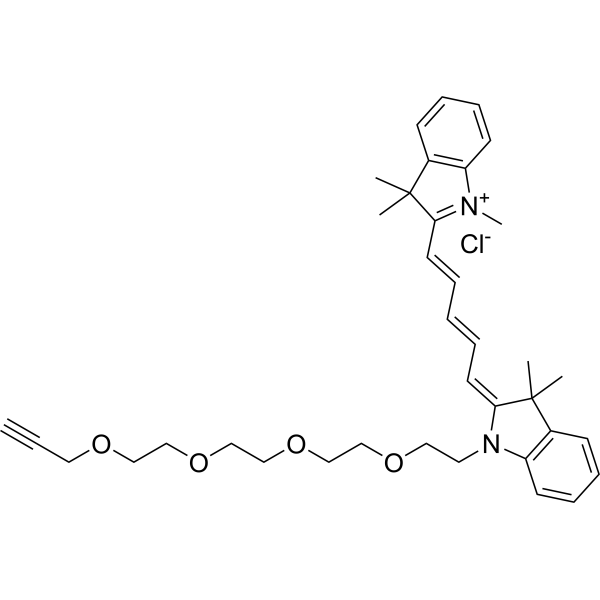
- HY-D2838
-
|
|
Fluorescent Dye
|
Others
|
|
mPEG-PEI-Cy5 (MW 5000) is a fluorescent dye composed of polyethylene glycol (PEG), FITC (HY-66019) and a Biotin (HY-B0511). mPEG-PEI-Cy5 (MW 5000) can be used for fluorescent labeling and imaging .
|
-

- HY-D2835
-
|
|
Fluorescent Dye
|
Others
|
|
mPEG-PEI-Cy5 (MW 1000) is a fluorescent dye composed of polyethylene glycol (PEG), FITC (HY-66019) and a Biotin (HY-B0511). mPEG-PEI-Cy5 (MW 1000) can be used for fluorescent labeling and imaging .
|
-

- HY-D2180
-
|
|
Fluorescent Dye
|
Others
|
|
Preactivated APC-Cy5.5 Maleimide is a sulfhydryl reactive dye that reacts with free sulfhydryl groups on proteins. Preactivated APC-Cy5.5 Maleimide binds easily to proteins or antibodies, and does not change the spectral characteristics of APC-Cy/YF after activation.
|
-

- HY-D2837
-
|
|
Fluorescent Dye
|
Others
|
|
mPEG-PEI-Cy5 (MW 2000) is a fluorescent dye composed of polyethylene glycol (PEG), FITC (HY-66019) and a Biotin (HY-B0511). mPEG-PEI-Cy5 (MW 2000) can be used for fluorescent labeling and imaging .
|
-

- HY-164188
-
|
|
DNA/RNA Synthesis
|
Others
|
|
m7(3'Ma-Cy5)Gppp(2'OMe)ApG ammonium is a Cy5-labled cap analogue that can be used for mRNA synthesis. The efficiency of mRNA delivery can be determined by the detection of Cy5 by flow cytometry, which can be used to track mRNA in cells and in living animals and to screen delivery lipid ratios.
|
-

- HY-D2278
-
|
|
Fluorescent Dye
|
Others
|
|
GDP-Fucose-Cy5 is a fluorescent dye that can be used for labeling free glycans, glycoproteins and glycolipids .
|
-
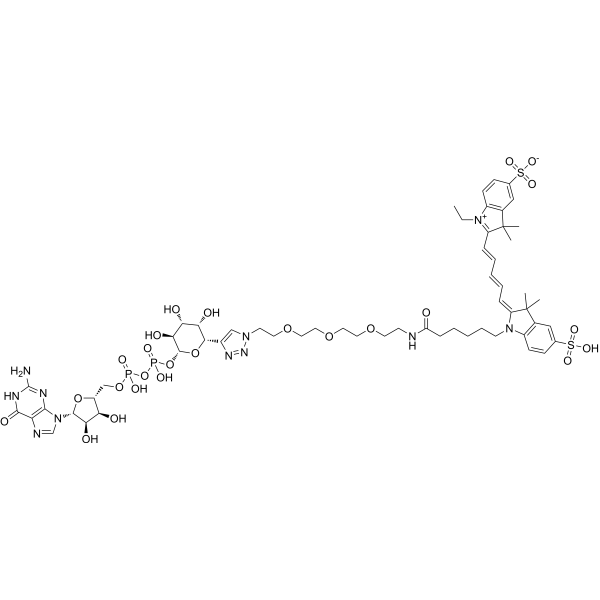
- HY-D2490
-
|
|
Fluorescent Dye
|
Others
|
|
Sulfo Cy5.5-N3 is a Sulfo Cy5.5-azide, which is a fluorescent dye. Sulfo Cy5.5-N3 can be used in cell imagine by Click reaction. It contains an azide group and can undergo copper-catalyzed azide-alkyne cycloaddition (CuAAc) with molecules containing alkyne groups. It can also undergo ring strain-promoted alkyne-azide cycloaddition (SPAAC) with molecules containing DBCO or BCN groups.
|
-

- HY-D1880
-
|
|
Fluorescent Dye
|
Others
|
|
Sulfo-Cy5 hydrazide is a fluorescent dye containing a hydrazide functionality (Ex/Em=646/662 nm) .
|
-
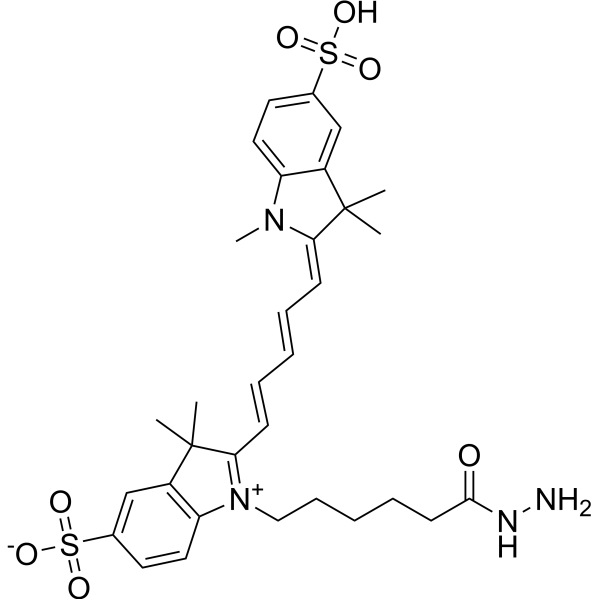
- HY-166852
-
|
|
Biochemical Assay Reagents
|
Others
|
|
DOPE-PEG2000-Cy5 is a phospholipid. Phospholipids have good biocompatibility and significant amphiphilic characteristics, making them the main and suitable dosage form or excipient in drug formulations, thereby achieving better therapeutic effects. DOPE-PEG2000-Cy5can be used in drug delivery research .
|
-

- HY-166849
-
|
|
Biochemical Assay Reagents
|
Others
|
|
DOPE-PEG5000-Cy5 is a phospholipid. Phospholipids have good biocompatibility and significant amphiphilic characteristics, making them the main and suitable dosage form or excipient in drug formulations, thereby achieving better therapeutic effects. DOPE-PEG5000-Cy5can be used in drug delivery research .
|
-

- HY-D2226
-
-
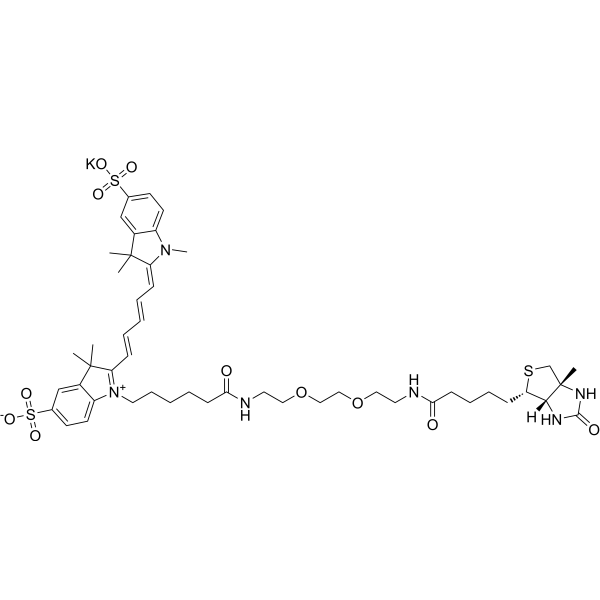
- HY-151701A
-
|
|
Fluorescent Dye
|
Others
|
|
DiSulfo-Cy5 alkyne TEA is a fluorescent dye can be used as a click chemistry reagent .
|
-
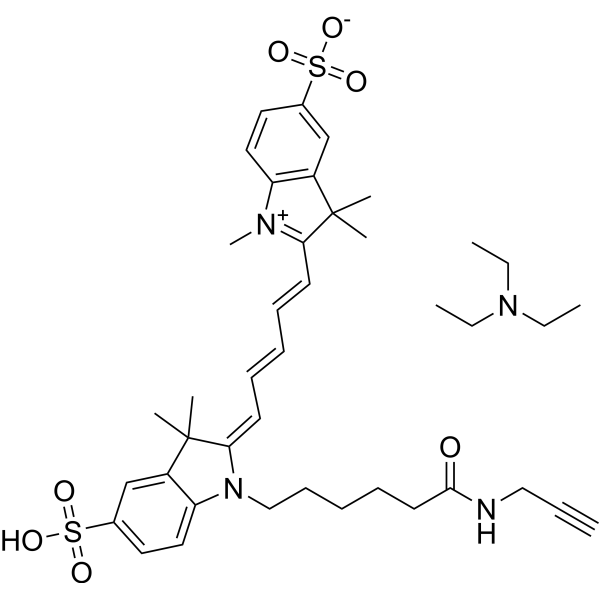
- HY-141072
-
|
|
PROTAC Linkers
|
Cancer
|
|
N-Methyl-N'-(hydroxy-PEG2)-Cy5 is a PEG-based PROTAC linker that can be used in the synthesis of PROTACs .
|
-
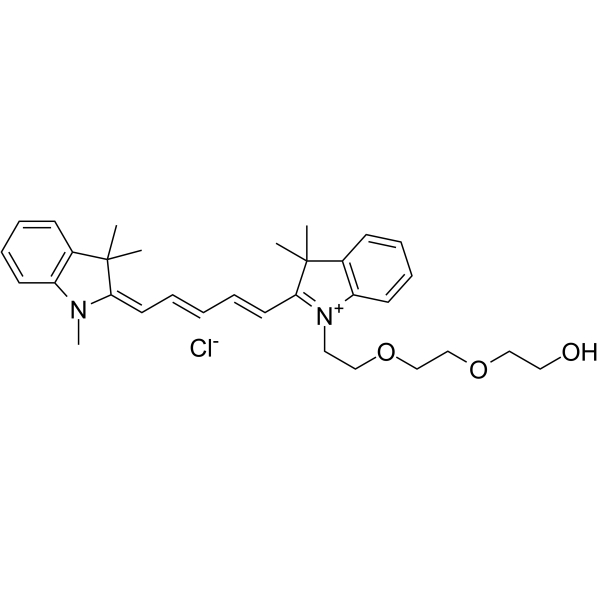
- HY-141054
-
|
|
PROTAC Linkers
|
Cancer
|
|
N,N'-bis-(propargyl-PEG4)-Cy5 (chloride) is a PEG-based PROTAC linker that can be used in the synthesis of PROTACs .
|
-
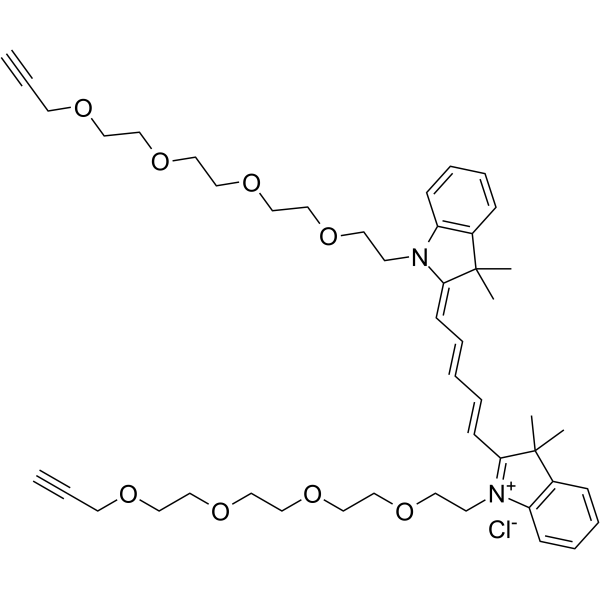
- HY-141042
-
|
|
PROTAC Linkers
|
Cancer
|
|
Bis-(N,N'-carboxyl-PEG4)-Cy5 is a PEG-based PROTAC linker that can be used in the synthesis of PROTACs .
|
-
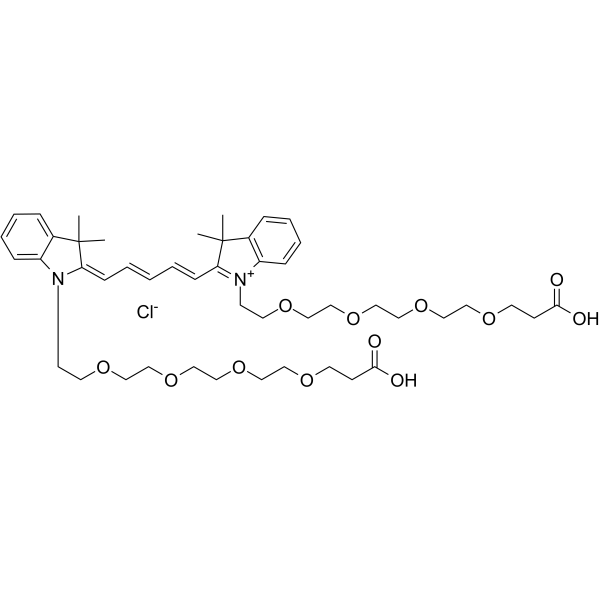
- HY-141050
-
|
|
PROTAC Linkers
|
Cancer
|
|
N-PEG3-N'-(propargyl-PEG4)-Cy5 is a PEG-based PROTAC linker that can be used in the synthesis of PROTACs . N-PEG3-N'-(propargyl-PEG4)-Cy5 is a click chemistry reagent, it contains an Alkyne group and can undergo copper-catalyzed azide-alkyne cycloaddition (CuAAc) with molecules containing Azide groups.
|
-
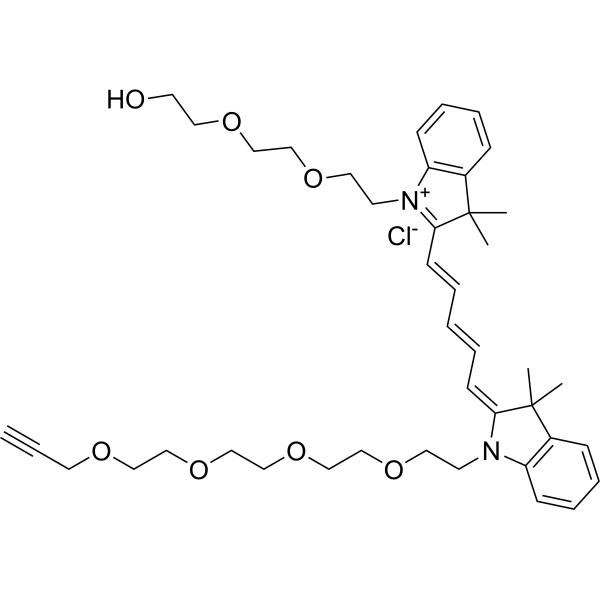
- HY-141051
-
|
|
PROTAC Linkers
|
Cancer
|
|
N-(m-PEG9)-N'-(propargyl-PEG8)-Cy5 is a PEG-based PROTAC linker that can be used in the synthesis of PROTACs . N-(m-PEG9)-N'-(propargyl-PEG8)-Cy5 is a click chemistry reagent, it contains an Alkyne group and can undergo copper-catalyzed azide-alkyne cycloaddition (CuAAc) with molecules containing Azide groups.
|
-
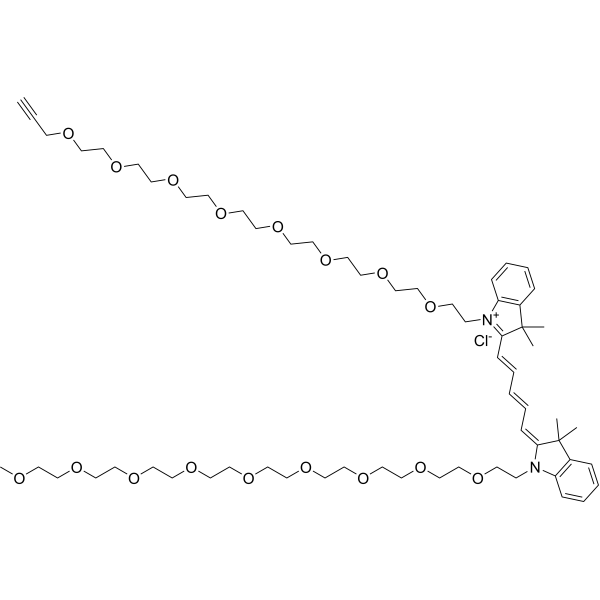
- HY-141071
-
|
|
PROTAC Linkers
|
Cancer
|
|
N-(m-PEG4)-N'-(DBCO-PEG4)-Cy5 is a PEG-based PROTAC linker that can be used in the synthesis of PROTACs . N-(m-PEG4)-N'-(DBCO-PEG4)-Cy5 is a click chemistry reagent, it contains a DBCO group that can undergo strain-promoted alkyne-azide cycloaddition (SPAAC) with molecules containing Azide groups.
|
-
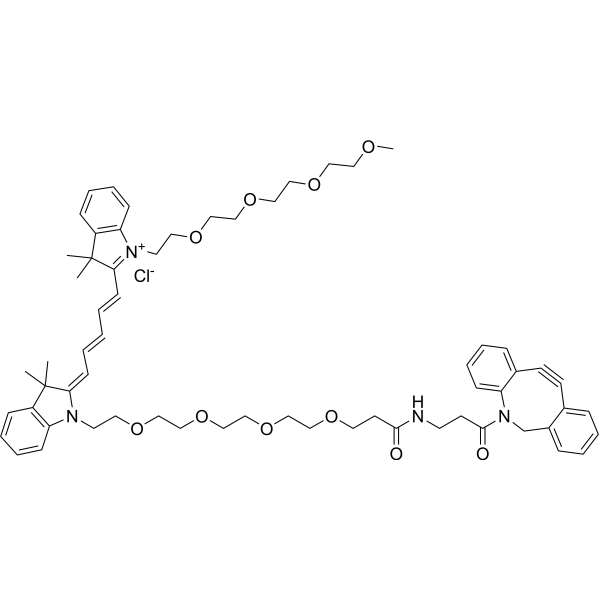
- HY-166848
-
|
|
Biochemical Assay Reagents
|
Others
|
|
DOPE-PEG2000-Cy5.5 is a phospholipid. Phospholipids have good biocompatibility and significant amphiphilic characteristics, making them the main and suitable dosage form or excipient in drug formulations, thereby achieving better therapeutic effects. DOPE-PEG2000-Cy5.5can be used in drug delivery research .
|
-

- HY-166850
-
|
|
Biochemical Assay Reagents
|
Others
|
|
DOPE-PEG5000-Cy5.5 is a phospholipid. Phospholipids have good biocompatibility and significant amphiphilic characteristics, making them the main and suitable dosage form or excipient in drug formulations, thereby achieving better therapeutic effects. DOPE-PEG5000-Cy5.5can be used in drug delivery research .
|
-

- HY-D2224
-
|
|
Fluorescent Dye
|
Others
|
|
Sulfo-Cy5.5 dUTP is a dUTP far-infrared fluorescent dye containing sulfonated Cyanine5.5 group .
|
-
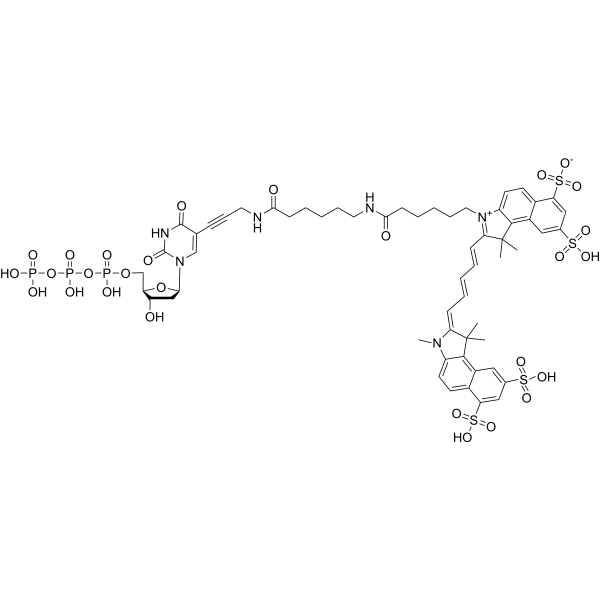
- HY-135413A
-
-
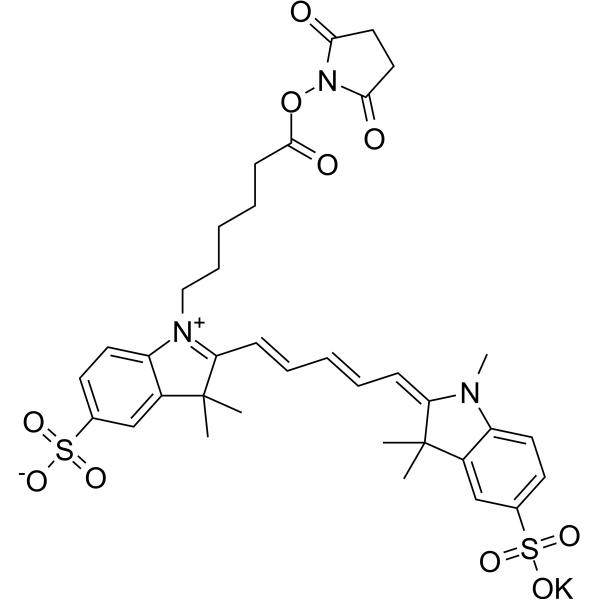
- HY-141056
-
|
|
PROTAC Linkers
|
Cancer
|
|
N-(m-PEG4)-N'-(amino-PEG3)-Cy5 is a PEG-based PROTAC linker that can be used in the synthesis of PROTACs .
|
-
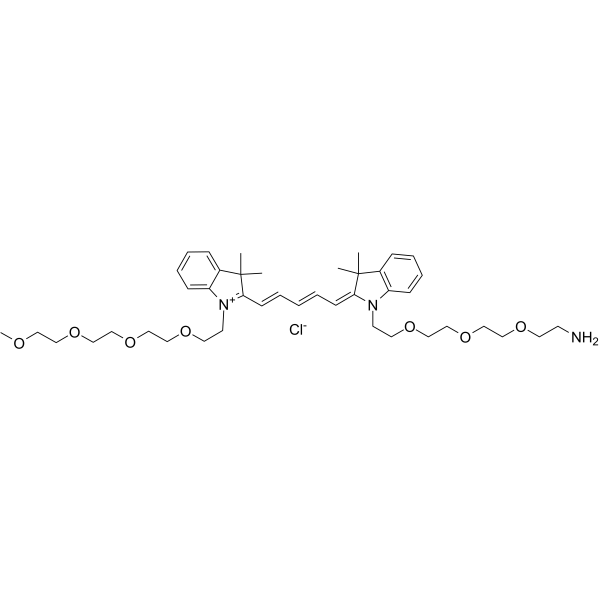
- HY-141073
-
|
|
PROTAC Linkers
|
Cancer
|
|
N-(m-PEG4)-N'-(hydroxy-PEG2)-Cy5 is a PEG-based PROTAC linker that can be used in the synthesis of PROTACs .
|
-
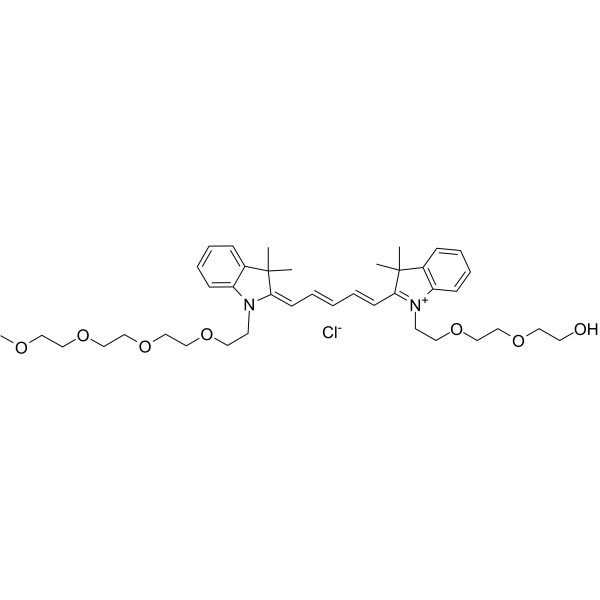
- HY-141070
-
|
|
PROTAC Linkers
|
Cancer
|
|
N-(m-PEG4)-N'-(biotin-PEG3)-Cy5 is a PEG-based PROTAC linker that can be used in the synthesis of PROTACs .
|
-
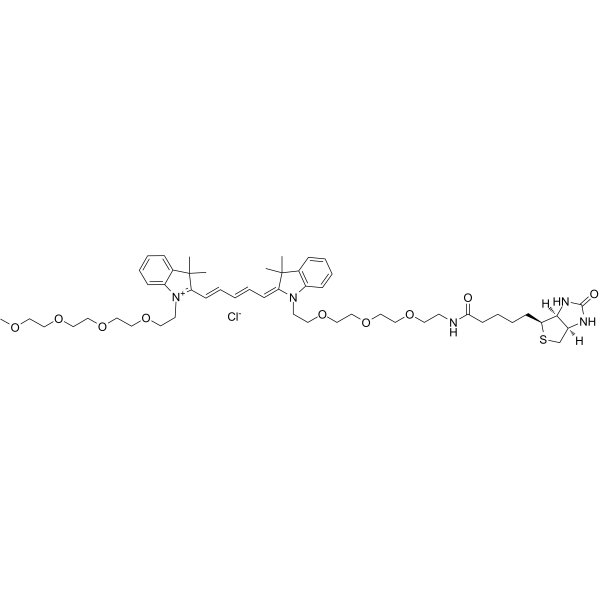
- HY-W400925
-
|
|
Fluorescent Dye
|
Others
|
|
Sulfo-Cy5-N3 is a click chemistry reagent containing an azide group. Cy5 is a red fluorescent label dye for imaging (Ex/Em=642/670 nm) . It contains an azide group and can undergo copper-catalyzed azide-alkyne cycloaddition (CuAAc) with molecules containing alkyne groups. It can also undergo ring strain-promoted alkyne-azide cycloaddition (SPAAC) with molecules containing DBCO or BCN groups.
|
-
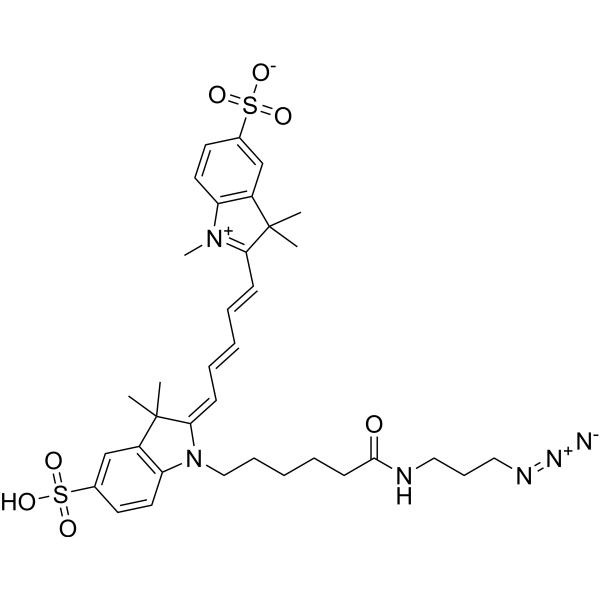
- HY-141061
-
|
|
PROTAC Linkers
|
Cancer
|
|
N-PEG3-N'-(azide-PEG3)-Cy5 (chloride) is a PEG-based PROTAC linker that can be used in the synthesis of PROTACs . N-PEG3-N'-(azide-PEG3)-Cy5 is a click chemistry reagent, it contains an Azide group and can undergo copper-catalyzed azide-alkyne cycloaddition reaction (CuAAc) with molecules containing Alkyne groups. It can also undergo strain-promoted alkyne-azide cycloaddition (SPAAC) reactions with molecules containing DBCO or BCN groups.
|
-
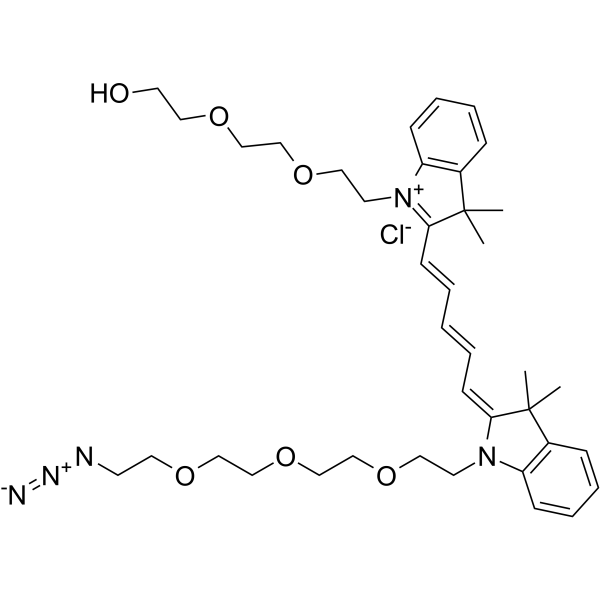
- HY-141062
-
|
|
PROTAC Linkers
|
Cancer
|
|
N-Methyl-N'-(azido-PEG2-C5)-Cy5 is a PEG-based PROTAC linker that can be used in the synthesis of PROTACs . N-Methyl-N'-(azido-PEG2-C5)-Cy5 is a click chemistry reagent, it contains an Azide group and can undergo copper-catalyzed azide-alkyne cycloaddition reaction (CuAAc) with molecules containing Alkyne groups. It can also undergo strain-promoted alkyne-azide cycloaddition (SPAAC) reactions with molecules containing DBCO or BCN groups.
|
-
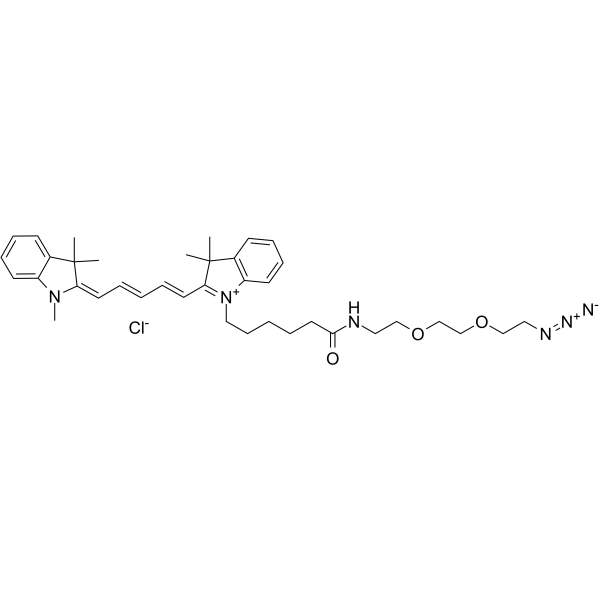
- HY-141063
-
|
|
PROTAC Linkers
|
Cancer
|
|
N-(m-PEG4)-N'-(azide-PEG3)-Cy5 is a PEG-based PROTAC linker that can be used in the synthesis of PROTACs . N-(m-PEG4)-N'-(azide-PEG3)-Cy5 is a click chemistry reagent, it contains an Azide group and can undergo copper-catalyzed azide-alkyne cycloaddition reaction (CuAAc) with molecules containing Alkyne groups. It can also undergo strain-promoted alkyne-azide cycloaddition (SPAAC) reactions with molecules containing DBCO or BCN groups.
|
-
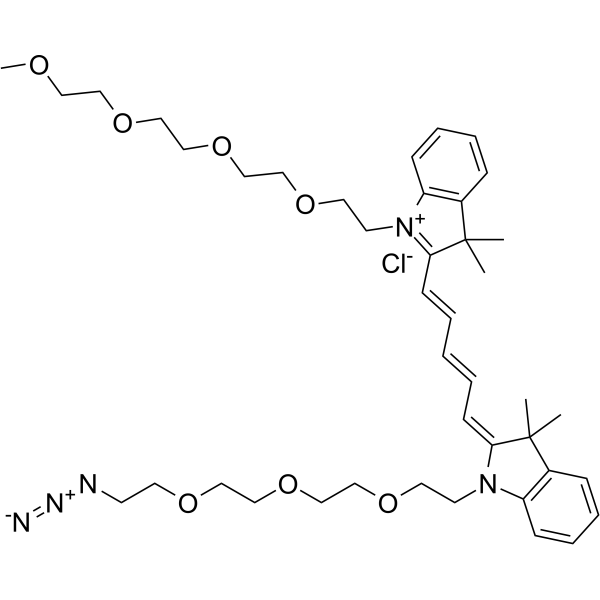
- HY-151711
-
|
|
Fluorescent Dye
|
Others
|
|
Sulfo-Cy5.5 Azide is a click chemistry reagent containing an azide group. Sulfo-Cy5.5 Azide is also a water-soluble dye (Ex=673 nm, Em=707 nm), which designed to label sensitive molecules such as peptides, proteins and oligonucleotides. It contains an azide group and can undergo copper-catalyzed azide-alkyne cycloaddition (CuAAc) with molecules containing alkyne groups. It can also undergo ring strain-promoted alkyne-azide cycloaddition (SPAAC) with molecules containing DBCO or BCN groups.
|
-
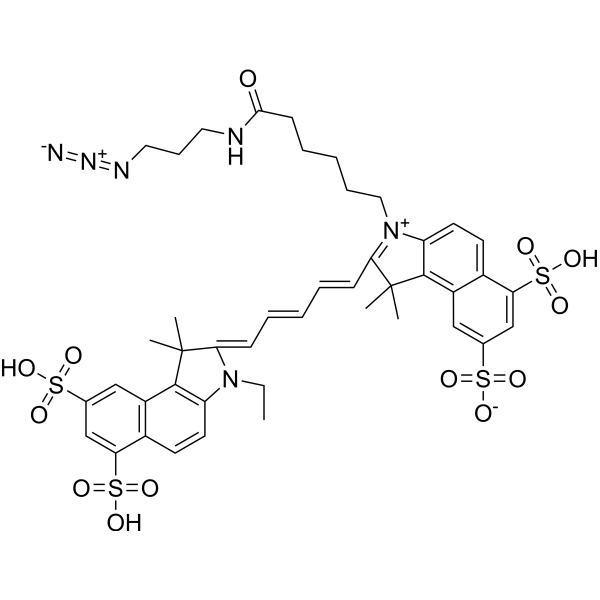
- HY-D2488
-
|
|
Fluorescent Dye
|
Others
|
|
Sulfo Cy5.5-maleimide is a fluorescent dye containing a Maleimide (HY-W007324) functional group. Maleimide can be used to label thiol groups on antibodies, proteins and peptides.
|
-

- HY-141074
-
|
|
PROTAC Linkers
|
Cancer
|
|
N-(m-PEG4)-N'-hydroxypropyl-Cy5 is a PEG-based PROTAC linker that can be used in the synthesis of PROTACs .
|
-
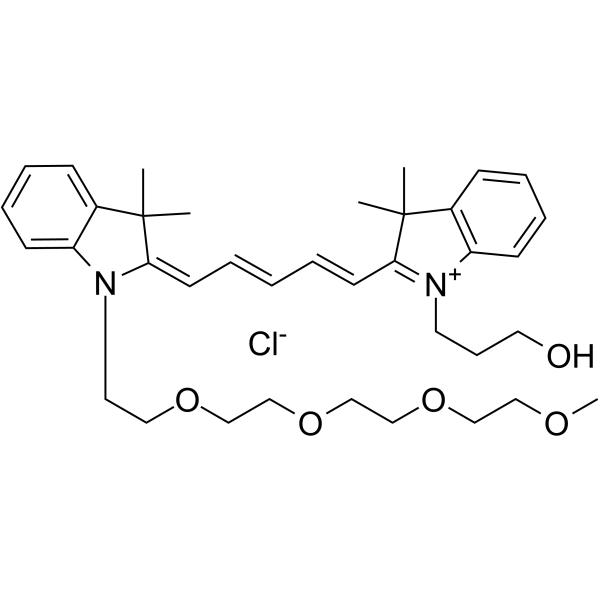
- HY-141052
-
|
|
PROTAC Linkers
|
Cancer
|
|
N-methyl-N'-methyl-O-(m-PEG4)-O'-(propargyl-PEG4)-Cy5 is a PEG-based PROTAC linker that can be used in the synthesis of PROTACs . N-methyl-N'-methyl-O-(m-PEG4)-O'-(propargyl-PEG4)-Cy5 is a click chemistry reagent, it contains an Alkyne group and can undergo copper-catalyzed azide-alkyne cycloaddition (CuAAc) with molecules containing Azide groups.
|
-
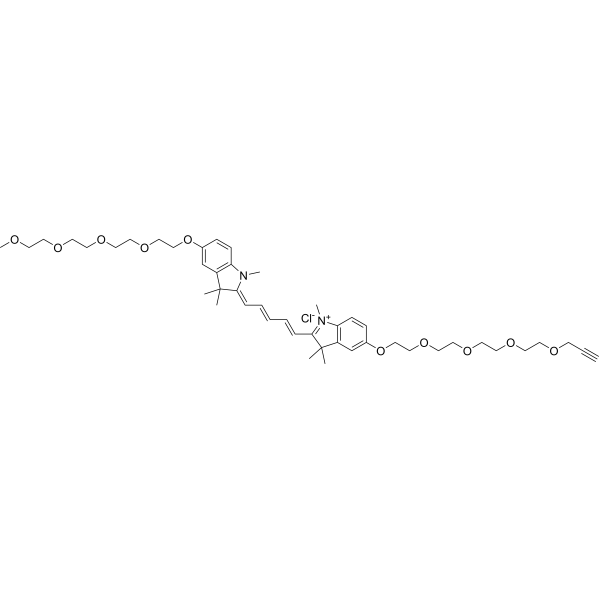
- HY-141040
-
|
|
PROTAC Linkers
|
Cancer
|
|
N-methyl-N'-methyl-O-(m-PEG4)-O'-(acid-PEG5)-Cy5 is a PEG-based PROTAC linker that can be used in the synthesis of PROTACs .
|
-
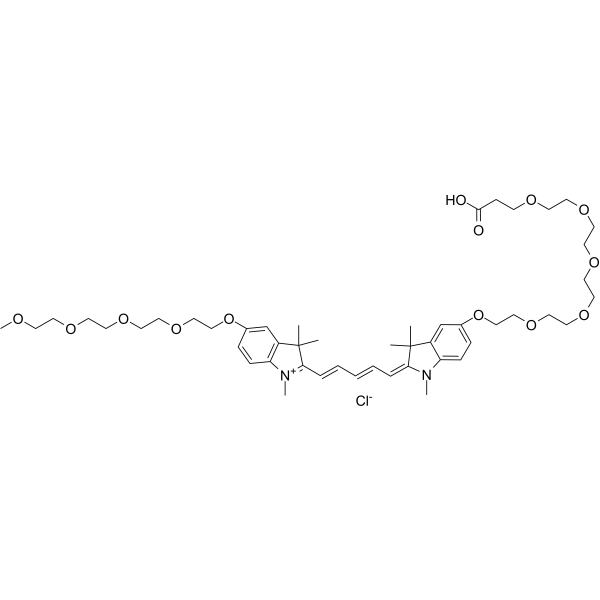
- HY-141069
-
|
|
PROTAC Linkers
|
Cancer
|
|
N-(m-PEG4)-N'-(Biotin-PEG2-amido-PEG4)-Cy5 is a PEG-based PROTAC linker that can be used in the synthesis of PROTACs .
|
-
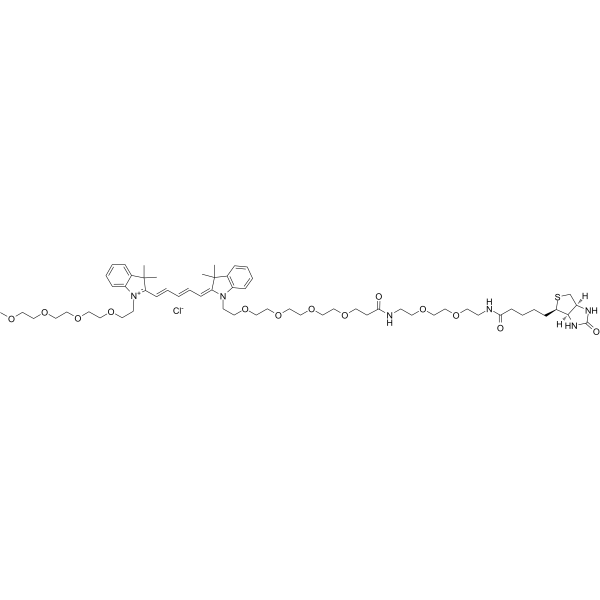
- HY-141047
-
|
|
PROTAC Linkers
|
Cancer
|
|
Bis-(N,N'-PEG4-NHS ester)-Cy5 is an alkyl/ether-based PROTAC linker that can be used in the synthesis of PROTACs .
|
-
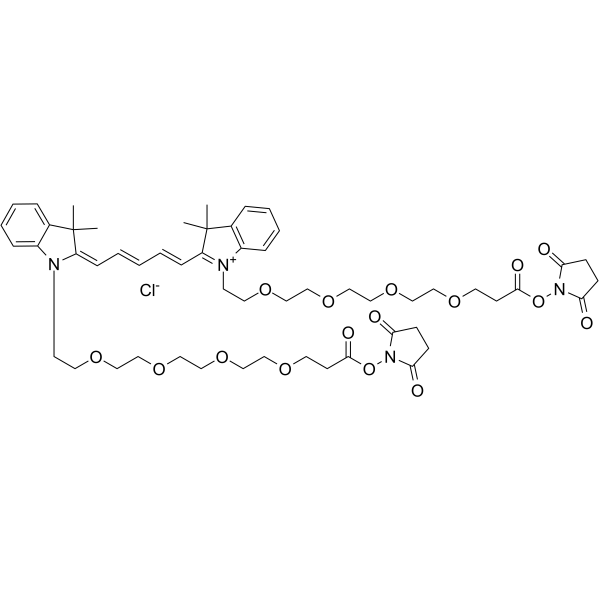
- HY-141075
-
|
|
PROTAC Linkers
|
Cancer
|
|
N-(m-PEG4)-N'-(4-Hydroxycyclohexyl-1-amido-PEG4)-Cy5 is a PEG-based PROTAC linker that can be used in the synthesis of PROTACs .
|
-
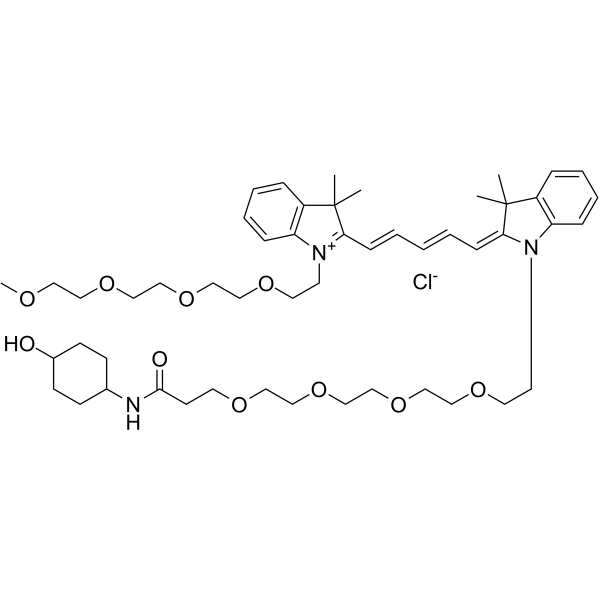
- HY-141036
-
|
|
PROTAC Linkers
|
Cancer
|
|
N-(m-PEG4)-N'-(PEG4-acid)-Cy5 is a PEG-based PROTAC linker that can be used in the synthesis of PROTACs .
|
-
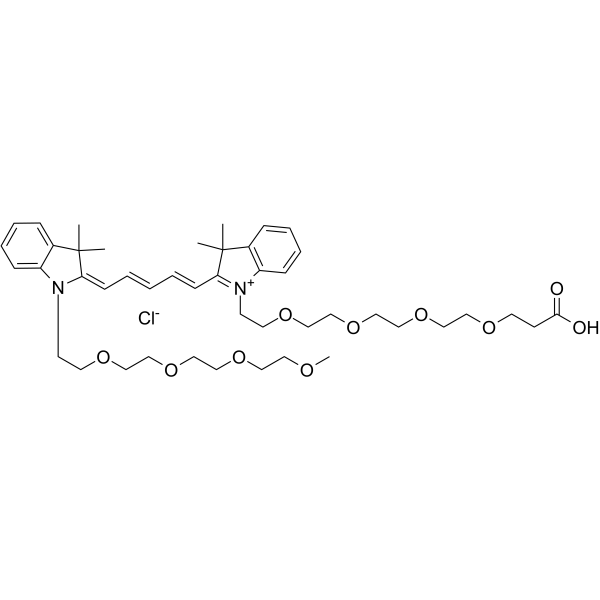
- HY-141035
-
|
|
PROTAC Linkers
|
Cancer
|
|
N-(m-PEG4)-N'-(PEG2-acid)-Cy5 is a PEG-based PROTAC linker that can be used in the synthesis of PROTACs .
|
-
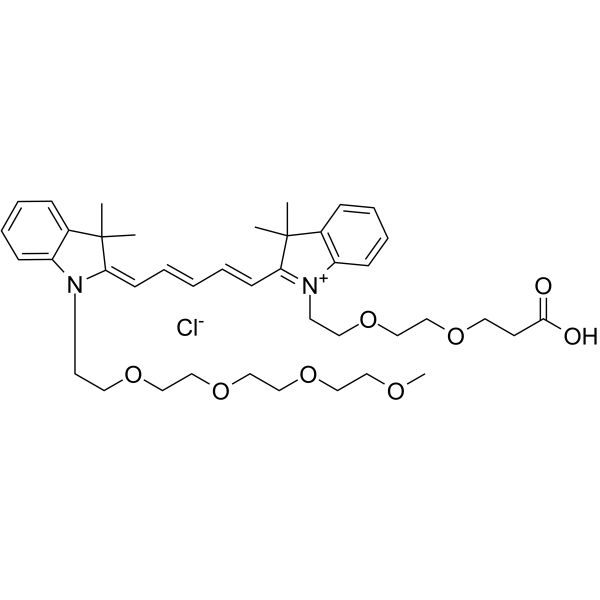
- HY-141037
-
|
|
PROTAC Linkers
|
Cancer
|
|
N-(m-PEG9)-N'-(PEG5-acid)-Cy5 is a PEG-based PROTAC linker that can be used in the synthesis of PROTACs .
|
-
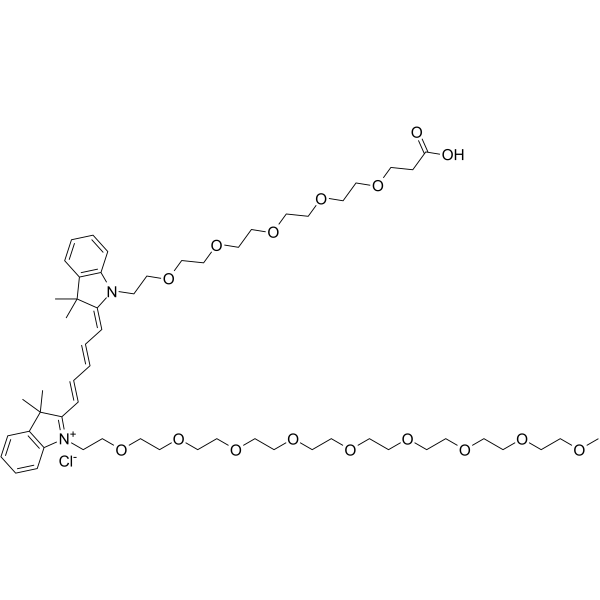
- HY-141065
-
|
|
PROTAC Linkers
|
Cancer
|
|
N-(azide-PEG3)-N'-(Amine-C3-Amide-PEG4)-Cy5 is a PEG-based PROTAC linker that can be used in the synthesis of PROTACs . N-(azide-PEG3)-N'-(Amine-C3-Amide-PEG4)-Cy5 is a click chemistry reagent, it contains an Azide group and can undergo copper-catalyzed azide-alkyne cycloaddition reaction (CuAAc) with molecules containing Alkyne groups. It can also undergo strain-promoted alkyne-azide cycloaddition (SPAAC) reactions with molecules containing DBCO or BCN groups.
|
-
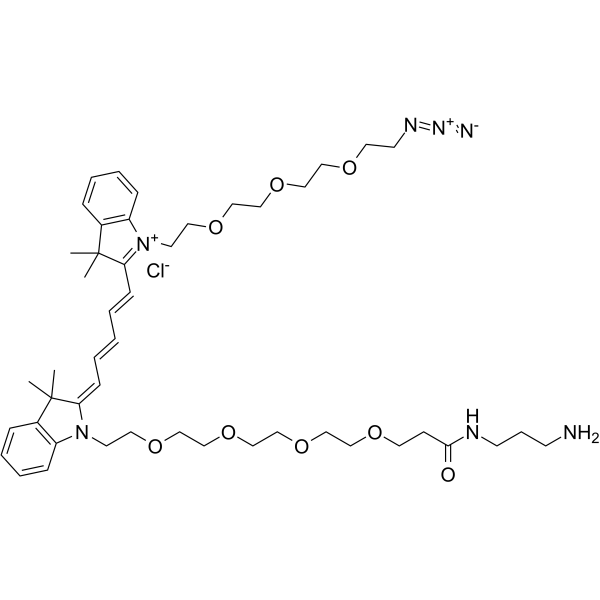
- HY-141067
-
|
|
PROTAC Linkers
|
Cancer
|
|
N-methyl-N'-methyl-O-(m-PEG4)-O'-(azide-PEG4)-Cy5 is a PEG-based PROTAC linker that can be used in the synthesis of PROTACs . N-methyl-N'-methyl-O-(m-PEG4)-O'-(azide-PEG4)-Cy5 is a click chemistry reagent, it contains an Azide group and can undergo copper-catalyzed azide-alkyne cycloaddition reaction (CuAAc) with molecules containing Alkyne groups. It can also undergo strain-promoted alkyne-azide cycloaddition (SPAAC) reactions with molecules containing DBCO or BCN groups.
|
-
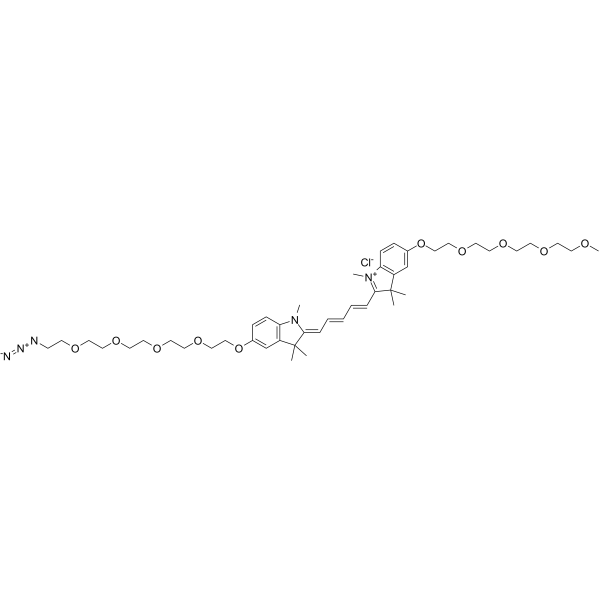
- HY-141076
-
|
|
PROTAC Linkers
|
Cancer
|
|
N-(m-PEG4)-N'-(PEG3-Mal)-Cy5 is a PEG-based PROTAC linker that can be used in the synthesis of PROTACs .
|
-
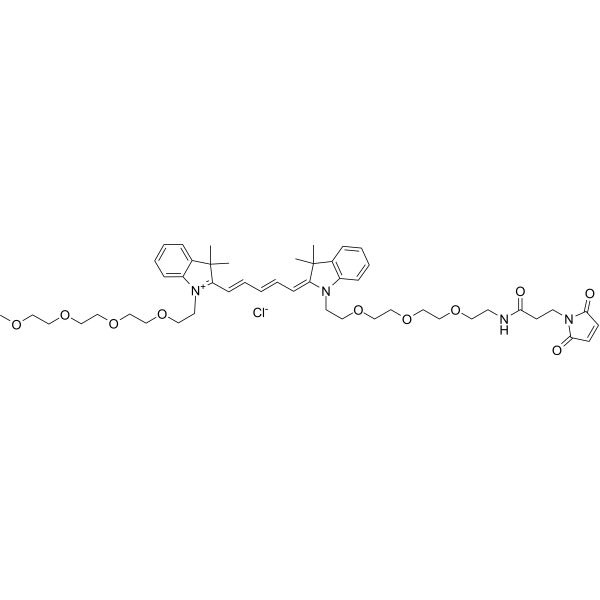
- HY-136247
-
|
Tyramide-cy5
|
DNA Stain
|
Others
|
|
Cyanine 5 Tyramide (Tyramide-Cy5), a red fluorescent dye, is utilized as reporter fluorescent substrate for horseradish peroxidase (HRP)-catalyzed deposition that is signal amplification technique in immunoassay and in situ hybridization of nucleic acids .
|
-
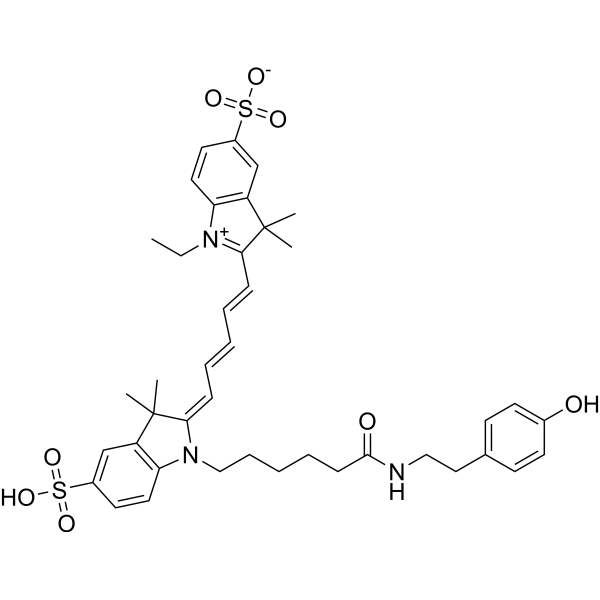
- HY-141041
-
|
|
PROTAC Linkers
|
Cancer
|
|
N-(Azide-PEG3)-N'-(PEG4-acid)-Cy5 is a PEG-based PROTAC linker that can be used in the synthesis of PROTACs . N-(Azide-PEG3)-N'-(PEG4-acid)-Cy5 is a click chemistry reagent, it contains an Azide group and can undergo copper-catalyzed azide-alkyne cycloaddition reaction (CuAAc) with molecules containing Alkyne groups. It can also undergo strain-promoted alkyne-azide cycloaddition (SPAAC) reactions with molecules containing DBCO or BCN groups.
|
-
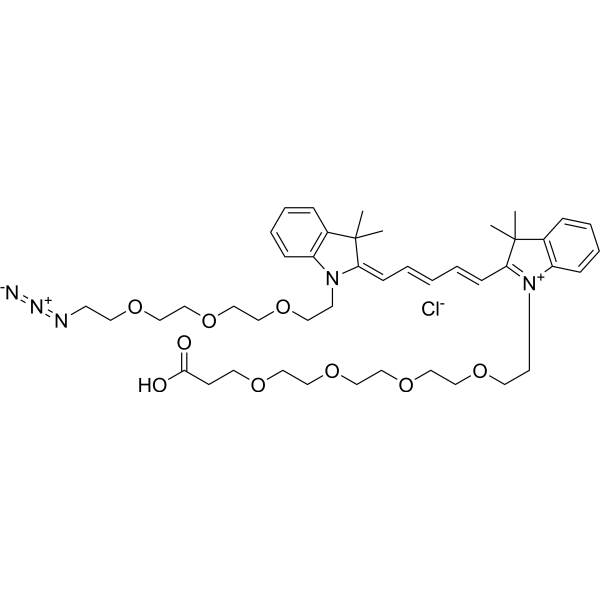
- HY-141045
-
|
|
PROTAC Linkers
|
Cancer
|
|
N-(m-PEG4)-N'-(PEG2-NHS ester)-Cy5 is a PEG-based PROTAC linker that can be used in the synthesis of PROTACs .
|
-
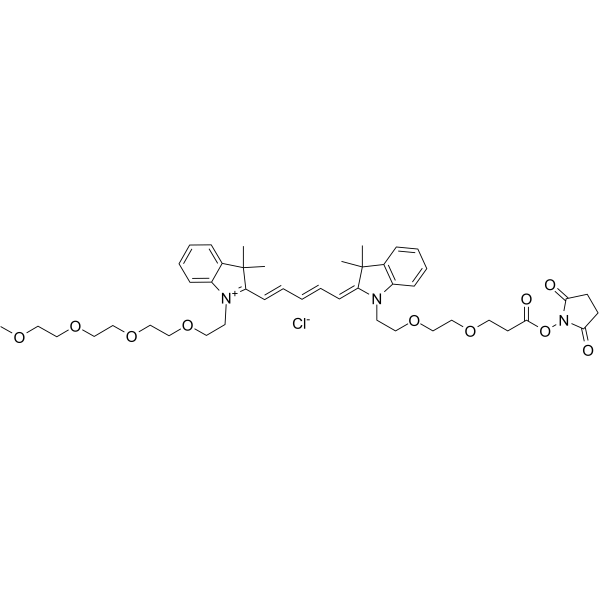
- HY-141046
-
|
|
PROTAC Linkers
|
Cancer
|
|
N-(m-PEG4)-N'-(PEG4-NHS ester)-Cy5 is a PEG-based PROTAC linker that can be used in the synthesis of PROTACs .
|
-
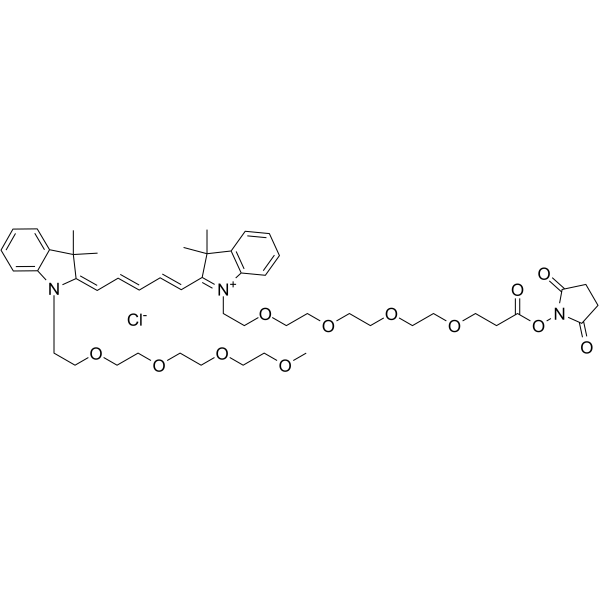
- HY-141053
-
|
|
PROTAC Linkers
|
Cancer
|
|
N-(m-PEG4)-N'-(m-PEG4)-O-(m-PEG4)-O'-(propargyl-PEG4)-Cy5 is a PEG-based PROTAC linker that can be used in the synthesis of PROTACs . N-(m-PEG4)-N'-(m-PEG4)-O-(m-PEG4)-O'-(propargyl-PEG4)-Cy5 is a click chemistry reagent, it contains an Alkyne group and can undergo copper-catalyzed azide-alkyne cycloaddition (CuAAc) with molecules containing Azide groups.
|
-
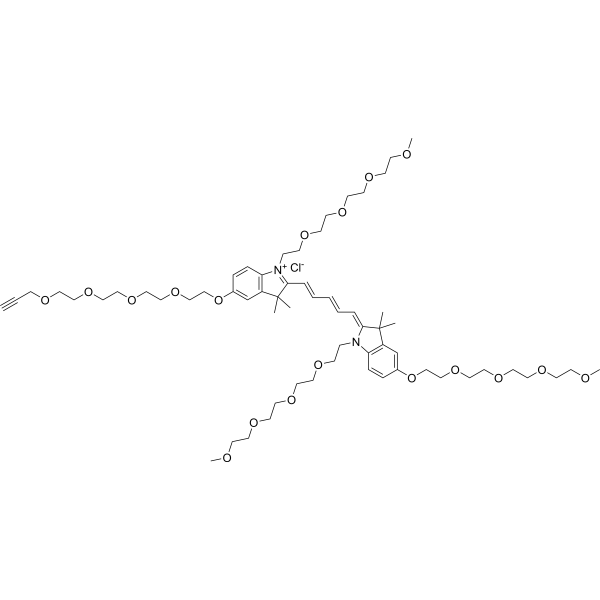
- HY-D3352
-
|
AGScyCSGPPRFECWcyETEGT-cy5
|
Fluorescent Dye
c-Met/HGFR
|
Cancer
|
|
EMI-137 (AGSCYCSGPPRFECWCYETEGT-Cy5) is a fluorescent imaging agent targeting the c-Met receptor. EMI-137 specifically binds to the extracellular domain of the c-Met receptor and is used for fluorescent visualization of c-Met-expressing cells and tissues. EMI-137 can be applied to research related to colorectal cancer .
|
-

- HY-141048
-
|
|
PROTAC Linkers
|
Cancer
|
|
N-(Azide-PEG3)-N'-(PEG4-NHS ester)-Cy5 is a PEG-based PROTAC linker that can be used in the synthesis of PROTACs . N-(Azide-PEG3)-N'-(PEG4-NHS ester)-Cy5 is a click chemistry reagent, it contains an Azide group and can undergo copper-catalyzed azide-alkyne cycloaddition reaction (CuAAc) with molecules containing Alkyne groups. It can also undergo strain-promoted alkyne-azide cycloaddition (SPAAC) reactions with molecules containing DBCO or BCN groups.
|
-
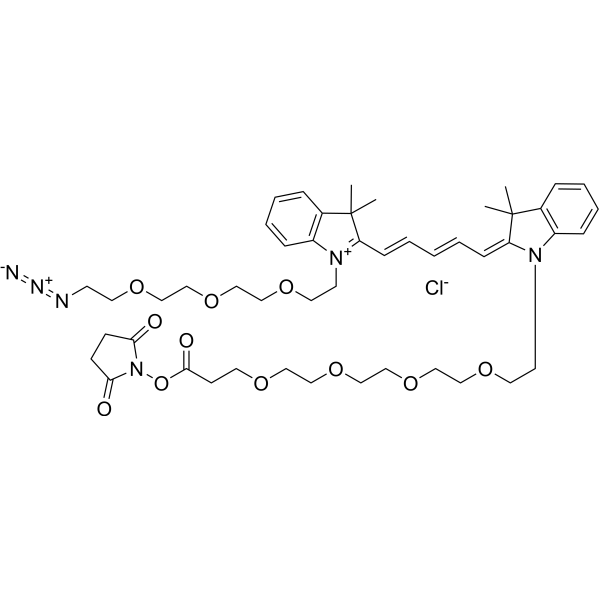
- HY-141068
-
|
|
PROTAC Linkers
|
Cancer
|
|
N-(m-PEG4)-N'-(m-PEG4)-O-(m-PEG4)-O'-(azide-PEG4)-Cy5 is a PEG-based PROTAC linker that can be used in the synthesis of PROTACs . N-(m-PEG4)-N'-(m-PEG4)-O-(m-PEG4)-O'-(azide-PEG4)-Cy5 is a click chemistry reagent, it contains an Azide group and can undergo copper-catalyzed azide-alkyne cycloaddition reaction (CuAAc) with molecules containing Alkyne groups. It can also undergo strain-promoted alkyne-azide cycloaddition (SPAAC) reactions with molecules containing DBCO or BCN groups.
|
-
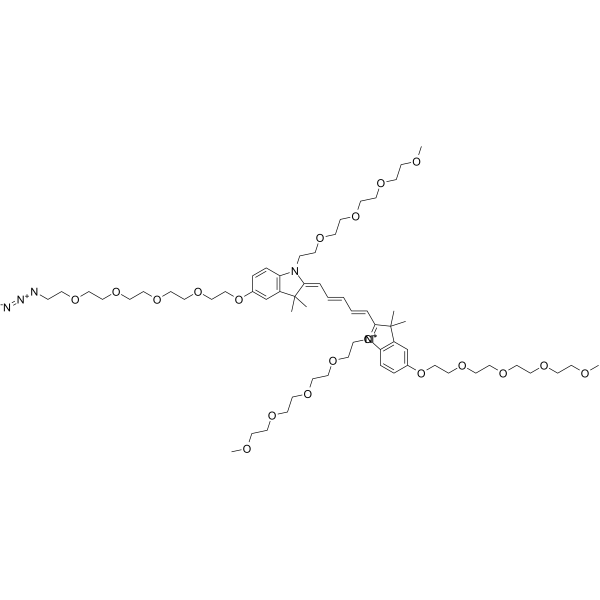
- HY-D1351
-
|
Sulfo-cy5.5 maleimide potassium
|
Fluorescent Dye
|
Others
|
|
Sulfo-Cyanine5.5 maleimide (Sulfo-Cy5.5 maleimide) potassium is a fluorescent dye. Sulfo-Cyanine5.5 is a nearinfrared (NIR) fluorophore with excitation maximum 675 nm and emission maximum 694 nm. Sulfo-Cyanine5.5 maleimide potassium can be used for the labeling of sensitive proteins, nanoparticles, and highly hydrophylic biopolymers .
|
-

- HY-137042
-
|
Alkyne-cy5
|
Oxidative Phosphorylation
Mitochondrial Metabolism
|
Cancer
|
|
Cyanine5 alkyne (Alkyne-Cy5) is a fluorescent dye used to label azide proteins and can be used to analyse post-translational modifications of proteins, glycosylation etc. Cyanine5 alkyne can also be used as a mitochondrial OXPHOS inhibitor to inhibit the growth of cancer stem cells (CSC) . Cyanine5 alkyne is a click chemistry reagent, it contains an Alkyne group and can undergo copper-catalyzed azide-alkyne cycloaddition (CuAAc) with molecules containing Azide groups.
|
-
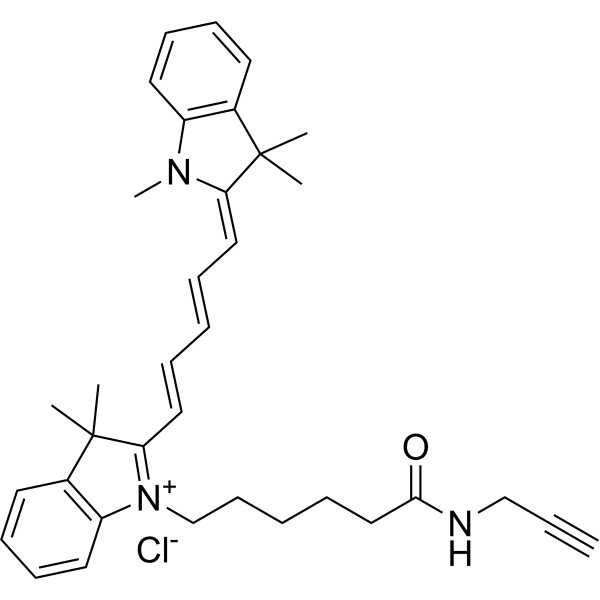
- HY-NP030
-
-

- HY-D2123
-
-
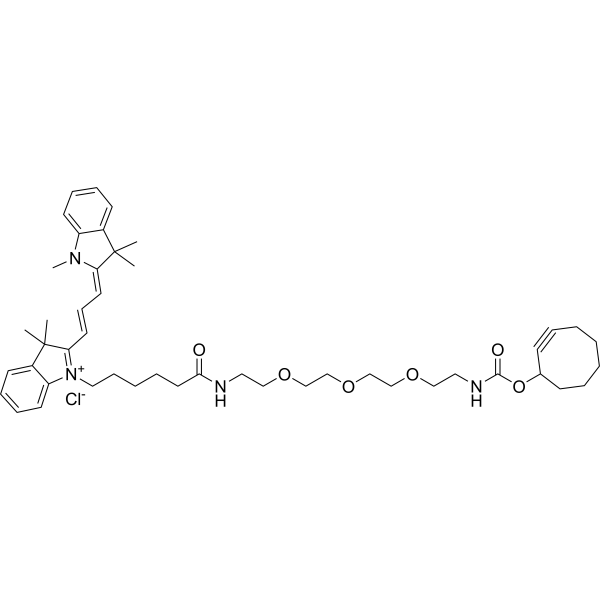
- HY-D2907
-
|
DBCO-cy5; cyanine5 dibenzocyclooctyne
|
Fluorescent Dye
|
Others
|
|
Cyanine5 DBCO (DBCO-Cy5) is a low-toxicity azide reactive probe (NIR fluorescent dye), for imaging azide-labeled biomolecules via a copper-free "click-through" reaction. Cyanine5 DBCO has no apparent cytotoxicity or animal toxicity and shows no damage to the physiological functions of cells other than the target cells (azide-labeled cells). Cyanine5 DBCO can be used to label and track cells in vitro and in vivo (Ex=635 nm, Em=650-700 nm) .
|
-

- HY-D1583
-
|
DBCO-cy5 hexafluorophosphate; cyanine5 dibenzocyclooctyne hexafluorophosphate
|
Fluorescent Dye
|
Others
|
|
Cyanine5 DBCO (DBCO-Cy5) hexafluorophosphate is a low-toxicity azide reactive probe (NIR fluorescent dye), for imaging azide-labeled biomolecules via a copper-free "click-through" reaction. Cyanine5 DBCO hexafluorophosphate has no apparent cytotoxicity or animal toxicity and shows no damage to the physiological functions of cells other than the target cells (azide-labeled cells). Cyanine5 DBCO hexafluorophosphate can be used to label and track cells in vitro and in vivo (Ex=635 nm, Em=650-700 nm) .
|
-
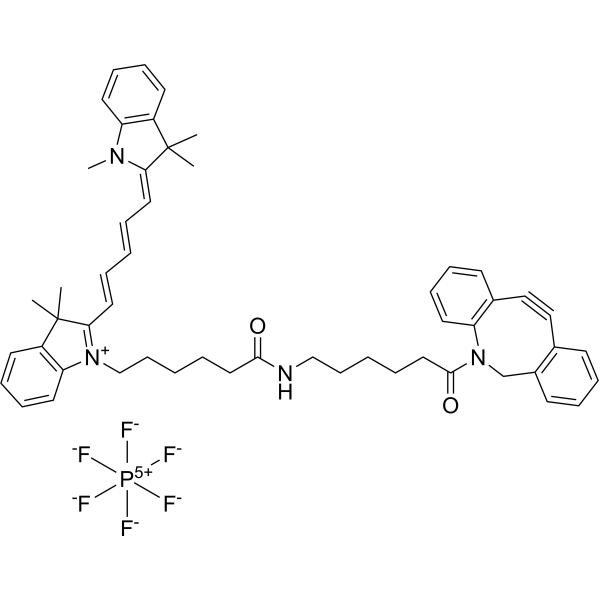
- HY-D1555
-
|
cy7 DBCO
|
Fluorescent Dye
|
Others
|
|
Cyanine7 DBCO (Cy7 DBCO) is a near-infrared fluorescent dye and an efficient bio-orthogonal quencher. Cyanine7 DBCO is formed by covalent connection of the near-infrared fluorescent dye Cy7 and the dibenzocyclooctyne (DBCO) functional group. After reacting with N3-Cy5-COOH, the fluorescence of Cy5 decreases by 90% within 90 minutes, and rapid signal attenuation can be observed within 2-5 minutes. Cyanine7 DBCO can be used for the study of deep tissue imaging and receptor-targeted therapeutic strategies .
|
-
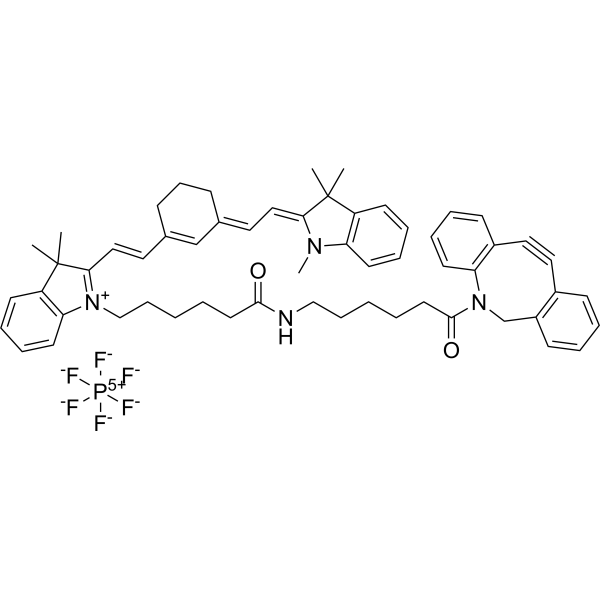
- HY-134620
-
|
|
Fluorescent Dye
|
Others
|
|
Cyanine 5 NHS ester tetrafluoroborate (Compound Cy5) is a cyanine dye that is used to in fluorescence detection of macromolecules. Cyanine 5 NHS ester tetrafluoroborate exhibits an excitation wavelength of 638 nm .
|
-

- HY-172309
-
|
|
Fluorescent Dye
|
Others
|
|
UBQ-3 NHS Ester is a fluroescent agent with a terminal NHS ester group. UBQ-3 NHS Ester has a wide quenching range from 620-730 nm, which makes the compound useful as an acceptor in fluorescence resonance energy transfer (FRET) applications in conjunction with far-red to near-IR emitting dyes such as Cy5, Cy5.5, Alexa Fluor 633, 647, 700. The NHS ester can be applied to label the primary amines (-NH2) of proteins, amine-modified oligonucleotides, and other amine-containing molecules.
|
-

- HY-136247A
-
|
|
DNA Stain
|
Others
|
|
Cyanine 5 Tyramide (Tyramide-Cy5) methyl indole is a red fluorescent dye. Cyanine 5 Tyramide is utilized as reporter fluorescent substrate for horseradish peroxidase (HRP)-catalyzed deposition that is signal amplification technique in immunoassay and in situ hybridization of nucleic acids . Storage: protect from light.
|
-
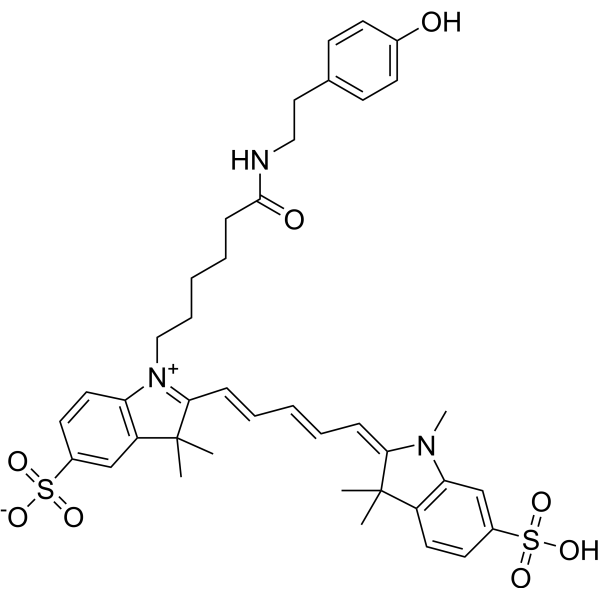
- HY-D2755
-
|
|
Fluorescent Dye
|
Others
|
|
BP Light 650 carboxylic acid is an vibrant far-red fluorochrome with comparable or improved performance over other dyes, including BP Fluor 647 and Cy5 dye, for fluorescent applications. It is used to label antibodies and other proteins as molecular probes for cellular imaging and other fluorescence detection methods application.
|
-

- HY-D1389
-
|
Sulfo-cyanine5.5 NHS ester tripotassium
|
Fluorescent Dye
|
Others
|
Sulfo-CY-5.5 NHS ester (Sulfo-Cyanine5.5 NHS ester) tripotassium is an amine-reactive ester of sulfonated far-red Cyanine5.5 fluorophore, which can be used to label antibodies, proteins, etc., as well as for in vivo NIR imaging .
|
-
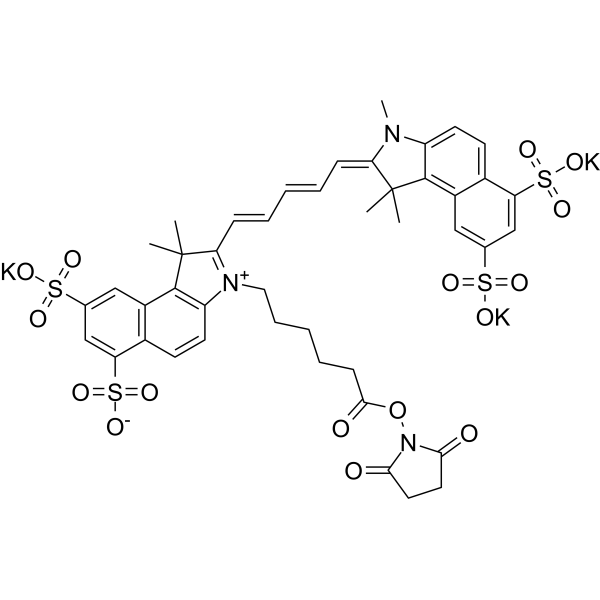
- HY-D2160
-
|
|
Fluorescent Dye
|
Others
|
|
AF 647 carboxylic acid is a derivative of the far-infrared dye AF 647. AF 647 is often used as a replacement for Cy5 dye, with an excitation wavelength (λex) of 635 nm (conventional fluorescence detection)/620 nm (instantaneous detection). The maximum excitation wavelength is 647 nm and the maximum emission wavelength is 671 nm. AF 647 carboxylic acid has a carboxylic acid group and can be coupled to biomolecules with amino groups to achieve dye labeling .
|
-
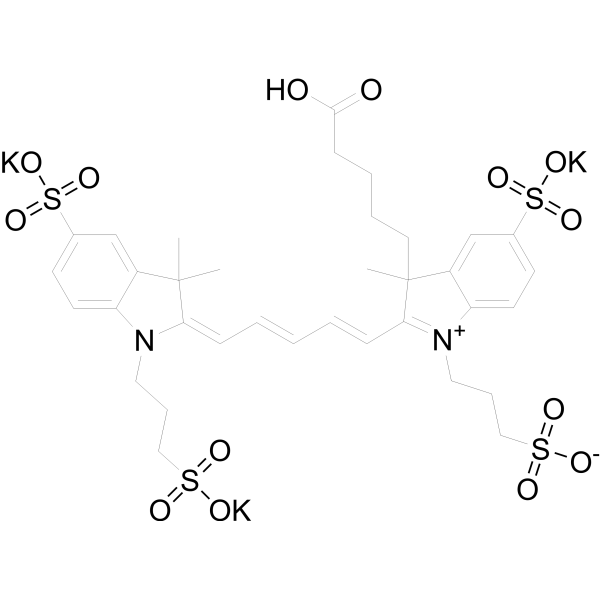
- HY-D3392
-
|
|
Fluorescent Dye
Ligands for E3 Ligase
|
Others
|
|
Thalidomide-cyanine 5 is a fluorescent probe prepared by conjugating the CRBN binder Thalidomide (HY-14658) with the near-infrared fluorescent dye Cy5. Thalidomide-cyanine 5 binds to DDB1-CRBN protein complex with a Kd of 121.6 nM. Thalidomide-cyanine 5 binds to CRBN to form a binary complex, and is mainly used for the visual tracking research of degradants such as PROTAC (Ex/Em = 650/665 nm) .
|
-

- HY-NP164N
-
|
Con A-cy3
|
Fluorescent Dye
|
Cancer
|
|
Concanavalin A-Cy3 (Con A-Cy3) is a Cy5 (HY-D0822)-labled Concanavalin A (HY-P2149). Concanavalin A is a Ca 2+/Mn 2+-dependent and mannose/glucose-binding plant lectin. Concanavalin A binds the N- and O-glycosylated proteins of head and neck carcinoma cells glycoproteins (Ex/Em = 554/568 nm) .
|
-

- HY-P11110
-
|
|
PD-1/PD-L1
|
Cancer
|
|
RK-10 is a PD-L1 binding peptide. RK-10 conjugated with Cy5 (HY-D0821) or Biotin (HY-B0511) can used to detect PD-L1 expressing tumors with flow cytometry or immunohistochemistry. RK-10 can be used for cancers like NSCLC, breast cancer, squamous cell carcinoma and melanoma detection research .
|
-

- HY-P5295
-
|
|
Fluorescent Dye
|
Others
|
|
Cy3-Ova (323-339) is an Cy3 labled OVA Peptide (323-339) (HY-P0286). Cy3 is a fluorescent dye belonging to the Cyanine family and is a fluorescent light product of Cy5. Cyanine is commonly used in fluorescence microscopy, cell imaging, and molecular biology experiments. OVA Peptide (323-339) represents the T and B cell epitopes of ovalbumin (OVA). OVA Peptide (323-339) has limited immunogenic efficacy in activating OVA-sensitized and attacked mouse spleen cells .
|
-

- HY-D2365
-
|
|
Fluorescent Dye
|
Others
|
|
QSY 21 NHS is a dark quencher and an efficient energy transfer acceptor for far-red and near-infrared fluorescent probes. QSY 21 NHS operates at a wavelength range of 540-750 nm and is commonly used in FRET applications. QSY 21 NHS does not fluoresce under normal conditions. The NHS ester can be used to label primary amines (R-NH2) of proteins, amine-modified oligonucleotides and other amine-containing molecules. QSY 21 NHS can be conjugated with dendritic poly-L-lysine to achieve intramolecular quenching of Cy5 fluorescence .
|
-

- HY-DY1068
-
|
|
Fluorescent Dye
|
Others
|
Cyanine5 DBCO (DBCO-Cy5) hexafluorophosphate (solution) is a low-toxicity azide reactive probe (NIR fluorescent dye) , for imaging azide-labeled biomolecules via a copper-free "click-through" reaction. Cyanine5 DBCO hexafluorophosphate has no apparent cytotoxicity or animal toxicity and shows no damage to the physiological functions of cells other than the target cells (azide-labeled cells). Cyanine5 DBCO hexafluorophosphate can be used to label and track cells in vitro and in vivo (Ex=635 nm, Em=650-700 nm) .
Solvent and concentration: DMSO: 10 mM
|
-

- HY-P2185
-
|
|
MMP
|
Others
|
|
NFF-3, the peptide, is a selective MMP substrate. NFF-3 selectively binds to MMP-3 and MMP-10 to be hydrolyzed. NFF-3 is also cleaved by trypsin, hepatocyte growth factor activator, and factor Xa. Label NFF-3 with a CyDye pair, Cy3/Cy5Q, can produce fluorescence in cell assays to detect cell activity .
|
-
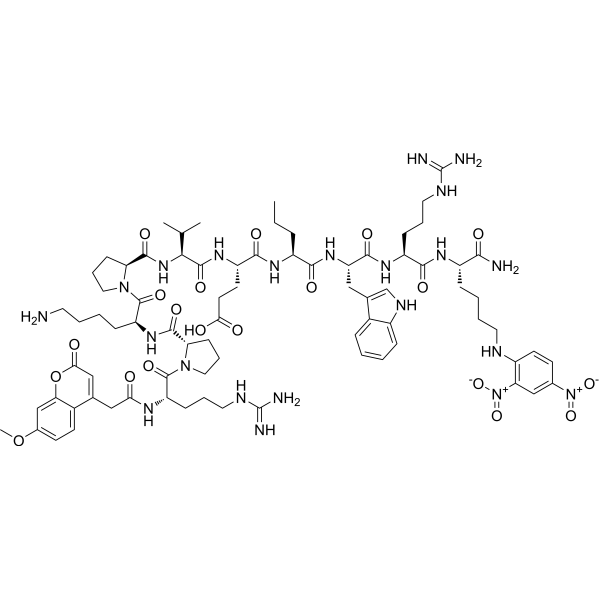
- HY-P2185A
-
|
|
MMP
|
Others
|
|
NFF-3 TFA, the peptide, is a selective MMP substrate. NFF-3 TFA selectively binds to MMP-3 and MMP-10 to be hydrolyzed. NFF-3 TFA is also cleaved by trypsin, hepatocyte growth factor activator, and factor Xa. Label NFF-3 TFA with a CyDye pair, Cy3/Cy5Q, can produce fluorescence in cell assays to detect cell activity .
|
-
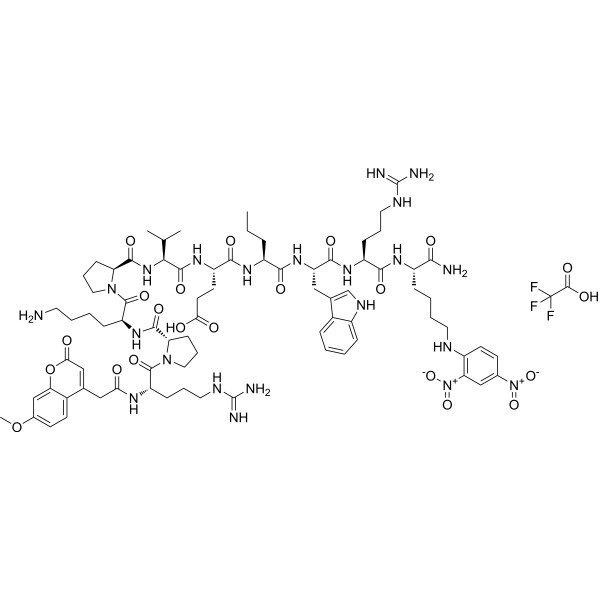
| Cat. No. |
Product Name |
Type |
-
- HY-D0821
-
|
Sulfo-cyanine5
|
Fluorescent Dyes
|
|
CY5 is a CY dye. CY, short for Cyanine, is a compound consisting of two nitrogen atoms connected by an odd number of methyl units. Cyanine compounds have the characteristics of long wavelength, adjustable absorption and emission, high extinction coefficient, good water solubility and relatively simple synthesis . CY dyes are of en used for the labeling of proteins, antibodies and small molecular compounds. For the labeling of protein antibodies, the combination can be completed through a simple mixing reaction. Below, we introduce the labeling method of protein antibody labeling, which has certain reference significance .
|
-
- HY-D0819
-
|
cy5 NHS Ester; Sulfo-cyanine5 Succinimidyl Ester
|
Fluorescent Dyes
|
|
Cy5-SE (Cy5 NHS Ester) is a reactive dye for the labeling of amino-groups in peptides, proteins, and oligonucleotides. This dye requires small amount of organic co-solvent (such as DMF or DMSO) to be used in labeling reaction. This reagent is ideal for very cost-efficient labeling of soluble proteins, as well as all kinds of peptides and oligonucleotides. This reagent also works well in organic solvents for small molecule labeling.
Excitation (nm):649, Emission (nm): 670.
|
-
- HY-138200
-
|
cyanine5 maleimide
|
Fluorescent Dyes
|
|
Cy5 maleimide (Cyanine5 maleimide) is a single-reactive dye containing a maleimide group and a CY5 fluorescent group, which can selectively couple with a thiol group. Cy5 maleimide can be used to label antibodies, peptides, or proteins (Ex/Em = 646/664 nm).
|
-
- HY-D1068
-
|
DBCO-Sulfo-cy5
|
Fluorescent Dyes
|
|
Cy5-DBCO (DBCO-Sulfo-Cy5) is a near-infrared (NIR)red fluorescent dye with λabsand λem of 646nm and 670 nm, respectively. Cy5-DBCO (DBCO-Sulfo-Cy5) is not suitable for staining intracellular components of permeabilezed cell, it may exhibits a high background. Cy5-DBCO is a click chemistry reagent, it contains a DBCO group that can undergo strain-promoted alkyne-azide cycloaddition (SPAAC) with molecules containing Azide groups.
|
-
- HY-D0819A
-
|
cy5 NHS Ester triethylamine salt; Sulfo-cyanine5 Succinimidyl Ester triethylamine salt
|
Fluorescent Dyes
|
|
Cy5-SE (Cy5 NHS Ester) triethylamine salt is a reactive dye for the labeling of amino-groups in peptides, proteins, and oligonucleotides. Cy5-SE triethylamine salt is ideal for very cost-efficient labeling of soluble proteins, as well as all kinds of peptides and oligonucleotides Ex=649 nm; Em=670 nm) .
|
-
- HY-D0832
-
CY5-N3
1 Publications Verification
Sulfo-cyanine5-azide
|
Fluorescent Dyes
|
|
CY5-N3 (Sulfo-Cyanine5-azide) is a Cy5-azide, which is a fluorescent dye (ex/em: 646/662 nm). CY5-N3 is cell membrane permeable and can be used for live cell imaging. CY5-N3 can be used in cell imagine by Click reaction .
|
-
- HY-112624F1
-
|
|
Fluorescent Dyes
|
|
CY5-Dextran (MW 4000) is a fluorescent dye CY5 (HY-D0821)-labeled Dextran (HY-112624). Dextran-CY5 (MW 4000) can be used to visualize the specific subcellular distribution of dextran at the nanoscale .
|
-
- HY-D1720
-
|
|
Fluorescent Dyes
|
|
Cy5-dATP is a Cy5?(HY-D0821)-labeled dATP?(HY-136648). Cy5-dATP can be incorporated into a DNA primer .
|
-
- HY-D0967
-
|
|
Fluorescent Dyes
|
|
Cy5-bifunctional dye is a bifunctional dye used for covalent labeling of primary amines on proteins or oligonucleotides (Ex/Em = 649 nm/670 nm). Cy5-bifunctional dye can label recombinant annexin-V to assess phosphatidylserine exposure on the cell surface via flow cytometry. Cy5-bifunctional dye can label anti-human IgG (H + L) secondary antibodies. Cy5-bifunctional dye is applicable to studies of glanders and melioidosis .
|
-
- HY-D2100B
-
|
|
Fluorescent Dyes
|
|
Cy5-DSPE chloride is a far-infrared fluorescent phospholipid (λex/λem = 600/665 nm). Cy5-DSPE chloride is used to label liposomes, membranes and lipid nanoparticles, and can be applied to tracking and imaging studies of liposomes .
|
-
- HY-D1321A
-
|
cyanine5 amine TFA
|
Fluorescent Dyes
|
|
Cy 5 amine (Cyanine5 amine) TFA is a fluorescent dye. Cy 5 amine TFA can be used in the preparation of Cy5.5-labeled compound or polymers, which can be used for imaging cellular process and trafficking .
|
-
- HY-DY1067
-
|
|
Fluorescent Dyes
|
Cy5 maleimide (solution) is a CY dye. CY, short for Cyanine, is a compound consisting of two nitrogen atoms connected by an odd number of methyl units. Cyanine compounds have the characteristics of long wavelength, adjustable absorption and emission, high extinction coefficient, good water solubility and relatively simple synthesis . CY dyes are of en used for the labeling of proteins, antibodies and small molecular compounds. For the labeling of protein antibodies, the combination can be completed through a simple mixing reaction. Below, we introduce the labeling method of protein antibody labeling, which has certain reference significance .
Solvent and concentration: DMSO: 10 mM
|
-
- HY-D2100
-
|
|
Fluorescent Dyes
|
|
Cy5-DSPE is a far-infrared fluorescent phospholipid (λex/λem = 600/665 nm). Cy5-DSPE is used to label liposomes, membranes and lipid nanoparticles, and can be applied to tracking and imaging studies of liposomes .
|
-
- HY-D2465
-
|
|
Fluorescent Dyes
|
|
CY5-Dextran is a fluorescent dye CY5 (HY-D0821)- labeled Dextran (HY-112624). CY5 exhibits a maximal excitation wavelength of 633 nm, and a maximal emission wavelength of 670 nm. Dextran-CY5 can be used to visualize the specific subcellular distribution of dextran at the nanoscale .
|
-
- HY-149618
-
|
|
Fluorescent Dyes
|
|
Cy5-PEG3-endo-BCN is a derivative of the Cyanine 5 (Cy5) (HY-D0821) dye bearing 3 PEG units. Cy5-PEG3-endo-BCN contains the lyophilic bidentate macrocyclic ligand endo-BCN, which allows for further synthesis of macrocyclic complexes. In click chemistry, endo-BCN forms stable triazoles with azide-containing molecules under catalyst-free conditions .
|
-
- HY-D2640
-
|
|
Fluorescent Dyes
|
|
Cy5 HA (MW 5000) is a hyaluronic acid labeled with CY5 (HY-D0821). Cy5 HA (MW 5000) is widely used for cell imaging and in vivo imaging of shallow tissue (Ex/Em = 633/670 nm).
|
-
- HY-D2422A
-
|
|
Fluorescent Dyes
|
|
Cy5.5-Paclitaxel is a Cy5.5 (HY-D0821) labeled Paclitaxel (HY-B0015).
|
-
- HY-D2401F
-
|
|
Fluorescent Dyes
|
|
Cy5-Polystyrene microsphere (100 nm) is a Cy5 (HY-D0821)-labeled microsphere that can be used for bioimaging and drug delivery .
|
-
- HY-P1362F
-
|
cy5-Amyloid β Peptide (42-1)(human) Tris
|
Fluorescent Dyes
|
|
Cy5-β-Amyloid (42-1), human is a Cy5 fluorescently-labelled β-Amyloid (42-1, human) peptide (λex= 633 nm and λem= 670 nm) .
|
-
- HY-D2647
-
|
|
Fluorescent Dyes
|
|
Cy5 HA (MW 500000) is a hyaluronic acid labeled with CY5 (HY-D0821). Cy5 HA (MW 500000) is widely used for cell imaging and in vivo imaging of shallow tissue (Ex/Em = 633/670 nm).
|
-
- HY-D2489
-
|
|
Fluorescent Dyes
|
|
Cy5-tetrazine is a fluorescent dye. Cy5-tetrazine is a CY5 (HY-D0821) derivative contains a tetrazine moiety. Cyanine5.5 tetrazine can be used for in vivo imaging and low background applications. Cy5-tetrazine is a click chemistry reagent, it contains a Tetrazine group that can undergo an inverse electron demand Diels-Alder reaction (iEDDA) with molecules containing TCO groups .
|
-
- HY-D2143
-
|
|
Fluorescent Dyes
|
|
Cy5-PEG3-TCO is a dye derivative of Cyanine 5 (Cy5) (HY-D0821) containing 3 PEG units. Cy5-PEG3-TCO utilizes its own TCO group to undergo an inverse electron demand Diels-Alder reaction (iEDDA) with molecules bearing Tetrazine groups.
|
-
- HY-D2401F1
-
|
|
Fluorescent Dyes
|
|
Cy5-Polystyrene microsphere (20um) is a Cy5 (HY-D0821)-labeled microsphere that can be used for bioimaging and drug delivery .
|
-
- HY-137100
-
|
cyanine5 hydrazide
|
Fluorescent Dyes
|
|
Cy 5 hydrazide (Cyanine5 hydrazide) is a fluorescent dye for aldehydes and ketones. Cy 5 hydrazide can be used for labeling proteins .
|
-
- HY-D2645
-
|
|
Fluorescent Dyes
|
|
Cy5 HA (MW 100000) is a hyaluronic acid labeled with CY5 (HY-D0821). Cy5 HA (MW 100000) is widely used for cell imaging and in vivo imaging of shallow tissue (Ex/Em = 633/670 nm).
|
-
- HY-D2638
-
|
|
Fluorescent Dyes
|
|
Cy5 HA (MW 3000) is a hyaluronic acid labeled with CY5 (HY-D0821). Cy5 HA (MW 3000) is widely used for cell imaging and in vivo imaging of shallow tissue (Ex/Em = 633/670 nm).
|
-
- HY-D1625
-
|
|
Fluorescent Dyes
|
|
Cy5 DBCO chloride is an azide reaction probe and the addition of DBCO molecules allows the imaging of azide-labelled biomolecules by a copper-free "Click Chemistry" reaction . Cy5 DBCO (chloride) is a click chemistry reagent, it contains a DBCO group that can undergo strain-promoted alkyne-azide cycloaddition (SPAAC) with molecules containing Azide groups.
|
-
- HY-W998687
-
|
|
Fluorescent Dyes
|
|
Cy5 dimethyl is a free non-activated dye. This dye has limited water solubility, but can be dissolved in mixtures of water with organic phase (DMF, DMSO, alcohols) to obtain useful concentrations of the material in solution. This molecule can be considered non-reactive dye for the use in control samples, and for instrument calibration.
|
-
- HY-DY1064
-
|
|
Fluorescent Dyes
|
CY5 (solution) is a CY dye. CY, short for Cyanine, is a compound consisting of two nitrogen atoms connected by an odd number of methyl units. Cyanine compounds have the characteristics of long wavelength, adjustable absorption and emission, high extinction coefficient, good water solubility and relatively simple synthesis . CY dyes are of en used for the labeling of proteins, antibodies and small molecular compounds. For the labeling of protein antibodies, the combination can be completed through a simple mixing reaction. Below, we introduce the labeling method of protein antibody labeling, which has certain reference significance .
Solvent and concentration: DMSO: 10 mM
|
-
- HY-D2133
-
|
Alendronate-cy5
|
Fluorescent Dyes
|
|
Cy5-ALN (Alendronate-Cy5) is a fluorescently labeled bisphosphonate probe .
|
-
- HY-D2147
-
|
|
Fluorescent Dyes
|
|
Cy5-PEG7-TCO4 is a dye derivative of Cyanine 5 (Cy5) (HY-D0821) containing 7 PEG units. Cy5-PEG7-TCO4 utilizes its own TCO group to undergo an inverse electron demand Diels-Alder reaction (iEDDA) with molecules bearing Tetrazine groups.
|
-
- HY-D2642
-
|
|
Fluorescent Dyes
|
|
Cy5 HA (MW 10000) is a hyaluronic acid labeled with CY5 (HY-D0821). Cy5 HA (MW 10000) is widely used for cell imaging and in vivo imaging of shallow tissue (Ex/Em = 633/670 nm).
|
-
- HY-D2646
-
|
|
Fluorescent Dyes
|
|
Cy5 HA (MW 200000) is a hyaluronic acid labeled with CY5 (HY-D0821). Cy5 HA (MW 200000) is widely used for cell imaging and in vivo imaging of shallow tissue (Ex/Em = 633/670 nm).
|
-
- HY-D2653
-
|
|
Fluorescent Dyes
|
|
Cy5 HA biotin 3000 is a biotinylated hyaluronic acid labeled with CY5 (HY-D0821). Cy5 HA biotin 3000 is widely used for cell imaging and in vivo imaging of shallow tissues (Ex/Em = 633/670 nm).
|
-
- HY-D2142
-
|
|
Fluorescent Dyes
|
|
Cy5-PEG2-TCO is a fluorescent dye that reacts with tetrazines. Cy5-PEG2-TCO contains a TCO group that can undergo an inverse electron demand Diels-Alder reaction (iEDDA) with molecules containing a Tetrazine group.
|
-
- HY-D2663
-
|
|
Fluorescent Dyes
|
|
Cy5.5 HA (MW 500000) is a hyaluronic acid labeled with CY5.5 (HY-D0924). Cy5.5 HA (MW 200000) is widely used for cell imaging and in vivo imaging of shallow tissue (Ex/Em = 680/710 nm).
|
-
- HY-149620
-
|
|
Fluorescent Dyes
|
|
Cy5-PEG2-exo-BCN is a dye derivative of Cyanine 5 (Cy5) (HY-D0821) containing 2 PEG units. Cy5-PEG2-exo-BCN contains the lyophilic bidentate macrocyclic ligand BCN, which can further synthesize macrocyclic complexes. In click chemistry, BCN reacts with molecules containing azide groups to form stable triazoles in the absence of catalysts.
|
-
- HY-D2554
-
|
|
Fluorescent Dyes
|
|
Cy5.5-PEG5000-NH2 is a polyethylene glycol derivative containing Cy5.5 (HY-D0924) fluorescent dye and polyethylene glycol (PEG) and an amino group. The Cy5.5 fluorophore is commonly used in applications such as immunolabeling, nucleic acid labeling, fluorescence microscopy, and flow cytometry. Cy5.5 has an emission maximum around 710 nm. Cy5.5-PEG5000-NH2 can be used for fluorescence imaging, fluorescence tracing and fluorescence labeling.
|
-
- HY-D2553
-
|
|
Fluorescent Dyes
|
|
Cy5.5-PEG3400-NH2 is a polyethylene glycol derivative containing Cy5.5 (HY-D0924) fluorescent dye and polyethylene glycol (PEG) and an amino group. The Cy5.5 fluorophore is commonly used in applications such as immunolabeling, nucleic acid labeling, fluorescence microscopy, and flow cytometry. Cy5.5 has an emission maximum around 710 nm. Cy5.5-PEG3400-NH2 can be used for fluorescence imaging, fluorescence tracing and fluorescence labeling.
|
-
- HY-D2552
-
|
|
Fluorescent Dyes
|
|
Cy5.5-PEG1000-NH2 is a polyethylene glycol derivative containing Cy5.5 (HY-D0924) fluorescent dye and polyethylene glycol (PEG) and an amino group. The Cy5.5 fluorophore is commonly used in applications such as immunolabeling, nucleic acid labeling, fluorescence microscopy, and flow cytometry. Cy5.5 has an emission maximum around 710 nm. Cy5.5-PEG1000-NH2 can be used for fluorescence imaging, fluorescence tracing and fluorescence labeling.
|
-
- HY-D2555
-
|
|
Fluorescent Dyes
|
|
Cy5.5-PEG10000-NH2 is a polyethylene glycol derivative containing Cy5.5 (HY-D0924) fluorescent dye and polyethylene glycol (PEG) and an amino group. The Cy5.5 fluorophore is commonly used in applications such as immunolabeling, nucleic acid labeling, fluorescence microscopy, and flow cytometry. Cy5.5 has an emission maximum around 710 nm. Cy5.5-PEG10000-NH2 can be used for fluorescence imaging, fluorescence tracing and fluorescence labeling.
|
-
- HY-D2671
-
|
|
Fluorescent Dyes
|
|
Cy5.5 HA biotin 10000 is a biotinylated hyaluronic acid labeled with CY5.5 (HY-D0924). Cy5.5 HA biotin 10000 is widely used for cell imaging and in vivo imaging of shallow tissues (Ex/Em = 680/710 nm).
|
-
- HY-D2641
-
|
|
Fluorescent Dyes
|
|
Cy5 HA (MW 7000) is a hyaluronic acid labeled with CY5 (HY-D0821). Cy5 HA (MW 7000) is widely used for cell imaging and in vivo imaging of shallow tissue (Ex/Em = 633/670 nm).
|
-
- HY-D2643
-
|
|
Fluorescent Dyes
|
|
Cy5 HA (MW 50000) is a hyaluronic acid labeled with CY5 (HY-D0821). Cy5 HA (MW 50000) is widely used for cell imaging and in vivo imaging of shallow tissue (Ex/Em = 633/670 nm).
|
-
- HY-D2651
-
|
|
Fluorescent Dyes
|
|
Cy5 HA MA (MW 50000) is a hyaluronic acid methacrylate labeled with CY5 (HY-D0821). Cy5 HA MA (MW 50000) is widely used in the fields of biolabeling and imaging, drug delivery and tissue engineering and regenerative medicine (Ex/Em = 633/670 nm).
|
-
- HY-D2649
-
|
|
Fluorescent Dyes
|
|
Cy5 HA MA (MW 5000) is a hyaluronic acid methacrylate labeled with CY5 (HY-D0821). Cy5 HA MA (MW 5000) is widely used in the fields of biolabeling and imaging, drug delivery and tissue engineering and regenerative medicine (Ex/Em = 633/670 nm).
|
-
- HY-D2650
-
|
|
Fluorescent Dyes
|
|
Cy5 HA MA (MW 10000) is a hyaluronic acid methacrylate labeled with CY5 (HY-D0821). Cy5 HA MA (MW 10000) is widely used in the fields of biolabeling and imaging, drug delivery and tissue engineering and regenerative medicine (Ex/Em = 633/670 nm).
|
-
- HY-D2648
-
|
|
Fluorescent Dyes
|
|
Cy5 HA MA (MW 3000) is a hyaluronic acid methacrylate labeled with CY5 (HY-D0821). Cy5 HA MA (MW 3000) is widely used in the fields of biolabeling and imaging, drug delivery and tissue engineering and regenerative medicine (Ex/Em = 633/670 nm).
|
-
- HY-D2655
-
|
|
Fluorescent Dyes
|
|
Cy5 HA biotin 10000 is a biotinylated hyaluronic acid labeled with CY5 (HY-D0821). Cy5 HA biotin 10000 is widely used for cell imaging and in vivo imaging of shallow tissues (Ex/Em = 633/670 nm).
|
-
- HY-D2654
-
|
|
Fluorescent Dyes
|
|
Cy5 HA biotin 5000 is a biotinylated hyaluronic acid labeled with CY5 (HY-D0821). Cy5 HA biotin 5000 is widely used for cell imaging and in vivo imaging of shallow tissues (Ex/Em = 633/670 nm).
|
- HY-D148410F
-
|
cy5-STK-001 negative control
|
Fluorescent Dyes
|
|
Cy5-Zorevunensen negative control (Cy5-STK-001 negative control) is an antisense oligonucleotide labeled with the fluorescent molecule Cy5, which can be used as a negative control for Zorevunersen (HY-148410) .
|
- HY-D2551
-
|
|
Fluorescent Dyes
|
|
Cy5-PEG5000-FA is a fluorescently labeled biomolecule consisting of Cy5 (HY-D0821) fluorescent dye, polyethylene glycol (PEG), and Folic acid (FA) (HY-16637). Cy5 is commonly used in applications such as immunolabeling and nucleic acid labeling. The maximum emission wavelength of Cy5 is approximately 670 nm.
|
- HY-D2550
-
|
|
Fluorescent Dyes
|
|
Cy5-PEG2000-FA is a fluorescently labeled biomolecule consisting of Cy5 (HY-D0821) fluorescent dye, polyethylene glycol (PEG), and Folic acid (FA) (HY-16637). Cy5 is commonly used in applications such as immunolabeling and nucleic acid labeling. The maximum emission wavelength of Cy5 is approximately 670 nm.
|
- HY-D2548
-
|
|
Fluorescent Dyes
|
|
Cy5-PEG2000-DBCO is a fluorescent probe containing Cy5 (HY-D0821) dye. Cy5-PEG2000-DBCO contains a DBCO group that can undergo strain-promoted alkyne-azide cycloaddition (SPAAC) with molecules containing Azide groups.
|
- HY-D2549
-
|
|
Fluorescent Dyes
|
|
Cy5-PEG5000-DBCO is a fluorescent probe containing Cy5 (HY-D0821) dye. Cy5-PEG5000-DBCO contains a DBCO group that can undergo strain-promoted alkyne-azide cycloaddition (SPAAC) with molecules containing Azide groups.
|
- HY-D2100A
-
|
|
Fluorescent Dyes
|
|
Cy5-DSPE chloride ammonium is a far-infrared fluorescent phospholipid (λex/λem = 600/665 nm). Cy5-DSPE chloride ammonium is used to label liposomes, membranes and lipid nanoparticles, and can be applied to tracking and imaging studies of liposomes .
|
- HY-D2546
-
|
|
Fluorescent Dyes
|
|
Cy5-PEG2000-biotin is a polyethylene glycol derivative containing Cy5 (HY-D0821) fluorescent dye and polyethylene glycol (PEG) and a Biotin. Biotin can bind with high affinity to streptavidin or avidin. Cy5-PEG2000-biotin plays an important role in the specific capture and detection of biomolecules.
|
- HY-D2547
-
|
|
Fluorescent Dyes
|
|
Cy5-PEG5000-biotin is a polyethylene glycol derivative containing Cy5 (HY-D0821) fluorescent dye and polyethylene glycol (PEG) and a Biotin. Biotin can bind with high affinity to streptavidin or avidin. Cy5-PEG5000-biotin plays an important role in the specific capture and detection of biomolecules.
|
- HY-D2134
-
|
|
Fluorescent Dyes
|
|
Cy5-PEG3-Tetrazin is a dye derivative of Cyanine 5 (Cy5) (HY-D0821) containing 3 PEG units. Cy5-PEG3-Tetrazin contains a Tetrazine group that can undergo an inverse electron demand Diels-Alder reaction (iEDDA) with molecules containing TCO groups.
|
- HY-D2144
-
|
|
Fluorescent Dyes
|
|
Cy5-PEG7-TCO is a dye derivative of Cyanine 5 (Cy5) (HY-D0821) containing 7 PEG units. Cy5-PEG7-TCO utilizes its own TCO group to undergo an inverse electron demand Diels-Alder reaction (iEDDA) with molecules bearing Tetrazine groups.
|
- HY-D2159
-
|
|
Fluorescent Dyes
|
|
Cy5-PEG8-Tetrazin is a dye derivative of Cyanine 5 (Cy5) (HY-D0821) containing 7 PEG units. Cy5-PEG8-Tetrazin contains a Tetrazine group that can undergo an inverse electron demand Diels-Alder reaction (iEDDA) with molecules containing TCO groups.
|
- HY-D2544
-
|
|
Fluorescent Dyes
|
|
Cy5-PEG5000-DSPE is a PEG phospholipid with Cy5 (HY-D0821) dye used in protein/nucelic acid labeling and fluorescence microscopy. Cy5-PEG5000-DSPE can self-assemble in aqueous solution to form micelles/lipid bilayer and used to prepare liposomes or nanoparticles for nutrients delivery such as mRNA or DNA vaccine.
|
- HY-D2542
-
|
|
Fluorescent Dyes
|
|
Cy5-PEG2000-DSPE is a PEG phospholipid with Cy5 (HY-D0821) dye used in protein/nucelic acid labeling and fluorescence microscopy. Cy5-PEG2000-DSPE can self-assemble in aqueous solution to form micelles/lipid bilayer and used to prepare liposomes or nanoparticles for nutrients delivery such as mRNA or DNA vaccine.
|
- HY-D2158
-
|
|
Fluorescent Dyes
|
|
Cy5-PEG7-SCO is a dye derivative of Cyanine 5 (Cy5) (HY-D0821) containing 7 PEG units. Cy5-PEG7-SCO has a SCO group that can be covalently bonded to the amino group. SCO is often used to react with amino acid residues of proteins or peptides, particularly lysine.
|
- HY-D2152
-
|
|
Fluorescent Dyes
|
|
Cy5-PEG3-SCO is a dye derivative of Cyanine 5 (Cy5) (HY-D0821) containing 3 PEG units. Cy5-PEG3-SCO has a SCO group that can be covalently bonded to the amino group. SCO is often used to react with amino acid residues of proteins or peptides, particularly lysine.
|
- HY-D2153
-
|
|
Fluorescent Dyes
|
|
Cy5-PEG2-SCO is a dye derivative of Cyanine 5 (Cy5) (HY-D0821) containing 2 PEG units. Cy5-PEG2-SCO has a SCO group that can be covalently bonded to the amino group. SCO is often used to react with amino acid residues of proteins or peptides, particularly lysine.
|
- HY-D1882
-
|
|
Fluorescent Dyes
|
|
Cy5.5 hydrazide is a fluorescent dye containing a hydrazide functionality. Cy5.5 hydrazide can be used to label aldehydes and ketones .
|
- HY-D2573
-
|
|
Fluorescent Dyes
|
|
Cy5.5-PEG2000-FA is a fluorescently labeled biomolecule consisting of Cy5.5 (HY-D0924) fluorescent dye, polyethylene glycol (PEG), and Folic acid (FA) (HY-16637). Cy5.5 is commonly used in applications such as immunolabeling and nucleic acid labeling. The maximum emission wavelength of Cy5.5 is approximately 710 nm.
|
- HY-D2146
-
|
|
Fluorescent Dyes
|
|
Cy5-PEG3-TCO4 is a dye derivative of Cyanine 5 (Cy5) (HY-D0821) containing 3 PEG units. Cy5-PEG3-TCO4 utilizes its own TCO group to undergo an inverse electron demand Diels-Alder reaction (iEDDA) with molecules bearing Tetrazine groups.
|
- HY-D2145
-
|
|
Fluorescent Dyes
|
|
Cy5-PEG2-TCO4 is a dye derivative of Cyanine 5 (Cy5) (HY-D0821) containing 2 PEG units. Cy5-PEG2-TCO4 utilizes its own TCO group to undergo an inverse electron demand Diels-Alder reaction (iEDDA) with molecules bearing Tetrazine groups.
|
- HY-D2661
-
|
|
Fluorescent Dyes
|
|
Cy5.5 HA (MW 100000) is a hyaluronic acid labeled with CY5.5 (HY-D0924). Cy5.5 HA (MW 100000) is widely used for cell imaging and in vivo imaging of shallow tissue (Ex/Em = 680/710 nm).
|
- HY-D2656
-
|
|
Fluorescent Dyes
|
|
Cy5.5 HA (MW 3000) is a hyaluronic acid labeled with CY5.5 (HY-D0924). Cy5.5 HA (MW 3000) is widely used for cell imaging and in vivo imaging of shallow tissue (Ex/Em = 680/710 nm).
|
- HY-D2660
-
|
|
Fluorescent Dyes
|
|
Cy5.5 HA (MW 50000) is a hyaluronic acid labeled with CY5.5 (HY-D0924). Cy5.5 HA (MW 50000) is widely used for cell imaging and in vivo imaging of shallow tissue (Ex/Em = 680/710 nm).
|
- HY-D2657
-
|
|
Fluorescent Dyes
|
|
Cy5.5 HA (MW 5000) is a hyaluronic acid labeled with CY5.5 (HY-D0924). Cy5.5 HA (MW 5000) is widely used for cell imaging and in vivo imaging of shallow tissue (Ex/Em = 680/710 nm).
|
- HY-D2662
-
|
|
Fluorescent Dyes
|
|
Cy5.5 HA (MW 200000) is a hyaluronic acid labeled with CY5.5 (HY-D0924). Cy5.5 HA (MW 200000) is widely used for cell imaging and in vivo imaging of shallow tissue (Ex/Em = 680/710 nm).
|
- HY-D2422C
-
|
|
Fluorescent Dyes
|
|
Cy5-Paclitaxel bromide is the bromide of Cy5-Paclitaxel (HY-D2422B). Cy5-Paclitaxel is a Cyanine5 carboxylic acid bromide (HY-D1319) labeled Paclitaxel (HY-B0015) conjugate. Cyanine5 carboxylic acid bromide is a fluorescent dye containing a non-activated carboxylic acid (Ex=646 nm, Em=662 nm) that can be used for molecular labeling and microscopy imaging. Paclitaxel stabilizes tubulin polymerization. Paclitaxel can cause both mitotic arrest and apoptotic cell death. Paclitaxel also induces autophagy .
|
- HY-D2149
-
|
|
Fluorescent Dyes
|
|
Cy5-PEG7-exo-BCN is a dye derivative of Cyanine 5 (Cy5) (HY-D0821) containing 7 PEG units. Cy5-PEG7-exo-BCN contains the lyophilic bidentate macrocyclic ligand BCN, which can further synthesize macrocyclic complexes. In click chemistry, exo-BCN can react with molecules containing azide groups to form stable triazoles in the absence of catalysts.
|
- HY-149619
-
|
|
Fluorescent Dyes
|
|
Cy5-PEG7-endo-BCN is a dye derivative of Cyanine 5 (Cy5) (HY-D0821) containing 7 PEG units. Cy5-PEG7-endo-BCN contains the lyophilic bidentate macrocyclic ligand endo-BCN, which can further synthesize macrocyclic complexes. In click chemistry, endo-BCN can react with molecules containing azide groups to form stable triazoles in the absence of catalysts.
|
- HY-D2670
-
|
|
Fluorescent Dyes
|
|
Cy5.5 HA biotin 5000 is a biotinylated hyaluronic acid labeled with CY5.5 (HY-D0924). Cy5.5 HA biotin 5000 is widely used for cell imaging and in vivo imaging of shallow tissues (Ex/Em = 680/710 nm).
|
- HY-D2572
-
|
|
Fluorescent Dyes
|
|
Cy5.5-PEG5000-DBCO is a fluorescent probe containing Cy5.5 (HY-D0924) dye. Cy5.5-PEG5000-DBCO contains a DBCO group that can undergo strain-promoted alkyne-azide cycloaddition (SPAAC) with molecules containing Azide groups.
|
- HY-D2666
-
|
|
Fluorescent Dyes
|
|
Cy5.5 HA MA (MW 10000) is a hyaluronic acid methacrylate labeled with CY5.5 (HY-D0924). Cy5.5 HA MA (MW 10000) is widely used in the fields of biolabeling and imaging, drug delivery and tissue engineering and regenerative medicine (Ex/Em = 680/710 nm).
|
- HY-D2664
-
|
|
Fluorescent Dyes
|
|
Cy5.5 HA MA (MW 3000) is a hyaluronic acid methacrylate labeled with CY5.5 (HY-D0924). Cy5.5 HA MA (MW 3000) is widely used in the fields of biolabeling and imaging, drug delivery and tissue engineering and regenerative medicine (Ex/Em = 680/710 nm).
|
- HY-D2665
-
|
|
Fluorescent Dyes
|
|
Cy5.5 HA MA (MW 5000) is a hyaluronic acid methacrylate labeled with CY5.5 (HY-D0924). Cy5.5 HA MA (MW 5000) is widely used in the fields of biolabeling and imaging, drug delivery and tissue engineering and regenerative medicine (Ex/Em = 680/710 nm).
|
- HY-D2667
-
|
|
Fluorescent Dyes
|
|
Cy5.5 HA MA (MW 50000) is a hyaluronic acid methacrylate labeled with CY5.5 (HY-D0924). Cy5.5 HA MA (MW 50000) is widely used in the fields of biolabeling and imaging, drug delivery and tissue engineering and regenerative medicine (Ex/Em = 680/710 nm).
|
- HY-D2668
-
|
|
Fluorescent Dyes
|
|
Cy5.5 HA MA (MW 100000) is a hyaluronic acid methacrylate labeled with CY5.5 (HY-D0924). Cy5.5 HA MA (MW 100000) is widely used in the fields of biolabeling and imaging, drug delivery and tissue engineering and regenerative medicine (Ex/Em = 680/710 nm).
|
- HY-D2652
-
|
|
Fluorescent Dyes
|
|
Cy5 HA MA (MW 100000) is a hyaluronic acid methacrylate labeled with CY5 (HY-D0821). Cy5 HA MA (MW 100000) is widely used in the fields of biolabeling and imaging, drug delivery and tissue engineering and regenerative medicine (Ex/Em = 633/670 nm).
|
- HY-D3019
-
|
|
Fluorescent Dyes
|
|
CY5-Alginate is a CY5 (HY-D0821)-labeled alginate.CY5-Alginate combines the polysaccharide properties of alginate with the fluorescence properties of CY5, playing an important role in fields such as fluorescent labeling, cell imaging, and drug delivery research (Ex/Em = 633/670 nm).
|
- HY-D3020
-
|
|
Fluorescent Dyes
|
|
CY5.5-Alginate is a CY5.5 (HY-D0924)-labeled alginate. CY5.5-Alginate combines the polysaccharide properties of alginate with the fluorescence properties of CY5.5, playing an important role in fields such as fluorescent labeling, cell imaging, and drug delivery research (Ex/Em = 680/710 nm).
|
- HY-D2541
-
|
|
Fluorescent Dyes
|
|
Cy5-PEG1000-DSPE is a PEG phospholipid with Cy5 (HY-D0821) dye used in protein/nucelic acid labeling and fluorescence microscopy. Cy5-PEG1000-DSPE can self-assemble in aqueous solution to form micelles/lipid bilayer and used to prepare liposomes or nanoparticles for nutrients delivery such as mRNA or DNA vaccine.
|
- HY-D2543
-
|
|
Fluorescent Dyes
|
|
Cy5-PEG3400-DSPE is a PEG phospholipid with Cy5 (HY-D0821) dye used in protein/nucelic acid labeling and fluorescence microscopy. Cy5-PEG3400-DSPE can self-assemble in aqueous solution to form micelles/lipid bilayer and used to prepare liposomes or nanoparticles for nutrients delivery such as mRNA or DNA vaccine.
|
- HY-D2545
-
|
|
Fluorescent Dyes
|
|
Cy5-PEG10000-DSPE is a PEG phospholipid with Cy5 (HY-D0821) dye used in protein/nucelic acid labeling and fluorescence microscopy. Cy5-PEG10000-DSPE can self-assemble in aqueous solution to form micelles/lipid bilayer and used to prepare liposomes or nanoparticles for nutrients delivery such as mRNA or DNA vaccine.
|
- HY-D2574
-
|
|
Fluorescent Dyes
|
|
Cy5.5-PEG5000-FA is a fluorescently labeled biomolecule consisting of Cy5.5 (HY-D0924) fluorescent dye, polyethylene glycol (PEG), and Folic acid (FA) (HY-16637). Cy5.5 is commonly used in applications such as immunolabeling and nucleic acid labeling. The maximum emission wavelength of Cy5.5 is approximately 710 nm.
|
- HY-D2659
-
|
|
Fluorescent Dyes
|
|
Cy5.5 HA (MW 10000) is a hyaluronic acid labeled with CY5.5 (HY-D0924). Cy5.5 HA (MW 10000) is widely used for cell imaging and in vivo imaging of shallow tissue (Ex/Em = 680/710 nm).
|
- HY-D2658
-
|
|
Fluorescent Dyes
|
|
Cy5.5 HA (MW 7000) is a hyaluronic acid labeled with CY5.5 (HY-D0924). Cy5.5 HA (MW 7000) is widely used for cell imaging and in vivo imaging of shallow tissue (Ex/Em = 680/710 nm).
|
- HY-D3013
-
|
|
Fluorescent Dyes
|
|
Cy5.5 bis-COOH bromide is a derivative of Cy5.5 (HY-D0924) dye. Sulfo Cy5.5 bis-COOH bromide contains carboxyl groups, which can condense ammonia to form covalent bonds (Ex/Em = 680/710 nm).
|
- HY-D2669
-
|
|
Fluorescent Dyes
|
|
Cy5.5 HA biotin 3000 is a biotinylated hyaluronic acid labeled with CY5.5 (HY-D0924). Cy5.5 HA biotin 3000 is widely used for cell imaging and in vivo imaging of shallow tissues (Ex/Em = 680/710 nm).
|
- HY-D2571
-
|
|
Fluorescent Dyes
|
|
Cy5.5-PEG2000-DBCO is a fluorescent probe containing Cy5.5 (HY-D0924) dye. Cy5.5-PEG2000-DBCO contains a DBCO group that can undergo strain-promoted alkyne-azide cycloaddition (SPAAC) with molecules containing Azide groups.
|
- HY-D2534
-
|
|
Fluorescent Dyes
|
|
Cy5-PEG3400-N3 is a Cy5 (HY-D0821)-azide fluorescent dye used to label for protein and nucleic acid. Cy5-PEG3400-N3 is a click chemistry reagent, it contains an Azide group and can undergo copper-catalyzed azide-alkyne cycloaddition reaction (CuAAc) with molecules containing Alkyne groups. It can also undergo strain-promoted alkyne-azide cycloaddition (SPAAC) reactions with molecules containing DBCO or BCN groups.
|
- HY-D2536
-
|
|
Fluorescent Dyes
|
|
Cy5-PEG10000-N3 is a Cy5 (HY-D0821)-azide fluorescent dye used to label for protein and nucleic acid. Cy5-PEG10000-N3 is a click chemistry reagent, it contains an Azide group and can undergo copper-catalyzed azide-alkyne cycloaddition reaction (CuAAc) with molecules containing Alkyne groups. It can also undergo strain-promoted alkyne-azide cycloaddition (SPAAC) reactions with molecules containing DBCO or BCN groups.
|
- HY-D2533
-
|
|
Fluorescent Dyes
|
|
Cy5-PEG2000-N3 is a Cy5 (HY-D0821)-azide fluorescent dye used to label for protein and nucleic acid. Cy5-PEG2000-N3 is a click chemistry reagent, it contains an Azide group and can undergo copper-catalyzed azide-alkyne cycloaddition reaction (CuAAc) with molecules containing Alkyne groups. It can also undergo strain-promoted alkyne-azide cycloaddition (SPAAC) reactions with molecules containing DBCO or BCN groups.
|
- HY-D2535
-
|
|
Fluorescent Dyes
|
|
Cy5-PEG5000-N3 is a Cy5 (HY-D0821)-azide fluorescent dye used to label for protein and nucleic acid. Cy5-PEG5000-N3 is a click chemistry reagent, it contains an Azide group and can undergo copper-catalyzed azide-alkyne cycloaddition reaction (CuAAc) with molecules containing Alkyne groups. It can also undergo strain-promoted alkyne-azide cycloaddition (SPAAC) reactions with molecules containing DBCO or BCN groups.
|
- HY-D2530
-
|
|
Fluorescent Dyes
|
|
Cy5-PEG3400-SH is a fluorescent labeling reagent that combines Cy5 (HY-D0821) fluorescent dye, polyethylene glycol (PEG) and sulfhydryl (SH) derivatives, and is suitable for molecular coupling. SH is highly reactive and can react with a variety of functional groups (such as maleimide) to form stable thioether bonds.
|
- HY-D2532
-
|
|
Fluorescent Dyes
|
|
Cy5-PEG10000-SH is a fluorescent labeling reagent that combines Cy5 (HY-D0821) fluorescent dye, polyethylene glycol (PEG) and sulfhydryl (SH) derivatives, and is suitable for molecular coupling. SH is highly reactive and can react with a variety of functional groups (such as maleimide) to form stable thioether bonds.
|
- HY-D2529
-
|
|
Fluorescent Dyes
|
|
Cy5-PEG2000-SH is a fluorescent labeling reagent that combines Cy5 (HY-D0821) fluorescent dye, polyethylene glycol (PEG) and sulfhydryl (SH) derivatives, and is suitable for molecular coupling. SH is highly reactive and can react with a variety of functional groups (such as maleimide) to form stable thioether bonds.
|
- HY-D2531
-
|
|
Fluorescent Dyes
|
|
Cy5-PEG5000-SH is a fluorescent labeling reagent that combines Cy5 (HY-D0821) fluorescent dye, polyethylene glycol (PEG) and sulfhydryl (SH) derivatives, and is suitable for molecular coupling. SH is highly reactive and can react with a variety of functional groups (such as maleimide) to form stable thioether bonds.
|
- HY-D0820
-
|
Sulfo-cyanine5-alkyne
|
Fluorescent Dyes
|
|
CY5-YNE (Sulfo-Cyanine5-alkyne) is a reactive dye for the labeling of amino-groups in peptides, proteins, and oligonucleotides (Ex: 650 nM; Em: 680 nm). CY5-YNE is a click chemistry reagent, it contains an Alkyne group and can undergo copper-catalyzed azide-alkyne cycloaddition (CuAAc) with molecules containing Azide groups.
|
- HY-D2570
-
|
|
Fluorescent Dyes
|
|
Cy5.5-PEG5000-Biotin is a polyethylene glycol derivative containing Cy5.5 (HY-D0924) fluorescent dye and polyethylene glycol (PEG) and a Biotin. Biotin can bind with high affinity to streptavidin or avidin. Cy5.5-PEG5000-Biotin plays an important role in the specific capture and detection of biomolecules.
|
- HY-D2569
-
|
|
Fluorescent Dyes
|
|
Cy5.5-PEG2000-Biotin is a polyethylene glycol derivative containing Cy5.5 (HY-D0924) fluorescent dye and polyethylene glycol (PEG) and a Biotin. Biotin can bind with high affinity to streptavidin or avidin. Cy5.5-PEG2000-Biotin plays an important role in the specific capture and detection of biomolecules.
|
- HY-D2567
-
|
|
Fluorescent Dyes
|
|
Cy5.5-PEG5000-DSPE is a PEG phospholipid with Cy5.5 (HY-D0924) dye used in protein/nucelic acid labeling and fluorescence microscopy. Cy5.5-PEG5000-DSPE can self-assemble in aqueous solution to form micelles/lipid bilayer and used to prepare liposomes or nanoparticles for nutrients delivery such as mRNA or DNA vaccine.
|
- HY-D2566
-
|
|
Fluorescent Dyes
|
|
Cy5.5-PEG3400-DSPE is a PEG phospholipid with Cy5.5 (HY-D0924) dye used in protein/nucelic acid labeling and fluorescence microscopy. Cy5.5-PEG3400-DSPE can self-assemble in aqueous solution to form micelles/lipid bilayer and used to prepare liposomes or nanoparticles for nutrients delivery such as mRNA or DNA vaccine.
|
- HY-D2565
-
|
|
Fluorescent Dyes
|
|
Cy5.5-PEG2000-DSPE is a PEG phospholipid with Cy5.5 (HY-D0924) dye used in protein/nucelic acid labeling and fluorescence microscopy. Cy5.5-PEG2000-DSPE can self-assemble in aqueous solution to form micelles/lipid bilayer and used to prepare liposomes or nanoparticles for nutrients delivery such as mRNA or DNA vaccine.
|
- HY-D2564
-
|
|
Fluorescent Dyes
|
|
Cy5.5-PEG1000-DSPE is a PEG phospholipid with Cy5.5 (HY-D0924) dye used in protein/nucelic acid labeling and fluorescence microscopy. Cy5.5-PEG1000-DSPE can self-assemble in aqueous solution to form micelles/lipid bilayer and used to prepare liposomes or nanoparticles for nutrients delivery such as mRNA or DNA vaccine.
|
- HY-D2568
-
|
|
Fluorescent Dyes
|
|
Cy5.5-PEG10000-DSPE is a PEG phospholipid with Cy5.5 (HY-D0924) dye used in protein/nucelic acid labeling and fluorescence microscopy. Cy5.5-PEG10000-DSPE can self-assemble in aqueous solution to form micelles/lipid bilayer and used to prepare liposomes or nanoparticles for nutrients delivery such as mRNA or DNA vaccine.
|
- HY-D1040
-
|
cyanine 5.5 carboxylic acid
|
Fluorescent Dyes
|
|
Cy5.5-COOH (Cyanine 5.5 carboxylic acid) is a fluorescent dye that emits fluorescence at 710 nm upon excitation at 650 nm. Cy5.5-COOH possesses excellent spectral properties, including a narrow absorption spectrum, high sensitivity, and stability. Cy5.5-COOH can be used for bioimaging and disease diagnosis .
|
- HY-D1040A
-
|
cyanine 5.5 carboxylic acid chloride
|
Fluorescent Dyes
|
|
Cy5.5-COOH (Cyanine 5.5 carboxylic acid) chloride is a fluorescent dye that emits fluorescence at 710 nm upon excitation at 650 nm. Cy5.5-COOH chloride possesses excellent spectral properties, including a narrow absorption spectrum, high sensitivity, and stability. Cy5.5-COOH chloride can be used for bioimaging and disease diagnosis .
|
- HY-D1540
-
|
cy 5.5 amine; Lumiprobe cy 5.5 amine
|
Fluorescent Dyes
|
|
Cyanine5.5 amine (Cy 5.5 amine), a Cy5.5 Analogue, is a near-infrared (NIR) fluorescent dye (Ex=648 nm, Em=710 nm). Cyanine5.5 amine can be used in the preparation of Cy5.5-labeled nanoparticles, which can be tracked and imaged with low fluorescence background using confocal microscopy .
|
- HY-D2373
-
|
|
Fluorescent Dyes
|
|
CY5.5-PEG2000-Mal is used for preparing fluorescently labeled molecules. It is formed by condensing maleimide groups (Mal), PEG2000, and fluorescent dye CY5.5 (HY-D0924) .
|
- HY-D2374
-
|
|
Fluorescent Dyes
|
|
CY5.5-PEG5000-Mal is used for preparing fluorescently labeled molecules. It is formed by condensing maleimide groups (Mal), PEG5000, and fluorescent dye CY5.5 (HY-D0924) .
|
- HY-DY1063
-
|
|
Fluorescent Dyes
|
Cy5-SE (Cy5 NHS Ester) (solution) is a reactive dye for the labeling of amino-groups in peptides, proteins, and oligonucleotides. This dye requires small amount of organic co-solvent (such as DMF or DMSO) to be used in labeling reaction. This reagent is ideal for very cost-efficient labeling of soluble proteins, as well as all kinds of peptides and oligonucleotides. This reagent also works well in organic solvents for small molecule labeling.
Excitation (nm) :649, Emission (nm) : 670.
Solvent and concentration: DMSO: 10 mM
|
- HY-D2245
-
|
|
Fluorescent Dyes
|
|
Cy5.5 phosphoramidite, a cyanine derivative, is a fluorescent labeling reagent for preparing fluorescence-labeled oligonucleotides .
|
- HY-D2556
-
|
|
Fluorescent Dyes
|
|
Cy5.5-PEG1000-SH is a fluorescent labeling reagent that combines Cy5.5 (HY-D0924) fluorescent dye, polyethylene glycol (PEG) and sulfhydryl (SH) derivatives, and is suitable for molecular coupling. SH is highly reactive and can react with a variety of functional groups (such as maleimide) to form stable thioether bonds.
|
- HY-D2557
-
|
|
Fluorescent Dyes
|
|
Cy5.5-PEG3400-SH is a fluorescent labeling reagent that combines Cy5.5 (HY-D0924) fluorescent dye, polyethylene glycol (PEG) and sulfhydryl (SH) derivatives, and is suitable for molecular coupling. SH is highly reactive and can react with a variety of functional groups (such as maleimide) to form stable thioether bonds.
|
- HY-D2559
-
|
|
Fluorescent Dyes
|
|
Cy5.5-PEG10000-SH is a fluorescent labeling reagent that combines Cy5.5 (HY-D0924) fluorescent dye, polyethylene glycol (PEG) and sulfhydryl (SH) derivatives, and is suitable for molecular coupling. SH is highly reactive and can react with a variety of functional groups (such as maleimide) to form stable thioether bonds.
|
- HY-D2558
-
|
|
Fluorescent Dyes
|
|
Cy5.5-PEG5000-SH is a fluorescent labeling reagent that combines Cy5.5 (HY-D0924) fluorescent dye, polyethylene glycol (PEG) and sulfhydryl (SH) derivatives, and is suitable for molecular coupling. SH is highly reactive and can react with a variety of functional groups (such as maleimide) to form stable thioether bonds.
|
- HY-D2561
-
|
|
Fluorescent Dyes
|
|
Cy5.5-PEG3400-N3 is a Cy5.5 (HY-D0924)-azide fluorescent dye used to label for protein and nucleic acid. Cy5.5-PEG3400-N3 is a click chemistry reagent, it contains an Azide group and can undergo copper-catalyzed azide-alkyne cycloaddition reaction (CuAAc) with molecules containing Alkyne groups. It can also undergo strain-promoted alkyne-azide cycloaddition (SPAAC) reactions with molecules containing DBCO or BCN groups.
|
- HY-D2560
-
|
|
Fluorescent Dyes
|
|
Cy5.5-PEG2000-N3 is a Cy5.5 (HY-D0924)-azide fluorescent dye used to label for protein and nucleic acid. Cy5.5-PEG2000-N3 is a click chemistry reagent, it contains an Azide group and can undergo copper-catalyzed azide-alkyne cycloaddition reaction (CuAAc) with molecules containing Alkyne groups. It can also undergo strain-promoted alkyne-azide cycloaddition (SPAAC) reactions with molecules containing DBCO or BCN groups.
|
- HY-D2562
-
|
|
Fluorescent Dyes
|
|
Cy5.5-PEG5000-N3 is a Cy5.5 (HY-D0924)-azide fluorescent dye used to label for protein and nucleic acid. Cy5.5-PEG5000-N3 is a click chemistry reagent, it contains an Azide group and can undergo copper-catalyzed azide-alkyne cycloaddition reaction (CuAAc) with molecules containing Alkyne groups. It can also undergo strain-promoted alkyne-azide cycloaddition (SPAAC) reactions with molecules containing DBCO or BCN groups.
|
- HY-D2563
-
|
|
Fluorescent Dyes
|
|
Cy5.5-PEG10000-N3 is a Cy5.5 (HY-D0924)-azide fluorescent dye used to label for protein and nucleic acid. Cy5.5-PEG10000-N3 is a click chemistry reagent, it contains an Azide group and can undergo copper-catalyzed azide-alkyne cycloaddition reaction (CuAAc) with molecules containing Alkyne groups. It can also undergo strain-promoted alkyne-azide cycloaddition (SPAAC) reactions with molecules containing DBCO or BCN groups.
|
- HY-D2746
-
|
|
Fluorescent Dyes
|
|
Cy5.5 bis-NHS ester is a reactive cyanine dye containing NHS ester which can be used to label amine groups in peptides, proteins, and oligonucleotides.
|
- HY-W739603
-
|
|
Fluorescent Dyes
|
|
Cy5-bifunctional dye potassium is a water soluble bifunctional dye possessing two terminal NHS ester functions. The NHS esters can react specifically and efficiently with primary amines such as the side chain of lysine residue or aminosilane-coated surfaces at neutral or slight basic conditions to form a covalent bond. The dye is useful for the cross-conjugation of amines, and for other advanced labeling applications.
|
- HY-D2752
-
|
|
Fluorescent Dyes
|
|
Cy5.5 dimethyl is a free non-activated dye and can be used as a non-reactive fluorophore for experiment controls and instrument calibration. It is a non-sulfonated reagent with good solubility in organic solvents and limited aquous solubility.
|
- HY-D2422B
-
|
|
Fluorescent Dyes
|
|
Cy5-Paclitaxel is a Cyanine5 carboxylic acid bromide (HY-D1319) labeled Paclitaxel (HY-B0015) conjugate. Cyanine5 carboxylic acid bromide is a fluorescent dye containing a non-activated carboxylic acid (Ex=646 nm, Em=662 nm) that can be used for molecular labeling and microscopy imaging. Paclitaxel stabilizes tubulin polymerization. Paclitaxel can cause both mitotic arrest and apoptotic cell death. Paclitaxel also induces autophagy .
|
- HY-D2200
-
|
|
Fluorescent Dyes
|
|
Cy5.5(Me)-C3-DBCO is a click chemistry reagent containing an cycloalkynes group. DBCO group enables copper free biocompatible click chemistry with fast reaction kinetics and good stability .
|
- HY-W559684
-
|
cy5 DIC18
|
Fluorescent Dyes
|
|
DiD is a long-chain carbocyanine dye. Carbocyanine dyes are widely used as Di to label cells, organelles, liposomes, viruses and lipoproteins (Ex/Em = 633/665 nm) .
|
- HY-DY1062
-
|
|
Fluorescent Dyes
|
Cy5.5 (solution) is a CY dye. CY, short for Cyanine, is a compound consisting of two nitrogen atoms connected by an odd number of methyl units. Cyanine compounds have the characteristics of long wavelength, adjustable absorption and emission, high extinction coefficient, good water solubility and relatively simple synthesis . CY dyes are of en used for the labeling of proteins, antibodies and small molecular compounds. For the labeling of protein antibodies, the combination can be completed through a simple mixing reaction. Below, we introduce the labeling method of protein antibody labeling, which has certain reference significance .
Solvent and concentration: DMSO: 10 mM
|
- HY-D1319A
-
|
cy5 acid bromide
|
Fluorescent Dyes
|
|
Cyanine5 carboxylic acid (bromide) is a fluorescent dye containing a non-activated carboxylic acid (Ex=646 nm, Em=662 nm). Cyanine5 carboxylic acid chloride is an non-reactive dye that can be used in control samples .
|
- HY-D0924
-
Cy5.5
Maximum Cited Publications
63 Publications Verification
Sulfo-cyanine5.5
|
Fluorescent Dyes
|
|
Cy5.5 is a CY dye. CY, short for Cyanine, is a compound consisting of two nitrogen atoms connected by an odd number of methyl units. Cyanine compounds have the characteristics of long wavelength, adjustable absorption and emission, high extinction coefficient, good water solubility and relatively simple synthesis . CY dyes are of en used for the labeling of proteins, antibodies and small molecular compounds. For the labeling of protein antibodies, the combination can be completed through a simple mixing reaction. Below, we introduce the labeling method of protein antibody labeling, which has certain reference significance .
|
- HY-D0924A
-
|
Sulfo-cyanine5.5 acetate
|
Fluorescent Dyes
|
|
Cy5.5 acetate is a CY dye. CY, short for Cyanine, is a compound consisting of two nitrogen atoms connected by an odd number of methyl units. Cyanine compounds have the characteristics of long wavelength, adjustable absorption and emission, high extinction coefficient, good water solubility and relatively simple synthesis . CY dyes are of en used for the labeling of proteins, antibodies and small molecular compounds. For the labeling of protein antibodies, the combination can be completed through a simple mixing reaction. Below, we introduce the labeling method of protein antibody labeling, which has certain reference significance .
|
- HY-D1321
-
|
cyanine5 amine hydrochloride
|
Fluorescent Dyes
|
|
Cyanine5 amine hydrochloride is a potent fluorescent dye. Cyanine5 amine hydrochloride can be reacted with terminal alkynes via a copper-catalyzed click reaction (CuAAC). (λex=646 nm, λem=662 nm) .
|
- HY-D0924B
-
|
Sulfo-cyanine5.5 TEA
|
Fluorescent Dyes
|
|
Cy5.5 TEA is a CY dye. CY, short for Cyanine, is a compound consisting of two nitrogen atoms connected by an odd number of methyl units. Cyanine compounds have the characteristics of long wavelength, adjustable absorption and emission, high extinction coefficient, good water solubility and relatively simple synthesis . CY dyes are of en used for the labeling of proteins, antibodies and small molecular compounds. For the labeling of protein antibodies, the combination can be completed through a simple mixing reaction. Below, we introduce the labeling method of protein antibody labeling, which has certain reference significance .
|
- HY-D0925
-
|
cyanine5.5 NHS ester
|
Fluorescent Dyes
|
|
Cy5.5-SE (Cyanine5.5 NHS ester) is a CY dye. CY, short for Cyanine, is a compound consisting of two nitrogen atoms connected by an odd number of methyl units. Cyanine compounds have the characteristics of long wavelength, adjustable absorption and emission, high extinction coefficient, good water solubility and relatively simple synthesis . CY dyes are of en used for the labeling of proteins, antibodies and small molecular compounds. For the labeling of protein antibodies, the combination can be completed through a simple mixing reaction. Below, we introduce the labeling method of protein antibody labeling, which has certain reference significance . Storage: protect from light.
|
- HY-D0925B
-
|
cyanine5.5 NHS ester TEA
|
Fluorescent Dyes
|
|
Cy5.5-SE TEA (Cyanine5.5 NHS ester TEA) is a CY dye. CY, short for Cyanine, is a compound consisting of two nitrogen atoms connected by an odd number of methyl units. Cyanine compounds have the characteristics of long wavelength, adjustable absorption and emission, high extinction coefficient, good water solubility and relatively simple synthesis . CY dyes are of en used for the labeling of proteins, antibodies and small molecular compounds. For the labeling of protein antibodies, the combination can be completed through a simple mixing reaction. Below, we introduce the labeling method of protein antibody labeling, which has certain reference significance . Storage: protect from light.
|
- HY-D1539
-
|
cy 5.5 azide; Lumiprobe cy 5.5 azide
|
Fluorescent Dyes
|
|
Cyanine 5.5 azide (CY 5.5 azide) is a potent fluorescent dye. Cyanine 5.5 azide can label DNA. Cyanine 5.5 azide can be used for NIR live organism imaging. (λex=684 nm, λem=710 nm) . Cyanine 5.5 azide is a click chemistry reagent, it contains an Azide group and can undergo copper-catalyzed azide-alkyne cycloaddition reaction (CuAAc) with molecules containing Alkyne groups. It can also undergo strain-promoted alkyne-azide cycloaddition (SPAAC) reactions with molecules containing DBCO or BCN groups.
|
- HY-D3359
-
- HY-D1323
-
|
cy5.5 maleimide chloride
|
Fluorescent Dyes
|
|
Cyanine5.5 maleimide chloride is a CY dye. CY, short for Cyanine, is a compound consisting of two nitrogen atoms connected by an odd number of methyl units. Cyanine compounds have the characteristics of long wavelength, adjustable absorption and emission, high extinction coefficient, good water solubility and relatively simple synthesis . CY dyes are of en used for the labeling of proteins, antibodies and small molecular compounds. For the labeling of protein antibodies, the combination can be completed through a simple mixing reaction. Below, we introduce the labeling method of protein antibody labeling, which has certain reference significance .
|
- HY-D2487
-
|
|
Fluorescent Dyes
|
|
Sulfo Cy5 bis COOH is a derivative of Cy5 (HY-D0821) dye containing sulfonate ions. Sulfo Cy5 bis COOH contains carboxyl groups, which can condense ammonia to form covalent bonds.
|
- HY-D2357
-
|
|
Fluorescent Dyes
|
|
Lactat-CY5 is Cy5-labeled Lactat (HY-B2227). Lactat-CY5 can be used to localize Lactat in living cells .
|
- HY-D2978
-
|
|
Fluorescent Dyes
|
|
MR2-cy5 is a fluorescent agent. MR2-cy5 is highly specific to CD206. MR2-cy5 can track CD206 + macrophages .
|
- HY-D1374
-
|
|
Fluorescent Dyes
|
|
Sulfo-Cy5 carboxylic acid potassium is a water-soluble, inactive Cy5 carboxylic acid.
|
- HY-D1096
-
|
|
Fluorescent Dyes
|
|
Sulfo-Cy5 diacid potassium is a water-soluble, inactive Cy5 carboxylic acid.
|
- HY-D3029
-
|
HSA-cy5.5
|
Fluorescent Dyes
|
|
Human Serum Albumin-CY5.5 (HSA-CY5.5) is a CY5.5 (HY-D0924) labeled serum albumin. Human Serum Albumin-CY5.5 plays an important role in fluorescent labeling, drug delivery research, and other fields (Ex/Em = 680/710 nm) .
|
- HY-D2223
-
|
|
Fluorescent Dyes
|
|
Sulfo-Cy5 dUTP is a modified nucleoside triphosphate used for DNase labeling. Sulfo-Cy5 dUTP is a bright far-red emitting dye for the Cy5 channel .
|
- HY-D1853
-
|
|
Fluorescent Dyes
|
|
Sulfo-Cy5 carboxylic acid is a Cy5 derivative that can be used for chemical synthesis. Cy5 is a red fluorescent label dye for imaging (Ex/Em=642/670 nm) .
|
- HY-D2849
-
|
|
Fluorescent Dyes
|
|
Heparin-Cy5 is a fluorescent dye composed of CY5 (HY-D0821) and heparin. Heparin-CY5 is used to study the localization and distribution of heparin in vivo and its interaction with other biomolecules (Ex/Em = 633/670 nm).
|
- HY-D2358
-
|
|
Fluorescent Dyes
|
|
Glucosamine-CY5.5 is CY5.5-labeled Glucosamine (HY-B1125). Glucosamine-CY5.5 can be used to localize Glucosamine in living cells .
|
- HY-D1482A
-
|
|
Fluorescent Dyes
|
|
Sulfo Cy5-tetrazine sodium is a tetrazine-coupled Cy5 (HY-D0821) derivative dye with fluorescence properties similar to CY5 (Ex/Em=633/647 nm). Sulfo-Cy5-tetrazine sodium is a click chemistry reagent, it contains a Tetrazine group that can undergo an inverse electron demand Diels-Alder reaction (iEDDA) with molecules containing TCO groups .
|
- HY-D1482
-
|
|
Fluorescent Dyes
|
|
Sulfo Cy5-tetrazine is a tetrazine-coupled Cy5 (HY-D0821) derivative dye with fluorescence properties similar to CY5 (Ex/Em=633/647 nm). Sulfo-Cy5-tetrazine is a click chemistry reagent, it contains a Tetrazine group that can undergo an inverse electron demand Diels-Alder reaction (iEDDA) with molecules containing TCO groups .
|
- HY-D1537
-
|
DBCO-cy5.5; cyanine5.5 DBCO
|
Fluorescent Dyes
|
|
Dibenzocyclooctyne-Cy5.5 (DBCO-Cy5.5) is a fluorescent dye. Dibenzocyclooctyne-Cy5.5 can be used to syntheses calcium-binding near-infrared fluorescent nanoprobe for bone tissue imaging .
|
- HY-D1853A
-
|
|
Fluorescent Dyes
|
|
Sulfo-Cy5 carboxylic acid TEA is a Cy5 derivative that can be used for chemical synthesis. Cy5 is a red fluorescent label dye for imaging (Ex/Em=642/670 nm) .
|
- HY-D1375
-
|
|
Fluorescent Dyes
|
|
Sulfo-Cy5 amine is a dye derivative of Cyanine 5 (Cy5) (HY-D0821) bearing an amine group. The sulfonate ion increases the water solubility of the compound, making it suitable for use in aqueous solutions. Cy5 is a near-infrared fluorescent dye commonly used in biolabeling and cell imaging. The amine functionality of Sulfo-Cy5 amine can react with carboxyl groups to form covalent bonds. Sulfo-Cy5 amine can bind to biomolecules such as proteins and antibodies to track their location and dynamic changes in biological samples.
|
- HY-D1390
-
|
|
Fluorescent Dyes
|
|
Sulfo-Cy5-Mal potassium is a fluorescent dye derivative composed of a CY5 dye and a maleimide functional group. Sulfo-Cy5-Mal potassium specifically covalently binds to thiol-containing (-SH) biomolecules. Sulfo-Cy5-Mal potassium can be used for protein labeling, antibody conjugation, molecular imaging, and drug delivery studies (Ex/Em = 633 nm/670 nm) .
|
- HY-D1390A
-
|
|
Fluorescent Dyes
|
|
Sulfo-Cy5-Mal is a fluorescent dye derivative composed of a CY5 dye and a maleimide functional group. Sulfo-Cy5-Mal specifically covalently binds to thiol-containing (-SH) biomolecules. Sulfo-Cy5-Mal can be used for protein labeling, antibody conjugation, molecular imaging, and drug delivery studies (Ex/Em = 633 nm/670 nm) .
|
- HY-D2850
-
|
|
Fluorescent Dyes
|
|
Heparin-Cy5.5 is a fluorescent dye composed of CY5.5 (HY-D0924) and heparin. Heparin-CY5.5 is used to study the localization and distribution of heparin in vivo and its interaction with other biomolecules (Ex/Em = 680/710 nm).
|
- HY-151759
-
|
|
Fluorescent Dyes
|
|
Sulfo-Cy5-TCO is a water-soluble sulfonated Cy5 fluorescent reagent containing trans-cyclooctene (TCO). Sulfo-Cy5-TCO undergoes an inverse electron demand Diels‑Alder reaction with tetrazine-labeled fixed breast cancer cells to achieve cell labeling. Sulfo-Cy5-TCO is used for fluorescent labeling and imaging of biological samples such as proteins and cells .
|
- HY-151757
-
|
|
Fluorescent Dyes
|
|
Trisulfo-Cy5-Alkyne is a click chemistry reagent containing an azide group. Trisulfo-Cy5-Alkyne can participate in copper-catalyzed Click Chemistry reactions. Trisulfo-Cy5-Alkyne is a near infrared (NIR) fluorescent dye .
|
- HY-D3260
-
|
|
Fluorescent Dyes
|
|
PerCP-Cy5.5 is a tandem fluorescent dye composed of a polydinoflavin-chlorophyll protein complex (PerCP) coupled with the anthocyanin dye Cy5.5. PerCP-Cy5.5 is widely used in multicolor flow cytometry analysis (Ex/Em = 48/677-695 nm).
|
- HY-D1375A
-
|
|
Fluorescent Dyes
|
|
Sulfo-Cy5 amine hydrochloride is a near-infrared (NIR) amino fluorescent dye. Sulfo-Cy5 amine hydrochloride reacts with electrophilic substances .
|
- HY-D2846
-
|
|
Fluorescent Dyes
|
|
m-PEG-PEI800-Cy5 is a fluorescent dye composed of CY5 (HY-D0821), methoxypolyethylene glycol (mPEG), and polyethyleneimine (PEI). m-PEG-PEI8800-Cy5 is used for gene delivery, nanodrug delivery, cell imaging and biosensing and bioanalysis (Ex/Em = 633/670 nm).
|
- HY-151801
-
|
|
Fluorescent Dyes
|
|
DIBA-Cy5 is a fluorescent DIBA antagonist made up be DIBA-alkyne binding Cyanine5 fluorophores (Cy5) and polyethylene glycol (PEG) biomolecules. DIBA-Cy5 can serve as a fluorescent ligand, suitable for probe attachment through click chemistry. DIBA-Cy5 exerts a high binding affinity to type-2 mAChR (M2R) with the Kd value of 1.80 nM, can directly stain M2R receptors in the sinoatrial node of a mouse heart .
|
- HY-D3275
-
|
|
Fluorescent Dyes
|
|
PE-Cy5.5 is a far-red emitting tandem dye designed based on the principle of fluorescence resonance energy transfer (FRET), and is widely used in multicolor flow cytometry. PE-Cy5.5 consists of phycoerythrin (PE) as the energy donor and the cyanine dye Cy5.5 as the energy acceptor. Upon excitation by blue or green laser light, PE absorbs energy and transfers it to Cy5.5 via FRET, ultimately resulting in Cy5.5 emitting characteristic far-red fluorescence (Ex/Em = 450-500 nm/698 nm) .
|
- HY-151712
-
|
|
Fluorescent Dyes
|
|
Sulfo-Cy5-Methyltetrazine is a click chemistry reagent containing a methyltetrazine group. Sulfo-Cy5-Methyltetrazine acts as a fluorophore linker for trans-cyclooctene-based labeling. Sulfo-Cy5-Methyltetrazine shows good stability at physiological pH and is also highly reactive towards cyclooctene.
|
- HY-D2132
-
|
|
Fluorescent Dyes
|
|
Sulfo-Cy5.5-ALN is a fluorescent labeled alendronate, which targets bone. Sulfo-Cy5.5-ALN binds to hydroxyapatite and differentiated osteoblasts in vitro. Sulfo-Cy5.5-ALN selectively binds to the mineralized areas of the tumor. Sulfo-Cy5.5-ALN can be used to detect bone overgrowth in prostate bone metastasis .
|
- HY-W879234
-
|
Sulfo cy5.5-DBCO
|
Fluorescent Dyes
|
|
TriSulfo-Cy5.5 DBCO is a near infrared (NIR) fluorescent anthocyanin fluorescent dye.TriSulfo-Cy5.5 DBCO can be used to label proteins, antibodies, peptides, nucleic acid molecules.
|
- HY-D2388A
-
|
|
Fluorescent Dyes
|
|
Sulfo Cy5.5-hydrazide sodium is a Cy5.5 (HY-D0924) dye derivative with hydrazine functionality. The hydrazide group of Sulfo Cy5.5-hydrazide sodium can form hydrazinone coupling with molecules containing aldehydes or ketones to form covalent bonds .
|
- HY-151753
-
|
|
Fluorescent Dyes
|
|
Trisulfo-Cy5.5-Alkyne is a click chemistry reagent containing an azide group. Trisulfo-Cy5.5-Alkyne can participate in copper-catalyzed Click Chemistry reactions. Trisulfo-Cy5.5-Alkyne is a near infrared (NIR) fluorescent anthocyanin fluorescent dye.
|
- HY-D2388
-
|
|
Fluorescent Dyes
|
|
Sulfo Cy5.5-hydrazide is a Cy5.5 (HY-D0924) dye derivative with hydrazine functionality. The hydrazide group of Sulfo Cy5.5-hydrazide can form hydrazinone coupling with molecules containing aldehydes or ketones to form covalent bonds .
|
- HY-145746
-
|
|
Fluorescent Dyes
|
|
Sulfo-Cy5 azide is a near-infrared fluorescent probe with favorable click chemistry reactivity. Sulfo-Cy5 azide enables fluorescence imaging, tissue and cellular visualization of PD-L1 in tumors, and site-specific modification of anti-PD-L1 antibodies. Sulfo-Cy5 azide has been employed for RNA labeling and imaging. Sulfo-Cy5 azide can be conjugated to targeting agents for fluorescence imaging in atherosclerosis and breast cancer models (Ex/Em = 645/670 nm) .
|
- HY-D2421
-
|
|
Fluorescent Dyes
|
|
DEAE-dex-Cy5 is a fluorescent labeling reagent that combines Cy5 (HY-D0821) fluorescent dye, Dextran (dex) and Diethylaminoethyl (DEAE). Cy5 is a Cyanine dye (with a long wavelength about 662nm) that can be used for molecular labeling and microscopy imaging. Dex has an inhibitory effect on thrombocyte aggregation and coagulation factors and is used as a plasma volume expander .
|
- HY-D2848C
-
|
|
Fluorescent Dyes
|
|
Chitosan-Cy5.5 (MW 100000) is a fluorescent dye composed of CY5.5 (HY-D0924) and chitosan. Chitosan-Cy5.5 (MW 100000) can be used for bioimaging, drug delivery and biomaterial research (Ex/Em = 680/710 nm) .
|
- HY-D2848B
-
|
|
Fluorescent Dyes
|
|
Chitosan-Cy5.5 (MW 1000) is a fluorescent dye composed of CY5.5 (HY-D0924) and chitosan. Chitosan-Cy5.5 (MW 1000) can be used for bioimaging, drug delivery and biomaterial research (Ex/Em = 680/710 nm) .
|
- HY-D2848
-
|
|
Fluorescent Dyes
|
|
Chitosan-Cy5.5 (MW 2000) is a fluorescent dye composed of CY5.5 (HY-D0924) and chitosan. Chitosan-Cy5.5 (MW 2000) can be used for bioimaging, drug delivery and biomaterial research (Ex/Em = 680/710 nm) .
|
- HY-D2848A
-
|
|
Fluorescent Dyes
|
|
Chitosan-Cy5.5 (MW 55000) is a fluorescent dye composed of CY5.5 (HY-D0924) and chitosan. Chitosan-Cy5.5 (MW 55000) can be used for bioimaging, drug delivery and biomaterial research (Ex/Em = 680/710 nm) .
|
- HY-D2839
-
|
|
Fluorescent Dyes
|
|
m-PEG10000-PEI-Cy5 is a fluorescent dye composed of polyethylene glycol (PEG), Cy5 (HY-D0821) and Polyethyleneimine (PEI). m-PEG10000-PEI-Cy5 can be used for fluorescent labeling and imaging .
|
- HY-D2846B
-
|
|
Fluorescent Dyes
|
|
m-PEG5000-PEI5000-Cy5 is a fluorescent dye composed of CY5 (HY-D0821), methoxypolyethylene glycol (mPEG), and polyethyleneimine (PEI). m-PEG5000-PEI5000-Cy5 is used for gene delivery, nanodrug delivery, cell imaging and biosensing and bioanalysis (Ex/Em=633/670 nm).
|
- HY-D2846A
-
|
|
Fluorescent Dyes
|
|
m-PEG2000-PEI2000-Cy5 is a fluorescent dye composed of CY5 (HY-D0821), methoxypolyethylene glycol (mPEG), and polyethyleneimine (PEI). m-PEG2000-PEI2000-Cy5 is used for gene delivery, nanodrug delivery, cell imaging and biosensing and bioanalysis (Ex/Em=633/670 nm).
|
- HY-D2750
-
|
|
Fluorescent Dyes
|
|
Sulfo-Cy5 Picolyl Azide is a fluorophore featuring a sulfonate group and an azide. Azide groups are click chemistry handles which are reactive towards terminal alkynes and strained cyclooctynes such as BCN or DBCO. Cy5 is a cyanine dye with excitation and emission maxima at 651 nm and 670 nm respectively. The sulfonate group on the Cy5 dye increases this compound’s water solubility.
|
- HY-D3274
-
|
|
Fluorescent Dyes
|
|
PE-Cy5 is a tandem fluorescent dye commonly used in flow cytometry, immunofluorescence, and cell biology research. It is formed by the covalent linkage of two fluorescent molecules, namely phycoerythrin and CY5. PE-Cy5 binds to human FcγRI (CD64), and this binding can be blocked by human pooled serum, anti-CD64 monoclonal antibodies targeting the ligand-binding region, or aggregated IgG. PE-Cy5 supports three-color flow cytometry analysis, and whole blood staining can partially reduce its non-specific binding (Ex/Em = 450-500 nm/665 nm) .
|
- HY-D2460
-
|
|
Fluorescent Dyes
|
|
Dextran-CY5.5 is a CY5.5 (HY-D0924) labeled Dextran (HY-112624) conjugate. CY5.5 is a Cyanine dye (The excitation wavelength is usually 673 nm and the emission wavelength is 707 nm) that can be used for the labeling of proteins, antibodies and small molecular compounds. Dextran has an inhibitory effect on thrombocyte aggregation and coagulation factors and is used as a plasma volume expander .
|
- HY-D2749
-
|
|
Fluorescent Dyes
|
|
Sulfo-Bis-(N,N'-carboxylic acid)-Cy5 is a free unactivated carboxylic acid. Its absorbance and emission spectra are identical with Cy5 fluorophore.
|
- HY-D2181
-
|
|
Fluorescent Dyes
|
|
Preactivated PE-Cy5.5 Maleimide is a Preactivated PE-Cy5.5 Maleimide, which is a dye that can be used to label molecules such as dye that can be used to label molecules such as antibodies .
|
- HY-D3328
-
|
|
Fluorescent Dyes
|
|
APC-Cy5.5 is a tandem dye widely used in flow cytometry. It consists of the energy donor allophycocyanin (APC) and the energy acceptor Cy5.5, and operates via the fluorescence resonance energy transfer mechanism (Ex/Em = 650 nm/690 nm) .
|
- HY-D2182
-
|
|
Fluorescent Dyes
|
|
Preactivated PE-Cy5 Maleimide is a sulfhydryl reactive dye that reacts with free sulfhydryl groups on proteins. Preactivated APC-Cy5.5 Maleimide binds easily to proteins or antibodies, and does not change the spectral characteristics of APC-Cy/YF after activation.
|
- HY-D2460A
-
|
|
Fluorescent Dyes
|
|
Dextran-CY5.5 (MW 10000) is a CY5.5 (HY-D0924) labeled Dextran (HY-112624) conjugate. CY5.5 is a Cyanine dye (The excitation wavelength is usually 673 nm and the emission wavelength is 707 nm) that can be used for the labeling of proteins, antibodies and small molecular compounds. Dextran has an inhibitory effect on thrombocyte aggregation and coagulation factors and is used as a plasma volume expander .
|
- HY-D2460B
-
|
|
Fluorescent Dyes
|
|
Dextran-CY5.5 (MW 40000) is a CY5.5 (HY-D0924) labeled Dextran (HY-112624) conjugate. CY5.5 is a Cyanine dye (The excitation wavelength is usually 673 nm and the emission wavelength is 707 nm) that can be used for the labeling of proteins, antibodies and small molecular compounds. Dextran has an inhibitory effect on thrombocyte aggregation and coagulation factors and is used as a plasma volume expander .
|
- HY-151701
-
|
|
Fluorescent Dyes
|
|
DiSulfo-Cy5 alkyne is a fluorescent dye can be used as a click chemistry reagent .
|
- HY-159194
-
|
|
Fluorescent Dyes
|
|
DSPE-PEG2000-Cy5.5 is a phospholipid-fluorophore conjugate consisting of Cy5.5 covalently linked to 1,2-distearoyl-sn-glycero-3-phosphoethanolamine (DSPE), serving as a surface label for liposomes in multimodal CT/optical imaging.DSPE-PEG2000-Cy5.5 can be used for the research of non-small cell lung cancer .
|
- HY-D2838
-
|
|
Fluorescent Dyes
|
|
mPEG-PEI-Cy5 (MW 5000) is a fluorescent dye composed of polyethylene glycol (PEG), FITC (HY-66019) and a Biotin (HY-B0511). mPEG-PEI-Cy5 (MW 5000) can be used for fluorescent labeling and imaging .
|
- HY-D2835
-
|
|
Fluorescent Dyes
|
|
mPEG-PEI-Cy5 (MW 1000) is a fluorescent dye composed of polyethylene glycol (PEG), FITC (HY-66019) and a Biotin (HY-B0511). mPEG-PEI-Cy5 (MW 1000) can be used for fluorescent labeling and imaging .
|
- HY-D2180
-
|
|
Fluorescent Dyes
|
|
Preactivated APC-Cy5.5 Maleimide is a sulfhydryl reactive dye that reacts with free sulfhydryl groups on proteins. Preactivated APC-Cy5.5 Maleimide binds easily to proteins or antibodies, and does not change the spectral characteristics of APC-Cy/YF after activation.
|
- HY-D2837
-
|
|
Fluorescent Dyes
|
|
mPEG-PEI-Cy5 (MW 2000) is a fluorescent dye composed of polyethylene glycol (PEG), FITC (HY-66019) and a Biotin (HY-B0511). mPEG-PEI-Cy5 (MW 2000) can be used for fluorescent labeling and imaging .
|
- HY-D2278
-
|
|
Fluorescent Dyes
|
|
GDP-Fucose-Cy5 is a fluorescent dye that can be used for labeling free glycans, glycoproteins and glycolipids .
|
- HY-D2490
-
|
|
Fluorescent Dyes
|
|
Sulfo Cy5.5-N3 is a Sulfo Cy5.5-azide, which is a fluorescent dye. Sulfo Cy5.5-N3 can be used in cell imagine by Click reaction. It contains an azide group and can undergo copper-catalyzed azide-alkyne cycloaddition (CuAAc) with molecules containing alkyne groups. It can also undergo ring strain-promoted alkyne-azide cycloaddition (SPAAC) with molecules containing DBCO or BCN groups.
|
- HY-D1880
-
|
|
Fluorescent Dyes
|
|
Sulfo-Cy5 hydrazide is a fluorescent dye containing a hydrazide functionality (Ex/Em=646/662 nm) .
|
- HY-D2226
-
- HY-151701A
-
|
|
Fluorescent Dyes
|
|
DiSulfo-Cy5 alkyne TEA is a fluorescent dye can be used as a click chemistry reagent .
|
- HY-D2224
-
|
|
Fluorescent Dyes
|
|
Sulfo-Cy5.5 dUTP is a dUTP far-infrared fluorescent dye containing sulfonated Cyanine5.5 group .
|
- HY-W400925
-
|
|
Fluorescent Dyes
|
|
Sulfo-Cy5-N3 is a click chemistry reagent containing an azide group. Cy5 is a red fluorescent label dye for imaging (Ex/Em=642/670 nm) . It contains an azide group and can undergo copper-catalyzed azide-alkyne cycloaddition (CuAAc) with molecules containing alkyne groups. It can also undergo ring strain-promoted alkyne-azide cycloaddition (SPAAC) with molecules containing DBCO or BCN groups.
|
- HY-151711
-
|
|
Fluorescent Dyes
|
|
Sulfo-Cy5.5 Azide is a click chemistry reagent containing an azide group. Sulfo-Cy5.5 Azide is also a water-soluble dye (Ex=673 nm, Em=707 nm), which designed to label sensitive molecules such as peptides, proteins and oligonucleotides. It contains an azide group and can undergo copper-catalyzed azide-alkyne cycloaddition (CuAAc) with molecules containing alkyne groups. It can also undergo ring strain-promoted alkyne-azide cycloaddition (SPAAC) with molecules containing DBCO or BCN groups.
|
- HY-D2488
-
|
|
Fluorescent Dyes
|
|
Sulfo Cy5.5-maleimide is a fluorescent dye containing a Maleimide (HY-W007324) functional group. Maleimide can be used to label thiol groups on antibodies, proteins and peptides.
|
- HY-136247
-
|
Tyramide-cy5
|
Fluorescent Dyes
|
|
Cyanine 5 Tyramide (Tyramide-Cy5), a red fluorescent dye, is utilized as reporter fluorescent substrate for horseradish peroxidase (HRP)-catalyzed deposition that is signal amplification technique in immunoassay and in situ hybridization of nucleic acids .
|
- HY-D3352
-
|
AGScyCSGPPRFECWcyETEGT-cy5
|
Fluorescent Dyes
|
|
EMI-137 (AGSCYCSGPPRFECWCYETEGT-Cy5) is a fluorescent imaging agent targeting the c-Met receptor. EMI-137 specifically binds to the extracellular domain of the c-Met receptor and is used for fluorescent visualization of c-Met-expressing cells and tissues. EMI-137 can be applied to research related to colorectal cancer .
|
- HY-D1351
-
|
Sulfo-cy5.5 maleimide potassium
|
Fluorescent Dyes
|
|
Sulfo-Cyanine5.5 maleimide (Sulfo-Cy5.5 maleimide) potassium is a fluorescent dye. Sulfo-Cyanine5.5 is a nearinfrared (NIR) fluorophore with excitation maximum 675 nm and emission maximum 694 nm. Sulfo-Cyanine5.5 maleimide potassium can be used for the labeling of sensitive proteins, nanoparticles, and highly hydrophylic biopolymers .
|
- HY-137042
-
|
Alkyne-cy5
|
Fluorescent Dyes
|
|
Cyanine5 alkyne (Alkyne-Cy5) is a fluorescent dye used to label azide proteins and can be used to analyse post-translational modifications of proteins, glycosylation etc. Cyanine5 alkyne can also be used as a mitochondrial OXPHOS inhibitor to inhibit the growth of cancer stem cells (CSC) . Cyanine5 alkyne is a click chemistry reagent, it contains an Alkyne group and can undergo copper-catalyzed azide-alkyne cycloaddition (CuAAc) with molecules containing Azide groups.
|
- HY-D2123
-
|
|
Fluorescent Dyes
|
|
Cy5-PEG3-SCO is a fluorescent dye that reacts with tetrazines and azides.
|
- HY-D2907
-
|
DBCO-cy5; cyanine5 dibenzocyclooctyne
|
Fluorescent Dyes
|
|
Cyanine5 DBCO (DBCO-Cy5) is a low-toxicity azide reactive probe (NIR fluorescent dye), for imaging azide-labeled biomolecules via a copper-free "click-through" reaction. Cyanine5 DBCO has no apparent cytotoxicity or animal toxicity and shows no damage to the physiological functions of cells other than the target cells (azide-labeled cells). Cyanine5 DBCO can be used to label and track cells in vitro and in vivo (Ex=635 nm, Em=650-700 nm) .
|
- HY-D1583
-
|
DBCO-cy5 hexafluorophosphate; cyanine5 dibenzocyclooctyne hexafluorophosphate
|
Fluorescent Dyes
|
|
Cyanine5 DBCO (DBCO-Cy5) hexafluorophosphate is a low-toxicity azide reactive probe (NIR fluorescent dye), for imaging azide-labeled biomolecules via a copper-free "click-through" reaction. Cyanine5 DBCO hexafluorophosphate has no apparent cytotoxicity or animal toxicity and shows no damage to the physiological functions of cells other than the target cells (azide-labeled cells). Cyanine5 DBCO hexafluorophosphate can be used to label and track cells in vitro and in vivo (Ex=635 nm, Em=650-700 nm) .
|
- HY-D1555
-
|
cy7 DBCO
|
Fluorescent Dyes
|
|
Cyanine7 DBCO (Cy7 DBCO) is a near-infrared fluorescent dye and an efficient bio-orthogonal quencher. Cyanine7 DBCO is formed by covalent connection of the near-infrared fluorescent dye Cy7 and the dibenzocyclooctyne (DBCO) functional group. After reacting with N3-Cy5-COOH, the fluorescence of Cy5 decreases by 90% within 90 minutes, and rapid signal attenuation can be observed within 2-5 minutes. Cyanine7 DBCO can be used for the study of deep tissue imaging and receptor-targeted therapeutic strategies .
|
- HY-134620
-
|
|
Fluorescent Dyes
|
|
Cyanine 5 NHS ester tetrafluoroborate (Compound Cy5) is a cyanine dye that is used to in fluorescence detection of macromolecules. Cyanine 5 NHS ester tetrafluoroborate exhibits an excitation wavelength of 638 nm .
|
- HY-D2755
-
|
|
Fluorescent Dyes
|
|
BP Light 650 carboxylic acid is an vibrant far-red fluorochrome with comparable or improved performance over other dyes, including BP Fluor 647 and Cy5 dye, for fluorescent applications. It is used to label antibodies and other proteins as molecular probes for cellular imaging and other fluorescence detection methods application.
|
- HY-D1389
-
|
Sulfo-cyanine5.5 NHS ester tripotassium
|
Fluorescent Dyes
|
Sulfo-CY-5.5 NHS ester (Sulfo-Cyanine5.5 NHS ester) tripotassium is an amine-reactive ester of sulfonated far-red Cyanine5.5 fluorophore, which can be used to label antibodies, proteins, etc., as well as for in vivo NIR imaging .
|
- HY-D2160
-
|
|
Fluorescent Dyes
|
|
AF 647 carboxylic acid is a derivative of the far-infrared dye AF 647. AF 647 is often used as a replacement for Cy5 dye, with an excitation wavelength (λex) of 635 nm (conventional fluorescence detection)/620 nm (instantaneous detection). The maximum excitation wavelength is 647 nm and the maximum emission wavelength is 671 nm. AF 647 carboxylic acid has a carboxylic acid group and can be coupled to biomolecules with amino groups to achieve dye labeling .
|
- HY-D3392
-
|
|
Fluorescent Dyes
|
|
Thalidomide-cyanine 5 is a fluorescent probe prepared by conjugating the CRBN binder Thalidomide (HY-14658) with the near-infrared fluorescent dye Cy5. Thalidomide-cyanine 5 binds to DDB1-CRBN protein complex with a Kd of 121.6 nM. Thalidomide-cyanine 5 binds to CRBN to form a binary complex, and is mainly used for the visual tracking research of degradants such as PROTAC (Ex/Em = 650/665 nm) .
|
- HY-D2365
-
|
|
Fluorescent Dyes
|
|
QSY 21 NHS is a dark quencher and an efficient energy transfer acceptor for far-red and near-infrared fluorescent probes. QSY 21 NHS operates at a wavelength range of 540-750 nm and is commonly used in FRET applications. QSY 21 NHS does not fluoresce under normal conditions. The NHS ester can be used to label primary amines (R-NH2) of proteins, amine-modified oligonucleotides and other amine-containing molecules. QSY 21 NHS can be conjugated with dendritic poly-L-lysine to achieve intramolecular quenching of Cy5 fluorescence .
|
- HY-DY1068
-
|
|
Fluorescent Dyes
|
Cyanine5 DBCO (DBCO-Cy5) hexafluorophosphate (solution) is a low-toxicity azide reactive probe (NIR fluorescent dye) , for imaging azide-labeled biomolecules via a copper-free "click-through" reaction. Cyanine5 DBCO hexafluorophosphate has no apparent cytotoxicity or animal toxicity and shows no damage to the physiological functions of cells other than the target cells (azide-labeled cells). Cyanine5 DBCO hexafluorophosphate can be used to label and track cells in vitro and in vivo (Ex=635 nm, Em=650-700 nm) .
Solvent and concentration: DMSO: 10 mM
|
- HY-P2185
-
|
|
Fluorescent Dyes
|
|
NFF-3, the peptide, is a selective MMP substrate. NFF-3 selectively binds to MMP-3 and MMP-10 to be hydrolyzed. NFF-3 is also cleaved by trypsin, hepatocyte growth factor activator, and factor Xa. Label NFF-3 with a CyDye pair, Cy3/Cy5Q, can produce fluorescence in cell assays to detect cell activity .
|
| Cat. No. |
Product Name |
Type |
-
- HY-150145A
-
|
|
Biochemical Assay Reagents
|
|
Cy5-UTP sodium (10 mM in water) is a fluorescently labeled ribonucleotide triphosphate that can be used as a substrate for terminal deoxynucleotide transferase (TdT). Cy5-UTP sodium can be used to label RNA probes generated in vitro (Ex/Em: 650/665 nm). Cy5-UTP sodium can be applied in FISH, multi-color fluorescence analysis, especially in dual-color expression arrays combined with Cy5-UTP .
|
-
- HY-W440911
-
|
|
Biochemical Assay Reagents
|
|
DSPE-PEG2000-Cy5 is a Cy5 (HY-D0821) fluorophore-labeled conjugate of distearoylphosphatidylethanolamine and polyethylene glycol, as well as a liposome component. The Cy5 fluorophore is commonly used for labeling proteins and nucleic acids in imaging, flow cytometry and genomic applications. DSPE-PEG2000-Cy5 supports cell membrane modification, in vivo tumor targeting research and long-term in vivo circulation of its liposomal formulations (Ex/Em=633/670 nm) .
|
-
- HY-NP030
-
-
- HY-150145
-
|
|
Biochemical Assay Reagents
|
|
Cy5-UTP is a fluorescently labeled ribonucleotide triphosphate that can be used as a substrate for terminal deoxynucleotidyl transferase (TdT). Cy5-UTP can be employed to label RNA probes generated in vitro (Ex/Em: 650/665 nm). Cy5-UTP can be applied in FISH, multi-color fluorescence analysis, especially in dual-color expression arrays that combine with Cy5-UTP .
|
-
- HY-D2100
-
|
|
Biochemical Assay Reagents
|
|
Cy5-DSPE is a far-infrared fluorescent phospholipid (λex/λem = 600/665 nm). Cy5-DSPE is used to label liposomes, membranes and lipid nanoparticles, and can be applied to tracking and imaging studies of liposomes .
|
-
- HY-NP062
-
|
BSA-cy5.5
|
Biochemical Assay Reagents
|
|
Bovine Serum Albumin-Cy5.5 is Cy5.5-labeled Bovine Serum Albumin (BSA) (HY-D0842). Bovine Serum Albumin-Cy5.5 can be used in fields such as bioimaging, molecular tracing, drug delivery research, and in vitro and in vivo fluorescence detection (Ex/Em = 680/710 nm) .
|
-
- HY-NP055
-
-
- HY-W440913
-
|
|
Biochemical Assay Reagents
|
|
DSPE-PEG-Cy5, MW 5000 is a fluorescently labeled PEGylated phospholipid with a molecular weight of 5000 Da. After intravenous injection, DSPE-PEG-Cy5, MW 5000 shows only extremely low fluorescence accumulation at tumor sites in orthotopic tumor-bearing mice, and can be used as a negative control for evaluating tumor accumulation of nanoparticles. DSPE-PEG-Cy5, MW 5000 can serve as a fluorescent marker to prepare Cy5-labeled NPs-DPPA and NPs-DPPA (C3F8) for pharmacokinetic and biodistribution studies in mice. DSPE-PEG-Cy5, MW 5000 is widely applicable to research in fields related to triple-negative breast cancer, hepatocellular carcinoma and so on .
|
-
- HY-NP094
-
|
SNA (cy5)
|
Biochemical Assay Reagents
|
|
Sambucus Nigra Lectin (SNA) CY5 is a plant lectin that can be used as a probe to specifically bind biomolecules (such as polysaccharides, peptides, etc.).Sambucus Nigra Lectin (SNA) CY5 is a biological material or organic compound that can be used in life science research .
|
-
- HY-W440912
-
|
|
Biochemical Assay Reagents
|
|
DSPE-PEG3400-Cy5 is a PEG phospholipid with Cy5 dye used in protein/nucelic acid labeling and fluorescence microscopy. The polymer can self-assemble in aqueous solution to form micelles/lipid bilayer and used to prepare liposomes or nanoparticles for nutrients delivery such as mRNA or DNA vaccine.
|
-
- HY-166852
-
|
|
Biochemical Assay Reagents
|
|
DOPE-PEG2000-Cy5 is a phospholipid. Phospholipids have good biocompatibility and significant amphiphilic characteristics, making them the main and suitable dosage form or excipient in drug formulations, thereby achieving better therapeutic effects. DOPE-PEG2000-Cy5can be used in drug delivery research .
|
-
- HY-NP146
-
|
|
Biochemical Assay Reagents
|
|
Peanut Agglutinin CY5 is a plant lectin that can be used as a probe to specifically bind biomolecules (such as polysaccharides, peptides, etc.). Peanut Agglutinin CY5 is a biological material or organic compound that can be used in life science research .
|
-
- HY-NP164O
-
|
Con A-cy5
|
Biochemical Assay Reagents
|
|
Concanavalin A-Cy5 (Con A-Cy5) is a Cy5 (HY-D0821)-labled Concanavalin A (HY-P2149). Concanavalin A is a Ca 2+/Mn 2+-dependent and mannose/glucose-binding plant lectin. Concanavalin A binds the N- and O-glycosylated proteins of head and neck carcinoma cells glycoproteins (Ex/Em = 630/670 nm) .
|
-
- HY-166849
-
|
|
Biochemical Assay Reagents
|
|
DOPE-PEG5000-Cy5 is a phospholipid. Phospholipids have good biocompatibility and significant amphiphilic characteristics, making them the main and suitable dosage form or excipient in drug formulations, thereby achieving better therapeutic effects. DOPE-PEG5000-Cy5can be used in drug delivery research .
|
-
- HY-166848
-
|
|
Biochemical Assay Reagents
|
|
DOPE-PEG2000-Cy5.5 is a phospholipid. Phospholipids have good biocompatibility and significant amphiphilic characteristics, making them the main and suitable dosage form or excipient in drug formulations, thereby achieving better therapeutic effects. DOPE-PEG2000-Cy5.5can be used in drug delivery research .
|
-
- HY-166850
-
|
|
Biochemical Assay Reagents
|
|
DOPE-PEG5000-Cy5.5 is a phospholipid. Phospholipids have good biocompatibility and significant amphiphilic characteristics, making them the main and suitable dosage form or excipient in drug formulations, thereby achieving better therapeutic effects. DOPE-PEG5000-Cy5.5can be used in drug delivery research .
|
-
- HY-166993
-
|
|
Biochemical Assay Reagents
|
|
Cy5-PEG5000-methyltetrazine is a PEG derivative that modulates the release of drugs from microparticle systems for parenteral administration. Cy5-PEG5000-methyltetrazine can be used in drug delivery studies .
|
-
- HY-NP164A
-
|
Con A-cy5.5
|
Biochemical Assay Reagents
|
|
Concanavalin A-Cy5.5 (Con A-Cy5.5) is a Cy5.5 (HY-D0924)-labled Concanavalin A (HY-P2149). Concanavalin A is a Ca 2+/Mn 2+-dependent and mannose/glucose-binding plant lectin. Concanavalin A binds the N- and O-glycosylated proteins of head and neck carcinoma cells glycoproteins .
|
-
- HY-NP164N
-
|
Con A-cy3
|
Biochemical Assay Reagents
|
|
Concanavalin A-Cy3 (Con A-Cy3) is a Cy5 (HY-D0822)-labled Concanavalin A (HY-P2149). Concanavalin A is a Ca 2+/Mn 2+-dependent and mannose/glucose-binding plant lectin. Concanavalin A binds the N- and O-glycosylated proteins of head and neck carcinoma cells glycoproteins (Ex/Em = 554/568 nm) .
|
| Cat. No. |
Product Name |
Target |
Research Area |
-
- HY-P1362F
-
|
cy5-Amyloid β Peptide (42-1)(human) Tris
|
Amyloid-β
|
Neurological Disease
|
|
Cy5-β-Amyloid (42-1), human is a Cy5 fluorescently-labelled β-Amyloid (42-1, human) peptide (λex= 633 nm and λem= 670 nm) .
|
-
- HY-P2185A
-
|
|
MMP
|
Others
|
|
NFF-3 TFA, the peptide, is a selective MMP substrate. NFF-3 TFA selectively binds to MMP-3 and MMP-10 to be hydrolyzed. NFF-3 TFA is also cleaved by trypsin, hepatocyte growth factor activator, and factor Xa. Label NFF-3 TFA with a CyDye pair, Cy3/Cy5Q, can produce fluorescence in cell assays to detect cell activity .
|
-
- HY-13443F2
-
|
Exendin-4-cys(cy5)
|
Fluorescent Dye
|
Metabolic Disease
|
|
Exendin-4, Cy5-labeled (Exendin-4-Cys(Cy5)) is a covalently linked Cy5 fluorescent group to Exendin-4 (HY-13443), a GLP-1 receptor agonist. Exendin-4, Cy5-labeled enables the visualization imaging of β cells in vivo, especially for evaluating the expression dynamics of GLP-1R in type 2 diabetes models .
|
-
- HY-P11110
-
|
|
PD-1/PD-L1
|
Cancer
|
|
RK-10 is a PD-L1 binding peptide. RK-10 conjugated with Cy5 (HY-D0821) or Biotin (HY-B0511) can used to detect PD-L1 expressing tumors with flow cytometry or immunohistochemistry. RK-10 can be used for cancers like NSCLC, breast cancer, squamous cell carcinoma and melanoma detection research .
|
-
- HY-P2185
-
|
|
MMP
|
Others
|
|
NFF-3, the peptide, is a selective MMP substrate. NFF-3 selectively binds to MMP-3 and MMP-10 to be hydrolyzed. NFF-3 is also cleaved by trypsin, hepatocyte growth factor activator, and factor Xa. Label NFF-3 with a CyDye pair, Cy3/Cy5Q, can produce fluorescence in cell assays to detect cell activity .
|
-
- HY-114118F5
-
-
- HY-P0281F
-
|
cy5-TAT(47-57) acetate; cy5-HIV-1 TAT protein (47-57) acetate
|
Fluorescent Dye
|
Others
|
|
Cy5-TAT acetate is a TAT peptide labeled with CY5 (HY-D0821) (Ex= 600-620 nm, Em= 670 nm). Cy5-TAT acetate can be used for fluorescence microscopy especially single-molecule fluorescence imaging .
|
-
- HY-P5295
-
|
|
Fluorescent Dye
|
Others
|
|
Cy3-Ova (323-339) is an Cy3 labled OVA Peptide (323-339) (HY-P0286). Cy3 is a fluorescent dye belonging to the Cyanine family and is a fluorescent light product of Cy5. Cyanine is commonly used in fluorescence microscopy, cell imaging, and molecular biology experiments. OVA Peptide (323-339) represents the T and B cell epitopes of ovalbumin (OVA). OVA Peptide (323-339) has limited immunogenic efficacy in activating OVA-sensitized and attacked mouse spleen cells .
|
-
- HY-KD1107
-
|
|
|
Deep Red Fluorescent Rapid Labelling Kit (CY5) enables red fluorescent labelling of proteins. Maximum excitation/ emission wavelengths: 649/667 nm. Based on NHS ester chemistry, the NHS ester-activated fluorescent dye reacts with primary amines in the antibody/protein to be labelled at pH 7-9, forming stable amide bonds to achieve conjugation. Typically, one IgG molecule can bind 2–8 molecules of CY5. The entire experiment can be completed within 2 hours.
|
-
- HY-KD1108
-
|
|
|
Deep Red Fluorescent Rapid Labelling Kit (CY5.5) enables red fluorescent labelling of proteins. Maximum excitation/ emission wavelengths: 678/695 nm. Based on NHS ester chemistry, the NHS ester-activated fluorescent dye reacts with primary amines in the antibody/protein to be labelled at pH 7-9, forming stable amide bonds to achieve conjugation. Typically, one IgG molecule can bind 2-8 molecules of CY5.5. The entire procedure can be completed within two hours.
|
| Cat. No. |
Product Name |
|
Classification |
-
- HY-D1068
-
|
DBCO-Sulfo-cy5
|
|
DBCO
Labeling and Fluorescence Imaging
|
|
Cy5-DBCO (DBCO-Sulfo-Cy5) is a near-infrared (NIR)red fluorescent dye with λabsand λem of 646nm and 670 nm, respectively. Cy5-DBCO (DBCO-Sulfo-Cy5) is not suitable for staining intracellular components of permeabilezed cell, it may exhibits a high background. Cy5-DBCO is a click chemistry reagent, it contains a DBCO group that can undergo strain-promoted alkyne-azide cycloaddition (SPAAC) with molecules containing Azide groups.
|
-
- HY-145746
-
|
|
|
Labeling and Fluorescence Imaging
Azide
|
|
Sulfo-Cy5 azide is a near-infrared fluorescent probe with favorable click chemistry reactivity. Sulfo-Cy5 azide enables fluorescence imaging, tissue and cellular visualization of PD-L1 in tumors, and site-specific modification of anti-PD-L1 antibodies. Sulfo-Cy5 azide has been employed for RNA labeling and imaging. Sulfo-Cy5 azide can be conjugated to targeting agents for fluorescence imaging in atherosclerosis and breast cancer models (Ex/Em = 645/670 nm) .
|
-
- HY-D1583
-
|
DBCO-cy5 hexafluorophosphate; cyanine5 dibenzocyclooctyne hexafluorophosphate
|
|
DBCO
|
|
Cyanine5 DBCO (DBCO-Cy5) hexafluorophosphate is a low-toxicity azide reactive probe (NIR fluorescent dye), for imaging azide-labeled biomolecules via a copper-free "click-through" reaction. Cyanine5 DBCO hexafluorophosphate has no apparent cytotoxicity or animal toxicity and shows no damage to the physiological functions of cells other than the target cells (azide-labeled cells). Cyanine5 DBCO hexafluorophosphate can be used to label and track cells in vitro and in vivo (Ex=635 nm, Em=650-700 nm) .
|
-
- HY-D0832
-
CY5-N3
1 Publications Verification
Sulfo-cyanine5-azide
|
|
Azide
Labeling and Fluorescence Imaging
|
|
CY5-N3 (Sulfo-Cyanine5-azide) is a Cy5-azide, which is a fluorescent dye (ex/em: 646/662 nm). CY5-N3 is cell membrane permeable and can be used for live cell imaging. CY5-N3 can be used in cell imagine by Click reaction .
|
-
- HY-D2746
-
|
|
|
Azide
|
|
Cy5.5 bis-NHS ester is a reactive cyanine dye containing NHS ester which can be used to label amine groups in peptides, proteins, and oligonucleotides.
|
-
- HY-W400925
-
|
|
|
Azide
|
|
Sulfo-Cy5-N3 is a click chemistry reagent containing an azide group. Cy5 is a red fluorescent label dye for imaging (Ex/Em=642/670 nm) . It contains an azide group and can undergo copper-catalyzed azide-alkyne cycloaddition (CuAAc) with molecules containing alkyne groups. It can also undergo ring strain-promoted alkyne-azide cycloaddition (SPAAC) with molecules containing DBCO or BCN groups.
|
-
- HY-137042
-
|
Alkyne-cy5
|
|
Alkynes
Labeling and Fluorescence Imaging
|
|
Cyanine5 alkyne (Alkyne-Cy5) is a fluorescent dye used to label azide proteins and can be used to analyse post-translational modifications of proteins, glycosylation etc. Cyanine5 alkyne can also be used as a mitochondrial OXPHOS inhibitor to inhibit the growth of cancer stem cells (CSC) . Cyanine5 alkyne is a click chemistry reagent, it contains an Alkyne group and can undergo copper-catalyzed azide-alkyne cycloaddition (CuAAc) with molecules containing Azide groups.
|
-
- HY-D1555
-
|
cy7 DBCO
|
|
DBCO
|
|
Cyanine7 DBCO (Cy7 DBCO) is a near-infrared fluorescent dye and an efficient bio-orthogonal quencher. Cyanine7 DBCO is formed by covalent connection of the near-infrared fluorescent dye Cy7 and the dibenzocyclooctyne (DBCO) functional group. After reacting with N3-Cy5-COOH, the fluorescence of Cy5 decreases by 90% within 90 minutes, and rapid signal attenuation can be observed within 2-5 minutes. Cyanine7 DBCO can be used for the study of deep tissue imaging and receptor-targeted therapeutic strategies .
|
-
- HY-149618
-
|
|
|
BCN
Labeling and Fluorescence Imaging
|
|
Cy5-PEG3-endo-BCN is a derivative of the Cyanine 5 (Cy5) (HY-D0821) dye bearing 3 PEG units. Cy5-PEG3-endo-BCN contains the lyophilic bidentate macrocyclic ligand endo-BCN, which allows for further synthesis of macrocyclic complexes. In click chemistry, endo-BCN forms stable triazoles with azide-containing molecules under catalyst-free conditions .
|
-
- HY-151720
-
|
|
|
DBCO
|
|
Cy5.5 DBCO is a click chemistry reagent containing an cycloalkynes group. Cy5.5 DBCO is a linker of Cyanine5.5 fluorophore. DBCO group enables copper free biocompatible click chemistry with fast reaction kinetics and good stability .
|
-
- HY-D0820
-
|
Sulfo-cyanine5-alkyne
|
|
Labeling and Fluorescence Imaging
Alkynes
|
|
CY5-YNE (Sulfo-Cyanine5-alkyne) is a reactive dye for the labeling of amino-groups in peptides, proteins, and oligonucleotides (Ex: 650 nM; Em: 680 nm). CY5-YNE is a click chemistry reagent, it contains an Alkyne group and can undergo copper-catalyzed azide-alkyne cycloaddition (CuAAc) with molecules containing Azide groups.
|
-
- HY-151711
-
|
|
|
Labeling and Fluorescence Imaging
Azide
|
|
Sulfo-Cy5.5 Azide is a click chemistry reagent containing an azide group. Sulfo-Cy5.5 Azide is also a water-soluble dye (Ex=673 nm, Em=707 nm), which designed to label sensitive molecules such as peptides, proteins and oligonucleotides. It contains an azide group and can undergo copper-catalyzed azide-alkyne cycloaddition (CuAAc) with molecules containing alkyne groups. It can also undergo ring strain-promoted alkyne-azide cycloaddition (SPAAC) with molecules containing DBCO or BCN groups.
|
-
- HY-D1539
-
|
cy 5.5 azide; Lumiprobe cy 5.5 azide
|
|
Labeling and Fluorescence Imaging
Azide
|
|
Cyanine 5.5 azide (CY 5.5 azide) is a potent fluorescent dye. Cyanine 5.5 azide can label DNA. Cyanine 5.5 azide can be used for NIR live organism imaging. (λex=684 nm, λem=710 nm) . Cyanine 5.5 azide is a click chemistry reagent, it contains an Azide group and can undergo copper-catalyzed azide-alkyne cycloaddition reaction (CuAAc) with molecules containing Alkyne groups. It can also undergo strain-promoted alkyne-azide cycloaddition (SPAAC) reactions with molecules containing DBCO or BCN groups.
|
-
- HY-D1482
-
|
|
|
Labeling and Fluorescence Imaging
Tetrazine
|
|
Sulfo Cy5-tetrazine is a tetrazine-coupled Cy5 (HY-D0821) derivative dye with fluorescence properties similar to CY5 (Ex/Em=633/647 nm). Sulfo-Cy5-tetrazine is a click chemistry reagent, it contains a Tetrazine group that can undergo an inverse electron demand Diels-Alder reaction (iEDDA) with molecules containing TCO groups .
|
-
- HY-151759
-
|
|
|
TCO
Labeling and Fluorescence Imaging
|
|
Sulfo-Cy5-TCO is a water-soluble sulfonated Cy5 fluorescent reagent containing trans-cyclooctene (TCO). Sulfo-Cy5-TCO undergoes an inverse electron demand Diels‑Alder reaction with tetrazine-labeled fixed breast cancer cells to achieve cell labeling. Sulfo-Cy5-TCO is used for fluorescent labeling and imaging of biological samples such as proteins and cells .
|
-
- HY-D2143
-
|
|
|
TCO
Labeling and Fluorescence Imaging
|
|
Cy5-PEG3-TCO is a dye derivative of Cyanine 5 (Cy5) (HY-D0821) containing 3 PEG units. Cy5-PEG3-TCO utilizes its own TCO group to undergo an inverse electron demand Diels-Alder reaction (iEDDA) with molecules bearing Tetrazine groups.
|
-
- HY-141059
-
|
|
|
Azide
PROTAC Synthesis
|
|
Cy5-PEG5-azide is a PEG-based PROTAC linker that can be used in the synthesis of PROTACs . Cy5-PEG5-azide is a click chemistry reagent, it contains an Azide group and can undergo copper-catalyzed azide-alkyne cycloaddition reaction (CuAAc) with molecules containing Alkyne groups. It can also undergo strain-promoted alkyne-azide cycloaddition (SPAAC) reactions with molecules containing DBCO or BCN groups.
|
-
- HY-D1625
-
|
|
|
Labeling and Fluorescence Imaging
DBCO
|
|
Cy5 DBCO chloride is an azide reaction probe and the addition of DBCO molecules allows the imaging of azide-labelled biomolecules by a copper-free "Click Chemistry" reaction . Cy5 DBCO (chloride) is a click chemistry reagent, it contains a DBCO group that can undergo strain-promoted alkyne-azide cycloaddition (SPAAC) with molecules containing Azide groups.
|
-
- HY-151712
-
|
|
|
Labeling and Fluorescence Imaging
Tetrazine
|
|
Sulfo-Cy5-Methyltetrazine is a click chemistry reagent containing a methyltetrazine group. Sulfo-Cy5-Methyltetrazine acts as a fluorophore linker for trans-cyclooctene-based labeling. Sulfo-Cy5-Methyltetrazine shows good stability at physiological pH and is also highly reactive towards cyclooctene.
|
-
- HY-D2147
-
|
|
|
Labeling and Fluorescence Imaging
TCO
|
|
Cy5-PEG7-TCO4 is a dye derivative of Cyanine 5 (Cy5) (HY-D0821) containing 7 PEG units. Cy5-PEG7-TCO4 utilizes its own TCO group to undergo an inverse electron demand Diels-Alder reaction (iEDDA) with molecules bearing Tetrazine groups.
|
-
- HY-D2750
-
|
|
|
Azide
|
|
Sulfo-Cy5 Picolyl Azide is a fluorophore featuring a sulfonate group and an azide. Azide groups are click chemistry handles which are reactive towards terminal alkynes and strained cyclooctynes such as BCN or DBCO. Cy5 is a cyanine dye with excitation and emission maxima at 651 nm and 670 nm respectively. The sulfonate group on the Cy5 dye increases this compound’s water solubility.
|
-
- HY-151701
-
-
- HY-141071
-
|
|
|
PROTAC Synthesis
DBCO
|
|
N-(m-PEG4)-N'-(DBCO-PEG4)-Cy5 is a PEG-based PROTAC linker that can be used in the synthesis of PROTACs . N-(m-PEG4)-N'-(DBCO-PEG4)-Cy5 is a click chemistry reagent, it contains a DBCO group that can undergo strain-promoted alkyne-azide cycloaddition (SPAAC) with molecules containing Azide groups.
|
-
- HY-141048
-
|
|
|
Azide
PROTAC Synthesis
|
|
N-(Azide-PEG3)-N'-(PEG4-NHS ester)-Cy5 is a PEG-based PROTAC linker that can be used in the synthesis of PROTACs . N-(Azide-PEG3)-N'-(PEG4-NHS ester)-Cy5 is a click chemistry reagent, it contains an Azide group and can undergo copper-catalyzed azide-alkyne cycloaddition reaction (CuAAc) with molecules containing Alkyne groups. It can also undergo strain-promoted alkyne-azide cycloaddition (SPAAC) reactions with molecules containing DBCO or BCN groups.
|
-
- HY-D2142
-
|
|
|
Labeling and Fluorescence Imaging
TCO
|
|
Cy5-PEG2-TCO is a fluorescent dye that reacts with tetrazines. Cy5-PEG2-TCO contains a TCO group that can undergo an inverse electron demand Diels-Alder reaction (iEDDA) with molecules containing a Tetrazine group.
|
-
- HY-149620
-
|
|
|
Labeling and Fluorescence Imaging
BCN
|
|
Cy5-PEG2-exo-BCN is a dye derivative of Cyanine 5 (Cy5) (HY-D0821) containing 2 PEG units. Cy5-PEG2-exo-BCN contains the lyophilic bidentate macrocyclic ligand BCN, which can further synthesize macrocyclic complexes. In click chemistry, BCN reacts with molecules containing azide groups to form stable triazoles in the absence of catalysts.
|
-
- HY-141058
-
|
|
|
PROTAC Synthesis
Azide
|
|
Cy5-PEG3-azide is a PEG-based PROTAC linker that can be used in the synthesis of PROTACs . Cy5-PEG3-azide is a click chemistry reagent, it contains an Azide group and can undergo copper-catalyzed azide-alkyne cycloaddition reaction (CuAAc) with molecules containing Alkyne groups. It can also undergo strain-promoted alkyne-azide cycloaddition (SPAAC) reactions with molecules containing DBCO or BCN groups.
|
-
- HY-141064
-
|
|
|
Azide
PROTAC Synthesis
|
|
N-(azide-PEG3)-N'-(m-PEG4)-Benzothiazole Cy5 is a PEG-based PROTAC linker that can be used in the synthesis of PROTACs . N-(azide-PEG3)-N'-(m-PEG4)-Benzothiazole Cy5 is a click chemistry reagent, it contains an Azide group and can undergo copper-catalyzed azide-alkyne cycloaddition reaction (CuAAc) with molecules containing Alkyne groups. It can also undergo strain-promoted alkyne-azide cycloaddition (SPAAC) reactions with molecules containing DBCO or BCN groups.
|
-
- HY-D2548
-
|
|
|
DBCO
|
|
Cy5-PEG2000-DBCO is a fluorescent probe containing Cy5 (HY-D0821) dye. Cy5-PEG2000-DBCO contains a DBCO group that can undergo strain-promoted alkyne-azide cycloaddition (SPAAC) with molecules containing Azide groups.
|
-
- HY-D2549
-
|
|
|
DBCO
|
|
Cy5-PEG5000-DBCO is a fluorescent probe containing Cy5 (HY-D0821) dye. Cy5-PEG5000-DBCO contains a DBCO group that can undergo strain-promoted alkyne-azide cycloaddition (SPAAC) with molecules containing Azide groups.
|
-
- HY-D2134
-
|
|
|
Tetrazine
Labeling and Fluorescence Imaging
|
|
Cy5-PEG3-Tetrazin is a dye derivative of Cyanine 5 (Cy5) (HY-D0821) containing 3 PEG units. Cy5-PEG3-Tetrazin contains a Tetrazine group that can undergo an inverse electron demand Diels-Alder reaction (iEDDA) with molecules containing TCO groups.
|
-
- HY-D2144
-
|
|
|
TCO
Labeling and Fluorescence Imaging
|
|
Cy5-PEG7-TCO is a dye derivative of Cyanine 5 (Cy5) (HY-D0821) containing 7 PEG units. Cy5-PEG7-TCO utilizes its own TCO group to undergo an inverse electron demand Diels-Alder reaction (iEDDA) with molecules bearing Tetrazine groups.
|
-
- HY-D2159
-
|
|
|
Tetrazine
|
|
Cy5-PEG8-Tetrazin is a dye derivative of Cyanine 5 (Cy5) (HY-D0821) containing 7 PEG units. Cy5-PEG8-Tetrazin contains a Tetrazine group that can undergo an inverse electron demand Diels-Alder reaction (iEDDA) with molecules containing TCO groups.
|
-
- HY-151757
-
|
|
|
Alkynes
Labeling and Fluorescence Imaging
|
|
Trisulfo-Cy5-Alkyne is a click chemistry reagent containing an azide group. Trisulfo-Cy5-Alkyne can participate in copper-catalyzed Click Chemistry reactions. Trisulfo-Cy5-Alkyne is a near infrared (NIR) fluorescent dye .
|
-
- HY-W879234
-
|
Sulfo cy5.5-DBCO
|
|
DBCO
|
|
TriSulfo-Cy5.5 DBCO is a near infrared (NIR) fluorescent anthocyanin fluorescent dye.TriSulfo-Cy5.5 DBCO can be used to label proteins, antibodies, peptides, nucleic acid molecules.
|
-
- HY-D2146
-
|
|
|
Labeling and Fluorescence Imaging
TCO
|
|
Cy5-PEG3-TCO4 is a dye derivative of Cyanine 5 (Cy5) (HY-D0821) containing 3 PEG units. Cy5-PEG3-TCO4 utilizes its own TCO group to undergo an inverse electron demand Diels-Alder reaction (iEDDA) with molecules bearing Tetrazine groups.
|
-
- HY-D2145
-
|
|
|
TCO
Labeling and Fluorescence Imaging
|
|
Cy5-PEG2-TCO4 is a dye derivative of Cyanine 5 (Cy5) (HY-D0821) containing 2 PEG units. Cy5-PEG2-TCO4 utilizes its own TCO group to undergo an inverse electron demand Diels-Alder reaction (iEDDA) with molecules bearing Tetrazine groups.
|
-
- HY-151753
-
|
|
|
Alkynes
Labeling and Fluorescence Imaging
|
|
Trisulfo-Cy5.5-Alkyne is a click chemistry reagent containing an azide group. Trisulfo-Cy5.5-Alkyne can participate in copper-catalyzed Click Chemistry reactions. Trisulfo-Cy5.5-Alkyne is a near infrared (NIR) fluorescent anthocyanin fluorescent dye.
|
-
- HY-D2149
-
|
|
|
BCN
|
|
Cy5-PEG7-exo-BCN is a dye derivative of Cyanine 5 (Cy5) (HY-D0821) containing 7 PEG units. Cy5-PEG7-exo-BCN contains the lyophilic bidentate macrocyclic ligand BCN, which can further synthesize macrocyclic complexes. In click chemistry, exo-BCN can react with molecules containing azide groups to form stable triazoles in the absence of catalysts.
|
-
- HY-149619
-
|
|
|
BCN
Labeling and Fluorescence Imaging
|
|
Cy5-PEG7-endo-BCN is a dye derivative of Cyanine 5 (Cy5) (HY-D0821) containing 7 PEG units. Cy5-PEG7-endo-BCN contains the lyophilic bidentate macrocyclic ligand endo-BCN, which can further synthesize macrocyclic complexes. In click chemistry, endo-BCN can react with molecules containing azide groups to form stable triazoles in the absence of catalysts.
|
-
- HY-D2572
-
|
|
|
DBCO
|
|
Cy5.5-PEG5000-DBCO is a fluorescent probe containing Cy5.5 (HY-D0924) dye. Cy5.5-PEG5000-DBCO contains a DBCO group that can undergo strain-promoted alkyne-azide cycloaddition (SPAAC) with molecules containing Azide groups.
|
-
- HY-141049
-
|
|
|
PROTAC Synthesis
Alkynes
|
|
N-methyl-N'-(propargyl-PEG4)-Cy5 (chloride) is a PEG-based PROTAC linker that can be used in the synthesis of PROTACs . N-methyl-N'-(propargyl-PEG4)-Cy5 is a click chemistry reagent, it contains an Alkyne group and can undergo copper-catalyzed azide-alkyne cycloaddition (CuAAc) with molecules containing Azide groups.
|
-
- HY-151701A
-
|
|
|
Alkynes
|
|
DiSulfo-Cy5 alkyne TEA is a fluorescent dye can be used as a click chemistry reagent .
|
-
- HY-141054
-
|
|
|
Alkynes
|
|
N,N'-bis-(propargyl-PEG4)-Cy5 (chloride) is a PEG-based PROTAC linker that can be used in the synthesis of PROTACs .
|
-
- HY-141050
-
|
|
|
PROTAC Synthesis
Alkynes
|
|
N-PEG3-N'-(propargyl-PEG4)-Cy5 is a PEG-based PROTAC linker that can be used in the synthesis of PROTACs . N-PEG3-N'-(propargyl-PEG4)-Cy5 is a click chemistry reagent, it contains an Alkyne group and can undergo copper-catalyzed azide-alkyne cycloaddition (CuAAc) with molecules containing Azide groups.
|
-
- HY-141051
-
|
|
|
PROTAC Synthesis
Alkynes
|
|
N-(m-PEG9)-N'-(propargyl-PEG8)-Cy5 is a PEG-based PROTAC linker that can be used in the synthesis of PROTACs . N-(m-PEG9)-N'-(propargyl-PEG8)-Cy5 is a click chemistry reagent, it contains an Alkyne group and can undergo copper-catalyzed azide-alkyne cycloaddition (CuAAc) with molecules containing Azide groups.
|
-
- HY-141061
-
|
|
|
PROTAC Synthesis
Azide
|
|
N-PEG3-N'-(azide-PEG3)-Cy5 (chloride) is a PEG-based PROTAC linker that can be used in the synthesis of PROTACs . N-PEG3-N'-(azide-PEG3)-Cy5 is a click chemistry reagent, it contains an Azide group and can undergo copper-catalyzed azide-alkyne cycloaddition reaction (CuAAc) with molecules containing Alkyne groups. It can also undergo strain-promoted alkyne-azide cycloaddition (SPAAC) reactions with molecules containing DBCO or BCN groups.
|
-
- HY-141062
-
|
|
|
PROTAC Synthesis
Azide
|
|
N-Methyl-N'-(azido-PEG2-C5)-Cy5 is a PEG-based PROTAC linker that can be used in the synthesis of PROTACs . N-Methyl-N'-(azido-PEG2-C5)-Cy5 is a click chemistry reagent, it contains an Azide group and can undergo copper-catalyzed azide-alkyne cycloaddition reaction (CuAAc) with molecules containing Alkyne groups. It can also undergo strain-promoted alkyne-azide cycloaddition (SPAAC) reactions with molecules containing DBCO or BCN groups.
|
-
- HY-141063
-
|
|
|
Azide
PROTAC Synthesis
|
|
N-(m-PEG4)-N'-(azide-PEG3)-Cy5 is a PEG-based PROTAC linker that can be used in the synthesis of PROTACs . N-(m-PEG4)-N'-(azide-PEG3)-Cy5 is a click chemistry reagent, it contains an Azide group and can undergo copper-catalyzed azide-alkyne cycloaddition reaction (CuAAc) with molecules containing Alkyne groups. It can also undergo strain-promoted alkyne-azide cycloaddition (SPAAC) reactions with molecules containing DBCO or BCN groups.
|
-
- HY-141052
-
|
|
|
Alkynes
PROTAC Synthesis
|
|
N-methyl-N'-methyl-O-(m-PEG4)-O'-(propargyl-PEG4)-Cy5 is a PEG-based PROTAC linker that can be used in the synthesis of PROTACs . N-methyl-N'-methyl-O-(m-PEG4)-O'-(propargyl-PEG4)-Cy5 is a click chemistry reagent, it contains an Alkyne group and can undergo copper-catalyzed azide-alkyne cycloaddition (CuAAc) with molecules containing Azide groups.
|
- HY-141065
-
|
|
|
Azide
PROTAC Synthesis
|
|
N-(azide-PEG3)-N'-(Amine-C3-Amide-PEG4)-Cy5 is a PEG-based PROTAC linker that can be used in the synthesis of PROTACs . N-(azide-PEG3)-N'-(Amine-C3-Amide-PEG4)-Cy5 is a click chemistry reagent, it contains an Azide group and can undergo copper-catalyzed azide-alkyne cycloaddition reaction (CuAAc) with molecules containing Alkyne groups. It can also undergo strain-promoted alkyne-azide cycloaddition (SPAAC) reactions with molecules containing DBCO or BCN groups.
|
- HY-141067
-
|
|
|
PROTAC Synthesis
Azide
|
|
N-methyl-N'-methyl-O-(m-PEG4)-O'-(azide-PEG4)-Cy5 is a PEG-based PROTAC linker that can be used in the synthesis of PROTACs . N-methyl-N'-methyl-O-(m-PEG4)-O'-(azide-PEG4)-Cy5 is a click chemistry reagent, it contains an Azide group and can undergo copper-catalyzed azide-alkyne cycloaddition reaction (CuAAc) with molecules containing Alkyne groups. It can also undergo strain-promoted alkyne-azide cycloaddition (SPAAC) reactions with molecules containing DBCO or BCN groups.
|
- HY-D2200
-
|
|
|
DBCO
|
|
Cy5.5(Me)-C3-DBCO is a click chemistry reagent containing an cycloalkynes group. DBCO group enables copper free biocompatible click chemistry with fast reaction kinetics and good stability .
|
- HY-141041
-
|
|
|
Azide
PROTAC Synthesis
|
|
N-(Azide-PEG3)-N'-(PEG4-acid)-Cy5 is a PEG-based PROTAC linker that can be used in the synthesis of PROTACs . N-(Azide-PEG3)-N'-(PEG4-acid)-Cy5 is a click chemistry reagent, it contains an Azide group and can undergo copper-catalyzed azide-alkyne cycloaddition reaction (CuAAc) with molecules containing Alkyne groups. It can also undergo strain-promoted alkyne-azide cycloaddition (SPAAC) reactions with molecules containing DBCO or BCN groups.
|
- HY-141053
-
|
|
|
Alkynes
PROTAC Synthesis
|
|
N-(m-PEG4)-N'-(m-PEG4)-O-(m-PEG4)-O'-(propargyl-PEG4)-Cy5 is a PEG-based PROTAC linker that can be used in the synthesis of PROTACs . N-(m-PEG4)-N'-(m-PEG4)-O-(m-PEG4)-O'-(propargyl-PEG4)-Cy5 is a click chemistry reagent, it contains an Alkyne group and can undergo copper-catalyzed azide-alkyne cycloaddition (CuAAc) with molecules containing Azide groups.
|
- HY-141068
-
|
|
|
PROTAC Synthesis
Azide
|
|
N-(m-PEG4)-N'-(m-PEG4)-O-(m-PEG4)-O'-(azide-PEG4)-Cy5 is a PEG-based PROTAC linker that can be used in the synthesis of PROTACs . N-(m-PEG4)-N'-(m-PEG4)-O-(m-PEG4)-O'-(azide-PEG4)-Cy5 is a click chemistry reagent, it contains an Azide group and can undergo copper-catalyzed azide-alkyne cycloaddition reaction (CuAAc) with molecules containing Alkyne groups. It can also undergo strain-promoted alkyne-azide cycloaddition (SPAAC) reactions with molecules containing DBCO or BCN groups.
|
- HY-D2571
-
|
|
|
DBCO
|
|
Cy5.5-PEG2000-DBCO is a fluorescent probe containing Cy5.5 (HY-D0924) dye. Cy5.5-PEG2000-DBCO contains a DBCO group that can undergo strain-promoted alkyne-azide cycloaddition (SPAAC) with molecules containing Azide groups.
|
| Cat. No. |
Product Name |
|
Classification |
-
- HY-W440911
-
|
|
|
Pegylated Lipids
Fluorescent Lipids
|
|
DSPE-PEG2000-Cy5 is a Cy5 (HY-D0821) fluorophore-labeled conjugate of distearoylphosphatidylethanolamine and polyethylene glycol, as well as a liposome component. The Cy5 fluorophore is commonly used for labeling proteins and nucleic acids in imaging, flow cytometry and genomic applications. DSPE-PEG2000-Cy5 supports cell membrane modification, in vivo tumor targeting research and long-term in vivo circulation of its liposomal formulations (Ex/Em=633/670 nm) .
|
-
- HY-D2100
-
|
|
|
Fluorescent Lipids
|
|
Cy5-DSPE is a far-infrared fluorescent phospholipid (λex/λem = 600/665 nm). Cy5-DSPE is used to label liposomes, membranes and lipid nanoparticles, and can be applied to tracking and imaging studies of liposomes .
|
-
- HY-159194
-
|
|
|
Pegylated Lipids
Fluorescent Lipids
|
|
DSPE-PEG2000-Cy5.5 is a phospholipid-fluorophore conjugate consisting of Cy5.5 covalently linked to 1,2-distearoyl-sn-glycero-3-phosphoethanolamine (DSPE), serving as a surface label for liposomes in multimodal CT/optical imaging.DSPE-PEG2000-Cy5.5 can be used for the research of non-small cell lung cancer .
|
-
- HY-148947
-
|
|
|
Phosphoramidites
Fluorescent Dye Phosphoramidite
|
|
Cy5 Phosphoramidite is a fluorescent labeling reagent . Cy5 Phosphoramidite serves as a fluorescent tag for 3' terminal labeling of single-stranded DNA, enabling fluorescence-based nucleic acid detection, monitoring, quantification, and in vitro study .
|
-
- HY-W440913
-
|
|
|
Pegylated Lipids
Fluorescent Lipids
|
|
DSPE-PEG-Cy5, MW 5000 is a fluorescently labeled PEGylated phospholipid with a molecular weight of 5000 Da. After intravenous injection, DSPE-PEG-Cy5, MW 5000 shows only extremely low fluorescence accumulation at tumor sites in orthotopic tumor-bearing mice, and can be used as a negative control for evaluating tumor accumulation of nanoparticles. DSPE-PEG-Cy5, MW 5000 can serve as a fluorescent marker to prepare Cy5-labeled NPs-DPPA and NPs-DPPA (C3F8) for pharmacokinetic and biodistribution studies in mice. DSPE-PEG-Cy5, MW 5000 is widely applicable to research in fields related to triple-negative breast cancer, hepatocellular carcinoma and so on .
|
-
- HY-W440912
-
|
|
|
Pegylated Lipids
Fluorescent Lipids
|
|
DSPE-PEG3400-Cy5 is a PEG phospholipid with Cy5 dye used in protein/nucelic acid labeling and fluorescence microscopy. The polymer can self-assemble in aqueous solution to form micelles/lipid bilayer and used to prepare liposomes or nanoparticles for nutrients delivery such as mRNA or DNA vaccine.
|
-
- HY-R04602F1
-
|
|
|
MicroRNAs
miRNA mimics
|
|
Cy5-MicroRNA Mimic Negative Control is a Cy5 labeled MicroRNA Mimic Negative Control (HY-R04602). MicroRNA Mimic Negative Control is a miRNA mimic of 21-nucleotides, and can be used as a negative control. The sequence of MicroRNA Mimic Negative Control is derived from cel-mir-239b. It has minimal sequence identity with miRNAs in human, mouse, and rat.
|
-
- HY-166852
-
|
|
|
Pegylated Lipids
Fluorescent Lipids
|
|
DOPE-PEG2000-Cy5 is a phospholipid. Phospholipids have good biocompatibility and significant amphiphilic characteristics, making them the main and suitable dosage form or excipient in drug formulations, thereby achieving better therapeutic effects. DOPE-PEG2000-Cy5can be used in drug delivery research .
|
-
- HY-164188
-
|
|
|
Cap Analogs
|
|
m7(3'Ma-Cy5)Gppp(2'OMe)ApG ammonium is a Cy5-labled cap analogue that can be used for mRNA synthesis. The efficiency of mRNA delivery can be determined by the detection of Cy5 by flow cytometry, which can be used to track mRNA in cells and in living animals and to screen delivery lipid ratios.
|
-
- HY-166849
-
|
|
|
Pegylated Lipids
Fluorescent Lipids
|
|
DOPE-PEG5000-Cy5 is a phospholipid. Phospholipids have good biocompatibility and significant amphiphilic characteristics, making them the main and suitable dosage form or excipient in drug formulations, thereby achieving better therapeutic effects. DOPE-PEG5000-Cy5can be used in drug delivery research .
|
-
- HY-166848
-
|
|
|
Pegylated Lipids
Fluorescent Lipids
|
|
DOPE-PEG2000-Cy5.5 is a phospholipid. Phospholipids have good biocompatibility and significant amphiphilic characteristics, making them the main and suitable dosage form or excipient in drug formulations, thereby achieving better therapeutic effects. DOPE-PEG2000-Cy5.5can be used in drug delivery research .
|
-
- HY-166850
-
|
|
|
Pegylated Lipids
Fluorescent Lipids
|
|
DOPE-PEG5000-Cy5.5 is a phospholipid. Phospholipids have good biocompatibility and significant amphiphilic characteristics, making them the main and suitable dosage form or excipient in drug formulations, thereby achieving better therapeutic effects. DOPE-PEG5000-Cy5.5can be used in drug delivery research .
|
Your information is safe with us. * Required Fields.
Inquiry Information
- Product Name:
- Cat. No.:
- Quantity:
- MCE Japan Authorized Agent:











