



DiD
Based on 50 publication(s) in Google Scholar
DiD is a long-chain carbocyanine dye. Carbocyanine dyes are widely used as Di to label cells, organelles, liposomes, viruses and lipoproteins (Ex/Em = 633/665 nm) .
연구목적의 판매만을 진행합니다. 환자를 대상으로 한 판매는 하지 않습니다.
- Purity : 98.0%
- CAS No.: 75539-51-4
- 화학식: C61H99IN2
- 분자량:987.36
-
보관:Powder -20°C, 3 years , 4°C, 2 years ; In solvent -80°C, 6 months , -20°C, 1 month


To place orders, for customer services and technical support, please contact: MedChemExpress USA
Tel: 609-228-6898 E-mail: [email protected] [email protected]


-
 Biological Activity
-
Chemical Information
-
용액&용해도
- 순도&문서
- References
-
 Help & FAQs


Publications Citing Use of MedChemExpress (MCE) DiD
More- Nature. 2025 Nov;647(8089):506-516. [Abstract]
- Cancer Cell. 2024 Oct 14;42(10):1729-1746.e8. [Abstract]
- Mol Cancer. 2026 May 13.
- Cell Metab. 2026 May 13:S1550-4131(26)00150-6. [Abstract]
- Bioact Mater. 2026 Jul 31:67:38-58.
- Nat Commun. 2026 Jun 23. [Abstract]
- Nat Commun. 2025 Nov 18;16(1):10096. [Abstract]
- ACS Nano. 2026 Aug 25;20(33):23157-23174.
- J Nanobiotechnology. 2026 Aug 17.
- Adv Sci (Weinh). 2026 Apr 20.
- Adv Sci (Weinh). 2025 Nov 21:e12508. [Abstract]
- Adv Sci (Weinh). 2025 Sep 24:e08574. [Abstract]
- Adv Sci (Weinh). 2025 Aug 28:e17664. [Abstract]
- Adv Sci (Weinh). 2024 Oct;11(38):e2402329. [Abstract]
- Sci Adv. 2026 May 22;12(21):eaed3138. [Abstract]
- Chem Eng J. 2026 Mar 24.
- Chem Eng J. 2025 Sep 9.
- Chem Eng J. 2025 Aug 1.
- Chem Eng J. 2024 Feb 16, 149761.
- J Control Release. 2026 Apr 10:392:114710. [Abstract]
- J Control Release. 2025 Jul 10:383:113836. [Abstract]
- J Control Release. 2024 Sep 13:375:269-284. [Abstract]
- J Control Release. 2021 Jul 10:335:584-595. [Abstract]
- Cell Death Dis. 2025 Jan 14;16(1):17. [Abstract]
- Mater Today Bio. 2026 Jan 6:36:102769. [Abstract]
- Adv Healthc Mater. 2025 Sep 30:e01619. [Abstract]
- Acta Biomater. 2026 Mar:212:738-753. [Abstract]
- Small Methods. 2025 Dec 12:e01437. [Abstract]
- Int J Biol Macromol. 2024 Aug 5;277(Pt 3):134495. [Abstract]
- ACS Appl Mater Interfaces. 2025 Oct 14. [Abstract]
- Stem Cell Res Ther. 2025 Jun 3;16(1):281. [Abstract]
- Cell Rep. 2026 Jun 3;45(6):117495. [Abstract]
- Pharmaceutics. 2026 Feb 19;18(2):259. [Abstract]
- Biomater Adv. 2026 Mar:180:214595. [Abstract]
- Discov Nano. 2024 Jan 4;19(1):4. [Abstract]
- ACS Biomater Sci Eng. 2026 Sep 14;12(9):5034-5050.
- ACS Biomater Sci Eng. 2024 Nov 11;10(11):7191-7205. [Abstract]
- Colloids Surf B Biointerfaces. 2026 Apr:260:115375. [Abstract]
- Colloids Surf B Biointerfaces. 2024 Jun:238:113887. [Abstract]
- Int J Mol Sci. 2026 Mar 9;27(5):2517. [Abstract]
- ACS Omega. 2026 May 25;11(22):32321-32335. [Abstract]
- Mol Pharm. 2026 May 4;23(5):2944-2954. [Abstract]
- J Virol. 2026 Aug 18;100(8):e0078826.
- J Pharm Sci. 2024 Nov;113(11):3196-3205. [Abstract]
- Brain Res. 2024 Dec 15:1845:149219. [Abstract]
- ChemNanoMat. 2025 Oct 28.
- J Vis Exp. 2024 Feb 2:(204). [Abstract]
- SSRN. 2026 May 3.
- Res Sq. 2024 Aug 29.
- Research Square Preprint. 2023 Aug 7.
 Customer Validation & Images

-
Cell Imaging/Staining
-
Cell Imaging/Staining
-
Cell Imaging/Staining
-
Cell Imaging/Staining
-
In Vivo Imaging


Biological Activity
제품 설명
In Vitro
Guidelines (Following is our recommended protocol. This protocol only provides a guideline, and should be modified according to your specific needs).
1. Preparing Stain Solutions of DiD perchlorate
1.1 Prepare DMF, DMSO or ethanol mother liquor:
The solutions should be prepared in dimethyl formamide (DMF), dimethylsulfoxide (DMSO, or ethanol DMSO at 1-5 mM.
1.2 Prepare working solutions:
Dilute the stock solutions into a suitable buffer such as serum-free culture medium, HBSS or PBS to make 1-5 μM working solutions. We do not recommend storing the aqueous solution for more than one day.
Note: The final concentration of the working solution should be empirically determined for different cell types and/or experimental conditions.
2. Cell staining (Suspension cells)
2.1 Centrifuge at 1000 g at 4°C for 3-5 minutes and then discard the supernatant. Wash twice with PBS, 5 minutes each time. The cell density is 1×10⁶/mL.
2.2 Add 1 mL of DiD perchlorate working solution, and then incubate at room temperature for 5-30 minutes.
2.3 Centrifuge at 400 g at 4°C for 3-4 minutes and then discard the supernatant.
2.4 Wash twice with PBS, 5 minutes each time.
2.5 Resuspend cells with serum-free cell culture medium or PBS. Observation by fluorescence microscopy or flow cytometry.
3. Cell staining (Adherent cells)
3.1 Culture adherent cells on sterile coverslips.
3.2 Remove the coverslip from the medium and aspirate excess medium.
3.3 Add 100 μL of working solution, gently shake it to completely cover the cells, and then incubate at room temperature for 5-30 minutes.
3.4 Wash twice with medium, 5 minutes each time. Observation by fluorescence microscopy or flow cytometry.
MedChemExpress (MCE) has not independently confirmed the accuracy of these methods. They are for reference only.
In Vivo
MedChemExpress (MCE) has not independently confirmed the accuracy of these methods. They are for reference only.


Chemical Information
-
CAS No. 75539-51-4
-
Appearance Solid
-
분자량 987.36
-
화학식 C61H99IN2
-
Color Brown to reddish brown
-
SMILES
CCCCCCCCCCCCCCCCCCN1C2=CC=CC=C2C(C)(C)/C1=C\C=C\C=C\C3=[N+](CCCCCCCCCCCCCCCCCC)C4=CC=CC=C4C3(C)C.[I-]
-
Synonyms
Cy5 DIC18
-
선적
Room temperature in continental US; may vary elsewhere.
-
보관
Powder -20°C 3 years 4°C 2 years In solvent -80°C 6 months -20°C 1 month


Publications (50)
-
Journal Impact Factor
-
Most Recent
-
Nature
2025 Nov;647(8089):506-516. PMID: 40931066
DiD purchased from MedChemExpress. Usage Cited in: Nature. 2025 Nov;647(8089):506-516. [Abstract]
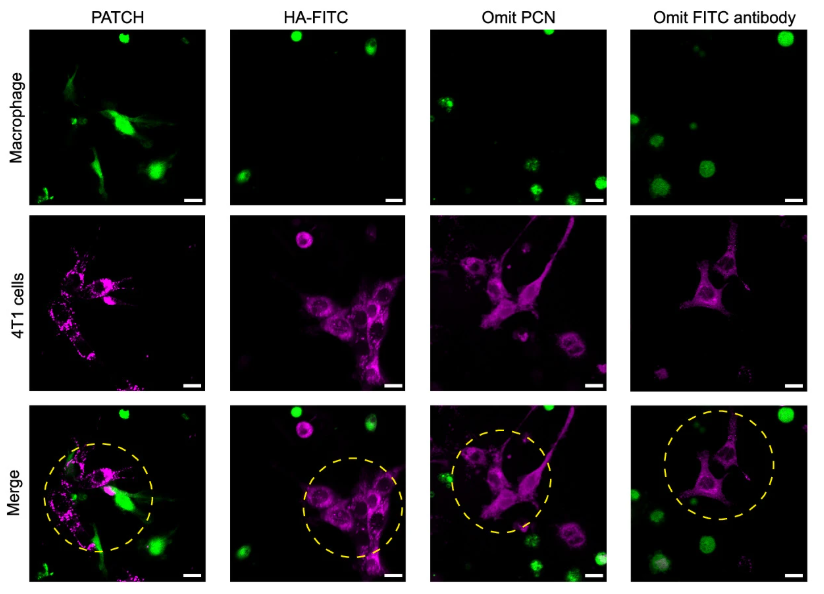
Primary macrophages were isolated as described above. After staining 4T1 cells with DID (MCE, HY-D1028) and macrophages with CFSE, cells were cultured with an effector-to-target ratio of 3:1 at 37 °C for 24 h. The phagocytosis effect was visualized by confocal imaging. 4T1 cells and macrophages were visualized by DiD dye (magenta) and CFSE dye (green).
-
Cancer Cell
Fusobacterium nucleatum facilitates anti-PD-1 therapy in microsatellite stable colorectal cancer. [Abstract]2024 Oct 14;42(10):1729-1746.e8. PMID: 39303724
DiD purchased from MedChemExpress. Usage Cited in: Cancer Cell. 2024 Oct 14;42(10):1729-1746.e8. [Abstract]
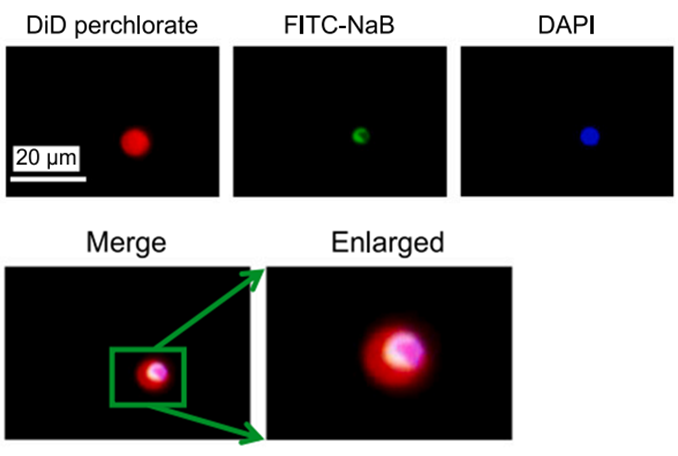
FITC-labeled butyrate translocated to the nucleus of CD8+ T cells after 6 h of co-culture, as determined by confocal microscopy. CD8+ T cells were stained using FITC-labeled butyrate (green), DiD perchlorate (red), and DAPI (blue).
-
-
Cell Metab
Microbial phosphoketolase promotes histone lactylation to improve anti-TNF therapy efficacy in inflammatory bowel disease. [Abstract]2026 May 13:S1550-4131(26)00150-6. PMID: 42134325 -
-
Nat Commun
Autoantigen-loaded Polymeric Microparticles associate with B cells and promote tolerogenic antigen presentation in a mouse model of experimental autoimmune encephalomyelitis. [Abstract]2026 Jun 23. PMID: 42337240 -
Nat Commun
Co-delivery of sorafenib and an FSP1 inhibitor triggers dual ferroptosis in tumor cells and immunosuppressive macrophages for enhanced immunotherapy in mouse models of hepatocellular carcinoma. [Abstract]2025 Nov 18;16(1):10096. PMID: 41253833
DiD purchased from MedChemExpress. Usage Cited in: Nat Commun. 2025 Nov 18;16(1):10096. [Abstract]
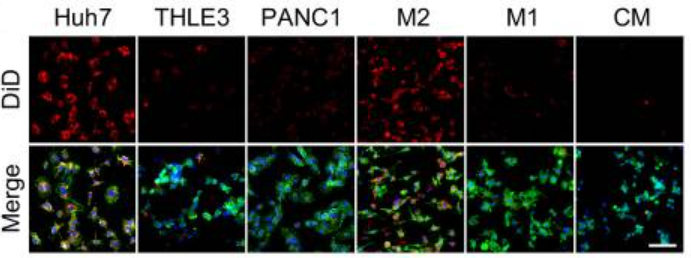
Fluorescence images of cellular uptake in Huh7, THLE3, PANC1, M2, M1, and CM after Sv@PM-M2p treatment (Scale bar = 100 μm), along with the quantification of red fluorescence intensity (n = 3 independent experiments). Sv@PM-M2p was labeled with DiD (red), the nuclei and cytoskeletons were stained with DAPI (blue) and Phalloidin (green), respectively.
DiD purchased from MedChemExpress. Usage Cited in: Nat Commun. 2025 Nov 18;16(1):10096. [Abstract]
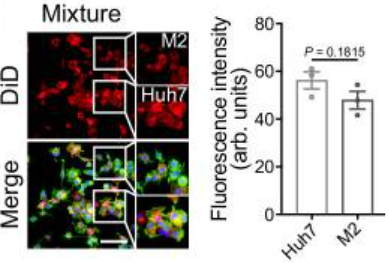
Fluorescence images of cellular uptake in the Huh7 and M2 co-culture system after Sv@PM-M2p treatment (Scale bar = 100 μm), along with the quantification of red fluorescence intensity (n = 3 independent experiments). Sv@PM-M2p was labeled with DiD (red), the nuclei and cytoskeletons were stained with DAPI (blue) and Phalloidin (green), respectively.
-
-
-
-
Adv Sci (Weinh)
Efferocytosis-Driven Polyamine Metabolism in Macrophages Enhances Cancer Stem Cell Enrichment after Chemotherapy in Ovarian Cancer. [Abstract]2025 Nov 21:e12508. PMID: 41271556 -
Adv Sci (Weinh)
Clinically Inspired Multimodal Treatment Using Induced Neural Stem Cells-Derived Exosomes Promotes Recovery of Traumatic Brain Injury through Microglial Modulation. [Abstract]2025 Sep 24:e08574. PMID: 40990055 -
Adv Sci (Weinh)
The GLP1R Agonist Semaglutide Inhibits Reactive Astrocytes and Enhances the Efficacy of Neural Stem Cell Transplantation Therapy in Parkinson's Disease Mice. [Abstract]2025 Aug 28:e17664. PMID: 40874950 -
Adv Sci (Weinh)
CircUGP2 Suppresses Intrahepatic Cholangiocarcinoma Progression via p53 Signaling Through Interacting With PURB to Regulate ADGRB1 Transcription and Sponging miR-3191-5p. [Abstract]2024 Oct;11(38):e2402329. PMID: 39120980
DiD purchased from MedChemExpress. Usage Cited in: Adv Sci (Weinh). 2024 Oct;11(38):e2402329. [Abstract]
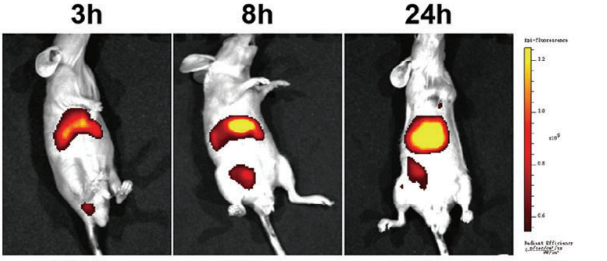
Fluorescence imaging was performed on subcutaneous tumor-bearing mice after being injected with DiD-labeled LNPs through the tail vein.
-
Sci Adv
2026 May 22;12(21):eaed3138. PMID: 42160424 -
-
-
-
-
J Control Release
Anti-CLEC7A nanobody in situ engineering promotes amyloid-β oligomers clearance by CAR-microglia to alleviate Alzheimer's disease pathology in mice. [Abstract]2026 Apr 10:392:114710. PMID: 41702507 -
J Control Release
IgM-functionalized biomimetic nanovaccine for immunological activation and bacterial toxin neutralization. [Abstract]2025 Jul 10:383:113836. PMID: 40360045 -
J Control Release
Biofilm-camouflaged Prussian blue synergistic mitochondrial mass enhancement for Alzheimer's disease based on Cu2+ chelation and photothermal therapy. [Abstract]2024 Sep 13:375:269-284. PMID: 39245418 -
J Control Release
Tagged extracellular vesicles with the RBD of the viral spike protein for delivery of antiviral agents against SARS-COV-2 infection. [Abstract]2021 Jul 10:335:584-595. PMID: 34089793 -
Cell Death Dis
2025 Jan 14;16(1):17. PMID: 39809787 -
Mater Today Bio
Ferritin-nanocaged aggregation-induced emission nanoaggregates for integrated sensitive detection and treatment of gastric cancer. [Abstract]2026 Jan 6:36:102769. PMID: 41567734 -
Adv Healthc Mater
Trans-Organ Early Intervention for Myocardial Infarction Based on Bone Marrow-Homing Biomimetic Nanomedicine. [Abstract]2025 Sep 30:e01619. PMID: 41025748 -
Acta Biomater
Multilayer lipid vesicles loaded with deoxyribonuclease 1 for the degradation of neutrophil extracellular traps in rheumatoid arthritis. [Abstract]2026 Mar:212:738-753. PMID: 41513207 -
Small Methods
2025 Dec 12:e01437. PMID: 41388650 -
Int J Biol Macromol
Functional exosomes modified with chitosan effectively alleviate anthracycline-induced cardiotoxicity. [Abstract]2024 Aug 5;277(Pt 3):134495. PMID: 39111472 -
ACS Appl Mater Interfaces
Oleic Acid Integrated Acetalated Dextran Nanoparticles for Enhanced Chemotherapeutic Delivery to the Bone Marrow. [Abstract]2025 Oct 14. PMID: 41086391 -
Stem Cell Res Ther
Sea buckthorn-derived extracellular vesicles foster bone regeneration through aau-miR168-mediated pathways. [Abstract]2025 Jun 3;16(1):281. PMID: 40462231 -
Cell Rep
nsP3-FXR co-condensation enables alphavirus replication and reveals a targetable alphavirus vulnerability. [Abstract]2026 Jun 3;45(6):117495. PMID: 42241276 -
Pharmaceutics
Ganoderma lucidum Polysaccharide Potentiates mRNA-LNP Efficacy: Synergizing Oxidative Stress Mitigation with Innate Immune Modulation. [Abstract]2026 Feb 19;18(2):259. PMID: 41755000 -
Biomater Adv
Platelet membrane-based bionic nanocarrier-targeted delivery of desferrioxamine mitigates secondary neurological damage in intracerebral hemorrhage. [Abstract]2026 Mar:180:214595. PMID: 41223662 -
Discov Nano
Flash nanoprecipitation allows easy fabrication of pH-responsive acetalated dextran nanoparticles for intracellular release of payloads. [Abstract]2024 Jan 4;19(1):4. PMID: 38175336 -
-
ACS Biomater Sci Eng
Targeting Synovial Macrophages with Astaxanthin-Loaded Liposomes for Antioxidant Treatment of Osteoarthritis. [Abstract]2024 Nov 11;10(11):7191-7205. PMID: 39413302 -
Colloids Surf B Biointerfaces
Fighting periodontitis with a pH-triggered nanocoating: A sustained-release strategy for simvastatin delivery. [Abstract]2026 Apr:260:115375. PMID: 41418367 -
Colloids Surf B Biointerfaces
In-situ growth of CeO2 on biofilms: Innovative nanoparticles for photothermal therapy & multi-pronged attack on Alzheimer's disease. [Abstract]2024 Jun:238:113887. PMID: 38581835 -
Int J Mol Sci
SLPI-Loaded Liposomes Targeting Kupffer Cells Modulate Macrophage Polarization and Mitigate Radiation-Induced Liver Damage. [Abstract]2026 Mar 9;27(5):2517. PMID: 41828732 -
ACS Omega
Delivery of Monomethyl Auristatin E Using Ionizable Lipid Nanoparticles for B‑Cell Acute Lymphoblastic Leukemia Treatment. [Abstract]2026 May 25;11(22):32321-32335. PMID: 42294239 -
Mol Pharm
2026 May 4;23(5):2944-2954. PMID: 41931102 -
-
J Pharm Sci
Microparticles incorporating dual apoptotic factors to inhibit anti-inflammatory effects in macrophages. [Abstract]2024 Nov;113(11):3196-3205. PMID: 38852674 -
Brain Res
IL-1β-induced mesenchymal stem cell-derived exosomes inhibit neuronal ferroptosis in intracerebral hemorrhage through the HSPA5/GPX4 axis. [Abstract]2024 Dec 15:1845:149219. PMID: 39222871 -
-
J Vis Exp
2024 Feb 2:(204). PMID: 38372398 -
-
-


용액&용해도
In Vitro:
DMSO : 4.17 mg/mL (4.22 mM; ultrasonic and warming and heat to 60°C; Hygroscopic DMSO has a significant impact on the solubility of product, please use newly opened DMSO)
Please refer to the solubility information to select the appropriate solvent. Once prepared, please aliquot and store the solution to prevent product inactivation from repeated freeze-thaw cycles.
Storage method and period of stock solution: -80°C, 6 months; -20°C, 1 month. When stored at -80°C, please use it within 6 months. When stored at -20°C, please use it within 1 month.
Please refer to the solubility information to select the appropriate solvent. Once prepared, please aliquot and store the solution to prevent product inactivation from repeated freeze-thaw cycles.
Storage method and period of stock solution: -80°C, 6 months; -20°C, 1 month. When stored at -80°C, please use it within 6 months. When stored at -20°C, please use it within 1 month.
Concentration (start) × Volume (start) = Concentration (final) × Volume (final)


순도&문서
-
Data Sheet (271 KB)
-
SDS (393 KB)
- English - EN (393 KB)
- Français - FR (393 KB)
- Deutsch - DE (393 KB)
- Norwegian - NO (393 KB)
- Español - ES (393 KB)
- Swedish - SV (393 KB)
- Italian - IT (393 KB)
- Korean - KR (393 KB)
- Portuguese - PT (393 KB)
-
Handling Instructions (2659 KB)
References
[1]. Gan WB, et al. Multicolor "DiOlistic" labeling of the nervous system using lipophilic dye combinations. Neuron. 2000 Aug;27(2):219-25. [Content Brief]
[2]. Kenji Yumoto, et al. A novel method for monitoring tumor dormancy using fluorescent dye DiD. Cytometry A. 2014 Jun; 85(6): 548–555. [Content Brief]
[3]. Meng Li, et al. In Vivo Tracking of Human Adipose-derived Mesenchymal Stem Cells in a Rat Knee Osteoarthritis Model with Fluorescent Lipophilic Membrane Dye. J Vis Exp. 2017; (128): 56273. [Content Brief]
[4]. Lo Celso C, et al. Live-animal tracking of individual haematopoietic stem/progenitor cells in their niche. [Content Brief]


Complete Stock Solution Preparation Table
Please refer to the solubility information to select the appropriate solvent. Once prepared, please aliquot and store the solution to prevent product inactivation from repeated freeze-thaw cycles.
Storage method and period of stock solution: -80°C, 6 months; -20°C, 1 month. When stored at -80°C, please use it within 6 months. When stored at -20°C, please use it within 1 month.
| Optional Solvent | Concentration Solvent Mass | 1 mg | 5 mg | 10 mg | 25 mg |
|---|---|---|---|---|---|
| DMSO | 1 mM | 1.0128 mL | 5.0640 mL | 10.1280 mL | 25.3200 mL |


DiD Related Classifications
HY-W559684 Related Classifications
 Powered by Bioz