



Cy5 maleimide
Based on 1 publication(s) in Google Scholar
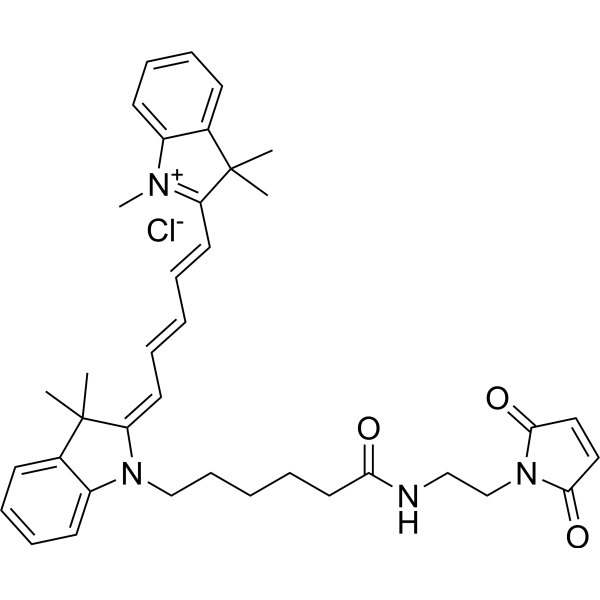
Cy5 maleimide (Cyanine5 maleimide) is a single-reactive dye containing a maleimide group and a CY5 fluorescent group, which can selectively couple with a thiol group. Cy5 maleimide can be used to label antibodies, peptides, or proteins (Ex/Em = 646/664 nm).
For research use only. We do not sell to patients.
- Purity : 98.59%
- CAS No.: 1437796-65-0
- Formula: C38H45ClN4O3
- Molecular Weight:641.24
-
Storage:
-20°C, sealed storage, away from moisture and light
* In solvent : -80°C, 6 months; -20°C, 1 month (sealed storage, away from moisture and light)

To place orders, for customer services and technical support, please contact: MedChemExpress USA
Tel: 609-228-6898 E-mail: [email protected] [email protected]


-
 Biological Activity
-
Chemical Information
-
Solvent & Solubility
- Purity & Documentation
- References
-
 Help & FAQs


-
HY-D1871
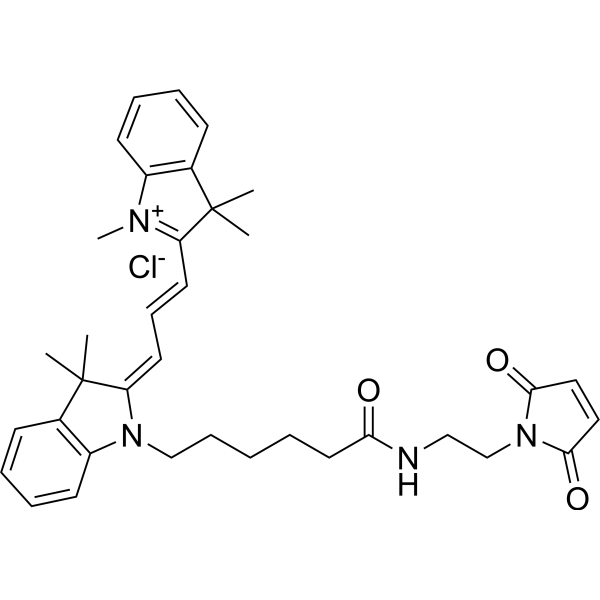
Cy3 maleimide chlorideFluorochrome Dye -

HY-P7109
EGF Protein, Human -
HY-137098
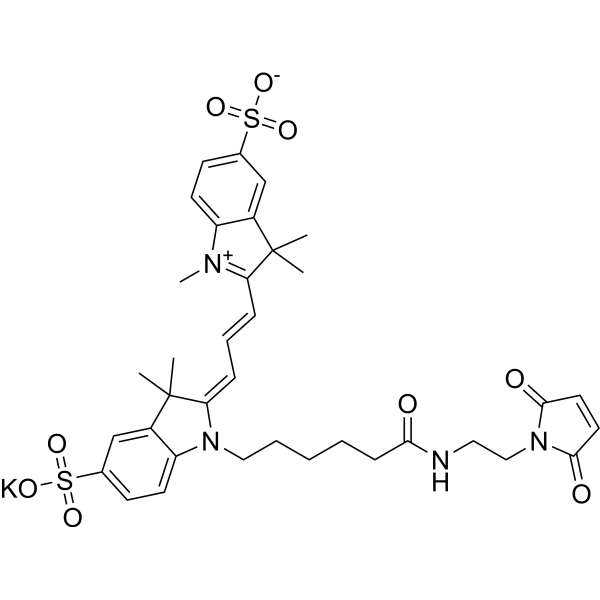
Sulfo-Cy3 maleimide potassiumFluorescent Dye -
HY-10586
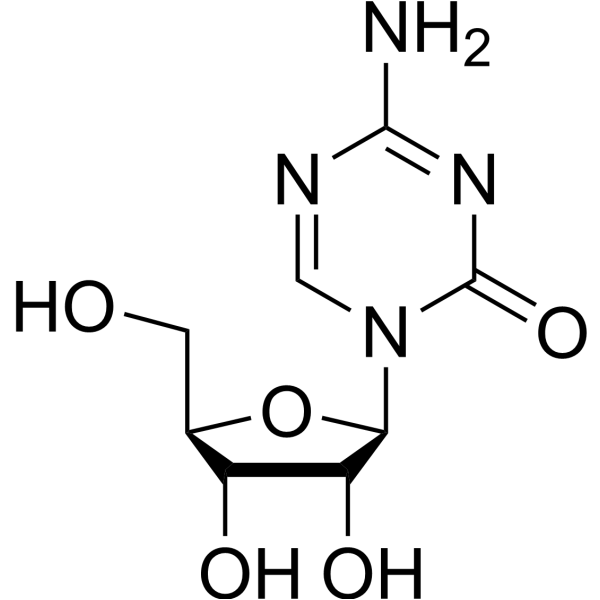
5-AzacytidineDNMT Inhibitor -
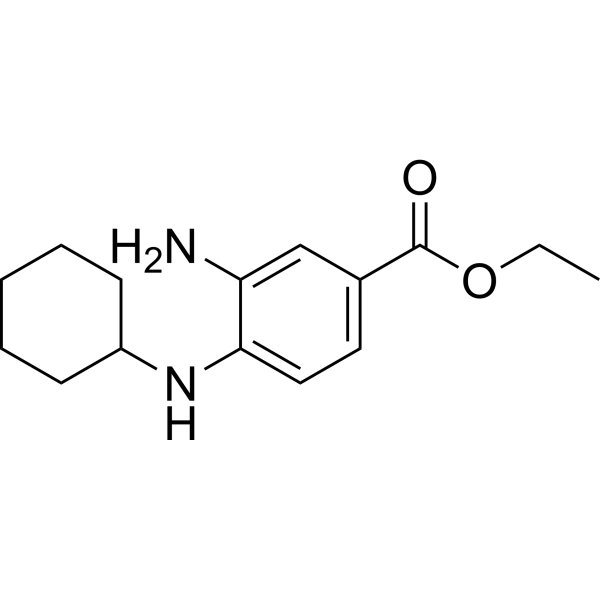
HY-100579
Ferrostatin-1Ferroptosis Inhibitor -
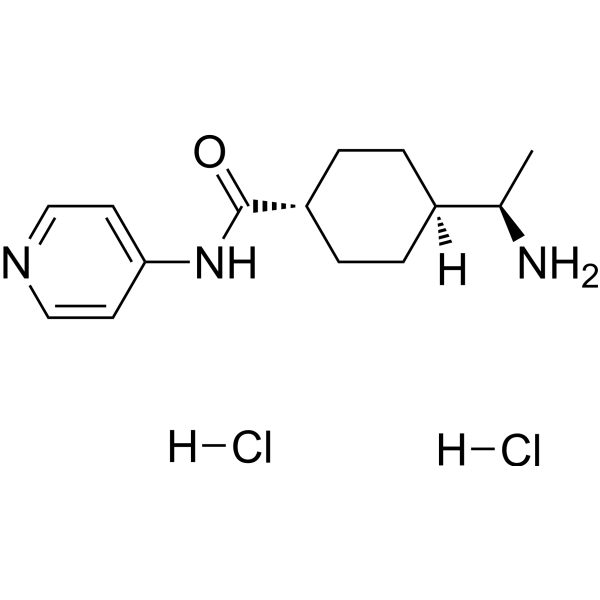
HY-10583
Y-27632 dihydrochlorideROCK Inhibitor -
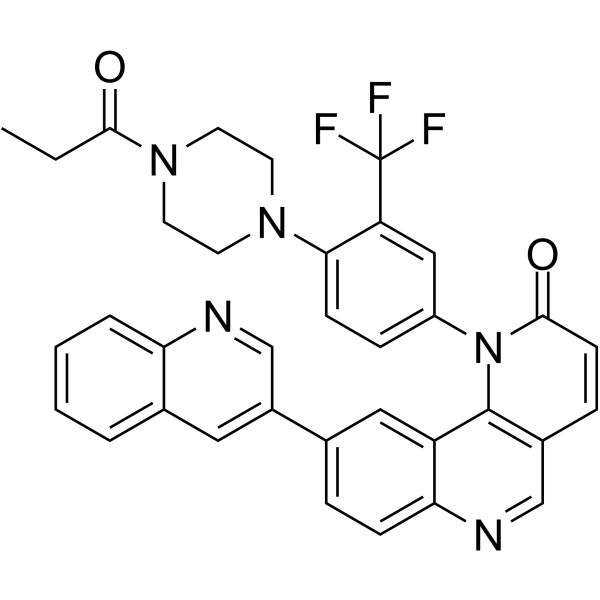
HY-13003
Torin 1mTOR Inhibitor -
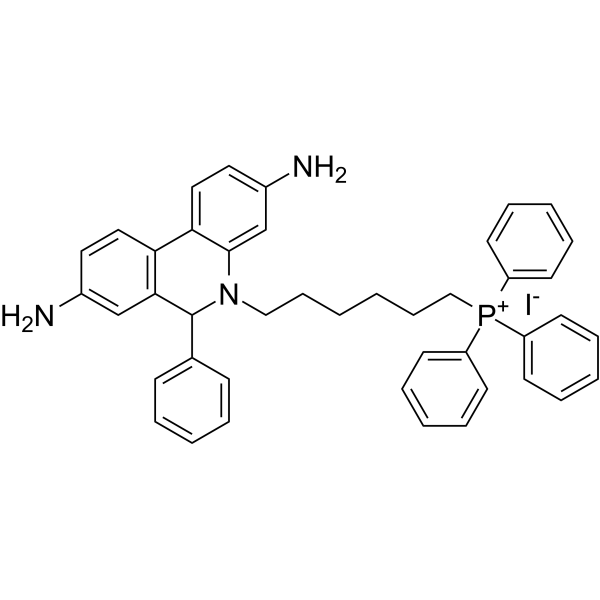
HY-D1055
MitoSOX RedMitochondrial ROS Indicator -

HY-DY1067
Cy5 maleimide (solution)Fluorescence Dye -
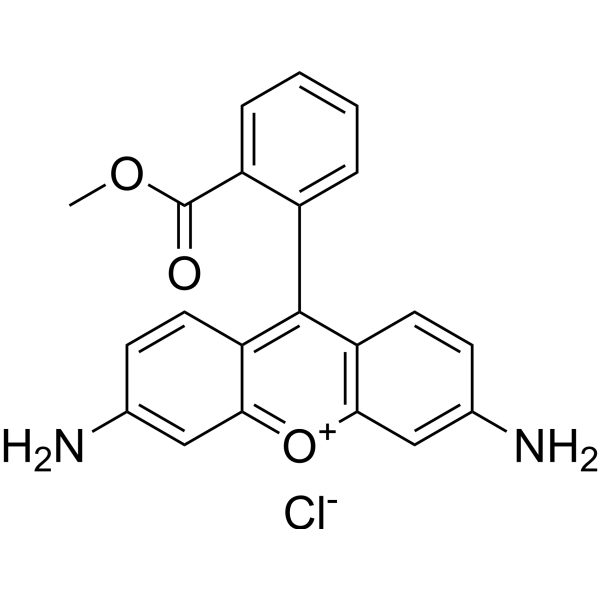
HY-D0816
Rhodamine 123Fluorescent Dye -
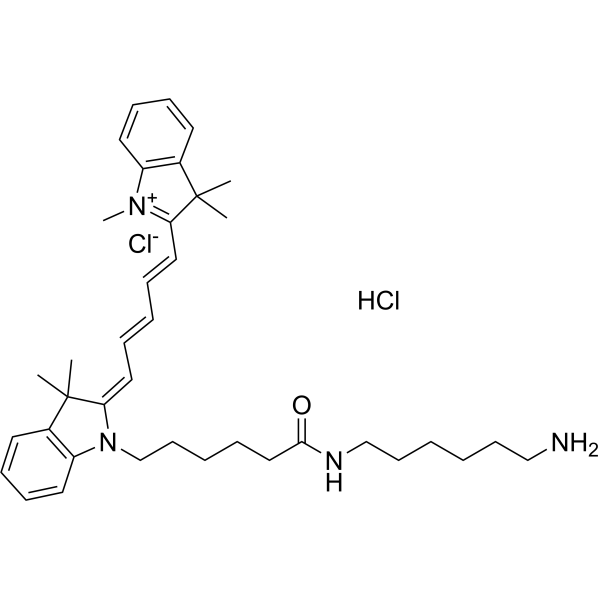
HY-D1321
Cy 5 amine hydrochlorideFluorescent Dye -
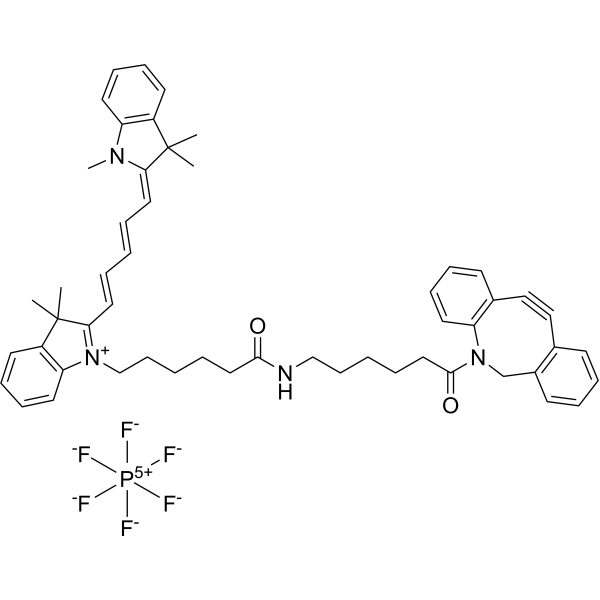
HY-D1583
Cyanine5 DBCO hexafluorophosphateAzide Reaction Probe
Publications Citing Use of MedChemExpress (MCE) Cy5 maleimide
More

Biological Activity
Description
In Vitro
Guide (The following is our recommended protocol. This protocol is only a guide and should be modified according to your specific needs).
1. Protein Preparation
To obtain the best labeling effect, please prepare the protein (antibody) concentration to 2 mg/mL.
1.1 The pH value of the protein solution should be 6.5 ± 0.5.
1.2 If the protein concentration is lower than 2 mg/mL, the labeling efficiency will be greatly reduced. To obtain the best labeling efficiency, it is recommended that the final protein concentration range be 2-10 mg/mL.
1.3 Impure antibodies or antibodies stabilized with bovine serum albumin (BSA) or other proteins will not be labeled well.
2. Dye Preparation
Dilute the dye with anhydrous DMSO to prepare a clear stock solution of 10 mg/mL.
3. Calculation of Dye Amount
The amount of dye required for the reaction depends on the amount of protein to be labeled. The optimal molar ratio of dye to protein is approximately 10:1.
Example: Assuming the required labeled protein is 500 μL 2 mg/mL IgG (MW=150,000), and 1 mg of dye is dissolved in 100 μL DMSO, the required dye volume is 4.3 μL. The detailed calculation process is as follows:
1) mmol (IgG) = mg/mL (IgG) × mL (IgG)/MW (IgG) = 2 mg/mL × 0.5 mL/150,000 mg/mmol = 6.7 × 10⁻⁶ mmol
2) mmol (dye) = mmol (IgG) × 10 = 6.7 × 10⁻⁶ mmol × 10 = 6.7 × 10⁻⁵ mmol
3) μL (dye) = mmol (dye) × MW (dye)/mg/μL (dye) = 6.7 ×10⁻⁵ mmol ×641.24 mg/mmol/0.01 mg/μL = 4.3 μL (dye)
Note: We recommend using a dye:protein molar ratio of 10:1. If the concentration is too low or too high, the ratio can be adjusted to 5:1, 15:1, or 20:1.
4. Running the Coupling Reaction
1) Slowly add the calculated volume of freshly prepared 10 mg/mL dye to 0.5 mL of protein sample solution, gently shake to mix, and then briefly centrifuge to collect the sample at the bottom of the reaction tube. Avoid vigorous mixing to prevent denaturation and inactivation of the protein sample.
2) Place the reaction tube in a dark place and incubate gently with shaking for 60 minutes at room temperature. Every 10-15 minutes, gently invert the reaction tube several times to thoroughly mix the reactants and improve labeling efficiency.
5. Purification of Conjugates
The following protocol is an example of purifying dye-protein conjugates using a Labelling Kits Centrifugation-Based Rapid Desalting Column (5KD) (HY-D3014).
5.1 Prepare the desalting column according to the instructions.
5.2 Load the reaction mixture onto the top of the desalting column.
5.3 Once the sample has run below the resin surface, immediately add PBS (pH 7.2-7.4).
5.4 Add more PBS (pH 7.2-7.4) to the target sample to complete column purification. Collect the fraction containing the desired dye-protein conjugate.
Optional
If the protein does not contain free cysteines, the protein must be treated with DTT or TCEP to generate thiol groups. DTT or TCEP converts disulfide bonds to two free thiol groups. If DTT is used, free DTT must be removed by dialysis or gel filtration prior to conjugation of the maleimide dye to the protein. The following is an example protocol for generating free thiol groups:
1. Prepare a fresh solution of 1 M DTT (15.4 mg/100 µL) in distilled water.
2. Prepare an IgG solution in 20 mM DTT: add 20 µL of DTT stock solution per ml of IgG solution while mixing. Let stand at room temperature for 30 minutes without additional mixing (to minimize reoxidation of cysteines to cystine).
3. Pass the reduced IgG through a filter column pre-equilibrated with "Exchange Buffer". Collect 0.25 mL fractions from the column.
4. Determine protein concentration and pool the fractions containing the most IgG. This can be done spectrophotometrically or colorimetrically.
Perform conjugation as soon as possible after this step (see example protocol).
Note: For good results, the IgG solution should be >4 mg/mL. If the antibody is below 2 mg/mL, it should be concentrated. Additionally, a 10% increase is necessary to compensate for losses on the buffer exchange column.
Note: The reduction reaction can be performed in any buffer at pH 7-7.5, such as MES, phosphate, or TRIS buffer.
Note: Steps 3 and 4 can be replaced by dialysis.
MedChemExpress (MCE) has not independently confirmed the accuracy of these methods. They are for reference only. .
Emission (Em)
664
Excitation (Ex)
646


Chemical Information
-
CAS No. 1437796-65-0
-
Appearance Solid
-
Molecular Weight 641.24
-
Formula C38H45ClN4O3
-
Color Brown to dark brown
-
SMILES
O=C(NCCN(C1=O)C(C=C1)=O)CCCCCN(/C2=C/C=C/C=C/C(C3(C)C)=[N+](C4=CC=CC=C34)C)C5=CC=CC=C5C2(C)C.[Cl-]
-
Synonyms
Cyanine5 maleimide
-
Shipping
Room temperature in continental US; may vary elsewhere.
-
Storage
-20°C, sealed storage, away from moisture and light
* In solvent : -80°C, 6 months; -20°C, 1 month (sealed storage, away from moisture and light)


Publications (1)
-
Journal Impact Factor
-
Most Recent
-
J Chromatogr A
Preparation of thiol-free amino acid plasma matrix for quantification of thiol amino acids and their oxidized forms in human plasma by UPLC-MS/MS. [Abstract]2024 Apr 12:1720:464776. PMID: 38432109


Solvent & Solubility
In Vitro:
DMSO : 102 mg/mL (159.07 mM; Need ultrasonic; Hygroscopic DMSO has a significant impact on the solubility of product, please use newly opened DMSO)
Please refer to the solubility information to select the appropriate solvent. Once prepared, please aliquot and store the solution to prevent product inactivation from repeated freeze-thaw cycles.
Storage method and period of stock solution: -80°C, 6 months; -20°C, 1 month (sealed storage, away from moisture and light). When stored at -80°C, please use it within 6 months. When stored at -20°C, please use it within 1 month.
Please refer to the solubility information to select the appropriate solvent. Once prepared, please aliquot and store the solution to prevent product inactivation from repeated freeze-thaw cycles.
Storage method and period of stock solution: -80°C, 6 months; -20°C, 1 month (sealed storage, away from moisture and light). When stored at -80°C, please use it within 6 months. When stored at -20°C, please use it within 1 month.
Concentration (start) × Volume (start) = Concentration (final) × Volume (final)


Purity & Documentation
-
Data Sheet (284 KB)
-
SDS (393 KB)
- English - EN (393 KB)
- Français - FR (393 KB)
- Deutsch - DE (393 KB)
- Norwegian - NO (393 KB)
- Español - ES (393 KB)
- Swedish - SV (393 KB)
- Italian - IT (393 KB)
- Korean - KR (393 KB)
- Portuguese - PT (393 KB)
-
Handling Instructions (2659 KB)
References
[1]. Maeda K, et al. Cy5 maleimide labelling for sensitive detection of free thiols in native protein extracts: identification of seed proteins targeted by barley thioredoxin h isoforms. Biochem J. 2004 Mar 1;378(Pt 2):497-507. [Content Brief]
[2]. Ptaszek M. Rational design of fluorophores for in vivo applications. Prog Mol Biol Transl Sci. 2013;113:59-108. [Content Brief]


Complete Stock Solution Preparation Table
Please refer to the solubility information to select the appropriate solvent. Once prepared, please aliquot and store the solution to prevent product inactivation from repeated freeze-thaw cycles.
Storage method and period of stock solution: -80°C, 6 months; -20°C, 1 month (sealed storage, away from moisture and light). When stored at -80°C, please use it within 6 months. When stored at -20°C, please use it within 1 month.
| Optional Solvent | Concentration Solvent Mass | 1 mg | 5 mg | 10 mg | 25 mg |
|---|---|---|---|---|---|
| DMSO | 1 mM | 1.5595 mL | 7.7974 mL | 15.5948 mL | 38.9870 mL |
| 5 mM | 0.3119 mL | 1.5595 mL | 3.1190 mL | 7.7974 mL | |
| 10 mM | 0.1559 mL | 0.7797 mL | 1.5595 mL | 3.8987 mL | |
| 15 mM | 0.1040 mL | 0.5198 mL | 1.0397 mL | 2.5991 mL | |
| 20 mM | 0.0780 mL | 0.3899 mL | 0.7797 mL | 1.9493 mL | |
| 25 mM | 0.0624 mL | 0.3119 mL | 0.6238 mL | 1.5595 mL | |
| 30 mM | 0.0520 mL | 0.2599 mL | 0.5198 mL | 1.2996 mL | |
| 40 mM | 0.0390 mL | 0.1949 mL | 0.3899 mL | 0.9747 mL | |
| 50 mM | 0.0312 mL | 0.1559 mL | 0.3119 mL | 0.7797 mL | |
| 60 mM | 0.0260 mL | 0.1300 mL | 0.2599 mL | 0.6498 mL | |
| 80 mM | 0.0195 mL | 0.0975 mL | 0.1949 mL | 0.4873 mL | |
| 100 mM | 0.0156 mL | 0.0780 mL | 0.1559 mL | 0.3899 mL |


Cy5 maleimide Related Classifications
HY-138200 Related Classifications
 Powered by Bioz