Search Result
Results for "
non-peptide antagonist
" in MedChemExpress (MCE) Product Catalog:
3
Isotope-Labeled Compounds
| Cat. No. |
Product Name |
Target |
Research Areas |
Chemical Structure |
-
- HY-10095
-
|
BIBN-4096; BIBN 4096BS
|
CGRP Receptor
|
Neurological Disease
|
|
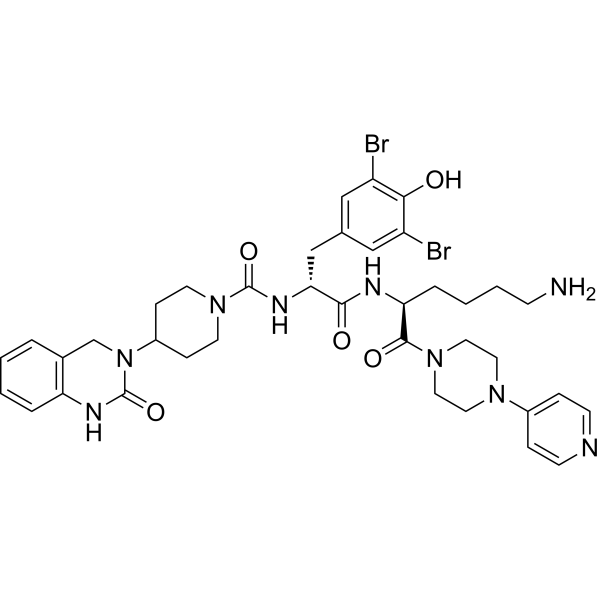
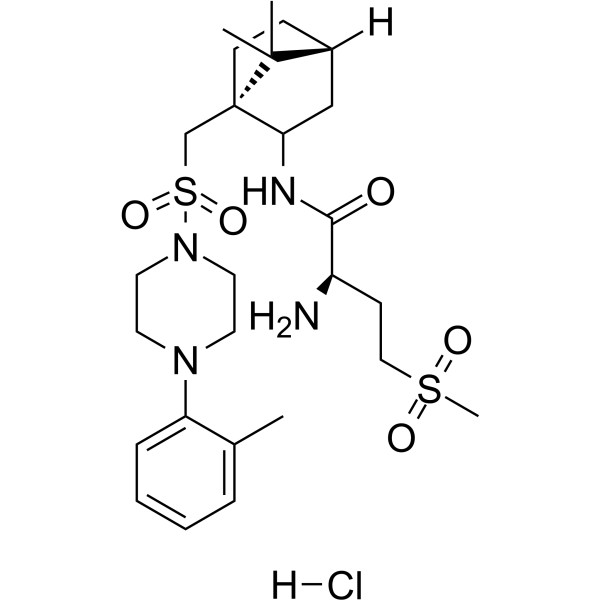
Olcegepant (BIBN-4096) is a potent and selective non-peptide antagonist of the calcitonin gene-related peptide 1 (CGRP1) receptor with IC50 of 0.03 nM and Ki of 14.4 pM for human CGRP .
|
-
-
- HY-16711
-
-
-
- HY-18347A
-
-
-
- HY-14184
-
-
-
- HY-12080
-
|
ZK-811752
|
CCR
|
Inflammation/Immunology
Endocrinology
|
|
BX471 (ZK-811752) is an orally active, potent and selective non-peptide CCR1 antagonist with a Ki of 1 nM, and exhibits 250-fold selectivity for CCR1 over CCR2, CCR5 and CXCR4.
|
-
-
- HY-108677
-
|
|
Oxytocin Receptor
|
Endocrinology
|
|
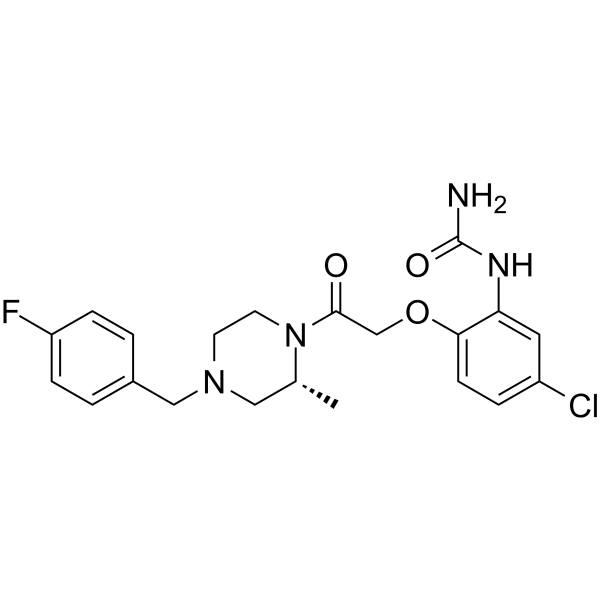
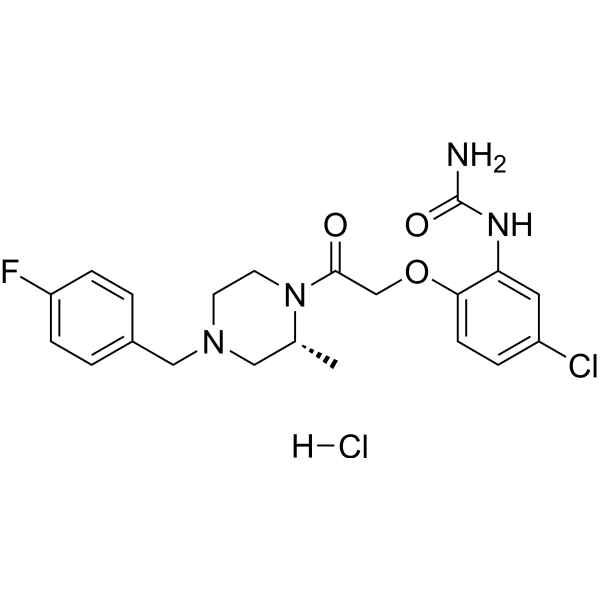
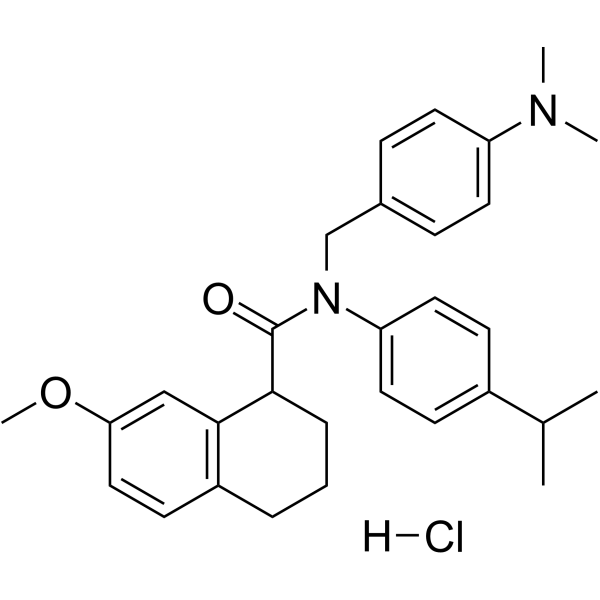
L-368,899 hydrochloride is a potent, selective, orally bioavailable, non-peptide oxytocin receptor antagonist, with IC50s of 8.9 nM and 26 nM for rat uterus and human uterus oxytocin receptor, respectively. L-368,899 hydrochloride used as a tocolytic agent .
|
-
-
- HY-103377
-
|
|
CRFR
|
Inflammation/Immunology
Endocrinology
|
|
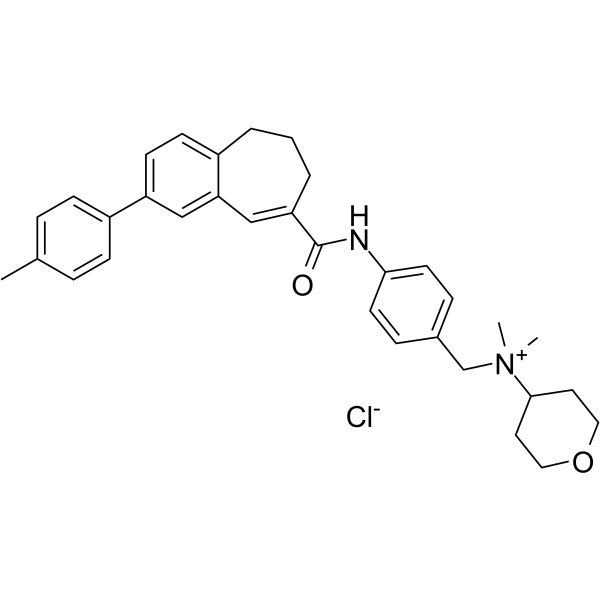
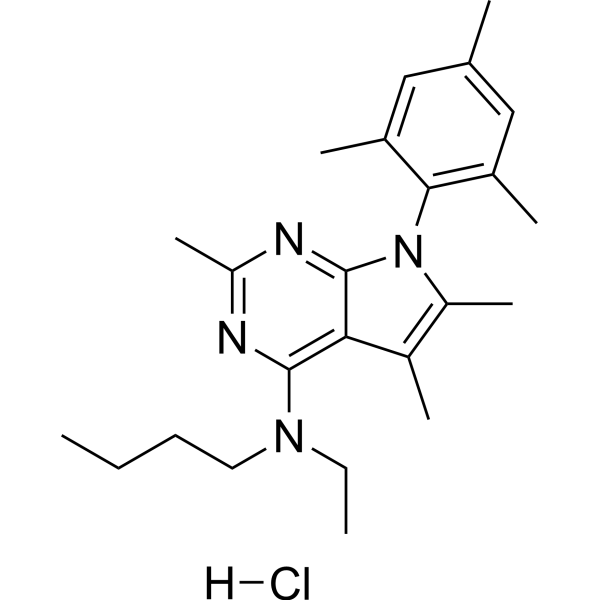
Antalarmin (hydrochloride) is an oral active non-peptide corticotropin-releasing hormone receptor 1 (CRHR1) antagonist with a Ki of 1 nM. Antalarmin hydrochloride suppresses CRH-induced ACTH secretion and blocks CRH and novelty induced anxiety-like behavior in animal models. Antalarmin hydrochloride produces anti-inflammatory effects in arthritis models, and suppresses stress-induced gastric ulceration related to irritable bowel syndrome .
|
-
-
- HY-14369
-
-
-
- HY-110155
-
|
|
Neurotensin Receptor
|
Neurological Disease
|
|
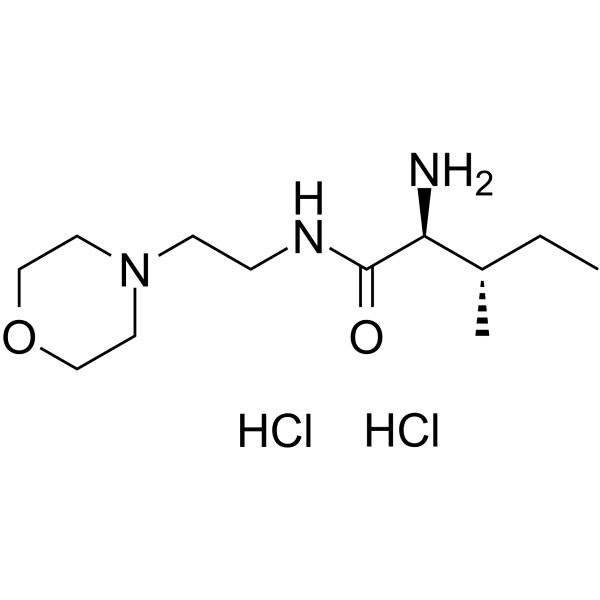
LM11A-31 dihydrochloride, a non-peptide p75 NTR (neurotrophin receptor p75) modulator, is an orally active and potent proNGF (nerve growth factor) antagonist. LM11A-31 dihydrochloride is an amino acid derivative with high blood-brain barrier permeability and blocks p75-mediated cell death. LM11A-31 dihydrochloride reverses cholinergic neurite dystrophy in Alzheimer's disease mouse models with mid- to late-stage disease progression .
|
-
-
- HY-123617
-
-
-
- HY-19947
-
|
Glucagon receptor antagonists-4
|
GCGR
|
Metabolic Disease
|
|
PF-06291874 is a highly potent, non-peptide and orally active glucagon receptor antagonist. PF-06291874 is under the study for type 2 diabetes mellitus (T2DM) .
|
-
-
- HY-10095A
-
|
BIBN-4096 hydrochloride; BIBN4096BS hydrochloride
|
CGRP Receptor
|
Neurological Disease
|
|
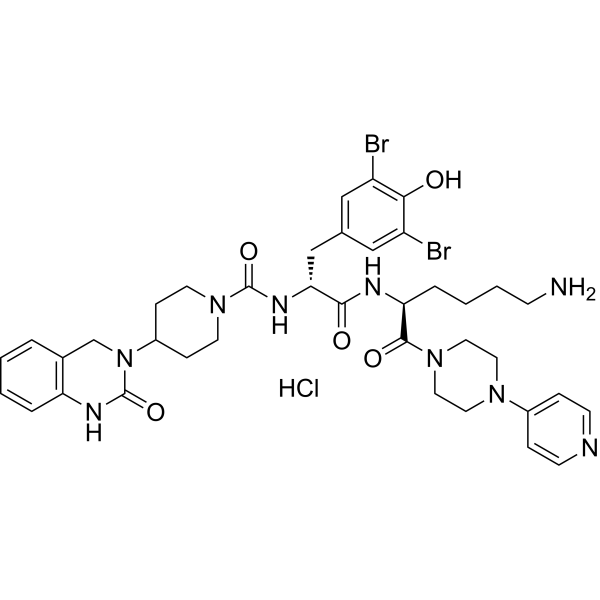
Olcegepant hydrochloride (BIBN-4096 hydrochloride) is a potent and selective non-peptide antagonist of the calcitonin gene-related peptide 1 (CGRP1) receptor with IC50 of 0.03 nM and with a Ki of 14.4 pM for human CGRP .
|
-
-
- HY-12080A
-
|
ZK-811752 hydrochloride
|
CCR
|
Inflammation/Immunology
Endocrinology
|
|
BX471 hydrochloride (ZK-811752 hydrochloride) is a potent, selective non-peptide CCR1 antagonist with Ki of 1 nM for human CCR1, and exhibits 250-fold selectivity for CCR1 over CCR2, CCR5 and CXCR4.
|
-
-
- HY-14789
-
-
-
- HY-120261
-
-
-
- HY-10898
-
-
-
- HY-108625
-
SHA 68
1 Publications Verification
|
Neuropeptide S Receptor
|
Neurological Disease
|
|
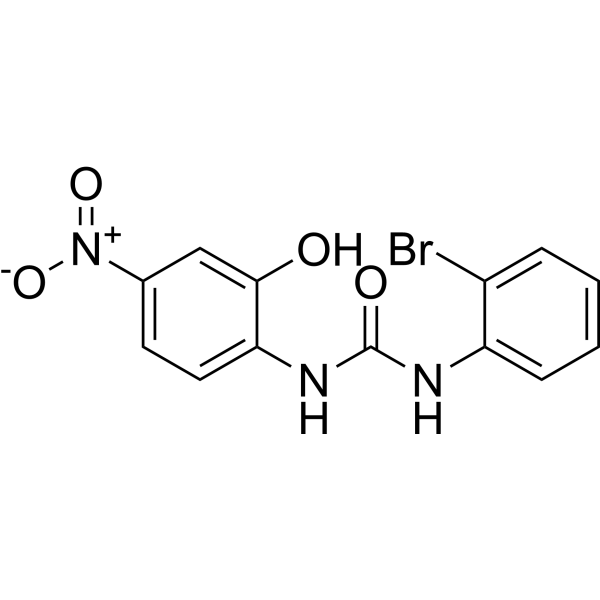
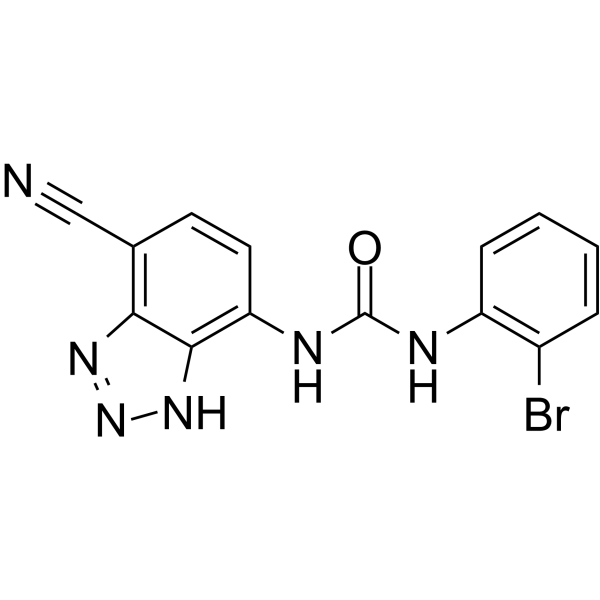
SHA 68 is a potent and selective non-peptide neuropeptide S receptor (NPSR) antagonist with IC50s of 22.0 and 23.8 nM for NPSR Asn 107 and NPSR Ile 107, respectively. SHA 68 has limited the blood-brain barrier (BBB) penetration and the activity in neuralgia .
|
-
-
- HY-15522
-
|
|
Oxytocin Receptor
|
Neurological Disease
|
|
WAY-267464 is a non-peptide oxytocin receptor (OTR) agonist. WAY-267464 can impair social recognition memory in rats through a vasopressin 1A receptor antagonist action. WAY-267464 can be used for the research of psychiatric disorders, such disorders include autism spectrum disorder, schizophrenia, and social anxiety disorder .
|
-
-
- HY-101844
-
|
|
Bombesin Receptor
|
Cancer
|
|
ML-18 is a non-peptide bombesin receptor subtype-3 (BRS-3) antagonist with an IC50 of 4.8 μM.
|
-
-
- HY-135542
-
|
|
CRFR
|
Others
|
|
NBI-27914 is a highly selective, high-affinity non-peptide competitive antagonist of human corticotropin-releasing factor receptor 1 (CRFR1). NBI-27914 primarily binds to the His199 and Met276 sites in the transmembrane domain of the receptor .
|
-
-
- HY-108626
-
|
NCGC84
|
Neuropeptide S Receptor
|
Neurological Disease
|
|
ML154 (NCGC84) is a selective, brain-penetrant and non-peptide neuropeptide S receptor (NPSR) antagonist with a pA2 of 9.98. ML154 potently inhibits NPS-stimulated cellular calcium, cAMP, and ERK phosphorylation responses with IC50 values of 36.5 nM, 22.1 nM, and 9.3 nM, respectively .
|
-
-
- HY-B0780
-
-
-
- HY-15039
-
|
|
Bradykinin Receptor
|
Metabolic Disease
Inflammation/Immunology
Endocrinology
|
|
SSR240612 is a potent, and orally active specific non-peptide bradykinin B1 receptor antagonist, with Kis of 0.48 nM and 0.73 nM for B1 kinin receptors of human fibroblast MRC5 and HEK cells expressing human B1 receptors, 481 nM and 358 nM for B2 receptors of guinea pig ileum membranes and CHO cells expressing human B1 receptor, respectively.
|
-
-
- HY-16992A
-
|
|
Complement System
Reactive Oxygen Species (ROS)
|
Inflammation/Immunology
|
|
W-54011 is a potent and orally active non-peptide C5a receptor antagonist. W-54011 inhibits the binding of 125I-labeled C5a to human neutrophils with a Ki value of 2.2 nM. W-54011 also inhibits C5a-induced intracellular Ca 2+ mobilization, chemotaxis, and generation of ROS in human neutrophils with IC50s of 3.1 nM, 2.7 nM, and 1.6 nM, respectively .
|
-
-
- HY-109093
-
|
KLH-2109; OBE-2109
|
GnRH Receptor
|
Inflammation/Immunology
Cancer
|
|
Linzagolix (KLH-2109; OBE-2109) is a potent, non-peptide, and orally active GnRH antagonist. Linzagolix can be used for uterine fibroids, endometriosis, adenomyosis research .
|
-
-
- HY-70068
-
-
-
- HY-N2600
-
|
|
Bombesin Receptor
|
Cancer
|
|
Kuwanon H is a flavonoid isolated from Morus alba, which acts as a potent non-peptide bombesin receptor antagonist. Kuwanon H selectively inhibits binding of gastrin releasing peptide CRP to GRP-preferring recepotr, with a Ki value of 290 nM in cells .
|
-
-
- HY-108483
-
|
|
Neurokinin Receptor
|
Neurological Disease
Inflammation/Immunology
|
|
RP 67580 is a non-peptide antagonist of substance P (SP), competitively inhibits the binding of [3H]SP to neurokinin receptor 1 (NK1 receptor) in rat brain membranes with a Ki value of 4.16 nM. RP 67580 is a specific antagonist of NK1 receptors and can be used in the research of pain and neurogenic inflammation .
|
-
-
- HY-124767
-
|
|
Neuropeptide Y Receptor
|
Neurological Disease
|
|
SR 142948A is a non-peptide neuropeptide neuropeptin (NT) receptor antagonist. SR 142948A is able to bind to neuropeptin receptors, especially with high affinity for NT1 and NT2 receptors. SR 142948A is mainly used to study the role of neuropeptide in the neurotransmitter system, especially the dopamine system .
|
-
-
- HY-106840
-
|
|
Cholecystokinin Receptor
|
Neurological Disease
Metabolic Disease
|
|
L-365260 is an orally active and selective antagonist of non-peptide gastrin and brain cholecystokinin receptor (CCK-B), with Kis of 1.9 nM and 2.0 nM, respectively. L-365260 interacts in a stereoselective and competitive manner with guinea pig stomach gastrin and brain CCK receptors. L-365260 can enhance Morphine analgesia and prevents Morphine tolerance .
|
-
-
- HY-123499
-
|
|
Somatostatin Receptor
|
Cardiovascular Disease
|
|
SRA880 is a non-peptide and selective somatostatin sst(1) receptor antagonist. SRA880 exhibits antidepressant-like effects when in combination with Imipramine (HY-B1490A) .
|
-
-
- HY-19431
-
|
|
Endothelin Receptor
|
Cardiovascular Disease
|
|
Ro 46-8443 is the first non-peptide endothelin ETB receptor selective antagonist. Ro 46-8443 displays an at least 100-fold selectivity for ETB (IC50: 34-69 nM) over ETA receptors (IC50: 6800 nM) .
|
-
-
- HY-108679
-
|
|
Oxytocin Receptor
|
Neurological Disease
|
|
WAY-267464 (hydrochloride) is a non-peptide oxytocin receptor (OTR) agonist. WAY-267464 (hydrochloride) can impair social recognition memory in rats through a vasopressin 1A receptor antagonist action. WAY-267464 (hydrochloride) can be used for the research of psychiatric disorders, such disorders include autism spectrum disorder, schizophrenia, and social anxiety disorder .
|
-
-
- HY-121156A
-
|
LF 16-0687 hydrochloride; XY-2405 hydrochloride
|
Bradykinin Receptor
|
Neurological Disease
|
|
Anatibant (LF 16-0687; XY-2405) hydrochloride is a selective non-peptide bradykinin B2 receptor antagonist. Anatibant hydrochloride binds to the human, rat and guinea-pig recombinant B2 receptor with Ki values of 0.67 nM, 1.74 nM and 1.37 nM, respectively. Anatibant hydrochloride crosses the blood-brain barrier (BBB). Anatibant hydrochloride can be used in research on brain damage diseases .
|
-
-
- HY-107691
-
|
|
Neurokinin Receptor
|
Neurological Disease
Endocrinology
Cancer
|
|
GR 159897 is a highly potent, selective, competitive, brain-penetrated non-peptide neurokinin 2 (NK2) receptor antagonist. GR 159897 has little or no affinity for NK1 and NK3 receptors. GR 159897 inhibits binding of [ 3H]GR100679 to human NK2 (hNK2)-CHO cells and rat colon membranes with pKis of 9.51 and 10, respectively. Antagonizes bronchoconstriction. Anxiolytic-like and anti-tumor effects .
|
-
-
- HY-19529
-
-
-
- HY-14184S
-
-
-
- HY-110155A
-
|
|
Drug Isomer
|
Neurological Disease
|
|
(Rac)-LM11A-31 dihydrochloride is an isomer of LM11A-31 dihydrochloride. LM11A-31 dihydrochloride, a non-peptide p75 NTR (neurotrophin receptor p75) modulator, is an orally active and potent proNGF (nerve growth factor) antagonist .
|
-
-
- HY-14184R
-
|
ACT-064992 (Standard)
|
Reference Standards
Endothelin Receptor
Apoptosis
|
Cardiovascular Disease
Endocrinology
Cancer
|
|
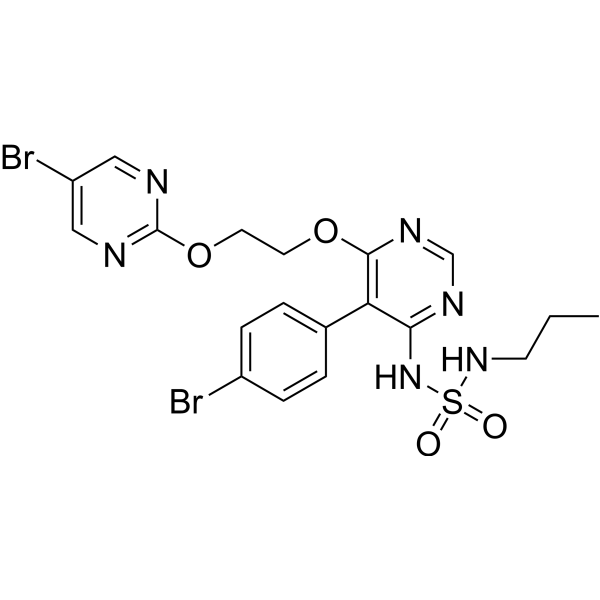
Macitentan (Standard) is the analytical standard of Macitentan. This product is intended for research and analytical applications. Macitentan (ACT-064992) is an orally active, non-peptide dual ETA and ETB (endothelin receptor) antagonist. Macitentan has the potential for idiopathic pulmonary fibrosis (IPF) and pulmonary arterial hypertension (PAH) .
|
-
-
- HY-101764
-
|
SR 27897
|
Cholecystokinin Receptor
|
Metabolic Disease
|
|
Lintitript (SR 27897) is a highly potent, selective, orally active, competitive and non-peptide cholecystokinin (CCK1) receptor antagonist with an EC50 of 6 nM and a Ki of 0.2 nM. Lintitript displays > 33-fold selectivity more selective for CCK1 than CCK2 receptors (EC50 value of 200 nM). Lintitript increases plasma concentration of leptin and food intake as well as plasma concentration of insulin .
|
-
-
- HY-103304
-
|
|
Others
|
Neurological Disease
|
|
CGRP antagonist 4 is an antagonist of calcitonin gene-related peptide (CGRP) receptor. CGRP antagonist 4 shows the highest affinity for CGRP receptors in the human brain. CGRP antagonist 4 can be used to study the binding properties of non-peptide calcitonin gene-related peptide (CGRP) receptor antagonist (gepants) in rat, pig and human menes .
|
-
-
- HY-19374
-
|
|
GCGR
|
Metabolic Disease
|
|
BAY-27-9955 is an orally active non-peptide glucagon receptor antagonist. Bay 27-9955 competitively blocks the interaction of glucagon with the human glucagonreceptor at an IC50 value of 110 nM. BAY-27-9955 can be used for the study of type 2 diabetes .
|
-
-
- HY-108479
-
|
SR140333
|
Neurokinin Receptor
|
Neurological Disease
|
|
Nolpitantium (SR140333) is a potent, selective, competitive, non-peptide tachykinin NK1 receptor antagonist. Nolpitantium blocks the activation of rat thalamic neurons after nociceptive stimulation .
|
-
-
- HY-106840A
-
|
|
Cholecystokinin Receptor
|
Neurological Disease
Metabolic Disease
|
|
L-365260 hemihydrate is an orally active and selective antagonist of non-peptide gastrin and brain cholecystokinin receptor (CCK-B), with Kis of 1.9 nM and 2.0 nM, respectively. L-365260 hemihydrate interacts in a stereoselective and competitive manner with guinea pig stomach gastrin and brain CCK receptors .
|
-
-
- HY-106994A
-
|
YM598
|
Endothelin Receptor
|
Cardiovascular Disease
Inflammation/Immunology
Cancer
|
|
Nebentan potassium (YM598) is a potent, selective and orally active non-peptide endothelin ETA receptor antagonist through the modification of Bosentan (HY-A0013). Nebentan potassium inhibits [ 125I] endothelin-1 binding to cloned human endothelin ETA and ETB receptor, with Ki of 0.697 nM and 569 nM, respectively . YM598 can ameliorate the progression of cor pulmonale and myocardial infarction in vivo .
|
-
-
- HY-135500
-
|
|
Endothelin Receptor
|
Endocrinology
|
|
ACT-373898 is an inactive carboxylic acid metabolite of Macitentan. Macitentan is an orally active, non-peptide dual ETA and ETB (endothelin receptor) antagonist .
|
-
-
- HY-14184A
-
|
|
Endothelin Receptor
|
Cardiovascular Disease
Endocrinology
|
|
Macitentan n-butyl analogue is a n-butyl analogue of Macitentan. Macitentan is an orally active, non-peptide dual endothelin ETA and ETB receptor antagonist for the potential treatment of idiopathic pulmonary fibrosis (IPF) and pulmonary arterial hypertension (PAH).
|
-
-
- HY-116854
-
|
|
GCGR
|
Metabolic Disease
|
|
NNC 92-1687 is a non-peptide competitive human glucagon receptor antagonist (IC50=20 μM; Ki=9.1 μM). NNC 92-1687 can be used in the research of type 2 diabetes .
|
-
-
- HY-76612
-
-
-
- HY-16741
-
|
OBE001
|
Oxytocin Receptor
|
Endocrinology
|
|
Erlosiban (OBE001) is an orally active non-peptide type oxytocin receptor antagonist. Erlosiban inhibits the increase of intracellular calcium concentration, thereby reducing uterine smooth muscle contraction. Erlosiban can be used for research on premature birth and to improve embryo implantation and pregnancy rate in assisted reproductive technology (AR).
|
-
- HY-124234
-
|
|
Endothelin Receptor
|
Cardiovascular Disease
|
|
TA-0201 is a novel orally active, competitive, non-peptide endothelin receptor antagonist. TA-0201 antagonizes the specific binding of [ 125I]ET-1 to cloned human receptors of ETA and ETB with Ki values of 15 pM and 41 nM, respectively. TA-0201 inhibits the pressor response to the exogenous big ET-1 .
|
-
- HY-121156
-
|
LF 16-0687; XY-2405
|
Bradykinin Receptor
|
Neurological Disease
|
|
Anatibant (LF 16-0687; XY-2405) is a selective non-peptide bradykinin B2 receptor antagonist. Anatibant binds to the human, rat and guinea-pig recombinant B2 receptor with Ki values of 0.67 nM, 1.74 nM and 1.37 nM, respectively. Anatibant crosses the blood-brain barrier (BBB). Anatibant can be used in research on brain damage diseases .
|
-
- HY-15015A
-
-
- HY-139035
-
|
|
CRFR
|
Neurological Disease
|
|
CRHR1 antagonist 1 (compound 10a) is a non-peptide corticotropin-releasing hormone type 1 receptor (CRHR1) antagonist. CRHR1 antagonist 1 can be utilized in mental disorders research .
|
-
- HY-117053
-
|
|
Neurokinin Receptor
|
Neurological Disease
|
|
ZM 253270 is a species-selective non-peptide NK-2 receptor (NK-2R) antagonist. ZM 253270 competitively inhibits the binding of [ 3H]NKA to native or cloned NK-2R from hamster bladder (Ki=2 nM), but has a weaker inhibitory effect (48-fold) on the binding of [ 3H]NKA to cloned human NK-2R .
|
-
- HY-105137
-
-
- HY-10308
-
|
|
Integrin
|
Metabolic Disease
|
|
Lefradafiban is an orally active glycoprotein IIb/IIIa receptor antagonist. Lefradafiban can be metabolized to its active form, Fradafiban, a non-peptide GP IIb/IIIa receptor antagonist .
|
-
- HY-101368
-
-
- HY-19214
-
-
- HY-125075
-
|
|
Bombesin Receptor
|
|
|
PD 165929 is a high affinity and competitive non-peptide neuromedin-B (NMB) receptor selective antagonist (Ki: 6.3 nM; IC50: 150 nM for rat NMB receptor) .
|
-
- HY-101986C
-
|
AR-H 053591 dihydrochloride
|
Neuropeptide Y Receptor
|
Neurological Disease
|
|
BIIE-0246 dihydrochloride (AR-H 053591 dihydrochloride) is a potent and highly selective non-peptide neuropeptide Y (NPY) Y2 receptor antagonist, with an IC50 value of 15 nM .
|
-
- HY-107723A
-
|
|
Neuropeptide Y Receptor
|
Metabolic Disease
|
|
CGP 71683 Free base serves as a powerful and highly selective non-peptide antagonist targeting the NPY Y(5) receptor, making it a valuable tool in obesity research.
|
-
- HY-107533
-
|
|
GnRH Receptor
|
Endocrinology
|
|
T-98475 (Compound 26d) is a potent, orally active, non-peptide luteinizing hormone-releasing hormone (LHRH) receptor antagonist with an IC50 of 0.2 nM .
|
-
- HY-103357
-
-
- HY-10049A
-
|
|
Neurokinin Receptor
|
Neurological Disease
|
|
CP 122721 hydrochloride is a potent, non-peptide and selective nonpeptide neurokinin NK1 antagonist, with a pIC50 of 9.8 for human NK1 receptor expressed in IM-9 cells. CP 122721 hydrochloride exhibits anxiolytic and antidepressant-like effects .
|
-
- HY-108555
-
|
|
Protease Activated Receptor (PAR)
|
Cardiovascular Disease
|
|
FR171113 is a specific and non-peptide thrombin receptor antagonist. FR171113 exhibits the antithrombotic effects of a PAR1 antagonist. FR171113 inhibits thrombin-induced platelet aggregation with an IC50 of 0.29 μM. .
|
-
- HY-117670
-
|
|
Neurokinin Receptor
|
Neurological Disease
|
|
PD-161182 is a non-peptide NK-3 antagonist. PD-161182 can be studied in NK-3-related central nervous system disturbances, pain, inflammation, pulmonary and skin diseases .
|
-
- HY-120308
-
|
SR140603
|
Neurokinin Receptor
|
Neurological Disease
|
|
(R)-Nolpitantium is the R-enantiomer of Nolpitantium (HY-108479). Nolpitantium (SR140333) is a potent, selective, competitive, non-peptide tachykinin NK1 receptor antagonist. Nolpitantium blocks the activation of rat thalamic neurons after nociceptive stimulation .
|
-
- HY-15016
-
|
|
Oxytocin Receptor
|
Endocrinology
|
|
(E/Z)-OT-R antagonist 1 is a mixture of E/Z forms of OT-R antagonist 1 (HY-15015). OT-R antagonist 1 is a novel, potent, selective non-peptide OT-R antagonist that inhibits oxytocin-induced intracellular Ca 2+ activation (IC50 = 8 nM) .
|
-
- HY-W370556
-
|
|
Neurokinin Receptor
|
Neurological Disease
|
|
(Rac)-LM11A-31 is a racemate of LM11A-31. LM11A-31 is a non-peptide modulator of p75NTR (neurotrophin receptor p75) and is an orally effective proNGF antagonist .
|
-
- HY-18347AR
-
|
YM 087 (Standard)
|
Reference Standards
Vasopressin Receptor
|
Cardiovascular Disease
Endocrinology
|
|
Conivaptan (hydrochloride) (Standard) is the analytical standard of Conivaptan (hydrochloride). This product is intended for research and analytical applications. Conivaptan (hydrochloride) is a non-peptide antagonist of vasopressin receptor, with Ki values of 0.48 and 3.04 nM for rat liver V1A receptor and rat kidney V2 receptor respectively.
|
-
- HY-U00235
-
|
|
Integrin
|
Inflammation/Immunology
|
|
SR121566A is a novel non-peptide Glycoprotein IIb/IIIa (GP IIb-IIIa) antagonist, which can inhibit ADP-, arachidonic acid- and collagen-induced human platelet aggregation with IC50s of 46±7.5, 56±6 and 42±3 nM, respectively.
|
-
- HY-113730
-
|
|
CXCR
|
Others
|
|
VUF5834 is a non-peptide chemokine receptor CXCR3 antagonist with non-competitive antagonistic and inverse agonistic activities. VUF5834 blocks the effects of CXCL10 and CXCL11 on human CXCR3, exhibits non-competitive antagonistic and inverse agonistic properties to CXCR3, and, except for TAK-779, has a slightly lower affinity for rodent CXCR3 than for primate CXCR3.
|
-
- HY-15011
-
|
|
Oxytocin Receptor
|
Others
|
|
L-372662 is a potent and orally active non-peptide oxytocin antagonist with a Ki value of 4.8. The Kd value of L-372662 for wild-type hOTR and [A318G]OTR is 5.8 nM and 73 nM. L-372662 shows selectivity to OTR:V1aR .
|
-
- HY-70068R
-
|
|
Orexin Receptor (OX Receptor)
|
Neurological Disease
Endocrinology
|
|
SB-408124 (Standard) is the analytical standard of SB-408124. This product is intended for research and analytical applications. SB-408124 is a non-peptide OX1 receptor antagonist with Kis of 57 nM and 27 nM in whole cell and membrane, respectively. SB-408124 exhibits 50-fold selectivity over OX2 receptor .
|
-
- HY-N2600R
-
|
|
Reference Standards
Bombesin Receptor
|
Cancer
|
|
Kuwanon H (Standard) is the analytical standard of Kuwanon H. This product is intended for research and analytical applications. Kuwanon H is a flavonoid isolated from Morus alba, which acts as a potent non-peptide bombesin receptor antagonist. Kuwanon H selectively inhibits binding of gastrin releasing peptide CRP to GRP-preferring recepotr, with a Ki value of 290 nM in cells .
|
-
- HY-103247B
-
|
|
Angiotensin Receptor
|
Cardiovascular Disease
|
|
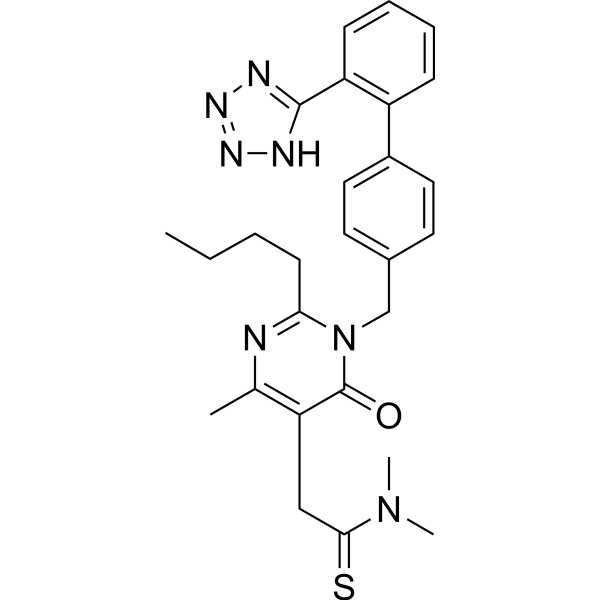
EMD-66684 potassium salt is a non-peptide angiotensin II receptor antagonist that demonstrates significant antihypertensive effects in spontaneously hypertensive rats. EMD-66684 potassium salt exhibits nanomolar affinity for angiotensin II receptors, comparable to losartan in potency. EMD-66684 potassium salt shows increased activity when modified with acetamides, leading to superior blood pressure reduction.
|
-
- HY-17012
-
|
RPR 100893
|
Neurokinin Receptor
|
Inflammation/Immunology
|
|
Dapitant (RPR 100893) is a non-peptide Substance P antagonist with high affinity for the human NK1 receptor. It belongs to the 7,7,4-trimethylperhydroisoindole class of compounds. Dapitant inhibits the binding of Substance P to NK1 receptors, thereby blocking its neurokinin-mediated effects. This novel antagonist represents a potential therapeutic option for conditions involving Substance P, such as neurogenic inflammation and pain modulation .
|
-
- HY-107692
-
|
|
Neurokinin Receptor
|
Neurological Disease
|
|
SB 218795 is a potent and selective non-peptide NK3 receptor antagonist, with a Ki 13 nM for hNK3. SB 218795 shows about 90-fold and 7000-fold selectivity for hNK3 over hNK2 and hNK1, respectively. SB 218795 can inhibit NK3 receptor-mediated pupillary constriction of the rabbit .
|
-
- HY-14789R
-
|
NBI-56418 (Standard)
|
GnRH Receptor
Nuclear Factor of activated T Cells (NFAT)
Reference Standards
|
Endocrinology
Cancer
|
|
(R)-Elagolix (Standard) is the analytical standard of (R)-Elagolix. This product is intended for research and analytical applications. Elagolix is a highly effective, selective, oral-active, short-term, non-peptide gonadotropin-releasing hormone receptor (GnRH receptor) antagonist (KD = 54 pM) and NFAT inhibitor, which can be used to study pain related to endometriosis. .
|
-
- HY-117952
-
|
|
Neurokinin Receptor
|
Neurological Disease
|
|
L 743310 is a non-peptide, selective antagonist of the human neurokinin hNK1 receptor, with high affinity for primate and cloned human hNK1 receptors and lower affinity for rodent NK1 receptors. L 743310 inhibits resiniferatoxin-induced plasma protein extravasation in guinea pig esophagus. L 743310 has a dose-dependent inhibitory effect on cisplatin-induced emesis .
|
-
- HY-118037
-
|
|
CXCR
|
Inflammation/Immunology
|
|
VUF10132 is a non-peptide CXCR3 receptor antagonist with anti-inflammatory activity, inhibiting diseases such as rheumatoid arthritis, multiple sclerosis, and psoriasis. VUF10132 has high affinity for the human CXCR3 receptor but slightly lower affinity for the murine CXCR3 receptor. Additionally, VUF10132 exhibits inverse agonist properties at the CXCR3 receptor .
|
-
- HY-123460
-
|
|
Somatostatin Receptor
|
Cancer
|
|
BN-81674 is a somatostatin analogue and a selective antagonist of the non-peptide human somatostatin sst3 receptor (Ki=0.92 nM). In addition, BN-81674 reversed the inhibition of cyclic AMP accumulation induced by 1 nM somatostatin through the sst3 receptor with an IC50 value of 0.84 nM. BN-81674 can be used in cancer research .
|
-
- HY-76612R
-
|
|
Orexin Receptor (OX Receptor)
|
Neurological Disease
Endocrinology
|
|
SB-408124 (Hydrochloride) (Standard) is the analytical standard of SB-408124 (Hydrochloride). This product is intended for research and analytical applications. SB-408124 Hydrochloride is a selective non-peptide orexin receptor 1 (OX1) receptor antagonist with Kis of 57 nM and 27 nM in whole cell and membrane, respectively. SB-408124 Hydrochloride exhibits 50-fold selectivity over OX2 receptor .
|
-
- HY-W751574
-
-
- HY-135542R
-
|
|
CRFR
Reference Standards
|
Others
|
|
NBI-27914 (Standard) is the analytical standard of NBI-27914 (HY-135542). This product is intended for research and analytical applications. NBI-27914 is a highly selective, high-affinity non-peptide competitive antagonist of human corticotropin-releasing factor receptor 1 (CRFR1). NBI-27914 primarily binds to the His199 and Met276 sites in the transmembrane domain of the receptor.
|
-
- HY-108625R
-
|
|
Neuropeptide S Receptor
|
Neurological Disease
|
|
SHA 68 (Standard) is the analytical standard of SHA 68. This product is intended for research and analytical applications. SHA 68 is a potent and selective non-peptide neuropeptide S receptor (NPSR) antagonist with IC50s of 22.0 and 23.8 nM for NPSR Asn107 and NPSR Ile107, respectively. SHA 68 has limited the blood-brain barrier (BBB) penetration and the activity in neuralgia .
|
-
- HY-106994
-
|
YM598 free base
|
Endothelin Receptor
|
Cardiovascular Disease
Inflammation/Immunology
Cancer
|
|
Nebentan (YM598 free base) is a potent, selective and orally active non-peptide endothelin ETA receptor antagonist through the modification of Bosentan (HY-A0013). Nebentan inhibits [ 125I] endothelin-1 binding to cloned human endothelin ETA and ETB receptor, with Ki of 0.697 nM and 569 nM, respectively . YM598 can ameliorate the progression of cor pulmonale and myocardial infarction in vivo .
|
-
- HY-103377R
-
|
|
Reference Standards
CRFR
|
Inflammation/Immunology
Endocrinology
|
|
Antalarmin (hydrochloride) (Standard) is the analytical standard of Antalarmin (hydrochloride). This product is intended for research and analytical applications. Antalarmin (hydrochloride) is an oral active non-peptide corticotropin-releasing hormone receptor 1 (CRHR1) antagonist with a Ki of 1 nM. Antalarmin hydrochloride suppresses CRH-induced ACTH secretion and blocks CRH and novelty induced anxiety-like behavior in animal models. Antalarmin hydrochloride produces anti-inflammatory effects in arthritis models, and suppresses stress-induced gastric ulceration related to irritable bowel syndrome .
|
-
- HY-118918
-
|
|
Vasopressin Receptor
|
Endocrinology
|
|
YM218 free base is an orally active non-peptide vasopressin (AVP) receptor antagonist. YM218 free base has a high affinity for rat liver V1A receptors with a Ki value of 0.50 nM; it has a lower affinity for rat pituitary V1B, kidney V2, and uterine oxytocin receptors with Ki values of 1510 nM, 72.2 nM, and 150 nM, respectively. YM218 free base can be used in the study of diabetes and kidney disease .
|
-
- HY-100292
-
-
- HY-116066
-
|
|
Endogenous Metabolite
|
Endocrinology
|
|
YM471 free base is a non-peptide antagonist of vasopressin V1A and V2 receptors with potent and persistent antagonistic activity. YM471 exhibits high affinity for rat V1A and V2 receptors with K values of 0.16 and 0.77 nM, respectively .
|
-
- HY-115633
-
-
- HY-125373
-
|
|
Integrin
|
Cardiovascular Disease
|
|
L-767685, the ethyl ester prodrug of L-767679 (HY-116925), is a non-peptide glycoprotein IIb/IIIa receptor (GPIIb-IIIa receptor) antagonist. L-767679 has a potent anti-platelet aggregation effect. L-767685 can be used for research on antithrombosis .
|
-
- HY-115633S
-
-
- HY-10095R
-
|
BIBN-4096 (Standard); BIBN 4096BS (Standard)
|
CGRP Receptor
Reference Standards
|
Neurological Disease
|
|
Olcegepant (Standard) is the analytical standard of Olcegepant (HY-10095). This product is intended for research and analytical applications. Olcegepant (BIBN-4096) is a potent and selective non-peptide antagonist of the calcitonin gene-related peptide 1 (CGRP1) receptor with IC50 of 0.03 nM and Ki of 14.4 pM for human CGRP .
|
-
- HY-129296
-
|
|
Endogenous Metabolite
|
Neurological Disease
|
|
YM-44781 free acid is a non-peptide neuropeptide receptor antagonist with efficient NK(2) and NK(1) receptor antagonist activity. YM-44781 exhibits significant binding affinity on the NK(2) receptor (pKi = 9.94) and also on the NK(1) receptor Higher binding affinity (pKi = 9.09). In addition, YM-44781 also showed significant inhibitory effects on bladder contraction induced by selective NK(1) receptor agonists .
|
-
- HY-10898R
-
|
|
Reference Standards
Orexin Receptor (OX Receptor)
|
Neurological Disease
Endocrinology
|
|
SB-674042 (Standard) is the analytical standard of SB-674042 (HY-10898). This product is intended for research and analytical applications. SB-674042 is a potent and selective non-peptide orexin OX1 receptor antagonist (Kd=5.03 nM), exhibits 100-fold selectivity for OX1 over OX2 receptors with IC50 values of 3.76 nM and 531 nM, respectively .
|
-
- HY-108677R
-
|
|
Reference Standards
Oxytocin Receptor
|
Endocrinology
|
|
L-368,899 hydrochloride (Standard) is the analytical standard of L-368,899 hydrochloride (HY-108677). This product is intended for research and analytical applications. L-368,899 hydrochloride is a potent, selective, orally bioavailable, non-peptide oxytocin receptor antagonist, with IC50s of 8.9 nM and 26 nM for rat uterus and human uterus oxytocin receptor, respectively. L-368,899 hydrochloride used as a tocolytic agent .
|
-
- HY-107692R
-
|
|
Reference Standards
Neurokinin Receptor
|
Neurological Disease
|
|
SB 218795 (Standard) is the analytical standard of SB 218795 (HY-107692). This product is intended for research and analytical applications. SB 218795 is a potent and selective non-peptide NK3 receptor antagonist, with a Ki 13 nM for hNK3. SB 218795 shows about 90-fold and 7000-fold selectivity for hNK3 over hNK2 and hNK1, respectively. SB 218795 can inhibit NK3 receptor-mediated pupillary constriction of the rabbit .
|
-
- HY-117088
-
|
|
Neurokinin Receptor
|
Neurological Disease
|
|
LM11A-31, a non-peptide p75 NTR (neurotrophin receptor p75) modulator, is an orally active and potent proNGF (nerve growth factor) antagonist. LM11A-31 is an amino acid derivative with high blood-brain barrier permeability and blocks p75-mediated cell death. LM11A-31 reverses cholinergic neurite dystrophy in Alzheimer's disease mouse models with mid- to late-stage disease progression .
|
-
- HY-120767
-
|
KLH-2109 choline; OBE-2109 choline
|
GnRH Receptor
|
Inflammation/Immunology
Cancer
|
|
Linzagolix choline (KLH-2109 choline) is a non-peptide gonadotropin-releasing hormone (GnRH) antagonist with oral activity. Linzagolix choline inhibits the release of endogenous gonadotropins such as luteinizing hormone LH and follicle-stimulating hormone FSH by binding to the GnRH receptor within the pituitary gland. This inhibition results in a reduction in the production of sex hormones such as estrogen and progesterone, which in turn affects the course of sex hormone-dependent diseases. Linzagolix choline can be used in the study of sex hormone-dependent diseases such as endometriosis and uterine fibroids .
|
-
- HY-15015
-
|
Oxytocin receptor antagonist 1
|
Oxytocin Receptor
|
Endocrinology
|
|
OT-R antagonist 1 is a new potent and selective nonpeptide low molecular weight OT-R antagonist.
|
-
- HY-19732
-
-
- HY-101764R
-
|
SR 27897 (Standard)
|
Reference Standards
Cholecystokinin Receptor
|
Metabolic Disease
|
|
Lintitript (Standard) (SR 27897 (Standard)) is the analytical standard of Lintitript (HY-101764). This product is intended for research and analytical applications. Lintitript (SR 27897) is a highly potent, selective, orally active, competitive and non-peptide cholecystokinin (CCK1) receptor antagonist with an EC50 of 6 nM and a Ki of 0.2 nM. Lintitript displays > 33-fold selectivity more selective for CCK1 than CCK2 receptors (EC50 value of 200 nM). Lintitript increases plasma concentration of leptin and food intake as well as plasma concentration of insulin .
|
-
- HY-116260
-
|
|
Cholecystokinin Receptor
|
Neurological Disease
Inflammation/Immunology
|
|
RP-69758 is a potent and selective non-peptide cholecystokinin-B (CCKB)/gastrin receptor antagonist. RP-69758 exhibits >200-fold selectivity for CCKB over CCKA receptors. RP-69758 antagonizes CCK-8-induced neuronal firing in rat hippocampal slices. RP-69758 inhibits Pentagastrin (HY-A0261)-induced gastric acid secretion in the rat. RP-69758 can be used for neurological disorders and gastrointestinal disease research .
|
-
- HY-106994AR
-
|
YM598 (Standard)
|
Reference Standards
Endothelin Receptor
|
Cardiovascular Disease
Inflammation/Immunology
Cancer
|
|
Nebentan potassium (Standard) (GT-2331 maleate (Standard)) is the analytical standard of Nebentan (potassium) (HY-106994A). This product is intended for research and analytical applications. Nebentan potassium (YM598) is a potent, selective and orally active non-peptide endothelin ETA receptor antagonist through the modification of Bosentan (HY-A0013). Nebentan potassium inhibits [125I] endothelin-1 binding to cloned human endothelin ETA and ETB receptor, with Ki of 0.697 nM and 569 nM, respectively . YM598 can ameliorate the progression of cor pulmonale and myocardial infarction in vivo .
|
-
- HY-106840R
-
|
|
Reference Standards
Cholecystokinin Receptor
|
Neurological Disease
Metabolic Disease
|
|
L-365260 (Standard) is the analytical standard of L-365260 (HY-106840). This product is intended for research and analytical applications. L-365260 is an orally active and selective antagonist of non-peptide gastrin and brain cholecystoKinin receptor (CCK-B), with Kis of 1.9 nM and 2.0 nM, respectively. L-365260 interacts in a stereoselective and competitive manner with guinea pig stomach gastrin and brain CCK receptors. L-365260 can enhance Morphine analgesia and prevents Morphine tolerance .
|
-
- HY-19670
-
-
- HY-19210
-
|
|
Endothelin Receptor
|
Cardiovascular Disease
|
|
SB-209670 is an extremely potent and highly specific non-peptide, subnanomolar endothelin (ET) receptor antagonist. SB 209670 selectively inhibits binding of 125I-labeled ET-1 to cloned human ET receptor subtypes ETA and ETB (Ki=0.2 and 18 nM, respectively). SB 209670 produces a dose-dependent reduction in blood pressure in hypertensive rats, protects from ischemia-induced neuronal degeneration in a gerbil stroke model, and attenuates neointima formation following rat carotid artery balloon angioplasty .
|
-
- HY-108480
-
|
|
Neurokinin Receptor
|
Neurological Disease
|
|
SDZ NKT 343 is a selective, orally active NK1 receptor antagonist with an IC50 of 0.62 nM against human NK1 receptor. SDZ NKT 343 has good analgesic activity .
|
-
- HY-121767
-
-
- HY-19191
-
-
- HY-103363
-
|
|
CCR
Thymidylate Synthase
|
Inflammation/Immunology
Cancer
|
|
SB-328437 is a potent, selective non-peptide CCR3 antagonist with an IC50 of 4.5 nM. SB-328437 can inhibit eosinophil migration induced by eotaxin, eotaxin-2, and monocyte chemotactic protein-4. In addition, SB-328437 can sensitize 5-FU (HY-90006)-resistant gastric cancer cells. SB-328437 can also reduce the recruitment of neutrophils to the lungs and pulmonary inflammation during acute inflammation. SB-328437 can be used in the research of inflammation-related diseases .
|
-
- HY-107664A
-
|
|
Neurotensin Receptor
|
Neurological Disease
|
|
SR 142948 dihydrochloride is an orally active and selective non-peptide neurotensin receptor (NT) antagonist with IC50s of 1.19 nM, 0.32 nM, 3.96 nM in h-NTR1-CHO cells, HT-29 cells, and adult rat brain, respectively. SR 142948 dihydrochloride antagonizes NT-induced inositol monophosphate formation in HT-29 cells with an IC50 of 3.9 nM. SR 142948 dihydrochloride blocks hypothermia, analgesia and steering behavior induced by NT in vivo. SR 142948 dihydrochloride shows blood-brain permeability and can be used in study of psychiatric disorders .
|
-
- HY-107664
-
|
|
Neurotensin Receptor
|
Neurological Disease
|
|
SR 142948 is an orally active and selective non-peptide neurotensin receptor (NT) antagonist with IC50s of 1.19 nM, 0.32 nM, 3.96 nM in h-NTR1-CHO cells, HT-29 cells, and adult rat brain, respectively. SR 142948 antagonizes NT-induced inositol monophosphate formation in HT-29 cells with an IC50 of 3.9 nM. SR 142948 blocks hypothermia, analgesia and steering behavior induced by NT in vivo. SR 142948 shows blood-brain permeability and can be used in study of psychiatric disorders .
|
-
- HY-116268
-
|
|
Neurokinin Receptor
|
Neurological Disease
|
|
GSK256471 is a non-peptide tachykinin NK3 receptor antagonist with a pKi of 8.9 for the human recombinant NK3 receptor and 8.4 for the guinea pig native receptor. GSK256471 exhibits >100-fold selectivity for NK1 (pKi = 5.2) and NK2 (pKi = 7.3) receptors. GSK256471 noncompetitively inhibits neurokinin B (NKB) (HY-P0242)-induced inositol phosphate accumulation, and this inhibition is irreversible. GSK256471 inhibits wet dog shaking behavior and suppresses dopamine release. GSK256471 could be used to study schizophrenia .
|
-
- HY-15009
-
-
- HY-101720
-
|
BIBU-52
|
Integrin
|
Cardiovascular Disease
|
|
Fradafiban is a nonpeptide platelet glycoprotein IIb/IIIa antagonist, which binds to the human platelet GP IIb/IIIa complex with a Kd value of 148 nM.
|
-
- HY-107664B
-
|
|
Neurotensin Receptor
|
Neurological Disease
|
|
SR 142948 TFA is an orally active and selective non-peptide neurotensin receptor (NT) antagonist with IC50s of 1.19 nM, 0.32 nM, 3.96 nM in h-NTR1-CHO cells, HT-29 cells, and adult rat brain, respectively. SR 142948 TFA antagonizes NT-induced inositol monophosphate formation in HT-29 cells with an IC50 of 3.9 nM. SR 142948 TFA blocks hypothermia, analgesia and steering behavior induced by NT in vivo. SR 142948 TFA shows blood-brain permeability and can be used in study of psychiatric disorders .
|
-
- HY-19307
-
|
|
Integrin
Interleukin Related
|
Cardiovascular Disease
Inflammation/Immunology
Endocrinology
Cancer
|
|
SB-273005 is an orally active non-peptide αvβ3 integrin antagonist with Ki values of 1.2 nM and 0.3 nM for αvβ3 and αvβ5, respectively. SB-273005 blocks the binding of integrins to the RGD sequence in the extracellular matrix. SB-273005 inhibits Rictor phosphorylation and reduces IL-10 secretion. SB-273005 inhibits inflammation, prevents bone loss, regulates vascular smooth muscle function, and reverses pregnancy-induced immune deviation. SB-273005 can be used in the study of rheumatoid arthritis, osteoporosis, and aneurysms. .
|
-
- HY-101720A
-
|
BIBU-52 hydrochloride
|
Integrin
|
Cardiovascular Disease
|
|
Fradafiban (BIBU-52) hydrochloride is a nonpeptide platelet glycoprotein IIb/IIIa antagonist, which binds to the human platelet GP IIb/IIIa complex with a Kd value of 148 nM.
|
-
- HY-123560
-
|
|
Bradykinin Receptor
|
Cancer
|
|
BKM-570 is a nonpeptide bradykinin antagonist with anticancer effects. BKM-570 can be used in the study of lung cancer, prostate cancer and ovarian cancer .
|
-
- HY-124475
-
|
|
CRFR
|
Neurological Disease
|
|
Antalarmin is a selective nonpeptide corticotropin-releasing factor receptor 1 (CRHR1) antagonist with a Ki of 2.7 nM. Antalarmin can pass through the blood–brain barrier .
|
-
- HY-107664R
-
|
|
Reference Standards
Neurotensin Receptor
|
Neurological Disease
|
|
SR 142948 (Standard) is the analytical standard of SR 142948 (HY-107664). This product is intended for research and analytical applications. SR 142948 is an orally active and selective non-peptide neurotensin receptor (NT) antagonist with IC50s of 1.19 nM, 0.32 nM, 3.96 nM in h-NTR1-CHO cells, HT-29 cells, and adult rat brain, respectively. SR 142948 antagonizes NT-induced inositol monophosphate formation in HT-29 cells with an IC50 of 3.9 nM. SR 142948 blocks hypothermia, analgesia and steering behavior induced by NT in vivo. SR 142948 shows blood-brain permeability and can be used in study of psychiatric disorders .
|
-
- HY-103363R
-
|
|
Reference Standards
CCR
Thymidylate Synthase
|
Inflammation/Immunology
Cancer
|
|
SB-328437 (Standard) is the analytical standard of SB-328437 (HY-103363). This product is intended for research and analytical applications. SB-328437 is a potent, selective non-peptide CCR3 antagonist with an IC50 of 4.5 nM. SB-328437 can inhibit eosinophil migration induced by eotaxin, eotaxin-2, and monocyte chemotactic protein-4. In addition, SB-328437 can sensitize 5-FU (HY-90006)-resistant gastric cancer cells. SB-328437 can also reduce the recruitment of neutrophils to the lungs and pulmonary inflammation during acute inflammation. SB-328437 can be used in the research of inflammation-related diseases .
|
-
- HY-10309
-
|
RO 48-3657
|
Integrin
|
Cardiovascular Disease
|
|
Sibrafiban (RO 48-3657) is the orally active, nonpeptide, double-proagent of Ro 44-3888 and a selective glycoprotein IIb/IIIa receptor antagonist. Sibrafiban inhibits platelet aggregation .
|
-
- HY-111348
-
|
Ro 44-9883
|
Integrin
|
Cardiovascular Disease
|
|
Lamifiban is a nonpeptide glycoprotein IIb/IIIa receptor and platelet aggregation antagonist. Lamifiban in combination with thrombolytic therapy effectively restores coronary arterial patency. Lamifiban is promising for research of acute coronary syndromes .
|
-
- HY-105506
-
|
|
Angiotensin Receptor
|
Cardiovascular Disease
|
|
EXP-7711 is a non peptide angiotensin II (Ang II) AT1 receptor antagonist. EXP-7711’s affinity for wild-type AT1 receptor (Ki =180 nM) is lower than peptide antagonists, but higher than losartan (Ki = 12 nM). EXP-7711 can be used for research on cardiovascular conditions .
|
-
- HY-105346
-
|
|
Neurokinin Receptor
|
Neurological Disease
|
|
WIN 51708 is a nonpeptide antagonist of neurokinin (NK)-1 receptor. WIN 51708 has a higher affinity for the rat NK-1 receptor compared to the human NK-1 receptor .
|
-
- HY-10315
-
|
RWJ-53308
|
Integrin
|
Cardiovascular Disease
|
|
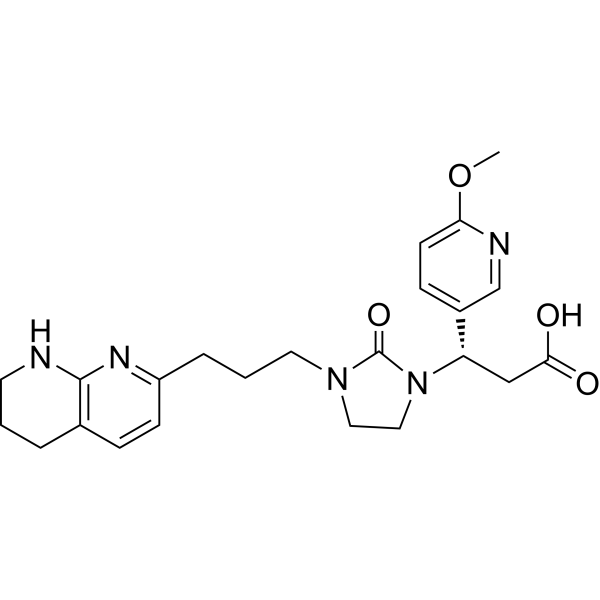
Elarofiban (RWJ-53308) is a nonpeptide, orally active antagonist for fibrinogen receptor αIIbβ3 (GPIIb/IIIa), with an IC50 of 0.15 nM. Elarofiban has the potential for platelet mediated thrombotic disorders research .
|
-
- HY-111348A
-
|
|
Integrin
|
Cardiovascular Disease
|
|
Lamifiban TFA is a nonpeptide glycoprotein IIb/IIIa receptor and platelet aggregation antagonist. Lamifiban TFA in combination with thrombolytic therapy effectively restores coronary arterial patency. Lamifiban TFA is promising for research of acute coronary syndromes .
|
-
- HY-105462
-
-
- HY-106277
-
|
|
Bradykinin Receptor
|
Metabolic Disease
|
|
Fasitibant (free base) is a potent, selective, high affinity, and long-lasting nonpeptide bradykinin B2 (BK2) receptor antagonist. Fasitibant (free base) has proinflammatory effects and can be used for the research of osteoarthritis and rheumatoid arthritis .
|
-
- HY-106277A
-
|
MEN16132
|
Bradykinin Receptor
|
Metabolic Disease
|
|
Fasitibant chloride hydrochloride (MEN16132) is a potent, selective, high affinity, and long-lasting nonpeptide bradykinin B2 (BK2) receptor antagonist. Fasitibant chloride hydrochloride has proinflammatory effects and can be used for the research of osteoarthritis and rheumatoid arthritis .
|
-
- HY-100301
-
|
|
Bradykinin Receptor
|
Inflammation/Immunology
Endocrinology
|
|
FR167344 free base is an orally active, nonpeptide bradykinin receptor B2 antagonist. FR167344 free base shows a high affinity binding to the B2 receptor with an IC50 value of 65 nM and no binding affinity for the B1 receptor.
|
-
- HY-14886
-
|
MEN16132 free base
|
Bradykinin Receptor
|
Cardiovascular Disease
Neurological Disease
|
|
Fasitibant chloride (MEN16132 free base) is a potent and selective nonpeptide bradykinin B2 receptor (B2R) antagonist. Fasitibant chloride reduces joint pain and diminishes joint oedema in Carrageenan-induced arthritis rat model .
|
-
- HY-124475R
-
|
|
CRFR
|
Neurological Disease
|
|
Antalarmin (Standard) is the analytical standard of Antalarmin. This product is intended for research and analytical applications. Antalarmin is a selective nonpeptide corticotropin-releasing factor receptor 1 (CRHR1) antagonist with a Ki of 2.7 nM. Antalarmin can pass through the blood–brain barrier .
|
-
- HY-114283
-
|
|
Angiotensin Receptor
|
Cardiovascular Disease
|
|
L-163017 is a potent, orally active and nonpeptide angiotensin II receptor (AT) antagonist. L-163017 can inhibit prevent the pressor response to angiotensin II and reduce blood pressure. L-163017 can be used for the research of cardiovascular disease, such as hypertension .
|
-
- HY-122237
-
|
|
Endothelin Receptor
|
Cardiovascular Disease
|
|
ATZ-1993 is an orally active, nonpeptide endothelin receptor subtype Aand endothelin receptor subtype B antagonist with pKi values of 8.69, 7.20, respectively. ATZ-1993 has the potential for the research of intimal hyperplasia after balloon denudation of the carotid artery .
|
-
- HY-10309R
-
|
RO 48-3657 (Standard)
|
Reference Standards
Integrin
|
Cardiovascular Disease
|
|
Sibrafiban (Standard) is the analytical standard of Sibrafiban. This product is intended for research and analytical applications. Sibrafiban (RO 48-3657) is the orally active, nonpeptide, double-proagent of Ro 44-3888 and a selective glycoprotein IIb/IIIa receptor antagonist. Sibrafiban inhibits platelet aggregation .
|
-
- HY-12436
-
|
|
Neurotensin Receptor
|
Neurological Disease
|
|
NTRC-824 (Compound 5) is a potent, selective and neurotensin-like nonpeptide neurotensin receptor type 2 (NTS2) antagonist with an IC50 of 38 nM and a Ki of 202 nM. NTRC-824 is >150-fold selectivity for NTS2 over NTS1 (Ki >30 μM) .
|
-
- HY-A0224
-
|
SC-52458
|
Angiotensin Receptor
|
Cardiovascular Disease
|
|
Forasartan is an nonpeptide angiotensin AT1 receptor antagonist with an IC50 of 2.9 nM. Forasartan is also an anti-hypertension agent. Forasartan significantly inhibits preganglionic stimulation in a dose-dependent manner in vivo. Forasartan can inhibit the heart rate increase induced by angiotensin II .
|
-
- HY-13406
-
|
Takeda 779
|
CCR
HIV
CXCR
|
Infection
Inflammation/Immunology
Endocrinology
|
|
TAK-779 is a potent and selective nonpeptide antagonist of CCR5 and CXCR3, with a Ki of 1.1 nM for CCR5, and effectively and selectively inhibits R5 HIV-1, with EC50 and EC90 of 1.2 nM and 5.7 nM, respectively, in MAGI-CCR5 cells.
|
-
- HY-17673
-
|
|
Drug Derivative
Bombesin Receptor
|
Neurological Disease
Cancer
|
|
PD 168368 derivative-1 (Compound 16) is a derivative of PD 168368 (HY-116216), with Ki values of 0.46 and 3.7 nM for the subtypes of bombesin receptor (BB₁ and BB₂). PD 168368 derivative-1 can be used for the study of various diseases, such as cancer, depression, and eating disorders .
|
-
- HY-10315A
-
|
|
Integrin
|
Cardiovascular Disease
|
|
Elarofiban diTFA is the salt form of Elarofiban (HY-10315) with two TFA. Elarofiban diTFA is a nonpeptide, orally active antagonist for fibrinogen receptor αIIbβ3 (GPIIb/IIIa), with an IC50 of 0.15 nM. Elarofiban diTFA has the potential for platelet mediated thrombotic disorders research .
|
-
- HY-103354
-
|
|
Cholecystokinin Receptor
|
Neurological Disease
Endocrinology
Cancer
|
|
Proglumide sodium is a nonpeptide and orally active cholecystokinin (CCK)-A/B receptors antagonist. Proglumide sodium selective blocks CCK’s effects in the central nervous system (CNS). Proglumide sodium has ability to inhibit gastric secretion and to protect the gastroduodenal mucosa. Proglumide sodium also has antiepileptic and antioxidant activities .
|
-
- HY-50688
-
|
|
CXCR
|
Inflammation/Immunology
|
|
SB-265610 is a selective, competitive, nonpeptide and allosteric CXCR2 antagonist. SB-265610 blocks rat cytokine-induced neutrophil chemoattractant-1 (CINC-1)-induced calcium mobilization and neutrophil chemotaxis with IC50s of 3.7 nM and 70 nM, respectively .
|
-
- HY-B1330
-
|
|
Cholecystokinin Receptor
|
Neurological Disease
Endocrinology
Cancer
|
|
Proglumide is a nonpeptide and orally active cholecystokinin (CCK)-A/B receptors antagonist. Proglumide selective blocks CCK’s effects in the central nervous system (CNS). Proglumide has ability to inhibit gastric secretion and to protect the gastroduodenal mucosa. Proglumide also has antiepileptic and antioxidant activities .
|
-
- HY-110166
-
|
|
Trk Receptor
|
Neurological Disease
|
|
PD 90780 is a non peptide antagonist of nerve growth factor (NGF). PD 90780 interacts with NGF, prevents NGF binds with p75 NTR. PD 90780 inhibits NGF-p75 NTR interaction with IC50s of 23.1 and 1.8 μM in PC12 cells and PC12 nnr5 cells, respectively .
|
-
- HY-14128
-
|
SB-723620
|
CRFR
|
Neurological Disease
|
|
NBI-34041 (SB-723620) is a selective and orally active nonpeptide CRF1 receptor antagonist with an IC50 of 58.9 nM and a Ki of 4.0 nM for human CRF1 receptor. NBI-34041 has no inhibitory effect on the CRF2 receptor. NBI-34041 can be used for depression and anxiety disorders research.
|
-
- HY-103354A
-
|
|
Cholecystokinin Receptor
|
Neurological Disease
Endocrinology
Cancer
|
|
Proglumide hemicalcium is a nonpeptide and orally active cholecystokinin (CCK)-A/B receptors antagonist. Proglumide hemicalcium selective blocks CCK’s effects in the central nervous system (CNS). Proglumide hemicalcium has ability to inhibit gastric secretion and to protect the gastroduodenal mucosa. Proglumide hemicalcium also has antiepileptic and antioxidant activities .
|
-
- HY-106301
-
|
L-364,718; MK-329
|
Cholecystokinin Receptor
|
Metabolic Disease
|
|
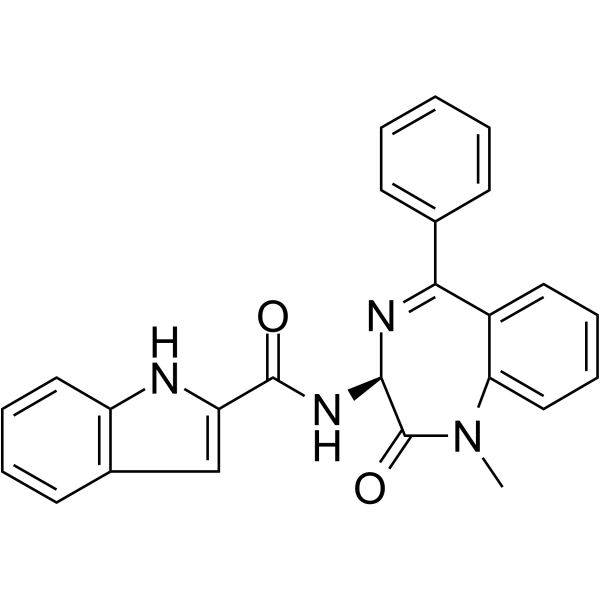
Devazepide (L-364,718) is a potent, competitive, selective and orally active nonpeptide antagonist of cholecystokinin (CCK) receptor, with IC50s of 81 pM, 45 pM and 245 nM for rat pancreatic, bovine gallbladder and guinea pig brain CCK receptors, respectively. Devazepide (L-364,718) is effective for gastrointestinal disorders .
|
-
- HY-16981
-
|
|
CXCR
|
Inflammation/Immunology
|
|
SB-332235 is a potent, orally active nonpeptide CXCR2 antagonist, with an IC50 of 7.7 nM. SB-332235 displays 285-fold selectivity for CXCR2 over CXCR1. SB-332235 inhibits acute and chronic models of arthritis in the rabbit. SB-332235 inhibits viability of AML cells .
|
-
- HY-120096
-
|
|
Neuropeptide Y Receptor
|
Neurological Disease
|
|
BIBO3304 free base is a nonpeptide neuropeptide Y Y1 receptor antagonist. BIBO3304 free base displays subnanomolar affinity for both the human and the rat Y1 receptor, with IC50 values of 0.38 nM and 0.72 nM, respectively. BIBO3304 free base significantly inhibits food intake induced by application of NPY or by fasting .
|
-
- HY-15041
-
|
|
Bradykinin Receptor
|
Inflammation/Immunology
|
|
NVP-SAA164 is an orally active nonpeptide kinin B1 receptor antagonist. NVP-SAA164 reverses CFA (Complete Freund's adjuvant) (HY-153808)-induced mechanical hyperalgesia and desArg10KD-induced hyperalgesia in hB1-KI mice, and is inactive in a model of inflammatory pain in wild-type mice .
|
-
- HY-B1330R
-
|
|
Cholecystokinin Receptor
Reference Standards
|
Neurological Disease
Endocrinology
Cancer
|
|
Proglumide (Standard) is the analytical standard of Proglumide. This product is intended for research and analytical applications. Proglumide is a nonpeptide and orally active cholecystokinin (CCK)-A/B receptors antagonist. Proglumide selective blocks CCK’s effects in the central nervous system (CNS). Proglumide has ability to inhibit gastric secretion and to protect the gastroduodenal mucosa. Proglumide also has antiepileptic and antioxidant activities .
|
-
- HY-10382
-
|
|
Angiotensin Receptor
|
Cardiovascular Disease
|
|
EXP-6803 is a specific nonpeptide angiotensin II receptor antagonist with antihypertensive activity. EXP-6803 inhibits the contractile response to angiotensin II with a pA2 value of 7.20. EXP-6803 effectively blocks responses to angiotensin I and II while not affecting responses to bradykinin or acetylcholine in guinea pig ileum. EXP-6803 can be used for hypertension research .
|
-
- HY-101368A
-
|
|
Bradykinin Receptor
mAChR
|
Neurological Disease
|
|
WIN 64338 hydrochloride is a potent, selective, nonpeptide competitive antagonist of bradykinin B2 receptor. WIN 64338 hydrochloride inhibits [ 3H]-Bradykinin binding to the bradykinin B2 receptor on human IMR-90 cells with a Ki of 64 nM. WIN 64338 hydrochloride also can inhibits [ 3H]Quinuclidinyl benzilate binding to the rat brain muscarinic receptor (Ki=350 nM) .
|
-
- HY-103354R
-
|
|
Reference Standards
Cholecystokinin Receptor
|
Neurological Disease
Endocrinology
Cancer
|
|
Proglumide (sodium) (Standard) is the analytical standard of Proglumide (sodium). This product is intended for research and analytical applications. Proglumide sodium is a nonpeptide and orally active cholecystokinin (CCK)-A/B receptors antagonist. Proglumide sodium selective blocks CCK’s effects in the central nervous system (CNS). Proglumide sodium has ability to inhibit gastric secretion and to protect the gastroduodenal mucosa. Proglumide sodium also has antiepileptic and antioxidant activities .
|
-
- HY-106301R
-
|
L-364,718 (Standard); MK-329 (Standard)
|
Reference Standards
Cholecystokinin Receptor
|
Metabolic Disease
|
|
Devazepide (Standard) is the analytical standard of Devazepide. This product is intended for research and analytical applications. Devazepide (L-364,718) is a potent, competitive, selective and orally active nonpeptide antagonist of cholecystokinin (CCK) receptor, with IC50s of 81 pM, 45 pM and 245 nM for rat pancreatic, bovine gallbladder and guinea pig brain CCK receptors, respectively. Devazepide (L-364,718) is effective for gastrointestinal disorders .
|
-
- HY-120295
-
|
|
Endothelin Receptor
Apoptosis
|
Cardiovascular Disease
Endocrinology
|
|
A-192621, a chemical probe, is a potent, nonpeptide, orally active and selective endothelin B (ETB) receptor antagonist with an IC50 of 4.5 nM and a Ki of 8.8 nM. The selectivity of A-192621 is 636-fold higher than ETA (IC50 of 4280 nM and Ki of 5600 nM). A-192621 promotes apoptosis in PASMCs. A-192621 alos causes elevation of arterial blood pressure and an elevation in the plasma ET-1 level .
|
-
- HY-123744
-
|
|
Endothelin Receptor
|
Cardiovascular Disease
Neurological Disease
|
|
PD-156707 is an orally active, nonpeptide and selective Endothelin-A receptor antagonist. PD-156707 binds to human ET-A and ET-B receptors with Ki values of 0.17 nM and 133.8 nM, respectively. PD-156707 shows reversal of established chronic hypoxic pulmonary hypertension in rats. PD-156707 can be used for the study of diseases associated with abnormal ET-A receptor activation, particularly pulmonary hypertension, stroke, and heart failure .
|
-
- HY-15102
-
|
L-000845704
|
Integrin
|
Inflammation/Immunology
Cancer
|
|
MK-0429 (L-000845704) is an orally active, potent, selective and nonpeptide pan-integrin antagonist with IC50 values of 1.6 nM, 2.8 nM, 0.1 nM, 0.7 nM, 0.5 nM and 12.2 nM for αvβ1, αvβ3, αvβ5, αvβ6, αvβ8 and α5β1, respectively .
|
-
- HY-17674
-
|
|
Bombesin Receptor
|
Neurological Disease
Cancer
|
|
Bombesin receptor antagonist-1 (Example 32) is a bombesin receptor antagonist with Ki values for neurotide B (NMB receptor) and gastrin-releasing peptide receptor (GRP receptor) of 0.17 and 20 nM respectively. Bombesin receptor antagonist-1 can be used to study various diseases, such as cancer, depression, and eating disorders .
|
-
- HY-14993
-
|
|
Protease Activated Receptor (PAR)
Apoptosis
|
Cardiovascular Disease
|
|
SCH79797 is a highly potent, selective nonpeptide protease activated receptor 1 (PAR1) antagonist. SCH79797 inhibits binding of a high-affinity thrombin receptor-activating peptide to PAR1 with an IC50 of 70 nM and a Ki of 35 nM. SCH79797 inhibits thrombin-induced platelet aggregation with an IC50 of 3 μM. SCH79797 has antiproliferative and pro-apoptotic effects, and limits myocardial ischemia/reperfusion injury in rat hearts. SCH79797 also potently prevents PAR1 activation in vascular smooth muscle cells, endothelial cells, and astrocytes .
|
-
- HY-14994
-
|
|
Protease Activated Receptor (PAR)
Apoptosis
|
Cardiovascular Disease
|
|
SCH79797 dihydrochloride is a highly potent, selective nonpeptide protease activated receptor 1 (PAR1) antagonist. SCH79797 dihydrochloride inhibits binding of a high-affinity thrombin receptor-activating peptide to PAR1 with an IC50 of 70 nM and a Ki of 35 nM. SCH79797 dihydrochloride inhibits thrombin-induced platelet aggregation with an IC50 of 3 μM. SCH79797 dihydrochloride has antiproliferative and pro-apoptotic effects, and limits myocardial ischemia/reperfusion injury in rat hearts. SCH79797 dihydrochloride also potently prevents PAR1 activation in vascular smooth muscle cells, endothelial cells, and astrocytes .
|
-
- HY-14993R
-
|
|
Protease Activated Receptor (PAR)
Apoptosis
|
Cardiovascular Disease
|
|
SCH79797 (Standard) is the analytical standard of SCH79797. This product is intended for research and analytical applications. SCH79797 is a highly potent, selective nonpeptide protease activated receptor 1 (PAR1) antagonist. SCH79797 inhibits binding of a high-affinity thrombin receptor-activating peptide to PAR1 with an IC50 of 70 nM and a Ki of 35 nM. SCH79797 inhibits thrombin-induced platelet aggregation with an IC50 of 3 μM. SCH79797 has antiproliferative and pro-apoptotic effects, and limits myocardial ischemia/reperfusion injury in rat hearts. SCH79797 also potently prevents PAR1 activation in vascular smooth muscle cells, endothelial cells, and astrocytes .
|
-
- HY-14994R
-
|
|
Protease Activated Receptor (PAR)
Apoptosis
|
Cardiovascular Disease
|
|
SCH79797 (dihydrochloride) (Standard) is the analytical standard of SCH79797 (dihydrochloride). This product is intended for research and analytical applications. SCH79797 dihydrochloride is a highly potent, selective nonpeptide protease activated receptor 1 (PAR1) antagonist. SCH79797 dihydrochloride inhibits binding of a high-affinity thrombin receptor-activating peptide to PAR1 with an IC50 of 70 nM and a Ki of 35 nM. SCH79797 dihydrochloride inhibits thrombin-induced platelet aggregation with an IC50 of 3 μM. SCH79797 dihydrochloride has antiproliferative and pro-apoptotic effects, and limits myocardial ischemia/reperfusion injury in rat hearts. SCH79797 dihydrochloride also potently prevents PAR1 activation in vascular smooth muscle cells, endothelial cells, and astrocytes .
|
-
| Cat. No. |
Product Name |
Category |
Target |
Chemical Structure |
| Cat. No. |
Product Name |
Chemical Structure |
-
- HY-14184S
-
|
|
|
Macitentan-d4 is a deuterium labeled Sulfamethoxazole. Macitentan is an orally active, non-peptide dual ETA and ETB (endothelin) receptor antagonist. Macitentan has the potential for idiopathic pulmonary fibrosis (IPF) and pulmonary arterial hypertension (PAH) .
|
-
-
- HY-W751574
-
|
|
|
Elagolix-d6 (sodium) (NBI-56418-d6 (sodium)) is deuterium labeled Elagolix sodium. Elagolix sodium is a highly effective, selective, oral-active, short-term, non-peptide gonadotropin-releasing hormone receptor (GnRH receptor) antagonist (KD = 54 pM) and NFAT inhibitor, which can be used to study pain related to endometriosis. .
|
-
-
- HY-115633S
-
|
|
|
Elagolix-d9 is the deuterium labeled Elagolix. Elagolix sodium is a highly effective, selective, oral-active, short-term, non-peptide gonadotropin-releasing hormone receptor (GnRH receptor) antagonist (KD = 54 pM) and NFAT inhibitor, which can be used to study pain related to endometriosis. .
|
-
| Cat. No. |
Product Name |
|
Classification |
-
- HY-105346
-
|
|
|
Alkynes
|
|
WIN 51708 is a nonpeptide antagonist of neurokinin (NK)-1 receptor. WIN 51708 has a higher affinity for the rat NK-1 receptor compared to the human NK-1 receptor .
|
Your information is safe with us. * Required Fields.
Inquiry Information
- Product Name:
- Cat. No.:
- Quantity:
- MCE Japan Authorized Agent:

