



L-368,899 hydrochloride
Based on 9 publication(s) in Google Scholar
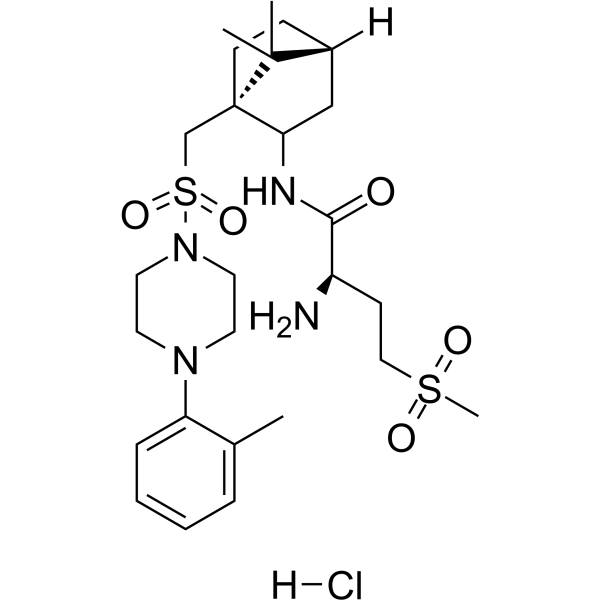
L-368,899 hydrochloride is a potent, selective, orally bioavailable, non-peptide oxytocin receptor antagonist, with IC50s of 8.9 nM and 26 nM for rat uterus and human uterus oxytocin receptor, respectively. L-368,899 hydrochloride used as a tocolytic agent.
For research use only. We do not sell to patients.
- Purity : 99.97%
- CAS No.: 160312-62-9
- Formula: C26H43ClN4O5S2
- Molecular Weight:591.23
-
Storage:
4°C, sealed storage, away from moisture
* In solvent : -80°C, 2 years; -20°C, 1 year (sealed storage, away from moisture)

To place orders, for customer services and technical support, please contact: MedChemExpress USA
Tel: 609-228-6898 E-mail: [email protected] [email protected]


-
 Biological Activity
-
Chemical Information
-
Solvent & Solubility
- Purity & Documentation
- References
-
 Help & FAQs


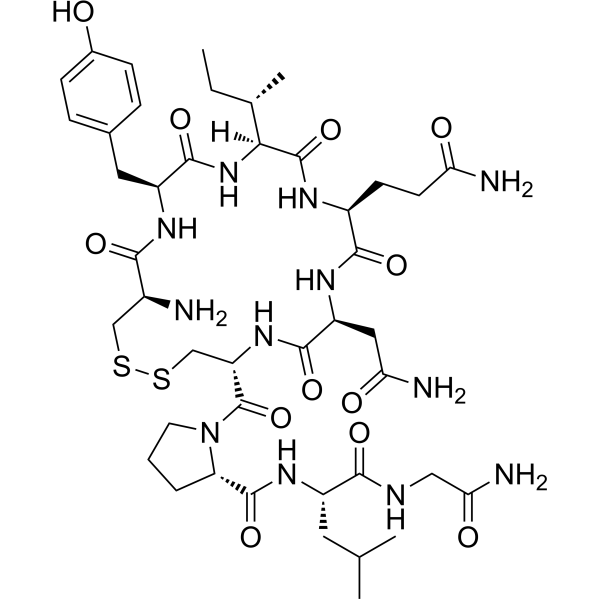
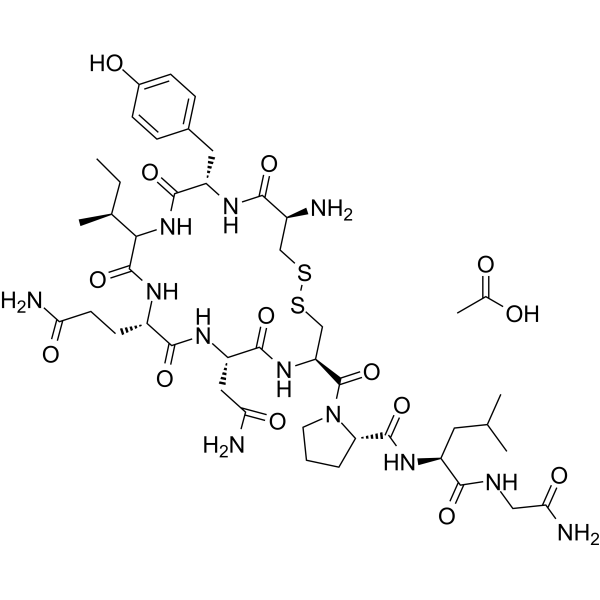
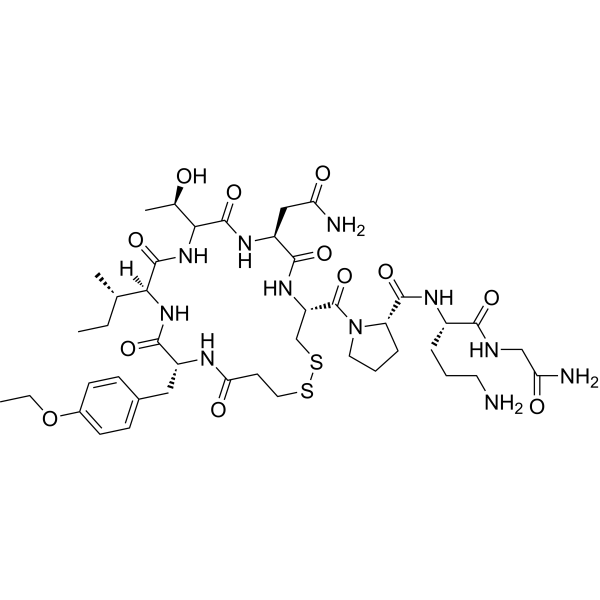

Publications Citing Use of MedChemExpress (MCE) L-368,899 hydrochloride
More- Cell. 2025 Jun 26;188(13):3530-3549.e24. [Abstract]
- Research (Wash D C). 2025 Dec 16.
- J Headache Pain. 2025 Aug 6;26(1):179. [Abstract]
- Neurosci Bull. 2026 Jul 25.
- Commun Biol. 2026 Apr 23;9(1):870. [Abstract]
- Front Pharmacol. 2019 Nov 15:10:1380. [Abstract]
- Mater Technol (N Y N Y). 2025 Jun 17.
- Neurosci Res. 2021 Jul:168:41-53. [Abstract]
- bioRxiv. 2024 May 14.
 Customer Validation & Images

-
Bio/Physico-chemical Assay
-
Bio/Physico-chemical Assay
-
Bio/Physico-chemical Assay
-
In Vivo Efficacy Study
-
Bio/Physico-chemical Assay


Biological Activity
Description
IC50 & Target
IC50: 8.9 nM (rat uterus oxytocin receptor), 26 nM (human uterus oxytocin receptor)[1]
In Vitro
L-368,899 hydrochloride is a potent, orally bioavailable, non-peptide oxytocin receptor antagonist, with IC50s of 8.9 nM and 26 nM for rat uterus and human uterus oxytocin receptor, respectively. L-368,899 is less active on VP receptor in human liver and kidney, rat liver and kidney (IC50, 510 nM, 960 nM, 890 nM, 2400 nM, respectively)[1].
MedChemExpress (MCE) has not independently confirmed the accuracy of these methods. They are for reference only.
In Vivo
MedChemExpress (MCE) has not independently confirmed the accuracy of these methods. They are for reference only.


Chemical Information
-
CAS No. 160312-62-9
-
Appearance Solid
-
Molecular Weight 591.23
-
Formula C26H43ClN4O5S2
-
Color White to yellow
-
SMILES
O=C(NC1[C@@](C2(C)C)(CS(=O)(N3CCN(C4=CC=CC=C4C)CC3)=O)CC[C@]2([H])C1)[C@H](N)CCS(=O)(C)=O.[H]Cl
-
Shipping
Room temperature in continental US; may vary elsewhere.
-
Storage
4°C, sealed storage, away from moisture
* In solvent : -80°C, 2 years; -20°C, 1 year (sealed storage, away from moisture)


Publications (9)
-
Journal Impact Factor
-
Most Recent
-
Cell
2025 Jun 26;188(13):3530-3549.e24. PMID: 40398420
L-368,899 hydrochloride purchased from MedChemExpress. Usage Cited in: Cell. 2025 Jun 26;188(13):3530-3549.e24. [Abstract]
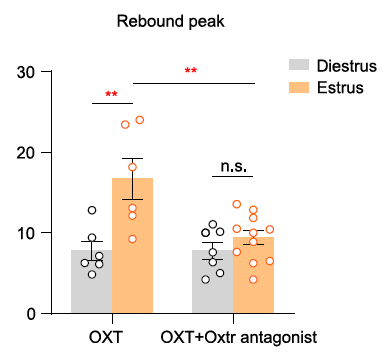
L-368,899 hydrochloride (Oxtr antagonist) (10 mg/kg; i.p.; 20 min) treatment abolished the increased rebound activity of mPFCCacna1h+ neurons in estrus female mice induced by oxytocin.
-
L-368,899 hydrochloride purchased from MedChemExpress. Usage Cited in: Research (Wash D C). 2025 Dec 16.
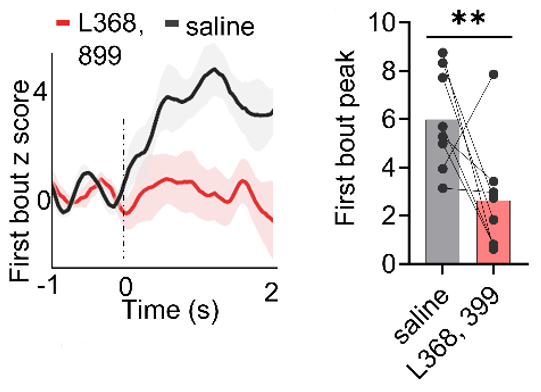
Local application of the OXT receptor antagonist L-368,899 hydrochloride (1.25 mM; 500 nL per hemisphere) significantly reduced the peak Ca2+ activity of CCK neurons in CCK-Cre mice during initial interactions with a familiar mouse.
-
J Headache Pain
Compromised PGF2α signaling in the paraventricular hypothalamic nucleus contributes to the central sensitization of the nitroglycerin-induced chronic migraine in male mice. [Abstract]2025 Aug 6;26(1):179. PMID: 40770605 -
-
Commun Biol
Medial prefrontal cortex neurons integrate amygdala and hypothalamic oxytocin signals to mediate stress-induced social alterations. [Abstract]2026 Apr 23;9(1):870. PMID: 42026195 -
Front Pharmacol
Intradermal Injection of Oxytocin Aggravates Chloroquine-Induced Itch Responses via Activating the Vasopressin-1a Receptor/Nitric Oxide Pathway in Mice. [Abstract]2019 Nov 15:10:1380. PMID: 31824317 -
-
Neurosci Res
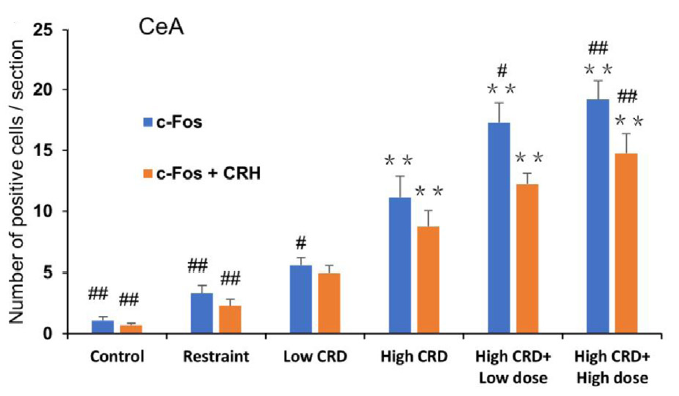
Oxytocin antagonist induced visceral pain and corticotropin-releasing hormone neuronal activation in the central nucleus of the amygdala during colorectal distention in mice. [Abstract]2021 Jul:168:41-53. PMID: 33932549
L-368,899 hydrochloride purchased from MedChemExpress. Usage Cited in: Neurosci Res. 2021 Jul:168:41-53. [Abstract]
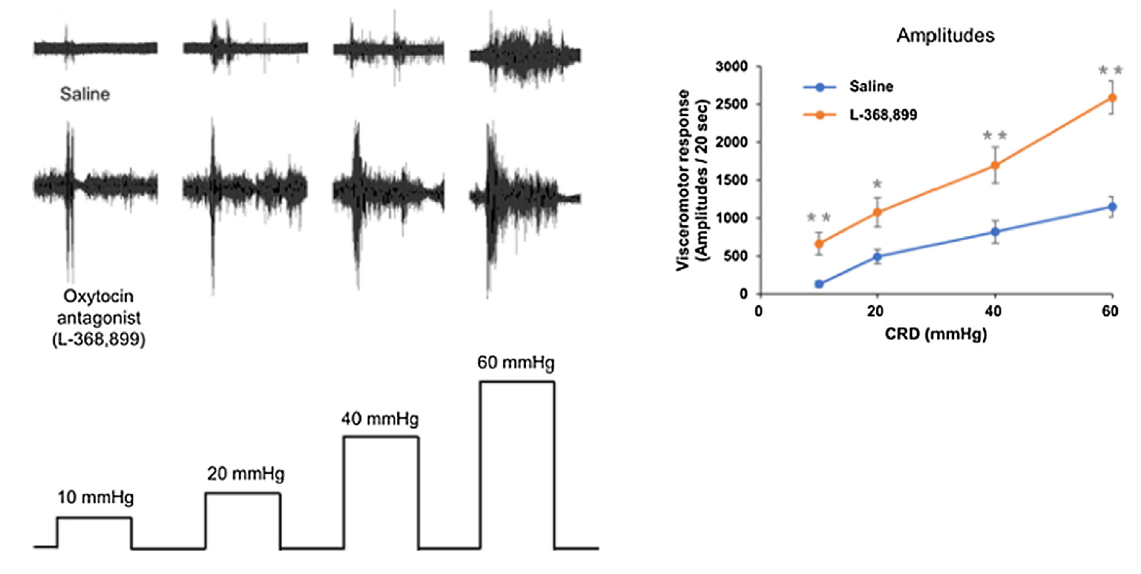
Oxytocin antagonist L-368,899 hydrochloride (10 mg/kg; i.p.; 10 min) significantly increased the amplitudes of the VMR in C57BL/6J mice to graded CRD atall pressures compared with saline.
L-368,899 hydrochloride purchased from MedChemExpress. Usage Cited in: Neurosci Res. 2021 Jul:168:41-53. [Abstract]
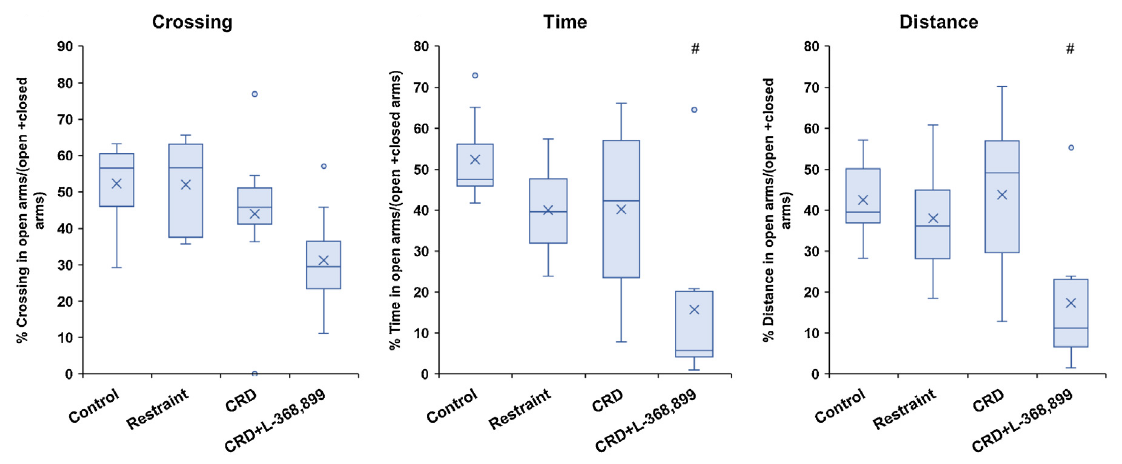
Oxytocin antagonist L-368,899 hydrochloride (10 mg/kg; i.p.; 10 min) significantly decreased the percentage of timespent and distance of C57BL/6J mice in open arms.
L-368,899 hydrochloride purchased from MedChemExpress. Usage Cited in: Neurosci Res. 2021 Jul:168:41-53. [Abstract]
Oxytocin antagonist L-368,899 hydrochloride (10 mg/kg; i.p.; 10 min) significantly upregulated c-Fos-positive cells and c-Fos positive cells colocalized with CRH positive cells in the central amygdala (CeA) of C57BL/6J mice.
-


Solvent & Solubility
In Vitro:
DMSO : 100 mg/mL (169.14 mM; Need ultrasonic; Hygroscopic DMSO has a significant impact on the solubility of product, please use newly opened DMSO)
H2O : 5 mg/mL (8.46 mM; ultrasonic and warming and heat to 60°C)
Please refer to the solubility information to select the appropriate solvent. Once prepared, please aliquot and store the solution to prevent product inactivation from repeated freeze-thaw cycles.
Storage method and period of stock solution: -80°C, 2 years; -20°C, 1 year (sealed storage, away from moisture). When stored at -80°C, please use it within 2 years. When stored at -20°C, please use it within 1 year.
* Note: If you choose water as the stock solution, please dilute it to the working solution, then filter and sterilize it with a 0.22 μm filter before use.
Please refer to the solubility information to select the appropriate solvent. Once prepared, please aliquot and store the solution to prevent product inactivation from repeated freeze-thaw cycles.
Storage method and period of stock solution: -80°C, 2 years; -20°C, 1 year (sealed storage, away from moisture). When stored at -80°C, please use it within 2 years. When stored at -20°C, please use it within 1 year.
* Note: If you choose water as the stock solution, please dilute it to the working solution, then filter and sterilize it with a 0.22 μm filter before use.
Concentration (start) × Volume (start) = Concentration (final) × Volume (final)
In Vivo:
Select the appropriate dissolution method based on your experimental animal and administration route.
- For the following dissolution methods, please ensure to first prepare a clear stock solution using an In Vitro approach and then sequentially add co-solvents:
- To ensure reliable experimental results, the clarified stock solution can be appropriately stored based on storage conditions. As for the working solution for In Vivo experiments, it is recommended to prepare freshly and use it on the same day.
- The percentages shown for the solvents indicate their volumetric ratio in the final prepared solution. If precipitation or phase separation occurs during preparation, heat and/or sonication can be used to aid dissolution.
Add each solvent one by one: 10% DMSO 40% PEG300 5% Tween-80 45% Saline
Solubility: ≥ 2.5 mg/mL (4.23 mM); Clear solution
This protocol yields a clear solution of ≥ 2.5 mg/mL (saturation unknown).
Taking 1 mL working solution as an example, add 100 μL DMSO stock solution (25.0 mg/mL) to 400 μL PEG300, and mix evenly; then add 50 μL Tween-80 and mix evenly; then add 450 μL Saline to adjust the volume to 1 mL.
Preparation of Saline: Dissolve 0.9 g sodium chloride in ddH₂O and dilute to 100 mL to obtain a clear Saline solution.
Add each solvent one by one: 10% DMSO 90% (20% SBE-β-CD in Saline)
Solubility: ≥ 2.5 mg/mL (4.23 mM); Clear solution
This protocol yields a clear solution of ≥ 2.5 mg/mL (saturation unknown).
Taking 1 mL working solution as an example, add 100 μL DMSO stock solution (25.0 mg/mL) to 900 μL 20% SBE-β-CD in Saline, and mix evenly.
Preparation of 20% SBE-β-CD in Saline (4°C, storage for one week): 2 g SBE-β-CD powder is dissolved in 10 mL Saline, completely dissolve until clear.
In Vivo Dissolution Calculator
Please enter the basic information of animal experiments:
-
-
-
-
Recommended: Prepare an additional quantity of animals to account for potential losses during experiments.
Please enter your animal formula composition:
-
%DMSO +
Recommended: Keep the proportion of DMSO in working solution below 2% if your animal is weak.
-
%+
-
+%Tween-80 + +
-
%Saline +
The co-solvents required include: DMSO, . All of co-solvents are available by MedChemExpress (MCE). , Tween 80. All of co-solvents are available by MedChemExpress (MCE).
Working solution concentration: 0.22 mg/mL
Method for preparing stock solution: mg drug dissolved in μL DMSO. Stock solution concentration: mg/mL. * In solvent : -80°C, 2 years; -20°C, 1 year (sealed storage, away from moisture)
1. Take μL DMSO stock solution;
2. Add μL .
μL , mix evenly;
3. Then add μL Tween 80, mix evenly;
4. Then add μL
Please ensure that the stock solution in the first step is dissolved to a clear state, and add co-solvents in sequence. You can use ultrasonic heating (ultrasonic cleaner, recommended frequency 20-40 kHz), vortexing, etc. to assist dissolution.


Purity & Documentation
-
Data Sheet (279 KB)
-
SDS (252 KB)
- English - EN (252 KB)
- Français - FR (252 KB)
- Deutsch - DE (252 KB)
- Norwegian - NO (252 KB)
- Español - ES (252 KB)
- Swedish - SV (252 KB)
- Italian - IT (252 KB)
- Korean - KR (252 KB)
- Portuguese - PT (252 KB)
-
Handling Instructions (2659 KB)
References
[1]. Williams PD, et al. 1-((7,7-Dimethyl-2(S)-(2(S)-amino-4-(methylsulfonyl)butyramido)bicyclo [2.2.1]-heptan-1(S)-yl)methyl)sulfonyl)-4-(2-methylphenyl)piperaz ine (L-368,899): an orally bioavailable, non-peptide oxytocin antagonist with potential utility for managing preterm labor. J Med Chem. 1994 Mar 4;37(5):565-71. [Content Brief]


Complete Stock Solution Preparation Table
Please refer to the solubility information to select the appropriate solvent. Once prepared, please aliquot and store the solution to prevent product inactivation from repeated freeze-thaw cycles.
Storage method and period of stock solution: -80°C, 2 years; -20°C, 1 year (sealed storage, away from moisture). When stored at -80°C, please use it within 2 years. When stored at -20°C, please use it within 1 year.
| Optional Solvent | Concentration Solvent Mass | 1 mg | 5 mg | 10 mg | 25 mg |
|---|---|---|---|---|---|
| H2O / DMSO | 1 mM | 1.6914 mL | 8.4569 mL | 16.9139 mL | 42.2847 mL |
| 5 mM | 0.3383 mL | 1.6914 mL | 3.3828 mL | 8.4569 mL | |
| DMSO | 10 mM | 0.1691 mL | 0.8457 mL | 1.6914 mL | 4.2285 mL |
| 15 mM | 0.1128 mL | 0.5638 mL | 1.1276 mL | 2.8190 mL | |
| 20 mM | 0.0846 mL | 0.4228 mL | 0.8457 mL | 2.1142 mL | |
| 25 mM | 0.0677 mL | 0.3383 mL | 0.6766 mL | 1.6914 mL | |
| 30 mM | 0.0564 mL | 0.2819 mL | 0.5638 mL | 1.4095 mL | |
| 40 mM | 0.0423 mL | 0.2114 mL | 0.4228 mL | 1.0571 mL | |
| 50 mM | 0.0338 mL | 0.1691 mL | 0.3383 mL | 0.8457 mL | |
| 60 mM | 0.0282 mL | 0.1409 mL | 0.2819 mL | 0.7047 mL | |
| 80 mM | 0.0211 mL | 0.1057 mL | 0.2114 mL | 0.5286 mL | |
| 100 mM | 0.0169 mL | 0.0846 mL | 0.1691 mL | 0.4228 mL |
* Note: If you choose water as the stock solution, please dilute it to the working solution, then filter and sterilize it with a 0.22 μm filter before use.


L-368,899 hydrochloride Related Classifications
HY-108677 Related Classifications
 Powered by Bioz