



PD-156707

Based on 1 Customer Validation
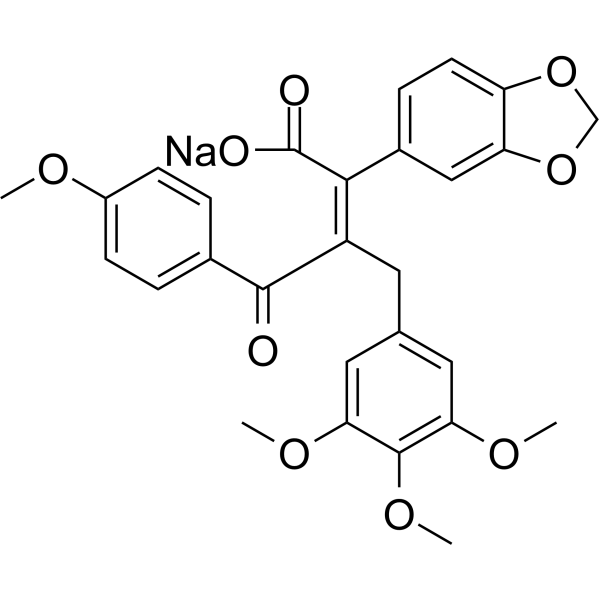
PD-156707 is an orally active, nonpeptide and selective Endothelin-A receptor antagonist. PD-156707 binds to human ET-A and ET-B receptors with Ki values of 0.17 nM and 133.8 nM, respectively. PD-156707 shows reversal of established chronic hypoxic pulmonary hypertension in rats. PD-156707 can be used for the study of diseases associated with abnormal ET-A receptor activation, particularly pulmonary hypertension, stroke, and heart failure.
연구목적의 판매만을 진행합니다. 환자를 대상으로 한 판매는 하지 않습니다.
- Purity : 99.92%
- CAS No.: 162412-70-6
- 화학식: C28H25NaO9
- 분자량:528.48
-
보관:
-20°C, protect from light, stored under nitrogen
* In solvent : -80°C, 6 months; -20°C, 1 month (protect from light, stored under nitrogen)

To place orders, for customer services and technical support, please contact: MedChemExpress USA
Tel: 609-228-6898 E-mail: [email protected] [email protected]


-
 Biological Activity
-
Chemical Information
- Protocol
- 순도&문서
- References
-
 Help & FAQs


-
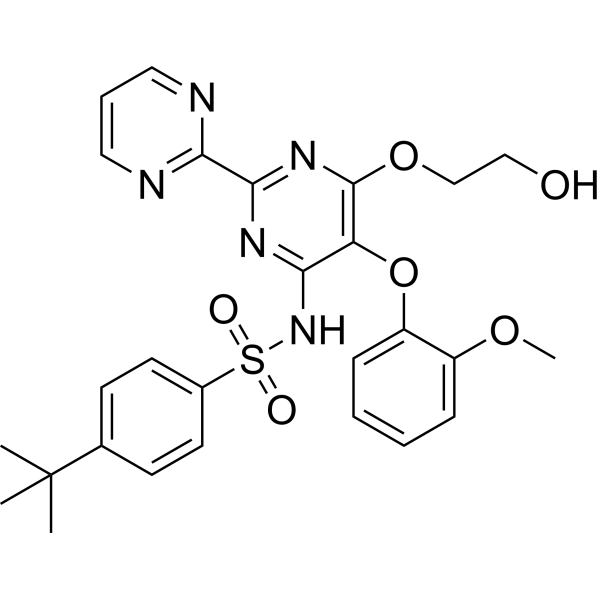
HY-A0013
BosentanET-1 Inhibtior -
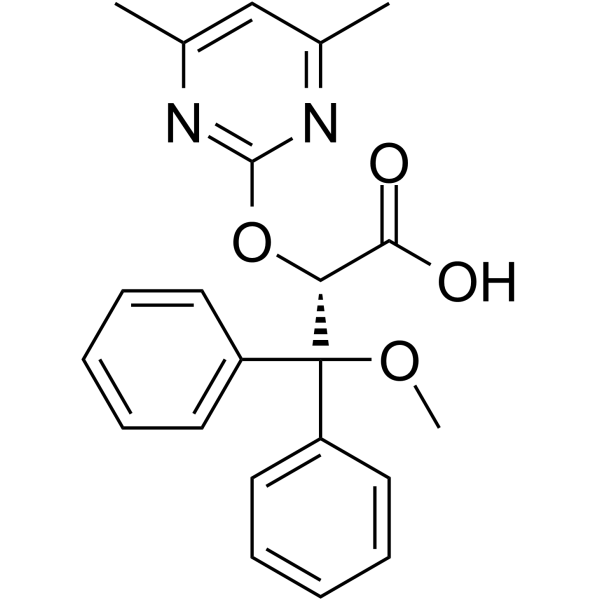
HY-13209
Ambrisentan -
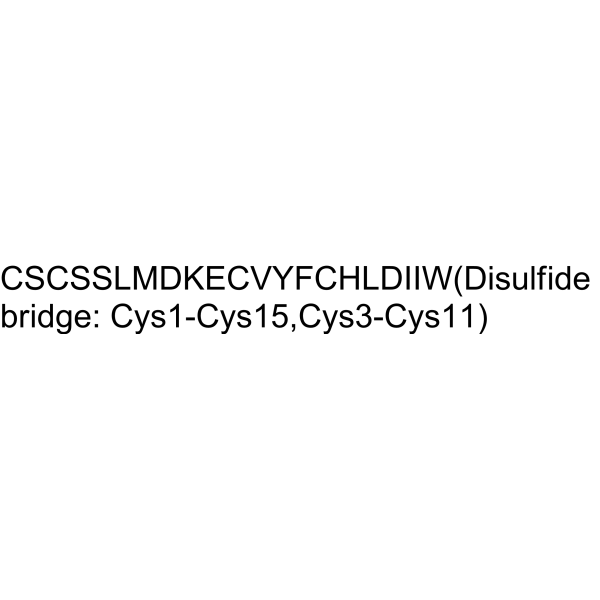
HY-P0202
Endothelin 1 (swine, human)Vasoconstrictor -
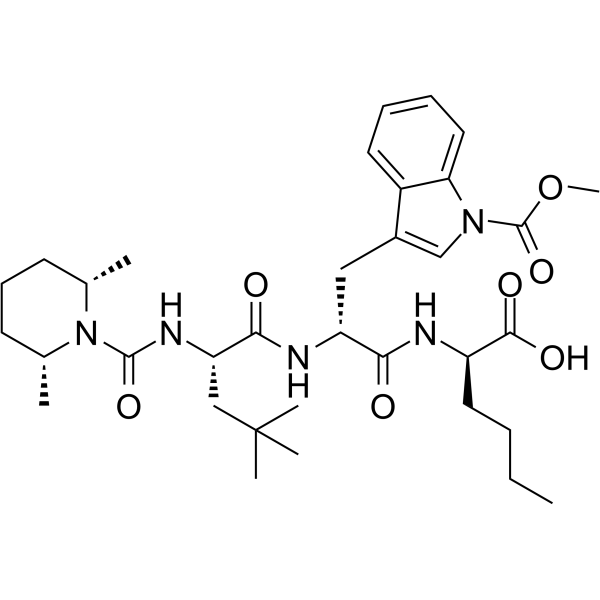
HY-15894A
BQ-788ETB Receptor Antagonist -
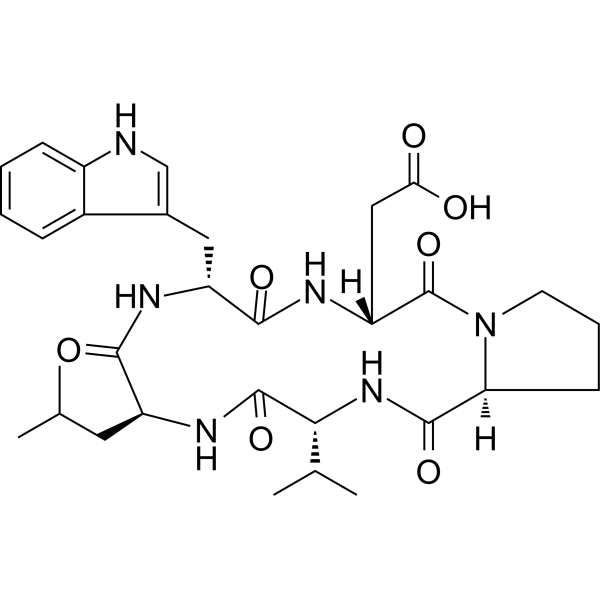
HY-12378
BQ-123ETA Receptor Antagonist -
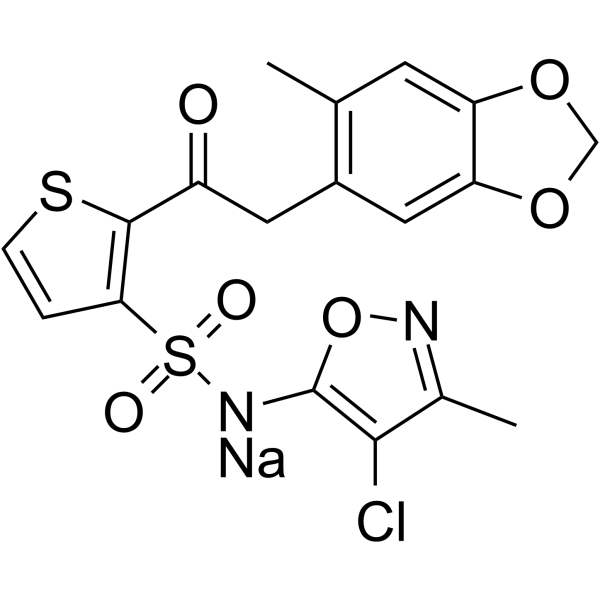
HY-11103
Sitaxsentan sodiumEndothelin A Receptor Antagonist -
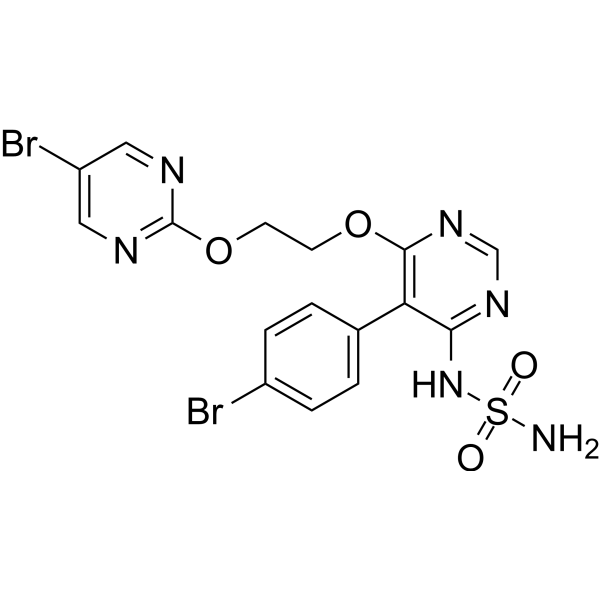
HY-15895
AprocitentanEndothelin Receptor Antagonist -
HY-17621
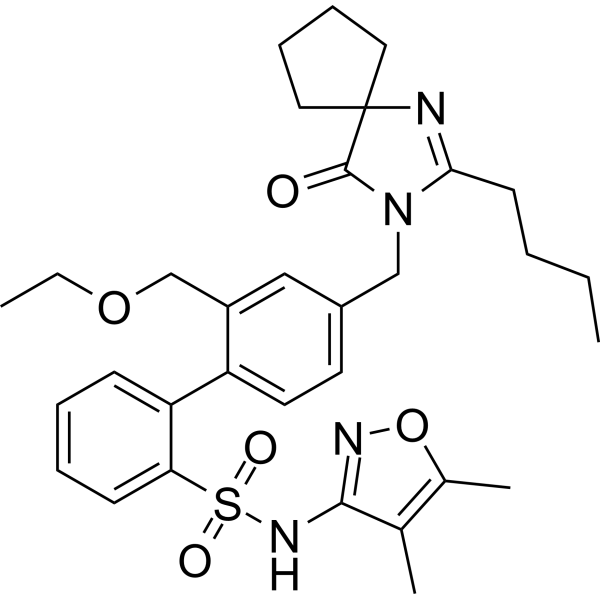
SparsentanAT1/ETA Antagonist -
HY-15403
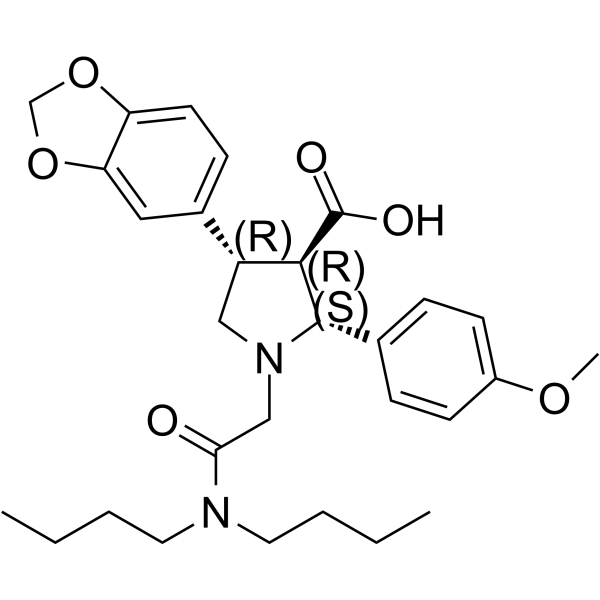
AtrasentanEndothelin Receptor Antagonist -
HY-17352
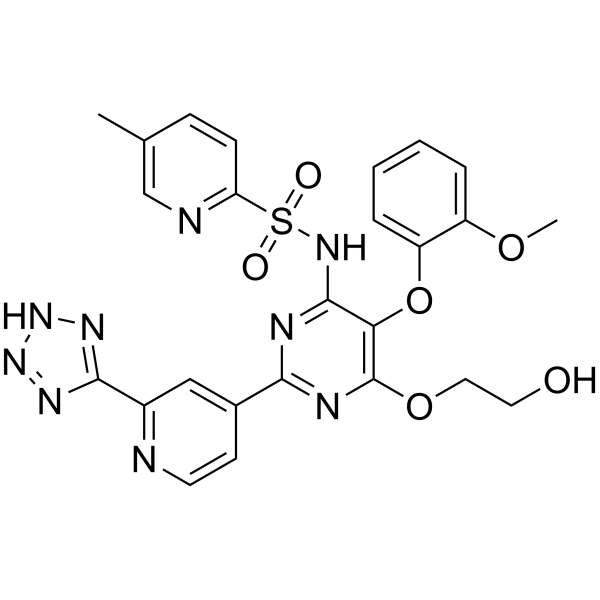
ClazosentanETA Receptor Antagonist -
HY-P0202A
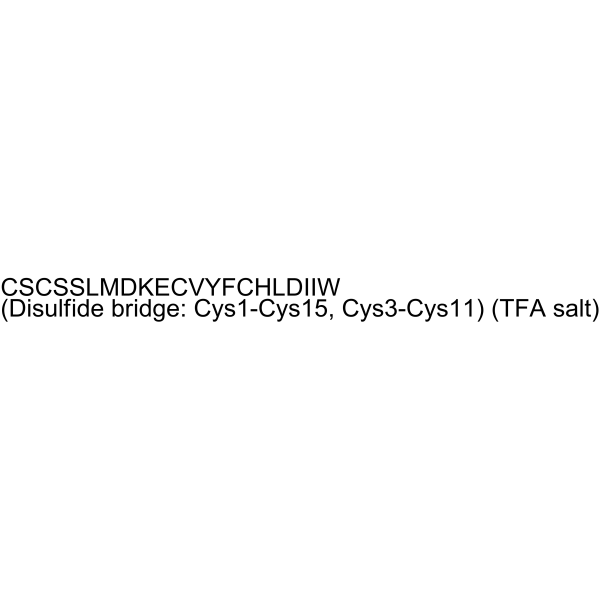
Endothelin 1 (swine, human) TFAEndothelin -
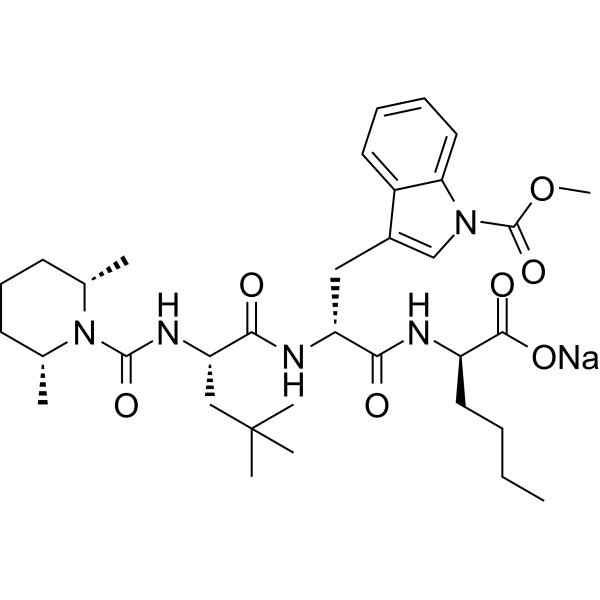
HY-15894
BQ-788 sodium saltETB Receptor Antagonist


Biological Activity
제품 설명
IC50 & Target
[1]|
ETA 0.17 μM (Ki) |
ETB 133.8 μM (Ki) |
In Vitro
PD-156707 inhibits inositol phosphate production induced by ET-1 in Ltk cells (IC50 = 2.4 nM) and arachidonic acid release stimulated by ET-1 in rabbit renal artery VSMC cells (IC50 = 1.1 nM)[1].
PD-156707 (0.1-10 μM) cause a rightward shift in the concentration-response curve of ET-1-stimulated contraction of rabbit femoral artery[1].
PD-156707 (1 μM) exerts a significant inhibitory effect on spontaneous neointimal proliferation of transverse sections of human saphenous vein[1].
MedChemExpress (MCE) has not independently confirmed the accuracy of these methods. They are for reference only.
Parmacokinetics
| Species | Dose | Route | Note | T1/2 | AUC | Cmax | Tmax | F |
|---|---|---|---|---|---|---|---|---|
| Dog[1] | 2.5 mg/kg | i.v. | / | 0.62 h | 1.5 μg·h/mL | / | / | / |
| Dog[1] | 5 mg/kg | p.o. | fasted | 1.2 h | 2.0 μg·h/mL | 1.52 mg/mL | 0.69 h | 67 % |
| Dog[1] | 5 mg/kg | p.o. | fet | 1.9 h | 0.59 μg·h/mL | 0.48 mg/mL | 2.5 h | 20 % |
| Monkey[1] | 10 mg/kg | i.v. | / | 1.19 h | 42.3 μg·h/mL | / | / | / |
| Monkey[1] | 10 mg/kg | p.o. | / | / | 23.5 μg·h/mL | 19.2 μg·h/mL | 0.833 h | 55 % |
| Rabbit[1] | 15 mg/kg | i.v. | / | 0.553 h | 29.3 μg·h/mL | / | / | / |
| Rat[1] | 10 mg/kg | i.v. | / | 1.75 h | 25.3 μg·h/mL | / | / | / |
| Rat[1] | 10 mg/kg | p.o. | / | 3.76 h | 13.9 μg·h/mL | 12.6 mg/mL | 0.25 h | 54.9 % |
| Rat[1] | 15 mg/kg | p.o. | / | 1.93 h | 5.55 μg·h/mL | 0.985 mg/mL | 4.0 h | 18.9 % |
In Vivo
PD-156707 (0.003-0.3 mg/kg/h, i.v. infusion, 1 h) shows dose-dependent inhibition of ET-1-induced renal vascular resistance (RVR) increase in rabbits[2].
MedChemExpress (MCE) has not independently confirmed the accuracy of these methods. They are for reference only.
-
Animal Model:Male New Zealand White rabbits (2-3 kg)[2]
-
Dosage:0.003, 0.01, 0.03, 0.3 mg/kg/h
-
Administration:i.v. infusion, 1 h
-
Result:Showed dose-dependent inhibition of endothelin-1 (ET-1)-induced renal vascular resistance (RVR) increase.
Exerts no significant effect on baseline MAP, heart rate, RBF, or RVR.
Blocks ET-1-induced RVR increase without attenuating ET-1-induced MAP reduction.


Chemical Information
-
CAS No. 162412-70-6
-
Appearance Solid
-
분자량 528.48
-
화학식 C28H25NaO9
-
Color White to off-white
-
SMILES
O=C(/C(C1=CC=C2OCOC2=C1)=C(C(C3=CC=C(C=C3)OC)=O)/CC4=CC(OC)=C(C(OC)=C4)OC)O[Na]
-
선적
Room temperature in continental US; may vary elsewhere.
-
보관
-20°C, protect from light, stored under nitrogen
* In solvent : -80°C, 6 months; -20°C, 1 month (protect from light, stored under nitrogen)


순도&문서
-
Data Sheet (278 KB)
-
SDS (398 KB)
- English - EN (398 KB)
- Français - FR (398 KB)
- Deutsch - DE (398 KB)
- Norwegian - NO (398 KB)
- Español - ES (398 KB)
- Swedish - SV (398 KB)
- Italian - IT (398 KB)
- Korean - KR (398 KB)
- Portuguese - PT (398 KB)
-
Handling Instructions (2659 KB)
References

Calculators
Concentration (start) × Volume (start) = Concentration (final) × Volume (final)


PD-156707 Related Classifications
HY-123744 Related Classifications
 Powered by Bioz