



NBI-27914
Based on 3 publication(s) in Google Scholar
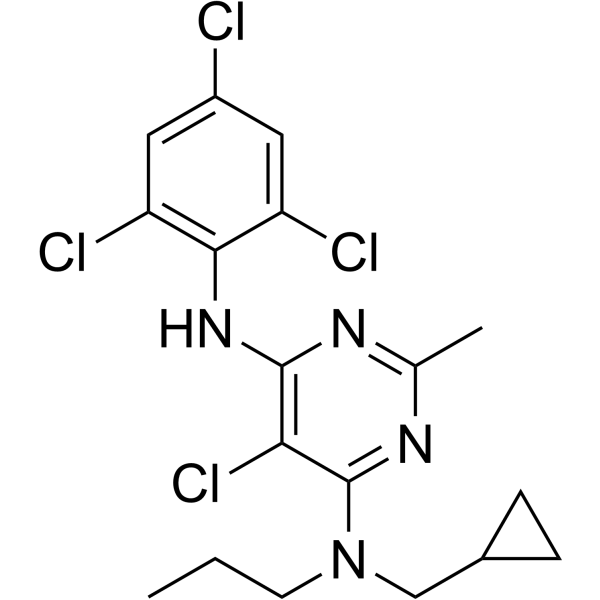
NBI-27914 is a highly selective, high-affinity non-peptide competitive antagonist of human corticotropin-releasing factor receptor 1 (CRFR1). NBI-27914 primarily binds to the His199 and Met276 sites in the transmembrane domain of the receptor.
For research use only. We do not sell to patients.
- Purity : 99.94%
- CAS No.: 184241-44-9
- Formula: C18H20Cl4N4
- Molecular Weight:434.19
-
Storage:
4°C, sealed storage, away from moisture
* In solvent : -80°C, 6 months; -20°C, 1 month (sealed storage, away from moisture)

To place orders, for customer services and technical support, please contact: MedChemExpress USA
Tel: 609-228-6898 E-mail: [email protected] [email protected]


-
 Biological Activity
-
Chemical Information
-
Solvent & Solubility
- Purity & Documentation
- References
-
 Help & FAQs


-
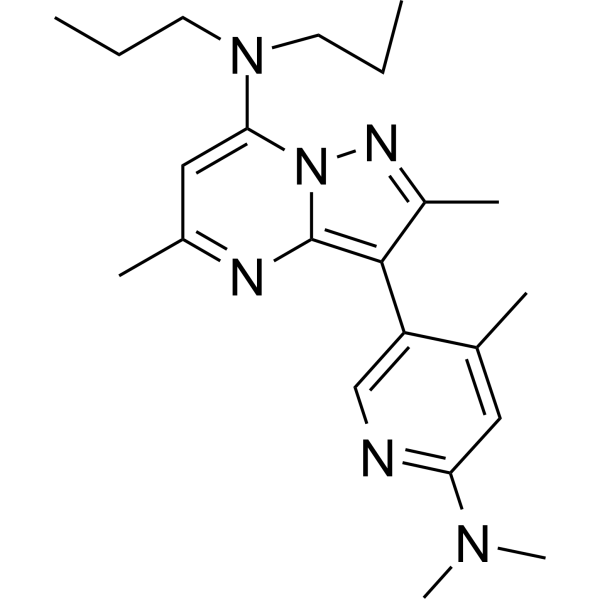
HY-14127
R121919CRF1 Receptor Antagonist -
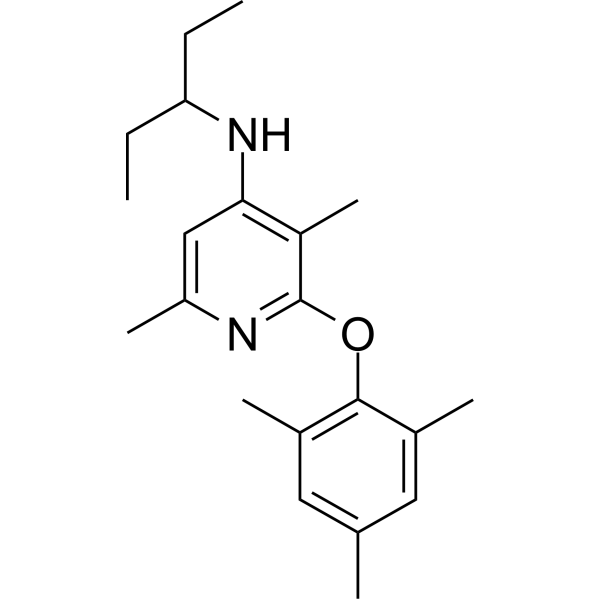
HY-14130
CP 376395CRF1 Receptor Antagonist -
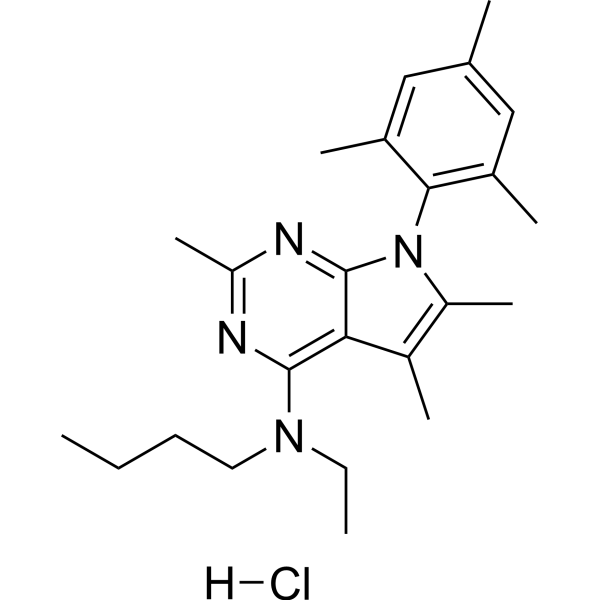
HY-103377
Antalarmin hydrochlorideCRHR1 Antagonist -
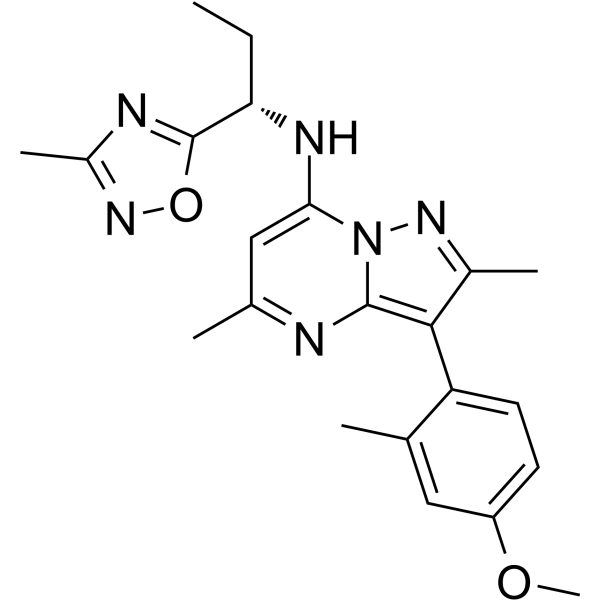
HY-14875
VerucerfontCRFR Antagonist -
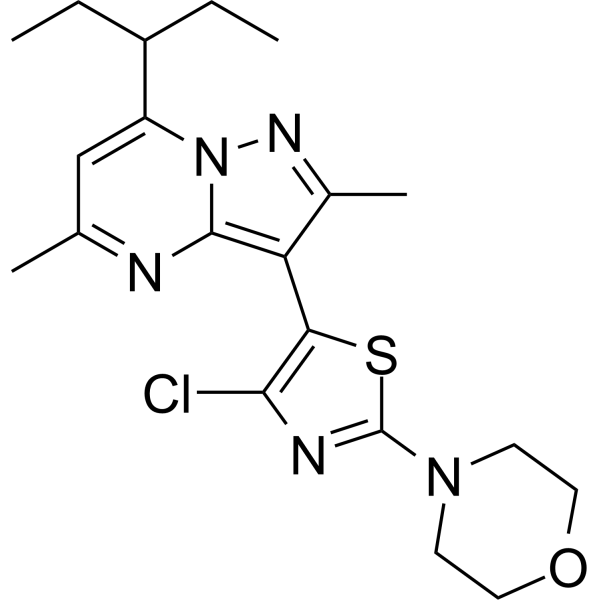
HY-113603
TildacerfontCRF1 Receptor Antagonist -
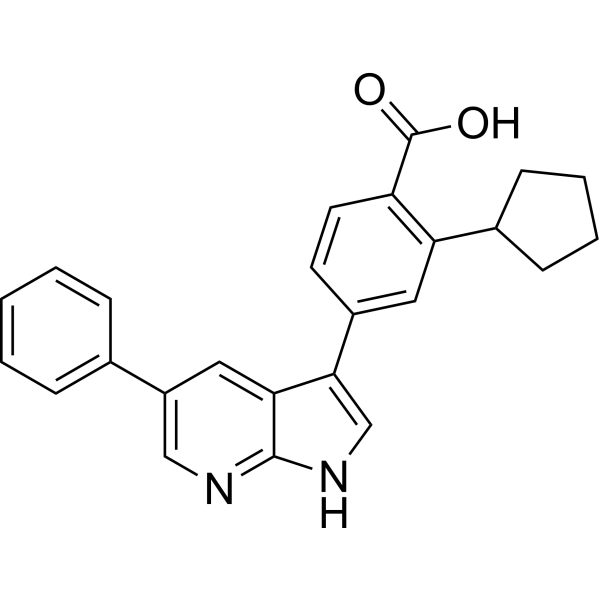
HY-15192
GSK 650394SGK Inhibitor -
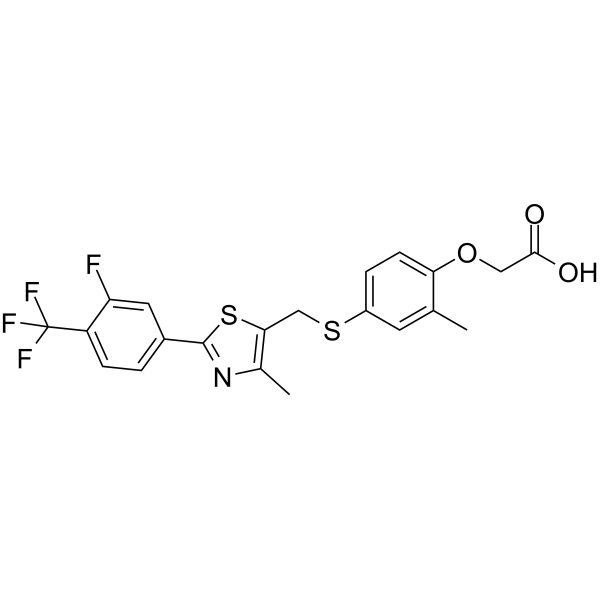
HY-13928
GW0742PPAR Agonist -
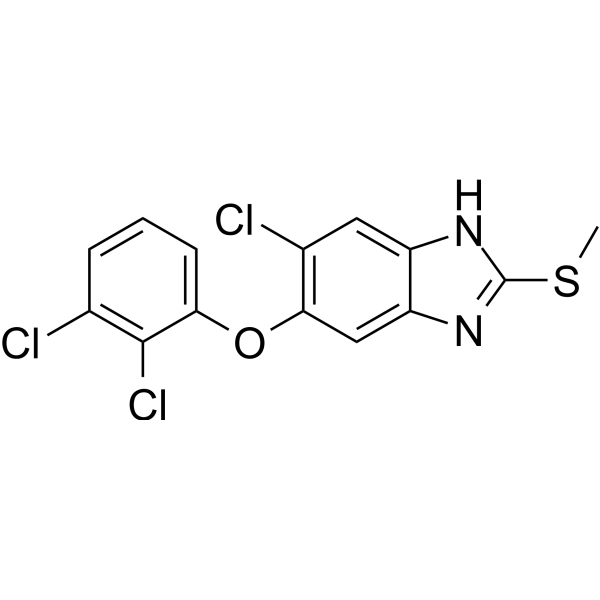
HY-B0621
TriclabendazoleParasite Inhibitor -
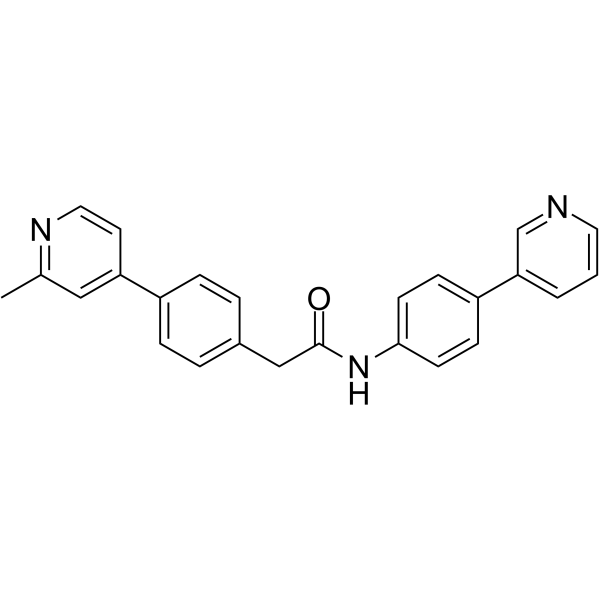
HY-15659
Wnt-C59PORCN Inhibitor -
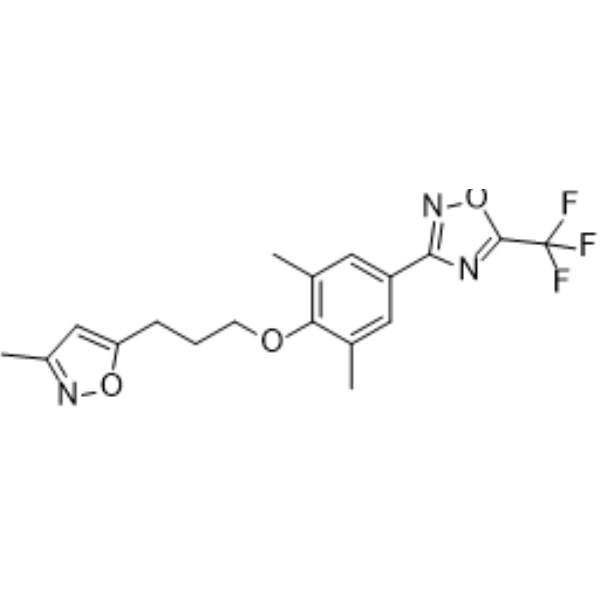
HY-19952
PleconarilCapsid Inhibitor -
HY-P1368
Stressin ICRF1 Agonist -

HY-P1295
Urocortin, humanCRF Receptor Agonist
Publications Citing Use of MedChemExpress (MCE) NBI-27914
More

Biological Activity
Description
Cellular Effect
|
Cell Line

|
Type | Value | Description | References |
|---|---|---|---|---|
| HepG2 | EC50 |
4.95 μM
Compound: 12, NBI 27914
|
Agonist activity at PXR (unknown origin) expressed in human HepG2 cells assessed as induction of CYP3A4 transactivation after 16 hrs by luciferase reporter gene assay
Agonist activity at PXR (unknown origin) expressed in human HepG2 cells assessed as induction of CYP3A4 transactivation after 16 hrs by luciferase reporter gene assay
|
[PMID: 23688559] |
| Pituitary gland cell | EC50 |
70 nM
Compound: 52 ; NBI-27914
|
Effective concentration to inhibit adenocorticotropic hormone (ACTH) release from primary cultures of rat pituitary cells.
Effective concentration to inhibit adenocorticotropic hormone (ACTH) release from primary cultures of rat pituitary cells.
|
[PMID: 10794681] |
In Vitro
NBI-27914 (0.1-100000 nM; 2 h) binds to native human CRFR1 with an apparent Ki value of 17 nM; mutation of His199 to Val and Met276 to Ile in CRFR1 reduces the binding affinity of NBI-27914 by 40-fold and 200-fold, respectively[1].
MedChemExpress (MCE) has not independently confirmed the accuracy of these methods. They are for reference only.


Chemical Information
-
CAS No. 184241-44-9
-
Appearance Solid
-
Molecular Weight 434.19
-
Formula C18H20Cl4N4
-
Color Off-white to light yellow
-
SMILES
ClC1=C(NC2=C(Cl)C(N(CC3CC3)CCC)=NC(C)=N2)C(Cl)=CC(Cl)=C1
-
Shipping
Room temperature in continental US; may vary elsewhere.
-
Storage
4°C, sealed storage, away from moisture
* In solvent : -80°C, 6 months; -20°C, 1 month (sealed storage, away from moisture)


Publications (3)
-
Journal Impact Factor
-
Most Recent
-
Cell
2025 Jun 26;188(13):3530-3549.e24. PMID: 40398420 -
Neuron
Astrocyte-mediated central amygdala microcircuit gates comorbid anxiety symptoms in chronic pain. [Abstract]2025 Oct 2:S0896-6273(25)00670-1. PMID: 41043420 -
Cell Rep
Green light relieves stress-induced anxiety-like behaviors via visual-to-prefrontal projections in mice. [Abstract]2026 May 23;45(6):117426. PMID: 42176269


Solvent & Solubility
In Vitro:
DMSO : 100 mg/mL (230.31 mM; Need ultrasonic; Hygroscopic DMSO has a significant impact on the solubility of product, please use newly opened DMSO)
Please refer to the solubility information to select the appropriate solvent. Once prepared, please aliquot and store the solution to prevent product inactivation from repeated freeze-thaw cycles.
Storage method and period of stock solution: -80°C, 6 months; -20°C, 1 month (sealed storage, away from moisture). When stored at -80°C, please use it within 6 months. When stored at -20°C, please use it within 1 month.
Please refer to the solubility information to select the appropriate solvent. Once prepared, please aliquot and store the solution to prevent product inactivation from repeated freeze-thaw cycles.
Storage method and period of stock solution: -80°C, 6 months; -20°C, 1 month (sealed storage, away from moisture). When stored at -80°C, please use it within 6 months. When stored at -20°C, please use it within 1 month.
Concentration (start) × Volume (start) = Concentration (final) × Volume (final)
In Vivo:
Select the appropriate dissolution method based on your experimental animal and administration route.
- For the following dissolution methods, please ensure to first prepare a clear stock solution using an In Vitro approach and then sequentially add co-solvents:
- To ensure reliable experimental results, the clarified stock solution can be appropriately stored based on storage conditions. As for the working solution for In Vivo experiments, it is recommended to prepare freshly and use it on the same day.
- The percentages shown for the solvents indicate their volumetric ratio in the final prepared solution. If precipitation or phase separation occurs during preparation, heat and/or sonication can be used to aid dissolution.
Add each solvent one by one: 10% DMSO 40% PEG300 5% Tween-80 45% Saline
Solubility: 1 mg/mL (2.30 mM); Suspended solution; Need ultrasonic
This protocol yields a suspended solution of 1 mg/mL. Suspended solution can be used for oral and intraperitoneal injection.
Taking 1 mL working solution as an example, add 100 μL DMSO stock solution (10.0 mg/mL) to 400 μL PEG300, and mix evenly; then add 50 μL Tween-80 and mix evenly; then add 450 μL Saline to adjust the volume to 1 mL.
Preparation of Saline: Dissolve 0.9 g sodium chloride in ddH₂O and dilute to 100 mL to obtain a clear Saline solution.
Add each solvent one by one: 10% DMSO 90% (20% SBE-β-CD in Saline)
Solubility: 1 mg/mL (2.30 mM); Suspended solution; Need ultrasonic
This protocol yields a suspended solution of 1 mg/mL. Suspended solution can be used for oral and intraperitoneal injection.
Taking 1 mL working solution as an example, add 100 μL DMSO stock solution (10.0 mg/mL) to 900 μL 20% SBE-β-CD in Saline, and mix evenly.
Preparation of 20% SBE-β-CD in Saline (4°C, storage for one week): 2 g SBE-β-CD powder is dissolved in 10 mL Saline, completely dissolve until clear.
In Vivo Dissolution Calculator
Please enter the basic information of animal experiments:
-
-
-
-
Recommended: Prepare an additional quantity of animals to account for potential losses during experiments.
Please enter your animal formula composition:
-
%DMSO +
Recommended: Keep the proportion of DMSO in working solution below 2% if your animal is weak.
-
%+
-
+%Tween-80 + +
-
%Saline +
The co-solvents required include: DMSO, . All of co-solvents are available by MedChemExpress (MCE). , Tween 80. All of co-solvents are available by MedChemExpress (MCE).
Working solution concentration: 0.22 mg/mL
Method for preparing stock solution: mg drug dissolved in μL DMSO. Stock solution concentration: mg/mL. * In solvent : -80°C, 6 months; -20°C, 1 month (sealed storage, away from moisture)
1. Take μL DMSO stock solution;
2. Add μL .
μL , mix evenly;
3. Then add μL Tween 80, mix evenly;
4. Then add μL
Please ensure that the stock solution in the first step is dissolved to a clear state, and add co-solvents in sequence. You can use ultrasonic heating (ultrasonic cleaner, recommended frequency 20-40 kHz), vortexing, etc. to assist dissolution.


Purity & Documentation
-
Data Sheet (277 KB)
-
SDS (393 KB)
- English - EN (393 KB)
- Français - FR (393 KB)
- Deutsch - DE (393 KB)
- Norwegian - NO (393 KB)
- Español - ES (393 KB)
- Swedish - SV (393 KB)
- Italian - IT (393 KB)
- Korean - KR (393 KB)
- Portuguese - PT (393 KB)
-
Handling Instructions (2659 KB)
References


Complete Stock Solution Preparation Table
Please refer to the solubility information to select the appropriate solvent. Once prepared, please aliquot and store the solution to prevent product inactivation from repeated freeze-thaw cycles.
Storage method and period of stock solution: -80°C, 6 months; -20°C, 1 month (sealed storage, away from moisture). When stored at -80°C, please use it within 6 months. When stored at -20°C, please use it within 1 month.
| Optional Solvent | Concentration Solvent Mass | 1 mg | 5 mg | 10 mg | 25 mg |
|---|---|---|---|---|---|
| DMSO | 1 mM | 2.3031 mL | 11.5157 mL | 23.0314 mL | 57.5785 mL |
| 5 mM | 0.4606 mL | 2.3031 mL | 4.6063 mL | 11.5157 mL | |
| 10 mM | 0.2303 mL | 1.1516 mL | 2.3031 mL | 5.7578 mL | |
| 15 mM | 0.1535 mL | 0.7677 mL | 1.5354 mL | 3.8386 mL | |
| 20 mM | 0.1152 mL | 0.5758 mL | 1.1516 mL | 2.8789 mL | |
| 25 mM | 0.0921 mL | 0.4606 mL | 0.9213 mL | 2.3031 mL | |
| 30 mM | 0.0768 mL | 0.3839 mL | 0.7677 mL | 1.9193 mL | |
| 40 mM | 0.0576 mL | 0.2879 mL | 0.5758 mL | 1.4395 mL | |
| 50 mM | 0.0461 mL | 0.2303 mL | 0.4606 mL | 1.1516 mL | |
| 60 mM | 0.0384 mL | 0.1919 mL | 0.3839 mL | 0.9596 mL | |
| 80 mM | 0.0288 mL | 0.1439 mL | 0.2879 mL | 0.7197 mL | |
| 100 mM | 0.0230 mL | 0.1152 mL | 0.2303 mL | 0.5758 mL |


NBI-27914 Related Classifications
HY-135542 Related Classifications
 Powered by Bioz