Search Result
Results for "
Uridine-d
" in MedChemExpress (MCE) Product Catalog:
5
Biochemical Assay Reagents
69
Isotope-Labeled Compounds
| Cat. No. |
Product Name |
Target |
Research Areas |
Chemical Structure |
-
- HY-B1449
-
-
-
- HY-N7033
-
|
Uridine 5'-diphosphoglucuronic acid trisodium salt
|
Drug Intermediate
|
Metabolic Disease
|
|
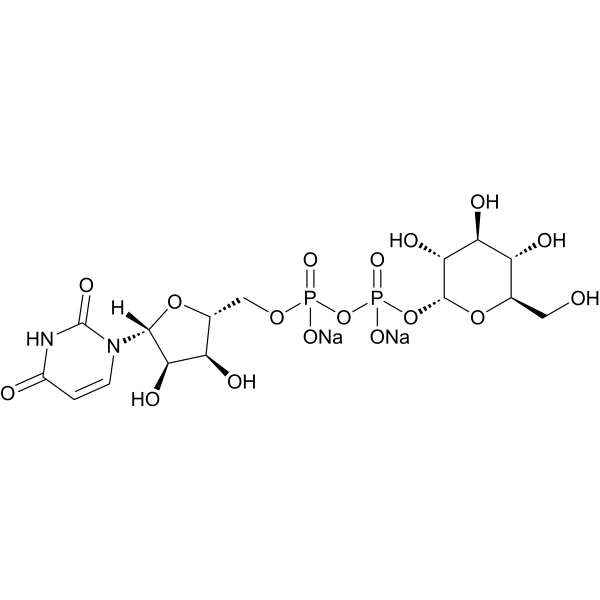
UDP-glucuronic acid trisodium (Uridine-5'-diphosphoglucuronic acid trisodium salt) is a critical precursor for essential glycoconjugates across biological kingdoms, ranging from mammalian glycosaminoglycans and plant cell wall polysaccharides to bacterial capsule glycoglycerolipids.
|
-
-
- HY-W010832
-
-
-
- HY-14905
-
|
Tri-O-acetyl Uridine
|
Drug Derivative
|
Neurological Disease
|
|
Uridine triacetate (Tri-O-acetyl uridine) is an orally active proagent of Uridine (HY-B1449). Uridine triacetate is quickly absorbed in the gut, and is rapidly deacetylated in the circulation to yield free uridine. Uridine triacetate is used for the research of 5-fluorouracil (5-FU) and capecitabine toxicity, or early-onset cardiac or central nervous system (CNS) .
|
-
-
- HY-107372
-
-
-
- HY-W006429
-
|
|
Endogenous Metabolite
|
Others
|
|
L-Uridine is an enantiomer of the normal RNA constituent D-uridine. L-Uridine can be isolated from the Polyporaceae fungus Poria cocos (Schw.). L-uridine acts as a phosphate acceptor for nucleoside phosphotransferases .
|
-
-
- HY-125954
-
|
UDP-α-D-glucuronic acid
|
Endogenous Metabolite
|
Metabolic Disease
|
|
Uridine diphosphate glucuronic acid (UDP-α-D-glucuronic acid) is a glucuronic acid donor. Uridine diphosphate glucuronic acid transfers its glucuronic acid moiety to acceptor molecules, thereby forming "ether" glucuronides, while being converted into uridine 5'-pyrophosphate. Uridine diphosphate glucuronic acid serves as a substrate for Arabidopsis UDP-GlcA 4-epimerase 1, and undergoes reversible 4-epimerization to generate UDP-α-D-galacturonic acid .
|
-
-
- HY-113044R
-
|
UDP-D-Glucose (Standard)
|
Reference Standards
Endogenous Metabolite
P2Y Receptor
|
Cardiovascular Disease
Metabolic Disease
Inflammation/Immunology
|
|
Uridine 5′-diphosphoglucose (Standard) (UDP-D-Glucose (Standard)) is the analytical standard of Uridine 5′-diphosphoglucose (HY-113044). This product is intended for research and analytical applications. Uridine 5’-diphosphoglucose (UDP-glucose), secreted by cardiomyocytes during ischemia and reperfu, is a potent agonist of the proinflammatory P2Y14 receptor. It acts an important role in the regulation of inflammation and neutrophil polarization in neutrophils. Uridine 5’-diphosphoglucose is also the precursor of glucose-containing oligosaccharides, polysaccharides, glycoproteins, and glycolipids in animal tissues and in some microorganisms. Uridine 5’-diphosphoglucose is promising for research in counteracting myocardial infarction/reperfusion (MIR)-induced inflammation in the heart tissue.
|
-
-
- HY-B1449S8
-
-
-
- HY-B1449S10
-
|
β-Uridine-13C5
|
Isotope-Labeled Compounds
|
Cancer
|
|
Uridine- 13C5 (β-Uridine- 13C5) is a 13C labeled Uridine (HY-B1449). Uridine (β-Uridine) is a nucleoside compound consisting of uracil and a ribose ring, which are linked by a β-N1- glycosyl bond.
|
-
-
- HY-W048495
-
|
|
Nucleoside Antimetabolite/Analog
|
Cancer
|
|
2'-O-(2-Methoxyethyl)-uridine is a synthetic oligonucleotide conversed from uridine. 2'-O-(2-Methoxyethyl)-uridine has the potential for chemotherapeutic agents development .
|
-
-
- HY-107372A
-
|
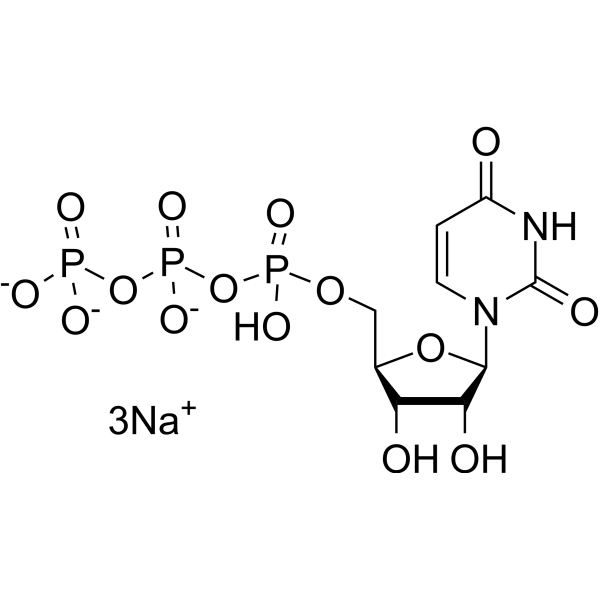
UTP trisodium dihydrate; Uridine 5'-triphosphate trisodium dihydrate
|
Biochemical Assay Reagents
|
Others
|
|
Uridine triphosphate (trisodium dihydrate) (UTP (trisodium dihydrate); Uridine 5'-triphosphate (trisodium dihydrate)) is a biochemical reagent.
|
-
-
- HY-B1449S1
-
-
-
- HY-B1449S11
-
-
-
- HY-145668
-
|
|
UGT
|
Cancer
|
|
Cyclopentenyl uracil, a non-cytotoxic inhibitor of uridine kinase, effectively blocks the salvage of circulating uridine by host and tumor tissues in the intact mouse .
|
-
-
- HY-107372H
-
|
Uridine 5'-triphosphate trisodium salt, 100 mM Solution, PCR Grade
|
Biochemical Assay Reagents
Endogenous Metabolite
DNA/RNA Synthesis
P2Y Receptor
|
Cardiovascular Disease
|
|
UTP (Uridine 5'-triphosphate) trisodium salt, 100 mM Solution, PCR Grade is a solution prepared from uridine triphosphate at a concentration of 100 mM, free of DNase, RNase and phosphatase contamination, suitable for molecular biology research. Uridine triphosphate (HY-107372) is a pyrimidine nucleoside triphosphate that is used as a substrate to synthesize RNA or as an energy source in metabolic reactions. Uridine triphosphate activates membrane-bound P2Y2 receptors .
|
-
-
- HY-125954A
-
|
UDP-α-D-glucuronic acid ammonium
|
Endogenous Metabolite
|
Metabolic Disease
|
|
Uridine diphosphate glucuronic acid ammonium (UDP-α-D-glucuronic acid ammonium) is a glucuronic acid donor. Uridine diphosphate glucuronic acid ammonium transfers its glucuronic acid moiety to acceptor molecules, thereby forming "ether" glucuronides, while being converted into uridine 5'-pyrophosphate. Uridine diphosphate glucuronic acid ammonium serves as a substrate for Arabidopsis UDP-GlcA 4-epimerase 1, and undergoes reversible 4-epimerization to generate UDP-α-D-galacturonic acid .
|
-
-
- HY-B1449R
-
-
-
- HY-W751165
-
-
-
- HY-B1449S6
-
-
-
- HY-101981R
-
|
5'-Uridylic acid (Standard)
|
Reference Standards
Endogenous Metabolite
|
Cardiovascular Disease
Metabolic Disease
|
|
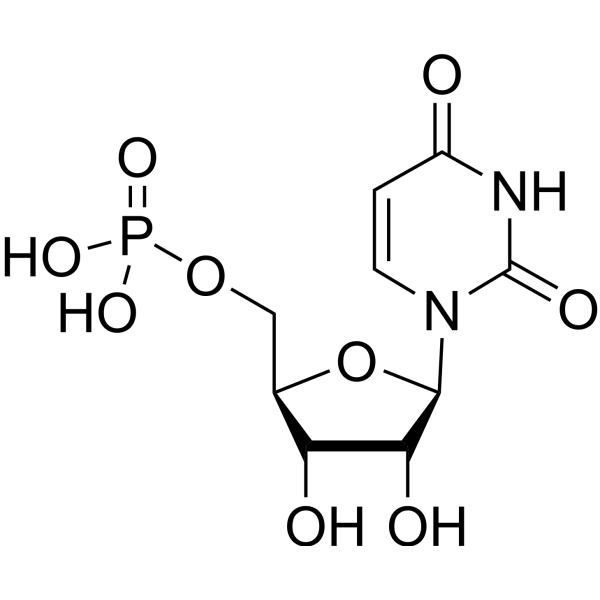
Uridine 5'-monophosphate (Standard) is the analytical standard of Uridine 5'-monophosphate. This product is intended for research and analytical applications. Uridine 5'-monophosphate (5'-Uridylic acid) is an orally active mitochondrial ATP-dependent potassium channel activator that has a protective effect on the heart. Uridine 5'-monophosphate can promote the synthesis of CDP-choline and induce apoptosis in intestinal epithelial cells, which is beneficial for gut development and reduces diarrhea.
|
-
-
- HY-W013175S2
-
|
5'-Uridylic acid-13C9,15N2 disodium
|
Isotope-Labeled Compounds
Endogenous Metabolite
Cholinesterase (ChE)
Potassium Channel
Apoptosis
|
Cardiovascular Disease
Metabolic Disease
|
|
Uridine 5'-monophosphate- 13C9, 15N2 disodium is the 13C and 15N labeled Uridine 5'-monophosphate disodium salt (HY-W013175). Uridine 5'-monophosphate (5'-Uridylic acid) disodium salt is an orally active mitochondrial ATP-dependent potassium channel activator that has a protective effect on the heart. Uridine 5'-monophosphate disodium salt can promote the synthesis of CDP-choline and induce apoptosis in intestinal epithelial cells, which is beneficial for gut development and reduces diarrhea .
|
-
-
- HY-P3018
-
|
|
Endogenous Metabolite
|
Metabolic Disease
|
|
Uridine-5'-diphosphoglucose pyrophosphorylase is involved in the catalysis of UDP-glucose synthesis. Uridine-5'-diphosphoglucose pyrophosphorylase can be used to determine the concentration of pyrophosphate in urine .
|
-
-
- HY-134337
-
|
|
Nucleoside Antimetabolite/Analog
Phosphoramidites
|
Cancer
|
|
5'-O-DMTr-3'-O-methyl uridine-3'-CED-phosphoramidite is a uridine analog. Uridine has potential antiepileptic effects, and its analogs can be used to study anticonvulsant and anxiolytic activities, as well as to develop new antihypertensive agents .
|
-
-
- HY-164770A
-
|
ApU sodium
|
DNA/RNA Synthesis
|
Others
|
|
Adenosyl-(3′→5′)-uridine (ApU) sodium is a nucleotide, which is composed of an adenine base and a uracil sugar molecule through a 3'-5' phosphodiester bond. Adenosyl-(3′→5′)-uridine (ApU) sodium participates in the biological processes, such as gene expression regulation, signal transduction, and protein synthesis .
|
-
-
- HY-154525
-
-
-
- HY-113359AS2
-
-
-
- HY-B1449S12
-
-
-
- HY-B1449S
-
-
-
- HY-B1449S2
-
-
-
- HY-107372S
-
-
-
- HY-107372S2
-
-
-
- HY-W013093R
-
|
UTP trisodium salt (Standard); Uridine 5'-triphosphate trisodium salt (Standard)
|
Reference Standards
Endogenous Metabolite
P2Y Receptor
|
Cardiovascular Disease
Inflammation/Immunology
Cancer
|
|
Uridine triphosphate (trisodium salt) (Standard) is the analytical standard of Uridine triphosphate (trisodium salt). This product is intended for research and analytical applications. Uridine triphosphate (UTP) trisodium salt is a pyrimidine nucleoside triphosphate that is used as a substrate to synthesize RNA or as an energy source in metabolic reactions. Uridine triphosphate trisodium salt activates membrane-bound P2Y2 receptors .
|
-
-
- HY-154285
-
|
|
Nucleoside Antimetabolite/Analog
|
Cancer
|
|
3’-O-(2-Methoxyethyl) uridine is a uridine analog. Uridine has potential antiepileptic effects, and its analogs can be used to study anticonvulsant and anxiolytic activities, as well as to develop new antihypertensive agents .
|
-
-
- HY-125954S
-
|
UDP-α-D-glucuronic acid-13C,15N2
|
Isotope-Labeled Compounds
Endogenous Metabolite
|
Metabolic Disease
|
|
Uridine diphosphate glucuronic acid- 13C, 15N2 (UDP-α-D-glucuronic acid- 13C, 15N2) is the 13C- and 15N-labeled Uridine diphosphate glucuronic acid (HY-125954). Uridine diphosphate glucuronic acid ammonium (UDP-α-D-glucuronic acid ammonium) is a glucuronic acid donor. Uridine diphosphate glucuronic acid ammonium transfers its glucuronic acid moiety to acceptor molecules, thereby forming "ether" glucuronides, while being converted into uridine 5'-pyrophosphate. Uridine diphosphate glucuronic acid ammonium serves as a substrate for Arabidopsis UDP-GlcA 4-epimerase 1, and undergoes reversible 4-epimerization to generate UDP-α-D-galacturonic acid .
|
-
-
- HY-154358
-
|
|
Nucleoside Antimetabolite/Analog
|
Cancer
|
|
4’-alpha-C-Allyl-2’,3’-bis(O-t-butyldimethylsilyl) uridine is a uridine analog. Uridine has potential antiepileptic effects, and its analogs can be used to study anticonvulsant and anxiolytic activities, as well as to develop new antihypertensive agents .
|
-
-
- HY-101981S
-
-
-
- HY-154582
-
|
|
Nucleoside Antimetabolite/Analog
|
Others
|
|
5-Naphthyl-beta-methylaminocarbony-3’-O-acetyl-2’-O-methyl-5’-O-DMTr-uridine is a uridine analog. Uridine has potential antiepileptic effects, and its analogs can be used to study anticonvulsant and anxiolytic activities, as well as to develop new antihypertensive agents .
|
-
-
- HY-152732
-
|
|
Nucleoside Antimetabolite/Analog
|
Others
|
|
6-Methyluridine is a uridine analogue. Uridine has potential antiepileptic effects, and its analogs can be used to study anticonvulsant and anxiolytic activities, as well as to develop new antihypertensive agents .
|
-
-
- HY-N7032S1
-
|
UDP-D-Glucose-13C6 disodium
|
Isotope-Labeled Compounds
Endogenous Metabolite
P2Y Receptor
|
Cardiovascular Disease
Metabolic Disease
Inflammation/Immunology
|
|
Uridine 5′-diphosphoglucose- 13C6 (UDP-D-Glucose- 13C6) disodium is the 13C labeled Uridine 5′-diphosphoglucose disodium (HY-N7032) . Uridine 5’-diphosphoglucose (UDP-glucose) disodium, secreted by cardiomyocytes during ischemia and reperfu, is a potent agonist of the proinflammatory P2Y14 receptor. It acts an important role in the regulation of inflammation and neutrophil polarization in neutrophils. Uridine 5’-diphosphoglucose disodium is also the precursor of glucose-containing oligosaccharides, polysaccharides, glycoproteins, and glycolipids in animal tissues and in some microorganisms. Uridine 5’-diphosphoglucose disodium is promising for research in counteracting myocardial infarction/reperfusion (MIR)-induced inflammation in the heart tissue .
|
-
-
- HY-B1449S5
-
-
-
- HY-B1449S4
-
-
-
- HY-164770
-
|
ApU
|
DNA/RNA Synthesis
|
Others
|
|
Adenosyl-(3′→5′)-uridine (ApU) is a nucleotide, which is composed of an adenine base and a uracil sugar molecule through a 3'-5' phosphodiester bond. Adenosyl-(3′→5′)-uridine (ApU) participates in the biological processes, such as gene expression regulation, signal transduction, and protein synthesis .
|
-
-
- HY-137608
-
|
UDP-β-S
|
P2Y Receptor
DNA/RNA Synthesis
|
Cardiovascular Disease
Inflammation/Immunology
|
|
Uridine 5'-O-thiodiphosphate (UDP-β-S) is a P2Y6 receptor agonist with an EC50 of 25 nM. Uridine 5'-O-thiodiphosphate resists degradation by extracellular nucleotidases and stimulates the accumulation of inositol phosphates. Uridine 5'-O-thiodiphosphate stimulates contractile responses in endothelium-denuded rat mesenteric arteries. As a mitogen, Uridine 5'-O-thiodiphosphate stimulates DNA synthesis, [ 3H] thymidine incorporation, protein synthesis, [ 3H]leucine incorporation, and increases the number of vascular smooth muscle cells. Uridine 5'-O-thiodiphosphate can be used in the research of cardiovascular diseases such as atherosclerosis .
|
-
-
- HY-130061
-
-
-
- HY-W020098
-
|
|
Nucleoside Antimetabolite/Analog
|
Cancer
|
|
2'-C-methyluridine is a uridine analog. Uridine has potential antiepileptic effects, and its analogs can be used to study anticonvulsant and anxiolytic activities, as well as to develop new antihypertensive agents .
|
-
-
- HY-131822
-
|
Uridine-5'-O-monophosphorothioate
|
P2Y Receptor
|
Cancer
|
|
5'-UMPS (Uridine-5'-O-monophosphorothioate) is a P2Y14 receptor agonist. 5'-UMPS can induce HeLa cell growth slightly .
|
-
-
- HY-137608A
-
|
UDP-β-S trisodium
|
P2Y Receptor
DNA/RNA Synthesis
|
Cardiovascular Disease
Inflammation/Immunology
|
|
Uridine 5'-O-thiodiphosphate trisodium (UDP-β-S trisodium) is a P2Y6 receptor agonist with an EC50 of 25 nM. Uridine 5'-O-thiodiphosphate trisodium resists degradation by extracellular nucleotidases and stimulates the accumulation of inositol phosphates. Uridine 5'-O-thiodiphosphate trisodium stimulates contractile responses in endothelium-denuded rat mesenteric arteries. As a mitogen, Uridine 5'-O-thiodiphosphate trisodium stimulates DNA synthesis, [ 3H] thymidine incorporation, protein synthesis, [ 3H]leucine incorporation, and increases the number of vascular smooth muscle cells. Uridine 5'-O-thiodiphosphate trisodium can be used in the research of cardiovascular diseases such as atherosclerosis .
|
-
-
- HY-N7032S
-
|
UDP-D-Glucose-13C disodium
|
Isotope-Labeled Compounds
Endogenous Metabolite
P2Y Receptor
|
Cardiovascular Disease
Metabolic Disease
Inflammation/Immunology
|
|
Uridine 5′-diphosphoglucose- 13C (UDP-D-Glucose- 13C) disodium is the 13C labeled Uridine 5′-diphosphoglucose disodium (HY-N7032) . Uridine 5’-diphosphoglucose (UDP-glucose) disodium, secreted by cardiomyocytes during ischemia and reperfu, is a potent agonist of the proinflammatory P2Y14 receptor. It acts an important role in the regulation of inflammation and neutrophil polarization in neutrophils. Uridine 5’-diphosphoglucose disodium is also the precursor of glucose-containing oligosaccharides, polysaccharides, glycoproteins, and glycolipids in animal tissues and in some microorganisms. Uridine 5’-diphosphoglucose disodium is promising for research in counteracting myocardial infarction/reperfusion (MIR)-induced inflammation in the heart tissue .
|
-
-
- HY-167925S
-
-
- HY-150635S
-
|
5'-Uridylic acid-15N2 disodium
|
Isotope-Labeled Compounds
|
Others
|
|
Uridine-5'-monophosphate- 15N2 (sodium) is the deuterium and 15N labeled Uridine-5'-monophosphate sodium .
|
-
- HY-107372S4
-
-
- HY-107372S3
-
-
- HY-B1449S7
-
-
- HY-B1449S3
-
-
- HY-B1449S9
-
-
- HY-152299
-
|
|
Nucleoside Antimetabolite/Analog
|
Others
|
|
5-(t-Butyloxycarbonylmethoxy)uridine is a uridine analogue. Uridine has potential antiepileptic effects, and its analogs can be used to study anticonvulsant and anxiolytic activities, as well as to develop new antihypertensive agents .
|
-
- HY-108971R
-
|
|
Antibiotic
Reference Standards
Bacterial
|
Infection
|
|
Uridine 5'-monophosphate (disodium salt) (Standard) is the analytical standard of Uridine 5'-monophosphate (disodium salt). This product is intended for research and analytical applications. Uridine 5'-monophosphate disodium salt is component used for RNA synthesis.
|
-
- HY-154734
-
|
|
Nucleoside Antimetabolite/Analog
|
Cancer
|
|
N3-(4-Nitrobenzyl)uridine is a uridine analog. Uridine has potential antiepileptic effects, and its analogs can be used to study anticonvulsant and anxiolytic activities, as well as to develop new antihypertensive agents .
|
-
- HY-W557556
-
|
|
Nucleoside Antimetabolite/Analog
|
Cancer
|
|
2',5'-Bis-O-(triphenylMethyl)uridine is a uridine analog. Uridine has potential antiepileptic effects, and its analogs can be used to study anticonvulsant and anxiolytic activities, as well as to develop new antihypertensive agents .
|
-
- HY-154217
-
|
|
Nucleoside Antimetabolite/Analog
|
Cancer
|
|
3′,5′-Bis-O-(triphenylmethyl)uridine is a uridine analog. Uridine has potential antiepileptic effects, and its analogs can be used to study anticonvulsant and anxiolytic activities, as well as to develop new antihypertensive agents .
|
-
- HY-159849
-
-
- HY-150651S
-
|
5'-Uridylic acid-15N2 disodium salt
|
Isotope-Labeled Compounds
|
Others
|
|
Uridine 5′-monophosphate- 15N2 (sodium) is the 15N labeled Uridine 5′-monophosphate sodium .
|
-
- HY-107372D
-
|
UTP tetrasodium; Uridine 5'-triphosphate tetrasodium
|
Biochemical Assay Reagents
|
Cardiovascular Disease
|
|
Uridine triphosphate (tetrasodium) (UTP (tetrasodium)) is released during cardiac ischemia. Uridine triphosphate (tetrasodium) belongs to a family of extracellular nucleotide signaling molecules. Uridine triphosphate (tetrasodium) can stimulate vasodilation, automaticity in ventricular myocytes and release tussue-quantitative activator (t-PA). Uridine triphosphate (tetrasodium)-induced t-PA release can dissolve the thrombus in myocardial infarction .
|
-
- HY-152798
-
|
|
Nucleoside Antimetabolite/Analog
|
Others
|
|
5-Iodo-2’-β-C-methyl uridine is a uridine analogue. Uridine has potential antiepileptic effects, and its analogs can be used to study anticonvulsant and anxiolytic activities, as well as to develop new antihypertensive agents .
|
-
- HY-150871S
-
-
- HY-154737
-
|
|
Nucleoside Antimetabolite/Analog
|
Cancer
|
|
N3-[(Pyrid-4-yl)methyl]uridine is a uridine analog. Uridine has potential antiepileptic effects, and its analogs can be used to study anticonvulsant and anxiolytic activities, as well as to develop new antihypertensive agents .
|
-
- HY-152681
-
|
|
Nucleoside Antimetabolite/Analog
|
Others
|
|
N3-[(Tetrahydro-2-furanyl)methyl]uridine is a uridine analogue. Uridine has potential antiepileptic effects, and its analogs can be used to study anticonvulsant and anxiolytic activities, as well as to develop new antihypertensive agents .
|
-
- HY-152683
-
|
|
Nucleoside Antimetabolite/Analog
|
Others
|
|
N3-[(Pyrid-2-yl)methyl]uridine is a uridine analogue. Uridine has potential antiepileptic effects, and its analogs can be used to study anticonvulsant and anxiolytic activities, as well as to develop new antihypertensive agents .
|
-
- HY-W010832R
-
-
- HY-150771S
-
-
- HY-150798S
-
-
- HY-150778S
-
-
- HY-150931S
-
-
- HY-150712S
-
|
UTP-13C9,15N2 dilithium; Uridine 5'-triphosphate-13C9,15N2 dilithium
|
Isotope-Labeled Compounds
|
Others
|
|
Uridine triphosphate- 13C9, 15N5 dilithium is the 13C and 15N labeled Uridine triphosphate dilithium .
|
-
- HY-N8246
-
|
Uridine-2', 3'-cyclic monophosphate sodium salt
|
Others
|
Others
|
|
2',3'-cUMP sodium (Uridine-2', 3'-cyclic monophosphate sodium salt) is a competitive inhibitor of dip-nitrophenyl diphosphate hydrolysis .
|
-
- HY-154173
-
|
|
Nucleoside Antimetabolite/Analog
|
Cancer
|
|
3’-O-(t-Butyldimethylsilyl)-2’-O-(2-methoxyethyl) uridine is a uridine analog. Uridine has potential antiepileptic effects, and its analogs can be used to study anticonvulsant and anxiolytic activities, as well as to develop new antihypertensive agents .
|
-
- HY-49199
-
|
|
Nucleoside Antimetabolite/Analog
|
Cancer
|
|
2',3',5'-Tri-O-(t-butyldimethylsilyl)-4'-C-hydroxymethyl uridine is a uridine analog. Uridine has potential antiepileptic effects, and its analogs can be used to study anticonvulsant and anxiolytic activities, as well as to develop new antihypertensive agents .
|
-
- HY-152363
-
|
|
Nucleoside Antimetabolite/Analog
|
Others
|
|
N3-Methyl-2’-O-(2-methoxyethyl)uridine is a uridine analogue. Uridine has potential antiepileptic effects, and its analogs can be used to study anticonvulsant and anxiolytic activities, as well as to develop new antihypertensive agents .
|
-
- HY-137603
-
|
UTPγS
|
P2Y Receptor
|
Metabolic Disease
|
|
Uridine-5'-O-(3-thiotriphosphate) (UTPγS), a stable analogue of Uridine triphosphate (UTP) (HY-107372), is a potent agonist of the P2Y2 and P2Y4 receptors with increased metabolic stability. Uridine-5'-O-(3-thiotriphosphate) stimulates inositol phosphate formation in human 1321N1 astrocytoma cells stably expressing the phospholipase C-coupled human P2U-purinoceptor (EC50 = 240 nM) .
|
-
- HY-113359AS3
-
-
- HY-154736
-
|
|
Nucleoside Antimetabolite/Analog
|
Cancer
|
|
N3-(Butyn-3-yl)uridine is a uridine analog. Uridine has potential antiepileptic effects, and its analogs can be used to study anticonvulsant and anxiolytic activities, as well as to develop new antihypertensive agents . N3-(Butyn-3-yl)uridine is a click chemistry reagent, it contains an Alkyne group and can undergo copper-catalyzed azide-alkyne cycloaddition (CuAAc) with molecules containing Azide groups.
|
-
- HY-152792
-
|
|
Nucleoside Antimetabolite/Analog
|
Others
|
|
2’-Deoxy-2’-fluoro-N3-[(pyrid-2-yl)methyl]uridine is a uridine analogue. Uridine has potential antiepileptic effects, and its analogs can be used to study anticonvulsant and anxiolytic activities, as well as to develop new antihypertensive agents .
|
-
- HY-154552
-
|
|
Nucleoside Antimetabolite/Analog
|
Cancer
|
|
2’-O-Acetyl-5’-O-benzoyl-3’-O-(2-methoxyethyl) uridine is a uridine analog. Uridine has potential antiepileptic effects, and its analogs can be used to study anticonvulsant and anxiolytic activities, as well as to develop new antihypertensive agents .
|
-
- HY-W013175R
-
|
5'-Uridylic acid disodium salt (Standard)
|
Endogenous Metabolite
Cholinesterase (ChE)
Reference Standards
Potassium Channel
Apoptosis
|
Cardiovascular Disease
Metabolic Disease
|
|
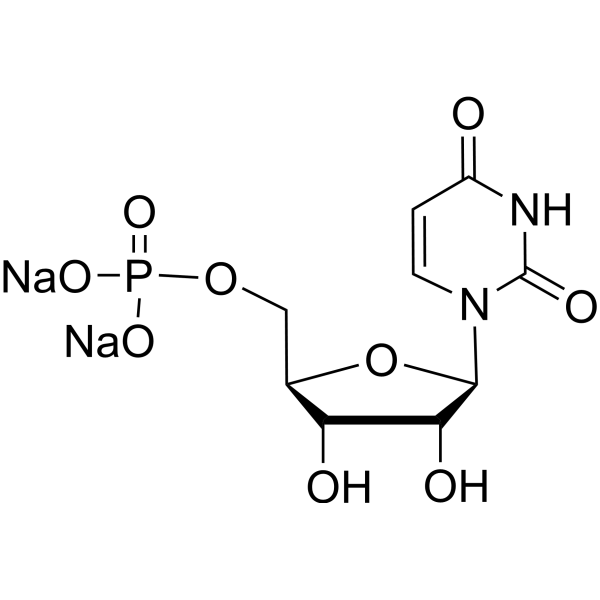
Uridine 5'-monophosphate (disodium salt) (Standard) is the analytical standard of Uridine 5'-monophosphate (disodium salt). This product is intended for research and analytical applications. Uridine 5'-monophosphate (5'-Uridylic acid) disodium salt is an orally active mitochondrial ATP-dependent potassium channel activator that has a protective effect on the heart. Uridine 5'-monophosphate disodium salt can promote the synthesis of CDP-choline and induce apoptosis in intestinal epithelial cells, which is beneficial for gut development and reduces diarrhea .
|
-
- HY-113359AS
-
|
UDP-d12 dilithium
|
Isotope-Labeled Compounds
|
Others
|
|
Uridine 5'-diphosphate-d12 (UDP-d12) dilithium is the deuterium labeled Uridine 5'-diphosphate (HY-113359). Uridine 5'-diphosphate is a P2Y6 receptor agonist with an EC50 of 0.013 μM for human P2Y6 receptor .
|
-
- HY-152755
-
|
|
Nucleoside Antimetabolite/Analog
|
Others
|
|
4’-Cyanouridine is a uridine analogue. Uridine has potential antiepileptic effects, and its analogs can be used to study anticonvulsant and anxiolytic activities, as well as to develop new antihypertensive agents .
|
-
- HY-101981S2
-
-
- HY-101981S5
-
-
- HY-101981S4
-
-
- HY-152764
-
|
|
Nucleoside Antimetabolite/Analog
|
Others
|
|
4’-α-C-Methyluridine is a uridine analogue. Uridine has potential antiepileptic effects, and its analogs can be used to study anticonvulsant and anxiolytic activities, as well as to develop new antihypertensive agents .
|
-
- HY-152777
-
|
|
Nucleoside Antimetabolite/Analog
|
Others
|
|
5’(R)-C-Methyluridine is a uridine analogue. Uridine has potential antiepileptic effects, and its analogs can be used to study anticonvulsant and anxiolytic activities, as well as to develop new antihypertensive agents .
|
-
- HY-154735
-
|
|
Nucleoside Antimetabolite/Analog
|
Cancer
|
|
N3-Allyluridine is a uridine analog. Uridine has potential antiepileptic effects, and its analogs can be used to study anticonvulsant and anxiolytic activities, as well as to develop new antihypertensive agents .
|
-
- HY-152388
-
|
|
Nucleoside Antimetabolite/Analog
|
Others
|
|
3’-beta-C-Methyluridine is a uridine analogue. Uridine has potential antiepileptic effects, and its analogs can be used to study anticonvulsant and anxiolytic activities, as well as to develop new antihypertensive agents .
|
-
- HY-152665
-
|
|
Nucleoside Antimetabolite/Analog
|
Cancer
|
|
1-(β-D-Xylofuranosyl)uracil is a uridine analog. Uridine has potential antiepileptic effects, and its analogs can be used to study anticonvulsant and anxiolytic activities, as well as to develop new antihypertensive agents .
|
-
- HY-W006429R
-
|
|
Endogenous Metabolite
Reference Standards
|
Others
|
|
L-Uridine (Standard) is the analytical standard of L-Uridine (HY-W006429). This product is intended for research and analytical applications. L-Uridine is an enantiomer of the normal RNA constituent D-uridine. L-Uridine can be isolated from the Polyporaceae fungus Poria cocos (Schw.). L-uridine acts as a phosphate acceptor for nucleoside phosphotransferases .
|
-
- HY-W416298
-
|
|
DNA/RNA Synthesis
|
Others
|
|
5-Vinyl-uridine (VU) is a uridine analog with a terminal alkene. 5-Vinyl-uridine is incorporated into new RNA by RNA polymerases, replacing endogenous uridine. Then, it can be detected rapidly and sensitively through an IEDDA reaction with a tetrazole probe, thereby enabling the monitoring of the transcription process using fluorescence techniques (such as monitoring through microscopes or flow cytometry).
|
-
- HY-E70907
-
-
- HY-137603A
-
|
UTPγS tetrasodium
|
P2Y Receptor
|
Neurological Disease
Metabolic Disease
|
|
Uridine-5'-O-(3-thiotriphosphate) (UTPγS) tetrasodium, a stable analogue of Uridine triphosphate (UTP) (HY-107372), is a potent agonist of the P2Y2 and P2Y4 receptors with increased metabolic stability. Uridine-5'-O-(3-thiotriphosphate) tetrasodium stimulates inositol phosphate formation in human 1321N1 astrocytoma cells stably expressing the phospholipase C-coupled human P2U-purinoceptor (EC50 = 240 nM) .
|
-
- HY-E71024
-
|
|
Biochemical Assay Reagents
|
Metabolic Disease
|
|
Uridine-5'-diphosphoglucose pyrophosphorylase, Baker's yeast (EC 2.7.7.9) is an enzyme associated with glycogenesis. It synthesizes UDP-glucose from glucose-1-phosphate and UTP.
|
-
- HY-152970
-
|
|
Nucleoside Antimetabolite/Analog
Phosphoramidites
|
Others
|
|
7'-O-DMT-morpholino uracil is a uridine analog. Uridine has potential antiepileptic effects, and its analogs can be used to study anticonvulsant and anxiolytic activities, as well as to develop new antihypertensive agents .
|
-
- HY-113359AS1
-
-
- HY-W013093
-
-
- HY-152677
-
|
|
Nucleoside Antimetabolite/Analog
|
Others
|
|
N3-(2-Methoxy)ethyluridine is a uridine analogue. Uridine has potential antiepileptic effects, and its analogs can be used to study anticonvulsant and anxiolytic activities, as well as to develop new antihypertensive agents .
|
-
- HY-154608
-
|
|
DNA/RNA Synthesis
Phosphoramidites
|
Others
|
|
3’-Deoxy-5’-O-(4,4’-dimethoxytrityl)-3’-fluoro uridine-2’-CED-phosphoramidite is a phosphorite monomer that can be used in the synthesis of oligonucleotides.
|
-
- HY-149077
-
|
|
Others
|
Others
|
|
2′-Deoxy-5-methoxyuridine is a uridine analogue. Uridine has potential antiepileptic effects, and its analogs can be used to study anticonvulsant and anxiolytic activities, as well as to develop new antihypertensive agents .
|
-
- HY-128752
-
-
- HY-101981S3
-
|
5'-Uridylic acid-13C9,15N2 dilithium
|
Isotope-Labeled Compounds
Endogenous Metabolite
Apoptosis
Potassium Channel
Cholinesterase (ChE)
|
Cardiovascular Disease
Metabolic Disease
|
|
Uridine 5'-monophosphate- 13C9, 15N2 (5'- Uridylic acid- 13C9, 15N2) dilithium is 13C and 15N-labeled Uridine 5'-monophosphate (HY-101981). Uridine 5'-monophosphate (5'-Uridylic acid) is an orally active mitochondrial ATP-dependent potassium channel activator that has a protective effect on the heart. Uridine 5'-monophosphate can promote the synthesis of CDP-choline and induce apoptosis in intestinal epithelial cells, which is beneficial for gut development and reduces diarrhea .
|
-
- HY-108651
-
|
UTPγS trisodium
|
P2Y Receptor
|
Metabolic Disease
|
|
Uridine-5'-O-(3-thiotriphosphate) trisodium, a stable analogue of UTP, is a potent agonist of the P2Y2 and P2Y4 receptors with increased metabolic stability .
|
-
- HY-152529
-
|
|
Nucleoside Antimetabolite/Analog
|
Others
|
|
4’-C-Methyl-5-methoxyuridine is a uridine analogue. Uridine has potential antiepileptic effects, and its analogs can be used to study anticonvulsant and anxiolytic activities, as well as to develop new antihypertensive agents .
|
-
- HY-152522
-
|
|
Nucleoside Antimetabolite/Analog
|
Others
|
|
5-Fluoro-4’-C-methyluridine is a uridine analogue. Uridine has potential antiepileptic effects, and its analogs can be used to study anticonvulsant and anxiolytic activities, as well as to develop new antihypertensive agents .
|
-
- HY-W128600
-
-
- HY-148395
-
|
|
Dihydroorotate Dehydrogenase
|
Cancer
|
|
UCK2 Inhibitor-2 is a non-competitive uridine-cytidine kinase 2 (UCK2) inhibitor with an IC50 value of 3.8 µM. UCK2 Inhibitor-2 can suppress uridine salvage in cells .
|
-
- HY-154738
-
|
|
Nucleoside Antimetabolite/Analog
|
Cancer
|
|
N3-[3-(tert-Butoxycarbonyl)amino]propyluridine is a uridine analog. Uridine has potential antiepileptic effects, and its analogs can be used to study anticonvulsant and anxiolytic activities, as well as to develop new antihypertensive agents .
|
-
- HY-152783
-
|
|
Nucleoside Antimetabolite/Analog
|
Others
|
|
5’(R)-C-Methyl-5-fluorouridine is a uridine analogue. Uridine has potential antiepileptic effects, and its analogs can be used to study anticonvulsant and anxiolytic activities, as well as to develop new antihypertensive agents .
|
-
- HY-152969
-
|
|
Nucleoside Antimetabolite/Analog
|
Others
|
|
6-Chloro-N1-(trimethylsilylethoxymethyl)pseudouridine is a uridine analog. Uridine has potential antiepileptic effects, and its analogs can be used to study anticonvulsant and anxiolytic activities, as well as to develop new antihypertensive agents .
|
-
- HY-152594
-
|
|
Nucleoside Antimetabolite/Analog
|
Others
|
|
Uridine-5-oxyacetic acid is a purine nucleoside analogue. Purine nucleoside analogs have broad antitumor activity targeting indolent lymphoid malignancies. Anticancer mechanisms in this process rely on inhibition of DNA synthesis, induction of apoptosis, etc .
|
-
- HY-152779
-
|
|
Nucleoside Antimetabolite/Analog
|
Others
|
|
5-Methoxy-5’(R)-C-methyluridine is a uridine analogue. Uridine has potential antiepileptic effects, and its analogs can be used to study anticonvulsant and anxiolytic activities, as well as to develop new antihypertensive agents .
|
-
- HY-155756
-
-
- HY-101981S1
-
|
5'-Uridylic acid-15N2,d11 dilithium
|
Isotope-Labeled Compounds
Endogenous Metabolite
Apoptosis
Potassium Channel
Cholinesterase (ChE)
|
Cardiovascular Disease
Metabolic Disease
|
|
Uridine 5'-monophosphate- 15N2,d11 (5'- Uridylic acid- 15N2,d11) dilithium is deuterium and 15N labeled Uridine 5'-monophosphate (HY-101981). Uridine 5'-monophosphate (5'-Uridylic acid) is an orally active mitochondrial ATP-dependent potassium channel activator that has a protective effect on the heart. Uridine 5'-monophosphate can promote the synthesis of CDP-choline and induce apoptosis in intestinal epithelial cells, which is beneficial for gut development and reduces diarrhea .
|
-
- HY-152358
-
|
|
Nucleoside Antimetabolite/Analog
|
Others
|
|
N3-Methyl-2’-O-methyluridine is a uridine analogue. Uridine has potential antiepileptic effects, and its analogs can be used to study anticonvulsant and anxiolytic activities, as well as to develop new antihypertensive agents .
|
-
- HY-148167
-
|
|
DNA/RNA Synthesis
Virus Protease
|
Infection
|
|
2'-Deoxy-2'-fluoro-l-uridine is an L-nucleoside compound. 2'-Deoxy-2'-fluoro-l-uridine is a potent, selective viral RNA polymerase inhibitor, thereby inhibiting RNA virus replication .
|
-
- HY-152463
-
|
|
Nucleoside Antimetabolite/Analog
|
Cancer
|
|
4′-C-2-Propen-1-yluridine is a uridine analog. Uridine has potential antiepileptic effects, and its analogs can be used to study anticonvulsant and anxiolytic activities, as well as to develop new antihypertensive agents .
|
-
- HY-154357
-
|
|
Nucleoside Antimetabolite/Analog
|
Cancer
|
|
4’-alpha-C-Azido-2’,3’-bis(O-t-butyldimethylsilyl)uridine is a uridine analog. Uridine has potential antiepileptic effects, and its analogs can be used to study anticonvulsant and anxiolytic activities, as well as to develop new antihypertensive agents . 4’-alpha-C-Azido-2’,3’-bis(O-t-butyldimethylsilyl)uridine is a click chemistry reagent, it contains an Azide group and can undergo copper-catalyzed azide-alkyne cycloaddition reaction (CuAAc) with molecules containing Alkyne groups. It can also undergo strain-promoted alkyne-azide cycloaddition (SPAAC) reactions with molecules containing DBCO or BCN groups.
|
-
- HY-152674
-
|
|
Nucleoside Antimetabolite/Analog
|
Others
|
|
2′-Deoxy-2′-fluoro-5-methoxy-arabinouridine is a uridine analogue. Uridine has potential antiepileptic effects, and its analogs can be used to study anticonvulsant and anxiolytic activities, as well as to develop new antihypertensive agents .
|
-
- HY-154560
-
|
|
Nucleoside Antimetabolite/Analog
|
Cancer
|
|
2’,3’,5’-Tri-O-acetyl-N3-methyluridine is a uridine analog. Uridine has potential antiepileptic effects, and its analogs can be used to study anticonvulsant and anxiolytic activities, as well as to develop new antihypertensive agents .
|
-
- HY-152574
-
|
|
Nucleoside Antimetabolite/Analog
|
Others
|
|
5-Amino-2’-deoxy-2’-O-methyluridine hydrochloride is a uridine analogue. Uridine has potential antiepileptic effects, and its analogs can be used to study anticonvulsant and anxiolytic activities, as well as to develop new antihypertensive agents .
|
-
- HY-154466
-
|
|
Nucleoside Antimetabolite/Analog
|
Cancer
|
|
5’-O-(4,4’-Dimethoxytrityl)-3’-O-methyluridine is a uridine analog. Uridine has potential antiepileptic effects, and its analogs can be used to study anticonvulsant and anxiolytic activities, as well as to develop new antihypertensive agents .
|
-
- HY-48973
-
|
|
Nucleoside Antimetabolite/Analog
Phosphoramidites
|
Others
|
|
2'-Fluoro-2'-deoxy-ara-U-3'-phosphoramidite is a uridine analog. Uridine has potential antiepileptic effects, and its analogs can be used to study anticonvulsant and anxiolytic activities, as well as to develop new antihypertensive agents .
|
-
- HY-152872
-
|
|
Nucleoside Antimetabolite/Analog
|
Others
|
|
Uridine-5-oxo-acetyl-(9-fluorenylmethyl) ester is a purine nucleoside analogue. Purine nucleoside analogs have broad antitumor activity targeting indolent lymphoid malignancies. Anticancer mechanisms in this process rely on inhibition of DNA synthesis, induction of apoptosis, etc .
|
-
- HY-154813
-
|
|
Nucleoside Antimetabolite/Analog
|
Others
|
|
3′,5′-Di-O-acetyl-2′-deoxy-2′-fluorouridine is a uridine analog. Uridine has potential antiepileptic effects, and its analogs can be used to study anticonvulsant and anxiolytic activities, as well as to develop new antihypertensive agents .
|
-
- HY-W766046
-
-
- HY-154488
-
|
|
Nucleoside Antimetabolite/Analog
|
Cancer
|
|
3′-O-[(1,1-Dimethylethyl)dimethylsilyl]-2′-O-methyluridine is a uridine analog. Uridine has potential antiepileptic effects, and its analogs can be used to study anticonvulsant and anxiolytic activities, as well as to develop new antihypertensive agents .
|
-
- HY-N7032
-
|
UDP-D-Glucose disodium
|
Endogenous Metabolite
P2Y Receptor
|
Cardiovascular Disease
Metabolic Disease
Inflammation/Immunology
|
|
Uridine 5’-diphosphoglucose (UDP-glucose) disodium, secreted by cardiomyocytes during ischemia and reperfu, is a potent agonist of the proinflammatory P2Y14 receptor. It acts an important role in the regulation of inflammation and neutrophil polarization in neutrophils. Uridine 5’-diphosphoglucose disodium is also the precursor of glucose-containing oligosaccharides, polysaccharides, glycoproteins, and glycolipids in animal tissues and in some microorganisms. Uridine 5’-diphosphoglucose disodium is promising for research in counteracting myocardial infarction/reperfusion (MIR)-induced inflammation in the heart tissue.
|
-
- HY-113044
-
|
UDP-D-Glucose
|
Endogenous Metabolite
P2Y Receptor
|
Cardiovascular Disease
Metabolic Disease
Inflammation/Immunology
|
|
Uridine 5’-diphosphoglucose (UDP-glucose), secreted by cardiomyocytes during ischemia and reperfu, is a potent agonist of the proinflammatory P2Y14 receptor. It acts an important role in the regulation of inflammation and neutrophil polarization in neutrophils. Uridine 5’-diphosphoglucose is also the precursor of glucose-containing oligosaccharides, polysaccharides, glycoproteins, and glycolipids in animal tissues and in some microorganisms. Uridine 5’-diphosphoglucose is promising for research in counteracting myocardial infarction/reperfusion (MIR)-induced inflammation in the heart tissue .
|
-
- HY-152873
-
|
|
Nucleoside Antimetabolite/Analog
|
Others
|
|
Uridine-5-(N-Fmoc-methylamino)-acetyl (9-fluorenylmethyl) ester is a purine nucleoside analogue. Purine nucleoside analogs have broad antitumor activity targeting indolent lymphoid malignancies. Anticancer mechanisms in this process rely on inhibition of DNA synthesis, induction of apoptosis, etc .
|
-
- HY-154410
-
|
|
Nucleoside Antimetabolite/Analog
Phosphoramidites
|
Cancer
|
|
5’-O-DMT-2’-deoxy-2’-fluoro-β-D-arabinouridine is a uridine analog. Uridine has potential antiepileptic effects, and its analogs can be used to study anticonvulsant and anxiolytic activities, as well as to develop new antihypertensive agents .
|
-
- HY-137606
-
|
UP4A
|
P2X Receptor
|
Cardiovascular Disease
|
|
Uridine adenosine tetraphosphate (UP4A) is an endothelium-derived vasoconstrictor that primarily acts through the P2X1 receptor and possibly through the P2Y2 and P2Y4 receptors. Uridine adenosine tetraphosphate can be used in the study of cardiovascular diseases .
|
-
- HY-E70995
-
|
|
Biochemical Assay Reagents
|
Metabolic Disease
|
|
Galactose-1-phosphate Uridyltransferase, Galactose-adapted yeast (EC 2.7.7.12) facilitates the simultaneous conversion of uridine diphosphoglucose (UDP-glucose) and galactose-1-phosphate (gal-1P) to uridine diphosphogalactose (UDP-galactose) and glucose-1-phosphate.
|
-
- HY-155757
-
-
- HY-153059
-
-
- HY-169657
-
-
- HY-152691
-
|
|
Nucleoside Antimetabolite/Analog
|
Others
|
|
2’-Deoxy-2’-fluoro-N3-(n-dodecyl)-beta-D-arabinouridine is a uridine analogue. Uridine has potential antiepileptic effects, and its analogs can be used to study anticonvulsant and anxiolytic activities, as well as to develop new antihypertensive agents .
|
-
- HY-154492
-
|
|
Nucleoside Antimetabolite/Analog
|
Cancer
|
|
2’,3’-Bis(O-t-butyldimethylsilyl)-4’,5’-didehydro-5’-deoxyuridine is a uridine analog. Uridine has potential antiepileptic effects, and its analogs can be used to study anticonvulsant and anxiolytic activities, as well as to develop new antihypertensive agents .
|
-
- HY-106406R
-
|
BAU (Standard); 5-BenzylacycloUridine (Standard)
|
Drug Derivative
Reference Standards
|
Cancer
|
|
Benzylacyclouridine (Standard) is the analytical standard of Benzylacyclouridine. This product is intended for research and analytical applications. Benzylacyclouridine (BAU) is a potent and specific inhibitor of uridine phosphorylase, the first enzyme in the catabolism of uridine. Benzylacyclouridine can modulate the cytotoxic side effects of 5-fluorouracil (5-FU) and its derivatives .
|
-
- HY-E71023
-
|
|
Biochemical Assay Reagents
|
Metabolic Disease
|
|
Uridine-5'-diphosphogalactose 4-epimerase, Galactose-adapted yeast (EC 5.1.3.2) is a homodimeric epimerase found in bacterial, fungal, plant, and mammalian cells. This enzyme performs the final step in the Leloir pathway of galactose metabolism, catalyzing the reversible conversion of UDP-galactose to UDP-glucose.
|
-
- HY-154175
-
|
|
Nucleoside Antimetabolite/Analog
|
Others
|
|
1-[6-(Diethoxyphosphinyl)-2-O-(2-methoxyethyl)-β-D-ribo-hexofuranosyl]uracil is a uridine analog. Uridine has potential antiepileptic effects, and its analogs can be used to study anticonvulsant and anxiolytic activities, as well as to develop new antihypertensive agents .
|
-
- HY-106406
-
|
BAU; 5-BenzylacycloUridine
|
Drug Derivative
|
Cancer
|
|
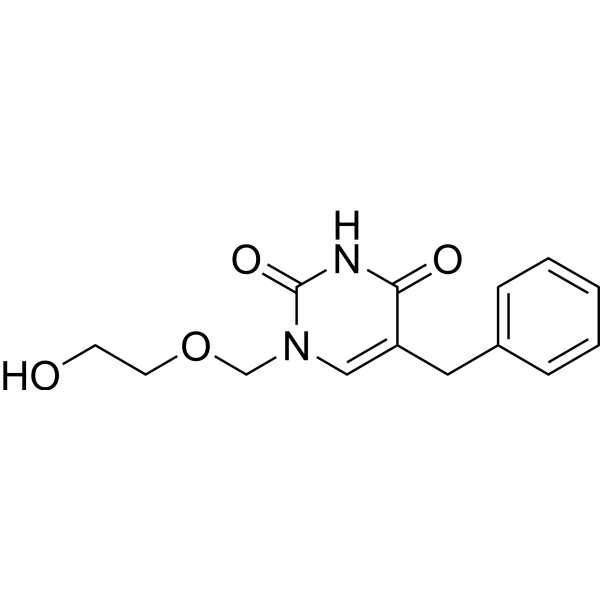
Benzylacyclouridine (BAU) is a potent and specific inhibitor of uridine phosphorylase, the first enzyme in the catabolism of uridine. Benzylacyclouridine inhibits the metabolic activity of UPP1 and the activity of UPP2. Benzylacyclouridine can modulate the cytotoxic side effects of 5-fluorouracil (5-FU) and its derivatives .
|
-
- HY-W353804
-
|
|
Nucleoside Antimetabolite/Analog
|
Infection
|
|
2'-Deoxy-β-L-uridine is a nucledside analogue and a specific substrate for the viral enzyme, shows no stereospecificity against herpes simplex 1 (HSV1) thymidine kinase (TK). 2′-Deoxy-β-L-uridine exerts antiviral activity via the interation of 5'-triphosphates with the viral DNA polymerase .
|
-
- HY-154517
-
|
|
Nucleoside Antimetabolite/Analog
|
Cancer
|
|
N3-Cyanoethyl-5’-O-(4,4’-dimethoxytrityl)-2’-O-methyluridine is a uridine analog. Uridine has potential antiepileptic effects, and its analogs can be used to study anticonvulsant and anxiolytic activities, as well as to develop new antihypertensive agents .
|
-
- HY-101981
-
-
- HY-154647
-
|
|
Nucleoside Antimetabolite/Analog
|
Cancer
|
|
N3-(2S)-[2-(tert-Butoxycarbonyl)amino-3-(tert-butoxy carbonyl)]propyluridine is a uridine analog. Uridine has potential antiepileptic effects, and its analogs can be used to study anticonvulsant and anxiolytic activities, as well as to develop new antihypertensive agents .
|
-
- HY-N7033R
-
|
Uridine 5'-diphosphoglucuronic acid trisodium salt (Standard)
|
Reference Standards
Drug Intermediate
|
Metabolic Disease
|
|
UDP-glucuronic acid (trisodium) (Standard) is the analytical standard of UDP-glucuronic acid (trisodium). This product is intended for research and analytical applications. UDP-?glucuronic acid trisodium (Uridine-5'-diphosphoglucuronic acid trisodium salt) is a critical precursor for essential glycoconjugates across biological kingdoms, ranging from mammalian glycosaminoglycans and plant cell wall polysaccharides to bacterial capsule glycoglycerolipids.
|
-
- HY-W102322
-
-
- HY-185257
-
-
- HY-W013175
-
-
- HY-160538
-
|
|
Phosphoramidites
|
|
|
2'-O-TOM-uridine-3'-CEP is a phosphoramidite that can be used in the synthesis of oligonucleotides.
|
-
- HY-150017
-
-
- HY-154828
-
|
3′,5′-UDP
|
DNA/RNA Synthesis
|
Others
|
|
Uridine 3′,5′-diphosphate (3′,5′-UDP; Compound pUp) is a competitive RNase inhibitor .
|
-
- HY-154652
-
|
|
Nucleoside Antimetabolite/Analog
|
Cancer
|
|
1-(2,3,5-Tri-O-benzoyl-2-C-methyl-β-D-ribofuranosyl)-2,4(1H,3H)-pyrimidinedione is a uridine analog. Uridine has potential antiepileptic effects, and its analogs can be used to study anticonvulsant and anxiolytic activities, as well as to develop new antihypertensive agents .
|
-
- HY-152476
-
|
|
Nucleoside Antimetabolite/Analog
|
Cancer
|
|
3’-β-C-Ethynyluridine is a uridine analog. Uridine has potential antiepileptic effects, and its analogs can be used to study anticonvulsant and anxiolytic activities, as well as to develop new antihypertensive agents . 3’-β-C-Ethynyluridine is a click chemistry reagent, it contains an Alkyne group and can undergo copper-catalyzed azide-alkyne cycloaddition (CuAAc) with molecules containing Azide groups.
|
-
- HY-W008491
-
|
|
Phosphorylase
|
Inflammation/Immunology
Cancer
|
|
TK-112690 is a UPP1 inhibitor. TK-112690 inhibits murine small intestinal uridine phosphorylase (UPase) with an IC50 of 12.5 μM and human small intestinal UPase with an IC50 of 20.0 μM in vitro. TK-112690 increases plasma uridine concentration in mice. TK-112690 can be used for the study of cancer and pulmonary fibrosis .
|
-
- HY-157091
-
-
- HY-W010820
-
-
- HY-N19838
-
-
- HY-164767A
-
|
2'-O-MethylpseudoUridine TP
|
DNA/RNA Synthesis
|
Others
|
|
N1-Methyl-2'-O-Methylpseudo-UTP is a modified uridine triphosphate and can be used for RNA synthesis.
|
-
- HY-W100234
-
|
2'-O-Methyl-5-methylUridine
|
Nucleoside Antimetabolite/Analog
|
Cancer
|
|
5-Methyl-2’-O-methyl-uridine (2'-O-methyl-5-methyluridine) is a thymidine analog. Analogs of this series have insertional activity towards replicated DNA. They can be used to label cells and track DNA synthesis. 5-Methyl-2’-O-methyl-uridine is a modified nucleoside that can be found in tRNA isolated from rabbit liver .
|
-
- HY-P3178
-
|
|
Biochemical Assay Reagents
|
Infection
Cancer
|
|
Pyrimidine nucleoside phosphorylase is an enzyme. The Pyrimidine nucleoside phosphorylase in Mycoplasma hyorhinis efficiently catalyzes the phosphorylation of thymidine and uridine, and exhibits (2 ,-deoxy)ribosyltransferase activity .
|
-
- HY-148394
-
|
|
DNA/RNA Synthesis
|
Cancer
|
|
UCK2 Inhibitor-1 (Compound 20874830-2) is a non-competitive UCK2 inhibitor with an IC50 of 4.7 μM. UCK2 Inhibitor-1 acts as a non-competitive inhibitor against uridine and ATP, and functionally inhibits the enzymatic activity of UCK2. UCK2 Inhibitor-1 suppresses the uridine salvage pathway. UCK2 Inhibitor-1 can be used in chronic myeloid leukemia research .
|
-
- HY-148396
-
|
|
DNA/RNA Synthesis
|
Infection
Cancer
|
|
UCK2 Inhibitor-3 is a non-competitive inhibitor of uridine-cytidine kinase 2 (UCK2, a pyrimidine salvage enzyme) with an IC50 value of 16.6 μM. UCK2 can replace dihydroorotate dehydrogenase (DHODH), in a certain extent, in infected or rapidly dividing cells to continue efficient uridine salvage. UCK2 Inhibitor-3 also inhibits DNA polymerase eta and kappa with IC50s of 56 μM and 16 μM .
|
-
- HY-162507
-
|
|
DNA/RNA Synthesis
|
Infection
|
|
2'-RIBOTAC-U recruiter-linker (Compound 9) consists of RNase L recruiter and linker. 2'-RIBOTAC-U recruiter-linker is reacted separately with 2’-azido-uridine or 5’-azidomethyl-uridine via copper-catalyzed click chemistry, resulting in the formation of 2’-RIBOTAC-U and 5’-RIBOTAC-U, respectively. 2’-RIBOTAC-U has anti-SARS-CoV-2 activity .
|
-
- HY-111642
-
|
|
Nucleoside Antimetabolite/Analog
|
Others
|
|
3'-Azido-3'-deoxy-beta-L-uridine (Compound 25) is a nucleoside derivative. 3'-Azido-3'-deoxy-beta-L-uridine is a click chemistry reagent, it contains an Azide group and can undergo copper-catalyzed azide-alkyne cycloaddition reaction (CuAAc) with molecules containing Alkyne groups. It can also undergo strain-promoted alkyne-azide cycloaddition (SPAAC) reactions with molecules containing DBCO or BCN groups.
|
-
- HY-152488
-
|
|
Nucleoside Antimetabolite/Analog
|
Cancer
|
|
3’-β-C-Ethynyl-5-methyl uridine is a thymidine analog. Analogs of this series have insertional activity towards replicated DNA. They can be used to label cells and track DNA synthesis . 3’-β-C-Ethynyl-5-methyl uridine is a click chemistry reagent, it contains an Alkyne group and can undergo copper-catalyzed azide-alkyne cycloaddition (CuAAc) with molecules containing Azide groups.
|
-
- HY-134529A
-
|
Ribose 1-phosphate dicyclohexanamine
|
Endogenous Metabolite
|
Others
|
|
D-Ribofuranose1-dihydrogenphosphate dicyclohexanamine, also known as ribose 1-phosphate, is the material for the synthesis of 5-fluorouracil (FUra) by uridine phosphorylase .
|
-
- HY-W394106
-
|
|
Nucleoside Antimetabolite/Analog
|
Others
|
|
5-Hydroxymethyl uridine is a thymidine analogue. Analogs of this series have insertional activity towards replicated DNA. They can be used to label cells and track DNA synthesis .
|
-
- HY-151817
-
|
|
Biochemical Assay Reagents
|
Others
|
|
5-Azidomethyl-uridine is a click chemistry reagent containing an azide group. The azide function is widely used for coupling to alkyne-containing fragments via the renowned Click reaction.
|
-
- HY-154255
-
|
|
Nucleoside Antimetabolite/Analog
|
Cancer
|
|
5-(3-Azidopropyl)uridine is a thymidine analog. Analogs of this series have insertional activity towards replicated DNA. They can be used to label cells and track DNA synthesis . 5-(3-Azidopropyl)uridine is a click chemistry reagent, it contains an Azide group and can undergo copper-catalyzed azide-alkyne cycloaddition reaction (CuAAc) with molecules containing Alkyne groups. It can also undergo strain-promoted alkyne-azide cycloaddition (SPAAC) reactions with molecules containing DBCO or BCN groups.
|
-
- HY-113359
-
-
- HY-152790
-
|
|
Nucleoside Antimetabolite/Analog
|
Others
|
|
5-(2-Hydroxyethyl)uridine is a thymidine analogue. Analogs of this series have insertional activity towards replicated DNA. They can be used to label cells and track DNA synthesis .
|
-
- HY-W009313
-
|
2',3'-O-Isopropylidene-D-Uridine
|
Nucleoside Antimetabolite/Analog
|
Infection
|
|
2',3'-O-Isopropylideneuridine is a modified uridine. 2',3'-O-Isopropylideneuridine can be used in the research of viral diseases (such as cytomegalovirus and varicella-zoster virus) .
|
-
- HY-15592AS
-
|
GSK-1265744-d3 sodium; S/GSK1265744-d3 sodium
|
Isotope-Labeled Compounds
HIV Integrase
|
Infection
|
|
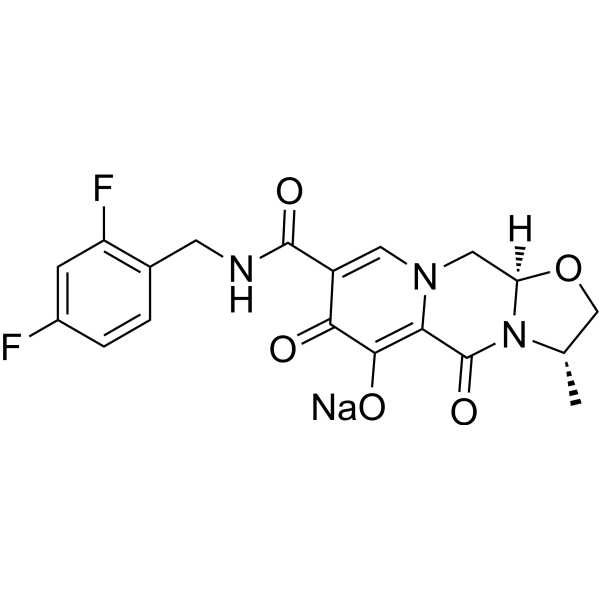
Cabotegravir-d3 (sodium) is the deuterium labeled Cabotegravir sodium. Cabotegravir sodium is a highly potent HIV integrase inhibitor with an IC50 value of 2.5 nM for HIVADA. Cabotegravir sodium is primarily metabolized by uridine diphosphate glucuronosyltr
|
-
- HY-144071
-
|
|
Bacterial
|
Infection
|
|
MurB-IN-1 (compound 44) is an inhibitor of uridine diphosphate-N-acetylenolpyruvylglucosamine reductase (MurB), with a Kd 3.57 μM. MurB, a target in P. aeruginosa, is an opportunistic infectious agent causing death .
|
-
- HY-77650
-
|
4'-AzidoUridine
|
Nucleoside Antimetabolite/Analog
|
Others
|
|
4'-C-azidouridine (4'-Azidouridine) is a uridine analogue. Uridine has potential antiepileptic effects, and its analogs can be used to study anticonvulsant and anxiolytic activities, as well as to develop new antihypertensive agents . 4'-C-Azidouridine is a click chemistry reagent, it contains an Azide group and can undergo copper-catalyzed azide-alkyne cycloaddition reaction (CuAAc) with molecules containing Alkyne groups. It can also undergo strain-promoted alkyne-azide cycloaddition (SPAAC) reactions with molecules containing DBCO or BCN groups.
|
-
- HY-124795
-
|
|
Nucleoside Transporters
|
Others
|
|
FPMINT is a potent, irreversible and non-competitive inhibitor of Equilibrative nucleoside transporters (ENTs), which is more selective to ENT2 than to ENT1. FPMINT plays an important role in uridine uptake .
|
-
- HY-152543
-
|
|
Nucleoside Antimetabolite/Analog
|
Others
|
|
5-[3-[(Trifluoroacetyl)amino]propyl]uridine is a thymidine analogue. Analogs of this series have insertional activity towards replicated DNA. They can be used to label cells and track DNA synthesis .
|
-
- HY-B0158S4
-
-
- HY-B0158
-
|
Cytosine β-D-riboside; Cytosine-1-β-D-ribofuranoside
|
Nucleoside Antimetabolite/Analog
Endogenous Metabolite
|
Neurological Disease
|
|
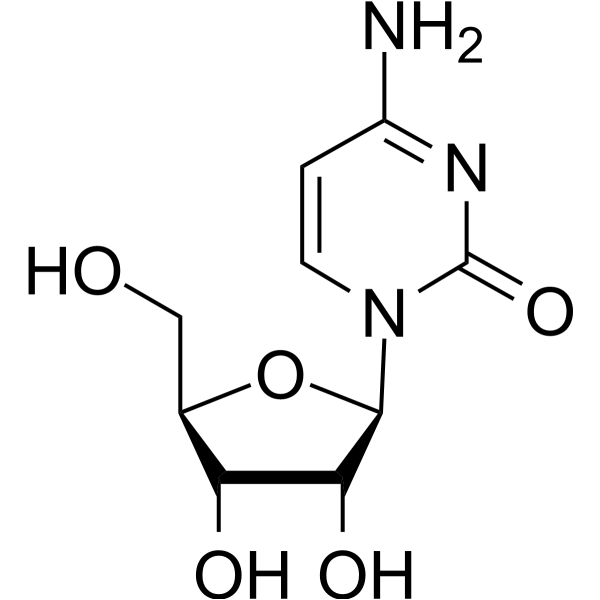
Cytidine is a pyrimidine nucleoside and acts as a component of RNA. Cytidine is a precursor of uridine. Cytidine controls neuronal-glial glutamate cycling, affecting cerebral phospholipid metabolism, catecholamine synthesis, and mitochondrial function .
|
-
- HY-164252
-
|
5′-O-Trityl-2′-deoxy-2′-fluoroUridine
|
DNA/RNA Synthesis
Phosphoramidites
|
Others
|
|
DMT-2'-FU (5'-O-Trityl-2'-deoxy-2'-fluorouridine)Is with DMTProtecting Group (Protect 5'end), FLabeled uridine ribonucleotide.
|
-
- HY-154256
-
|
|
Nucleoside Antimetabolite/Analog
|
Cancer
|
|
5-(2-Azidoethyl)uridine is a purine nucleoside analog. Purine nucleoside analogs have broad antitumor activity targeting indolent lymphoid malignancies. Anticancer mechanisms in this process rely on inhibition of DNA synthesis, induction of apoptosis, etc . 5-(2-Azidoethyl)uridine is a click chemistry reagent, it contains an Azide group and can undergo copper-catalyzed azide-alkyne cycloaddition reaction (CuAAc) with molecules containing Alkyne groups. It can also undergo strain-promoted alkyne-azide cycloaddition (SPAAC) reactions with molecules containing DBCO or BCN groups.
|
-
- HY-152580
-
|
|
Nucleoside Antimetabolite/Analog
|
Others
|
|
5-[3-[(2,2,2-Trifluoroacetyl)amino]-1-propyn-1-yl]uridine is a thymidine analogue. Analogs of this series have insertional activity towards replicated DNA. They can be used to label cells and track DNA synthesis . 5-[3-[(2,2,2-Trifluoroacetyl)amino]-1-propyn-1-yl]uridine is a click chemistry reagent, it contains an Alkyne group and can undergo copper-catalyzed azide-alkyne cycloaddition (CuAAc) with molecules containing Azide groups.
|
-
- HY-B0158S1
-
-
- HY-B0158S3
-
-
- HY-109047
-
|
AL-335
|
HCV
DNA/RNA Synthesis
|
Infection
|
|
Adafosbuvir (AL-335), a precursor compound of a uridine-based nucleotide analog polymerase (NS5B) inhibitor, has potent antiviral activity against HCV and acts as a potent inhibitor of HCV RNA polymerase .
|
-
- HY-152985
-
|
|
Nucleoside Antimetabolite/Analog
|
Others
|
|
6-Chloro-N1-(trimethylsilylethoxymethyl)pseudouridine is a uridine analog. Uridine has potential antiepileptic effects, and its analogs can be used to study anticonvulsant and anxiolytic activities, as well as to develop new antihypertensive agents . 3’-Azido-3’-deoxy-4-deoxyuridine is a click chemistry reagent, it contains an Azide group and can undergo copper-catalyzed azide-alkyne cycloaddition reaction (CuAAc) with molecules containing Alkyne groups. It can also undergo strain-promoted alkyne-azide cycloaddition (SPAAC) reactions with molecules containing DBCO or BCN groups.
|
-
- HY-45409
-
|
2'-F-dU Phosphoramidite
|
Phosphoramidites
Nucleoside Antimetabolite/Analog
|
Cancer
|
|
DMT-2’ Fluoro-dU Phosphoramidite (2'-F-dU Phosphoramidite) is a uridine phosphoramidite with a fluorine in the 2’ position. DMT-2’ Fluoro-dU Phosphoramidite could be used for nucleoside modification and synthesis of DNA .
|
-
- HY-152510
-
|
|
Nucleoside Antimetabolite/Analog
|
Cancer
|
|
5-(Aminomethyl)uridine is a purine nucleoside analog. Purine nucleoside analogs have broad antitumor activity targeting indolent lymphoid malignancies. Anticancer mechanisms in this process rely on inhibition of DNA synthesis, induction of apoptosis, etc .
|
-
- HY-137612
-
|
Uridine 5'-O-1-thiotriphosphate
|
P2Y Receptor
|
Cancer
|
|
Sp-UTP-α-S (Uridine 5-0-1-thiotrirhosphate) is a P2Y2 and P2Y4 receptor activator. Sp-UTP-α-S can be used in cancer research .
|
-
- HY-152867
-
|
|
Nucleoside Antimetabolite/Analog
|
Others
|
|
5-(Trifluoromethyl)uridine is a purine nucleoside analogue. Purine nucleoside analogs have broad antitumor activity targeting indolent lymphoid malignancies. Anticancer mechanisms in this process rely on inhibition of DNA synthesis, induction of apoptosis, etc .
|
-
- HY-154616
-
|
|
Nucleoside Antimetabolite/Analog
|
Cancer
|
|
2’-O-Phthalimidopropyl uridine is a purine nucleoside analog. Purine nucleoside analogs have broad antitumor activity targeting indolent lymphoid malignancies. Anticancer mechanisms in this process rely on inhibition of DNA synthesis, induction of apoptosis, etc .
|
-
- HY-B0158S2
-
-
- HY-152871
-
|
|
Nucleoside Antimetabolite/Analog
|
Others
|
|
Uridine 5-oxyacetic acid methyl ester is a purine nucleoside analogue. Purine nucleoside analogs have broad antitumor activity targeting indolent lymphoid malignancies. Anticancer mechanisms in this process rely on inhibition of DNA synthesis, induction of apoptosis, etc .
|
-
- HY-154453
-
|
|
Nucleoside Antimetabolite/Analog
|
Cancer
|
|
4-Deoxy-xylo-uridine is a purine nucleoside analog. Purine nucleoside analogs have broad antitumor activity targeting indolent lymphoid malignancies. Anticancer mechanisms in this process rely on inhibition of DNA synthesis, induction of apoptosis, etc .
|
-
- HY-154640
-
|
|
Nucleoside Antimetabolite/Analog
|
Cancer
|
|
2’,3’,5’-Tri-O-acetyl-5-(trifluoromethyl)uridine is a thymidine analog. Analogs of this series have insertional activity towards replicated DNA. They can be used to label cells and track DNA synthesis .
|
-
- HY-W1121766
-
|
|
DNA/RNA Synthesis
Phosphoramidites
|
Others
|
|
5'-O-DMT-2'-O-[2-(Methylamino)-2-oxoethyl]-5-Me-uridine 3'-CE phosphoramidite is a phosphoramidite that can be used in the synthesis of oligonucleotides.
|
-
- HY-152514
-
|
|
Nucleoside Antimetabolite/Analog
|
Cancer
|
|
5-Azidomethyl-2’-beta-methyl uridine is a purine nucleoside analog. Purine nucleoside analogs have broad antitumor activity targeting indolent lymphoid malignancies. Anticancer mechanisms in this process rely on inhibition of DNA synthesis, induction of apoptosis, etc . 5-Azidomethyl-2’-beta-methyl uridine is a click chemistry reagent, it contains an Azide group and can undergo copper-catalyzed azide-alkyne cycloaddition reaction (CuAAc) with molecules containing Alkyne groups. It can also undergo strain-promoted alkyne-azide cycloaddition (SPAAC) reactions with molecules containing DBCO or BCN groups.
|
-
- HY-154461
-
|
|
Nucleoside Antimetabolite/Analog
|
Cancer
|
|
5-Azidomethyl-2’,3’,5’-tri-O-benzoyl uridine is a thymidine analog. Analogs of this series have insertional activity towards replicated DNA. They can be used to label cells and track DNA synthesis . 5-Azidomethyl-2’,3’,5’-tri-O-benzoyl uridine is a click chemistry reagent, it contains an Azide group and can undergo copper-catalyzed azide-alkyne cycloaddition reaction (CuAAc) with molecules containing Alkyne groups. It can also undergo strain-promoted alkyne-azide cycloaddition (SPAAC) reactions with molecules containing DBCO or BCN groups.
|
-
- HY-152525
-
|
|
Nucleoside Antimetabolite/Analog
|
Others
|
|
5-(Azidomethyl)-2’-O-(2-methoxyethyl)uridine is a thymidine analogue. Analogs of this series have insertional activity towards replicated DNA. They can be used to label cells and track DNA synthesis . 5-(Azidomethyl)-2’-O-(2-methoxyethyl)uridine is a click chemistry reagent, it contains an Azide group and can undergo copper-catalyzed azide-alkyne cycloaddition reaction (CuAAc) with molecules containing Alkyne groups. It can also undergo strain-promoted alkyne-azide cycloaddition (SPAAC) reactions with molecules containing DBCO or BCN groups.
|
-
- HY-154590
-
|
|
Nucleoside Antimetabolite/Analog
|
Cancer
|
|
2’,3’-Di-O-isopropylidene-4’-alpha-C-azidouridine is a uridine analog. Uridine has potential antiepileptic effects, and its analogs can be used to study anticonvulsant and anxiolytic activities, as well as to develop new antihypertensive agents . 2’,3’-Di-O-isopropylidene-4’-alpha-C-azidouridine is a click chemistry reagent, it contains an Azide group and can undergo copper-catalyzed azide-alkyne cycloaddition reaction (CuAAc) with molecules containing Alkyne groups. It can also undergo strain-promoted alkyne-azide cycloaddition (SPAAC) reactions with molecules containing DBCO or BCN groups.
|
-
- HY-122502
-
|
Pirazofurin
|
DNA/RNA Synthesis
Antibiotic
Influenza Virus
HIV
SARS-CoV
|
Infection
Cancer
|
|
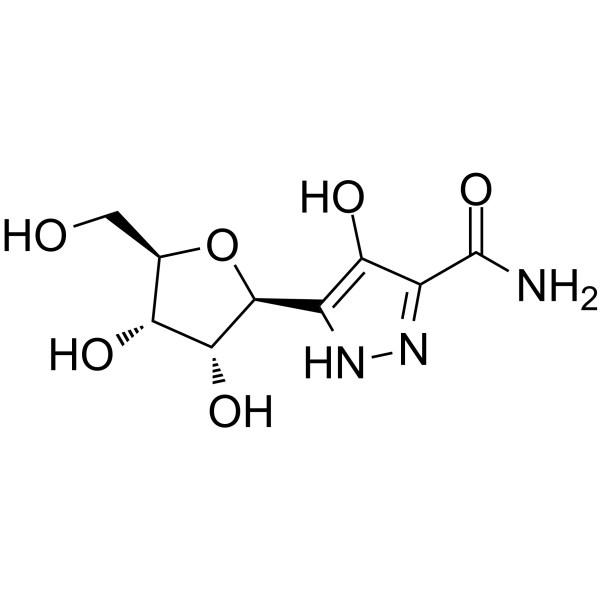
Pyrazofurin is an antitumor pyrimidine nucleoside analogue and a orotate-phosphoribosyltransferase inhibitor. Pyrazofurin inhibits cell proliferation and intracellular DNA synthesis by inhibiting uridine 5'-phosphate synthase. Pyrazofurin is also an antibiotic with a broad spectrum of antiviral activity .
|
-
- HY-137612A
-
|
Uridine 5'-O-1-thiotriphosphate tetrasodium
|
P2Y Receptor
|
Cancer
|
|
Sp-UTP-α-S (Uridine 5-0-1-thiotrirhosphate) tetrasodium is a P2Y2 and P2Y4 receptor activator. Sp-UTP-α-S tetrasodium can be used in cancer research .
|
-
- HY-W552067
-
|
|
Nucleoside Antimetabolite/Analog
|
Cancer
|
|
5-(Hydroxymethyl)-2′,3′-O-(1-methylethylidene)uridine is a thymidine analog. Analogs of this series have insertional activity towards replicated DNA. They can be used to label cells and track DNA synthesis .
|
-
- HY-152385
-
|
|
Nucleoside Antimetabolite/Analog
|
Others
|
|
5,6-Dihydro-ara-uridine is a purine nucleoside analogue. Purine nucleoside analogs have broad antitumor activity targeting indolent lymphoid malignancies. Anticancer mechanisms in this process rely on inhibition of DNA synthesis, induction of apoptosis, etc .
|
-
- HY-154698
-
|
|
Nucleoside Antimetabolite/Analog
|
Cancer
|
|
Homouridine, is an uridine analogue. Homouridine serves as an intermediate to prepare MMP-2 inhibitor (compund I, IC50=150 μM). Homouridine derivate (compund I) also inhibits TNF-α binding to TNF-αR1 .
|
-
- HY-W1119957
-
|
|
Biochemical Assay Reagents
|
Others
|
|
5'-VP-2'-OMe-U phosphoramidite is a phosphoramidite that contains 5’ DMT and uridine with 2’-O-methyl protection. 5'-VP-2'-OMe-U Phosphoramidite can be used to synthesize oligonucleotide.
|
-
- HY-154294
-
|
|
Nucleoside Antimetabolite/Analog
|
Cancer
|
|
N1-Methyl ara-uridine is a purine nucleoside analog. Purine nucleoside analogs have broad antitumor activity targeting indolent lymphoid malignancies. Anticancer mechanisms in this process rely on inhibition of DNA synthesis, induction of apoptosis, etc .
|
-
- HY-152782
-
|
|
Nucleoside Antimetabolite/Analog
|
Others
|
|
4’-Azido-2’-deoxy-2’-fluoro-beta-D-arabinouridine is a uridine analogue. Uridine has potential antiepileptic effects, and its analogs can be used to study anticonvulsant and anxiolytic activities, as well as to develop new antihypertensive agents . 4’-Azido-2’-deoxy-2’-fluoro-beta-D-arabinouridine is a click chemistry reagent, it contains an Azide group and can undergo copper-catalyzed azide-alkyne cycloaddition reaction (CuAAc) with molecules containing Alkyne groups. It can also undergo strain-promoted alkyne-azide cycloaddition (SPAAC) reactions with molecules containing DBCO or BCN groups.
|
-
- HY-W377455
-
|
|
Nucleoside Antimetabolite/Analog
|
Others
|
|
5-Fluoro-1-((2R,3S,4R,5R)-3-fluoro-4-hydroxy-5-(hydroxymethyl)tetrahydrofuran-2-yl)pyrimidine-2,4(1H,3H)-dione (2',5-difluoro-2'-deoxy-1-arabinosyluracil) is a uridine analogue. Uridine has potential antiepileptic effects, and its analogs can be used to study anticonvulsant and anxiolytic activities, as well as to develop new antihypertensive agents .
|
-
- HY-110104
-
|
|
Transmembrane Glycoprotein
|
Others
|
|
8MDP is a potent equilibrative nucleoside transporter 1 (ENT1) inhibitor with an IC50 of 0.43 nM. 8MDP inhibits hENT1 and hENT2 uptake of [H 3] uridine by K562 cells and K15NTD cells .
|
-
- HY-154420
-
|
|
Nucleoside Antimetabolite/Analog
|
Cancer
|
|
2’,3’-Bis-(O-t-butyldimethylsilyl)uridine is a purine nucleoside analog. Purine nucleoside analogs have broad antitumor activity targeting indolent lymphoid malignancies. Anticancer mechanisms in this process rely on inhibition of DNA synthesis, induction of apoptosis, etc .
|
-
- HY-B0158S
-
|
Cytosine β-D-riboside-d2; Cytosine-1-β-D-ribofuranoside-d2
|
Nucleoside Antimetabolite/Analog
Endogenous Metabolite
|
Neurological Disease
|
|
Cytidine-d2 is the deuterium labeled Cytidine. Cytidine is a pyrimidine nucleoside and acts as a component of RNA. Cytidine is a precursor of uridine. Cytidine controls neuronal-glial glutamate cycling, affecting cerebral phospholipid metabolism, catecholamine synthesis, and mitochondrial function .
|
-
- HY-W415119
-
|
acetic acid 4-acetoxy-5-(2,4-dioxo-3,4-dihydro-2H-pyrimidin-1-yl)-2-hydroxymethyl-tetrahydrofuran-3-yl ester
|
Nucleoside Antimetabolite/Analog
|
Cancer
|
|
2',3'-Di-O-acetyl-D-uridine is a purine nucleoside analog. Purine nucleoside analogs have broad antitumor activity targeting indolent lymphoid malignancies. Anticancer mechanisms in this process rely on inhibition of DNA synthesis, induction of apoptosis, etc .
|
-
- HY-152317
-
|
|
Nucleoside Antimetabolite/Analog
|
Cancer
|
|
5-Methyl-2-thio-xylo-uridine is a purine nucleoside analog. Purine nucleoside analogs have broad antitumor activity targeting indolent lymphoid malignancies. Anticancer mechanisms in this process rely on inhibition of DNA synthesis, induction of apoptosis, etc .
|
-
- HY-154296
-
|
|
Nucleoside Antimetabolite/Analog
|
Cancer
|
|
2’-Deoxy-2’-fluoro-ara-uridine is a purine nucleoside analog. Purine nucleoside analogs have broad antitumor activity targeting indolent lymphoid malignancies. Anticancer mechanisms in this process rely on inhibition of DNA synthesis, induction of apoptosis, etc .
|
-
- HY-152729
-
|
|
Nucleoside Antimetabolite/Analog
|
Others
|
|
5-(2-Amino-2-oxoethyl)uridine is a purine nucleoside analogue. Purine nucleoside analogs have broad antitumor activity targeting indolent lymphoid malignancies. Anticancer mechanisms in this process rely on inhibition of DNA synthesis, induction of apoptosis, etc .
|
-
- HY-154161
-
|
|
Nucleoside Antimetabolite/Analog
|
Cancer
|
|
5-(2-Hydroxyethyl)-2’-deoxy uridine is a purine nucleoside analog. Purine nucleoside analogs have broad antitumor activity targeting indolent lymphoid malignancies. Anticancer mechanisms in this process rely on inhibition of DNA synthesis, induction of apoptosis, etc .
|
-
- HY-152721
-
|
|
Nucleoside Antimetabolite/Analog
|
Others
|
|
3’-O-Methyl-4-deoxy uridine is a purine nucleoside analogue. Purine nucleoside analogs have broad antitumor activity targeting indolent lymphoid malignancies. Anticancer mechanisms in this process rely on inhibition of DNA synthesis, induction of apoptosis, etc .
|
-
- HY-W048496
-
|
|
Nucleoside Antimetabolite/Analog
|
Cancer
|
|
2'-O-(2-Methoxyethyl)-cytidine is a synthetic oligonucleotide derived from uridine. 2'-O-(2-Methoxyethyl)-cytidine has good hybridization properties and high stability, and can be used in the research of oligonucleotide chemotherapeutic agents .
|
-
- HY-E70585
-
|
|
DNA/RNA Synthesis
|
Others
|
|
T4 Phage β-glucosyltransferase is a DNA-modifying enzyme encoded by bacteriophage T4. T4 Phage β-glucosyltransferase transfers glucose from uridine diphosphoglucose to 5-hydroxymethyl cytosine bases of phage T4 DNA .
|
-
- HY-152585
-
|
|
Nucleoside Antimetabolite/Analog
|
Others
|
|
3’-Azido-3’-deoxy-5-fluoro-beta-L-uridine is a purine nucleoside analogue. Purine nucleoside analogs have broad antitumor activity targeting indolent lymphoid malignancies. Anticancer mechanisms in this process rely on inhibition of DNA synthesis, induction of apoptosis, etc . 3’-Azido-3’-deoxy-5-fluoro-beta-L-uridine is a click chemistry reagent, it contains an Azide group and can undergo copper-catalyzed azide-alkyne cycloaddition reaction (CuAAc) with molecules containing Alkyne groups. It can also undergo strain-promoted alkyne-azide cycloaddition (SPAAC) reactions with molecules containing DBCO or BCN groups.
|
-
- HY-152583
-
|
|
Nucleoside Antimetabolite/Analog
|
Others
|
|
3’-Azido-3’-deoxy-5-methyl-beta-L-uridine is a purine nucleoside analogue. Purine nucleoside analogs have broad antitumor activity targeting indolent lymphoid malignancies. Anticancer mechanisms in this process rely on inhibition of DNA synthesis, induction of apoptosis, etc . 3’-Azido-3’-deoxy-5-methyl-beta-L-uridine is a click chemistry reagent, it contains an Azide group and can undergo copper-catalyzed azide-alkyne cycloaddition reaction (CuAAc) with molecules containing Alkyne groups. It can also undergo strain-promoted alkyne-azide cycloaddition (SPAAC) reactions with molecules containing DBCO or BCN groups.
|
-
- HY-45219
-
|
Uridine,2',3'-o-(1-methylethylidene)-,4-oxidechemicalbook,5'-(2-methylpropanoate)
|
Drug Intermediate
|
Others
|
|
((3aR,4R,6R,6aR)-6-((E)-4-(Hydroxyimino)-2-oxo-3,4-dihydropyrimidin-1(2H)-yl)-2,2-dimethyltetrahydrofuro[3,4-d][1,3]dioxol-4-yl)methyl isobutyrate (Uridine,2',3'-o-(1-methylethylidene)-,4-oxidechemicalbook,5'-(2-methylpropanoate)) is a drug intermediate for synthesis of various active compounds.
|
-
- HY-105336
-
|
NSC 126849
|
DNA/RNA Synthesis
Nucleoside Antimetabolite/Analog
|
Cancer
|
|
3-Deazauridine (NSC 126849) is a uridine analogue. 3-Deazauridine competitively inhibits cytidine triphosphate synthase to inhibit the biosynthesis of cytidine-5'-triphosphate. 3-Deazauridine acts synergistically with several antineoplastic agents, acting as a biological response modifier .
|
-
- HY-B0158S6
-
|
Cytosine β-D-riboside-15N3; Cytosine-1-β-D-ribofuranoside-15N3
|
Nucleoside Antimetabolite/Analog
Endogenous Metabolite
|
Neurological Disease
|
|
Cytidine- 15N3 is the 15N labeled Cytidine . Cytidine is a pyrimidine nucleoside and acts as a component of RNA. Cytidine is a precursor of uridine. Cytidine controls neuronal-glial glutamate cycling, affecting cerebral phospholipid metabolism, catecholamine synthesis, and mitochondrial function .
|
-
- HY-W008915
-
|
CDP
|
DNA/RNA Synthesis
|
Metabolic Disease
|
|
Cytidine 5'-diphosphate trisodium salt (CDP) is produced by the transfer of phosphoryl group from ATP to cytidine monophosphate (CMP) catalyzed by uridine monophosphate kinase (UMPK). Cytidine 5′-diphosphate can be used to produce Cytidine triphosphate (CTP) for synthesis of DNA and RNA .
|
-
- HY-154144
-
|
|
Nucleoside Antimetabolite/Analog
|
Cancer
|
|
2’,3’,5’-Tri-O-benzoyl-2’-β-C-methyl-5-methyl uridine is a thymidine analog. Analogs of this series have insertional activity towards replicated DNA. They can be used to label cells and track DNA synthesis .
|
-
- HY-200335
-
|
|
DNA/RNA Synthesis
Phosphoramidites
|
Others
|
|
Uridine, 5′-O-[bis(4-methoxyphenyl)phenylmethyl]-2′-O-methyl-5-iodo-, 3′-[2-cyanoethyl N,N-bis(1-methylethyl)phosphoramidite] is a phosphoramidite that can be used in the synthesis of oligonucleotides.
|
-
- HY-200336
-
|
|
DNA/RNA Synthesis
Phosphoramidites
|
Others
|
|
Uridine, 5′-O-[bis(4-methoxyphenyl)phenylmethyl]-5-bromo-2′-O-methyl-, 3′-[2-cyanoethyl N,N-bis(1-methylethyl)phosphoramidite] is a phosphoramidite that can be used in the synthesis of oligonucleotides.
|
-
- HY-154085
-
|
|
Nucleoside Antimetabolite/Analog
|
Cancer
|
|
(2’,3’,5’-Tri-O-acetyl)uridine 5-carboxylic acid is a purine nucleoside analog. Purine nucleoside analogs have broad antitumor activity targeting indolent lymphoid malignancies. Anticancer mechanisms in this process rely on inhibition of DNA synthesis, induction of apoptosis, etc .
|
-
- HY-152611
-
|
|
Nucleoside Antimetabolite/Analog
|
Cancer
|
|
N1-Methyl-5-methyl ara-uridine is a purine nucleoside analog. Purine nucleoside analogs have broad antitumor activity targeting indolent lymphoid malignancies. Anticancer mechanisms in this process rely on inhibition of DNA synthesis, induction of apoptosis, etc .
|
-
- HY-154383
-
|
|
Nucleoside Antimetabolite/Analog
|
Cancer
|
|
5’-Azido-5’-deoxy-2’-O-(2-methoxyethyl)uridine is a purine nucleoside analog. Purine nucleoside analogs have broad antitumor activity targeting indolent lymphoid malignancies. Anticancer mechanisms in this process rely on inhibition of DNA synthesis, induction of apoptosis, etc . 5’-Azido-5’-deoxy-2’-O-(2-methoxyethyl)uridine is a click chemistry reagent, it contains an Azide group and can undergo copper-catalyzed azide-alkyne cycloaddition reaction (CuAAc) with molecules containing Alkyne groups. It can also undergo strain-promoted alkyne-azide cycloaddition (SPAAC) reactions with molecules containing DBCO or BCN groups.
|
-
- HY-154526
-
|
|
Nucleoside Antimetabolite/Analog
|
Cancer
|
|
1-(3’-O-[4,4’-dimethoxytrityl]-alpha-L-threofuranosyl)uridine is a purine nucleoside analog. Purine nucleoside analogs have broad antitumor activity targeting indolent lymphoid malignancies. Anticancer mechanisms in this process rely on inhibition of DNA synthesis, induction of apoptosis, etc .
|
-
- HY-154550
-
|
|
Nucleoside Antimetabolite/Analog
|
Cancer
|
|
2’-O-Acetyl-5’-O-benzoyl-3’-O-methyl-5-methyl uridine is a thymidine analog. Analogs of this series have insertional activity towards replicated DNA. They can be used to label cells and track DNA synthesis .
|
-
- HY-152444
-
|
|
Nucleoside Antimetabolite/Analog
|
Others
|
|
5-Hydroxymethyl-2’-O-(2-methoxyethyl)uridine is a purine nucleoside analogue. Purine nucleoside analogs have broad antitumor activity targeting indolent lymphoid malignancies. Anticancer mechanisms in this process rely on inhibition of DNA synthesis, induction of apoptosis, etc .
|
-
- HY-154203
-
|
|
Nucleoside Antimetabolite/Analog
|
Cancer
|
|
4-Deoxy-3’-deoxy-3’-fluoro uridine is a purine nucleoside analog. Purine nucleoside analogs have broad antitumor activity targeting indolent lymphoid malignancies. Anticancer mechanisms in this process rely on inhibition of DNA synthesis, induction of apoptosis, etc .
|
-
- HY-152435
-
|
|
Nucleoside Antimetabolite/Analog
|
Others
|
|
2’-Amino-2’-deoxy-5-methyl uridine is a purine nucleoside analogue. Purine nucleoside analogs have broad antitumor activity targeting indolent lymphoid malignancies. Anticancer mechanisms in this process rely on inhibition of DNA synthesis, induction of apoptosis, etc .
|
-
- HY-154382
-
|
|
Nucleoside Antimetabolite/Analog
|
Cancer
|
|
4’,5’-Didehydro-2’-O-(2-methoxyethyl)uridine is a purine nucleoside analog. Purine nucleoside analogs have broad antitumor activity targeting indolent lymphoid malignancies. Anticancer mechanisms in this process rely on inhibition of DNA synthesis, induction of apoptosis, etc .
|
-
- HY-152796
-
|
|
Nucleoside Antimetabolite/Analog
|
Others
|
|
5-Furan-2-yl-2’-O-methyl uridine is a purine nucleoside analogue. Purine nucleoside analogs have broad antitumor activity targeting indolent lymphoid malignancies. Anticancer mechanisms in this process rely on inhibition of DNA synthesis, induction of apoptosis, etc .
|
-
- HY-152736
-
|
|
Nucleoside Antimetabolite/Analog
|
Others
|
|
3’-Deoxy-3’-fluoro-5-methyl-xylo-uridine is a purine nucleoside analogue. Purine nucleoside analogs have broad antitumor activity targeting indolent lymphoid malignancies. Anticancer mechanisms in this process rely on inhibition of DNA synthesis, induction of apoptosis, etc .
|
-
- HY-154684
-
|
|
Nucleoside Antimetabolite/Analog
|
Cancer
|
|
5-Benzylamino carbonyl-3’-O-acetyl-2’-O-methyl-5’-O-DMTr-uridine is a thymidine analog. Analogs of this series have insertional activity towards replicated DNA. They can be used to label cells and track DNA synthesis .
|
-
- HY-E71201
-
|
|
Biochemical Assay Reagents
|
Others
|
|
16S rRNA Pseudouridine516 synthase (EC 5.4.99.19) is specific for uridine516 in 16S rRNA. In vitro, the enzyme does not modify free 16S rRNA. The preferred substrate is a 5'-terminal fragment of 16S rRNA complexed with 30S ribosomal proteins.
|
-
- HY-113061S
-
-
- HY-N8060
-
|
Orotidine monophosphate; Orotidylic acid
|
Endogenous Metabolite
|
Others
|
|
Orotidine 5′-monophosphate is a pyrimidine ribonucleoside and plays a role as an endogenous metabolite of human, E. coli or mouse. Orotidine 5′-monophosphate is an intermediate in the biosynthesis of?uridine monophosphate (UMP). Orotidine 5′-monophosphate can be used for the study of mechanism of orotidine 5′-monophosphate decarboxylase .
|
-
- HY-154680
-
|
|
Nucleoside Antimetabolite/Analog
|
Cancer
|
|
2’-Deoxy-2’-fluoro-N3-(4-nitrobenzyl)uridine is a purine nucleoside analog. Purine nucleoside analogs have broad antitumor activity targeting indolent lymphoid malignancies. Anticancer mechanisms in this process rely on inhibition of DNA synthesis, induction of apoptosis, etc .
|
-
- HY-154727
-
|
|
Nucleoside Antimetabolite/Analog
|
Cancer
|
|
2’-Deoxy-2’-fluoro-N3-(3-aminopropyl)uridine is a purine nucleoside analog. Purine nucleoside analogs have broad antitumor activity targeting indolent lymphoid malignancies. Anticancer mechanisms in this process rely on inhibition of DNA synthesis, induction of apoptosis, etc .
|
-
- HY-154682
-
|
|
Nucleoside Antimetabolite/Analog
|
Cancer
|
|
2’-Deoxy-2’-fluoro-N3-(n-dodecyl)uridine is a purine nucleoside analog. Purine nucleoside analogs have broad antitumor activity targeting indolent lymphoid malignancies. Anticancer mechanisms in this process rely on inhibition of DNA synthesis, induction of apoptosis, etc .
|
-
- HY-154723
-
|
|
Nucleoside Antimetabolite/Analog
|
Cancer
|
|
2’-Deoxy-2’-fluoro-N3-(4-hydroxybenzyl)uridine is a purine nucleoside analog. Purine nucleoside analogs have broad antitumor activity targeting indolent lymphoid malignancies. Anticancer mechanisms in this process rely on inhibition of DNA synthesis, induction of apoptosis, etc .
|
-
- HY-154326
-
|
|
Nucleoside Antimetabolite/Analog
|
Cancer
|
|
2-Deoxy-2’-deoxy-5’-(4,4’-dimethoxytrityl)uridine is a purine nucleoside analog. Purine nucleoside analogs have broad antitumor activity targeting indolent lymphoid malignancies. Anticancer mechanisms in this process rely on inhibition of DNA synthesis, induction of apoptosis, etc .
|
-
- HY-B0656
-
|
LY307640
|
Proton Pump
Apoptosis
Bacterial
|
Inflammation/Immunology
Cancer
|
|
Rabeprazole (LY307640) is a second-generation proton pump inhibitor (PPI) that irreversibly inactivates gastric H +/K +-ATPase. Rabeprazole induces apoptosis. Rabeprazole acts as an uridine nucleoside ribohydrolase (UNH) inhibitor with an IC50 of 0.3 μM. Rabeprazole can be used for the research of gastric ulcerations and gastroesophageal reflux .
|
-
- HY-152555
-
|
|
Nucleoside Antimetabolite/Analog
|
Cancer
|
|
2’-Amino-2’-deoxy-β-D-arabino-5-methyl uridine is a purine nucleoside analog. Purine nucleoside analogs have broad antitumor activity targeting indolent lymphoid malignancies. Anticancer mechanisms in this process rely on inhibition of DNA synthesis, induction of apoptosis, etc .
|
-
- HY-154381
-
|
|
Nucleoside Antimetabolite/Analog
|
Cancer
|
|
5’-Deoxy-5’-iodo-2’-O-(2-methoxyethyl)uridine is a purine nucleoside analog. Purine nucleoside analogs have broad antitumor activity targeting indolent lymphoid malignancies. Anticancer mechanisms in this process rely on inhibition of DNA synthesis, induction of apoptosis, etc .
|
-
- HY-B0158S5
-
|
Cytosine β-D-riboside-13C9,15N3; Cytosine-1-β-D-ribofuranoside-13C9,15N3
|
Nucleoside Antimetabolite/Analog
Endogenous Metabolite
|
Neurological Disease
|
|
Cytidine- 13C9, 15N3 is the 13C and 15N labeled Cytidine . Cytidine is a pyrimidine nucleoside and acts as a component of RNA. Cytidine is a precursor of uridine. Cytidine controls neuronal-glial glutamate cycling, affecting cerebral phospholipid metabolism, catecholamine synthesis, and mitochondrial function .
|
-
- HY-B0656A
-
|
LY307640 sodium
|
Proton Pump
Apoptosis
Bacterial
|
Inflammation/Immunology
Cancer
|
|
Rabeprazole sodium (LY307640 sodium) is a second-generation proton pump inhibitor (PPI) that irreversibly inactivates gastric H +/K +-ATPase. Rabeprazole sodium induces apoptosis. Rabeprazole sodium acts as an uridine nucleoside ribohydrolase (UNH) inhibitor with an IC50 of 0.3 μM. Rabeprazole sodium can be used for the research of gastric ulcerations and gastroesophageal reflux .
|
-
- HY-154561
-
|
|
Nucleoside Antimetabolite/Analog
|
Cancer
|
|
3’,5’-Di-O-acetyl-2’-deoxy-N3-methyl uridine is a purine nucleoside analog. Purine nucleoside analogs have broad antitumor activity targeting indolent lymphoid malignancies. Anticancer mechanisms in this process rely on inhibition of DNA synthesis, induction of apoptosis, etc .
|
-
- HY-152437
-
|
|
Nucleoside Antimetabolite/Analog
|
Others
|
|
3’-Amino-3’-deoxy-5-methyl uridine, Anticancer antiviral agent is a purine nucleoside analogue. Purine nucleoside analogs have broad antitumor activity targeting indolent lymphoid malignancies. Anticancer mechanisms in this process rely on inhibition of DNA synthesis, induction of apoptosis, etc .
|
-
- HY-154236
-
|
|
Nucleoside Antimetabolite/Analog
|
Cancer
|
|
2’-Deoxy-2’-fluoro-3’,5’-bis-O-TBDMS-uridine is a purine nucleoside analog. Purine nucleoside analogs have broad antitumor activity targeting indolent lymphoid malignancies. Anticancer mechanisms in this process rely on inhibition of DNA synthesis, induction of apoptosis, etc .
|
-
- HY-154290
-
|
|
Nucleoside Antimetabolite/Analog
|
Cancer
|
|
N3,5-Dimethyl-2’-O-(2-methoxyethyl) uridine is a purine nucleoside analog. Purine nucleoside analogs have broad antitumor activity targeting indolent lymphoid malignancies. Anticancer mechanisms in this process rely on inhibition of DNA synthesis, induction of apoptosis, etc .
|
-
- HY-154542
-
|
|
Nucleoside Antimetabolite/Analog
|
Cancer
|
|
5’-O-Acetyl-2’,3’-dideoxy-2’,3’-didehydro-uridine is a purine nucleoside analog. Purine nucleoside analogs have broad antitumor activity targeting indolent lymphoid malignancies. Anticancer mechanisms in this process rely on inhibition of DNA synthesis, induction of apoptosis, etc .
|
-
- HY-154490
-
|
|
Nucleoside Antimetabolite/Analog
|
Cancer
|
|
5-(Furan-2-yl)-2’-O-methyl-5’-O-DMTr-uridine is a purine nucleoside analog. Purine nucleoside analogs have broad antitumor activity targeting indolent lymphoid malignancies. Anticancer mechanisms in this process rely on inhibition of DNA synthesis, induction of apoptosis, etc .
|
-
- HY-154543
-
|
|
Nucleoside Antimetabolite/Analog
|
Cancer
|
|
5’-O-(4,4’-Dimethoxytrityl)-3’-O-(2-methoxyethyl) uridine is a purine nucleoside analog. Purine nucleoside analogs have broad antitumor activity targeting indolent lymphoid malignancies. Anticancer mechanisms in this process rely on inhibition of DNA synthesis, induction of apoptosis, etc .
|
-
- HY-154681
-
|
|
Nucleoside Antimetabolite/Analog
|
Cancer
|
|
2’-Deoxy-2’-fluoro-N3-[(pyrid-4-yl)methyl]uridine is a purine nucleoside analog. Purine nucleoside analogs have broad antitumor activity targeting indolent lymphoid malignancies. Anticancer mechanisms in this process rely on inhibition of DNA synthesis, induction of apoptosis, etc .
|
-
- HY-154611
-
|
|
Nucleoside Antimetabolite/Analog
|
Cancer
|
|
2’-Deoxy-2’-fluoro-5-methyl-4’-thio-a-D-arabino uridine is a purine nucleoside analog. Purine nucleoside analogs have broad antitumor activity targeting indolent lymphoid malignancies. Anticancer mechanisms in this process rely on inhibition of DNA synthesis, induction of apoptosis, etc .
|
-
- HY-E70293
-
|
GALNT12
|
Endogenous Metabolite
YAP
|
Cancer
|
|
N-Acetylgalactosaminyltransferase 12 (GALNT12) belongs to the uridine diphosphate N-acetylgalactosamine gene family and is involved in the biological processes of many diseases, such as tumor progression. N-Acetylgalactosaminyltransferase 12 is a potential biomarker for fibrosarcoma, and its high expression level is closely related to the yes1-associated transcriptional regulator (YAP1) signaling pathway .
|
-
- HY-153823
-
|
|
Drug Derivative
|
Metabolic Disease
|
|
UDP-6N3Gal, a derivative UDP-Galactose (HY-150524), is a 6-azido-modified uridine diphosphate galactose. UDP-6N3Gal can label cell surface glycoproteins and can be used in the research of glycosylation imaging .
|
-
- HY-113061R
-
|
|
Reference Standards
Endogenous Metabolite
Nucleoside Antimetabolite/Analog
DNA/RNA Synthesis
|
Others
|
|
Pseudouridine (Standard) is the analytical standard of Pseudouridine. This product is intended for research and analytical applications. Pseudouridine is an isomer of the nucleoside uridine, and the most abundant modified nucleoside in non-coding RNAs. Pseudouridine in rRNA and tRNA can fine-tune and stabilize the regional structure and help maintain their functions in mRNA decoding, ribosome assembly, processing and translation [4].
|
-
- HY-154145
-
|
|
Nucleoside Antimetabolite/Analog
|
Cancer
|
|
2’,3’,5’-Tri-O-benzoyl-2’-β-C-methyl-5-methoxy uridine is a purine nucleoside analog. Purine nucleoside analogs have broad antitumor activity targeting indolent lymphoid malignancies. Anticancer mechanisms in this process rely on inhibition of DNA synthesis, induction of apoptosis, etc .
|
-
- HY-154359
-
|
|
Nucleoside Antimetabolite/Analog
|
Cancer
|
|
2’-O-Acetyl-3’,5’-bis-O-benzoyl-6-aza-xylo uridine is a purine nucleoside analog. Purine nucleoside analogs have broad antitumor activity targeting indolent lymphoid malignancies. Anticancer mechanisms in this process rely on inhibition of DNA synthesis, induction of apoptosis, etc .
|
-
- HY-B0158S8
-
|
Cytosine β-D-riboside-d13; Cytosine-1-β-D-ribofuranoside-d13
|
Nucleoside Antimetabolite/Analog
Endogenous Metabolite
Isotope-Labeled Compounds
|
Neurological Disease
|
|
Cytidine-d13 (Cytosine β-D-riboside-d13) is deuterium labeled Cytidine (HY-B0158). Cytidine is a pyrimidine nucleoside and acts as a component of RNA. Cytidine is a precursor of uridine. Cytidine controls neuronal-glial glutamate cycling, affecting cerebral phospholipid metabolism, catecholamine synthesis, and mitochondrial function .
|
-
- HY-152348
-
|
|
Nucleoside Antimetabolite/Analog
|
Cancer
|
|
2’-Deoxy-2’-fluoro-5-methyl-4’-thio-β-D-arabino uridine is a purine nucleoside analog. Purine nucleoside analogs have broad antitumor activity targeting indolent lymphoid malignancies. Anticancer mechanisms in this process rely on inhibition of DNA synthesis, induction of apoptosis, etc .
|
-
- HY-154555
-
|
|
Nucleoside Antimetabolite/Analog
|
Cancer
|
|
5’-O-Acetyl-2’,3’-dideoxy-2’,3’-didehydro-5-fluoro-uridine is a purine nucleoside analog. Purine nucleoside analogs have broad antitumor activity targeting indolent lymphoid malignancies. Anticancer mechanisms in this process rely on inhibition of DNA synthesis, induction of apoptosis, etc .
|
-
- HY-125818C
-
|
Cytidine triphosphate disodium hydrate; 5'-CTP disodium hydrate
|
DNA/RNA Synthesis
Nucleoside Antimetabolite/Analog
Endogenous Metabolite
|
Metabolic Disease
|
|
Cytidine 5′-triphosphate is a nucleoside triphosphate and serves as a building block for nucleotides and nucleic acids, lipid biosynthesis. Cytidine triphosphate synthase can catalyze the formation of cytidine 5′-triphosphate from uridine 5′-triphosphate (UTP). Cytidine 5′-triphosphate is an essential biomolecule in the de novo pyrimidine biosynthetic pathway in T. gondii .
|
-
- HY-154439
-
|
|
Nucleoside Antimetabolite/Analog
|
Cancer
|
|
3’-β-Amino-2’,3’-dideoxy-5’-O-trityl-5-methyl uridine is a purine nucleoside analog. Purine nucleoside analogs have broad antitumor activity targeting indolent lymphoid malignancies. Anticancer mechanisms in this process rely on inhibition of DNA synthesis, induction of apoptosis, etc .
|
-
- HY-125156
-
|
BMS-801576
|
Endogenous Metabolite
|
Metabolic Disease
|
|
Dapagliflozin-3-O-β-D-glucuronide (BMS-801576) is the metabolite of Dapagliflozin (HY-10450), and is formed in the liver and kidney by uridine diphosphate glucuronosyltransferase-1A9 (UGT1A9). Dapagliflozin is a selective inhibitor for SGLT2, that can be used to improve glycemic control and attenuate type 2 diabetes .
|
-
- HY-154328
-
|
|
Nucleoside Antimetabolite/Analog
|
Cancer
|
|
3’-beta-Azido-2’,3’-dideoxy-5’-O-(4-methoxy-trityl)uridine is a purine nucleoside analog. Purine nucleoside analogs have broad antitumor activity targeting indolent lymphoid malignancies. Anticancer mechanisms in this process rely on inhibition of DNA synthesis, induction of apoptosis, etc .
|
-
- HY-B0656S
-
|
LY307640-d4
|
Isotope-Labeled Compounds
Proton Pump
Apoptosis
|
Inflammation/Immunology
Cancer
|
|
Rabeprazole-d4 is a deuterium labeled Rabeprazole. Rabeprazole is a second-generation proton pump inhibitor (PPI) that irreversibly inactivates gastric H+/K+-ATPase. Rabeprazole induces apoptosis. Rabeprazole acts as an uridine nucleoside ribohydrolase (UNH) inhibitor with an IC50 of 0.3 μM. Rabeprazole can be used for the research of gastric ulcerations and gastroesophageal reflux .
|
-
- HY-W768207
-
-
- HY-B0158S7
-
|
Cytosine β-D-riboside-13C9; Cytosine-1-β-D-ribofuranoside-13C9
|
Nucleoside Antimetabolite/Analog
Endogenous Metabolite
Isotope-Labeled Compounds
|
Neurological Disease
|
|
Cytidine- 13C9 (Cytosine β-D-riboside- 13C9) is 13C labeled Cytidine (HY-B0158). Cytidine is a pyrimidine nucleoside and acts as a component of RNA. Cytidine is a precursor of uridine. Cytidine controls neuronal-glial glutamate cycling, affecting cerebral phospholipid metabolism, catecholamine synthesis, and mitochondrial function .
|
-
- HY-113061
-
|
|
Endogenous Metabolite
Nucleoside Antimetabolite/Analog
DNA/RNA Synthesis
|
Cancer
|
|
Pseudouridine is an isomer of uridine and the most abundant modified nucleoside in non-coding RNA. It fine-tunes and stabilizes regional structures in rRNA and tRNA, maintaining their functions in mRNA decoding, ribosome assembly, processing, and translation.
Pseudouridine-modified tRNA fragments can inhibit aberrant protein synthesis and hold promise for research on myelodysplastic syndrome (MDS)-related leukemia. .
|
-
- HY-154185
-
|
|
Nucleoside Antimetabolite/Analog
|
Cancer
|
|
3’,5’-Di-O-benzoyl-2’-deoxy-2’-fluoro-5-methyl-β-D-arabino-uridine is a purine nucleoside analog. Purine nucleoside analogs have broad antitumor activity targeting indolent lymphoid malignancies. Anticancer mechanisms in this process rely on inhibition of DNA synthesis, induction of apoptosis, etc .
|
-
- HY-B0656AS
-
|
LY307640-d4 sodium
|
Isotope-Labeled Compounds
Proton Pump
Apoptosis
|
Inflammation/Immunology
Cancer
|
|
Rabeprazole-d4 (sodium) is the deuterium labeled Rabeprazole sodium. Rabeprazole sodium (LY307640 sodium) is a second-generation proton pump inhibitor (PPI) that irreversibly inactivates gastric H+/K+-ATPase. Rabeprazole sodium induces apoptosis. Rabeprazole sodium acts as an uridine nucleoside ribohydrolase (UNH) inhibitor with an IC50 of 0.3 μM. Rabeprazole sodium can be used for the research of gastric ulcerations and gastroesophageal reflux .
|
-
- HY-B0656AS2
-
|
LY307640-d4 potassium
|
Apoptosis
Bacterial
Proton Pump
Isotope-Labeled Compounds
|
Inflammation/Immunology
Cancer
|
|
Rabeprazole-d4 potassium is deuterated labeled Rabeprazole potassium. Rabeprazole (LY307640) is a second-generation proton pump inhibitor (PPI) that irreversibly inactivates gastric H+/K+-ATPase. Rabeprazole induces apoptosis. Rabeprazole acts as an uridine nucleoside ribohydrolase (UNH) inhibitor with an b>IC50 of 0.3 μM. Rabeprazole can be used for the research of gastric ulcerations and gastroesophageal reflux .
|
-
- HY-W013100
-
|
Cytidine triphosphate disodium; 5'-CTP disodium
|
DNA/RNA Synthesis
Nucleoside Antimetabolite/Analog
Endogenous Metabolite
|
Metabolic Disease
|
|
Cytidine-5'-triphosphate (Cytidine triphosphate; 5'-CTP) disodium is a nucleoside triphosphate, that is invovled in biosynthesis of DNA, RNA and lipid. Cytidine triphosphate synthase can catalyze the formation of cytidine 5′-triphosphate from uridine 5′-triphosphate (UTP). Cytidine 5′-triphosphate disodium is an essential biomolecule in the de novo pyrimidine biosynthetic pathway in T. gondii .
|
-
- HY-B0158R
-
|
Cytosine β-D-riboside (Standard); Cytosine-1-β-D-ribofuranoside (Standard)
|
Reference Standards
Nucleoside Antimetabolite/Analog
Endogenous Metabolite
|
Neurological Disease
|
|
Cytidine (Standard) is the analytical standard of Cytidine. This product is intended for research and analytical applications. Cytidine is a pyrimidine nucleoside and acts as a component of RNA. Cytidine is a precursor of uridine. Cytidine controls neuronal-glial glutamate cycling, affecting cerebral phospholipid metabolism, catecholamine synthesis, and mitochondrial function .
In Vivo:Cytidine decreases glutamate/glutamine levels and induces earlier improvement of depressive symptoms .
|
-
- HY-174521
-
|
|
mRNA
|
Inflammation/Immunology
|
|
Human TLR7 mRNA encodes the human toll like receptor 7 (TLR7) protein, a member of the Toll-like receptor (TLR) family which plays a fundamental role in pathogen recognition and activation of innate immunity. TLR7 senses single-stranded RNA oligonucleotides containing guanosine- and uridine-rich sequences from RNA viruses, a recognition occuring in the endosomes of plasmacytoid dendritic cells and B cells.
|
-
- HY-D1409
-
|
DMTr-4'-F-Uridine-CED-TBDMS phosphoramidite
|
DNA Stain
Phosphoramidites
|
Cardiovascular Disease
|
|
DMTr-4'-F-U-CED-TBDMS phosphoramidite (DMTr-4'-F-uridine-CED-TBDMS phosphoramidite), a dye reagent for oligonucleotide labeling, can be used for the research of applications in RNA therapeutics, RNA aptamers, and ribozymes for elucidating RNA structure. DMTr-4'-F-U-CED-TBDMS phosphoramidite represents a probe with wide utility for elucidation of RNA structure .
|
-
- HY-125818
-
|
Cytidine triphosphate; 5'-CTP
|
DNA/RNA Synthesis
Nucleoside Antimetabolite/Analog
Endogenous Metabolite
|
Metabolic Disease
|
|
Cytidine 5′-triphosphate (Cytidine triphosphate; 5'-CTP) is a nucleoside triphosphate and serves as a building block for nucleotides and nucleic acids, lipid biosynthesis. Cytidine triphosphate synthase can catalyze the formation of cytidine 5′-triphosphate from uridine 5′-triphosphate (UTP). Cytidine 5′-triphosphate is an essential biomolecule in the de novo pyrimidine biosynthetic pathway in T. gondii .
|
-
- HY-B0656R
-
|
LY307640 (Standard)
|
Reference Standards
Proton Pump
Apoptosis
Bacterial
|
Inflammation/Immunology
Cancer
|
|
Rabeprazole (Standard) is the analytical standard of Rabeprazole. This product is intended for research and analytical applications. Rabeprazole (LY307640) is a second-generation proton pump inhibitor (PPI) that irreversibly inactivates gastric H +/K +-ATPase. Rabeprazole induces apoptosis. Rabeprazole acts as an uridine nucleoside ribohydrolase (UNH) inhibitor with an IC50 of 0.3 μM. Rabeprazole can be used for the research of gastric ulcerations and gastroesophageal reflux .
|
-
- HY-B0656AR
-
|
LY307640 sodium (Standard)
|
Reference Standards
Proton Pump
Apoptosis
Bacterial
|
Inflammation/Immunology
Cancer
|
|
Rabeprazole (sodium) (Standard) is the analytical standard of Rabeprazole (sodium). This product is intended for research and analytical applications. Rabeprazole sodium (LY307640 sodium) is a second-generation proton pump inhibitor (PPI) that irreversibly inactivates gastric H +/K +-ATPase. Rabeprazole sodium induces apoptosis. Rabeprazole sodium acts as an uridine nucleoside ribohydrolase (UNH) inhibitor with an IC50 of 0.3 μM. Rabeprazole sodium can be used for the research of gastric ulcerations and gastroesophageal reflux .
|
-
- HY-105336R
-
|
NSC 126849 (Standard)
|
Reference Standards
DNA/RNA Synthesis
Nucleoside Antimetabolite/Analog
|
Cancer
|
|
3-Deazauridine (Standard) is the analytical standard of 3-Deazauridine (HY-105336). This product is intended for research and analytical applications. 3-Deazauridine (NSC 126849) is a uridine analogue. 3-Deazauridine competitively inhibits cytidine triphosphate synthase to inhibit the biosynthesis of cytidine-5'-triphosphate. 3-Deazauridine acts synergistically with several antineoplastic agents, acting as a biological response modifier .
|
-
- HY-B0656S1
-
|
LY307640-13C,d3
|
Isotope-Labeled Compounds
Proton Pump
Bacterial
Apoptosis
|
Cancer
|
|
Rabeprazole-13C,d3 is a deuterated labeled Rabeprazole . Rabeprazole (LY307640) is a second-generation proton pump inhibitor (PPI) that irreversibly inactivates gastric H +/K +-ATPase. Rabeprazole induces apoptosis. Rabeprazole acts as an uridine nucleoside ribohydrolase (UNH) inhibitor with an IC50 of 0.3 μM. Rabeprazole can be used for the research of gastric ulcerations and gastroesophageal reflux .
|
-
- HY-B0656AS1
-
|
LY307640-d3 sodium
|
Isotope-Labeled Compounds
Proton Pump
Apoptosis
|
Inflammation/Immunology
Cancer
|
|
Rabeprazole-d3 sodium the deuterium labeled Rabeprazole sodium (HY-B0656A). Rabeprazole sodium (LY307640 sodium) is a second-generation proton pump inhibitor (PPI) that irreversibly inactivates gastric H+/K+-ATPase. Rabeprazole sodium induces apoptosis. Rabeprazole sodium acts as an uridine nucleoside ribohydrolase (UNH) inhibitor with an b>IC50 of 0.3 μM. Rabeprazole sodium can be used for the research of gastric ulcerations and gastroesophageal reflux .
|
-
- HY-149193
-
|
|
Endogenous Metabolite
|
Metabolic Disease
|
|
5-Taurinomethyluridine is a taurine-containing modified uridine and translation regulator that exists in Trp and Leu (UUR) tRNAs of mammalian mitochondria. 5-Taurinomethyluridine is located at the first position of the anticodon of these mitochondrial tRNAs. 5-Taurinomethyluridine is synthesized from taurine and one-carbon metabolites by GTPBP3/MTO1, and its deficiency directly causes abnormal mitochondrial translation and various human mitochondrial diseases .
|
-
- HY-179540
-
|
5-BrUTP trisodium
|
DNA/RNA Synthesis
Nucleoside Antimetabolite/Analog
|
Others
|
|
5-Bromo-UTP (5-BrUTP) trisodium is a derivative of uridine triphosphate (UTP). 5-Bromo-UTP trisodium can be utilized by cells as a precursor for RNA synthesis. During transcription, it integrates into the newly synthesized RNA chain and replaces some UTP. 5-Bromo-UTP trisodium can be used to label newly synthesized RNA, thereby enabling high-resolution visualization of transcriptional sites and RNA transport .
|
-
- HY-137612C
-
|
Rp-Uridine 5'-O-1-thiotriphosphate tetrasodium
|
P2Y Receptor
|
Cancer
|
|
Rp-UTP-α-S (Rp-Uridine 5'-O-(1-thiotriphosphate)) tetrasodium is a nucleotide agonist of purinergic P2Y2 and P2Y4 receptors. Rp-UTP-α-S (tetrasodium) can induce inositol phosphate accumulation in P2Y2 or P2Y4 expressing 1321N1 cells with EC50 values of 5.4 and 27 μM .
|
-
- HY-W008915R
-
|
CDP (Standard)
|
Reference Standards
DNA/RNA Synthesis
|
Metabolic Disease
|
|
Cytidine 5'-diphosphate (trisodium salt) (Standard) is the analytical standard of Cytidine 5'-diphosphate (trisodium salt). This product is intended for research and analytical applications. Cytidine 5'-diphosphate trisodium salt (CDP) is produced by the transfer of phosphoryl group from ATP to cytidine monophosphate (CMP) catalyzed by uridine monophosphate kinase (UMPK). Cytidine 5′-diphosphate can be used to produce Cytidine triphosphate (CTP) for synthesis of DNA and RNA[1][2].
|
-
- HY-B0656AS3
-
|
LY307640-13C,d3 sodium
|
Isotope-Labeled Compounds
Apoptosis
Bacterial
Proton Pump
|
Inflammation/Immunology
Cancer
|
|
Rabeprazole- 13C,d3 (sodium) (LY307640- 13C,d3 (sodium)) is 13C labeled Rabeprazole (sodium). Rabeprazole sodium (LY307640 sodium) is a second-generation proton pump inhibitor (PPI) that irreversibly inactivates gastric H +/K +-ATPase. Rabeprazole sodium induces apoptosis. Rabeprazole sodium acts as an uridine nucleoside ribohydrolase (UNH) inhibitor with an IC50 of 0.3 μM. Rabeprazole sodium can be used for the research of gastric ulcerations and gastroesophageal reflux .
|
-
- HY-124828
-
CMLD-2
2 Publications Verification
|
HuR
|
Cancer
|
|
CMLD-2, an inhibitor of HuR-ARE interaction, competitively binds HuR protein disrupting its interaction with adenine-uridine rich elements (ARE)-containing mRNAs (Ki=350 nM). CMLD-2 induces apoptosis exhibits antitumor activity in different cancer cells as colon, pancreatic, thyroid and lung cancer cell lines. Hu antigen R (HuR) is an RNA binding protein, can regulate target mRNAs stability and translation .
|
-
- HY-17518
-
|
IR5885; Valiphenal
|
Environmental Pollutants
Bacterial
Fungal
|
Infection
|
|
Valifenalate (IR5885; Valiphenal) is an insecticide agent and fungicide, which is approved for application on high-value crops such as grapes, tomatoes and other vegetables. Valifenalate interferes with cell-wall synthesisValifenalate is effective against various types of mildew. Valifenalate can be used against crown rot of rose cuased by Phytophthora citrophthora. Valifenalate induces non-adverse thyroid changes via adaptive induction of uridine 5’-diphosphoglucuronosyltransferase (UGT) in the liver of dogs and rats .
|
-
- HY-D1669
-
|
|
Fluorescent Dye
|
Others
|
|
Biotin-11-UTP is a Biotin-labeled uridine triphosphate (UTP), containing 11 atoms in the linker between biotin and UTP. Biotin-11-UTP can biotinylate transcribed RNA in vitro and has been widely used as labeling RNA probe . Biotin-11-UTP is a click chemistry reagent, it contains an Alkyne group and can undergo copper-catalyzed azide-alkyne cycloaddition (CuAAc) with molecules containing Azide groups.
|
-
- HY-W768571
-
|
|
Isotope-Labeled Compounds
Nucleoside Antimetabolite/Analog
DNA/RNA Synthesis
Endogenous Metabolite
|
Cancer
|
|
Pseudouridine- 13C, 15N2 is the 13C- and 15N-labeled Pseudouridine (HY-113061). Pseudouridine is an isomer of uridine and the most abundant modified nucleoside in non-coding RNA. It fine-tunes and stabilizes regional structures in rRNA and tRNA, maintaining their functions in mRNA decoding, ribosome assembly, processing, and translation. Pseudouridine-modified tRNA fragments can inhibit aberrant protein synthesis and hold promise for research on myelodysplastic syndrome (MDS)-related leukemia. .
|
-
- HY-131177
-
|
|
GSK-3
|
Metabolic Disease
|
|
yGsy2p-IN-H23 is a potent and first-in-class inhibitor for yeast glycogen synthase 2 (yGsy2p) with an IC50 of 875 μM for human glycogen synthase 1 (hGYS1). yGsy2p-IN-H23 bounds within the uridine diphosphate glucose binding pocket of yGsy2p. yGsy2p-IN-H23 is used for the research of glycogen storage diseases (GSDs) .
|
-
- HY-153080
-
|
|
Fluorescent Dye
mRNA
|
Others
|
|
Firefly Luciferase mRNA (N1-Me-Pseudo UTP) is a modified form of firefly luciferase mRNA, which is N1-methylated pseudo uridine (N1-Me-Pseudo UTP). Firefly Luciferase mRNA (N1-Me-Pseudo UTP) is a commonly used reporter molecule in biomedical and mRNA research and its core function is to rapidly and quantitatively monitor the expression and delivery efficiency of mRNA through the emission of light signals .
|
-
- HY-125818S1
-
|
|
Nucleoside Antimetabolite/Analog
DNA/RNA Synthesis
Endogenous Metabolite
|
Metabolic Disease
|
|
Cytidine-5′-triphosphate-d14 disodium is the deuterium labeled Cytidine-5'-triphosphate . Cytidine 5′-triphosphate (Cytidine triphosphate;5'-CTP) is a nucleoside triphosphate and serves as a building block for nucleotides and nucleic acids, lipid biosynthesis. Cytidine triphosphate synthase can catalyze the formation of cytidine 5′-triphosphate from uridine 5′-triphosphate (UTP). Cytidine 5′-triphosphate is an essential biomolecule in the de novo pyrimidine biosynthetic pathway in T. gondii .
|
-
- HY-15592A
-
|
GSK-1265744 sodium; S/GSK1265744 sodium
|
OAT
HIV
HIV Integrase
|
Infection
|
|
Cabotegravir (GSK-1265744) sodium is a orally active and long-acting HIV integrase strand transfer inhibitor and organic anion transporter 1/3 (OAT1/OAT3) inhibitor with IC50 values of 2.5 nM, 0.41 μM and 0.81 μM for HIVADA, OAT3 and OAT1, respectively. Cabotegravir sodium is primarily metabolized by uridine diphosphate glucuronosyltransferase (UGT) 1A1, with low potential to interact with other antiretroviral agents (ARVs). Cabotegravir sodium can be used to research AIDS .
|
-
- HY-17518R
-
|
IR5885 (Standard); Valiphenal (Standard)
|
Reference Standards
Bacterial
Fungal
|
Infection
|
|
Valifenalate (Standard) is the analytical standard of Valifenalate. This product is intended for research and analytical applications. Valifenalate (IR5885; Valiphenal) is an insecticide agent and fungicide, which is approved for application on high-value crops such as grapes, tomatoes and other vegetables. Valifenalate interferes with cell-wall synthesisValifenalate is effective against various types of mildew. Valifenalate can be used against crown rot of rose cuased by Phytophthora citrophthora. Valifenalate induces non-adverse thyroid changes via adaptive induction of uridine 5’-diphosphoglucuronosyltransferase (UGT) in the liver of dogs and rats .
|
-
- HY-15592
-
|
GSK-1265744; S/GSK1265744
|
OAT
HIV
HIV Integrase
|
Infection
|
|
Cabotegravir (GSK-1265744) is a orally active and long-acting HIV integrase strand transfer inhibitor and organic anion transporter 1/3 (OAT1/OAT3) inhibitor with IC50 values of 2.5 nM, 0.41 μM and 0.81 μM for HIVADA, OAT3 and OAT1, respectively. Cabotegravir is primarily metabolized by uridine diphosphate glucuronosyltransferase (UGT) 1A1, with low potential to interact with other antiretroviral agents (ARVs). Cabotegravir can be used to research AIDS .
|
-
- HY-P2881
-
|
Nucleoside 5′-diphosphate kinase
|
Biochemical Assay Reagents
|
Cancer
|
|
Nucleoside diphosphate kinase (Nucleoside 5′-diphosphate kinase) belongs to the family of structurally and functionally conserved NDPK (Nucleotide diphosphate kinase) enzymes. Nucleoside diphosphate kinase catalyzes the reversible transfer of γ-phosphates between nucleoside di-(NDP) and triphosphates (NTP) through ping-pong bi-bi reaction kinetics. Nucleoside diphosphate kinase is the essential housekeeping proteins that produces CTP (cytidine triphosphate) for lipid syntheses, UTP (Uridine triphosphate) for polysaccharide syntheses, and GTP (guanosine triphosphate) for protein syntheses, signal transduction, and microtubules polymerization .
|
-
- HY-W585842
-
|
|
Endogenous Metabolite
ATP-binding cassette (ABC) transporters
OAT
|
Others
|
|
Estradiol 3-glucuronide is an estrogen metabolite, which is a glucuronide conjugate formed from Estradiol (HY-B0141) via catalysis by uridine diphosphate glucuronosyltransferases in tissues such as the liver. Estradiol 3-glucuronide is a potent substrate of Mrp2, with an S50 value of 55.7 μM. Estradiol 3-glucuronide achieves hepatobiliary transport in hepatocytes through basolateral uptake via OATP1B1, OATP1B3 and OATP2B1, as well as apical efflux via MRP2 and BCRP .
|
-
- HY-N7755
-
|
|
Endogenous Metabolite
ATP-binding cassette (ABC) transporters
OAT
|
Others
|
|
Estradiol 3-glucuronide sodium is an estrogen metabolite, which is a glucuronide conjugate formed by the catalysis of uridine diphosphate glucuronosyltransferase in tissues such as the liver from Estradiol (HY-B0141). Estradiol 3-glucuronide sodium is a potent substrate of Mrp2, with an S50 of 55.7 μM. Estradiol 3-glucuronide sodium achieves hepatobiliary transport in hepatocytes through basolateral uptake via OATP1B1, OATP1B3 and OATP2B1, as well as apical efflux via MRP2 and BCRP .
|
-
- HY-W013100R
-
|
Cytidine triphosphate disodium (Standard); 5'-CTP disodium (Standard)
|
Reference Standards
DNA/RNA Synthesis
Nucleoside Antimetabolite/Analog
Endogenous Metabolite
|
Metabolic Disease
|
|
Cytidine-5'-triphosphate (Cytidine triphosphate) (Standard) disodium is the analytical standard of Cytidine-5'-triphosphate disodium (HY-W013100). This product is intended for research and analytical applications. Cytidine-5'-triphosphate (Cytidine triphosphate; 5'-CTP) disodium is a nucleoside triphosphate, that is invovled in biosynthesis of DNA, RNA and lipid. Cytidine triphosphate synthase can catalyze the formation of cytidine 5′-triphosphate from uridine 5′-triphosphate (UTP). Cytidine 5′-triphosphate disodium is an essential biomolecule in the de novo pyrimidine biosynthetic pathway in T. gondii.
|
-
- HY-W754064
-
|
Cytidine triphosphate-13C5; 5'-CTP-13C5; Cytidine-5'-triphosphate-1',2',3',4',5'-13C5 Triethylamine Salt
|
Isotope-Labeled Compounds
Nucleoside Antimetabolite/Analog
DNA/RNA Synthesis
Endogenous Metabolite
|
Metabolic Disease
|
|
Cytidine-5'-triphosphate- 13C5 (Cytidine triphosphate- 13C5) is the 13C-labeled Cytidine-5'-triphosphate (HY-125818). Cytidine 5′-triphosphate (Cytidine triphosphate; 5'-CTP) is a nucleoside triphosphate and serves as a building block for nucleotides and nucleic acids, lipid biosynthesis. Cytidine triphosphate synthase can catalyze the formation of cytidine 5′-triphosphate from uridine 5′-triphosphate (UTP). Cytidine 5′-triphosphate is an essential biomolecule?in the de novo?pyrimidine biosynthetic pathway in?T. gondii .
|
-
- HY-15592R
-
|
GSK-1265744 (Standard); S/GSK1265744 (Standard)
|
OAT
Reference Standards
HIV
HIV Integrase
|
Infection
|
|
Cabotegravir (Standard) is the analytical standard of Cabotegravir. This product is intended for research and analytical applications. Cabotegravir (GSK-1265744) is a orally active and long-acting HIV integrase strand transfer inhibitor and organic anion transporter 1/3 (OAT1/OAT3) inhibitor with IC50 values of 2.5 nM, 0.41 μM and 0.81 μM for HIVADA, OAT3 and OAT1, respectively. Cabotegravir is primarily metabolized by uridine diphosphate glucuronosyltransferase (UGT) 1A1, with low potential to interact with other antiretroviral agents (ARVs). Cabotegravir can be used to research AIDS .
|
-
- HY-W008344
-
|
|
Nucleoside Antimetabolite/Analog
Apoptosis
|
Infection
Cardiovascular Disease
Neurological Disease
Inflammation/Immunology
Cancer
|
|
2-Chloroadenosine is an adenosine analog, a transporter permeabilizer of nucleoside transporters, and a competitive uridine influx inhibitor (apparent Ki=33 μM). 2-Chloroadenosine binds to nitrobenzylthioinosine with high affinity (apparent Ki=0.18 mM). 2-Chloroadenosine promotes Apoptosis and increases cerebral blood flow. 2-Chloroadenosine has anticonvulsant properties. 2-Chloroadenosine is used to study infection, inflammatory diseases, cancer, blood-related diseases, lung injury, epilepsy, and kidney disease .
|
-
- HY-125818S4
-
|
Cytidine triphosphate-d14 dilithium; 5'-CTP-d14 dilithium
|
Isotope-Labeled Compounds
DNA/RNA Synthesis
Nucleoside Antimetabolite/Analog
Endogenous Metabolite
|
Metabolic Disease
|
|
Cytidine-5'-triphosphate-d14 (Cytidine triphosphate-d14 dilithium; 5'-CTP-d14) dilithium is deuterium labeled Cytidine-5'-triphosphate (HY-125818). Cytidine 5′-triphosphate (Cytidine triphosphate; 5'-CTP) is a nucleoside triphosphate and serves as a building block for nucleotides and nucleic acids, lipid biosynthesis. Cytidine triphosphate synthase can catalyze the formation of cytidine 5′-triphosphate from uridine 5′-triphosphate (UTP). Cytidine 5′-triphosphate is an essential biomolecule in the de novo pyrimidine biosynthetic pathway in T. gondii.
|
-
- HY-125818S3
-
|
Cytidine triphosphate-13C9 dilithium; 5'-CTP-13C9 dilithium
|
Isotope-Labeled Compounds
DNA/RNA Synthesis
Nucleoside Antimetabolite/Analog
Endogenous Metabolite
|
Metabolic Disease
|
|
Cytidine-5'-triphosphate- 13C9 (Cytidine triphosphate- 13C9 dilithium; 5'-CTP- 13C9) dilithium is 13C-labeled Cytidine-5'-triphosphate (HY-125818). Cytidine 5′-triphosphate (Cytidine triphosphate; 5'-CTP) is a nucleoside triphosphate and serves as a building block for nucleotides and nucleic acids, lipid biosynthesis. Cytidine triphosphate synthase can catalyze the formation of cytidine 5′-triphosphate from uridine 5′-triphosphate (UTP). Cytidine 5′-triphosphate is an essential biomolecule in the de novo pyrimidine biosynthetic pathway in T. gondii.
|
-
- HY-125818S6
-
|
Cytidine triphosphate-15N3 dilithium; 5'-CTP-15N3 dilithium
|
Isotope-Labeled Compounds
DNA/RNA Synthesis
Nucleoside Antimetabolite/Analog
Endogenous Metabolite
|
Metabolic Disease
|
|
Cytidine-5'-triphosphate- 15N3 (Cytidine triphosphate- 15N3 dilithium; 5'-CTP- 15N3) dilithium is 15N labeled Cytidine-5'-triphosphate (HY-125818). Cytidine 5′-triphosphate (Cytidine triphosphate; 5'-CTP) is a nucleoside triphosphate and serves as a building block for nucleotides and nucleic acids, lipid biosynthesis. Cytidine triphosphate synthase can catalyze the formation of cytidine 5′-triphosphate from uridine 5′-triphosphate (UTP). Cytidine 5′-triphosphate is an essential biomolecule in the de novo pyrimidine biosynthetic pathway in T. gondii.
|
-
- HY-125818S2
-
|
Cytidine triphosphate-13C,d1 dilithium; 5'-CTP-13C,d1 dilithium
|
Isotope-Labeled Compounds
DNA/RNA Synthesis
Nucleoside Antimetabolite/Analog
Endogenous Metabolite
|
Metabolic Disease
|
|
Cytidine-5'-triphosphate- 13C,d1 (Cytidine triphosphate- 13C,d1 dilithium; 5'-CTP- 13C,d1) dilithium is deuterium and 13C-labeled Cytidine-5'-triphosphate (HY-125818). Cytidine 5′-triphosphate (Cytidine triphosphate; 5'-CTP) is a nucleoside triphosphate and serves as a building block for nucleotides and nucleic acids, lipid biosynthesis. Cytidine triphosphate synthase can catalyze the formation of cytidine 5′-triphosphate from uridine 5′-triphosphate (UTP). Cytidine 5′-triphosphate is an essential biomolecule in the de novo pyrimidine biosynthetic pathway in T. gondii.
|
-
- HY-125818S5
-
|
Cytidine triphosphate-15N3,d14 dilithium; 5'-CTP-15N3,d14 dilithium
|
Isotope-Labeled Compounds
DNA/RNA Synthesis
Nucleoside Antimetabolite/Analog
Endogenous Metabolite
|
Metabolic Disease
|
|
Cytidine-5'-triphosphate- 15N3,d14 (Cytidine triphosphate- 15N3,d14 dilithium; 5'-CTP- 15N3,d14) dilithium is deuterium and 15N labeled Cytidine-5'-triphosphate (HY-125818). Cytidine 5′-triphosphate (Cytidine triphosphate; 5'-CTP) is a nucleoside triphosphate and serves as a building block for nucleotides and nucleic acids, lipid biosynthesis. Cytidine triphosphate synthase can catalyze the formation of cytidine 5′-triphosphate from uridine 5′-triphosphate (UTP). Cytidine 5′-triphosphate is an essential biomolecule in the de novo pyrimidine biosynthetic pathway in T. gondii.
|
-
- HY-W013403
-
|
|
IFNAR
|
Infection
|
|
2'-Deoxy-2'-fluorouridine is a derivative of the pyrimidine nucleoside uridine. 2'-Deoxy-2'-fluorouridine is a nucleoside analog that inhibits the replication of wild-type viruses by binding to the viral RNA. Hepatitis C polyU/UC RNA strands containing 2'-Deoxy-2'-fluorouridine, bind to RIG-I but do not activate RIG-I signaling in a reporter assay using Huh7 cells. 2'-Deoxy-2'-fluorouridine also has been used as a starting material in the synthesis of respiratory syncytial virus (RSV) polymerase inhibitors. 2'-Deoxy-2'-fluorouridine can incorporate into DNA and RNA in rat and woodchuck model upon administration. 2'-Deoxy-2'-fluorouridine can be studied in anti-viral research .
|
-
- HY-153083
-
|
|
mRNA
SARS-CoV
|
Infection
|
|
COVID-19 Spike Protein mRNA (N1-Me-Pseudo UTP) is an mRNA encoding the SARS-CoV-2 spike protein with enhanced performance via chemical modification. COVID-19 Spike Protein mRNA (N1-Me-Pseudo UTP) replaces natural uridine (UTP) with N1-Me-Pseudo UTP, which effectively reduces immunogenicity and improves stability and translation efficiency. The 3' UTR of COVID-19 Spike Protein mRNA (N1-Me-Pseudo UTP) optimizes AU-rich elements through HuR anchor sites, exhibiting higher translation efficiency. COVID-19 Spike Protein mRNA is widely used in COVID-19-related scientific research and vaccine development .
|
-
- HY-W013403S
-
|
|
IFNAR
|
Infection
|
|
2'-Deoxy-2'-fluorouridine-d2 is the deuterium labeled 2'-Deoxy-2'-fluorouridine . 2'-Deoxy-2'-fluorouridine is a derivative of the pyrimidine nucleoside uridine. 2'-Deoxy-2'-fluorouridine is a nucleoside analog that inhibits the replication of wild-type viruses by binding to the viral RNA. Hepatitis C polyU/UC RNA strands containing 2'-Deoxy-2'-fluorouridine, bind to RIG-I but do not activate RIG-I signaling in a reporter assay using Huh7 cells. 2'-Deoxy-2'-fluorouridine also has been used as a starting material in the synthesis of respiratory syncytial virus (RSV) polymerase inhibitors. 2'-Deoxy-2'-fluorouridine can incorporate into DNA and RNA in rat and woodchuck model upon administration. 2'-Deoxy-2'-fluorouridine can be studied in anti-viral research .
|
-
| Cat. No. |
Product Name |
Type |
-
- HY-D1669
-
|
|
Fluorescent Dyes
|
|
Biotin-11-UTP is a Biotin-labeled uridine triphosphate (UTP), containing 11 atoms in the linker between biotin and UTP. Biotin-11-UTP can biotinylate transcribed RNA in vitro and has been widely used as labeling RNA probe . Biotin-11-UTP is a click chemistry reagent, it contains an Alkyne group and can undergo copper-catalyzed azide-alkyne cycloaddition (CuAAc) with molecules containing Azide groups.
|
-
- HY-D1409
-
|
DMTr-4'-F-Uridine-CED-TBDMS phosphoramidite
|
Fluorescent Dyes
|
|
DMTr-4'-F-U-CED-TBDMS phosphoramidite (DMTr-4'-F-uridine-CED-TBDMS phosphoramidite), a dye reagent for oligonucleotide labeling, can be used for the research of applications in RNA therapeutics, RNA aptamers, and ribozymes for elucidating RNA structure. DMTr-4'-F-U-CED-TBDMS phosphoramidite represents a probe with wide utility for elucidation of RNA structure .
|
| Cat. No. |
Product Name |
Type |
-
- HY-107372A
-
|
UTP trisodium dihydrate; Uridine 5'-triphosphate trisodium dihydrate
|
Biochemical Assay Reagents
|
|
Uridine triphosphate (trisodium dihydrate) (UTP (trisodium dihydrate); Uridine 5'-triphosphate (trisodium dihydrate)) is a biochemical reagent.
|
-
- HY-107372H
-
|
Uridine 5'-triphosphate trisodium salt, 100 mM Solution, PCR Grade
|
Biochemical Assay Reagents
|
|
UTP (Uridine 5'-triphosphate) trisodium salt, 100 mM Solution, PCR Grade is a solution prepared from uridine triphosphate at a concentration of 100 mM, free of DNase, RNase and phosphatase contamination, suitable for molecular biology research. Uridine triphosphate (HY-107372) is a pyrimidine nucleoside triphosphate that is used as a substrate to synthesize RNA or as an energy source in metabolic reactions. Uridine triphosphate activates membrane-bound P2Y2 receptors .
|
-
- HY-125954A
-
|
UDP-α-D-glucuronic acid ammonium
|
Biochemical Assay Reagents
|
|
Uridine diphosphate glucuronic acid ammonium (UDP-α-D-glucuronic acid ammonium) is a glucuronic acid donor. Uridine diphosphate glucuronic acid ammonium transfers its glucuronic acid moiety to acceptor molecules, thereby forming "ether" glucuronides, while being converted into uridine 5'-pyrophosphate. Uridine diphosphate glucuronic acid ammonium serves as a substrate for Arabidopsis UDP-GlcA 4-epimerase 1, and undergoes reversible 4-epimerization to generate UDP-α-D-galacturonic acid .
|
-
- HY-W394106
-
|
|
Biochemical Assay Reagents
|
|
5-Hydroxymethyl uridine is a thymidine analogue. Analogs of this series have insertional activity towards replicated DNA. They can be used to label cells and track DNA synthesis .
|
-
- HY-W009313
-
|
2',3'-O-Isopropylidene-D-Uridine
|
Biochemical Assay Reagents
|
|
2',3'-O-Isopropylideneuridine is a modified uridine. 2',3'-O-Isopropylideneuridine can be used in the research of viral diseases (such as cytomegalovirus and varicella-zoster virus) .
|
| Cat. No. |
Product Name |
Category |
Target |
Chemical Structure |
-
- HY-B1449
-
-
-
- HY-N7032
-
|
UDP-D-Glucose disodium
|
Natural Products
Endogenous metabolite
Source Classification
|
Endogenous Metabolite
P2Y Receptor
|
|
Uridine 5’-diphosphoglucose (UDP-glucose) disodium, secreted by cardiomyocytes during ischemia and reperfu, is a potent agonist of the proinflammatory P2Y14 receptor. It acts an important role in the regulation of inflammation and neutrophil polarization in neutrophils. Uridine 5’-diphosphoglucose disodium is also the precursor of glucose-containing oligosaccharides, polysaccharides, glycoproteins, and glycolipids in animal tissues and in some microorganisms. Uridine 5’-diphosphoglucose disodium is promising for research in counteracting myocardial infarction/reperfusion (MIR)-induced inflammation in the heart tissue.
|
-
-
- HY-B0158
-
-
-
- HY-W013093
-
-
-
- HY-W010832
-
-
-
- HY-125818
-
-
-
- HY-101981
-
-
-
- HY-113061
-
-
-
- HY-W013175
-
-
-
- HY-107372
-
-
-
- HY-W006429
-
-
-
- HY-125954
-
|
UDP-α-D-glucuronic acid
|
Human Gut Microbiota Metabolites
Microorganisms
Endogenous metabolite
Source Classification
|
Endogenous Metabolite
|
|
Uridine diphosphate glucuronic acid (UDP-α-D-glucuronic acid) is a glucuronic acid donor. Uridine diphosphate glucuronic acid transfers its glucuronic acid moiety to acceptor molecules, thereby forming "ether" glucuronides, while being converted into uridine 5'-pyrophosphate. Uridine diphosphate glucuronic acid serves as a substrate for Arabidopsis UDP-GlcA 4-epimerase 1, and undergoes reversible 4-epimerization to generate UDP-α-D-galacturonic acid .
|
-
-
- HY-113044R
-
|
UDP-D-Glucose (Standard)
|
Natural Products
Human Gut Microbiota Metabolites
Microorganisms
Endogenous metabolite
Source Classification
|
Reference Standards
Endogenous Metabolite
P2Y Receptor
|
|
Uridine 5′-diphosphoglucose (Standard) (UDP-D-Glucose (Standard)) is the analytical standard of Uridine 5′-diphosphoglucose (HY-113044). This product is intended for research and analytical applications. Uridine 5’-diphosphoglucose (UDP-glucose), secreted by cardiomyocytes during ischemia and reperfu, is a potent agonist of the proinflammatory P2Y14 receptor. It acts an important role in the regulation of inflammation and neutrophil polarization in neutrophils. Uridine 5’-diphosphoglucose is also the precursor of glucose-containing oligosaccharides, polysaccharides, glycoproteins, and glycolipids in animal tissues and in some microorganisms. Uridine 5’-diphosphoglucose is promising for research in counteracting myocardial infarction/reperfusion (MIR)-induced inflammation in the heart tissue.
|
-
-
- HY-W010820
-
-
-
- HY-134529A
-
-
-
- HY-W008915
-
-
-
- HY-113359
-
-
-
- HY-125954A
-
-
-
- HY-113044
-
-
-
- HY-B1449R
-
-
-
- HY-101981R
-
-
-
- HY-113061R
-
-
-
- HY-B0158R
-
-
-
- HY-W008915R
-
-
-
- HY-W013093R
-
-
-
- HY-128752
-
-
-
- HY-W010832R
-
-
-
- HY-N8246
-
-
-
- HY-W013175R
-
-
-
- HY-N8060
-
-
-
- HY-W006429R
-
-
-
- HY-N19838
-
-
| Cat. No. |
Product Name |
Chemical Structure |
-
- HY-B1449S8
-
|
|
|
Uridine-d2-1 is the deuterium labeled Uridine .
|
-
-
- HY-B1449S10
-
1 Publications Verification
|
|
Uridine- 13C5 (β-Uridine- 13C5) is a 13C labeled Uridine (HY-B1449). Uridine (β-Uridine) is a nucleoside compound consisting of uracil and a ribose ring, which are linked by a β-N1- glycosyl bond.
|
-
-
- HY-B1449S1
-
|
|
|
Uridine- 13C is the 13C labeled Uridine .
|
-
-
- HY-B1449S11
-
|
|
|
Uridine- 13C9 (β-Uridine- 13C9) is a 13C9-labeled form of Uridine (HY-B1449). Uridine (β-Uridine) is a glycosylated pyrimidine-analog containing uracil attached to a ribose ring (or more specifically, aribofuranose) via a β-N1-glycosidic bond .
|
-
-
- HY-B0158S7
-
|
|
|
Cytidine- 13C9 (Cytosine β-D-riboside- 13C9) is 13C labeled Cytidine (HY-B0158). Cytidine is a pyrimidine nucleoside and acts as a component of RNA. Cytidine is a precursor of uridine. Cytidine controls neuronal-glial glutamate cycling, affecting cerebral phospholipid metabolism, catecholamine synthesis, and mitochondrial function .
|
-
-
- HY-W751165
-
|
|
|
Uridine-13C9,15N2 (β-Uridine-13C9,15N2) is 13C and 15N labeled Uridine (HY-B1449). Uridine is a glycosylated pyrimidine-analog containing uracil attached to a ribose ring (or more specifically, aribofuranose) via a β-N1-glycosidic bond .
|
-
-
- HY-B1449S6
-
|
|
|
Uridine-d is the deuterium labeled Uridine. .
|
-
-
- HY-W013175S2
-
|
|
|
Uridine 5'-monophosphate- 13C9, 15N2 disodium is the 13C and 15N labeled Uridine 5'-monophosphate disodium salt (HY-W013175). Uridine 5'-monophosphate (5'-Uridylic acid) disodium salt is an orally active mitochondrial ATP-dependent potassium channel activator that has a protective effect on the heart. Uridine 5'-monophosphate disodium salt can promote the synthesis of CDP-choline and induce apoptosis in intestinal epithelial cells, which is beneficial for gut development and reduces diarrhea .
|
-
-
- HY-B0158S6
-
|
|
|
Cytidine- 15N3 is the 15N labeled Cytidine . Cytidine is a pyrimidine nucleoside and acts as a component of RNA. Cytidine is a precursor of uridine. Cytidine controls neuronal-glial glutamate cycling, affecting cerebral phospholipid metabolism, catecholamine synthesis, and mitochondrial function .
|
-
-
- HY-113359AS2
-
|
|
|
Uridine 5'-diphosphate- 13C9, 15N2 dilithium is 13C and 15N-labeled Uridine 5'-diphosphate (HY-113359). Uridine 5'-diphosphate is a P2Y6 receptor agonist with an EC50 of 0.013 μM for human P2Y6 receptor.
|
-
-
- HY-B0158S1
-
|
|
|
Cytidine- 13C is the 13C labeled Cytidine. Cytidine is a pyrimidine nucleoside and acts as a component of RNA. Cytidine is a precursor of uridine. Cytidine controls neuronal-glial glutamate cycling, affecting cerebral phospholipid metabolism, catecholamine
|
-
-
- HY-B0656AS
-
|
|
|
Rabeprazole-d4 (sodium) is the deuterium labeled Rabeprazole sodium. Rabeprazole sodium (LY307640 sodium) is a second-generation proton pump inhibitor (PPI) that irreversibly inactivates gastric H+/K+-ATPase. Rabeprazole sodium induces apoptosis. Rabeprazole sodium acts as an uridine nucleoside ribohydrolase (UNH) inhibitor with an IC50 of 0.3 μM. Rabeprazole sodium can be used for the research of gastric ulcerations and gastroesophageal reflux .
|
-
-
- HY-125818S3
-
|
|
|
Cytidine-5'-triphosphate- 13C9 (Cytidine triphosphate- 13C9 dilithium; 5'-CTP- 13C9) dilithium is 13C-labeled Cytidine-5'-triphosphate (HY-125818). Cytidine 5′-triphosphate (Cytidine triphosphate; 5'-CTP) is a nucleoside triphosphate and serves as a building block for nucleotides and nucleic acids, lipid biosynthesis. Cytidine triphosphate synthase can catalyze the formation of cytidine 5′-triphosphate from uridine 5′-triphosphate (UTP). Cytidine 5′-triphosphate is an essential biomolecule in the de novo pyrimidine biosynthetic pathway in T. gondii.
|
-
-
- HY-B1449S12
-
|
|
|
Uridine-d12 (β-Uridine-d12) is the deuterium labeled Uridine (HY-B1449). Uridine is a glycosylated pyrimidine-analog containing uracil attached to a ribose ring (or more specifically, aribofuranose) via a β-N1-glycosidic bond .
|
-
-
- HY-B1449S
-
|
|
|
Uridine- 15N2 is the 15N labeled Uridine .
|
-
-
- HY-B1449S2
-
|
|
|
Uridine- 13C-1 is the 13C labeled Uridine .
|
-
-
- HY-107372S
-
|
|
|
Uridine triphosphate- 13C9, 15N2 (UTP- 13C9, 15N2) sodium is a labeled Uridine triphosphate sodium. Uridine triphosphate sodium can be used in nucleic acid synthesis.
|
-
-
- HY-107372S2
-
|
|
|
Uridine triphosphate- 13C9 (UTP- 13C9 dilithium; Uridine 5'-triphosphate- 13C9) dilithium is 13C-labeled Uridine triphosphate (HY-107372). Uridine triphosphate (UTP;Uridine 5'-triphosphate) is a nucleotide that regulates the functions of the pancreas in endocrine and exocrine secretion, proliferation, channels, transporters, and intracellular signaling under normal and disease states.
|
-
-
- HY-125954S
-
|
|
|
Uridine diphosphate glucuronic acid- 13C, 15N2 (UDP-α-D-glucuronic acid- 13C, 15N2) is the 13C- and 15N-labeled Uridine diphosphate glucuronic acid (HY-125954). Uridine diphosphate glucuronic acid ammonium (UDP-α-D-glucuronic acid ammonium) is a glucuronic acid donor. Uridine diphosphate glucuronic acid ammonium transfers its glucuronic acid moiety to acceptor molecules, thereby forming "ether" glucuronides, while being converted into uridine 5'-pyrophosphate. Uridine diphosphate glucuronic acid ammonium serves as a substrate for Arabidopsis UDP-GlcA 4-epimerase 1, and undergoes reversible 4-epimerization to generate UDP-α-D-galacturonic acid .
|
-
-
- HY-101981S
-
|
|
|
Uridine 5'-monophosphate- 15N2 (5'-Uridylic acid- 15N2) is the 15N labeled Uridine 5'-monophosphate (HY-101981). Uridine 5'-monophosphate (5'-Uridylic acid) is an orally active mitochondrial ATP-dependent potassium channel activator that has a protective effect on the heart. Uridine 5'-monophosphate can promote the synthesis of CDP-choline and induce apoptosis in intestinal epithelial cells, which is beneficial for gut development and reduces diarrhea .
|
-
-
- HY-N7032S1
-
|
|
|
Uridine 5′-diphosphoglucose- 13C6 (UDP-D-Glucose- 13C6) disodium is the 13C labeled Uridine 5′-diphosphoglucose disodium (HY-N7032) . Uridine 5’-diphosphoglucose (UDP-glucose) disodium, secreted by cardiomyocytes during ischemia and reperfu, is a potent agonist of the proinflammatory P2Y14 receptor. It acts an important role in the regulation of inflammation and neutrophil polarization in neutrophils. Uridine 5’-diphosphoglucose disodium is also the precursor of glucose-containing oligosaccharides, polysaccharides, glycoproteins, and glycolipids in animal tissues and in some microorganisms. Uridine 5’-diphosphoglucose disodium is promising for research in counteracting myocardial infarction/reperfusion (MIR)-induced inflammation in the heart tissue .
|
-
-
- HY-B0158S
-
|
|
|
Cytidine-d2 is the deuterium labeled Cytidine. Cytidine is a pyrimidine nucleoside and acts as a component of RNA. Cytidine is a precursor of uridine. Cytidine controls neuronal-glial glutamate cycling, affecting cerebral phospholipid metabolism, catecholamine synthesis, and mitochondrial function .
|
-
-
- HY-B1449S5
-
|
|
|
Uridine-d2 is the deuterium labeled Uridine .
|
-
-
- HY-B1449S4
-
|
|
|
Uridine- 13C-3 is the 13C labeled Uridine .
|
-
-
- HY-N7032S
-
|
|
|
Uridine 5′-diphosphoglucose- 13C (UDP-D-Glucose- 13C) disodium is the 13C labeled Uridine 5′-diphosphoglucose disodium (HY-N7032) . Uridine 5’-diphosphoglucose (UDP-glucose) disodium, secreted by cardiomyocytes during ischemia and reperfu, is a potent agonist of the proinflammatory P2Y14 receptor. It acts an important role in the regulation of inflammation and neutrophil polarization in neutrophils. Uridine 5’-diphosphoglucose disodium is also the precursor of glucose-containing oligosaccharides, polysaccharides, glycoproteins, and glycolipids in animal tissues and in some microorganisms. Uridine 5’-diphosphoglucose disodium is promising for research in counteracting myocardial infarction/reperfusion (MIR)-induced inflammation in the heart tissue .
|
-
-
- HY-167925S
-
|
|
|
2'-O-Methyl Uridine-d3 is the deuterium labeled Rec 15/2615 (HY-167925). Rec 15/2615 is a potent α(1)-adrenergic agonist that stimulates small cholangiocyte proliferation through the activation of calcium-dependent signaling pathways.
|
-
-
- HY-15592AS
-
|
|
|
Cabotegravir-d3 (sodium) is the deuterium labeled Cabotegravir sodium. Cabotegravir sodium is a highly potent HIV integrase inhibitor with an IC50 value of 2.5 nM for HIVADA. Cabotegravir sodium is primarily metabolized by uridine diphosphate glucuronosyltr
|
-
-
- HY-B0158S2
-
|
|
|
Cytidine- 13C-1 is the 13C labeled Cytidine. Cytidine is a pyrimidine nucleoside and acts as a component of RNA. Cytidine is a precursor of uridine. Cytidine controls neuronal-glial glutamate cycling, affecting cerebral phospholipid metabolism, catecholami
|
-
-
- HY-B0158S5
-
|
|
|
Cytidine- 13C9, 15N3 is the 13C and 15N labeled Cytidine . Cytidine is a pyrimidine nucleoside and acts as a component of RNA. Cytidine is a precursor of uridine. Cytidine controls neuronal-glial glutamate cycling, affecting cerebral phospholipid metabolism, catecholamine synthesis, and mitochondrial function .
|
-
-
- HY-B0656S
-
|
|
|
Rabeprazole-d4 is a deuterium labeled Rabeprazole. Rabeprazole is a second-generation proton pump inhibitor (PPI) that irreversibly inactivates gastric H+/K+-ATPase. Rabeprazole induces apoptosis. Rabeprazole acts as an uridine nucleoside ribohydrolase (UNH) inhibitor with an IC50 of 0.3 μM. Rabeprazole can be used for the research of gastric ulcerations and gastroesophageal reflux .
|
-
-
- HY-W768207
-
|
|
|
Cytidine-1',2',3',4',5'- 13C5 is the 13C-labeled Cytidine (HY-B0158). Cytidine is a pyrimidine nucleoside and acts as a component of RNA. Cytidine is a precursor of uridine. Cytidine controls neuronal-glial glutamate cycling, affecting cerebral phospholipid metabolism, catecholamine synthesis, and mitochondrial function .
|
-
-
- HY-W768571
-
|
|
|
Pseudouridine- 13C, 15N2 is the 13C- and 15N-labeled Pseudouridine (HY-113061). Pseudouridine is an isomer of uridine and the most abundant modified nucleoside in non-coding RNA. It fine-tunes and stabilizes regional structures in rRNA and tRNA, maintaining their functions in mRNA decoding, ribosome assembly, processing, and translation. Pseudouridine-modified tRNA fragments can inhibit aberrant protein synthesis and hold promise for research on myelodysplastic syndrome (MDS)-related leukemia. .
|
-
-
- HY-150635S
-
|
|
|
Uridine-5'-monophosphate- 15N2 (sodium) is the deuterium and 15N labeled Uridine-5'-monophosphate sodium .
|
-
-
- HY-107372S4
-
|
|
|
Uridine triphosphate- 15N2 (UTP- 15N2 dilithium; Uridine 5'-triphosphate- 15N2) dilithium is 15N labeled Uridine triphosphate (HY-107372). Uridine triphosphate (UTP;Uridine 5'-triphosphate) is a nucleotide that regulates the functions of the pancreas in endocrine and exocrine secretion, proliferation, channels, transporters, and intracellular signaling under normal and disease states.
|
-
-
- HY-107372S3
-
|
|
|
Uridine triphosphate-d13 (UTP-d13 dilithium; Uridine 5'-triphosphate-d13) dilithium is deuterium labeled Uridine triphosphate (HY-107372). Uridine triphosphate (UTP;Uridine 5'-triphosphate) is a nucleotide that regulates the functions of the pancreas in endocrine and exocrine secretion, proliferation, channels, transporters, and intracellular signaling under normal and disease states.
|
-
-
- HY-B1449S7
-
|
|
|
Uridine 13C-4 is the 13C labeled Uridine .
|
-
-
- HY-B1449S3
-
|
|
|
Uridine- 13C-2 is the 13C labeled Uridine .
|
-
-
- HY-B1449S9
-
|
|
|
Uridine- 13C, 15N2 (β-Uridine- 13C, 15N2) is a 13C- and 15N-labeled Uridine (HY-B1449).
|
-
-
- HY-150651S
-
|
|
|
Uridine 5′-monophosphate- 15N2 (sodium) is the 15N labeled Uridine 5′-monophosphate sodium .
|
-
-
- HY-150871S
-
|
|
|
Uridine 5'-triphosphate-d7 (ammonium) is the deuterium labeled Uridine 5'-triphosphate ammonium .
|
-
-
- HY-150771S
-
|
|
|
Uridine 5'-triphosphate (ammonium salt)-d8 is the deuterium labeled Uridine 5'-triphosphate ammonium salt .
|
-
-
- HY-150798S
-
|
|
|
Uridine 5'-triphosphate (ammonium salt)- 15N2 is the 15N labeled Uridine 5'-triphosphate ammonium salt .
|
-
-
- HY-150778S
-
|
|
|
Uridine 5'-triphosphate(UTP)-d4 (ammonium) is the deuterium labeled Uridine 5'-triphosphate(UTP) ammonium .
|
-
-
- HY-150931S
-
|
|
|
Uridine 5'-triphosphate (UTP)-d5 (tetraammonium) is the deuterium labeled Uridine 5'-triphosphate (UTP) tetraammonium .
|
-
-
- HY-150712S
-
|
|
|
Uridine triphosphate- 13C9, 15N5 dilithium is the 13C and 15N labeled Uridine triphosphate dilithium .
|
-
-
- HY-113359AS3
-
|
|
|
Uridine 5'-diphosphate- 15N2 dilithium is 15N labeled Uridine 5'-diphosphate (HY-113359). Uridine 5'-diphosphate is a P2Y6 receptor agonist with an EC50 of 0.013 μM for human P2Y6 receptor.
|
-
-
- HY-113359AS
-
|
|
|
Uridine 5'-diphosphate-d12 (UDP-d12) dilithium is the deuterium labeled Uridine 5'-diphosphate (HY-113359). Uridine 5'-diphosphate is a P2Y6 receptor agonist with an EC50 of 0.013 μM for human P2Y6 receptor .
|
-
-
- HY-101981S2
-
|
|
|
Uridine 5'-monophosphate-d11 (5'- Uridylic acid-d11) dilithium is deuterium labeled Uridine 5'-monophosphate (HY-101981). Uridine 5'-monophosphate (5'-Uridylic acid) is an orally active mitochondrial ATP-dependent potassium channel activator that has a protective effect on the heart. Uridine 5'-monophosphate can promote the synthesis of CDP-choline and induce apoptosis in intestinal epithelial cells, which is beneficial for gut development and reduces diarrhea .
|
-
-
- HY-101981S5
-
|
|
|
Uridine 5'-monophosphate- 15N2 (5'- Uridylic acid- 15N2) dilithium is 15N labeled Uridine 5'-monophosphate (HY-101981). Uridine 5'-monophosphate (5'-Uridylic acid) is an orally active mitochondrial ATP-dependent potassium channel activator that has a protective effect on the heart. Uridine 5'-monophosphate can promote the synthesis of CDP-choline and induce apoptosis in intestinal epithelial cells, which is beneficial for gut development and reduces diarrhea .
|
-
-
- HY-101981S4
-
|
|
|
Uridine 5'-monophosphate- 13C9 (5'- Uridylic acid- 13C9) dilithium is 13C-labeled Uridine 5'-monophosphate (HY-101981). Uridine 5'-monophosphate (5'-Uridylic acid) is an orally active mitochondrial ATP-dependent potassium channel activator that has a protective effect on the heart. Uridine 5'-monophosphate can promote the synthesis of CDP-choline and induce apoptosis in intestinal epithelial cells, which is beneficial for gut development and reduces diarrhea .
|
-
- HY-113359AS1
-
|
|
|
Uridine 5'-diphosphate- 13C9 (UDP-13C9 ) dilithium is 13C-labeled Uridine 5'-diphosphate (HY-113359). Uridine 5'-diphosphate is a P2Y6 receptor agonist with an EC50 of 0.013 μM for human P2Y6 receptor .
|
-
- HY-101981S3
-
|
|
|
Uridine 5'-monophosphate- 13C9, 15N2 (5'- Uridylic acid- 13C9, 15N2) dilithium is 13C and 15N-labeled Uridine 5'-monophosphate (HY-101981). Uridine 5'-monophosphate (5'-Uridylic acid) is an orally active mitochondrial ATP-dependent potassium channel activator that has a protective effect on the heart. Uridine 5'-monophosphate can promote the synthesis of CDP-choline and induce apoptosis in intestinal epithelial cells, which is beneficial for gut development and reduces diarrhea .
|
-
- HY-101981S1
-
|
|
|
Uridine 5'-monophosphate- 15N2,d11 (5'- Uridylic acid- 15N2,d11) dilithium is deuterium and 15N labeled Uridine 5'-monophosphate (HY-101981). Uridine 5'-monophosphate (5'-Uridylic acid) is an orally active mitochondrial ATP-dependent potassium channel activator that has a protective effect on the heart. Uridine 5'-monophosphate can promote the synthesis of CDP-choline and induce apoptosis in intestinal epithelial cells, which is beneficial for gut development and reduces diarrhea .
|
-
- HY-W766046
-
|
|
|
2'-Deoxy-3',5'-di-O-p-toluoyl Uridine- 13C, 15N2 is the 13C- and 15N-labeled 2'-Deoxy-3',5'-di-O-p-toluoyl Uridine.
|
-
- HY-B0158S4
-
|
|
|
Cytidine-d is the deuterium labeled Cytidine. Cytidine is a pyrimidine nucleoside and acts as a component of RNA. Cytidine is a precursor of uridine. Cytidine controls neuronal-glial glutamate cycling, affecting cerebral phospholipid metabolism, catechol
|
-
- HY-B0158S3
-
|
|
|
Cytidine-d2-1 is the deuterium labeled Cytidine. Cytidine is a pyrimidine nucleoside and acts as a component of RNA. Cytidine is a precursor of uridine. Cytidine controls neuronal-glial glutamate cycling, affecting cerebral phospholipid metabolism, catech
|
-
- HY-113061S
-
|
|
|
Pseudouridine- 18O is the 18O labeled Pseudouridine (HY-113061). Pseudouridine is an isomer of the nucleoside uridine, and the most abundant modified nucleoside in non-coding RNAs. Pseudouridine in rRNA and tRNA can fine-tune and stabilize the regional structure and help maintain their functions in mRNA decoding, ribosome assembly, processing and translation.
|
-
- HY-B0158S8
-
|
|
|
Cytidine-d13 (Cytosine β-D-riboside-d13) is deuterium labeled Cytidine (HY-B0158). Cytidine is a pyrimidine nucleoside and acts as a component of RNA. Cytidine is a precursor of uridine. Cytidine controls neuronal-glial glutamate cycling, affecting cerebral phospholipid metabolism, catecholamine synthesis, and mitochondrial function .
|
-
- HY-B0656AS2
-
|
|
|
Rabeprazole-d4 potassium is deuterated labeled Rabeprazole potassium. Rabeprazole (LY307640) is a second-generation proton pump inhibitor (PPI) that irreversibly inactivates gastric H+/K+-ATPase. Rabeprazole induces apoptosis. Rabeprazole acts as an uridine nucleoside ribohydrolase (UNH) inhibitor with an b>IC50 of 0.3 μM. Rabeprazole can be used for the research of gastric ulcerations and gastroesophageal reflux .
|
-
- HY-B0656S1
-
|
|
|
Rabeprazole-13C,d3 is a deuterated labeled Rabeprazole . Rabeprazole (LY307640) is a second-generation proton pump inhibitor (PPI) that irreversibly inactivates gastric H +/K +-ATPase. Rabeprazole induces apoptosis. Rabeprazole acts as an uridine nucleoside ribohydrolase (UNH) inhibitor with an IC50 of 0.3 μM. Rabeprazole can be used for the research of gastric ulcerations and gastroesophageal reflux .
|
-
- HY-B0656AS1
-
|
|
|
Rabeprazole-d3 sodium the deuterium labeled Rabeprazole sodium (HY-B0656A). Rabeprazole sodium (LY307640 sodium) is a second-generation proton pump inhibitor (PPI) that irreversibly inactivates gastric H+/K+-ATPase. Rabeprazole sodium induces apoptosis. Rabeprazole sodium acts as an uridine nucleoside ribohydrolase (UNH) inhibitor with an b>IC50 of 0.3 μM. Rabeprazole sodium can be used for the research of gastric ulcerations and gastroesophageal reflux .
|
-
- HY-B0656AS3
-
|
|
|
Rabeprazole- 13C,d3 (sodium) (LY307640- 13C,d3 (sodium)) is 13C labeled Rabeprazole (sodium). Rabeprazole sodium (LY307640 sodium) is a second-generation proton pump inhibitor (PPI) that irreversibly inactivates gastric H +/K +-ATPase. Rabeprazole sodium induces apoptosis. Rabeprazole sodium acts as an uridine nucleoside ribohydrolase (UNH) inhibitor with an IC50 of 0.3 μM. Rabeprazole sodium can be used for the research of gastric ulcerations and gastroesophageal reflux .
|
-
- HY-125818S1
-
|
|
|
Cytidine-5′-triphosphate-d14 disodium is the deuterium labeled Cytidine-5'-triphosphate . Cytidine 5′-triphosphate (Cytidine triphosphate;5'-CTP) is a nucleoside triphosphate and serves as a building block for nucleotides and nucleic acids, lipid biosynthesis. Cytidine triphosphate synthase can catalyze the formation of cytidine 5′-triphosphate from uridine 5′-triphosphate (UTP). Cytidine 5′-triphosphate is an essential biomolecule in the de novo pyrimidine biosynthetic pathway in T. gondii .
|
-
- HY-W754064
-
|
|
|
Cytidine-5'-triphosphate- 13C5 (Cytidine triphosphate- 13C5) is the 13C-labeled Cytidine-5'-triphosphate (HY-125818). Cytidine 5′-triphosphate (Cytidine triphosphate; 5'-CTP) is a nucleoside triphosphate and serves as a building block for nucleotides and nucleic acids, lipid biosynthesis. Cytidine triphosphate synthase can catalyze the formation of cytidine 5′-triphosphate from uridine 5′-triphosphate (UTP). Cytidine 5′-triphosphate is an essential biomolecule?in the de novo?pyrimidine biosynthetic pathway in?T. gondii .
|
-
- HY-125818S4
-
|
|
|
Cytidine-5'-triphosphate-d14 (Cytidine triphosphate-d14 dilithium; 5'-CTP-d14) dilithium is deuterium labeled Cytidine-5'-triphosphate (HY-125818). Cytidine 5′-triphosphate (Cytidine triphosphate; 5'-CTP) is a nucleoside triphosphate and serves as a building block for nucleotides and nucleic acids, lipid biosynthesis. Cytidine triphosphate synthase can catalyze the formation of cytidine 5′-triphosphate from uridine 5′-triphosphate (UTP). Cytidine 5′-triphosphate is an essential biomolecule in the de novo pyrimidine biosynthetic pathway in T. gondii.
|
-
- HY-125818S6
-
|
|
|
Cytidine-5'-triphosphate- 15N3 (Cytidine triphosphate- 15N3 dilithium; 5'-CTP- 15N3) dilithium is 15N labeled Cytidine-5'-triphosphate (HY-125818). Cytidine 5′-triphosphate (Cytidine triphosphate; 5'-CTP) is a nucleoside triphosphate and serves as a building block for nucleotides and nucleic acids, lipid biosynthesis. Cytidine triphosphate synthase can catalyze the formation of cytidine 5′-triphosphate from uridine 5′-triphosphate (UTP). Cytidine 5′-triphosphate is an essential biomolecule in the de novo pyrimidine biosynthetic pathway in T. gondii.
|
-
- HY-125818S2
-
|
|
|
Cytidine-5'-triphosphate- 13C,d1 (Cytidine triphosphate- 13C,d1 dilithium; 5'-CTP- 13C,d1) dilithium is deuterium and 13C-labeled Cytidine-5'-triphosphate (HY-125818). Cytidine 5′-triphosphate (Cytidine triphosphate; 5'-CTP) is a nucleoside triphosphate and serves as a building block for nucleotides and nucleic acids, lipid biosynthesis. Cytidine triphosphate synthase can catalyze the formation of cytidine 5′-triphosphate from uridine 5′-triphosphate (UTP). Cytidine 5′-triphosphate is an essential biomolecule in the de novo pyrimidine biosynthetic pathway in T. gondii.
|
-
- HY-125818S5
-
|
|
|
Cytidine-5'-triphosphate- 15N3,d14 (Cytidine triphosphate- 15N3,d14 dilithium; 5'-CTP- 15N3,d14) dilithium is deuterium and 15N labeled Cytidine-5'-triphosphate (HY-125818). Cytidine 5′-triphosphate (Cytidine triphosphate; 5'-CTP) is a nucleoside triphosphate and serves as a building block for nucleotides and nucleic acids, lipid biosynthesis. Cytidine triphosphate synthase can catalyze the formation of cytidine 5′-triphosphate from uridine 5′-triphosphate (UTP). Cytidine 5′-triphosphate is an essential biomolecule in the de novo pyrimidine biosynthetic pathway in T. gondii.
|
-
- HY-W013403S
-
|
|
|
2'-Deoxy-2'-fluorouridine-d2 is the deuterium labeled 2'-Deoxy-2'-fluorouridine . 2'-Deoxy-2'-fluorouridine is a derivative of the pyrimidine nucleoside uridine. 2'-Deoxy-2'-fluorouridine is a nucleoside analog that inhibits the replication of wild-type viruses by binding to the viral RNA. Hepatitis C polyU/UC RNA strands containing 2'-Deoxy-2'-fluorouridine, bind to RIG-I but do not activate RIG-I signaling in a reporter assay using Huh7 cells. 2'-Deoxy-2'-fluorouridine also has been used as a starting material in the synthesis of respiratory syncytial virus (RSV) polymerase inhibitors. 2'-Deoxy-2'-fluorouridine can incorporate into DNA and RNA in rat and woodchuck model upon administration. 2'-Deoxy-2'-fluorouridine can be studied in anti-viral research .
|
-
| Cat. No. |
Product Name |
|
Classification |
-
- HY-151817
-
|
|
|
Azide
|
|
5-Azidomethyl-uridine is a click chemistry reagent containing an azide group. The azide function is widely used for coupling to alkyne-containing fragments via the renowned Click reaction.
|
-
- HY-154255
-
|
|
|
Azide
|
|
5-(3-Azidopropyl)uridine is a thymidine analog. Analogs of this series have insertional activity towards replicated DNA. They can be used to label cells and track DNA synthesis . 5-(3-Azidopropyl)uridine is a click chemistry reagent, it contains an Azide group and can undergo copper-catalyzed azide-alkyne cycloaddition reaction (CuAAc) with molecules containing Alkyne groups. It can also undergo strain-promoted alkyne-azide cycloaddition (SPAAC) reactions with molecules containing DBCO or BCN groups.
|
-
- HY-152782
-
|
|
|
Azide
|
|
4’-Azido-2’-deoxy-2’-fluoro-beta-D-arabinouridine is a uridine analogue. Uridine has potential antiepileptic effects, and its analogs can be used to study anticonvulsant and anxiolytic activities, as well as to develop new antihypertensive agents . 4’-Azido-2’-deoxy-2’-fluoro-beta-D-arabinouridine is a click chemistry reagent, it contains an Azide group and can undergo copper-catalyzed azide-alkyne cycloaddition reaction (CuAAc) with molecules containing Alkyne groups. It can also undergo strain-promoted alkyne-azide cycloaddition (SPAAC) reactions with molecules containing DBCO or BCN groups.
|
-
- HY-111642
-
|
|
|
Azide
|
|
3'-Azido-3'-deoxy-beta-L-uridine (Compound 25) is a nucleoside derivative. 3'-Azido-3'-deoxy-beta-L-uridine is a click chemistry reagent, it contains an Azide group and can undergo copper-catalyzed azide-alkyne cycloaddition reaction (CuAAc) with molecules containing Alkyne groups. It can also undergo strain-promoted alkyne-azide cycloaddition (SPAAC) reactions with molecules containing DBCO or BCN groups.
|
-
- HY-154736
-
|
|
|
Alkynes
|
|
N3-(Butyn-3-yl)uridine is a uridine analog. Uridine has potential antiepileptic effects, and its analogs can be used to study anticonvulsant and anxiolytic activities, as well as to develop new antihypertensive agents . N3-(Butyn-3-yl)uridine is a click chemistry reagent, it contains an Alkyne group and can undergo copper-catalyzed azide-alkyne cycloaddition (CuAAc) with molecules containing Azide groups.
|
-
- HY-154357
-
|
|
|
Azide
|
|
4’-alpha-C-Azido-2’,3’-bis(O-t-butyldimethylsilyl)uridine is a uridine analog. Uridine has potential antiepileptic effects, and its analogs can be used to study anticonvulsant and anxiolytic activities, as well as to develop new antihypertensive agents . 4’-alpha-C-Azido-2’,3’-bis(O-t-butyldimethylsilyl)uridine is a click chemistry reagent, it contains an Azide group and can undergo copper-catalyzed azide-alkyne cycloaddition reaction (CuAAc) with molecules containing Alkyne groups. It can also undergo strain-promoted alkyne-azide cycloaddition (SPAAC) reactions with molecules containing DBCO or BCN groups.
|
-
- HY-152476
-
|
|
|
Alkynes
|
|
3’-β-C-Ethynyluridine is a uridine analog. Uridine has potential antiepileptic effects, and its analogs can be used to study anticonvulsant and anxiolytic activities, as well as to develop new antihypertensive agents . 3’-β-C-Ethynyluridine is a click chemistry reagent, it contains an Alkyne group and can undergo copper-catalyzed azide-alkyne cycloaddition (CuAAc) with molecules containing Azide groups.
|
-
- HY-162507
-
|
|
|
Alkynes
|
|
2'-RIBOTAC-U recruiter-linker (Compound 9) consists of RNase L recruiter and linker. 2'-RIBOTAC-U recruiter-linker is reacted separately with 2’-azido-uridine or 5’-azidomethyl-uridine via copper-catalyzed click chemistry, resulting in the formation of 2’-RIBOTAC-U and 5’-RIBOTAC-U, respectively. 2’-RIBOTAC-U has anti-SARS-CoV-2 activity .
|
-
- HY-152488
-
|
|
|
Alkynes
|
|
3’-β-C-Ethynyl-5-methyl uridine is a thymidine analog. Analogs of this series have insertional activity towards replicated DNA. They can be used to label cells and track DNA synthesis . 3’-β-C-Ethynyl-5-methyl uridine is a click chemistry reagent, it contains an Alkyne group and can undergo copper-catalyzed azide-alkyne cycloaddition (CuAAc) with molecules containing Azide groups.
|
-
- HY-154256
-
|
|
|
Azide
|
|
5-(2-Azidoethyl)uridine is a purine nucleoside analog. Purine nucleoside analogs have broad antitumor activity targeting indolent lymphoid malignancies. Anticancer mechanisms in this process rely on inhibition of DNA synthesis, induction of apoptosis, etc . 5-(2-Azidoethyl)uridine is a click chemistry reagent, it contains an Azide group and can undergo copper-catalyzed azide-alkyne cycloaddition reaction (CuAAc) with molecules containing Alkyne groups. It can also undergo strain-promoted alkyne-azide cycloaddition (SPAAC) reactions with molecules containing DBCO or BCN groups.
|
-
- HY-152985
-
|
|
|
Azide
|
|
6-Chloro-N1-(trimethylsilylethoxymethyl)pseudouridine is a uridine analog. Uridine has potential antiepileptic effects, and its analogs can be used to study anticonvulsant and anxiolytic activities, as well as to develop new antihypertensive agents . 3’-Azido-3’-deoxy-4-deoxyuridine is a click chemistry reagent, it contains an Azide group and can undergo copper-catalyzed azide-alkyne cycloaddition reaction (CuAAc) with molecules containing Alkyne groups. It can also undergo strain-promoted alkyne-azide cycloaddition (SPAAC) reactions with molecules containing DBCO or BCN groups.
|
-
- HY-152514
-
|
|
|
Azide
|
|
5-Azidomethyl-2’-beta-methyl uridine is a purine nucleoside analog. Purine nucleoside analogs have broad antitumor activity targeting indolent lymphoid malignancies. Anticancer mechanisms in this process rely on inhibition of DNA synthesis, induction of apoptosis, etc . 5-Azidomethyl-2’-beta-methyl uridine is a click chemistry reagent, it contains an Azide group and can undergo copper-catalyzed azide-alkyne cycloaddition reaction (CuAAc) with molecules containing Alkyne groups. It can also undergo strain-promoted alkyne-azide cycloaddition (SPAAC) reactions with molecules containing DBCO or BCN groups.
|
-
- HY-154461
-
|
|
|
Azide
|
|
5-Azidomethyl-2’,3’,5’-tri-O-benzoyl uridine is a thymidine analog. Analogs of this series have insertional activity towards replicated DNA. They can be used to label cells and track DNA synthesis . 5-Azidomethyl-2’,3’,5’-tri-O-benzoyl uridine is a click chemistry reagent, it contains an Azide group and can undergo copper-catalyzed azide-alkyne cycloaddition reaction (CuAAc) with molecules containing Alkyne groups. It can also undergo strain-promoted alkyne-azide cycloaddition (SPAAC) reactions with molecules containing DBCO or BCN groups.
|
-
- HY-152525
-
|
|
|
Azide
|
|
5-(Azidomethyl)-2’-O-(2-methoxyethyl)uridine is a thymidine analogue. Analogs of this series have insertional activity towards replicated DNA. They can be used to label cells and track DNA synthesis . 5-(Azidomethyl)-2’-O-(2-methoxyethyl)uridine is a click chemistry reagent, it contains an Azide group and can undergo copper-catalyzed azide-alkyne cycloaddition reaction (CuAAc) with molecules containing Alkyne groups. It can also undergo strain-promoted alkyne-azide cycloaddition (SPAAC) reactions with molecules containing DBCO or BCN groups.
|
-
- HY-154590
-
|
|
|
Azide
|
|
2’,3’-Di-O-isopropylidene-4’-alpha-C-azidouridine is a uridine analog. Uridine has potential antiepileptic effects, and its analogs can be used to study anticonvulsant and anxiolytic activities, as well as to develop new antihypertensive agents . 2’,3’-Di-O-isopropylidene-4’-alpha-C-azidouridine is a click chemistry reagent, it contains an Azide group and can undergo copper-catalyzed azide-alkyne cycloaddition reaction (CuAAc) with molecules containing Alkyne groups. It can also undergo strain-promoted alkyne-azide cycloaddition (SPAAC) reactions with molecules containing DBCO or BCN groups.
|
-
- HY-152585
-
|
|
|
Azide
|
|
3’-Azido-3’-deoxy-5-fluoro-beta-L-uridine is a purine nucleoside analogue. Purine nucleoside analogs have broad antitumor activity targeting indolent lymphoid malignancies. Anticancer mechanisms in this process rely on inhibition of DNA synthesis, induction of apoptosis, etc . 3’-Azido-3’-deoxy-5-fluoro-beta-L-uridine is a click chemistry reagent, it contains an Azide group and can undergo copper-catalyzed azide-alkyne cycloaddition reaction (CuAAc) with molecules containing Alkyne groups. It can also undergo strain-promoted alkyne-azide cycloaddition (SPAAC) reactions with molecules containing DBCO or BCN groups.
|
-
- HY-152583
-
|
|
|
Azide
|
|
3’-Azido-3’-deoxy-5-methyl-beta-L-uridine is a purine nucleoside analogue. Purine nucleoside analogs have broad antitumor activity targeting indolent lymphoid malignancies. Anticancer mechanisms in this process rely on inhibition of DNA synthesis, induction of apoptosis, etc . 3’-Azido-3’-deoxy-5-methyl-beta-L-uridine is a click chemistry reagent, it contains an Azide group and can undergo copper-catalyzed azide-alkyne cycloaddition reaction (CuAAc) with molecules containing Alkyne groups. It can also undergo strain-promoted alkyne-azide cycloaddition (SPAAC) reactions with molecules containing DBCO or BCN groups.
|
-
- HY-154383
-
|
|
|
Azide
|
|
5’-Azido-5’-deoxy-2’-O-(2-methoxyethyl)uridine is a purine nucleoside analog. Purine nucleoside analogs have broad antitumor activity targeting indolent lymphoid malignancies. Anticancer mechanisms in this process rely on inhibition of DNA synthesis, induction of apoptosis, etc . 5’-Azido-5’-deoxy-2’-O-(2-methoxyethyl)uridine is a click chemistry reagent, it contains an Azide group and can undergo copper-catalyzed azide-alkyne cycloaddition reaction (CuAAc) with molecules containing Alkyne groups. It can also undergo strain-promoted alkyne-azide cycloaddition (SPAAC) reactions with molecules containing DBCO or BCN groups.
|
| Cat. No. |
Product Name |
|
Classification |
-
- HY-B1449
-
Uridine
Maximum Cited Publications
19 Publications Verification
β-Uridine
|
|
Nucleoside Analogs
Uridine
|
|
Uridine (β-Uridine) is a nucleoside compound composed of uracil and a ribose ring, which are connected by a β-N1-glycosidic bond .
|
-
- HY-B0158
-
|
Cytosine β-D-riboside; Cytosine-1-β-D-ribofuranoside
|
|
Nucleoside Analogs
Cytidine
|
|
Cytidine is a pyrimidine nucleoside and acts as a component of RNA. Cytidine is a precursor of uridine. Cytidine controls neuronal-glial glutamate cycling, affecting cerebral phospholipid metabolism, catecholamine synthesis, and mitochondrial function .
|
-
- HY-W013093
-
|
UTP trisodium salt; Uridine 5'-triphosphate trisodium salt
|
|
Nucleotide Analogs
|
|
Uridine triphosphate (UTP) trisodium salt is a pyrimidine nucleoside triphosphate that is used as a substrate to synthesize RNA or as an energy source in metabolic reactions. Uridine triphosphate trisodium salt activates membrane-bound P2Y2 receptors .
|
-
- HY-W013175
-
|
5'-Uridylic acid disodium salt
|
|
Nucleotide Analogs
|
|
Uridine 5'-monophosphate (5'-Uridylic acid) disodium salt is an orally active mitochondrial ATP-dependent potassium channel activator that has a protective effect on the heart. Uridine 5'-monophosphate disodium salt can promote the synthesis of CDP-choline and induce apoptosis in intestinal epithelial cells, which is beneficial for gut development and reduces diarrhea .
|
-
- HY-107372
-
|
UTP; Uridine 5'-triphosphate
|
|
Nucleotide Analogs
|
|
Uridine triphosphate (UTP; Uridine 5'-triphosphate) is a pyrimidine nucleoside triphosphate that is used as a substrate to synthesize RNA or as an energy source in metabolic reactions. Uridine triphosphate activates membrane-bound P2Y2 receptors .
|
-
- HY-151817
-
|
|
|
Nucleoside Analogs
Uridine
|
|
5-Azidomethyl-uridine is a click chemistry reagent containing an azide group. The azide function is widely used for coupling to alkyne-containing fragments via the renowned Click reaction.
|
-
- HY-45409
-
|
2'-F-dU Phosphoramidite
|
|
Phosphoramidites
Uracil
|
|
DMT-2’ Fluoro-dU Phosphoramidite (2'-F-dU Phosphoramidite) is a uridine phosphoramidite with a fluorine in the 2’ position. DMT-2’ Fluoro-dU Phosphoramidite could be used for nucleoside modification and synthesis of DNA .
|
-
- HY-W006429
-
|
|
|
Nucleoside Analogs
Uridine
|
|
L-Uridine is an enantiomer of the normal RNA constituent D-uridine. L-Uridine can be isolated from the Polyporaceae fungus Poria cocos (Schw.). L-uridine acts as a phosphate acceptor for nucleoside phosphotransferases .
|
-
- HY-W048495
-
|
|
|
Nucleoside Analogs
Uridine
|
|
2'-O-(2-Methoxyethyl)-uridine is a synthetic oligonucleotide conversed from uridine. 2'-O-(2-Methoxyethyl)-uridine has the potential for chemotherapeutic agents development .
|
-
- HY-152358
-
|
|
|
Nucleoside Analogs
Uridine
|
|
N3-Methyl-2’-O-methyluridine is a uridine analogue. Uridine has potential antiepileptic effects, and its analogs can be used to study anticonvulsant and anxiolytic activities, as well as to develop new antihypertensive agents .
|
-
- HY-W353804
-
|
|
|
Nucleoside Analogs
Uridine
|
|
2'-Deoxy-β-L-uridine is a nucledside analogue and a specific substrate for the viral enzyme, shows no stereospecificity against herpes simplex 1 (HSV1) thymidine kinase (TK). 2′-Deoxy-β-L-uridine exerts antiviral activity via the interation of 5'-triphosphates with the viral DNA polymerase .
|
-
- HY-W100234
-
|
2'-O-Methyl-5-methylUridine
|
|
Nucleoside Analogs
Uridine
|
|
5-Methyl-2’-O-methyl-uridine (2'-O-methyl-5-methyluridine) is a thymidine analog. Analogs of this series have insertional activity towards replicated DNA. They can be used to label cells and track DNA synthesis. 5-Methyl-2’-O-methyl-uridine is a modified nucleoside that can be found in tRNA isolated from rabbit liver .
|
-
- HY-154909A
-
|
6-AzaUridine 5′-triphosphate ammonium
|
|
Nucleotide Analogs
|
|
6-Azauridine triphosphate ammonium (6-Azauridine 5′-triphosphate ammonium) is a nucleotide analog similar to uridine triphosphate, which can be used to study the mechanism of RNA synthesis and transcription regulation .
|
-
- HY-134337
-
|
|
|
Phosphoramidites
Uracil
|
|
5'-O-DMTr-3'-O-methyl uridine-3'-CED-phosphoramidite is a uridine analog. Uridine has potential antiepileptic effects, and its analogs can be used to study anticonvulsant and anxiolytic activities, as well as to develop new antihypertensive agents .
|
-
- HY-154525
-
|
|
|
Phosphoramidites
Uracil
|
|
2’-Deoxy-2’-(N-trifluoroacetyl)amino-5’-O-DMTr-uridine 3’-CED phosphoramidite is a uridine analog.
|
-
- HY-154828
-
-
- HY-W394106
-
|
|
|
Nucleoside Analogs
Uridine
|
|
5-Hydroxymethyl uridine is a thymidine analogue. Analogs of this series have insertional activity towards replicated DNA. They can be used to label cells and track DNA synthesis .
|
-
- HY-154285
-
|
|
|
Nucleoside Analogs
Uridine
|
|
3’-O-(2-Methoxyethyl) uridine is a uridine analog. Uridine has potential antiepileptic effects, and its analogs can be used to study anticonvulsant and anxiolytic activities, as well as to develop new antihypertensive agents .
|
-
- HY-154358
-
|
|
|
Nucleoside Analogs
Uridine
|
|
4’-alpha-C-Allyl-2’,3’-bis(O-t-butyldimethylsilyl) uridine is a uridine analog. Uridine has potential antiepileptic effects, and its analogs can be used to study anticonvulsant and anxiolytic activities, as well as to develop new antihypertensive agents .
|
-
- HY-154582
-
|
|
|
Nucleoside Analogs
Uridine
|
|
5-Naphthyl-beta-methylaminocarbony-3’-O-acetyl-2’-O-methyl-5’-O-DMTr-uridine is a uridine analog. Uridine has potential antiepileptic effects, and its analogs can be used to study anticonvulsant and anxiolytic activities, as well as to develop new antihypertensive agents .
|
-
- HY-152732
-
|
|
|
Nucleoside Analogs
Uridine
|
|
6-Methyluridine is a uridine analogue. Uridine has potential antiepileptic effects, and its analogs can be used to study anticonvulsant and anxiolytic activities, as well as to develop new antihypertensive agents .
|
-
- HY-148167
-
|
|
|
Nucleoside Analogs
Uridine
|
|
2'-Deoxy-2'-fluoro-l-uridine is an L-nucleoside compound. 2'-Deoxy-2'-fluoro-l-uridine is a potent, selective viral RNA polymerase inhibitor, thereby inhibiting RNA virus replication .
|
-
- HY-154466
-
|
|
|
Nucleoside Analogs
Uridine
|
|
5’-O-(4,4’-Dimethoxytrityl)-3’-O-methyluridine is a uridine analog. Uridine has potential antiepileptic effects, and its analogs can be used to study anticonvulsant and anxiolytic activities, as well as to develop new antihypertensive agents .
|
-
- HY-48973
-
|
|
|
Phosphoramidites
Uracil
|
|
2'-Fluoro-2'-deoxy-ara-U-3'-phosphoramidite is a uridine analog. Uridine has potential antiepileptic effects, and its analogs can be used to study anticonvulsant and anxiolytic activities, as well as to develop new antihypertensive agents .
|
-
- HY-153059
-
-
- HY-154492
-
|
|
|
Nucleoside Analogs
Uridine
|
|
2’,3’-Bis(O-t-butyldimethylsilyl)-4’,5’-didehydro-5’-deoxyuridine is a uridine analog. Uridine has potential antiepileptic effects, and its analogs can be used to study anticonvulsant and anxiolytic activities, as well as to develop new antihypertensive agents .
|
-
- HY-W102322
-
|
|
|
Phosphoramidites
Uracil
|
|
5'-O-DMT-2'-TBDMS-Uridine is a deoxyribonucleoside used for the oligonucleotide synthesis.
|
-
- HY-154255
-
|
|
|
Nucleoside Analogs
Uridine
|
|
5-(3-Azidopropyl)uridine is a thymidine analog. Analogs of this series have insertional activity towards replicated DNA. They can be used to label cells and track DNA synthesis . 5-(3-Azidopropyl)uridine is a click chemistry reagent, it contains an Azide group and can undergo copper-catalyzed azide-alkyne cycloaddition reaction (CuAAc) with molecules containing Alkyne groups. It can also undergo strain-promoted alkyne-azide cycloaddition (SPAAC) reactions with molecules containing DBCO or BCN groups.
|
-
- HY-152510
-
|
|
|
Nucleoside Analogs
Uridine
|
|
5-(Aminomethyl)uridine is a purine nucleoside analog. Purine nucleoside analogs have broad antitumor activity targeting indolent lymphoid malignancies. Anticancer mechanisms in this process rely on inhibition of DNA synthesis, induction of apoptosis, etc .
|
-
- HY-154616
-
|
|
|
Nucleoside Analogs
Uridine
|
|
2’-O-Phthalimidopropyl uridine is a purine nucleoside analog. Purine nucleoside analogs have broad antitumor activity targeting indolent lymphoid malignancies. Anticancer mechanisms in this process rely on inhibition of DNA synthesis, induction of apoptosis, etc .
|
-
- HY-164770
-
|
ApU
|
|
Nucleoside Analogs
Uridine
|
|
Adenosyl-(3′→5′)-uridine (ApU) is a nucleotide, which is composed of an adenine base and a uracil sugar molecule through a 3'-5' phosphodiester bond. Adenosyl-(3′→5′)-uridine (ApU) participates in the biological processes, such as gene expression regulation, signal transduction, and protein synthesis .
|
-
- HY-W020098
-
|
|
|
Nucleoside Analogs
Uridine
|
|
2'-C-methyluridine is a uridine analog. Uridine has potential antiepileptic effects, and its analogs can be used to study anticonvulsant and anxiolytic activities, as well as to develop new antihypertensive agents .
|
-
- HY-154488
-
|
|
|
Nucleoside Analogs
Uridine
|
|
3′-O-[(1,1-Dimethylethyl)dimethylsilyl]-2′-O-methyluridine is a uridine analog. Uridine has potential antiepileptic effects, and its analogs can be used to study anticonvulsant and anxiolytic activities, as well as to develop new antihypertensive agents .
|
-
- HY-154517
-
|
|
|
Nucleoside Analogs
Uridine
|
|
N3-Cyanoethyl-5’-O-(4,4’-dimethoxytrityl)-2’-O-methyluridine is a uridine analog. Uridine has potential antiepileptic effects, and its analogs can be used to study anticonvulsant and anxiolytic activities, as well as to develop new antihypertensive agents .
|
-
- HY-W009313
-
|
2',3'-O-Isopropylidene-D-Uridine
|
|
Nucleoside Analogs
Uridine
|
|
2',3'-O-Isopropylideneuridine is a modified uridine. 2',3'-O-Isopropylideneuridine can be used in the research of viral diseases (such as cytomegalovirus and varicella-zoster virus) .
|
-
- HY-154909
-
|
6-AzaUridine 5′-triphosphate
|
|
Nucleotide Analogs
|
|
6-Azauridine triphosphate (6-Azauridine 5′-triphosphate) is a nucleotide analog similar to uridine triphosphate, which can be used to study the mechanism of RNA synthesis and transcription regulation .
|
-
- HY-152299
-
|
|
|
Nucleoside Analogs
Uridine
|
|
5-(t-Butyloxycarbonylmethoxy)uridine is a uridine analogue. Uridine has potential antiepileptic effects, and its analogs can be used to study anticonvulsant and anxiolytic activities, as well as to develop new antihypertensive agents .
|
-
- HY-154734
-
|
|
|
Nucleoside Analogs
Uridine
|
|
N3-(4-Nitrobenzyl)uridine is a uridine analog. Uridine has potential antiepileptic effects, and its analogs can be used to study anticonvulsant and anxiolytic activities, as well as to develop new antihypertensive agents .
|
-
- HY-W557556
-
|
|
|
Nucleoside Analogs
Uridine
|
|
2',5'-Bis-O-(triphenylMethyl)uridine is a uridine analog. Uridine has potential antiepileptic effects, and its analogs can be used to study anticonvulsant and anxiolytic activities, as well as to develop new antihypertensive agents .
|
-
- HY-154217
-
|
|
|
Nucleoside Analogs
Uridine
|
|
3′,5′-Bis-O-(triphenylmethyl)uridine is a uridine analog. Uridine has potential antiepileptic effects, and its analogs can be used to study anticonvulsant and anxiolytic activities, as well as to develop new antihypertensive agents .
|
-
- HY-159849
-
|
|
|
Nucleoside Analogs
Uridine
|
|
Cytidylyl-(3′,5′)-uridine is a dinucleotide derivative that can be used to study nucleotide metabolism .
|
-
- HY-152798
-
|
|
|
Nucleoside Analogs
Uridine
|
|
5-Iodo-2’-β-C-methyl uridine is a uridine analogue. Uridine has potential antiepileptic effects, and its analogs can be used to study anticonvulsant and anxiolytic activities, as well as to develop new antihypertensive agents .
|
-
- HY-154737
-
|
|
|
Nucleoside Analogs
Uridine
|
|
N3-[(Pyrid-4-yl)methyl]uridine is a uridine analog. Uridine has potential antiepileptic effects, and its analogs can be used to study anticonvulsant and anxiolytic activities, as well as to develop new antihypertensive agents .
|
-
- HY-152681
-
|
|
|
Nucleoside Analogs
Uridine
|
|
N3-[(Tetrahydro-2-furanyl)methyl]uridine is a uridine analogue. Uridine has potential antiepileptic effects, and its analogs can be used to study anticonvulsant and anxiolytic activities, as well as to develop new antihypertensive agents .
|
-
- HY-152683
-
|
|
|
Nucleoside Analogs
Uridine
|
|
N3-[(Pyrid-2-yl)methyl]uridine is a uridine analogue. Uridine has potential antiepileptic effects, and its analogs can be used to study anticonvulsant and anxiolytic activities, as well as to develop new antihypertensive agents .
|
-
- HY-154173
-
|
|
|
Nucleoside Analogs
Uridine
|
|
3’-O-(t-Butyldimethylsilyl)-2’-O-(2-methoxyethyl) uridine is a uridine analog. Uridine has potential antiepileptic effects, and its analogs can be used to study anticonvulsant and anxiolytic activities, as well as to develop new antihypertensive agents .
|
-
- HY-49199
-
|
|
|
Nucleoside Analogs
Uridine
|
|
2',3',5'-Tri-O-(t-butyldimethylsilyl)-4'-C-hydroxymethyl uridine is a uridine analog. Uridine has potential antiepileptic effects, and its analogs can be used to study anticonvulsant and anxiolytic activities, as well as to develop new antihypertensive agents .
|
-
- HY-152363
-
|
|
|
Nucleoside Analogs
Uridine
|
|
N3-Methyl-2’-O-(2-methoxyethyl)uridine is a uridine analogue. Uridine has potential antiepileptic effects, and its analogs can be used to study anticonvulsant and anxiolytic activities, as well as to develop new antihypertensive agents .
|
-
- HY-154736
-
|
|
|
Nucleoside Analogs
Uridine
|
|
N3-(Butyn-3-yl)uridine is a uridine analog. Uridine has potential antiepileptic effects, and its analogs can be used to study anticonvulsant and anxiolytic activities, as well as to develop new antihypertensive agents . N3-(Butyn-3-yl)uridine is a click chemistry reagent, it contains an Alkyne group and can undergo copper-catalyzed azide-alkyne cycloaddition (CuAAc) with molecules containing Azide groups.
|
-
- HY-152792
-
|
|
|
Nucleoside Analogs
Uridine
|
|
2’-Deoxy-2’-fluoro-N3-[(pyrid-2-yl)methyl]uridine is a uridine analogue. Uridine has potential antiepileptic effects, and its analogs can be used to study anticonvulsant and anxiolytic activities, as well as to develop new antihypertensive agents .
|
- HY-154552
-
|
|
|
Nucleoside Analogs
Uridine
|
|
2’-O-Acetyl-5’-O-benzoyl-3’-O-(2-methoxyethyl) uridine is a uridine analog. Uridine has potential antiepileptic effects, and its analogs can be used to study anticonvulsant and anxiolytic activities, as well as to develop new antihypertensive agents .
|
- HY-152755
-
|
|
|
Nucleoside Analogs
Uridine
|
|
4’-Cyanouridine is a uridine analogue. Uridine has potential antiepileptic effects, and its analogs can be used to study anticonvulsant and anxiolytic activities, as well as to develop new antihypertensive agents .
|
- HY-152764
-
|
|
|
Nucleoside Analogs
Uridine
|
|
4’-α-C-Methyluridine is a uridine analogue. Uridine has potential antiepileptic effects, and its analogs can be used to study anticonvulsant and anxiolytic activities, as well as to develop new antihypertensive agents .
|
- HY-152777
-
|
|
|
Nucleoside Analogs
Uridine
|
|
5’(R)-C-Methyluridine is a uridine analogue. Uridine has potential antiepileptic effects, and its analogs can be used to study anticonvulsant and anxiolytic activities, as well as to develop new antihypertensive agents .
|
- HY-154735
-
|
|
|
Nucleoside Analogs
Uridine
|
|
N3-Allyluridine is a uridine analog. Uridine has potential antiepileptic effects, and its analogs can be used to study anticonvulsant and anxiolytic activities, as well as to develop new antihypertensive agents .
|
- HY-152388
-
|
|
|
Nucleoside Analogs
Uridine
|
|
3’-beta-C-Methyluridine is a uridine analogue. Uridine has potential antiepileptic effects, and its analogs can be used to study anticonvulsant and anxiolytic activities, as well as to develop new antihypertensive agents .
|
- HY-152665
-
|
|
|
Nucleoside Analogs
Uridine
|
|
1-(β-D-Xylofuranosyl)uracil is a uridine analog. Uridine has potential antiepileptic effects, and its analogs can be used to study anticonvulsant and anxiolytic activities, as well as to develop new antihypertensive agents .
|
- HY-152970
-
|
|
|
Phosphoramidites
Uracil
|
|
7'-O-DMT-morpholino uracil is a uridine analog. Uridine has potential antiepileptic effects, and its analogs can be used to study anticonvulsant and anxiolytic activities, as well as to develop new antihypertensive agents .
|
- HY-152677
-
|
|
|
Nucleoside Analogs
Uridine
|
|
N3-(2-Methoxy)ethyluridine is a uridine analogue. Uridine has potential antiepileptic effects, and its analogs can be used to study anticonvulsant and anxiolytic activities, as well as to develop new antihypertensive agents .
|
- HY-154608
-
|
|
|
Phosphoramidites
Uracil
|
|
3’-Deoxy-5’-O-(4,4’-dimethoxytrityl)-3’-fluoro uridine-2’-CED-phosphoramidite is a phosphorite monomer that can be used in the synthesis of oligonucleotides.
|
- HY-152529
-
|
|
|
Nucleoside Analogs
Uridine
|
|
4’-C-Methyl-5-methoxyuridine is a uridine analogue. Uridine has potential antiepileptic effects, and its analogs can be used to study anticonvulsant and anxiolytic activities, as well as to develop new antihypertensive agents .
|
- HY-152522
-
|
|
|
Nucleoside Analogs
Uridine
|
|
5-Fluoro-4’-C-methyluridine is a uridine analogue. Uridine has potential antiepileptic effects, and its analogs can be used to study anticonvulsant and anxiolytic activities, as well as to develop new antihypertensive agents .
|
- HY-154738
-
|
|
|
Nucleoside Analogs
Uridine
|
|
N3-[3-(tert-Butoxycarbonyl)amino]propyluridine is a uridine analog. Uridine has potential antiepileptic effects, and its analogs can be used to study anticonvulsant and anxiolytic activities, as well as to develop new antihypertensive agents .
|
- HY-152783
-
|
|
|
Nucleoside Analogs
Uridine
|
|
5’(R)-C-Methyl-5-fluorouridine is a uridine analogue. Uridine has potential antiepileptic effects, and its analogs can be used to study anticonvulsant and anxiolytic activities, as well as to develop new antihypertensive agents .
|
- HY-152969
-
|
|
|
Nucleoside Analogs
Uridine
|
|
6-Chloro-N1-(trimethylsilylethoxymethyl)pseudouridine is a uridine analog. Uridine has potential antiepileptic effects, and its analogs can be used to study anticonvulsant and anxiolytic activities, as well as to develop new antihypertensive agents .
|
- HY-152594
-
|
|
|
Nucleoside Analogs
Uridine
|
|
Uridine-5-oxyacetic acid is a purine nucleoside analogue. Purine nucleoside analogs have broad antitumor activity targeting indolent lymphoid malignancies. Anticancer mechanisms in this process rely on inhibition of DNA synthesis, induction of apoptosis, etc .
|
- HY-152779
-
|
|
|
Nucleoside Analogs
Uridine
|
|
5-Methoxy-5’(R)-C-methyluridine is a uridine analogue. Uridine has potential antiepileptic effects, and its analogs can be used to study anticonvulsant and anxiolytic activities, as well as to develop new antihypertensive agents .
|
- HY-152463
-
|
|
|
Nucleoside Analogs
Uridine
|
|
4′-C-2-Propen-1-yluridine is a uridine analog. Uridine has potential antiepileptic effects, and its analogs can be used to study anticonvulsant and anxiolytic activities, as well as to develop new antihypertensive agents .
|
- HY-154357
-
|
|
|
Nucleoside Analogs
Uridine
|
|
4’-alpha-C-Azido-2’,3’-bis(O-t-butyldimethylsilyl)uridine is a uridine analog. Uridine has potential antiepileptic effects, and its analogs can be used to study anticonvulsant and anxiolytic activities, as well as to develop new antihypertensive agents . 4’-alpha-C-Azido-2’,3’-bis(O-t-butyldimethylsilyl)uridine is a click chemistry reagent, it contains an Azide group and can undergo copper-catalyzed azide-alkyne cycloaddition reaction (CuAAc) with molecules containing Alkyne groups. It can also undergo strain-promoted alkyne-azide cycloaddition (SPAAC) reactions with molecules containing DBCO or BCN groups.
|
- HY-152674
-
|
|
|
Nucleoside Analogs
Uridine
|
|
2′-Deoxy-2′-fluoro-5-methoxy-arabinouridine is a uridine analogue. Uridine has potential antiepileptic effects, and its analogs can be used to study anticonvulsant and anxiolytic activities, as well as to develop new antihypertensive agents .
|
- HY-154560
-
|
|
|
Nucleoside Analogs
Uridine
|
|
2’,3’,5’-Tri-O-acetyl-N3-methyluridine is a uridine analog. Uridine has potential antiepileptic effects, and its analogs can be used to study anticonvulsant and anxiolytic activities, as well as to develop new antihypertensive agents .
|
- HY-152574
-
|
|
|
Nucleoside Analogs
Uridine
|
|
5-Amino-2’-deoxy-2’-O-methyluridine hydrochloride is a uridine analogue. Uridine has potential antiepileptic effects, and its analogs can be used to study anticonvulsant and anxiolytic activities, as well as to develop new antihypertensive agents .
|
- HY-152872
-
|
|
|
Nucleoside Analogs
Uridine
|
|
Uridine-5-oxo-acetyl-(9-fluorenylmethyl) ester is a purine nucleoside analogue. Purine nucleoside analogs have broad antitumor activity targeting indolent lymphoid malignancies. Anticancer mechanisms in this process rely on inhibition of DNA synthesis, induction of apoptosis, etc .
|
- HY-154813
-
|
|
|
Nucleoside Analogs
Uridine
|
|
3′,5′-Di-O-acetyl-2′-deoxy-2′-fluorouridine is a uridine analog. Uridine has potential antiepileptic effects, and its analogs can be used to study anticonvulsant and anxiolytic activities, as well as to develop new antihypertensive agents .
|
- HY-152873
-
|
|
|
Nucleoside Analogs
Uridine
|
|
Uridine-5-(N-Fmoc-methylamino)-acetyl (9-fluorenylmethyl) ester is a purine nucleoside analogue. Purine nucleoside analogs have broad antitumor activity targeting indolent lymphoid malignancies. Anticancer mechanisms in this process rely on inhibition of DNA synthesis, induction of apoptosis, etc .
|
- HY-154410
-
|
|
|
Phosphoramidites
Uracil
|
|
5’-O-DMT-2’-deoxy-2’-fluoro-β-D-arabinouridine is a uridine analog. Uridine has potential antiepileptic effects, and its analogs can be used to study anticonvulsant and anxiolytic activities, as well as to develop new antihypertensive agents .
|
- HY-152691
-
|
|
|
Nucleoside Analogs
Uridine
|
|
2’-Deoxy-2’-fluoro-N3-(n-dodecyl)-beta-D-arabinouridine is a uridine analogue. Uridine has potential antiepileptic effects, and its analogs can be used to study anticonvulsant and anxiolytic activities, as well as to develop new antihypertensive agents .
|
- HY-154175
-
|
|
|
Nucleoside Analogs
Uridine
|
|
1-[6-(Diethoxyphosphinyl)-2-O-(2-methoxyethyl)-β-D-ribo-hexofuranosyl]uracil is a uridine analog. Uridine has potential antiepileptic effects, and its analogs can be used to study anticonvulsant and anxiolytic activities, as well as to develop new antihypertensive agents .
|
- HY-154647
-
|
|
|
Nucleoside Analogs
Uridine
|
|
N3-(2S)-[2-(tert-Butoxycarbonyl)amino-3-(tert-butoxy carbonyl)]propyluridine is a uridine analog. Uridine has potential antiepileptic effects, and its analogs can be used to study anticonvulsant and anxiolytic activities, as well as to develop new antihypertensive agents .
|
- HY-150017
-
- HY-154652
-
|
|
|
Nucleoside Analogs
|
|
1-(2,3,5-Tri-O-benzoyl-2-C-methyl-β-D-ribofuranosyl)-2,4(1H,3H)-pyrimidinedione is a uridine analog. Uridine has potential antiepileptic effects, and its analogs can be used to study anticonvulsant and anxiolytic activities, as well as to develop new antihypertensive agents .
|
- HY-152476
-
|
|
|
Nucleoside Analogs
Uridine
|
|
3’-β-C-Ethynyluridine is a uridine analog. Uridine has potential antiepileptic effects, and its analogs can be used to study anticonvulsant and anxiolytic activities, as well as to develop new antihypertensive agents . 3’-β-C-Ethynyluridine is a click chemistry reagent, it contains an Alkyne group and can undergo copper-catalyzed azide-alkyne cycloaddition (CuAAc) with molecules containing Azide groups.
|
- HY-157091
-
- HY-164767A
-
- HY-152488
-
|
|
|
Nucleoside Analogs
Uridine
|
|
3’-β-C-Ethynyl-5-methyl uridine is a thymidine analog. Analogs of this series have insertional activity towards replicated DNA. They can be used to label cells and track DNA synthesis . 3’-β-C-Ethynyl-5-methyl uridine is a click chemistry reagent, it contains an Alkyne group and can undergo copper-catalyzed azide-alkyne cycloaddition (CuAAc) with molecules containing Azide groups.
|
- HY-152790
-
|
|
|
Nucleoside Analogs
Uridine
|
|
5-(2-Hydroxyethyl)uridine is a thymidine analogue. Analogs of this series have insertional activity towards replicated DNA. They can be used to label cells and track DNA synthesis .
|
- HY-77650
-
|
4'-AzidoUridine
|
|
Nucleoside Analogs
Uridine
|
|
4'-C-azidouridine (4'-Azidouridine) is a uridine analogue. Uridine has potential antiepileptic effects, and its analogs can be used to study anticonvulsant and anxiolytic activities, as well as to develop new antihypertensive agents . 4'-C-Azidouridine is a click chemistry reagent, it contains an Azide group and can undergo copper-catalyzed azide-alkyne cycloaddition reaction (CuAAc) with molecules containing Alkyne groups. It can also undergo strain-promoted alkyne-azide cycloaddition (SPAAC) reactions with molecules containing DBCO or BCN groups.
|
- HY-152543
-
|
|
|
Nucleoside Analogs
Uridine
|
|
5-[3-[(Trifluoroacetyl)amino]propyl]uridine is a thymidine analogue. Analogs of this series have insertional activity towards replicated DNA. They can be used to label cells and track DNA synthesis .
|
- HY-164252
-
|
5′-O-Trityl-2′-deoxy-2′-fluoroUridine
|
|
Phosphoramidites
Uracil
|
|
DMT-2'-FU (5'-O-Trityl-2'-deoxy-2'-fluorouridine)Is with DMTProtecting Group (Protect 5'end), FLabeled uridine ribonucleotide.
|
- HY-154256
-
|
|
|
Nucleoside Analogs
Uridine
|
|
5-(2-Azidoethyl)uridine is a purine nucleoside analog. Purine nucleoside analogs have broad antitumor activity targeting indolent lymphoid malignancies. Anticancer mechanisms in this process rely on inhibition of DNA synthesis, induction of apoptosis, etc . 5-(2-Azidoethyl)uridine is a click chemistry reagent, it contains an Azide group and can undergo copper-catalyzed azide-alkyne cycloaddition reaction (CuAAc) with molecules containing Alkyne groups. It can also undergo strain-promoted alkyne-azide cycloaddition (SPAAC) reactions with molecules containing DBCO or BCN groups.
|
- HY-152580
-
|
|
|
Nucleoside Analogs
Uridine
|
|
5-[3-[(2,2,2-Trifluoroacetyl)amino]-1-propyn-1-yl]uridine is a thymidine analogue. Analogs of this series have insertional activity towards replicated DNA. They can be used to label cells and track DNA synthesis . 5-[3-[(2,2,2-Trifluoroacetyl)amino]-1-propyn-1-yl]uridine is a click chemistry reagent, it contains an Alkyne group and can undergo copper-catalyzed azide-alkyne cycloaddition (CuAAc) with molecules containing Azide groups.
|
- HY-152985
-
|
|
|
Nucleoside Analogs
Uridine
|
|
6-Chloro-N1-(trimethylsilylethoxymethyl)pseudouridine is a uridine analog. Uridine has potential antiepileptic effects, and its analogs can be used to study anticonvulsant and anxiolytic activities, as well as to develop new antihypertensive agents . 3’-Azido-3’-deoxy-4-deoxyuridine is a click chemistry reagent, it contains an Azide group and can undergo copper-catalyzed azide-alkyne cycloaddition reaction (CuAAc) with molecules containing Alkyne groups. It can also undergo strain-promoted alkyne-azide cycloaddition (SPAAC) reactions with molecules containing DBCO or BCN groups.
|
- HY-152867
-
|
|
|
Nucleoside Analogs
Uridine
|
|
5-(Trifluoromethyl)uridine is a purine nucleoside analogue. Purine nucleoside analogs have broad antitumor activity targeting indolent lymphoid malignancies. Anticancer mechanisms in this process rely on inhibition of DNA synthesis, induction of apoptosis, etc .
|
- HY-152871
-
|
|
|
Nucleoside Analogs
Uridine
|
|
Uridine 5-oxyacetic acid methyl ester is a purine nucleoside analogue. Purine nucleoside analogs have broad antitumor activity targeting indolent lymphoid malignancies. Anticancer mechanisms in this process rely on inhibition of DNA synthesis, induction of apoptosis, etc .
|
- HY-154453
-
|
|
|
Nucleoside Analogs
Uridine
|
|
4-Deoxy-xylo-uridine is a purine nucleoside analog. Purine nucleoside analogs have broad antitumor activity targeting indolent lymphoid malignancies. Anticancer mechanisms in this process rely on inhibition of DNA synthesis, induction of apoptosis, etc .
|
- HY-154640
-
|
|
|
Nucleoside Analogs
Uridine
|
|
2’,3’,5’-Tri-O-acetyl-5-(trifluoromethyl)uridine is a thymidine analog. Analogs of this series have insertional activity towards replicated DNA. They can be used to label cells and track DNA synthesis .
|
- HY-W416298
-
|
|
|
Nucleoside Analogs
Uridine
|
|
5-Vinyl-uridine (VU) is a uridine analog with a terminal alkene. 5-Vinyl-uridine is incorporated into new RNA by RNA polymerases, replacing endogenous uridine. Then, it can be detected rapidly and sensitively through an IEDDA reaction with a tetrazole probe, thereby enabling the monitoring of the transcription process using fluorescence techniques (such as monitoring through microscopes or flow cytometry).
|
- HY-W128600
-
|
3',5'-TIPS-Uridine
|
|
Nucleoside Analogs
Nucleotide Analogs
|
|
3',5'-O-(1,1,3,3-Tetraisopropyl-1,3-disiloxanediyl)uridine (3',5'-TIPS-Uridine) is a monomeric raw material that can be used for nucleic acid synthesis.
|
- HY-185257
-
|
|
|
Nucleotide Analogs
|
|
Tryptamino-dUTP is a nucleotide triphosphate analog modified at the 5-position (R) of uridine (dUTP) .
|
- HY-160538
-
|
|
|
Phosphoramidites
Uracil
|
|
2'-O-TOM-uridine-3'-CEP is a phosphoramidite that can be used in the synthesis of oligonucleotides.
|
- HY-W1121766
-
|
|
|
Phosphoramidites
Uracil
|
|
5'-O-DMT-2'-O-[2-(Methylamino)-2-oxoethyl]-5-Me-uridine 3'-CE phosphoramidite is a phosphoramidite that can be used in the synthesis of oligonucleotides.
|
- HY-152514
-
|
|
|
Nucleoside Analogs
Uridine
|
|
5-Azidomethyl-2’-beta-methyl uridine is a purine nucleoside analog. Purine nucleoside analogs have broad antitumor activity targeting indolent lymphoid malignancies. Anticancer mechanisms in this process rely on inhibition of DNA synthesis, induction of apoptosis, etc . 5-Azidomethyl-2’-beta-methyl uridine is a click chemistry reagent, it contains an Azide group and can undergo copper-catalyzed azide-alkyne cycloaddition reaction (CuAAc) with molecules containing Alkyne groups. It can also undergo strain-promoted alkyne-azide cycloaddition (SPAAC) reactions with molecules containing DBCO or BCN groups.
|
- HY-154461
-
|
|
|
Nucleoside Analogs
Uridine
|
|
5-Azidomethyl-2’,3’,5’-tri-O-benzoyl uridine is a thymidine analog. Analogs of this series have insertional activity towards replicated DNA. They can be used to label cells and track DNA synthesis . 5-Azidomethyl-2’,3’,5’-tri-O-benzoyl uridine is a click chemistry reagent, it contains an Azide group and can undergo copper-catalyzed azide-alkyne cycloaddition reaction (CuAAc) with molecules containing Alkyne groups. It can also undergo strain-promoted alkyne-azide cycloaddition (SPAAC) reactions with molecules containing DBCO or BCN groups.
|
- HY-152525
-
|
|
|
Nucleoside Analogs
Uridine
|
|
5-(Azidomethyl)-2’-O-(2-methoxyethyl)uridine is a thymidine analogue. Analogs of this series have insertional activity towards replicated DNA. They can be used to label cells and track DNA synthesis . 5-(Azidomethyl)-2’-O-(2-methoxyethyl)uridine is a click chemistry reagent, it contains an Azide group and can undergo copper-catalyzed azide-alkyne cycloaddition reaction (CuAAc) with molecules containing Alkyne groups. It can also undergo strain-promoted alkyne-azide cycloaddition (SPAAC) reactions with molecules containing DBCO or BCN groups.
|
- HY-154590
-
|
|
|
Nucleoside Analogs
Uridine
|
|
2’,3’-Di-O-isopropylidene-4’-alpha-C-azidouridine is a uridine analog. Uridine has potential antiepileptic effects, and its analogs can be used to study anticonvulsant and anxiolytic activities, as well as to develop new antihypertensive agents . 2’,3’-Di-O-isopropylidene-4’-alpha-C-azidouridine is a click chemistry reagent, it contains an Azide group and can undergo copper-catalyzed azide-alkyne cycloaddition reaction (CuAAc) with molecules containing Alkyne groups. It can also undergo strain-promoted alkyne-azide cycloaddition (SPAAC) reactions with molecules containing DBCO or BCN groups.
|
- HY-W552067
-
|
|
|
Nucleoside Analogs
Uridine
|
|
5-(Hydroxymethyl)-2′,3′-O-(1-methylethylidene)uridine is a thymidine analog. Analogs of this series have insertional activity towards replicated DNA. They can be used to label cells and track DNA synthesis .
|
- HY-152385
-
|
|
|
Nucleoside Analogs
Uridine
|
|
5,6-Dihydro-ara-uridine is a purine nucleoside analogue. Purine nucleoside analogs have broad antitumor activity targeting indolent lymphoid malignancies. Anticancer mechanisms in this process rely on inhibition of DNA synthesis, induction of apoptosis, etc .
|
- HY-154698
-
|
|
|
Nucleoside Analogs
Uridine
|
|
Homouridine, is an uridine analogue. Homouridine serves as an intermediate to prepare MMP-2 inhibitor (compund I, IC50=150 μM). Homouridine derivate (compund I) also inhibits TNF-α binding to TNF-αR1 .
|
- HY-154294
-
|
|
|
Nucleoside Analogs
Uridine
|
|
N1-Methyl ara-uridine is a purine nucleoside analog. Purine nucleoside analogs have broad antitumor activity targeting indolent lymphoid malignancies. Anticancer mechanisms in this process rely on inhibition of DNA synthesis, induction of apoptosis, etc .
|
- HY-152782
-
|
|
|
Nucleoside Analogs
Uridine
|
|
4’-Azido-2’-deoxy-2’-fluoro-beta-D-arabinouridine is a uridine analogue. Uridine has potential antiepileptic effects, and its analogs can be used to study anticonvulsant and anxiolytic activities, as well as to develop new antihypertensive agents . 4’-Azido-2’-deoxy-2’-fluoro-beta-D-arabinouridine is a click chemistry reagent, it contains an Azide group and can undergo copper-catalyzed azide-alkyne cycloaddition reaction (CuAAc) with molecules containing Alkyne groups. It can also undergo strain-promoted alkyne-azide cycloaddition (SPAAC) reactions with molecules containing DBCO or BCN groups.
|
- HY-154420
-
|
|
|
Nucleoside Analogs
Uridine
|
|
2’,3’-Bis-(O-t-butyldimethylsilyl)uridine is a purine nucleoside analog. Purine nucleoside analogs have broad antitumor activity targeting indolent lymphoid malignancies. Anticancer mechanisms in this process rely on inhibition of DNA synthesis, induction of apoptosis, etc .
|
- HY-W415119
-
|
acetic acid 4-acetoxy-5-(2,4-dioxo-3,4-dihydro-2H-pyrimidin-1-yl)-2-hydroxymethyl-tetrahydrofuran-3-yl ester
|
|
Nucleoside Analogs
Uridine
|
|
2',3'-Di-O-acetyl-D-uridine is a purine nucleoside analog. Purine nucleoside analogs have broad antitumor activity targeting indolent lymphoid malignancies. Anticancer mechanisms in this process rely on inhibition of DNA synthesis, induction of apoptosis, etc .
|
- HY-152317
-
|
|
|
Nucleoside Analogs
Uridine
|
|
5-Methyl-2-thio-xylo-uridine is a purine nucleoside analog. Purine nucleoside analogs have broad antitumor activity targeting indolent lymphoid malignancies. Anticancer mechanisms in this process rely on inhibition of DNA synthesis, induction of apoptosis, etc .
|
- HY-154296
-
|
|
|
Nucleoside Analogs
Uridine
|
|
2’-Deoxy-2’-fluoro-ara-uridine is a purine nucleoside analog. Purine nucleoside analogs have broad antitumor activity targeting indolent lymphoid malignancies. Anticancer mechanisms in this process rely on inhibition of DNA synthesis, induction of apoptosis, etc .
|
- HY-152729
-
|
|
|
Nucleoside Analogs
Uridine
|
|
5-(2-Amino-2-oxoethyl)uridine is a purine nucleoside analogue. Purine nucleoside analogs have broad antitumor activity targeting indolent lymphoid malignancies. Anticancer mechanisms in this process rely on inhibition of DNA synthesis, induction of apoptosis, etc .
|
- HY-154161
-
|
|
|
Nucleoside Analogs
Uridine
|
|
5-(2-Hydroxyethyl)-2’-deoxy uridine is a purine nucleoside analog. Purine nucleoside analogs have broad antitumor activity targeting indolent lymphoid malignancies. Anticancer mechanisms in this process rely on inhibition of DNA synthesis, induction of apoptosis, etc .
|
- HY-152721
-
|
|
|
Nucleoside Analogs
Uridine
|
|
3’-O-Methyl-4-deoxy uridine is a purine nucleoside analogue. Purine nucleoside analogs have broad antitumor activity targeting indolent lymphoid malignancies. Anticancer mechanisms in this process rely on inhibition of DNA synthesis, induction of apoptosis, etc .
|
- HY-W048496
-
|
|
|
Nucleoside Analogs
Cytidine
|
|
2'-O-(2-Methoxyethyl)-cytidine is a synthetic oligonucleotide derived from uridine. 2'-O-(2-Methoxyethyl)-cytidine has good hybridization properties and high stability, and can be used in the research of oligonucleotide chemotherapeutic agents .
|
- HY-152585
-
|
|
|
Nucleoside Analogs
Uridine
|
|
3’-Azido-3’-deoxy-5-fluoro-beta-L-uridine is a purine nucleoside analogue. Purine nucleoside analogs have broad antitumor activity targeting indolent lymphoid malignancies. Anticancer mechanisms in this process rely on inhibition of DNA synthesis, induction of apoptosis, etc . 3’-Azido-3’-deoxy-5-fluoro-beta-L-uridine is a click chemistry reagent, it contains an Azide group and can undergo copper-catalyzed azide-alkyne cycloaddition reaction (CuAAc) with molecules containing Alkyne groups. It can also undergo strain-promoted alkyne-azide cycloaddition (SPAAC) reactions with molecules containing DBCO or BCN groups.
|
- HY-152583
-
|
|
|
Nucleoside Analogs
Uridine
|
|
3’-Azido-3’-deoxy-5-methyl-beta-L-uridine is a purine nucleoside analogue. Purine nucleoside analogs have broad antitumor activity targeting indolent lymphoid malignancies. Anticancer mechanisms in this process rely on inhibition of DNA synthesis, induction of apoptosis, etc . 3’-Azido-3’-deoxy-5-methyl-beta-L-uridine is a click chemistry reagent, it contains an Azide group and can undergo copper-catalyzed azide-alkyne cycloaddition reaction (CuAAc) with molecules containing Alkyne groups. It can also undergo strain-promoted alkyne-azide cycloaddition (SPAAC) reactions with molecules containing DBCO or BCN groups.
|
- HY-W008915
-
|
CDP
|
|
Nucleotide Analogs
|
|
Cytidine 5'-diphosphate trisodium salt (CDP) is produced by the transfer of phosphoryl group from ATP to cytidine monophosphate (CMP) catalyzed by uridine monophosphate kinase (UMPK). Cytidine 5′-diphosphate can be used to produce Cytidine triphosphate (CTP) for synthesis of DNA and RNA .
|
- HY-154144
-
|
|
|
Nucleoside Analogs
Uridine
|
|
2’,3’,5’-Tri-O-benzoyl-2’-β-C-methyl-5-methyl uridine is a thymidine analog. Analogs of this series have insertional activity towards replicated DNA. They can be used to label cells and track DNA synthesis .
|
- HY-200335
-
|
|
|
Phosphoramidites
Uracil
|
|
Uridine, 5′-O-[bis(4-methoxyphenyl)phenylmethyl]-2′-O-methyl-5-iodo-, 3′-[2-cyanoethyl N,N-bis(1-methylethyl)phosphoramidite] is a phosphoramidite that can be used in the synthesis of oligonucleotides.
|
- HY-200336
-
|
|
|
Phosphoramidites
Uracil
|
|
Uridine, 5′-O-[bis(4-methoxyphenyl)phenylmethyl]-5-bromo-2′-O-methyl-, 3′-[2-cyanoethyl N,N-bis(1-methylethyl)phosphoramidite] is a phosphoramidite that can be used in the synthesis of oligonucleotides.
|
- HY-154085
-
|
|
|
Nucleoside Analogs
Uridine
|
|
(2’,3’,5’-Tri-O-acetyl)uridine 5-carboxylic acid is a purine nucleoside analog. Purine nucleoside analogs have broad antitumor activity targeting indolent lymphoid malignancies. Anticancer mechanisms in this process rely on inhibition of DNA synthesis, induction of apoptosis, etc .
|
- HY-152611
-
|
|
|
Nucleoside Analogs
Uridine
|
|
N1-Methyl-5-methyl ara-uridine is a purine nucleoside analog. Purine nucleoside analogs have broad antitumor activity targeting indolent lymphoid malignancies. Anticancer mechanisms in this process rely on inhibition of DNA synthesis, induction of apoptosis, etc .
|
- HY-154383
-
|
|
|
Nucleoside Analogs
Uridine
|
|
5’-Azido-5’-deoxy-2’-O-(2-methoxyethyl)uridine is a purine nucleoside analog. Purine nucleoside analogs have broad antitumor activity targeting indolent lymphoid malignancies. Anticancer mechanisms in this process rely on inhibition of DNA synthesis, induction of apoptosis, etc . 5’-Azido-5’-deoxy-2’-O-(2-methoxyethyl)uridine is a click chemistry reagent, it contains an Azide group and can undergo copper-catalyzed azide-alkyne cycloaddition reaction (CuAAc) with molecules containing Alkyne groups. It can also undergo strain-promoted alkyne-azide cycloaddition (SPAAC) reactions with molecules containing DBCO or BCN groups.
|
- HY-154526
-
|
|
|
Nucleoside Analogs
Uridine
|
|
1-(3’-O-[4,4’-dimethoxytrityl]-alpha-L-threofuranosyl)uridine is a purine nucleoside analog. Purine nucleoside analogs have broad antitumor activity targeting indolent lymphoid malignancies. Anticancer mechanisms in this process rely on inhibition of DNA synthesis, induction of apoptosis, etc .
|
- HY-154550
-
|
|
|
Nucleoside Analogs
Uridine
|
|
2’-O-Acetyl-5’-O-benzoyl-3’-O-methyl-5-methyl uridine is a thymidine analog. Analogs of this series have insertional activity towards replicated DNA. They can be used to label cells and track DNA synthesis .
|
- HY-152444
-
|
|
|
Nucleoside Analogs
Uridine
|
|
5-Hydroxymethyl-2’-O-(2-methoxyethyl)uridine is a purine nucleoside analogue. Purine nucleoside analogs have broad antitumor activity targeting indolent lymphoid malignancies. Anticancer mechanisms in this process rely on inhibition of DNA synthesis, induction of apoptosis, etc .
|
- HY-154203
-
|
|
|
Nucleoside Analogs
Uridine
|
|
4-Deoxy-3’-deoxy-3’-fluoro uridine is a purine nucleoside analog. Purine nucleoside analogs have broad antitumor activity targeting indolent lymphoid malignancies. Anticancer mechanisms in this process rely on inhibition of DNA synthesis, induction of apoptosis, etc .
|
- HY-152435
-
|
|
|
Nucleoside Analogs
Uridine
|
|
2’-Amino-2’-deoxy-5-methyl uridine is a purine nucleoside analogue. Purine nucleoside analogs have broad antitumor activity targeting indolent lymphoid malignancies. Anticancer mechanisms in this process rely on inhibition of DNA synthesis, induction of apoptosis, etc .
|
- HY-154382
-
|
|
|
Nucleoside Analogs
Uridine
|
|
4’,5’-Didehydro-2’-O-(2-methoxyethyl)uridine is a purine nucleoside analog. Purine nucleoside analogs have broad antitumor activity targeting indolent lymphoid malignancies. Anticancer mechanisms in this process rely on inhibition of DNA synthesis, induction of apoptosis, etc .
|
- HY-152796
-
|
|
|
Nucleoside Analogs
Uridine
|
|
5-Furan-2-yl-2’-O-methyl uridine is a purine nucleoside analogue. Purine nucleoside analogs have broad antitumor activity targeting indolent lymphoid malignancies. Anticancer mechanisms in this process rely on inhibition of DNA synthesis, induction of apoptosis, etc .
|
- HY-152736
-
|
|
|
Nucleoside Analogs
Uridine
|
|
3’-Deoxy-3’-fluoro-5-methyl-xylo-uridine is a purine nucleoside analogue. Purine nucleoside analogs have broad antitumor activity targeting indolent lymphoid malignancies. Anticancer mechanisms in this process rely on inhibition of DNA synthesis, induction of apoptosis, etc .
|
- HY-154684
-
|
|
|
Nucleoside Analogs
Uridine
|
|
5-Benzylamino carbonyl-3’-O-acetyl-2’-O-methyl-5’-O-DMTr-uridine is a thymidine analog. Analogs of this series have insertional activity towards replicated DNA. They can be used to label cells and track DNA synthesis .
|
- HY-154680
-
|
|
|
Nucleoside Analogs
Uridine
|
|
2’-Deoxy-2’-fluoro-N3-(4-nitrobenzyl)uridine is a purine nucleoside analog. Purine nucleoside analogs have broad antitumor activity targeting indolent lymphoid malignancies. Anticancer mechanisms in this process rely on inhibition of DNA synthesis, induction of apoptosis, etc .
|
- HY-154727
-
|
|
|
Nucleoside Analogs
Uridine
|
|
2’-Deoxy-2’-fluoro-N3-(3-aminopropyl)uridine is a purine nucleoside analog. Purine nucleoside analogs have broad antitumor activity targeting indolent lymphoid malignancies. Anticancer mechanisms in this process rely on inhibition of DNA synthesis, induction of apoptosis, etc .
|
- HY-154682
-
|
|
|
Nucleoside Analogs
Uridine
|
|
2’-Deoxy-2’-fluoro-N3-(n-dodecyl)uridine is a purine nucleoside analog. Purine nucleoside analogs have broad antitumor activity targeting indolent lymphoid malignancies. Anticancer mechanisms in this process rely on inhibition of DNA synthesis, induction of apoptosis, etc .
|
- HY-154723
-
|
|
|
Nucleoside Analogs
Uridine
|
|
2’-Deoxy-2’-fluoro-N3-(4-hydroxybenzyl)uridine is a purine nucleoside analog. Purine nucleoside analogs have broad antitumor activity targeting indolent lymphoid malignancies. Anticancer mechanisms in this process rely on inhibition of DNA synthesis, induction of apoptosis, etc .
|
- HY-154326
-
|
|
|
Nucleoside Analogs
Uridine
|
|
2-Deoxy-2’-deoxy-5’-(4,4’-dimethoxytrityl)uridine is a purine nucleoside analog. Purine nucleoside analogs have broad antitumor activity targeting indolent lymphoid malignancies. Anticancer mechanisms in this process rely on inhibition of DNA synthesis, induction of apoptosis, etc .
|
- HY-152555
-
|
|
|
Nucleoside Analogs
Uridine
|
|
2’-Amino-2’-deoxy-β-D-arabino-5-methyl uridine is a purine nucleoside analog. Purine nucleoside analogs have broad antitumor activity targeting indolent lymphoid malignancies. Anticancer mechanisms in this process rely on inhibition of DNA synthesis, induction of apoptosis, etc .
|
- HY-154381
-
|
|
|
Nucleoside Analogs
Uridine
|
|
5’-Deoxy-5’-iodo-2’-O-(2-methoxyethyl)uridine is a purine nucleoside analog. Purine nucleoside analogs have broad antitumor activity targeting indolent lymphoid malignancies. Anticancer mechanisms in this process rely on inhibition of DNA synthesis, induction of apoptosis, etc .
|
- HY-154561
-
|
|
|
Nucleoside Analogs
Uridine
|
|
3’,5’-Di-O-acetyl-2’-deoxy-N3-methyl uridine is a purine nucleoside analog. Purine nucleoside analogs have broad antitumor activity targeting indolent lymphoid malignancies. Anticancer mechanisms in this process rely on inhibition of DNA synthesis, induction of apoptosis, etc .
|
- HY-152437
-
|
|
|
Nucleoside Analogs
Uridine
|
|
3’-Amino-3’-deoxy-5-methyl uridine, Anticancer antiviral agent is a purine nucleoside analogue. Purine nucleoside analogs have broad antitumor activity targeting indolent lymphoid malignancies. Anticancer mechanisms in this process rely on inhibition of DNA synthesis, induction of apoptosis, etc .
|
- HY-154236
-
|
|
|
Nucleoside Analogs
Uridine
|
|
2’-Deoxy-2’-fluoro-3’,5’-bis-O-TBDMS-uridine is a purine nucleoside analog. Purine nucleoside analogs have broad antitumor activity targeting indolent lymphoid malignancies. Anticancer mechanisms in this process rely on inhibition of DNA synthesis, induction of apoptosis, etc .
|
- HY-154290
-
|
|
|
Nucleoside Analogs
Uridine
|
|
N3,5-Dimethyl-2’-O-(2-methoxyethyl) uridine is a purine nucleoside analog. Purine nucleoside analogs have broad antitumor activity targeting indolent lymphoid malignancies. Anticancer mechanisms in this process rely on inhibition of DNA synthesis, induction of apoptosis, etc .
|
- HY-154542
-
|
|
|
Nucleoside Analogs
Uridine
|
|
5’-O-Acetyl-2’,3’-dideoxy-2’,3’-didehydro-uridine is a purine nucleoside analog. Purine nucleoside analogs have broad antitumor activity targeting indolent lymphoid malignancies. Anticancer mechanisms in this process rely on inhibition of DNA synthesis, induction of apoptosis, etc .
|
- HY-154490
-
|
|
|
Nucleoside Analogs
Uridine
|
|
5-(Furan-2-yl)-2’-O-methyl-5’-O-DMTr-uridine is a purine nucleoside analog. Purine nucleoside analogs have broad antitumor activity targeting indolent lymphoid malignancies. Anticancer mechanisms in this process rely on inhibition of DNA synthesis, induction of apoptosis, etc .
|
- HY-154543
-
|
|
|
Nucleoside Analogs
Uridine
|
|
5’-O-(4,4’-Dimethoxytrityl)-3’-O-(2-methoxyethyl) uridine is a purine nucleoside analog. Purine nucleoside analogs have broad antitumor activity targeting indolent lymphoid malignancies. Anticancer mechanisms in this process rely on inhibition of DNA synthesis, induction of apoptosis, etc .
|
- HY-154681
-
|
|
|
Nucleoside Analogs
Uridine
|
|
2’-Deoxy-2’-fluoro-N3-[(pyrid-4-yl)methyl]uridine is a purine nucleoside analog. Purine nucleoside analogs have broad antitumor activity targeting indolent lymphoid malignancies. Anticancer mechanisms in this process rely on inhibition of DNA synthesis, induction of apoptosis, etc .
|
- HY-154611
-
|
|
|
Nucleoside Analogs
Uridine
|
|
2’-Deoxy-2’-fluoro-5-methyl-4’-thio-a-D-arabino uridine is a purine nucleoside analog. Purine nucleoside analogs have broad antitumor activity targeting indolent lymphoid malignancies. Anticancer mechanisms in this process rely on inhibition of DNA synthesis, induction of apoptosis, etc .
|
- HY-154145
-
|
|
|
Nucleoside Analogs
Uridine
|
|
2’,3’,5’-Tri-O-benzoyl-2’-β-C-methyl-5-methoxy uridine is a purine nucleoside analog. Purine nucleoside analogs have broad antitumor activity targeting indolent lymphoid malignancies. Anticancer mechanisms in this process rely on inhibition of DNA synthesis, induction of apoptosis, etc .
|
- HY-154359
-
|
|
|
Nucleoside Analogs
Uridine
|
|
2’-O-Acetyl-3’,5’-bis-O-benzoyl-6-aza-xylo uridine is a purine nucleoside analog. Purine nucleoside analogs have broad antitumor activity targeting indolent lymphoid malignancies. Anticancer mechanisms in this process rely on inhibition of DNA synthesis, induction of apoptosis, etc .
|
- HY-152348
-
|
|
|
Nucleoside Analogs
Uridine
|
|
2’-Deoxy-2’-fluoro-5-methyl-4’-thio-β-D-arabino uridine is a purine nucleoside analog. Purine nucleoside analogs have broad antitumor activity targeting indolent lymphoid malignancies. Anticancer mechanisms in this process rely on inhibition of DNA synthesis, induction of apoptosis, etc .
|
- HY-154555
-
|
|
|
Nucleoside Analogs
Uridine
|
|
5’-O-Acetyl-2’,3’-dideoxy-2’,3’-didehydro-5-fluoro-uridine is a purine nucleoside analog. Purine nucleoside analogs have broad antitumor activity targeting indolent lymphoid malignancies. Anticancer mechanisms in this process rely on inhibition of DNA synthesis, induction of apoptosis, etc .
|
- HY-125818C
-
|
Cytidine triphosphate disodium hydrate; 5'-CTP disodium hydrate
|
|
Nucleotide Analogs
Cytidine Nucleotide
|
|
Cytidine 5′-triphosphate is a nucleoside triphosphate and serves as a building block for nucleotides and nucleic acids, lipid biosynthesis. Cytidine triphosphate synthase can catalyze the formation of cytidine 5′-triphosphate from uridine 5′-triphosphate (UTP). Cytidine 5′-triphosphate is an essential biomolecule in the de novo pyrimidine biosynthetic pathway in T. gondii .
|
- HY-154439
-
|
|
|
Nucleoside Analogs
Uridine
|
|
3’-β-Amino-2’,3’-dideoxy-5’-O-trityl-5-methyl uridine is a purine nucleoside analog. Purine nucleoside analogs have broad antitumor activity targeting indolent lymphoid malignancies. Anticancer mechanisms in this process rely on inhibition of DNA synthesis, induction of apoptosis, etc .
|
- HY-154328
-
|
|
|
Nucleoside Analogs
Uridine
|
|
3’-beta-Azido-2’,3’-dideoxy-5’-O-(4-methoxy-trityl)uridine is a purine nucleoside analog. Purine nucleoside analogs have broad antitumor activity targeting indolent lymphoid malignancies. Anticancer mechanisms in this process rely on inhibition of DNA synthesis, induction of apoptosis, etc .
|
- HY-113061
-
|
|
|
Nucleoside Analogs
Uridine
|
|
Pseudouridine is an isomer of uridine and the most abundant modified nucleoside in non-coding RNA. It fine-tunes and stabilizes regional structures in rRNA and tRNA, maintaining their functions in mRNA decoding, ribosome assembly, processing, and translation.
Pseudouridine-modified tRNA fragments can inhibit aberrant protein synthesis and hold promise for research on myelodysplastic syndrome (MDS)-related leukemia. .
|
- HY-154185
-
|
|
|
Nucleoside Analogs
Uridine
|
|
3’,5’-Di-O-benzoyl-2’-deoxy-2’-fluoro-5-methyl-β-D-arabino-uridine is a purine nucleoside analog. Purine nucleoside analogs have broad antitumor activity targeting indolent lymphoid malignancies. Anticancer mechanisms in this process rely on inhibition of DNA synthesis, induction of apoptosis, etc .
|
- HY-W013100
-
|
Cytidine triphosphate disodium; 5'-CTP disodium
|
|
Nucleotide Analogs
Cytidine Nucleotide
|
|
Cytidine-5'-triphosphate (Cytidine triphosphate; 5'-CTP) disodium is a nucleoside triphosphate, that is invovled in biosynthesis of DNA, RNA and lipid. Cytidine triphosphate synthase can catalyze the formation of cytidine 5′-triphosphate from uridine 5′-triphosphate (UTP). Cytidine 5′-triphosphate disodium is an essential biomolecule in the de novo pyrimidine biosynthetic pathway in T. gondii .
|
- HY-174521
-
|
|
|
mRNA
|
|
Human TLR7 mRNA encodes the human toll like receptor 7 (TLR7) protein, a member of the Toll-like receptor (TLR) family which plays a fundamental role in pathogen recognition and activation of innate immunity. TLR7 senses single-stranded RNA oligonucleotides containing guanosine- and uridine-rich sequences from RNA viruses, a recognition occuring in the endosomes of plasmacytoid dendritic cells and B cells.
|
- HY-D1409
-
|
DMTr-4'-F-Uridine-CED-TBDMS phosphoramidite
|
|
Phosphoramidites
Uracil
|
|
DMTr-4'-F-U-CED-TBDMS phosphoramidite (DMTr-4'-F-uridine-CED-TBDMS phosphoramidite), a dye reagent for oligonucleotide labeling, can be used for the research of applications in RNA therapeutics, RNA aptamers, and ribozymes for elucidating RNA structure. DMTr-4'-F-U-CED-TBDMS phosphoramidite represents a probe with wide utility for elucidation of RNA structure .
|
- HY-125818
-
|
Cytidine triphosphate; 5'-CTP
|
|
Nucleotide Analogs
|
|
Cytidine 5′-triphosphate (Cytidine triphosphate; 5'-CTP) is a nucleoside triphosphate and serves as a building block for nucleotides and nucleic acids, lipid biosynthesis. Cytidine triphosphate synthase can catalyze the formation of cytidine 5′-triphosphate from uridine 5′-triphosphate (UTP). Cytidine 5′-triphosphate is an essential biomolecule in the de novo pyrimidine biosynthetic pathway in T. gondii .
|
- HY-153080
-
|
|
|
mRNA
|
|
Firefly Luciferase mRNA (N1-Me-Pseudo UTP) is a modified form of firefly luciferase mRNA, which is N1-methylated pseudo uridine (N1-Me-Pseudo UTP). Firefly Luciferase mRNA (N1-Me-Pseudo UTP) is a commonly used reporter molecule in biomedical and mRNA research and its core function is to rapidly and quantitatively monitor the expression and delivery efficiency of mRNA through the emission of light signals .
|
- HY-153083
-
|
|
|
mRNA
Antigens
|
|
COVID-19 Spike Protein mRNA (N1-Me-Pseudo UTP) is an mRNA encoding the SARS-CoV-2 spike protein with enhanced performance via chemical modification. COVID-19 Spike Protein mRNA (N1-Me-Pseudo UTP) replaces natural uridine (UTP) with N1-Me-Pseudo UTP, which effectively reduces immunogenicity and improves stability and translation efficiency. The 3' UTR of COVID-19 Spike Protein mRNA (N1-Me-Pseudo UTP) optimizes AU-rich elements through HuR anchor sites, exhibiting higher translation efficiency. COVID-19 Spike Protein mRNA is widely used in COVID-19-related scientific research and vaccine development .
|
Your information is safe with us. * Required Fields.
Inquiry Information
- Product Name:
- Cat. No.:
- Quantity:
- MCE Japan Authorized Agent:

