



Uridine 5'-diphosphate sodium salt
Based on 2 publication(s) in Google Scholar
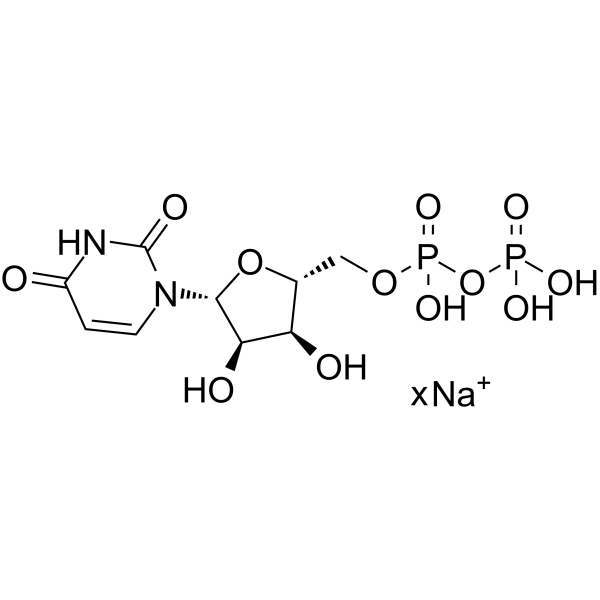
Uridine-5'-diphosphate (UDP) sodium salt is an important nucleotide made of uracil, ribose, and a pyrophosphate group. Uridine-5'-diphosphate sodium salt is a potent, selective human P2Y6 receptor native agonist (EC50 = 300 nM; pEC50 = 6.52). Uridine-5'-diphosphate sodium salt, an endogenous metabolite, catalyzes the glucuronidation of a wide array of substrates and is used in nucleic acid (RNA) biosynthesis.
For research use only. We do not sell to patients.
- Purity : 99.63%
- CAS No.: 21931-53-3
- Formula: C9H14N2O12P2·xNa
- Molecular Weight:404.16 (free acid)
-
Storage:
-20°C, stored under nitrogen
* In solvent : -80°C, 6 months; -20°C, 1 month (stored under nitrogen)

To place orders, for customer services and technical support, please contact: MedChemExpress USA
Tel: 609-228-6898 E-mail: [email protected] [email protected]


-
 Biological Activity
-
Chemical Information
-
Solvent & Solubility
- Purity & Documentation
- References
-
 Help & FAQs


-
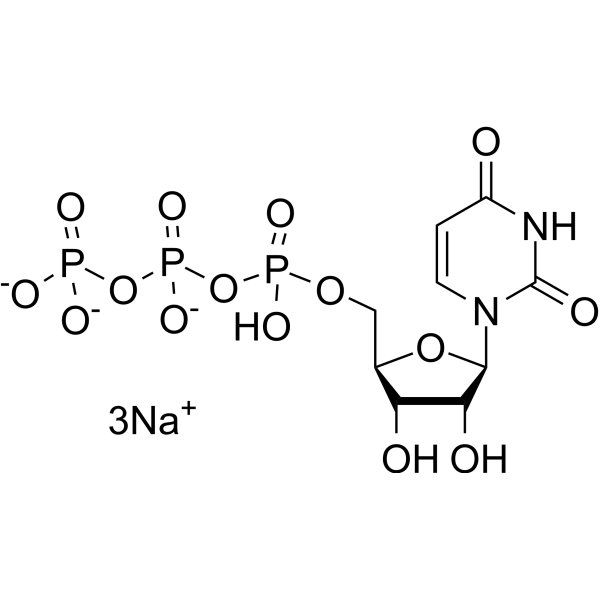
HY-W013093
Uridine triphosphate trisodium salt -
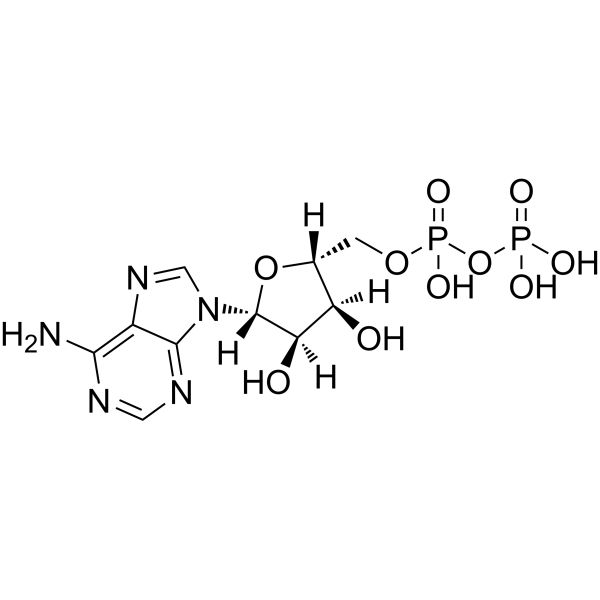
HY-W010918
Adenosine 5'-diphosphate -
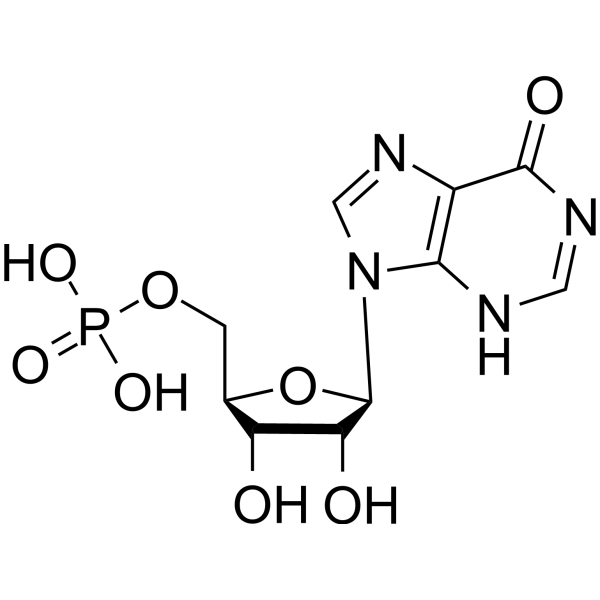
HY-108213
Inosinic acid -
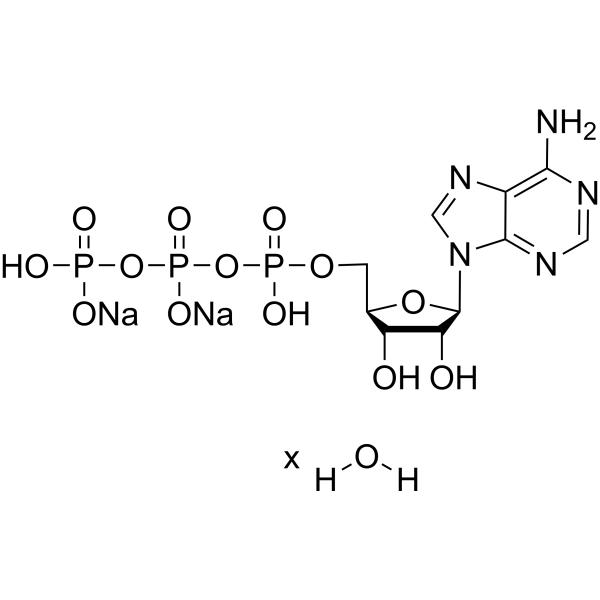
HY-W010735
ATP disodium salt hydrate -
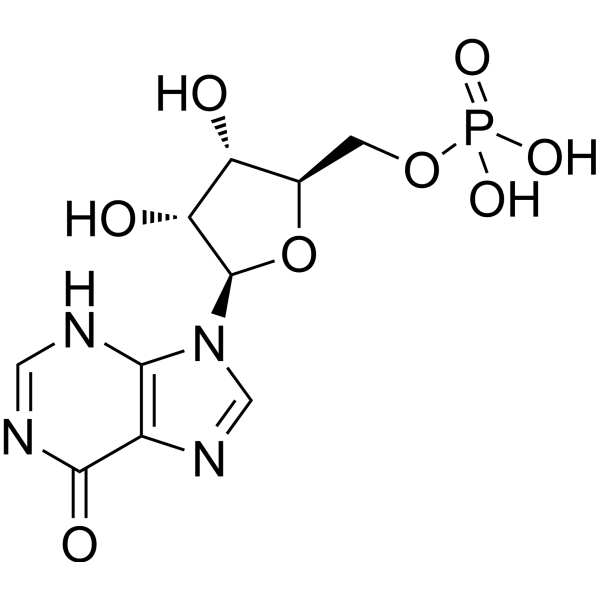
HY-108213R
Inosinic acid (Standard) -

HY-W010735R
ATP disodium salt hydrate (Standard) -
HY-153118
Deoxyribonucleic acid sodium, from calf thymus, Type I, fibers -

HY-107372H
UTP trisodium salt, 100 mM Solution, PCR Grade -
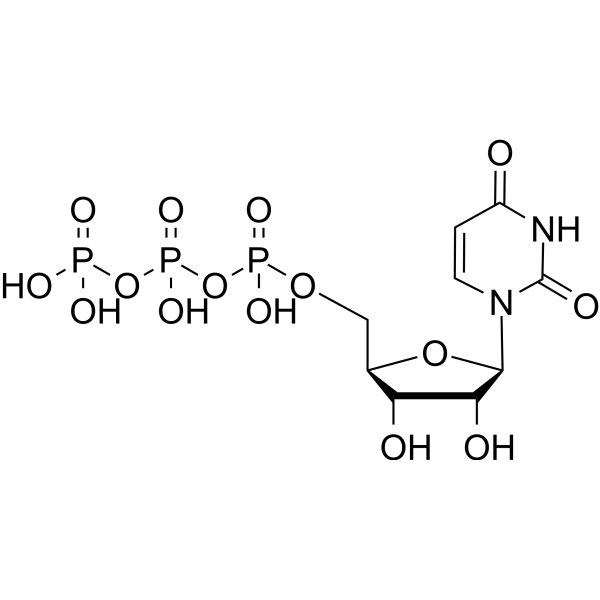
HY-107372
Uridine triphosphate -

HY-W013093R
Uridine triphosphate trisodium salt (Standard)
Publications Citing Use of MedChemExpress (MCE) Uridine 5'-diphosphate sodium salt
More Customer Validation & Images

-
WB

-
Others

All P2Y Receptor Isoforms
MoreAll DNA/RNA Synthesis Isoforms
MoreAll Endogenous Metabolite Isoforms
More

Biological Activity
Description
IC50 & Target
[1]|
P2Y14 Receptor |
Human Endogenous Metabolite |
In Vitro
Uridine-5'-diphosphate (100 μM; 15 min) sodium salt significantly induces microglial CCL2 and CCL3 mRNA expression[2].
Uridine-5'-diphosphate (100 μM; 3 h) sodium salt induces chemokine expression in microglia[2].
Uridine-5'-diphosphate (100 μM; 0.5-12 h) induces expression of mRNA encoding CCL2 and CCL3 within 30 min, and such expression reaches maximal levels at 1 h, returning to basal levels at 3-12 h[2].
Uridine-5'-diphosphate (10-1000 μM; 3 h) induces a concentration-dependent increase in the expression of chemokines at both the mRNA and protein level[2].
Uridine-5'-diphosphate (10-1000 μM; 3 h) induces activation of NFATc1 and NFATc2 in microglia[2].
MedChemExpress (MCE) has not independently confirmed the accuracy of these methods. They are for reference only.
-
Cell Line:Primary microglia
-
Concentration:100 μM
-
Incubation Time:For 15 min
-
Result:Significantly induced microglial CCL2 and CCL3 mRNA expression.


Chemical Information
-
CAS No. 21931-53-3
-
Appearance Solid
-
Molecular Weight 404.16 (free acid)
-
Formula C9H14N2O12P2·xNa
-
Color White to off-white
-
SMILES
O=C(C=CN1[C@H]2[C@H](O)[C@H](O)[C@@H](COP(OP(O)(O)=O)(O)=O)O2)NC1=O.[x].[Na]
-
Synonyms
UDP sodium salt
-
Structure Classification
-
Initial Source
-
Shipping
Room temperature in continental US; may vary elsewhere.
-
Storage
-20°C, stored under nitrogen
* In solvent : -80°C, 6 months; -20°C, 1 month (stored under nitrogen)


Publications (2)
-
Journal Impact Factor
-
Most Recent
-
Free Radic Biol Med
P2Y6 receptor blockade promotes depression-like symptoms through oxidative stress and impaired autophagy. [Abstract]2025 Oct 17:242:203-219. PMID: 41110517
Uridine 5'-diphosphate sodium salt purchased from MedChemExpress. Usage Cited in: Free Radic Biol Med. 2025 Oct 17:242:203-219. [Abstract]
UDP (Uridine-5'-diphosphate disodium salt) agonism elicited distinct signaling responses, enhancing CaMKII, p-PKC, and SOD2, while suppressing Nrf2 and HO-1, without altering p62, VPS34, LC3B, AMPKα, or mTOR. In contrast, MRS treatment selectively increased HO-1 phosphorylation, while leaving other pathways unaffected.
Uridine 5'-diphosphate sodium salt purchased from MedChemExpress. Usage Cited in: Free Radic Biol Med. 2025 Oct 17:242:203-219. [Abstract]
Schematic representing the relationship between MRS2578, P2Y6, UDP (Uridine-5'-diphosphate disodium salt), and MRS2693.
-
Int Immunopharmacol
Inhibition of P2Y6 receptor expression in Kupffer cells alleviates alcoholic steatohepatitis in mice. [Abstract]2022 Aug:109:108909. PMID: 35700583


Solvent & Solubility
In Vitro:
DMSO : 33.33 mg/mL (Need ultrasonic; Hygroscopic DMSO has a significant impact on the solubility of product, please use newly opened DMSO)
In Vivo:
Select the appropriate dissolution method based on your experimental animal and administration route.
- For the following dissolution methods, please ensure to first prepare a clear stock solution using an In Vitro approach and then sequentially add co-solvents:
- To ensure reliable experimental results, the clarified stock solution can be appropriately stored based on storage conditions. As for the working solution for In Vivo experiments, it is recommended to prepare freshly and use it on the same day.
- The percentages shown for the solvents indicate their volumetric ratio in the final prepared solution. If precipitation or phase separation occurs during preparation, heat and/or sonication can be used to aid dissolution.
Add each solvent one by one: 10% DMSO 40% PEG300 5% Tween-80 45% Saline
Solubility: ≥ 2.5 mg/mL; Clear solution
This protocol yields a clear solution of ≥ 2.5 mg/mL (saturation unknown).
Taking 1 mL working solution as an example, add 100 μL DMSO stock solution (25.0 mg/mL) to 400 μL PEG300, and mix evenly; then add 50 μL Tween-80 and mix evenly; then add 450 μL Saline to adjust the volume to 1 mL.
Preparation of Saline: Dissolve 0.9 g sodium chloride in ddH₂O and dilute to 100 mL to obtain a clear Saline solution.
Add each solvent one by one: 10% DMSO 90% (20% SBE-β-CD in Saline)
Solubility: ≥ 2.5 mg/mL; Clear solution
This protocol yields a clear solution of ≥ 2.5 mg/mL (saturation unknown).
Taking 1 mL working solution as an example, add 100 μL DMSO stock solution (25.0 mg/mL) to 900 μL 20% SBE-β-CD in Saline, and mix evenly.
Preparation of 20% SBE-β-CD in Saline (4°C, storage for one week): 2 g SBE-β-CD powder is dissolved in 10 mL Saline, completely dissolve until clear.
In Vivo Dissolution Calculator
Please enter the basic information of animal experiments:
-
-
-
-
Recommended: Prepare an additional quantity of animals to account for potential losses during experiments.
Please enter your animal formula composition:
-
%DMSO +
Recommended: Keep the proportion of DMSO in working solution below 2% if your animal is weak.
-
%+
-
+%Tween-80 + +
-
%Saline +
The co-solvents required include: DMSO, . All of co-solvents are available by MedChemExpress (MCE). , Tween 80. All of co-solvents are available by MedChemExpress (MCE).
Working solution concentration: 0.22 mg/mL
Method for preparing stock solution: mg drug dissolved in μL DMSO. Stock solution concentration: mg/mL. * In solvent : -80°C, 6 months; -20°C, 1 month (stored under nitrogen)
1. Take μL DMSO stock solution;
2. Add μL .
μL , mix evenly;
3. Then add μL Tween 80, mix evenly;
4. Then add μL
Please ensure that the stock solution in the first step is dissolved to a clear state, and add co-solvents in sequence. You can use ultrasonic heating (ultrasonic cleaner, recommended frequency 20-40 kHz), vortexing, etc. to assist dissolution.


Purity & Documentation
-
Data Sheet (276 KB)
-
SDS (419 KB)
- English - EN (419 KB)
- Français - FR (419 KB)
- Deutsch - DE (419 KB)
- Norwegian - NO (419 KB)
- Español - ES (419 KB)
- Swedish - SV (419 KB)
- Italian - IT (419 KB)
- Korean - KR (419 KB)
- Portuguese - PT (419 KB)
-
Handling Instructions (2659 KB)
References
[1]. Jacobson KA, et al. Development of selective agonists and antagonists of P2Y receptors. Purinergic Signal. 2009 Mar;5(1):75-89. [Content Brief]
[2]. Kim B, et al. Uridine 5'-diphosphate induces chemokine expression in microglia and astrocytes through activation of the P2Y6 receptor. J Immunol. 2011 Mar 15;186(6):3701-9. [Content Brief]

Calculators
Concentration (start) × Volume (start) = Concentration (final) × Volume (final)


Uridine 5'-diphosphate sodium salt Related Classifications
HY-W010820 Related Classifications
 Powered by Bioz