1. Search Result
Search Result
Results for "

CNS receptors

" in MedChemExpress (MCE) Product Catalog:

153

Inhibitors & Agonists

3

Screening Libraries

13

Peptides

8

Natural
Products

17

Isotope-Labeled Compounds

1

Click Chemistry

1

Oligonucleotides

Cat. No. Product Name Target Research Areas Chemical Structure
  • HY-P0201
    Substance P
    Maximum Cited Publications
    31 Publications Verification

    Neurokinin P

    Neurokinin Receptor Endogenous Metabolite Infection Neurological Disease Metabolic Disease Cancer
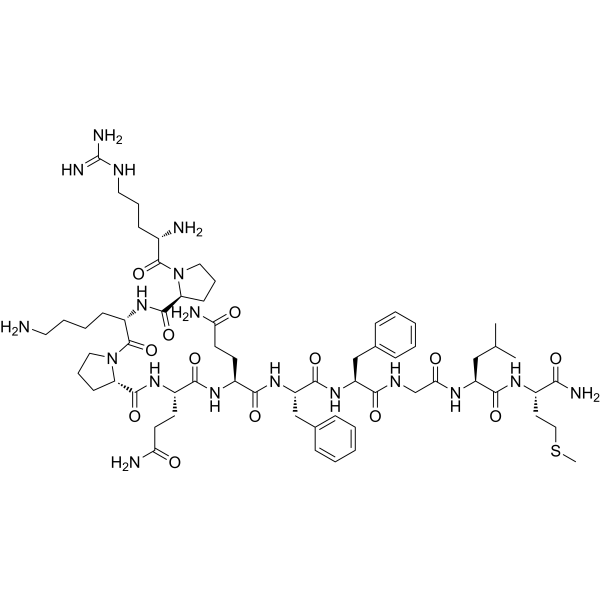
    Substance P (Neurokinin P) is a CNS-penetrant neuropeptide, acting as a neurotransmitter and as a neuromodulator in the CNS. The endogenous receptor for substance P is neurokinin 1 receptor (NK1-receptor, NK1R).
    Substance P
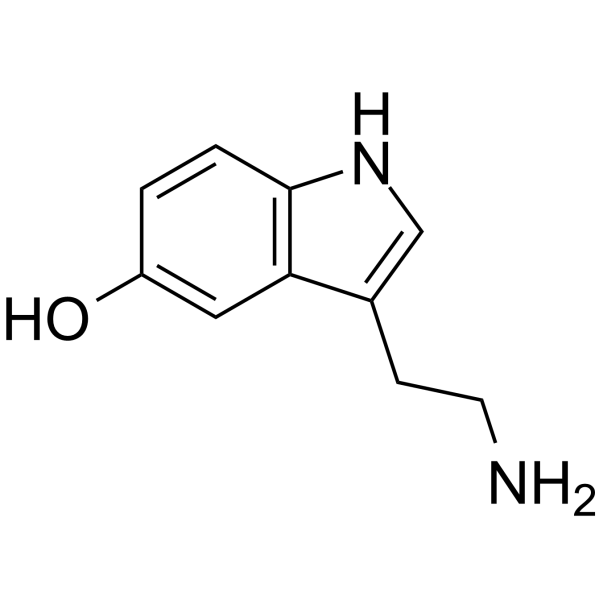
  • HY-B1473A
    Serotonin
    30+ Cited Publications

    5-Hydroxytryptamine; 5-HT

    5-HT Receptor COMT Endogenous Metabolite Neurological Disease
    Serotonin is a monoamine neurotransmitter in the CNS and an endogenous 5-HT receptor agonist. Serotonin is also a catechol O-methyltransferase (COMT) inhibitor with a Ki of 44 μM.
    Serotonin
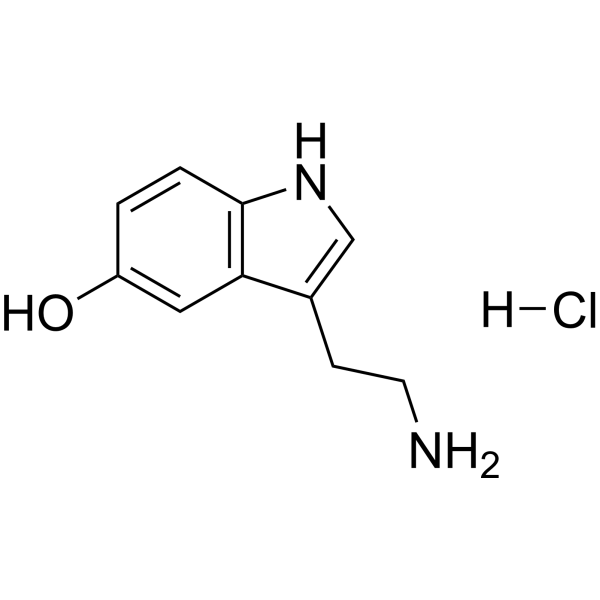
  • HY-B1473
    Serotonin hydrochloride
    30+ Cited Publications

    5-Hydroxytryptamine hydrochloride; 5-HT hydrochloride

    5-HT Receptor COMT Endogenous Metabolite Neurological Disease
    Serotonin (5-Hydroxytryptamine) hydrochloride is a monoamine neurotransmitter in the CNS and an endogenous 5-HT receptor agonist, with blood-brain barrier permeability. Serotonin hydrochloride is also a catechol O-methyltransferase (COMT) inhibitor with a Ki of 44 μM.
    Serotonin hydrochloride
  • HY-12288
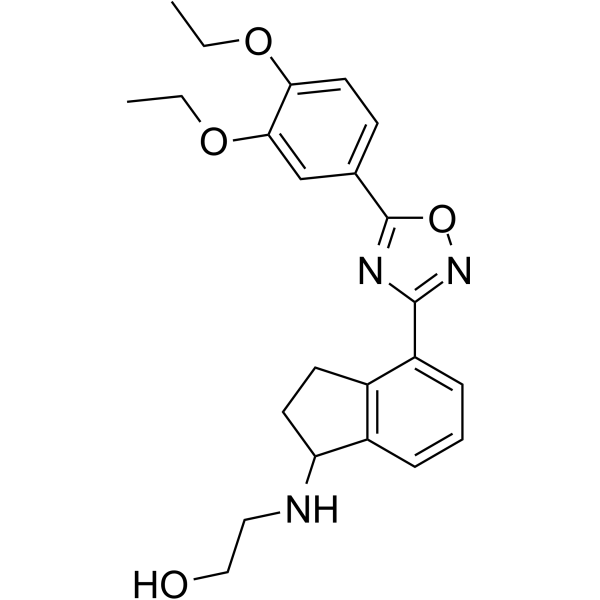
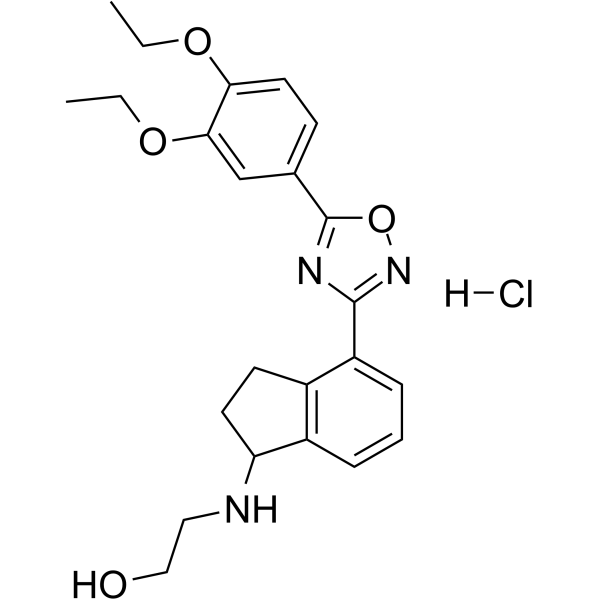
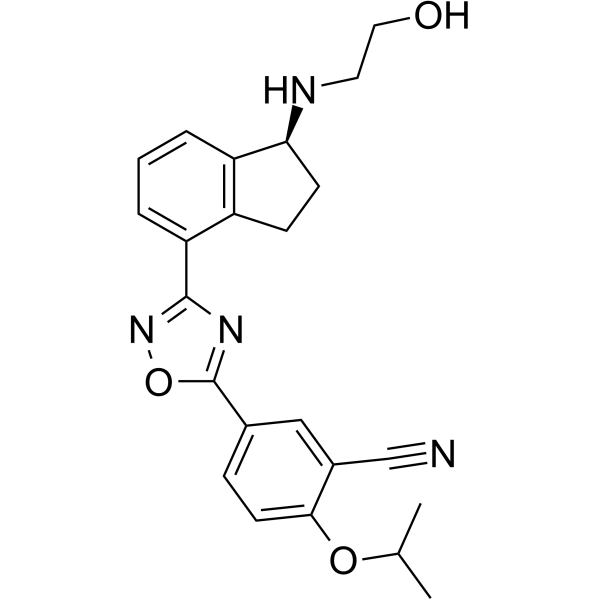
    Ozanimod
    4 Publications Verification

    RPC-1063

    LPL Receptor Neurological Disease Inflammation/Immunology
    Ozanimod (RPC-1063) is a CNS-penetrant sphingosine 1-phosphate (S1P) receptor modulator that binds with high affinity selectively to S1P receptor subtypes 1 (S1P1) and 5 (S1P5). Ozanimod has modulate effect for hS1P1 and hS1P5 receptor with EC50s of 1.03 nM and 8.6 nM, respectively. Ozanimod can be used for the research of relapsing multiple sclerosis (MS) .
    Ozanimod
  • HY-B1473AS

    5-Hydroxytryptamine-d4; 5-HT-d4

    Isotope-Labeled Compounds 5-HT Receptor COMT Endogenous Metabolite Neurological Disease
    Serotonin-d4 is deuterium labeled Serotonin. Serotonin is a monoamine neurotransmitter in the CNS and an endogenous 5-HT receptor agonist. Serotonin is also a catechol O-methyltransferase (COMT) inhibitor with a Ki of 44 μM.
    Serotonin-d4
  • HY-17573
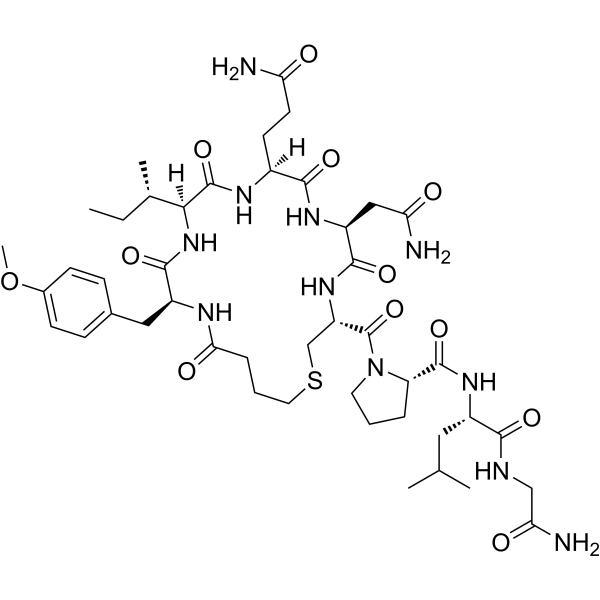
    Carbetocin
    2 Publications Verification

    Oxytocin Receptor Neurological Disease Endocrinology
    Carbetocin, an oxytocin (OT) analogue, is an oxytocin receptor agonist with a Ki of 7.1 nM. Carbetocin has high affinity to chimeric N-terminus (E1) of the oxytocin receptor (Ki=1.17 μM). Carbetocin has the potential for postpartum hemorrhage research. Carbetocin can crosse the blood-brain barrier and produces antidepressant-like activity via activation of oxytocin receptors in the CNS .
    Carbetocin
  • HY-A0168
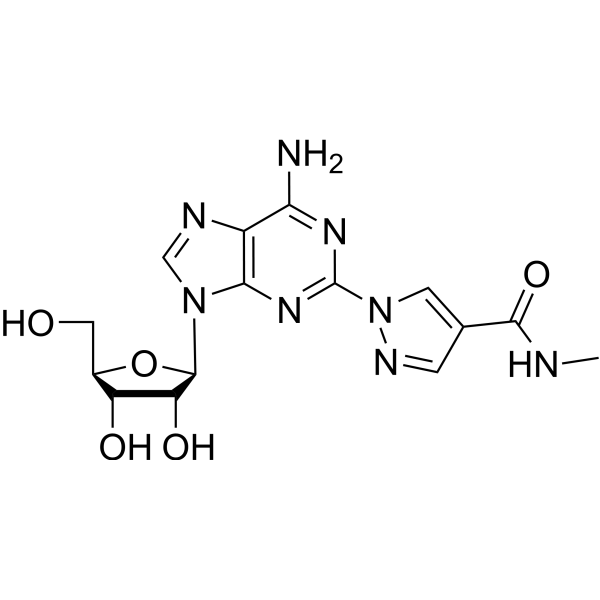
    Regadenoson
    3 Publications Verification

    CVT-3146

    Adenosine Receptor Cardiovascular Disease Cancer
    Regadenoson (CVT-3146) is a selective A2A adenosine receptor agonist and vasodilator that increases coronary blood flow, can be used in study of myocardial perfusion imaging. Regadenoson also increases the permeability of the blood-brain barrier (BBB) in rodents, can be used to study increased delivery of agents to the human CNS .
    Regadenoson
  • HY-Y0966S8

    Endogenous Metabolite iGluR Neurological Disease
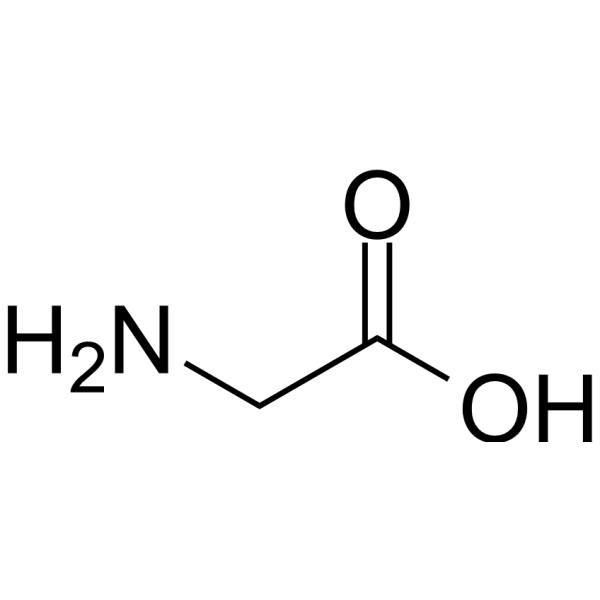
    Glycine-d5 is the deuterium labeled Glycine. Glycine is an inhibitory neurotransmitter in the CNS and also acts as a co-agonist along with glutamate, facilitating an excitatory potential at the glutaminergic N-methyl-D-aspartic acid (NMDA) receptors.
    Glycine-d5
  • HY-B1330
    Proglumide
    1 Publications Verification

    Cholecystokinin Receptor Neurological Disease Endocrinology Cancer
    Proglumide is a nonpeptide and orally active cholecystokinin (CCK)-A/B receptors antagonist. Proglumide selective blocks CCK’s effects in the central nervous system (CNS). Proglumide has ability to inhibit gastric secretion and to protect the gastroduodenal mucosa. Proglumide also has antiepileptic and antioxidant activities .
    Proglumide
  • HY-101116
    GLP-1R Antagonist 1
    5 Publications Verification

    GCGR Metabolic Disease
    GLP-1R Antagonist 1 (compound 5d) is an orally active, CNS penetrant and non-competitive antagonist of glucagon-like peptide 1 receptor (GLP-1R), with an IC50 of 650 nM .
    GLP-1R Antagonist 1
  • HY-P1333
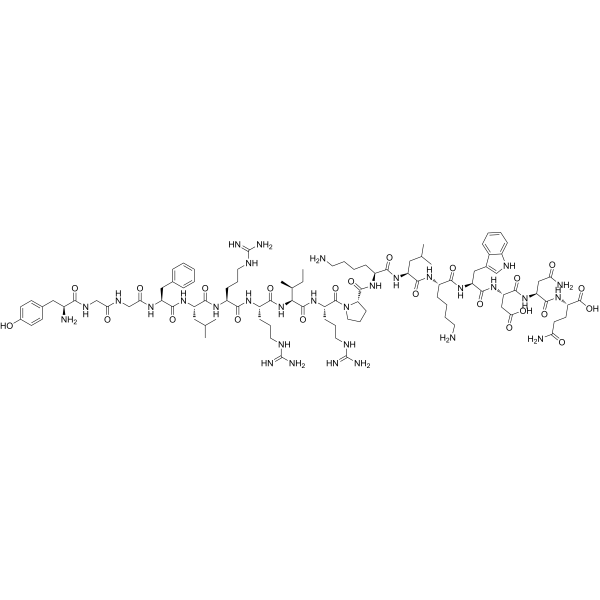
    Dynorphin A
    1 Publications Verification

    Opioid Receptor Apoptosis Caspase Endogenous Metabolite Neurological Disease
    Dynorphin A is an endogenous opioid peptide involved in inhibitory neurotransmission in the central nervous system (CNS). Dynorphin A is a highy potent kappa opioid receptor (KOR) agonist, and is also an agonist for other opioid receptors, such as mu (MOR) and delta (DOR). Dynorphin A can induce neuronal death, and can be used in the research of neurological disease .
    Dynorphin A
  • HY-15722
    SB-222200
    5+ Cited Publications

    Neurokinin Receptor Neurological Disease Endocrinology
    SB-222200 is a potent, selective, orally active and blood-brain barrier (BBB) penetrant NK-3 receptor antagonist. SB-222200 is developed for central nervous system (CNS) disorders .
    SB-222200
  • HY-Y0966S3

    Isotope-Labeled Compounds Endogenous Metabolite iGluR Neurological Disease
    Glycine- 13C2 is the 13C-labeled Glycine. Glycine is an inhibitory neurotransmitter in the CNS and also acts as a co-agonist along with glutamate, facilitating an excitatory potential at the glutaminergic N-methyl-D-aspartic acid (NMDA) receptors.
    Glycine-13C2
  • HY-15023
    Cligosiban
    5+ Cited Publications

    PF-3274167

    Oxytocin Receptor Endocrinology
    Cligosiban (PF-3274167) is an orally active, highly selective, and centrally permeable oxytocin receptor antagonist with good pharmacokinetics in rats and can inhibit physiological ejaculation in rodents [1][2].
    Cligosiban
  • HY-107663A

    Pro-Leu-Gly-NH2 TFA; Melanostatin TFA

    Dopamine Receptor Neurological Disease
    MIF-1 TFA (Melanostatin), an endogenous brain peptide, is a potent dopamine receptor allosteric modulator. MIF-1 TFA inhibits melanin formation. MIF-1 TFA blocks the effects of opioid receptor activation to modulate the analgesic effects. MIF-1 TFA accesses from the blood to the CNS by directly crossing the blood-brain barrier (BBB) .
    MIF-1 TFA
  • HY-B1904

    Dopamine Receptor Neurological Disease
    Fluphenazine decanoate is a CNS-penetrant dopamine D2 receptor inhibitor, is a long-acting phenothiazine neuroleptic. Fluphenazine can be used for schizophrenia research .
    Fluphenazine decanoate
  • HY-15043

    Bradykinin Receptor Inflammation/Immunology Endocrinology
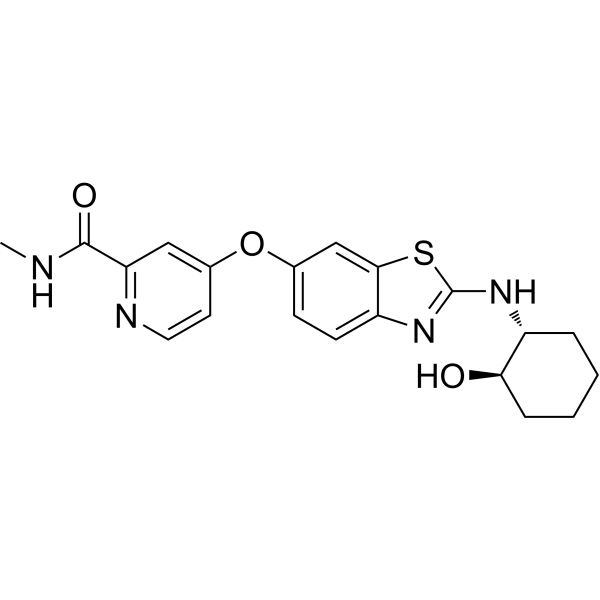
    ELN-441958 is a potent, neutral, competitive and selective bradykinin B1 receptor antagonist with a Ki of 0.26 nM against native human bradykinin B1 receptor. ELN-441958 has high oral bioavailability, and has low CNS exposure in the mouse .
    ELN-441958
  • HY-108710
    VU0650786
    2 Publications Verification

    mGluR Neurological Disease
    VU0650786 is a potent and selective CNS penetrant negative allosteric modulator of metabotropic glutamate receptor subtype 3 (mGlu3 NAM), with an IC50 of 392 nM. VU0650786 has antidepressant and anxiolytic activity in rodents .
    VU0650786
  • HY-Y0966S1

    Isotope-Labeled Compounds Endogenous Metabolite iGluR Neurological Disease
    Glycine-d2 is the deuterium labeled Glycine. Glycine is an inhibitory neurotransmitter in the CNS and also acts as a co-agonist along with glutamate, facilitating an excitatory potential at the glutaminergic N-methyl-D-aspartic acid (NMDA) receptors.
    Glycine-d2
  • HY-107790
    5-Methoxyflavone
    2 Publications Verification

    DNA/RNA Synthesis Neurological Disease
    5-Methoxyflavone, belonged to Flavonoid family, is a DNA polymerase-beta inhibitor and neuroprotective agent against beta-amyloid toxicity. possess central nervous system (CNS) depressant effect mediated through the ionotropic GABAA receptors.
    5-Methoxyflavone
  • HY-Y0966S

    Endogenous Metabolite iGluR Neurological Disease
    Glycine- 15N is the 15N-labeled Glycine. Glycine is an inhibitory neurotransmitter in the CNS and also acts as a co-agonist along with glutamate, facilitating an excitatory potential at the glutaminergic N-methyl-D-aspartic acid (NMDA) receptors .
    Glycine-15N
  • HY-107730

    Neuropeptide Y Receptor Neurological Disease
    NPY5RA-972 is an orally active, central nervous system (CNS) penetrating, potent and selective NPY Y5 receptor antagonist that prevents feeding driven by activation of this receptor .
    NPY5RA-972
  • HY-119943
    PF-06256142
    1 Publications Verification

    Dopamine Receptor Neurological Disease
    PF-06256142 is a potent, selective, CNS-penetrant and orally active agonist of the D1 receptor, with an EC50 and Ki of 33 nM and 12 nM, respectively. PF-06256142 has the potential for the research of schizophrenia and Parkinson's disease .
    PF-06256142
  • HY-17573A
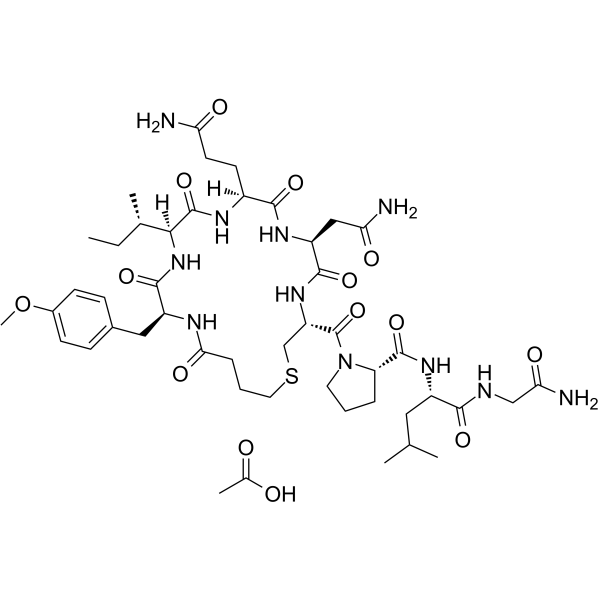
    Carbetocin acetate
    2 Publications Verification

    Oxytocin Receptor Neurological Disease Endocrinology
    Carbetocin acetate, an oxytocin (OT) analogue, is an oxytocin receptor agonist with a Ki of 7.1 nM. Carbetocin acetate has high affinity to chimeric N-terminus (E1) of the oxytocin receptor (Ki=1.17 μM). Carbetocin acetate has the potential for postpartum hemorrhage research. Carbetocin acetate can crosse the blood-brain barrier and produces antidepressant-like activity via activation of oxytocin receptors in the CNS .
    Carbetocin acetate
  • HY-Y0966S6

    Endogenous Metabolite iGluR Neurological Disease
    Glycine- 13C2, 15N is the 13C- and 15N-labeled Glycine. Glycine is an inhibitory neurotransmitter in the CNS and also acts as a co-agonist along with glutamate, facilitating an excitatory potential at the glutaminergic N-methyl-D-aspartic acid (NMDA) receptors.
    Glycine-13C2,15N
  • HY-103354
    Proglumide sodium
    1 Publications Verification

    Cholecystokinin Receptor Neurological Disease Endocrinology Cancer
    Proglumide sodium is a nonpeptide and orally active cholecystokinin (CCK)-A/B receptors antagonist. Proglumide sodium selective blocks CCK’s effects in the central nervous system (CNS). Proglumide sodium has ability to inhibit gastric secretion and to protect the gastroduodenal mucosa. Proglumide sodium also has antiepileptic and antioxidant activities .
    Proglumide sodium
  • HY-B1473S

    5-Hydroxytryptamine-d4 hydrochloride; 5-HT-d4 hydrochloride

    Isotope-Labeled Compounds 5-HT Receptor Endogenous Metabolite COMT Others
    Serotonin-d4 (5-Hydroxytryptamine-d4) hydrochloride is the deuterium labeled Serotonin (hydrochloride) (HY-B1473) . Serotonin (5-Hydroxytryptamine) hydrochloride is a monoamine neurotransmitter in the CNS and an endogenous 5-HT receptor agonist. Serotonin hydrochloride is also a catechol O-methyltransferase (COMT) inhibitor with a Ki of 44 μM .
    Serotonin-d4 hydrochloride
  • HY-P0201A
    Substance P TFA
    Maximum Cited Publications
    31 Publications Verification

    Neurokinin P TFA

    Neurokinin Receptor Endogenous Metabolite Neurological Disease Metabolic Disease Cancer
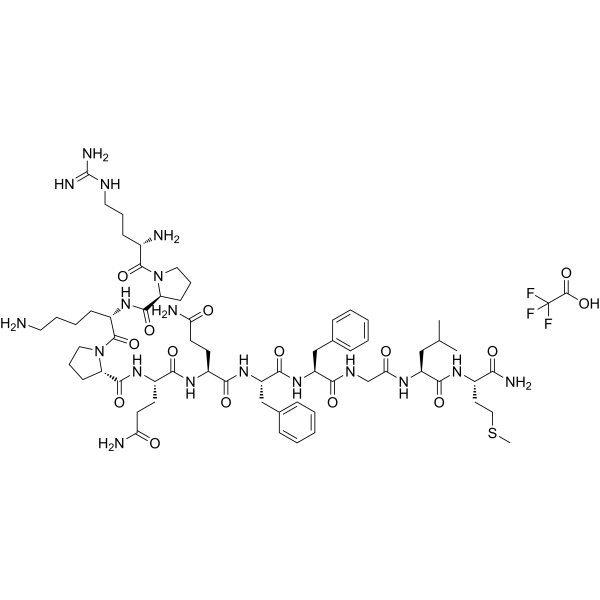
    Substance P TFA (Neurokinin P TFA) is a CNS-penetrant neuropeptide, acting as a neurotransmitter and as a neuromodulator in the CNS. The endogenous receptor for substance P is neurokinin 1 receptor (NK1-receptor, NK1R) .
    Substance P TFA
  • HY-P2546

    Neurokinin Receptor Neurological Disease
    Biotin-Substance P is the biotin tagged Substance P. Substance P (Neurokinin P) is a neuropeptide, acting as a neurotransmitter and as a neuromodulator in the CNS. The endogenous receptor for substance P is neurokinin 1 receptor (NK1-receptor, NK1R) .
    Biotin-Substance P
  • HY-Y0966S10

    Isotope-Labeled Compounds Endogenous Metabolite iGluR Cancer
    Glycine-d3 is the deuterium labeled Glycine. Glycine is an inhibitory neurotransmitter in the CNS and also acts as a co-agonist along with glutamate, facilitating an excitatory potential at the glutaminergic N-methyl-D-aspartic acid (NMDA) receptors.
    Glycine-d3
  • HY-Y0966S2

    Endogenous Metabolite iGluR Neurological Disease
    Glycine-2- 13C is the 13C-labeled Glycine. Glycine is an inhibitory neurotransmitter in the CNS and also acts as a co-agonist along with glutamate, facilitating an excitatory potential at the glutaminergic N-methyl-D-aspartic acid (NMDA) receptors.
    Glycine-2-13C
  • HY-Y0966S4

    Endogenous Metabolite iGluR Neurological Disease
    Glycine-1- 13C is the 13C-labeled Glycine. Glycine is an inhibitory neurotransmitter in the CNS and also acts as a co-agonist along with glutamate, facilitating an excitatory potential at the glutaminergic N-methyl-D-aspartic acid (NMDA) receptors.
    Glycine-1-13C
  • HY-14418

    ML-128

    mGluR Neurological Disease
    VU0361737 (ML-128) is a potent, selective and CNS penetrant positive allosteric modulator of metabotropic glutamate receptor 4 (mGluR4 PAM), with EC50s of 240 nM and 110 nM for human and rat mGluR4 receptors, respectively. VU0361737 has neuroprotective effect. VU0361737 is potential for Parkinson's disease research .
    VU0361737
  • HY-P10502A

    LDLR Others
    L57 acetate is a Low-density lipoprotein receptor-related protein 1 (LRP1)-binding peptide. L57 acetate exhibits high affinity to LRP1 with Ki of 45 nM. L57 acetate exhibits blood-brain barrier (BBB) permeability and plasma stability. L57 acetate can be utilized as the carrier for CNS drug delivery .
    L57 acetate
  • HY-B0971

    Prophenpyridamine maleate; Tripoton maleate

    Histamine Receptor Apoptosis Inflammation/Immunology Endocrinology
    Pheniramine (Prophenpyridamine; Tripoton) maleate is a first-generation histamine H1 receptor antagonist, acts on the central nervous system (CNS) with sedative and hypnotic effect. Pheniramine maleate displays antitumor effect and induces leukemia cells apoptosis. Pheniramine maleate is also a safe and effective local agent that can suppress or relieve pain, with antipruritic effects .
    Pheniramine maleate
  • HY-114403

    mGluR Neurological Disease
    VU6012962 is an orally bioavailable and CNS-penetrant metabotropic glutamate receptor 7 negative allosteric modulator (mGlu7 NAM) with an IC50 of 347 nM .
    VU6012962
  • HY-132981

    P2X Receptor Neurological Disease
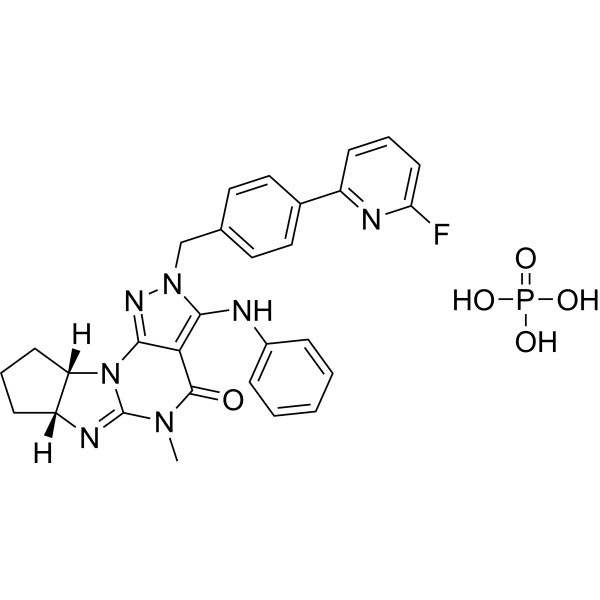
    Lu AF27139 is a potent, selective, and orally active antagonist of P2X7 receptor (IC50s of 12 and 2.4 nM for human and rat, Kis of 22, 54, and 13 nM for mouse, human, and rat, respectively). Lu AF27139 has rodent-active and CNS-penetrant character. Lu AF27139 has the potential for the research of CNS diseases .
    Lu AF27139
  • HY-108460

    TRP Channel Neurological Disease
    A-784168 is a potent and orally active inhibitor of vanilloid receptor type 1 (TRPV1). Vanilloid receptor type 1 (TRPV1) is a ligand-gated nonselective cation channel that is considered to be an important integrator of various pain stimuli such as endogenous lipids, capsaicin, heat, and low pH. A-784168 has good CNS penetration .
    A-784168
  • HY-Y0966S7

    Isotope-Labeled Compounds Endogenous Metabolite iGluR Neurological Disease
    Glycine-2- 13C, 15N is the 13C- and 15N-labeled Glycine. Glycine is an inhibitory neurotransmitter in the CNS and also acts as a co-agonist along with glutamate, facilitating an excitatory potential at the glutaminergic N-methyl-D-aspartic acid (NMDA) receptors.
    Glycine-2-13C,15N
  • HY-113616A

    MARCKS mAChR Neurological Disease
    VU0364572 TFA is an orally active and selective allosteric agonist of the M1 muscarinic receptor with an EC50 of 0.11 μM. VU0364572 TFA has neuroprotective potential for preventing memory impairments and reducing neuropathology in Alzheimer’s Disease. VU0364572 TFA is CNS penetrant .
    VU0364572 TFA
  • HY-110146

    mGluR Neurological Disease
    XAP044 is a potent and selective antagonist of mGlu7. The metabotropic glutamate receptor subtype 7 (mGlu7) is an important presynaptic regulator of neurotransmission in the mammalian CNS. XAP044 demonstrates good brain exposure and wide spectrum anti-stress and antidepressant- and anxiolytic-like efficacy in rodent behavioral paradigms .
    XAP044
  • HY-124821

    5-HT Receptor Neurological Disease Metabolic Disease
    VA012 (compound 11) is a positive allosteric modulator (PAM) of the serotonin 5-HT2C receptor. VA012 reduces food intake and body weight gain without causing CNS-related malaise during subchronic administration. VA012 can be utilized in obesity research .
    VA012
  • HY-107663

    Pro-Leu-Gly-NH2; Melanostatin

    Dopamine Receptor Neurological Disease
    MIF-1 (Melanostatin), an endogenous brain peptide, is a potent dopamine receptor allosteric modulator. MIF-1 inhibits melanin formation. MIF-1 blocks the effects of opioid receptor activation to modulate the analgesic effects. MIF-1 accesses from the blood to the CNS by directly crossing the blood-brain barrier (BBB) .
    MIF-1
  • HY-101809A

    iGluR Cardiovascular Disease
    CNS-5161 is a novel NMDA ion-channel antagonist that interacts with the NMDA receptor/ion channel site to produce a noncompetitive blockade of the actions of glutamate.
    CNS 5161
  • HY-B1904A

    Dopamine Receptor Neurological Disease
    Fluphenazine decanoate dihydrochloride is a CNS-penetrant dopamine D2 receptor inhibitor, is a long-acting phenothiazine neuroleptic. Fluphenazine can be used for schizophrenia research .
    Fluphenazine decanoate dihydrochloride
  • HY-101281A

    mAChR Neurological Disease
    (Rac)-VU 6008667 is a selective negative allosteric modulator of muscarinic acetylcholine receptor subtype 5 (M5 NAM) (IC50=1.8 μM, pIC50= 5.75), has high CNS penetration .
    (Rac)-VU 6008667
  • HY-B1473R

    5-Hydroxytryptamine hydrochloride (Standard); 5-HT hydrochloride (Standard)

    5-HT Receptor Reference Standards COMT Endogenous Metabolite Neurological Disease
    Serotonin (5-Hydroxytryptamine) (Standard) hydrochloride is the analytical standard of Serotonin hydrochloride (HY-B1473). This product is intended for research and analytical applications. Serotonin (5-Hydroxytryptamine) hydrochloride is a monoamine neurotransmitter in the CNS and an endogenous 5-HT receptor agonist. Serotonin hydrochloride is also a catechol O-methyltransferase (COMT) inhibitor with a Ki of 44 μM.
    Serotonin hydrochloride (Standard)
  • HY-111232

    GHSR Metabolic Disease
    GSK894281 is an orally active and highly potent ghrelin receptor full agonist with a pEC50 of <4.9 at the human motilin receptor. GSK894281 effectively enters the CNS. GSK894281 has the potential for constipation or to assist in emptying the colon prior to colonoscopy or colon surgery research .
    GSK894281
  • HY-W749797

    GABA Receptor Neurological Disease
    Nitrazolam is a benzodiazepine compound, that may exhibit CNS depressant properties as traditional benzodiazepines, including sedation, hypnosis, anxiolysis, and anticonvulsant effects, by acting on GABA receptors .
    Nitrazolam
  • HY-155320

    Opioid Receptor Neurological Disease
    Mu opioid receptor antagonist 7 (compound 24) is a potent and CNS permeable antagonist of µOR (µ-opioid receptor), with an IC50 of 29 ± 3.0 nM. Mu opioid receptor antagonist 7 can be used for the research of pain and opioid use disorder .
    Mu opioid receptor antagonist 7

Inquiry Online

Your information is safe with us. * Required Fields.

Salutation


Country or Region *

Applicant Name *


Organization Name *

Department *


Email Address *


Product Name *

Cat. No.


Requested quantity *

Phone Number *


Remarks

Inquiry Online

Inquiry Information

Product Name:
Cat. No.:
Quantity:
MCE Japan Authorized Agent:

