



Cligosiban (Standard)
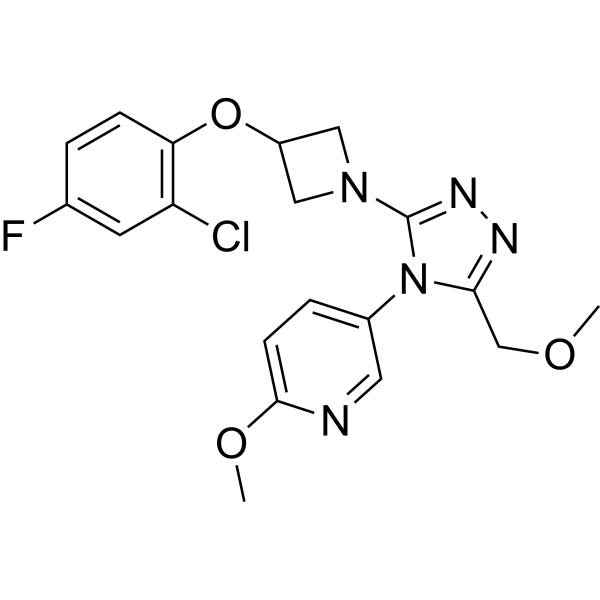
Cligosiban (Standard) is the analytical standard of Cligosiban. This product is intended for research and analytical applications. Cligosiban (PF-3274167) is an orally active, highly selective, and centrally permeable oxytocin receptor antagonist with good pharmacokinetics in rats and can inhibit physiological ejaculation in rodents.
Nur für Forschungszwecke. Wir verkaufen nicht an Patienten.
- Reinheit : 98%
- CAS. Nr.: 900510-03-4
- Formel: C19H19ClFN5O3
- Molecular Weight:419.84
-
Speicherung:
Please store the product under the recommended conditions in the Certificate of Analysis.


To place orders, for customer services and technical support, please contact: MedChemExpress USA
Tel: 609-228-6898 E-mail: [email protected] [email protected]


-
 Product Information
-
Chemical Information
- Reinheit & Dokumentation
-
 Help & FAQs


-
HY-15023
CligosibanOxytocin Receptor Antagonist -
HY-17573
CarbetocinOxytocin Receptor Agonist -
HY-108677
L-368,899 hydrochlorideOxytocin Antagonist -
HY-17571A
Oxytocin acetateHypothalamic Peptide -
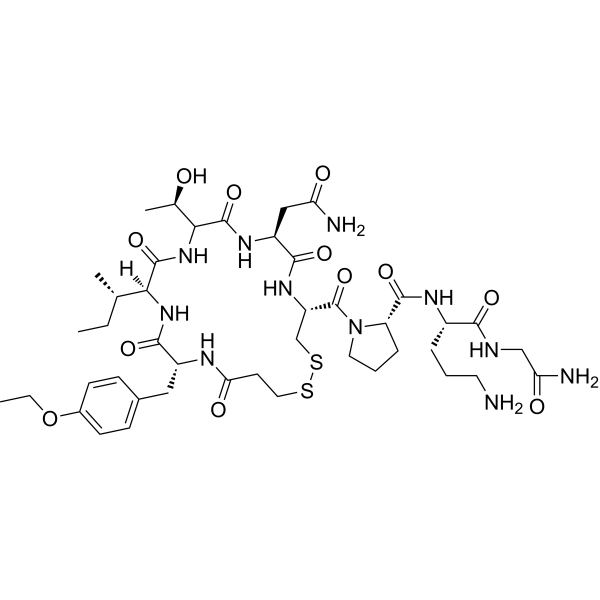
HY-17572
AtosibanOxytocin/Vasopressin Receptor Antagonist -
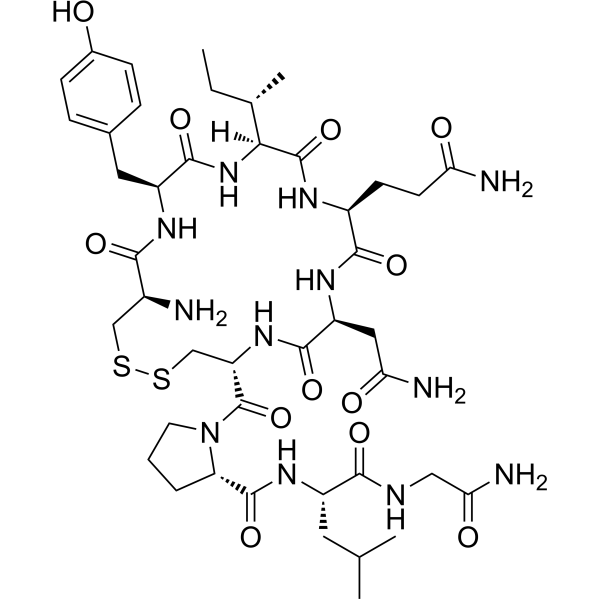
HY-17571
OxytocinHypothalamic Peptide -
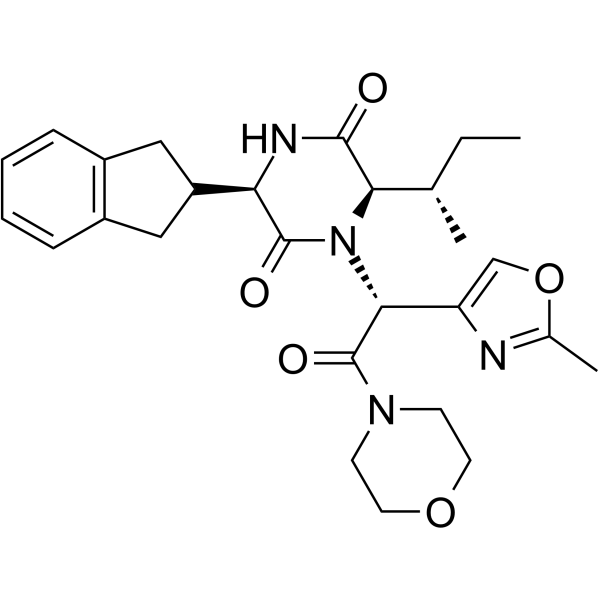
HY-14778
RetosibanOxytocin Receptor Antagonist -
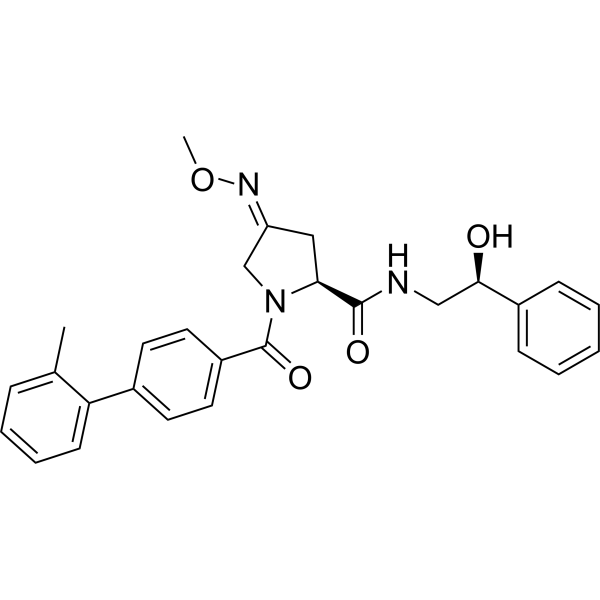
HY-15015
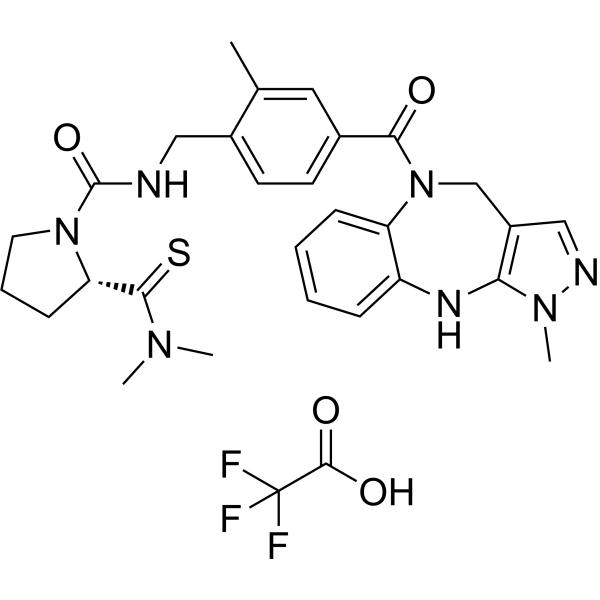
OT-R antagonist 1Oxytocin Receptor Antagonist -
HY-124733A
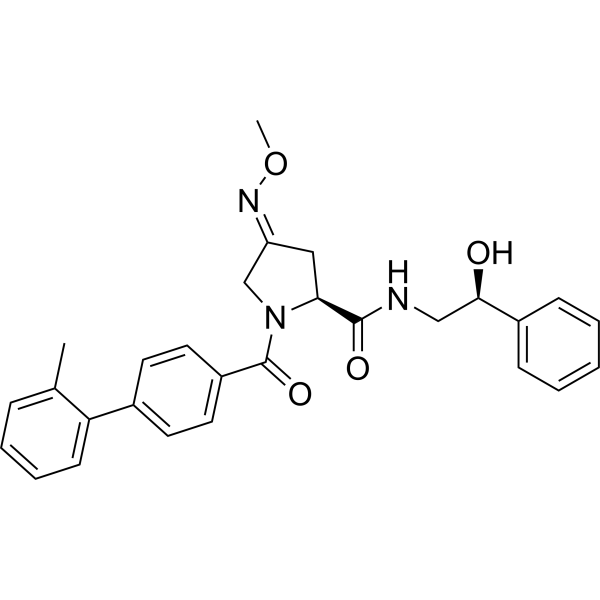
LIT-001Oxytocin Receptor Agonist -
HY-15015A
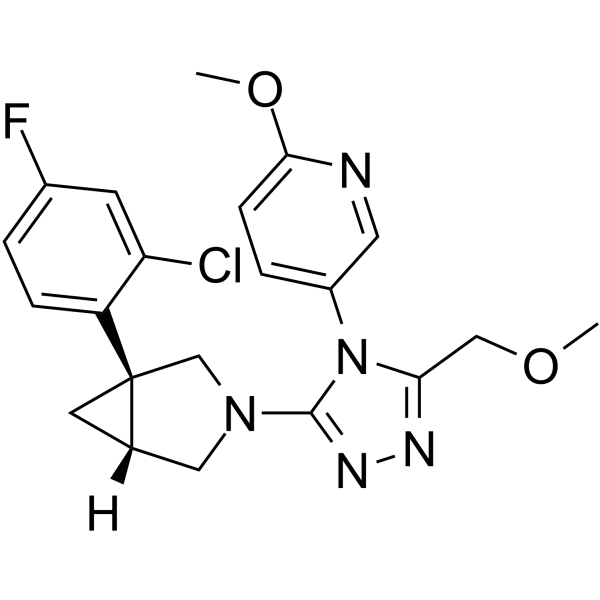
OT-R antagonist 2Oxytocin Receptor Antagonist -
HY-128351
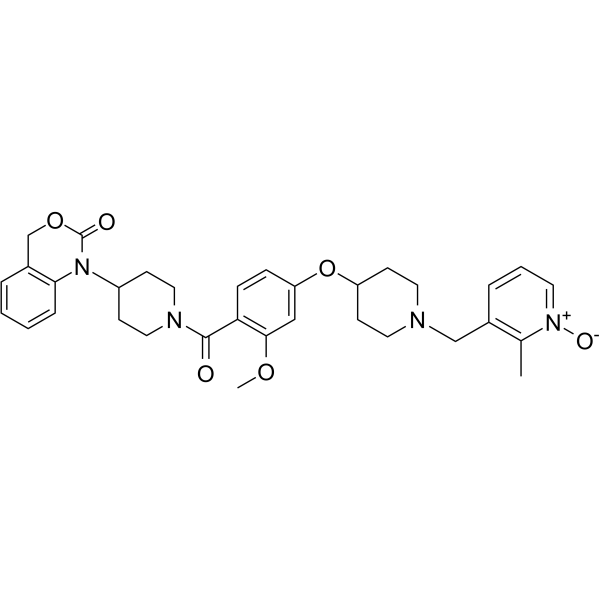
SHR1653Oxytocin Receptor Antagonist -
HY-15011
L-372662Oxytocin Antagonist


Product Information
Information
Anwendung
The compound is the grade of analytical standard, which is the reference standard supplied assay. It is commonly used in qualitative, quantitative and methodological research experiments in HPLC, GC and MS.


Chemical Information
-
CAS. Nr. 900510-03-4
-
Molecular Weight 419.84
-
Formel C19H19ClFN5O3
-
SMILES
FC1=CC(Cl)=C(OC2CN(C3=NN=C(COC)N3C4=CC=C(OC)N=C4)C2)C=C1
-
Synonyms
PF-3274167 (Standard)
-
Versand
Room temperature in continental US; may vary elsewhere.
-
Speicherung
Please store the product under the recommended conditions in the Certificate of Analysis.


Reinheit & Dokumentation
Verweise
[1]. Wayman C, et al. Cligosiban, A Novel Brain-Penetrant, Selective Oxytocin Receptor Antagonist, Inhibits Ejaculatory Physiology in Rodents. J Sex Med. 2018 Dec;15(12):1698-1706. [Content Brief]
[2]. Yue X, et al. Pharmacokinetics, bioavailability and metabolism of cligosiban, an antagonist of oxytocin receptor, in rat by liquid chromatography hyphenated with electrospray ionization tandem mass spectrometry. J Pharm Biomed Anal. 2019 Feb 5;164:725-733. [Content Brief]
[3]. Badshah M, et al. The Effects of Age on Prostatic Responses to Oxytocin and the Effects of Antagonists. Biomedicines. 2023 Nov 1;11(11):2956. [Content Brief]
[4]. Badshah M, et al. Age-Dependent Effects of Oxytocin and Oxytocin Receptor Antagonists on Bladder Contractions: Implications for the Treatment of Overactive Bladder Syndrome. Biomedicines. 2024 Mar 18;12(3):674. [Content Brief]

Calculators
Konzentration (Stammlösung) × Volumen (Stammlösung) = Konzentration (Ziellösung) × Volumen (Ziellösung)


Cligosiban (Standard) Related Classifications
HY-15023R Related Classifications
 Powered by Bioz