
1. Search Result
Search Result
Results for "

stimulatory

" in MedChemExpress (MCE) Product Catalog:

59

Inhibitors & Agonists

18

Peptides

2

MCE Kits

4

Inhibitory Antibodies

6

Natural
Products

39

Recombinant Proteins

2

Isotope-Labeled Compounds

13

Antibodies

4

Oligonucleotides

Cat. No. Product Name Target Research Areas Chemical Structure
  • HY-B1811
    Vasopressin
    5+ Cited Publications

    Arginine vasopressin; Antidiuretic hormone

    Endogenous Metabolite Neurological Disease
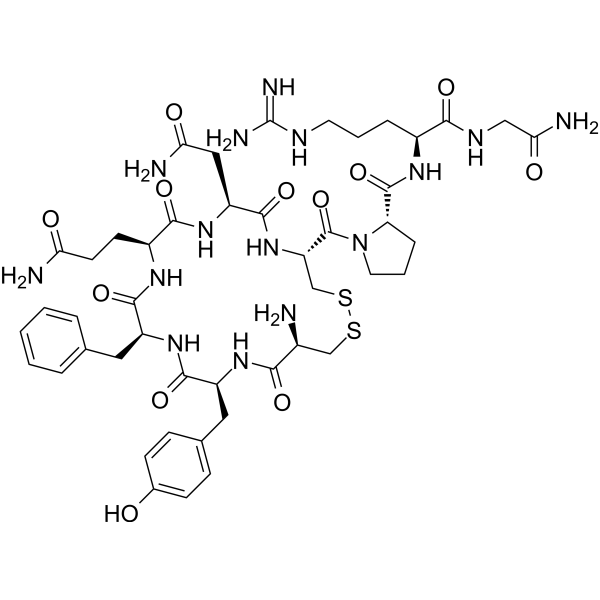
    Vasopressin is a cyclic nonapeptide that is synthesized centrally in the hypothalamus. Vasopressin participates in the hypothalamic-pituitary-adrenal axis, and regulates pituitary corticotropin secretion by potentiating the stimulatory effects of corticotropin releasing factor. Vasopressin also can act as a neurotransmitter, exerting its action by binding to specific G protein-coupled receptors .
    Vasopressin
  • HY-P0221
    PACAP (1-38), human, ovine, rat
    5 Publications Verification

    Pituitary Adenylate Cyclase Activating Polypeptide 38

    PACAP Receptor ERK EGFR Reactive Oxygen Species (ROS) Calcium Channel Infection Neurological Disease
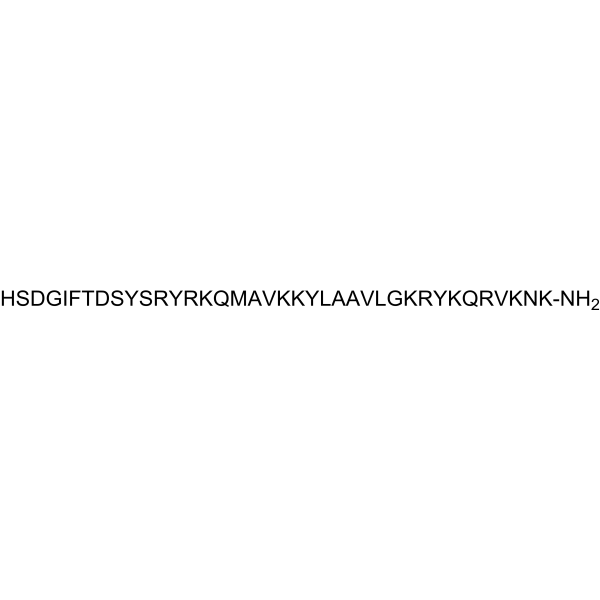
    PACAP (1-38), human, ovine, rat is a PAC1 receptor agonist. PACAP (1-38), human, ovine, rat binds to PACAP type I receptor, PACAP type II receptor VIP1, and PACAP type II receptor VIP2 with IC50s of 4 nM, 2 nM, and 1 nM, respectively. PACAP (1-38), human, ovine, rat increases the α-secretase activity. PACAP (1-38), human, ovine, rat elevates cytosolic Ca 2+, increases proliferation and increases phosphorylation of extracellular regulates kinase (ERK) and the epidermal growth factor receptor (EGFR). PACAP (1-38), human, ovine, rat demonstrates potent, efficacious, and sustained stimulatory effects on sympathetic neuronal NPY and catecholamine production. PACAP (1-38), human, ovine, rat can be used for neurotrophic and neuroprotective research .
    PACAP (1-38), human, ovine, rat
  • HY-119109
    Laminaran
    1 Publications Verification

    Environmental Pollutants Endogenous Metabolite Cancer
    Laminaran is an β-1-3-glucan and a typical ligand for Dectin-1 from Eisenia Bicyclis, has potent immunomodulating, radioprotective, and anticancer activities . Laminaran is made up of β (1→3)-glucan with β (1→6)-branches and can be catalyzed by enzymes such as laminarinase (EC 3.2.1.6) that breaks the β (1→3) bonds . Laminaran is a promising immune stimulatory molecule for use in cancer immunotherapy .
    Laminaran
  • HY-160225
    ISD sodium
    4 Publications Verification

    STING Interleukin Related Inflammation/Immunology
    ISD sodium is an interferon-stimulatory DNA, a 45 bp non-CpG double-stranded oligonucleotide derived from the genome of Listeria monocytogenes. ISD sodium potently induces type I interferon production via the cGAS‑STING‑TBK1‑IRF3 pathway .
    ISD sodium
  • HY-15681
    Senexin A
    Maximum Cited Publications
    9 Publications Verification

    CDK Cancer
    Senexin A is an inhibitor of CDK8/19 (IC50: 280 nM, CDK8) and an inhibitor downstream of p21 transcription. It only inhibits p21-induced transcription but does not inhibit other biological effects of p21. Senexin A inhibits CMV-GFP induction as well as the p21 stimulatory activity of the consensus NF-κB-dependent promoters .
    Senexin A
  • HY-P1698

    AB-103

    Bacterial CD28 Infection Inflammation/Immunology Cancer
    Reltecimod (AB-103) is a T-cell-specific surface glycoprotein CD28 (TP44) antagonist. Reltecimod has beneficial effects against different bacterial infections, their exotoxins and endotoxins, and ionizing radiation. Reltecimod modulates the inflammatory response by targeting and attenuating the critical CD28/B7-2 co-stimulatory pathway, without inhibiting it. Reltecimod can be used to research necrotizing soft-tissue infections (NSTIs) .
    Reltecimod
  • HY-P990083

    AT-1501

    TNF Receptor Inflammation/Immunology
    Tegoprubart (AT-1501) is a CD40 ligand inhibitor (EC50=100 ng/mL) and immunosuppressant that selectively inhibits the CD40 ligand, a co-stimulatory molecule involved in T cell activation. Tegoprubart suppresses immune rejection, prevents rejection in animal transplantation models, and reduces cell-mediated and antibody-mediated immune responses to create a more immunotolerant environment. Tegoprubart preserves renal function when combined with Mycophenolate (HY-B0421) and Corticosteroids, and maintains graft function in preclinical studies. Tegoprubart is applicable to research related to kidney transplantation and kidney transplant rejection .
    Tegoprubart
  • HY-P99845

    MEDI 4920; VIB 4920

    TNF Receptor Inflammation/Immunology
    Dazodalibep (MEDI 4920; VIB 4920) is a non-antibody fusion protein that targets CD40L. Dazodalibep inhibits the co-stimulatory signals between immune cells (such as T cells, B cells, and antigen-presenting cells), thereby enabling the inhibition of a broader range of cellular and humoral responses. Dazodalibep can be used for research on rheumatoid arthritis and Sjögren's syndrome .
    Dazodalibep
  • HY-P11335A

    Ser/Thr Protease Bacterial Others
    Oscillamide Y TFA is the trifluoroacetate salt of Oscillamide Y (HY-P11335). Oscillamide Y (Compound 1), a ureido-containing cyclic peptide, is a Chymotrypsin inhibitor. Oscillamide Y can be isolated from freshwater toxic cyanobacterium Oscillatoria agardhii. Oscillamide Y has potent toxicity against fish, daphnid magna and algae with a stimulatory effect for Raphidocelis subcapitata (EC50: 4.62 mg/L). Oscillamide Y induces high luminescence inhibition in Aliivibrio fischeri. Oscillamide Y can be used for ecological development research .
    Oscillamide Y TFA
  • HY-102062A
    Nω-Propyl-L-arginine hydrochloride
    1 Publications Verification

    N-omega-Propyl-L-arginine hydrochloride

    NO Synthase Neurological Disease
    Nω-Propyl-L-arginine (N-omega-Propyl-L-arginine) hydrochloride is a potent, competitive, and highly selective inhibitor of neuronal nitric oxide synthase (nNOS), with a Ki of 57 nM. Nω-Propyl-L-arginine hydrochloride displays a 149-fold selectivity for nNOS over endothelial NOS (eNOS) .
    Nω-Propyl-L-arginine hydrochloride
  • HY-102062
    Nω-Propyl-L-arginine
    1 Publications Verification

    N-omega-Propyl-L-arginine

    NO Synthase Neurological Disease
    Nω-Propyl-L-arginine (N-omega-Propyl-L-arginine) is a potent, competitive, and highly selective inhibitor of neuronal nitric oxide synthase (nNOS), with a Ki of 57 nM. Nω-Propyl-L-arginine displays a 149-fold selectivity for nNOS over endothelial NOS (eNOS) .
    Nω-Propyl-L-arginine
  • HY-P3576A

    Fluorescent Dye Bombesin Receptor Neurological Disease Cancer
    Biotin-Gastrin Releasing Peptide, human TFA is a biotinylated gastrin releasing peptide (GRP). Gastrin-releasing peptide (GRP) is a neuropeptide with growth-stimulatory and tumorigenic properties .
    Biotin-Gastrin Releasing Peptide, human TFA
  • HY-122663

    TNF Receptor Cancer
    (Rac)-BIO8898 is a CD40-CD154 co-stimulatory interaction inhibitor. (Rac)-BIO8898 inhibits CD154 binding to CD40-Ig with an IC50 of 25 μM .
    (Rac)-BIO8898
  • HY-114203

    BE003

    Monoamine Oxidase Influenza Virus Infection Neurological Disease Inflammation/Immunology
    Eckol is a potent hMAO-A (Mixed) and hMAO-B (non-competitive) inhibitor with IC50s of 7.20 and 83.44 μM, respectively. Eckol shows stimulatory effects in maize and can be used as a plant biostimulant. Eckol also shows antiallergic and antiviral effects .
    Eckol
  • HY-101630

    EGIS-3886

    5-HT Receptor Neurological Disease
    Deramciclane has a high affinity for 5-HT2A and 5-HT2C receptors; it acts as an antagonist at both receptor subtypes and has inverse agonist properties at the 5-HT2C receptors without direct stimulatory agonist.
    Deramciclane
  • HY-P1213

    Melanocortin Receptor Neurological Disease
    JKC363, a selective melanocortin MC4 receptor antagonist, has a 90-fold higher affinity at the MC4 receptor (IC50=0.5 nM) than at the MC3 receptor (44.9 nM). JKC-363 blocks the stimulatory effect of α-MSH on TRH release. Anti-hyperalgesic effect .
    JKC363
  • HY-P990961

    IMM-2510; SYN-2510

    VEGFR PD-1/PD-L1 Cardiovascular Disease Inflammation/Immunology Cancer
    Palverafusp alfa (IMM-2510; SYN-2510) is a PD-L1/VEGF-targeting IgG1κ type humanized antibody. Palverafusp alfa blocks PD-1/PD-L1 binding, relieves immune suppression, mediates PD-L1-directed antibody-dependent cellular cytotoxicity (ADCC). Palverafusp alfa blocks VEGF/VEGFR binding, inhibits angiogenic signaling, relieves VEGF-induced immune suppression. Palverafusp alfa reduces endothelial cell proliferation, enhances ADCC and antibody-dependent cellular phagocytosis (ADCP), inhibits tumor growth, reverses T cell immune suppression. Palverafusp alfa exhibits immune stimulatory, antiangiogenic, and anti-tumor activity in the tumor microenvironment. Palverafusp alfa can be used for the research of cancer, such as solid tumors, non-small cell lung cancer .
    Palverafusp alfa
  • HY-159886

    TNF Receptor Inflammation/Immunology
    MG-C-30 is an orally active agonist for CD27 with an EC50 of 0.84 μM. MG-C-30 activates NK cells and T cell co-stimulatory signals, and enhances immune response. MG-C-30 exhibits antitumor efficacy in mouse EG7-OVA model .
    MG-C-30
  • HY-P3570

    Lom-AKH-II

    Endogenous Metabolite Metabolic Disease
    Adipokinetic hormone II (Locusta migratoria) (Lom-AKH-II) is a insect adipokinetic hormone (AKH), enhances fat body cAMP levels in vitro. Insect adipokinetic hormones (AKHs) controls flight-directed mobilization of carbohydrate and lipid from fat body stores, which depends on AKH receptor(s) coupling to cAMP formation and glycogen phosphorylase activation via the stimulatory guanine nucleotide-binding protein (Gs) .
    Adipokinetic hormone II (Locusta migratoria)
  • HY-B1811AS1

    Arginine vasopressin-d5 TFA; Antidiuretic hormone-d5 TFA

    Isotope-Labeled Compounds Neurological Disease
    Vasopressin-d5 TFA is the TFA salt form of Vasopressin-d5 (HY-B1811S1). Vasopressin-d5 TFA is an isotope-labeled compound of Vasopressin (HY-B1811). Vasopressin is a cyclic nonapeptide that is synthesized centrally in the hypothalamus. Vasopressin participates in the hypothalamic-pituitary-adrenal axis and regulates pituitary corticotropin secretion by potentiating the stimulatory effects of the corticotropin-releasing factor. Vasopressin also can act as a neurotransmitter, exerting its action by binding to specific G protein-coupled receptors .
    Vasopressin-d5 TFA
  • HY-150158

    Toll-like Receptor (TLR) Cancer
    TMX-201 is a TLR7 ligand-phospholipid conjugate. TMX-201 shows potent immune stimulatory activity. TMX-201 can be used for breast cancer and melanoma research .
    TMX-201
  • HY-160226

    STING Inflammation/Immunology
    ISD (interferon stimulatory DNA) Control sodium is a non-immunostimulatory single-stranded oligonucleotide with the same sequence as ISD (HY-160225), its double-stranded counterpart . ISD Control can be used as a negative control for the CDS agonist ISD.
    ISD Control sodium
  • HY-P3572

    Lom-AKH-I

    Endogenous Metabolite Endocrinology
    Adipokinetic hormone I (Locusta migratoria) (Lom-AKH-I) is a insect adipokinetic hormone (AKH), enhances fat body cAMP levels in vitro. Insect adipokinetic hormones (AKHs) controls flight-directed mobilization of carbohydrate and lipid from fat body stores, which depends on AKH receptor(s) coupling to cAMP formation and glycogen phosphorylase activation via the stimulatory guanine nucleotide-binding protein (Gs) .
    Adipokinetic hormone I (Locusta migratoria)
  • HY-148459

    Drug-Linker Conjugates for ADC Cancer
    ATAC21, a linker-immune-stimulatory compound that can be formed by conjugating a noncleavable maleimide-PEG4 linker containing a succinimide group with an immune- stimulatory compound. ATAC21 can be combined with SBT-040 (anti-CD40 antibody) to form a conjugate .
    ATAC21
  • HY-145454

    (+)-3-PPP

    Dopamine Receptor Neurological Disease
    (R)-Preclamol is a dopamine (DA) agonist with autoreceptor as well as postsynaptic receptor stimulatory properties. (R)-Preclamol inhibits the locomotor activity of mice and rats in low doses .
    (R)-Preclamol
  • HY-132221

    Cyclic GMP-AMP Synthase Inflammation/Immunology
    CU-32 is a potent cGAS inhibitor with an IC50 of 0.45 µM. CU-32 decreases IFN-stimulatory DNA-induced production of IFN-β in THP-1 cells .
    CU-32
  • HY-P3683

    CRFR Endocrinology
    a-Helical Corticotropin Releasing Factor (12-41) is a 30 amino acids long, α-helical analogue of corticotropin releasing factor/hormone. Corticotropin releasing factor (CRF) is a hypothalamic hormone, which stimulates the secretion of adrenocorticotrophic hormone (ACTH). a-Helical Corticotropin Releasing Factor (12-41) would suppress the stimulatory effect .
    a-Helical Corticotropin Releasing Factor (12-41)
  • HY-P1213A

    Melanocortin Receptor Neurological Disease
    JKC363 TFA, a selective melanocortin MC4 receptor antagonist, has a 90-fold higher affinity at the MC4 receptor (IC50=0.5 nM) than at the MC3 receptor (44.9 nM). JKC363 TFA blocks the stimulatory effect of α-MSH on TRH release. Anti-hyperalgesic effect .
    JKC363 TFA
  • HY-B1811R

    Arginine vasopressin (Standard); Antidiuretic hormone (Standard)

    Endogenous Metabolite Reference Standards Neurological Disease
    Vasopressin (Standard) is the analytical standard of Vasopressin. This product is intended for research and analytical applications. Vasopressin is a cyclic nonapeptide that is synthesized centrally in the hypothalamus. Vasopressin participates in the hypothalamic-pituitary-adrenal axis, and regulates pituitary corticotropin secretion by potentiating the stimulatory effects of corticotropin releasing factor. Vasopressin also can act as a neurotransmitter, exerting its action by binding to specific G protein-coupled receptors .
    Vasopressin (Standard)
  • HY-P11335

    Ser/Thr Protease Bacterial Others
    Oscillamide Y (Compound 1), a ureido-containing cyclic peptide, is a Chymotrypsin inhibitor. Oscillamide Y can be isolated from freshwater toxic cyanobacterium Oscillatoria agardhii. Oscillamide Y has potent toxicity against fish, daphnid magna and algae with a stimulatory effect for Raphidocelis subcapitata (EC50: 4.62 mg/L). Oscillamide Y induces high luminescence inhibition in Aliivibrio fischeri. Oscillamide Y can be used for ecological development research .
    Oscillamide Y
  • HY-178236

    TRP Channel Metabolic Disease
    TRPM5 agonist-1 is an orally active TRPM5 agonist with a pEC50 of 8.1. TRPM5 agonist-1 shows excellent selectivity (> 100-fold) versus related cation channels (TRPM8, TRPV1, TRPV4, TRPA1, TRPM4). TRPM5 agonist-1 exhibits locally acting stimulatory effect on gastrointestinal transit in mice. TRPM5 agonist-1 can be used for research on promoting gastric motility .
    TRPM5 agonist-1
  • HY-P1089

    PCC 88-104

    Cytochrome P450 Inflammation/Immunology
    Cytochrome c-pigeon (88-104) (PCC 88-104) has full stimulatory activity for pigeon cytochrome c-primed T cells from B10.A mice. The I-E k-restricted T cell response to Cytochrome c pigeon (pcyt c) is specific for the COOH-terminal sequence 88-104 .
    Cytochrome c-pigeon (88-104)
  • HY-108698A

    (+)-3-PPP hydrochloride

    Dopamine Receptor Neurological Disease
    (R)-Preclamol hydrochloride ((+)-3-PPP hydrochloride) is the R-enantiomer of Preclamol hydrochloride. (R)-Preclamol hydrochloride is a DA agonist with autoreceptor as well as postsynaptic receptor stimulatory properties .
    (R)-Preclamol hydrochloride
  • HY-145454A

    (-)-3-PPP

    Dopamine Receptor Neurological Disease
    Preclamol is a dopamine (DA) agonist with autoreceptor as well as postsynaptic receptor stimulatory properties. Preclamol inhibits the locomotor activity of mice and rats in low doses .
    Preclamol
  • HY-N8490

    Others Metabolic Disease
    Eicosyl ferulate, a phenolic compound, is isolated from the fresh root and stem of Aristolochia kankauensis. Eicosyl ferulate exhibits glucose uptake stimulatory activity .
    Eicosyl ferulate
  • HY-P3576

    Fluorescent Dye Bombesin Receptor Neurological Disease Cancer
    Biotin-Gastrin Releasing Peptide, human is a biotinylated gastrin releasing peptide (GRP). Gastrin-releasing peptide (GRP) is a neuropeptide with growth-stimulatory and tumorigenic properties .
    Biotin-Gastrin Releasing Peptide, human
  • HY-59059

    Monoamine Oxidase Neurological Disease
    5-(2-Aminopropyl)indole is an orally active psychoactive substance, that shows inhibitory activity against monoamine oxidase (MAO) and long-lasting stimulatory properties .
    5-(2-Aminopropyl)indole
  • HY-116453

    G protein-coupled Bile Acid Receptor 1 Inflammation/Immunology
    RO5527239 is an orally active TGR5 agonist, that induces a stimulatory response from intestinal L cells and specificially secrets the endogenous hormone GLP-2 .
    RO5527239
  • HY-N10230

    Phanerosporic Acid

    Bacterial Infection
    MC 304 is a β-resorcylate isolated from cultures of Phanerochaete chrysosporium. MC 304 has antibacterial activity. MC 304 shows a stimulatory effect on root elongation of Lepidium satiuum .
    MC 304
  • HY-P1817

    PACAP Receptor Neurological Disease
    PACAP-38 (16-38), human, mouse, rat demonstrates potent, efficacious, and sustained stimulatory effects on sympathetic neuronal NPY and catecholamine production . PACAP is a potent activator of cAMP formation .
    PACAP-38 (16-38), human, mouse, rat
  • HY-116617

    15-Keto Fluprostenol isopropyl ester

    Drug Metabolite Others
    15-Keto Travoprost (15-Keto Fluprostenol isopropyl ester) is a metabolite of Travoprost (HY-B0584). 15-Keto Travoprost shows stimulatory effect on the growth and thickening of the eyelashes .
    15-Keto Travoprost
  • HY-171004

    Drug Derivative Inflammation/Immunology Cancer
    KRN7000 analog 8 (compound 8), KRN7000 (HY-102022) analogue, shows a good stimulatory effect on IL-2 production, induced less IFN-γ but more IL-4 production compared with KRN7000 .
    KRN7000 analog 8
  • HY-119069

    Dopamine Receptor Neurological Disease
    FAUC 3019 is a partial agonist of dopamine D(4) receptors and has the activity of promoting penile erection. FAUC 3019 has a strong stimulatory effect on penile erection in male rats at low concentrations. The biological activity of FAUC 3019 makes it a promising compound candidate .
    FAUC 3019
  • HY-134950

    TNF Receptor Inflammation/Immunology
    (E)-C-HDMAPP ammonium, is a potent phosphoantigen in ammonium form as well as a pyrophosphonate form of (E)-HDMAPP. (E)-C-HDMAPP is also an effective activator of γδ-T cells, induces T-cell stimulatory responses in vitro (EC50=0.91 nM for TNF-α release) .
    (E)-C-HDMAPP ammonium
  • HY-19036

    Adrenergic Receptor Neurological Disease
    SDZ NVI 085 is a compound with CNS stimulatory effects, primarily through the α1-adrenoceptor subtype, with anti-cataplexy and anti-stroke activities. SDZ NVI 085 also has a significant alertness effect and can be used to study other types of excessive sleepiness .
    SDZ NVI 085
  • HY-15681A

    CDK Cancer
    Senexin A hydrochloride is an inhibitor of CDK8/19 (IC50: 280 nM, CDK8) and an inhibitor downstream of p21 transcription. It only inhibits p21-induced transcription but does not inhibit other biological effects of p21. Senexin A hydrochloride inhibits CMV-GFP induction as well as the p21 stimulatory activity of the consensus NF-κB-dependent promoters .
    Senexin A hydrochloride
  • HY-B1811S1

    Arginine vasopressin-d5; Antidiuretic hormone-d5

    Isotope-Labeled Compounds Others
    Vasopressin-d5 is anIsotope-labeled compound of Vasopressin. Vasopressin is a cyclic nonapeptide that is synthesized centrally in the hypothalamus. Vasopressin participates in the hypothalamic-pituitary-adrenal axis and regulates pituitary corticotropin secretion by potentiating the stimulatory effects of the corticotropin-releasing factor. Vasopressin also can act as a neurotransmitter, exerting its action by binding to specific G protein-coupled receptors .
    Vasopressin-d5
  • HY-101630R

    EGIS-3886 (Standard)

    Reference Standards 5-HT Receptor Neurological Disease
    Deramciclane (Standard) is the analytical standard of Deramciclane. This product is intended for research and analytical applications. Deramciclane has a high affinity for 5-HT2A and 5-HT2C receptors; it acts as an antagonist at both receptor subtypes and has inverse agonist properties at the 5-HT2C receptors without direct stimulatory agonist.
    Deramciclane (Standard)
  • HY-13735H

    Acriquine acetate

    Parasite Sodium Channel DNA Stain Apoptosis Cancer
    Quinacrine (Acriquine) acetate is a small molecule modulator of the cGAS-STING-TBK1 signaling pathway, possessing immune stimulatory activity. Quinacrine acetate has been explored for its potential therapeutic applications in enhancing anti-tumor immunity. Quinacrine acetate can improve the effectiveness of cancer immunotherapies by addressing the poor immunogenicity of various tumors. Quinacrine acetate also presents a promising strategy for overcoming the limitations associated with immune checkpoint inhibitors in cancer treatment.
    Quinacrine acetate
  • HY-P1698B

    AB-103 TFA

    Bacterial CD28 Infection Inflammation/Immunology Cancer
    Reltecimod (AB-103) TFA is a T-cell-specific surface glycoprotein CD28 (TP44) antagonist. Reltecimod TFA has beneficial effects against different bacterial infections, their exotoxins and endotoxins, and ionizing radiation. Reltecimod TFA modulates the inflammatory response by targeting and attenuating the critical CD28/B7-2 co-stimulatory pathway, without inhibiting it. Reltecimod TFA can be used to research necrotizing soft-tissue infections (NSTIs) .
    Reltecimod TFA

Inquiry Online

Your information is safe with us. * Required Fields.

Salutation


Country or Region *

Applicant Name *


Organization Name *

Department *


Email Address *


Product Name *

Cat. No.


Requested quantity *

Phone Number *


Remarks

Inquiry Online

Inquiry Information

Product Name:
Cat. No.:
Quantity:
MCE Japan Authorized Agent:

