



IL-4 Protein, Mouse (HEK293, His)
Based on 13 publication(s) in Google Scholar
IL-4 Protein, Mouse (HEK293, His) is a pleiotropic cytokine that regulates diverse T and B cell responses including cell proliferation, survival and gene expression.IL-4 Protein, Mouse (HEK293, His) is a recombinant mouse interleukin-4 (rhIL-4) expressed in HEK 293 cells with a His tag.
- Species: Mouse
- Source: HEK293
-
Storage:Stored at -20°C for 2 years from date of receipt. After reconstitution, it is stable at 4°C for 1 week or -20°C for longer (with carrier protein). It is recommended to freeze aliquots at -20°C or -80°C for extended storage.


To place orders, for customer services and technical support, please contact: MedChemExpress USA
Tel: 609-228-6898 E-mail: [email protected] [email protected]


-
 Biological Activity
-
Technical Parameters
-
Product Properties
- Documentation
- References
- Help & FAQs


-

HY-P70460
IL-13 Protein, Mouse -
HY-P7071
IFN-gamma Protein, Mouse -
HY-P7361
GM-CSF Protein, Mouse -

HY-D1056
Lipopolysaccharides, from E. coli O55:B5Endotoxin -
HY-P70445
IL-4 Protein, Human -
HY-P7085
M-CSF Protein, Mouse -
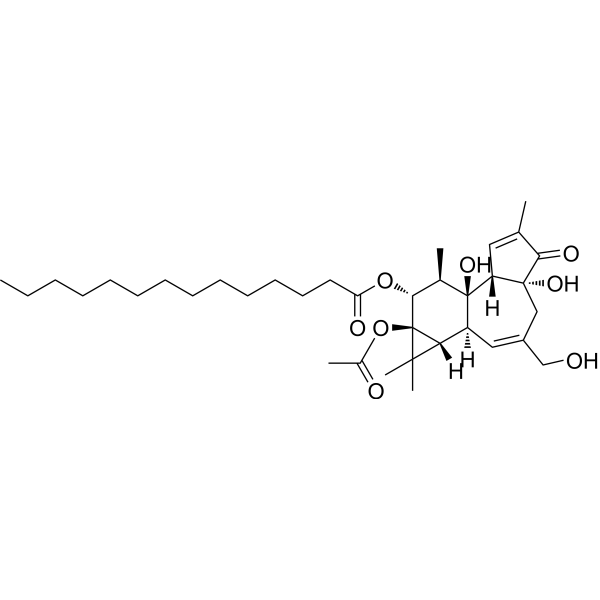
HY-18739
Phorbol 12-myristate 13-acetatePKC Activator -
HY-P70517
IL-10 Protein, Mouse -
HY-P7361A
GM-CSF Protein, Mouse (His) -
HY-P70568
IL-13 Protein, Human (HEK293, His) -
HY-P70553
M-CSF Protein, Mouse (HEK293) -
HY-P70623
GM-CSF Protein, Mouse (HEK293, His)


Biological Activity
Description
IL-4 Protein, Mouse (HEK293, His) is a pleiotropic cytokine that regulates diverse T and B cell responses including cell proliferation, survival and gene expression.IL-4 Protein, Mouse (HEK293, His) is a recombinant mouse interleukin-4 (rhIL-4) expressed in HEK 293 cells with a His tag.
Background
IL-4 is a T cell-derived growth factor for B cells. In addition to T cells, IL-4 is produced by innate lymphocytes, such as NTK cells, and myeloid cells, such as basophils and mast cells. It is a signature cytokine of type 2 immune response but also has a nonimmune function. Its expression is tightly regulated at several levels, including signaling pathways, transcription factors, epigenetic modifications, microRNA, and long noncoding RNA. Produced by mast cells, T cells and bone marrow stromal cells, IL-4 regulates the differentiation of naive CD4+ T cells into helper Th2 cells, characterized by their cytokine-secretion profile that includes secretion of IL-4, IL-5, IL-6, IL-10, and IL-13, which favor a humoral immune response. Another dominant function of IL-4 is the regulation of immunoglobulin class switching to the IgG1 and IgE isotypes. Excessive IL-4 production by Th2 cells has been associated with elevated IgE production and allergy[1].
Verified Bioactivity
1.Measured in a cell proliferation assay using M-NFS-60 mouse lymphoblast cells. The ED50 for this effect is <80 pg/mL.
2.Measured in a cell proliferation assay using HT-2 cells. The ED50 for this effect is ≤1.437 ng/mL, corresponding to a specific activity is ≥6.96×10⁵ units/mg.
MCE Validation Data
-
Purity - SDS-PAGE
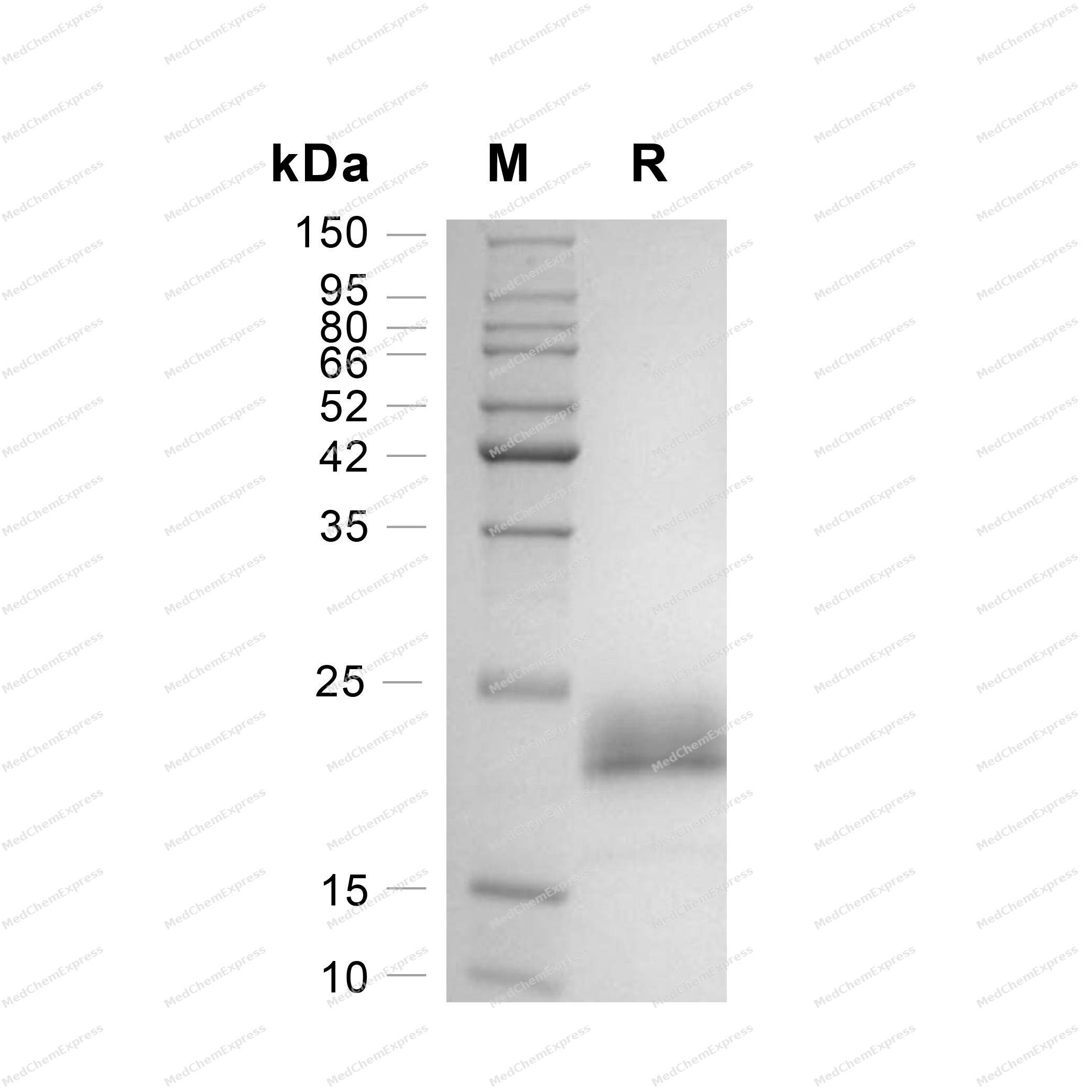
Purity - SDS-PAGE
-
Bioactivity - Cell-Based Assay
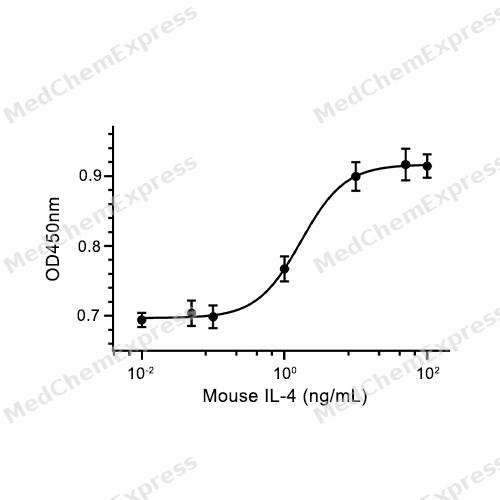
Bioactivity - Cell-Based Assay


Publications (13)
-
Journal Impact Factor
-
Most Recent
-
Nat Commun
Bioengineered hybrid dual-targeting nanoparticles reprogram the tumour microenvironment for deep glioblastoma photodynamic therapy. [Abstract]2025 Aug 18;16(1):7672. PMID: 40826003 -
-
Adv Sci (Weinh)
Spatial Transcriptomics Reveals Transcriptomic and Immune Microenvironment Reprogramming during Thyroid Carcinoma Dedifferentiation. [Abstract]2025 Sep 4:e06925. PMID: 40908584 -
Adv Sci (Weinh)
Programmable Bacteria with Dynamic Virulence Modulation System for Precision Antitumor Immunity. [Abstract]2024 Sep;11(36):e2404069. PMID: 39058336 -
-
Mater Today Bio
Functionalized 3D-printed GelMA/Laponite hydrogel scaffold promotes BMSCs recruitment through osteoimmunomodulatory enhance osteogenic via AMPK/mTOR signaling pathway. [Abstract]2024 Sep 23:29:101261. PMID: 39381262 -
Nephrol Dial Transplant
GSDMD and GSDME synergy in the transition of acute kidney injury to chronic kidney disease. [Abstract]2024 Jul 31;39(8):1344-1359. PMID: 38244230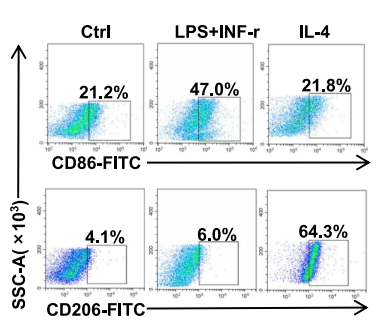
IL-4 Protein, Mouse (HEK293, His) purchased from MedChemExpress. Usage Cited in: Nephrol Dial Transplant. 2024 Jul 31;39(8):1344-1359. [Abstract]
Representative images of polarization models of M1 macrophage and M2 macrophage by flow cytometry in vitro. The RAW264.7 cells were treated with LPS (100 ng/ml) and INF-r (10 ng/ml) for 24 hours to induce M1 macrophage polarization, while IL-4 (20 ng/ml) for 24 hours to induce M2 macrophage polarization.
-
Cancer Immunol Immunother
A nanotherapeutic system for gastric cancer suppression by synergistic chemotherapy and immunotherapy based on iPSCs and DCs exosomes. [Abstract]2023 Jun;72(6):1673-1683. PMID: 36622422 -
Biol Proced Online
Piperlongumine Inhibits Lung Cancer Growth by Inducing Endoplasmic Reticulum Stress Leading to Suppression of M2 Macrophage Polarization. [Abstract]2025 May 22;27(1):18. PMID: 40405091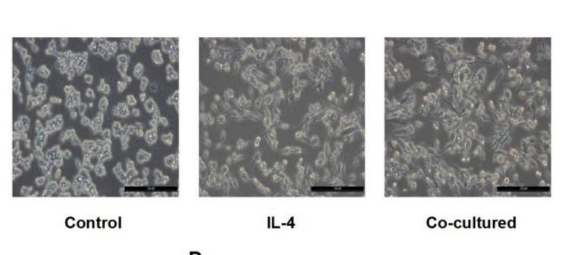
IL-4 Protein, Mouse (HEK293, His) purchased from MedChemExpress. Usage Cited in: Biol Proced Online. 2025 May 22;27(1):18. [Abstract]
IL-4 (20 ng/mL)-induced macrophages exhibited a spindle shape with pseudopodia, like the morphology observed in macrophages within the co-culture system.
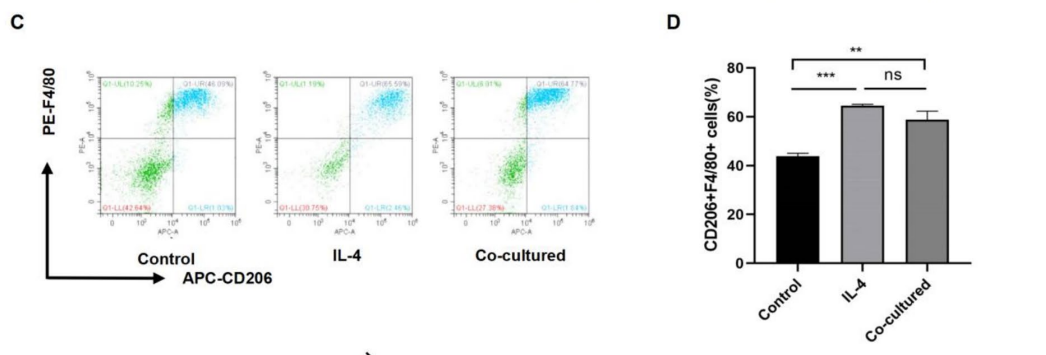
IL-4 Protein, Mouse (HEK293, His) purchased from MedChemExpress. Usage Cited in: Biol Proced Online. 2025 May 22;27(1):18. [Abstract]
Both IL-4 (20 ng/mL) treatment and co-culture conditions increased the proportion of F4/80+CD206+ macrophages compared to the control, indicating M2 polarization
-
BMC Cancer
Low-dose adropin stimulates inflammasome activation of macrophage via mitochondrial ROS involved in colorectal cancer progression. [Abstract]2023 Oct 30;23(1):1042. PMID: 37904094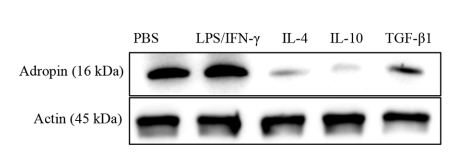
IL-4 Protein, Mouse (HEK293, His) purchased from MedChemExpress. Usage Cited in: BMC Cancer. 2023 Oct 30;23(1):1042. [Abstract]
M1 macrophages had increased adropin production as stimulated by LPS/IFN-γ, but M2 macrophages had decreased adropin production after being treated by IL-4 (50 ng/mL), IL-10 (50 ng/mL), or TGF-β1
-
BMC Pulm Med
Macrophage-derived exosomes carrying miR-30a-5p alleviates IL-13/IL4-induced epithelial-mesenchymal transition in mouse bronchial epithelial cells via Runx1. [Abstract]2025 Oct 28;25(1):496. PMID: 41152768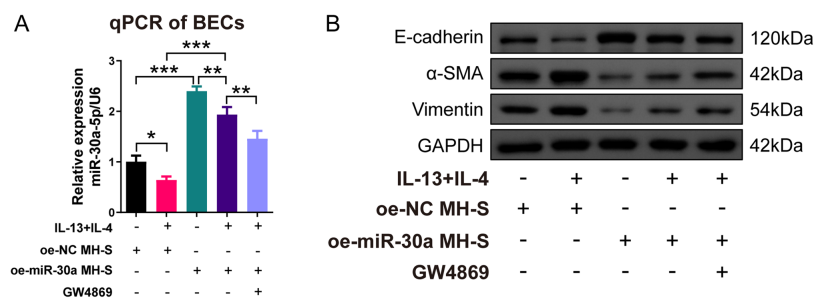
IL-4 Protein, Mouse (HEK293, His) purchased from MedChemExpress. Usage Cited in: BMC Pulm Med. 2025 Oct 28;25(1):496. [Abstract]
A: The qPCR was used to detect miR-30a-5p level in mouse bronchial epithelial cells. B, C: Western blot was used to measure E-cadherin, α-SMA, and Vimentin protein expressions in mouse bronchial epithelial cells. Protein blot was analyzed by ImageJ. 10 ng/mL IL-13 and 10 ng/mL IL-4 were used to induce EMT by incubating BECs for 48 h.
-
-


Technical Parameters
-
Species Mouse
-
Source HEK293
-
Tag C-6*His
-
Accession
P07750 (H21-S140)
-
Molecular Construction
-
N-term
-
IL-4 (H21-S140)
Accession # P07750 -
His
-
C-term
-
-
Protein Length
Full Length of Mature Protein
-
Synonyms
IL4; B_cell Stimulatory Factor 1; Interleukin 4; B-Cell Stimulatory Factor 1; IL-4; B Cell Growth Factor 1; Lymphocyte Stimulatory Factor 1; Binetrakin; Interleukin-4; Pitrakinra; BCGF-1; MGC79402; BCGF1; BSF-1; BSF1
-
AA Sequence
HIHGCDKNHLREIIGILNEVTGEGTPCTEMDVPNVLTATKNTTESELVCRASKVLRIFYLKHGKTPCLKKNSSVLMELQRLFRAFRCLDSSISCTMNESKSTSLKDFLESLKSIMQMDYS
-
Predicted Molecular Mass
14.6 kDa
-
Molecular Weight
Approximately 19-22 kDa, based on SDS-PAGE under reducing conditions, due to the glycosylation.
-
Glycosylation
Yes
-
Purity
≥ 95%, as determined by reducing SDS-PAGE.


Product Properties
Lyophilized powder
1.Lyophilized from a 0.22 μm filtered solution of 20 mM PB, 150 mM NaCl, pH 7.4.
2.Lyophilized from a 0.22 μm filtered solution of 50 mM Tris-HCl, 300 mM NaCl, pH 7.4.
3.Lyophilized from a 0.22 μm filtered solution of PBS, pH 7.4.
4.Lyophilized from a 0.22 μm filtered solution of PBS, pH 7.4, 8% trehalose.
Please refer to the lot-specific COA for specific buffer information.
Note: For SPR assay, please replace the buffer. Primary amine components (e.g., Tris, imidazole) can affect protein-coupled chips.
<1 EU/μg, determined by LAL method.
It is not recommended to reconstitute to a concentration less than 100 μg/mL in ddH2O. For long term storage it is recommended to add a carrier protein (0.1% BSA, 5% HSA, 10% FBS or 5% Trehalose).
Stored at -20°C for 2 years from date of receipt. After reconstitution, it is stable at 4°C for 1 week or -20°C for longer (with carrier protein). It is recommended to freeze aliquots at -20°C or -80°C for extended storage.
Room temperature in continental US; may vary elsewhere.


Documentation
-
Data Sheet (262 KB)
-
SDS (252 KB)
- English - EN (252 KB)
- Français - FR (252 KB)
- Deutsch - DE (252 KB)
- Norwegian - NO (252 KB)
- Español - ES (252 KB)
- Swedish - SV (252 KB)
- Italian - IT (252 KB)
- Korean - KR (252 KB)
- Portuguese - PT (252 KB)
-
Handling Instructions (2659 KB)


References

Calculators
Concentration (start) × Volume (start) = Concentration (final) × Volume (final)


 Powered by Bioz

