



IL-4 Protein, Human (His)
Based on 1 Customer Validation
IL-4 Protein is an endogenous agonist of IL-4 receptor (IL-4R), which works through the JAK1/JAK3-STAT6 signaling pathway. It can cooperate with SCF to promote the proliferation of human intestinal mast cells (ED50=100 pg/mL) and enhance the release of mediators such as histamine mediated by IgE receptor. IL-4 Protein can inhibit the production of IL-8 by human monocytes and regulate the secretion of endothelial cell factors. It is mainly used for IL-4R targeted therapy research of tumors (such as malignant pleural mesothelioma) and allergic diseases. IL-4 Protein, Human is a recombinant protein of human IL-4, expressed by E. coli, with 6His tag at N-terminal.
- Species: Human
- Source: E. coli
-
Storage:Stored at -20°C for 2 years from date of receipt. After reconstitution, it is stable at 4°C for 1 week or -20°C for longer (with carrier protein). It is recommended to freeze aliquots at -20°C or -80°C for extended storage.


To place orders, for customer services and technical support, please contact: MedChemExpress USA
Tel: 609-228-6898 E-mail: [email protected] [email protected]


-
 Biological Activity
-
Technical Parameters
-
Product Properties
- Documentation
- References
- Help & FAQs


-

HY-P70568
IL-13 Protein, Human (HEK293, His) -
HY-18739
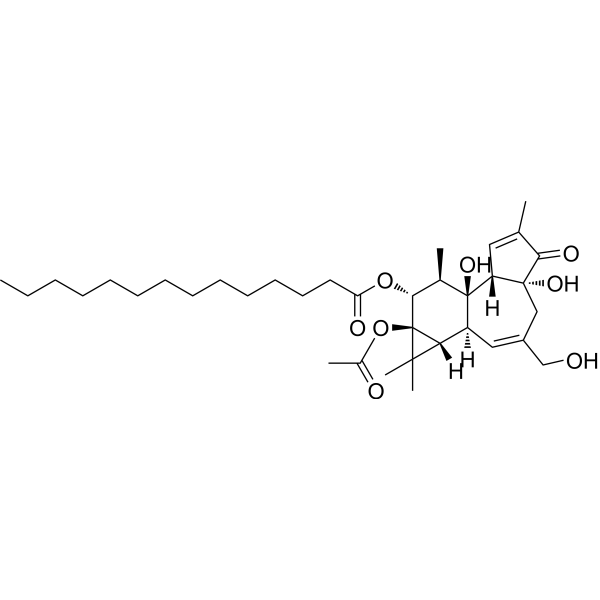
Phorbol 12-myristate 13-acetate -
HY-P7025
IFN-gamma Protein, Human -
HY-P72795
IL-13 Protein, Human -
HY-P7016A
GM-CSF Protein, Human -
HY-P7025A
IFN-gamma Protein, Human (CHO) -
HY-P78868
GM-CSF Protein, Human (HEK293) -
HY-P70751
IL-10 Protein, Human (HEK293)


Biological Activity
Description
IL-4 Protein is an endogenous agonist of IL-4 receptor (IL-4R), which works through the JAK1/JAK3-STAT6 signaling pathway. It can cooperate with SCF to promote the proliferation of human intestinal mast cells (ED50=100 pg/mL) and enhance the release of mediators such as histamine mediated by IgE receptor. IL-4 Protein can inhibit the production of IL-8 by human monocytes and regulate the secretion of endothelial cell factors. It is mainly used for IL-4R targeted therapy research of tumors (such as malignant pleural mesothelioma) and allergic diseases. IL-4 Protein, Human is a recombinant protein of human IL-4, expressed by E. coli, with 6His tag at N-terminal.
Background
IL-4 Protein is a cytokine of the interleukin-4 family, a glycoprotein with an α-helical structure, and an endogenous agonist of the IL-4 receptor (IL-4R), binding to the IL-4Rα and γc chains. IL-4 Protein was originally called B cell growth factor BSF1 and was described in the supernatant of activated EL-4 thymoma cells to costimulate with subservient concentrations of anti-IgM. IL-4 Protein exerts biological activity through the JAK1/JAK3-STAT6 signaling pathway, and can promote the proliferation of human intestinal mast cells (ED50=100 pg/mL) in coordination with stem cell factor (SCF), enhance the release of histamine, leukotriene C4, and IL-5 mediated by IgE receptors, inhibit the secretion of IL-8 mRNA and protein by human monocytes stimulated by LPS/TNF-α/IL-1β, and selectively enhance the secretion of IL-6 and inhibit IL-8 by human umbilical vein endothelial cells. Its mechanism of action involves regulating the expression of cell membrane receptors and the activation of downstream transcription factors. It is mainly used in the study of immune regulation mechanisms and targeted therapy of allergic diseases (such as asthma) and tumors (such as malignant pleural mesothelioma), especially the application of IL-4R-targeted cytotoxin fusion proteins (such as IL-4-PE, cpIL-4-PE) in tumor ablation. IL-4 Protein plays an important role in regulating inflammation and immune response. IL-4 Protein induces naive helper T cells to differentiate into Th2 cells. While IL-4 Protein binds to the IL-4 receptor, the IL-4 receptor also binds to another cytokine, IL-13, which may explain the overlapping functions of IL-4 and IL-13[1][2][3][4][5].
Verified Bioactivity
Measured in a cell proliferation assay using TF-1 human erythroleukemic cells. The ED50 for this effect is 0.2365 ng/mL, corresponding to a specific activity is 4.288×10^6 U/mg.


Technical Parameters
-
Species Human
-
Source E. coli
-
Tag N-6*His
-
Accession
P05112-1 (H25-S153)
-
Gene ID3565
-
Molecular Construction
-
N-term
-
6*His
-
IL-4 (H25-S153)
Accession # P05112-1 -
C-term
-
-
Protein Length
Full Length of Isoform-1
-
Synonyms
IL4; B_cell Stimulatory Factor 1; Interleukin 4; B-Cell Stimulatory Factor 1; IL-4; B Cell Growth Factor 1; Lymphocyte Stimulatory Factor 1; Binetrakin; Interleukin-4; Pitrakinra; BCGF-1; MGC79402; BCGF1; BSF-1; BSF1
-
AA Sequence
HKCDITLQEIIKTLNSLTEQKTLCTELTVTDIFAASKNTTEKETFCRAATVLRQFYSHHEKDTRCLGATAQQFHRHKQLIRFLKRLDRNLWGLAGLNSCPVKEANQSTLENFLERLKTIMREKYSKCSS
-
Predicted Molecular Mass
15.8 kDa
-
Molecular Weight
Approximately 16 kDa, based on SDS-PAGE under reducing conditions.
-
Purity
≥ 95%, as determined by reducing SDS-PAGE.


Product Properties
Lyophilized powder.
Lyophilized from a 0.22 μm filtered solution of PBS, pH 7.4, 8% trehalose.
<1 EU/μg, determined by LAL method.
It is not recommended to reconstitute to a concentration less than 100 μg/mL in ddH2O.
Stored at -20°C for 2 years from date of receipt. After reconstitution, it is stable at 4°C for 1 week or -20°C for longer (with carrier protein). It is recommended to freeze aliquots at -20°C or -80°C for extended storage.
Room temperature in continental US; may vary elsewhere.


Documentation
-
Data Sheet (264 KB)
-
SDS (252 KB)
- English - EN (252 KB)
- Français - FR (252 KB)
- Deutsch - DE (252 KB)
- Norwegian - NO (252 KB)
- Español - ES (252 KB)
- Swedish - SV (252 KB)
- Italian - IT (252 KB)
- Korean - KR (252 KB)
- Portuguese - PT (252 KB)
-
Handling Instructions (2659 KB)


References
[1]. Bischoff SC, et al. IL-4 enhances proliferation and mediator release in mature human mast cells. Proc Natl Acad Sci U S A. 1999 Jul 6;96(14):8080-5. [Content Brief]
[2]. Standiford TJ, et al. IL-4 inhibits the expression of IL-8 from stimulated human monocytes. J Immunol. 1990 Sep 1;145(5):1435-9. [Content Brief]
[4]. Ishige K, et al. Potent in vitro and in vivo antitumor activity of interleukin-4-conjugated Pseudomonas exotoxin against human biliary tract carcinoma. Int J Cancer. 2008 Dec 15;123(12):2915-22. [Content Brief]
[5]. Beseth BD, et al. Interleukin-4 receptor cytotoxin as therapy for human malignant pleural mesothelioma xenografts. Ann Thorac Surg. 2004 Aug;78(2):436-43; discussion 436-43. [Content Brief]

Calculators
Concentration (start) × Volume (start) = Concentration (final) × Volume (final)


 Powered by Bioz

