Search Result
Results for "
serotonin transporters
" in MedChemExpress (MCE) Product Catalog:
23
Isotope-Labeled Compounds
| Cat. No. |
상품명 |
Target |
연구분야 |
Chemical Structure |
-
- HY-W008719
-
MPP+ iodide
Maximum Cited Publications
34 Publications Verification
|
Mitochondrial Metabolism
|
Neurological Disease
|
|
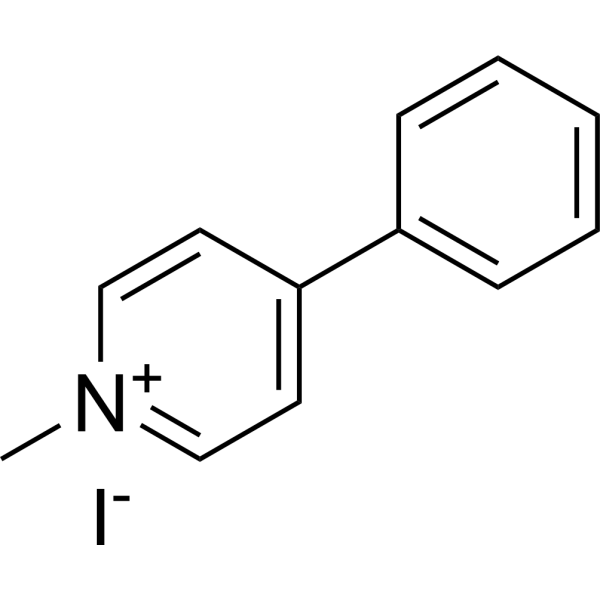
MPP+ iodide, a toxic metabolite of the neurotoxin MPTP, causes symptom of Parkinson's disease in animal models by selectively destroying dopaminergic neurons in substantia nigra. MPP+ iodide is taken up by the dopamine transporter into dopaminergic neurons where it exerts its neurotoxic action on mitochondria by affecting complex I of the respiratory chain. MPP+ iodide is also a high affinity substrate for the serotonin transporter (SERT) .
|
-
-
- HY-B1490
-
|
|
Serotonin Transporter
Apoptosis
Autophagy
|
Neurological Disease
Inflammation/Immunology
Cancer
|
|
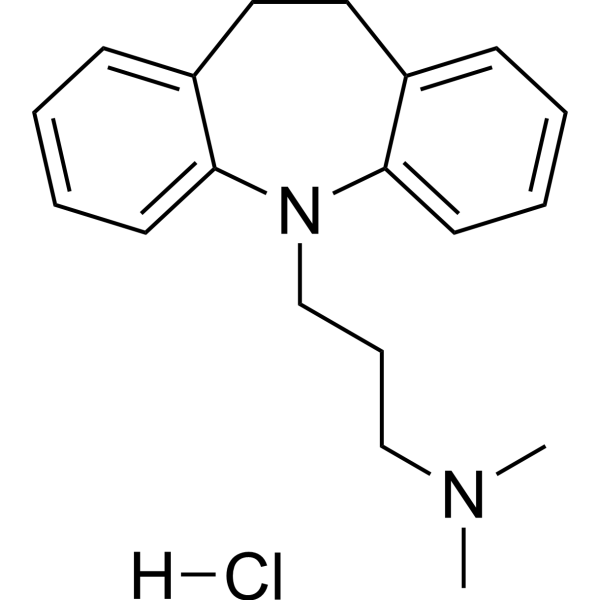
Imipramine hydrochloride is an orally active tertiary amine tricyclic antidepressant. Imipramine hydrochloride is a Fascin1 inhibitor with antitumor activities. Imipramine hydrochloride also inhibits serotonin transporter with an IC50 value of 32 nM. Imipramine hydrochloride stimulates U-87MG glioma cells autophagy and induces HL-60 cell apoptosis. Imipramine hydrochloride shows neuroprotective and immunomodulatory effects .
|
-
-
- HY-B1490A
-
|
|
Serotonin Transporter
Autophagy
Apoptosis
|
Neurological Disease
Inflammation/Immunology
Cancer
|
|
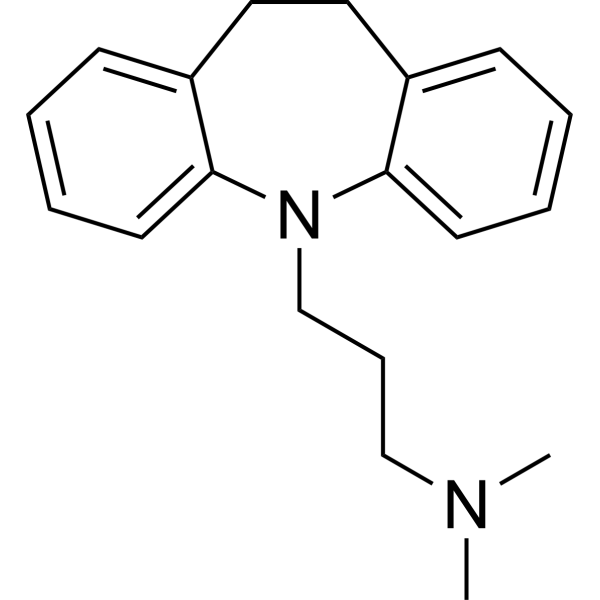
Imipramine is an orally active tertiary amine tricyclic antidepressant. Imipramine is a Fascin1 inhibitor with antitumor activities. Imipramine also inhibits serotonin transporter with an IC50 value of 32 nM. Imipramine stimulates U-87MG glioma cells autophagy and induces HL-60 cell apoptosis. Imipramine shows neuroprotective and immunomodulatory effects .
|
-
-
- HY-14258
-
Escitalopram
Maximum Cited Publications
11 Publications Verification
(S)-Citalopram; (S)-(+)-Citalopram
|
Serotonin Transporter
|
Neurological Disease
|
|
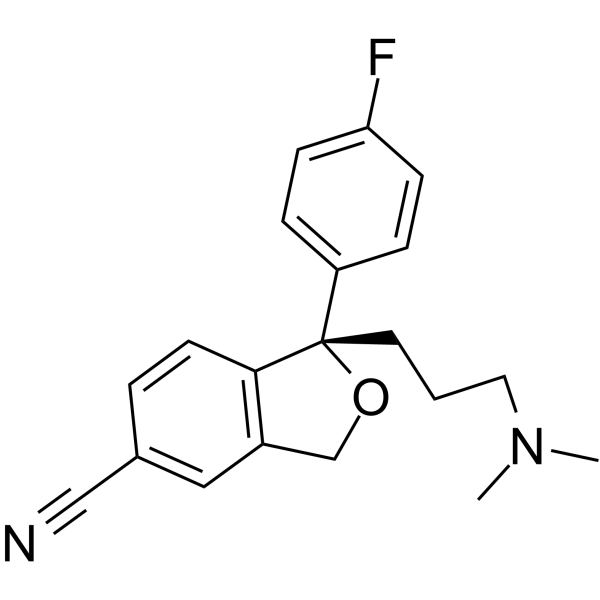
Escitalopram ((S)-Citalopram), the S-enantiomer of racemic Citalopram, is a selective serotonin reuptake inhibitor (SSRI) with a Ki of 0.89 nM. Escitalopram has ∼30 fold higher binding affinity than its R(-)-enantiomer and shows selectivity over both dopamine transporter (DAT) and norepinephrine transporter (NET). Escitalopram is an antidepressant for the research of major depression .
|
-
-
- HY-15414
-
-
-
- HY-14258A
-
|
(S)-Citalopram oxalate; (S)-(+)-Citalopram oxalate
|
Serotonin Transporter
|
Neurological Disease
Cancer
|
|
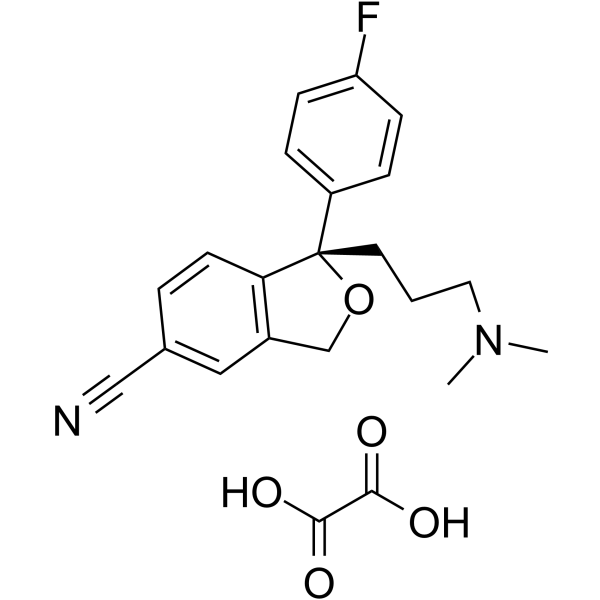
Escitalopram ((S)-Citalopram) oxalate, the S-enantiomer of racemic Citalopram, is a selective serotonin reuptake inhibitor (SSRI) with a Ki of 0.89 nM. Escitalopram oxalate has ∼30 fold higher binding affinity than its R(-)-enantiomer and shows selectivity over both dopamine transporter (DAT) and norepinephrine transporter (NET). Escitalopram oxalate is an antidepressant for the research of major depression .
|
-
-
- HY-17385
-
|
Tomoxetine hydrochloride; (R)-Tomoxetine hydrochloride; LY 139603
|
Adrenergic Receptor
Serotonin Transporter
Sodium Channel
|
Neurological Disease
Cancer
|
|
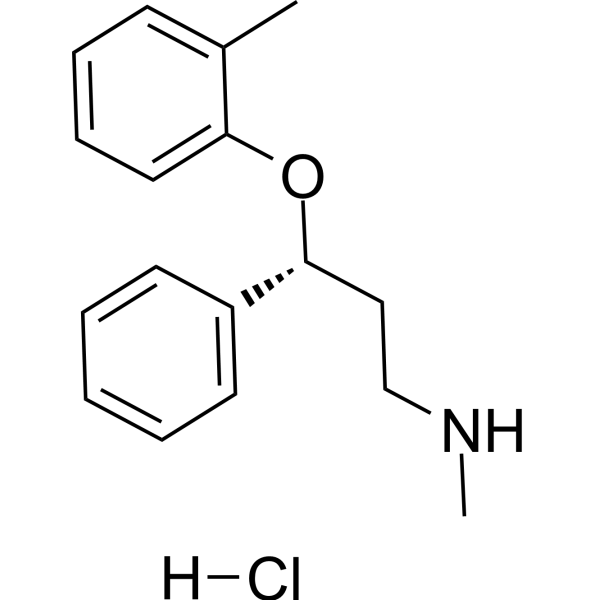
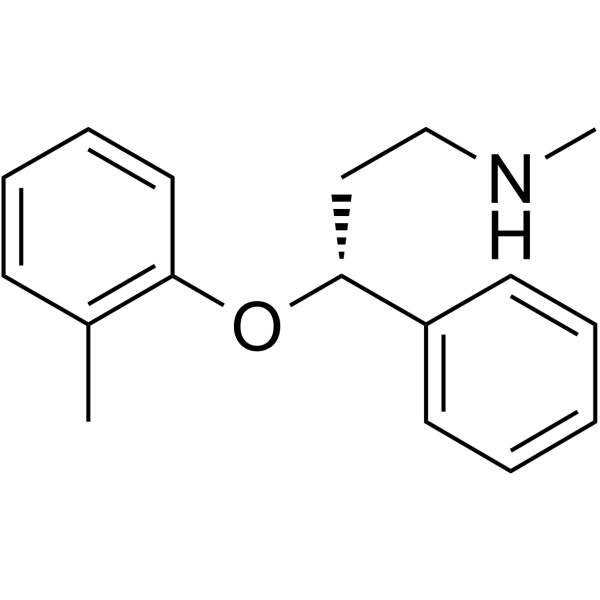
Atomoxetine (Tomoxetine) hydrochloride is a selective noradrenaline reuptake inhibitor with Ki values of 5 nM, 77 nM and 1451 nM for norepinephrine (NE), serotonin (5-HT) and dopamine (DA) transporters, respectively. Atomoxetine hydrochloride is a potent Na + channels (VGSCs) blocker. Atomoxetine hydrochloride can be used for attention-deficit hyperactivity disorder (ADHD) research .
|
-
-
- HY-14261
-
-
-
- HY-B1213
-
|
|
5-HT Receptor
Bacterial
|
Neurological Disease
|
|
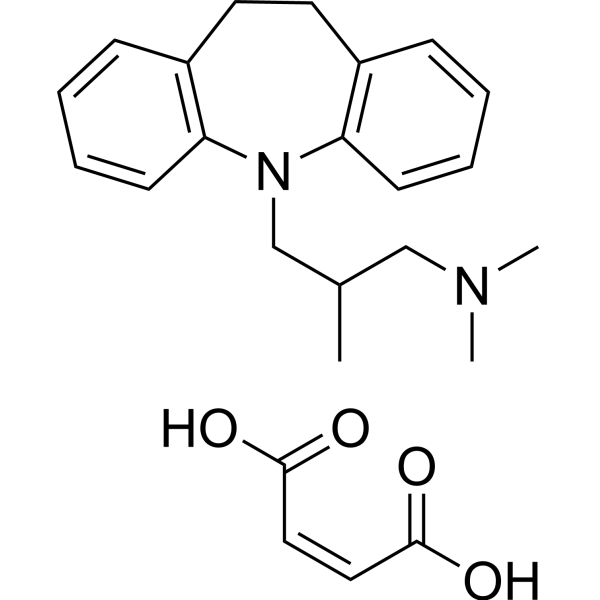
Trimipramine maleate is a 5-HT receptor antagonist, with blood-brain barrier permeability. Trimipramine maleate has pKi binding values of 6.39, 8.10, 4.66 for 5-HT1C, 5-HT2 and 5-HT1A, respectively. Trimipramine maleate is also a potent and selective inhibitor targeting human noradrenaline (hNAT), serotonin (hSERT) and organic cation transporters (hOCT1, hOCT2) with IC50 values of 4.99 μM, 2.11 μM, 3.72 μM, 8.00 μM, respectively. Trimipramine maleate has vascular activity and anxiolytic efficacy .
|
-
-
- HY-B0168A
-
|
|
Serotonin Transporter
PERK
|
Neurological Disease
|
|
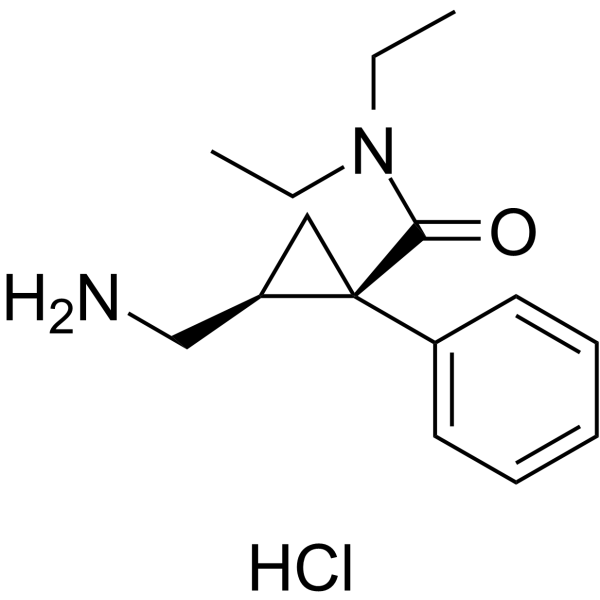
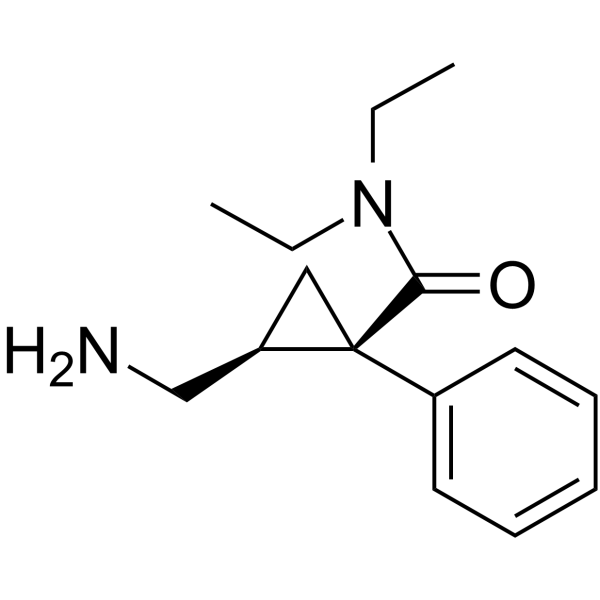
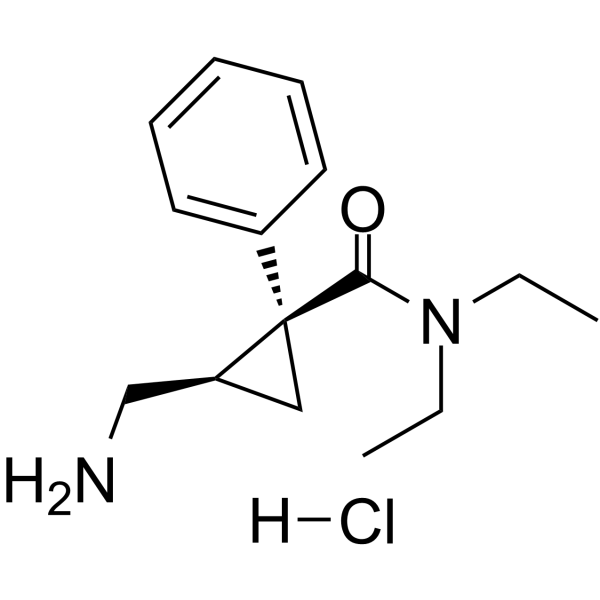
Milnacipran hydrochloride is an orally active Serotonin (HY-B1473A) and Norepinephrine (HY-13715) reuptake inhibitor. Milnacipran hydrochloride inhibits monoamine transporters, especially the norepinephrine transporter and the serotonin transporter (Ki values of 31 and 8.5 nM, respectively). Milnacipran hydrochloride inhibits pERK1/2 activation. Milnacipran hydrochloride has antidepressant, anxiolytic and analgesic properties. Milnacipran hydrochloride inhibits biting behavior in mice. Milnacipran hydrochloride can be used in the study of major depressive disorder, anxiety disorders, and neuropathic pain (e.g., fibromyalgia) .
|
-
-
- HY-N0740
-
|
|
Cholinesterase (ChE)
5-HT Receptor
Bacterial
|
Neurological Disease
Inflammation/Immunology
|
|
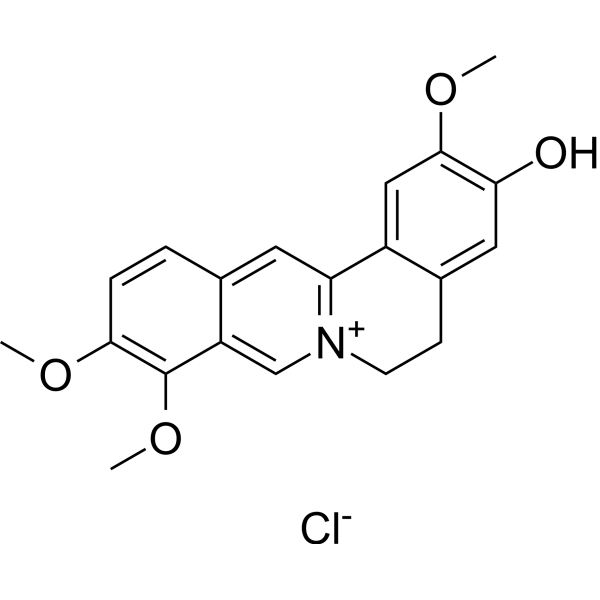
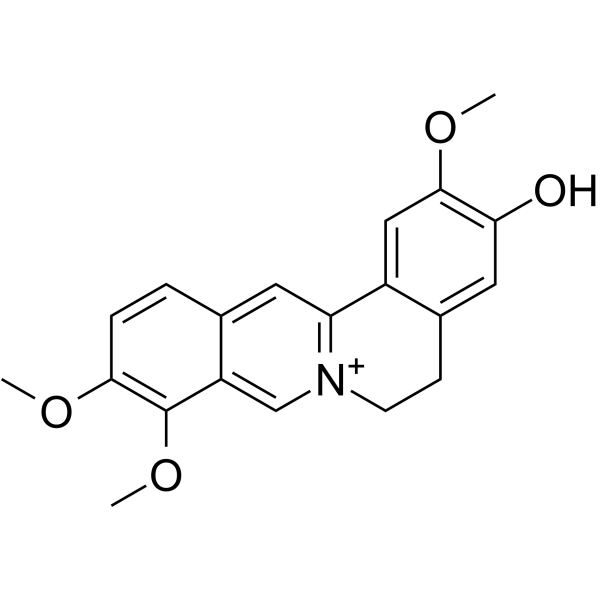
Jatrorrhizine chloride is an alkaloid isolated from?Coptis chinensis with neuroprotective, antimicrobial, antiplasmodial and antioxidant activities . Jatrorrhizine chloride is a potent and orally active inhibitor of?AChE?(IC50=872 nM) over >115-fold selectivity for BuChE . Jatrorrhizine chloride reduces uptake of serotonin (5-HT) and norepinephrine (NE) via inhibition of uptake-2 transporters .
|
-
-
- HY-N0173
-
|
α-Quinidine
|
Serotonin Transporter
Parasite
|
Infection
|
|
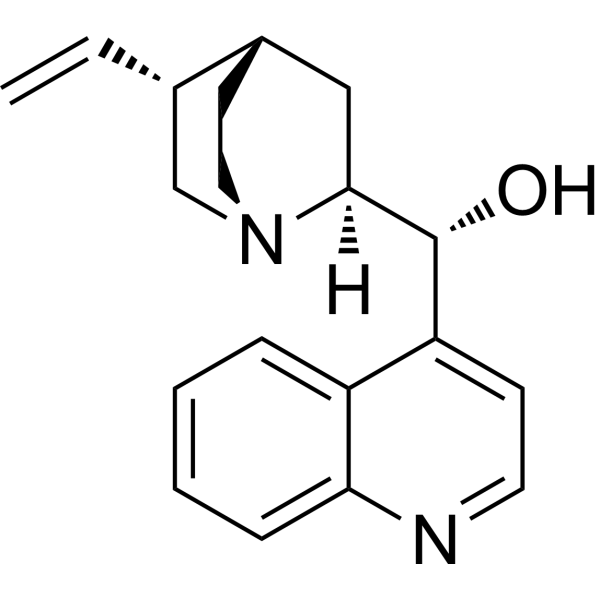
Cinchonidine (α-Quinidine) is a cinchona alkaloid found in Cinchona officinalis and Gongronema latifolium. A building block used in asymmetric synthesis in organic chemistry. Weak inhibitor of serotonin transporter (SERT) with Kis of 330, 4.2, 36, 196, 15 μM for dSERT, hSERT, hSERT I172M, hSERT S438T, hSERT Y95F, respectively. Antimalarial activities .
|
-
-
- HY-148417
-
|
|
Serotonin Transporter
|
Neurological Disease
|
|
ZZL-7 is a fast-onset antidepressant agent. ZZL-7 works by disrupting the interaction between the serotonin transporter (SERT) and neuronal nitric oxide synthase (nNOS) in the dorsal raphe nucleus (DRN). ZZL-7 can cross the blood-brain barrier readily. ZZL-7 can be used for the research of major depressive disorder (MDD) .
|
-
-
- HY-N0749
-
|
|
Cholinesterase (ChE)
5-HT Receptor
Bacterial
|
Neurological Disease
|
|
Jatrorrhizine is an alkaloid isolated from Coptis chinensis with neuroprotective, antimicrobial, antiplasmodial and antioxidant activities . Jatrorrhizine is a potent and orally active inhibitor of AChE (IC50=872 nM) over >115-fold selectivity for BuChE . Jatrorrhizine reduces uptake of serotonin (5-HT) and norepinephrine (NE) via inhibition of uptake-2 transporters .
|
-
-
- HY-12850A
-
-
-
- HY-16736A
-
-
-
- HY-149170
-
|
|
5-HT Receptor
Monoamine Transporter
|
Neurological Disease
|
|
FFN246 is a fluorescent, dual substrate of serotonin transporter (SERT) probe and vesicular monoamine transporter 2 (VMAT2) with excitation and emission spectra 392/427 nm. FFN246 can be used for labeling serotonergic neurons in mouse brain tissue through SERT-dependent accumulation .
|
-
-
- HY-B0168B
-
|
(1S,2R)-Milnacipran hydrochloride; F-2695 hydrochloride
|
Serotonin Transporter
Trk Receptor
PI3K
Akt
mTOR
P-glycoprotein
|
Neurological Disease
Inflammation/Immunology
|
|
Levomilnacipran ((1S,2R)-Milnacipran) hydrochloride is the enantiomer of Milnacipran (HY-B0168) and a strong substrate of P-gp that can cross the blood-brain barrier. Levomilnacipran hydrochloride is a serotonin and norepinephrine reuptake inhibitor, with IC50 values of 10.5 nM and 19.0 nM, and Ki values of 92.2 nM and 1.2 nM for human norepinephrine transporter (NET) and serotonin transporter (SERT), respectively. Levomilnacipran hydrochloride has antidepressant and anxiolytic activities. Levomilnacipran hydrochloride can be used for the research of depression .
|
-
-
- HY-N0749A
-
|
|
Cholinesterase (ChE)
5-HT Receptor
Bacterial
|
Neurological Disease
Inflammation/Immunology
|
|
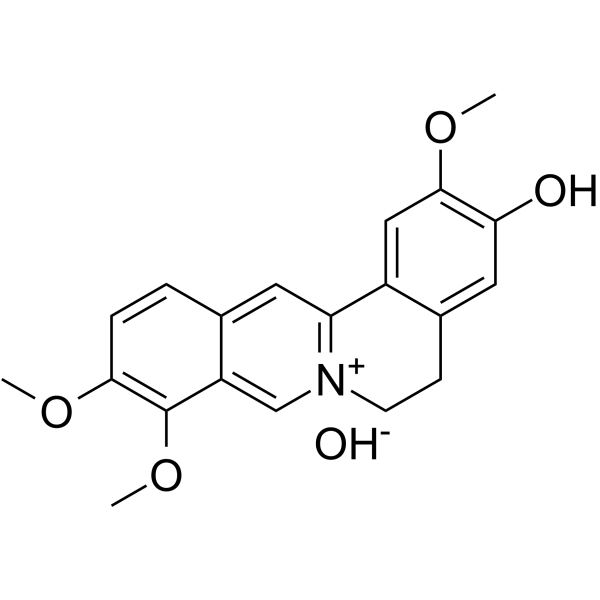
Jatrorrhizine hydroxide is an alkaloid isolated from Coptis chinensis with neuroprotective, antimicrobial, antiplasmodial and antioxidant activities . Jatrorrhizine hydroxide is a potent and orally active inhibitor of AChE (IC50=872 nM) over >115-fold selectivity for BuChE . Jatrorrhizine hydroxide reduces uptake of serotonin (5-HT) and norepinephrine (NE) via inhibition of uptake-2 transporters .
|
-
-
- HY-14794
-
|
(1R,2S)-Milnacipran; F2696
|
Serotonin Transporter
Adrenergic Receptor
|
Neurological Disease
Metabolic Disease
|
|
Dextromilnacipran ((1R,2S)-Milnacipran; F2696) is an orally active Serotonin (HY-B1473A)/Noradrenaline (HY-13715) transporter inhibitor. Dextromilnacipran inhibits Serotonin and Noradrenaline reuptake. Dextromilnacipran can be used for the research of depression, fibromyalgia .
|
-
-
- HY-110019
-
|
Lu 19-005
|
Serotonin Transporter
Dopamine Transporter
|
Neurological Disease
|
|
Indatraline hydrochloride (Lu 19-005) is a non-selective monoamine transporter inhibitor that blocks the reuptake of neurotransmitters (dopamine, serotonin, and norepinephrine). Indatraline hydrochloride can be used for the research of antidepressive. Indatraline hydrochloride induces autophagy while simultaneously inhibiting cell proliferation. Indatraline hydrochloride may also serve to direct the development of new agents for autophagy-related diseases such as atherosclerosis or restenosis .
|
-
-
- HY-135615A
-
|
N-Desmethylsibutramine hydrochloride
|
Serotonin Transporter
|
Neurological Disease
Metabolic Disease
|
|
Desmethyl Sibutramine hydrochloride, the secondary metabolite of Sibutramine, is an orally active norepinephrine transporter (NET) and serotonin transporter (SERT) inhibitor. Desmethyl Sibutramine hydrochloride can be used in the research of obesity and appetite suppressant .
|
-
-
- HY-B0168
-
|
|
Serotonin Transporter
PERK
|
Neurological Disease
|
|
Milnacipran is an orally active Serotonin (HY-B1473A) and Norepinephrine (HY-13715) reuptake inhibitor. Milnacipran inhibits monoamine transporters, especially the norepinephrine transporter and the serotonin transporter (Ki values of 31 and 8.5 nM, respectively). Milnacipran inhibits pERK1/2 activation. Milnacipran has antidepressant, anxiolytic and analgesic properties. Milnacipran inhibits biting behavior in mice. Milnacipran can be used in the study of major depressive disorder, anxiety disorders, and neuropathic pain (e.g., fibromyalgia) .
|
-
-
- HY-N7506
-
|
Delta3,2-Hydroxylbakuchiol
|
Monoamine Transporter
Dopamine Transporter
|
Neurological Disease
|
|
13-Hydroxyisobakuchiol (Delta3,2-Hydroxylbakuchiol), an analog of Bakuchiol (HY-N0235) that can be isolated from Psoralea corylifolia (L.), is a potent selective monoamine transporter inhibitor. 13-Hydroxyisobakuchiol is more selective for the dopamine transporter (DAT) (IC50 = 0.58 μM) and norepinephrine transporter (NET) (IC50 = 0.69 μM) than for the serotonin transporter (SERT) (IC50 = 312.02 μM). 13-Hydroxyisobakuchiol increases the activity of intact mice and improves the decreased activity of reserpinized mice in vivo. 13-Hydroxyisobakuchiol can be used for the research of disorders such as Parkinson's disease and depression .
|
-
-
- HY-14258AR
-
|
(S)-Citalopram oxalate (Standard); (S)-(+)-Citalopram oxalate (Standard)
|
Reference Standards
Serotonin Transporter
|
Neurological Disease
Cancer
|
|
Escitalopram (oxalate) (Standard) is the analytical standard of Escitalopram (oxalate). This product is intended for research and analytical applications. Escitalopram ((S)-Citalopram) oxalate, the S-enantiomer of racemic Citalopram, is a selective serotonin reuptake inhibitor (SSRI) with a Ki of 0.89 nM. Escitalopram oxalate has ∼30 fold higher binding affinity than its R(-)-enantiomer and shows selectivity over both dopamine transporter (DAT) and norepinephrine transporter (NET). Escitalopram oxalate is an antidepressant for the research of major depression .
|
-
-
- HY-107370
-
|
Tomoxetine; (R)-Tomoxetine
|
Serotonin Transporter
Sodium Channel
|
Neurological Disease
Cancer
|
|
Atomoxetine (Tomoxetine) is a selective noradrenaline reuptake inhibitor with Ki values of 5, 77 and 1451 nM for norepinephrine (NE), serotonin (5-HT) and dopamine (DA) transporters, respectively. Atomoxetine (Tomoxetine) increases of DAEX and NEEX in the PFC and enhances catecholaminergic neurotransmission. Atomoxetine (Tomoxetine) is a potent Na + channels (VGSCs) blocker. Atomoxetine (Tomoxetine) can be used for attention-deficit hyperactivity disorder (ADHD) research .
|
-
-
- HY-103465
-
|
|
Monoamine Transporter
|
Others
|
|
FFN511 is a potent fluorescent false neurotransmitters (FFNs) that targets neuronal vesicular monoamine transporter 2 (VMA T2). FFN511 inhibits serotonin binding to VMA T2-containing membranes with an IC50 of 1 µM. FFN511 directly images the dynamics of release during exocytosis, can be used to label dopamine terminals in live cortical-striatalacute slices .
|
-
-
- HY-117526
-
|
|
Serotonin Transporter
|
Neurological Disease
|
|
(-)-Mesembrine is a serotonin transporter (SERT) inhibitor. (-)-Mesembrine inhibits serotonin reuptake. (-)-Mesembrine exerts anxiolytic, mood-enhancing and anti-addictive effects. (-)-Mesembrine is applicable to research on mild-to-moderate depression, anxiety disorders and stress-related conditions .
|
-
-
- HY-111419
-
|
|
Serotonin Transporter
5-HT Receptor
|
Neurological Disease
|
|
DSP-1053, a benzylpiperidine derivative, is a potent Serotonin Transporter (SERT) inhibitor with a Ki of 1.02 nM. DSP-1053 shows partial 5-HT1A receptor agonistic activity with a Ki of 5.05 nM. DSP-1053 has antidepressant activity .
|
-
-
- HY-118796
-
|
4-HO-MET; 4-Hydroxy-N-methyl-N-ethyltryptamine
|
5-HT Receptor
Serotonin Transporter
|
Neurological Disease
|
|
4-Hydroxy MET (4-HO-MET; 4-Hydroxy-N-methyl-N-ethyltryptamine) is a synthetic tryptamine psychoactive substance. 4-Hydroxy MET is a partial 5-HT2A receptor agonist, a serotonin transporter inhibitor and weak norepinephrine transporter inhibitor. 4-Hydroxy MET affects emotional, motoric, and cognitive functions via serotonergic hallucinogenic activity .
|
-
-
- HY-16736
-
-
-
- HY-135096
-
|
|
Serotonin Transporter
5-HT Receptor
Histamine Receptor
mAChR
Adrenergic Receptor
Sodium Channel
Trk Receptor
|
Neurological Disease
|
|
Amitriptyline-d3 hydrochloride is the deuterium labeled Amitriptyline (hydrochloride). Amitriptyline hydrochloride is an inhibitor of serotonin reuptake transporter (SERT) and noradrenaline reuptake transporter (NET), with Kis of 3.45 nM and 13.3 nM for human SERT and NET, respectively. Amitriptyline hydrochloride also weakly binds to dopamine reuptake transporter (DAT) with a Ki of 2.58 μM. Amitriptyline hydrochloride also inhibits adrenergic, muscarinic, histamine and 5-HT receptors. Amitriptyline hydrochloride is a TrkA and TrkB receptors agonist with potent neurotrophic activity. Amitriptyline hydrochloride has antidepressant activity .
|
-
-
- HY-W008719S
-
|
|
Mitochondrial Metabolism
|
Neurological Disease
|
|
MPP+-d3 (iodide) is deuterium labeled MPP+ (iodide). MPP+ iodide, a toxic metabolite of the neurotoxin MPTP, causes symptom of Parkinson's disease in animal models by selectively destroying dopaminergic neurons in substantia nigra. MPP+ iodide is taken up by the dopamine transporter into dopaminergic neurons where it exerts its neurotoxic action on mitochondria by affecting complex I of the respiratory chain. MPP+ iodide is also a high affinity substrate for the serotonin transporter (SERT) .
|
-
-
- HY-W417914
-
|
4-MA hydrochloride
|
5-HT Receptor
Monoamine Transporter
Dopamine Receptor
|
Neurological Disease
|
|
4-Methylamphetamine hydrochloride is a 5-HT1A receptor agonist that induces hypothermia in rats by binding to the 5-HT1A receptor. Additionally, 4-Methylamphetamine hydrochloride acts on norepinephrine (NE), dopamine (DA), and serotonin (5-HT) transporters to increase the extracellular levels of these neurotransmitters. 4-Methylamphetamine hydrochloride can be used in the study of neurological disorders .
|
-
-
- HY-B1213A
-
|
|
5-HT Receptor
Bacterial
|
Neurological Disease
|
|
Trimipramine is a 5-HT receptor antagonist, with pKi binding values of 6.39, 8.10, 4.66 for 5-HT1C, 5-HT2 and 5-HT1A, respectively. Trimipramine is also a potent and selective inhibitor targeting human noradrenaline (hNAT), serotonin (hSERT) and organic cation transporters (hOCT1, hOCT2) with IC50 values of 4.99 μM, 2.11 μM, 3.72 μM, 8.00 μM, respectively. Trimipramine has vascular activity and anxiolytic efficacy .
|
-
-
- HY-14258AS
-
|
|
Serotonin Transporter
|
Neurological Disease
|
|
Escitalopram-d6 (oxalate) is the deuterium labeled Escitalopram oxalate. Escitalopram ((S)-Citalopram) oxalate, the S-enantiomer of racemic Citalopram, is a selective serotonin reuptake inhibitor (SSRI) with a Ki of 0.89 nM. Escitalopram oxalate has ~30 fold higher binding affinity than its R(-)-enantiomer and shows selectivity over both dopamine transporter (DAT) and norepinephrine transporter (NET). Escitalopram oxalate is an antidepressant for the research of major depression .
|
-
-
- HY-110289
-
|
|
Serotonin Transporter
5-HT Receptor
|
Neurological Disease
|
|
(R)-Citalopram oxalate, a R-(-) enantiomers of Citalopram (HY-121203), is a serotonin reuptake inhibitor. (R)-Citalopram oxalate is at least 20-fold weaker than S-citalopram (HY-14258) as inhibitor of the 5-HT transporter (SERT). (R)-Citalopram oxalate can be used for research of depression .
|
-
-
- HY-14348
-
|
|
5-HT Receptor
|
Neurological Disease
|
|
GSK163090 is a potent, selective and orally active 5-HT1A/1B/1D receptor antagonist with pKi values of 9.4, 8.5 and 9.7, respectively. GSK163090 inhibits the functional activity of serotonin reuptake transporter (SerT) with a pKi value of 6.1. GSK163090 has antidepressant and anxiolytic activities .
|
-
-
- HY-107128
-
|
TD-9855 hydrochloride
|
Serotonin Transporter
|
Neurological Disease
|
|
Ampreloxetine (TD-9855) hydrochloride is an orally active and CNS-penetrant inhibitor of Norepinephrine transporter (NET) and Serotonin 5-HT uptake transporter (SERT), but not Dopamine transporter (DAT). Ampreloxetine hydrochloride binds norepinephrine transporters (NET) and serotonin transporters (SERT) with EC50 values of 11.7 ng/mL and 50.8 ng/mL, respectively, in plasma .
|
-
-
- HY-107047
-
|
RS-1259
|
Cholinesterase (ChE)
Serotonin Transporter
5-HT Receptor
Calcium Channel
Sodium Channel
Sigma Receptor
|
Neurological Disease
|
|
BGC-201259 (RS-1259) is an orally active inhibitor that simultaneously targets acetylcholinesterase (AChE) (IC50 = 101 nM) and serotonin transporter (SERT) (IC50 = 42 nM). BGC-201259 inhibits 5-HT receptor with an IC50 of 90 nM. BGC-201259 exhibits strong weak activity against the NA transporter (IC50 = 7.7 μM), L-type calcium channel (IC50 = 3.6 μM), σ receptor (IC50 = 2 μM), and sodium channel (IC50 = 5.1 μM). BGC-201259 demonstrates synergistic potential in improving cognitive and emotional symptoms by balancing the inhibition of these two targets. BGC-201259 can be used in research on Alzheimer's disease .
|
-
-
- HY-18332B
-
|
|
Dopamine Transporter
Adrenergic Receptor
5-HT Receptor
|
Neurological Disease
|
|
DOV-102,677 is an orally sctive triple monoamine neurotransmitter reuptake inhibitor that simultaneously inhibits the dopamine (DAT) (IC50 = 129 nM; Ki = 222 nM), norepinephrine (NET) (IC50 = 103 nM; Ki = 1030 nM), and serotonin (SERT) (IC50 = 133 nM; Ki = 740 nM) transporters. DOV-102,677 demonstrated significant antidepressant-like activity and sensory-motor gating regulatory effects in mouse experiments. DOV-102,677 can be used for research on depression .
|
-
-
- HY-172421
-
-
-
- HY-W506356
-
-
-
- HY-B0457S
-
|
Chlorimipramine-d3 hydrochloride; G-34586-d3 hydrochloride; NSC-169865-d3 hydrochloride
|
Serotonin Transporter
Dopamine Receptor
|
Neurological Disease
|
|
Clomipramine-d3 (hydrochloride) is a deuterium labeled Clomipramine hydrochloride. Clomipramine hydrochloride is a serotonin transporter (SERT), norepinephrine transporter (NET) dopamine transporter (DAT) blocker with Ki of 0.14, 54 and 3 nM, respectively .
|
-
-
- HY-B0457AS
-
-
-
- HY-B0168S
-
|
|
Isotope-Labeled Compounds
Serotonin Transporter
PERK
|
Neurological Disease
|
|
Milnacipran-d10 (hydrochloride) is the deuterium labeled Milnacipran hydrochloride (HY-B0168A). Milnacipran hydrochloride is an orally active Serotonin (HY-B1473A) and Norepinephrine (HY-13715) reuptake inhibitor. Milnacipran hydrochloride inhibits monoamine transporters, especially the norepinephrine transporter and the serotonin transporter (Ki values of 31 and 8.5 nM, respectively). Milnacipran hydrochloride inhibits pERK1/2 activation. Milnacipran hydrochloride has antidepressant, anxiolytic and analgesic properties. Milnacipran hydrochloride inhibits biting behavior in mice. Milnacipran hydrochloride can be used in the study of major depressive disorder, anxiety disorders, and neuropathic pain (e.g., fibromyalgia) .
|
-
-
- HY-14794A
-
|
(1S,2R)-Milnacipran; F2695
|
Serotonin Transporter
Trk Receptor
PI3K
mTOR
P-glycoprotein
Akt
|
Neurological Disease
Inflammation/Immunology
|
|
Levomilnacipran ((1S,2R)-Milnacipran) is the enantiomer of Milnacipran (HY-B0168) and a strong substrate of P-gp that can cross the blood-brain barrier. Levomilnacipran is a serotonin and norepinephrine reuptake inhibitor, with IC50 values of 10.5 nM and 19.0 nM, and Ki values of 92.2 nM and 1.2 nM for human norepinephrine transporter (NET) and serotonin transporter (SERT), respectively. Levomilnacipran has antidepressant and anxiolytic activities. Levomilnacipran hydrochloride can be used for the research of depression .
|
-
-
- HY-14794S
-
|
(1R,2S)-Milnacipran-d6; F2696-d6
|
Isotope-Labeled Compounds
Serotonin Transporter
Adrenergic Receptor
|
Metabolic Disease
|
|
Dextromilnacipran-d6 is the deuterium labeled Dextromilnacipran (HY-14794). Dextromilnacipran ((1R,2S)-Milnacipran; F2696) is an orally active Serotonin (HY-B1473A)/Noradrenaline (HY-13715) transporter inhibitor. Dextromilnacipran inhibits Serotonin and Noradrenaline reuptake. Dextromilnacipran can be used for the research of depression, fibromyalgia .
|
-
-
- HY-14258AS1
-
|
(S)-Citalopram-d4 oxalate; (S)-(+)-Citalopram-d4 oxalate
|
Isotope-Labeled Compounds
Serotonin Transporter
|
Neurological Disease
|
|
Escitalopram-d4 (oxalate) is deuterium labeled Escitalopram (oxalate). Escitalopram ((S)-Citalopram) oxalate, the S-enantiomer of racemic Citalopram, is a selective serotonin reuptake inhibitor (SSRI) with a Ki of 0.89 nM. Escitalopram oxalate has ~30 fold higher binding affinity than its R(-)-enantiomer and shows selectivity over both dopamine transporter (DAT) and norepinephrine transporter (NET). Escitalopram oxalate is an antidepressant for the research of major depression .
|
-
-
- HY-120464
-
|
SAM-760
|
5-HT Receptor
|
Neurological Disease
|
|
PF-05212377 (SAM-760) is an inhibitor for serotonin receptor 5-HT6. PF-05212377 is a substrate for P-gp/non-BCRP human transporter. PF-05212377 exhibits blood brain barrier permeability in non-human primates. PF-05212377 can be used for Alzheimer’s Disease research .
|
-
- HY-14349
-
|
|
5-HT Receptor
Dopamine Receptor
|
Neurological Disease
|
|
GSK-163090 dihydrochloride is a potent, selective and orally active 5-HT1A/1B/1D receptor antagonist with pKi values of 9.4, 8.5 and 9.7, respectively. GSK-163090 dihydrochloride inhibits the functional activity of serotonin reuptake transporter (SerT) with a pKi value of 6.1. GSK-163090 dihydrochloride has antidepressant and anxiolytic activities .
|
-
- HY-B1490AS
-
|
|
Isotope-Labeled Compounds
Serotonin Transporter
|
Neurological Disease
Inflammation/Immunology
Cancer
|
|
Imipramine-d6 is the deuterium labeled Imipramine hydrochloride. Imipramine is an orally active tertiary amine tricyclic antidepressant. Imipramine is a Fascin1 inhibitor with antitumor activities. Imipramine also inhibits serotonin transporter with an IC50 value of 32 nM. Imipramine stimulates U-87MG glioma cells autophagy and induces HL-60 cell apoptosis. Imipramine shows neuroprotective and immunomodulatory effects .
|
-
- HY-B1490S1
-
-
- HY-105297
-
|
|
5-HT Receptor
|
Neurological Disease
|
|
BMS-505130 fumarate is a potent, selective and orally active serotonin transport inhibitor with a Ki for binding to the serotonin transporter of 0.18 nM (Ki for norepinephrine and dopamine transporters of 4.6 and 2.1 μM, respectively). BMS-505130 fumarate can be used for the research of neurological disease, such as depression .
|
-
- HY-129985
-
|
DU23811
|
Serotonin Transporter
5-HT Receptor
|
Neurological Disease
|
|
Clovoxamine (DU23811) (Compound 35) has binding affinity for serotonin transporter (SERT) (Ki: 61 nM). Clovoxamine is a 5-HT and norepinephrine reuptake (NE) re-uptake inhibitor. Clovoxamine is an antidepressant .
|
-
- HY-125047
-
|
UK 3557 tosylate
|
Adrenergic Receptor
Serotonin Transporter
|
Neurological Disease
|
|
Daledalin tosylate is an orally active indoline antidepressant targeting noradrenaline and serotonin transporters in the brain. Daledalin tosylate enhances central monoaminergic neurotransmission to alleviate depressive symptoms. Daledalin tosylate is proming for rasearch of depression, including endogenous and neurotic depression .
|
-
- HY-125047A
-
|
UK 3557
|
Serotonin Transporter
Adrenergic Receptor
|
Neurological Disease
|
|
Daledalin (UK 3557) is an orally active indoline antidepressant targeting noradrenaline and serotonin transporters in the brain. Daledalin enhances central monoaminergic neurotransmission to alleviate depressive symptoms. Daledalin is proming for rasearch of depression, including endogenous and neurotic depression .
|
-
- HY-175721
-
|
|
Serotonin Transporter
|
Neurological Disease
|
|
UCD0820 is a Serotonin transporter (SERT) inhibitor that acts as a partial serotonin releasing agent (SRA). UCD0820 can be used for depression, addiction and post-traumatic stress disorder (PTSD) research .
|
-
- HY-175720
-
|
|
Serotonin Transporter
|
Neurological Disease
|
|
UCD0168 is a Serotonin transporter (SERT) inhibitor that acts as a full serotonin releasing agent (SRA). UCD0168 can be used for depression, addiction and post-traumatic stress disorder (PTSD) research .
|
-
- HY-111419A
-
|
|
Serotonin Transporter
5-HT Receptor
|
Neurological Disease
|
|
DSP-1053, a benzylpiperidine derivative, is a potent serotonin transporter (SERT) inhibitor with a Ki of 1.02 nM. DSP-1053 shows partial 5-HT1A receptor agonistic activity with a Ki of 5.05 nM. DSP-1053 has antidepressant activity .
|
-
- HY-126380
-
-
- HY-172029
-
|
|
Monoamine Transporter
|
Neurological Disease
|
|
3,4-Methylenedioxy pyrovalerone metabolite 2 hydrochloride is an analog of Pyrovalerone. Pyrovalerone inhibits the dopamine transporter (DAT),serotonin transporter (SERT),and the norepinephrine transporter (NET) .
|
-
- HY-135615
-
|
N-Desmethylsibutramine
|
Serotonin Transporter
|
Neurological Disease
Metabolic Disease
|
|
Desmethyl Sibutramine, the secondary metabolite of Sibutramine, is an orally active norepinephrine transporter (NET) and serotonin transporter (SERT) inhibitor. Desmethyl Sibutramine can be used in the research of obesity and appetite suppressant .
|
-
- HY-12850
-
-
- HY-B1213AR
-
|
|
Reference Standards
5-HT Receptor
Bacterial
|
Neurological Disease
|
|
Trimipramine (Standard) is the analytical standard of Trimipramine. This product is intended for research and analytical applications. Trimipramine is a 5-HT receptor antagonist, with pKi binding values of 6.39, 8.10, 4.66 for 5-HT1C, 5-HT2 and 5-HT1A, respectively. Trimipramine is also a potent and selective inhibitor targeting human noradrenaline (hNAT), serotonin (hSERT) and organic cation transporters (hOCT1, hOCT2) with IC50 values of 4.99 μM, 2.11 μM, 3.72 μM, 8.00 μM, respectively. Trimipramine has vascular activity and anxiolytic efficacy .
|
-
- HY-B1213R
-
|
|
Reference Standards
5-HT Receptor
Bacterial
|
Neurological Disease
|
|
Trimipramine (maleate) (Standard) is the analytical standard of Trimipramine (maleate). This product is intended for research and analytical applications. Trimipramine maleate is a 5-HT receptor antagonist, with pKi binding values of 6.39, 8.10, 4.66 for 5-HT1C, 5-HT2 and 5-HT1A, respectively . Trimipramine maleate is also a potent and selective inhibitor targeting human noradrenaline (hNAT), serotonin (hSERT) and organic cation transporters (hOCT1, hOCT2) with IC50 values of 4.99 μM, 2.11 μM, 3.72 μM, 8.00 μM, respectively . Trimipramine maleate has vascular activity and anxiolytic efficacy .
|
-
- HY-160655
-
-
- HY-126158
-
|
|
Dopamine Transporter
Serotonin Transporter
|
Neurological Disease
|
|
SRI-29574 is an allosteric modulator of the dopamine transporter (DAT). SRI-29574 partially inhibits the uptake of the DAT (IC50=2.3 nM) and also partially inhibits the uptake of the serotonin transporter (SERT) and norepinephrine transporter (NET). SRI-29574 may serve as a useful probe to study the function and regulatory mechanisms of DAT .
|
-
- HY-W792458
-
|
|
Serotonin Transporter
|
Neurological Disease
|
|
MADAM exhibits high affinity and selectivity for 5-HTT with a Ki value of 1.6 nM. MADAM has the potential to serve as a PET radiotracer for visualizing the serotonin transporter .
|
-
- HY-117542
-
|
|
Histone Methyltransferase
|
Neurological Disease
|
|
D595 is a phenylethylamine calcium channel blocker with potent negative inotropic activity. D595 has shown significant efficacy in its corresponding pharmacological studies, especially in inhibiting the uptake of monoamine neurotransmitters. D595 has high affinity in binding to the dopamine transporter (DAT), serotonin transporter (SERT), and norepinephrine transporter (NET). Structural adjustments of D595, especially changes in the hydroxyl stereochemistry, significantly affect its interaction with the transporters, showing a specific preference for stereoisomers .
|
-
- HY-B0168AS
-
|
|
Isotope-Labeled Compounds
Serotonin Transporter
PERK
|
Neurological Disease
|
|
Milnacipran-d5 hydrochloride is deuterium labeled Milnacipran hydrochloride (HY-B0168A). Milnacipran hydrochloride is an orally active Serotonin (HY-B1473A) and Norepinephrine (HY-13715) reuptake inhibitor. Milnacipran hydrochloride inhibits monoamine transporters, especially the norepinephrine transporter and the serotonin transporter (Ki values of 31 and 8.5 nM, respectively). Milnacipran hydrochloride inhibits pERK1/2 activation. Milnacipran hydrochloride has antidepressant, anxiolytic and analgesic properties. Milnacipran hydrochloride inhibits biting behavior in mice. Milnacipran hydrochloride can be used in the study of major depressive disorder, anxiety disorders, and neuropathic pain (e.g., fibromyalgia) .
|
-
- HY-135615AR
-
|
N-Desmethylsibutramine hydrochloride (Standard)
|
Reference Standards
Serotonin Transporter
|
Neurological Disease
Metabolic Disease
|
|
Desmethyl Sibutramine (hydrochloride) (Standard) is the analytical standard of Desmethyl Sibutramine (hydrochloride). This product is intended for research and analytical applications. Desmethyl Sibutramine hydrochloride, the secondary metabolite of Sibutramine, is an orally active norepinephrine transporter (NET) and serotonin transporter (SERT) inhibitor. Desmethyl Sibutramine hydrochloride can be used in the research of obesity and appetite suppressant .
|
-
- HY-121212R
-
|
|
Aminotransferases (Transaminases)
Reference Standards
Others
|
Metabolic Disease
Inflammation/Immunology
|
|
Desmethyl Sibutramine (hydrochloride) (Standard) is the analytical standard of Desmethyl Sibutramine (hydrochloride). This product is intended for research and analytical applications. Desmethyl Sibutramine hydrochloride, the secondary metabolite of Sibutramine, is an orally active norepinephrine transporter (NET) and serotonin transporter (SERT) inhibitor. Desmethyl Sibutramine hydrochloride can be used in the research of obesity and appetite suppressant .
|
-
- HY-B0168AR
-
|
|
Reference Standards
Serotonin Transporter
PERK
|
Neurological Disease
|
|
Milnacipran (hydrochloride) (Standard) is the analytical standard of Milnacipran hydrochloride (HY-B0168A). This product is intended for research and analytical applications. Milnacipran hydrochloride is an orally active Serotonin (HY-B1473A) and Norepinephrine (HY-13715) reuptake inhibitor. Milnacipran hydrochloride inhibits monoamine transporters, especially the norepinephrine transporter and the serotonin transporter (Ki values of 31 and 8.5 nM, respectively). Milnacipran hydrochloride inhibits pERK1/2 activation. Milnacipran hydrochloride has antidepressant, anxiolytic and analgesic properties. Milnacipran hydrochloride inhibits biting behavior in mice. Milnacipran hydrochloride can be used in the study of major depressive disorder, anxiety disorders, and neuropathic pain (e.g., fibromyalgia) .
|
-
- HY-14261R
-
|
EMD 68843 Hydrochloride (Standard); SB659746A Hydrochloride (Standard)
|
Reference Standards
5-HT Receptor
Serotonin Transporter
|
Neurological Disease
|
|
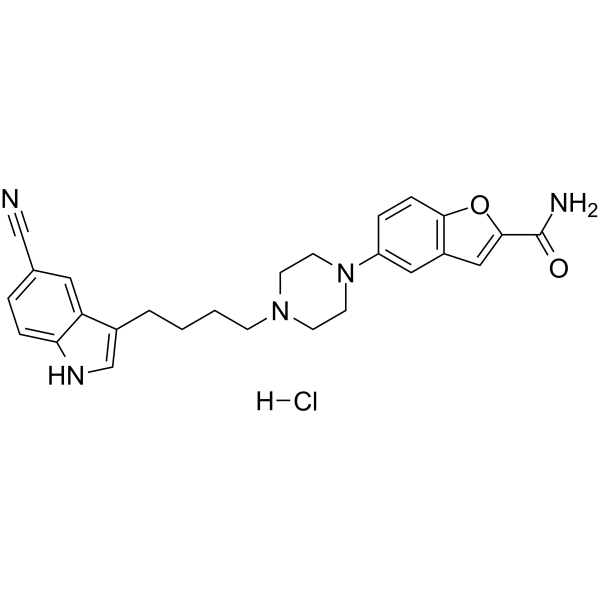
Vilazodone (Hydrochloride) (Standard) is the analytical standard of Vilazodone (Hydrochloride). This product is intended for research and analytical applications. Vilazodone Hydrochloride (EMD 68843 Hydrochloride) is a serotonin transporter (SER) inhibitor and 5-HT1A receptor partial agonist.
|
-
- HY-116062A
-
|
|
Histone Methyltransferase
|
Neurological Disease
|
|
JNJ-7925476 is a triple reuptake inhibitor that selectively and potently inhibits the activity of the serotonin transporter (SERT), norepinephrine transporter (NET), and dopamine transporter (DAT). JNJ-7925476 is rapidly absorbed into the blood and its concentration in the brain is 7-fold higher than that in plasma. The occupancy ED(50) values of JNJ-7925476 for SERT, NET, and DAT in the rat brain are 0.18, 0.09, and 2.4 mg/kg, respectively. JNJ-7925476 rapidly induces a significant increase in the levels of extracellular serotonin, dopamine, and norepinephrine in the rat cerebral cortex in a dose-dependent manner. JNJ-7925476 exhibits potent antidepressant-like activity in the mouse tail suspension test. These results suggest that JNJ-7925476 has in vivo efficacy in biochemical and behavioral models of depression .
|
-
- HY-119087
-
-
- HY-14258R
-
|
(S)-Citalopram (Standard); (S)-(+)-Citalopram (Standard)
|
Serotonin Transporter
Reference Standards
|
Neurological Disease
Cancer
|
|
Escitalopram (Standard) is the analytical standard of Escitalopram. This product is intended for research and analytical applications. Escitalopram ((S)-Citalopram), the S-enantiomer of racemic Citalopram, is a selective serotonin reuptake inhibitor (SSRI) with a Ki of 0.89 nM. Escitalopram has ~30 fold higher binding affinity than its R(-)-enantiomer and shows selectivity over both dopamine transporter (DAT) and norepinephrine transporter (NET). Escitalopram is an antidepressant for the research of major depression .
|
-
- HY-147333
-
|
|
Drug Metabolite
|
Neurological Disease
|
|
Trimipramine N-oxide is an active metabolite of the tricyclic antidepressant trimipramine. Trimipramine N-oxide inhibits the human monoamine transporters for noradrenaline (hNAT), serotonin (hSERT), dopamine (hDAT) and the human organic cation transporters (hOCT1 and hOCT2) with IC50s of 11.7, 3.59, 9.4, 9.35 and 27.4 nM, respectively. Trimipramine N-oxide can be used for the research of depression and anxiety .
|
-
- HY-14794AS
-
|
(1S,2R)-Milnacipran-d10 hydrochloride; F2695-d10 hydrochloride
|
Isotope-Labeled Compounds
Serotonin Transporter
Trk Receptor
PI3K
mTOR
P-glycoprotein
Akt
|
Neurological Disease
Inflammation/Immunology
|
|
Levomilnacipran-d10 ((1S,2R)-Milnacipran-d10) hydrochloride is deuterium labeled Levomilnacipran hydrochloride (HY-B0168B). Levomilnacipran ((1S,2R)-Milnacipran) hydrochloride is the enantiomer of Milnacipran (HY-B0168) and a strong substrate of P-gp that can cross the blood-brain barrier. Levomilnacipran hydrochloride is a serotonin and norepinephrine reuptake inhibitor, with IC50 values of 10.5 nM and 19.0 nM, and Ki values of 92.2 nM and 1.2 nM for human norepinephrine transporter (NET) and serotonin transporter (SERT), respectively. Levomilnacipran hydrochloride has antidepressant and anxiolytic activities. Levomilnacipran hydrochloride can be used for the research of depression .
|
-
- HY-B0168BS
-
|
(1S,2R)-Milnacipran-d5 hydrochloride; F-2695-d5 hydrochloride
|
Isotope-Labeled Compounds
Serotonin Transporter
Trk Receptor
PI3K
Akt
mTOR
P-glycoprotein
|
Neurological Disease
Inflammation/Immunology
|
|
Levomilnacipran-d5 ((1S,2R)-Milnacipran-d5) hydrochloride is deuterium labeled Levomilnacipran hydrochloride (HY-B0168B). Levomilnacipran ((1S,2R)-Milnacipran) hydrochloride is the enantiomer of Milnacipran (HY-B0168) and a strong substrate of P-gp that can cross the blood-brain barrier. Levomilnacipran hydrochloride is a serotonin and norepinephrine reuptake inhibitor, with IC50 values of 10.5 nM and 19.0 nM, and Ki values of 92.2 nM and 1.2 nM for human norepinephrine transporter (NET) and serotonin transporter (SERT), respectively. Levomilnacipran hydrochloride has antidepressant and anxiolytic activities. Levomilnacipran hydrochloride can be used for the research of depression .
|
-
- HY-10427
-
|
NRI-022
|
Histone Methyltransferase
|
Neurological Disease
|
|
WAY-260022 is a selective norepinephrine reuptake inhibitor with potent inhibitory activity on norepinephrine reuptake. WAY-260022 exhibits excellent selectivity in inhibiting serotonin and dopamine transporters. WAY-260022 also showed oral efficacy in a rat model of thermoregulatory dysfunction .
|
-
- HY-168021
-
|
|
Monoamine Oxidase
Serotonin Transporter
|
Neurological Disease
|
MAO-A/SERT-IN-1 is an inhibitor of MAO-A/serotonin transporter (SERT). MAO-A/SERT-IN-1 can reduce SERT-mediated reuptake of 5-HT and has neuroprotective effects in cell inhibition models. MAO-A/SERT-IN-1 can improve depressive behavior in zebrafish and mice .
|
-
- HY-10427A
-
|
iso-NRI-022
|
Serotonin Transporter
Dopamine Transporter
|
Cardiovascular Disease
|
|
iso-WAY-260022 (Compound 13R) is an orally active, brain-penetrant and selective norepinephrine transporter (hNET) inhibitor with an IC50 value of 140 nM. iso-WAY-260022 also shows inhibitory effects on human serotonin (hSERT) and dopamine transporters (hDAT). iso-WAY-260022 inhibits norepinephrine reuptake and increases hypothalamic norepinephrine levels to regulate thermoregulatory center function. iso-WAY-260022 is promising for research of vasomotor symptoms, such as menopausal hot flushes, night sweats .
|
-
- HY-108513
-
|
|
Sigma Receptor
|
Neurological Disease
|
|
σ1 Receptor antagonist 4 (compound TC1) is a selective sigma1 (σ1) receptor antagonist with a Ki of 10 nM. σ1 Receptor antagonist 4 is weakly active at σ2 receptor (Ki of 370 nM) and has no activity at dopamine (DAT), serotonin (SERT), and norepinephrine (NET) transporters .
|
-
- HY-133858
-
|
|
5-HT Receptor
|
Neurological Disease
|
|
25N-NBOMe hydrochloride, a 2C-N derivative, is a 5-HT2A and 5-HT2C receptors agonist with Ki values of 0.144 nM and 1.06 nM, respectively. 25N-NBOMe hydrochloride has little to no efficacy at inducing release of preloaded neurotransmitter from recombinant dopamine, serotonin and norepinephrine transporters .
|
-
- HY-17385R
-
|
Tomoxetine hydrochloride (Standard); (R)-Tomoxetine hydrochloride (Standard); LY 139603 (Standard)
|
Reference Standards
Adrenergic Receptor
Serotonin Transporter
Sodium Channel
|
Neurological Disease
Cancer
|
|
Atomoxetine (hydrochloride) (Standard) is the analytical standard of Atomoxetine (hydrochloride). This product is intended for research and analytical applications. Atomoxetine (Tomoxetine) hydrochloride is a selective noradrenaline reuptake inhibitor with Ki values of 5 nM, 77 nM and 1451 nM for norepinephrine (NE), serotonin (5-HT) and dopamine (DA) transporters, respectively. Atomoxetine hydrochloride is a potent Na+ channels (VGSCs) blocker. Atomoxetine hydrochloride can be used for attention-deficit hyperactivity disorder (ADHD) research .
|
-
- HY-103465B
-
|
|
Monoamine Transporter
|
Others
|
|
FFN511 (hydrochloride) is a potent fluorescent false neurotransmitters (FFNs) that targets neuronal vesicular monoamine transporter 2 (VMA T2). FFN511 (hydrochloride) inhibits serotonin binding to VMA T2-containing membranes with an IC50 of 1 µM. FFN511 (hydrochloride) directly images the dynamics of release during exocytosis, can be used to label dopamine terminals in live cortical-striatalacute slices .
|
-
- HY-110289S1
-
|
|
Isotope-Labeled Compounds
Serotonin Transporter
5-HT Receptor
|
Neurological Disease
|
|
(R)-Citalopram-d4 (oxalate) is deuterium labeled (R)-Citalopram Oxalate. (R)-Citalopram oxalate, a R-(-) enantiomers of Citalopram (HY-121203), is a serotonin reuptake inhibitor. (R)-Citalopram oxalate is at least 20-fold weaker than S-citalopram (HY-14258) as inhibitor of the 5-HT transporter (SERT). (R)-Citalopram oxalate can be used for research of depression .
|
-
- HY-B1490S
-
|
|
Serotonin Transporter
Apoptosis
Autophagy
|
Neurological Disease
Inflammation/Immunology
Cancer
|
|
Imipramine-d4 (hydrochloride) is the deuterium labeled Imipramine hydrochloride. Imipramine hydrochloride is an orally active tertiary amine tricyclic antidepressant. Imipramine hydrochloride is a Fascin1 inhibitor with antitumor activities. Imipramine hydrochloride also inhibits serotonin transporter with an IC50 value of 32 nM. Imipramine hydrochloride stimulates U-87MG glioma cells autophagy and induces HL-60 cell apoptosis. Imipramine hydrochloride shows neuroprotective and immunomodulatory effects .
|
-
- HY-B1490AS1
-
|
|
Serotonin Transporter
Isotope-Labeled Compounds
Apoptosis
Autophagy
|
Others
|
|
Imipramine-d4 is deuterium labeled Imipramine. Imipramine is an orally active tertiary amine tricyclic antidepressant. Imipramine is a Fascin1 inhibitor with antitumor activities. Imipramine also inhibits serotonin transporter with an IC50 value of 32 nM. Imipramine stimulates U-87MG glioma cells autophagy and induces HL-60 cell apoptosis. Imipramine shows neuroprotective and immunomodulatory effects .
|
-
- HY-N0740R
-
|
|
Reference Standards
Cholinesterase (ChE)
5-HT Receptor
Bacterial
|
Neurological Disease
Inflammation/Immunology
|
|
Jatrorrhizine (chloride) (Standard) is the analytical standard of Jatrorrhizine (chloride). This product is intended for research and analytical applications. Jatrorrhizine chloride is an alkaloid isolated from Coptis chinensis with neuroprotective, antimicrobial, antiplasmodial and antioxidant activities . Jatrorrhizine chloride is a potent and orally active inhibitor of AChE (IC50=872 nM) over >115-fold selectivity for BuChE . Jatrorrhizine chloride reduces uptake of serotonin (5-HT) and norepinephrine (NE) via inhibition of uptake-2 transporters .
|
-
- HY-107128R
-
|
TD-9855 hydrochloride (Standard)
|
Reference Standards
Serotonin Transporter
|
Neurological Disease
|
|
Ampreloxetine hydrochloride (Standard) (TD-9855 hydrochloride (Standard)) is the analytical standard of Ampreloxetine (hydrochloride) (HY-107128). This product is intended for research and analytical applications. Ampreloxetine (TD-9855) hydrochloride is an orally active and CNS-penetrant inhibitor of Norepinephrine transporter (NET) and Serotonin 5-HT uptake transporter (SERT), but not Dopamine transporter (DAT). Ampreloxetine hydrochloride binds norepinephrine transporters (NET) and serotonin transporters (SERT) with EC50 values of 11.7 ng/mL and 50.8 ng/mL, respectively, in plasma .
|
-
- HY-14794B
-
|
(1R,2S)-Milnacipran hydrochloride; F2696 hydrochloride
|
Serotonin Transporter
Adrenergic Receptor
|
Neurological Disease
|
|
Dextromilnacipran ((1R,2S)-Milnacipran; F2696) hydrochloride is an orally active Serotonin (HY-B1473A)/Noradrenaline (HY-13715) transporter inhibitor. Dextromilnacipran hydrochloride inhibits Serotonin and Noradrenaline reuptake. Dextromilnacipran hydrochloride can be used for the research of depression, fibromyalgia .
|
-
- HY-182247
-
|
|
Serotonin Transporter
Dopamine Transporter
|
Neurological Disease
|
|
D-473 is an orally active, blood-brain barrier penetrant and serotonin-preferring reuptake inhibitor. D-473 inhibits serotonin, dopamine and norepinephrine transporters, and significantly elevates the extracellular levels of these three neurotransmitters in rat brain regions. D-473 exhibits definite antidepressant-like activity without inducing motor activation. D-473 is widely used in studies related to major depressive disorder .
|
-
- HY-124186
-
|
|
Dopamine Receptor
5-HT Receptor
|
Neurological Disease
|
|
LR1143 is a dopamine transporter (DAT) and 5-HT uptake inhibitor, with IC50 values of 3.4 nM and 112 nM in rats, respectively. LR1143 binds to DAT labeled with the dopamine reuptake inhibitor GBR 12935 (HY-12242A), with an IC50 of 4.4 nM. LR1143 shows lower selectivity for DAT than for serotonin reuptake sites. LR1143 can be used in studies related to cocaine abuse .
|
-
- HY-116811
-
-
- HY-172763
-
|
|
Drug Derivative
Serotonin Transporter
Dopamine Transporter
5-HT Receptor
|
Neurological Disease
|
|
EDMA hydrochloride is a derivative of MDMA. EDMA hydrochloride is a substrate for multiple neurotransmitter transporters, including serotonin transporter (SERT), dopamine transporter (DAT), and norepinephrine transporter (NET). EDMA hydrochloride has 5-HT releasing activity at SERT (EC50 = 117 nM) and MPP + releasing activity at DAT (EC50 = 597 nM) and NET (EC50 = 325 nM) .
|
-
- HY-183269
-
|
|
Serotonin Transporter
|
Neurological Disease
|
|
SERT-IN-5 is a potent, selective, and CNS-penetrant serotonin transporter (SERT) inhibitor with a Ki of 0.3 nM. SERT-IN-5 blocks serotonin reuptake to increase synaptic serotonin levels. SERT-IN-5 exhibits anti-anxiety effects in mice. SERT-IN-5 can be used for the research of anxiety, depression .
|
-
- HY-17385S1
-
|
Tomoxetine-d7 hydrochloride; (R)-Tomoxetine-d7 hydrochloride
|
Isotope-Labeled Compounds
Serotonin Transporter
Adrenergic Receptor
Sodium Channel
|
Neurological Disease
Cancer
|
|
Atomoxetine-d7 hydrochloride (Tomoxetine-d7 hydrochloride) is the deuterium labeled Atomoxetine hydrochloride (HY-17385). Atomoxetine (Tomoxetine) hydrochloride is a selective noradrenaline reuptake inhibitor with Ki values of 5 nM, 77 nM and 1451 nM for norepinephrine (NE), serotonin (5-HT) and dopamine (DA) transporters, respectively. Atomoxetine hydrochloride is a potent Na+ channels (VGSCs) blocker. Atomoxetine hydrochloride can be used for attention-deficit hyperactivity disorder (ADHD) research .
|
-
- HY-N18471A
-
|
5,7-DHP hydrobromide
|
Monoamine Oxidase
5-HT Receptor
|
Neurological Disease
|
|
5,7-Dihydroxytryptamine (5,7-DHT) hydrobromide is an autofluorescent (Ex ≈ 365 nm), selective neurotoxin and a transport substrate for MAO-A and 5-HT. 5,7-Dihydroxytryptamine hydrobromide can specifically target and damage central and peripheral 5-HTergic neurons, while affecting 5-HT-related pathways and neurotransmitter balance. 5,7-Dihydroxytryptamine hydrobromide can be used to establish 5-HTergic neuron injury models for studies on neural development, neurodegenerative diseases, as well as mechanisms related to platelet function and retinal neurons .
|
-
- HY-107370A
-
|
(Rac)-Tomoxetine hydrochloride; (Rac)-LY 139603
|
Serotonin Transporter
Sodium Channel
|
Metabolic Disease
Cancer
|
|
(Rac)-Atomoxetine hydrochloride ((Rac)-Tomoxetine (hydrochloride); (Rac)-LY 139603) is the racemic mixture of Atomoxetine hydrochloride (HY-17385). Atomoxetine hydrochloride is a selective noradrenaline reuptake inhibitor with Ki values of 5, 77 and 1451 nM for norepinephrine (NE), serotonin (5-HT) and dopamine (DA) transporters, respectively. Atomoxetine hydrochloride increases of DAEX and NEEX in the PFC and enhances catecholaminergic neurotransmission. Atomoxetine hydrochloride is a potent Na + channels (VGSCs) blocker. Atomoxetine hydrochloride can be used for attention-deficit hyperactivity disorder (ADHD) research .
|
-
- HY-15414R
-
|
Lu AA 21004 (Standard)
|
Reference Standards
5-HT Receptor
Serotonin Transporter
|
Neurological Disease
Cancer
|
|
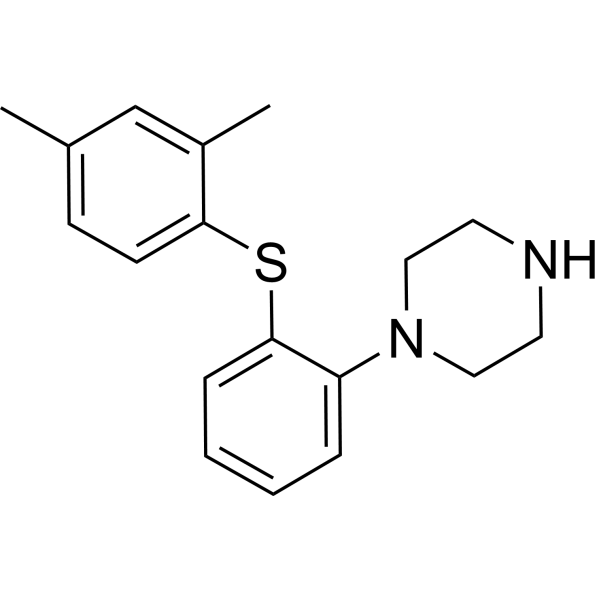
Vortioxetine (Standard) is an analytical standard for Vortioxetine. This product is intended for research and analytical applications. Vortioxetine (Lu AA 21004) is an antagonist of 5-HT3A and 5-HT7 receptors (Ki: 3.7 nM, 19 nM) and an inhibitor of serotonin transporter (SERT) (Ki: 1.6 nM), as well as a 5-HT1A agonist and a partial 5-HT1B agonist (Ki: 15 nM, 33 nM) .
|
-
- HY-B1490AR
-
|
|
Serotonin Transporter
Autophagy
Apoptosis
Reference Standards
|
Neurological Disease
Inflammation/Immunology
Cancer
|
|
Imipramine (Standard) is the analytical standard of Imipramine. This product is intended for research and analytical applications. Imipramine is an orally active tertiary amine tricyclic antidepressant. Imipramine is a Fascin1 inhibitor with antitumor activities. Imipramine also inhibits serotonin transporter with an IC50 value of 32 nM. Imipramine stimulates U-87MG glioma cells autophagy and induces HL-60 cell apoptosis. Imipramine shows neuroprotective and immunomodulatory effects .
|
-
- HY-D2335
-
|
|
Fluorescent Dye
|
Neurological Disease
|
|
SERTlight is a fluorescent agent that can specifically label serotonergic neuronal cell bodies, dendrites, and axonal projections as fluorescent substrates of the serotonin transporter (SERT). SERTlight is orthogonal to various genetically encoded sensors in terms of optics, pharmacology, and operation, enabling multiple imaging. SERTlight allows the use of GRAB5HT sensors to label distal 5HT axonal projections and simultaneously image the release of endogenous 5HT, providing a new multifunctional molecular tool for studying serotonergic systems .
|
-
- HY-110289R
-
|
|
Serotonin Transporter
5-HT Receptor
Reference Standards
|
Neurological Disease
|
|
(R)-Citalopram oxalate (Standard) is the analytical standard of (R)-Citalopram oxalate. This product is intended for research and analytical applications. (R)-Citalopram oxalate, a R-(-) enantiomers of Citalopram (HY-121203), is a serotonin reuptake inhibitor. (R)-Citalopram oxalate is at least 20-fold weaker than S-citalopram (HY-14258) as inhibitor of the 5-HT transporter (SERT). (R)-Citalopram oxalate can be used for research of depression .
|
-
- HY-109067A
-
|
VVZ-149 hydrochloride
|
GlyT
5-HT Receptor
P2X Receptor
|
Neurological Disease
|
|
Opiranserin (VVZ-149) hydrochloride, a non-opioid and non-NSAID analgesic candidate, is a dual antagonist of glycine transporter type 2 (GlyT2) and serotonin receptor 2A (5HT2A), with IC50s of 0.86 and 1.3 μM, respectively. Opiranserin hydrochloride shows antagonistic activity on rP2X3 (IC50=0.87 μM). Opiranserin hydrochloride is development as an injectable agent for the treatment of postoperative pain .
|
-
- HY-B1490AS3
-
-
- HY-109067
-
|
VVZ-149
|
GlyT
5-HT Receptor
P2X Receptor
|
Neurological Disease
|
|
Opiranserin (VVZ-149), a non-opioid and non-NSAID analgesic candidate, is a dual antagonist of glycine transporter type 2 (GlyT2) and serotonin receptor 2A (5HT2A), with IC50s of 0.86 and 1.3 μM, respectively. Opiranserin shows antagonistic activity on rP2X3 (IC50=0.87 μM). Opiranserin is development as an injectable agent for the treatment of postoperative pain .
|
-
- HY-N0173R
-
|
α-Quinidine (Standard)
|
Reference Standards
Serotonin Transporter
Parasite
|
Infection
|
|
Cinchonidine (Standard) is the analytical standard of Cinchonidine. This product is intended for research and analytical applications. Cinchonidine (α-Quinidine) is a cinchona alkaloid found in Cinchona officinalis and Gongronema latifolium. A building block used in asymmetric synthesis in organic chemistry. Weak inhibitor of serotonin transporter (SERT) with Kis of 330, 4.2, 36, 196, 15 μM for dSERT, hSERT, hSERT I172M, hSERT S438T, hSERT Y95F, respectively. Antimalarial activities .
|
-
- HY-B1490R
-
|
|
Reference Standards
Serotonin Transporter
Apoptosis
Autophagy
|
Neurological Disease
Inflammation/Immunology
Cancer
|
|
Imipramine (hydrochloride) (Standard) is the analytical standard of Imipramine (hydrochloride). This product is intended for research and analytical applications. Imipramine hydrochloride is an orally active tertiary amine tricyclic antidepressant. Imipramine hydrochloride is a Fascin1 inhibitor with antitumor activities. Imipramine hydrochloride also inhibits serotonin transporter with an IC50 value of 32 nM. Imipramine hydrochloride stimulates U-87MG glioma cells autophagy and induces HL-60 cell apoptosis. Imipramine hydrochloride shows neuroprotective and immunomodulatory effects .
|
-
- HY-100057
-
|
6-Hydroxybuspirone; 6'-Hydroxybuspirone; BMS 528215
|
5-HT Receptor
Drug Metabolite
Dopamine Receptor
|
Neurological Disease
|
|
BMY 28674 (6-Hydroxybuspirone) is the active metabolite of the anxiolytic buspirone (HY-B1115A) and is metabolized by CYP3A4.4. BMY 28674 binds to the serotonin (5-HT) receptor subtype 5-HT1A in the rat hippocampus and dorsal raphe (EC50s are 4 and 1 μM, respectively) and is an antagonist of dopamine D2, D3, and D4 receptors (IC50s are 3.1, 4.9, and 0.85 μM, respectively). BMY 28674 also inhibits organic cation transporter 1 (OCT1), OCT2, and OCT3 expressing human transporters in S2 proximal tubule cells in a concentration-dependent manner.
|
-
- HY-146619
-
|
|
Amyloid-β
Serotonin Transporter
|
Neurological Disease
|
|
RAGE/SERT-IN-1 is a potent and orally active advanced glycation end products (RAGE) and serotonin transporter (SERT) inhibitor with IC50s of 8.26 μM and 31.09 nM, respectively. RAGE/SERT-IN-1 exhibits significant neuroprotective effect against Aβ25-35-induced neuronal damage and alleviates depressive behavior of mice. RAGE/SERT-IN-1 can be used for researching the comorbidity of Alzheimer's disease and depression .
|
-
- HY-107370S
-
|
Tomoxetine-d7; (R)-Tomoxetine-d7
|
Isotope-Labeled Compounds
Serotonin Transporter
Sodium Channel
|
Neurological Disease
Cancer
|
|
Atomoxetine-d7 (Tomoxetine-d7) is deuterium labeled Atomoxetine. Atomoxetine (Tomoxetine) is a selective noradrenaline reuptake inhibitor with Ki values of 5, 77 and 1451 nM for norepinephrine (NE), serotonin (5-HT) and dopamine (DA) transporters, respectively. Atomoxetine (Tomoxetine) increases of DAEX and NEEX in the PFC and enhances catecholaminergic neurotransmission. Atomoxetine (Tomoxetine) is a potent Na + channels (VGSCs) blocker. Atomoxetine (Tomoxetine) can be used for attention-deficit hyperactivity disorder (ADHD) research .
|
-
- HY-15414S2
-
|
Lu AA 21004-d4
|
Isotope-Labeled Compounds
5-HT Receptor
Serotonin Transporter
|
Neurological Disease
|
|
Vortioxetine-d4 (Lu AA 21004-d4) is the deuterium labeled Vortioxetine (HY-15414). Vortioxetine is an antagonist of 5-HT3A and 5-HT7 receptors (Ki: 3.7 nM, 19 nM) and an inhibitor of serotonin transporter (SERT) (Ki: 1.6 nM), as well as a 5-HT1A agonist and a partial agonist of 5-HT1B (Ki: 15 nM, 33 nM) .
|
-
- HY-107370S1
-
|
Tomoxetine-d5; (R)-Tomoxetine-d5
|
Isotope-Labeled Compounds
|
Neurological Disease
Cancer
|
|
Atomoxetine-d5 (Tomoxetine-d5) is deuterium labeled Atomoxetine. Atomoxetine (Tomoxetine) is a selective noradrenaline reuptake inhibitor with Ki values of 5, 77 and 1451 nM for norepinephrine (NE), serotonin (5-HT) and dopamine (DA) transporters, respectively. Atomoxetine (Tomoxetine) increases of DAEX and NEEX in the PFC and enhances catecholaminergic neurotransmission. Atomoxetine (Tomoxetine) is a potent Na + channels (VGSCs) blocker. Atomoxetine (Tomoxetine) can be used for attention-deficit hyperactivity disorder (ADHD) research .
|
-
- HY-15414S3
-
-
- HY-103465R
-
|
|
Reference Standards
Monoamine Transporter
|
Others
|
|
FFN511 (Standard) is the analytical standard of FFN511 (HY-103465). This product is intended for research and analytical applications. FFN511 is a potent fluorescent false neurotransmitters (FFNs) that targets neuronal vesicular monoamine transporter 2 (VMA T2). FFN511 inhibits serotonin binding to VMA T2-containing membranes with an IC50 of 1 μM. FFN511 directly images the dynamics of release during exocytosis, can be used to label dopamine terminals in live cortical-striatalacute slices .
|
-
- HY-15414S1
-
|
Lu AA 21004-d6
|
Serotonin Transporter
5-HT Receptor
Isotope-Labeled Compounds
|
Neurological Disease
Cancer
|
|
Vortioxetine-d6 (Lu AA 21004-d6) is the deuterium labeled Vortioxetine (HY-B1490A). Vortioxetine (Lu AA 21004) is an antagonist of 5-HT3A and 5-HT7 receptors (Ki: 3.7 nM, 19 nM) and an inhibitor of serotonin transporter (SERT) (Ki: 1.6 nM), as well as a 5-HT1A agonist and a partial agonist of 5-HT1B (Ki: 15 nM, 33 nM) .
|
-
- HY-B1272A
-
-
- HY-A0139
-
|
NSC 108165; Navan; Navane
|
Sigma Receptor
mAChR
Histamine Receptor
Dopamine Receptor
Adrenergic Receptor
|
Others
|
|
Thiothixene is a typical antipsychotic. It selectively binds to dopamine D2 over D1, D3, and D4 receptors (Kis=0.417, 338, 186.2, and 363.1 nM, respectively). Thiothixene also binds to various serotonin (5-HT), histamine H1, α1- and α2-adrenergic, muscarinic acetylcholine, and sigma receptors (Kis=15-5,754 nM) as well as the dopamine, norepinephrine, and serotonin transporters (Kis=3.16-30 μM). In vivo, thiothixene reduces spontaneous and amphetamine-induced locomotor activity in rats. It enhances latent inhibition, as measured by a decreased lick latency in response to light and foot shock stimuli, which is a measure of selective attention in rats.3 Thiothixene also increases competitive behavior in submissive mice, indicating antidepressant-like behavior.
|
-
- HY-109067AR
-
|
VVZ-149 hydrochloride (Standard)
|
Reference Standards
GlyT
5-HT Receptor
P2X Receptor
|
Neurological Disease
|
|
Opiranserin hydrochloride (Standard) is the analytical standard of Opiranserin (hydrochloride) (HY-109067A). This product is intended for research and analytical applications. Opiranserin (VVZ-149) hydrochloride, a non-opioid and non-NSAID analgesic candidate, is a dual antagonist of glycine transporter type 2 (GlyT2) and serotonin receptor 2A (5HT2A), with IC50s of 0.86 and 1.3 μM, respectively. Opiranserin hydrochloride shows antagonistic activity on rP2X3 (IC50=0.87 μM). Opiranserin hydrochloride is development as an injectable agent for the treatment of postoperative pain .
|
-
- HY-18332A
-
-
- HY-18332C
-
|
|
Serotonin Transporter
Dopamine Transporter
|
Neurological Disease
|
|
DOV-216,303 (Free Base) is a potent triple serotonin, norepinephrine, and dopamine reuptake inhibitor, with IC50 values of 14 nM, 20 nM and 78 nM for hSERT, hNET and hDAT, respectively. Has antidepressant-like effects and increases monoamine release in the prefrontal cortex of olfactory bulbectomized (OBX) rats .
|
-
- HY-18332
-
-
- HY-141554A
-
|
(2S,3S,11bR)-DHTBZ
|
Monoamine Transporter
|
Neurological Disease
|
|
(2S,3S,11bR)-Dihydrotetrabenazine ((2S,3S,11bR)-DHTBZ) is a highly selective inhibitor of vesicular monoamine transporter 2 (VMAT2) with a Ki value of 593 nM. (2S,3S,11bR)-Dihydrotetrabenazine inhibits vesicular transport of monoamine neurotransmitters like dopamine and serotonin, reducing their synaptic release. (2S,3S,11bR)-Dihydrotetrabenazine is promising for research of Huntington's chorea and other hyperkinetic disorders .
|
-
- HY-W748758
-
|
NSC 108165-d8; Navan-d8; Navane-d8
|
Isotope-Labeled Compounds
Dopamine Receptor
Histamine Receptor
mAChR
Adrenergic Receptor
Sigma Receptor
|
Others
|
|
(Z)-Thiothixene-d8 (NSC 108165-d8; Navan-d8; Navane-d8) is the deuterium labeled Thiothixene (HY-A0139). Thiothixene is a typical antipsychotic. It selectively binds to dopamine D2 over D1, D3, and D4 receptors (Kis=0.417, 338, 186.2, and 363.1 nM, respectively). Thiothixene also binds to various serotonin (5-HT), histamine H1, α1- and α2-adrenergic, muscarinic acetylcholine, and sigma receptors (Kis=15-5,754 nM) as well as the dopamine, norepinephrine, and serotonin transporters (Kis=3.16-30 μM). In vivo, thiothixene reduces spontaneous and amphetamine-induced locomotor activity in rats. It enhances latent inhibition, as measured by a decreased lick latency in response to light and foot shock stimuli, which is a measure of selective attention in rats.3 Thiothixene also increases competitive behavior in submissive mice, indicating antidepressant-like behavior.
|
-
- HY-N9418R
-
|
|
Phytohormone
Reference Standards
|
Others
|
|
Trimipramine (Standard) is the analytical standard of Trimipramine. This product is intended for research and analytical applications. Trimipramine is a 5-HT receptor antagonist, with pKi binding values of 6.39, 8.10, 4.66 for 5-HT1C, 5-HT2 and 5-HT1A, respectively. Trimipramine is also a potent and selective inhibitor targeting human noradrenaline (hNAT), serotonin (hSERT) and organic cation transporters (hOCT1, hOCT2) with IC50 values of 4.99 μM, 2.11 μM, 3.72 μM, 8.00 μM, respectively. Trimipramine has vascular activity and anxiolytic efficacy .
|
-
- HY-N18471
-
|
5,7-DHP
|
Monoamine Oxidase
5-HT Receptor
|
Cardiovascular Disease
Neurological Disease
|
|
5,7-Dihydroxytryptamine (5,7-DHP) is an autofluorescent (λex≈365 nm), selective neurotoxin and a transport substrate for MAO-A and 5-HT. 5,7-Dihydroxytryptamine can specifically target and damage central and peripheral 5-HTergic neurons, while affecting 5-HT-related pathways and neurotransmitter balance. 5,7-Dihydroxytryptamine can be used to establish 5-HTergic neuron injury models for studies on neural development, neurodegenerative diseases, as well as mechanisms related to platelet function and retinal neurons .
|
-
- HY-110023
-
|
|
Serotonin Transporter
|
Neurological Disease
|
|
Zimelidine dihydrochloride is an orally active selective serotonin reuptake inhibitor. Zimelidine dihydrochloride competitively inhibits central 5-HT uptake and desensitizes 5-HT autoreceptors in dorsal raphe nucleus. Zimelidine dihydrochloride time-dependently modulates 5-HT neuronal firing and hippocampal CA3 responses. Zimelidine dihydrochloride strengthens central serotonergic neurotransmission and produces related behavioral changes. Zimelidine dihydrochloride exerts anxiolytic, analgesic, feeding-suppressive and tolerance-attenuating effects. Zimelidine dihydrochloride is used for the study of depressive disorders and analgesic tolerance .
|
-
- HY-156807
-
|
|
Serotonin Transporter
5-HT Receptor
|
Neurological Disease
|
LY 367265 is a 5-hydroxytryptamine transporter (SERT) inhibitor (IC₅₀ = 3.1 nM) and a 5-HT₂A receptor antagonist (Kᵢ = 0.81 nM). LY 367265 has the inhibitory activity on the norepinephrine transporter (NET) of extremely weak (IC₅₀ > 1000 nM); it has low affinity for subtypes such as 5-HT₁B (Kᵢ = 490 nM) and 5-HT₁D (Kᵢ = 81 nM), showing high selectivity. LY 367265 concentration-dependently enhances of [³H]5-HT efflux (EC₅₀ = 250 nM). LY 367265 antagonizes the contraction response of Sumatriptan (HY-B0121B), indicating its functional antagonistic activity on 5-HT₁D-like receptors. LY 367265 can be used for the study of diseases such as anxiety disorders and post-traumatic stress disorder .
|
-
- HY-179063
-
|
|
5-HT Receptor
Dopamine Receptor
Serotonin Transporter
|
Neurological Disease
|
5-HT2A receptor agonist-13 (Compound 28c) is a partial agonist of the 5-HT2A receptor, with an EC50 value of 416.9 nM and a Ki value of 113.9 nM. 5-HT2A receptor agonist-13 exhibits very weak agonistic activity towards the 5-HT2B receptor (EC50 = 120.2 nM), D2 receptor (Ki = 1298 nM), and has no activity towards the 5-HT2C receptor. 5-HT2A receptor agonist-13 exhibits weak inhibitory activity on the serotonin transporter (SERT) (EC50 = 977.2 nM). 5-HT2A receptor agonist-13 has antidepressant activity in mouse models and does not induce hallucinogenic behavior. 5-HT2A receptor agonist-13 can be used for the study of major depressive disorder (MDD) and treatment-resistant depression (TRD) .
|
-
- HY-136700
-
|
|
5-HT Receptor
Akt
|
Neurological Disease
Cancer
|
|
SB-699551 free base is a selective and brain penetrant 5-HT5A receptor antagonist with a pKi of 8.2 nM. SB-699551 free base shows high selectivity over most other 5-HT receptor subtypes, dopamine receptors, and α1B adrenoceptor. SB-699551 free base disrupts Gαi/o-coupled and PI3K/AKT/mTOR signaling pathways, alters CREB, ATF1, AKT, PRAS40, S6K, and FOXO1 phosphorylation in breast tumor cells. SB-699551 free base can be used for the research of anxiety, breast cancer, and Alzheimer's disease .
|
-
- HY-180372
-
-
-
- HY-D2335
-
|
|
Fluorescent Dyes
|
|
SERTlight is a fluorescent agent that can specifically label serotonergic neuronal cell bodies, dendrites, and axonal projections as fluorescent substrates of the serotonin transporter (SERT). SERTlight is orthogonal to various genetically encoded sensors in terms of optics, pharmacology, and operation, enabling multiple imaging. SERTlight allows the use of GRAB5HT sensors to label distal 5HT axonal projections and simultaneously image the release of endogenous 5HT, providing a new multifunctional molecular tool for studying serotonergic systems .
|
| Cat. No. |
상품명 |
Category |
Target |
Chemical Structure |
-
- HY-14258
-
Escitalopram
Maximum Cited Publications
11 Publications Verification
(S)-Citalopram; (S)-(+)-Citalopram
|
Natural Products
Endogenous metabolite
Source Classification
|
Serotonin Transporter
|
|
Escitalopram ((S)-Citalopram), the S-enantiomer of racemic Citalopram, is a selective serotonin reuptake inhibitor (SSRI) with a Ki of 0.89 nM. Escitalopram has ∼30 fold higher binding affinity than its R(-)-enantiomer and shows selectivity over both dopamine transporter (DAT) and norepinephrine transporter (NET). Escitalopram is an antidepressant for the research of major depression .
|
-
-
- HY-N0740
-
-
-
- HY-N0173
-
-
-
- HY-N0749
-
-
-
- HY-N0749A
-
-
-
- HY-N7506
-
|
Delta3,2-Hydroxylbakuchiol
|
Structural Classification
Monophenols
Leguminosae
Phenols
Psoralea corylifolia L.
Plants
Source Classification
|
Monoamine Transporter
Dopamine Transporter
|
|
13-Hydroxyisobakuchiol (Delta3,2-Hydroxylbakuchiol), an analog of Bakuchiol (HY-N0235) that can be isolated from Psoralea corylifolia (L.), is a potent selective monoamine transporter inhibitor. 13-Hydroxyisobakuchiol is more selective for the dopamine transporter (DAT) (IC50 = 0.58 μM) and norepinephrine transporter (NET) (IC50 = 0.69 μM) than for the serotonin transporter (SERT) (IC50 = 312.02 μM). 13-Hydroxyisobakuchiol increases the activity of intact mice and improves the decreased activity of reserpinized mice in vivo. 13-Hydroxyisobakuchiol can be used for the research of disorders such as Parkinson's disease and depression .
|
-
-
- HY-117526
-
-
-
- HY-N0173R
-
-
-
- HY-126380
-
-
-
- HY-14258R
-
|
(S)-Citalopram (Standard); (S)-(+)-Citalopram (Standard)
|
Structural Classification
Natural Products
Endogenous metabolite
Source Classification
|
Serotonin Transporter
Reference Standards
|
|
Escitalopram (Standard) is the analytical standard of Escitalopram. This product is intended for research and analytical applications. Escitalopram ((S)-Citalopram), the S-enantiomer of racemic Citalopram, is a selective serotonin reuptake inhibitor (SSRI) with a Ki of 0.89 nM. Escitalopram has ~30 fold higher binding affinity than its R(-)-enantiomer and shows selectivity over both dopamine transporter (DAT) and norepinephrine transporter (NET). Escitalopram is an antidepressant for the research of major depression .
|
-
-
- HY-N0740R
-
-
-
- HY-N9418R
-
|
|
Rosaceae
Plants
Rosa canina Gremli ex Christ
Source Classification
|
Phytohormone
Reference Standards
|
|
Trimipramine (Standard) is the analytical standard of Trimipramine. This product is intended for research and analytical applications. Trimipramine is a 5-HT receptor antagonist, with pKi binding values of 6.39, 8.10, 4.66 for 5-HT1C, 5-HT2 and 5-HT1A, respectively. Trimipramine is also a potent and selective inhibitor targeting human noradrenaline (hNAT), serotonin (hSERT) and organic cation transporters (hOCT1, hOCT2) with IC50 values of 4.99 μM, 2.11 μM, 3.72 μM, 8.00 μM, respectively. Trimipramine has vascular activity and anxiolytic efficacy .
|
-
-
- HY-N18471
-
|
5,7-DHP
|
Structural Classification
Alkaloids
Animals
Indole Alkaloids
Source Classification
|
Monoamine Oxidase
5-HT Receptor
|
|
5,7-Dihydroxytryptamine (5,7-DHP) is an autofluorescent (λex≈365 nm), selective neurotoxin and a transport substrate for MAO-A and 5-HT. 5,7-Dihydroxytryptamine can specifically target and damage central and peripheral 5-HTergic neurons, while affecting 5-HT-related pathways and neurotransmitter balance. 5,7-Dihydroxytryptamine can be used to establish 5-HTergic neuron injury models for studies on neural development, neurodegenerative diseases, as well as mechanisms related to platelet function and retinal neurons .
|
-
| Cat. No. |
상품명 |
Chemical Structure |
-
- HY-W008719S
-
|
|
|
MPP+-d3 (iodide) is deuterium labeled MPP+ (iodide). MPP+ iodide, a toxic metabolite of the neurotoxin MPTP, causes symptom of Parkinson's disease in animal models by selectively destroying dopaminergic neurons in substantia nigra. MPP+ iodide is taken up by the dopamine transporter into dopaminergic neurons where it exerts its neurotoxic action on mitochondria by affecting complex I of the respiratory chain. MPP+ iodide is also a high affinity substrate for the serotonin transporter (SERT) .
|
-
-
- HY-14258AS
-
|
|
|
Escitalopram-d6 (oxalate) is the deuterium labeled Escitalopram oxalate. Escitalopram ((S)-Citalopram) oxalate, the S-enantiomer of racemic Citalopram, is a selective serotonin reuptake inhibitor (SSRI) with a Ki of 0.89 nM. Escitalopram oxalate has ~30 fold higher binding affinity than its R(-)-enantiomer and shows selectivity over both dopamine transporter (DAT) and norepinephrine transporter (NET). Escitalopram oxalate is an antidepressant for the research of major depression .
|
-
-
- HY-B0457S
-
|
|
|
Clomipramine-d3 (hydrochloride) is a deuterium labeled Clomipramine hydrochloride. Clomipramine hydrochloride is a serotonin transporter (SERT), norepinephrine transporter (NET) dopamine transporter (DAT) blocker with Ki of 0.14, 54 and 3 nM, respectively .
|
-
-
- HY-B0457AS
-
|
|
|
Clomipramine-d3 is the deuterium labeled Clomipramine. Clomipramine is a serotonin transporter (SERT), norepinephrine transporter (NET) dopamine transporter (DAT) blocker with Ki of 0.14, 54 and 3 nM, respectively .
|
-
-
- HY-B0168S
-
|
|
|
Milnacipran-d10 (hydrochloride) is the deuterium labeled Milnacipran hydrochloride (HY-B0168A). Milnacipran hydrochloride is an orally active Serotonin (HY-B1473A) and Norepinephrine (HY-13715) reuptake inhibitor. Milnacipran hydrochloride inhibits monoamine transporters, especially the norepinephrine transporter and the serotonin transporter (Ki values of 31 and 8.5 nM, respectively). Milnacipran hydrochloride inhibits pERK1/2 activation. Milnacipran hydrochloride has antidepressant, anxiolytic and analgesic properties. Milnacipran hydrochloride inhibits biting behavior in mice. Milnacipran hydrochloride can be used in the study of major depressive disorder, anxiety disorders, and neuropathic pain (e.g., fibromyalgia) .
|
-
-
- HY-14794S
-
|
|
|
Dextromilnacipran-d6 is the deuterium labeled Dextromilnacipran (HY-14794). Dextromilnacipran ((1R,2S)-Milnacipran; F2696) is an orally active Serotonin (HY-B1473A)/Noradrenaline (HY-13715) transporter inhibitor. Dextromilnacipran inhibits Serotonin and Noradrenaline reuptake. Dextromilnacipran can be used for the research of depression, fibromyalgia .
|
-
-
- HY-14258AS1
-
|
|
|
Escitalopram-d4 (oxalate) is deuterium labeled Escitalopram (oxalate). Escitalopram ((S)-Citalopram) oxalate, the S-enantiomer of racemic Citalopram, is a selective serotonin reuptake inhibitor (SSRI) with a Ki of 0.89 nM. Escitalopram oxalate has ~30 fold higher binding affinity than its R(-)-enantiomer and shows selectivity over both dopamine transporter (DAT) and norepinephrine transporter (NET). Escitalopram oxalate is an antidepressant for the research of major depression .
|
-
-
- HY-B1490AS
-
|
|
|
Imipramine-d6 is the deuterium labeled Imipramine hydrochloride. Imipramine is an orally active tertiary amine tricyclic antidepressant. Imipramine is a Fascin1 inhibitor with antitumor activities. Imipramine also inhibits serotonin transporter with an IC50 value of 32 nM. Imipramine stimulates U-87MG glioma cells autophagy and induces HL-60 cell apoptosis. Imipramine shows neuroprotective and immunomodulatory effects .
|
-
-
- HY-B1490S1
-
|
|
|
Imipramine-d3 (hydrochloride) is deuterium labeled Imipramine (hydrochloride). Imipramine is an orally active tertiary amine tricyclic antidepressant. Imipramine is a Fascin1 inhibitor with antitumor activities. Imipramine also inhibits serotonin transporter with an IC50 value of 32 nM. Imipramine stimulates U-87MG glioma cells autophagy and induces HL-60 cell apoptosis. Imipramine shows neuroprotective and immunomodulatory effects .
|
-
-
- HY-B0168AS
-
|
|
|
Milnacipran-d5 hydrochloride is deuterium labeled Milnacipran hydrochloride (HY-B0168A). Milnacipran hydrochloride is an orally active Serotonin (HY-B1473A) and Norepinephrine (HY-13715) reuptake inhibitor. Milnacipran hydrochloride inhibits monoamine transporters, especially the norepinephrine transporter and the serotonin transporter (Ki values of 31 and 8.5 nM, respectively). Milnacipran hydrochloride inhibits pERK1/2 activation. Milnacipran hydrochloride has antidepressant, anxiolytic and analgesic properties. Milnacipran hydrochloride inhibits biting behavior in mice. Milnacipran hydrochloride can be used in the study of major depressive disorder, anxiety disorders, and neuropathic pain (e.g., fibromyalgia) .
|
-
-
- HY-14794AS
-
|
|
|
Levomilnacipran-d10 ((1S,2R)-Milnacipran-d10) hydrochloride is deuterium labeled Levomilnacipran hydrochloride (HY-B0168B). Levomilnacipran ((1S,2R)-Milnacipran) hydrochloride is the enantiomer of Milnacipran (HY-B0168) and a strong substrate of P-gp that can cross the blood-brain barrier. Levomilnacipran hydrochloride is a serotonin and norepinephrine reuptake inhibitor, with IC50 values of 10.5 nM and 19.0 nM, and Ki values of 92.2 nM and 1.2 nM for human norepinephrine transporter (NET) and serotonin transporter (SERT), respectively. Levomilnacipran hydrochloride has antidepressant and anxiolytic activities. Levomilnacipran hydrochloride can be used for the research of depression .
|
-
-
- HY-B0168BS
-
|
|
|
Levomilnacipran-d5 ((1S,2R)-Milnacipran-d5) hydrochloride is deuterium labeled Levomilnacipran hydrochloride (HY-B0168B). Levomilnacipran ((1S,2R)-Milnacipran) hydrochloride is the enantiomer of Milnacipran (HY-B0168) and a strong substrate of P-gp that can cross the blood-brain barrier. Levomilnacipran hydrochloride is a serotonin and norepinephrine reuptake inhibitor, with IC50 values of 10.5 nM and 19.0 nM, and Ki values of 92.2 nM and 1.2 nM for human norepinephrine transporter (NET) and serotonin transporter (SERT), respectively. Levomilnacipran hydrochloride has antidepressant and anxiolytic activities. Levomilnacipran hydrochloride can be used for the research of depression .
|
-
-
- HY-110289S1
-
|
|
|
(R)-Citalopram-d4 (oxalate) is deuterium labeled (R)-Citalopram Oxalate. (R)-Citalopram oxalate, a R-(-) enantiomers of Citalopram (HY-121203), is a serotonin reuptake inhibitor. (R)-Citalopram oxalate is at least 20-fold weaker than S-citalopram (HY-14258) as inhibitor of the 5-HT transporter (SERT). (R)-Citalopram oxalate can be used for research of depression .
|
-
-
- HY-B1490S
-
|
|
|
Imipramine-d4 (hydrochloride) is the deuterium labeled Imipramine hydrochloride. Imipramine hydrochloride is an orally active tertiary amine tricyclic antidepressant. Imipramine hydrochloride is a Fascin1 inhibitor with antitumor activities. Imipramine hydrochloride also inhibits serotonin transporter with an IC50 value of 32 nM. Imipramine hydrochloride stimulates U-87MG glioma cells autophagy and induces HL-60 cell apoptosis. Imipramine hydrochloride shows neuroprotective and immunomodulatory effects .
|
-
-
- HY-B1490AS1
-
|
|
|
Imipramine-d4 is deuterium labeled Imipramine. Imipramine is an orally active tertiary amine tricyclic antidepressant. Imipramine is a Fascin1 inhibitor with antitumor activities. Imipramine also inhibits serotonin transporter with an IC50 value of 32 nM. Imipramine stimulates U-87MG glioma cells autophagy and induces HL-60 cell apoptosis. Imipramine shows neuroprotective and immunomodulatory effects .
|
-
-
- HY-B1490AS3
-
|
|
|
Imipramine-d4-1 is the deuterium labeled Imipramine (HY-W010179). Imipramine is an orally active tertiary amine tricyclic antidepressant. Imipramine is a Fascin1 inhibitor with antitumor activities. Imipramine also inhibits serotonin transporter with an IC50 value of 32 nM. Imipramine stimulates U-87MG glioma cells autophagy and induces HL-60 cell apoptosis. Imipramine shows neuroprotective and immunomodulatory effects .
|
-
-
- HY-107370S
-
|
|
|
Atomoxetine-d7 (Tomoxetine-d7) is deuterium labeled Atomoxetine. Atomoxetine (Tomoxetine) is a selective noradrenaline reuptake inhibitor with Ki values of 5, 77 and 1451 nM for norepinephrine (NE), serotonin (5-HT) and dopamine (DA) transporters, respectively. Atomoxetine (Tomoxetine) increases of DAEX and NEEX in the PFC and enhances catecholaminergic neurotransmission. Atomoxetine (Tomoxetine) is a potent Na + channels (VGSCs) blocker. Atomoxetine (Tomoxetine) can be used for attention-deficit hyperactivity disorder (ADHD) research .
|
-
-
- HY-15414S2
-
|
|
|
Vortioxetine-d4 (Lu AA 21004-d4) is the deuterium labeled Vortioxetine (HY-15414). Vortioxetine is an antagonist of 5-HT3A and 5-HT7 receptors (Ki: 3.7 nM, 19 nM) and an inhibitor of serotonin transporter (SERT) (Ki: 1.6 nM), as well as a 5-HT1A agonist and a partial agonist of 5-HT1B (Ki: 15 nM, 33 nM) .
|
-
-
- HY-107370S1
-
|
|
|
Atomoxetine-d5 (Tomoxetine-d5) is deuterium labeled Atomoxetine. Atomoxetine (Tomoxetine) is a selective noradrenaline reuptake inhibitor with Ki values of 5, 77 and 1451 nM for norepinephrine (NE), serotonin (5-HT) and dopamine (DA) transporters, respectively. Atomoxetine (Tomoxetine) increases of DAEX and NEEX in the PFC and enhances catecholaminergic neurotransmission. Atomoxetine (Tomoxetine) is a potent Na + channels (VGSCs) blocker. Atomoxetine (Tomoxetine) can be used for attention-deficit hyperactivity disorder (ADHD) research .
|
-
-
- HY-15414S3
-
|
|
|
Vortioxetine-d3 (Lu AA 21004-d3) is a deuterium labeled Vortioxetine (HY-15414). Vortioxetine (Lu AA 21004) is an antagonist of 5-HT3A and 5-HT7 receptors (Ki: 3.7 nM, 19 nM) and an inhibitor of serotonin transporter (SERT) (Ki: 1.6 nM), as well as a 5-HT1A agonist and a partial agonist of 5-HT1B (Ki: 15 nM, 33 nM) .
|
-
-
- HY-15414S1
-
|
|
|
Vortioxetine-d6 (Lu AA 21004-d6) is the deuterium labeled Vortioxetine (HY-B1490A). Vortioxetine (Lu AA 21004) is an antagonist of 5-HT3A and 5-HT7 receptors (Ki: 3.7 nM, 19 nM) and an inhibitor of serotonin transporter (SERT) (Ki: 1.6 nM), as well as a 5-HT1A agonist and a partial agonist of 5-HT1B (Ki: 15 nM, 33 nM) .
|
-
-
- HY-W748758
-
|
|
|
(Z)-Thiothixene-d8 (NSC 108165-d8; Navan-d8; Navane-d8) is the deuterium labeled Thiothixene (HY-A0139). Thiothixene is a typical antipsychotic. It selectively binds to dopamine D2 over D1, D3, and D4 receptors (Kis=0.417, 338, 186.2, and 363.1 nM, respectively). Thiothixene also binds to various serotonin (5-HT), histamine H1, α1- and α2-adrenergic, muscarinic acetylcholine, and sigma receptors (Kis=15-5,754 nM) as well as the dopamine, norepinephrine, and serotonin transporters (Kis=3.16-30 μM). In vivo, thiothixene reduces spontaneous and amphetamine-induced locomotor activity in rats. It enhances latent inhibition, as measured by a decreased lick latency in response to light and foot shock stimuli, which is a measure of selective attention in rats.3 Thiothixene also increases competitive behavior in submissive mice, indicating antidepressant-like behavior.
|
-
-
- HY-17385S1
-
|
|
|
Atomoxetine-d7 hydrochloride (Tomoxetine-d7 hydrochloride) is the deuterium labeled Atomoxetine hydrochloride (HY-17385). Atomoxetine (Tomoxetine) hydrochloride is a selective noradrenaline reuptake inhibitor with Ki values of 5 nM, 77 nM and 1451 nM for norepinephrine (NE), serotonin (5-HT) and dopamine (DA) transporters, respectively. Atomoxetine hydrochloride is a potent Na+ channels (VGSCs) blocker. Atomoxetine hydrochloride can be used for attention-deficit hyperactivity disorder (ADHD) research .
|
-
Your information is safe with us. * Required Fields.
Inquiry Information
- 상품명:
- Cat. No.:
- 수량:
- MCE Japan Authorized Agent:

