Search Result
Results for "
antihypertensive effects
" in MedChemExpress (MCE) Product Catalog:
3
Biochemical Assay Reagents
15
Isotope-Labeled Compounds
| Cat. No. |
Product Name |
Target |
Research Areas |
Chemical Structure |
-
- HY-B0561
-
|
SC9420
|
Mineralocorticoid Receptor
Androgen Receptor
Autophagy
Calcium Channel
|
Cardiovascular Disease
Metabolic Disease
Endocrinology
Cancer
|
|
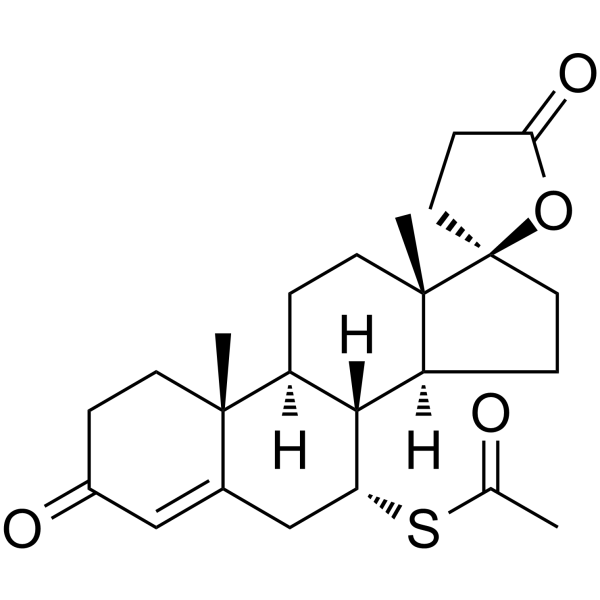
Spironolactone is an aldosterone antagonist that acts on the aldosterone mineralocorticoid receptor (IC50=24 nM) and androgen receptor (IC50=77 nM), promotes podocyte autophagy and regulates pain. Spironolactone improves hypertension-related vascular hypertrophy and remodeling by reducing angiotensin II (Ang II)-induced inflammation, reduces aldosterone-induced vascular and soft tissue calcification through PIT1-dependent signaling, and alleviates vascular dysfunction in type II diabetic mice by reducing oxidative stress and restoring NO/GC signaling; at low concentrations, it and its metabolites can interfere with aldosterone biosynthesis in the adrenal cortex and inhibit voltage-dependent Ca 2+ channels to exert antihypertensive effects .
|
-
-
- HY-B0632
-
Diltiazem
Maximum Cited Publications
10 Publications Verification
|
Calcium Channel
|
Cardiovascular Disease
Cancer
|
|
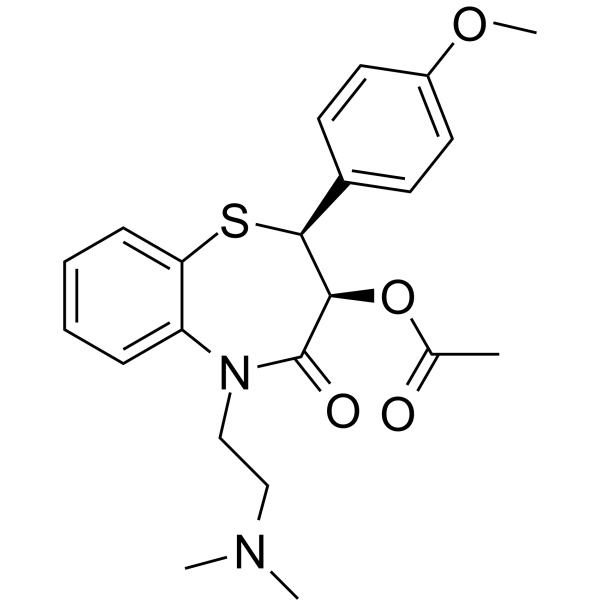
Diltiazem is an orally active L-type Ca 2+ channel blocker. Diltiazem shows antihypertensive and antiarrhythmic effects. Diltiazem can be used for the research of cardiac arrhythmia, hypertension, and angina pectoris .
|
-
-
- HY-N0217
-
-
-
- HY-N0719
-
-
-
- HY-17404
-
|
FRC-8653
|
Calcium Channel
|
Cardiovascular Disease
|
|
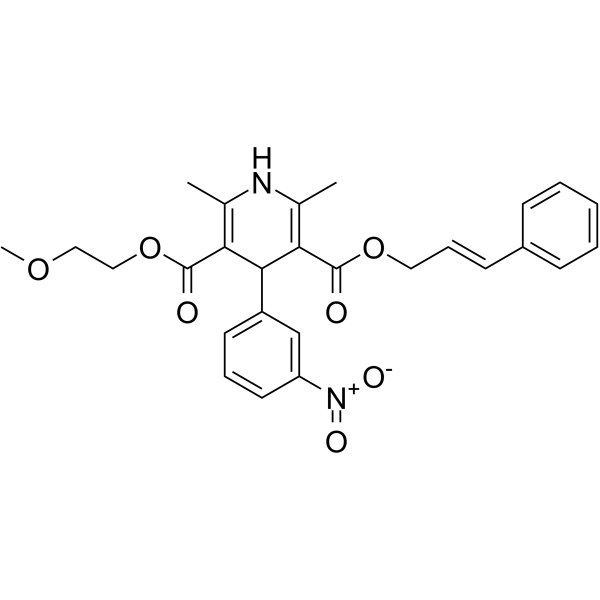
Cilnidipine is a long-acting, second-generation dihydropyridine Ca 2+-channel blocker on L and N-type Ca 2+ channel . Antihypertensive effects .
|
-
-
- HY-B0378A
-
|
RS-10085
|
Angiotensin-converting Enzyme (ACE)
Apoptosis
|
Cardiovascular Disease
|
|
Moexipril hydrochloride (RS-10085) is an orally active inhibitor of angiotensin-converting enzyme (ACE), and becomes effective by being hydrolyzed to moexiprila (hydrochloride). Moexipril hydrochloride exhibits antihypertensive and neuroprotective effects - .
|
-
-
- HY-N2488
-
|
7-Demethylsuberosin
|
Calcium Channel
NO Synthase
|
Cardiovascular Disease
Neurological Disease
Inflammation/Immunology
|
|
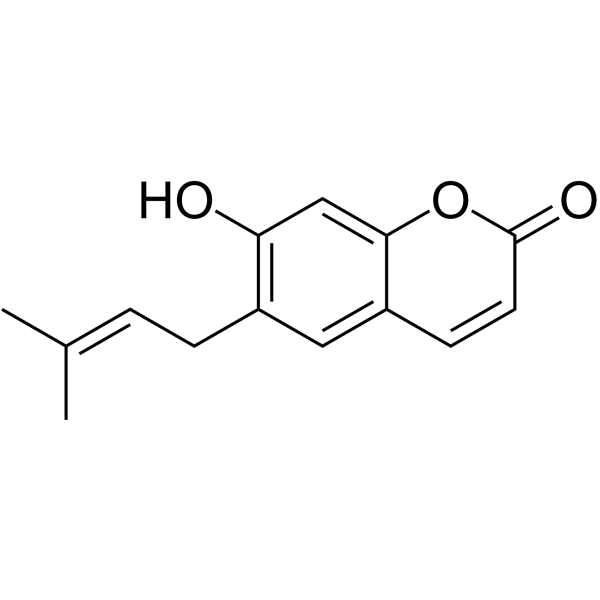
Demethylsuberosin (7-Demethylsuberosin) is a coumarin compound found in Angelica gigas Nakai. Demethylsuberosin exerts antihypertensive effects by inhibiting the L-type CaV1.2 channel. Demethylsuberosin has antioxidant and anti-inflammatory activities. Demethylsuberosin also exhibits neuroprotective activities against glutamate-induced toxicity in primary cultured rat cortical cells .
|
-
-
- HY-N2555
-
-
-
- HY-12724
-
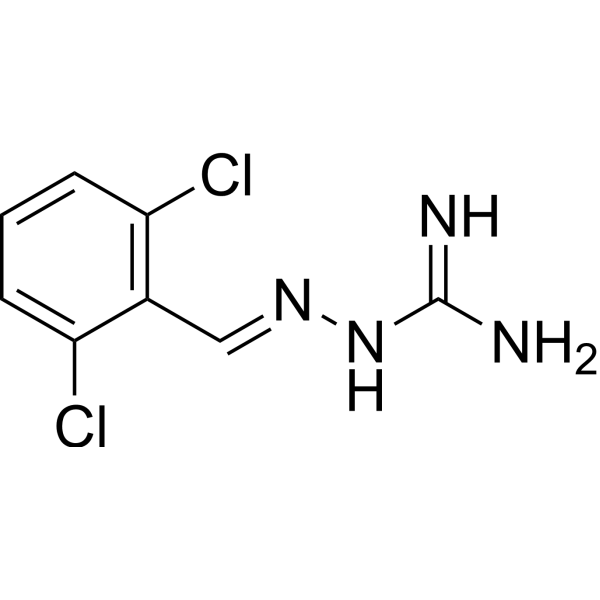
|
|
Adrenergic Receptor
Parasite
|
Cardiovascular Disease
Cancer
|
|
Guanabenz is an orally active α-2-adrenoceptor agonist. Guanabenz has antihypertensive effect and antiparasitic activity. Guanabenz interferes ER stress-signalling and has protective effects in cardiac myocytes. Guanabenz also is used for the research of high blood pressure .
|
-
-
- HY-12724A
-
|
|
Parasite
Adrenergic Receptor
|
Cardiovascular Disease
Cancer
|
|
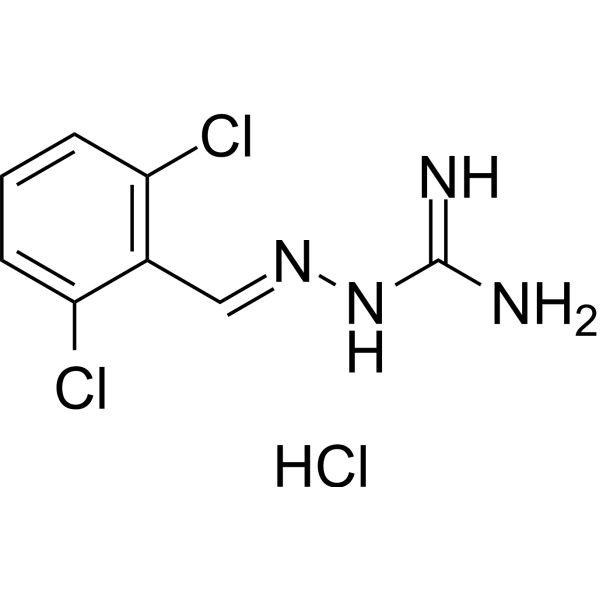
Guanabenz hydrochloride is an orally active α-2-adrenoceptor agonist. Guanabenz hydrochloride has antihypertensive effect and antiparasitic activity. Guanabenz hydrochloride interferes ER stress-signalling and has protective effects in cardiac myocytes. Guanabenz hydrochloride also is used for the research of high blood pressure .
|
-
-
- HY-N0081
-
|
|
Calcium Channel
NF-κB
Interleukin Related
|
Cardiovascular Disease
Inflammation/Immunology
|
|
(±)-Praeruptorin A, a coumarin compound, is the main bioactive component in Peucedani Radix. As a calcium channel blocker, (±)-Praeruptorin A exhibits great antihypertensive effects. In addition, (±)-Praeruptorin A also has the effects of relaxing vascular smooth muscle, inhibiting airway inflammation and airway hyperresponsiveness. (±)-Praeruptorin A can be used for the research of allergic asthma, hypertension and other diseases .
|
-
-
- HY-W018197
-
-
-
- HY-U00212
-
-
-
- HY-B1191
-
|
2,6-Lupetidine
|
nAChR
|
Cardiovascular Disease
|
|
Nanofin (2,6-Lupetidine) is a neuro-blocking agent with antihypertensive effects, which can be used for the study of mild to moderate hypertension.
|
-
-
- HY-106616
-
|
BAY-g 2821; Edrul
|
Sodium Channel
|
Cardiovascular Disease
|
|
Muzolimine (BAY-g 282) is a slow and long lasting diuresis agent. Muzolimine produces a diuresis in the loop of Henle and also shows anti-hypertensive and natriuresis effects. Muzolimine can be used for the research of cardiovascular disease .
|
-
-
- HY-N9351
-
|
Diphyllin O-glucoside
|
SARS-CoV
|
Infection
Cardiovascular Disease
Metabolic Disease
Cancer
|
|
Cleistanthin B (Diphyllin O-glucoside) is an orally active arylnaphthalene lignan lactone glycoside. Cleistanthin B exhibits anti-SARS-CoV-2 effects in Vero cells, with EC50 of 6.51 µM. Cleistanthin B also exhibits antitumor, diuretic and antihypertensive effects in vivo .
|
-
-
- HY-152358
-
|
|
Nucleoside Antimetabolite/Analog
|
Others
|
|
N3-Methyl-2’-O-methyluridine is a uridine analogue. Uridine has potential antiepileptic effects, and its analogs can be used to study anticonvulsant and anxiolytic activities, as well as to develop new antihypertensive agents .
|
-
-
- HY-119667
-
-
-
- HY-101656
-
|
RMI81968
|
Adrenergic Receptor
|
Cardiovascular Disease
|
|
Medroxalol (RMI81968) is an orally active adrenergic receptor antagonist, blocks α- and β-adrenergic receptors. Medroxalol shows antihypertensive and vasodilating effects .
|
-
-
- HY-P3395
-
|
Human chromogranin A 352–372
|
nAChR
|
Cardiovascular Disease
Inflammation/Immunology
|
|
Catestatin human, a catecholamine release-inhibitory peptide, is a pleiotropic peptide involved in cardiovascular protection with its antihypertensive and angiogenic effects. Catestatin human can be used in the study of inflammatory diseases .
|
-
-
- HY-N9347
-
-
-
- HY-134337
-
|
|
Nucleoside Antimetabolite/Analog
Phosphoramidites
|
Cancer
|
|
5'-O-DMTr-3'-O-methyl uridine-3'-CED-phosphoramidite is a uridine analog. Uridine has potential antiepileptic effects, and its analogs can be used to study anticonvulsant and anxiolytic activities, as well as to develop new antihypertensive agents .
|
-
-
- HY-152732
-
|
|
Nucleoside Antimetabolite/Analog
|
Others
|
|
6-Methyluridine is a uridine analogue. Uridine has potential antiepileptic effects, and its analogs can be used to study anticonvulsant and anxiolytic activities, as well as to develop new antihypertensive agents .
|
-
-
- HY-154285
-
|
|
Nucleoside Antimetabolite/Analog
|
Cancer
|
|
3’-O-(2-Methoxyethyl) uridine is a uridine analog. Uridine has potential antiepileptic effects, and its analogs can be used to study anticonvulsant and anxiolytic activities, as well as to develop new antihypertensive agents .
|
-
-
- HY-154466
-
|
|
Nucleoside Antimetabolite/Analog
|
Cancer
|
|
5’-O-(4,4’-Dimethoxytrityl)-3’-O-methyluridine is a uridine analog. Uridine has potential antiepileptic effects, and its analogs can be used to study anticonvulsant and anxiolytic activities, as well as to develop new antihypertensive agents .
|
-
-
- HY-48973
-
|
|
Nucleoside Antimetabolite/Analog
Phosphoramidites
|
Others
|
|
2'-Fluoro-2'-deoxy-ara-U-3'-phosphoramidite is a uridine analog. Uridine has potential antiepileptic effects, and its analogs can be used to study anticonvulsant and anxiolytic activities, as well as to develop new antihypertensive agents .
|
-
-
- HY-154358
-
|
|
Nucleoside Antimetabolite/Analog
|
Cancer
|
|
4’-alpha-C-Allyl-2’,3’-bis(O-t-butyldimethylsilyl) uridine is a uridine analog. Uridine has potential antiepileptic effects, and its analogs can be used to study anticonvulsant and anxiolytic activities, as well as to develop new antihypertensive agents .
|
-
-
- HY-12718
-
|
|
Adrenergic Receptor
|
Cardiovascular Disease
|
|
(±)-WB 4101 is a highly selective α1-adrenergic receptor antagonist. (±)-WB 4101 blocks norepinephrine-induced vascular smooth muscle contraction to exert antihypertensive and benign prostatic hyperplasia (BPH)-relieving effects. (±)-WB 4101 is promising for research of hypertension and BPH .
|
-
-
- HY-154492
-
|
|
Nucleoside Antimetabolite/Analog
|
Cancer
|
|
2’,3’-Bis(O-t-butyldimethylsilyl)-4’,5’-didehydro-5’-deoxyuridine is a uridine analog. Uridine has potential antiepileptic effects, and its analogs can be used to study anticonvulsant and anxiolytic activities, as well as to develop new antihypertensive agents .
|
-
-
- HY-117281
-
-
-
- HY-W020098
-
|
|
Nucleoside Antimetabolite/Analog
|
Cancer
|
|
2'-C-methyluridine is a uridine analog. Uridine has potential antiepileptic effects, and its analogs can be used to study anticonvulsant and anxiolytic activities, as well as to develop new antihypertensive agents .
|
-
-
- HY-108582
-
|
|
Potassium Channel
|
Cardiovascular Disease
|
|
Y-27152, a proagent of the KATP (Kir6) channel opener Y-26763, is a long-acting K+ channel opener with less tachycardia: antihypertensive effects in hypertensive rats and dogs in conscious state .
|
-
-
- HY-B0632S
-
|
|
Isotope-Labeled Compounds
Calcium Channel
|
Cardiovascular Disease
|
|
Diltiazem-d6 is the deuterium labeled Diltiazem. Diltiazem is an orally active L-type Ca2+ channel blocker, with antihypertensive and antiarrhythmic effects. Diltiazem can be used for the research of cardiac arrhythmia, hypertension, and angina pectoris .
|
-
-
- HY-17404S
-
-
-
- HY-154488
-
|
|
Nucleoside Antimetabolite/Analog
|
Cancer
|
|
3′-O-[(1,1-Dimethylethyl)dimethylsilyl]-2′-O-methyluridine is a uridine analog. Uridine has potential antiepileptic effects, and its analogs can be used to study anticonvulsant and anxiolytic activities, as well as to develop new antihypertensive agents .
|
-
-
- HY-106766
-
-
-
- HY-16213
-
-
-
- HY-P2072
-
-
-
- HY-120325
-
-
-
- HY-101656A
-
|
RMI81968 hydrochloride
|
Adrenergic Receptor
|
Cardiovascular Disease
|
|
Medroxalol hydrochloride is an orally active adrenergic receptor antagonist, blocks α- and β-adrenergic receptors. Medroxalol hydrochloride shows antihypertensive and vasodilating effects .
|
-
-
- HY-121180
-
-
-
- HY-120514
-
|
|
TRP Channel
Potassium Channel
|
Cardiovascular Disease
|
|
JNc-440 is a potent antihypertensive agent. JNc-440 can enhance the interaction of TRPV4 and Ca 2+-activated potassium channel 3 (KCa2.3) in endothelial cells. JNc-440 can also enhance vasodilation, and exerted antihypertensive effects in mice .
|
-
-
- HY-U00212R
-
|
MPC1304 (Standard)
|
Reference Standards
Calcium Channel
|
Cardiovascular Disease
|
|
Aranidipine (Standard) is the analytical standard of Aranidipine. This product is intended for research and analytical applications. Aranidipine (MPC1304) is a Ca 2+ channel antagonist with potent and long-lasting antihypertensive effects.
|
-
-
- HY-N0719R
-
-
-
- HY-152755
-
|
|
Nucleoside Antimetabolite/Analog
|
Others
|
|
4’-Cyanouridine is a uridine analogue. Uridine has potential antiepileptic effects, and its analogs can be used to study anticonvulsant and anxiolytic activities, as well as to develop new antihypertensive agents .
|
-
-
- HY-152764
-
|
|
Nucleoside Antimetabolite/Analog
|
Others
|
|
4’-α-C-Methyluridine is a uridine analogue. Uridine has potential antiepileptic effects, and its analogs can be used to study anticonvulsant and anxiolytic activities, as well as to develop new antihypertensive agents .
|
-
-
- HY-152777
-
|
|
Nucleoside Antimetabolite/Analog
|
Others
|
|
5’(R)-C-Methyluridine is a uridine analogue. Uridine has potential antiepileptic effects, and its analogs can be used to study anticonvulsant and anxiolytic activities, as well as to develop new antihypertensive agents .
|
-
-
- HY-152299
-
|
|
Nucleoside Antimetabolite/Analog
|
Others
|
|
5-(t-Butyloxycarbonylmethoxy)uridine is a uridine analogue. Uridine has potential antiepileptic effects, and its analogs can be used to study anticonvulsant and anxiolytic activities, as well as to develop new antihypertensive agents .
|
-
-
- HY-154735
-
|
|
Nucleoside Antimetabolite/Analog
|
Cancer
|
|
N3-Allyluridine is a uridine analog. Uridine has potential antiepileptic effects, and its analogs can be used to study anticonvulsant and anxiolytic activities, as well as to develop new antihypertensive agents .
|
-
-
- HY-152388
-
|
|
Nucleoside Antimetabolite/Analog
|
Others
|
|
3’-beta-C-Methyluridine is a uridine analogue. Uridine has potential antiepileptic effects, and its analogs can be used to study anticonvulsant and anxiolytic activities, as well as to develop new antihypertensive agents .
|
-
- HY-152665
-
|
|
Nucleoside Antimetabolite/Analog
|
Cancer
|
|
1-(β-D-Xylofuranosyl)uracil is a uridine analog. Uridine has potential antiepileptic effects, and its analogs can be used to study anticonvulsant and anxiolytic activities, as well as to develop new antihypertensive agents .
|
-
- HY-106832A
-
|
Watanidipine hydrochloride; AE0047
|
Calcium Channel
|
Cardiovascular Disease
Neurological Disease
|
|
Vatanidipine (Watanidipine) hydrochloride is an orally active dihydropyridine (DHP)-type calcium channel blocker and a useful antihypertensive agent. Vatanidipine hydrochloride shows vasodilatory effects and also suppresses noradrenaline release from sympathetic nerve endings .
|
-
- HY-106832
-
|
Watanidipine; AE0047 free base
|
Calcium Channel
|
Cardiovascular Disease
Neurological Disease
|
|
Vatanidipine (Watanidipine) is an orally active dihydropyridine (DHP)-type calcium channel blocker and a useful antihypertensive agent. Vatanidipine shows vasodilatory effects and also suppresses noradrenaline release from sympathetic nerve endings .
|
-
- HY-152970
-
|
|
Nucleoside Antimetabolite/Analog
Phosphoramidites
|
Others
|
|
7'-O-DMT-morpholino uracil is a uridine analog. Uridine has potential antiepileptic effects, and its analogs can be used to study anticonvulsant and anxiolytic activities, as well as to develop new antihypertensive agents .
|
-
- HY-154734
-
|
|
Nucleoside Antimetabolite/Analog
|
Cancer
|
|
N3-(4-Nitrobenzyl)uridine is a uridine analog. Uridine has potential antiepileptic effects, and its analogs can be used to study anticonvulsant and anxiolytic activities, as well as to develop new antihypertensive agents .
|
-
- HY-W557556
-
|
|
Nucleoside Antimetabolite/Analog
|
Cancer
|
|
2',5'-Bis-O-(triphenylMethyl)uridine is a uridine analog. Uridine has potential antiepileptic effects, and its analogs can be used to study anticonvulsant and anxiolytic activities, as well as to develop new antihypertensive agents .
|
-
- HY-152677
-
|
|
Nucleoside Antimetabolite/Analog
|
Others
|
|
N3-(2-Methoxy)ethyluridine is a uridine analogue. Uridine has potential antiepileptic effects, and its analogs can be used to study anticonvulsant and anxiolytic activities, as well as to develop new antihypertensive agents .
|
-
- HY-N7675A
-
|
|
Others
|
Metabolic Disease
|
|
(2R)-Flavanomarein is a predominant flavonoid of Coreopsis tinctoria Nutt with protective effects against diabetic nephropathy. (2R)-Flavanomarein has good antioxidative, antidiabetic, antihypertensive and anti-hyperlipidemic activities .
|
-
- HY-154217
-
|
|
Nucleoside Antimetabolite/Analog
|
Cancer
|
|
3′,5′-Bis-O-(triphenylmethyl)uridine is a uridine analog. Uridine has potential antiepileptic effects, and its analogs can be used to study anticonvulsant and anxiolytic activities, as well as to develop new antihypertensive agents .
|
-
- HY-149077
-
|
|
Others
|
Others
|
|
2′-Deoxy-5-methoxyuridine is a uridine analogue. Uridine has potential antiepileptic effects, and its analogs can be used to study anticonvulsant and anxiolytic activities, as well as to develop new antihypertensive agents .
|
-
- HY-B0632A
-
|
MK 793
|
Calcium Channel
|
Cardiovascular Disease
Cancer
|
|
Diltiazem malate is a potent and orally active L-type calcium channel inhibitor. Diltiazem malate shows antihypertensive and antiarrhythmic effects. Diltiazem malate can be used for the research of cardiac arrhythmia, hypertension, and angina pectoris .
|
-
- HY-152529
-
|
|
Nucleoside Antimetabolite/Analog
|
Others
|
|
4’-C-Methyl-5-methoxyuridine is a uridine analogue. Uridine has potential antiepileptic effects, and its analogs can be used to study anticonvulsant and anxiolytic activities, as well as to develop new antihypertensive agents .
|
-
- HY-135175
-
|
|
Adrenergic Receptor
|
Cardiovascular Disease
Neurological Disease
|
|
Phenoprolamine hydrochloride is an adrenergic α1 receptor antagonist that exhibits potent antihypertensive effects. Phenoprolamine hydrochloride demonstrates neuroprotective and cardioprotective properties. Phenoprolamine hydrochloride inhibits CYP2D and CYP3A activities while down-regulating their mRNA transcription.
|
-
- HY-152522
-
|
|
Nucleoside Antimetabolite/Analog
|
Others
|
|
5-Fluoro-4’-C-methyluridine is a uridine analogue. Uridine has potential antiepileptic effects, and its analogs can be used to study anticonvulsant and anxiolytic activities, as well as to develop new antihypertensive agents .
|
-
- HY-154738
-
|
|
Nucleoside Antimetabolite/Analog
|
Cancer
|
|
N3-[3-(tert-Butoxycarbonyl)amino]propyluridine is a uridine analog. Uridine has potential antiepileptic effects, and its analogs can be used to study anticonvulsant and anxiolytic activities, as well as to develop new antihypertensive agents .
|
-
- HY-152783
-
|
|
Nucleoside Antimetabolite/Analog
|
Others
|
|
5’(R)-C-Methyl-5-fluorouridine is a uridine analogue. Uridine has potential antiepileptic effects, and its analogs can be used to study anticonvulsant and anxiolytic activities, as well as to develop new antihypertensive agents .
|
-
- HY-152969
-
|
|
Nucleoside Antimetabolite/Analog
|
Others
|
|
6-Chloro-N1-(trimethylsilylethoxymethyl)pseudouridine is a uridine analog. Uridine has potential antiepileptic effects, and its analogs can be used to study anticonvulsant and anxiolytic activities, as well as to develop new antihypertensive agents .
|
-
- HY-117281S1
-
-
- HY-152779
-
|
|
Nucleoside Antimetabolite/Analog
|
Others
|
|
5-Methoxy-5’(R)-C-methyluridine is a uridine analogue. Uridine has potential antiepileptic effects, and its analogs can be used to study anticonvulsant and anxiolytic activities, as well as to develop new antihypertensive agents .
|
-
- HY-19063
-
|
|
Neprilysin
|
Cardiovascular Disease
Others
|
|
SCH-34826 is an orally active neutral metalloendopeptidase (NEP) inhibitor that inhibits NEP and reduces the degradation of ANF, thereby enhancing its antihypertensive and diuretic effects. SCH-34826 can be used in the research of cardiovascular and renal diseases .
|
-
- HY-152798
-
|
|
Nucleoside Antimetabolite/Analog
|
Others
|
|
5-Iodo-2’-β-C-methyl uridine is a uridine analogue. Uridine has potential antiepileptic effects, and its analogs can be used to study anticonvulsant and anxiolytic activities, as well as to develop new antihypertensive agents .
|
-
- HY-154737
-
|
|
Nucleoside Antimetabolite/Analog
|
Cancer
|
|
N3-[(Pyrid-4-yl)methyl]uridine is a uridine analog. Uridine has potential antiepileptic effects, and its analogs can be used to study anticonvulsant and anxiolytic activities, as well as to develop new antihypertensive agents .
|
-
- HY-N4209
-
|
|
Others
|
Cardiovascular Disease
|
|
3α-Dihydrocadambine is a natural product isolated from the heartwoods of Anthocephalus cadamba.3α-Dihydrocadambine exhibits dose-dependent hypotensive and anti-hypertensive effects in anesthetized normotensive rats and in conscious spontaneously hypertensive rats .
|
-
- HY-152681
-
|
|
Nucleoside Antimetabolite/Analog
|
Others
|
|
N3-[(Tetrahydro-2-furanyl)methyl]uridine is a uridine analogue. Uridine has potential antiepileptic effects, and its analogs can be used to study anticonvulsant and anxiolytic activities, as well as to develop new antihypertensive agents .
|
-
- HY-152463
-
|
|
Nucleoside Antimetabolite/Analog
|
Cancer
|
|
4′-C-2-Propen-1-yluridine is a uridine analog. Uridine has potential antiepileptic effects, and its analogs can be used to study anticonvulsant and anxiolytic activities, as well as to develop new antihypertensive agents .
|
-
- HY-152683
-
|
|
Nucleoside Antimetabolite/Analog
|
Others
|
|
N3-[(Pyrid-2-yl)methyl]uridine is a uridine analogue. Uridine has potential antiepileptic effects, and its analogs can be used to study anticonvulsant and anxiolytic activities, as well as to develop new antihypertensive agents .
|
-
- HY-152674
-
|
|
Nucleoside Antimetabolite/Analog
|
Others
|
|
2′-Deoxy-2′-fluoro-5-methoxy-arabinouridine is a uridine analogue. Uridine has potential antiepileptic effects, and its analogs can be used to study anticonvulsant and anxiolytic activities, as well as to develop new antihypertensive agents .
|
-
- HY-154560
-
|
|
Nucleoside Antimetabolite/Analog
|
Cancer
|
|
2’,3’,5’-Tri-O-acetyl-N3-methyluridine is a uridine analog. Uridine has potential antiepileptic effects, and its analogs can be used to study anticonvulsant and anxiolytic activities, as well as to develop new antihypertensive agents .
|
-
- HY-B0378AR
-
|
RS-10085 (Standard)
|
Reference Standards
Angiotensin-converting Enzyme (ACE)
Apoptosis
|
Cardiovascular Disease
|
|
Moexipril (hydrochloride) (Standard) is the analytical standard of Moexipril (hydrochloride). This product is intended for research and analytical applications. Moexipril hydrochloride (RS-10085) is an orally active inhibitor of angiotensin-converting enzyme (ACE), and becomes effective by being hydrolyzed to moexiprila (hydrochloride). Moexipril hydrochloride exhibits antihypertensive and neuroprotective effects - .
|
-
- HY-152574
-
|
|
Nucleoside Antimetabolite/Analog
|
Others
|
|
5-Amino-2’-deoxy-2’-O-methyluridine hydrochloride is a uridine analogue. Uridine has potential antiepileptic effects, and its analogs can be used to study anticonvulsant and anxiolytic activities, as well as to develop new antihypertensive agents .
|
-
- HY-17404R
-
|
FRC-8653 (Standard)
|
Reference Standards
Calcium Channel
|
Cardiovascular Disease
|
|
Cilnidipine (Standard) is the analytical standard of Cilnidipine. This product is intended for research and analytical applications. Cilnidipine is a long-acting, second-generation dihydropyridine Ca 2+-channel blocker on L and N-type Ca 2+ channel . Antihypertensive effects .
|
-
- HY-B0632S2
-
-
- HY-N2555R
-
-
- HY-B1191S
-
|
2,6-Lupetidine-d2
|
Isotope-Labeled Compounds
nAChR
|
Cardiovascular Disease
|
|
Nanofin-d2 (2,6-Lupetidine-d2) is the deuterium labeled Nanofin (HY-B1191). Nanofin (2,6-Lupetidine) is a neuro-blocking agent with antihypertensive effects, which can be used for the study of mild to moderate hypertension.
|
-
- HY-154173
-
|
|
Nucleoside Antimetabolite/Analog
|
Cancer
|
|
3’-O-(t-Butyldimethylsilyl)-2’-O-(2-methoxyethyl) uridine is a uridine analog. Uridine has potential antiepileptic effects, and its analogs can be used to study anticonvulsant and anxiolytic activities, as well as to develop new antihypertensive agents .
|
-
- HY-154813
-
|
|
Nucleoside Antimetabolite/Analog
|
Others
|
|
3′,5′-Di-O-acetyl-2′-deoxy-2′-fluorouridine is a uridine analog. Uridine has potential antiepileptic effects, and its analogs can be used to study anticonvulsant and anxiolytic activities, as well as to develop new antihypertensive agents .
|
-
- HY-49199
-
|
|
Nucleoside Antimetabolite/Analog
|
Cancer
|
|
2',3',5'-Tri-O-(t-butyldimethylsilyl)-4'-C-hydroxymethyl uridine is a uridine analog. Uridine has potential antiepileptic effects, and its analogs can be used to study anticonvulsant and anxiolytic activities, as well as to develop new antihypertensive agents .
|
-
- HY-152363
-
|
|
Nucleoside Antimetabolite/Analog
|
Others
|
|
N3-Methyl-2’-O-(2-methoxyethyl)uridine is a uridine analogue. Uridine has potential antiepileptic effects, and its analogs can be used to study anticonvulsant and anxiolytic activities, as well as to develop new antihypertensive agents .
|
-
- HY-154410
-
|
|
Nucleoside Antimetabolite/Analog
Phosphoramidites
|
Cancer
|
|
5’-O-DMT-2’-deoxy-2’-fluoro-β-D-arabinouridine is a uridine analog. Uridine has potential antiepileptic effects, and its analogs can be used to study anticonvulsant and anxiolytic activities, as well as to develop new antihypertensive agents .
|
-
- HY-B0632R
-
|
|
Reference Standards
Calcium Channel
|
Cardiovascular Disease
Cancer
|
|
Diltiazem (Standard) is the analytical standard of Diltiazem. This product is intended for research and analytical applications. Diltiazem is an orally active L-type Ca 2+ channel blocker. Diltiazem shows antihypertensive and antiarrhythmic effects. Diltiazem can be used for the research of cardiac arrhythmia, hypertension, and angina pectoris .
|
-
- HY-112290A
-
|
|
11β-HSD
|
Cardiovascular Disease
|
|
MK-0736 hydrochloride is a potent and selective 11β-HSD-1 inhibitor with hypertension-reducing activity. MK-0736 hydrochloride can be used in studies related to metabolic syndrome. MK-0736 hydrochloride has demonstrated good antihypertensive effects and safety in clinical studies .
|
-
- HY-152691
-
|
|
Nucleoside Antimetabolite/Analog
|
Others
|
|
2’-Deoxy-2’-fluoro-N3-(n-dodecyl)-beta-D-arabinouridine is a uridine analogue. Uridine has potential antiepileptic effects, and its analogs can be used to study anticonvulsant and anxiolytic activities, as well as to develop new antihypertensive agents .
|
-
- HY-17404S1
-
-
- HY-110021
-
|
SKF 82526 hydrochloride
|
Dopamine Receptor
Histone Demethylase
Apoptosis
|
Cardiovascular Disease
Cancer
|
|
Fenoldopam (SKF 82526) hydrochloride is a D1 receptor agonist and a novel lysine-specific demethylase 1 (LSD1) inhibitor (IC50=0.8974 μM). Fenoldopam hydrochloride shows anti-hypertensive effects, anti-cancer cell proliferation activity and can induce cells apoptosis .
|
-
- HY-B0632B
-
|
|
Calcium Channel
|
Cardiovascular Disease
|
|
(2R,3R)-Diltiazem hydrochloride is an isomer of Diltiazem (HY-B0632) hydrochloride. Diltiazem is an orally active L-type Ca 2+ channel blocker. Diltiazem shows antihypertensive and antiarrhythmic effects. Diltiazem can be used for the research of cardiac arrhythmia, hypertension, and angina pectoris .
|
-
- HY-106616R
-
|
BAY-g 2821 (Standard); Edrul (Standard)
|
Sodium Channel
Reference Standards
|
Cardiovascular Disease
|
|
Muzolimine (Standard) is the analytical standard of Muzolimine. This product is intended for research and analytical applications. Muzolimine (BAY-g 282) is a slow and long lasting diuresis agent. Muzolimine produces a diuresis in the loop of Henle and also shows anti-hypertensive and natriuresis effects. Muzolimine can be used for the research of cardiovascular disease .
|
-
- HY-119512
-
|
Ethomoxane
|
Adrenergic Receptor
|
Cardiovascular Disease
|
|
Ethoxomane (Ethomoxane) is an α-adrenergic receptor blocker. Ethoxomane elevates the hissing threshold induced by perifornical hypothalamic stimulation in cats. Ethoxomane exhibits antihypertensive effects. Ethoxomane can be used in the research of cardiovascular and cerebrovascular diseases .
|
-
- HY-101656R
-
|
RMI81968 (Standard)
|
Adrenergic Receptor
Reference Standards
|
Cardiovascular Disease
|
|
Medroxalol (Standard) is the analytical standard of Medroxalol (HY-101656). This product is intended for research and analytical applications. Medroxalol (RMI81968) is an orally active adrenergic receptor antagonist, blocks α- and β-adrenergic receptors. Medroxalol shows antihypertensive and vasodilating effects .
|
-
- HY-B1191S1
-
|
2,6-Lupetidine-d5
|
Isotope-Labeled Compounds
nAChR
|
Cardiovascular Disease
|
|
Nanofin-d5 (2,6-Lupetidine-d5) is the deuterium labeled Nanofin (HY-B1191). Nanofin (2,6-Lupetidine) is a neuro-blocking agent with antihypertensive effects, which can be used for the study of mild to moderate hypertension.
|
-
- HY-B1191SA
-
|
2,6-Lupetidine-d2 hydrochloride
|
Isotope-Labeled Compounds
nAChR
|
Cardiovascular Disease
|
|
Nanofin-d2 (2,6-Lupetidine-d2) hydrochloride is the deuterium labeled Nanofin (HY-B1191). Nanofin (2,6-Lupetidine) is a neuro-blocking agent with antihypertensive effects, which can be used for the study of mild to moderate hypertension.
|
-
- HY-154175
-
|
|
Nucleoside Antimetabolite/Analog
|
Others
|
|
1-[6-(Diethoxyphosphinyl)-2-O-(2-methoxyethyl)-β-D-ribo-hexofuranosyl]uracil is a uridine analog. Uridine has potential antiepileptic effects, and its analogs can be used to study anticonvulsant and anxiolytic activities, as well as to develop new antihypertensive agents .
|
-
- HY-12172
-
|
ACT-077825
|
Renin
|
Cardiovascular Disease
|
|
MK-8141 (ACT-077825) is a renin inhibitor that significantly increases levels of immunoreactive renin (ir-AR) by sevenfold but does not result in sustained reductions in blood renin activity (PRA). This study evaluated the antihypertensive efficacy of MK-8141 in hypertensive disease. Despite its effects on ir-AR, MK-8141 (ACT-077825) did not produce significant blood pressure-lowering effects in the absence of sustained PRA inhibition.
|
-
- HY-N0081R
-
|
|
Reference Standards
Calcium Channel
Interleukin Related
|
Cardiovascular Disease
Inflammation/Immunology
|
|
(±)-Praeruptorin A (Standard) is the analytical standard of (±)-Praeruptorin A (HY-N0081). This product is intended for research and analytical applications. (±)-Praeruptorin A, a coumarin compound, is the main bioactive component in Peucedani Radix. As a calcium channel blocker, (±)-Praeruptorin A exhibits great antihypertensive effects. In addition, (±)-Praeruptorin A also has the effects of relaxing vascular smooth muscle, inhibiting airway inflammation and airway hyperresponsiveness. (±)-Praeruptorin A can be used for the research of allergic asthma, hypertension and other diseases .
|
-
- HY-121312
-
|
ST-600
|
Adrenergic Receptor
|
Cardiovascular Disease
|
|
Flutonidine (ST-600) is a Clonidine (HY-12721) analogue that shows antihypertensive and sympatholytic effects. The initial hypertension produced by Flutonidine is due to stimulation of the peripheral α1, α2 adrenoceptors and the subsequent fall in blood pressure is due to the stimulation of central α2 adrenoceptors. Flutonidine reduces the arrhythmogenic and lethal effects of ouabain. Flutonidine is promising for research of ventricular arrhythmias caused by cardiac glycosides .
|
-
- HY-B0935
-
-
- HY-B0252
-
|
HCTZ
|
TGF-beta/Smad
Potassium Channel
|
Cardiovascular Disease
Metabolic Disease
Cancer
|
|
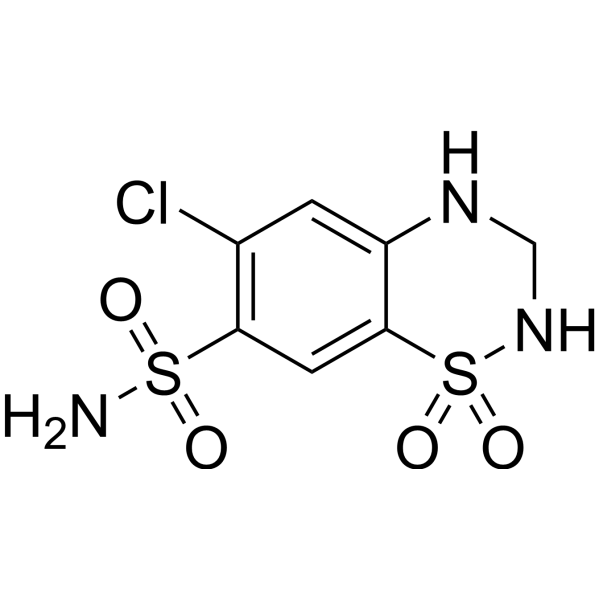
Hydrochlorothiazide (HCTZ), an orally active diuretic agent of the thiazide class, inhibits transforming TGF-β/Smad signaling pathway. Hydrochlorothiazide has direct vascular relaxant effects via opening of the calcium-activated potassium (KCA) channel. Hydrochlorothiazide improves cardiac function, reduces fibrosis and has antihypertensive effect .
|
-
- HY-B0735A
-
|
Fenoldopam methanesulfonate; SKF-82526 mesylate
|
Dopamine Receptor
Apoptosis
|
Cardiovascular Disease
Cancer
|
|
Fenoldopam mesylate (SKF-82526) is a D1 receptor agonist and a novel lysine-specific demethylase 1 (LSD1) inhibitor (IC50=0.8974 μM). Fenoldopam mesylate shows anti-hypertensive effects, anti-cancer cell proliferation activity and can induce cells apoptosis .
|
-
- HY-B0205
-
|
CV 11974
|
Angiotensin Receptor
PPAR
|
Cardiovascular Disease
Endocrinology
Cancer
|
|
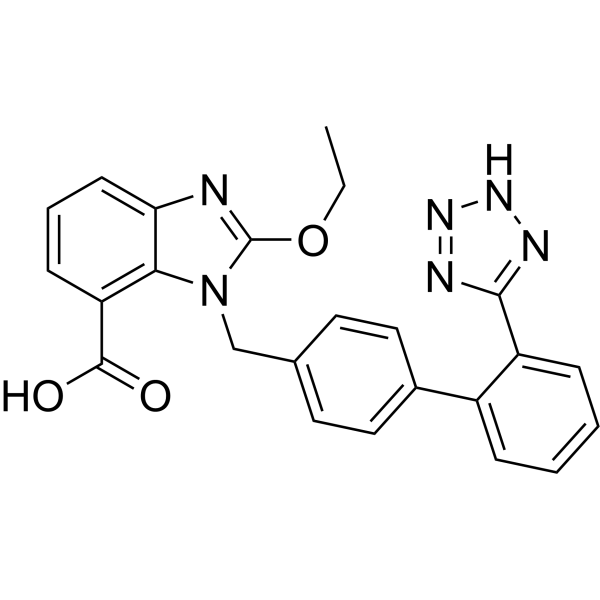
Candesartan (CV 11974) is an orally active angiotensin II AT1-Receptor blocker and PPAR-γ agonist. Candesartan has potent and long-lasting antihypertensive effects. Candesartan can be used for the research of hypertension, chronic heart failure (CHF) and Traumatic brain injury (TBI) .
|
-
- HY-152792
-
|
|
Nucleoside Antimetabolite/Analog
|
Others
|
|
2’-Deoxy-2’-fluoro-N3-[(pyrid-2-yl)methyl]uridine is a uridine analogue. Uridine has potential antiepileptic effects, and its analogs can be used to study anticonvulsant and anxiolytic activities, as well as to develop new antihypertensive agents .
|
-
- HY-154552
-
|
|
Nucleoside Antimetabolite/Analog
|
Cancer
|
|
2’-O-Acetyl-5’-O-benzoyl-3’-O-(2-methoxyethyl) uridine is a uridine analog. Uridine has potential antiepileptic effects, and its analogs can be used to study anticonvulsant and anxiolytic activities, as well as to develop new antihypertensive agents .
|
-
- HY-106103
-
-
- HY-177326
-
|
Ro 44-9375
|
Renin
|
Cardiovascular Disease
|
|
Ciprokiren (Ro 44-9375) is a Renin inhibitor with IC50s of 0.07 and 0.65 nM for hRenin in buffer and plasma, respectively. Ciprokiren be applied transdermally with similar hemodynamic effects without decrease of plasma renin activity or plasma immunoreactive angiotensin II. Ciprokiren has antihypertensive efficacy and can be used for hypertension research .
|
-
- HY-15407B
-
|
AHU-377 sodium
|
Neprilysin
|
Infection
Cardiovascular Disease
|
|
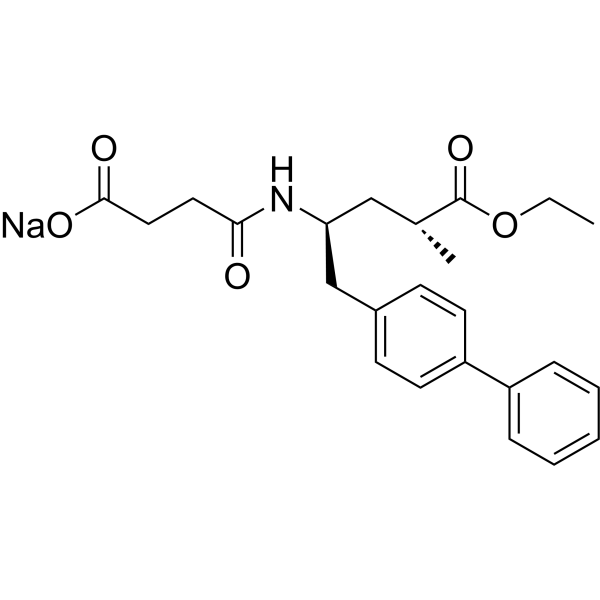
Sacubitril sodium is a potent and orally active NEP (neprilysin) inhibitor, with an IC50 of 5 nM. Sacubitril sodium enhances the tone of the natriuretic peptide (NP) system and exerts significant antihypertensive effects. Sacubitril sodium is a component of the heart failure medicine LCZ696. Sacubitril sodium can be used for the research of heart failure, hypertension and COVID-19 .
|
-
- HY-167741
-
|
|
nAChR
|
Cardiovascular Disease
Neurological Disease
|
|
Chlorisondamine is a nicotinic antagonist that acts as a ganglionic blocker and has been utilized to evaluate the neurogenic contributions to blood pressure and sympathetic vasomotor tone in animal models. Chlorisondamine has demonstrated antihypertensive properties, primarily being assessed through its effects on blood pressure, cardiac output, and heart rate in various experimental settings, particularly in mice.
|
-
- HY-N3931
-
|
|
Others
|
Cardiovascular Disease
|
|
Gardneramine is an orally active alkaloid that acts like papaverine. Gardneramine has peripheral vascular diastolic effect, direct inhibition on myocardium and central inhibition. Gardneramine showed antihypertensive, vasodilatation and atrial inhibition effects in rabbit, dog and guinea pig models, respectively. Gardneramine also inhibits the movement of smooth muscle organs such as the stomach and intestines .
|
-
- HY-154517
-
|
|
Nucleoside Antimetabolite/Analog
|
Cancer
|
|
N3-Cyanoethyl-5’-O-(4,4’-dimethoxytrityl)-2’-O-methyluridine is a uridine analog. Uridine has potential antiepileptic effects, and its analogs can be used to study anticonvulsant and anxiolytic activities, as well as to develop new antihypertensive agents .
|
-
- HY-106103A
-
|
MK 678 acetate; L 36358 acetate
|
Somatostatin Receptor
|
Cardiovascular Disease
Neurological Disease
Metabolic Disease
|
|
Seglitide acetate (MK 678; L 36358 acetate) is a potent, orally active somatostatin receptor 2 (SSTR2) agonist, and also a competitive antagonist of SSTR14, SSTR25, and SSTR28. Seglitide acetate has antihypertensive effects and can inhibit plasma glucagon and growth hormone. Seglitide acetate can be used for research on diabetes .
|
-
- HY-154647
-
|
|
Nucleoside Antimetabolite/Analog
|
Cancer
|
|
N3-(2S)-[2-(tert-Butoxycarbonyl)amino-3-(tert-butoxy carbonyl)]propyluridine is a uridine analog. Uridine has potential antiepileptic effects, and its analogs can be used to study anticonvulsant and anxiolytic activities, as well as to develop new antihypertensive agents .
|
-
- HY-121550
-
|
|
Angiotensin-converting Enzyme (ACE)
|
Cardiovascular Disease
|
|
ME3221 is an angiotensin AT1 receptor antagonist that effectively antagonizes the pressor response to angiotensin II in rats and marmosets without affecting the hypotensive response to bradykinin. It demonstrates potent antihypertensive effects in renal hypertensive rats and spontaneously hypertensive rats (SHR). ME3221's repeated administration in SHR results in sustained and stable hypotensive effects without affecting heart rate, indicating its potential for studying both renal and essential hypertension .
|
-
- HY-B0424
-
|
BAY-E-5009
|
Calcium Channel
Apoptosis
|
Cardiovascular Disease
Neurological Disease
Cancer
|
|
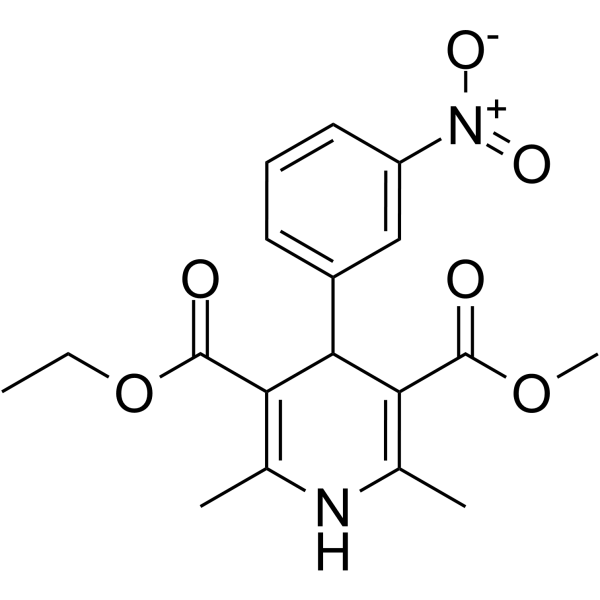
Nitrendipine (BAY-E-5009) is an orally active analog of Nifedipine (HY-B0284) and dihydropyridine calcium channel blocker. Nitrendipine induces Apoptosis. Nitrendipine has antihypertensive effects. Nitrendipine blocks alcohol and Morphine withdrawal symptoms. Nitrendipine reduces right ventricular hypertrophy and pulmonary vascular changes induced by intermittent hypoxia. Nitrendipine has anticancer effects on neuroblastoma .
|
-
- HY-105319
-
|
|
Neprilysin
Angiotensin-converting Enzyme (ACE)
|
Cardiovascular Disease
|
|
CGS-30440 is a potent and orally active dual inhibitor of neutral endopeptidase (NEP) and angiotensin-converting enzyme (ACE). CGS-30440 exhibit antihypertensive and natriuretic effects. CGS-30440 also shows protective effect for chronic renal failure. CGS-30440 can be used for the research of cardiovascular disease, such as hypertension .
|
-
- HY-154582
-
|
|
Nucleoside Antimetabolite/Analog
|
Others
|
|
5-Naphthyl-beta-methylaminocarbony-3’-O-acetyl-2’-O-methyl-5’-O-DMTr-uridine is a uridine analog. Uridine has potential antiepileptic effects, and its analogs can be used to study anticonvulsant and anxiolytic activities, as well as to develop new antihypertensive agents .
|
-
- HY-103247B
-
|
|
Angiotensin Receptor
|
Cardiovascular Disease
|
|
EMD-66684 potassium salt is a non-peptide angiotensin II receptor antagonist that demonstrates significant antihypertensive effects in spontaneously hypertensive rats. EMD-66684 potassium salt exhibits nanomolar affinity for angiotensin II receptors, comparable to losartan in potency. EMD-66684 potassium salt shows increased activity when modified with acetamides, leading to superior blood pressure reduction.
|
-
- HY-P11411
-
|
|
Neuropeptide Y Receptor
Histamine Receptor
|
Cardiovascular Disease
|
|
[D-Tyr27,36, D-Thr32]-Neuropeptide Y (27-36), rat is a fragment analogue of a neuropeptide Y (NPY) with cardiovascular activity. [D-Tyr27,36, D-Thr32]-Neuropeptide Y (27-36), rat can induce profound and sustained hypotension in both hypertensive and normotensive rats and its antihypertensive effect is partly attributed to its activity on histamine receptor. [D-Tyr27,36, D-Thr32]-Neuropeptide Y (27-36), rat can be used for studying antihypertensive effects .
|
-
- HY-W109973
-
|
L-(+)-Tartaric acid diammonium
|
Endogenous Metabolite
|
Cardiovascular Disease
|
|
L-Tartaric acid diammonium (L-(+) -tartaric acid) is an orally active weak organic acid that can be isolated from grapes. L-Tartaric acid diammonium has vasodilatory and antihypertensive effects. L-Tartaric acid diammonium can be used as flavorings and antioxidants in a range of foods and beverages. L-Tartaric acid diammonium can be used in laser frequency doubling and optical limiting applications .
|
-
- HY-D0850
-
|
Sodium tartrate dibasic dihydrate; Sodium tartrate dihydrate
|
Phosphatase
Endogenous Metabolite
|
Cardiovascular Disease
|
|
Tartaric acid disodium dehydrate (L-(+) -tartaric acid) is an orally active weak organic acid that can be isolated from grapes. Tartaric acid disodium dehydrate has vasodilatory and antihypertensive effects. Tartaric acid disodium dehydrate can be used as flavorings and antioxidants in a range of foods and beverages. Tartaric acid disodium dehydrate can be used in laser frequency doubling and optical limiting applications .
|
-
- HY-129706
-
|
|
Others
|
Cardiovascular Disease
|
|
LY127210 (free base) is a potent vasodilator with antihypertensive effects that reduces pressure in chloralose-anesthetized spontaneously hypertensive rats primarily by direct arteriolar dilation and to a lesser extent by decreasing cardiac output. LY127210 (free base) reduces blood pressure, heart rate and left ventricular end-diastolic pressure in hypertensive rats by reducing vascular resistance .
|
-
- HY-167082
-
|
|
NKCC
Potassium Channel
Sodium Channel
|
Cardiovascular Disease
|
|
AY 31906 is an orally active pyrimidine sulfonamide diuretic. AY 31906 exhibits potent diuretic and natriuretic activities in rats and dogs, along with relatively potassium-sparing properties. AY 31906 exhibits superior activity to Furosemide (HY-B0135). AY-31906 also has antihypertensive effects and can be used in the research of cardiovascular diseases .
|
-
- HY-180382
-
|
|
Cholinesterase (ChE)
|
Cardiovascular Disease
|
|
Trimethidinium methosulfate is an orally active ganglionic blocker with central antihypertensive activity. Trimethidinium methosulfate inhibits the conduction of sympathetic ganglia and reduces vascular contraction. Trimethidinium methosulfate acts on the cerebrovascular motor center and lowers peripheral vascular resistance. Trimethidinium methosulfate has cholinergic nerve inhibitory side effects, but they are relatively mild. Trimethidinium methosulfate can be used in hypertension research .
|
-
- HY-B0252S
-
|
HCTZ-d2
|
TGF-beta/Smad
Potassium Channel
|
Cardiovascular Disease
Metabolic Disease
|
|
Hydrochlorothiazid-d2 is the deuterium labeled Hydrochlorothiazide. Hydrochlorothiazide (HCTZ), an orally active diuretic agent of the thiazide class, inhibits transforming TGF-β/Smad signaling pathway. Hydrochlorothiazide has direct vascular relaxant effects via opening of the calcium-activated potassium (KCA) channel. Hydrochlorothiazide improves cardiac function, reduces fibrosis and has antihypertensive effect .
|
-
- HY-12724AR
-
|
|
Parasite
Adrenergic Receptor
Reference Standards
|
Cardiovascular Disease
Cancer
|
|
Guanabenz (hydrochloride) (Standard) is the analytical standard of Guanabenz (hydrochloride). This product is intended for research and analytical applications. Guanabenz hydrochloride is an orally active α-2-adrenoceptor agonist. Guanabenz hydrochloride has antihypertensive effect and antiparasitic activity. Guanabenz hydrochloride interferes ER stress-signalling and has protective effects in cardiac myocytes. Guanabenz hydrochloride also is used for the research of high blood pressure .
|
-
- HY-106458
-
|
Bay a 7168
|
Calcium Channel
|
Cardiovascular Disease
|
|
Niludipine (Bay a 7168) is an orally active calcium channel blocker and vasodilator with antihypertensive effects. Niludipine can improve early fatal ventricular arrhythmias induced by acute myocardial ischemia in rats. Niludipine can reduce left ventricular systolic and diastolic loads during pacing-induced angina pectoris. Niludipine can be used in the research of cardiovascular diseases such as coronary heart disease and myocardial ischemia .
|
-
- HY-B0252R
-
|
HCTZ (Standard)
|
Reference Standards
TGF-beta/Smad
Potassium Channel
|
Cardiovascular Disease
Metabolic Disease
Cancer
|
|
Hydrochlorothiazide (Standard) is the analytical standard of Hydrochlorothiazide. This product is intended for research and analytical applications. Hydrochlorothiazide (HCTZ), an orally active diuretic agent of the thiazide class, inhibits transforming TGF-β/Smad signaling pathway. Hydrochlorothiazide has direct vascular relaxant effects via opening of the calcium-activated potassium (KCA) channel. Hydrochlorothiazide improves cardiac function, reduces fibrosis and has antihypertensive effect .
|
-
- HY-B0252S2
-
|
HCTZ-13C6
|
TGF-beta/Smad
Potassium Channel
|
Metabolic Disease
|
|
Hydrochlorothiazide- 13C6 is the 13C labeled Hydrochlorothiazide . Hydrochlorothiazide (HCTZ), an orally active diuretic agent of the thiazide class, inhibits transforming TGF-β/Smad signaling pathway. Hydrochlorothiazide has direct vascular relaxant effects via opening of the calcium-activated potassium (KCA) channel. Hydrochlorothiazide improves cardiac function, reduces fibrosis and has antihypertensive effect .
|
-
- HY-154652
-
|
|
Nucleoside Antimetabolite/Analog
|
Cancer
|
|
1-(2,3,5-Tri-O-benzoyl-2-C-methyl-β-D-ribofuranosyl)-2,4(1H,3H)-pyrimidinedione is a uridine analog. Uridine has potential antiepileptic effects, and its analogs can be used to study anticonvulsant and anxiolytic activities, as well as to develop new antihypertensive agents .
|
-
- HY-B0205R
-
|
CV 11974 (Standard)
|
Reference Standards
Angiotensin Receptor
PPAR
|
Cardiovascular Disease
Endocrinology
Cancer
|
|
Candesartan (Standard) is the analytical standard of Candesartan. This product is intended for research and analytical applications. Candesartan (CV 11974) is an orally active angiotensin II AT1-Receptor blocker and PPAR-γ agonist. Candesartan has potent and long-lasting antihypertensive effects. Candesartan can be used for the research of hypertension, chronic heart failure (CHF) and Traumatic brain injury (TBI) .
|
-
- HY-B0735AR
-
|
Fenoldopam methanesulfonate (Standard); SKF-82526 mesylate (Standard)
|
Reference Standards
Dopamine Receptor
Apoptosis
|
Cardiovascular Disease
Cancer
|
|
Fenoldopam (mesylate) (Standard) is the analytical standard of Fenoldopam (mesylate). This product is intended for research and analytical applications. Fenoldopam mesylate (SKF-82526) is a D1 receptor agonist and a novel lysine-specific demethylase 1 (LSD1) inhibitor (IC50=0.8974 μM). Fenoldopam mesylate shows anti-hypertensive effects, anti-cancer cell proliferation activity and can induce cells apoptosis .
|
-
- HY-152476
-
|
|
Nucleoside Antimetabolite/Analog
|
Cancer
|
|
3’-β-C-Ethynyluridine is a uridine analog. Uridine has potential antiepileptic effects, and its analogs can be used to study anticonvulsant and anxiolytic activities, as well as to develop new antihypertensive agents . 3’-β-C-Ethynyluridine is a click chemistry reagent, it contains an Alkyne group and can undergo copper-catalyzed azide-alkyne cycloaddition (CuAAc) with molecules containing Azide groups.
|
-
- HY-P1944A
-
|
|
Apelin Receptor (APJ)
|
Cardiovascular Disease
Metabolic Disease
|
|
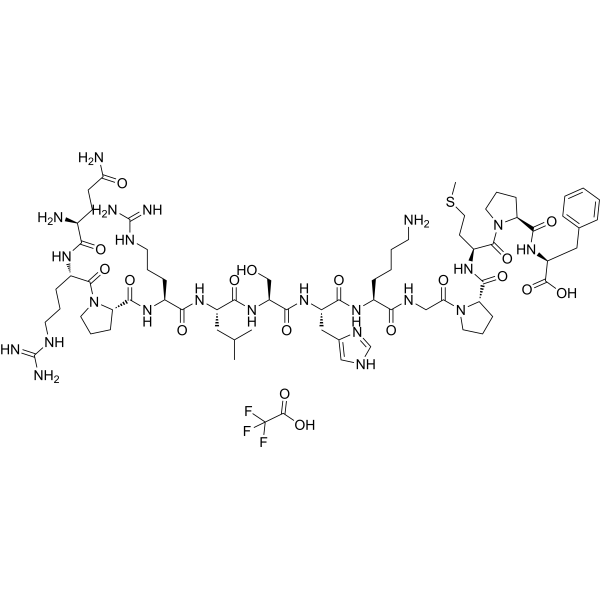
Apelin-13 TFA is an endogenous ligand for the G-protein coupled receptor angiotensin II protein J (APJ), activating this G protein-coupled receptor with an EC 50 value of 0.37 nM. Apelin-13 TFA has vasodilatory and antihypertensive effects. Apelin-13 TFA also can be used for researching type 2 diabetes and metabolic syndrome .
|
-
- HY-B0424R
-
|
BAY-E-5009 (Standard)
|
Reference Standards
Calcium Channel
Apoptosis
|
Cardiovascular Disease
Neurological Disease
Cancer
|
|
Nitrendipine (Standard) is the analytical standard of Nitrendipine (HY-B0424). This product is intended for research and analytical applications. Nitrendipine (BAY-E-5009) is an orally active analog of Nifedipine (HY-B0284) and dihydropyridine calcium channel blocker. Nitrendipine induces Apoptosis. Nitrendipine has antihypertensive effects. Nitrendipine blocks alcohol and Morphine withdrawal symptoms. Nitrendipine reduces right ventricular hypertrophy and pulmonary vascular changes induced by intermittent hypoxia. Nitrendipine has anticancer effects on neuroblastoma .
|
-
- HY-B0424S
-
|
AY-E-5009-d5
|
Isotope-Labeled Compounds
Calcium Channel
Apoptosis
|
Cardiovascular Disease
Neurological Disease
Cancer
|
|
Nitrendipine-d5 is the deuterium labeled Nitrendipine (HY-B0424). Nitrendipine (BAY-E-5009) is an orally active analog of Nifedipine (HY-B0284) and dihydropyridine calcium channel blocker. Nitrendipine induces Apoptosis. Nitrendipine has antihypertensive effects. Nitrendipine blocks alcohol and Morphine withdrawal symptoms. Nitrendipine reduces right ventricular hypertrophy and pulmonary vascular changes induced by intermittent hypoxia. Nitrendipine has anticancer effects on neuroblastoma .
|
-
- HY-B1746R
-
|
|
Reference Standards
Endogenous Metabolite
|
Neurological Disease
|
|
Sacubitril (sodium) (Standard) is the analytical standard of Sacubitril (sodium). This product is intended for research and analytical applications. Sacubitril sodium is a potent and orally active NEP (neprilysin) inhibitor, with an IC50 of 5 nM. Sacubitril sodium enhances the tone of the natriuretic peptide (NP) system and exerts significant antihypertensive effects. Sacubitril sodium is a component of the heart failure medicine LCZ696. Sacubitril sodium can be used for the research of heart failure, hypertension and COVID-19 .
|
-
- HY-15407BR
-
|
AHU-377 sodium (Standard)
|
Reference Standards
Neprilysin
|
Infection
Cardiovascular Disease
|
|
Sacubitril (sodium) (Standard) is the analytical standard of Sacubitril (sodium). This product is intended for research and analytical applications. Sacubitril sodium is a potent and orally active NEP (neprilysin) inhibitor, with an IC50 of 5 nM. Sacubitril sodium enhances the tone of the natriuretic peptide (NP) system and exerts significant antihypertensive effects. Sacubitril sodium is a component of the heart failure medicine LCZ696. Sacubitril sodium can be used for the research of heart failure, hypertension and COVID-19 .
|
-
- HY-W018197R
-
-
- HY-B0935R
-
-
- HY-B0780
-
-
- HY-B0252S1
-
|
HCTZ-13C,d2
|
Isotope-Labeled Compounds
TGF-beta/Smad
Potassium Channel
|
Cardiovascular Disease
Metabolic Disease
|
|
Hydrochlorothiazid- 13C,d2 is the 13C- and deuterium labeled Hydrochlorothiazide. Hydrochlorothiazide (HCTZ), an orally active diuretic agent of the thiazide class, inhibits transforming TGF-β/Smad signaling pathway. Hydrochlorothiazide has direct vascular relaxant effects via opening of the calcium-activated potassium (KCA) channel. Hydrochlorothiazide improves cardiac function, reduces fibrosis and has antihypertensive effect .
|
-
- HY-Y0293R
-
|
L-(+)-Tartaric acid (Standard)
|
Reference Standards
Endogenous Metabolite
|
Cardiovascular Disease
|
|
L-Tartaric acid (Standard) is the analytical standard of L-Tartaric acid. This product is intended for research and analytical applications. L-tartaric acid (L-(+) -tartaric acid) is an orally active weak organic acid that can be isolated from grapes. L-Tartaric acid has vasodilatory and antihypertensive effects. L-Tartaric acid can be used as flavorings and antioxidants in a range of foods and beverages. L-Tartaric acid can be used in laser frequency doubling and optical limiting applications .
|
-
- HY-P1944
-
|
|
Apelin Receptor (APJ)
|
Cardiovascular Disease
Metabolic Disease
|
|
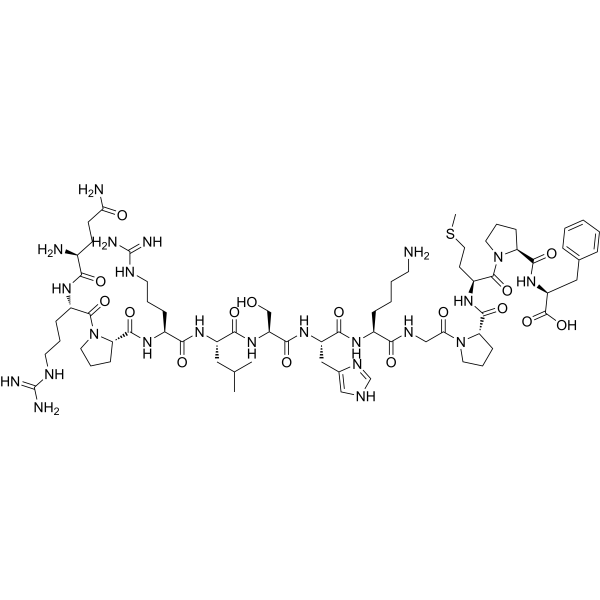
Apelin-13 is an endogenous ligand for the G-protein coupled receptor angiotensin II protein J (APJ), activating this G protein-coupled receptor with an EC 50 value of 0.37 nM. Apelin-13 is widely distributed in the central and peripheral nervous systems. Apelin-13 has vasodilatory and antihypertensive effects. Apelin-13 also can be used for researching type 2 diabetes and metabolic syndrome .
|
-
- HY-B0205S
-
|
CV-11974-d4
|
Angiotensin Receptor
|
Others
|
|
Candesartan-d4 (CV-11974-d4) is the deuterium labeled Candesartan (HY-B0205). Candesartan (CV 11974) is an orally active angiotensin II AT1-Receptor blocker and PPAR-γ agonist. Candesartan has potent and long-lasting antihypertensive effects. Candesartan can be used for the research of hypertension, chronic heart failure (CHF) and Traumatic brain injury (TBI).
|
-
- HY-111259
-
|
|
Endogenous Metabolite
|
Cardiovascular Disease
|
|
Ro 31-1118 Free base is a compound exhibiting weak antihypertensive activity in patients with mild hypertension. Ro 31-1118 Free base demonstrated a reduction in heart rates and blood pressure post-exercise at varying doses. Ro 31-1118 Free base exhibited linear pharmacokinetics within the 10-80 mg dose range. Ro 31-1118 Free base showed no significant impact on diastolic blood pressure or adverse effects during the study.
|
-
- HY-134013
-
|
|
DNA/RNA Synthesis
Endothelin Receptor
|
Cardiovascular Disease
Cancer
|
|
Piperitenone oxide is an orally active monoterpene ketone. Piperitenone oxide can be isolated from the essential oils of plants belonging to Mentha x villosa and Ziziphora clinopodioides. Piperitenone oxide induces differentiation. Piperitenone oxide induces chromosome breakage damage, aneuploidy damage and DNA single-strand breaks. Piperitenone oxide reduces ET-1 levels. Piperitenone oxide exerts antihypertensive effects. Piperitenone oxide can be used in studies related to colon cancer .
|
-
- HY-119379
-
|
HOE-720 free acid
|
Angiotensin Receptor
|
Cardiovascular Disease
|
|
Fonsartan (HOE-720) free acid is an orally active angiotensin II receptor (AT1R) antagonist with an IC50 value of 0.48 nM, exhibiting potent antihypertensive activity. Fonsartan free acid dose-dependently inhibits angiotensin II-induced pressor response in rats (ID50 = 0.11 mg/kg) and shows significant long-lasting blood pressure-lowering effects in high-renin animal models. Fonsartan free acid is primarily used in research on hypertension and cardiovascular diseases .
|
-
- HY-N1377
-
-
- HY-154736
-
|
|
Nucleoside Antimetabolite/Analog
|
Cancer
|
|
N3-(Butyn-3-yl)uridine is a uridine analog. Uridine has potential antiepileptic effects, and its analogs can be used to study anticonvulsant and anxiolytic activities, as well as to develop new antihypertensive agents . N3-(Butyn-3-yl)uridine is a click chemistry reagent, it contains an Alkyne group and can undergo copper-catalyzed azide-alkyne cycloaddition (CuAAc) with molecules containing Azide groups.
|
-
- HY-B0252S3
-
|
HCTZ-15N2,13C,d2
|
Potassium Channel
TGF-beta/Smad
Isotope-Labeled Compounds
|
Cardiovascular Disease
Metabolic Disease
Cancer
|
|
Hydrochlorothiazide- 15N2, 13C,d2 is 15N and deuterated labeled Hydrochlorothiazide (HY-B0252). Hydrochlorothiazide (HCTZ), an orally active diuretic agent of the thiazide class, inhibits transforming TGF-β/Smad signaling pathway. Hydrochlorothiazide has direct vascular relaxant effects via opening of the calcium-activated potassium (KCA) channel. Hydrochlorothiazide improves cardiac function, reduces fibrosis and has antihypertensive effect .
|
-
- HY-D0850R
-
|
Sodium tartrate dibasic dihydrate (Standard); Sodium tartrate dihydrate (Standard)
|
Reference Standards
Phosphatase
Endogenous Metabolite
|
Cardiovascular Disease
|
|
Tartaric acid (disodium dihydrate) (Standard) is the analytical standard of Tartaric acid (disodium dihydrate). This product is intended for research and analytical applications. Tartaric acid disodium dehydrate (L-(+) -tartaric acid) is an orally active weak organic acid that can be isolated from grapes. Tartaric acid disodium dehydrate has vasodilatory and antihypertensive effects. Tartaric acid disodium dehydrate can be used as flavorings and antioxidants in a range of foods and beverages. Tartaric acid disodium dehydrate can be used in laser frequency doubling and optical limiting applications [4].
|
-
- HY-160187
-
|
|
Orphan GPCR
Angiotensin Receptor
|
Cardiovascular Disease
|
|
AAA is an orally active 20-HETE receptor antagonist. AAA exerts antihypertensive and organoprotective effects. AAA blocks 20-HETE prohypertensive actions, suppresses intrarenal and circulating angiotensin II levels, and interferes with renin-angiotensin system interactions. AAA attenuates development of, and reverses established, ANG II (HY-13948)-dependent malignant hypertension. AAA reduces albuminuria, glomerulosclerosis, and cardiac hypertrophy linked to malignant hypertension. AAA can be used for the research of malignant hypertension .
|
-
- HY-16183A
-
|
Echothiophate chloride
|
Cholinesterase (ChE)
|
Cardiovascular Disease
|
|
Echothiophate (Echothiophate) chloride is a highly effective, long-lasting cholinesterase inhibitor employed as a miotic for managing glaucoma. Echothiopate chloride forms a covalent bond with the serine residue at the active site of cholinesterase through its phosphate group, rendering the enzyme permanently inactive and necessitating the synthesis of new enzymes by the cell. Given its irreversible binding to cholinesterase and the extremely slow rate of hydrolysis, the effects of echothiophate can persist for a week or longer. Echothiopate chloride is utilized as an ocular antihypertensive agent in the treatment of chronic glaucoma and, in certain cases, accommodative esotropia.
|
-
- HY-134043
-
|
Chlorthalidone EP Impurity G
|
Carbonic Anhydrase
|
Cardiovascular Disease
|
|
Chlorthalidone Impurity G (Chlorthalidone EP Impurity G) is a potential impurity found in commercial preparations of chlorthalidone with moderate antihypertensive effects. Chlorthalidone is a thiazide diuretic that inhibits the Na+/Cl- cotransporter in the distal tubule of the kidney, thereby preventing sodium and chloride reabsorption, resulting in decreased plasma volume and cardiac output. It also inhibits carbonic anhydrase (CA), including isoenzymes CAVB, VII, IX, XII, and XIII (Kis=2.8-23 nM) and to a lesser extent CAI, CAII, IV, VA, and VI (Ki=138-1,347 nM), mediating vasodilatory activity.
|
-
- HY-N7676
-
Marein
3 Publications Verification
|
AMPK
HDAC
|
Cardiovascular Disease
Neurological Disease
Metabolic Disease
|
|
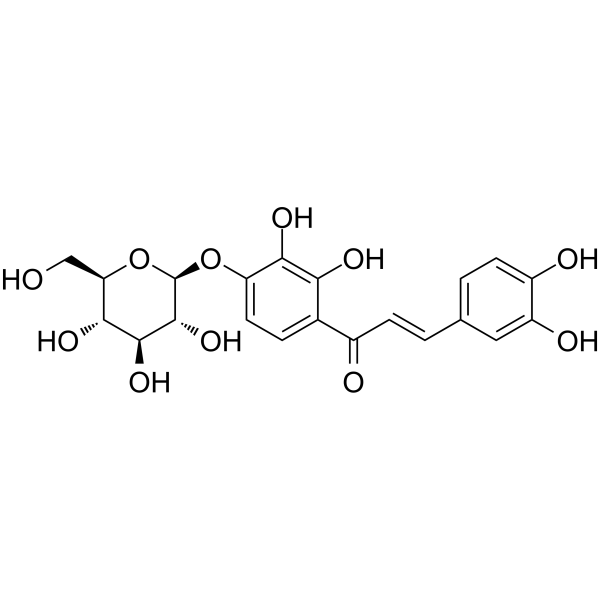
Marein has the neuroprotective effect due to a reduction of damage to mitochondria function and activation of the AMPK signal pathway. Marein improves insulin resistance induced by high glucose in HepG2 cells through CaMKK/AMPK/GLUT1 to promote glucose uptake, through IRS/Akt/GSK-3β to increase glycogen synthesis, and through Akt/FoxO1 to decrease gluconeogenesis. Marein is a HDAC inhibitor with an IC50 of 100 μM. Marein has beneficial antioxidative, antihypertensive, antihyperlipidemic and antidiabetic effects .
|
-
- HY-77650
-
|
4'-Azidouridine
|
Nucleoside Antimetabolite/Analog
|
Others
|
|
4'-C-azidouridine (4'-Azidouridine) is a uridine analogue. Uridine has potential antiepileptic effects, and its analogs can be used to study anticonvulsant and anxiolytic activities, as well as to develop new antihypertensive agents . 4'-C-Azidouridine is a click chemistry reagent, it contains an Azide group and can undergo copper-catalyzed azide-alkyne cycloaddition reaction (CuAAc) with molecules containing Alkyne groups. It can also undergo strain-promoted alkyne-azide cycloaddition (SPAAC) reactions with molecules containing DBCO or BCN groups.
|
-
- HY-N1377R
-
|
Lysionotin (Standard)
|
Carboxylesterase (CES)
Reference Standards
DNA/RNA Synthesis
Apoptosis
Bacterial
|
Infection
Metabolic Disease
Inflammation/Immunology
Endocrinology
Cancer
|
|
Nevadensin (Standard) (Lysionotin (Standard)) is the analytical standard of Nevadensin (HY-N1377). This product is intended for research and analytical applications. Nevadensin, a natural flavonoid, is a selective human carboxylesterase 1 (hCE1) inhibitor with an IC50 of 2.64 μM. Nevadensin is more selective for hCE1 than hCE2 (IC50 of 132.8 μM). Nevadensin can induce apoptosis and DNA damage in cancer cells. Nevadensin has a variety of pharmacological effects such as anti-inflammatory, anti-tumour, anti-hypertensive, anti-tubercular, antitussive, antioxidant and anti-microbial activities.
|
-
- HY-N18750
-
|
|
Bacterial
|
Cardiovascular Disease
Infection
Inflammation/Immunology
|
|
Celery Extract, derived from celery seeds (Apium graveolens), is a natural extract rich in bioactive compounds such as flavonoids, phenolic acids, and volatile oils. It is known for its antihypertensive, anti-inflammatory, antimicrobial, and antioxidant properties. This extract has been used in traditional medicine to manage hypertension and inflammation, and modern research supports its potential health benefits. In addition to its medicinal uses, Celery Extract is also utilized in the food industry for flavor enhancement and in cosmetics for its skin-protecting and soothing effects. While generally safe, a patch test is recommended to avoid potential allergic reactions.
|
-
- HY-19200
-
|
|
Neprilysin
Angiotensin-converting Enzyme (ACE)
|
Cardiovascular Disease
|
|
RB-105 is an inhibitor of angiotensin-converting enzyme (ACE) (Ki = 4.2 nM) and neutral endopeptidase (NEP) (Ki = 1.7 nM). RB-105 after inhibiting ACE reduces the production of Ang II and increase the level of bradykinin. RB-105 after inhibiting NEP increases the level of natriuretic peptide and further increases the level of bradykinin, thereby generating a powerful synergistic effect. RB-105 has significant antihypertensive and natriuretic effects in both spontaneously hypertensive rats and normal blood pressure rats. RB-105 can be used for research on hypertension .
|
-
- HY-W414915
-
|
CGP 48933 methyl ester
|
Drug Derivative
Angiotensin Receptor
|
Cardiovascular Disease
Cancer
|
|
Valsartan (CGP 48933) methyl ester is the methyl ester derivative of Valsartan (HY-18204). Valsartan is a selective and orally active angiotensin II type 1 (AT1) receptor blocker (ARB) with potent antihypertensive and cardioprotective effects. Valsartan competitively binds to AT1 receptors, inhibiting the binding of angiotensin II to AT1 receptors, thereby blocking angiotensin II-mediated vasoconstriction, sodium retention, and myocardial hypertrophy signaling pathways. Valsartan reduces systolic blood pressure in L-NAME-induced hypertensive rats. Valsartan can be used for the study and treatment of arterial hypertension, hypertensive heart disease, and heart failure .
|
-
- HY-152985
-
|
|
Nucleoside Antimetabolite/Analog
|
Others
|
|
6-Chloro-N1-(trimethylsilylethoxymethyl)pseudouridine is a uridine analog. Uridine has potential antiepileptic effects, and its analogs can be used to study anticonvulsant and anxiolytic activities, as well as to develop new antihypertensive agents . 3’-Azido-3’-deoxy-4-deoxyuridine is a click chemistry reagent, it contains an Azide group and can undergo copper-catalyzed azide-alkyne cycloaddition reaction (CuAAc) with molecules containing Alkyne groups. It can also undergo strain-promoted alkyne-azide cycloaddition (SPAAC) reactions with molecules containing DBCO or BCN groups.
|
-
- HY-154590
-
|
|
Nucleoside Antimetabolite/Analog
|
Cancer
|
|
2’,3’-Di-O-isopropylidene-4’-alpha-C-azidouridine is a uridine analog. Uridine has potential antiepileptic effects, and its analogs can be used to study anticonvulsant and anxiolytic activities, as well as to develop new antihypertensive agents . 2’,3’-Di-O-isopropylidene-4’-alpha-C-azidouridine is a click chemistry reagent, it contains an Azide group and can undergo copper-catalyzed azide-alkyne cycloaddition reaction (CuAAc) with molecules containing Alkyne groups. It can also undergo strain-promoted alkyne-azide cycloaddition (SPAAC) reactions with molecules containing DBCO or BCN groups.
|
-
- HY-152782
-
|
|
Nucleoside Antimetabolite/Analog
|
Others
|
|
4’-Azido-2’-deoxy-2’-fluoro-beta-D-arabinouridine is a uridine analogue. Uridine has potential antiepileptic effects, and its analogs can be used to study anticonvulsant and anxiolytic activities, as well as to develop new antihypertensive agents . 4’-Azido-2’-deoxy-2’-fluoro-beta-D-arabinouridine is a click chemistry reagent, it contains an Azide group and can undergo copper-catalyzed azide-alkyne cycloaddition reaction (CuAAc) with molecules containing Alkyne groups. It can also undergo strain-promoted alkyne-azide cycloaddition (SPAAC) reactions with molecules containing DBCO or BCN groups.
|
-
- HY-154357
-
|
|
Nucleoside Antimetabolite/Analog
|
Cancer
|
|
4’-alpha-C-Azido-2’,3’-bis(O-t-butyldimethylsilyl)uridine is a uridine analog. Uridine has potential antiepileptic effects, and its analogs can be used to study anticonvulsant and anxiolytic activities, as well as to develop new antihypertensive agents . 4’-alpha-C-Azido-2’,3’-bis(O-t-butyldimethylsilyl)uridine is a click chemistry reagent, it contains an Azide group and can undergo copper-catalyzed azide-alkyne cycloaddition reaction (CuAAc) with molecules containing Alkyne groups. It can also undergo strain-promoted alkyne-azide cycloaddition (SPAAC) reactions with molecules containing DBCO or BCN groups.
|
-
- HY-W005255
-
|
|
Endogenous Metabolite
|
Cardiovascular Disease
|
|
3-(3-Hydroxyphenyl)propionic acid (3HPPA) is an endothelium-dependent nitric oxide (NO) release promoter and endothelial nitric oxide synthase (eNOS) activator. 3-(3-Hydroxyphenyl)propionic acid activates eNOS to mediate vascular smooth muscle relaxation and enhances endothelial cell NO synthesis, inducing vasodilation and reducing peripheral vascular resistance. 3-(3-Hydroxyphenyl)propionic acid can dose-dependently reduce systolic and diastolic blood pressure in spontaneously hypertensive rats (SHR) without affecting cardiac contractility or heart rate. 3-(3-Hydroxyphenyl)propionic acid has antihypertensive and vascular protective effects and can be used in the prevention and treatment of cardiovascular diseases .
|
-
- HY-W377455
-
|
|
Nucleoside Antimetabolite/Analog
|
Others
|
|
5-Fluoro-1-((2R,3S,4R,5R)-3-fluoro-4-hydroxy-5-(hydroxymethyl)tetrahydrofuran-2-yl)pyrimidine-2,4(1H,3H)-dione (2',5-difluoro-2'-deoxy-1-arabinosyluracil) is a uridine analogue. Uridine has potential antiepileptic effects, and its analogs can be used to study anticonvulsant and anxiolytic activities, as well as to develop new antihypertensive agents .
|
-
- HY-119854
-
|
AY-28228
|
Adrenergic Receptor
5-HT Receptor
Histamine Receptor
|
Cardiovascular Disease
Neurological Disease
|
|
Atiprosine (AY-28228) is an orally effective selective α1-adrenergic receptor antagonist with a pA2 value of 8.11. Atiprosine exhibits antagonistic activity against α2-adrenergic receptors (α1-adrenergic receptor), 5-HT₂ receptors (5-HT₂ receptor), and H₁ receptors (H₁ receptor). The pA2 values for these receptors are 6.04, 6.87, and 7.32 respectively. Atiprosine has antihypertensive and hypotensive effects in rats, dogs, and monkeys. It can be used for research on cardiovascular and mental disorders.
|
-
- HY-W042301
-
|
|
Anion Exchangers
Carbonic Anhydrase
Endothelin Receptor
|
Cardiovascular Disease
|
|
Xipamide is an orally active carbonic anhydrase (CA) inhibitor and Na +/Cl --potassium transporter inhibitor with diuretic and antihypertensive effects. Xipamide reduces NaCl reabsorption by inhibiting the Cl -/NaCO3 - anion exchanger, and increases calcium reabsorption while promoting potassium and magnesium excretion. Xipamide is mainly cleared via the renal pathway and causes a temporary decrease in glomerular filtration rate under specific conditions. Xipamide does not affect Ca 2+ signaling induced by endothelin-1 and other factors, nor does it inhibit various ion cotransport or pump activities in red blood cells. Xipamide can be used in researches related to cardiovascular diseases, hypertension (especially with left ventricular hypertrophy), advanced renal failure, and liver cirrhosis with ascites .
|
-
- HY-W414915R
-
|
CGP 48933 methyl ester (Standard)
|
Reference Standards
Drug Derivative
Angiotensin Receptor
|
Cardiovascular Disease
|
|
Valsartan (CGP 48933) methyl ester (Standard) is the analytical standard of Valsartan methyl ester (HY-W414915). This product is intended for research and analytical applications. Valsartan methyl ester is the methyl ester derivative of Valsartan (HY-18204). Valsartan is a selective angiotensin II type 1 (AT1) receptor blocker (ARB) with potent antihypertensive and cardioprotective effects. Valsartan competitively binds to AT1 receptors, inhibiting the binding of angiotensin II to AT1 receptors, thereby blocking angiotensin II-mediated vasoconstriction, sodium retention, and myocardial hypertrophy signaling pathways. Valsartan reduces systolic blood pressure in L-NAME-induced hypertensive rats. Valsartan can be used for the study and treatment of arterial hypertension, hypertensive heart disease, and heart failure .
|
-
- HY-B0612B
-
|
|
Calcium Channel
Sodium Channel
|
Neurological Disease
|
|
(S)-Lercanidipine is a calcium channel blocker with antihypertensive and neuroprotective activities. (S)-Lercanidipine reduces oxidative stress and protects auditory sensory hair cells from noise-induced damage. (S)-Lercanidipine showed significant protective effects on cell viability in in vitro experiments, especially at low concentrations. (S)-Lercanidipine has been found to effectively reduce the hearing threshold of mice after noise stimulation and protect the survival of outer hair cells. The antioxidant properties of (S)-Lercanidipine are reflected in its increased expression of antioxidant enzyme genes and decreased expression of oxidative enzyme genes. (S)-Lercanidipine administration is effective in reducing noise-induced hearing loss both before and after noise exposure. (S)-Lercanidipine may alleviate noise-induced hearing loss and protect the survival of outer hair cells through its antioxidant mechanism .
|
-
- HY-B0561S4
-
|
|
Isotope-Labeled Compounds
Mineralocorticoid Receptor
Androgen Receptor
Autophagy
Calcium Channel
|
Cardiovascular Disease
Metabolic Disease
Cancer
|
|
Spironolactone-d6-1 is the deuterium labeled Spironolactone (HY-B0561). Spironolactone is an aldosterone antagonist that acts on the aldosterone mineralocorticoid receptor (IC50=24 nM) and androgen receptor (IC50=77 nM), promotes podocyte autophagy and regulates pain. Spironolactone improves hypertension-related vascular hypertrophy and remodeling by reducing angiotensin II (Ang II)-induced inflammation, reduces aldosterone-induced vascular and soft tissue calcification through PIT1-dependent signaling, and alleviates vascular dysfunction in type II diabetic mice by reducing oxidative stress and restoring NO/GC signaling; at low concentrations, it and its metabolites can interfere with aldosterone biosynthesis in the adrenal cortex and inhibit voltage-dependent Ca 2+ channels to exert antihypertensive effects .
|
-
| Cat. No. |
Product Name |
Type |
-
- HY-D0850
-
|
Sodium tartrate dibasic dihydrate; Sodium tartrate dihydrate
|
Biochemical Assay Reagents
|
|
Tartaric acid disodium dehydrate (L-(+) -tartaric acid) is an orally active weak organic acid that can be isolated from grapes. Tartaric acid disodium dehydrate has vasodilatory and antihypertensive effects. Tartaric acid disodium dehydrate can be used as flavorings and antioxidants in a range of foods and beverages. Tartaric acid disodium dehydrate can be used in laser frequency doubling and optical limiting applications .
|
-
- HY-W109973
-
|
L-(+)-Tartaric acid diammonium
|
Biochemical Assay Reagents
|
|
L-Tartaric acid diammonium (L-(+) -tartaric acid) is an orally active weak organic acid that can be isolated from grapes. L-Tartaric acid diammonium has vasodilatory and antihypertensive effects. L-Tartaric acid diammonium can be used as flavorings and antioxidants in a range of foods and beverages. L-Tartaric acid diammonium can be used in laser frequency doubling and optical limiting applications .
|
-
- HY-D0850R
-
|
Sodium tartrate dibasic dihydrate (Standard); Sodium tartrate dihydrate (Standard)
|
Biochemical Assay Reagents
|
|
Tartaric acid (disodium dihydrate) (Standard) is the analytical standard of Tartaric acid (disodium dihydrate). This product is intended for research and analytical applications. Tartaric acid disodium dehydrate (L-(+) -tartaric acid) is an orally active weak organic acid that can be isolated from grapes. Tartaric acid disodium dehydrate has vasodilatory and antihypertensive effects. Tartaric acid disodium dehydrate can be used as flavorings and antioxidants in a range of foods and beverages. Tartaric acid disodium dehydrate can be used in laser frequency doubling and optical limiting applications [4].
|
| Cat. No. |
Product Name |
Target |
Research Area |
-
- HY-P1944
-
|
|
Apelin Receptor (APJ)
|
Cardiovascular Disease
Metabolic Disease
|
|
Apelin-13 is an endogenous ligand for the G-protein coupled receptor angiotensin II protein J (APJ), activating this G protein-coupled receptor with an EC 50 value of 0.37 nM. Apelin-13 is widely distributed in the central and peripheral nervous systems. Apelin-13 has vasodilatory and antihypertensive effects. Apelin-13 also can be used for researching type 2 diabetes and metabolic syndrome .
|
-
- HY-P1944A
-
|
|
Apelin Receptor (APJ)
|
Cardiovascular Disease
Metabolic Disease
|
|
Apelin-13 TFA is an endogenous ligand for the G-protein coupled receptor angiotensin II protein J (APJ), activating this G protein-coupled receptor with an EC 50 value of 0.37 nM. Apelin-13 TFA has vasodilatory and antihypertensive effects. Apelin-13 TFA also can be used for researching type 2 diabetes and metabolic syndrome .
|
-
- HY-106103
-
-
- HY-P3395
-
|
Human chromogranin A 352–372
|
nAChR
|
Cardiovascular Disease
Inflammation/Immunology
|
|
Catestatin human, a catecholamine release-inhibitory peptide, is a pleiotropic peptide involved in cardiovascular protection with its antihypertensive and angiogenic effects. Catestatin human can be used in the study of inflammatory diseases .
|
-
- HY-106103A
-
|
MK 678 acetate; L 36358 acetate
|
Somatostatin Receptor
|
Cardiovascular Disease
Neurological Disease
Metabolic Disease
|
|
Seglitide acetate (MK 678; L 36358 acetate) is a potent, orally active somatostatin receptor 2 (SSTR2) agonist, and also a competitive antagonist of SSTR14, SSTR25, and SSTR28. Seglitide acetate has antihypertensive effects and can inhibit plasma glucagon and growth hormone. Seglitide acetate can be used for research on diabetes .
|
-
- HY-P2072
-
-
- HY-P3872
-
|
|
Peptides
|
Inflammation/Immunology
|
|
Peptide B, bovine is an immunoregulatory peptide in bovine milk. Peptide B, bovine comes from αs1-casein B-8P (f1-13), is the major peptide produced during the ripening process with antihypertensive effects .
|
-
- HY-P11411
-
|
|
Neuropeptide Y Receptor
Histamine Receptor
|
Cardiovascular Disease
|
|
[D-Tyr27,36, D-Thr32]-Neuropeptide Y (27-36), rat is a fragment analogue of a neuropeptide Y (NPY) with cardiovascular activity. [D-Tyr27,36, D-Thr32]-Neuropeptide Y (27-36), rat can induce profound and sustained hypotension in both hypertensive and normotensive rats and its antihypertensive effect is partly attributed to its activity on histamine receptor. [D-Tyr27,36, D-Thr32]-Neuropeptide Y (27-36), rat can be used for studying antihypertensive effects .
|
| Cat. No. |
Product Name |
Category |
Target |
Chemical Structure |
-
- HY-N0217
-
-
-
- HY-N0719
-
-
-
- HY-N2488
-
-
-
- HY-N2555
-
-
-
- HY-W005255
-
-
-
- HY-B0935
-
-
-
- HY-N1377
-
-
-
- HY-N0081
-
-
-
- HY-W018197
-
-
-
- HY-N7676
-
-
-
- HY-N9351
-
-
-
- HY-N9347
-
-
-
- HY-N3931
-
|
|
Alkaloids
Nepenthes mirabilis (Lour.) Druce
Plants
Nepenthaceae
Source Classification
|
Others
|
|
Gardneramine is an orally active alkaloid that acts like papaverine. Gardneramine has peripheral vascular diastolic effect, direct inhibition on myocardium and central inhibition. Gardneramine showed antihypertensive, vasodilatation and atrial inhibition effects in rabbit, dog and guinea pig models, respectively. Gardneramine also inhibits the movement of smooth muscle organs such as the stomach and intestines .
|
-
-
- HY-B0935R
-
-
-
- HY-N0719R
-
-
-
- HY-N7675A
-
-
-
- HY-N4209
-
-
-
- HY-N2555R
-
-
-
- HY-N0081R
-
-
-
- HY-B1746R
-
-
-
- HY-W018197R
-
-
-
- HY-Y0293R
-
-
-
- HY-N1377R
-
-
-
- HY-N18750
-
|
|
Structural Classification
Extract
|
Bacterial
|
|
Celery Extract, derived from celery seeds (Apium graveolens), is a natural extract rich in bioactive compounds such as flavonoids, phenolic acids, and volatile oils. It is known for its antihypertensive, anti-inflammatory, antimicrobial, and antioxidant properties. This extract has been used in traditional medicine to manage hypertension and inflammation, and modern research supports its potential health benefits. In addition to its medicinal uses, Celery Extract is also utilized in the food industry for flavor enhancement and in cosmetics for its skin-protecting and soothing effects. While generally safe, a patch test is recommended to avoid potential allergic reactions.
|
-
| Cat. No. |
Product Name |
Chemical Structure |
-
- HY-B0252S1
-
|
|
|
Hydrochlorothiazid- 13C,d2 is the 13C- and deuterium labeled Hydrochlorothiazide. Hydrochlorothiazide (HCTZ), an orally active diuretic agent of the thiazide class, inhibits transforming TGF-β/Smad signaling pathway. Hydrochlorothiazide has direct vascular relaxant effects via opening of the calcium-activated potassium (KCA) channel. Hydrochlorothiazide improves cardiac function, reduces fibrosis and has antihypertensive effect .
|
-
-
- HY-B0252S
-
|
|
|
Hydrochlorothiazid-d2 is the deuterium labeled Hydrochlorothiazide. Hydrochlorothiazide (HCTZ), an orally active diuretic agent of the thiazide class, inhibits transforming TGF-β/Smad signaling pathway. Hydrochlorothiazide has direct vascular relaxant effects via opening of the calcium-activated potassium (KCA) channel. Hydrochlorothiazide improves cardiac function, reduces fibrosis and has antihypertensive effect .
|
-
-
- HY-B0424S
-
|
|
|
Nitrendipine-d5 is the deuterium labeled Nitrendipine (HY-B0424). Nitrendipine (BAY-E-5009) is an orally active analog of Nifedipine (HY-B0284) and dihydropyridine calcium channel blocker. Nitrendipine induces Apoptosis. Nitrendipine has antihypertensive effects. Nitrendipine blocks alcohol and Morphine withdrawal symptoms. Nitrendipine reduces right ventricular hypertrophy and pulmonary vascular changes induced by intermittent hypoxia. Nitrendipine has anticancer effects on neuroblastoma .
|
-
-
- HY-B0252S3
-
|
|
|
Hydrochlorothiazide- 15N2, 13C,d2 is 15N and deuterated labeled Hydrochlorothiazide (HY-B0252). Hydrochlorothiazide (HCTZ), an orally active diuretic agent of the thiazide class, inhibits transforming TGF-β/Smad signaling pathway. Hydrochlorothiazide has direct vascular relaxant effects via opening of the calcium-activated potassium (KCA) channel. Hydrochlorothiazide improves cardiac function, reduces fibrosis and has antihypertensive effect .
|
-
-
- HY-B0632S
-
|
|
|
Diltiazem-d6 is the deuterium labeled Diltiazem. Diltiazem is an orally active L-type Ca2+ channel blocker, with antihypertensive and antiarrhythmic effects. Diltiazem can be used for the research of cardiac arrhythmia, hypertension, and angina pectoris .
|
-
-
- HY-17404S
-
|
|
|
Cilnidipine-d7 is deuterium labeled Cilnidipine. Cilnidipine is a long-acting, second-generation dihydropyridine Ca2+-channel blocker on L and N-type Ca2+ channel . Antihypertensive effects .
|
-
-
- HY-B0205S
-
|
|
|
Candesartan-d4 (CV-11974-d4) is the deuterium labeled Candesartan (HY-B0205). Candesartan (CV 11974) is an orally active angiotensin II AT1-Receptor blocker and PPAR-γ agonist. Candesartan has potent and long-lasting antihypertensive effects. Candesartan can be used for the research of hypertension, chronic heart failure (CHF) and Traumatic brain injury (TBI).
|
-
-
- HY-B0561S4
-
|
|
|
Spironolactone-d6-1 is the deuterium labeled Spironolactone (HY-B0561). Spironolactone is an aldosterone antagonist that acts on the aldosterone mineralocorticoid receptor (IC50=24 nM) and androgen receptor (IC50=77 nM), promotes podocyte autophagy and regulates pain. Spironolactone improves hypertension-related vascular hypertrophy and remodeling by reducing angiotensin II (Ang II)-induced inflammation, reduces aldosterone-induced vascular and soft tissue calcification through PIT1-dependent signaling, and alleviates vascular dysfunction in type II diabetic mice by reducing oxidative stress and restoring NO/GC signaling; at low concentrations, it and its metabolites can interfere with aldosterone biosynthesis in the adrenal cortex and inhibit voltage-dependent Ca 2+ channels to exert antihypertensive effects .
|
-
-
- HY-117281S1
-
|
|
|
Moexipril-d3 is deuterated labeled Moexipril (HY-117281). Moexipril is an orally active inhibitor of angiotensin-converting enzyme (ACE), and becomes effective by being hydrolyzed to moexiprila hydrochloride. Moexipril exhibits antihypertensive and neuroprotective effects - .
|
-
-
- HY-B0632S2
-
|
|
|
Diltiazem-d4 is deuterium labeled Diltiazem. Diltiazem is an orally active L-type Ca 2+ channel blocker. Diltiazem shows antihypertensive and antiarrhythmic effects. Diltiazem can be used for the research of cardiac arrhythmia, hypertension, and angina pectoris .
|
-
-
- HY-B1191S
-
|
|
|
Nanofin-d2 (2,6-Lupetidine-d2) is the deuterium labeled Nanofin (HY-B1191). Nanofin (2,6-Lupetidine) is a neuro-blocking agent with antihypertensive effects, which can be used for the study of mild to moderate hypertension.
|
-
-
- HY-17404S1
-
|
|
|
Cilnidipine-d4 (FRC-8653-d4) is deuterium labeled Cilnidipine. Cilnidipine is a long-acting, second-generation dihydropyridine Ca 2+-channel blocker on L and N-type Ca 2+ channel . Antihypertensive effects .
|
-
-
- HY-B0252S2
-
|
|
|
Hydrochlorothiazide- 13C6 is the 13C labeled Hydrochlorothiazide . Hydrochlorothiazide (HCTZ), an orally active diuretic agent of the thiazide class, inhibits transforming TGF-β/Smad signaling pathway. Hydrochlorothiazide has direct vascular relaxant effects via opening of the calcium-activated potassium (KCA) channel. Hydrochlorothiazide improves cardiac function, reduces fibrosis and has antihypertensive effect .
|
-
-
- HY-B1191S1
-
|
|
|
Nanofin-d5 (2,6-Lupetidine-d5) is the deuterium labeled Nanofin (HY-B1191). Nanofin (2,6-Lupetidine) is a neuro-blocking agent with antihypertensive effects, which can be used for the study of mild to moderate hypertension.
|
-
-
- HY-B1191SA
-
|
|
|
Nanofin-d2 (2,6-Lupetidine-d2) hydrochloride is the deuterium labeled Nanofin (HY-B1191). Nanofin (2,6-Lupetidine) is a neuro-blocking agent with antihypertensive effects, which can be used for the study of mild to moderate hypertension.
|
-
| Cat. No. |
Product Name |
|
Classification |
-
- HY-152782
-
|
|
|
Azide
|
|
4’-Azido-2’-deoxy-2’-fluoro-beta-D-arabinouridine is a uridine analogue. Uridine has potential antiepileptic effects, and its analogs can be used to study anticonvulsant and anxiolytic activities, as well as to develop new antihypertensive agents . 4’-Azido-2’-deoxy-2’-fluoro-beta-D-arabinouridine is a click chemistry reagent, it contains an Azide group and can undergo copper-catalyzed azide-alkyne cycloaddition reaction (CuAAc) with molecules containing Alkyne groups. It can also undergo strain-promoted alkyne-azide cycloaddition (SPAAC) reactions with molecules containing DBCO or BCN groups.
|
-
- HY-152476
-
|
|
|
Alkynes
|
|
3’-β-C-Ethynyluridine is a uridine analog. Uridine has potential antiepileptic effects, and its analogs can be used to study anticonvulsant and anxiolytic activities, as well as to develop new antihypertensive agents . 3’-β-C-Ethynyluridine is a click chemistry reagent, it contains an Alkyne group and can undergo copper-catalyzed azide-alkyne cycloaddition (CuAAc) with molecules containing Azide groups.
|
-
- HY-154736
-
|
|
|
Alkynes
|
|
N3-(Butyn-3-yl)uridine is a uridine analog. Uridine has potential antiepileptic effects, and its analogs can be used to study anticonvulsant and anxiolytic activities, as well as to develop new antihypertensive agents . N3-(Butyn-3-yl)uridine is a click chemistry reagent, it contains an Alkyne group and can undergo copper-catalyzed azide-alkyne cycloaddition (CuAAc) with molecules containing Azide groups.
|
-
- HY-152985
-
|
|
|
Azide
|
|
6-Chloro-N1-(trimethylsilylethoxymethyl)pseudouridine is a uridine analog. Uridine has potential antiepileptic effects, and its analogs can be used to study anticonvulsant and anxiolytic activities, as well as to develop new antihypertensive agents . 3’-Azido-3’-deoxy-4-deoxyuridine is a click chemistry reagent, it contains an Azide group and can undergo copper-catalyzed azide-alkyne cycloaddition reaction (CuAAc) with molecules containing Alkyne groups. It can also undergo strain-promoted alkyne-azide cycloaddition (SPAAC) reactions with molecules containing DBCO or BCN groups.
|
-
- HY-154590
-
|
|
|
Azide
|
|
2’,3’-Di-O-isopropylidene-4’-alpha-C-azidouridine is a uridine analog. Uridine has potential antiepileptic effects, and its analogs can be used to study anticonvulsant and anxiolytic activities, as well as to develop new antihypertensive agents . 2’,3’-Di-O-isopropylidene-4’-alpha-C-azidouridine is a click chemistry reagent, it contains an Azide group and can undergo copper-catalyzed azide-alkyne cycloaddition reaction (CuAAc) with molecules containing Alkyne groups. It can also undergo strain-promoted alkyne-azide cycloaddition (SPAAC) reactions with molecules containing DBCO or BCN groups.
|
-
- HY-154357
-
|
|
|
Azide
|
|
4’-alpha-C-Azido-2’,3’-bis(O-t-butyldimethylsilyl)uridine is a uridine analog. Uridine has potential antiepileptic effects, and its analogs can be used to study anticonvulsant and anxiolytic activities, as well as to develop new antihypertensive agents . 4’-alpha-C-Azido-2’,3’-bis(O-t-butyldimethylsilyl)uridine is a click chemistry reagent, it contains an Azide group and can undergo copper-catalyzed azide-alkyne cycloaddition reaction (CuAAc) with molecules containing Alkyne groups. It can also undergo strain-promoted alkyne-azide cycloaddition (SPAAC) reactions with molecules containing DBCO or BCN groups.
|
| Cat. No. |
Product Name |
|
Classification |
-
- HY-D0850
-
|
Sodium tartrate dibasic dihydrate; Sodium tartrate dihydrate
|
|
Chelating Agents
|
|
Tartaric acid disodium dehydrate (L-(+) -tartaric acid) is an orally active weak organic acid that can be isolated from grapes. Tartaric acid disodium dehydrate has vasodilatory and antihypertensive effects. Tartaric acid disodium dehydrate can be used as flavorings and antioxidants in a range of foods and beverages. Tartaric acid disodium dehydrate can be used in laser frequency doubling and optical limiting applications .
|
-
- HY-152358
-
|
|
|
Nucleoside Analogs
Uridine
|
|
N3-Methyl-2’-O-methyluridine is a uridine analogue. Uridine has potential antiepileptic effects, and its analogs can be used to study anticonvulsant and anxiolytic activities, as well as to develop new antihypertensive agents .
|
-
- HY-134337
-
|
|
|
Phosphoramidites
Uracil
|
|
5'-O-DMTr-3'-O-methyl uridine-3'-CED-phosphoramidite is a uridine analog. Uridine has potential antiepileptic effects, and its analogs can be used to study anticonvulsant and anxiolytic activities, as well as to develop new antihypertensive agents .
|
-
- HY-152732
-
|
|
|
Nucleoside Analogs
Uridine
|
|
6-Methyluridine is a uridine analogue. Uridine has potential antiepileptic effects, and its analogs can be used to study anticonvulsant and anxiolytic activities, as well as to develop new antihypertensive agents .
|
-
- HY-154285
-
|
|
|
Nucleoside Analogs
Uridine
|
|
3’-O-(2-Methoxyethyl) uridine is a uridine analog. Uridine has potential antiepileptic effects, and its analogs can be used to study anticonvulsant and anxiolytic activities, as well as to develop new antihypertensive agents .
|
-
- HY-154466
-
|
|
|
Nucleoside Analogs
Uridine
|
|
5’-O-(4,4’-Dimethoxytrityl)-3’-O-methyluridine is a uridine analog. Uridine has potential antiepileptic effects, and its analogs can be used to study anticonvulsant and anxiolytic activities, as well as to develop new antihypertensive agents .
|
-
- HY-48973
-
|
|
|
Phosphoramidites
Uracil
|
|
2'-Fluoro-2'-deoxy-ara-U-3'-phosphoramidite is a uridine analog. Uridine has potential antiepileptic effects, and its analogs can be used to study anticonvulsant and anxiolytic activities, as well as to develop new antihypertensive agents .
|
-
- HY-154358
-
|
|
|
Nucleoside Analogs
Uridine
|
|
4’-alpha-C-Allyl-2’,3’-bis(O-t-butyldimethylsilyl) uridine is a uridine analog. Uridine has potential antiepileptic effects, and its analogs can be used to study anticonvulsant and anxiolytic activities, as well as to develop new antihypertensive agents .
|
-
- HY-154492
-
|
|
|
Nucleoside Analogs
Uridine
|
|
2’,3’-Bis(O-t-butyldimethylsilyl)-4’,5’-didehydro-5’-deoxyuridine is a uridine analog. Uridine has potential antiepileptic effects, and its analogs can be used to study anticonvulsant and anxiolytic activities, as well as to develop new antihypertensive agents .
|
-
- HY-154582
-
|
|
|
Nucleoside Analogs
Uridine
|
|
5-Naphthyl-beta-methylaminocarbony-3’-O-acetyl-2’-O-methyl-5’-O-DMTr-uridine is a uridine analog. Uridine has potential antiepileptic effects, and its analogs can be used to study anticonvulsant and anxiolytic activities, as well as to develop new antihypertensive agents .
|
-
- HY-152782
-
|
|
|
Nucleoside Analogs
Uridine
|
|
4’-Azido-2’-deoxy-2’-fluoro-beta-D-arabinouridine is a uridine analogue. Uridine has potential antiepileptic effects, and its analogs can be used to study anticonvulsant and anxiolytic activities, as well as to develop new antihypertensive agents . 4’-Azido-2’-deoxy-2’-fluoro-beta-D-arabinouridine is a click chemistry reagent, it contains an Azide group and can undergo copper-catalyzed azide-alkyne cycloaddition reaction (CuAAc) with molecules containing Alkyne groups. It can also undergo strain-promoted alkyne-azide cycloaddition (SPAAC) reactions with molecules containing DBCO or BCN groups.
|
-
- HY-W020098
-
|
|
|
Nucleoside Analogs
Uridine
|
|
2'-C-methyluridine is a uridine analog. Uridine has potential antiepileptic effects, and its analogs can be used to study anticonvulsant and anxiolytic activities, as well as to develop new antihypertensive agents .
|
-
- HY-154488
-
|
|
|
Nucleoside Analogs
Uridine
|
|
3′-O-[(1,1-Dimethylethyl)dimethylsilyl]-2′-O-methyluridine is a uridine analog. Uridine has potential antiepileptic effects, and its analogs can be used to study anticonvulsant and anxiolytic activities, as well as to develop new antihypertensive agents .
|
-
- HY-154517
-
|
|
|
Nucleoside Analogs
Uridine
|
|
N3-Cyanoethyl-5’-O-(4,4’-dimethoxytrityl)-2’-O-methyluridine is a uridine analog. Uridine has potential antiepileptic effects, and its analogs can be used to study anticonvulsant and anxiolytic activities, as well as to develop new antihypertensive agents .
|
-
- HY-152755
-
|
|
|
Nucleoside Analogs
Uridine
|
|
4’-Cyanouridine is a uridine analogue. Uridine has potential antiepileptic effects, and its analogs can be used to study anticonvulsant and anxiolytic activities, as well as to develop new antihypertensive agents .
|
-
- HY-152764
-
|
|
|
Nucleoside Analogs
Uridine
|
|
4’-α-C-Methyluridine is a uridine analogue. Uridine has potential antiepileptic effects, and its analogs can be used to study anticonvulsant and anxiolytic activities, as well as to develop new antihypertensive agents .
|
-
- HY-152777
-
|
|
|
Nucleoside Analogs
Uridine
|
|
5’(R)-C-Methyluridine is a uridine analogue. Uridine has potential antiepileptic effects, and its analogs can be used to study anticonvulsant and anxiolytic activities, as well as to develop new antihypertensive agents .
|
-
- HY-152299
-
|
|
|
Nucleoside Analogs
Uridine
|
|
5-(t-Butyloxycarbonylmethoxy)uridine is a uridine analogue. Uridine has potential antiepileptic effects, and its analogs can be used to study anticonvulsant and anxiolytic activities, as well as to develop new antihypertensive agents .
|
-
- HY-154735
-
|
|
|
Nucleoside Analogs
Uridine
|
|
N3-Allyluridine is a uridine analog. Uridine has potential antiepileptic effects, and its analogs can be used to study anticonvulsant and anxiolytic activities, as well as to develop new antihypertensive agents .
|
-
- HY-152388
-
|
|
|
Nucleoside Analogs
Uridine
|
|
3’-beta-C-Methyluridine is a uridine analogue. Uridine has potential antiepileptic effects, and its analogs can be used to study anticonvulsant and anxiolytic activities, as well as to develop new antihypertensive agents .
|
-
- HY-152665
-
|
|
|
Nucleoside Analogs
Uridine
|
|
1-(β-D-Xylofuranosyl)uracil is a uridine analog. Uridine has potential antiepileptic effects, and its analogs can be used to study anticonvulsant and anxiolytic activities, as well as to develop new antihypertensive agents .
|
-
- HY-152970
-
|
|
|
Phosphoramidites
Uracil
|
|
7'-O-DMT-morpholino uracil is a uridine analog. Uridine has potential antiepileptic effects, and its analogs can be used to study anticonvulsant and anxiolytic activities, as well as to develop new antihypertensive agents .
|
-
- HY-154734
-
|
|
|
Nucleoside Analogs
Uridine
|
|
N3-(4-Nitrobenzyl)uridine is a uridine analog. Uridine has potential antiepileptic effects, and its analogs can be used to study anticonvulsant and anxiolytic activities, as well as to develop new antihypertensive agents .
|
-
- HY-W557556
-
|
|
|
Nucleoside Analogs
Uridine
|
|
2',5'-Bis-O-(triphenylMethyl)uridine is a uridine analog. Uridine has potential antiepileptic effects, and its analogs can be used to study anticonvulsant and anxiolytic activities, as well as to develop new antihypertensive agents .
|
-
- HY-152677
-
|
|
|
Nucleoside Analogs
Uridine
|
|
N3-(2-Methoxy)ethyluridine is a uridine analogue. Uridine has potential antiepileptic effects, and its analogs can be used to study anticonvulsant and anxiolytic activities, as well as to develop new antihypertensive agents .
|
-
- HY-154217
-
|
|
|
Nucleoside Analogs
Uridine
|
|
3′,5′-Bis-O-(triphenylmethyl)uridine is a uridine analog. Uridine has potential antiepileptic effects, and its analogs can be used to study anticonvulsant and anxiolytic activities, as well as to develop new antihypertensive agents .
|
-
- HY-152529
-
|
|
|
Nucleoside Analogs
Uridine
|
|
4’-C-Methyl-5-methoxyuridine is a uridine analogue. Uridine has potential antiepileptic effects, and its analogs can be used to study anticonvulsant and anxiolytic activities, as well as to develop new antihypertensive agents .
|
-
- HY-152522
-
|
|
|
Nucleoside Analogs
Uridine
|
|
5-Fluoro-4’-C-methyluridine is a uridine analogue. Uridine has potential antiepileptic effects, and its analogs can be used to study anticonvulsant and anxiolytic activities, as well as to develop new antihypertensive agents .
|
-
- HY-154738
-
|
|
|
Nucleoside Analogs
Uridine
|
|
N3-[3-(tert-Butoxycarbonyl)amino]propyluridine is a uridine analog. Uridine has potential antiepileptic effects, and its analogs can be used to study anticonvulsant and anxiolytic activities, as well as to develop new antihypertensive agents .
|
-
- HY-152783
-
|
|
|
Nucleoside Analogs
Uridine
|
|
5’(R)-C-Methyl-5-fluorouridine is a uridine analogue. Uridine has potential antiepileptic effects, and its analogs can be used to study anticonvulsant and anxiolytic activities, as well as to develop new antihypertensive agents .
|
-
- HY-152969
-
|
|
|
Nucleoside Analogs
Uridine
|
|
6-Chloro-N1-(trimethylsilylethoxymethyl)pseudouridine is a uridine analog. Uridine has potential antiepileptic effects, and its analogs can be used to study anticonvulsant and anxiolytic activities, as well as to develop new antihypertensive agents .
|
-
- HY-152779
-
|
|
|
Nucleoside Analogs
Uridine
|
|
5-Methoxy-5’(R)-C-methyluridine is a uridine analogue. Uridine has potential antiepileptic effects, and its analogs can be used to study anticonvulsant and anxiolytic activities, as well as to develop new antihypertensive agents .
|
-
- HY-152798
-
|
|
|
Nucleoside Analogs
Uridine
|
|
5-Iodo-2’-β-C-methyl uridine is a uridine analogue. Uridine has potential antiepileptic effects, and its analogs can be used to study anticonvulsant and anxiolytic activities, as well as to develop new antihypertensive agents .
|
-
- HY-154737
-
|
|
|
Nucleoside Analogs
Uridine
|
|
N3-[(Pyrid-4-yl)methyl]uridine is a uridine analog. Uridine has potential antiepileptic effects, and its analogs can be used to study anticonvulsant and anxiolytic activities, as well as to develop new antihypertensive agents .
|
-
- HY-152681
-
|
|
|
Nucleoside Analogs
Uridine
|
|
N3-[(Tetrahydro-2-furanyl)methyl]uridine is a uridine analogue. Uridine has potential antiepileptic effects, and its analogs can be used to study anticonvulsant and anxiolytic activities, as well as to develop new antihypertensive agents .
|
-
- HY-152463
-
|
|
|
Nucleoside Analogs
Uridine
|
|
4′-C-2-Propen-1-yluridine is a uridine analog. Uridine has potential antiepileptic effects, and its analogs can be used to study anticonvulsant and anxiolytic activities, as well as to develop new antihypertensive agents .
|
-
- HY-152683
-
|
|
|
Nucleoside Analogs
Uridine
|
|
N3-[(Pyrid-2-yl)methyl]uridine is a uridine analogue. Uridine has potential antiepileptic effects, and its analogs can be used to study anticonvulsant and anxiolytic activities, as well as to develop new antihypertensive agents .
|
-
- HY-152674
-
|
|
|
Nucleoside Analogs
Uridine
|
|
2′-Deoxy-2′-fluoro-5-methoxy-arabinouridine is a uridine analogue. Uridine has potential antiepileptic effects, and its analogs can be used to study anticonvulsant and anxiolytic activities, as well as to develop new antihypertensive agents .
|
-
- HY-154560
-
|
|
|
Nucleoside Analogs
Uridine
|
|
2’,3’,5’-Tri-O-acetyl-N3-methyluridine is a uridine analog. Uridine has potential antiepileptic effects, and its analogs can be used to study anticonvulsant and anxiolytic activities, as well as to develop new antihypertensive agents .
|
-
- HY-152574
-
|
|
|
Nucleoside Analogs
Uridine
|
|
5-Amino-2’-deoxy-2’-O-methyluridine hydrochloride is a uridine analogue. Uridine has potential antiepileptic effects, and its analogs can be used to study anticonvulsant and anxiolytic activities, as well as to develop new antihypertensive agents .
|
-
- HY-154173
-
|
|
|
Nucleoside Analogs
Uridine
|
|
3’-O-(t-Butyldimethylsilyl)-2’-O-(2-methoxyethyl) uridine is a uridine analog. Uridine has potential antiepileptic effects, and its analogs can be used to study anticonvulsant and anxiolytic activities, as well as to develop new antihypertensive agents .
|
-
- HY-154813
-
|
|
|
Nucleoside Analogs
Uridine
|
|
3′,5′-Di-O-acetyl-2′-deoxy-2′-fluorouridine is a uridine analog. Uridine has potential antiepileptic effects, and its analogs can be used to study anticonvulsant and anxiolytic activities, as well as to develop new antihypertensive agents .
|
-
- HY-49199
-
|
|
|
Nucleoside Analogs
Uridine
|
|
2',3',5'-Tri-O-(t-butyldimethylsilyl)-4'-C-hydroxymethyl uridine is a uridine analog. Uridine has potential antiepileptic effects, and its analogs can be used to study anticonvulsant and anxiolytic activities, as well as to develop new antihypertensive agents .
|
-
- HY-152363
-
|
|
|
Nucleoside Analogs
Uridine
|
|
N3-Methyl-2’-O-(2-methoxyethyl)uridine is a uridine analogue. Uridine has potential antiepileptic effects, and its analogs can be used to study anticonvulsant and anxiolytic activities, as well as to develop new antihypertensive agents .
|
-
- HY-154410
-
|
|
|
Phosphoramidites
Uracil
|
|
5’-O-DMT-2’-deoxy-2’-fluoro-β-D-arabinouridine is a uridine analog. Uridine has potential antiepileptic effects, and its analogs can be used to study anticonvulsant and anxiolytic activities, as well as to develop new antihypertensive agents .
|
-
- HY-152691
-
|
|
|
Nucleoside Analogs
Uridine
|
|
2’-Deoxy-2’-fluoro-N3-(n-dodecyl)-beta-D-arabinouridine is a uridine analogue. Uridine has potential antiepileptic effects, and its analogs can be used to study anticonvulsant and anxiolytic activities, as well as to develop new antihypertensive agents .
|
-
- HY-154175
-
|
|
|
Nucleoside Analogs
Uridine
|
|
1-[6-(Diethoxyphosphinyl)-2-O-(2-methoxyethyl)-β-D-ribo-hexofuranosyl]uracil is a uridine analog. Uridine has potential antiepileptic effects, and its analogs can be used to study anticonvulsant and anxiolytic activities, as well as to develop new antihypertensive agents .
|
-
- HY-152792
-
|
|
|
Nucleoside Analogs
Uridine
|
|
2’-Deoxy-2’-fluoro-N3-[(pyrid-2-yl)methyl]uridine is a uridine analogue. Uridine has potential antiepileptic effects, and its analogs can be used to study anticonvulsant and anxiolytic activities, as well as to develop new antihypertensive agents .
|
-
- HY-154552
-
|
|
|
Nucleoside Analogs
Uridine
|
|
2’-O-Acetyl-5’-O-benzoyl-3’-O-(2-methoxyethyl) uridine is a uridine analog. Uridine has potential antiepileptic effects, and its analogs can be used to study anticonvulsant and anxiolytic activities, as well as to develop new antihypertensive agents .
|
-
- HY-154647
-
|
|
|
Nucleoside Analogs
Uridine
|
|
N3-(2S)-[2-(tert-Butoxycarbonyl)amino-3-(tert-butoxy carbonyl)]propyluridine is a uridine analog. Uridine has potential antiepileptic effects, and its analogs can be used to study anticonvulsant and anxiolytic activities, as well as to develop new antihypertensive agents .
|
- HY-154652
-
|
|
|
Nucleoside Analogs
|
|
1-(2,3,5-Tri-O-benzoyl-2-C-methyl-β-D-ribofuranosyl)-2,4(1H,3H)-pyrimidinedione is a uridine analog. Uridine has potential antiepileptic effects, and its analogs can be used to study anticonvulsant and anxiolytic activities, as well as to develop new antihypertensive agents .
|
- HY-152476
-
|
|
|
Nucleoside Analogs
Uridine
|
|
3’-β-C-Ethynyluridine is a uridine analog. Uridine has potential antiepileptic effects, and its analogs can be used to study anticonvulsant and anxiolytic activities, as well as to develop new antihypertensive agents . 3’-β-C-Ethynyluridine is a click chemistry reagent, it contains an Alkyne group and can undergo copper-catalyzed azide-alkyne cycloaddition (CuAAc) with molecules containing Azide groups.
|
- HY-154736
-
|
|
|
Nucleoside Analogs
Uridine
|
|
N3-(Butyn-3-yl)uridine is a uridine analog. Uridine has potential antiepileptic effects, and its analogs can be used to study anticonvulsant and anxiolytic activities, as well as to develop new antihypertensive agents . N3-(Butyn-3-yl)uridine is a click chemistry reagent, it contains an Alkyne group and can undergo copper-catalyzed azide-alkyne cycloaddition (CuAAc) with molecules containing Azide groups.
|
- HY-77650
-
|
4'-Azidouridine
|
|
Nucleoside Analogs
Uridine
|
|
4'-C-azidouridine (4'-Azidouridine) is a uridine analogue. Uridine has potential antiepileptic effects, and its analogs can be used to study anticonvulsant and anxiolytic activities, as well as to develop new antihypertensive agents . 4'-C-Azidouridine is a click chemistry reagent, it contains an Azide group and can undergo copper-catalyzed azide-alkyne cycloaddition reaction (CuAAc) with molecules containing Alkyne groups. It can also undergo strain-promoted alkyne-azide cycloaddition (SPAAC) reactions with molecules containing DBCO or BCN groups.
|
- HY-152985
-
|
|
|
Nucleoside Analogs
Uridine
|
|
6-Chloro-N1-(trimethylsilylethoxymethyl)pseudouridine is a uridine analog. Uridine has potential antiepileptic effects, and its analogs can be used to study anticonvulsant and anxiolytic activities, as well as to develop new antihypertensive agents . 3’-Azido-3’-deoxy-4-deoxyuridine is a click chemistry reagent, it contains an Azide group and can undergo copper-catalyzed azide-alkyne cycloaddition reaction (CuAAc) with molecules containing Alkyne groups. It can also undergo strain-promoted alkyne-azide cycloaddition (SPAAC) reactions with molecules containing DBCO or BCN groups.
|
- HY-154590
-
|
|
|
Nucleoside Analogs
Uridine
|
|
2’,3’-Di-O-isopropylidene-4’-alpha-C-azidouridine is a uridine analog. Uridine has potential antiepileptic effects, and its analogs can be used to study anticonvulsant and anxiolytic activities, as well as to develop new antihypertensive agents . 2’,3’-Di-O-isopropylidene-4’-alpha-C-azidouridine is a click chemistry reagent, it contains an Azide group and can undergo copper-catalyzed azide-alkyne cycloaddition reaction (CuAAc) with molecules containing Alkyne groups. It can also undergo strain-promoted alkyne-azide cycloaddition (SPAAC) reactions with molecules containing DBCO or BCN groups.
|
- HY-154357
-
|
|
|
Nucleoside Analogs
Uridine
|
|
4’-alpha-C-Azido-2’,3’-bis(O-t-butyldimethylsilyl)uridine is a uridine analog. Uridine has potential antiepileptic effects, and its analogs can be used to study anticonvulsant and anxiolytic activities, as well as to develop new antihypertensive agents . 4’-alpha-C-Azido-2’,3’-bis(O-t-butyldimethylsilyl)uridine is a click chemistry reagent, it contains an Azide group and can undergo copper-catalyzed azide-alkyne cycloaddition reaction (CuAAc) with molecules containing Alkyne groups. It can also undergo strain-promoted alkyne-azide cycloaddition (SPAAC) reactions with molecules containing DBCO or BCN groups.
|
Your information is safe with us. * Required Fields.
Inquiry Information
- Product Name:
- Cat. No.:
- Quantity:
- MCE Japan Authorized Agent:

