



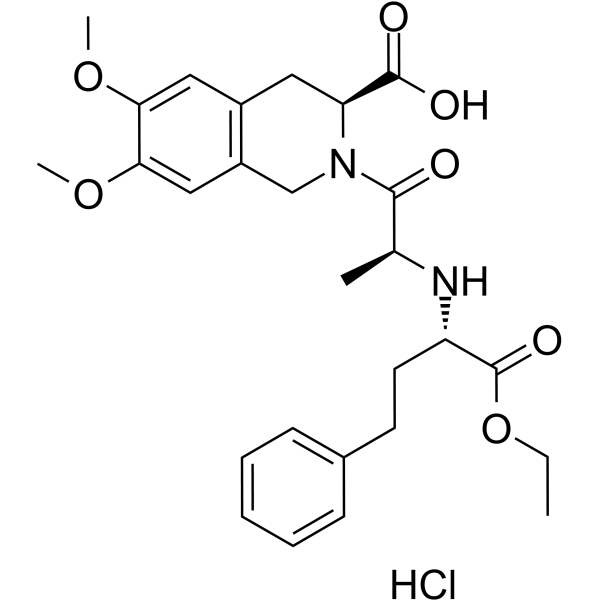
Moexipril hydrochloride

Based on 1 Customer Validation
Moexipril hydrochloride (RS-10085) is an orally active inhibitor of angiotensin-converting enzyme (ACE), and becomes effective by being hydrolyzed to moexiprila (hydrochloride). Moexipril hydrochloride exhibits antihypertensive and neuroprotective effects-.
For research use only. We do not sell to patients.
- Purity : 98.42%
- CAS No.: 82586-52-5
- Formula: C27H35ClN2O7
- Molecular Weight:535.03
-
Storage:
4°C, sealed storage, away from moisture
* In solvent : -80°C, 6 months; -20°C, 1 month (sealed storage, away from moisture)

To place orders, for customer services and technical support, please contact: MedChemExpress USA
Tel: 609-228-6898 E-mail: [email protected] [email protected]


-
 Biological Activity
-
Chemical Information
-
Solvent & Solubility
- Purity & Documentation
- References
-
 Help & FAQs


-
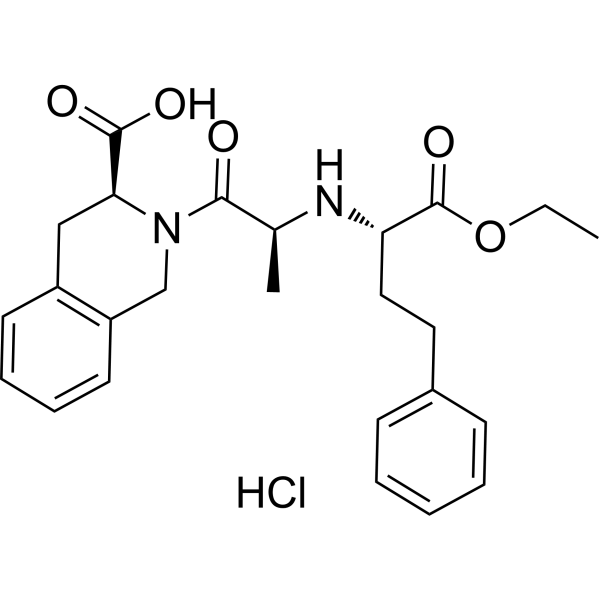
HY-B0477
Quinapril hydrochlorideACE Inhibitor -
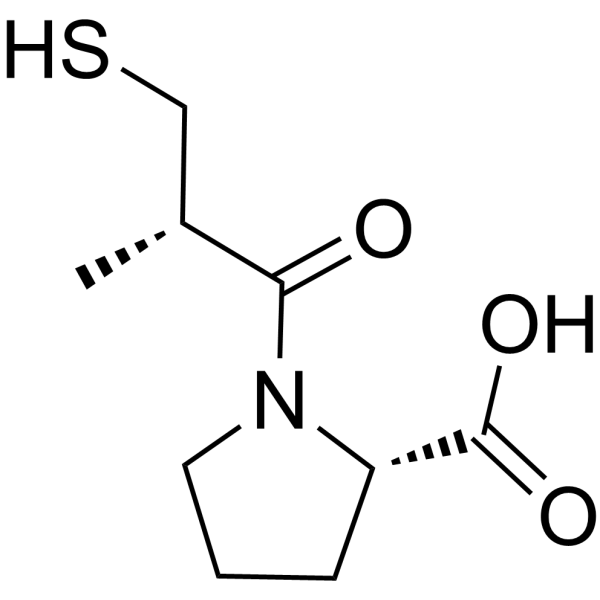
HY-B0368
CaptoprilACE Inhibitor -
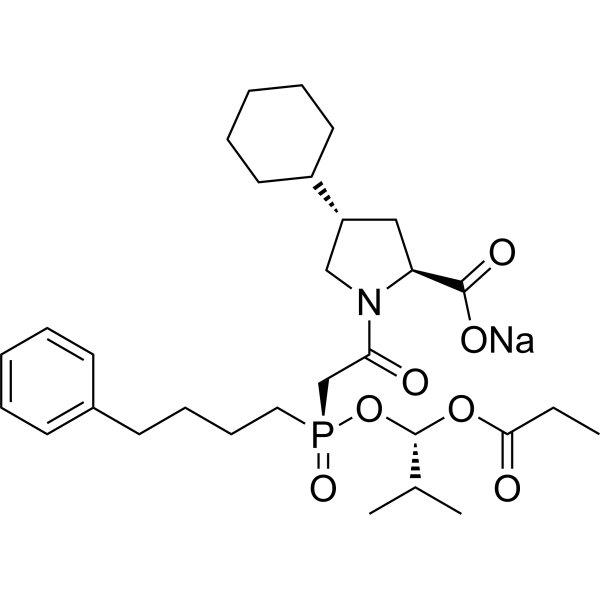
HY-B0382
Fosinopril sodiumACE Inhibitor -
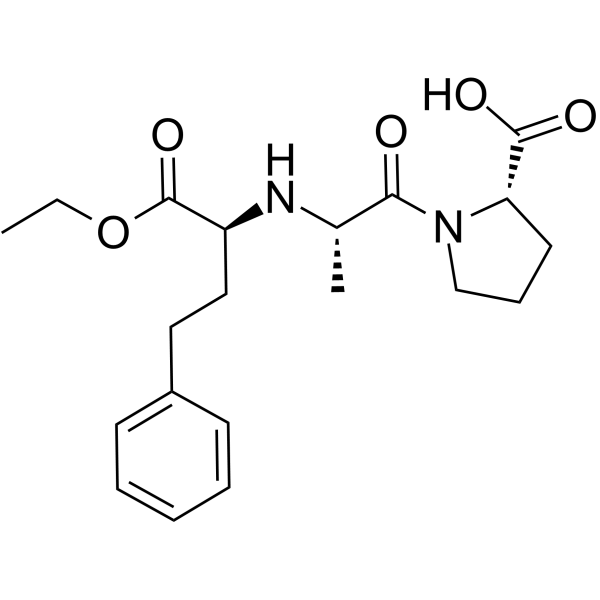
HY-B0331
EnalaprilAngiotensin-Converting Enzyme Inhibitor -
![[Leu5]-Enkephalin](https://file.medchemexpress.com/product_pic/hy-p0288.gif)
HY-P0288
[Leu5]-EnkephalinEndogenous Metabolite -
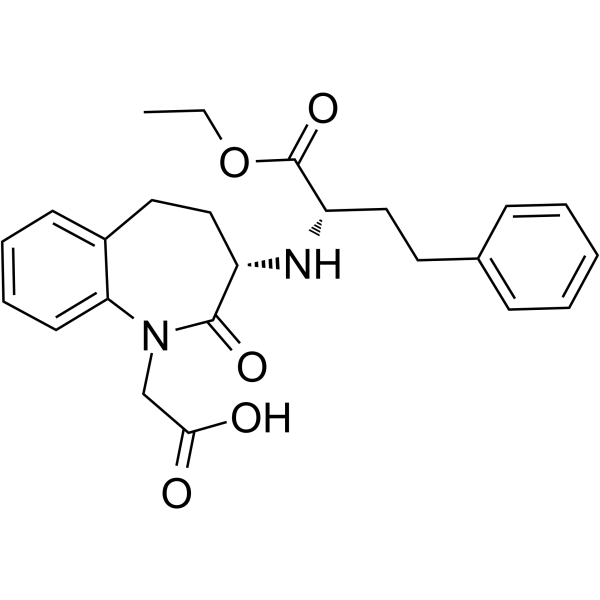
HY-B0093
BenazeprilACE Inhibitor -
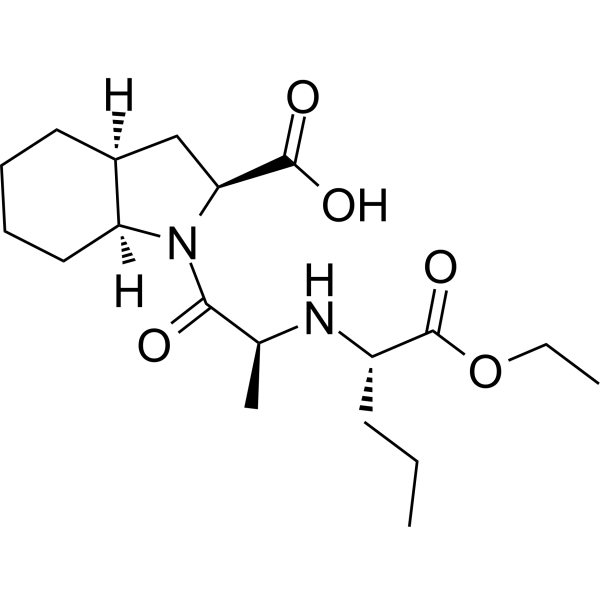
HY-B0130
PerindoprilAngiotensin-converting enzyme Inhibitor -
HY-B0273
SulfadiazineSulfonamide Antibiotic -
HY-100526
XMU-MP-1MST1/2 Inhibitor -
HY-P0073
Tyr-Gly-Gly-Phe-Met-OHOpioid Receptor Activator -
HY-78726
FosamprenavirHIV-1 Inhibitor -
HY-B0279
RamiprilApoptosis Inducer


Biological Activity
Description
IC50 & Target
IC50: 2.1 nM (purified ACE from rabbit lung), 1.75 nM (ACE in rat plasma)[3]
In Vitro
Moexipril hydrochloride is devoid of anti-inflammatory properties and has no effect on platelet function[2].
Moexipril hydrochloride hydrolyzes to Moexiprilat, and Moexiprilat inhibits ACE in guinea pig serum as well as on purified ACE from rabbit lung with IC50s of 2.6 and 4.9 nM, respectively[2].
Moexipril hydrochloride (0.01 nM-0.1 mM) exhibits high potency against both plasma ACE and purified ACE from rabbit lung, with IC50s of 2.7 mM and 0.165 mM, respectively[3].
Moexipril hydrochloride (0-100 μM, 24 h) significantly reduced the percentage of damaged neurons in a dose-dependent manner[4].
Moexipril hydrochloride (0-100 μM, 24 h) significantly attenuates Fe2+/3+-induced neurotoxicity[4].
Moexipril hydrochloride dose not cause significant changes in the percentage of apoptotic neurons[4].
MedChemExpress (MCE) has not independently confirmed the accuracy of these methods. They are for reference only. .
In Vivo
Moexipril hydrochloride (3 mg/kg, 30 mg/kg and 10 mg/kg, respectively; p.o.; once daily; 5 days) exhibits the a dose-dependent and antihypertensive effects in renal hypertensive rats, spontaneously hypertensive rats and perinephritic hypertensive dogs, respectively[3].
Moexipril hydrochloride (0.3 mg/kg, i.p.) significantly reduces the infarct area on the mouse brain surface in NMRI mice[4].
Moexipril hydrochloride (0.1 mg/kg, i.p.) significantly attenuates the cortical infarct volume in Long-Evans rats[4].
MedChemExpress (MCE) has not independently confirmed the accuracy of these methods. They are for reference only.
-
Animal Model:Spontaneously hypertensive rats[3]
-
Dosage:30 mg/kg
-
Administration:Oral gavage; once daily; 5 days
-
Result:Caused a progressive lowering of mean blood pressure from pretreatment values of 180 +/- 7 mmHg to a trough on day 4 of 127 +/- 4 mmHg.
Dose-dependently decreased arterial blood pressure, and inhibited plasma and tissue ACE activity.
-
Animal Model:Renal hypertensive rats[3]
-
Dosage:0.03-10 mg/kg
-
Administration:Oral gavage; once daily; 5 days
-
Result:Caused a dose-dependent decrease in blood pressure with a threshold dose of 0.3 mg/kg.
Lowered mean blood pressure by about 70 mmHg of 3 mg/kg.
-
Animal Model:Perinephritic hypertensive dogs[3]
-
Dosage:10 mg/kg
-
Administration:Oral gavage; once daily; 5 days
-
Result:Caused a drop of mean blood pressure by 25 mmHg from pre-treatment control, which persisted for 24 h, by a rapid onset and a long duration of action.
-
Animal Model:NMRI mice (male, Permanent focal ischemia)[4]
-
Dosage:0, 0.03, 0.3, and 3 mg/kg
-
Administration:Intraperitoneal injection (1 h before middle cerebral artery occlusion)
-
Result:Significantly reduced the infarct area on the mouse brain surface with a dose of 0.3 mg/kg, and other doses were not effective.
-
Animal Model:Long-Evans rats (male, Permanent focal ischemia)[4]
-
Dosage:0, 0.01, 0.1 mg/kg
-
Administration:Intraperitoneal injection (1 h before middle cerebral artery occlusion)
-
Result:Significantly attenuated the cortical infarct volume from 114.4 to 98.2 mm as compared to non-treated animals in a dose of 0.01 mg/kg, without reducing the infarct volume of the rat brain at dosages >0.01 mg/kg.


Chemical Information
-
CAS No. 82586-52-5
-
Appearance Solid
-
Molecular Weight 535.03
-
Formula C27H35ClN2O7
-
Color White to off-white
-
SMILES
O=C([C@H]1N(C([C@@H](N[C@H](C(OCC)=O)CCC2=CC=CC=C2)C)=O)CC3=C(C=C(OC)C(OC)=C3)C1)O.Cl
-
Synonyms
RS-10085
-
Shipping
Room temperature in continental US; may vary elsewhere.
-
Storage
4°C, sealed storage, away from moisture
* In solvent : -80°C, 6 months; -20°C, 1 month (sealed storage, away from moisture)


Solvent & Solubility
In Vitro:
DMSO : 250 mg/mL (467.26 mM; Need ultrasonic; Hygroscopic DMSO has a significant impact on the solubility of product, please use newly opened DMSO)
H2O : 100 mg/mL (186.91 mM; Need ultrasonic)
Please refer to the solubility information to select the appropriate solvent. Once prepared, please aliquot and store the solution to prevent product inactivation from repeated freeze-thaw cycles.
Storage method and period of stock solution: -80°C, 6 months; -20°C, 1 month (sealed storage, away from moisture). When stored at -80°C, please use it within 6 months. When stored at -20°C, please use it within 1 month.
* Note: If you choose water as the stock solution, please dilute it to the working solution, then filter and sterilize it with a 0.22 μm filter before use.
Please refer to the solubility information to select the appropriate solvent. Once prepared, please aliquot and store the solution to prevent product inactivation from repeated freeze-thaw cycles.
Storage method and period of stock solution: -80°C, 6 months; -20°C, 1 month (sealed storage, away from moisture). When stored at -80°C, please use it within 6 months. When stored at -20°C, please use it within 1 month.
* Note: If you choose water as the stock solution, please dilute it to the working solution, then filter and sterilize it with a 0.22 μm filter before use.
Concentration (start) × Volume (start) = Concentration (final) × Volume (final)
In Vivo:
Select the appropriate dissolution method based on your experimental animal and administration route.
- For the following dissolution methods, please ensure to first prepare a clear stock solution using an In Vitro approach and then sequentially add co-solvents:
- To ensure reliable experimental results, the clarified stock solution can be appropriately stored based on storage conditions. As for the working solution for In Vivo experiments, it is recommended to prepare freshly and use it on the same day.
- The percentages shown for the solvents indicate their volumetric ratio in the final prepared solution. If precipitation or phase separation occurs during preparation, heat and/or sonication can be used to aid dissolution.
Add each solvent one by one: 10% DMSO 40% PEG300 5% Tween-80 45% Saline
Solubility: ≥ 2.08 mg/mL (3.89 mM); Clear solution
This protocol yields a clear solution of ≥ 2.08 mg/mL (saturation unknown).
Taking 1 mL working solution as an example, add 100 μL DMSO stock solution (20.8 mg/mL) to 400 μL PEG300, and mix evenly; then add 50 μL Tween-80 and mix evenly; then add 450 μL Saline to adjust the volume to 1 mL.
Preparation of Saline: Dissolve 0.9 g sodium chloride in ddH₂O and dilute to 100 mL to obtain a clear Saline solution.
Add each solvent one by one: 10% DMSO 90% (20% SBE-β-CD in Saline)
Solubility: ≥ 2.08 mg/mL (3.89 mM); Clear solution
This protocol yields a clear solution of ≥ 2.08 mg/mL (saturation unknown).
Taking 1 mL working solution as an example, add 100 μL DMSO stock solution (20.8 mg/mL) to 900 μL 20% SBE-β-CD in Saline, and mix evenly.
Preparation of 20% SBE-β-CD in Saline (4°C, storage for one week): 2 g SBE-β-CD powder is dissolved in 10 mL Saline, completely dissolve until clear.
For the following dissolution methods, please prepare the working solution directly:
It is recommended to prepare fresh solutions and use them promptly within a short period of time.
The percentages shown for the solvents indicate their volumetric ratio in the final prepared solution. If precipitation or phase separation occurs during preparation, heat and/or sonication can be used to aid dissolution.
Add each solvent one by one: PBS
Solubility: 50 mg/mL (93.45 mM); Clear solution; Need ultrasonic
In Vivo Dissolution Calculator
Please enter the basic information of animal experiments:
-
-
-
-
Recommended: Prepare an additional quantity of animals to account for potential losses during experiments.
Working solution concentration: 0.22 mg/mL
This product has good water solubility, please refer to the measured solubility data in water/PBS/Saline for details.


Purity & Documentation
-
Data Sheet (284 KB)
-
SDS (458 KB)
- English - EN (458 KB)
- Français - FR (458 KB)
- Deutsch - DE (458 KB)
- Norwegian - NO (458 KB)
- Español - ES (458 KB)
- Swedish - SV (458 KB)
- Italian - IT (458 KB)
- Korean - KR (458 KB)
- Portuguese - PT (458 KB)
-
Handling Instructions (2659 KB)
References
[1]. Chrysant, S.G. and G.S. Chrysant, Pharmacological and clinical profile of moexipril: a concise review. J Clin Pharmacol, 2004. 44(8): p. 827-36. [Content Brief]
[2]. Friehe H, et al. Pharmacological and toxicological studies of the new angiotensin converting enzyme inhibitor moexipril hydrochloride. Arzneimittelforschung. 1997 Feb. 47(2):132-44. [Content Brief]
[3]. Edling, O., et al., Moexipril, a new angiotensin-converting enzyme (ACE) inhibitor: pharmacological characterization and comparison with enalapril. J Pharmacol Exp Ther, 1995. 275(2): p. 854-63. [Content Brief]
[4]. Ravati A, et al. Enalapril and moexipril protect from free radical-induced neuronal damage in vitro and reduce ischemic brain injury in mice and rats. Eur J Pharmacol. 1999 May 28;373(1):21-33. [Content Brief]


Complete Stock Solution Preparation Table
Please refer to the solubility information to select the appropriate solvent. Once prepared, please aliquot and store the solution to prevent product inactivation from repeated freeze-thaw cycles.
Storage method and period of stock solution: -80°C, 6 months; -20°C, 1 month (sealed storage, away from moisture). When stored at -80°C, please use it within 6 months. When stored at -20°C, please use it within 1 month.
| Optional Solvent | Concentration Solvent Mass | 1 mg | 5 mg | 10 mg | 25 mg |
|---|---|---|---|---|---|
| H2O / DMSO | 1 mM | 1.8691 mL | 9.3453 mL | 18.6905 mL | 46.7263 mL |
| 5 mM | 0.3738 mL | 1.8691 mL | 3.7381 mL | 9.3453 mL | |
| 10 mM | 0.1869 mL | 0.9345 mL | 1.8691 mL | 4.6726 mL | |
| 15 mM | 0.1246 mL | 0.6230 mL | 1.2460 mL | 3.1151 mL | |
| 20 mM | 0.0935 mL | 0.4673 mL | 0.9345 mL | 2.3363 mL | |
| 25 mM | 0.0748 mL | 0.3738 mL | 0.7476 mL | 1.8691 mL | |
| 30 mM | 0.0623 mL | 0.3115 mL | 0.6230 mL | 1.5575 mL | |
| 40 mM | 0.0467 mL | 0.2336 mL | 0.4673 mL | 1.1682 mL | |
| 50 mM | 0.0374 mL | 0.1869 mL | 0.3738 mL | 0.9345 mL | |
| 60 mM | 0.0312 mL | 0.1558 mL | 0.3115 mL | 0.7788 mL | |
| 80 mM | 0.0234 mL | 0.1168 mL | 0.2336 mL | 0.5841 mL | |
| 100 mM | 0.0187 mL | 0.0935 mL | 0.1869 mL | 0.4673 mL |
* Note: If you choose water as the stock solution, please dilute it to the working solution, then filter and sterilize it with a 0.22 μm filter before use.


Moexipril hydrochloride Related Classifications
HY-B0378A Related Classifications
 Powered by Bioz