



Fosamprenavir
Based on 4 publication(s) in Google Scholar
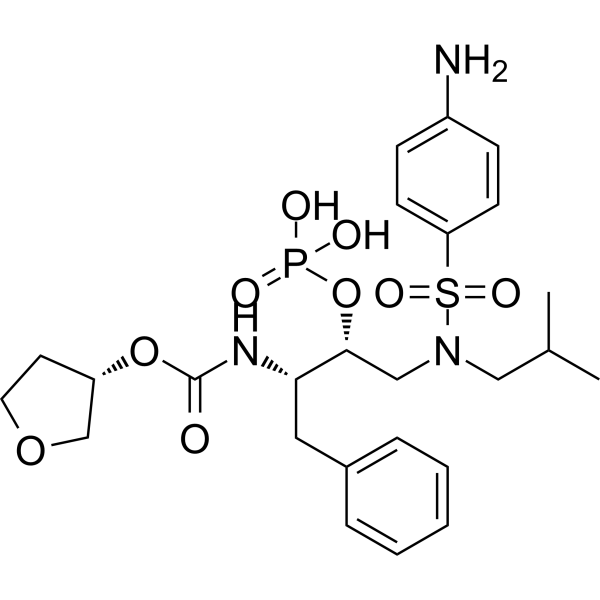
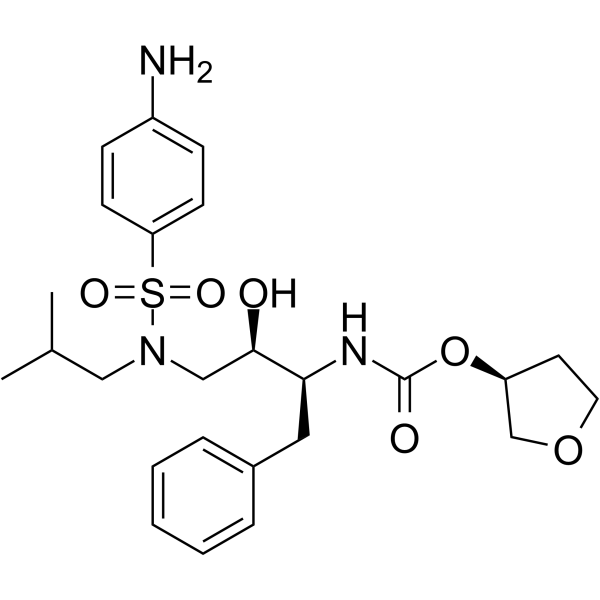
Fosamprenavir is an orally active inhibitor targeting HIV-1 protease and is a prodrug of Amprenavir (HY-17430). Fosamprenavir is hydrolyzed into Amprenavir (VX-478) by cell phosphatases in the intestinal epithelium. Amprenavir binds to the active site of HIV-1 protease, preventing the processing of viral gag and gag-pol polyprotein precursors, thereby inhibiting the formation of mature infectious virus particles and exerting anti-HIV-1 infection activity. Fosamprenavir can be used for the study of human immunodeficiency virus (HIV-1) infection.
Nur für Forschungszwecke. Wir verkaufen nicht an Patienten.
- Reinheit : 98.17%
- CAS. Nr.: 226700-79-4
- Formel: C25H36N3O9PS
- Molecular Weight:585.61
-
Speicherung:Powder -20°C, 3 years , 4°C, 2 years ; In solvent -80°C, 2 years , -20°C, 1 year

To place orders, for customer services and technical support, please contact: MedChemExpress USA
Tel: 609-228-6898 E-mail: [email protected] [email protected]


-
 Biologische Aktivität
-
Chemical Information
-
Lösungsmittel & Löslichkeit
- Protokoll
- Reinheit & Dokumentation
- Verweise
-
 Help & FAQs


-
HY-17040
DarunavirHIV Protease Inhibitor -
HY-15287
NelfinavirHIV Protease Inhibitor -
HY-17430
AmprenavirHIV Protease Inhibitor -
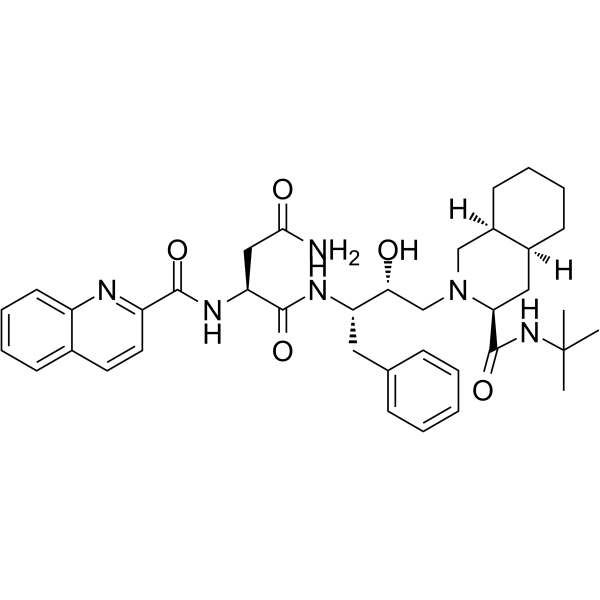
HY-17007
SaquinavirHIV Protease Inhibitor -
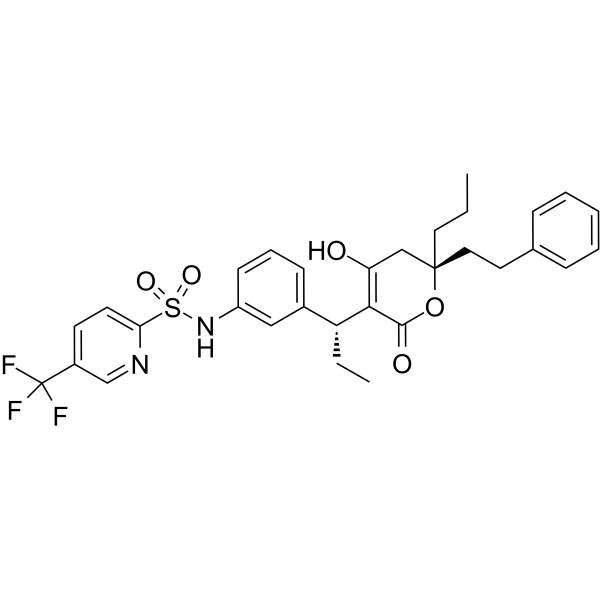
HY-15148
TipranavirHIV Protease Inhibitor -
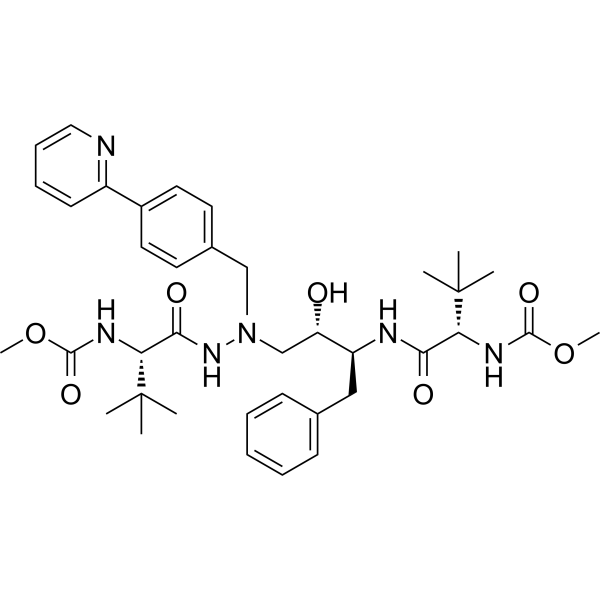
HY-17367
AtazanavirHIV Protease Inhibitor -
![[Leu5]-Enkephalin](https://file.medchemexpress.com/product_pic/hy-p0288.gif)
HY-P0288
[Leu5]-EnkephalinEndogenous Metabolite -
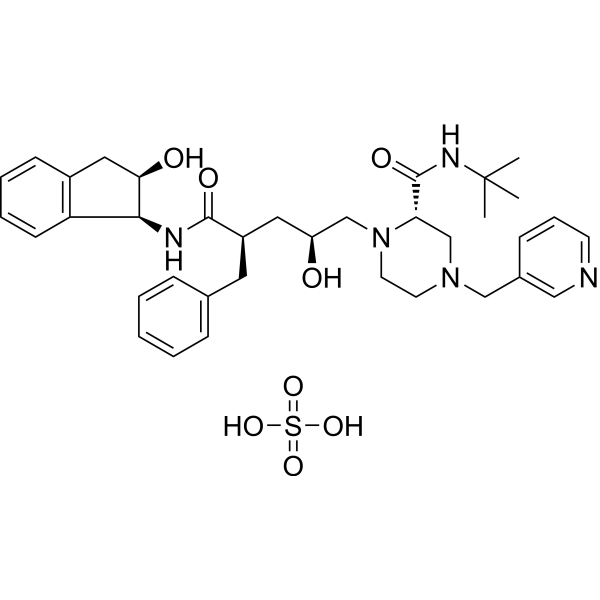
HY-B0689A
Indinavir sulfateHIV Protease Inhibitor -

HY-P0052
EnfuvirtideHIV-1 Fusion Inhibitor -
HY-K0010
Protease Inhibitor Cocktail (EDTA-Free, 100× in DMSO) -
HY-100526
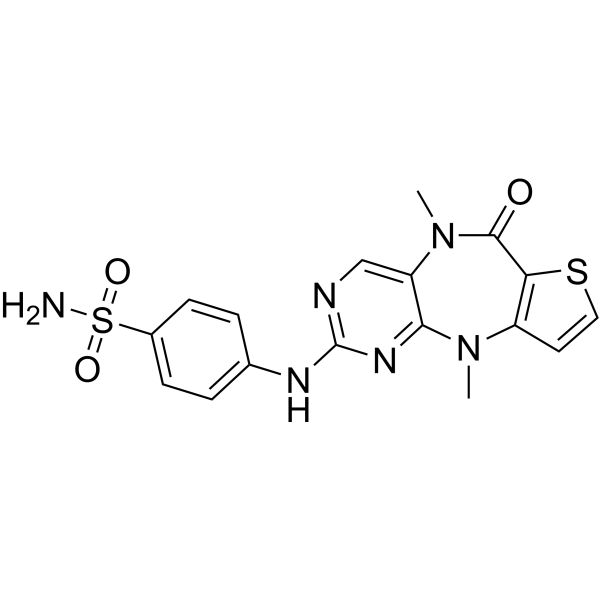
XMU-MP-1MST1/2 Inhibitor -
HY-P0073
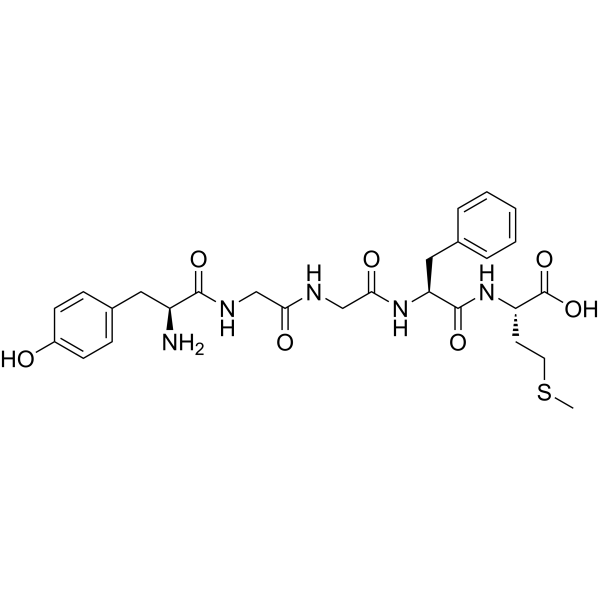
Tyr-Gly-Gly-Phe-Met-OHOpioid Receptor Activator
Publications Citing Use of MedChemExpress (MCE) Fosamprenavir
More

Biologische Aktivität
Beschreibung
IC50 & Target
|
HIV-1 |
In Vitro
Amprenavir, the active form of fosamprenavir, can bind to and inhibit the activity of pepsin in vitro with an IC50 of 3.56 μM[2].
MedChemExpress (MCE) has not independently confirmed the accuracy of these methods. They are for reference only. Further protocols information, click here.
In Vivo
MedChemExpress (MCE) has not independently confirmed the accuracy of these methods. They are for reference only.
-
Animal Model:6-week-old female Jackson A/J mice with laryngopharyngeal reflux model (mechanical laryngeal injury once weekly for 2 weeks and pH7 solvent/pepsin instillation 3 days/week for 4 weeks)[2]
-
Dosage:20 mg/kg/day
-
Administration:gavage, daily, 4 weeks (5 days/week)
-
Result:Prevented pepsin-mediated laryngeal damage, which was characterized by reactive epithelia, increased intraepithelial inflammatory cells, and cell apoptosis.


Chemical Information
-
CAS. Nr. 226700-79-4
-
Appearance Solid
-
Molecular Weight 585.61
-
Formel C25H36N3O9PS
-
Color Light yellow to yellow
-
SMILES
O=C(O[C@@H]1COCC1)N[C@@H](CC2=CC=CC=C2)[C@H](OP(O)(O)=O)CN(S(=O)(C3=CC=C(N)C=C3)=O)CC(C)C
-
Synonyms
Amprenavir phosphate; GW 433908
-
Versand
Room temperature in continental US; may vary elsewhere.
-
Speicherung
Powder -20°C 3 years 4°C 2 years In solvent -80°C 2 years -20°C 1 year


Publications (4)
-
Journal Impact Factor
-
Most Recent
-
Nat Commun
Both Boceprevir and GC376 efficaciously inhibit SARS-CoV-2 by targeting its main protease. [Abstract]2020 Sep 4;11(1):4417. PMID: 32887884 -
Int J Antimicrob Agents
2019 Dec;54(6):814-819. PMID: 31479744 -
Antimicrob Agents Chemother
2020 Aug 20;64(9):e00872-20. PMID: 32669265 -


Lösungsmittel & Löslichkeit
In Vitro:
DMSO : ≥ 100 mg/mL (170.76 mM; Hygroscopic DMSO has a significant impact on the solubility of product, please use newly opened DMSO)
* "≥" means soluble, but saturation unknown.
Please refer to the solubility information to select the appropriate solvent. Once prepared, please aliquot and store the solution to prevent product inactivation from repeated freeze-thaw cycles.
Storage method and period of stock solution: -80°C, 2 years; -20°C, 1 year. When stored at -80°C, please use it within 2 years. When stored at -20°C, please use it within 1 year.
Please refer to the solubility information to select the appropriate solvent. Once prepared, please aliquot and store the solution to prevent product inactivation from repeated freeze-thaw cycles.
Storage method and period of stock solution: -80°C, 2 years; -20°C, 1 year. When stored at -80°C, please use it within 2 years. When stored at -20°C, please use it within 1 year.
Konzentration (Stammlösung) × Volumen (Stammlösung) = Konzentration (Ziellösung) × Volumen (Ziellösung)
In Vivo:
Select the appropriate dissolution method based on your experimental animal and administration route.
- For the following dissolution methods, please ensure to first prepare a clear stock solution using an In Vitro approach and then sequentially add co-solvents:
- To ensure reliable experimental results, the clarified stock solution can be appropriately stored based on storage conditions. As for the working solution for In Vivo experiments, it is recommended to prepare freshly and use it on the same day.
- The percentages shown for the solvents indicate their volumetric ratio in the final prepared solution. If precipitation or phase separation occurs during preparation, heat and/or sonication can be used to aid dissolution.
Add each solvent one by one: 10% DMSO 40% PEG300 5% Tween-80 45% Saline
Solubility: ≥ 2.5 mg/mL (4.27 mM); Clear solution
This protocol yields a clear solution of ≥ 2.5 mg/mL (saturation unknown).
Taking 1 mL working solution as an example, add 100 μL DMSO stock solution (25.0 mg/mL) to 400 μL PEG300, and mix evenly; then add 50 μL Tween-80 and mix evenly; then add 450 μL Saline to adjust the volume to 1 mL.
Preparation of Saline: Dissolve 0.9 g sodium chloride in ddH₂O and dilute to 100 mL to obtain a clear Saline solution.
Add each solvent one by one: 10% DMSO 90% (20% SBE-β-CD in Saline)
Solubility: ≥ 2.5 mg/mL (4.27 mM); Clear solution
This protocol yields a clear solution of ≥ 2.5 mg/mL (saturation unknown).
Taking 1 mL working solution as an example, add 100 μL DMSO stock solution (25.0 mg/mL) to 900 μL 20% SBE-β-CD in Saline, and mix evenly.
Preparation of 20% SBE-β-CD in Saline (4°C, storage for one week): 2 g SBE-β-CD powder is dissolved in 10 mL Saline, completely dissolve until clear.
In Vivo Dissolution Calculator
Please enter the basic information of animal experiments:
-
-
-
-
Recommended: Prepare an additional quantity of animals to account for potential losses during experiments.
Please enter your animal formula composition:
-
%DMSO +
Recommended: Keep the proportion of DMSO in working solution below 2% if your animal is weak.
-
%+
-
+%Tween-80 + +
-
%Saline +
The co-solvents required include: DMSO, . All of co-solvents are available by MedChemExpress (MCE). , Tween 80. All of co-solvents are available by MedChemExpress (MCE).
Working solution concentration: 0.22 mg/mL
Method for preparing stock solution: mg drug dissolved in μL DMSO. Stock solution concentration: mg/mL.
1. Take μL DMSO stock solution;
2. Add μL .
μL , mix evenly;
3. Then add μL Tween 80, mix evenly;
4. Then add μL
Please ensure that the stock solution in the first step is dissolved to a clear state, and add co-solvents in sequence. You can use ultrasonic heating (ultrasonic cleaner, recommended frequency 20-40 kHz), vortexing, etc. to assist dissolution.

Protokoll
-
Research Protocol for Infectious Diseases
Infectious-disease experiments test how pathogens interact with host barriers, innate immune receptors, inflammatory signaling, pathogen replication, and tissue injury; pattern-recognition receptors such as TLRs, RIG-I-like receptors, NOD-like receptors, and inflammasomes detect microbial molecules and activate NF-κB, interferon, and cytokine responses. The central hypothesis is that infection severity reflects the balance between pathogen burden and host response: protective inflammation restricts pathogen growth, whereas excessive or mislocalized inflammation contributes to tissue damage and disease phenotype. Unresolved questions include which host pathways are protective versus pathogenic, why some infection models fail to translate to human disease, and which combined readouts best predict clinically relevant infection outcomes.


Reinheit & Dokumentation
-
Data Sheet (294 KB)
-
SDS (393 KB)
- English - EN (393 KB)
- Français - FR (393 KB)
- Deutsch - DE (393 KB)
- Norwegian - NO (393 KB)
- Español - ES (393 KB)
- Swedish - SV (393 KB)
- Italian - IT (393 KB)
- Korean - KR (393 KB)
- Portuguese - PT (393 KB)
-
Handling Instructions (2659 KB)
Verweise
[1]. Hester EK, et al. Fosamprenavir: drug development for adherence. Ann Pharmacother. 2006 Jul-Aug;40(7-8):1301-10. [Content Brief]
[2]. Johnston N, et al. Oral and Inhaled Fosamprenavir Reverses Pepsin-Induced Damage in a Laryngopharyngeal Reflux Mouse Model. Laryngoscope. 2023 Jan;133 Suppl 1(Suppl 1):S1-S11. [Content Brief]


Complete Stock Solution Preparation Table
Please refer to the solubility information to select the appropriate solvent. Once prepared, please aliquot and store the solution to prevent product inactivation from repeated freeze-thaw cycles.
Storage method and period of stock solution: -80°C, 2 years; -20°C, 1 year. When stored at -80°C, please use it within 2 years. When stored at -20°C, please use it within 1 year.
| Optional Solvent | Concentration Solvent Mass | 1 mg | 5 mg | 10 mg | 25 mg |
|---|---|---|---|---|---|
| DMSO | 1 mM | 1.7076 mL | 8.5381 mL | 17.0762 mL | 42.6905 mL |
| 5 mM | 0.3415 mL | 1.7076 mL | 3.4152 mL | 8.5381 mL | |
| 10 mM | 0.1708 mL | 0.8538 mL | 1.7076 mL | 4.2691 mL | |
| 15 mM | 0.1138 mL | 0.5692 mL | 1.1384 mL | 2.8460 mL | |
| 20 mM | 0.0854 mL | 0.4269 mL | 0.8538 mL | 2.1345 mL | |
| 25 mM | 0.0683 mL | 0.3415 mL | 0.6830 mL | 1.7076 mL | |
| 30 mM | 0.0569 mL | 0.2846 mL | 0.5692 mL | 1.4230 mL | |
| 40 mM | 0.0427 mL | 0.2135 mL | 0.4269 mL | 1.0673 mL | |
| 50 mM | 0.0342 mL | 0.1708 mL | 0.3415 mL | 0.8538 mL | |
| 60 mM | 0.0285 mL | 0.1423 mL | 0.2846 mL | 0.7115 mL | |
| 80 mM | 0.0213 mL | 0.1067 mL | 0.2135 mL | 0.5336 mL | |
| 100 mM | 0.0171 mL | 0.0854 mL | 0.1708 mL | 0.4269 mL |


Fosamprenavir Related Classifications
HY-78726 Related Classifications
 Powered by Bioz