Search Result
Results for "
cruzi
" in MedChemExpress (MCE) Product Catalog:
-
- HY-B1548
-
|
Benznidazol; Ro 07-1051; Ro 71051
|
Parasite
Antibiotic
|
Infection
|
|
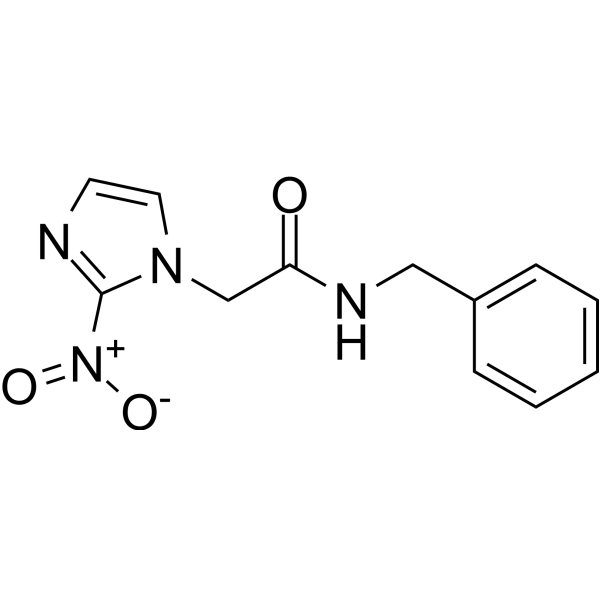
Benznidazole (Ro 07-1051) is an antiparasitic medication, with an IC50 of 20.35 μM for Colombian T. cruzi strains, and has been used in the treatment of Chagas disease .
|
-
-
- HY-W040073
-
|
|
Parasite
Lactate Dehydrogenase
|
Infection
Cancer
|
|
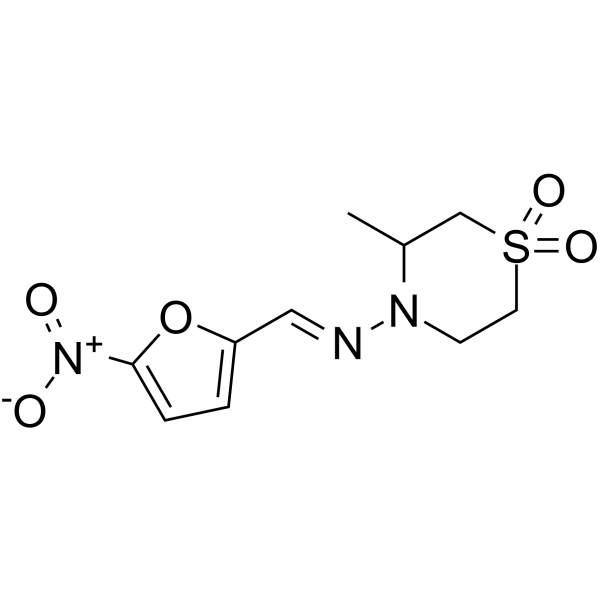
Nifurtimox, an antiprotozoal agent, which is generally used for the treatment of infections with Trypanosoma cruzi, has been used in the therapy of neuroblastoma. Nifurtimox affects enzyme activity of lactate dehydrogenase (LDH).
|
-
-
- HY-119293
-
K777
3 Publications Verification
|
Cathepsin
Cytochrome P450
Parasite
SARS-CoV
Filovirus
|
Infection
Inflammation/Immunology
Cancer
|
|
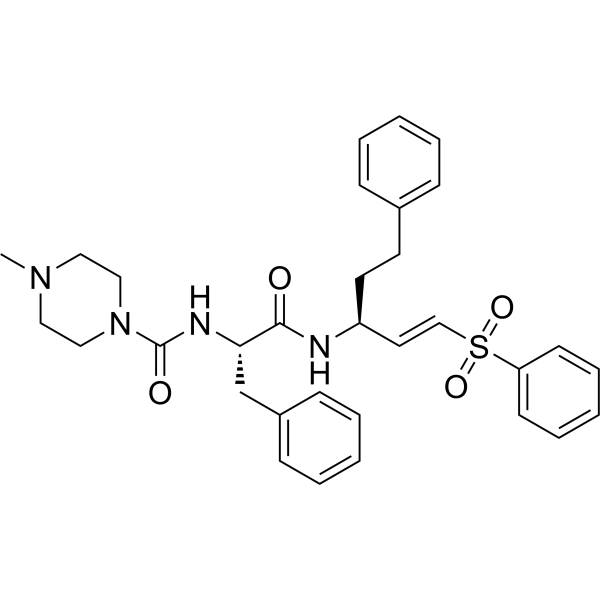
K777 is a potent, orally active and irreversible cysteine protease inhibitor. K777 is also a potent CYP3A4 inhibitor with an IC50 of 60 nM. K777 irreversibly inhibits Cruzain, the major cysteine protease of Trypansoma cruzi, and cathepsins B and L. K777 is a broad-spectrum antiviral by targeting cathepsin-mediated cell entry. K777 inhibits SARS-CoV and EBOV pseudovirus entry with IC50 values of 0.68 nM and 0.87 nM, respectively .
|
-
-
- HY-145669
-
DIF-3
Maximum Cited Publications
8 Publications Verification
|
Wnt
CDK
GSK-3
|
Infection
Cancer
|
|
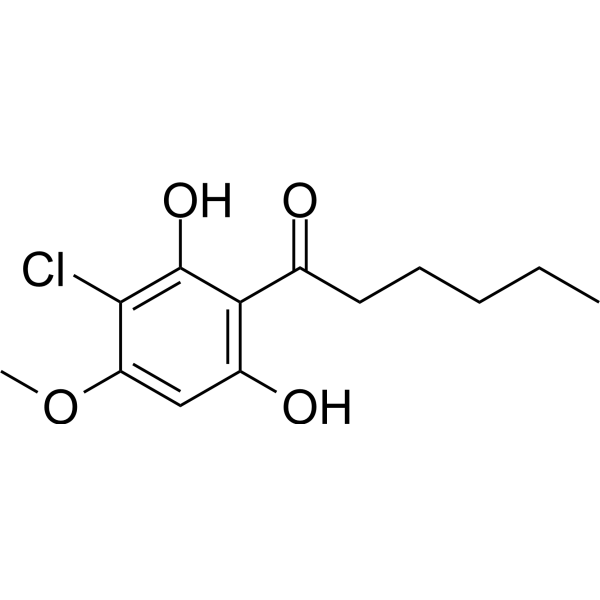
DIF-3 is an orally active anticancer agent. DIF-3 reduces the expression levels of cyclin D1 and c-Myc by facilitating their degradation via activation of GSK-3β. DIF-3 inhibits Wnt/β-catenin signaling pathway-related proteins in cells. DIF-3 induces reactive oxygen species (ROS) and autophagy. DIF suppresses the growth of Trypanosoma. cruzi in HT1080 cells. DIF-3 exerts antitumor effects both in vitro and in vivo .
|
-
-
- HY-W010538
-
|
|
Parasite
|
Infection
|
|
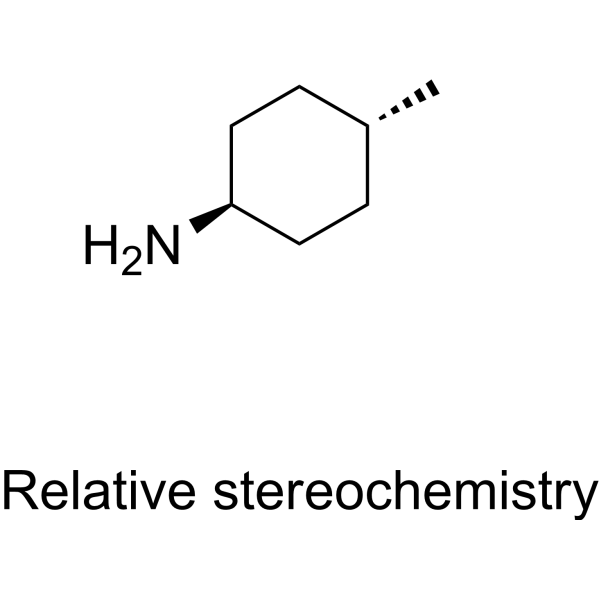
trans-4-Methylcyclohexanamine is an intermediate and can be used for the development of T. cruzi enzyme inhibitor .
|
-
-
- HY-N11173
-
|
|
Others
|
Metabolic Disease
|
|
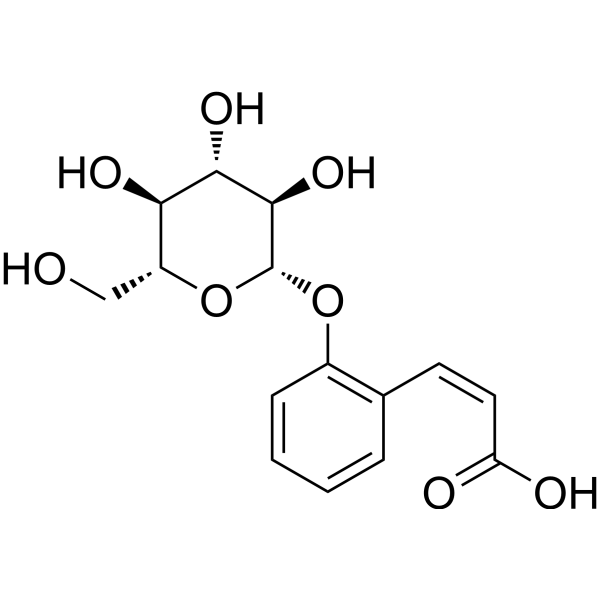
cis-Melilotoside, an o-Coumaric acid derivative, shows potent antioxidant activity. cis-Melilotoside has antiprotozoal activity moderately against T. cruzi with an IC50 of 78.2 ug/mL .
|
-
-
- HY-21496
-
|
4-Carboxybenzyl bromide
|
Parasite
|
Infection
|
|
4-(Bromomethyl)benzoic acid (4-Carboxybenzyl bromide) is an antiparasitic agent with low activity against Leishmania amazonensis and Trypanosoma cruzi. 4-(Bromomethyl)benzoic acid has certain cytotoxicity to PBMCs, with an IC50 of 88.8 μM .
|
-
-
- HY-12607
-
|
|
Parasite
|
Infection
|
|
ML251, a potent nanomolar T. brucei and T. cruzi phosphofructokinase (PFK) inhibitor, inhibits T. brucei PFK (IC50=0.37 μM) and T. cruzi PFK (IC50=0.13 μM). ML251 can be used for the research of parasite .
|
-
-
- HY-103033
-
|
|
Parasite
|
Infection
|
|
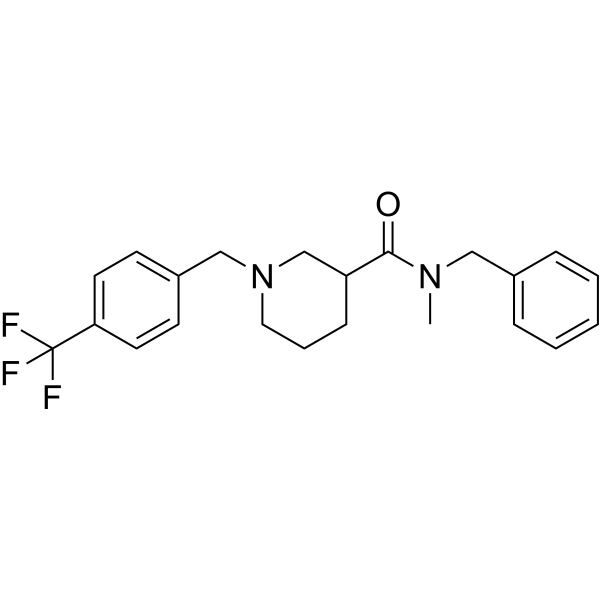
T.cruzi-IN-1 is a potent Trypanosoma cruzi inhibitor with an IC50 of 8 nM. T.cruzi-IN-1, a 4-trifluoromethyl substituted analog, has the potential for both the acute and chronic stages of Chagas disease .
|
-
-
- HY-153238
-
|
|
Parasite
|
Infection
|
|
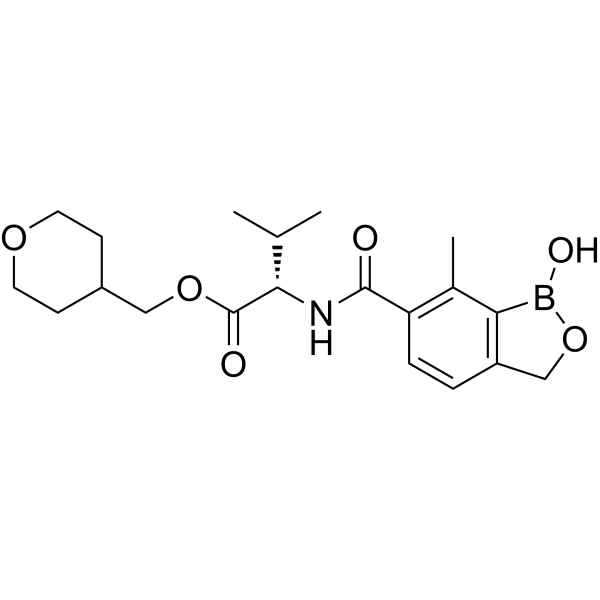
AN15368 is an orally active small-molecule precursor that can be activated by parasite carboxypeptidase to produce a compound that targets the messenger RNA processing pathway in T. cruzi. cruzi. AN15368 has the potential to prevent and research Chagas disease potential .
|
-
-
- HY-175741
-
|
|
Parasite
Topoisomerase
|
Infection
|
|
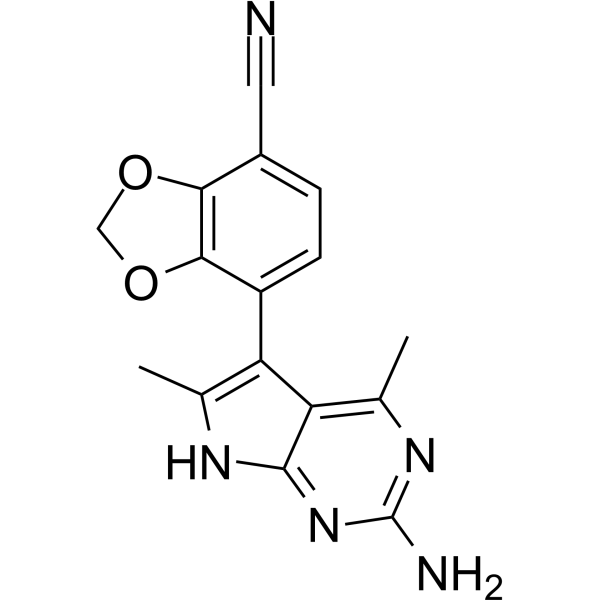
IID432 is a Trypanosoma cruzi Topoisomerase II inhibitor with an EC50 of 8 nM for Trypanosoma cruzi. IID432, a single dose of 25 mg/kg, can achieve relapse-free parasite clearance in mouse models of chronic Chagas disease. IID432 can be used for Chagas disease research .
|
-
-
- HY-162066
-
|
|
Parasite
|
Infection
|
|
DNDI-6174 is an orally active Leishmania cytochrome b (Qi site of cytochrome bc1 complex/complex III) inhibitor. DNDI-6174 binds to the Qi site of Leishmania cytochrome b, inhibits cytochrome bc1 complex activity in the parasite's electron transport chain across promastigote and axenic amastigote stages. DNDI-6174 reduces parasite burden in rodent models, inhibits growth of various Leishmania species, drug-resistant clinical isolates, and Trypanosoma cruzi, with marginal activity against Trypanosoma brucei. DNDI-6174 can be used for the research of visceral leishmaniasis, cutaneous leishmaniasis .
|
-
-
- HY-128268
-
|
|
Parasite
|
Infection
|
|
PFK-IN-1 (compound 1) is a phosphofructokinase (PFK) inhibitor, with IC50 values of 0.41 and 0.23 μM against T.brucei and T.cruzi PFK, respectively, and an ED50 of 15.18 μg/mL for T.brucei. The half-lives of PFK-IN-1 in rat and mouse liver microsomes are 9.7 and 408 minutes, respectively .
|
-
-
- HY-N12788
-
|
|
Parasite
|
Infection
|
|
T-Cadinol is a sesquiterpene isolated from C. sylvestris that exhibits anti-Trypanosoma cruzi activity, with IC50 values of 18.2 μM and 15.8 μM against trypomastigote and amastigote forms, respectively. T-Cadinol can induce mitochondrial damage in parasites, leading to membrane hyperpolarization and decreased levels of reactive oxygen species. T-Cadinol can be used for the research of Chagas disease .
|
-
-
- HY-108938
-
|
|
Cytochrome P450
Fungal
Parasite
|
Infection
|
|
SDZ285428 is a CYP51 inhibitor. SDZ285428 inhibits Trypanosoma cruzi (TC) CYP51 with I/E2 <1 (5 min) and I/E2=9 (1 h). SDZ285428 inhibits Trypanosoma brucei (TB) CYP51 with I/E2 <1 (5 min) and I/E2=35 (1 h) .
|
-
-
- HY-N2656
-
|
|
Parasite
|
Infection
|
|
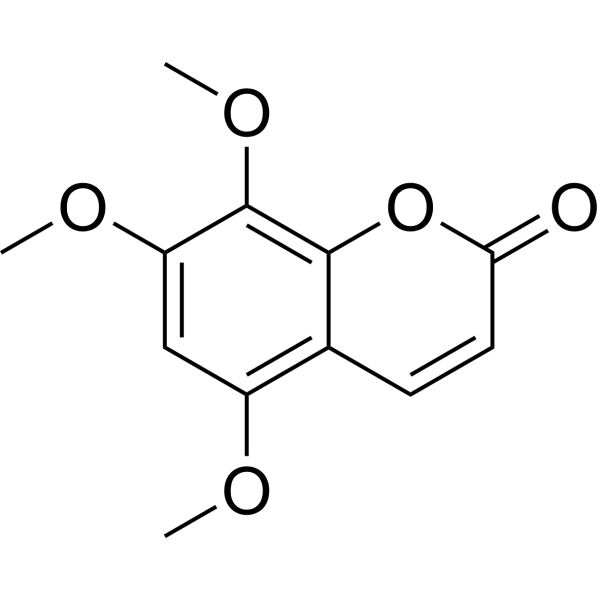
5,7,8-Trimethoxycoumarin is an anti-parasite agent with IC50s of 25.5 μM and 57.7 μM against Trypanosoma cruzi and L. amazonensis, respectively .
|
-
-
- HY-N7632
-
|
|
Bacterial
|
Infection
Inflammation/Immunology
|
|
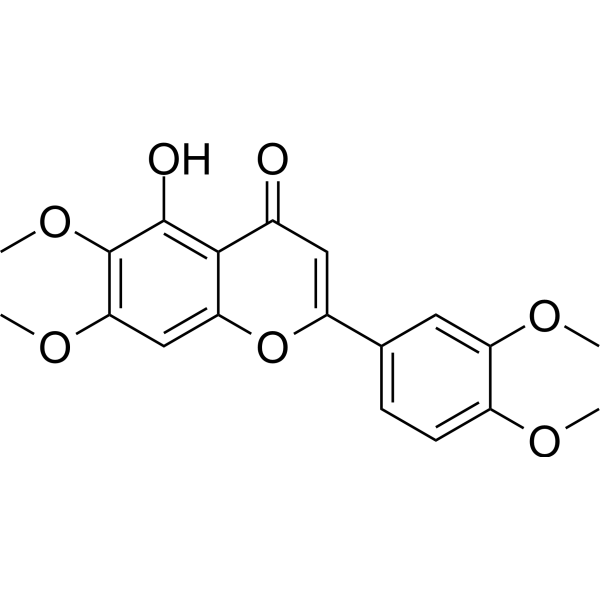
5-desmethylsinensetin, isolated from Artemisia princeps , possesses antiprotozoal activity. 5-desmethylsinensetin shows IC50 values of 0.4 μg/mL on T. cruzi epimastigotes and 75.1 μg/mL on trypomastigotes, respectively .
|
-
-
- HY-151485
-
|
|
Parasite
|
Infection
|
|
Anti-infective agent 5 (compound 74) is an orally active inhibitor of Trypanosoma cruzi with an IC50 value of 0.10 μM. Anti-infective agent 5 effectively reduces parasite burden in vivo. Anti-infective agent 5 can be used for the research of infection .
|
-
-
- HY-119293A
-
|
|
Cathepsin
Cytochrome P450
Parasite
SARS-CoV
Filovirus
|
Infection
Inflammation/Immunology
Cancer
|
|
K777 tosylate is a potent, orally active and irreversible cysteine protease inhibitor. K777 tosylate is also a potent CYP3A4 inhibitor with an IC50 of 60 nM. K777 tosylate irreversibly inhibits Cruzain, the major cysteine protease of Trypansoma cruzi, and cathepsins B and L. K777 tosylate is a broad-spectrum antiviral by targeting cathepsin-mediated cell entry. K777 tosylate inhibits SARS-CoV and EBOV pseudovirus entry with IC50 values of 0.68 nM and 0.87 nM, respectively .
|
-
-
- HY-N10443
-
|
|
Parasite
Apoptosis
Autophagy
Reactive Oxygen Species (ROS)
|
Infection
|
|
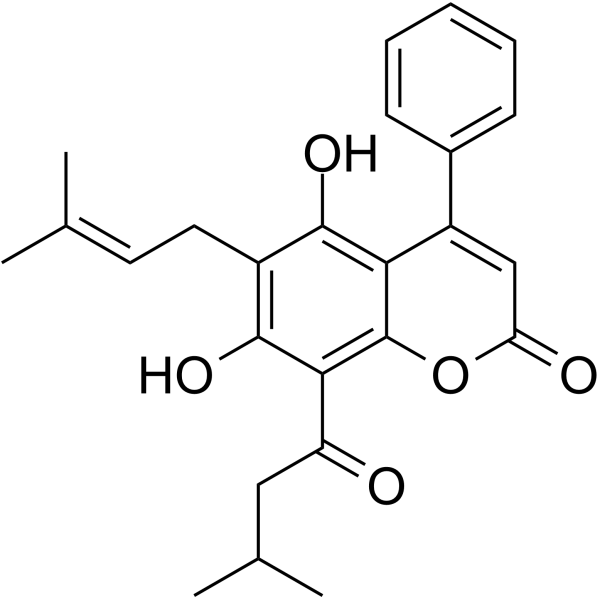
Mammea A/BA has potent activity against Trypanosoma cruzi (T. cruzi). Mammea A/BA induces mitochondrial dysfunction, reactive oxygen species (ROS) production and DNA fragmentation, and increases number of acidic vacuoles. Mammea A/BA can induce apoptosis, autophagy and necrosis. Mammea A/BA can be used for researching chagas disease .
|
-
-
- HY-159097
-
|
|
Parasite
|
Infection
|
|
T.cruzi-IN-4 (Compound 21) is an anti-parasitic agent. T.cruzi-IN-4 inhibits the trypomastigote and amastigote form of Trypanosoma cruzi with IC50 of 0.033 μM (120 h), T.cruzi-IN-4 inhibits the promastigote and amastigote form of Leishmania infantum with IC50 of 28.74 and 61.82 μM. T.cruzi-IN-4 inhibits Leishmania amazonensis promastigote form with IC50 of 18.38 μM .
|
-
-
- HY-168342
-
|
|
Parasite
|
Infection
|
|
Anti-Trypanosoma cruzi agent-6 (Compound 8) exhibits inhibitory activity against Trypanosoma cruzi, that inhibits the epimastigote, trypomastigote and amastigote form of T. cruzi with IC50s of 24.7 µM, 1.8 µM and 1.6 µM, respectively .
|
-
-
- HY-N3702
-
|
|
Syk
|
Infection
Inflammation/Immunology
|
|
Dehydroabietinol is a SYK inhibitor with an IC50 of 46.4 μM. Dehydroabietinol inhibits the growth of Trypanosoma cruzi epimastigotes, Leishmania braziliensis promastigotes and Leishmania infantum promastigotes. Dehydroabietinol indirectly inhibits the growth of Plasmodium falciparum, alters the erythrocyte membrane, and induces spherostomatocyte transformation and endovesicle formation. Dehydroabietinol can be used in studies related to immune-mediated diseases, Chagas disease, leishmaniasis and malaria .
|
-
-
- HY-118338
-
|
|
Parasite
|
Infection
|
|
WRR-483 is an analog of K11777, an inhibitor of cruzain, used to inhibit the proliferation of Trypanosoma cruzi in cell culture. WRR-483 can eradicate parasitic infection in an acute Chagas disease mouse model. WRR-483 is an irreversible cysteine protease inhibitor that shows pH-dependent high affinity and potent trypanocidal activity against cruzain and T. cruzi infection, and is expected to inhibit Chagas disease.
|
-
-
- HY-B1548R
-
|
Benznidazol (Standard); Ro 07-1051 (Standard); Ro 71051 (Standard)
|
Reference Standards
Parasite
Antibiotic
|
Infection
|
|
Benznidazole (Standard) is the analytical standard of Benznidazole. This product is intended for research and analytical applications. Benznidazole (Ro 07-1051) is an antiparasitic medication, with an IC50 of 20.35 μM for Colombian T. cruzi strains, and has been used in the treatment of Chagas disease .
|
-
-
- HY-W040073R
-
|
|
Reference Standards
Parasite
Lactate Dehydrogenase
|
Infection
Cancer
|
|
Nifurtimox (Standard) is the analytical standard of Nifurtimox. This product is intended for research and analytical applications. Nifurtimox, an antiprotozoal agent, which is generally used for the treatment of infections with Trypanosoma cruzi, has been used in the therapy of neuroblastoma. Nifurtimox affects enzyme activity of lactate dehydrogenase (LDH).
|
-
-
- HY-147765
-
|
|
Parasite
|
Infection
|
|
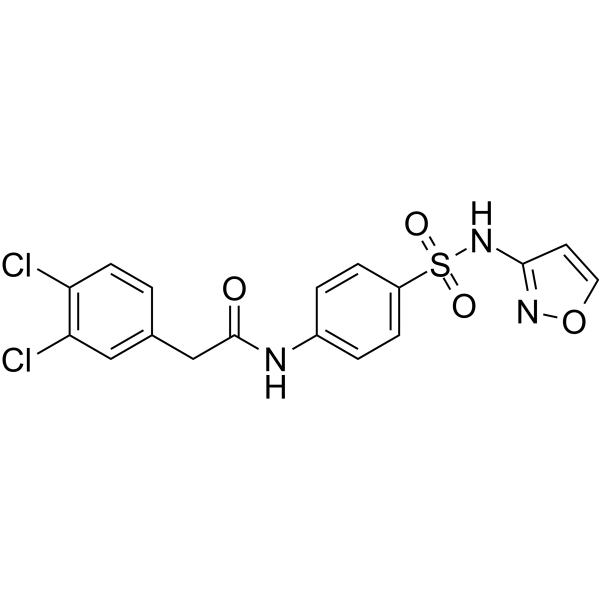
Anti-Trypanosoma cruzi agent-3 (Compound 7c) is an antiprotozoal agent .
|
-
-
- HY-115972
-
|
|
Parasite
|
Infection
Inflammation/Immunology
|
|
Anti-Trypanosoma cruzi agent-1 (Compd 3b), selective compound against NINOA trypomastigote (IC50 = 0.51 µM) and INC-5 epimastigote form (IC50 = 3.06 µM), posseses anti-T. gondii activity .
|
-
-
- HY-148323
-
|
|
Parasite
|
Infection
|
|
Anti-Trypanosoma cruzi agent-4 (compound 5c) is an inhibitor of Trypanosoma cruzi. Anti-Trypanosoma cruzi agent-4 can be used for the research of infection .
|
-
-
- HY-173461
-
|
|
Parasite
|
Infection
|
|
Anti-Trypanosoma cruzi agent-7 (compound 1) is a potent Trypanosoma cruzi inhibitor with an EC50 of 1.26 µM. Anti-Trypanosoma cruzi agent-7 can be used in the study of Chagas disease .
|
-
-
- HY-116004
-
|
|
Parasite
|
Infection
|
|
Anti-Trypanosoma cruzi agent-5 (compoung 8) is a potent inhibitor of Trypanosoma cruzi proliferation .
|
-
-
- HY-115971
-
-
-
- HY-130752
-
|
|
Cytochrome P450
Parasite
|
Infection
|
|
VNI is an effective inhibitor of CYP51. VNI can inhibit sterol synthesis in Trypanosoma cruzi, exhibiting anti-Trypanosoma cruzi activity .
|
-
-
- HY-107034
-
|
349C59
|
Parasite
|
Infection
|
|
Moxipraquine is a potent insecticide against Trypanosoma cruzi. Moxipraquine effectively inhibits Leishmania major, L. mexicana mexicana and L. brasiliensis panamensis but not L.b. brasiliensis .
|
-
-
- HY-172207
-
|
|
Ser/Thr Protease
Parasite
|
Infection
|
|
POPTc80-IN-1 (Compound LC-45) is a competitive inhibitor for prolyl oligopeptidase of Trypanosoma cruzi POPTc80 with an IC50 of 0.23 μM and a Ki of 0.054 μM. POPTc80-IN-1 inhibits the invasion of T. cruzi into host cell with an IC50 of 46.71 μM .
|
-
-
- HY-151943
-
|
|
Parasite
|
Infection
|
|
Antitrypanosomal agent 11 is an antitrypanosomal agent that inhibits Trypanosoma cruzi with an IC50 of 0.23 μM .
|
-
-
- HY-149079
-
|
|
Parasite
Necroptosis
|
Infection
|
|
Antiparasitic agent-15, a pyridine-thiazolidinone, has anti-Trypanosoma cruzi and leishmanicidal activities. Antiparasitic agent-15 has IC50s of 0.9 μM and 0.64 μM against trypomastigote and amastigote forms of T. cruzi. Antiparasitic agent-15 has IC50s of 42.2 μM and 9.58 μM against trypomastigote and amastigote forms of L. amazonensis. Antiparasitic agent-15 induces parasite cell death through necrosis induction. Antiparasitic agent-15 induces morphological changes such as shortening, retraction and curvature of the parasite body and leakage of internal content with T. cruzi trypomastigotes .
|
-
-
- HY-149080
-
|
|
Parasite
Necroptosis
|
Infection
|
|
Antiparasitic agent-16, a pyridine-thiazolidinone, has anti-Trypanosoma cruzi and leishmanicidal activities. Antiparasitic agent-16 has IC50s of 1.0 μM and 0.6 μM against trypomastigote and amastigote forms of T. cruzi. Antiparasitic agent-16 has IC50s of 150.2 μM and 16.75 μM against trypomastigote and amastigote forms of L. amazonensis. Antiparasitic agent-16 induces parasite cell death through necrosis induction. Antiparasitic agent-16 induces morphological changes such as shortening, retraction and curvature of the parasite body and leakage of internal content with T. cruzi trypomastigotes .
|
-
-
- HY-151942
-
|
|
Parasite
|
Infection
|
|
Antitrypanosomal agent 10 is an antitrypanosomal agent that inhibits Trypanosoma cruzi with an IC50 of 0.28 μM .
|
-
-
- HY-161299
-
|
|
Parasite
|
Infection
|
|
LAPTc-IN-1 (compound 4) is a competitive inhibitor targeting acidic M17 leucinopeptidase (LAPTc) with Ki=0.27 μM. LAPTc-IN-1 is a potential antagonist of the parasite Trypanosoma cruzi .
|
-
-
- HY-124623
-
|
|
Parasite
|
Infection
|
|
DNDI-8219 (compound 58) is a potent selective and orally active trypanocidal agent, possessing inhibitory activity against Trypanosoma cruzi (T. cruzi) with an IC50 of 0.4 μM. DNDI-8219 has low cytotoxicity (L6 cells IC50 > 100 μM). DNDI-8219 can effectively cure chronic T. cruzi infection and markedly reduce parasite burdens in mouse model. DNDI-8219 has good solubility, metabolic stability and safety.
|
-
-
- HY-146042
-
|
|
Parasite
|
Infection
|
|
Antiparasitic agent-4 (compound 4q) has highly antiparasitic activity against Leishmania infantum (L. infantum) and Trypanosoma cruzi (T. cruzi) with IC50s of 8.51 μM and 2.20 μM, respectively. Antiparasitic agent-4 also has certain cytotoxicity against HepG2 (CC50 = 18.97 μM) .
|
-
-
- HY-146041
-
|
|
Parasite
|
Infection
|
|
Antiparasitic agent-2 (compound 8a) has highly antiparasitic activity against Leishmania infantum (L. infantum) and Trypanosoma cruzi (T. cruzi) with IC50s of 7.28 μM and 2.30 μM, respectively. Antiparasitic agent-2 also has certain cytotoxicity against HepG2 (CC50 = 26.79 μM) .
|
-
-
- HY-129228
-
|
|
Parasite
|
Infection
|
|
Lychnopholide is a sesquiterpene lactone derived from the Asteraceae, Lychnopholide exhibits anti-trypanosomal activity against Trypanosoma cruzi. lychnopholide encapsulated in nanocapsules reduces its toxicity to mammalian cells. Lychnopholide ameliorates Chagas disease in mouse models .
|
-
-
- HY-N10441
-
|
|
Parasite
|
Infection
|
|
3β-Hydroxy-hop-22(29)-ene (compound 3) is a potent antiparasitic agent. 3β-Hydroxy-hop-22(29)-ene shows moderate activity against Trypanosoma cruzi and Leishmania mexicana .
|
-
-
- HY-155281
-
|
|
Parasite
|
Infection
|
|
Antiparasitic agent-18 (compound 3a) is active and selective against the T. brucei (EC50=0.4 μM), T. cruzi (EC50=0.21 μM), and L. donovani (EC50=0.26 μM). Antiparasitic agent-18 has potent antiprotozoal activity .
|
-
-
- HY-124112
-
|
|
Parasite
|
Infection
|
|
PAM 1392 is active orally against Plasmodium berghei in mice, P. cynofologi and P. knowlesi in monkeys and Trypanosoma cruzi in tissue cultures of mice, and hemolytic streptococci in vitro. PAM 1392 has antimalarial and antitrypanosomal activities, which is proming for rasearch of drug-resistant malaria .
|
-
-
- HY-181516
-
|
|
Parasite
|
Infection
|
|
Anti-Trypanosoma cruzi agent-8 is an anti-Trypanosoma agent and also a Trypanosoma cruzi trypanothione reductase (TcTR) inhibitor, with an IC50 of 3.9 μM against TcTR. Anti-Trypanosoma cruzi agent-8 functionally inhibits the enzymatic activity of TcTR. Anti-Trypanosoma cruzi agent-8 exhibits trypanocidal activity against intracellular Trypanosoma cruzi amastigotes .
|
-
-
- HY-113907
-
-
-
- HY-N2970
-
-
- HY-121187
-
|
|
Parasite
|
Infection
|
|
BiPNQ is a potent inhibitor of Trypanosoma cruzi, the causative agent of Chagas disease .
|
-
- HY-155103
-
|
|
Proteasome
Parasite
|
Infection
|
|
Antitrypanosomal agent 15 (compound 26) is an orally active, brain-penetrant, selective inhibitor against Trypanosoma cruzi proteasome, with an pIC50 of 7.4 and <4 for T. cruzi and human proteasome, respectively. Antitrypanosomal agent 15 has favorable ADME properties and can be used for Chagas disease study .
|
-
- HY-172951
-
|
|
Parasite
|
Infection
|
|
Antitrypanosomal agent 23 is an antitrypanosomal agent. Antitrypanosomal agent 23 has activity against intracellular amastigotes of T. cruzi in LLC-MK2 and C2C12 cells (IC50: 0.10 and 0.11 μM). Antitrypanosomal agent 23 is a weak inhibitor of Recombinant trans-sialidase from T. cruzi (TcTS) (IC50: 1.1 mM) .
|
-
- HY-123562
-
|
|
Cytochrome P450
|
Others
|
GNF7686 is a cytochrome b inhibitor. GNF7686 exhibits inhibitory activity against complex III in the extracts of L. donovani and T. cruzi .
|
-
- HY-128663
-
|
|
Parasite
|
Infection
|
|
GLK7-001 is a Trypanosoma cruzi glucokinase (TcGlcK) inhibitor. GLK7-001 has in vitro trypanocidal activity .
|
-
- HY-146049
-
|
|
Parasite
|
Infection
|
|
Antitrypanosomal agent 4 (compound 19) is a potent and blood-brain barrier permeable antitrypanosomal agent. Antitrypanosomal agent 4 has good activity against Trypanosoma cruzi (T. cruzi) and Trypanosoma brucei brucei (T. b. brucei) with IC50s of 1.2 μM and 70 nM, respectively . Antitrypanosomal agent 4 is a click chemistry reagent, it contains an Alkyne group and can undergo copper-catalyzed azide-alkyne cycloaddition (CuAAc) with molecules containing Azide groups.
|
-
- HY-175304
-
|
|
Parasite
|
Infection
|
|
DMU371 is a Trypanosoma cruzi lysyl-tRNA synthetase 1 (KRS1) inhibitor (IC50=185 nM). DMU371 is promising for research of infectious diseases .
|
-
- HY-123251
-
|
|
Parasite
|
Infection
|
|
DB-766 is an anti-parasite and antileishmanial agent, and is active against T. cruzi. DB-766 effectively reduces the parasite load in the blood and cardiac tissue .
|
-
- HY-129130
-
|
Canthin-6-one 3-oxide
|
Parasite
|
Infection
|
|
Canthin-6-one N-oxide (Canthin-6-one 3-oxide) is an orally active antiparasitic agent with limited activity .
|
-
- HY-157028
-
|
|
Others
|
Infection
|
|
Antiparasitic agent-19 (compound 40) is a compound with broad-spectrum antiparasitic activity. Antiparasitic agent-19 has minimal toxicity against Trypanosoma brucei, Leishmania Infantum, and Trypanosoma cruzi .
|
-
- HY-117129
-
|
MK-0436
|
Parasite
|
Infection
|
|
MK 436 (MK-0436) is a metabolite with anti-trypanosomal activity that can be isolated from dog urine, particularly effective against Trypanosoma cruzi, the pathogen responsible for Chagas disease in South America .
|
-
- HY-146745
-
|
|
Parasite
|
Inflammation/Immunology
|
|
Antileishmanial agent-4 is a ribonucleoside analogue and acts as an antileishmanial agent. Antileishmanial agent-4 is against L.infantum and T.cruzi with EC50 values of 0.68 μM and 0.83 μM, respectively .
|
-
- HY-W040073S
-
|
|
Isotope-Labeled Compounds
Parasite
Lactate Dehydrogenase
|
Infection
Cancer
|
|
Nifurtimox-d4 is deuterium labeled Nifurtimox. Nifurtimox, an antiprotozoal agent, which is generally used for the treatment of infections with Trypanosoma cruzi, has been used in the therapy of neuroblastoma. Nifurtimox affects enzyme activity of lactate dehydrogenase (LDH).
|
-
- HY-170782
-
|
|
Casein Kinase
|
Infection
|
|
CZP-IN-1 (compound SH-1) is an inhibitor targeting the pathogen Trypanosoma cruzi cruzipain (CZP) and does not inhibit cathepsin L (IC50=28 nM). CZP-IN-1 can be used for the research of Chagas disease .
|
-
- HY-185309
-
|
|
Topoisomerase
Parasite
|
Infection
|
|
Anti-Trypanosoma cruzi agent-9 is a topoisomerase II inhibitor. Anti-Trypanosoma cruzi agent-9 inhibits the growth of Trypanosoma cruzi and Leishmania donovani .
|
-
- HY-173051
-
|
|
Parasite
|
Infection
|
|
Antiparasitic agent-24 (Compound 14a) is an antiparasitic agent, with EC50s of 0.005 μM (L. maj), 0.069 μM (L. don), 0.82 μM (T. brucei), 4.1 μM (T. cruzi) respectively .
|
-
- HY-125084
-
|
|
Parasite
|
Infection
|
|
NEU617 is an anti-parasite agent. NEU617 inhibits the proliferation for the HAT (human African trypanosomiasis) pathogen (EC50: 42 nM for Trypanosoma brucei, 1.8 μM for T. cruzi). NEU617 is a derivative of Lapatinib (HY-50898) .
|
-
- HY-168001
-
|
|
NTPDase
|
Infection
Cancer
|
|
TcNTPDase1-IN-1 (compound 16) is an inhibitor of nucleoside triphosphate diphosphohydrolase 1 (TcNTPDase1) from Trypanosoma cruzi in vitro. TcNTPDase1-IN-1 can be used in antibacterial, antitoxic and antitumor related research .
|
-
- HY-155207
-
|
|
Parasite
|
Infection
|
|
Antileishmanial agent-23 (compound G1/9) is a potent and selective trypanothione reductase (TR) inhibitor, with an IC50 of 2.24 ± 0.52 μM. Antileishmanial agent-23 inhibits the growth of Leishmania, Trypanosoma cruzi, and Trypanosoma brucei .
|
-
- HY-149722
-
|
|
Parasite
|
Infection
|
|
Antiparasitic agent-20 (Compound 1p) is a parasite inhibitor with broad antiparasitic activity. Antiparasitic agent-20 has inhibitory effects on T. brucei and T. cruzi with EC50 values of 0.09 μM and 14.1 μM respectively .
|
-
- HY-151484
-
|
|
Parasite
|
Infection
|
|
Anti-infective agent 4 (compound 73) is an orally active inhibitor of Trypanosoma cruzi with an IC50 value of 0.016 μM. Anti-infective agent 4 effectively reduces parasite burden in vivo. Anti-infective agent 4 can be used for the research of infection .
|
-
- HY-147857
-
|
|
Parasite
|
Infection
|
|
Antileishmanial agent-12 (compound 5a) is a potent anti-leishmanial agent. Antileishmanial agent-12 shows antiprotozoal activity against Leishmania brazilensis, Leishmania infantum, and T. cruzi, with IC50 values of 14.9, 21.3 and 9.3 μM, respectively .
|
-
- HY-113648
-
|
|
HBV
|
Infection
|
|
LP10 is a non-azole CYP51 inhibitor with activity against Trypanosoma cruzi infection. Treatment with LP10 blocks the 14α-demethylation step, leading to disruption of the parasite cell membrane and ultimately triggering the death of important clinically relevant amoeba stages .
|
-
- HY-147856
-
|
|
Parasite
|
Infection
|
|
Antileishmanial agent-11 (compound 4d) is a potent anti-leishmanial agent. Antileishmanial agent-11 shows antiprotozoal activity against Leishmania brazilensis, Leishmania infantum, and T. cruzi, with IC50 values of 28.3, 24.8 and 13.0 μM, respectively .
|
-
- HY-N1716
-
|
|
Parasite
|
Infection
|
|
2’’-Acetylastragalin (Compound 2) is a compound isolated from the aerial parts of Delphinium staphisagria, with an IC50 value of 6.5 μM for Vero cells. 2’’-Acetylastragalin has trypanoidal activity .
|
-
- HY-130743
-
|
Bis-eugenol; Dehydrodieugenol
|
Parasite
|
Infection
|
|
Dieugenol is a neolignan that has been found in N. leucantha and has antioxidative and antiprotozoal activities. It inhibits the formation of thiobarbituric acid reactive substances (TBARS) and scavenges superoxide anions, but not hydroxyl radicals, in cell-free assays. It has anti-trypanosomal activity against T. cruzi amastigotes and trypomastigotes (IC50s=15.1 and 11.5 μM, respectively) but is cytotoxic to NCTC L-929 fibroblasts with a 50% cytotoxic concentration (CC50) value of 58.2 μM.2 Dieugenol (15 μM) disrupts the integrity of the T. cruzi trypomastigote plasma membrane but does not induce the production of reactive oxygen species (ROS) in trypomastigotes or LPS-stimulated and unstimulated isolated mouse peritoneal macrophages.
|
-
- HY-N1985
-
|
|
Parasite
|
Infection
|
|
Acetylastragaloside I is a glycoside that can be isolated from the roots of Astragalus baibutensis. Acetylastragaloside I is the first cycloartane-type triterpene with remarkable trypanocidal activity with IC50 values of 9.5 and 5.0 μg/mL for T. brucei rhodesiense and T. cruzi, respectively. Acetylastragaloside I can be used for the research of trypanosome infection .
|
-
- HY-W127497
-
|
|
Biochemical Assay Reagents
|
Others
|
|
Methyl 12-Methyltetradecanoate is a methylated fatty acid methyl ester that has been found in vermicompost of cow dung, papaya leaves, and cuticle wax of K. africana. It is a volatile compound in lipid-reducing granule tea. The levels of methyl 12-methylmyristate were reduced in T. cruzi treated with nifurtimox compared to untreated controls.
|
-
- HY-N10440
-
|
|
Glycosidase
|
Infection
Inflammation/Immunology
|
|
3-Oxo-hop-22(29)-ene is a yeast α-glucosidase inhibitor. 3-Oxo-hop-22(29)-ene shows a moderate effect on the viability of T. cruzi and L. mexicana. 3-Oxo-hop-22(29)-ene shows marginal activity of anti-inflammatory .
|
-
- HY-175305
-
|
|
Parasite
|
Infection
|
|
DMU759 is a Lysyl-tRNA synthetase 1 (KRS1) inhibitor. DMU759 has potent anti-kinetoplastid activity against Trypanosoma cruzi , Trypanosoma brucei and Leishmania donovani. DMU759 significantly reduces parasitemia in acute Chagas disease mice model. DMU759 can be used for parasitic infection like Chagas disease research .
|
-
- HY-120550
-
|
|
Parasite
|
Infection
|
|
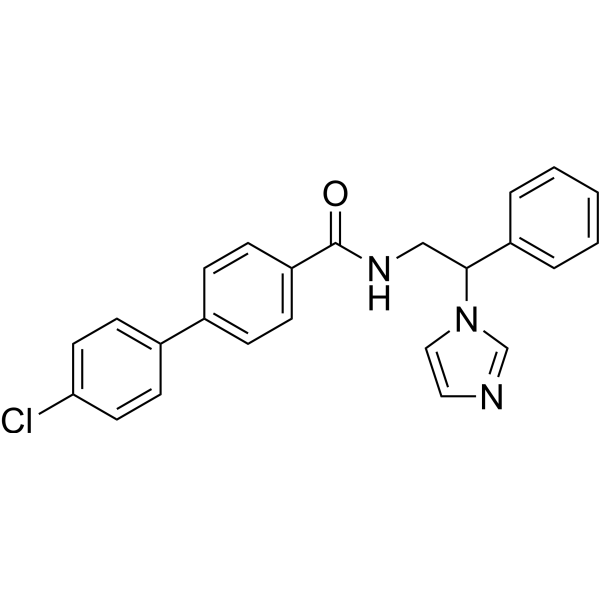
RS 49676 is an N-substituted imidazole compound that exhibits strong in vitro activity against endogenous amoebae (ED50 < 0.1 ng/mL), but is ineffective against exogenous amoebae (epimastigotes). In vivo, RS 49676 (100 mg/kg/d, sc, 2 times) can prolong the average survival time of mice infected with Trypanosoma cruzi to more than 11 weeks.
|
-
- HY-B1548S
-
|
Benznidazol-d7; Ro 07-1051-d7; Ro 71051-d7
|
Isotope-Labeled Compounds
Parasite
Antibiotic
|
Infection
|
|
Benznidazole-d7 (Benznidazol-d7; Ro 07-1051-d7; Ro 71051-d7) is the deuterium labeled Benznidazole (HY-B1548). Benznidazole (Ro 07-1051) is an antiparasitic medication, with an IC50 of 20.35 μM for Colombian T. cruzi strains, and has been used in the treatment of Chagas disease .
|
-
- HY-P10795
-
|
Antibiotic NK 2
|
Parasite
Bacterial
Fungal
|
Infection
|
|
NK-2 (Antibiotic NK 2), a shortened linear amphipathic NK-Lysin analog (comprising residues 39 to 65 of NK-lysin), is an antimicrobial peptide that exhibits potent activities against trypanosoma cruzi, Candida albicans, gram-positive and gram-negative bacteria. NK-2 can kill trypanosomes residing inside the human glioblastoma cell line 86HG39, left the host cells apparently unharmed .
|
-
- HY-159915
-
|
|
Parasite
|
Infection
|
|
Se2h is a cruzain inhibitor that exhibits strong activity against the intracellular amastigotes of Trypanosoma cruzi (EC50 < 1 μM, SI > 10), with an inhibitory activity against cruzain of IC50 < 100 nM (SI > 5.55). Compared to Benznidazole (HY-B1548) and the cruzain inhibitor K777 (HY-119293), Se2h shows superior selectivity and inhibition, while its selenazole structure reduces selenium-related toxicity. Se2h exhibits antiparasitic activity and holds promise for research in Chagas disease .
|
-
- HY-169194
-
|
|
Parasite
|
Infection
|
|
Antimalarial agent 44 (Compound 3) is an antimalarial agent against parasite. Antimalarial agent 44 has a good permeability across MDCK-MDR1 cell monolayers and a high clearance by mouse liver microsomes .
|
-
- HY-172206
-
|
|
Parasite
|
Infection
|
|
TSO-13 is the inhibitor for the main cysteine protease of Trypanosoma cruzi Cruzipain with an IC50 of 2.2 μM. TSO-13 inhibits T. cruzi in Vero cell with an IC50 of 1.9 μM .
|
-
- HY-181145
-
|
|
Parasite
|
Infection
|
|
Antitrypanosomal agent 29 is an antileishmanial agent against Leishmania donovani. Antitrypanosomal agent 29 shows no inhibitory activity against Trypanosoma cruzi and exhibits no significant cytotoxicity toward human fibroblast MRC-5 cells. Antitrypanosomal agent 29 can be used in research on leishmaniasis .
|
-
- HY-182516
-
|
|
Farnesyl Transferase
|
Infection
Others
|
|
Aminobutane bisphosphonate is a Trypanosoma cruzi farnesyl pyrophosphate synthase (FPPS) inhibitor with an IC50 of 30.77 μM against Trypanosoma cruzi. Aminobutane bisphosphonate inhibits proliferation of intracellular amastigote Trypanosoma cruzi and lacks activity against non-infective epimastigote forms. Aminobutane bisphosphonate reduces osteoclastic bone resorption, osteoid surface extent, and osteoclast number per mm of bone surface. Aminobutane bisphosphonate can be used for the research of american trypanosomiasis (chagas' disease) and immobilization-related bone loss .
|
-
- HY-112453
-
|
|
Parasite
|
Infection
|
|
IMDNQ1 is a Trypanosoma cruzi inhibitor derived from 1,4-naphthoquinone substituted with cyclic imide. IMDNQ1 effectively inhibits the proliferation of Trypanosoma cruzi epimastigotes, while also reducing the viability of mouse fibroblasts. The selectivity index between the antiproliferative activity and cytotoxicity of IMDNQ1 is 60.25, indicating a certain level of safety. IMDNQ1 can be widely used in studies related to Chagas disease .
|
-
- HY-105111
-
|
|
Parasite
Angiotensin-converting Enzyme (ACE)
HSV
DNA/RNA Synthesis
|
Cardiovascular Disease
Metabolic Disease
|
|
P-536 is a ACE inhibitor that also inhibits herpes simplex virus HSV-1 thymidine kinase and Trypanosoma cruzi RNA polymerase. By inhibiting the renin-angiotensin system, downregulating the expression of AT1R and NOX4, and reducing oxidative stress (decreasing plasma hydrogen peroxide (H2O2) and 8-isoprostaglandin levels), P-536 effectively reduces systolic blood pressure and improves vascular reactivity. P-536 also inhibits the replication of DNA/RNA viruses such as HSV-1 by blocking nucleotide metabolism and nucleic acid synthesis, competitively inhibits RNA synthesis in Trypanosoma cruzi, and inhibits amastigote replication, thereby impeding its growth. P-536 is suitable for research on hypertension, insulin resistance, and Chagas disease .
|
-
- HY-183747
-
|
|
Parasite
|
Infection
|
|
Antitrypanosomal agent 32 is a antitrypanosomal agent with nanomolar potency against multiple Trypanosoma cruzi strains, including CL-Brener, Y, Dm28c-Luc and Tulahuen. Antitrypanosomal agent 32 sustains inhibition of parasite growth after washing and reduces parasitemia levels in BALB/c mice. Antitrypanosomal agent 32 can be used for the research of trypanosome infection .
|
-
- HY-Z15986
-
-
- HY-123746
-
|
|
Farnesyl Transferase
Fungal
Parasite
|
Infection
|
|
E5700 is an orally active squalene synthase inhibitor, antimalarial agent and antifungal agent with an IC50 of 0.49 nM (without PPi) against squalene synthase from T. cruzi epimastigotes. E5700 shows antiparasitic activities against Trypanosoma cruzi. E5700 inhibits the growth and alters the lipid prolife and the ultrastructure of a multiple agent-resistant C. tropicalis strain. E5700 is a potent and selective inhibitor of the growth of Leishmania amazonensis .
|
-
- HY-114734
-
|
|
Parasite
|
Infection
|
|
Didesmethylpromazine (Compound 18) is a trypanothione reductase inhibitor with an I50of 1412 μM against T. cruzi trypanothione reductase. Didesmethylpromazine can be used in the research of trypanosome and leishmania infections .
|
-
- HY-168732
-
|
|
Parasite
|
Infection
|
|
MCG-02 is the inhibitor for cruzain (CRZ) and cathepsin L-like protease (CATL), that inhibits the CRZ in Trypanosoma cruzi and CATL in Trypanosoma brucei with the IC50 0.2 μM and 0.02 μM .
|
-
- HY-182443
-
|
|
Parasite
|
Infection
|
|
PEX5-PEX14 PPI-IN-4 is a potent PEX14-PEX5 PPI inhibitor, with EC50 values of 7.78 μM, 27.5 μM and 9.31 μM against the protein-protein interactions of TbPEX14-PEX5, TcPEX14-PEX5 and HsPEX14-PEX5, respectively. PEX5-PEX14 PPI-IN-4 exhibits trypanocidal activity against Trypanosoma brucei rhodesiense and Trypanosoma cruzi. PEX5-PEX14 PPI-IN-4 shows cytotoxic activity against mammalian cells. PEX5-PEX14 PPI-IN-4 can be used in the research of human African trypanosomiasis and Chagas disease .
|
-
- HY-W040126
-
|
GalNAcα-O-Ser
|
Parasite
|
Infection
|
|
Tn Antigen (Tn Epitope) (Compound 1) is a Trypanosoma cruzi trans-sialidase (TcTS) inhibitor with inhibition rate of 57% at 1 mM. Tn Antigen shows anti-trypanosomal activity with an IC50 of >0.5 mM. Tn Antigen can be used for the research of Chagas’ disease .
|
-
- HY-181508
-
|
|
Parasite
|
Infection
|
|
Antitrypanosomal agent 30 (compound 6b) is a trypanocidal agent with extremely low cytotoxicity against mouse macrophages. Antitrypanosomal agent 30 can be used for the research of Chagas disease .
|
-
- HY-180158
-
|
|
Parasite
Reactive Oxygen Species (ROS)
|
Infection
Cancer
|
|
Antitrypanosomal agent 28 (Compound 2a) is a trypanocidal agent. Antitrypanosomal agent 28 effectively inhibits Trypanosoma cruzi by inducing the generation of ROS and mitochondrial damage, with an IC₅₀ of 49.4 μM. Antitrypanosomal agent 28 exhibits broad-spectrum anti-tumor activity against various tumor cell lines, especially being sensitive to leukemia, colon cancer, and breast cancer. Antitrypanosomal agent 28 can be used for research on anti-cancer and anti-trypanosome activities .
|
-
- HY-179710
-
|
|
Parasite
Reactive Oxygen Species (ROS)
DNA/RNA Synthesis
Apoptosis
|
Infection
|
|
SET-12 is an antiparasitic agent with high activity and selectivity against the Leishmania amazonensis. SET-12 exhibits excellent activity against the pre-flagellated form of the Leishmania amazonensis, with an IC₅₀ of 10.89 μM and a selectivity index (SI) of up to 12.1. SET-12 is also effective against the non-flagellated form within cells, with an IC₅₀ of 3.81 μM and a further increased selectivity index (SI) to 34.5. SET-12 causes signs of parasite cell apoptosis, including mitochondrial damage and accumulation of ROS .
|
-
- HY-P11102
-
|
|
Bacterial
Fungal
HIV
Parasite
|
Infection
Cancer
|
|
Temporin-Sha is an antibacterial peptide with extensive biological activity. Temporin-Sha exhibits broad-spectrum antibacterial activity (e.g., against L. ivanovii, MIC = 6.25 μM), and is effective against Gram-negative bacteria (such as Escherichia coli, MIC = 10 μM), including drug-resistant strains (such as Methicillin (HY-121544)-resistant Staphylococcus aureus). Temporin-Sha also has inhibitory effects on Candida albicans (MIC = 25 μM), Saccharomyces cerevisiae (MIC = 12 μM), the pre-flagellated and non-flagellated forms of Leishmania infantum (IC50 = 5-20 μM), and Trypanosoma cruzi (IC50 = 17 μM). Temporin-Sha exhibits antiviral activity against HSV-1 and has anti-cancer effects (cytotoxicity against breast cancer cells MCF-7 and lung cancer cells H460, etc.) .
|
-
- HY-Q40175
-
|
|
Parasite
|
Infection
|
|
Antitrypanosomal agent 9 (compound 1) is a potent antitrypanosomal agent. Antitrypanosomal agent 9 shows inhibitory activity against T. b. brucei, with an IC50 of 1.15 μM. Antitrypanosomal agent 9 can be used for human African trypanosomiasis (HAT) research .
|
-
- HY-N11173A
-
|
|
Parasite
|
Infection
|
|
trans-Melilotoside is a coumarin precursor and that can be isolated from Melilotus neapolitan. trans-Melilotoside exhibits antiparasitic and DPPH radical-scavenging activity. trans-Melilotoside can be used for the research of human african trypanosomiasis, chagas’ disease, malaria [1] [3].
|
-
- HY-N19727
-
|
|
Interleukin Related
IFNAR
TNF Receptor
Apoptosis
|
Infection
Cancer
|
|
Chamissonolide is a sesquiterpene lactone with cytotoxic, anti-inflammatory and trypanocidal activities. Chamissonolide reduces the mRNA levels of IL-2, IFN-γ, GM-CSF, iNOS and TNF-α, and upregulates the mRNA level of NF-ATc. Chamissonolide decreases the population of naturally occurring apoptotic cells. Chamissonolide can be used in research related to tumors, African trypanosomiasis and Chagas disease .
|
-
-
- HY-W127497
-
|
|
生化学アッセイ試薬
|
|
Methyl 12-Methyltetradecanoate is a methylated fatty acid methyl ester that has been found in vermicompost of cow dung, papaya leaves, and cuticle wax of K. africana. It is a volatile compound in lipid-reducing granule tea. The levels of methyl 12-methylmyristate were reduced in T. cruzi treated with nifurtimox compared to untreated controls.
|
-
- HY-P11102
-
|
|
Bacterial
Fungal
HIV
Parasite
|
Infection
Cancer
|
|
Temporin-Sha is an antibacterial peptide with extensive biological activity. Temporin-Sha exhibits broad-spectrum antibacterial activity (e.g., against L. ivanovii, MIC = 6.25 μM), and is effective against Gram-negative bacteria (such as Escherichia coli, MIC = 10 μM), including drug-resistant strains (such as Methicillin (HY-121544)-resistant Staphylococcus aureus). Temporin-Sha also has inhibitory effects on Candida albicans (MIC = 25 μM), Saccharomyces cerevisiae (MIC = 12 μM), the pre-flagellated and non-flagellated forms of Leishmania infantum (IC50 = 5-20 μM), and Trypanosoma cruzi (IC50 = 17 μM). Temporin-Sha exhibits antiviral activity against HSV-1 and has anti-cancer effects (cytotoxicity against breast cancer cells MCF-7 and lung cancer cells H460, etc.) .
|
-
- HY-P10795
-
|
Antibiotic NK 2
|
Parasite
Bacterial
Fungal
|
Infection
|
|
NK-2 (Antibiotic NK 2), a shortened linear amphipathic NK-Lysin analog (comprising residues 39 to 65 of NK-lysin), is an antimicrobial peptide that exhibits potent activities against trypanosoma cruzi, Candida albicans, gram-positive and gram-negative bacteria. NK-2 can kill trypanosomes residing inside the human glioblastoma cell line 86HG39, left the host cells apparently unharmed .
|
| 製品番号 |
製品名 |
Category |
Target |
構造式 |
-
- HY-W040073S
-
|
|
|
Nifurtimox-d4 is deuterium labeled Nifurtimox. Nifurtimox, an antiprotozoal agent, which is generally used for the treatment of infections with Trypanosoma cruzi, has been used in the therapy of neuroblastoma. Nifurtimox affects enzyme activity of lactate dehydrogenase (LDH).
|
-
-
- HY-B1548S
-
|
|
|
Benznidazole-d7 (Benznidazol-d7; Ro 07-1051-d7; Ro 71051-d7) is the deuterium labeled Benznidazole (HY-B1548). Benznidazole (Ro 07-1051) is an antiparasitic medication, with an IC50 of 20.35 μM for Colombian T. cruzi strains, and has been used in the treatment of Chagas disease .
|
-
入力情報は安全に管理されます. ※ 必須入力項目.
Inquiry Information
- 製品名:
- 製品番号:
- 数量:
- MCE 日本正規代理店:

