



Dieugenol
Dieugenol is a neolignan that has been found in N. leucantha and has antioxidative and antiprotozoal activities. It inhibits the formation of thiobarbituric acid reactive substances (TBARS) and scavenges superoxide anions, but not hydroxyl radicals, in cell-free assays. It has anti-trypanosomal activity against T. cruzi amastigotes and trypomastigotes (IC50s=15.1 and 11.5 μM, respectively) but is cytotoxic to NCTC L-929 fibroblasts with a 50% cytotoxic concentration (CC50) value of 58.2 μM.2 Dieugenol (15 μM) disrupts the integrity of the T. cruzi trypomastigote plasma membrane but does not induce the production of reactive oxygen species (ROS) in trypomastigotes or LPS-stimulated and unstimulated isolated mouse peritoneal macrophages.
For research use only. We do not sell to patients.
- CAS No.: 4433-08-3
- Formula: C20H22O4
- Molecular Weight:326.39
-
Storage:
Please store the product under the recommended conditions in the Certificate of Analysis.


To place orders, for customer services and technical support, please contact: MedChemExpress USA
Tel: 609-228-6898 E-mail: [email protected] [email protected]


-
 Biological Activity
-
Chemical Information
- Protocols
- Purity & Documentation
- References
-
 Help & FAQs


-
HY-134161
DL-α-(Difluoromethyl)arginineArginine Decarboxylases Inhibitor -
HY-B2136
Tannic acidhERG Channel Blocker -
HY-162065
N6F11Ferroptosis Inducer -
HY-134124
Glutathione ethyl esterGSH Donor -
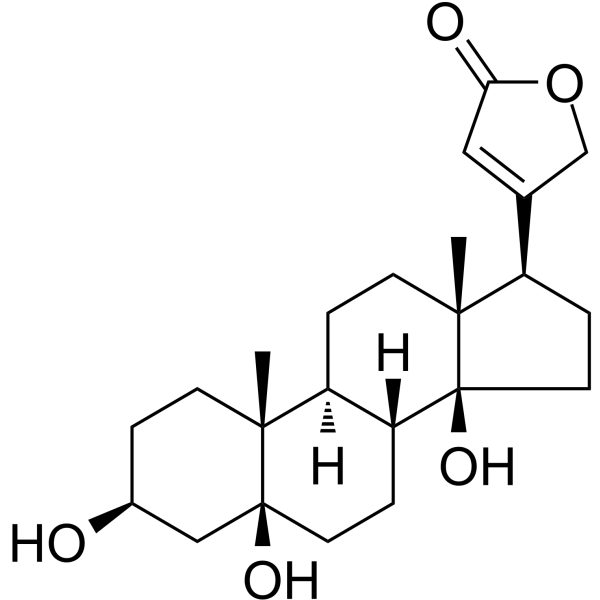
HY-N2414
PeriplogeninCardiac Glycoside -
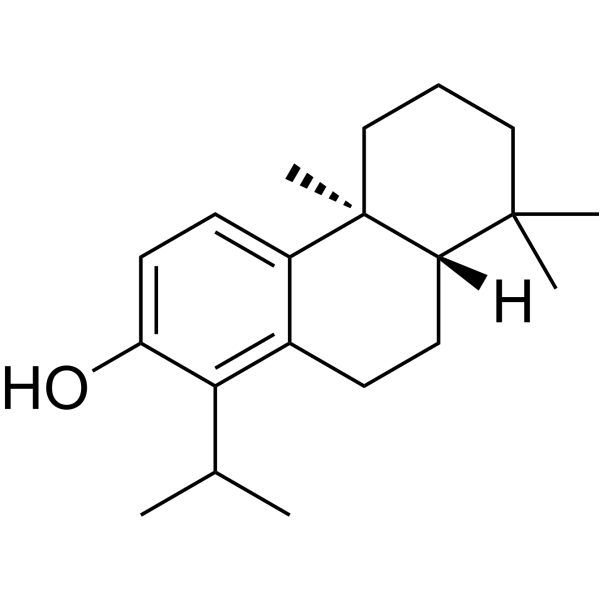
HY-N1136
(+)-TotarolDiterpenoid -
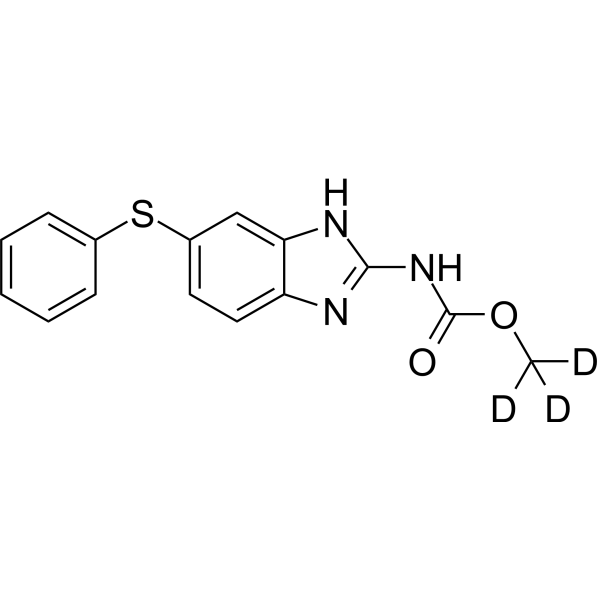
HY-B0413S
Fenbendazole-d3Stable Isotope -
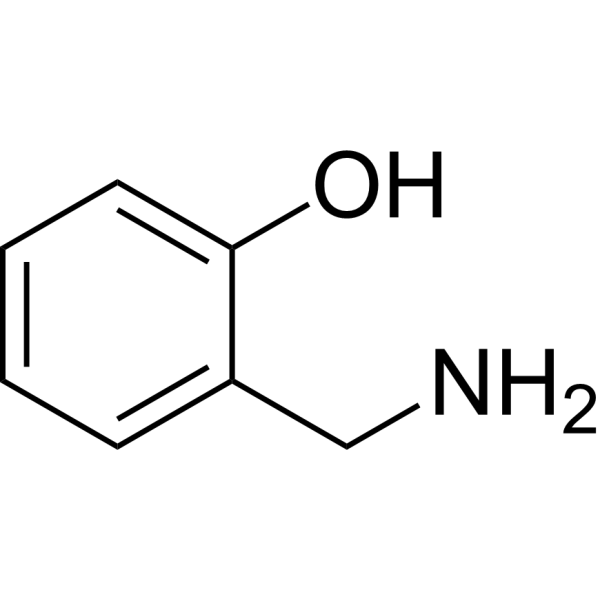
HY-34350
2-(Aminomethyl)phenolAntioxidant -

HY-136855
MitoPBNAMPK/SIRT3/PGC-1α Modulator -
HY-W067572
StobadineAntioxidant -

HY-N8280
IKD-8344Macrocyclic Dilactone -

HY-W587743
N1-Acetyl-5-methoxykynuramine hydrochlorideMelatonin Metabolites
All Parasite Isoforms
More

Biological Activity
Description
Cellular Effect
|
Cell Line

|
Type | Value | Description | References |
|---|---|---|---|---|
| HepG2 | IC50 |
116.8 μM
Compound: 7
|
Cytotoxicity of compound against human liver tumor cell line (Hep-G2) was determined
Cytotoxicity of compound against human liver tumor cell line (Hep-G2) was determined
|
[PMID: 15582432] |
| HL-60 | IC50 |
>100 μM
Compound: 21
|
Antiproliferative activity against human HL60 cells after 48 hrs by sulforhodamine B assay
Antiproliferative activity against human HL60 cells after 48 hrs by sulforhodamine B assay
|
[PMID: 22424614] |
| MOLT-4 | IC50 |
>100 μM
Compound: 21
|
Antiproliferative activity against human MOLT4 cells after 48 hrs by sulforhodamine B assay
Antiproliferative activity against human MOLT4 cells after 48 hrs by sulforhodamine B assay
|
[PMID: 22424614] |
| PC-3 | IC50 |
>100 μM
Compound: 21
|
Antiproliferative activity against human PC3 cells after 48 hrs by sulforhodamine B assay
Antiproliferative activity against human PC3 cells after 48 hrs by sulforhodamine B assay
|
[PMID: 22424614] |


Chemical Information
-
CAS No. 4433-08-3
-
Molecular Weight 326.39
-
Formula C20H22O4
-
SMILES
OC1=C(OC)C=C(CC=C)C=C1C2=CC(CC=C)=CC(OC)=C2O
-
Synonyms
Bis-eugenol; Dehydrodieugenol
-
Shipping
Room temperature in continental US; may vary elsewhere.
-
Storage
Please store the product under the recommended conditions in the Certificate of Analysis.

Protocols
-
Cell Cytotoxicity Assay
Cytotoxicity assays are usually based on the assessment of cell membrane damage, which can also be indirectly detected by measuring cell viability. Detection methods include MTT assay, CKK-8 assay, LDH assay and ATP assay, etc.
-
ROS/oxidative-stress fluorescent staining
ROS/oxidative-stress fluorescent staining uses cell-permeant fluorogenic probes that become fluorescent after oxidation inside cells or tissues; commonly used examples include DCFH-DA/DCFDA for broad cellular oxidant detection, DHE for superoxide-related signal detection, MitoSOX for mitochondrial superoxide-related signal detection, and CellROX probes for oxidative-stress-associated fluorescence readouts. The assay detects probe oxidation rather than a single ROS species unless the probe and analysis method have been chemically validated for that species. DCFH-DA enters cells, is deacetylated by intracellular esterases to DCFH, and produces fluorescent DCF after oxidation, so the readout is used as an operational measure of total cellular oxidative stress rather than a species-specific ROS measurement. DHE and MitoSOX can report superoxide-related oxidation, but red fluorescence alone can include non-specific ethidium-like oxidation products; HPLC or optimized spectral approaches are
-
Directly Induced Neuron Culture
Directly induced neuron culture converts somatic cells, most commonly fibroblasts, into induced neurons without passing through a pluripotent or neural progenitor stage; classic evidence shows that mouse fibroblasts can be converted by Ascl1, Brn2/Pou3f2, and Myt1l, human fibroblasts can be converted by defined neuronal transcription factors, and human fibroblasts can also be converted by miR-9/9-124 with neurogenic or subtype-specifying transcription factors. The readout is acquisition of neuronal identity and function, assessed by neuronal morphology, neuronal markers such as Tuj1/βIII-tubulin, MAP2, synapsin, and subtype markers when relevant, together with functional assays such as action-potential firing, synaptic activity, and electrophysiology.
-
Cell Viability Determination by MTT Colorimetric Assay
The following protocol uses the MTT colorimetric assay as a classic literature-established method for assessing cell viability/metabolic activity in cultured mammalian cells. MTT[3-(4,5-dimethylthiazol-2-yl)-2,5-diphenyltetrazolium bromide] is reduced by metabolically active cells to a colored formazan product; the amount of formazan is quantified spectrophotometrically and provides an indirect measure of metabolically active viable cells. Importantly, MTT reduction reflects cellular oxidoreductase/metabolic activity rather than an absolute direct count of living cells, so changes in cellular metabolism can alter the signal independently of cell number.


Purity & Documentation
References

Calculators
Concentration (start) × Volume (start) = Concentration (final) × Volume (final)


Dieugenol Related Classifications
HY-130743 Related Classifications
 Powered by Bioz