

Search Result
Results for "
Broad-spectrum antimicrobial activity
" in MedChemExpress (MCE) Product Catalog:
1
Biochemical Assay Reagents
15
Isotope-Labeled Compounds
| Cat. No. |
Product Name |
Target |
Research Areas |
Chemical Structure |
-
- HY-P1222
-
LL-37, human
Maximum Cited Publications
6 Publications Verification
|
Bacterial
|
Infection
|
|
LL-37, human is a 37-residue, amphipathic, cathelicidin-derived antimicrobial peptide, which exhibits a broad spectrum of antimicrobial activity. LL-37, human could help protect the cornea from infection and modulates wound healing .
|
-
-
- HY-N8461
-
|
3-Hydroxypropionaldehyde; 3-Hydroxypropanal
|
Bacterial
|
Infection
|
|
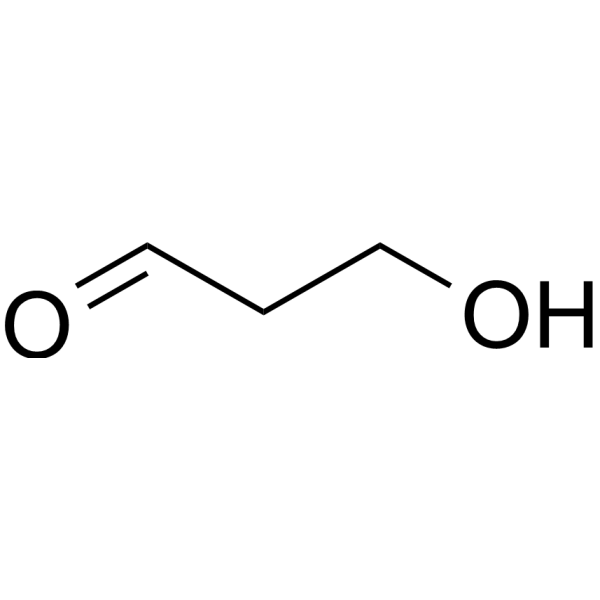
Reuterin is a broad-spectrum antimicrobial agent active against Gram positive and Gram negative bacteria, as well as yeasts, moulds and protozoa. Reuterin is produced by specific strains of Lactobacillus reuteri during anaerobic metabolism of glycerol. Reuterin also demonstrates potent antimicrobial activity against a broad panel of human and poultry meat campylobacter spp. Isolates .
|
-
-
- HY-B0467A
-
|
Amoxycillin
|
Bacterial
Antibiotic
|
Infection
Cancer
|
|
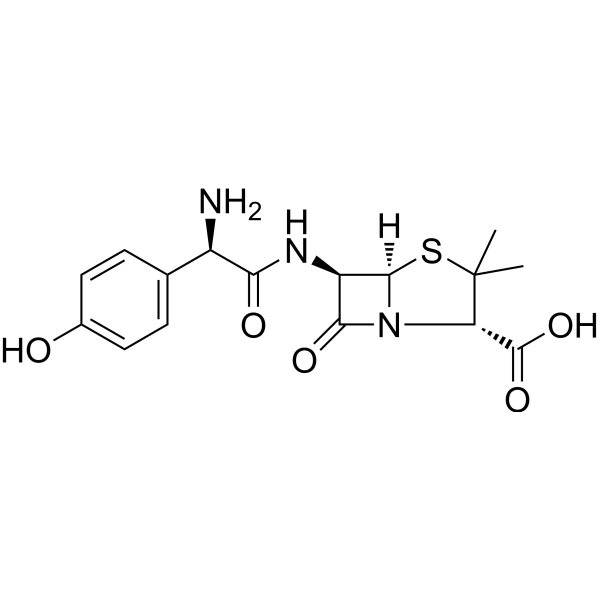
Amoxicillin (Amoxycillin) is an antibiotic with good oral absorption and broad spectrum antimicrobial activity. Amoxicillin inhibits the biosynthesis of polypeptides in the cell wall, thereby inhibiting cell growth .
|
-
-
- HY-W250308
-
|
Epsilon-polylysine (MW 3800-4200); ε-Polylysine (MW 3800-4200); ε-PL (MW 3800-4200)
|
Bacterial
|
Others
|
|
Epsilon-polylysine is an antimicrobial peptide that can be produced by bacteria such as Streptomyces. Epsilon-polylysine inhibits the growth of microorganisms such as bacteria, yeasts and molds and is therefore often used as a green food additive and preservative in various food and beverage products. Epsilon-polylysine has a variety of properties, including thermal stability, resistance to acidic conditions, and broad-spectrum antimicrobial activity. Epsilon-polylysine can be loaded on other materials to form nanoparticles or form nanofiber membranes for targeted delivery to exert sustained antibacterial efficacy. Epsilon-polylysine is also used as a liposome stabilizer .
|
-
-
- HY-13685
-
|
HePC; Hexadecyl phosphocholine
|
Akt
HIV
Parasite
|
Infection
Cancer
|
|
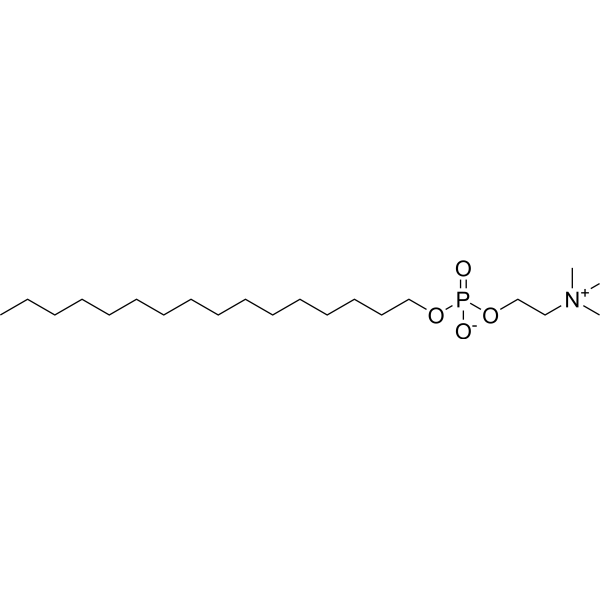
Miltefosine is a broad spectrum antimicrobial, anti-leishmanial, phospholipid agent acting by inhibiting the PI3K/Akt activity . Miltefosine is an inhibitor of CTP-phosphocholine cytidyltransferase (CCT) .
|
-
-
- HY-B1248
-
|
|
Environmental Pollutants
Antibiotic
Necroptosis
Bacterial
Apoptosis
|
Infection
|
|
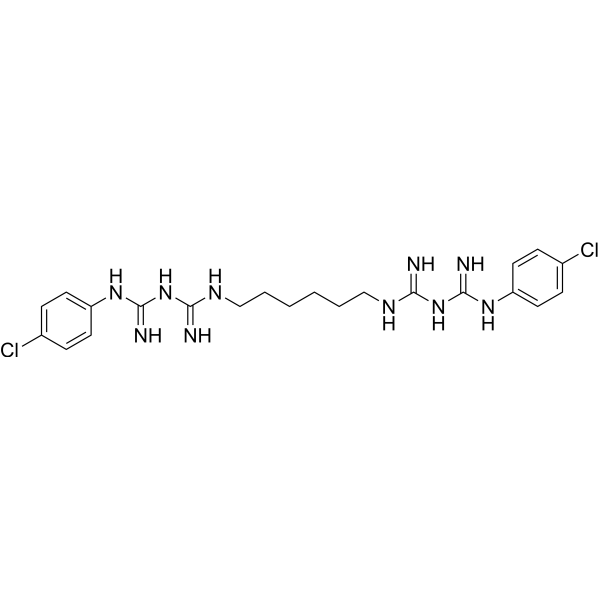
Chlorhexidine is a orally active cationic antimicrobial agent that targets microbial cell membranes. Chlorhexidine binds to cell membrane phospholipids non-specifically, destroys membrane structure and induces leakage of cell contents. Chlorhexidine has broad-spectrum bactericidal activity against both Gram-positive and Gram-negative bacteria. Chlorhexidine can interfere with membrane permeability, cause protein precipitation and energy metabolism disorders, such as rapid inhibition of microbial growth and induction of cell death (necrosis or apoptosis) .
|
-
-
- HY-W013699
-
|
|
Environmental Pollutants
Antibiotic
Necroptosis
Bacterial
Apoptosis
|
Infection
|
|
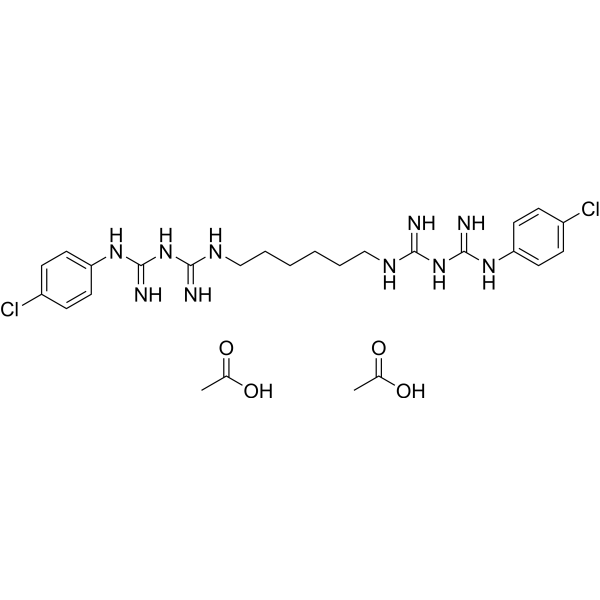
Chlorhexidine diacetate is a orally active cationic antimicrobial agent that targets microbial cell membranes. Chlorhexidine diacetate binds to cell membrane phospholipids non-specifically, destroys membrane structure and induces leakage of cell contents. Chlorhexidine diacetate has broad-spectrum bactericidal activity against both Gram-positive and Gram-negative bacteria. Chlorhexidine diacetate can interfere with membrane permeability, cause protein precipitation and energy metabolism disorders, such as rapid inhibition of microbial growth and induction of cell death (necrosis or apoptosis) .
|
-
-
- HY-B0467B
-
|
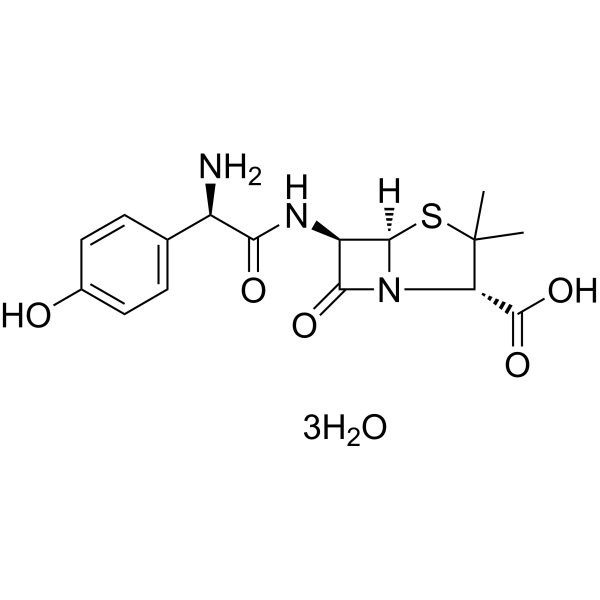
Amoxycillin trihydrate
|
Bacterial
Antibiotic
|
Infection
Cancer
|
|
Amoxicillin (Amoxycillin) trihydrateis an antibiotic with good oral absorption and broad spectrum antimicrobial activity. Amoxicillin trihydrateis inhibits the biosynthesis of polypeptides in the cell wall, thereby inhibiting cell growth .
|
-
-
- HY-P1222A
-
|
|
Bacterial
|
Infection
|
|
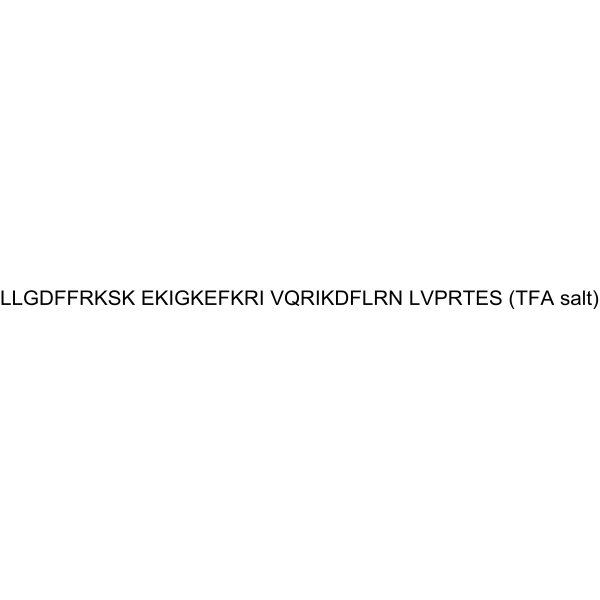
LL-37, human TFA is a 37-residue, amphipathic, cathelicidin-derived antimicrobial peptide, which exhibits a broad spectrum of antimicrobial activity. LL-37, human TFA could help protect the cornea from infection and modulates wound healing .
|
-
-
- HY-B1064
-
|
Clindamycin 2-phosphate; U-28508
|
Bacterial
Antibiotic
Parasite
|
Infection
Cancer
|
|
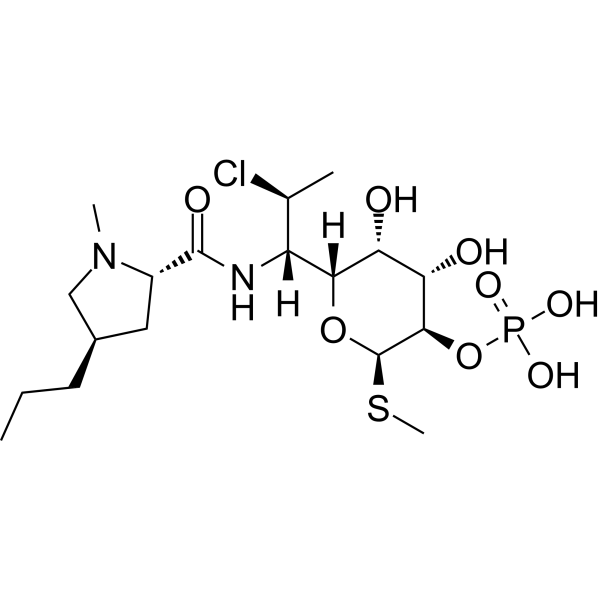
Clindamycin phosphate (Clindamycin 2-phosphate) is a broad-spectrum bacteriostatic lincosamide antibiotic. Clindamycin phosphate is the proagent of Clindamycin (HY-B1455) with no antimicrobial activity in vitro but can be rapidly converted in vivo to the active parent agent, Clindamycin, by phosphatase ester hydrolysis. Clindamycin phosphate can be used for researching acne and bacterial vaginosis . Clindamycin phosphate has no cytotoxicity. Combined with platelet rich fibrin (PRF), PRF-Clindamycin phosphate enhances antimicrobial properties .
|
-
-
- HY-B0467S
-
-
-
- HY-B0467
-
|
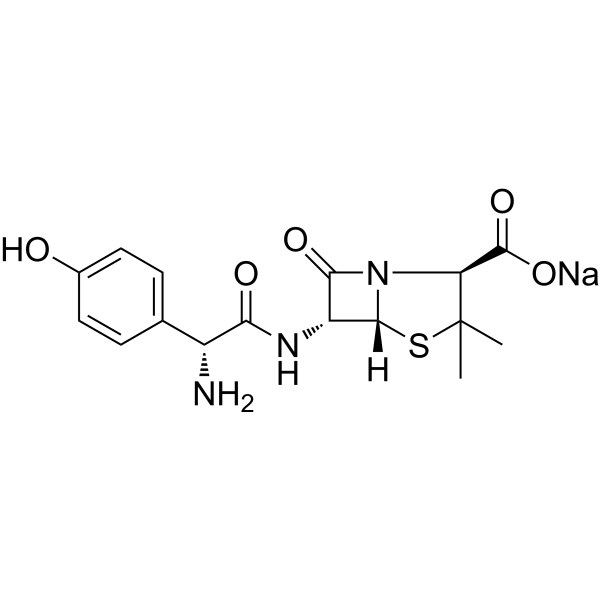
Amoxycillin sodium
|
Bacterial
Antibiotic
|
Infection
Cancer
|
|
Amoxicillin (Amoxycillin) sodium is an antibiotic with good oral absorption and broad spectrum antimicrobial activity. Amoxicillin sodium inhibits the biosynthesis of polypeptides in the cell wall, thereby inhibiting cell growth .
|
-
-
- HY-12638
-
|
DDM
|
Environmental Pollutants
Fungal
Parasite
Bacterial
|
Infection
|
|
Dichlorophen is a chlorophenol antimicrobial agent that can destroy the integrity of microbial cell membranes and interfere with the activity of metabolic enzymes. Dichlorophen can covalently bind to the thiol groups of microbial proteins and has broad-spectrum antibacterial, antifungal and anthelmintic activity. Dichlorophen can be used as an antimicrobial agent in the study of drug-resistant bacterial infections .
|
-
-
- HY-128423
-
|
Acetylisovaleryltylosin tartrate
|
Antibiotic
Bacterial
NF-κB
Apoptosis
|
Infection
Inflammation/Immunology
|
|
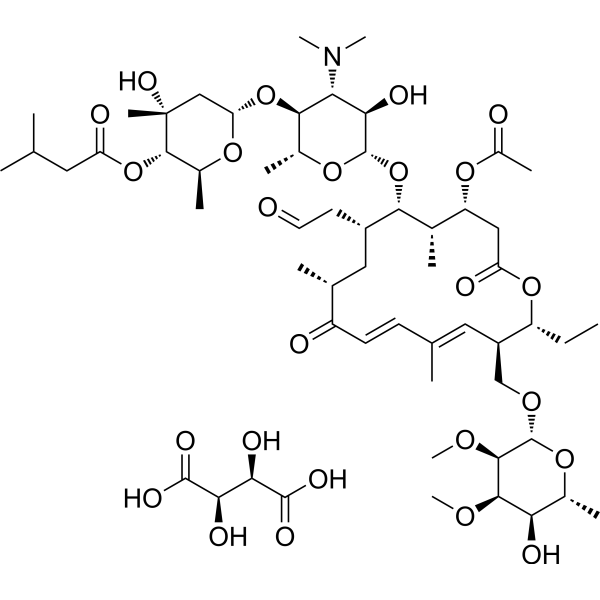
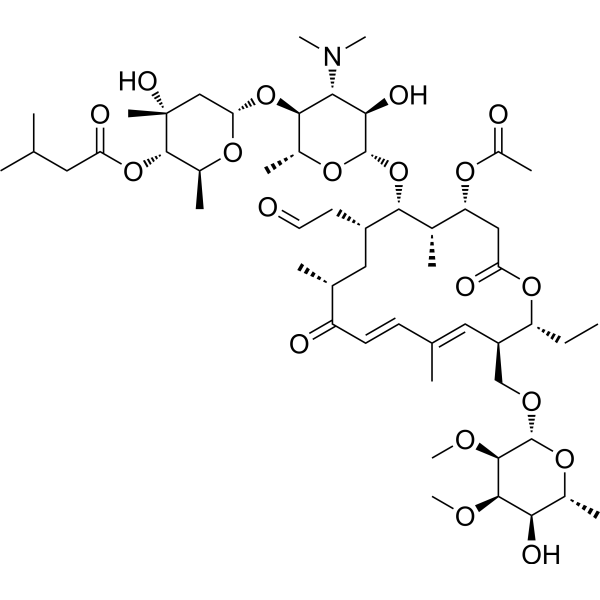
Tylvalosin (Acetylisovaleryltylosin) tartrate is an orally active, broad-spectrum macrolide antibiotic with antimicrobial activity. Tylvalosin tartrate is an antiviral agent useful in studying PRRSV infection. Tylvalosin tartrate induces apoptosis. Tylvalosin tartrate also has anti-inflammatory activity, relieves oxidative stress, and alleviates acute lung injury by inhibiting NF-κB activation .
|
-
-
- HY-B1145
-
|
|
Environmental Pollutants
Antibiotic
Apoptosis
Bacterial
Necroptosis
|
Infection
|
|
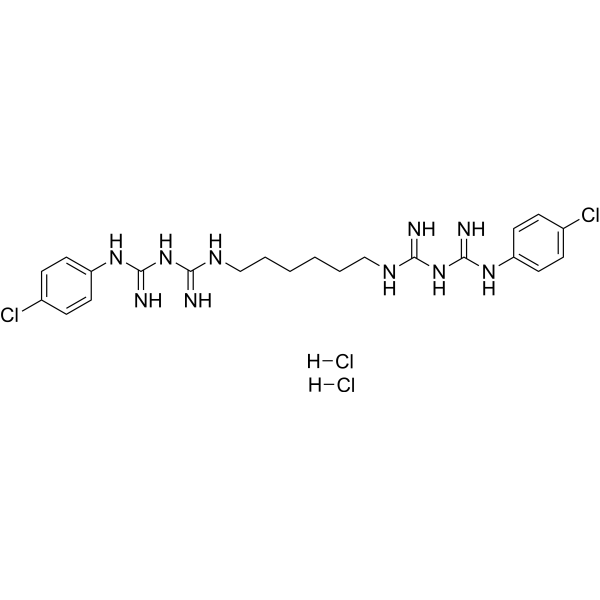
Chlorhexidine dihydrochloride is a orally active cationic antimicrobial agent that targets microbial cell membranes. Chlorhexidine dihydrochloride binds to cell membrane phospholipids non-specifically, destroys membrane structure and induces leakage of cell contents. Chlorhexidine dihydrochloride has broad-spectrum bactericidal activity against both Gram-positive and Gram-negative bacteria. Chlorhexidine dihydrochloride can interfere with membrane permeability, cause protein precipitation and energy metabolism disorders, such as rapid inhibition of microbial growth and induction of cell death (necrosis or apoptosis) .
|
-
-
- HY-B0126
-
|
|
Bacterial
Antibiotic
|
Infection
|
|
Marbofloxacin is a third generation fluoroquinolone and orally active antimicrobial agent, which has a broad spectrum bactericidal activity and good efficacy. Marbofloxacin can be used for the research of infections by Gram-positive and Gram-negative bacteria and Mycoplasma .
|
-
-
- HY-A0153A
-
|
Cefapirin sodium
|
Bacterial
Antibiotic
|
Infection
|
|
Cephapirin sodium (Cefapirin sodium) is an ephalosporin antibiotic with broad-spectrum antimicrobial activity .
|
-
-
- HY-B1444
-
|
|
Bacterial
Fungal
Antibiotic
|
Infection
|
|
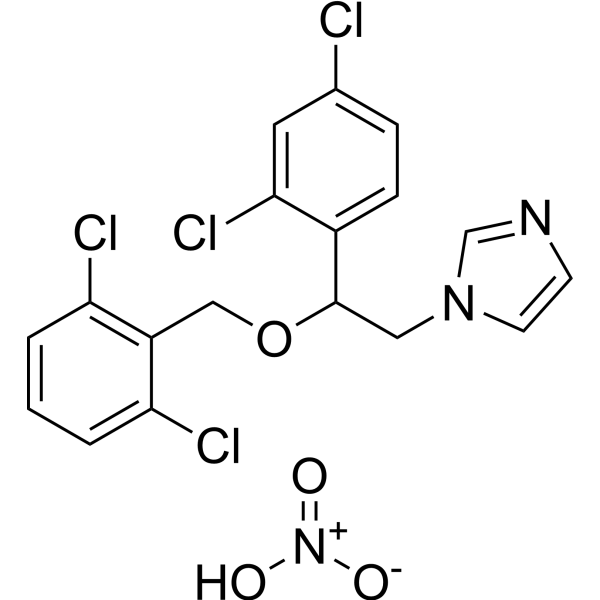
Isoconazole nitrate is a broad-spectrum antimicrobial agent with a highly effective antimycotic and gram-positive antibacterial activity, exhibiting a rapid rate of absorption and low systemic exposure potential .
|
-
-
- HY-128423A
-
|
Acetylisovaleryltylosin
|
Antibiotic
Bacterial
NF-κB
Apoptosis
|
Infection
Inflammation/Immunology
Cancer
|
|
Tylvalosin (Acetylisovaleryltylo?sin) is an orally active, broad-spectrum macrolide antibiotic with antimicrobial activity. Tylvalosin is an antiviral agent used to study PRRSV infection. Tylvalosin induces apoptosis. Tylvalosin also has anti-inflammatory activity, alleviates oxidative stress, and alleviates acute lung injury by inhibiting NF-κB activation .
|
-
-
- HY-B1282
-
-
-
- HY-N1780
-
|
|
Tyrosinase
Bacterial
|
Infection
|
|
3,4-Dimethoxyphenol is a plant-derived phenylpropanoid compound and can use as a whitening agent in cosmetics. 3,4-Dimethoxyphenol exhibits broad-spectrum antimicrobial activity. 3,4-Dimethoxyphenol has tyrosinase-inhibiting activity. 3,4-Dimethoxyphenol has potent antioxidant effect isolated from the bacterial fermentation broth. 3,4-Dimethoxyphenol can be used for the study of infection .
|
-
-
- HY-P1630
-
|
|
Bacterial
|
Infection
|
|
Buforin II, derived from buforin I, a protein isolated from the stomach of the Asian toad Bufo bufo gargarizans, is a potent antimicrobial peptide. Buforin II has antimicrobial activity against a broad spectrum of Gram-positive and Gram-negative bacteria .
|
-
-
- HY-B0724A
-
|
T-3762; Pazufloxacin methanesulfonate; Pazufloxacin mesilate
|
Bacterial
DNA/RNA Synthesis
|
Infection
|
|
Pazufloxacin mesylate is an orally active fluoroquinolone antimicrobial agent. Pazufloxacin mesylate inhibits DNA gyrase with IC50 values of 0.88 μg/mL (E. coli) and 1.9 μg/mL (P. aeruginosa). Pazufloxacin mesylate exhibits broad-spectrum antimicrobial activity, with MIC90 values ranging from 0.025 to 100 μg/mL against Gram-positive and Gram-negative bacteria, non-fermenting bacteria, Legionella spp., and anaerobic bacteria. Pazufloxacin mesylate is indicated for research on systemic infections, lung infections, urinary tract infections, and Legionella pneumonia .
|
-
-
- HY-P2460
-
|
|
Bacterial
Fungal
Interleukin Related
TNF Receptor
|
Infection
Inflammation/Immunology
|
|
SMAP‑29 is a cathelicidin antimicrobial peptide with LPS‑binding and anti‑inflammatory properties. SMAP‑29 exerts broad‑spectrum antimicrobial activity against bacteria, fungi and multidrug‑resistant isolates. SMAP‑29 kills pathogens by permeabilizing bacterial membranes, inducing depolarization and cell lysis, and also inhibits inflammatory cytokines while reducing lethality in septic shock and pneumonia models. SMAP-29 can be used for research on bacterial infections, drug-resistant infections, septic shock .
|
-
-
- HY-P1222B
-
|
|
Bacterial
|
Infection
Inflammation/Immunology
|
|
LL-37, human acetate is a 37-residue, amphipathic, cathelicidin-derived antimicrobial peptide, which exhibits a broad spectrum of antimicrobial activity. LL-37, human acetate could help protect the cornea from infection and modulates wound healing .
|
-
-
- HY-B1300
-
|
|
Antibiotic
Bacterial
Beta-lactamase
Interleukin Related
|
Infection
|
|
Cefonicid sodium is a long-acting cephalosporin antibiotic. Cefonicid sodium also acts as a noncompetitive class I β-lactamase inhibitor with a Ki value of 0.8 μM. Cefonicid sodium exhibits broad-spectrum antimicrobial activity and is effective against a variety of Gram-positive and Gram-negative bacteria. Cefonicid sodium can be used for research on infections .
|
-
-
- HY-100589
-
|
Sch 21420 sulfate
|
Antibiotic
Bacterial
|
Infection
Cardiovascular Disease
Neurological Disease
Metabolic Disease
|
|
Isepamicin sulfate (Sch 21420 sulfate) is a broad-spectrum aminoglycoside antibiotic. Isepamicin sulfate has considerable antimicrobial activity against some Gram-negative non-fermenting bacteria that are highly resistant to antibiotics. Isepamicin sulfate inhibits writhing reactions induced by Acetic acid (HY-Y0319), regulates vascular blood flow and blood pressure, and inhibits spontaneous uterine movements. Isepamicin sulfate has antidiuretic and blood sugar-raising effects. Isepamicin sulfate can be used in seizure research .
|
-
-
- HY-A0153
-
-
-
- HY-W015026
-
-
-
- HY-P3914
-
|
Oct-CA(1-7)M(2-9)
|
Bacterial
|
Infection
|
|
Cecropin A (1-7)-Melittin A (2-9) is an antimicrobial peptide with antimicrobial activity against a broad spectrum of Gram-positive and Gram-negative aerobic bacteria, as well as antimalarial activity, without the adverse hemolytic properties of bee venom peptides .
|
-
-
- HY-W392026
-
|
PHMGH
|
Antibiotic
Bacterial
Fungal
|
Infection
|
|
Polyhexamethyleneguanidine (PHMGH) hydrochloride is a positively charged polymer with broad-spectrum antimicrobial activity. It exerts its antibacterial effects by binding to the cell membranes of bacteria and fungi, disrupting membrane integrity. Polyhexamethyleneguanidine hydrochloride can be applied in studies related to disinfection, water treatment, pesticides, and other fields [2]
|
-
-
- HY-B1282A
-
|
|
Bacterial
Parasite
Antibiotic
|
Infection
|
|
Sulfaquinoxaline sodium salt is an antimicrobial for veterinary use, with activity against a broad spectrum of Gram-negative and Gram-positive bacteria. Sulfaquinoxaline is used to prevent coccidiosis and bacterial infections .
|
-
-
- HY-101865
-
|
|
Bacterial
|
Infection
|
|
KKL-10 is a small-molecule ribosome rescue inhibitor with broad-spectrum antimicrobial activity against bacteria.
|
-
-
- HY-14762
-
|
|
Antibiotic
Bacterial
|
Infection
|
|
Besifloxacin is a fluoroquinolone antimicrobial agent. Besifloxacin can inhibit cytokine production by monocytes. Besifloxacin has broad-spectrum antibacterial activity .
|
-
-
- HY-123271
-
|
|
Bacterial
Antibiotic
|
Infection
|
|
Ro 23-9424 is a broad-spectrum cephalosporin composed of a cephalosporin and a quinolone moiety. Ro 23-9424 shows antimicrobial activity in vivo and in vitro .
|
-
-
- HY-A0153R
-
|
Cefapirin (Standard)
|
Reference Standards
Antibiotic
Bacterial
|
Infection
|
|
Cephapirin (Standard) is the analytical standard of Cephapirin. This product is intended for research and analytical applications. Cephapirin (Cefapirin) is an ephalosporin antibiotic with broad-spectrum antimicrobial activity .
|
-
-
- HY-W015026S
-
-
-
- HY-P3459
-
|
|
Bacterial
|
Infection
|
|
Tet-213 is a antimicrobial peptide. Tet-213 has broad spectrum antibacterial activity. Tet-213 can promote infected wound repair .
|
-
-
- HY-B0724B
-
|
T3761
|
Bacterial
DNA/RNA Synthesis
|
Infection
|
|
Pazufloxacin is an orally active fluoroquinolone antimicrobial agent. Pazufloxacin inhibits DNA gyrase with IC50 values of 0.88 μg/mL (E. coli) and 1.9 μg/mL (P. aeruginosa). Pazufloxacin exhibits broad-spectrum antimicrobial activity, with MIC90 values ranging from 0.025 to 100 μg/mL against Gram-positive and Gram-negative bacteria, non-fermenting bacteria, Legionella spp., and anaerobic bacteria. Pazufloxacin is indicated for research on systemic infections, lung infections, urinary tract infections, and Legionella pneumonia .
|
-
-
- HY-A0035
-
|
|
Antibiotic
Bacterial
|
Infection
|
|
Faropenem is a potent and orally active beta-lactam antibiotic. Faropenem demonstrates broad-spectrum in vitro antimicrobial activity against many gram-positive and -negative aerobes and anaerobes. Faropenem is resistant to hydrolysis by nearly all beta-lactamases, including extended-spectrum beta-lactamases and AmpC beta-lactamases. Faropenem is developed as an oral proagent, faropenem medoxomil, for the research of respiratory tract infections .
|
-
-
- HY-N16374
-
|
|
Antibiotic
Bacterial
Fungal
|
Infection
Cancer
|
|
Mazethramycin B (Compound II) is an antitumor antibiotic. Mazethramycin B can be isolated from the Streptomyces thioluteusM ME561-L4. Mazethramycin B has a broad-spectrum antimicrobial activity (such as MICs of 1.56 and 6.25 μg/mL for the bacteria Bacillus subtilis PCI 219 and the fungus Candida pseudotropicalis, resepectively). Mazethramycin B significantly increases survival in L1210 leukemia mice model .
|
-
-
- HY-P3459A
-
|
|
Bacterial
|
Infection
|
|
Tet-213 TFA is a antimicrobial peptide. Tet-213 TFA has broad spectrum antibacterial activity. Tet-213 TFA can promote infected wound repair .
|
-
-
- HY-106922
-
|
GV104326
|
Antibiotic
Bacterial
|
Infection
|
|
Sanfetrinem (GV104326) is a β-lactamase-stable antibiotic. Sanfetrinem has broad-spectrum antimicrobial activity against both Gram-positive and Gram-negative bacteria .
|
-
-
- HY-P10536
-
|
|
Bacterial
|
Infection
|
|
Temporin SHF is a broad-spectrum antimicrobial peptide that is active against Gram-positive and Gram-negative bacteria and yeasts, but does not have hemolytic activity. Temporin SHF disrupts the acyl chain stacking of anionic lipid bilayers, leading to cracks and disintegration of microbial membranes. Temporin SHF can be used in the development of antimicrobial drugs .
|
-
-
- HY-167256
-
-
-
- HY-P5582
-
|
|
Bacterial
|
Infection
|
|
Combi-1 is an antimicrobial peptide with broad-spectrum activity against different bacteria and yeast cells .
|
-
-
- HY-P11126
-
|
|
Bacterial
|
Infection
|
|
Mel4 is an antimicrobial peptide, exhibiting broad-spectrum antimicrobial activity. Mel4 can neutralize bacterial lipopolysaccharide in a dose-dependent manner. Mel4 can be used in the research and prevention of related bacterial infectious diseases (such as ocular infections) .
|
-
-
- HY-B0455B
-
|
SC47111A (aspartate); NY-198 (aspartate)
|
Bacterial
Antibiotic
|
Infection
|
|
Lomefloxacin (SC47111A) aspartate is a broad-spectrum quinolone antibiotic, with antimicrobial activity. Lomefloxacin aspartate can be used for researching respiratory tract infections, genitourinary infections, gastrointestinal infections, ENT infections, etc. .
|
-
-
- HY-P2170
-
|
XOMA-629
|
Antibiotic
Bacterial
|
Infection
Inflammation/Immunology
|
|
XMP-629 (XOMA-629), a cationic α-helical peptide, is a potent endotoxin inhibitor. XMP-629 exhibits broad-spectrum antimicrobial activity via an immunomodulatory mechanism. XOMA 629 has antimicrobial activity against Propionibacterium acnes, Staphylococcus aureus and Streptococcus pyogenesand .
|
-
-
- HY-B1444R
-
|
|
Reference Standards
Bacterial
Fungal
Antibiotic
|
Infection
|
|
Isoconazole (nitrate) (Standard) is the analytical standard of Isoconazole (nitrate). This product is intended for research and analytical applications. Isoconazole nitrate is a broad-spectrum antimicrobial agent with a highly effective antimycotic and gram-positive antibacterial activity, exhibiting a rapid rate of absorption and low systemic exposure potential .
|
-
- HY-12824
-
|
|
Antibiotic
Bacterial
|
Infection
|
|
RNPA1000, an antibiotic, is a potent RnpA inhibitor and inhibits RnpA-mediated cellular RNA degradation. RNPA1000 inhibits tRNA maturation with an IC50 of 175 μM. RNPA1000 displays broad-spectrum antimicrobial activities and inhibits staphylococcal and all Gram-positive bacterial pathogens activity .
|
-
- HY-159955
-
|
|
Bacterial
|
Infection
|
|
DC-159a is an 8-methoxyfluoroquinolone with broad-spectrum antimicrobial activity, especially against Gram-positive pathogens. DC-159a against Peptostreptococcus, Clostridium difficile, and Bacteroides fragilis with MIC90 values of 0.5, 4, and 2 μg/mL, respectively .
|
-
- HY-P11191
-
|
|
Bacterial
|
Infection
|
|
AR-23 is a melittin-related antimicrobial peptide that can be isolated from Rana tagoi. AR-23 exhibits broad-spectrum growth inhibitory activity against aerobic bacteria, the opportunistic yeast pathogen Candida albicans and clinical isolates of Methicillin (HY-121544)-resistant Staphylococcus aureus (MRSA). AR-23 can be used for antimicrobial research .
|
-
- HY-P5724
-
|
|
Bacterial
|
Infection
|
|
Nv-CATH is an antibacterial peptide of frog origin. Nv-CATH has broad-spectrum antibacterial activity against gram-positive and gram-negative bacteria. Nv-CATH significantly protects mice from fatal infections caused by Staphylococcus aureus. Nv-CATH protects mice from bacterial infection through antimicrobial immunoregulatory duality .
|
-
- HY-B0467AS
-
-
- HY-B0467C
-
|
Amoxycillin arginine
|
Antibiotic
Bacterial
|
Infection
Cancer
|
|
Amoxicillin (Amoxycillin) arginine is an antibiotic with good oral absorption and broad spectrum antimicrobial activity. Amoxicillin arginine inhibits the biosynthesis of polypeptides in the cell wall, thereby inhibiting cell growth .
|
-
- HY-B1282S
-
|
|
Isotope-Labeled Compounds
Bacterial
Parasite
Antibiotic
|
Infection
|
|
Sulfaquinoxaline-d4 is the deuterium labeled Sulfaquinoxaline. Sulfaquinoxaline is an antimicrobial for veterinary use, with activity against a broad spectrum of Gram-negative and Gram-positive bacteria. Sulfaquinoxaline is used to prevent coccidiosis and bacterial infections .
|
-
- HY-P5552
-
|
|
Bacterial
Parasite
Fungal
|
Infection
|
|
Melimine is a hybrid antimicrobial peptide of Melittin (HY-P0233) and Protamine. Melimine is active against P. aeruginosa and S. aureus. Melimine has broad spectrum activity against bacteria, fungi and protozoa .
|
-
- HY-B1248A
-
|
|
Antibiotic
Bacterial
Necroptosis
Apoptosis
|
Infection
|
|
Chlorhexidine acetate hydrate is a orally active cationic antimicrobial agent that targets microbial cell membranes. Chlorhexidine acetate hydrate binds to cell membrane phospholipids non-specifically, destroys membrane structure and induces leakage of cell contents. Chlorhexidine acetate hydrate has broad-spectrum bactericidal activity against both Gram-positive and Gram-negative bacteria. Chlorhexidine acetate hydrate can interfere with membrane permeability, cause protein precipitation and energy metabolism disorders, such as rapid inhibition of microbial growth and induction of cell death (necrosis or apoptosis) .
|
-
- HY-B0126A
-
|
|
Bacterial
Antibiotic
|
Infection
|
|
Marbofloxacin hydrochloride is a third generation fluoroquinolone and orally active antimicrobial agent, which has a broad spectrum bactericidal activity and good efficacy. Marbofloxacin hydrochloride can be used for the research of infections by Gram-positive and Gram-negative bacteria and Mycoplasma .
|
-
- HY-P5642
-
-
- HY-149155
-
|
|
Bacterial
|
Infection
|
|
o-Cymen-5-ol is a broad-spectrum antimicrobial agent with direct antimicrobial activity. o-Cymen-5-ol showed effective minimum inhibitory concentrations (MICs) against a variety of bacteria and fungi, such as Streptococcus mutans and Candida albicans. The combination of o-Cymen-5-ol and zinc showed synergistic effects, enhancing the inhibitory effect against oral pathogens. o-Cymen-5-ol was able to inhibit the glycolysis process and co-enhanced this effect with zinc. o-Cymen-5-ol showed a stronger antibacterial effect in toothpaste than placebo .
|
-
- HY-156975
-
|
|
Bacterial
|
Infection
|
|
Sulfatrozole is a sulfanilamide derivative. Sulfatrozole is an antimicrobial agent with broad-spectrum activity .
|
-
- HY-A0153AR
-
|
Cefapirin sodium (Standard)
|
Reference Standards
Bacterial
Antibiotic
|
Infection
|
|
Cephapirin (sodium) (Standard) is the analytical standard of Cephapirin (sodium). This product is intended for research and analytical applications. Cephapirin sodium (Cefapirin sodium) is an ephalosporin antibiotic with broad-spectrum antimicrobial activity .
|
-
- HY-175313
-
|
|
Bacterial
|
Infection
|
|
Antibacterial agent 286 (compound 5) is an effective broad-spectrum antimicrobial agent with strong inhibitory activity against methicillin-resistant S. aureus (MRSA) with an MIC of 25 μg/mL .
|
-
- HY-155546
-
|
|
Bacterial
|
Infection
|
|
Antimicrobial agent-22 (THI 6c) is a multi-target broad-spectrum antibacterial agent. Antimicrobial agent-22 has low cytotoxicity, hemolytic property, rapid bactericidal ability and good anti-biofilm activity .
|
-
- HY-155769
-
|
|
Fungal
|
Infection
|
|
Antimicrobial agent-24 (compound E8) is a hydrazide compound with excellent and broad-spectrum fungicidal activities. Antimicrobial agent-24 affects the normal function of the plasma membrane, further generating changes in the morphology and subcellular structure of mycelia .
|
-
- HY-P5691
-
|
|
Bacterial
|
Infection
Cancer
|
|
P1 is a broad-spectrum antimicrobial peptide. P1 shows antibacterial activity against Gram-positive and Gram-negative bacteria,such as B. anthracis spores and Carbapenem-resistant A. baumannii and K. pneumoniae .
|
-
- HY-129347
-
|
T-2636E
|
Antibiotic
Bacterial
|
Infection
|
|
Lankacyclinol A is an orally active antibiotic isolated from Streptomyces rochei. Lankacyclinol A has broad-spectrum antimicrobial activity against both Gram-positive and Gram-negative bacteria. Lankacyclinol A exhibits low toxicity in mice .
|
-
- HY-B0455S
-
|
SC47111A-d5 hydrochloride; NY-198-d5 hydrochloride
|
Isotope-Labeled Compounds
|
Inflammation/Immunology
|
|
Lomefloxacin-d5 (hydrochloride) is the deuterium labeled Lomefloxacin hydrochloride. Lomefloxacin (SC47111A) hydrochloride is a broad-spectrum quinolone antibiotic, with antimicrobial activity. Lomefloxacin hydrochloride is used for the research of respiratory tract infections, genitourinary infections, gastrointestinal infections, ENT infections, etc. .
|
-
- HY-143408
-
|
|
Bacterial
|
Infection
|
|
OYYF-175, an antimicrobial antifolate, is a dihydrofolate reductase (DHFR) inhibitor with an IC50 of 2.36 nM for Escherichia coli DHFR. OYYF-175 exhibits potent broad-spectrum antibacterial activities, especially against multi-drug resistant Gram-Negative-strains .
|
-
- HY-W015026R
-
-
- HY-126662
-
|
|
Antibiotic
Bacterial
|
Infection
|
|
Netzahualcoyone is a triterpenoid compound isolated from the Celastraceae plant family. Netzahualcoyone exhibits broad-spectrum antibiotic activity against Gram-positive bacteria and yeasts, but is not active against Gram-negative bacteria. Netzahualcoyone can be utilized in the development of antibiotics and for studying antimicrobial mechanisms .
|
-
- HY-B0455AR
-
|
SC47111A (Standard); NY-198 (Standard)
|
Reference Standards
Bacterial
Antibiotic
|
Infection
|
|
Lomefloxacin (Standard) is the analytical standard of Lomefloxacin. This product is intended for research and analytical applications. Lomefloxacin (SC47111A) is a broad-spectrum quinolone antibiotic, with antimicrobial activity. Lomefloxacin is used for the research of respiratory tract infections, genitourinary infections, gastrointestinal infections, ENT infections, etc. .
|
-
- HY-B1908R
-
|
SF-837 (Standard); Antibiotic SF-837 (Standard)
|
Reference Standards
Bacterial
Antibiotic
|
Infection
|
|
Lomefloxacin (Standard) is the analytical standard of Lomefloxacin. This product is intended for research and analytical applications. Lomefloxacin (SC47111A) is a broad-spectrum quinolone antibiotic, with antimicrobial activity. Lomefloxacin is used for the research of respiratory tract infections, genitourinary infections, gastrointestinal infections, ENT infections, etc. .
|
-
- HY-159809
-
|
|
Bacterial
|
Infection
Inflammation/Immunology
|
|
Antibacterial agent 249 demonstrates broad-spectrum antimicrobial properties, effectively inhibiting the growth of Aspergillus niger, Bacillus subtilis, Pseudomonas albicans, Escherichia coli, and Staphylococcus aureus, while also exhibiting anti-inflammatory activity in vitro, making it a potential candidate for treating bacterial infections.
|
-
- HY-122008
-
|
|
Bacterial
|
Infection
|
|
Levonadifloxacin ((S)-(-)-Nadifloxacin; WCK 771) arginine is a broad-spectrum antistaphylococcal agent. Levonadifloxacin arginine has antimicrobial activity against methicillin-susceptible Staphylococcus aureus (MSSA) and methicillin-resistant Staphylococcus aureus and reduces phagocytosis of MRSA and MSSA strains by monocytic THP-1.
|
-
- HY-14926B
-
|
(S)-(-)-Nadifloxacin arginine; WCK 771 arginine
|
Bacterial
|
Infection
|
|
Levonadifloxacin ((S)-(-)-Nadifloxacin; WCK 771) arginine is a broad-spectrum antistaphylococcal agent. Levonadifloxacin arginine has antimicrobial activity against methicillin-sensitive Staphylococcus aureus (MSSA) and methicillin-resistant Staphylococcus aureus and reduces phagocytosis of MRSA and MSSA strains by monocytic THP-1 cells .
|
-
- HY-P11095
-
|
|
Bacterial
Fungal
|
Infection
|
|
Pelteobagrin is a broad-spectrum antimicrobial peptide targeting Gram-positive bacteria, Gram-negative bacteria, and fungi (MIC=2-16 μg/mL). Pelteobagrin exerts bactericidal activity via non-competitive disruption of cell wall and cytoplasmic membrane integrity. Pelteobagrin is promising for research of infectious diseases .
|
-
- HY-146460
-
|
|
Reactive Oxygen Species (ROS)
|
Infection
|
|
Antimicrobial agent-2 (compound V-a) is a broad-spectrum antimicrobial agent, possessing inhibitory activity against various Gram-positive and -negative bacteria. Antimicrobial agent-2 has excellent inhibitory effect on Methicillin-resistant Staphylococcus aureus (MRSA) with a MIC of 1 μg/mL. Antimicrobial agent-2 can effectively damage the membrane and lead to the leakage of protein, also can induce the generation of ROS. Antimicrobial agent-2 exhibits low toxicity, no obvious resistance and good bioavailability .
|
-
- HY-B1064A
-
|
Clindamycin 2-phosphate hydrochloride; U-28508 hydrochloride
|
Bacterial
Antibiotic
Parasite
|
Infection
Cancer
|
|
Clindamycin phosphate (Clindamycin 2-phosphate) hydrochloride is a broad-spectrum bacteriostatic lincosamide antibiotic. Clindamycin phosphate hydrochloride is the proagent of Clindamycin (HY-B1455) with no antimicrobial activity in vitro but can be rapidly converted in vivo to the active parent agent, Clindamycin, by phosphatase ester hydrolysis. Clindamycin phosphate hydrochloride can be used for researching acne and bacterial vaginosis .
|
-
- HY-12638R
-
|
DDM (Standard)
|
Reference Standards
Bacterial
Fungal
Parasite
|
Infection
|
|
Dichlorophen (Standard) is the analytical standard of Dichlorophen (HY-12638). This product is intended for research and analytical applications. Dichlorophen is a chlorophenol antimicrobial agent that can destroy the integrity of microbial cell membranes and interfere with the activity of metabolic enzymes. Dichlorophen can covalently bind to the thiol groups of microbial proteins and has broad-spectrum antibacterial, antifungal and anthelmintic activity. Dichlorophen can be used as an antimicrobial agent in the study of drug-resistant bacterial infections .
|
-
- HY-B1300A
-
|
|
Antibiotic
Bacterial
Beta-lactamase
Interleukin Related
|
Infection
|
|
Cefonicid is a long-acting cephalosporin antibiotic. Cefonicid also acts as a noncompetitive class I β-lactamase inhibitor with a Ki value of 0.8 μM. Cefonicid exhibits broad-spectrum antimicrobial activity and is effective against a variety of Gram-positive and Gram-negative bacteria. Cefonicid can be used for research on infections .
|
-
- HY-P10228
-
|
|
Fungal
Bacterial
|
Infection
|
|
S-Thanatin is an insect antimicrobial peptide with potent broad-spectrum antibacterial activity. S-Thanatin can inhibit the activity of Gram-negative bacteria, Gram-positive bacteria, and fungi, without cytotoxicity. The antibacterial activity of S-Thanatin is not affected by PH value, but monovalent cations (Na +/K +) can reduce its antibacterial activity against Gram-negative bacteria in a dose-dependent manner .
|
-
- HY-N13964
-
|
XK 88-3
|
Antibiotic
Bacterial
|
Infection
|
|
Seldomycin factor 3 (XK 88-3) is an aminoglycoside antibiotic. Seldomycin factor 3 has a broad spectrum of antimicrobial activity .
|
-
- HY-N13961
-
|
XK-88-2
|
Antibiotic
Bacterial
|
Infection
|
|
Seldomycin factor 2 (XK 88-2) is an aminoglycoside antibiotic. Seldomycin factor 2 has a broad spectrum of antimicrobial activity .
|
-
- HY-N13959
-
|
XK 88-1
|
Antibiotic
Bacterial
|
Infection
|
|
Seldomycin factor 1 (XK 88-1) is an aminoglycoside antibiotic. Seldomycin factor 1 has a broad spectrum of antimicrobial activity .
|
-
- HY-B1064R
-
|
Clindamycin 2-phosphate (Standard); U-28508 (Standard)
|
Reference Standards
Bacterial
Antibiotic
Parasite
|
Infection
|
|
Clindamycin phosphate (Standard) is the analytical standard of Clindamycin phosphate. This product is intended for research and analytical applications. Clindamycin phosphate (Clindamycin 2-phosphate) is a broad-spectrum bacteriostatic lincosamide antibiotic. Clindamycin phosphate is the proagent of Clindamycin (HY-B1455) with no antimicrobial activity in vitro but can be rapidly converted in vivo to the active parent agent, Clindamycin, by phosphatase ester hydrolysis. Clindamycin phosphate can be used for researching acne and bacterial vaginosis .
|
-
- HY-B1300R
-
|
|
Reference Standards
Antibiotic
Bacterial
Beta-lactamase
Interleukin Related
|
Infection
|
|
Cefonicid sodium (Standard) is the analytical standard of Cefonicid sodium (HY-B1300). This product is intended for research and analytical applications. Cefonicid sodium is a long-acting cephalosporin antibiotic. Cefonicid sodium also acts as a noncompetitive class I β-lactamase inhibitor with a Ki value of 0.8 μM. Cefonicid sodium exhibits broad-spectrum antimicrobial activity and is effective against a variety of Gram-positive and Gram-negative bacteria. Cefonicid sodium can be used for research on infections .
|
-
- HY-122448A
-
|
|
Bacterial
Fungal
|
Infection
|
|
(Rac)-Sativan is an isoflavanoid with a broad spectrum of antimicrobial activity against bacteria and phytopathogenic fungi. (Rac)-Sativan exhibits antituberculosis activity against Mycobacterium tuberculosis H37Rv, with MIC values of 50 µg/mL .
|
-
- HY-P10219
-
|
|
Bacterial
|
Infection
Inflammation/Immunology
|
|
Brevicidine analog 22 (22) exerts broad spectrum antimicrobial activity and excellent stability (t1/2 = 40.98 h), with MICs of 2-16 μM for gram-negative and gram-positive bacteria .
|
-
- HY-N1780R
-
|
|
Reference Standards
Tyrosinase
Bacterial
|
Infection
|
|
3,4-Dimethoxyphenol (Standard) is the analytical standard of Lithocholic acid. This product is intended for research and analytical applications. 3,4-Dimethoxyphenol is a plant-derived phenylpropanoid compound and can use as a whitening agent in cosmetics. 3,4-Dimethoxyphenol exhibits broad-spectrum antimicrobial activity. 3,4-Dimethoxyphenol has tyrosinase-inhibiting activity. 3,4-Dimethoxyphenol has potent antioxidant effect isolated from the bacterial fermentation broth. 3,4-Dimethoxyphenol can be used for the study of infection .
|
-
- HY-B1282R
-
|
|
Reference Standards
Bacterial
Parasite
Antibiotic
|
Infection
|
|
Sulfaquinoxaline (Standard) is the analytical standard of Sulfaquinoxaline. This product is intended for research and analytical applications. Sulfaquinoxaline is an antimicrobial for veterinary use, with activity against a broad spectrum of Gram-negative and Gram-positive bacteria. Sulfaquinoxaline is used to prevent coccidiosis and bacterial infections .
|
-
- HY-N14066
-
|
|
Fungal
|
Infection
|
|
Ascochitine, a polyketide-derived secondary metabolite, is a selective antifungal agent. Ascochitine exhibits broad-spectrum phytotoxicity and antimicrobial activities .
|
-
- HY-P11634
-
|
|
Bacterial
|
Infection
|
|
KF-22 is an antimicrobial peptide that exhibits antimicrobial activity against both Gram-negative and Gram-positive bacteria. KF-22 demonstrates broad-spectrum, potent activity against multidrug-resistant bacteria with low toxicity. KF-22 can be used in research related to infections .
|
-
- HY-101865R
-
|
|
Reference Standards
Bacterial
|
Infection
|
|
KKL-10 (Standard) is the analytical standard of KKL-10 (HY-101865). This product is intended for research and analytical applications. KKL-10 is a small-molecule ribosome rescue inhibitor with broad-spectrum antimicrobial activity against bacteria.
|
-
- HY-N13986
-
|
XX-88-5
|
Antibiotic
Bacterial
|
Infection
|
|
Seldomycin factor 5 (XK 88-5) is an aminoglycoside antibiotic. Seldomycin factor 5 has a broad spectrum of antimicrobial activity .
|
-
- HY-B1300B
-
|
|
Antibiotic
Bacterial
Beta-lactamase
Interleukin Related
|
Infection
|
|
Cefonicid monosodium is a long-acting cephalosporin antibiotic. Cefonicid monosodium also acts as a noncompetitive class I β-lactamase inhibitor with a Ki value of 0.8 μM. Cefonicid monosodium exhibits broad-spectrum antimicrobial activity and is effective against a variety of Gram-positive and Gram-negative bacteria. Cefonicid monosodium can be used for research on infections .
|
-
- HY-P11607
-
|
|
Bacterial
|
Infection
|
|
CyLip-10 is a microbial-derived cyclic-lipid antimicrobial peptide. CyLip-10 has broad-spectrum antimicrobial efficacy, low hemolytic activity, and excellent stability. CyLip-10 can disrupt membrane integrity, inhibit biofilm formation and induce membrane permeabilization and bacterial cell death. CyLip-10 reduces bacterial load, promotes wound healing, and alleviates inflammatory responses in a mouse Methicillin (HY-121544)-resistant Staphylococcus aureus skin wound infection model. CyLip-10 can be used for the bacterial infection .
|
-
- HY-P11657
-
|
|
Bacterial
|
Infection
|
|
GN-2 peptoid is a 9-mer cationic amphipathic peptoid and bactericidal agent with an overall net charge of +4, broad-spectrum antimicrobial activity, and low hemolytic and cytotoxic activity against mammalian cells. GN-2 peptoid exerts bactericidal action against Escherichia coli in a concentration-dependent manner. GN-2 peptoid exhibits antimicrobial activity against Gram-positive Staphylococcus aureus and Gram-negative Escherichia coli, Pseudomonas aeruginosa strains. GN-2 peptoid shows low toxicity against human red blood cells and HeLa cells. GN-2 peptoid maintains antimicrobial activity in the presence of 50% human blood plasma. GN-2 peptoid can be used for the research of bacterial infections .
|
-
- HY-131165
-
|
|
Antibiotic
Bacterial
|
Infection
Cancer
|
|
Amoxicillin (trihydrate) mixture with potassium clavulanate (4:1) an antibiotic with good oral absorption and broad spectrum antimicrobial activity. Amoxicillin (trihydrate) mixture with potassium clavulanate (4:1) inhibits the biosynthesis of polypeptides in the cell wall, thereby inhibiting cell growth .
|
-
- HY-P5601
-
|
|
Bacterial
Fungal
|
Infection
|
|
Thanatin is an inducible cationic antimicrobial peptide. Thanatin is a pathogen-inducible single-disulfide-bond-containing β-hairpin AMP. Thanatin displays broad-spectrum activity against both Gram-negative and Gram-positive bacteria as well as against various species of fungi with MICs of 0.3-40 µM, 0.6-40 µM and 0.6-20 µM, respectively. Thanatin has the property of competitive replacement of divalent cations from bacterial outer membrane (OM), leading to OM disruption .
|
-
- HY-168258
-
|
|
Bacterial
|
Infection
|
|
Antibiofilm agent-13 (compound 14b) is a potent antibacterial agent that displays a broad-spectrum antimicrobial activity. Antibiofilm agent-13 could disintegrate the integrity of bacterial cell membranes by destroying transmembrane potential and enhancing membrane permeability, and causing the generation of intracellular ROS and the leakage of DNA and proteins, ultimately leading to bacterial death. Antibiofilm agent-13 inhibits both Gram-positive bacteria (MIC of 0.5-1 μg/mL) and Gram-negative bacteria (MIC of 1-32 μg/mL) .
|
-
- HY-P1629
-
|
|
Bacterial
Fungal
Antibiotic
|
Infection
|
|
Temporin A is a short alpha-helical antimicrobial peptide isolated from the skin of the frog Rana temporaria. Temporin A is effective against a broad spectrum of Gram-positive bacteria. Temporin A interacts directly with the cell membrane of the microorganism and it is non-toxic to erythrocytes at concentrations that are antimicrobial. Temporin A also has antifungal activities (against yeast-like Candida albicans) .
|
-
- HY-B0467AR
-
|
Amoxycillin (Standard)
|
Reference Standards
Bacterial
Antibiotic
|
Infection
Cancer
|
|
Amoxicillin (Standard) is the analytical standard of Amoxicillin. This product is intended for research and analytical applications. Amoxicillin (Amoxycillin) is an antibiotic with good oral absorption and broad spectrum antimicrobial activity. Amoxicillin inhibits the biosynthesis of polypeptides in the cell wall, thereby inhibiting cell growth .
|
-
- HY-B0724AR
-
|
T-3762 (Standard); Pazufloxacin methanesulfonate (Standard); Pazufloxacin mesilate (Standard)
|
Reference Standards
Bacterial
DNA/RNA Synthesis
|
Infection
|
|
Pazufloxacin (mesylate) (Standard) is the analytical standard of Pazufloxacin mesylate (HY-B0724A). This product is intended for research and analytical applications. Pazufloxacin mesylate is an orally active fluoroquinolone antimicrobial agent. Pazufloxacin mesylate inhibits DNA gyrase with IC50 values of 0.88 μg/mL (E. coli) and 1.9 μg/mL (P. aeruginosa). Pazufloxacin mesylate exhibits broad-spectrum antimicrobial activity, with MIC90 values ranging from 0.025 to 100 μg/mL against Gram-positive and Gram-negative bacteria, non-fermenting bacteria, Legionella spp., and anaerobic bacteria. Pazufloxacin mesylate is indicated for research on systemic infections, lung infections, urinary tract infections, and Legionella pneumonia .
|
-
- HY-B0724BS
-
|
T3761-d4
|
Isotope-Labeled Compounds
Bacterial
DNA/RNA Synthesis
|
Infection
|
|
Pazufloxacin-d4 is deuterium labeled Pazufloxacin (HY-B0724B). Pazufloxacin is an orally active fluoroquinolone antimicrobial agent. Pazufloxacin inhibits DNA gyrase with IC50 values of 0.88 μg/mL (E. coli) and 1.9 μg/mL (P. aeruginosa). Pazufloxacin exhibits broad-spectrum antimicrobial activity, with MIC90 values ranging from 0.025 to 100 μg/mL against Gram-positive and Gram-negative bacteria, non-fermenting bacteria, Legionella spp., and anaerobic bacteria. Pazufloxacin is indicated for research on systemic infections, lung infections, urinary tract infections, and Legionella pneumonia .
|
-
- HY-B0467R
-
|
Amoxycillin sodium (Standard)
|
Reference Standards
Bacterial
Antibiotic
|
Infection
Cancer
|
|
Amoxicillin (sodium) (Standard) is the analytical standard of Amoxicillin (sodium). This product is intended for research and analytical applications. Amoxicillin (Amoxycillin) sodium is an antibiotic with good oral absorption and broad spectrum antimicrobial activity. Amoxicillin sodium inhibits the biosynthesis of polypeptides in the cell wall, thereby inhibiting cell growth[1][2][3].
|
-
- HY-121473
-
|
|
Antibiotic
Bacterial
Fungal
Parasite
|
Infection
|
|
Aklavin is a structural analog of Aclacinomycin A (HY-N2306) produced by Streptomyces strain A 1165. Aklavin possesses Z-DNA-inducing and stabilizing activities, along with antibiotic, anti-phage and broad-spectrum antimicrobial activities. Aklavin inhibits the proliferation of various viruses (such as influenza virus and poliovirus) and interferes with their nucleoprotein synthesis, while also exhibiting inhibitory effects on staphylococci, mycobacteria and specific fungi. Aklavin blocks phage-induced bacterial lysis by regulating host-parasite interactions. Aklavin shows specific toxicity to fertilized eggs and mice, and does not alter the splicing of the SMN2 gene .
|
-
- HY-P5255
-
|
|
Bacterial
|
Infection
Inflammation/Immunology
|
|
Oligopeptide-10 is a bioactive peptide with antimicrobial activity. Oligopeptide-10 exhibits broad-spectrum bactericidal effects against Gram-positive bacteria including Propionibacterium acnes and Staphylococcus aureus. Oligopeptide-10 targets lipoteichoic acid (LTA) on the surface of bacterial cell membranes, induces bacterial osmotic imbalance by disrupting the integrity of bacterial membranes, and reduces the release of pro-inflammatory cytokines induced by bacteria. Oligopeptide-10 possesses skin-protective activity. Oligopeptide-10 can be applied in research related to acne vulgaris, dandruff, seborrheic dermatitis, and tinea pedis .
|
-
- HY-P5601A
-
|
|
Bacterial
Fungal
|
Infection
|
|
Thanatin TFA is an inducible cationic antimicrobial peptide. Thanatin TFA s a pathogen-inducible single-disulfide-bond-containing β-hairpin AMP. Thanatin TFA displays broad-spectrum activity against both Gram-negative and Gram-positive bacteria as well as against various species of fungi with MICs of 0.3-40 µM, 0.6-40 µM and 0.6-20 µM, respectively. Thanatin TFA has the property of competitive replacement of divalent cations from bacterial outer membrane (OM), leading to OM disruption .
|
-
- HY-B1145S
-
|
|
Isotope-Labeled Compounds
Antibiotic
Bacterial
Necroptosis
Apoptosis
|
Infection
|
|
Chlorhexidine-d8 (dihydrochloride) is the deuterium labeled Chlorhexidine dihydrochloride (HY-B1145). Chlorhexidine dihydrochloride is a orally active cationic antimicrobial agent that targets microbial cell membranes. Chlorhexidine dihydrochloride binds to cell membrane phospholipids non-specifically, destroys membrane structure and induces leakage of cell contents. Chlorhexidine dihydrochloride has broad-spectrum bactericidal activity against both Gram-positive and Gram-negative bacteria. Chlorhexidine dihydrochloride can interfere with membrane permeability, cause protein precipitation and energy metabolism disorders, such as rapid inhibition of microbial growth and induction of cell death (necrosis or apoptosis) .
|
-
- HY-P11399
-
|
|
Bacterial
Fungal
|
Infection
|
|
Tachyplesin-3 is a broad-spectrum cationic antimicrobial peptide. Tachyplesin-3 has inhibitory activity against Gram-positive bacteria, Gram-negative bacteria, fungi and enveloped viruses. Tachyplesin-3 binds to bacterial membrane lipopolysaccharides through positive charges, disrupting membrane integrity and causing leakage of cellular contents. Tachyplesin-3 interferes with bacterial adhesion and aggregation, prevents biofilm formation, and has a synergistic effect when used in combination with Piperacillin (HY-B1923) - Tazobactam (HY-B1418) (TZP) .
|
-
- HY-B0126S
-
|
|
Isotope-Labeled Compounds
Bacterial
Antibiotic
|
Infection
|
|
Marbofloxacin-d8 is the deuterium labeled Marbofloxacin. Marbofloxacin is a third generation fluoroquinolone and orally active antimicrobial agent, which has a broad spectrum bactericidal activity and good efficacy. Marbofloxacin can be used for the research of infections by Gram-positive and Gram-negative bacteria and Mycoplasma .
|
-
- HY-B0467BR
-
|
Amoxycillin trihydrate (Standard)
|
Reference Standards
Bacterial
Antibiotic
|
Infection
|
|
Amoxicillin (trihydrate) (Standard) is the analytical standard of Amoxicillin (trihydrate). This product is intended for research and analytical applications. Amoxicillin (Amoxycillin) trihydrateis an antibiotic with good oral absorption and broad spectrum antimicrobial activity. Amoxicillin trihydrateis inhibits the biosynthesis of polypeptides in the cell wall, thereby inhibiting cell growth .
|
-
- HY-B0126AS
-
|
|
Isotope-Labeled Compounds
Antibiotic
Bacterial
|
Infection
|
|
Marbofloxacin-d8 (hydrochloride) is deuterium labeled Marbofloxacin (hydrochloride). Marbofloxacin hydrochloride is a third generation fluoroquinolone and orally active antimicrobial agent, which has a broad spectrum bactericidal activity and good efficacy. Marbofloxacin hydrochloride can be used for the research of infections by Gram-positive and Gram-negative bacteria and Mycoplasma .
|
-
- HY-106228
-
|
|
Fungal
Bacterial
Glutathione Peroxidase
|
Infection
|
|
HLF1-11, a human lactoferrin-derived peptide, is a broad spectrum antimicrobial agent. HLF1-11 inhibits human MPO activity. HLF1-11 also directs GM-CSF-driven monocyte differentiation toward macrophages, and enhances immune responses .
|
-
- HY-B1248R
-
|
|
Reference Standards
Antibiotic
Bacterial
Necroptosis
Apoptosis
|
Infection
|
|
Chlorhexidine (Standard) is the analytical standard of Chlorhexidine (HY-B1248). This product is intended for research and analytical applications. Chlorhexidine is a orally active cationic antimicrobial agent that targets microbial cell membranes. Chlorhexidine binds to cell membrane phospholipids non-specifically, destroys membrane structure and induces leakage of cell contents. Chlorhexidine has broad-spectrum bactericidal activity against both Gram-positive and Gram-negative bacteria. Chlorhexidine can interfere with membrane permeability, cause protein precipitation and energy metabolism disorders, such as rapid inhibition of microbial growth and induction of cell death (necrosis or apoptosis) .
|
-
- HY-B1145R
-
|
|
Reference Standards
Antibiotic
Bacterial
Necroptosis
Apoptosis
|
Infection
|
|
Chlorhexidine dihydrochloride (Standard) is the analytical standard of Chlorhexidine dihydrochloride (HY-B1145). This product is intended for research and analytical applications. Chlorhexidine dihydrochloride is a orally active cationic antimicrobial agent that targets microbial cell membranes. Chlorhexidine dihydrochloride binds to cell membrane phospholipids non-specifically, destroys membrane structure and induces leakage of cell contents. Chlorhexidine dihydrochloride has broad-spectrum bactericidal activity against both Gram-positive and Gram-negative bacteria. Chlorhexidine dihydrochloride can interfere with membrane permeability, cause protein precipitation and energy metabolism disorders, such as rapid inhibition of microbial growth and induction of cell death (necrosis or apoptosis) .
|
-
- HY-W013699R
-
|
|
Reference Standards
Antibiotic
Bacterial
Necroptosis
Apoptosis
|
Infection
|
|
Chlorhexidine diacetate (Standard) is the analytical standard of Chlorhexidine diacetate (HY-W013699). This product is intended for research and analytical applications. Chlorhexidine diacetate is a orally active cationic antimicrobial agent that targets microbial cell membranes. Chlorhexidine diacetate binds to cell membrane phospholipids non-specifically, destroys membrane structure and induces leakage of cell contents. Chlorhexidine diacetate has broad-spectrum bactericidal activity against both Gram-positive and Gram-negative bacteria. Chlorhexidine diacetate can interfere with membrane permeability, cause protein precipitation and energy metabolism disorders, such as rapid inhibition of microbial growth and induction of cell death (necrosis or apoptosis) .
|
-
- HY-B0608
-
|
|
Environmental Pollutants
Antibiotic
Bacterial
Necroptosis
Apoptosis
|
Infection
|
|
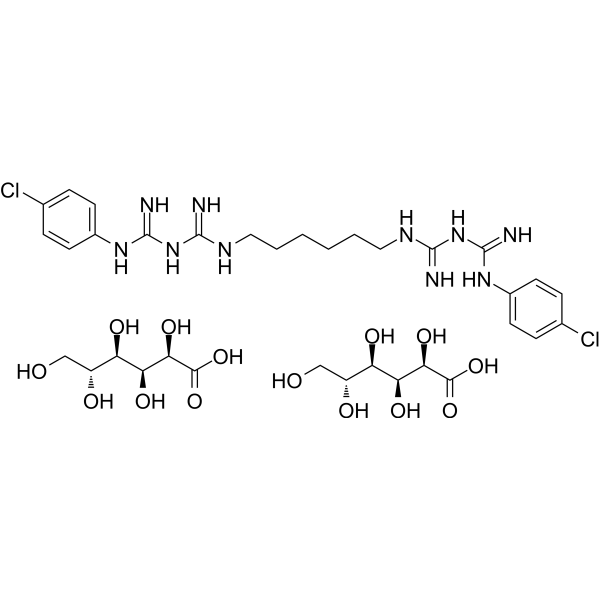
Chlorhexidine digluconate (20% in water) is a orally active cationic antimicrobial agent that targets microbial cell membranes. Chlorhexidine digluconate (20% in water) binds to cell membrane phospholipids non-specifically, destroys membrane structure and induces leakage of cell contents. Chlorhexidine digluconate (20% in water) has broad-spectrum bactericidal activity against both Gram-positive and Gram-negative bacteria. Chlorhexidine digluconate (20% in water) can interfere with membrane permeability, cause protein precipitation and energy metabolism disorders, such as rapid inhibition of microbial growth and induction of cell death (necrosis or apoptosis) .
|
-
- HY-W738281
-
|
|
Isotope-Labeled Compounds
Antibiotic
Bacterial
Necroptosis
Apoptosis
|
Infection
|
|
Chlorhexidine-d8 is deuterium-labeled Chlorhexidine (HY-B1248) . Chlorhexidine is a orally active cationic antimicrobial agent that targets microbial cell membranes. Chlorhexidine binds to cell membrane phospholipids non-specifically, destroys membrane structure and induces leakage of cell contents. Chlorhexidine has broad-spectrum bactericidal activity against both Gram-positive and Gram-negative bacteria. Chlorhexidine can interfere with membrane permeability, cause protein precipitation and energy metabolism disorders, such as rapid inhibition of microbial growth and induction of cell death (necrosis or apoptosis) .
|
-
- HY-B0126R
-
|
|
Reference Standards
Bacterial
Antibiotic
|
Infection
|
|
Marbofloxacin (Standard) is the analytical standard of Marbofloxacin. This product is intended for research and analytical applications. Marbofloxacin is a third generation fluoroquinolone and orally active antimicrobial agent, which has a broad spectrum bactericidal activity and good efficacy. Marbofloxacin can be used for the research of infections by Gram-positive and Gram-negative bacteria and Mycoplasma .
|
-
- HY-13685R
-
|
HePC (Standard); Hexadecyl phosphocholine (Standard)
|
Akt
HIV
Parasite
Reference Standards
|
Infection
Cancer
|
|
Miltefosine (Standard) is the analytical standard of Miltefosine. This product is intended for research and analytical applications. Miltefosine is a broad spectrum antimicrobial, anti-leishmanial, phospholipid agent acting by inhibiting the PI3K/Akt activity . Miltefosine is an inhibitor of CTP-phosphocholine cytidyltransferase (CCT) .
|
-
- HY-B0220S
-
|
|
Bacterial
Antibiotic
|
Infection
|
|
Erythromycin-d6 is the deuterium labeled Erythromycin. Erythromycin is a macrolide antibiotic produced by actinomycete?Streptomyces erythreus?with a broad spectrum of antimicrobial activity. Erythromycin acts by binding to bacterial 50S ribosomal subunits and inhibits?RNA-dependent protein synthesis?by blockage of transpeptidation and/or translocation reactions, without affecting synthesis of nucleic acid .
|
-
- HY-P5057B
-
|
|
Fluorescent Dye
Bacterial
|
Infection
|
|
5-FAM-Ahx-LL-37 TFA is a 5-FAM (HY-66022) labeled LL-37, human (HY-P1222). The carboxyfluorescein group is attached via a 6-carbon spacer, 6-Aminohexanoic acid (Ahx, HY-B0236). LL-37, human is a 37-residue, amphipathic, cathelicidin-derived antimicrobial peptide, which exhibits a broad spectrum of antimicrobial activity .
|
-
- HY-13685S1
-
|
HePC-d4; Hexadecyl phosphocholine-d4
|
Isotope-Labeled Compounds
Akt
Parasite
HIV
|
Infection
Cancer
|
|
Miltefosine-d4 (HePC-d4) is deuterium labeled Miltefosine. Miltefosine is a broad spectrum antimicrobial, anti-leishmanial, phospholipid agent acting by inhibiting the PI3K/Akt activity . Miltefosine is an inhibitor of CTP-phosphocholine cytidyltransferase (CCT) .
|
-
- HY-P3350
-
|
|
Bacterial
|
Infection
|
|
LS-BF1 is a stable and low toxic cationic antimicrobial peptide. LS-BF1 displays broad spectrum of antibacterial activity, including the challenging ESKAPE pathogens, by cell membrane disruptive mechanism. LS-BF1 shows good in vivo efficacy for elimination of bacteria in a mouse infection model[1].
|
-
- HY-P5642A
-
|
RC-101 TFA
|
HIV
SARS-CoV
Influenza Virus
Flavivirus
HSV
Bacterial
Fungal
Toll-like Receptor (TLR)
Ser/Thr Protease
|
Infection
Inflammation/Immunology
|
|
Retrocyclin-101 (RC-101) TFA is an artificially synthesized, cyclic-structured θ-defensin, a broad-spectrum agent with antimicrobial (covering viruses, bacteria, and fungi) activity and anti-inflammatory activity. Retrocyclin-101 TFA can inhibit the serine protease activity of ZIKV NS2B-NS3, with an IC50 of 7.20 μM. Retrocyclin-101 TFA has significant inhibitory activity against HIV, SARS-CoV-2, flaviviruses, influenza viruses, HSV-1/2, Staphylococcus aureus, etc. Retrocyclin-101 TFA inhibits the signal transduction mediated by TLR4 and TLR2, reducing the expression of pro-inflammatory cytokines .
|
-
- HY-B0220
-
Erythromycin
Maximum Cited Publications
24 Publications Verification
|
Bacterial
Antibiotic
DNA/RNA Synthesis
|
Infection
Cancer
|
|
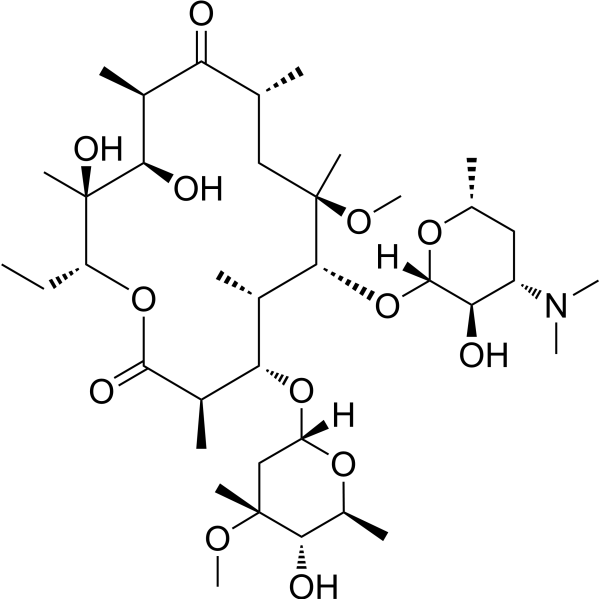
Erythromycin is a macrolide antibiotic produced by actinomycete?Streptomyces erythreus?with a broad spectrum of antimicrobial activity. Erythromycin binds to bacterial 50S ribosomal subunits and inhibits?RNA-dependent protein synthesis?by blockage of transpeptidation and/or translocation reactions, without affecting synthesis of nucleic acid [1][2]. Erythromycin also exhibits antitumor and neuroprotective effect in different fields of research [3][4].
|
-
- HY-B1128
-
|
Cephamandole
|
Antibiotic
Bacterial
|
Infection
|
|
Cefamandole (Cephamandole) is a semi-synthetic second-generation cephalosporin antibiotic with broad-spectrum antimicrobial activity. Cefamandole is resistant to hydrolysis by β-lactamases produced by some Gram-negative bacteria. Cefamandole kills Gram-positive cocci and various Gram-negative bacilli mainly by inhibiting cell wall synthesis, but it is inactive against Pseudomonas, Proteus vulgaris and Providencia stuartii, and its efficacy is affected by inoculum size. The plasma elimination half-life of Cefamandole in rats is only 0.4 h, it is mainly excreted in urine in biologically active form, and it hardly penetrates the non-inflamed blood-brain barrier. Cefamandole is widely used in studies related to bacterial infections .
|
-
- HY-B1128A
-
|
Cephamandole sodium
|
Antibiotic
Bacterial
|
Infection
|
|
Cefamandole (Cephamandole) sodium is a semi-synthetic second-generation cephalosporin antibiotic with broad-spectrum antimicrobial activity. Cefamandole sodium is resistant to hydrolysis by β-lactamases produced by some Gram-negative bacteria. Cefamandole sodium kills Gram-positive cocci and various Gram-negative bacilli mainly by inhibiting cell wall synthesis, but it is inactive against Pseudomonas, Proteus vulgaris and Providencia stuartii, and its efficacy is affected by inoculum size. The plasma elimination half-life of Cefamandole sodium in rats is only 0.4 h, it is mainly excreted in urine in biologically active form, and it hardly penetrates the non-inflamed blood-brain barrier. Cefamandole sodium is widely used in studies related to bacterial infections .
|
-
- HY-B0220S1
-
|
|
Isotope-Labeled Compounds
Bacterial
Antibiotic
|
Infection
|
|
Erythromycin- 13C,d3 is the 13C- and deuterium labeled Erythromycin. Erythromycin is a macrolide antibiotic produced by actinomycete?Streptomyces erythreus?with a broad spectrum of antimicrobial activity. Erythromycin acts by binding to bacterial 50S ribosomal subunits and inhibits?RNA-dependent protein synthesis?by blockage of transpeptidation and/or translocation reactions, without affecting synthesis of nucleic acid .
|
-
- HY-17508
-
|
|
Bacterial
Cytochrome P450
Autophagy
Antibiotic
|
Infection
Cancer
|
|
Clarithromycin has a broad spectrum of antimicrobial activity. Clarithromycin inhibits the CYP3A4-catalyzed triazolam alpha-hydroxylation with the IC50 (Ki) value of 56 (43) μM . Clarithromycin significantly inhibits the HERG potassium current .Clarithromycin affects the autophagic flux by impairing the signaling pathway linking hERG1 and PI3K .
|
-
- HY-P5557
-
|
|
Bacterial
Necroptosis
|
Infection
Inflammation/Immunology
|
|
TP4 (Nile tilapia piscidin) is an orally active amphipathic α-helical cationic antimicrobial peptide. TP4 (Nile tilapia piscidin) exerts broad-spectrum bactericidal activity against Gram-positive and Gram-negative bacteria by disrupting cell membrane structures, and also exhibits certain hemolytic activity. TP4 (Nile tilapia piscidin) regulates the innate immune system and enhances the expression of lysozymes, cytokines and antioxidant enzymes to resist bacterial infection. TP4 (Nile tilapia piscidin) also stimulates the proliferation of keratinocytes and fibroblasts, and significantly promotes the healing of wounds infected with MRSA. TP4 (Nile tilapia piscidin) can be used in research related to bacterial infection, peritonitis, wound healing and other fields .
|
-
- HY-B1128B
-
|
Cephamandole lithium
|
Antibiotic
Bacterial
|
Infection
|
|
Cefamandole (Cephamandole) lithium is a semi-synthetic second-generation cephalosporin antibiotic with broad-spectrum antimicrobial activity. Cefamandole lithium is resistant to hydrolysis by β-lactamases produced by some Gram-negative bacteria. Cefamandole lithium kills Gram-positive cocci and various Gram-negative bacilli mainly by inhibiting cell wall synthesis, but it is inactive against Pseudomonas, Proteus vulgaris and Providencia stuartii, and its efficacy is affected by inoculum size. The plasma elimination half-life of Cefamandole lithium in rats is only 0.4 h, it is mainly excreted in urine in biologically active form, and it hardly penetrates the non-inflamed blood-brain barrier. Cefamandole lithium is widely used in studies related to bacterial infections .
|
-
- HY-B0220C
-
|
|
Antibiotic
Bacterial
DNA/RNA Synthesis
|
Infection
Cancer
|
|
Erythromycin aspartate is a macrolide antibiotic produced by actinomycete?Streptomyces erythreus?with a broad spectrum of antimicrobial activity. Erythromycin aspartate binds to bacterial 50S ribosomal subunits and inhibits?RNA-dependent protein synthesis?by blockage of transpeptidation and/or translocation reactions, without affecting synthesis of nucleic acid [1][2]. Erythromycin aspartate also exhibits antitumor and neuroprotective effect in different fields of research [3][4].
|
-
- HY-B0220F
-
|
|
Bacterial
Antibiotic
DNA/RNA Synthesis
|
Infection
Cancer
|
|
Erythromycin glutamate is a macrolide antibiotic produced by actinomycete Streptomyces erythreus with a broad spectrum of antimicrobial activity. Erythromycin glutamate binds to bacterial 50S ribosomal subunits and inhibits RNA-dependent protein synthesis by blockage of transpeptidation and/or translocation reactions, without affecting synthesis of nucleic acid [1][2]. Erythromycin glutamate also exhibits antitumor and neuroprotective effect in different fields of research [3][4].
|
-
- HY-B0220D
-
|
|
Bacterial
Antibiotic
DNA/RNA Synthesis
|
Infection
Cancer
|
|
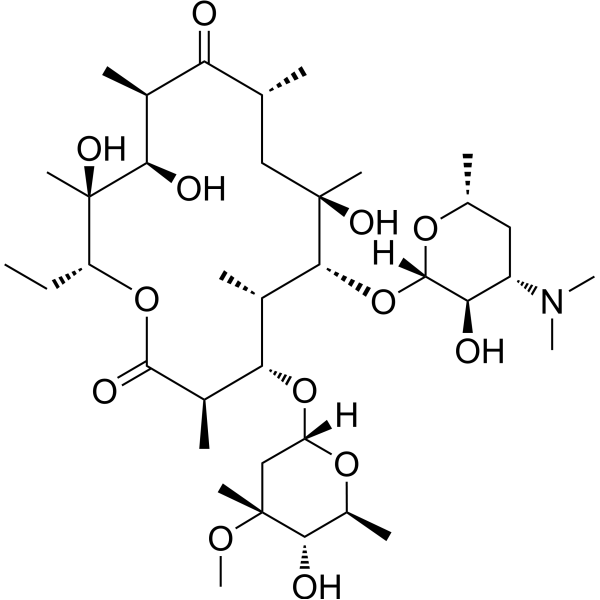
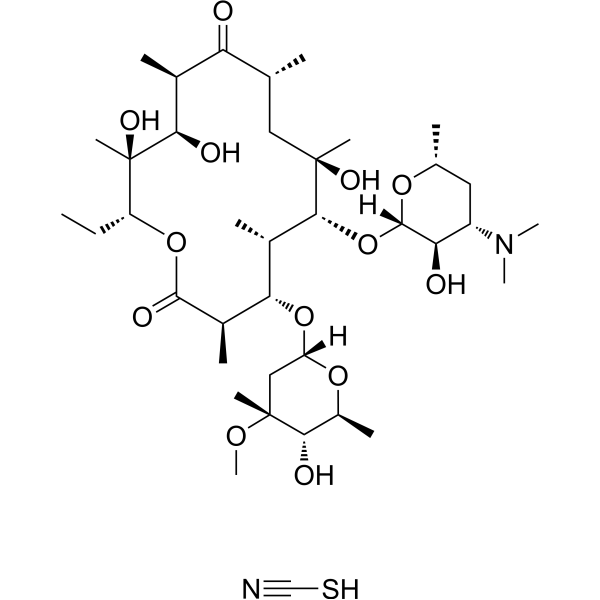
Erythromycin thiocyanate is a macrolide antibiotic produced by actinomycete Streptomyces erythreus with a broad spectrum of antimicrobial activity. Erythromycin thiocyanate binds to bacterial 50S ribosomal subunits and inhibits RNA-dependent protein synthesis by blockage of transpeptidation and/or translocation reactions, without affecting synthesis of nucleic acid [1][2]. Erythromycin thiocyanate also exhibits antitumor and neuroprotective effect in different fields of research [3][4].
|
-
- HY-B0220B
-
|
|
Antibiotic
Bacterial
|
Infection
Cancer
|
|
Erythromycin gluceptate is a macrolide antibiotic produced by actinomycete Streptomyces erythreus with a broad spectrum of antimicrobial activity. Erythromycin gluceptate binds to bacterial 50S ribosomal subunits and inhibits RNA-dependent protein synthesis by blockage of transpeptidation and/or translocation reactions, without affecting synthesis of nucleic acid [1][2]. Erythromycin gluceptate also exhibits antitumor and neuroprotective effect in different fields of research [3][4].
|
-
- HY-B0220A
-
|
|
Antibiotic
Bacterial
DNA/RNA Synthesis
|
Infection
Cancer
|
|
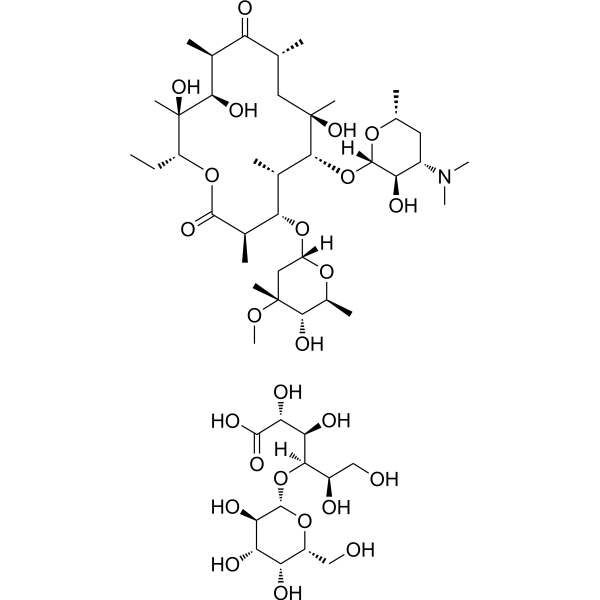
Erythromycin lactobionate is a macrolide antibiotic produced by actinomycete Streptomyces erythreus with a broad spectrum of antimicrobial activity. Erythromycin lactobionate binds to bacterial 50S ribosomal subunits and inhibits RNA-dependent protein synthesis by blockage of transpeptidation and/or translocation reactions, without affecting synthesis of nucleic acid [1][2]. Erythromycin lactobionate also exhibits antitumor and neuroprotective effect in different fields of research [3][4].
|
-
- HY-B0220E
-
|
|
Bacterial
Antibiotic
DNA/RNA Synthesis
|
Infection
Cancer
|
|
Erythromycin A dihydrate is a macrolide antibiotic produced by actinomycete Streptomyces erythreus with a broad spectrum of antimicrobial activity. Erythromycin A dihydrate binds to bacterial 50S ribosomal subunits and inhibits RNA-dependent protein synthesis by blockage of transpeptidation and/or translocation reactions, without affecting synthesis of nucleic acid [1][2]. Erythromycin A dihydrate also exhibits antitumor and neuroprotective effect in different fields of research [3][4].
|
-
- HY-108875
-
|
|
Antibiotic
Bacterial
DNA/RNA Synthesis
|
Infection
Cancer
|
|
Erythromycin stearate is a macrolide antibiotic produced by actinomycete Streptomyces erythreus with a broad spectrum of antimicrobial activity. Erythromycin stearate binds to bacterial 50S ribosomal subunits and inhibits RNA-dependent protein synthesis by blockage of transpeptidation and/or translocation reactions, without affecting synthesis of nucleic acid [1][2]. Erythromycin stearate also exhibits antitumor and neuroprotective effect in different fields of research [3][4].
|
-
- HY-B1128AR
-
|
Cephamandole sodium (Standard)
|
Reference Standards
Antibiotic
Bacterial
|
Infection
|
|
Cefamandole (sodium) (Standard) is the analytical standard of Cefamandole (sodium). This product is intended for research and analytical applications. Cefamandole (Cephamandole) sodium is a semi-synthetic second-generation cephalosporin antibiotic with broad-spectrum antimicrobial activity. Cefamandole sodium is resistant to hydrolysis by β-lactamases produced by some Gram-negative bacteria. Cefamandole sodium kills Gram-positive cocci and various Gram-negative bacilli mainly by inhibiting cell wall synthesis, but it is inactive against Pseudomonas, Proteus vulgaris and Providencia stuartii, and its efficacy is affected by inoculum size. The plasma elimination half-life of Cefamandole sodium in rats is only 0.4 h, it is mainly excreted in urine in biologically active form, and it hardly penetrates the non-inflamed blood-brain barrier. Cefamandole sodium is widely used in studies related to bacterial infections .
|
-
- HY-131165R
-
|
|
Antibiotic
Bacterial
Reference Standards
|
Infection
Cancer
|
|
Amoxicillin (trihydrate) mixture with potassium clavulanate (4:1) (Standard) is the analytical standard of Amoxicillin (trihydrate) mixture with potassium clavulanate (4:1). This product is intended for research and analytical applications. Amoxicillin (trihydrate) mixture with potassium clavulanate (4:1) an antibiotic with good oral absorption and broad spectrum antimicrobial activity. Amoxicillin (trihydrate) mixture with potassium clavulanate (4:1) inhibits the biosynthesis of polypeptides in the cell wall, thereby inhibiting cell growth .
|
-
- HY-B0220S2
-
|
|
Bacterial
DNA/RNA Synthesis
Antibiotic
|
Infection
|
|
Erythromycin-d3 is the deuterium labeled Erythromycin . Erythromycin is a macrolide antibiotic produced by actinomycete Streptomyces erythreus with a broad spectrum of antimicrobial activity. Erythromycin binds to bacterial 50S ribosomal subunits and inhibits RNA-dependent protein synthesis by blockage of transpeptidation and/or translocation reactions, without affecting synthesis of nucleic acid. Erythromycin also exhibits antitumor and neuroprotective effect in different fields of research .
|
-
- HY-B0220R
-
|
|
Reference Standards
Bacterial
Antibiotic
DNA/RNA Synthesis
|
Infection
Cancer
|
|
Erythromycin (Standard) is the analytical standard of Erythromycin. This product is intended for research and analytical applications. Erythromycin is a macrolide antibiotic produced by actinomycete?Streptomyces erythreus?with a broad spectrum of antimicrobial activity. Erythromycin binds to bacterial 50S ribosomal subunits and inhibits?RNA-dependent protein synthesis?by blockage of transpeptidation and/or translocation reactions, without affecting synthesis of nucleic acid . Erythromycin also exhibits antitumor and neuroprotective effect in different fields of research .
|
-
- HY-139554A
-
|
KBP-7072 TFA
|
Bacterial
|
Infection
|
|
Zifanocycline (KBP-7072) TFA is an orally active, semi-synthetic aminomethylcycline antibiotic that inhibits the normal function of bacterial ribosomes. Zifanocycline TFA has broad spectrum in vitro antimicrobial activity against Gram-positive and Gram-negative bacteria, including many multidrug-resistant pathogens. Zifanocycline TFA is indicated for the study of acute bacterial skin and skin structure infections, community-acquired bacterial pneumonia, and complicated intra-abdominal infections .
|
-
- HY-W391625
-
|
(Rac)-Epiligulyl oxide
|
Fungal
|
Cancer
|
|
(Rac)-Dehydrocostus Lactone ((Rac)-Epiligulyl oxide) is a natural product with antiparasitic activity. (Rac)-Dehydrocostus Lactone can significantly inhibit the growth of Trypanosoma brucei rhodesiense. (Rac)-Dehydrocostus Lactone exhibits a broad spectrum of biological effects, including anti-inflammatory, anticancer, antiviral and antimicrobial activities. (Rac)-Dehydrocostus Lactone also has antifungal, antioxidant, antidiabetic, antiulcer and antihelminthic effects. (Rac)-Dehydrocostus Lactone exhibits different IC(50) values in cytotoxicity tests and has a high selectivity index .
|
-
- HY-17508R
-
|
|
Reference Standards
Bacterial
Cytochrome P450
Autophagy
Antibiotic
|
Infection
Cancer
|
|
Clarithromycin (Standard) is the analytical standard of Clarithromycin. This product is intended for research and analytical applications. Clarithromycin has a broad spectrum of antimicrobial activity. Clarithromycin inhibits the CYP3A4-catalyzed triazolam alpha-hydroxylation with the IC50 (Ki) value of 56 (43) μM . Clarithromycin significantly inhibits the HERG potassium current .Clarithromycin affects the autophagic flux by impairing the signaling pathway linking hERG1 and PI3K .
|
-
- HY-103399R
-
|
|
Reference Standards
Bacterial
Topoisomerase
Antibiotic
|
Infection
|
|
Clarithromycin (Standard) is the analytical standard of Clarithromycin. This product is intended for research and analytical applications. Clarithromycin has a broad spectrum of antimicrobial activity. Clarithromycin inhibits the CYP3A4-catalyzed triazolam alpha-hydroxylation with the IC50 (Ki) value of 56 (43) μM . Clarithromycin significantly inhibits the HERG potassium current .Clarithromycin affects the autophagic flux by impairing the signaling pathway linking hERG1 and PI3K .
|
-
- HY-17508S1
-
|
|
Isotope-Labeled Compounds
Bacterial
Antibiotic
Autophagy
Cytochrome P450
|
Others
|
|
Clarithromycin-d3 is the deuterium labeled Clarithromycin (HY-17508) . Clarithromycin has a broad spectrum of antimicrobial activity. Clarithromycin inhibits the CYP3A4-catalyzed triazolam alpha-hydroxylation with the IC50 (Ki) value of 56 (43) μM . Clarithromycin significantly inhibits the HERG potassium current .Clarithromycin affects the autophagic flux by impairing the signaling pathway linking hERG1 and PI3K .
|
-
- HY-B0220DR
-
|
|
Reference Standards
Bacterial
Antibiotic
DNA/RNA Synthesis
|
Infection
Cancer
|
|
Erythromycin (thiocyanate) (Standard) is the analytical standard of Erythromycin (thiocyanate). This product is intended for research and analytical applications. Erythromycin thiocyanate is a macrolide antibiotic produced by actinomycete Streptomyces erythreus with a broad spectrum of antimicrobial activity. Erythromycin thiocyanate binds to bacterial 50S ribosomal subunits and inhibits RNA-dependent protein synthesis by blockage of transpeptidation and/or translocation reactions, without affecting synthesis of nucleic acid[1][2]. Erythromycin thiocyanate also exhibits antitumor and neuroprotective effect in different fields of research[3][4].
|
-
- HY-139554AR
-
|
KBP-7072 TFA (Standard)
|
Bacterial
Antibiotic
Reference Standards
|
Infection
|
|
Zifanocycline (TFA) (Standard) is the analytical standard of Zifanocycline (TFA). This product is intended for research and analytical applications. Zifanocycline (KBP-7072) TFA is an orally active, semi-synthetic aminomethylcycline antibiotic that inhibits the normal function of bacterial ribosomes. Zifanocycline TFA has broad spectrum in vitro antimicrobial activity against Gram-positive and Gram-negative bacteria, including many multidrug-resistant pathogens. Zifanocycline TFA is indicated for the study of acute bacterial skin and skin structure infections, community-acquired bacterial pneumonia, and complicated intra-abdominal infections[1][2].
|
-
- HY-P11242
-
|
|
Bacterial
NF-κB
p38 MAPK
JNK
ERK
TNF Receptor
Interleukin Related
|
Infection
|
Cm-CATH2 is an antimicrobial peptide discovered from Chelonia mydas. Cm-CATH2 has a potent, broad-spectrum and rapid bactericidal ability by rapidly destroying the integrity of bacterial cell membranes. It shows strong activity against Gram-positive bacteria (such as VREF, Staphylococcus aureus), Gram-negative bacteria (such as Escherichia coli, Klebsiella pneumoniae), and fungi (such as Candida albicans) with MICs ranges from 1.17 to 18.75 μg/mL. Cm-CATH2 is also effective against various aquatic pathogenic bacteria. Cm-CATH2 not only inhibits biofilm formation but can also remove the formed biofilms. Cm-CATH2 has immunomodulatory functions and chemotactic effects on immune cells, and can inhibit the production of pro-inflammatory cytokines by macrophages stimulated by LPS (HY-D1056). Cm-CATH2 prevents the activation of NF-κB by inhibiting the degradation of IκBα, and also inhibits the phosphorylation of MAPK signaling pathways (p38, JNK, ERK). Cm-CATH2 demonstrates strong anti-infective ability in mouse peritonitis models and pneumonia models .
|
-
- HY-185351
-
|
Ampicillin/Sulbactam combination
|
Bacterial
Antibiotic
|
Infection
|
|
Ampicillin sodium and Sulbactam sodium are formed by mixing HY-B0522A Ampicillin sodium with HY-B0334A Sulbactam sodium (each 1.5 g of this product contains 1 g amoxicillin sodium and 0.5 g sulbactam sodium). Ampicillin is a β-lactam antimicrobial, whereas sulbactam is a β-lactamase inhibitor. Ampicillin has a broad spectrum of bactericidal activity against many gram-positive and gram-negative aerobic and anaerobic bacteria. However, ampicillin is degraded by beta-lactamases. The combination of ampicillin and sulbactam demonstrates synergy in addressing bacterial strains resistant to ampicillin, thus providing broader coverage. Bacteria susceptible to ampicillin/sulbactam include Haemophilus influenzae, Escherichia coli, Acinetobacter, Klebsiella, Staphylococcus aureus, Enterobacter, and anaerobes.
|
-
| Cat. No. |
Product Name |
Type |
-
- HY-W250308
-
|
Epsilon-polylysine (MW 3800-4200); ε-Polylysine (MW 3800-4200); ε-PL (MW 3800-4200)
|
Biochemical Assay Reagents
|
|
Epsilon-polylysine is an antimicrobial peptide that can be produced by bacteria such as Streptomyces. Epsilon-polylysine inhibits the growth of microorganisms such as bacteria, yeasts and molds and is therefore often used as a green food additive and preservative in various food and beverage products. Epsilon-polylysine has a variety of properties, including thermal stability, resistance to acidic conditions, and broad-spectrum antimicrobial activity. Epsilon-polylysine can be loaded on other materials to form nanoparticles or form nanofiber membranes for targeted delivery to exert sustained antibacterial efficacy. Epsilon-polylysine is also used as a liposome stabilizer .
|
| Cat. No. |
Product Name |
Target |
Research Area |
-
- HY-P1222
-
LL-37, human
Maximum Cited Publications
6 Publications Verification
|
Bacterial
|
Infection
|
|
LL-37, human is a 37-residue, amphipathic, cathelicidin-derived antimicrobial peptide, which exhibits a broad spectrum of antimicrobial activity. LL-37, human could help protect the cornea from infection and modulates wound healing .
|
-
- HY-P1222A
-
|
|
Bacterial
|
Infection
|
|
LL-37, human TFA is a 37-residue, amphipathic, cathelicidin-derived antimicrobial peptide, which exhibits a broad spectrum of antimicrobial activity. LL-37, human TFA could help protect the cornea from infection and modulates wound healing .
|
-
- HY-P1630
-
|
|
Bacterial
|
Infection
|
|
Buforin II, derived from buforin I, a protein isolated from the stomach of the Asian toad Bufo bufo gargarizans, is a potent antimicrobial peptide. Buforin II has antimicrobial activity against a broad spectrum of Gram-positive and Gram-negative bacteria .
|
-
- HY-P2460
-
|
|
Bacterial
Fungal
Interleukin Related
TNF Receptor
|
Infection
Inflammation/Immunology
|
|
SMAP‑29 is a cathelicidin antimicrobial peptide with LPS‑binding and anti‑inflammatory properties. SMAP‑29 exerts broad‑spectrum antimicrobial activity against bacteria, fungi and multidrug‑resistant isolates. SMAP‑29 kills pathogens by permeabilizing bacterial membranes, inducing depolarization and cell lysis, and also inhibits inflammatory cytokines while reducing lethality in septic shock and pneumonia models. SMAP-29 can be used for research on bacterial infections, drug-resistant infections, septic shock .
|
-
- HY-P1222B
-
|
|
Bacterial
|
Infection
Inflammation/Immunology
|
|
LL-37, human acetate is a 37-residue, amphipathic, cathelicidin-derived antimicrobial peptide, which exhibits a broad spectrum of antimicrobial activity. LL-37, human acetate could help protect the cornea from infection and modulates wound healing .
|
-
- HY-P5601
-
|
|
Bacterial
Fungal
|
Infection
|
|
Thanatin is an inducible cationic antimicrobial peptide. Thanatin is a pathogen-inducible single-disulfide-bond-containing β-hairpin AMP. Thanatin displays broad-spectrum activity against both Gram-negative and Gram-positive bacteria as well as against various species of fungi with MICs of 0.3-40 µM, 0.6-40 µM and 0.6-20 µM, respectively. Thanatin has the property of competitive replacement of divalent cations from bacterial outer membrane (OM), leading to OM disruption .
|
-
- HY-P5255
-
|
|
Bacterial
|
Infection
Inflammation/Immunology
|
|
Oligopeptide-10 is a bioactive peptide with antimicrobial activity. Oligopeptide-10 exhibits broad-spectrum bactericidal effects against Gram-positive bacteria including Propionibacterium acnes and Staphylococcus aureus. Oligopeptide-10 targets lipoteichoic acid (LTA) on the surface of bacterial cell membranes, induces bacterial osmotic imbalance by disrupting the integrity of bacterial membranes, and reduces the release of pro-inflammatory cytokines induced by bacteria. Oligopeptide-10 possesses skin-protective activity. Oligopeptide-10 can be applied in research related to acne vulgaris, dandruff, seborrheic dermatitis, and tinea pedis .
|
-
- HY-P5601A
-
|
|
Bacterial
Fungal
|
Infection
|
|
Thanatin TFA is an inducible cationic antimicrobial peptide. Thanatin TFA s a pathogen-inducible single-disulfide-bond-containing β-hairpin AMP. Thanatin TFA displays broad-spectrum activity against both Gram-negative and Gram-positive bacteria as well as against various species of fungi with MICs of 0.3-40 µM, 0.6-40 µM and 0.6-20 µM, respectively. Thanatin TFA has the property of competitive replacement of divalent cations from bacterial outer membrane (OM), leading to OM disruption .
|
-
- HY-106228
-
|
|
Fungal
Bacterial
Glutathione Peroxidase
|
Infection
|
|
HLF1-11, a human lactoferrin-derived peptide, is a broad spectrum antimicrobial agent. HLF1-11 inhibits human MPO activity. HLF1-11 also directs GM-CSF-driven monocyte differentiation toward macrophages, and enhances immune responses .
|
-
- HY-P1629
-
|
|
Bacterial
Fungal
Antibiotic
|
Infection
|
|
Temporin A is a short alpha-helical antimicrobial peptide isolated from the skin of the frog Rana temporaria. Temporin A is effective against a broad spectrum of Gram-positive bacteria. Temporin A interacts directly with the cell membrane of the microorganism and it is non-toxic to erythrocytes at concentrations that are antimicrobial. Temporin A also has antifungal activities (against yeast-like Candida albicans) .
|
-
- HY-P5557
-
|
|
Bacterial
Necroptosis
|
Infection
Inflammation/Immunology
|
|
TP4 (Nile tilapia piscidin) is an orally active amphipathic α-helical cationic antimicrobial peptide. TP4 (Nile tilapia piscidin) exerts broad-spectrum bactericidal activity against Gram-positive and Gram-negative bacteria by disrupting cell membrane structures, and also exhibits certain hemolytic activity. TP4 (Nile tilapia piscidin) regulates the innate immune system and enhances the expression of lysozymes, cytokines and antioxidant enzymes to resist bacterial infection. TP4 (Nile tilapia piscidin) also stimulates the proliferation of keratinocytes and fibroblasts, and significantly promotes the healing of wounds infected with MRSA. TP4 (Nile tilapia piscidin) can be used in research related to bacterial infection, peritonitis, wound healing and other fields .
|
-
- HY-P3914
-
|
Oct-CA(1-7)M(2-9)
|
Bacterial
|
Infection
|
|
Cecropin A (1-7)-Melittin A (2-9) is an antimicrobial peptide with antimicrobial activity against a broad spectrum of Gram-positive and Gram-negative aerobic bacteria, as well as antimalarial activity, without the adverse hemolytic properties of bee venom peptides .
|
-
- HY-P3459
-
|
|
Bacterial
|
Infection
|
|
Tet-213 is a antimicrobial peptide. Tet-213 has broad spectrum antibacterial activity. Tet-213 can promote infected wound repair .
|
-
- HY-P3459A
-
|
|
Bacterial
|
Infection
|
|
Tet-213 TFA is a antimicrobial peptide. Tet-213 TFA has broad spectrum antibacterial activity. Tet-213 TFA can promote infected wound repair .
|
-
- HY-P10536
-
|
|
Bacterial
|
Infection
|
|
Temporin SHF is a broad-spectrum antimicrobial peptide that is active against Gram-positive and Gram-negative bacteria and yeasts, but does not have hemolytic activity. Temporin SHF disrupts the acyl chain stacking of anionic lipid bilayers, leading to cracks and disintegration of microbial membranes. Temporin SHF can be used in the development of antimicrobial drugs .
|
-
- HY-P3350
-
|
|
Bacterial
|
Infection
|
|
LS-BF1 is a stable and low toxic cationic antimicrobial peptide. LS-BF1 displays broad spectrum of antibacterial activity, including the challenging ESKAPE pathogens, by cell membrane disruptive mechanism. LS-BF1 shows good in vivo efficacy for elimination of bacteria in a mouse infection model[1].
|
-
- HY-P5582
-
|
|
Bacterial
|
Infection
|
|
Combi-1 is an antimicrobial peptide with broad-spectrum activity against different bacteria and yeast cells .
|
-
- HY-P11126
-
|
|
Bacterial
|
Infection
|
|
Mel4 is an antimicrobial peptide, exhibiting broad-spectrum antimicrobial activity. Mel4 can neutralize bacterial lipopolysaccharide in a dose-dependent manner. Mel4 can be used in the research and prevention of related bacterial infectious diseases (such as ocular infections) .
|
-
- HY-P2170
-
|
XOMA-629
|
Antibiotic
Bacterial
|
Infection
Inflammation/Immunology
|
|
XMP-629 (XOMA-629), a cationic α-helical peptide, is a potent endotoxin inhibitor. XMP-629 exhibits broad-spectrum antimicrobial activity via an immunomodulatory mechanism. XOMA 629 has antimicrobial activity against Propionibacterium acnes, Staphylococcus aureus and Streptococcus pyogenesand .
|
-
- HY-P11191
-
|
|
Bacterial
|
Infection
|
|
AR-23 is a melittin-related antimicrobial peptide that can be isolated from Rana tagoi. AR-23 exhibits broad-spectrum growth inhibitory activity against aerobic bacteria, the opportunistic yeast pathogen Candida albicans and clinical isolates of Methicillin (HY-121544)-resistant Staphylococcus aureus (MRSA). AR-23 can be used for antimicrobial research .
|
-
- HY-P5724
-
|
|
Bacterial
|
Infection
|
|
Nv-CATH is an antibacterial peptide of frog origin. Nv-CATH has broad-spectrum antibacterial activity against gram-positive and gram-negative bacteria. Nv-CATH significantly protects mice from fatal infections caused by Staphylococcus aureus. Nv-CATH protects mice from bacterial infection through antimicrobial immunoregulatory duality .
|
-
- HY-P5552
-
|
|
Bacterial
Parasite
Fungal
|
Infection
|
|
Melimine is a hybrid antimicrobial peptide of Melittin (HY-P0233) and Protamine. Melimine is active against P. aeruginosa and S. aureus. Melimine has broad spectrum activity against bacteria, fungi and protozoa .
|
-
- HY-P5642
-
-
- HY-P5057B
-
|
|
Fluorescent Dye
Bacterial
|
Infection
|
|
5-FAM-Ahx-LL-37 TFA is a 5-FAM (HY-66022) labeled LL-37, human (HY-P1222). The carboxyfluorescein group is attached via a 6-carbon spacer, 6-Aminohexanoic acid (Ahx, HY-B0236). LL-37, human is a 37-residue, amphipathic, cathelicidin-derived antimicrobial peptide, which exhibits a broad spectrum of antimicrobial activity .
|
-
- HY-P5691
-
|
|
Bacterial
|
Infection
Cancer
|
|
P1 is a broad-spectrum antimicrobial peptide. P1 shows antibacterial activity against Gram-positive and Gram-negative bacteria,such as B. anthracis spores and Carbapenem-resistant A. baumannii and K. pneumoniae .
|
-
- HY-P11095
-
|
|
Bacterial
Fungal
|
Infection
|
|
Pelteobagrin is a broad-spectrum antimicrobial peptide targeting Gram-positive bacteria, Gram-negative bacteria, and fungi (MIC=2-16 μg/mL). Pelteobagrin exerts bactericidal activity via non-competitive disruption of cell wall and cytoplasmic membrane integrity. Pelteobagrin is promising for research of infectious diseases .
|
-
- HY-P10228
-
|
|
Fungal
Bacterial
|
Infection
|
|
S-Thanatin is an insect antimicrobial peptide with potent broad-spectrum antibacterial activity. S-Thanatin can inhibit the activity of Gram-negative bacteria, Gram-positive bacteria, and fungi, without cytotoxicity. The antibacterial activity of S-Thanatin is not affected by PH value, but monovalent cations (Na +/K +) can reduce its antibacterial activity against Gram-negative bacteria in a dose-dependent manner .
|
-
- HY-P10219
-
|
|
Bacterial
|
Infection
Inflammation/Immunology
|
|
Brevicidine analog 22 (22) exerts broad spectrum antimicrobial activity and excellent stability (t1/2 = 40.98 h), with MICs of 2-16 μM for gram-negative and gram-positive bacteria .
|
-
- HY-P11242
-
|
|
Bacterial
NF-κB
p38 MAPK
JNK
ERK
TNF Receptor
Interleukin Related
|
Infection
|
Cm-CATH2 is an antimicrobial peptide discovered from Chelonia mydas. Cm-CATH2 has a potent, broad-spectrum and rapid bactericidal ability by rapidly destroying the integrity of bacterial cell membranes. It shows strong activity against Gram-positive bacteria (such as VREF, Staphylococcus aureus), Gram-negative bacteria (such as Escherichia coli, Klebsiella pneumoniae), and fungi (such as Candida albicans) with MICs ranges from 1.17 to 18.75 μg/mL. Cm-CATH2 is also effective against various aquatic pathogenic bacteria. Cm-CATH2 not only inhibits biofilm formation but can also remove the formed biofilms. Cm-CATH2 has immunomodulatory functions and chemotactic effects on immune cells, and can inhibit the production of pro-inflammatory cytokines by macrophages stimulated by LPS (HY-D1056). Cm-CATH2 prevents the activation of NF-κB by inhibiting the degradation of IκBα, and also inhibits the phosphorylation of MAPK signaling pathways (p38, JNK, ERK). Cm-CATH2 demonstrates strong anti-infective ability in mouse peritonitis models and pneumonia models .
|
-
- HY-P11634
-
|
|
Bacterial
|
Infection
|
|
KF-22 is an antimicrobial peptide that exhibits antimicrobial activity against both Gram-negative and Gram-positive bacteria. KF-22 demonstrates broad-spectrum, potent activity against multidrug-resistant bacteria with low toxicity. KF-22 can be used in research related to infections .
|
-
- HY-P11607
-
|
|
Bacterial
|
Infection
|
|
CyLip-10 is a microbial-derived cyclic-lipid antimicrobial peptide. CyLip-10 has broad-spectrum antimicrobial efficacy, low hemolytic activity, and excellent stability. CyLip-10 can disrupt membrane integrity, inhibit biofilm formation and induce membrane permeabilization and bacterial cell death. CyLip-10 reduces bacterial load, promotes wound healing, and alleviates inflammatory responses in a mouse Methicillin (HY-121544)-resistant Staphylococcus aureus skin wound infection model. CyLip-10 can be used for the bacterial infection .
|
-
- HY-P11657
-
|
|
Bacterial
|
Infection
|
|
GN-2 peptoid is a 9-mer cationic amphipathic peptoid and bactericidal agent with an overall net charge of +4, broad-spectrum antimicrobial activity, and low hemolytic and cytotoxic activity against mammalian cells. GN-2 peptoid exerts bactericidal action against Escherichia coli in a concentration-dependent manner. GN-2 peptoid exhibits antimicrobial activity against Gram-positive Staphylococcus aureus and Gram-negative Escherichia coli, Pseudomonas aeruginosa strains. GN-2 peptoid shows low toxicity against human red blood cells and HeLa cells. GN-2 peptoid maintains antimicrobial activity in the presence of 50% human blood plasma. GN-2 peptoid can be used for the research of bacterial infections .
|
-
- HY-P11399
-
|
|
Bacterial
Fungal
|
Infection
|
|
Tachyplesin-3 is a broad-spectrum cationic antimicrobial peptide. Tachyplesin-3 has inhibitory activity against Gram-positive bacteria, Gram-negative bacteria, fungi and enveloped viruses. Tachyplesin-3 binds to bacterial membrane lipopolysaccharides through positive charges, disrupting membrane integrity and causing leakage of cellular contents. Tachyplesin-3 interferes with bacterial adhesion and aggregation, prevents biofilm formation, and has a synergistic effect when used in combination with Piperacillin (HY-B1923) - Tazobactam (HY-B1418) (TZP) .
|
-
- HY-P5642A
-
|
RC-101 TFA
|
HIV
SARS-CoV
Influenza Virus
Flavivirus
HSV
Bacterial
Fungal
Toll-like Receptor (TLR)
Ser/Thr Protease
|
Infection
Inflammation/Immunology
|
|
Retrocyclin-101 (RC-101) TFA is an artificially synthesized, cyclic-structured θ-defensin, a broad-spectrum agent with antimicrobial (covering viruses, bacteria, and fungi) activity and anti-inflammatory activity. Retrocyclin-101 TFA can inhibit the serine protease activity of ZIKV NS2B-NS3, with an IC50 of 7.20 μM. Retrocyclin-101 TFA has significant inhibitory activity against HIV, SARS-CoV-2, flaviviruses, influenza viruses, HSV-1/2, Staphylococcus aureus, etc. Retrocyclin-101 TFA inhibits the signal transduction mediated by TLR4 and TLR2, reducing the expression of pro-inflammatory cytokines .
|
| Cat. No. |
Product Name |
Category |
Target |
Chemical Structure |
| Cat. No. |
Product Name |
Chemical Structure |
-
- HY-B0467S
-
|
|
|
Amoxicillin-d4 is a deuterium labeled Amoxicillin. Amoxicillin is an antibiotic with good oral absorption and broad spectrum antimicrobial activity .
|
-
-
- HY-B0220S1
-
|
|
|
Erythromycin- 13C,d3 is the 13C- and deuterium labeled Erythromycin. Erythromycin is a macrolide antibiotic produced by actinomycete?Streptomyces erythreus?with a broad spectrum of antimicrobial activity. Erythromycin acts by binding to bacterial 50S ribosomal subunits and inhibits?RNA-dependent protein synthesis?by blockage of transpeptidation and/or translocation reactions, without affecting synthesis of nucleic acid .
|
-
-
- HY-17508S1
-
|
|
|
Clarithromycin-d3 is the deuterium labeled Clarithromycin (HY-17508) . Clarithromycin has a broad spectrum of antimicrobial activity. Clarithromycin inhibits the CYP3A4-catalyzed triazolam alpha-hydroxylation with the IC50 (Ki) value of 56 (43) μM . Clarithromycin significantly inhibits the HERG potassium current .Clarithromycin affects the autophagic flux by impairing the signaling pathway linking hERG1 and PI3K .
|
-
-
- HY-B0220S2
-
|
|
|
Erythromycin-d3 is the deuterium labeled Erythromycin . Erythromycin is a macrolide antibiotic produced by actinomycete Streptomyces erythreus with a broad spectrum of antimicrobial activity. Erythromycin binds to bacterial 50S ribosomal subunits and inhibits RNA-dependent protein synthesis by blockage of transpeptidation and/or translocation reactions, without affecting synthesis of nucleic acid. Erythromycin also exhibits antitumor and neuroprotective effect in different fields of research .
|
-
-
- HY-B1145S
-
|
|
|
Chlorhexidine-d8 (dihydrochloride) is the deuterium labeled Chlorhexidine dihydrochloride (HY-B1145). Chlorhexidine dihydrochloride is a orally active cationic antimicrobial agent that targets microbial cell membranes. Chlorhexidine dihydrochloride binds to cell membrane phospholipids non-specifically, destroys membrane structure and induces leakage of cell contents. Chlorhexidine dihydrochloride has broad-spectrum bactericidal activity against both Gram-positive and Gram-negative bacteria. Chlorhexidine dihydrochloride can interfere with membrane permeability, cause protein precipitation and energy metabolism disorders, such as rapid inhibition of microbial growth and induction of cell death (necrosis or apoptosis) .
|
-
-
- HY-W015026S
-
|
|
|
Isobutylparaben-d4 is the deuterium labeled Isobutylparaben. Isobutylparaben (Isobutyl 4-hydroxybenzoate) is the agonist for PXR, CAR and PPAR. Isobutylparaben has a broad-spectrum antimicrobial activity and widely used in personal care products and cosmetics .
|
-
-
- HY-B0467AS
-
|
|
|
Amoxicillin- 13C6 is the 13C6 labeled Amoxicillin. Amoxicillin is an antibiotic with good oral absorption and broad spectrum antimicrobial activity.
|
-
-
- HY-B1282S
-
|
|
|
Sulfaquinoxaline-d4 is the deuterium labeled Sulfaquinoxaline. Sulfaquinoxaline is an antimicrobial for veterinary use, with activity against a broad spectrum of Gram-negative and Gram-positive bacteria. Sulfaquinoxaline is used to prevent coccidiosis and bacterial infections .
|
-
-
- HY-B0724BS
-
|
|
|
Pazufloxacin-d4 is deuterium labeled Pazufloxacin (HY-B0724B). Pazufloxacin is an orally active fluoroquinolone antimicrobial agent. Pazufloxacin inhibits DNA gyrase with IC50 values of 0.88 μg/mL (E. coli) and 1.9 μg/mL (P. aeruginosa). Pazufloxacin exhibits broad-spectrum antimicrobial activity, with MIC90 values ranging from 0.025 to 100 μg/mL against Gram-positive and Gram-negative bacteria, non-fermenting bacteria, Legionella spp., and anaerobic bacteria. Pazufloxacin is indicated for research on systemic infections, lung infections, urinary tract infections, and Legionella pneumonia .
|
-
-
- HY-B0455S
-
|
|
|
Lomefloxacin-d5 (hydrochloride) is the deuterium labeled Lomefloxacin hydrochloride. Lomefloxacin (SC47111A) hydrochloride is a broad-spectrum quinolone antibiotic, with antimicrobial activity. Lomefloxacin hydrochloride is used for the research of respiratory tract infections, genitourinary infections, gastrointestinal infections, ENT infections, etc. .
|
-
-
- HY-B0126S
-
|
|
|
Marbofloxacin-d8 is the deuterium labeled Marbofloxacin. Marbofloxacin is a third generation fluoroquinolone and orally active antimicrobial agent, which has a broad spectrum bactericidal activity and good efficacy. Marbofloxacin can be used for the research of infections by Gram-positive and Gram-negative bacteria and Mycoplasma .
|
-
-
- HY-B0126AS
-
|
|
|
Marbofloxacin-d8 (hydrochloride) is deuterium labeled Marbofloxacin (hydrochloride). Marbofloxacin hydrochloride is a third generation fluoroquinolone and orally active antimicrobial agent, which has a broad spectrum bactericidal activity and good efficacy. Marbofloxacin hydrochloride can be used for the research of infections by Gram-positive and Gram-negative bacteria and Mycoplasma .
|
-
-
- HY-W738281
-
|
|
|
Chlorhexidine-d8 is deuterium-labeled Chlorhexidine (HY-B1248) . Chlorhexidine is a orally active cationic antimicrobial agent that targets microbial cell membranes. Chlorhexidine binds to cell membrane phospholipids non-specifically, destroys membrane structure and induces leakage of cell contents. Chlorhexidine has broad-spectrum bactericidal activity against both Gram-positive and Gram-negative bacteria. Chlorhexidine can interfere with membrane permeability, cause protein precipitation and energy metabolism disorders, such as rapid inhibition of microbial growth and induction of cell death (necrosis or apoptosis) .
|
-
-
- HY-B0220S
-
|
|
|
Erythromycin-d6 is the deuterium labeled Erythromycin. Erythromycin is a macrolide antibiotic produced by actinomycete?Streptomyces erythreus?with a broad spectrum of antimicrobial activity. Erythromycin acts by binding to bacterial 50S ribosomal subunits and inhibits?RNA-dependent protein synthesis?by blockage of transpeptidation and/or translocation reactions, without affecting synthesis of nucleic acid .
|
-
-
- HY-13685S1
-
|
|
|
Miltefosine-d4 (HePC-d4) is deuterium labeled Miltefosine. Miltefosine is a broad spectrum antimicrobial, anti-leishmanial, phospholipid agent acting by inhibiting the PI3K/Akt activity . Miltefosine is an inhibitor of CTP-phosphocholine cytidyltransferase (CCT) .
|
-
| Cat. No. |
Product Name |
|
Classification |
-
- HY-13685
-
|
HePC; Hexadecyl phosphocholine
|
|
Phospholipids
|
|
Miltefosine is a broad spectrum antimicrobial, anti-leishmanial, phospholipid agent acting by inhibiting the PI3K/Akt activity . Miltefosine is an inhibitor of CTP-phosphocholine cytidyltransferase (CCT) .
|
Your information is safe with us. * Required Fields.
Inquiry Information
- Product Name:
- Cat. No.:
- Quantity:
- MCE Japan Authorized Agent:

