



SMAP-29
Based on 1 publication(s) in Google Scholar
SMAP‑29 is a cathelicidin antimicrobial peptide with LPS‑binding and anti‑inflammatory properties. SMAP‑29 exerts broad‑spectrum antimicrobial activity against bacteria, fungi and multidrug‑resistant isolates. SMAP‑29 kills pathogens by permeabilizing bacterial membranes, inducing depolarization and cell lysis, and also inhibits inflammatory cytokines while reducing lethality in septic shock and pneumonia models. SMAP-29 can be used for research on bacterial infections, drug-resistant infections, septic shock.
For research use only. We do not sell to patients.
- Purity : 99.18%
- CAS No.: 172485-26-6
- Formula: C146H260N52O32
- Molecular Weight:3256.02
-
Storage:
Sealed storage, away from moisture and light, under nitrogen.
Powder -80°C, 2 years , -20°C, 1 year* In solvent : -80°C, 6 months; -20°C, 1 month (sealed storage, away from moisture and light, under nitrogen)

To place orders, for customer services and technical support, please contact: MedChemExpress USA
Tel: 609-228-6898 E-mail: [email protected] [email protected]


-
 Biological Activity
-
Chemical Information
- Protocols
- Purity & Documentation
- References
-
 Help & FAQs


Publications Citing Use of MedChemExpress (MCE) SMAP-29
More

Biological Activity
Description
IC50 & Target
[1]|
IL-6 |
In Vitro
SMAP-29 exhibits potent and broad-spectrum antibacterial activity against a variety of Gram-negative bacteria, Gram-positive bacteria, and yeasts, with a MIC of 0.125-4 μg/mL (Escherichia coli, Pseudomonas aeruginosa, Salmonella typhimurium, Bacillus subtilis, Staphylococcus epidermidis, Staphylococcus aureus, and MRSA strains); at a concentration of 4 μg/mL, it can be used as a rapid bactericide [1][3].
SMAP-29 (1-256 μM; 1 h) induces 10% hemolysis of human red blood cells at 6.0 μM and exhibits dose-dependent hemolytic activity up to 256 μM[1].
SMAP-29 (1.25-10 μM; 6 h (LPS incubation)) inhibits LPS-induced TNF-α and IL-6 production in RAW 264.7 mouse macrophage cells[1].
SMAP-29 induces rapid and complete membrane depolarization in Staphylococcus aureus (KCTC 1621) cells at 2 × MIC (4-8 μM), and causes marked cytoplasmic membrane depolarization in Escherichia coli DC2 cells at its MIC (0.125 μg/mL)[1][3].
SMAP-29 (real time) induces rapid, complete dye leakage from bacterial membrane-mimicking EYPE/EYPG (7:3 w/w) LUVs, demonstrating strong membrane-disruptive activity[1].
SMAP-29 (0.2 μg/mL Trypsin (HY-129047); 4 h) is susceptible to trypsin digestion, with complete loss of antimicrobial activity against Escherichia coli (KCTC 1682) after 4 h of incubation with 0.2 μg/mL trypsin at 37 °C[1].
SMAP-29 (0.78 μg/mL) binds with high affinity to E. coli UB1005 LPS, displacing 90% of bound DPX with an I50 of 0.78 μg/mL[3].
SMAP-29 (8-10 μM; 30 min) completely inhibits the procoagulant activity of Escherichia coli O111:B4 LPS and exhibits half-maximal LPS-binding activity at an EC50 of 3.2 μM[4].
SMAP-29 (24 h) exhibits in vitro antimicrobial activity against Acinetobacter baumannii ATCC 17,978, ATCC 19,606, and MDR strains, with a MIC of 8 μg/mL and MBC of 8 μg/mL for the two laboratory strains[5].
SMAP-29 (16 μg/mL, 32 μg/mL; 2-120 min) rapidly kills Acinetobacter baumannii ATCC 17,978 in vitro, with near-undetectable bacterial levels observed within 2 min at 1×MIC (16 μg/mL) and complete bacterial elimination observed within 2 min at 2×MIC (32 μg/mL)[5].
MedChemExpress (MCE) has not independently confirmed the accuracy of these methods. They are for reference only. Further protocols information, click here.
-
Cell Line:LPS-stimulated mouse macrophage RAW 264.7 cells
-
Concentration:1.25, 2.5, 5, 10 μM
-
Incubation Time:6 h (LPS incubation)
-
Result:Inhibited LPS-induced production of TNF-α and IL-6 in RAW 264.7 cells, though its inhibitory efficiency was lower than that of its stereoisomeric analogs.
In Vivo
SMAP-29 (1 mg/kg; i.v.; single dose) either immediately or 360 minutes after cecal ligation and puncture reduces lethality to 20.0% or 26.6% respectively, lowers peritoneal fluid bacterial counts, and significantly suppresses plasma endotoxin and TNF-α levels in this septic shock rat model[4].
SMAP-29 (16, 32 μg/mL; intratracheal; single dose; 30 minutes pre-infection) significantly reduces mortality in a mouse model of Acinetobacter baumannii-induced pneumonia, maintaining a ~90% survival rate over 10 days[5].
MedChemExpress (MCE) has not independently confirmed the accuracy of these methods. They are for reference only.
-
Animal Model:Wistar (adult male, 250-300 g, intraperitoneal injection of 1.0 mg Escherichia coli serotype O111:B4 LPS)[4]
-
Dosage:1 mg/kg
-
Administration:i.p.; single dose
-
Result:Reduced plasma endotoxin levels to ≤ 0.015 EU/mL.
Reduced plasma TNF-α levels to 0.20 ng/mL.
-
Animal Model:Wistar (adult male, 250-300 g, cecal ligation and puncture-induced peritonitis)[4]
-
Dosage:1 mg/kg
-
Administration:i.v.; single dose (immediately after surgical procedure; 360 minutes after surgical procedure)
-
Result:Reduced lethality to 20.0% (3/15 rats), decreased positive blood cultures to 4/15, and lowered peritoneal bacterial counts to 7.9 × 10³ cfu/mL when administered immediately after surgery.
Maintained plasma endotoxin levels at ≤ 0.033 EU/mL and TNF-α levels at ≤ 15.8 pg/mL across all time points.
Decreased lethality to 26.6% (4/15 rats), reduced positive blood cultures to 5/15, and lowered peritoneal bacterial counts to 5.3 × 10⁴ cfu/mL when administered 360 minutes after surgery.
Reduced plasma endotoxin to ≤ 0.057 EU/mL and TNF-α to 27.7 pg/mL by 2 hours, sustained low levels through 12 hours.
-
Animal Model:BALB/c (male, 6-8 weeks old, intratracheal inoculation with Acinetobacter baumannii ATCC 17978)[5]
-
Dosage:32 μg/mL
-
Administration:intratracheal; single dose; 30 minutes pre-infection
-
Result:Maintained a ~90% survival rate over the 10-day monitoring period.
Significantly prevented mortality compared to no treatment.


Chemical Information
-
CAS No. 172485-26-6
-
Appearance Solid
-
Molecular Weight 3256.02
-
Formula C146H260N52O32
-
Color White to off-white
-
Sequence Shortening
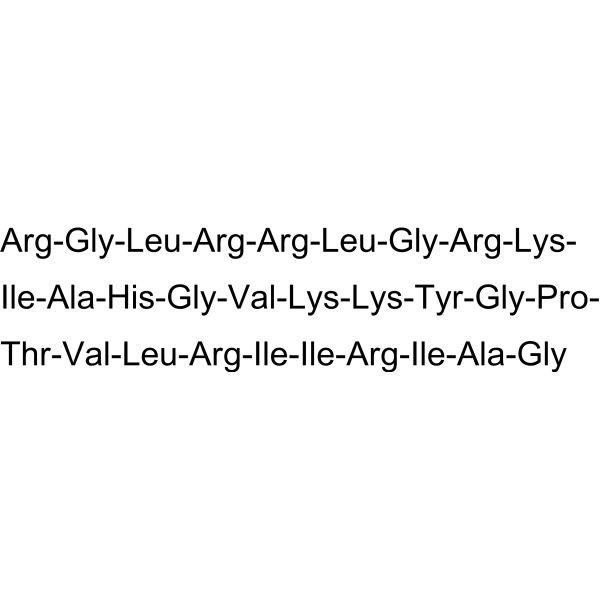
RGLRRLGRKIAHGVKKYGPTVLRIIRIAG
-
Shipping
Room temperature in continental US; may vary elsewhere.
-
Storage
Sealed storage, away from moisture and light, under nitrogen
Powder -80°C 2 years -20°C 1 year * In solvent : -80°C, 6 months; -20°C, 1 month (sealed storage, away from moisture and light, under nitrogen)


Publications (1)
-
Journal Impact Factor
-
Most Recent

Protocols
-
Research Protocol for Infectious Diseases
Infectious-disease experiments test how pathogens interact with host barriers, innate immune receptors, inflammatory signaling, pathogen replication, and tissue injury; pattern-recognition receptors such as TLRs, RIG-I-like receptors, NOD-like receptors, and inflammasomes detect microbial molecules and activate NF-κB, interferon, and cytokine responses. The central hypothesis is that infection severity reflects the balance between pathogen burden and host response: protective inflammation restricts pathogen growth, whereas excessive or mislocalized inflammation contributes to tissue damage and disease phenotype. Unresolved questions include which host pathways are protective versus pathogenic, why some infection models fail to translate to human disease, and which combined readouts best predict clinically relevant infection outcomes.
-
LPS-Induced Endotoxemia/Systemic Inflammation
Lipopolysaccharide (LPS)-induced endotoxemia is a widely used in vivo model of acute systemic inflammation in which LPS, a Gram-negative bacterial endotoxin, activates innate immune signaling primarily through TLR4, leading to rapid and transient induction of pro-inflammatory cytokines such as TNF-α, IL-6, and IL-1β in circulation and tissues. This cytokine surge is commonly used as a measurable readout of systemic inflammatory activation and immune dysregulation, and is typically assessed within hours after intraperitoneal LPS administration in mouse models of endotoxemia. The model captures key features of systemic inflammatory response syndrome, including cytokine release, immune cell activation, and downstream tissue responses, and has been used to evaluate anti-inflammatory interventions such as cytokine modulation, lipid mediators, and immune cell-targeting therapies.
-
Protein Extraction
Protein extraction uses physical, chemical or biological methods, such as ultrasonic disruption, salting out, cell lysis, electrophoresis, etc., to destroy the cell membrane structure and to separate the proteins from different components according to their characteristics.


Purity & Documentation
-
Data Sheet (270 KB)
-
SDS (254 KB)
- English - EN (254 KB)
- Français - FR (254 KB)
- Deutsch - DE (254 KB)
- Norwegian - NO (254 KB)
- Español - ES (254 KB)
- Swedish - SV (254 KB)
- Italian - IT (254 KB)
- Korean - KR (254 KB)
- Portuguese - PT (254 KB)
-
Handling Instructions (2659 KB)
References
[1]. Jacob B, et al. The stereochemical effect of SMAP-29 and SMAP-18 on bacterial selectivity, membrane interaction and anti-inflammatory activity. Amino Acids. 2016;48(5):1241-1251. [Content Brief]
[2]. Skerlavaj B, et al. SMAP-29: a potent antibacterial and antifungal peptide from sheep leukocytes. FEBS Lett. 1999;463(1-2):58-62. [Content Brief]
[3]. Anderson RC, et al. Antimicrobial activity and bacterial-membrane interaction of ovine-derived cathelicidins. Antimicrob Agents Chemother. 2004;48(2):673-676. [Content Brief]
[4]. Giacometti A, et al. Cathelicidin peptide sheep myeloid antimicrobial peptide-29 prevents endotoxin-induced mortality in rat models of septic shock. Am J Respir Crit Care Med. 2004;169(2):187-194. [Content Brief]
[5]. Jung CJ, et al. Identification of potential therapeutic antimicrobial peptides against Acinetobacter baumannii in a mouse model of pneumonia. Sci Rep. 2021;11(1):7318. Published 2021 Apr 1. [Content Brief]

Calculators
Concentration (start) × Volume (start) = Concentration (final) × Volume (final)


SMAP-29 Related Classifications
HY-P2460 Related Classifications
 Powered by Bioz
Keywords
- SMAP-29
- 172485-26-6
- SMAP29
- SMAP 29
- Bacterial
- Fungal
- Interleukin Related
- TNF Receptor
- Gram-positive bacteria
- septic shock
- Escherichia coli
- sheep erythrocytes
- methicillin-resistant Staphylococcus aureus
- human erythrocytes
- Gram-negative bacteria
- Acinetobacter baumannii
- fungi
- RAW 264.7 mouse macrophage cells
- Inhibitor
- inhibitor
- inhibit