



Isobutylparaben

Based on 1 Customer Validation
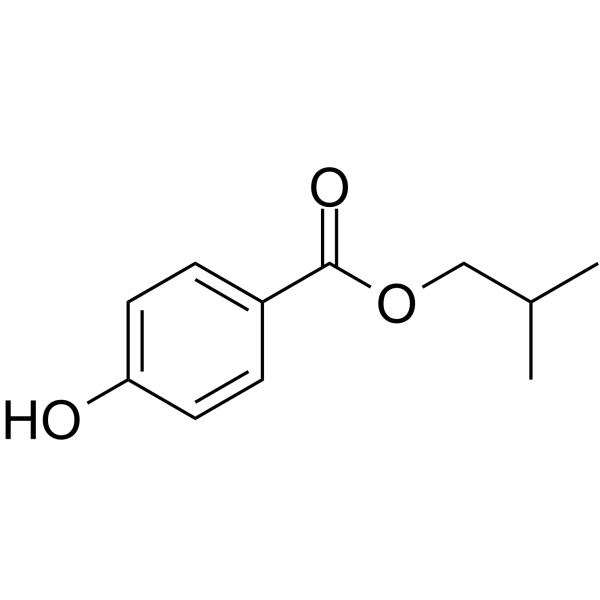
Isobutylparaben (Isobutyl 4-hydroxybenzoate) is the agonist for PXR, CAR and PPAR. Isobutylparaben has a broad-spectrum antimicrobial activity and widely used in personal care products and cosmetics.
Nur für Forschungszwecke. Wir verkaufen nicht an Patienten.
- Reinheit : 98.87%
- CAS. Nr.: 4247-02-3
- Formel: C11H14O3
- Molecular Weight:194.23
-
Speicherung:
Store at room temperature 3 years.
In solvent -80°C, 2 years , -20°C, 1 year

To place orders, for customer services and technical support, please contact: MedChemExpress USA
Tel: 609-228-6898 E-mail: [email protected] [email protected]


-
 Biologische Aktivität
-
Chemical Information
-
Lösungsmittel & Löslichkeit
- Protokoll
- Reinheit & Dokumentation
- Verweise
-
 Help & FAQs


-
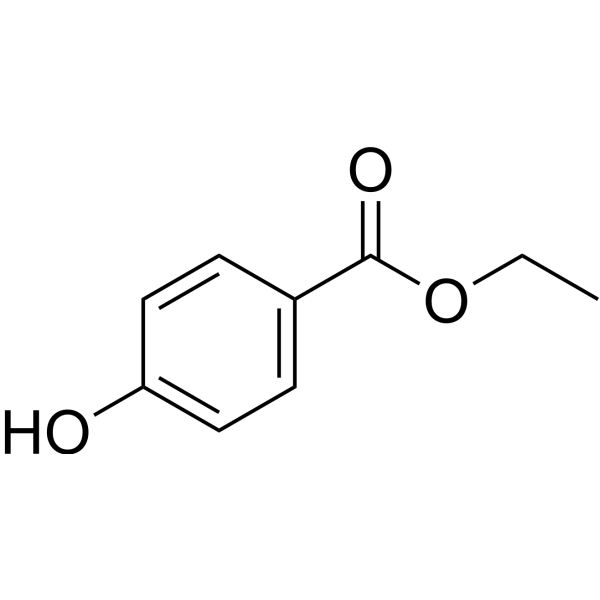
HY-B0934
EthylparabenAntifungal Agent -
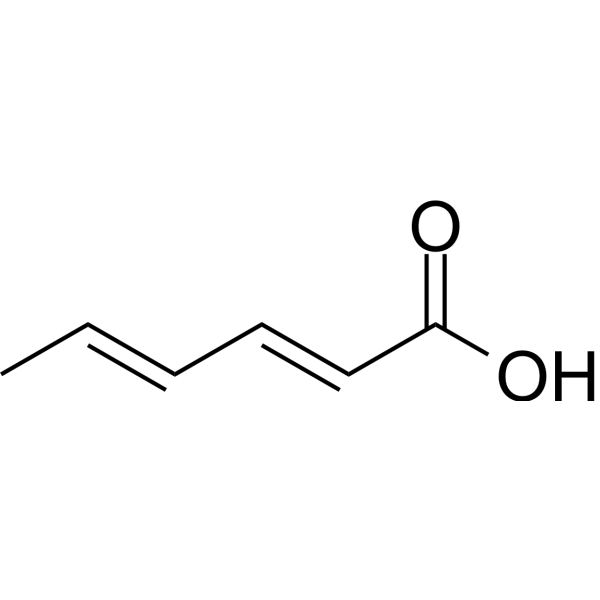
HY-N0626
Sorbic acidAntibacterial Preservative -
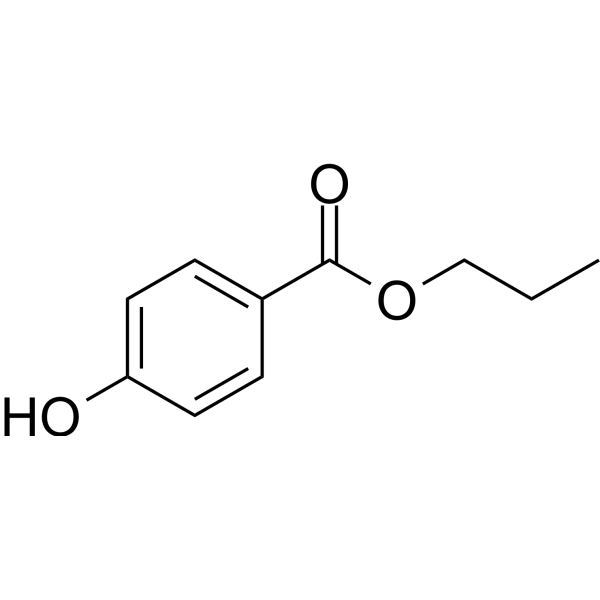
HY-N2026
PropylparabenBacterial Inhibitor -

HY-W015026R
Isobutylparaben (Standard)PXR Agonist -
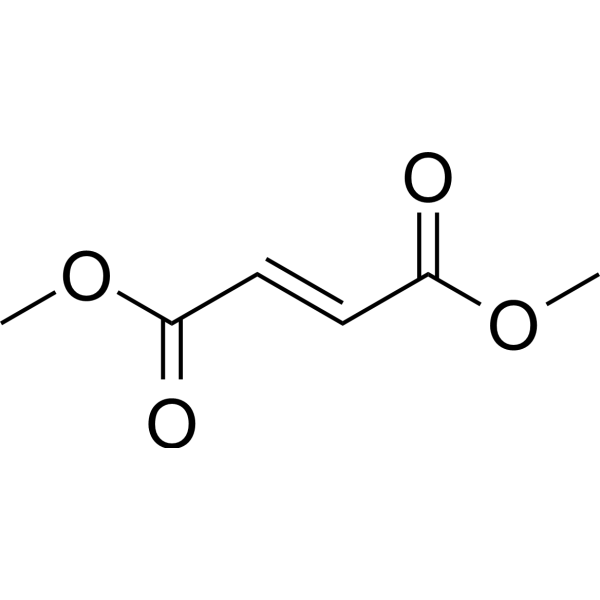
HY-17363
Dimethyl fumarateNrf2 Activator -
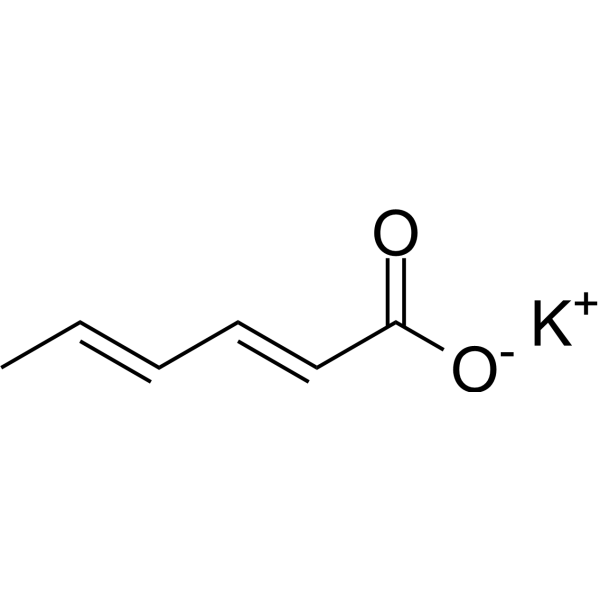
HY-N0626A
Potassium sorbateAntibacterial Preservative -
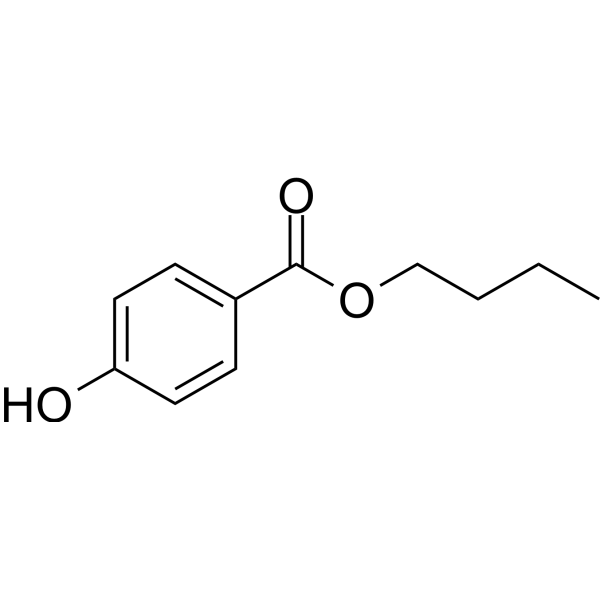
HY-B1431
ButylparabenBacterial Inhibitor -
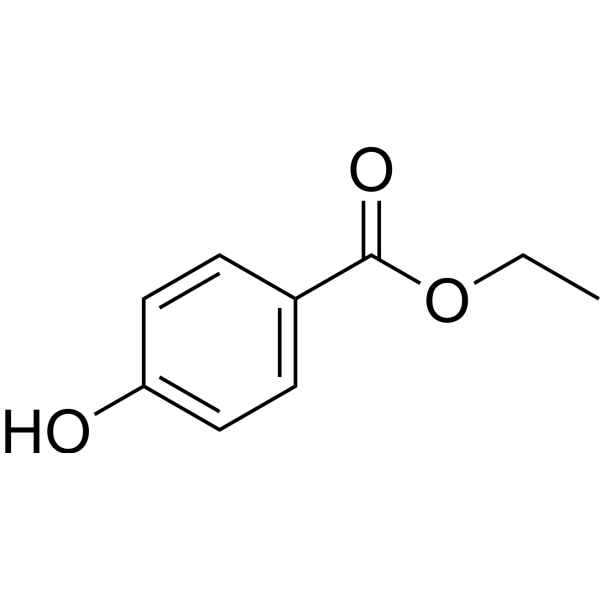
HY-B0934R
Ethylparaben (Standard)Antifungal Agent -
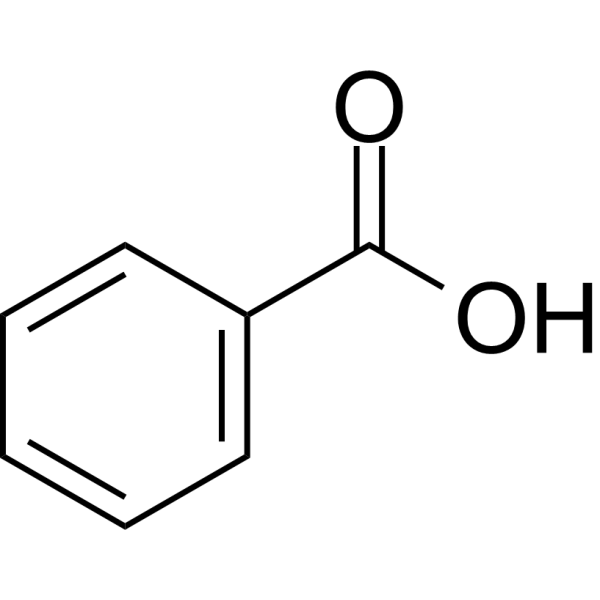
HY-N0216
Benzoic acidBacterial Inhibitor -

HY-N2026R
Propylparaben (Standard)Bacterial Inhibitor -

HY-N0626AR
Potassium sorbate (Standard)Food Preservative -

HY-N0216R
Benzoic acid (Standard)Bacterial Inhibitor


Biologische Aktivität
Beschreibung
IC50 & Target
REC20: 7.2 μM (hPXR); 0.9 μM (rPXR); 5.0 μM (rCAR); 8.5 μM (rPPARα)[1]
In Vitro
Isobutylparaben activates human pregnane X receptor (hPXR), rat PXR, rat constitutive androstane receptor (rCAR), and rPPARα, REC20s (20% relative effective concentration) are 7.2 μM, 0.9 μM, 5.0 μM and 8.5 μM, respectively[1].
Isobutylparaben (0-600 μM, 44 h) negatively regulates the porcine oocyte maturation, reduces oocyte quality by affecting the cytoskeleton, inducing oxidative stress and apoptosis, and changing epigenetic modifications, thereby affecting the reproductive health[2].
MedChemExpress (MCE) has not independently confirmed the accuracy of these methods. They are for reference only. Further protocols information, click here.
-
Cell Line:Porcine cumulus oocyte complexes
-
Concentration:0-600 μM
-
Incubation Time:44 h
-
Result:Improved the early apoptosis rate.
-
Cell Line:Porcine cumulus oocyte complexes
-
Concentration:0-600 μM
-
Incubation Time:44 h
-
Result:Upregulated the levels of H3K9me3 and H3K27me3.
In Vivo
MedChemExpress (MCE) has not independently confirmed the accuracy of these methods. They are for reference only.
-
Animal Model:Sprague-Dawley rats models[3]
-
Dosage:4.36 mg/L/day
-
Administration:capsules subcutaneously implanted, continuous exposure throughout pregnancy and lactation
-
Result:Decreased the time spent in the open arms in the elevated plus maze.
Decreased the latency time to enter the dark area in the passive avoidance task.


Chemical Information
-
CAS. Nr. 4247-02-3
-
Appearance Solid
-
Molecular Weight 194.23
-
Formel C11H14O3
-
Color White to off-white
-
SMILES
O=C(OCC(C)C)C1=CC=C(O)C=C1
-
Synonyms
Isobutyl-P-Hydroxybenzoate
-
Versand
Room temperature in continental US; may vary elsewhere.
-
Speicherung
Store at room temperature 3 years
In solvent -80°C 2 years -20°C 1 year


Lösungsmittel & Löslichkeit
In Vitro:
DMSO : 100 mg/mL (514.85 mM; Need ultrasonic; Hygroscopic DMSO has a significant impact on the solubility of product, please use newly opened DMSO)
Please refer to the solubility information to select the appropriate solvent. Once prepared, please aliquot and store the solution to prevent product inactivation from repeated freeze-thaw cycles.
Storage method and period of stock solution: -80°C, 2 years; -20°C, 1 year. When stored at -80°C, please use it within 2 years. When stored at -20°C, please use it within 1 year.
Please refer to the solubility information to select the appropriate solvent. Once prepared, please aliquot and store the solution to prevent product inactivation from repeated freeze-thaw cycles.
Storage method and period of stock solution: -80°C, 2 years; -20°C, 1 year. When stored at -80°C, please use it within 2 years. When stored at -20°C, please use it within 1 year.
Konzentration (Stammlösung) × Volumen (Stammlösung) = Konzentration (Ziellösung) × Volumen (Ziellösung)
In Vivo:
Select the appropriate dissolution method based on your experimental animal and administration route.
- For the following dissolution methods, please ensure to first prepare a clear stock solution using an In Vitro approach and then sequentially add co-solvents:
- To ensure reliable experimental results, the clarified stock solution can be appropriately stored based on storage conditions. As for the working solution for In Vivo experiments, it is recommended to prepare freshly and use it on the same day.
- The percentages shown for the solvents indicate their volumetric ratio in the final prepared solution. If precipitation or phase separation occurs during preparation, heat and/or sonication can be used to aid dissolution.
Add each solvent one by one: 10% DMSO 40% PEG300 5% Tween-80 45% Saline
Solubility: ≥ 2.5 mg/mL (12.87 mM); Clear solution
This protocol yields a clear solution of ≥ 2.5 mg/mL (saturation unknown).
Taking 1 mL working solution as an example, add 100 μL DMSO stock solution (25.0 mg/mL) to 400 μL PEG300, and mix evenly; then add 50 μL Tween-80 and mix evenly; then add 450 μL Saline to adjust the volume to 1 mL.
Preparation of Saline: Dissolve 0.9 g sodium chloride in ddH₂O and dilute to 100 mL to obtain a clear Saline solution.
Add each solvent one by one: 10% DMSO 90% (20% SBE-β-CD in Saline)
Solubility: ≥ 2.5 mg/mL (12.87 mM); Clear solution
This protocol yields a clear solution of ≥ 2.5 mg/mL (saturation unknown).
Taking 1 mL working solution as an example, add 100 μL DMSO stock solution (25.0 mg/mL) to 900 μL 20% SBE-β-CD in Saline, and mix evenly.
Preparation of 20% SBE-β-CD in Saline (4°C, storage for one week): 2 g SBE-β-CD powder is dissolved in 10 mL Saline, completely dissolve until clear.
In Vivo Dissolution Calculator
Please enter the basic information of animal experiments:
-
-
-
-
Recommended: Prepare an additional quantity of animals to account for potential losses during experiments.
Please enter your animal formula composition:
-
%DMSO +
Recommended: Keep the proportion of DMSO in working solution below 2% if your animal is weak.
-
%+
-
+%Tween-80 + +
-
%Saline +
The co-solvents required include: DMSO, . All of co-solvents are available by MedChemExpress (MCE). , Tween 80. All of co-solvents are available by MedChemExpress (MCE).
Working solution concentration: 0.22 mg/mL
Method for preparing stock solution: mg drug dissolved in μL DMSO. Stock solution concentration: mg/mL.
1. Take μL DMSO stock solution;
2. Add μL .
μL , mix evenly;
3. Then add μL Tween 80, mix evenly;
4. Then add μL
Please ensure that the stock solution in the first step is dissolved to a clear state, and add co-solvents in sequence. You can use ultrasonic heating (ultrasonic cleaner, recommended frequency 20-40 kHz), vortexing, etc. to assist dissolution.

Protokoll
-
Research Protocol for Infectious Diseases
Infectious-disease experiments test how pathogens interact with host barriers, innate immune receptors, inflammatory signaling, pathogen replication, and tissue injury; pattern-recognition receptors such as TLRs, RIG-I-like receptors, NOD-like receptors, and inflammasomes detect microbial molecules and activate NF-κB, interferon, and cytokine responses. The central hypothesis is that infection severity reflects the balance between pathogen burden and host response: protective inflammation restricts pathogen growth, whereas excessive or mislocalized inflammation contributes to tissue damage and disease phenotype. Unresolved questions include which host pathways are protective versus pathogenic, why some infection models fail to translate to human disease, and which combined readouts best predict clinically relevant infection outcomes.


Reinheit & Dokumentation
-
Data Sheet (273 KB)
-
SDS (476 KB)
- English - EN (476 KB)
- Français - FR (476 KB)
- Deutsch - DE (476 KB)
- Norwegian - NO (476 KB)
- Español - ES (476 KB)
- Swedish - SV (476 KB)
- Italian - IT (476 KB)
- Korean - KR (476 KB)
- Portuguese - PT (476 KB)
-
Handling Instructions (2659 KB)
Verweise
[1]. Chieri Fujino, et al. Comparative Study of the Effect of 17 Parabens on PXR-, CAR- And PPARα-mediated Transcriptional Activation. Food Chem Toxicol. 2019 Nov;133:110792. [Content Brief]
[2]. Fei Meng, et al. Isobutylparaben Negatively Affects Porcine Oocyte Maturation Through Increasing Oxidative Stress and Cytoskeletal Abnormalities. Environ Mol Mutagen. 2020 Apr;61(4):433-444. [Content Brief]
[3]. Kawaguchi M, et al., Maternal isobutyl-paraben exposure alters anxiety and passive avoidance test performance in adult male rats. Neurosci Res. 2009 Oct;65(2):136-40. [Content Brief]


Complete Stock Solution Preparation Table
Please refer to the solubility information to select the appropriate solvent. Once prepared, please aliquot and store the solution to prevent product inactivation from repeated freeze-thaw cycles.
Storage method and period of stock solution: -80°C, 2 years; -20°C, 1 year. When stored at -80°C, please use it within 2 years. When stored at -20°C, please use it within 1 year.
| Optional Solvent | Concentration Solvent Mass | 1 mg | 5 mg | 10 mg | 25 mg |
|---|---|---|---|---|---|
| DMSO | 1 mM | 5.1485 mL | 25.7427 mL | 51.4854 mL | 128.7134 mL |
| 5 mM | 1.0297 mL | 5.1485 mL | 10.2971 mL | 25.7427 mL | |
| 10 mM | 0.5149 mL | 2.5743 mL | 5.1485 mL | 12.8713 mL | |
| 15 mM | 0.3432 mL | 1.7162 mL | 3.4324 mL | 8.5809 mL | |
| 20 mM | 0.2574 mL | 1.2871 mL | 2.5743 mL | 6.4357 mL | |
| 25 mM | 0.2059 mL | 1.0297 mL | 2.0594 mL | 5.1485 mL | |
| 30 mM | 0.1716 mL | 0.8581 mL | 1.7162 mL | 4.2904 mL | |
| 40 mM | 0.1287 mL | 0.6436 mL | 1.2871 mL | 3.2178 mL | |
| 50 mM | 0.1030 mL | 0.5149 mL | 1.0297 mL | 2.5743 mL | |
| 60 mM | 0.0858 mL | 0.4290 mL | 0.8581 mL | 2.1452 mL | |
| 80 mM | 0.0644 mL | 0.3218 mL | 0.6436 mL | 1.6089 mL | |
| 100 mM | 0.0515 mL | 0.2574 mL | 0.5149 mL | 1.2871 mL |


Isobutylparaben Related Classifications
HY-W015026 Related Classifications
 Powered by Bioz