



ε-Poly-L-lysine (MW 3800-4200)

Based on 1 Customer Validation
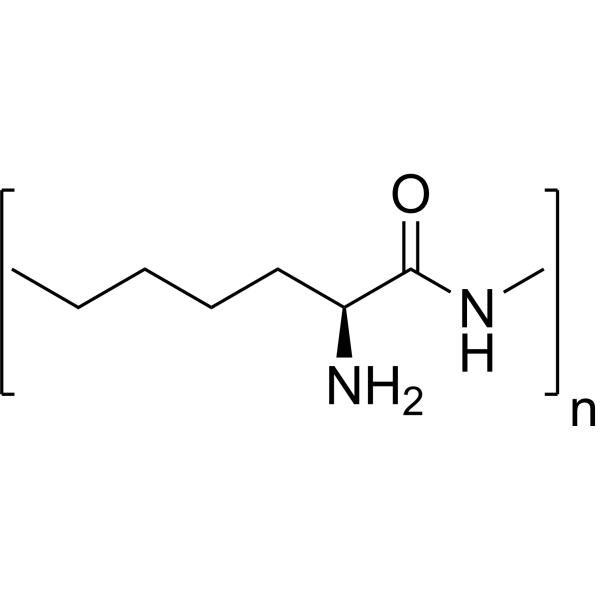
Epsilon-polylysine is an antimicrobial peptide that can be produced by bacteria such as Streptomyces. Epsilon-polylysine inhibits the growth of microorganisms such as bacteria, yeasts and molds and is therefore often used as a green food additive and preservative in various food and beverage products. Epsilon-polylysine has a variety of properties, including thermal stability, resistance to acidic conditions, and broad-spectrum antimicrobial activity. Epsilon-polylysine can be loaded on other materials to form nanoparticles or form nanofiber membranes for targeted delivery to exert sustained antibacterial efficacy. Epsilon-polylysine is also used as a liposome stabilizer.
For research use only. We do not sell to patients.
- Assay : 99%
- CAS No.: 28211-04-3
- Formula: (C6H12N2O)n
- Molecular Weight:3800-4200
-
Storage:
4°C, protect from light
* In solvent : -80°C, 6 months; -20°C, 1 month (protect from light)

To place orders, for customer services and technical support, please contact: MedChemExpress USA
Tel: 609-228-6898 E-mail: [email protected] [email protected]


-
 Biological Activity
-
Chemical Information
-
Solvent & Solubility
- Protocols
- Purity & Documentation
- References
-
 Help & FAQs


-

HY-W250308A
ε-Poly-L-lysine hydrochloride (MV 2000-5000)Antimicrobial Agent -
HY-13259
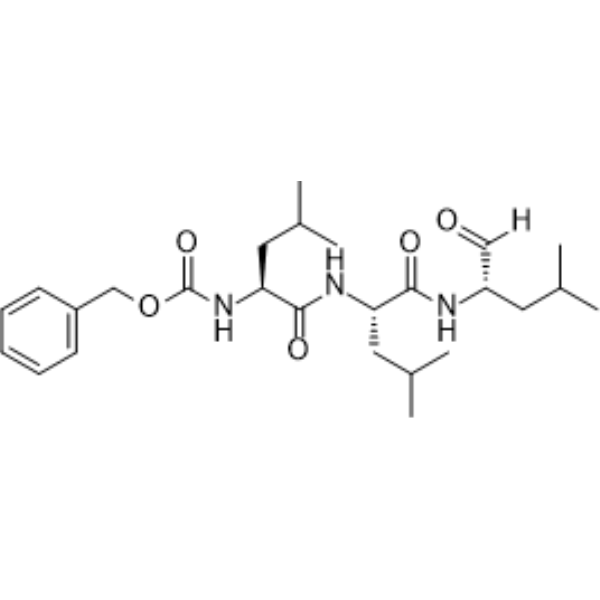
MG-132Proteasome Inhibitor -
HY-100410
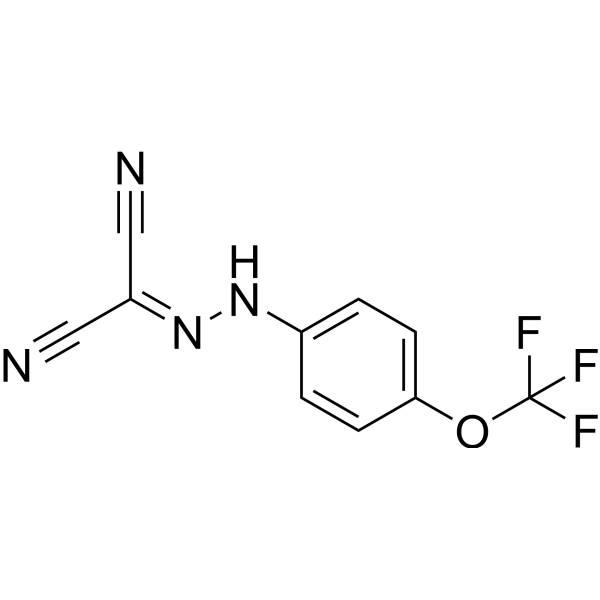
FCCPOXPHOS Uncoupler -

HY-P9907
TrastuzumabHER2 Blocking Antibody -
HY-10071
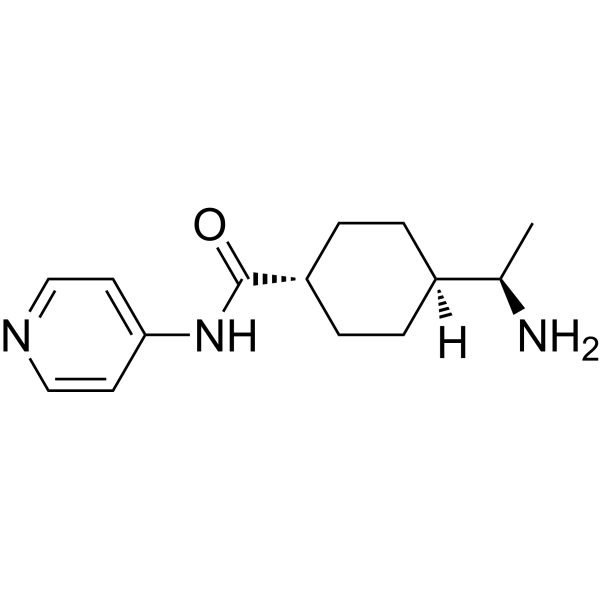
Y-27632ROCK Inhibitor -
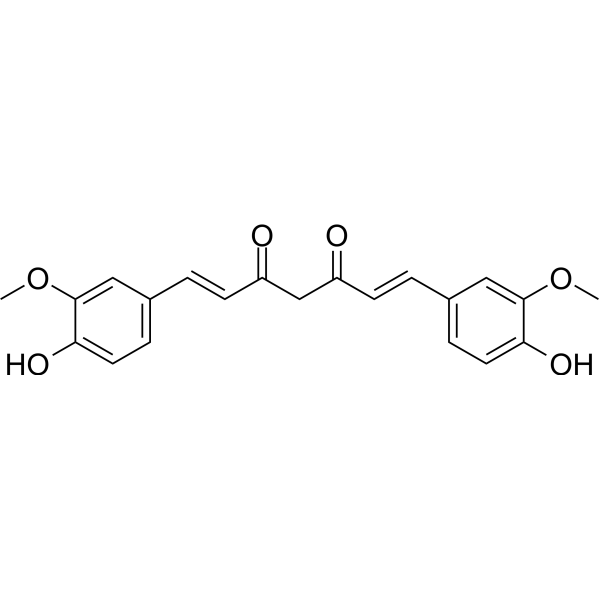
HY-N0005
Curcuminp300 Histone Acetylatransferase Inhibitor -
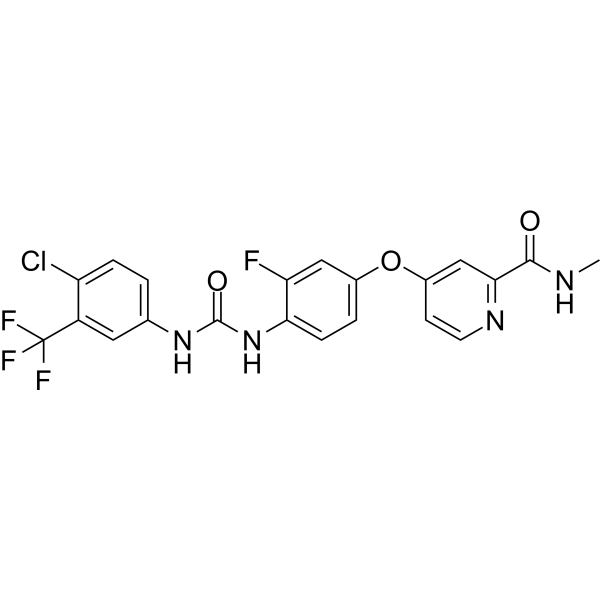
HY-10331
RegorafenibMulti-kinase Inhibitor -
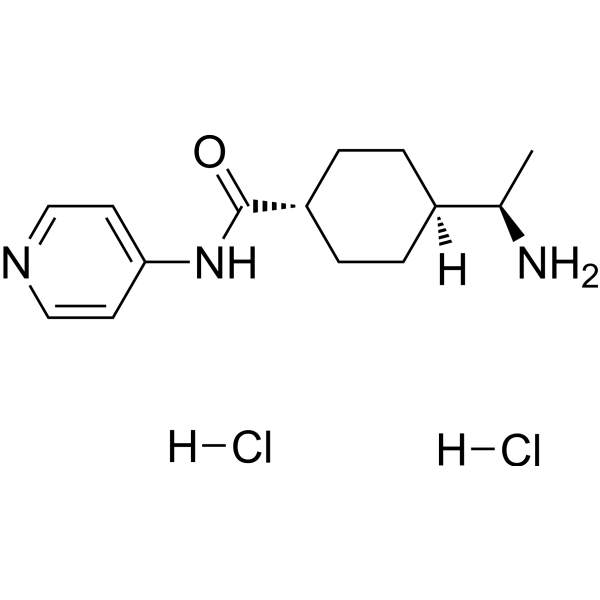
HY-10583
Y-27632 dihydrochlorideROCK Inhibitor -
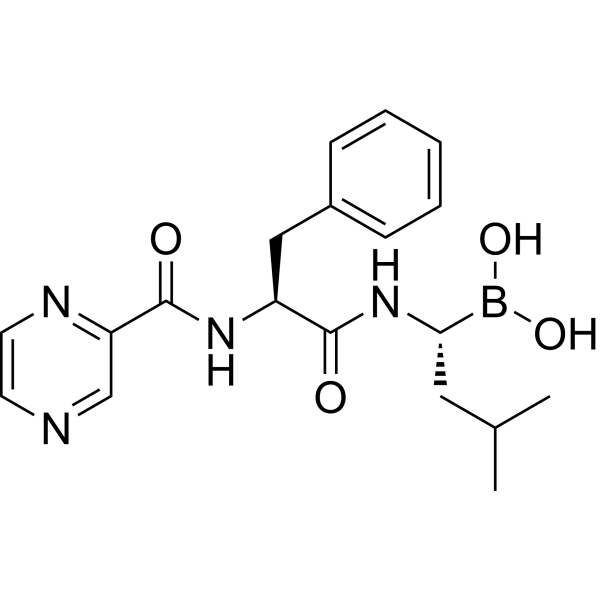
HY-10227
BortezomibProteasome Inhibitor -

HY-107910
Hyaluronidase, Bovine testesHyaluronic Acid Degrader -
HY-13631E
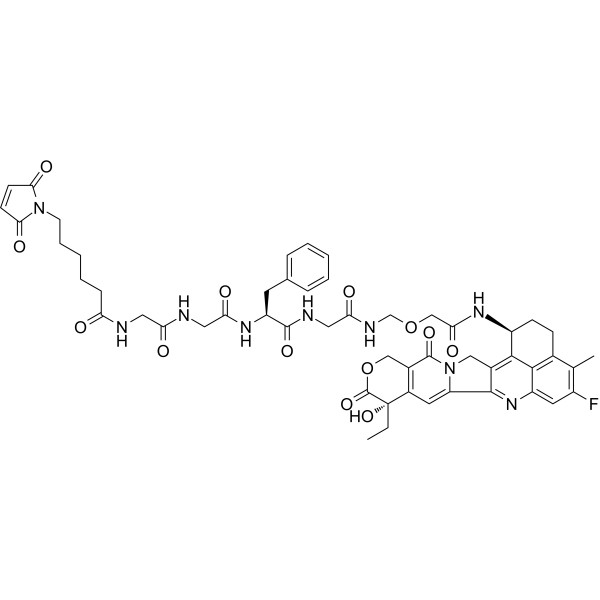
DeruxtecanDrug-Linker Conjugates for ADC -
HY-19312
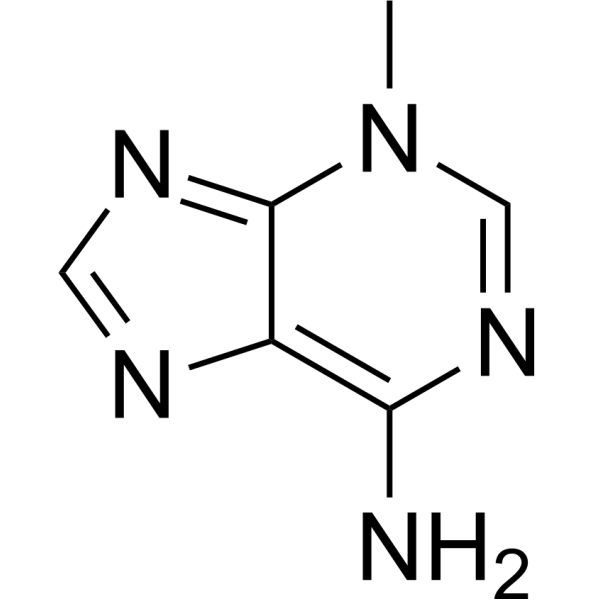
3-MethyladenineAutophagy/PI3K Inhibitor


Biological Activity
Description
In Vitro
ε-Poly-L-lysine (MW 3800-4200) (1000, 2000 and 4000 mg/L; 20 μL was added to the wound at the equator of each jujube fruit, after air-drying at room temperature for 1 hour, the treated fruits were placed in a plastic box filled with sterile water, maintained at 95% humidity, and stored at 22°C for 0-72 h) dose-dependently reduces the disease severity of gray mold in jujube fruit[5]. ε-Poly-L-lysine (MW 3800-4200) (0-450 mg/L; 1-4 days) dose-dependently inhibites the growth of B. cinerea hyphae[5].
MedChemExpress (MCE) has not independently confirmed the accuracy of these methods. They are for reference only.


Chemical Information
-
CAS No. 28211-04-3
-
Appearance Solid
-
Molecular Weight 3800-4200
-
Formula (C6H12N2O)n
-
Color White to light yellow
-
SMILES
CNC([C@H](CCCCC)N)=O.[n]
-
Synonyms
Epsilon-polylysine (MW 3800-4200); ε-Polylysine (MW 3800-4200); ε-PL (MW 3800-4200)
-
Initial Source
Streptomyces albulus
-
Shipping
Room temperature in continental US; may vary elsewhere.
-
Storage
4°C, protect from light
* In solvent : -80°C, 6 months; -20°C, 1 month (protect from light)


Solvent & Solubility
In Vitro:
H2O : 100 mg/mL (Need ultrasonic)


Purity & Documentation
-
Data Sheet (276 KB)
-
SDS (394 KB)
- English - EN (394 KB)
- Français - FR (394 KB)
- Deutsch - DE (394 KB)
- Norwegian - NO (394 KB)
- Español - ES (394 KB)
- Swedish - SV (394 KB)
- Italian - IT (394 KB)
- Korean - KR (394 KB)
- Portuguese - PT (394 KB)
-
Handling Instructions (2659 KB)
References
[1]. Wang Z, et al. Metabolomic Analysis of Biosynthesis Mechanism of ε-Polylysine Produced by Streptomyces diastatochromogenes. Front Bioeng Biotechnol. 2021 Jul 30;9:698022. [Content Brief]
[2]. Zhou X, et al. Elaboration and characterization of ε-polylysine-sodium alginate nanoparticles for sustained antimicrobial activity. Int J Biol Macromol. 2023 Aug 16;251:126329. [Content Brief]
[3]. Yingying M, et al. pH-Sensitive ε-polylysine/polyaspartic acid/zein nanofiber membranes for the targeted release of polyphenols. Food Funct. 2022 Jun 20;13(12):6792-6801. [Content Brief]

Calculators
Concentration (start) × Volume (start) = Concentration (final) × Volume (final)


ε-Poly-L-lysine (MW 3800-4200) Related Classifications
HY-W250308 Related Classifications
 Powered by Bioz