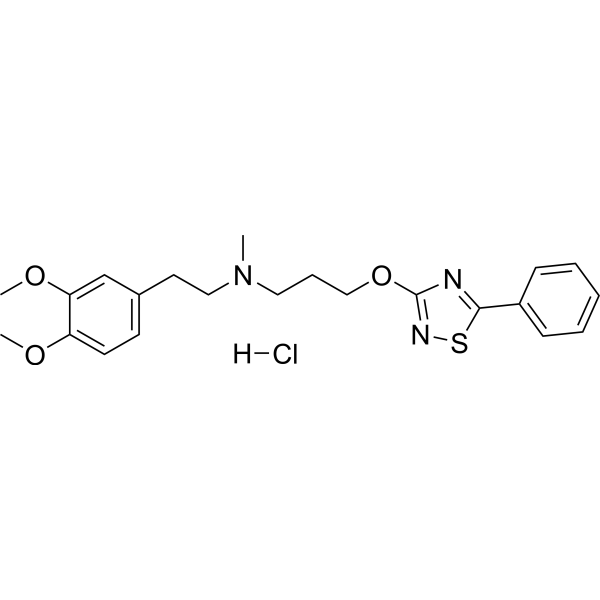
1. Search Result
Search Result
Pathways Recommended: Membrane Transporter/Ion Channel
Results for "

Na channels

" in MedChemExpress (MCE) Product Catalog:

141

Inhibitors & Agonists

3

Screening Libraries

1

Biochemical Assay Reagents

6

Peptides

11

Natural
Products

23

Isotope-Labeled Compounds

Cat. No. Product Name Target Research Areas Chemical Structure
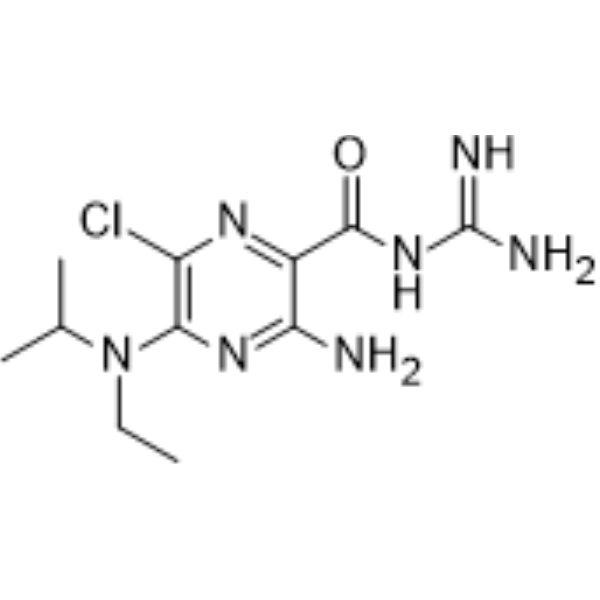
  • HY-101840
    EIPA
    Maximum Cited Publications
    98 Publications Verification

    L593754; MH 12-43; Ethylisopropylamiloride

    TRP Channel Prostaglandin Receptor Autophagy COX Na+/H+ Exchanger (NHE) Inflammation/Immunology Cancer
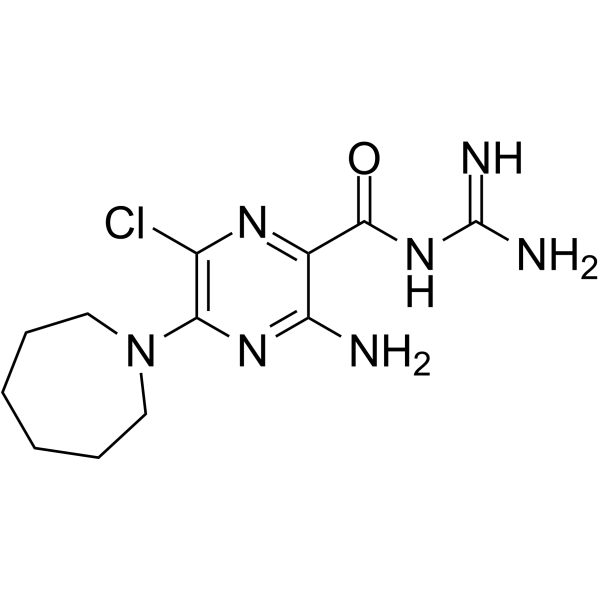
    EIPA (L593754) is an orally active TRPP3 channel inhibitor with an IC50 of 10.5 μM. EIPA also enhances autophagy by inhibiting Na +/H +-exchanger 3 (NHE3). EIPA inhibits macropinocytosis as well. EIPA can be used in the research of inflammation and cancers, such as gastric cancer, colon carcinoma, pancreatic carcinoma .
    EIPA
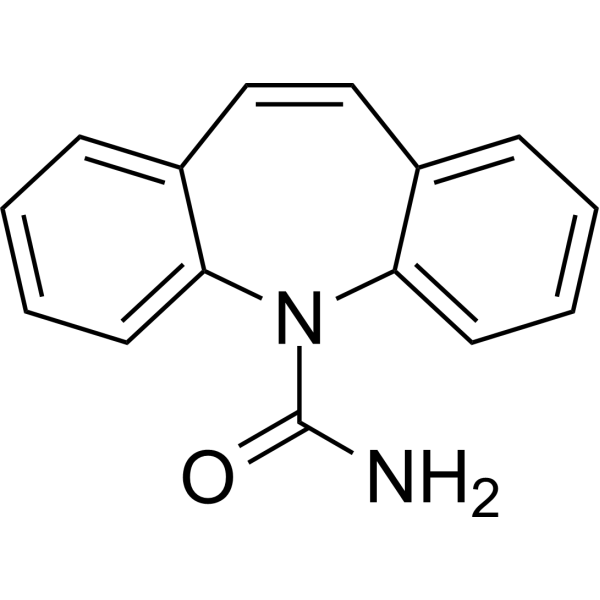
  • HY-B0246
    Carbamazepine
    15+ Cited Publications

    CBZ; NSC 169864

    Sodium Channel Autophagy Mitophagy Potassium Channel Calcium Channel HDAC Neurological Disease Cancer
    Carbamazepine is an orally active pressure-sensitive sodium ion channel blocker with an IC50 of 131 μM. Carbamazepine blocks voltage gated Na +, Ca 2+, and K + channels, and is also a HDAC inhibitor (IC50: 2 μM). Carbamazepine is an anticonvulsant and can be used for research of epilepsy and neuropathic pain .
    Carbamazepine
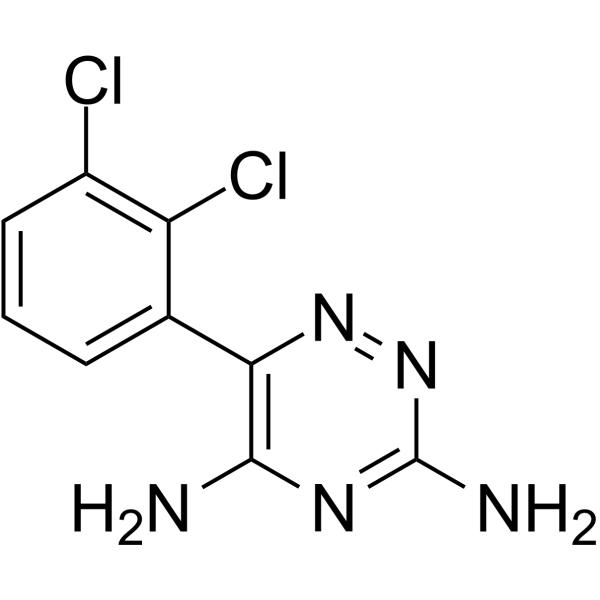
  • HY-B0495
    Lamotrigine
    5+ Cited Publications

    LTG; BW430C

    Sodium Channel Autophagy Neurological Disease Cancer
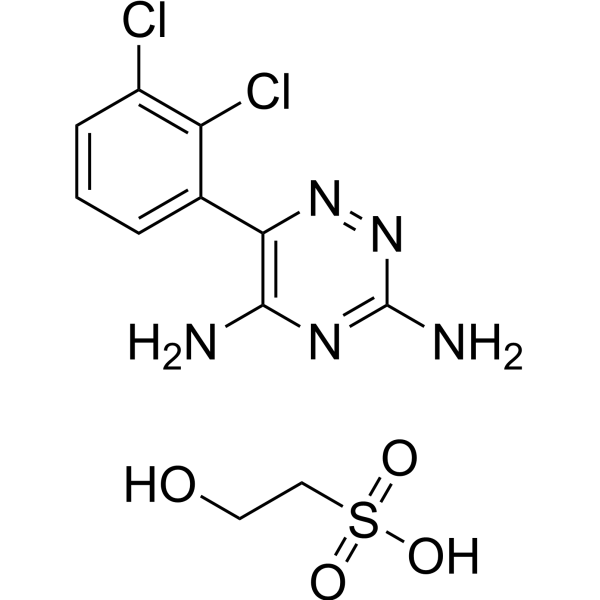
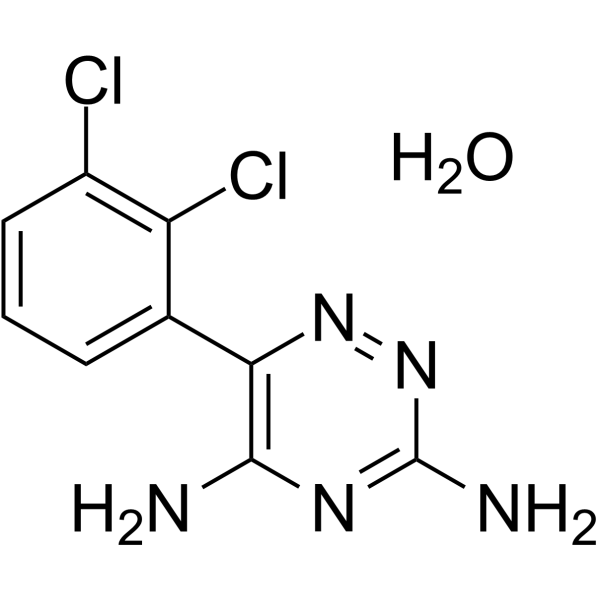
    Lamotrigine (BW430C) is a potent and orally active anticonvulsant or antiepileptic agent. Lamotrigine selectively blocks voltage-gated Na + channels, stabilizing presynaptic neuronal membranes and inhibiting glutamate release. Lamotrigine can be used for the research of epilepsy, focal seizure, et al .
    Lamotrigine
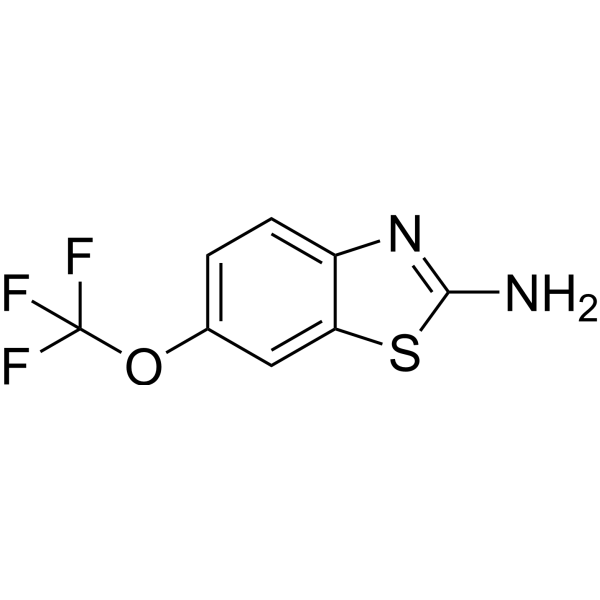
  • HY-B0211
    Riluzole
    10+ Cited Publications

    PK 26124

    Sodium Channel GABA Receptor Neurological Disease Cancer
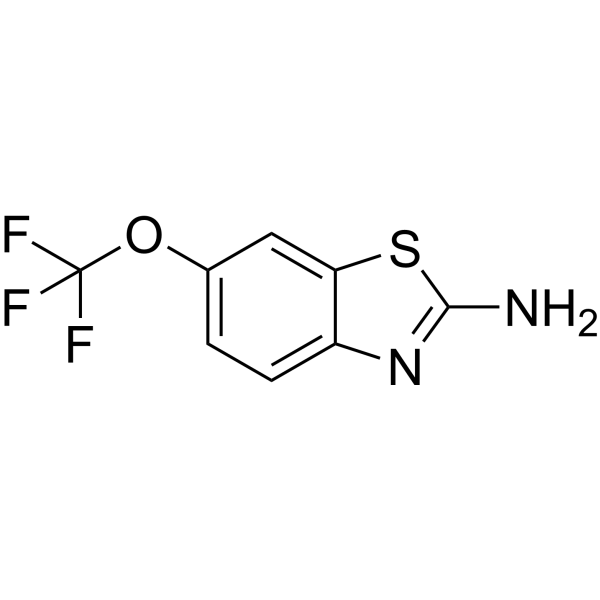
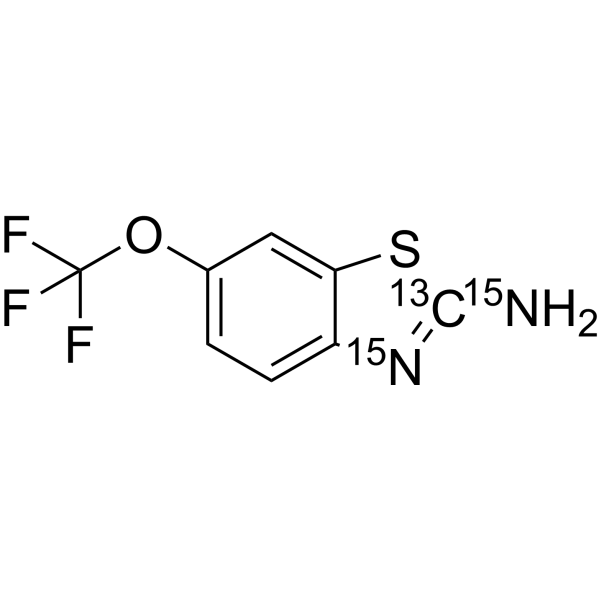
    Riluzole is an anticonvulsant agent and belongs to the family of use-dependent Na + channel blocker which can also inhibit GABA uptake with an IC50 of 43 μM.
    Riluzole
  • HY-B0448
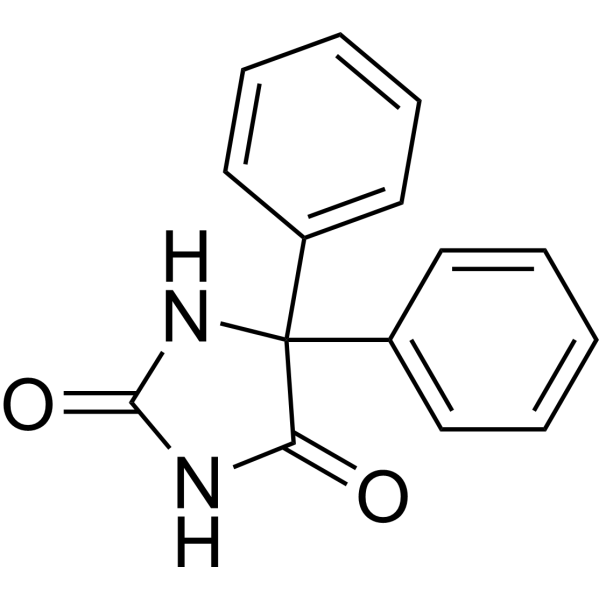
    Phenytoin
    5+ Cited Publications

    5,5-Diphenylhydantoin

    Sodium Channel Virus Protease Neurological Disease Cancer
    Phenytoin (5,5-Diphenylhydantoin) is a potent Voltage-gated Na + channels (VGSCs) blocker. Phenytoin has antiepileptic activity and reduces breast tumour growth and metastasis in mice .
    Phenytoin
  • HY-107754

    Potassium Channel Cardiovascular Disease
    Cesium chloride is a blocker of potassium channel. Cesium chloride prevents the decrease of Na + transport produced by Alloxan . Cesium chloride has induced cardiac arrhythmias, including torsade de pointes in animal models .
    Cesium chloride
  • HY-B0575
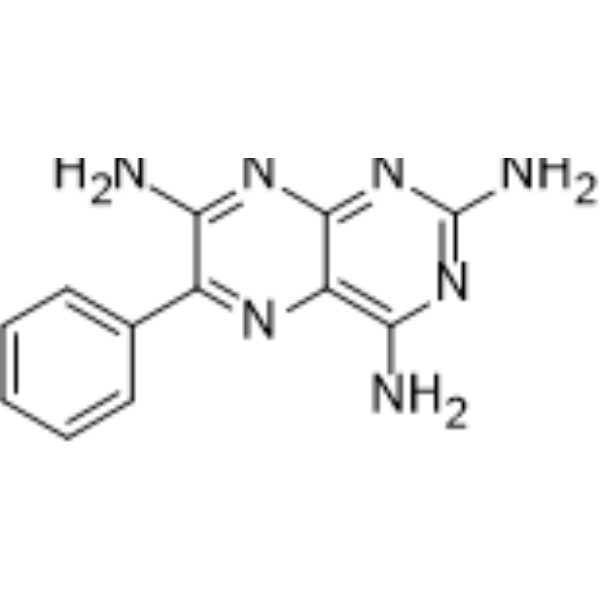
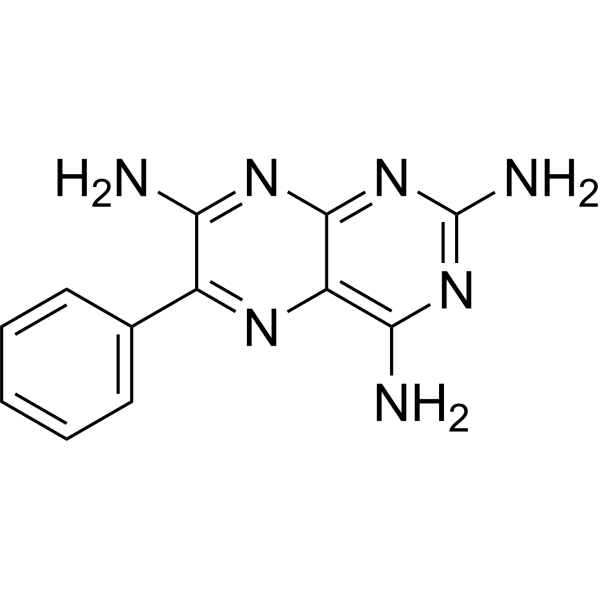
    Triamterene
    5+ Cited Publications

    Sodium Channel G protein-coupled Bile Acid Receptor 1 Cardiovascular Disease Neurological Disease Metabolic Disease Cancer
    Triamterene blocks epithelial Na + channel (ENaC) in a voltage-dependent manner, which used as a mild diuretic. Triamterene is an inhibitor of the TGR5 receptor .
    Triamterene
  • HY-17385
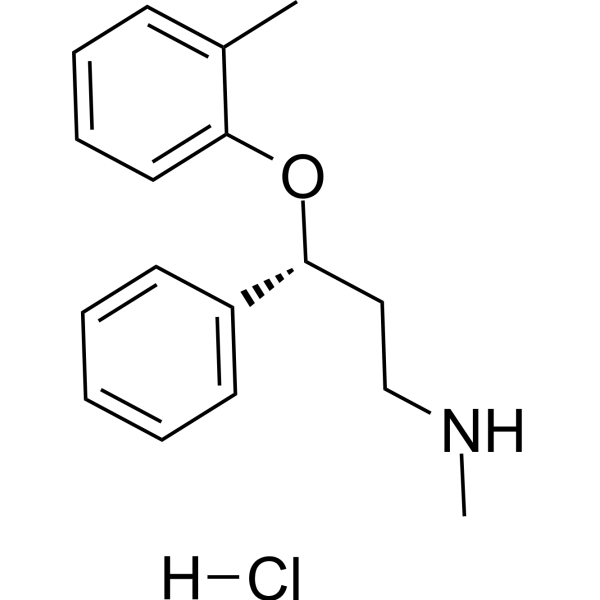
    Atomoxetine hydrochloride
    4 Publications Verification

    Tomoxetine hydrochloride; (R)-Tomoxetine hydrochloride; LY 139603

    Adrenergic Receptor Serotonin Transporter Sodium Channel Neurological Disease Cancer
    Atomoxetine (Tomoxetine) hydrochloride is a selective noradrenaline reuptake inhibitor with Ki values of 5 nM, 77 nM and 1451 nM for norepinephrine (NE), serotonin (5-HT) and dopamine (DA) transporters, respectively. Atomoxetine hydrochloride is a potent Na + channels (VGSCs) blocker. Atomoxetine hydrochloride can be used for attention-deficit hyperactivity disorder (ADHD) research .
    Atomoxetine hydrochloride
  • HY-B0211A
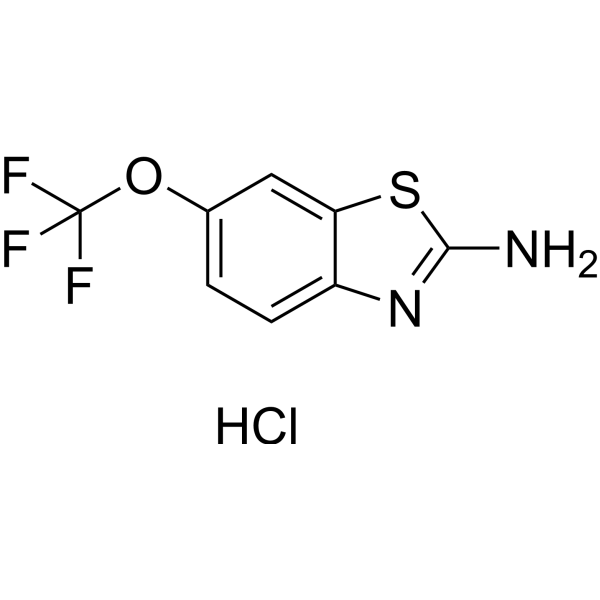
    Riluzole hydrochloride
    10+ Cited Publications

    PK 26124 hydrochloride

    Sodium Channel GABA Receptor Neurological Disease Cancer
    Riluzole hydrochloride is an anticonvulsant agent and belongs to the family of use-dependent Na + channel blocker which can also inhibit GABA uptake with an IC50 of 43 μM.
    Riluzole hydrochloride
  • HY-B0358
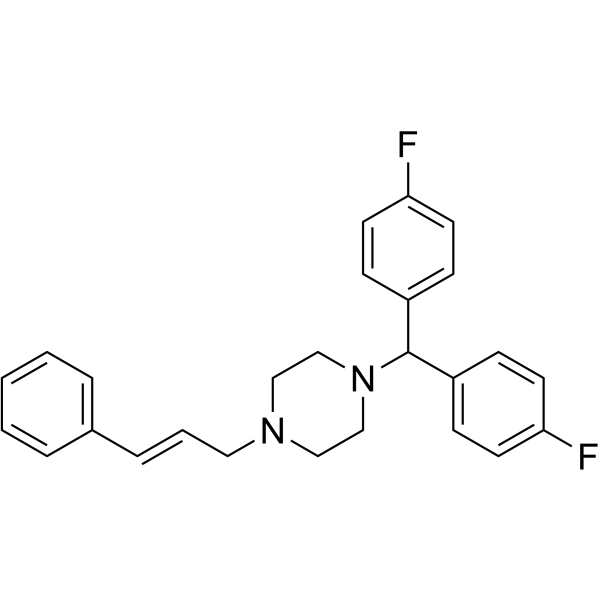
    Flunarizine
    5+ Cited Publications

    Calcium Channel Sodium Channel Dopamine Receptor Cardiovascular Disease Neurological Disease
    Flunarizine is a potent dual Na +/Ca 2+ channel (T-type) blocker. Flunarizine is a D2 dopamine receptor antagonist. Flunarizine shows anticonvulsive and antimigraine activity, and peripheral vasodilator effects .
    Flunarizine
  • HY-101840A
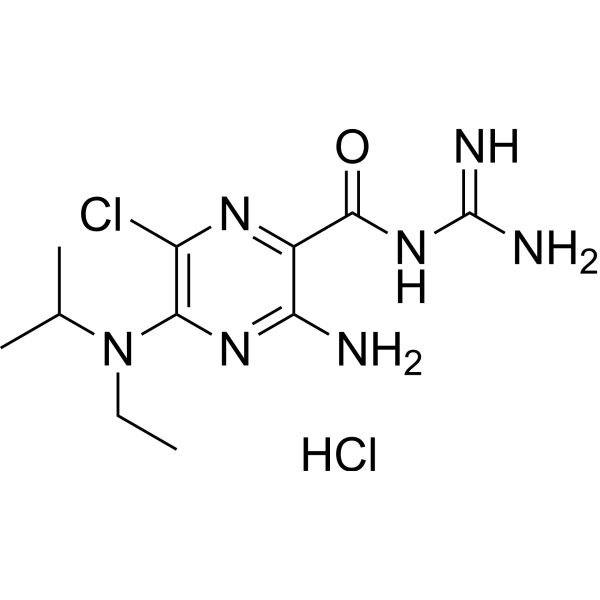
    EIPA hydrochloride
    Maximum Cited Publications
    98 Publications Verification

    L593754 hydrochloride; MH 12-43 hydrochloride; Ethylisopropylamiloride hydrochloride

    TRP Channel Autophagy COX Prostaglandin Receptor Na+/H+ Exchanger (NHE) Inflammation/Immunology Cancer
    EIPA (L593754) hydrochloride is an orally active TRPP3 channel inhibitor with an IC50 of 10.5 μM. EIPA hydrochloride also enhances autophagy by inhibiting Na +/H +-exchanger 3 (NHE3). EIPA hydrochloride inhibits macropinocytosis as well. EIPA hydrochloride can be used in the research of inflammation and cancers, such as gastric cancer, colon carcinoma, pancreatic carcinoma .
    EIPA hydrochloride
  • HY-B0448A
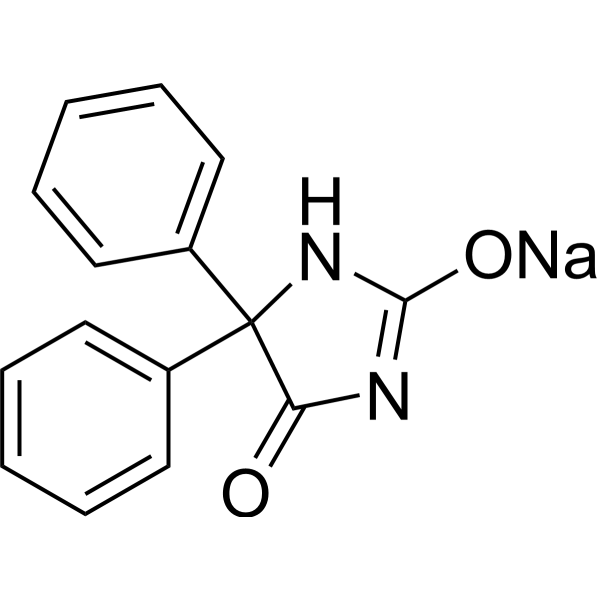
    Phenytoin sodium
    5+ Cited Publications

    5,5-Diphenylhydantoin sodium salt

    Sodium Channel Virus Protease Neurological Disease Cancer
    Phenytoin sodium (5,5-Diphenylhydantoin sodium salt) is a potent Voltage-gated Na + channels (VGSCs) blocker. Phenytoin has antiepileptic activity and reduces breast tumour growth and metastasis in mice .
    Phenytoin sodium
  • HY-B0358A
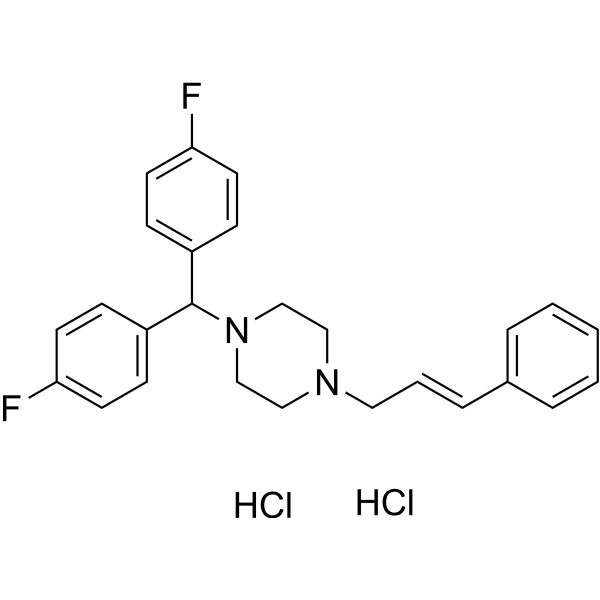
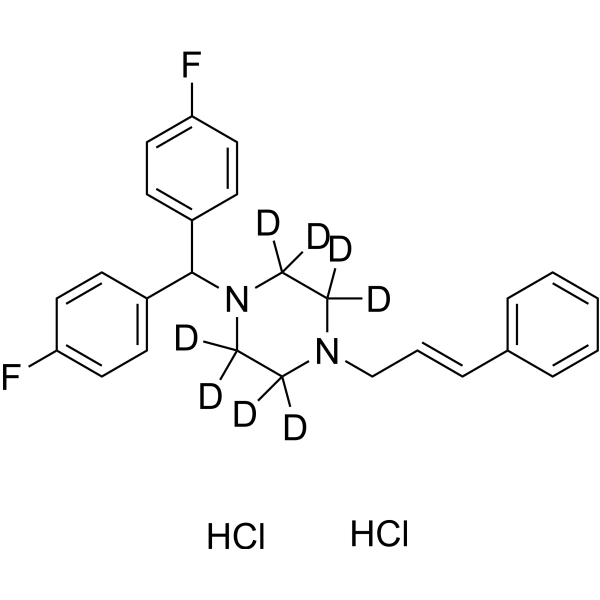
    Flunarizine dihydrochloride
    5+ Cited Publications

    Calcium Channel Sodium Channel Dopamine Receptor Cardiovascular Disease Neurological Disease
    Flunarizine dihydrochloride is a potent dual Na +/Ca 2+ channel (T-type) blocker. Flunarizine dihydrochloride is a D2 dopamine receptor antagonist. Flunarizine dihydrochloride shows anticonvulsive and antimigraine activity, and peripheral vasodilator effects .
    Flunarizine dihydrochloride
  • HY-12545
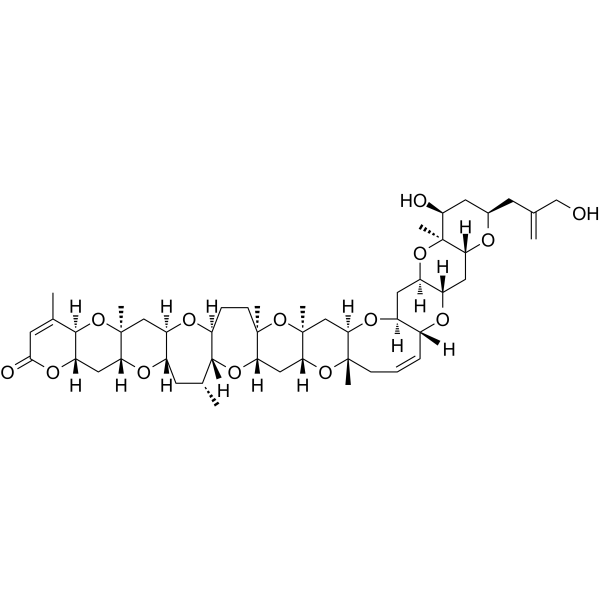
    Brevetoxin-3
    1 Publications Verification

    PbTx-3

    Sodium Channel Inflammation/Immunology
    Brevetoxin-3 (PbTx-3) is a potent allosteric voltage-gated Na + channel activator and has multiple active centers (A-ring lactone, C-42 of R side chain) . Brevetoxin-3 (PbTx-3) has a high affinity to site 5 of the voltage-sensitive Na + channels, inhibits the inactivation of Na + channels and prolongs the mean open time of these channels. Brevetoxin-3 (PbTx-3) repeated exposures can lead to prolonged airway hyperresponsiveness (AHR) and lung inflammation .
    Brevetoxin-3
  • HY-B1551

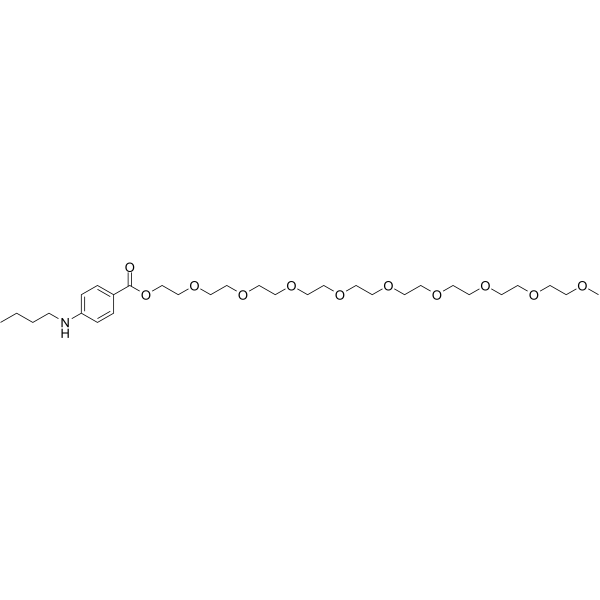
    BenzonoNatine

    Sodium Channel Neurological Disease
    Benzonatate (Benzononatine) is an orally active and non-narcotic peripheral antitussive agent. Benzonatate is a reversible voltage-gated Na + channels inhibitor. Benzonatate dampens the activity of cough stretch receptors .
    Benzonatate
  • HY-B0448S

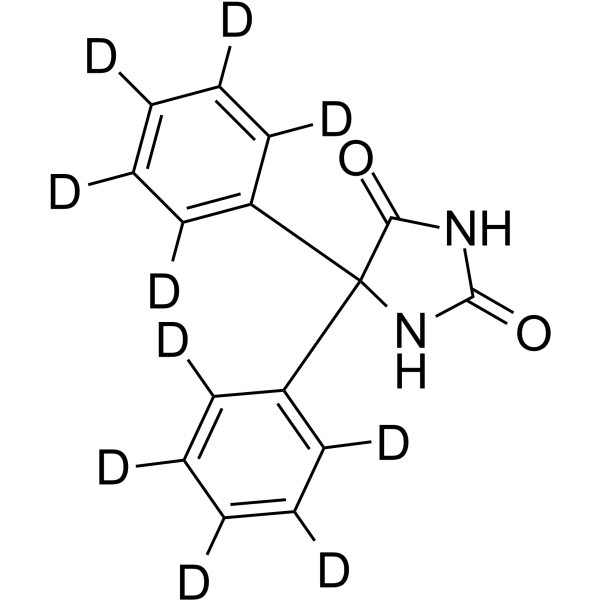
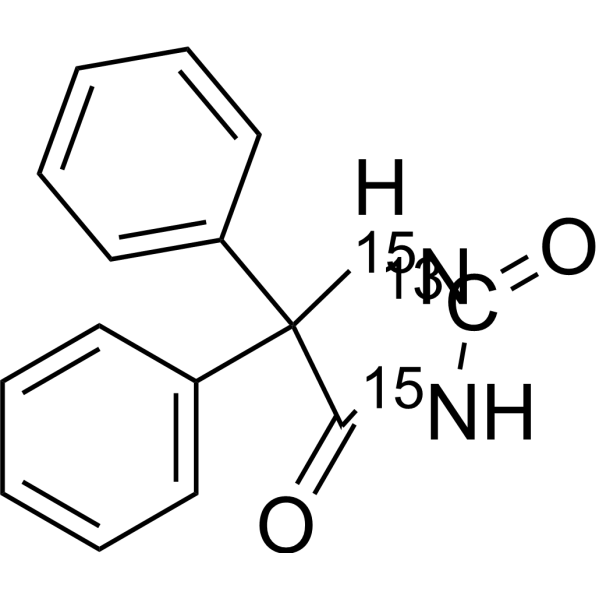
    5,5-Diphenylhydantoin-d10

    Isotope-Labeled Compounds Sodium Channel Virus Protease Neurological Disease Cancer
    Phenytoin-d10 is the deuterium labeled Phenytoin. Phenytoin (5,5-Diphenylhydantoin) is a potent Voltage-gated Na+ channels (VGSCs) blocker. Phenytoin has antiepileptic activity and reduces breast tumour growth and metastasis in mice .
    Phenytoin-d10
  • HY-A0082

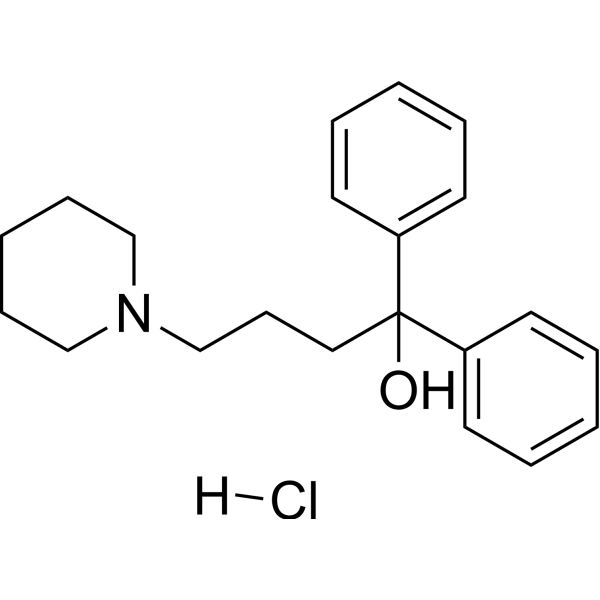
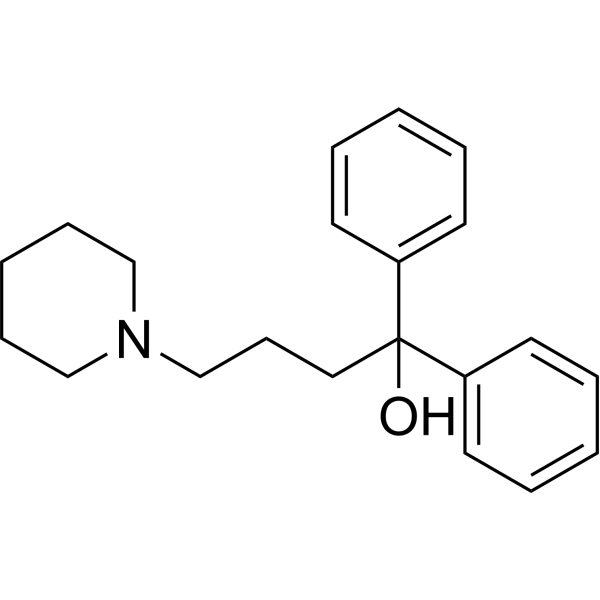
    Difenidol hydrochloride

    mAChR Sodium Channel Neurological Disease
    Diphenidol hydrochloride (Difenidol hydrochloride) is a non-selective muscarinic M1-M4 receptor antagonist, has anti-arrhythmic activity. Diphenidol hydrochloride is also a potent non-specific blocker of voltage-gated ion channels (Na +, K +, and Ca 2+) in neuronal cells. Diphenidol hydrochloride can be used in the study of antivertigo and antinausea .
    Diphenidol hydrochloride
  • HY-B1546A
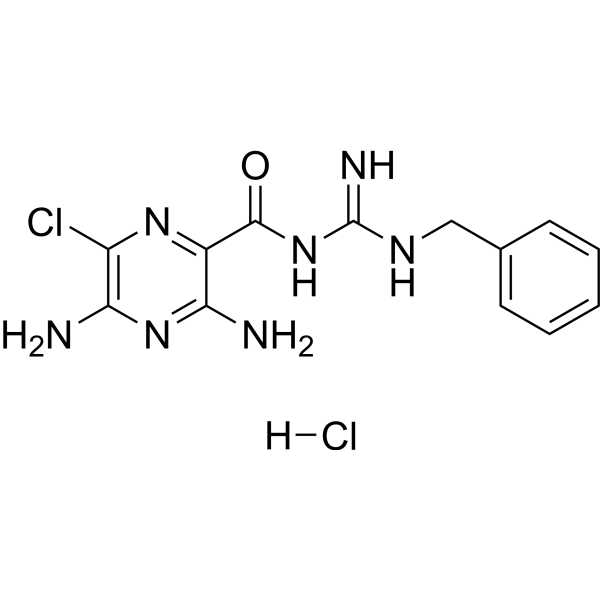
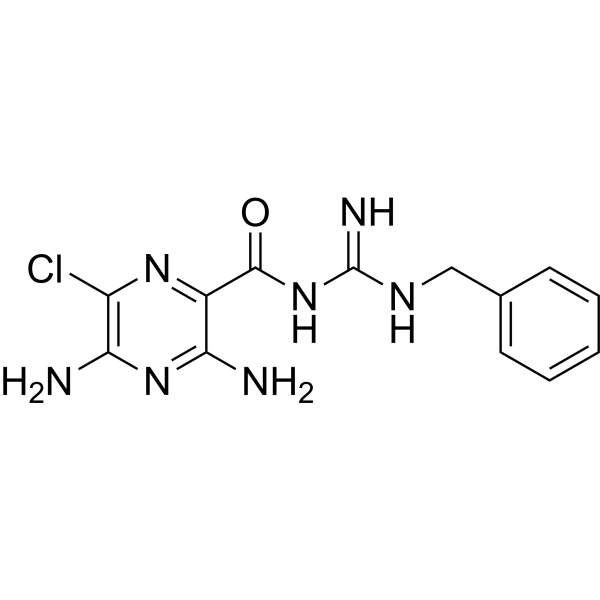
    Benzamil hydrochloride
    1 Publications Verification

    Benzylamiloride hydrochloride

    Na+/Ca2+ Exchanger Sodium Channel Neurological Disease
    Benzamil hydrochloride (Benzylamiloride hydrochloride), an Amiloride analogue, is a Na +/Ca 2+ exchanger (NCX) inhibitor (IC50~100 nM). Benzamil hydrochloride also is a non-selective Deg/epithelial sodium channels (ENaC) blocker, and can potentiate myogenic vasoconstriction. Benzamil hydrochloride inhibits TRPP3-mediated Ca 2+-activated currents, with an IC50 of 1.1 μM .
    Benzamil hydrochloride
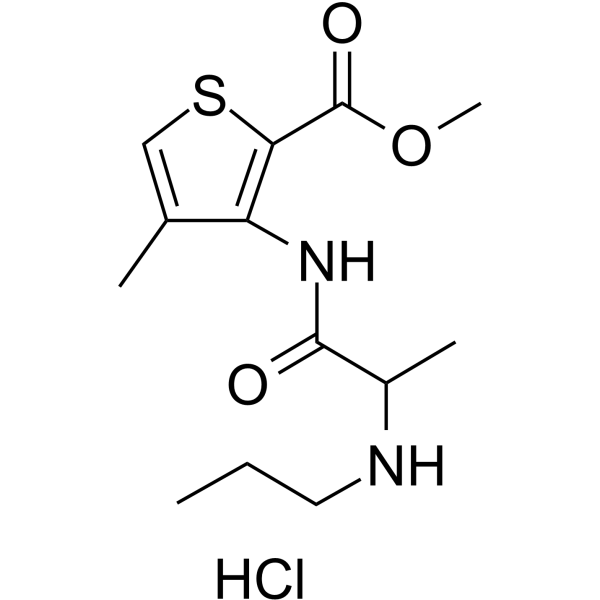
  • HY-B0516

    Hoe-045

    Sodium Channel NF-κB NOD-like Receptor (NLR) Neurological Disease Inflammation/Immunology
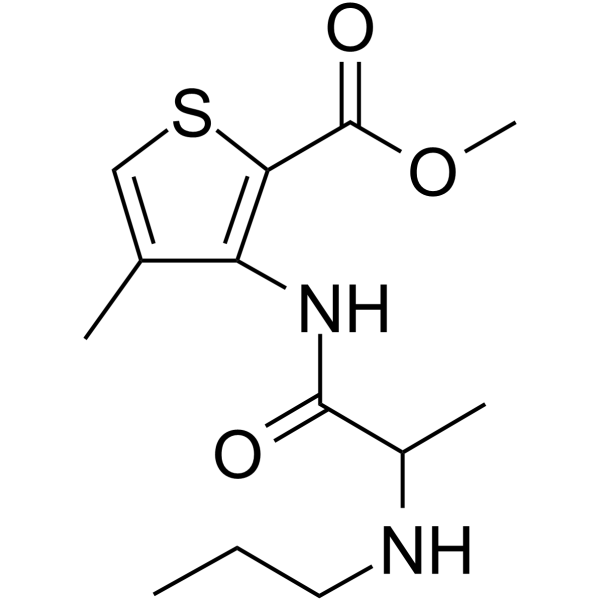
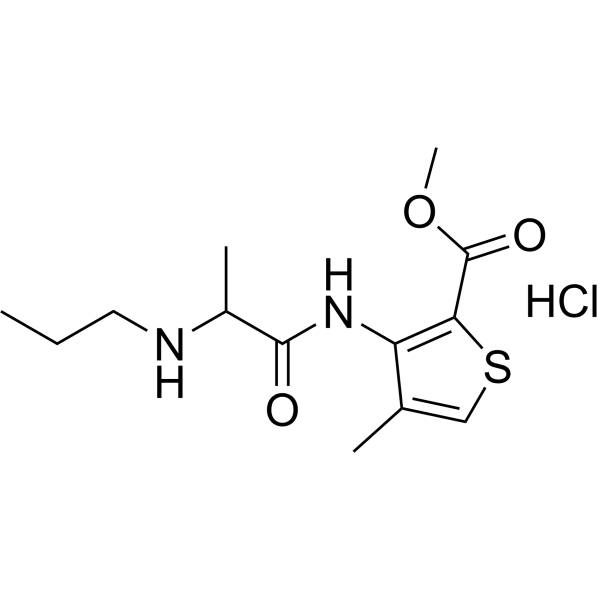
    Articaine (Hoe-045) hydrochloride is a selective inhibitor of voltage-gated sodium channels (such as rNav1.4, hNav1.7, and rNav1.8), with an IC50 of 15.8 μM for open-state Na + channels, and IC50 of 40.6 μM and 378 μM for inactivated and resting-state Na + channels, respectively. Articaine hydrochloride exerts local anesthetic activity by inhibiting Na + influx to block nerve impulse conduction, and can also inhibit NF-κB activation and NLRP3 inflammasome pathways, exhibiting anti-inflammatory function. Articaine hydrochloride can be used in the study of dental local anesthesia and inflammatory-related diseases (such as acute kidney injury) .
    Articaine hydrochloride
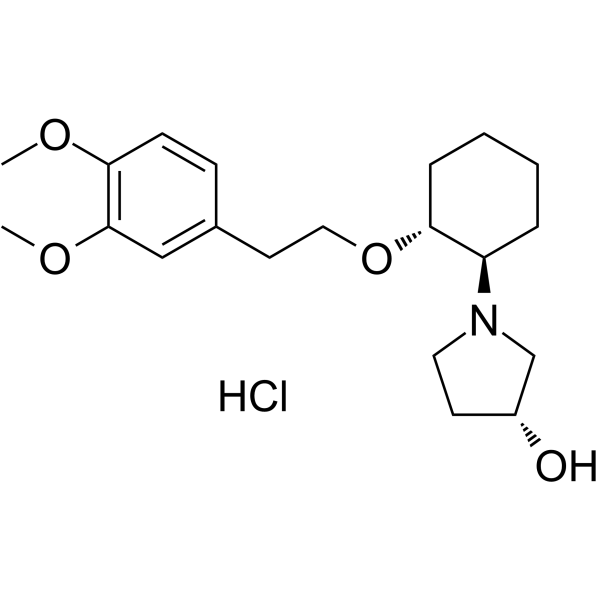
  • HY-14183
    Vernakalant Hydrochloride
    3 Publications Verification

    RSD1235 hydrochloride

    Potassium Channel Cardiovascular Disease
    Vernakalant hydrochloride is a mixed voltage- and frequency-dependent Na + and atria-preferred K + channel blocker. IC50 for block by Vernakalant of wild-type and mutant Kv1.5 channels Fractional block is 13.35±0.93 μM, 0.61±0.03 μM, and 1.63±0.09 μM for Kv1.5 channel wt, Kv1.5 channel I508F, Kv1.5 channel T479A, respectively.
    Vernakalant Hydrochloride
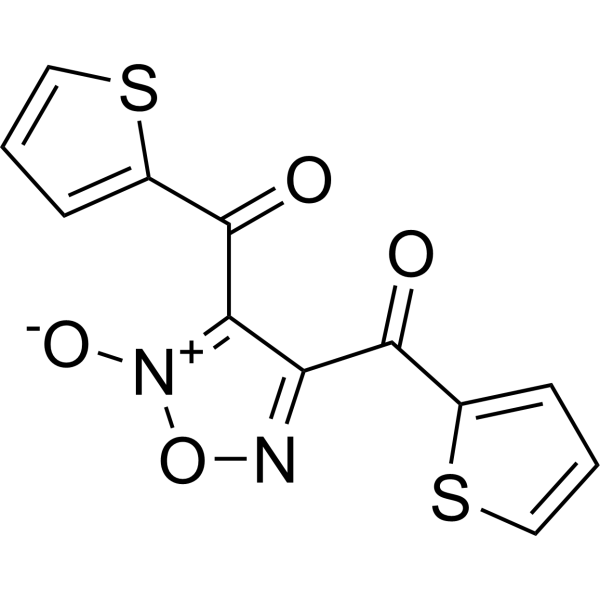
  • HY-112729
    HC-056456
    2 Publications Verification

    3,4-Bis(2-thienoyl)-1,2,5-oxadiazole-N-oxide

    Calcium Channel Others
    HC-056456 is an effective but not perfectly-selective blocker of CatSper channels. The [Na +]i rise is slowed by HC-056456 (IC50~3 µM).
    HC-056456
  • HY-100080

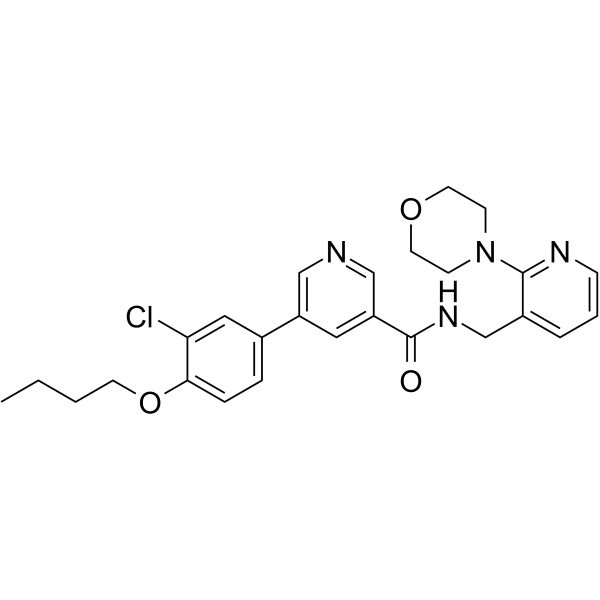
    Sodium Channel Neurological Disease
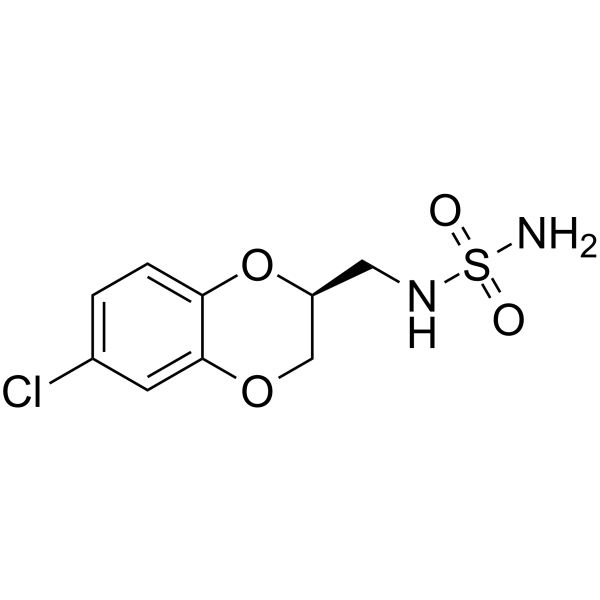
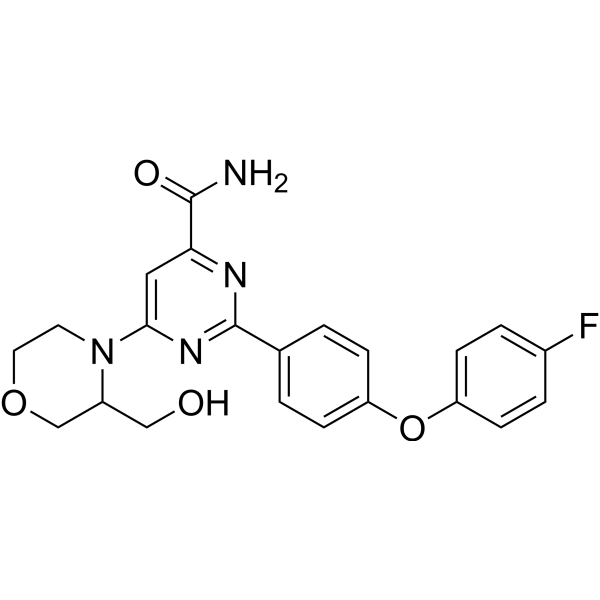
    A-887826 is a potent, selective, oral bioavailable and voltage-dependent Na(v)1.8 sodium channel blocker with an IC50 of 11 nM . A-887826 attenuates neuropathic tactile allodynia in vivo .
    A-887826
  • HY-B0246R

    CBZ (Standard); NSC 169864 (Standard)

    Reference Standards Sodium Channel Autophagy Mitophagy Potassium Channel Calcium Channel HDAC Neurological Disease Cancer
    Carbamazepine (Standard) is the analytical standard of Carbamazepine. This product is intended for research and analytical applications. Carbamazepine is an orally active pressure-sensitive sodium ion channel blocker with an IC50 of 131 μM. Carbamazepine blocks voltage gated Na +, Ca 2+, and K + channels, and is also a HDAC inhibitor (IC50: 2 μM). Carbamazepine is an anticonvulsant and can be used for research of epilepsy and neuropathic pain .
    Carbamazepine (Standard)
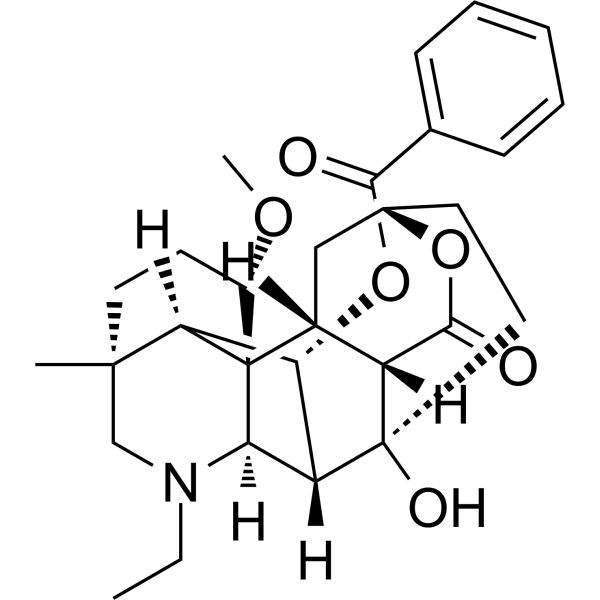
  • HY-N9404

    Sodium Channel Neurological Disease
    6-Benzoylheteratisine is an Aconitum alkaloid with potential neuroprotective activity. 6-Benzoylheteratisine can antagonize tetrodotoxin, inhibit the increase of [Na +]i, [Ca 2+]i and glutamate release, and block sodium channels. 6-Benzoylheteratisine has an inhibitory effect on the neuronal activity underlying epileptiform burst discharge .
    6-Benzoylheteratisine
  • HY-16952A
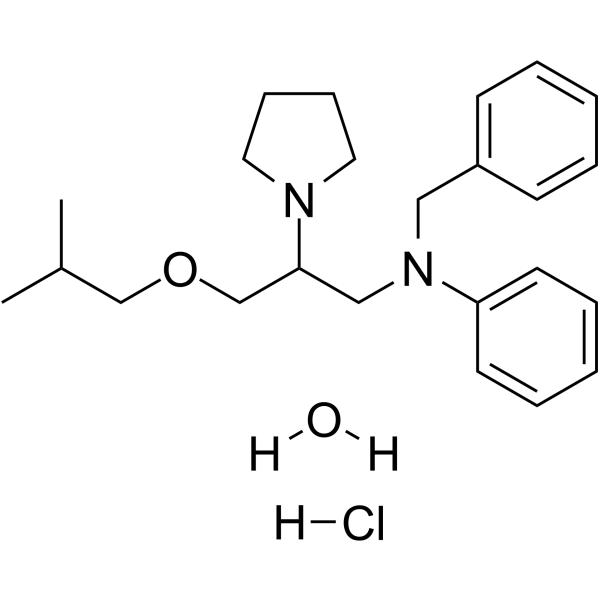
    Bepridil hydrochloride hydrate
    5+ Cited Publications

    (±)-Bepridil hydrochloride hydrate; Org 5730 hydrochloride hydrate

    Calcium Channel Cardiovascular Disease
    Bepridil hydrochloride hydrate ((±)-Bepridil hydrochloride hydrate) is a non-selective, long-acting Ca + channel antagonist and Na +, K + channel inhibitor, with antianginal and type I antiarrhythmic effects. Bepridil hydrochloride hydrate also acts as a cardiac Na +/Ca2 + exchange (NCX1) inhibitor. Bepridil hydrochloride hydrate can be used for the research of cardiovascular disorders .
    Bepridil hydrochloride hydrate
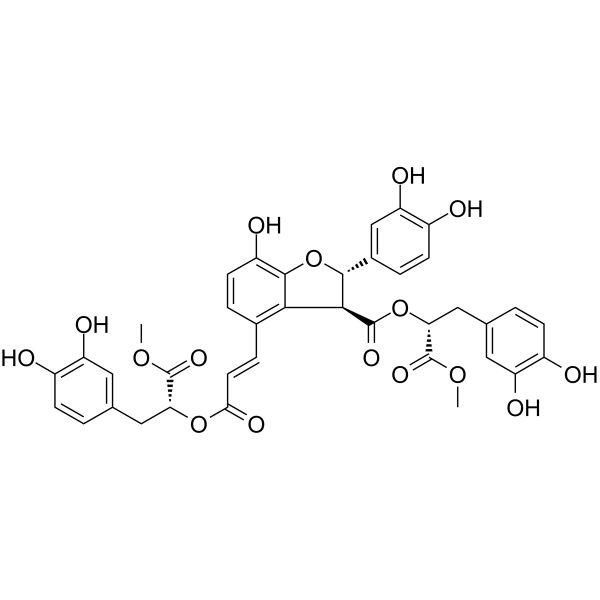
  • HY-N6868

    dmLSB

    Sodium Channel Cardiovascular Disease
    Dimethyl lithospermate B (dmLSB) is a selective Na + channel agonist. Dimethyl lithospermate B slows inactivation of sodium current (INa), leading to increased inward current during the early phases of the action potential (AP) .
    Dimethyl lithospermate B
  • HY-B0448AR

    5,5-Diphenylhydantoin sodium salt (Standard)

    Reference Standards Sodium Channel Virus Protease Neurological Disease Cancer
    Phenytoin (sodium) (Standard) is the analytical standard of Phenytoin (sodium). This product is intended for research and analytical applications. Phenytoin sodium (5,5-Diphenylhydantoin sodium salt) is a potent Voltage-gated Na+ channels (VGSCs) blocker. Phenytoin has antiepileptic activity and reduces breast tumour growth and metastasis in mice .
    Phenytoin sodium (Standard)
  • HY-120026
    KB130015
    1 Publications Verification

    KB015

    Thyroid Hormone Receptor Calcium Channel Potassium Channel Sodium Channel Cardiovascular Disease
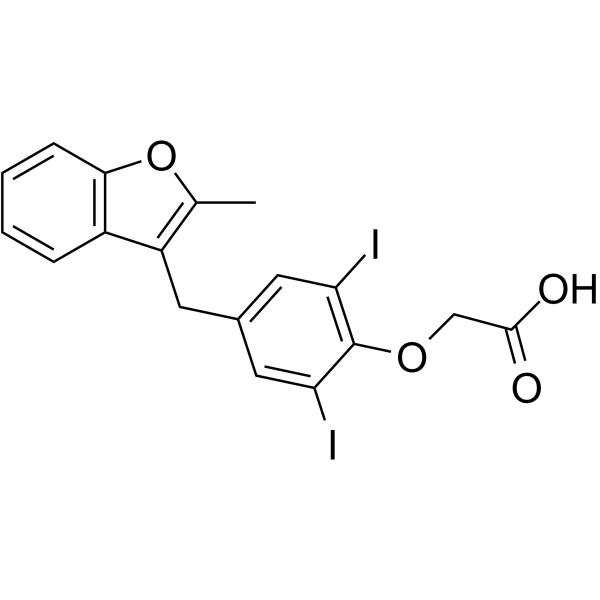
    KB130015 (KB015) is an orally active and potent ThRα and ThRβ (thyroid hormone receptor) inhibitor, with IC50 values of 4.5 and 5.1 μM, respectively. KB130015 markedly slows the kinetics of inactivation of Na + channels. KB130015 activates hERG1 channels (EC50 = 12.2 μM) and large-conductance Ca 2+-activated K + (BKCa) channels formed by hSlo1 (α) subunits in HEK 293 cells. KB130015 has antiarrhythmic properties. KB130015 can be used for the study of cardiovascular disease .
    KB130015
  • HY-101362

    Sodium Channel Neurological Disease
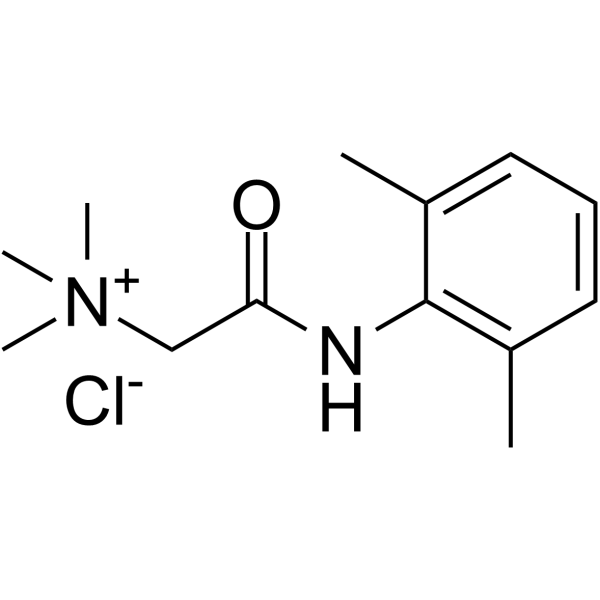
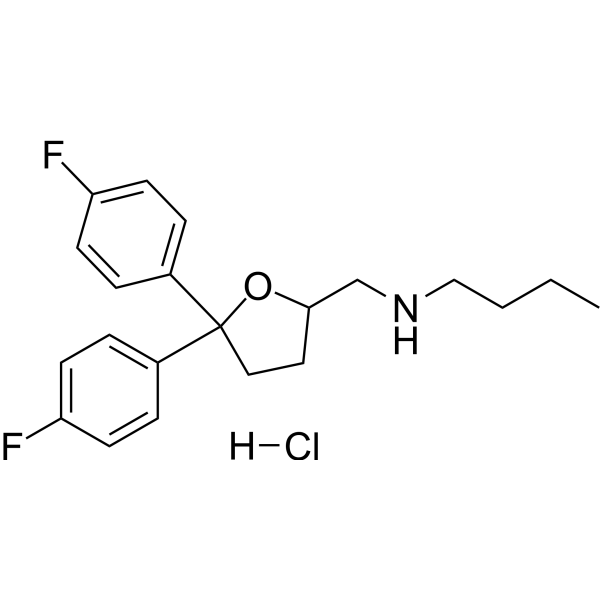
    QX-222 chloride, a trimethyl analogue of Lignocaine (HY-B0185), is a potent Na + channel blocker .
    QX-222 chloride
  • HY-116790A

    (R)-Penbutolol; (+)-Isopenbutolol

    Adrenergic Receptor Metabolic Disease Endocrinology
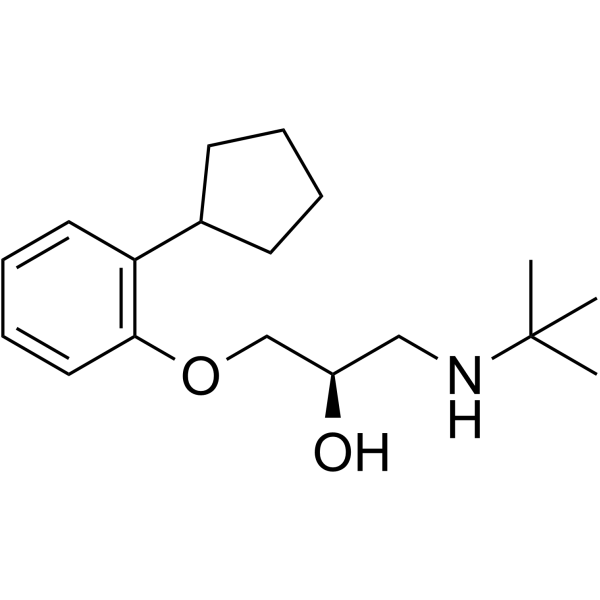
    (+)-Penbutolol is a β-adrenoceptor antagonist, with an IC50 of 0.74 μM . (+)-Penbutolol is an optical isomer of l-penbutolol with Na + channel-blocking action .
    (+)-Penbutolol
  • HY-B0495R
    Lamotrigine (Standard)
    5+ Cited Publications

    LTG (Standard); BW430C (Standard)

    Reference Standards Sodium Channel Neurological Disease
    Lamotrigine (Standard) is the analytical standard of Lamotrigine. This product is intended for research and analytical applications. Lamotrigine (BW430C) is a potent and orally active anticonvulsant or antiepileptic agent. Lamotrigine selectively blocks voltage-gated Na + channels, stabilizing presynaptic neuronal membranes and inhibiting glutamate release. Lamotrigine can be used for the research of epilepsy, focal seizure, et al .
    Lamotrigine (Standard)
  • HY-107370
    Atomoxetine
    4 Publications Verification

    Tomoxetine; (R)-Tomoxetine

    Serotonin Transporter Sodium Channel Neurological Disease Cancer
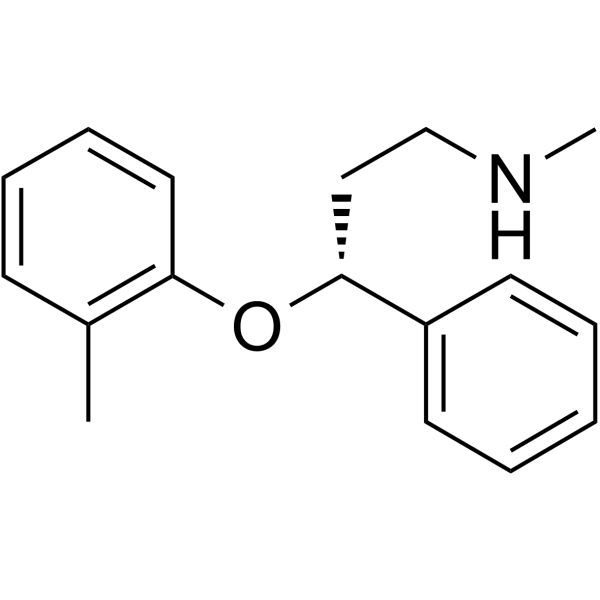
    Atomoxetine (Tomoxetine) is a selective noradrenaline reuptake inhibitor with Ki values of 5, 77 and 1451 nM for norepinephrine (NE), serotonin (5-HT) and dopamine (DA) transporters, respectively. Atomoxetine (Tomoxetine) increases of DAEX and NEEX in the PFC and enhances catecholaminergic neurotransmission. Atomoxetine (Tomoxetine) is a potent Na + channels (VGSCs) blocker. Atomoxetine (Tomoxetine) can be used for attention-deficit hyperactivity disorder (ADHD) research .
    Atomoxetine
  • HY-108504

    V 102862

    Sodium Channel Neurological Disease
    Co 102862 (V 102862) is a potent, broad-spectrum, state-dependent Na + channel blocker. Co 102862 is also an orally active anticonvulsant .
    Co 102862
  • HY-B0575R
    Triamterene (Standard)
    5+ Cited Publications

    Reference Standards Sodium Channel G protein-coupled Bile Acid Receptor 1 Metabolic Disease
    Triamterene (Standard) is the analytical standard of Triamterene. This product is intended for research and analytical applications. Triamterene blocks epithelial Na+ channel (ENaC) in a voltage-dependent manner, which used as a mild diuretic. Triamterene as an inhibitor of the TGR5 receptor.
    Triamterene (Standard)
  • HY-B0575S

    Sodium Channel Metabolic Disease
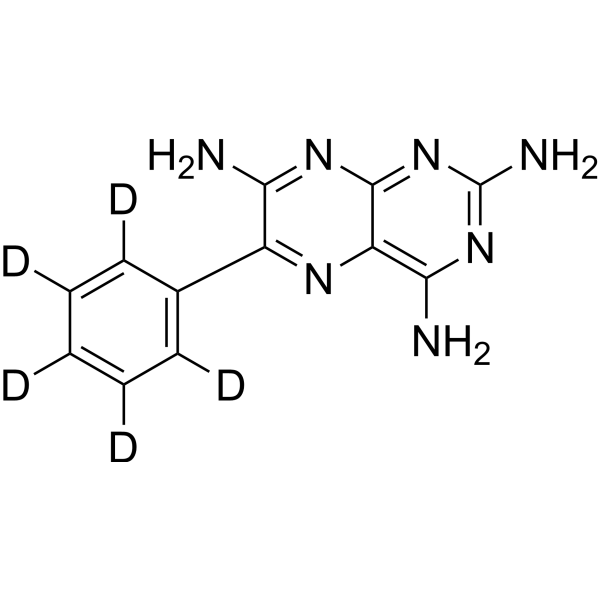
    Triamterene-d5 is deuterium labeled Triamterene (HY-B0575). Triamterene blocks epithelial Na + channel (ENaC) in a voltage-dependent manner, which used as a mild diuretic. Triamterene is an inhibitor of the TGR5 receptor.
    Triamterene-d5
  • HY-B0211R

    PK 26124 (Standard)

    Reference Standards Sodium Channel GABA Receptor Neurological Disease Cancer
    Riluzole (Standard) is the analytical standard of Riluzole. This product is intended for research and analytical applications. Riluzole is an anticonvulsant agent and belongs to the family of use-dependent Na + channel blocker which can also inhibit GABA uptake with an IC50 of 43 μM.
    Riluzole (Standard)
  • HY-B0448R

    5,5-Diphenylhydantoin (Standard)

    Reference Standards Sodium Channel Virus Protease Neurological Disease Cancer
    Phenytoin (Standard) is the analytical standard of Phenytoin. This product is intended for research and analytical applications. Phenytoin (5,5-Diphenylhydantoin) is a potent Voltage-gated Na + channels (VGSCs) blocker. Phenytoin has antiepileptic activity and reduces breast tumour growth and metastasis in mice .
    Phenytoin (Standard)
  • HY-135000

    DcSTX; DecarbamoylSTX

    Endogenous Metabolite Drug Metabolite Neurological Disease
    Decarbamoylsaxitoxin is a sodium channel inhibitor that blocks the influx of sodium ions through the membranes of excitable nerves and skeletal muscle cells, thereby preventing the formation of action potentials. Decarbamoylsaxitoxin is an acidic hydrolysis product of saxitoxin, and its toxic effects on mice are identical to those of saxitoxin. Decarbamoylsaxitoxin inhibits veratridine- and ouabain-induced swelling and lysis of mouse neuroblastoma cells by blocking Na + channels. Decarbamoylsaxitoxin can be used in studies related to paralytic shellfish poisoning .
    Decarbamoylsaxitoxin
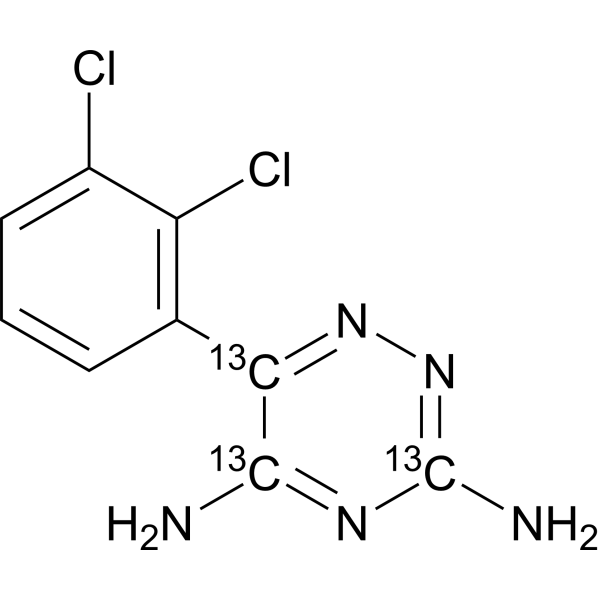
  • HY-B0495S4

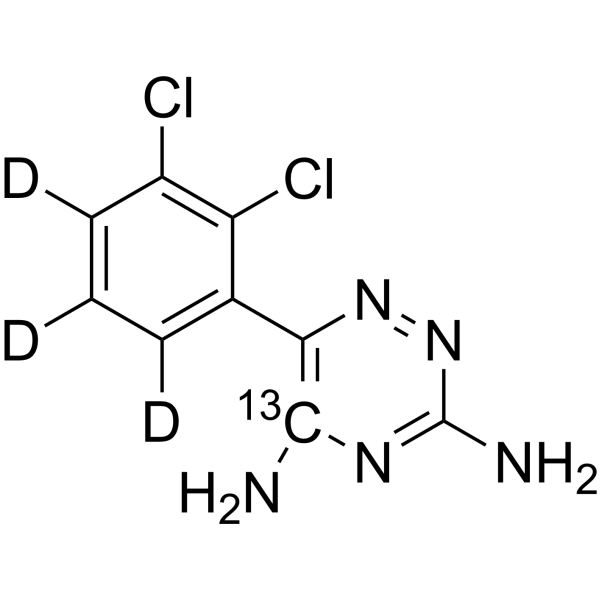
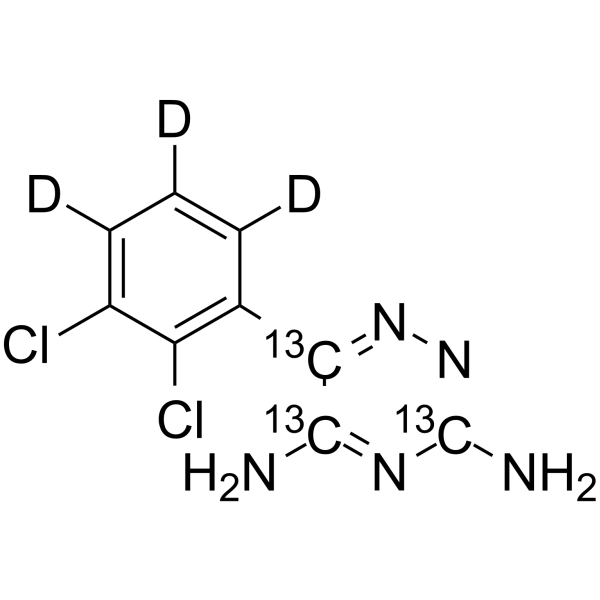
    LTG-13C3; BW430C-13C3

    Sodium Channel Autophagy Neurological Disease
    Lamotrigine- 13C3 is the 13C-labeled Lamotrigine. Lamotrigine (BW430C) is a potent and orally active anticonvulsant or antiepileptic agent. Lamotrigine selectively blocks voltage-gated Na+ channels, stabilizing presynaptic neuronal membranes and inhibiting glutamate release. Lamotrigine can be used for the research of epilepsy, focal seizure, et al .
    Lamotrigine-13C3
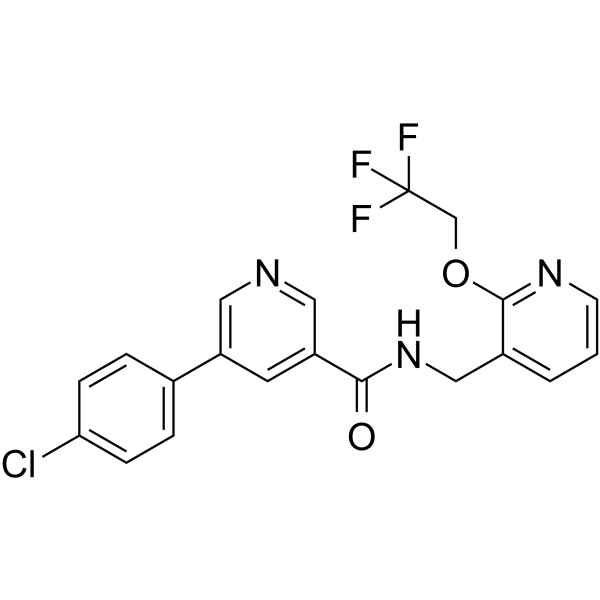
  • HY-132133

    Sodium Channel Neurological Disease Inflammation/Immunology
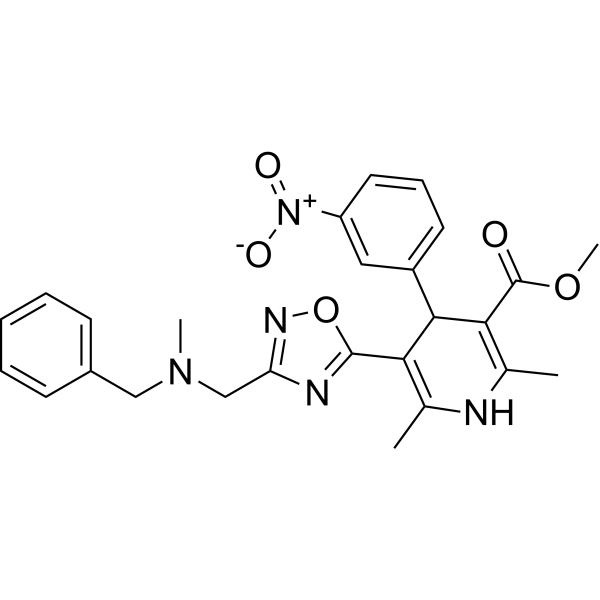
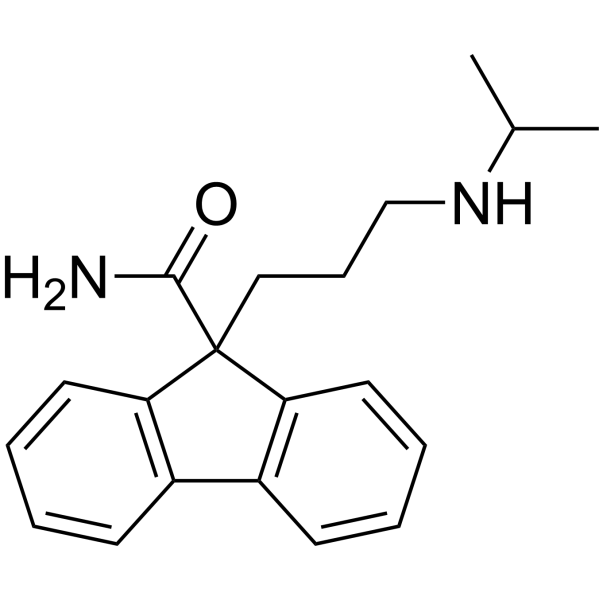
    Nav1.8-IN-1 (Compound 31) is a potent inhibitor of Na(v)1.8 sodium channel. Nav1.8-IN-1 has the potential for the research of inflammatory and neuropathic pain .
    Nav1.8-IN-1
  • HY-B0246S4

    CBZ-d4; NSC 169864-d4

    Isotope-Labeled Compounds Others
    Carbamazepine-d4 (CBZ-d4) is the deuterium labeled Carbamazepine (HY-B0246) . Carbamazepine is an orally active pressure-sensitive sodium ion channel blocker with an IC50 of 131 μM. Carbamazepine blocks voltage gated Na +, Ca 2+, and K + channels, and is also a HDAC inhibitor (IC50: 2 μM). Carbamazepine is an anticonvulsant and can be used for research of epilepsy and neuropathic pain.
    Carbamazepine-d4
  • HY-Z8176

    Sodium Channel Neurological Disease
    (Z)-Flunarizine is the (Z)-isomer of Flunarizine (HY-B0358). Flunarizine is a potent dual Na +/Ca 2+ channel (T-type) blocker. Flunarizine is a D2 dopamine receptor antagonist. Flunarizine shows anticonvulsive and antimigraine activity, and peripheral vasodilator effects .
    (Z)-Flunarizine
  • HY-B0358AR

    Reference Standards Calcium Channel Sodium Channel Dopamine Receptor Neurological Disease
    Flunarizine (dihydrochloride) (Standard) is the analytical standard of Flunarizine (dihydrochloride). This product is intended for research and analytical applications. Flunarizine dihydrochloride is a potent dual Na +/Ca 2+ channel (T-type) blocker. Flunarizine dihydrochloride is a D2 dopamine receptor antagonist. Flunarizine dihydrochloride shows anticonvulsive and antimigraine activity, and peripheral vasodilator effects .
    Flunarizine dihydrochloride (Standard)
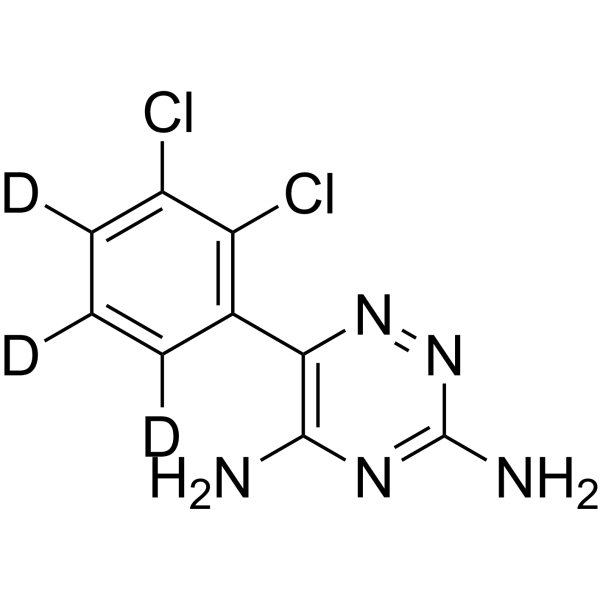
  • HY-B0495S5

    LTG-d3; BW430C-d3

    Autophagy Sodium Channel Neurological Disease
    Lamotrigine-d3 is the deuterium labeled Lamotrigine . Lamotrigine (BW430C) is a potent and orally active anticonvulsant or antiepileptic agent. Lamotrigine selectively blocks voltage-gated Na+ channels, stabilizing presynaptic neuronal membranes and inhibiting glutamate release. Lamotrigine can be used for the research of epilepsy, focal seizure, et al .
    Lamotrigine-d3
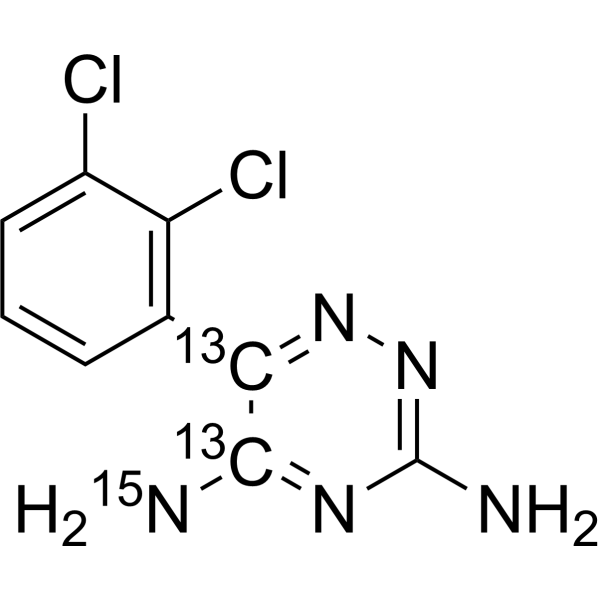
  • HY-B0495S3

    Autophagy Sodium Channel Neurological Disease
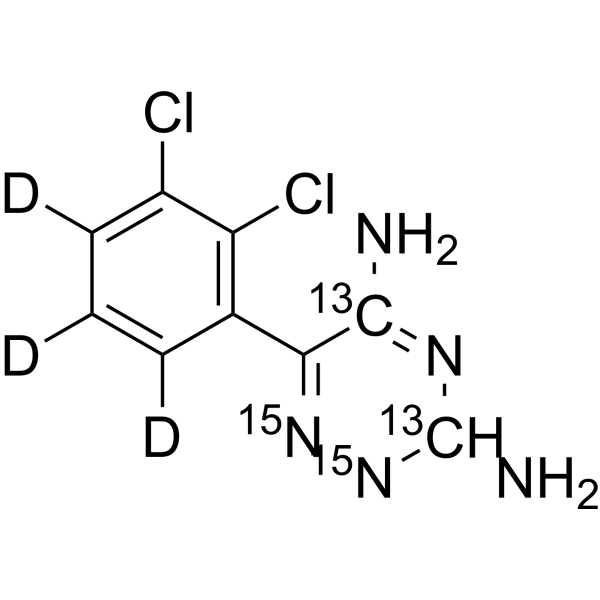
    Lamotrigine- 13C2, 15N is the 13C and 15N labeled Lamotrigine . Lamotrigine (BW430C) is a potent and orally active anticonvulsant or antiepileptic agent. Lamotrigine selectively blocks voltage-gated Na+ channels, stabilizing presynaptic neuronal membranes and inhibiting glutamate release. Lamotrigine can be used for the research of epilepsy, focal seizure, et al .
    Lamotrigine-13C2,15N
  • HY-19062

    Calcium Channel Na+/Ca2+ Exchanger Cardiovascular Disease
    SM-6586 is a calcium channel antagonist and inhibitor of Na +/H + and Na +/Ca 2+ exchange transport, potentially for the treatment of cerebrovasular diseases and hypertension.
    SM-6586
  • HY-16923

    BIII-890; BIII-890 CL free acid

    Sodium Channel Neurological Disease
    Crobenetine (BIII-890), a benzomorphan derivative, is a potent, selective, and highly use-dependent Na + channel blocker. Crobenetine displaces [3H]BTX from site 2 of the Na + channel (IC50=49 nM) in rat brain synaptosomes, yet exhibits only low binding affinity for other receptors and ion channels. Crobenetine protects brain tissue from the deleterious effects of focal cerebral ischemia in rodents .
    Crobenetine
  • HY-B0516A

    Hoe-045 free base

    Sodium Channel NF-κB NOD-like Receptor (NLR) Neurological Disease Inflammation/Immunology
    Articaine (Hoe-045) is a selective inhibitor of voltage-gated sodium channels (such as rNav1.4, hNav1.7, and rNav1.8), with an IC50 of 15.8 μM for open-state Na + channels, and IC50 of 40.6 μM and 378 μM for inactivated and resting-state Na + channels, respectively. Articaine exerts local anesthetic activity by inhibiting Na + influx to block nerve impulse conduction, and can also inhibit NF-κB activation and NLRP3 inflammasome pathways, exhibiting anti-inflammatory function. Articaine can be used in the study of dental local anesthesia and inflammatory-related diseases (such as acute kidney injury) .
    Articaine
  • HY-101437A
    Ralfinamide mesylate
    1 Publications Verification

    FCE-26742A mesylate

    Sodium Channel Neurological Disease
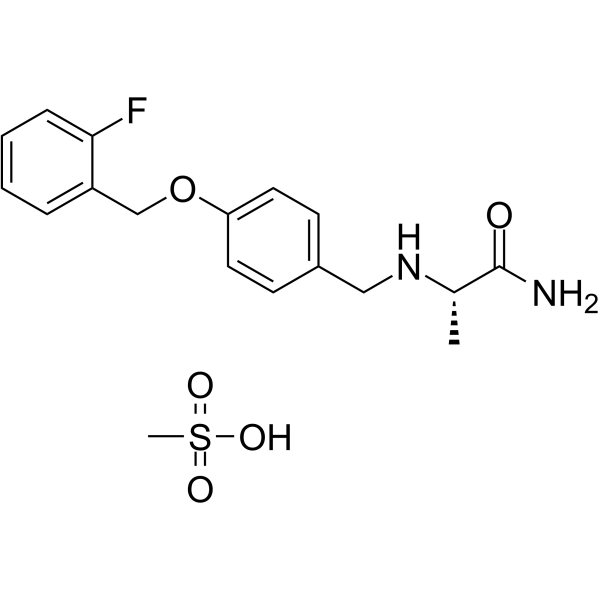
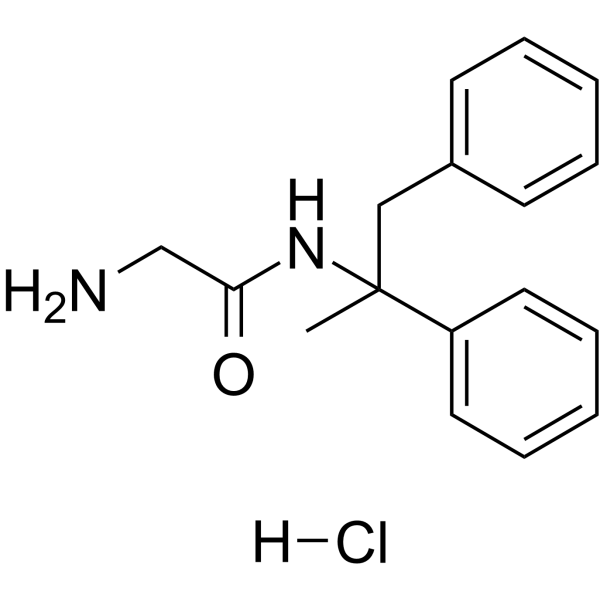
    Ralfinamide mesylate (FCE-26742A mesylate) is an orally available Na + channel blocker derived from α-aminoamide, with function of suppressing pain .
    Ralfinamide mesylate
  • HY-P5816

    Sodium Channel Neurological Disease
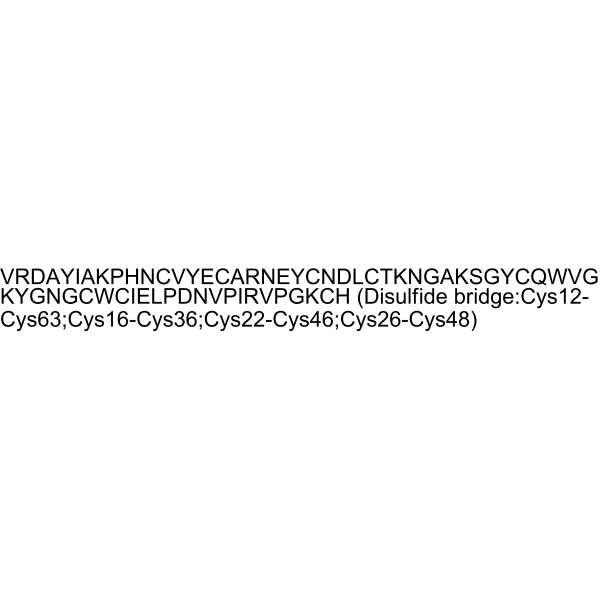
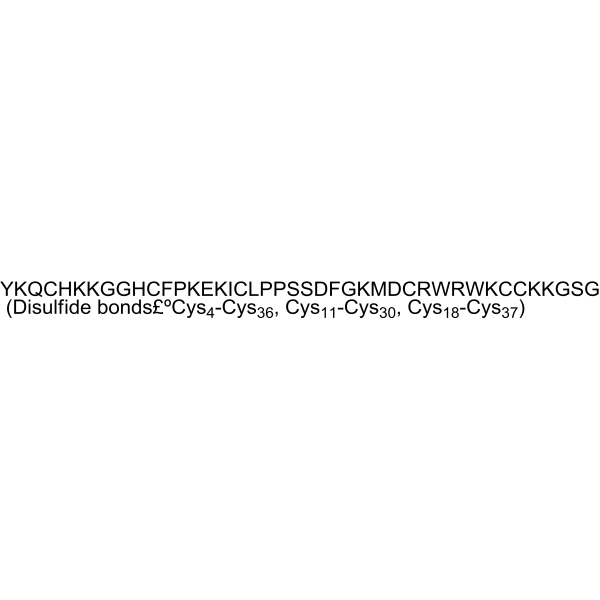
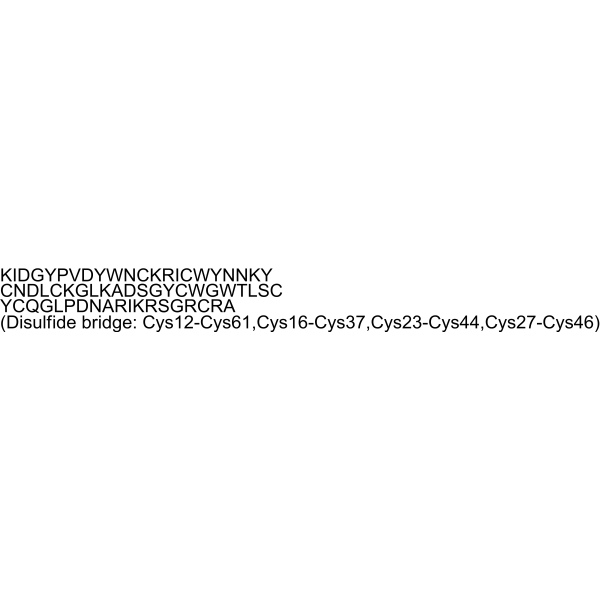
    BmK-M1 is a scorpion toxin, and is composed of 64 amino acids cross-linked by four disulfide bridges. BmK-M1 inhibits Na + channel and can be considered both as a cardiotoxin and a neurotoxin .
    BmK-M1

Inquiry Online

Your information is safe with us. * Required Fields.

Salutation


Country or Region *

Applicant Name *


Organization Name *

Department *


Email Address *


Product Name *

Cat. No.


Requested quantity *

Phone Number *


Remarks

Inquiry Online

Inquiry Information

Product Name:
Cat. No.:
Quantity:
MCE Japan Authorized Agent: