



トリアムテレン
Based on 7 publication(s) in Google Scholar
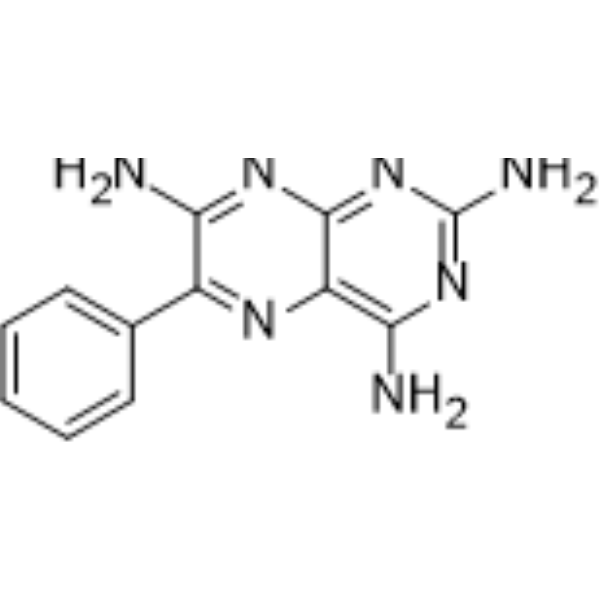
Triamterene blocks epithelial Na+ channel (ENaC) in a voltage-dependent manner, which used as a mild diuretic. Triamterene is an inhibitor of the TGR5 receptor.
商品は「研究用試薬」です。人や動物の医療用・臨床診断用・食品用の製品ではありません。
研究用途以外に使用した場合、当社は一切の責任を負いかねます。
- 純度 : 99.90%
- CAS 番号: 396-01-0
- 分子式: C12H11N7
- 分子量:253.26
-
保管条件:Powder -20°C, 3 years , 4°C, 2 years ; In solvent -80°C, 1 year , -20°C, 6 months

To place orders, for customer services and technical support, please contact: MedChemExpress USA
Tel: 609-228-6898 E-mail: [email protected] [email protected]


-
 生物活性
生物活性
-
化学情報
-
溶剤 & 溶解度
- 純度とドキュメンテーション
- 参考文献
-
 Help & FAQs


-
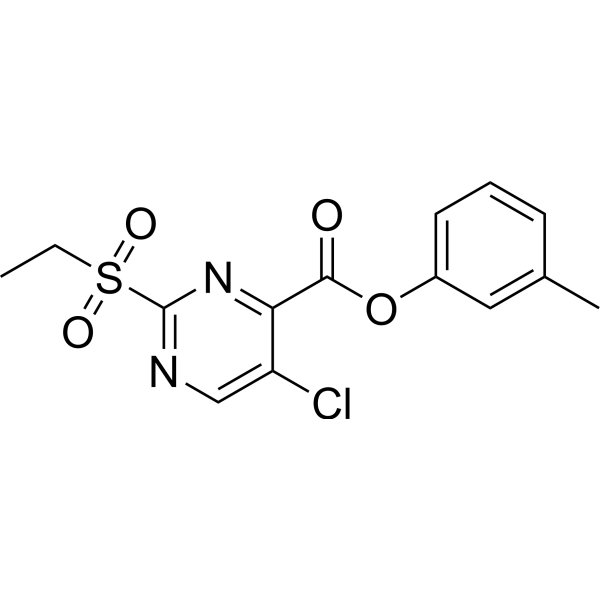
HY-111534
SBI-115TGR5 (GPCR19) Antagonist -
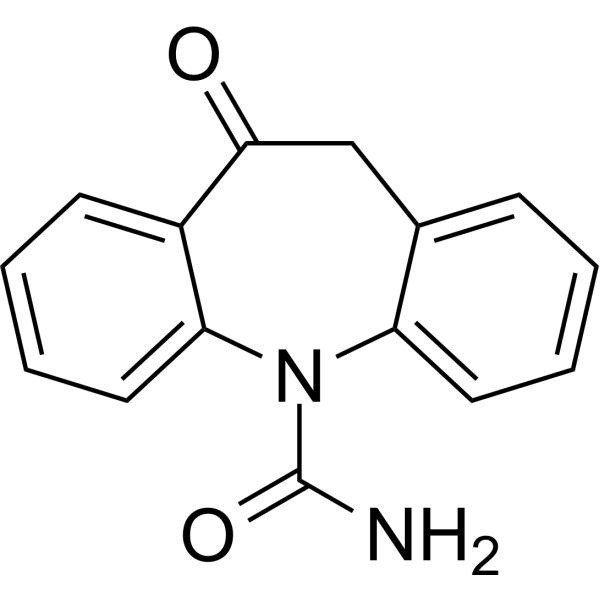
HY-B0114
OxcarbazepineAnti-Epileptic Agent -
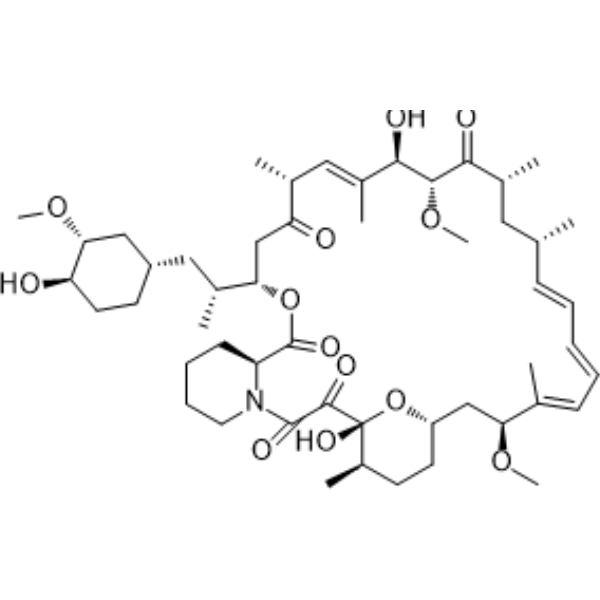
HY-10219
RapamycinmTOR Inhibitor -
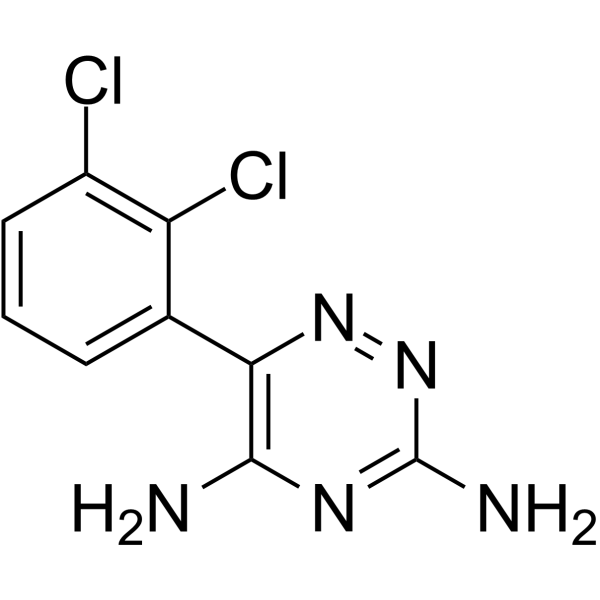
HY-B0495
LamotrigineAnticonvulsant Agent -
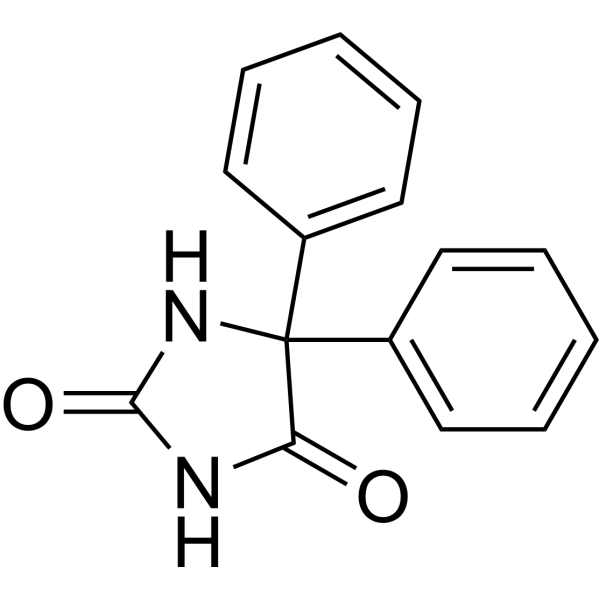
HY-B0448
PhenytoinVirus Protease Inhibitor -
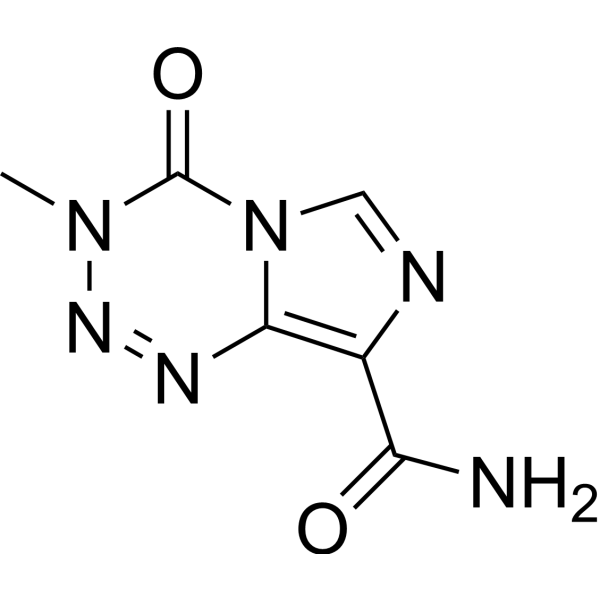
HY-17364
TemozolomideDNA Alkylator -
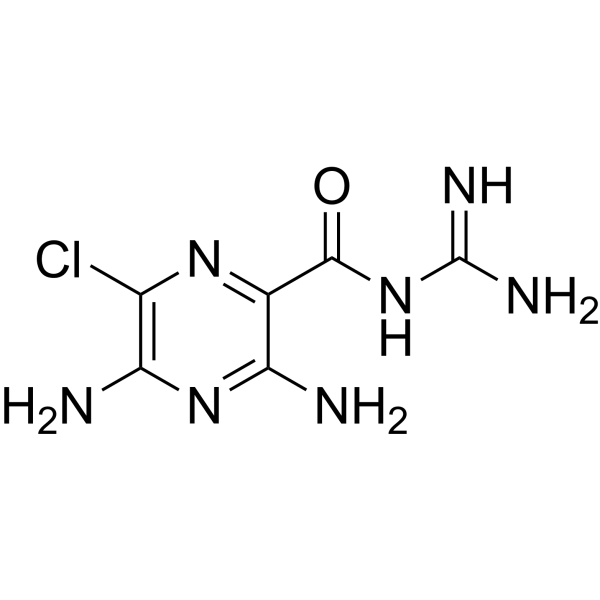
HY-B0285
AmilorideApoptosis Inducer -
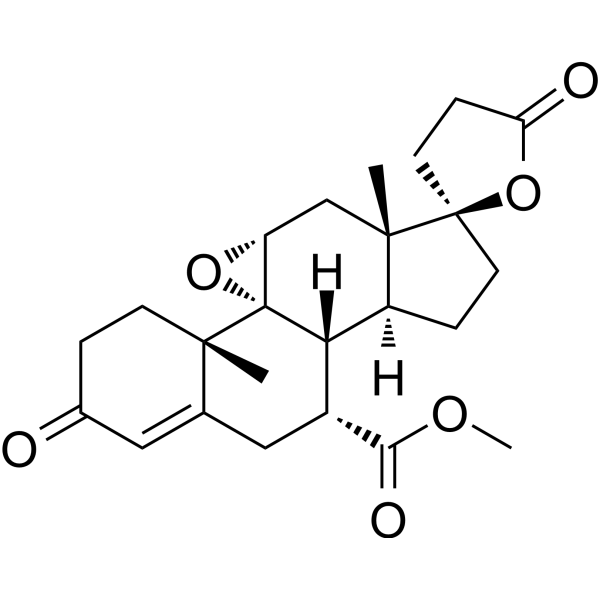
HY-B0251
EplerenoneAldosterone Blocker -
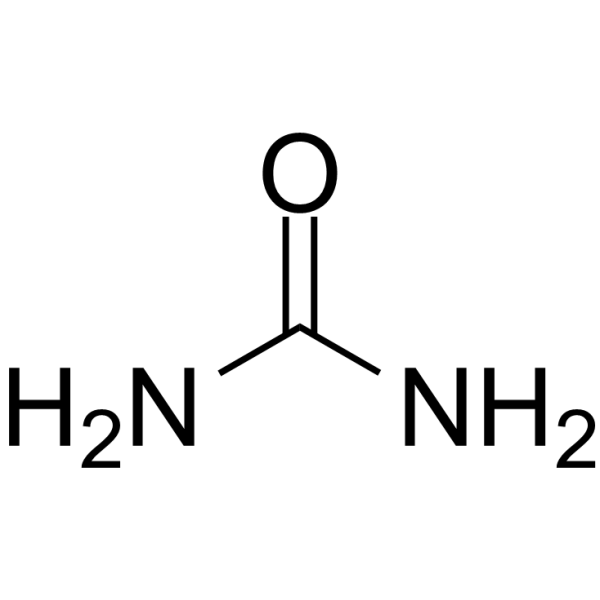
HY-Y0271
UreaProtein Denaturant -
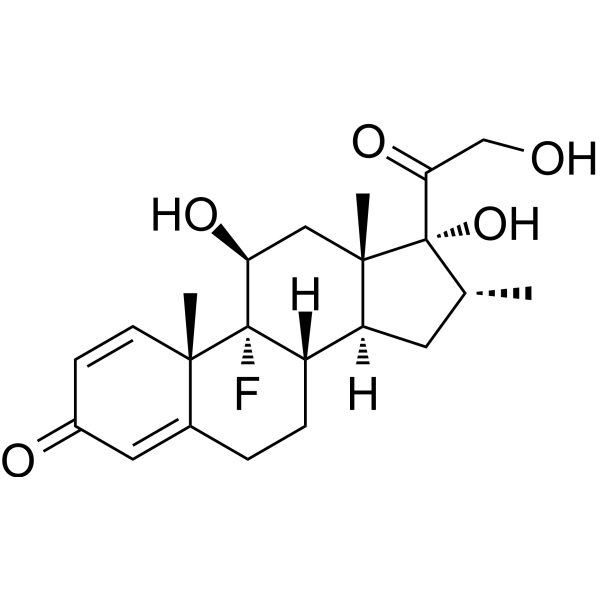
HY-14648
DexamethasoneGR Agonist -
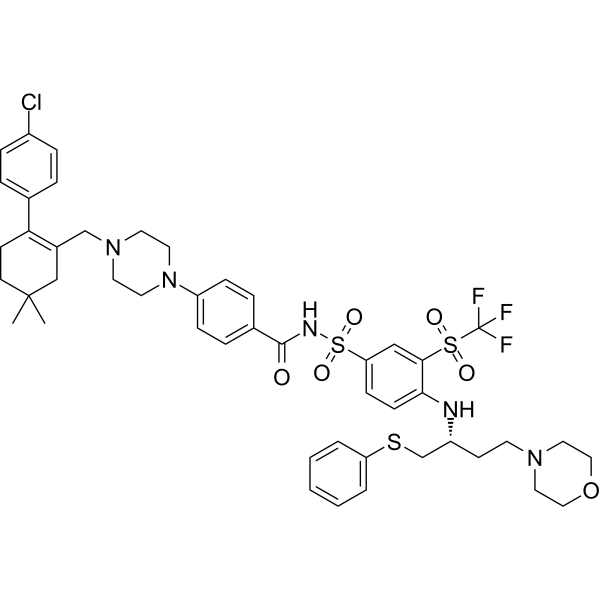
HY-10087
NavitoclaxBcl-2 Inhibitor -
HY-14649
Retinoic acidRAR Agonist
MedChemExpress(MCE)の使用を引用している文献 Triamterene
More- Nat Cardiovasc Res. 2025 Apr 11. [Abstract]
- Chin Med. 2026 Jan 24;21(1):51. [Abstract]
- Cell Biosci. 2023 Oct 3;13(1):186. [Abstract]
- PLoS Pathog. 2022 Jun 13;18(6):e1010620. [Abstract]
- Ann N Y Acad Sci. 2025 Nov 24. [Abstract]
- Immun Inflamm Dis. 2024 Jul;12(7):e1149. [Abstract]
- Immunobiology. 2023 May;228(3):152388. [Abstract]
 Customer Validation & Images

-
WB


生物活性
製品説明
Cellular Effect
|
Cell Line

|
Type | Value | Description | References |
|---|---|---|---|---|
| Sf9 | IC50 |
210 μM
Compound: 11
|
Inhibitory activity against CDK4 using recombinant human cyclin D2-CDK4 complex expressed in sf9 cells
Inhibitory activity against CDK4 using recombinant human cyclin D2-CDK4 complex expressed in sf9 cells
|
[PMID: 11741479] |
体外実験
Triamterene shows cytotoxicity against HCT116 and CT26 cells, with IC50 values of 31.30 and 24.45 μM[5].
Triamterene (100 and 200 µM, 2 h) increases lysosomal rupture, decreases integrity of lysosomes, and activates lysophagy in HepG2 cells[6].
Triamterene (10-100 µM) inhibits the delayed rectifier potassium current in guinea pig ventricular myocytes[7].
MedChemExpress (MCE) has not independently confirmed the accuracy of these methods. They are for reference only.
-
Cell Line:HepG2 cells
-
Concentration:100 and 200 µM
-
Incubation Time:2 h
-
Result:Induced Gal3-puncta formation.
Induced the translocation of TFEB to the nucleus from the cytosol.
体内実験
Triamterene (25 mg/kg) reduces urinary magnesium excretion in conscious saline-loaded rats[4].
MedChemExpress (MCE) has not independently confirmed the accuracy of these methods. They are for reference only.
臨床実験
| NCT Number | Sponsor | Condition | Start Date |
Phase
|
|---|---|---|---|---|
| NCT01329991 | 2011-05 | PHASE1 |


化学情報
-
CAS 番号 396-01-0
-
性状 Solid
-
分子量 253.26
-
分子式 C12H11N7
-
Color Light yellow to yellow
-
SMILES
NC1=NC(N)=C2N=C(C3=CC=CC=C3)C(N)=NC2=N1
-
別名
Triamterene
-
輸送条件
Room temperature in continental US; may vary elsewhere.
-
保管条件
Powder -20°C 3 years 4°C 2 years In solvent -80°C 1 year -20°C 6 months


Publications (7)
-
Journal Impact Factor
-
Most Recent
-
Nat Cardiovasc Res
The gut microbiota-bile acid-TGR5 axis orchestrates platelet activation and atherothrombosis. [Abstract]2025 Apr 11. PMID: 40217125 -
Chin Med
Targeting G-protein-coupled receptors and gut microbiota: Ge-Lian Qi-Shen decoction elevates GLP-1 to combat non-alcoholic fatty liver disease. [Abstract]2026 Jan 24;21(1):51. PMID: 41580820 -
Cell Biosci
Gut microbial metabolite deoxycholic acid facilitates Th17 differentiation through modulating cholesterol biosynthesis and participates in high-fat diet-associated colonic inflammation. [Abstract]2023 Oct 3;13(1):186. PMID: 37789469 -
PLoS Pathog
Bile acids promote the caveolae-associated entry of swine acute diarrhea syndrome coronavirus in porcine intestinal enteroids. [Abstract]2022 Jun 13;18(6):e1010620. PMID: 35696443 -
Ann N Y Acad Sci
COMMD4 Drives Skin Cutaneous Melanoma Progression by Targeting PI3K-p85 to Activate PI3K-AKT. [Abstract]2025 Nov 24. PMID: 41283898 -
Immun Inflamm Dis
Increase in bile acids after sleeve gastrectomy improves metabolism by activating GPBAR1 to increase cAMP in mice with nonalcoholic fatty liver disease. [Abstract]2024 Jul;12(7):e1149. PMID: 39031498 -
Immunobiology
Taurochenodeoxycholic acid reduces astrocytic neuroinflammation and alleviates experimental autoimmune encephalomyelitis in mice. [Abstract]2023 May;228(3):152388. PMID: 37079985
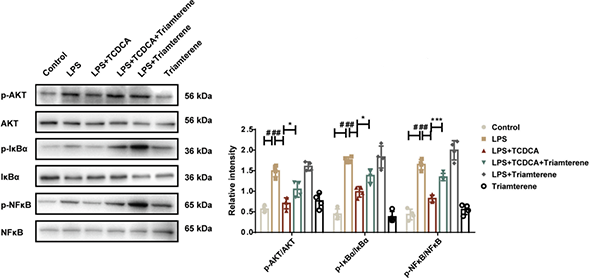
Triamterene purchased from MedChemExpress. Usage Cited in: Immunobiology. 2023 May;228(3):152388. [Abstract]
Triamterene (20 μM; 2 h) abolishes the TCDCA-inhibited phosphorylation of AKT, IκBα and NFκB in C6 cells.


溶剤 & 溶解度
体外:
DMSO : 5 mg/mL (19.74 mM; ultrasonic and warming and heat to 60°C; Hygroscopic DMSO has a significant impact on the solubility of product, please use newly opened DMSO)
Please refer to the solubility information to select the appropriate solvent. Once prepared, please aliquot and store the solution to prevent product inactivation from repeated freeze-thaw cycles.
Storage method and period of stock solution: -80°C, 1 year; -20°C, 6 months. When stored at -80°C, please use it within 1 year. When stored at -20°C, please use it within 6 months.
Please refer to the solubility information to select the appropriate solvent. Once prepared, please aliquot and store the solution to prevent product inactivation from repeated freeze-thaw cycles.
Storage method and period of stock solution: -80°C, 1 year; -20°C, 6 months. When stored at -80°C, please use it within 1 year. When stored at -20°C, please use it within 6 months.
濃度 (開始) × 体積 (開始) = 濃度 (終了) × 体積 (終了)
体内:
Select the appropriate dissolution method based on your experimental animal and administration route.
- For the following dissolution methods, please ensure to first prepare a clear stock solution using an In Vitro approach and then sequentially add co-solvents:
- To ensure reliable experimental results, the clarified stock solution can be appropriately stored based on storage conditions. As for the working solution for In Vivo experiments, it is recommended to prepare freshly and use it on the same day.
- The percentages shown for the solvents indicate their volumetric ratio in the final prepared solution. If precipitation or phase separation occurs during preparation, heat and/or sonication can be used to aid dissolution.
Add each solvent one by one: 10% DMSO 40% PEG300 5% Tween-80 45% Saline
Solubility: ≥ 1.67 mg/mL (6.59 mM); Clear solution
This protocol yields a clear solution of ≥ 1.67 mg/mL (saturation unknown).
Taking 1 mL working solution as an example, add 100 μL DMSO stock solution (16.7 mg/mL) to 400 μL PEG300, and mix evenly; then add 50 μL Tween-80 and mix evenly; then add 450 μL Saline to adjust the volume to 1 mL.
Preparation of Saline: Dissolve 0.9 g sodium chloride in ddH₂O and dilute to 100 mL to obtain a clear Saline solution.
Add each solvent one by one: 10% DMSO 90% (20% SBE-β-CD in Saline)
Solubility: ≥ 1.67 mg/mL (6.59 mM); Clear solution
This protocol yields a clear solution of ≥ 1.67 mg/mL (saturation unknown).
Taking 1 mL working solution as an example, add 100 μL DMSO stock solution (16.7 mg/mL) to 900 μL 20% SBE-β-CD in Saline, and mix evenly.
Preparation of 20% SBE-β-CD in Saline (4°C, storage for one week): 2 g SBE-β-CD powder is dissolved in 10 mL Saline, completely dissolve until clear.
For the following dissolution methods, please prepare the working solution directly:
It is recommended to prepare fresh solutions and use them promptly within a short period of time.
The percentages shown for the solvents indicate their volumetric ratio in the final prepared solution. If precipitation or phase separation occurs during preparation, heat and/or sonication can be used to aid dissolution.
Add each solvent one by one: 15% Cremophor EL 85% Saline
Solubility: 10 mg/mL (39.49 mM); Suspended solution; Need ultrasonic
In Vivo Dissolution Calculator
Please enter the basic information of animal experiments:
-
-
-
-
Recommended: Prepare an additional quantity of animals to account for potential losses during experiments.
Please enter your animal formula composition:
-
%DMSO +
Recommended: Keep the proportion of DMSO in working solution below 2% if your animal is weak.
-
%+
-
+%Tween-80 + +
-
%Saline +
The co-solvents required include: DMSO, . All of co-solvents are available by MedChemExpress (MCE). , Tween 80. All of co-solvents are available by MedChemExpress (MCE).
Working solution concentration: 0.22 mg/mL
Method for preparing stock solution: mg drug dissolved in μL DMSO. Stock solution concentration: mg/mL.
1. Take μL DMSO stock solution;
2. Add μL .
μL , mix evenly;
3. Then add μL Tween 80, mix evenly;
4. Then add μL
Please ensure that the stock solution in the first step is dissolved to a clear state, and add co-solvents in sequence. You can use ultrasonic heating (ultrasonic cleaner, recommended frequency 20-40 kHz), vortexing, etc. to assist dissolution.


純度とドキュメンテーション
-
データシート (277 KB)
-
SDS (393 KB)
- English - EN (393 KB)
- Français - FR (393 KB)
- Deutsch - DE (393 KB)
- Norwegian - NO (393 KB)
- Español - ES (393 KB)
- Swedish - SV (393 KB)
- Italian - IT (393 KB)
- Korean - KR (393 KB)
- Portuguese - PT (393 KB)
-
取扱説明書 (2659 KB)
参考文献
[1]. Busch, A.E., et al., Blockade of epithelial Na+ channels by triamterenes - underlying mechanisms and molecular basis. Pflugers Arch, 1996. 432(5): p. 760-6. [Content Brief]
[2]. Gilfrich, H.J., et al., Pharmacokinetics of triamterene after i.v. administration to man: determination of bioavailability. Eur J Clin Pharmacol, 1983. 25(2): p. 237-41. [Content Brief]
[3]. Shafaroodi H, et al. A role for ATP-sensitive potassium channels in the anticonvulsant effects of triamterene in mice. Epilepsy Res. 2016 Mar;121:8-13. [Content Brief]
[4]. Devane J, et al. The effects of amiloride and triamterene on urinary magnesium excretion in conscious saline-loaded rats. Br J Pharmacol. 1981 Feb;72(2):285-9. [Content Brief]
[5]. Moghadam NH, et al. In vitro cytotoxicity and DNA/HSA interaction study of triamterene using molecular modelling and multi-spectroscopic methods. J Biomol Struct Dyn. 2019 Jun;37(9):2242-2253. [Content Brief]
[6]. Park NY, et al. Triamterene induces autophagic degradation of lysosome by exacerbating lysosomal integrity. Arch Pharm Res. 2021 Jun;44(6):621-631. [Content Brief]
[7]. Daleau P, et al. Triamterene inhibits the delayed rectifier potassium current (IK) in guinea pig ventricular myocytes. Circ Res. 1994 Jun;74(6):1114-20. [Content Brief]


Complete Stock Solution Preparation Table
Please refer to the solubility information to select the appropriate solvent. Once prepared, please aliquot and store the solution to prevent product inactivation from repeated freeze-thaw cycles.
Storage method and period of stock solution: -80°C, 1 year; -20°C, 6 months. When stored at -80°C, please use it within 1 year. When stored at -20°C, please use it within 6 months.
| Optional Solvent | Concentration Solvent Mass | 1 mg | 5 mg | 10 mg | 25 mg |
|---|---|---|---|---|---|
| DMSO | 1 mM | 3.9485 mL | 19.7426 mL | 39.4851 mL | 98.7128 mL |
| 5 mM | 0.7897 mL | 3.9485 mL | 7.8970 mL | 19.7426 mL | |
| 10 mM | 0.3949 mL | 1.9743 mL | 3.9485 mL | 9.8713 mL | |
| 15 mM | 0.2632 mL | 1.3162 mL | 2.6323 mL | 6.5809 mL |


Triamterene 関連分類
HY-B0575 関連分類
 Powered by Bioz