



KB130015
Based on 1 publication(s) in Google Scholar
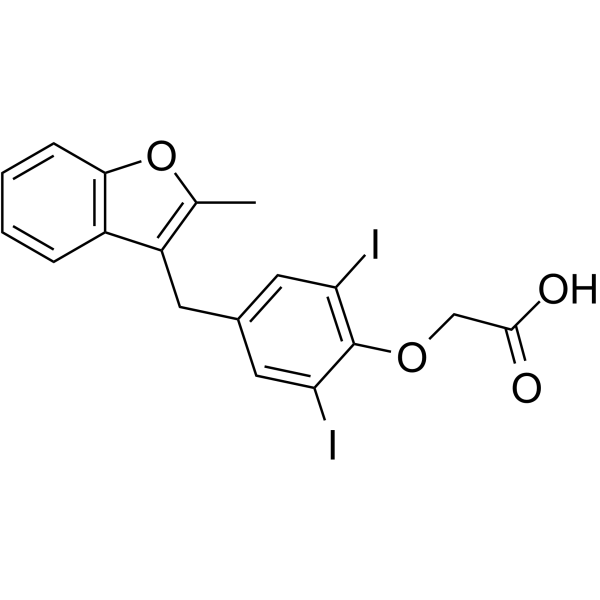
KB130015 (KB015) is an orally active and potent ThRα and ThRβ (thyroid hormone receptor) inhibitor, with IC50 values of 4.5 and 5.1 μM, respectively. KB130015 markedly slows the kinetics of inactivation of Na+ channels. KB130015 activates hERG1 channels (EC50 = 12.2 μM) and large-conductance Ca2+-activated K+ (BKCa) channels formed by hSlo1 (α) subunits in HEK 293 cells. KB130015 has antiarrhythmic properties. KB130015 can be used for the study of cardiovascular disease.
Nur für Forschungszwecke. Wir verkaufen nicht an Patienten.
- Reinheit : 98.45%
- CAS. Nr.: 147030-48-6
- Formel: C18H14I2O4
- Molecular Weight:548.11
-
Speicherung:Powder -20°C, 3 years , 4°C, 2 years ; In solvent -80°C, 6 months , -20°C, 1 month

To place orders, for customer services and technical support, please contact: MedChemExpress USA
Tel: 609-228-6898 E-mail: [email protected] [email protected]


-
 Biologische Aktivität
-
Chemical Information
-
Lösungsmittel & Löslichkeit
- Protokoll
- Reinheit & Dokumentation
- Verweise
-
 Help & FAQs


-
HY-12216
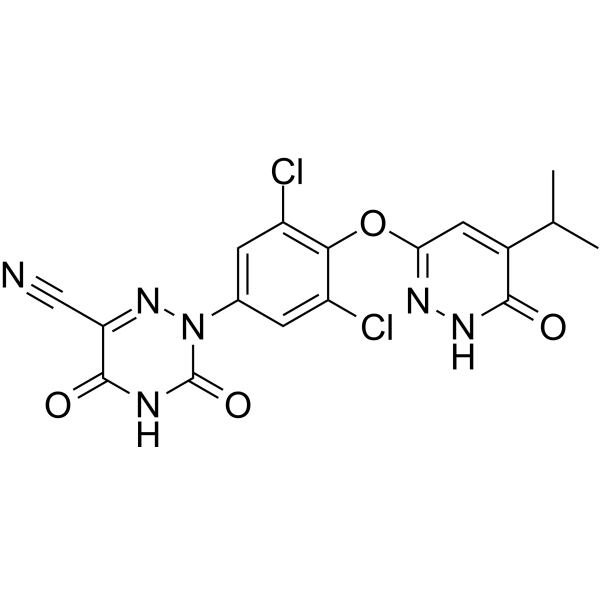
ResmetiromTHR-β Agonist -
HY-141513
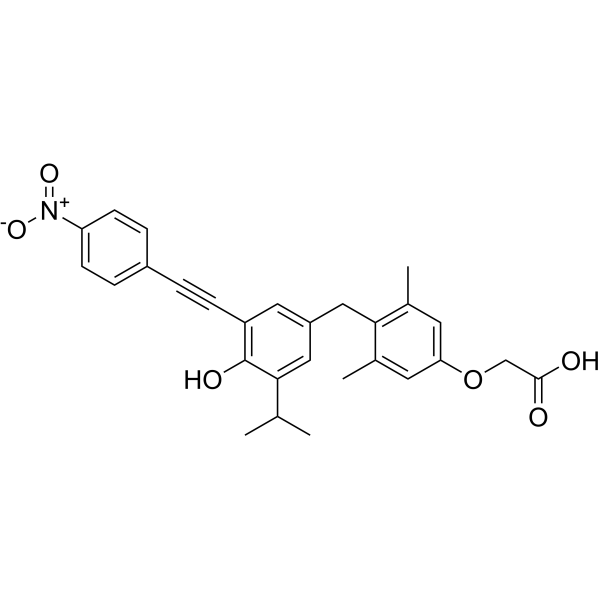
NH-3THR Antagonist -
HY-100856
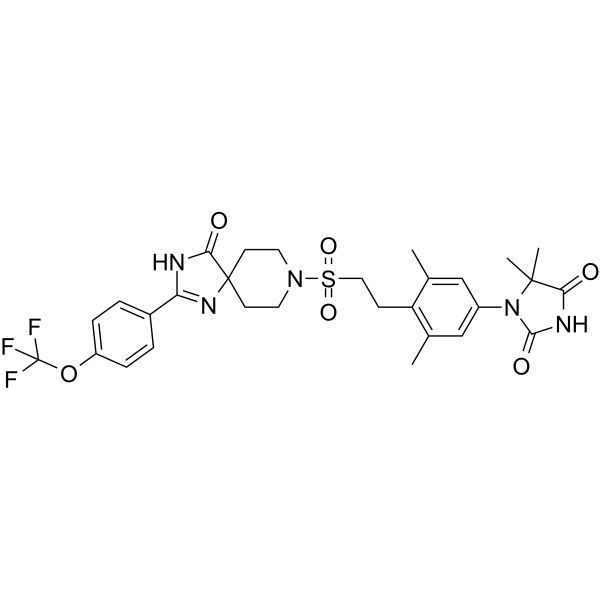
PCO371PTHR1 Agonist -
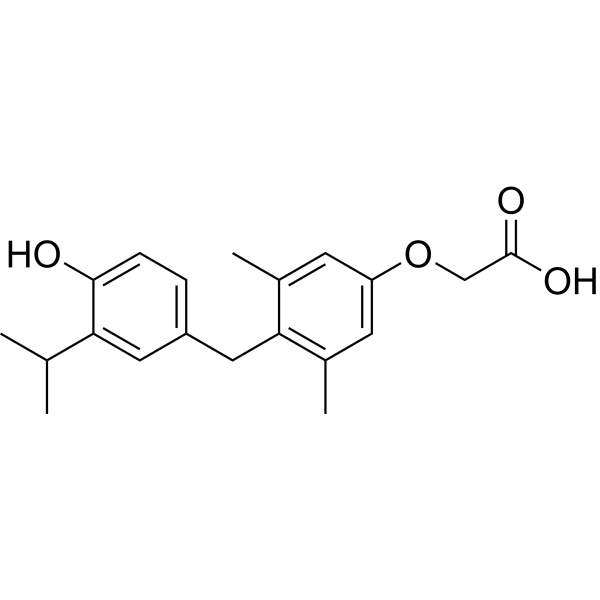
HY-14823
SobetiromeTRβ Agonist -
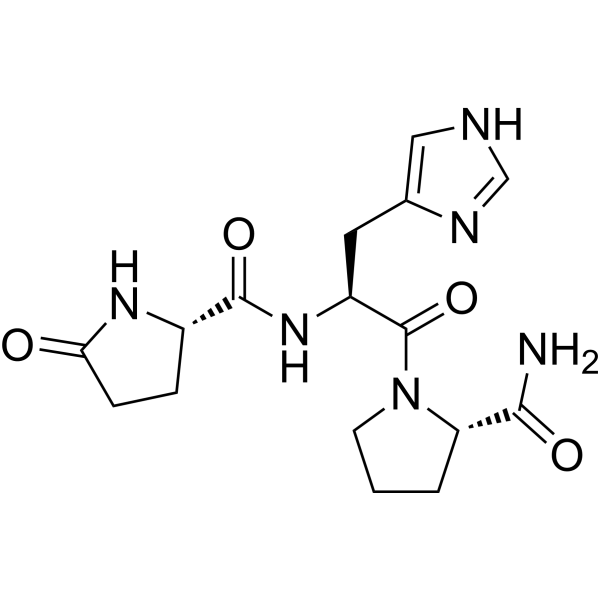
HY-P0002
ProtirelinEndogenous Metabolite -

HY-100856R
PCO371 (Standard)PTHR1 Agonist -
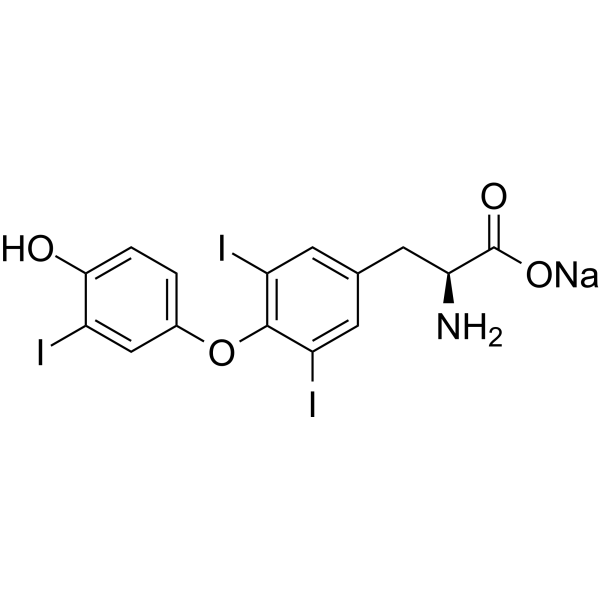
HY-A0070
Liothyronine sodiumTRα/TRβ Agonist -
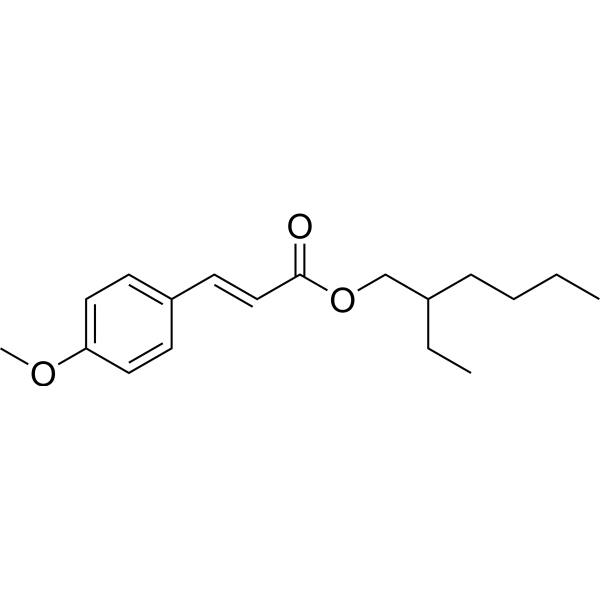
HY-B1234
OctinoxateIngredient of Sunscreens, Thyroid Hormone Receptor Agonist, ultraviolet filter -
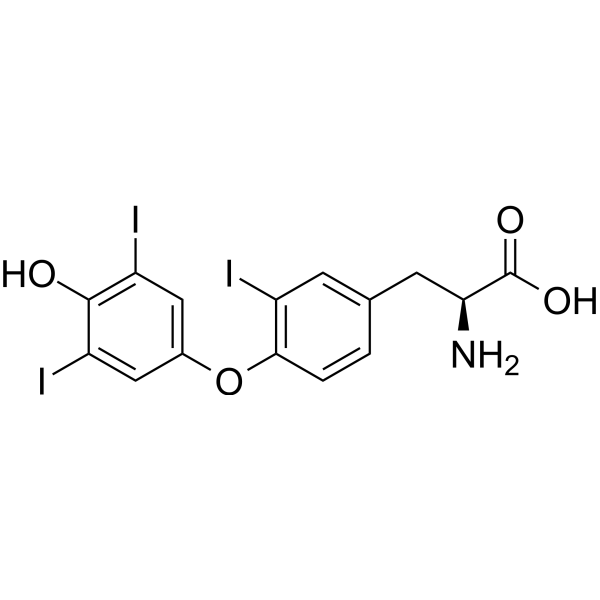
HY-W010696
Reverse T3Thyroid Hormone -

HY-B1234R
Octinoxate (Standard)Ingredient of Sunscreens -
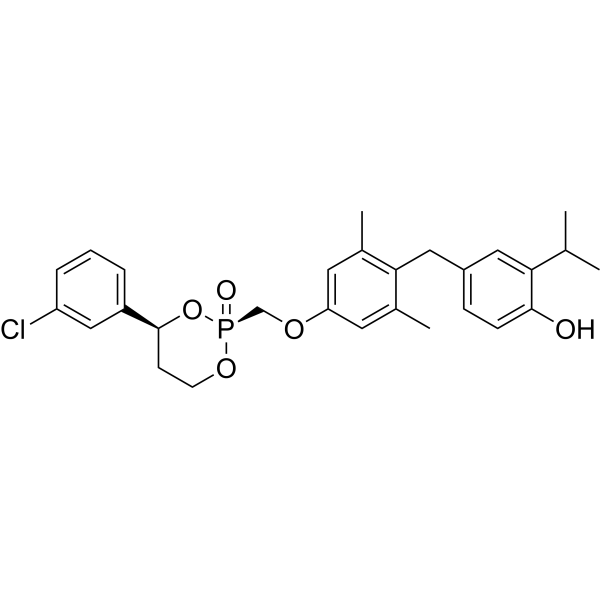
HY-111288
MB-07811 -
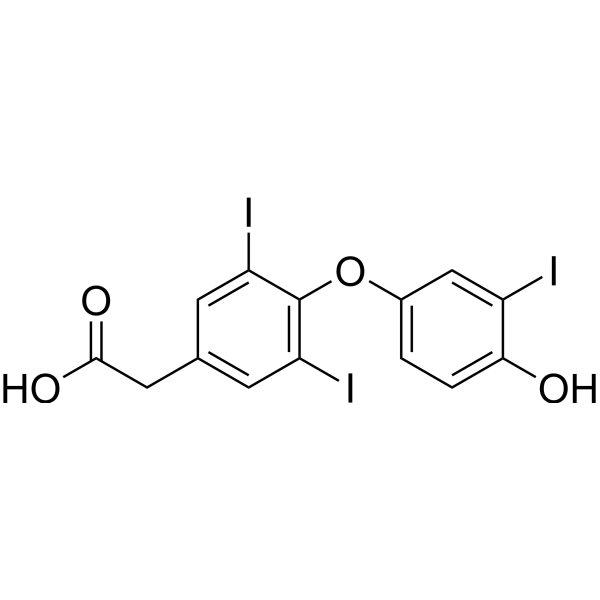
HY-B1201
TiratricolThyroid Hormone Receptor Inhibitor
Publications Citing Use of MedChemExpress (MCE) KB130015
MoreAlle Calcium Channel Isoform-spezifische Produkte anzeigen
More

Biologische Aktivität
Beschreibung
IC50 & Target
[1]|
ThRα 4.5 μM (IC50) |
ThRβ 5.1 μM (IC50) |
Cellular Effect
|
Cell Line

|
Type | Value | Description | References |
|---|---|---|---|---|
| CHO-K1 | EC50 |
>10 μM
Compound: 7 (KB130015)
|
Agonism of compound towards thyroid response element (TRAF alpha) in CHO-K1 cells
Agonism of compound towards thyroid response element (TRAF alpha) in CHO-K1 cells
|
[PMID: 11806713] |
| CHO-K1 | EC50 |
>10 μM
Compound: 7 (KB130015)
|
Agonism of compound towards thyroid response element (TRAF beta) in CHO-K1 cells
Agonism of compound towards thyroid response element (TRAF beta) in CHO-K1 cells
|
[PMID: 11806713] |
| CHO-K1 | IC50 |
2.2 μM
Compound: 7 (KB130015)
|
Antagonism of compound towards thyroid response element (TRAF alpha) in CHO-K1 cells
Antagonism of compound towards thyroid response element (TRAF alpha) in CHO-K1 cells
|
[PMID: 11806713] |
| CHO-K1 | IC50 |
4.1 μM
Compound: 7 (KB130015)
|
Antagonism of compound towards thyroid response element (TRAF beta) in CHO-K1 cells
Antagonism of compound towards thyroid response element (TRAF beta) in CHO-K1 cells
|
[PMID: 11806713] |
| CHO-K1 | IC50 |
4.5 μM
Compound: 7 (KB130015)
|
Concentration required to inhibit 50% of binding of [125I]-T3 to human Thyroid hormone receptor alpha-1 in CHO-K1 cells
Concentration required to inhibit 50% of binding of [125I]-T3 to human Thyroid hormone receptor alpha-1 in CHO-K1 cells
|
[PMID: 11806713] |
| CHO-K1 | IC50 |
5.1 μM
Compound: 7 (KB130015)
|
Concentration required to inhibit 50% of binding of [125I]T3 to human Thyroid hormone receptor beta 1 in CHO-K1 cells
Concentration required to inhibit 50% of binding of [125I]T3 to human Thyroid hormone receptor beta 1 in CHO-K1 cells
|
[PMID: 11806713] |
In Vitro
KB130015 (1-10 μM) slows the inactivation kinetics of cardiac Na+ channels by enhancing a slow-inactivating INa component at the expense of the fast-inactivating component in guinea pig, rabbit, and pig ventricular myocytes[2].
KB130015 shifts the steady-state voltage-dependent inactivation of Na+ channels to more negative potentials and slows the recovery from inactivation in cardiac myocytes[2].
KB130015 (10 μM) decreases the amplitude of L-type Ca2+current (Ica-L) by about 30% without changing its inactivation time course in pig ventricular myocytes[2].
KB130015 (50 μM) exerts a positive inotropic action by increasing cell shortening amplitude in pig ventricular myocytes without altering the time course[2].
KB130015 (100 μM) shortens the action potential duration (APD) in pig ventricular trabeculum but prolongs short APDs and induces early afterdepolarizations (EADs) in mouse left ventricular papillary muscle[2].
KB130015 (100 μM) activates large-conductance Ca2+-activated K+ (BKCa) channels formed by hSlo1 (α) subunits in HEK 293 cells and the BKCa channels from insects (Drosophila melanogaster dSlo and Periplaneta americana pSlo) expressed in HEK 293 cells[3].
MedChemExpress (MCE) has not independently confirmed the accuracy of these methods. They are for reference only. Further protocols information, click here.
In Vivo
KB130015 (30-300 mg/kg, p.o., daily, 2 weeks) alters thyroid hormone levels (reduces T3, increases T4 and TSH) in Sprague-Dawley rats[1].
KB130015 (20 mg/kg, i.p., daily, 20 days) suppresses ventricular premature beats, ventricular tachycardia and fibrillation during ischemia and reperfusion in rabbits with left anterior descending artery occlusion[2].
MedChemExpress (MCE) has not independently confirmed the accuracy of these methods. They are for reference only.
-
Animal Model:Sprague-Dawley rats (each group consisting of 5 males and 5 females)[1]
-
Dosage:30, 100, 300 mg/kg
-
Administration:p.o. daily for 2 weeks
-
Result:Reduced serum T3 and increased serum T4 and TSH.
Increased serum cholesterol only in males at 300 mg/kg.
Caused mild increases in ASAT and ALAT at 300 mg/kg.
Had no effect on weight gain.
-
Animal Model:Rabbits with ischemia and reperfusion were established by 30-min occlusion of the left anterior descending artery[2]
-
Dosage:20 mg/kg
-
Administration:i.p. daily for 20 days
-
Result:Increased TSH and T4 plasma levels in chronically treated rabbits.
Remained active during treatment with no difference in weight gain compared to vehicle-treated rabbits.
Suppressed ventricular premature beats, ventricular tachycardia and fibrillation associated with ischemia and reperfusion periods in rabbits with left anterior descending artery occlusion.


Chemical Information
-
CAS. Nr. 147030-48-6
-
Appearance Solid
-
Molecular Weight 548.11
-
Formel C18H14I2O4
-
Color Off-white to light yellow
-
SMILES
O=C(COC1=C(C=C(C=C1I)CC2=C(OC3=C2C=CC=C3)C)I)O
-
Synonyms
KB015
-
Versand
Room temperature in continental US; may vary elsewhere.
-
Speicherung
Powder -20°C 3 years 4°C 2 years In solvent -80°C 6 months -20°C 1 month


Publications (1)
-
Journal Impact Factor
-
Most Recent
-
Environ Sci Technol
IodoFinder: Machine Learning-Guided Recognition of Iodinated Chemicals in Nontargeted LC-MS/MS Analysis. [Abstract]2025 Mar 11;59(9):4530-4539. PMID: 40015982


Lösungsmittel & Löslichkeit
In Vitro:
DMSO : 100 mg/mL (182.45 mM; Need ultrasonic; Hygroscopic DMSO has a significant impact on the solubility of product, please use newly opened DMSO)
Please refer to the solubility information to select the appropriate solvent. Once prepared, please aliquot and store the solution to prevent product inactivation from repeated freeze-thaw cycles.
Storage method and period of stock solution: -80°C, 6 months; -20°C, 1 month. When stored at -80°C, please use it within 6 months. When stored at -20°C, please use it within 1 month.
Please refer to the solubility information to select the appropriate solvent. Once prepared, please aliquot and store the solution to prevent product inactivation from repeated freeze-thaw cycles.
Storage method and period of stock solution: -80°C, 6 months; -20°C, 1 month. When stored at -80°C, please use it within 6 months. When stored at -20°C, please use it within 1 month.
Konzentration (Stammlösung) × Volumen (Stammlösung) = Konzentration (Ziellösung) × Volumen (Ziellösung)
In Vivo:
Select the appropriate dissolution method based on your experimental animal and administration route.
- For the following dissolution methods, please ensure to first prepare a clear stock solution using an In Vitro approach and then sequentially add co-solvents:
- To ensure reliable experimental results, the clarified stock solution can be appropriately stored based on storage conditions. As for the working solution for In Vivo experiments, it is recommended to prepare freshly and use it on the same day.
- The percentages shown for the solvents indicate their volumetric ratio in the final prepared solution. If precipitation or phase separation occurs during preparation, heat and/or sonication can be used to aid dissolution.
Add each solvent one by one: 10% DMSO 40% PEG300 5% Tween-80 45% Saline
Solubility: ≥ 2.5 mg/mL (4.56 mM); Clear solution
This protocol yields a clear solution of ≥ 2.5 mg/mL (saturation unknown).
Taking 1 mL working solution as an example, add 100 μL DMSO stock solution (25.0 mg/mL) to 400 μL PEG300, and mix evenly; then add 50 μL Tween-80 and mix evenly; then add 450 μL Saline to adjust the volume to 1 mL.
Preparation of Saline: Dissolve 0.9 g sodium chloride in ddH₂O and dilute to 100 mL to obtain a clear Saline solution.
In Vivo Dissolution Calculator
Please enter the basic information of animal experiments:
-
-
-
-
Recommended: Prepare an additional quantity of animals to account for potential losses during experiments.
Please enter your animal formula composition:
-
%DMSO +
Recommended: Keep the proportion of DMSO in working solution below 2% if your animal is weak.
-
%+
-
+%Tween-80 + +
-
%Saline +
The co-solvents required include: DMSO, . All of co-solvents are available by MedChemExpress (MCE). , Tween 80. All of co-solvents are available by MedChemExpress (MCE).
Working solution concentration: 0.22 mg/mL
Method for preparing stock solution: mg drug dissolved in μL DMSO. Stock solution concentration: mg/mL.
1. Take μL DMSO stock solution;
2. Add μL .
μL , mix evenly;
3. Then add μL Tween 80, mix evenly;
4. Then add μL
Please ensure that the stock solution in the first step is dissolved to a clear state, and add co-solvents in sequence. You can use ultrasonic heating (ultrasonic cleaner, recommended frequency 20-40 kHz), vortexing, etc. to assist dissolution.

Protokoll
-
Cell Cytotoxicity Assay
Cytotoxicity assays are usually based on the assessment of cell membrane damage, which can also be indirectly detected by measuring cell viability. Detection methods include MTT assay, CKK-8 assay, LDH assay and ATP assay, etc.
-
Research Protocol for Endocrine Diseases
Endocrine diseases often arise from disrupted hormone production, hormone signaling, or target-tissue responsiveness; for diabetes-focused endocrine disease models, insulin signaling regulates glucose uptake, hepatic glucose output, lipid metabolism, and β-cell compensation. Type 2 diabetes develops through interacting defects in insulin resistance, β-cell dysfunction, adipose inflammation, hepatic glucose overproduction, altered incretin signaling, and ectopic lipid metabolism. A major unresolved question is whether endocrine dysfunction is driven primarily by target-tissue insulin resistance, intrinsic β-cell failure, immune/inflammatory stress, or combined multi-organ failure that differs by disease stage.
-
Research Protocol for Cardiovascular Diseases
Cardiovascular disease can be modeled as maladaptive cardiac remodeling, where ischemic injury or pressure overload activates inflammatory signaling, fibroblast activation, extracellular-matrix deposition, cardiomyocyte hypertrophy, vascular remodeling, and progressive ventricular dysfunction. The TGF-β/SMAD axis is a central profibrotic pathway after myocardial injury and pressure overload, while innate immune and cytokine pathways regulate leukocyte recruitment, scar formation, and adverse remodeling. Key unresolved questions include which inflammatory signals are reparative versus harmful, when fibrosis is protective versus maladaptive, and whether pathway inhibition improves function without weakening necessary infarct healing or compensatory remodeling.
-
Ca2+ Staining Technique
Ca2+ staining is an experimental technique that utilizes specific fluorescent probes (such as Fluo-4 AM, Fura-2, etc.) to qualitatively or quantitatively detect dynamic changes in intracellular Ca2+ concentrations; this is achieved by monitoring the changes in fluorescent signals generated when these probes bind to free intracellular calcium ions. The underlying principle relies primarily on the presence of chelating groups within the probe's molecular structure that possess high affinity for calcium ions.


Reinheit & Dokumentation
-
Data Sheet (280 KB)
-
SDS (393 KB)
- English - EN (393 KB)
- Français - FR (393 KB)
- Deutsch - DE (393 KB)
- Norwegian - NO (393 KB)
- Español - ES (393 KB)
- Swedish - SV (393 KB)
- Italian - IT (393 KB)
- Korean - KR (393 KB)
- Portuguese - PT (393 KB)
-
Handling Instructions (2659 KB)
Verweise
[1]. Carlsson B, et al. Synthesis and preliminary characterization of a novel antiarrhythmic compound (KB130015) with an improved toxicity profile compared with amiodarone. J Med Chem. 2002 Jan 31;45(3):623-30. [Content Brief]
[2]. Mubagwa K, Macianskiene R, Viappiani S, Gendviliene V, Carlsson B, Brandts B. KB130015, a new amiodarone derivative with multiple effects on cardiac ion channels. Cardiovasc Drug Rev. 2003 Fall;21(3):216-35. [Content Brief]
[3]. Gessner G, et al. The amiodarone derivative 2-methyl-3-(3,5-diiodo-4-carboxymethoxybenzyl)benzofuran (KB130015) opens large-conductance Ca2+-activated K+ channels and relaxes vascular smooth muscle. Eur J Pharmacol. 2007 Jan 26;555(2-3):185-93. [Content Brief]
[4]. Gessner G, et al. The amiodarone derivative KB130015 activates hERG1 potassium channels via a novel mechanism. Eur J Pharmacol. 2010 Apr 25;632(1-3):52-9. [Content Brief]


Complete Stock Solution Preparation Table
Please refer to the solubility information to select the appropriate solvent. Once prepared, please aliquot and store the solution to prevent product inactivation from repeated freeze-thaw cycles.
Storage method and period of stock solution: -80°C, 6 months; -20°C, 1 month. When stored at -80°C, please use it within 6 months. When stored at -20°C, please use it within 1 month.
| Optional Solvent | Concentration Solvent Mass | 1 mg | 5 mg | 10 mg | 25 mg |
|---|---|---|---|---|---|
| DMSO | 1 mM | 1.8245 mL | 9.1223 mL | 18.2445 mL | 45.6113 mL |
| 5 mM | 0.3649 mL | 1.8245 mL | 3.6489 mL | 9.1223 mL | |
| 10 mM | 0.1824 mL | 0.9122 mL | 1.8245 mL | 4.5611 mL | |
| 15 mM | 0.1216 mL | 0.6082 mL | 1.2163 mL | 3.0408 mL | |
| 20 mM | 0.0912 mL | 0.4561 mL | 0.9122 mL | 2.2806 mL | |
| 25 mM | 0.0730 mL | 0.3649 mL | 0.7298 mL | 1.8245 mL | |
| 30 mM | 0.0608 mL | 0.3041 mL | 0.6082 mL | 1.5204 mL | |
| 40 mM | 0.0456 mL | 0.2281 mL | 0.4561 mL | 1.1403 mL | |
| 50 mM | 0.0365 mL | 0.1824 mL | 0.3649 mL | 0.9122 mL | |
| 60 mM | 0.0304 mL | 0.1520 mL | 0.3041 mL | 0.7602 mL | |
| 80 mM | 0.0228 mL | 0.1140 mL | 0.2281 mL | 0.5701 mL | |
| 100 mM | 0.0182 mL | 0.0912 mL | 0.1824 mL | 0.4561 mL |


KB130015 Related Classifications
HY-120026 Related Classifications
 Powered by Bioz