Search Result
Results for "
Reuptake+Inhibitors
" in MedChemExpress (MCE) Product Catalog:
41
Isotope-Labeled Compounds
| Cat. No. |
Product Name |
Target |
Research Areas |
Chemical Structure |
-
- HY-B0102A
-
-
-
- HY-B0102
-
-
-
- HY-B0176A
-
|
|
Serotonin Transporter
|
Neurological Disease
Cancer
|
|
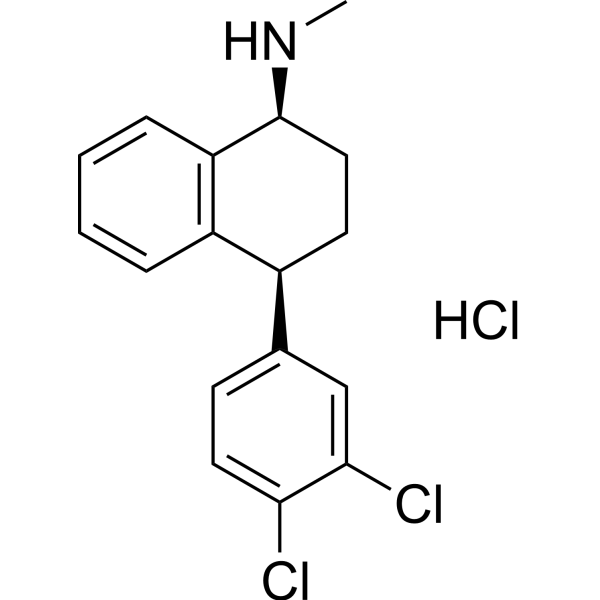
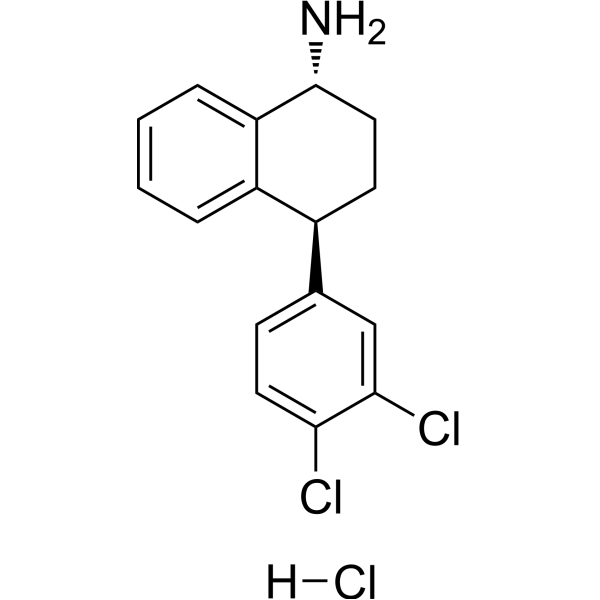
Sertraline hydrochloride is an antidepressant of the selective serotonin reuptake inhibitor (SSRI) class. Sertraline hydrochloride is researched for a number of diseases, such as major depressive disorder and obsessive .
|
-
-
- HY-122272
-
|
BRL29060
|
Serotonin Transporter
Adrenergic Receptor
P2X Receptor
Apoptosis
|
Neurological Disease
Cancer
|
|
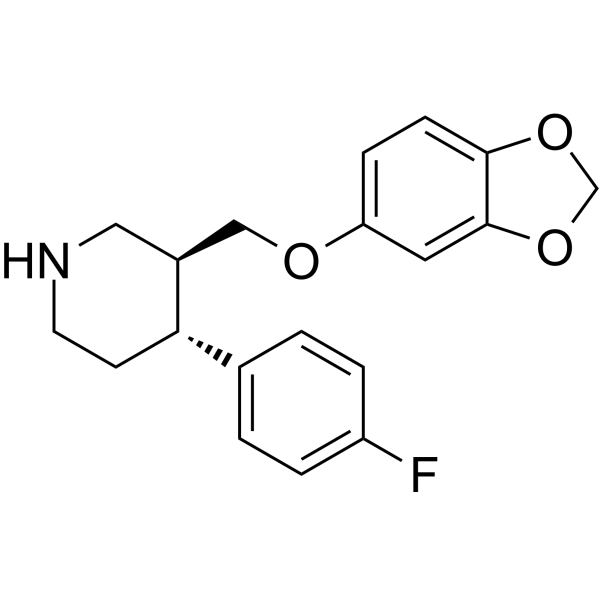
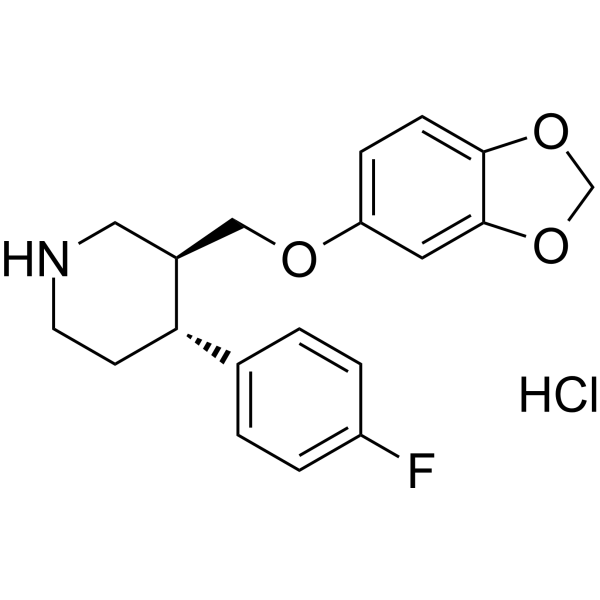
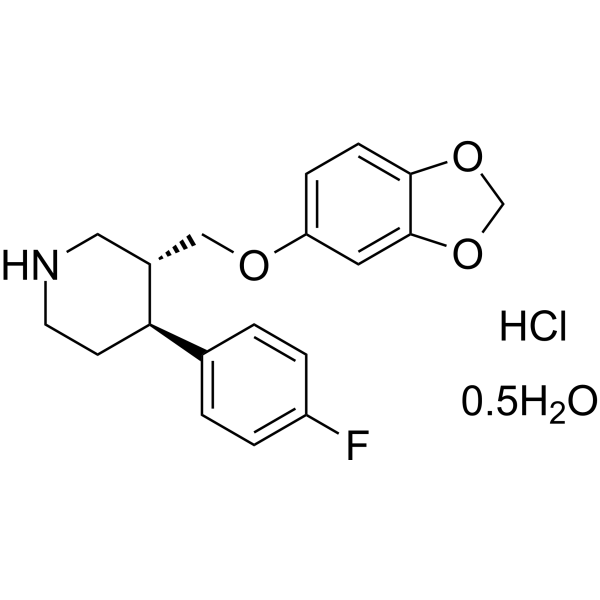
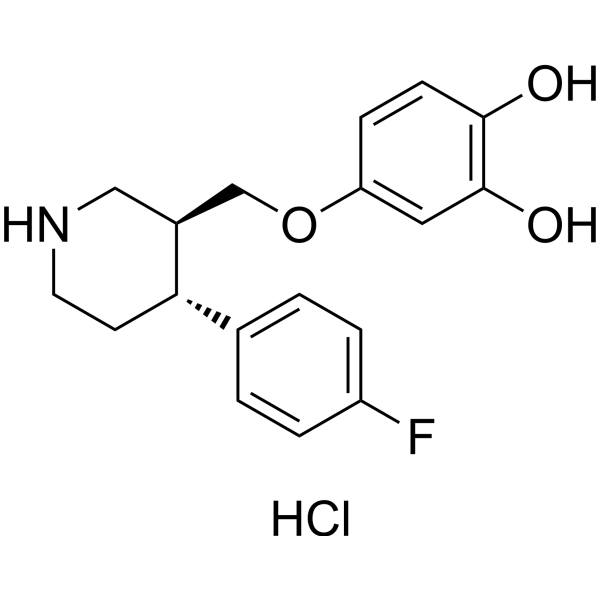
Paroxetine is an oral inhibitor that falls under the category of selective serotonin reuptake inhibitors (SSRIs). Paroxetine is also a very weak norepinephrine (NE) reuptake inhibitor, capable of inducing cell apoptosis and having anti-tumor activity. Paroxetine has antidepressant, anti-anxiety, and pain-relieving effects, and it can help improve conditions like obsessive-compulsive disorder, panic disorder, post-traumatic stress disorder, premenstrual anxiety, and chronic headaches .
|
-
-
- HY-B0492
-
-
-
- HY-B0161A
-
|
(S)-Duloxetine hydrochloride; LY-248686 hydrochloride
|
Serotonin Transporter
|
Neurological Disease
Cancer
|
|
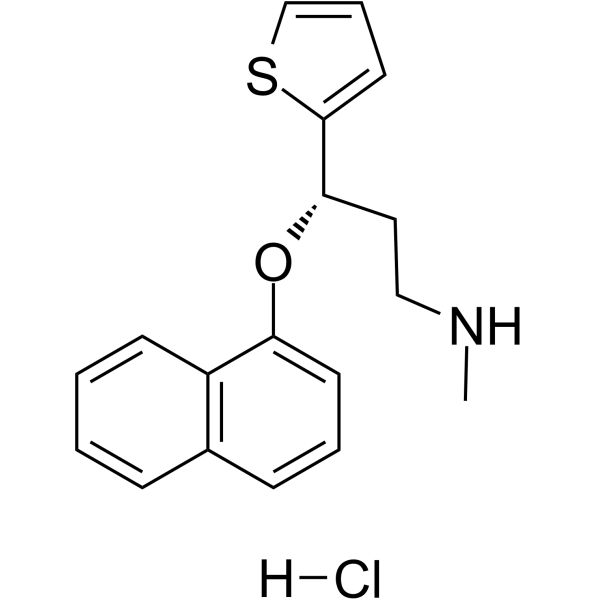
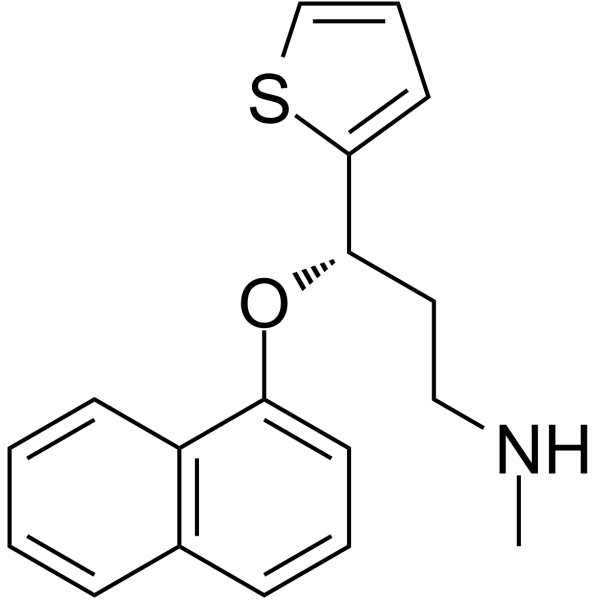
Duloxetine hydrochloride ((S)-Duloxetine hydrochloride) is a serotonin-norepinephrine reuptake inhibitor (SNRI) with a Ki of 4.6 nM, used for treatment of major depressive disorder and generalized anxiety disorder (GAD) .
|
-
-
- HY-13217
-
|
GBR-12909 dihydrochloride; I893 dihydrochloride
|
Dopamine Transporter
|
Neurological Disease
|
|
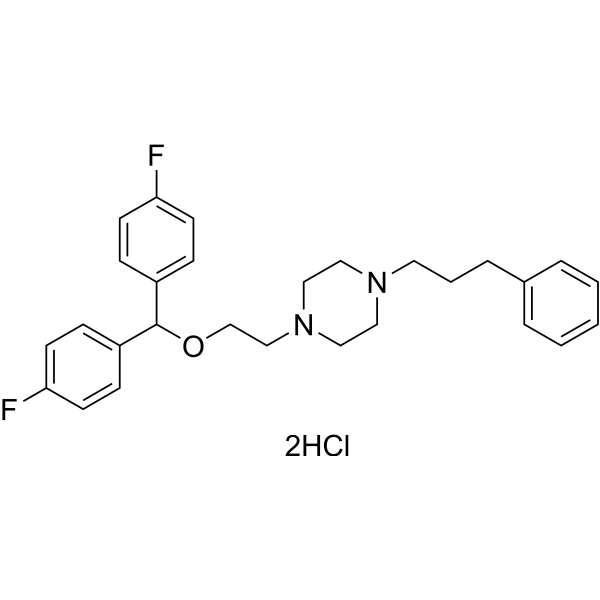
Vanoxerine dihydrochloride (GBR-12909 dihydrochloride) is a competitive, potent, and highly selective dopamine reuptake inhibitor (Ki=1 nM). Vanoxerine dihydrochloride (GBR-12909 dihydrochloride) binds to the target site on the dopamine transporter (DAT) .
|
-
-
- HY-B0103
-
-
-
- HY-121203
-
|
|
Serotonin Transporter
|
Neurological Disease
Cancer
|
|
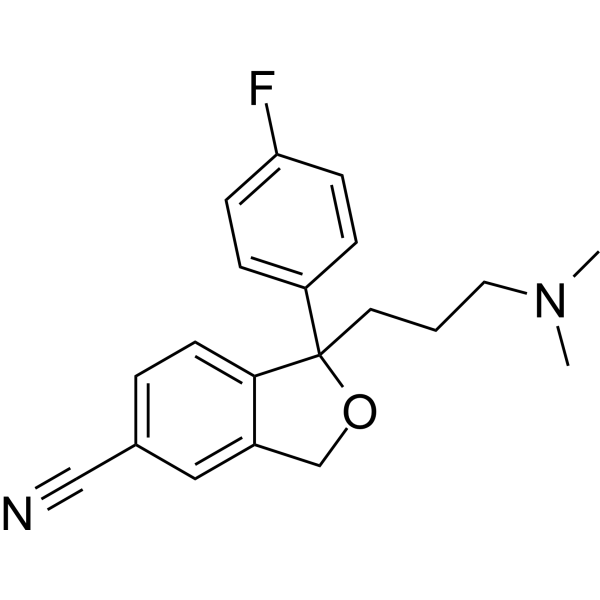
Citalopram is a racemate mixture of the active S(+)-enantiomer (Escitalopram; HY-14258) and R(-)-enantiomer. Citalopram is an orally active selective serotonin reuptake inhibitor (SSRI). Citalopram is an antidepressant and enhances serotoninergic neurotransmission .
|
-
-
- HY-10809
-
|
RG1678; RO4917838
|
GlyT
|
Neurological Disease
|
|
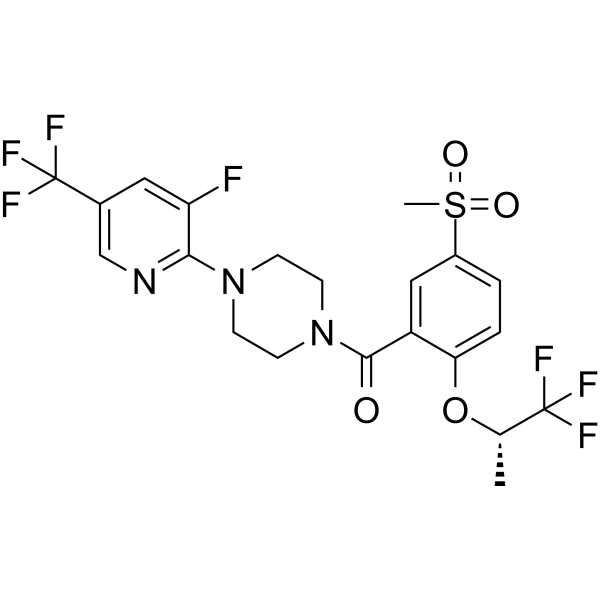
Bitopertin is a potent, noncompetitive glycine reuptake inhibitor, inhibits glycine uptake at human GlyT1 with a concentration exhibiting IC50 of 25 nM.
|
-
-
- HY-B0161
-
-
-
- HY-B0103A
-
-
-
- HY-B0304A
-
|
LY-210448 hydrochloride
|
Serotonin Transporter
|
Neurological Disease
|
|
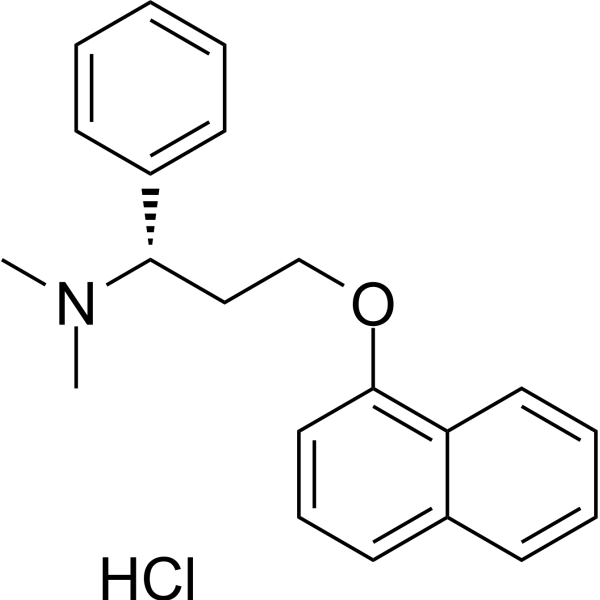
Dapoxetine (LY-210448) hydrochloride is an orally active and selective serotonin reuptake inhibitor (SSRI). Dapoxetine hydrochloride can be used for the research of premature ejaculation (PE) .
|
-
-
- HY-14560C
-
|
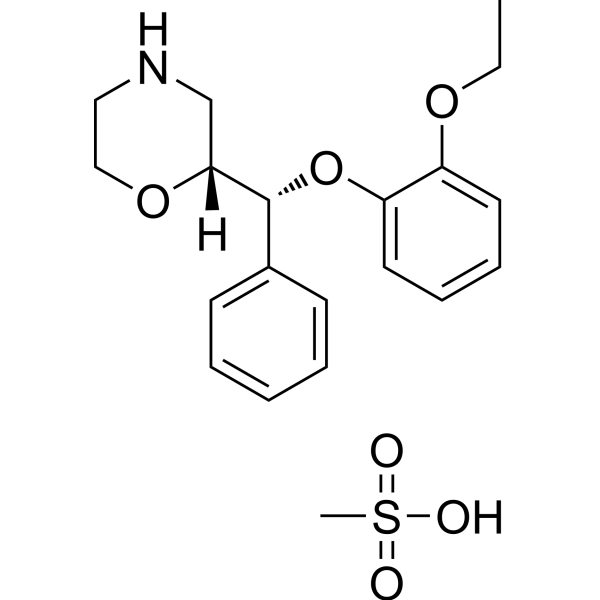
FCE20124 mesylate; PNU155950E mesylate
|
Adrenergic Receptor
|
Neurological Disease
|
|
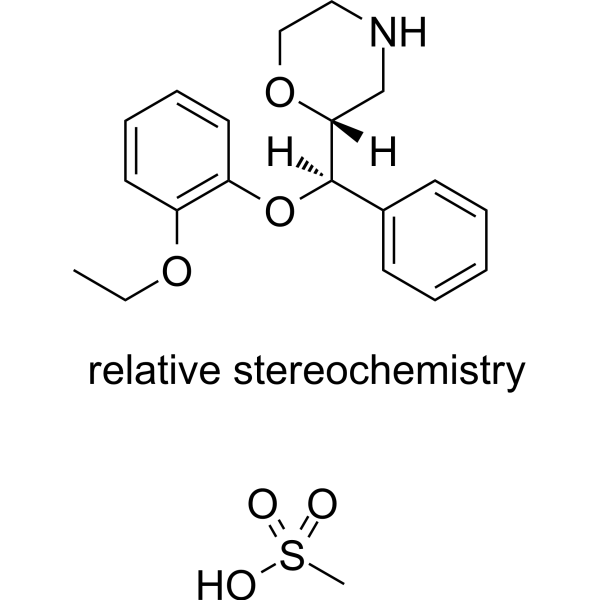
Reboxetine mesylate (FCE20124 mesylate) is a potent, selective, and specific noradrenaline reuptake inhibitor (NARI) for the research of depression. Reboxetine mesylate inhibits the uptake of norepinephrine, with a Ki of 8 nM .
|
-
-
- HY-B0492A
-
-
-
- HY-U00096
-
-
-
- HY-12850A
-
-
-
- HY-20696
-
|
Tryptoline
|
5-HT Receptor
|
Metabolic Disease
|
|
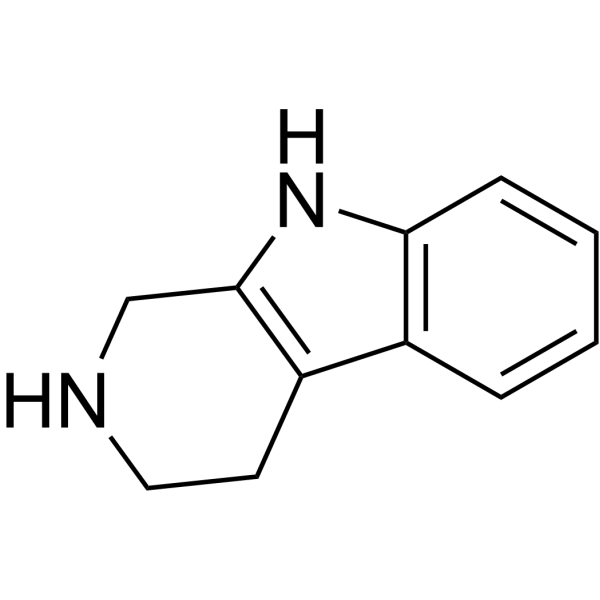
Tetrahydro-β-carboline (Tryptoline) is a metabolite of tryptamine, also is a competitive serotonin reuptake inhibitor with an Ki value of 6.1 µM .
|
-
-
- HY-B0102C
-
|
|
Serotonin Transporter
|
Neurological Disease
|
|
(R)-Fluoxetine hydrochloride, an antidepressant, is serotonin reuptake inhibitor (SSRI). (R)-Fluoxetine hydrochloride has modest affinity at the 5-HT2A and 5-HT2C receptors .
|
-

-
- HY-B0102B
-
-

-
- HY-10792A
-
-
-
- HY-15413A
-
|
LY 2216684 hydrochloride
|
Serotonin Transporter
|
Neurological Disease
|
|
Edivoxetine (LY 2216684) hydrochloride is a potent and selective norepinephrine reuptake inhibitor. Edivoxetine hydrochloride can be used for the study of major depressive disorder (MDD) and attention-deficit/hyperactivity disorder (ADHD) .
|
-
-
- HY-13217A
-
|
GBR 12909; I893
|
Dopamine Transporter
|
Neurological Disease
|
|
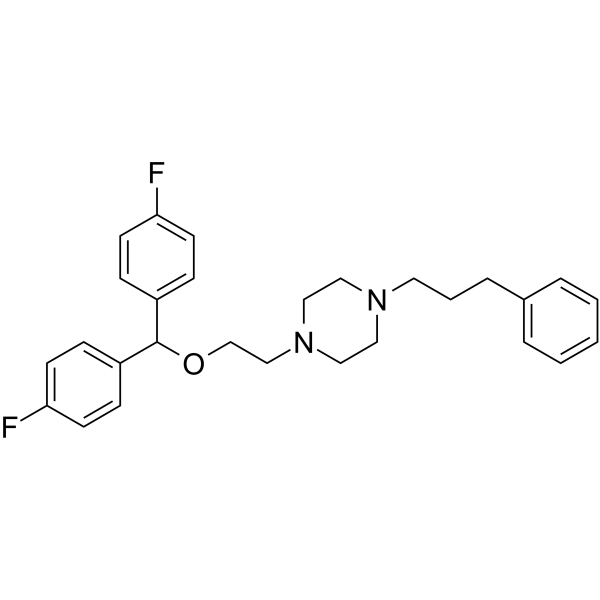
Vanoxerine (GBR-12909) is a competitive, potent, and highly selective dopamine reuptake inhibitor (Ki=1 nM). Vanoxerine (GBR-12909) binds to the target site on the dopamine transporter (DAT) .
|
-
-
- HY-B0176AR
-
|
|
Reference Standards
Serotonin Transporter
|
Neurological Disease
Cancer
|
|
Sertraline (hydrochloride) (Standard) is the analytical standard of Sertraline (hydrochloride). This product is intended for research and analytical applications. Sertraline hydrochloride is an antidepressant of the selective serotonin reuptake inhibitor (SSRI) class. Sertraline hydrochloride is researched for a number of diseases, such as major depressive disorder and obsessive .
|
-

-
- HY-106493
-
-

-
- HY-B0304
-
|
(S)-(+)-Dapoxetine; LY-210448
|
Serotonin Transporter
|
Neurological Disease
|
|
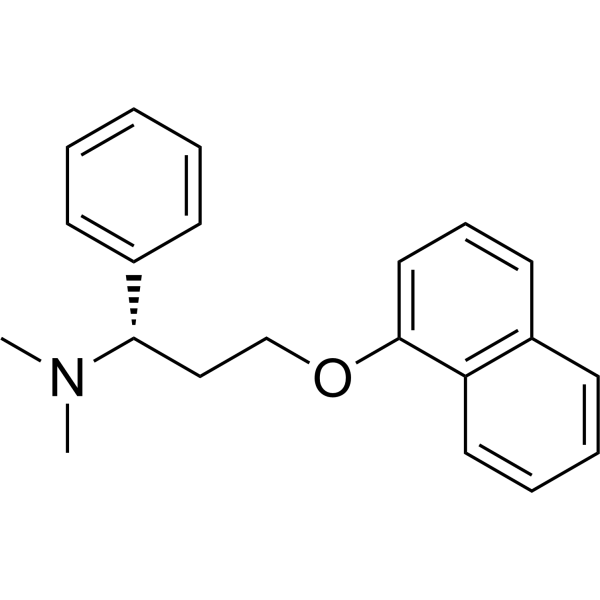
Dapoxetine (LY-210448) is an orally active and selective serotonin reuptake inhibitor (SSRI). Dapoxetine can be used for the research of premature ejaculation (PE) .
|
-
-
- HY-122272R
-
|
BRL29060 (Standard)
|
Serotonin Transporter
Adrenergic Receptor
P2X Receptor
Apoptosis
Reference Standards
|
Neurological Disease
Cancer
|
|
Paroxetine (Standard) is the analytical standard of Paroxetine. This product is intended for research and analytical applications. Paroxetine is an oral inhibitor that falls under the category of selective serotonin reuptake inhibitors (SSRIs). Paroxetine is also a very weak norepinephrine (NE) reuptake inhibitor, capable of inducing cell apoptosis and having anti-tumor activity. Paroxetine has antidepressant, anti-anxiety, and pain-relieving effects, and it can help improve conditions like obsessive-compulsive disorder, panic disorder, post-traumatic stress disorder, premenstrual anxiety, and chronic headaches .
|
-

-
- HY-18332A
-
-
-
- HY-B0176AS
-
|
|
Isotope-Labeled Compounds
Serotonin Transporter
|
Neurological Disease
|
|
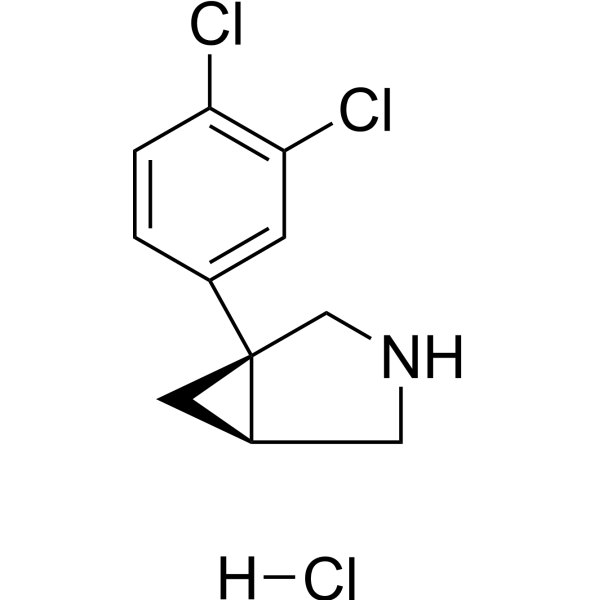
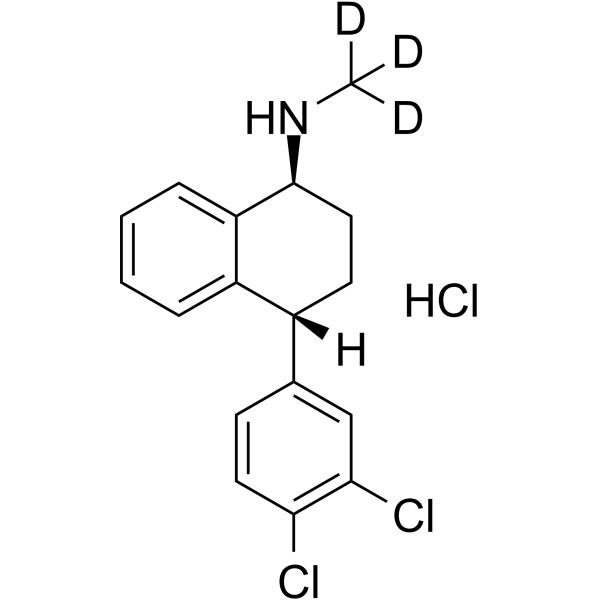
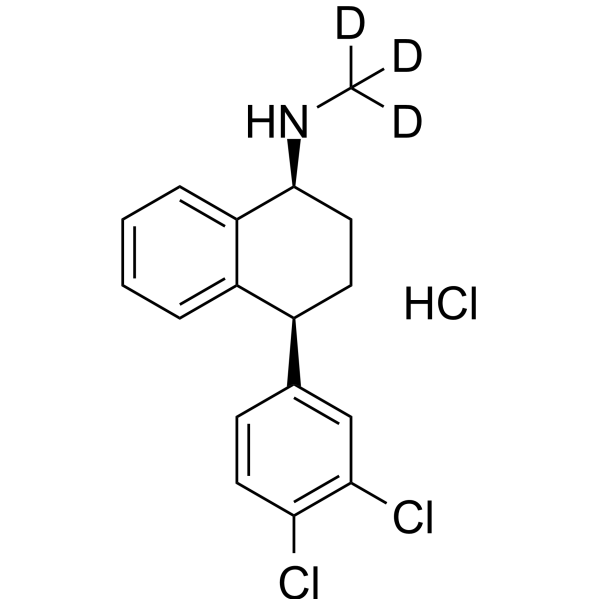
rel-Sertraline-d3 (hydrochloride) is the deuterium labeled Sertraline hydrochloride. Sertraline hydrochloride is an antidepressant of the selective serotonin reuptake inhibitor (SSRI) class. Sertraline hydrochloride is researched for a number of diseases, such as major depressive disorder and obsessive .
|
-
-
- HY-B0444A
-
|
|
Autophagy
Apoptosis
ERK
|
Neurological Disease
Cancer
|
|
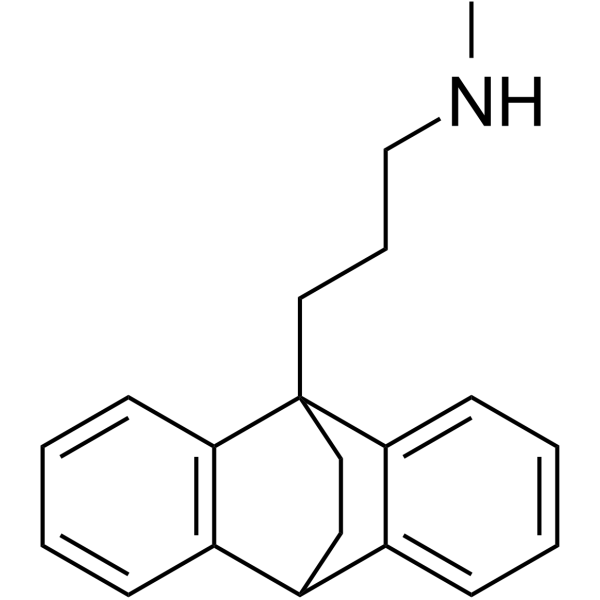
Maprotiline is a highly selective noradrenergic reuptake inhibitor that has strong antidepressant, antitumor and neuropathic pain-relieving effects. Maprotiline induces cancer cell apoptosis by targeting the ERK signaling pathway and CRABP1 .
|
-
-
- HY-106956A
-
-

-
- HY-U00096A
-
|
Toludesvenlafaxine; LY03005 free base; LPM570065 free base
|
Serotonin Transporter
|
Neurological Disease
|
|
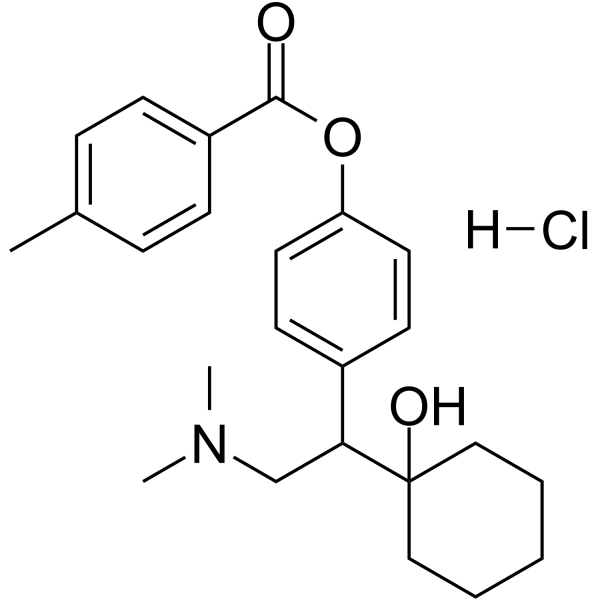
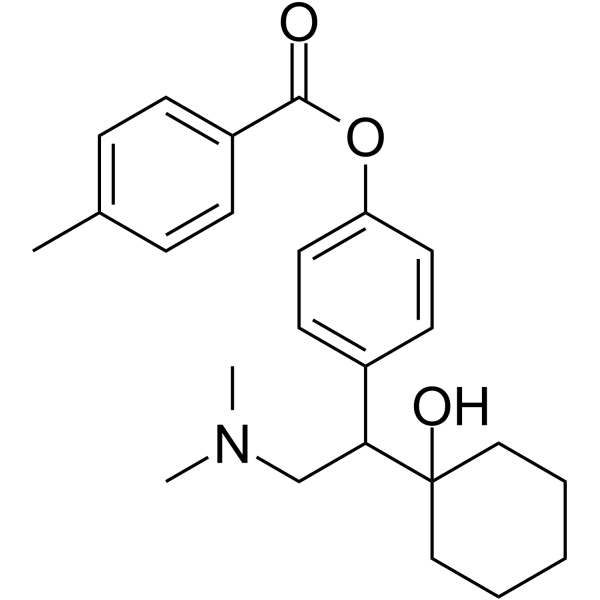
Ansofaxine is a serotonin-norepinephrine reuptake inhibitor (SNRI) used for the research of depression .
|
-
-
- HY-G0005
-
|
Para-Naphthol duloxetine
|
Drug Metabolite
|
Neurological Disease
|
|
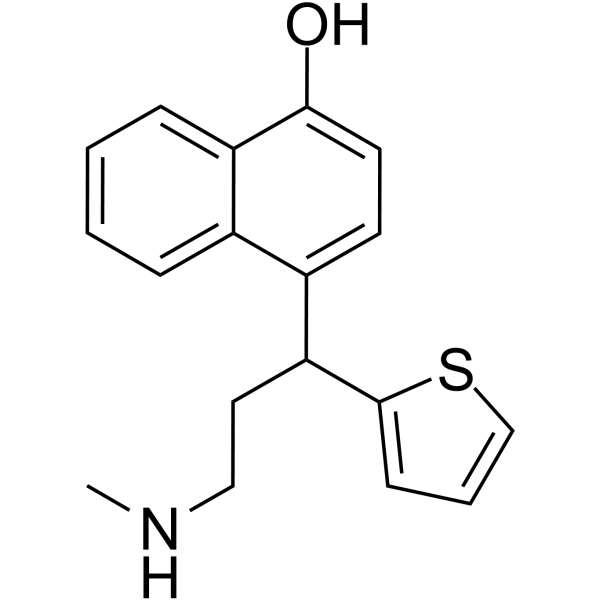
Para-Naphthol Duloxetine is a metabolite of Duloxetine, which is a serotonin-norepinephrine reuptake inhibitor (SNRI).
|
-
-
- HY-B0304AS
-
|
LY-210448-d7 hydrochloride
|
Serotonin Transporter
|
Neurological Disease
|
|
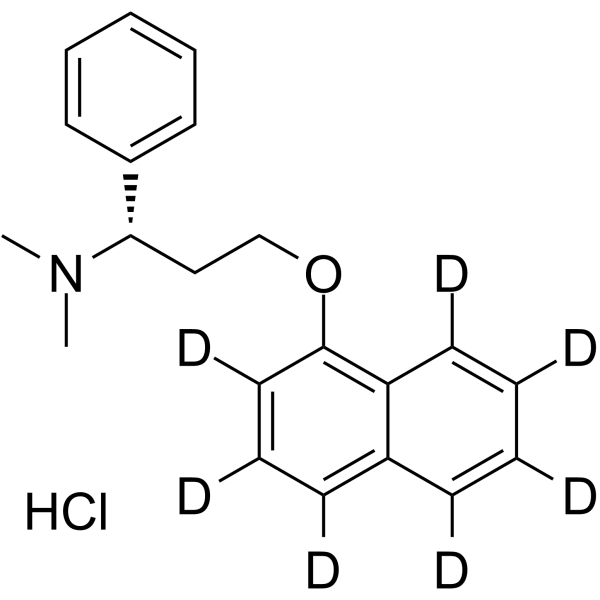
Dapoxetine-d7 (hydrochloride) is the deuterium labeled Dapoxetine hydrochloride. Dapoxetine hydrochloride is a short-acting selective serotonin reuptake inhibitor (SSRI) .
|
-
-
- HY-148718
-
|
|
5-HT Receptor
|
Neurological Disease
|
|
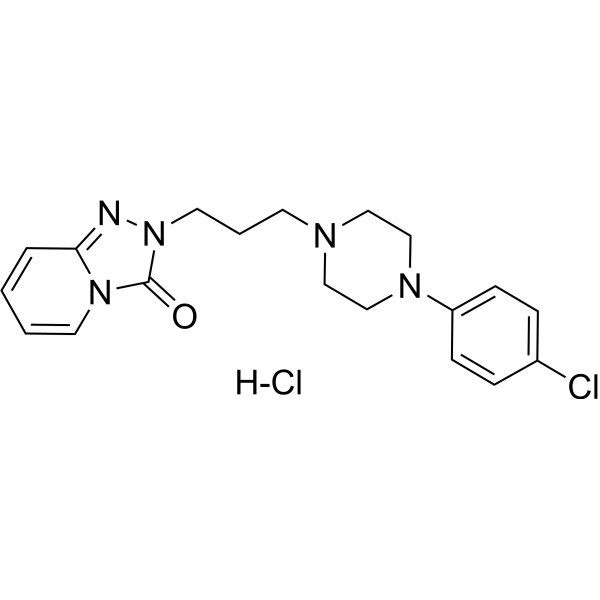
4-Chloro Trazodone hydrochloride is an isomer of Trazodone hydrochloride (HY-B0478). Trazodone hydrochloride is an antidepressant belonging to the class of serotonin receptor antagonists and reuptake inhibitors for treatment of anxiety disorders .
|
-
-
- HY-121203S
-
-
-
- HY-167894
-
-

-
- HY-W344115
-
-

-
- HY-B0161E
-
|
(Rac)-Duloxetine hydrochloride
|
Serotonin Transporter
|
Neurological Disease
|
|
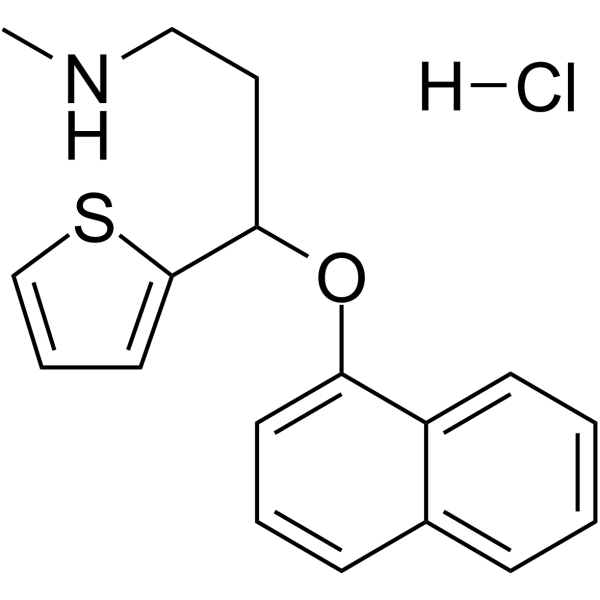
(±)-Duloxetine ((Rac)-Duloxetine) hydrochloride is the racemate of Duloxetine hydrochloride. Duloxetine hydrochloride, a serotonin-norepinephrine reuptake inhibitor, can be used for diabetic neuropathic pain and fibromyalgia as well as major depressive disorder research .
|
-
-
- HY-160668
-
-
-
- HY-14261S
-
-
-
- HY-B0773
-
|
BRL29060 mesylate
|
Serotonin Transporter
Adrenergic Receptor
|
Neurological Disease
|
|
Paroxetine mesylate, a phenylpiperidine derivative, is a potent and selective serotonin reuptake inhibitor (SSRI). Paroxetine mesylate is a very weak inhibitor of norepinephrine (NE) uptake but it is still more potent at this site than the other SSRIs .
|
-

-
- HY-B0176AS1
-
|
|
Isotope-Labeled Compounds
Serotonin Transporter
|
Neurological Disease
|
|
(±)-cis-Sertraline-d3 (hydrochloride) is the deuterium labeled Sertraline hydrochloride. Sertraline hydrochloride is an antidepressant of the selective serotonin reuptake inhibitor (SSRI) class. Sertraline hydrochloride is researched for a number of diseases, such as major depressive disorder and obsessive .
|
-
-
- HY-10809A
-
|
RG1678 (R enantiomer); RO4917838 (R enantiomer)
|
GlyT
|
Neurological Disease
|
|
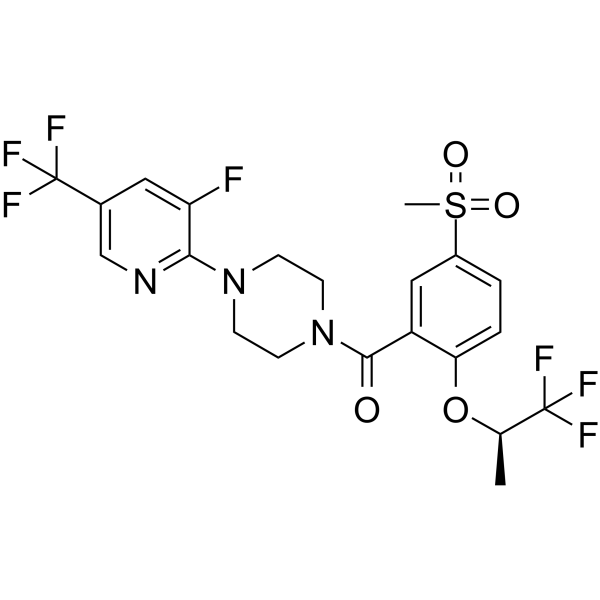
Bitopertin R enantiomer (RG1678 R enantiomer; RO4917838 R enantiomer) is the R-enantiomer of Bitopertin. Bitopertin is a potent, noncompetitive glycine reuptake inhibitor, inhibits glycine uptake at human GlyT1 with a concentration exhibiting IC50 of 25 nM.
|
-
-
- HY-160656
-
|
|
5-HT Receptor
|
Neurological Disease
|
|
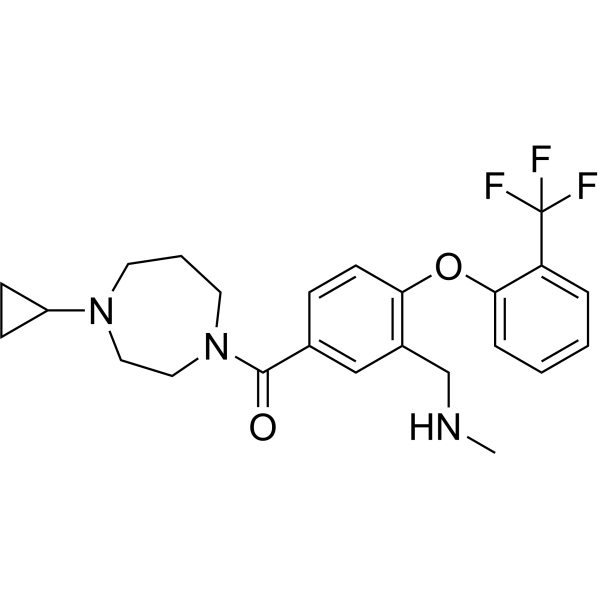
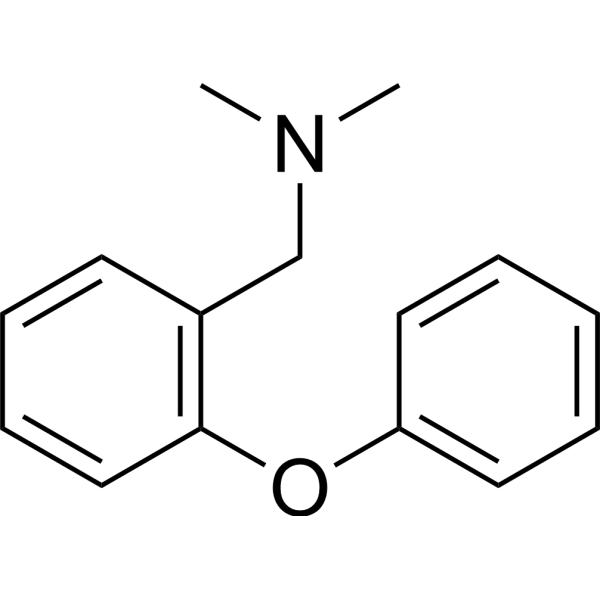
5-HT/NA Reuptake inhibitor-1 (compound 9) is a selective dual 5-HT and NA reuptake inhibitor with IC50 of 660 nM and 70 nM respectively. . 5-HT/NA Reuptake inhibitor-1 has good in vitro human metabolic stability, hERG selectivity and passive membrane permeability .
|
-
-
- HY-W714117
-
-

-
- HY-106956
-
-

-
- HY-B0102D
-
-

-
- HY-124320
-
-
-
- HY-101684A
-
|
CIBA 2330Go hydrochloride
|
Serotonin Transporter
|
Neurological Disease
|
|
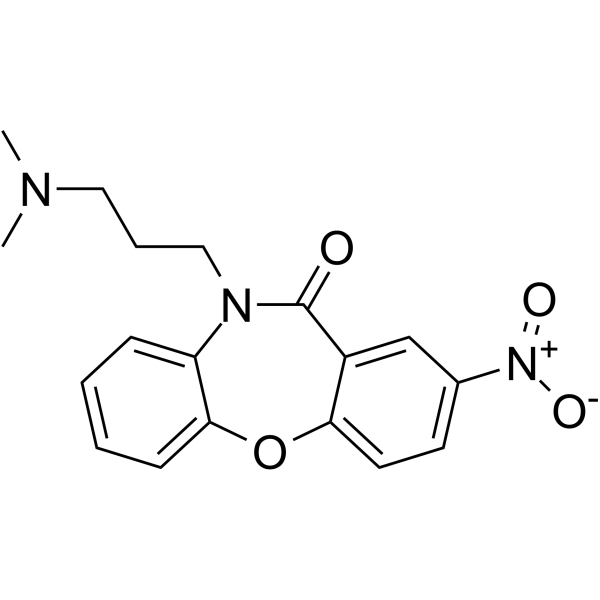
Nitroxazepine hydrochloride is a tricyclic antidepressant (TCA) for the study of depression. Nitroxazepine acts as a serotonin-norepinephrine reuptake inhibitor.
|
-

- HY-101684
-
|
CIBA 2330Go
|
Serotonin Transporter
|
Neurological Disease
|
|
Nitroxazepine is a tricyclic antidepressant (TCA) for the research of depression. Nitroxazepine acts as a serotonin-norepinephrine reuptake inhibitor.
|
-
- HY-106397
-
-

- HY-123322
-
-
- HY-105132
-
-

- HY-106397A
-
-

- HY-17032A
-
|
(rac)-AS1069562 hydrochloride; YM-08054
|
5-HT Receptor
|
Neurological Disease
|
|
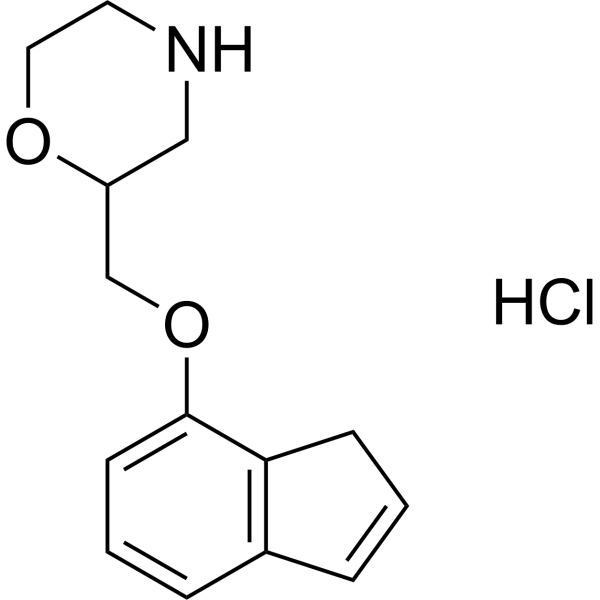
Indeloxazine hydrochloride is a 5-HT receptor and norepinephrine (NE) reuptake inhibitor. Indeloxazine hydrochloride is an antidepressant and cerebral activator .
|
-
- HY-103340
-
-
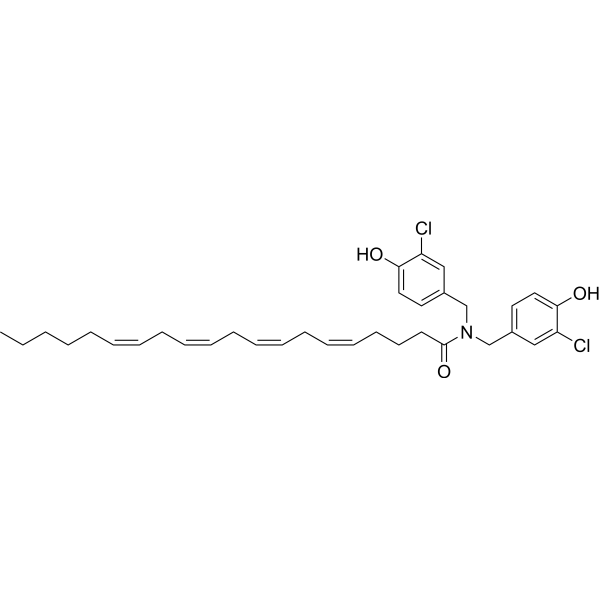
- HY-12850
-
-
- HY-119921
-
-

- HY-145577A
-
|
|
Monoamine Transporter
|
Neurological Disease
|
|
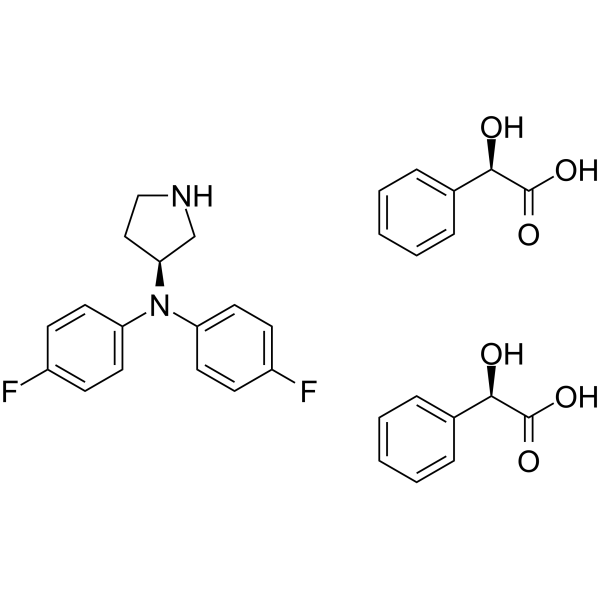
Lafadofensine D-(-)-Mandelic acid is the monoamines reuptake inhibitor. Lafadofensine D-(-)-Mandelic acid has sufficient effects after short-term administration .
|
-
- HY-129305
-
|
AHR-9377
|
Serotonin Transporter
|
Neurological Disease
|
|
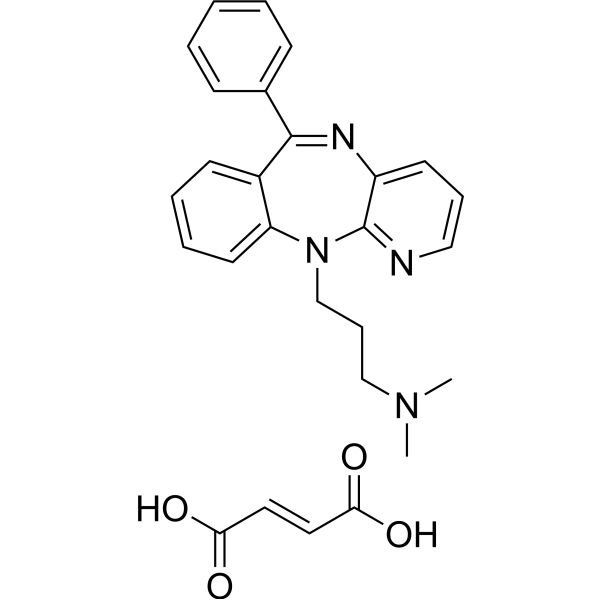
Tampramine fumarate is a potent, selective, noncompetitive NE reuptake inhibitor. Tampramine fumarate has antidepressant activity. Tampramine fumarate can be used in research of depression .
|
-
- HY-158264
-
-

- HY-W013776
-
-

- HY-B0102AR
-
-

- HY-W011762R
-
|
|
Apoptosis
Reference Standards
|
Cancer
|
|
Fluoxetine (hydrochloride) (Standard) is the analytical standard of Fluoxetine (hydrochloride). This product is intended for research and analytical applications. Fluoxetine hydrochloride (LY 110140) is an antidepressant and a selective serotonin reuptake inhibitor.
|
-

- HY-B0103AS1
-
|
DU-23000-d4 maleate
|
Serotonin Transporter
|
Neurological Disease
|
|
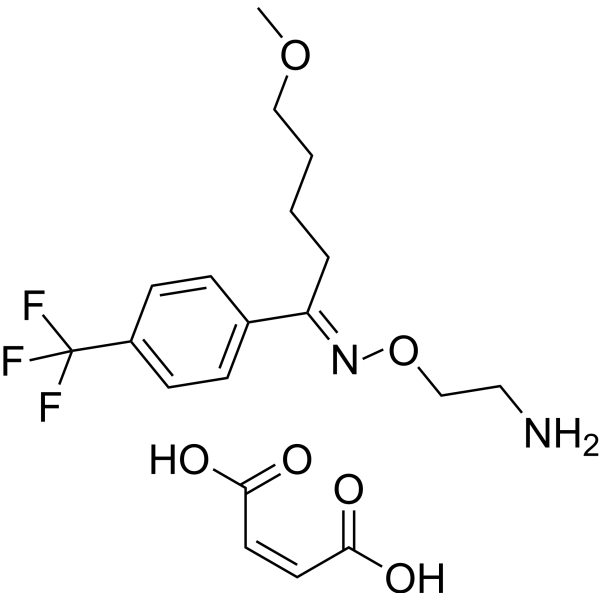
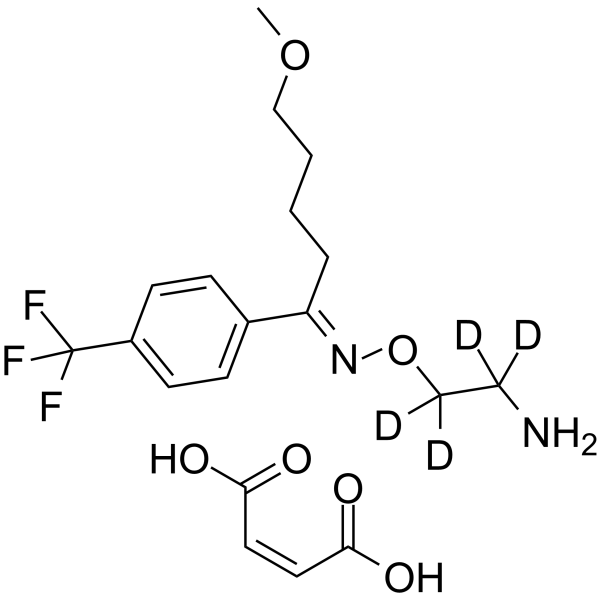
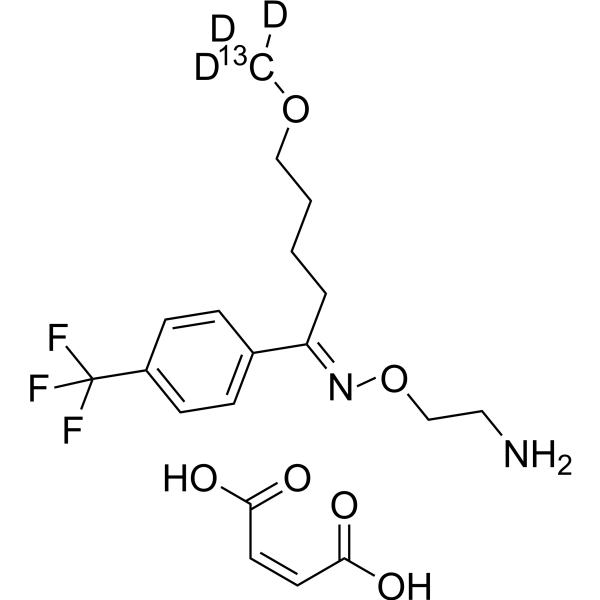
Fluvoxamine-d4 (maleate) is the deuterium labeled Fluvoxamine maleate. Fluvoxamine maleate (DU-23000 maleate) is an antidepressant which functions pharmacologically as a selective serotonin reuptake inhibitor.
|
-
- HY-W725113
-
|
|
Serotonin Transporter
|
Neurological Disease
|
|
N-Nitroso fluoxetine is a derivative of Fluoxetine (HY-B0102). Fluoxetine is a selective serotonin reuptake inhibitor (SSRI) class used for antidepressant research.
|
-

- HY-135556A
-
|
|
Serotonin Transporter
|
Neurological Disease
|
|
Norfluoxetine oxalate is an active metabolite of Fluoxetine (HY-B0102). Fluoxetine is a selective serotonin reuptake inhibitor (SSRI) class used for antidepressant research .
|
-

- HY-167646
-
|
071031B
|
5-HT Receptor
|
Neurological Disease
|
|
Ammuxetine (071031B), a chiral compound, is a 5-HT and norepinephrine reuptake inhibitor (SSRI) with antidepressant activity and can be used in studies related to depression .
|
-

- HY-W297421
-
|
(+)-Tomoxetine hydrochloride; LY-139602
|
Serotonin Transporter
|
Others
|
|
(S)-Tomoxetine hydrochloride (LY-139602) is an isomer of the norepinephrine reuptake inhibitor LY 139603 (HY-17385) with an inhibition constant (Ki) of 16.8 nM for norepinephrine reuptake .
|
-

- HY-B0103R
-
|
DU-23000 (Standard)
|
Reference Standards
Serotonin Transporter
|
Neurological Disease
Cancer
|
|
Fluvoxamine (Standard) is the analytical standard of Fluvoxamine. This product is intended for research and analytical applications. Fluvoxamine (DU-23000) is an antidepressant which functions pharmacologically as a selective serotonin reuptake inhibitor.
|
-

- HY-145577
-
|
|
Monoamine Oxidase
|
Neurological Disease
|
|
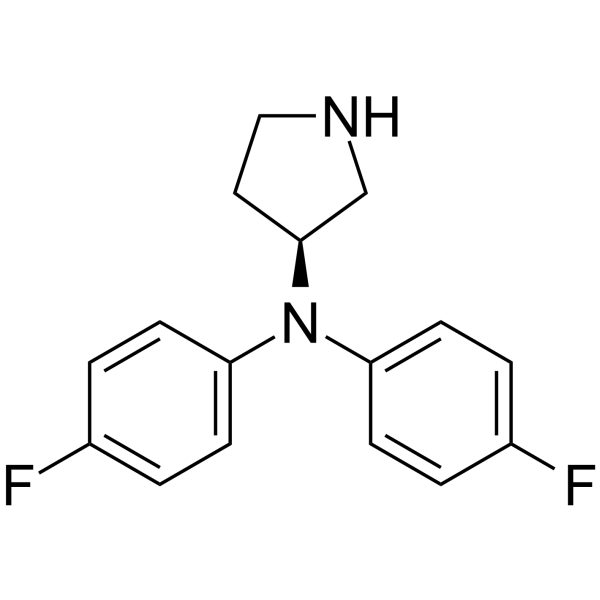
Lafadofensine is the monoamines reuptake inhibitor. Lafadofensine has th sufficient effects after short-term administration (extracted from patent WO2006121218A1, compound 1) .
|
-
- HY-B0103AR
-
|
DU-23000 maleate (Standard)
|
Reference Standards
Serotonin Transporter
|
Neurological Disease
Cancer
|
|
Fluvoxamine (maleate) (Standard) is the analytical standard of Fluvoxamine (maleate). This product is intended for research and analytical applications. Fluvoxamine maleate (DU-23000 maleate) is an antidepressant which functions pharmacologically as a selective serotonin reuptake inhibitor.
|
-

- HY-15413
-
|
LY 2216684
|
Adrenergic Receptor
|
Neurological Disease
|
|
Edivoxetine (LY 2216684) is a potent and selective norepinephrine reuptake inhibitor. Edivoxetine can be used for the study of major depressive disorder (MDD) and attention-deficit/hyperactivity disorder (ADHD) .
|
-

- HY-B0304AS1
-
-
- HY-133171A
-
|
|
Serotonin Transporter
|
Neurological Disease
|
|
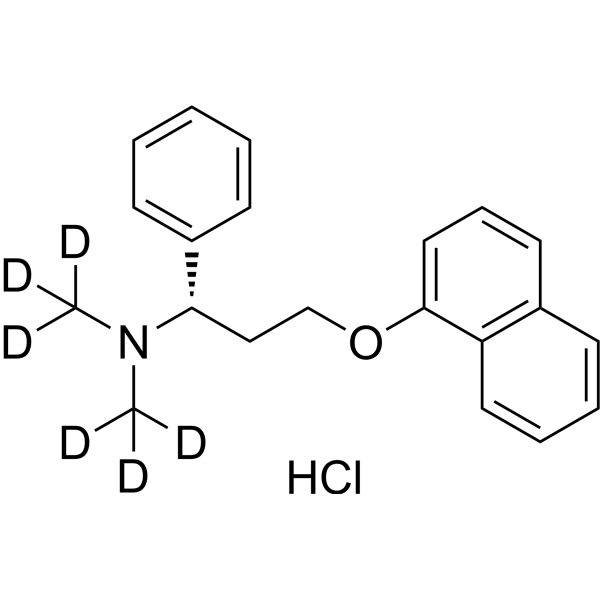
(S)-Norfluoxetine, a S enantiomer of Norfluoxetine (HY-135556), is a selective serotonin reuptake inhibitor. (S)-Norfluoxetine can increase allopregnanolone levels and reduce aggression in socially isolated mice .
|
-

- HY-118406B
-
|
Ponalid hydrobromide; UK 738 hydrobromide
|
mAChR
|
Neurological Disease
|
|
Ethybenztropine hydrobromide (Ponalid hydrobromide) is an anticholinergic drug with antiparkinsonian activity. Ethybenztropine hydrobromide may also act as a dopamine reuptake inhibitor. Ethybenztropine hydrobromide is commonly used to suppress Parkinson's disease .
|
-

- HY-14793
-
|
|
Dopamine Receptor
|
Neurological Disease
|
|
Lensiprazine is a potent dopamine D2 receptor (D2R) antagonist that acts as a serotonin reuptake inhibitor. Lensiprazine can be used to study bipolar disorder and schizophrenia .
|
-

- HY-B0478R
-
|
AF-1161 (Standard)
|
Reference Standards
5-HT Receptor
|
Neurological Disease
|
|
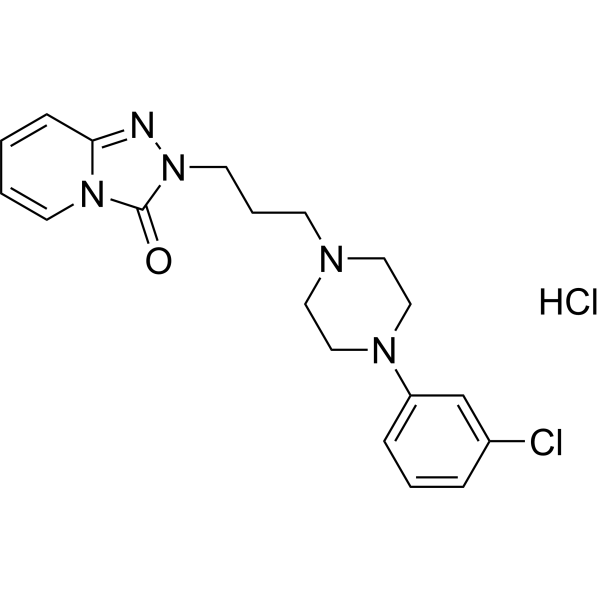
Trazodone (hydrochloride) (Standard) is the analytical standard of Trazodone (hydrochloride). This product is intended for research and analytical applications. Trazodone (hydrochloride) (AF-1161) is an antidepressant belonging to the class of serotonin receptor antagonists and reuptake inhibitors for treatment of anxiety disorders.
|
-
- HY-110034
-
|
BTS 54-505
|
Drug Metabolite
|
Metabolic Disease
|
|
Didesmethylsibutramine (BTS 54-505) hydrochloride is the primary amine metabolite of Sibutramine (antidepressant and anti-obesity agent). Didesmethylsibutramine hydrochloride inhibits NMDA-evoked activity. Didesmethylsibutramine hydrochloride is also a reuptake inhibitor. Didesmethylsibutramine hydrochloride induces thermogenesis .
|
-

- HY-W290532
-
|
(Rac)-LY-210448 hydrochloride
|
Serotonin Transporter
|
Neurological Disease
|
|
(Rac)-Dapoxetine hydrochloride is a racemate of Dapoxetine hydrochloride (HY-B0304A). Dapoxetine (LY-210448) hydrochloride is an orally active and selective serotonin reuptake inhibitor (SSRI). Dapoxetine hydrochloride can be used for the research of premature ejaculation (PE) .
|
-

- HY-10809R
-
|
RG1678 (Standard); RO4917838 (Standard)
|
GlyT
Reference Standards
|
Neurological Disease
|
|
Bitopertin (Standard) is the analytical standard of Bitopertin. This product is intended for research and analytical applications. Bitopertin is a potent, noncompetitive glycine reuptake inhibitor, inhibits glycine uptake at human GlyT1 with a concentration exhibiting IC50 of 25 nM.
|
-

- HY-B0161D
-
|
LY248686 hydrochloride
|
Serotonin Transporter
|
Others
|
|
(R)-Duloxetine (LY248686) Hydrochloride is a napthalenyloxy-substituted amine utilized in binding studies with human serum albumin, and unlike its enantiomer (S)-Duloxetine, it exhibits limited efficacy as a dual serotonin and norepinephrine reuptake inhibitor (SNRI).
|
-

- HY-123498
-
-

- HY-18332
-
-

- HY-B0103AS2
-
-
- HY-B0161AS
-
|
(S)-Duloxetine D3 hydrochloride; LY248686 D3 hydrochloride
|
Serotonin Transporter
|
Neurological Disease
|
|
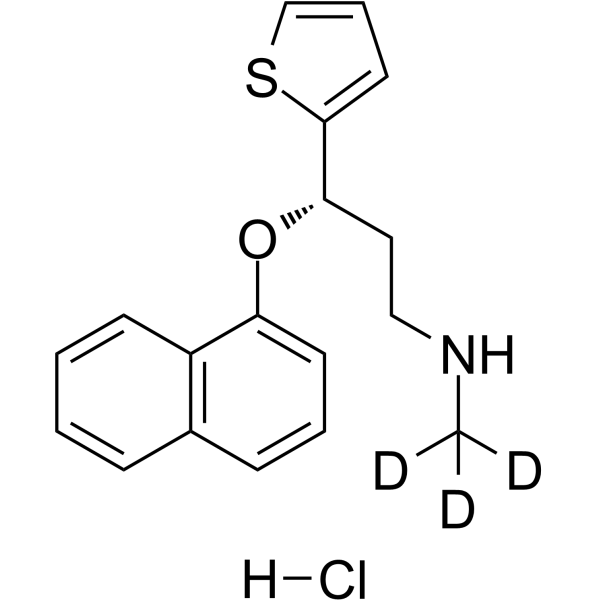
Duloxetine-d3 (hydrochloride) is a deuterium labeled Duloxetine hydrochloride. Duloxetine hydrochloride is a serotonin-norepinephrine reuptake inhibitor (SNRI) with a Ki of 4.6 nM, used for treatment of major depressive disorder and generalized anxiety disorder (GAD) .
|
-
- HY-111124
-
|
BRL29060-d2
|
Isotope-Labeled Compounds
Serotonin Transporter
Adrenergic Receptor
P2X Receptor
Apoptosis
|
Neurological Disease
Cancer
|
|
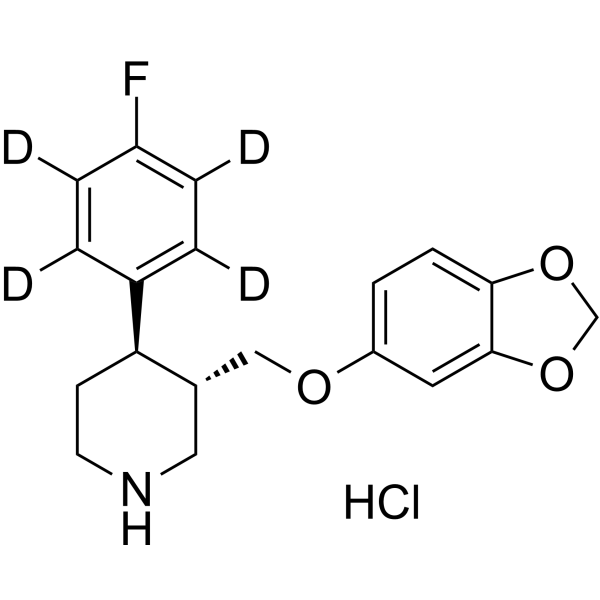
Paroxetine-d2 (CTP 347) is a deuterium labeled Paroxetine (HY-122272). Paroxetine is an oral inhibitor that falls under the category of selective serotonin reuptake inhibitors (SSRIs). Paroxetine is also a very weak norepinephrine (NE) reuptake inhibitor, capable of inducing cell apoptosis and having anti-tumor activity. Paroxetine has antidepressant, anti-anxiety, and pain-relieving effects, and it can help improve conditions like obsessive-compulsive disorder, panic disorder, post-traumatic stress disorder, premenstrual anxiety, and chronic headaches .
|
-

- HY-B0304S
-
|
|
Serotonin Transporter
|
Neurological Disease
|
|
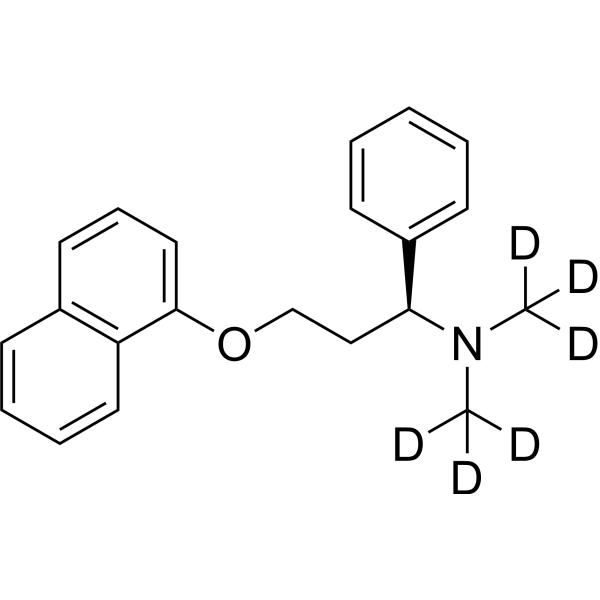
Dapoxetine-d6 is the deuterium labeled Dapoxetine . Dapoxetine (LY-210448) is an orally active and selective serotonin reuptake inhibitor (SSRI). Dapoxetine can be used for the research of premature ejaculation (PE) .
|
-
- HY-14560CR
-
|
FCE20124 mesylate (Standard); PNU155950E mesylate (Standard)
|
Reference Standards
Adrenergic Receptor
|
Neurological Disease
|
|
Reboxetine (mesylate) (Standard) is the analytical standard of Reboxetine (mesylate). This product is intended for research and analytical applications. Reboxetine mesylate (FCE20124 mesylate) is a potent, selective, and specific noradrenaline reuptake inhibitor (NARI) for the research of depression. Reboxetine mesylate inhibits the uptake of norepinephrine, with a Ki of 8 nM .
|
-

- HY-B0602D
-
|
|
Drug Metabolite
|
Neurological Disease
|
|
(S)-(+)-O-Desmethyl Venlafaxine is a S-enantiomer of O-Desmethyl Venlafaxine. O-Desmethyl Venlafaxine is an active metabolite of Venlafaxine . Venlafaxine (HY-B0196) is an antidepressant of the serotonin-norepinephrine reuptake inhibitor (SNRI) class .
|
-

- HY-B0161ES
-
|
(Rac)-Duloxetine-d3 hydrochloride
|
Isotope-Labeled Compounds
Serotonin Transporter
|
Neurological Disease
|
|
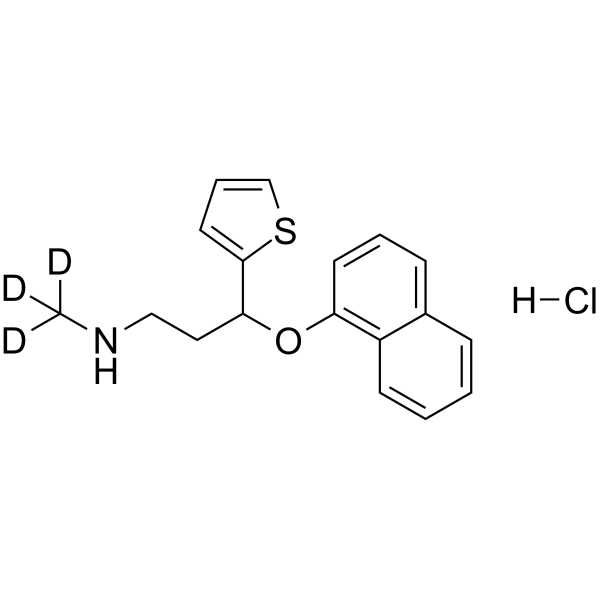
(±)-Duloxetine-d3 (hydrochloride) is deuterium labeled (±)-Duloxetine (hydrochloride). (±)-Duloxetine ((Rac)-Duloxetine) hydrochloride is the racemate of Duloxetine hydrochloride. Duloxetine hydrochloride, a serotonin-norepinephrine reuptake inhibitor, can be used for diabetic neuropathic pain and fibromyalgia as well as major depressive disorder research .
|
-
- HY-B0492AR
-
|
BRL29060 hydrochloride hemihydrate (Standard); BRL29060A hemihydrate (Standard)
|
Reference Standards
Autophagy
Serotonin Transporter
G Protein-coupled Receptor Kinase (GRK)
|
Neurological Disease
|
|
Paroxetine (hydrochloride hemihydrate) (Standard) is the analytical standard of Paroxetine (hydrochloride hemihydrate). This product is intended for research and analytical applications. Paroxetine hydrochloride hemihydrate is a potent selective serotonin-reuptake inhibitor, commonly prescribed as an antidepressant and has GRK2 inhibitory ability with IC50 of 14?μM.
|
-

- HY-162585
-
|
|
5-HT Receptor
|
Neurological Disease
|
|
5-HT1AR agonist 1 (Compound A3) emerges as a relatively balanced multi-target activity profile, including 5-HT1AR agonist with an EC50 value of 34 nM, SERT reuptake ihibitor (IC50 =12 nM), NET reuptake inhibitor (IC50 =78 nM) and DAT reuptake inhibitor (IC50 =135 nM). 5-HT1AR agonist 1 performs significant antidepressant effects and exhibits excellent bioavailability and low clearance in mice, which is promising for research in the field of antidepressant drugs .
|
-

- HY-122272S
-
|
BRL29060-d4
|
Isotope-Labeled Compounds
Serotonin Transporter
Adrenergic Receptor
Apoptosis
P2X Receptor
|
Neurological Disease
Cancer
|
|
Paroxetine-d4 (BRL29060-d4) is deuterium labeled Paroxetine. Paroxetine is an oral inhibitor that falls under the category of selective serotonin reuptake inhibitors (SSRIs). Paroxetine is also a very weak norepinephrine (NE) reuptake inhibitor, capable of inducing cell apoptosis and having anti-tumor activity. Paroxetine has antidepressant, anti-anxiety, and pain-relieving effects, and it can help improve conditions like obsessive-compulsive disorder, panic disorder, post-traumatic stress disorder, premenstrual anxiety, and chronic headaches .
|
-

- HY-B0304R
-
|
(S)-(+)-Dapoxetine (Standard); LY-210448 (Standard)
|
Reference Standards
Serotonin Transporter
|
Neurological Disease
|
|
Dapoxetine (Standard) is the analytical standard of Dapoxetine. This product is intended for research and analytical applications. Dapoxetine (LY-210448) is an orally active and selective serotonin reuptake inhibitor (SSRI). Dapoxetine can be used for the research of premature ejaculation (PE) .
|
-

- HY-B0304AR
-
|
LY-210448 hydrochloride (Standard)
|
Reference Standards
Serotonin Transporter
|
Neurological Disease
|
|
Dapoxetine (hydrochloride) (Standard) is the analytical standard of Dapoxetine (hydrochloride). This product is intended for research and analytical applications. Dapoxetine (LY-210448) hydrochloride is an orally active and selective serotonin reuptake inhibitor (SSRI). Dapoxetine hydrochloride can be used for the research of premature ejaculation (PE) .
|
-

- HY-N9628
-
|
|
Adrenergic Receptor
|
Neurological Disease
|
|
Polygalatenoside A is a noradrenaline reuptake inhibitor with an IC50 of 30.0 μM against human noradrenaline transporter. Polygalatenoside A can be used in the research of mental disorders .
|
-

- HY-181828
-
|
|
iGluR
Dopamine Receptor
|
Neurological Disease
|
|
SePP is a blood-brain barrier-permeable NMDAR antagonist and dopamine/norepinephrine reuptake inhibitor, with a Ki of 28.7 nM for rat NMDAR. SePP exerts anticonvulsant effects. SePP can be used in research related to fragile X syndrome .
|
-

- HY-B0102SA
-
-

- HY-B0444
-
|
|
Autophagy
Apoptosis
ERK
|
Neurological Disease
Cancer
|
|
Maprotiline hydrochloride is a highly selective noradrenergic reuptake inhibitor that has strong antidepressant, antitumor and neuropathic pain-relieving effects with oral activity. Maprotiline hydrochloride induces cancer cell apoptosis by targeting the ERK signaling pathway and CRABP1 .
|
-
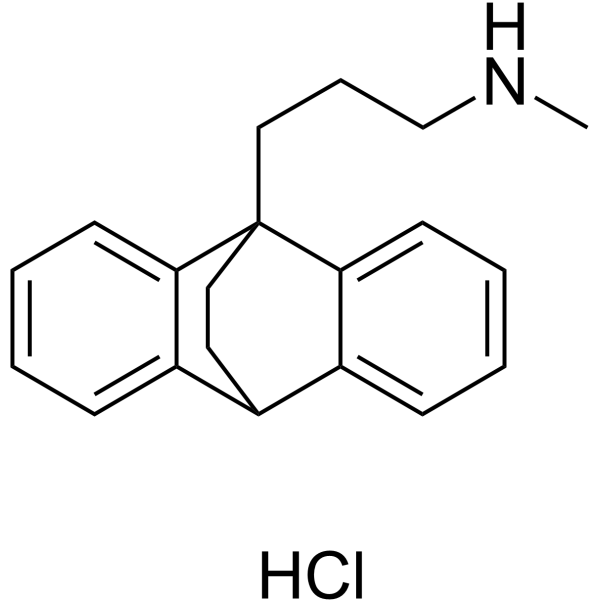
- HY-B0161S
-
-
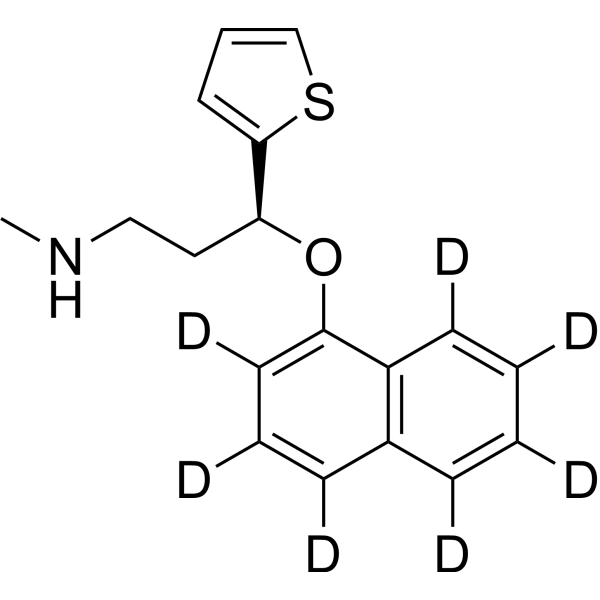
- HY-B0102S
-
-

- HY-20696R
-
|
Tryptoline (Standard)
|
Reference Standards
5-HT Receptor
|
Metabolic Disease
|
|
Tetrahydro-β-carboline (Standard) is the analytical standard of Tetrahydro-β-carboline. This product is intended for research and analytical applications. Tetrahydro-β-carboline (Tryptoline) is a metabolite of tryptamine, also is a competitive serotonin reuptake inhibitor with an Ki value of 6.1 μM .
|
-

- HY-W020041
-
|
|
Autophagy
|
Neurological Disease
Cancer
|
|
CP 53631 is an autophagy inhibitor (Autophagy) with anticancer activity. Additionally, CP 53631 can be used as an internal standard for Sertraline (HY-B0176A) in research related to selective serotonin reuptake inhibitors (SSRIs) in the field of antidepressants .
|
-

- HY-B2074
-
|
|
SARS-CoV
|
Neurological Disease
|
|
Demexiptiline is a tricyclic antidepressant. Demexiptiline is a norepinephrine reuptake inhibitor. Demexiptiline has a binding affinity with SARS-CoV-2 3CL protease of 8.14 kcal/mol. Demexiptiline can also be studied in research on melancholic states .
|
-

- HY-175873
-
|
|
mAChR
Adrenergic Receptor
|
Inflammation/Immunology
|
|
AD109 is a combination of the selective norepinephrine reuptake inhibitor Atomoxetine (HY-107370) and the antimuscarinic agent Aroxybutynin (HY-B0267C). AD109 shows orally active significantly and reduces the apnea-hypopnea index .
|
-

- HY-B0161AR
-
|
(S)-Duloxetine hydrochloride (Standard); LY-248686 hydrochloride (Standard)
|
Reference Standards
Serotonin Transporter
|
Neurological Disease
Cancer
|
|
Duloxetine (hydrochloride) (Standard) is the analytical standard of Duloxetine (hydrochloride). This product is intended for research and analytical applications. Duloxetine hydrochloride ((S)-Duloxetine hydrochloride) is a serotonin-norepinephrine reuptake inhibitor (SNRI) with a Ki of 4.6 nM, used for treatment of major depressive disorder and generalized anxiety disorder (GAD) .
|
-
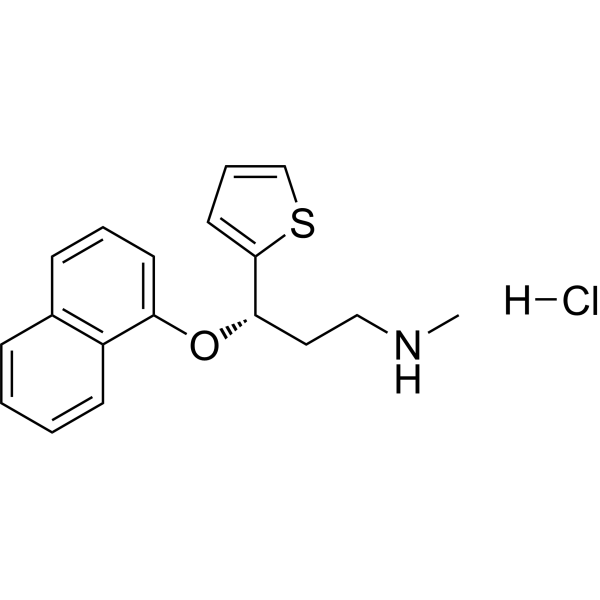
- HY-131254
-
|
|
Drug Metabolite
|
Neurological Disease
|
|
(S)-O-Desmethyl Venlafaxine N-Oxide is a N-oxyde of (S)-O-Desmethyl Venlafaxine. O-Desmethyl Venlafaxine is an active metabolite of Venlafaxine . Venlafaxine (HY-B0196) is an antidepressant of the serotonin-norepinephrine reuptake inhibitor (SNRI) class .
|
-
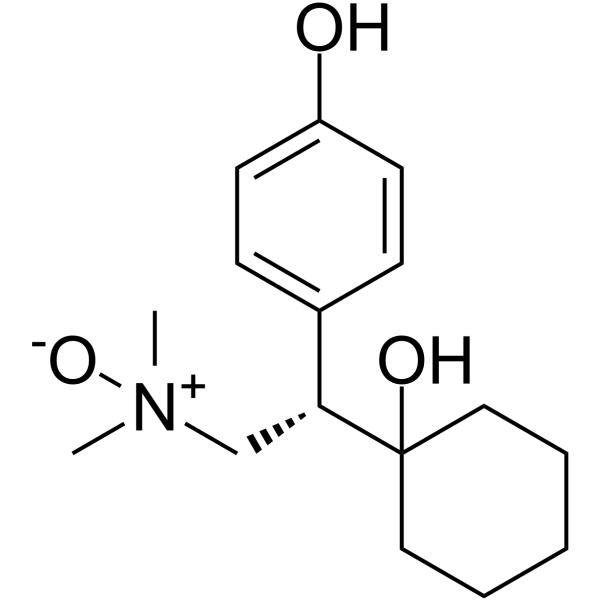
- HY-B0602B
-
|
O-Desmethylvenlafaxine fumarate
|
5-HT Receptor
Adrenergic Receptor
Drug Metabolite
|
Neurological Disease
|
|
Desvenlafaxine (O-Desmethylvenlafaxine) fumarate is a selective serotonin and norepinephrine reuptake inhibitor. Desvenlafaxine (O-Desmethylvenlafaxine) fumarate is the major metabolite of the antidepressant venlafaxine. Desvenlafaxine (O-Desmethylvenlafaxine) fumarate has the potential for the research of depression and related disorders and diseases (extracted from patent WO2009049354A1) .
|
-

- HY-B0602C
-
|
O-Desmethylvenlafaxine hydrochloride
|
5-HT Receptor
Adrenergic Receptor
Drug Metabolite
|
Neurological Disease
|
|
Desvenlafaxine (O-Desmethylvenlafaxine) hydrochloride is a selective serotonin and norepinephrine reuptake inhibitor. Desvenlafaxine (O-Desmethylvenlafaxine) hydrochloride is the major metabolite of the antidepressant venlafaxine. Desvenlafaxine (O-Desmethylvenlafaxine) hydrochloride has the potential for the research of depression and related disorders and diseases (extracted from patent WO2009049354A1) .
|
-

- HY-B0161S3
-
|
(S)-Duloxetine-d5 oxalate; LY248686-d5 oxalate
|
Isotope-Labeled Compounds
Serotonin Transporter
|
Neurological Disease
Cancer
|
|
Duloxetine-d5 (oxalate) ((S)-Duloxetine-d5 (oxalate)) is deuterium labeled Duloxetine. Duloxetine is a serotonin-norepinephrine reuptake inhibitor with a Ki of 4.6 nM, used for treatment of major depressive disorder and generalized anxiety disorder (GAD) .
|
-

- HY-B0602S
-
|
|
Isotope-Labeled Compounds
Drug Metabolite
|
Neurological Disease
|
|
(R)-(-)-O-Desmethyl Venlafaxine-d6 is the deuterium labeled (R)-(-)-O-Desmethyl Venlafaxine. O-Desmethyl Venlafaxine is an active metabolite of Venlafaxine . Venlafaxine (HY-B0196) is an antidepressant of the serotonin-norepinephrine reuptake inhibitor (SNRI) class .
|
-

- HY-B0602S1
-
|
|
Drug Metabolite
|
Neurological Disease
|
|
(S)-(+)-O-Desmethyl Venlafaxine-d6 is the deuterium labeled (S)-(+)-O-Desmethyl Venlafaxine. O-Desmethyl Venlafaxine is an active metabolite of Venlafaxine . Venlafaxine (HY-B0196) is an antidepressant of the serotonin-norepinephrine reuptake inhibitor (SNRI) class .
|
-

- HY-B0492S1
-
-
- HY-122272S2
-
-

- HY-100616
-
|
cis-1-Aminocyclobutane-1,3-dicarboxylic acid
|
Sodium Channel
|
Neurological Disease
|
|
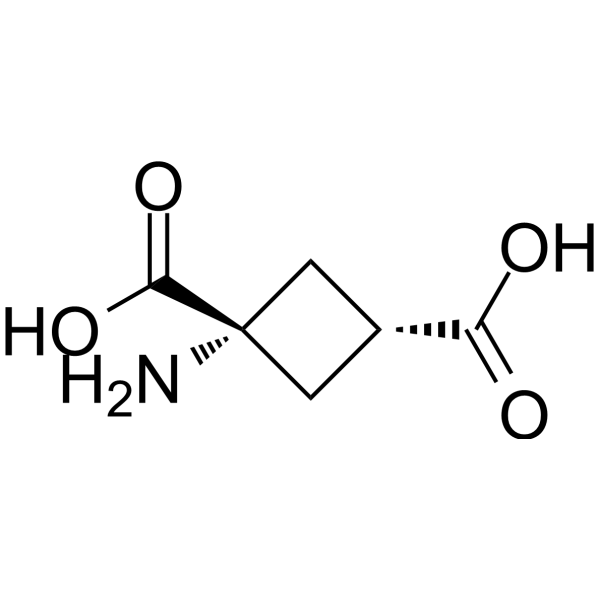
cis-ACBD is a potent and selective inhibitor of the high-affinity, Na +-dependent plasma membrane glutamate transporter. cis-ACBD is a glutamate reuptake inhibitor. cis-ACBD also acts as linear competitive inhibitor of the uptake of D-[3H]aspartate .
|
-
- HY-B0492R
-
-

- HY-B0444R
-
|
|
Reference Standards
Autophagy
Apoptosis
ERK
|
Neurological Disease
Cancer
|
|
Maprotiline (hydrochloride) (Standard) is the analytical standard of Maprotiline (hydrochloride). Maprotiline (hydrochloride) (Standard) is a highly selective noradrenergic reuptake inhibitor that has strong antidepressant, antitumor and neuropathic pain-relieving effects. Maprotiline (hydrochloride) (Standard) induces cancer cell apoptosis by targeting the ERK signaling pathway and CRABP1 .
|
-
- HY-10427
-
|
NRI-022
|
Histone Methyltransferase
|
Neurological Disease
|
|
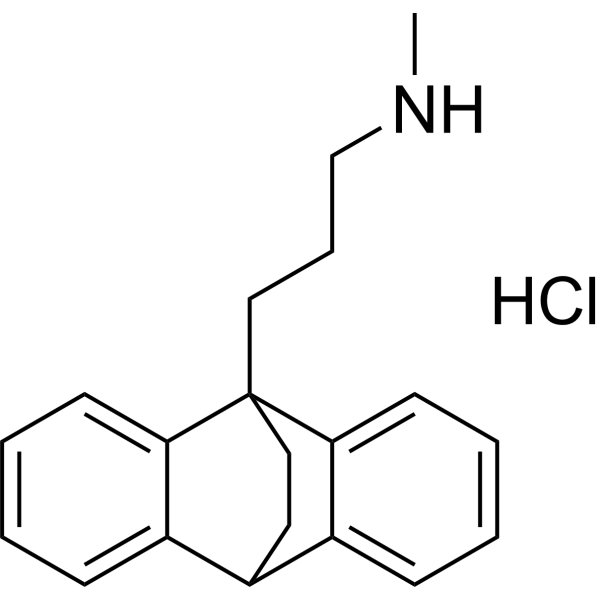
WAY-260022 is a selective norepinephrine reuptake inhibitor with potent inhibitory activity on norepinephrine reuptake. WAY-260022 exhibits excellent selectivity in inhibiting serotonin and dopamine transporters. WAY-260022 also showed oral efficacy in a rat model of thermoregulatory dysfunction .
|
-

- HY-W735205
-
|
|
Serotonin Transporter
|
Neurological Disease
|
|
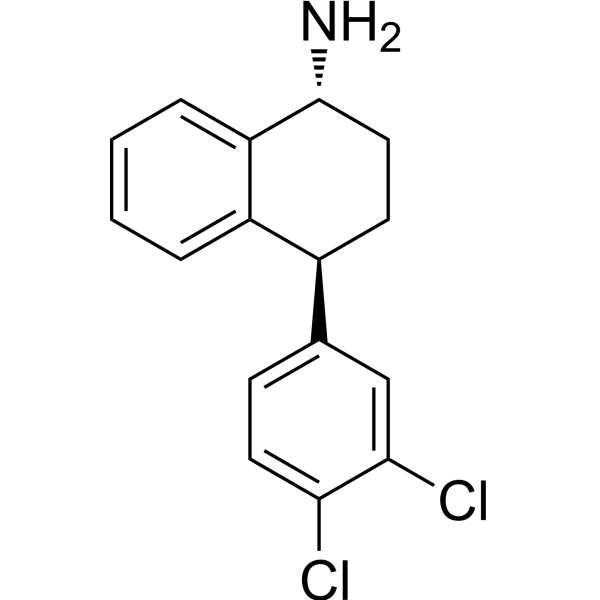
(1R,4R)-4-(3,4-Dichlorophenyl)-1,2,3,4-tetrahydronaphthalen-1-amine hydrochloride is a metabolite of the selective serotonin reuptake inhibitor (SSRI) Sertraline (HY-B0176A).
|
-

- HY-121203S4
-
|
|
Serotonin Transporter
Isotope-Labeled Compounds
|
Neurological Disease
Cancer
|
|
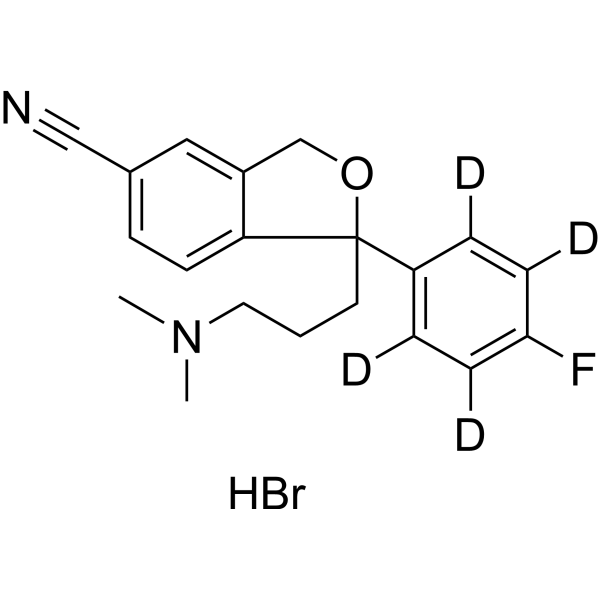
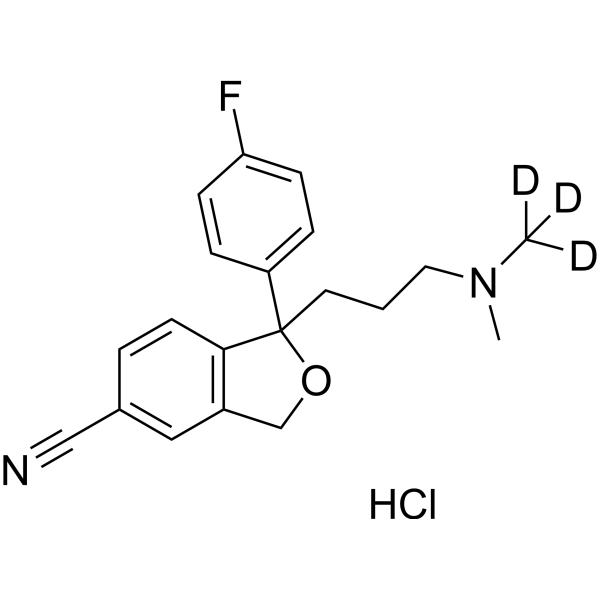
Citalopram-d3 hydrochloride is deuterated labeled Citalopram (HY-121203). Citalopram is a racemate mixture of the active S(+)-enantiomer (Escitalopram; HY-14258) and R(-)-enantiomer. Citalopram is an orally active selective serotonin reuptake inhibitor (SSRI). Citalopram is an antidepressant and enhances serotoninergic neurotransmission .
|
-
- HY-108252
-
|
|
5-HT Receptor
|
Neurological Disease
|
|
SB-649915 is a potent 5-HT1A/1B autoreceptor antagonist, with the pKi values of 8.6, 8.0, respectively and 5-HT reuptake inhibitor in native tissue systems and palys an important role in antidepressant research .
|
-

- HY-14560A
-
|
(R,R)-FCE20124 mesylate; (R,R)-PNU155950E mesylate; (R,R)-(-)-Reboxetine mesylate
|
Adrenergic Receptor
mAChR
|
Neurological Disease
|
|
(R,R)-Reboxetine mesylate is an antidepressant agent with great bioavailability. (R,R)-Reboxetine is the enantiomer of Reboxetine, which is a selective noradrenaline reuptake inhibitor. Reboxetine consists of (R,R) and (S,S) enantiomer, has low affinity for alpha-adrenergic and muscarinic receptors and low toxicity in animals .
|
-
- HY-N17247
-
|
(-)-Mesembranol
|
Phosphodiesterase (PDE)
|
Neurological Disease
|
|
Mesembranol ((-)-Mesembranol) is a mesembrine-type alkaloid and serotonin reuptake inhibitor. Mesembranol can be found in Sceletium tortuosum and exhibits phosphodiesterase 4 (PDE4) inhibition. Mesembranol contributes to the psychoactive properties of Sceletium tortuosum. Mesembranol can be used for the research of central nervous system-related conditions .
|
-

- HY-121203R
-
|
|
Reference Standards
Serotonin Transporter
|
Neurological Disease
Cancer
|
|
Citalopram (Standard) is the analytical standard of Citalopram. This product is intended for research and analytical applications. Citalopram is a racemate mixture of the active S(+)-enantiomer (Escitalopram; HY-14258) and R(-)-enantiomer. Citalopram is an orally active selective serotonin reuptake inhibitor (SSRI). Citalopram is an antidepressant and enhances serotoninergic neurotransmission .
|
-

- HY-106407
-
|
Org 4428; ADL 6906
|
Adrenergic Receptor
5-HT Receptor
|
Neurological Disease
|
|
Beloxepin (Org 4428) is an orally active synaptosomal noradrenalin reuptake inhibitor and a 5-HT2 receptor antagonist. Beloxepin shows about 100-fold less affine for other monoamine carriers. Beloxepin has antidepressant and pain-relieving effects .
|
-

- HY-13217R
-
|
GBR-12909 dihydrochloride (Standard); I893 dihydrochloride (Standard)
|
Dopamine Transporter
Reference Standards
|
Neurological Disease
|
|
Vanoxerine (dihydrochloride) (Standard) is the analytical standard of Vanoxerine (dihydrochloride). This product is intended for research and analytical applications. Vanoxerine dihydrochloride (GBR-12909 dihydrochloride) is a competitive, potent, and highly selective dopamine reuptake inhibitor (Ki=1 nM). Vanoxerine dihydrochloride (GBR-12909 dihydrochloride) binds to the target site on the dopamine transporter (DAT) .
|
-

- HY-110034R
-
|
BTS 54-505 (Standard)
|
Drug Metabolite
Reference Standards
|
Metabolic Disease
|
|
Didesmethylsibutramine (hydrochloride) (Standard) is the analytical standard of Didesmethylsibutramine (hydrochloride). This product is intended for research and analytical applications. Didesmethylsibutramine (BTS 54-505) hydrochloride is the primary amine metabolite of Sibutramine (antidepressant and anti-obesity agent). Didesmethylsibutramine hydrochloride inhibits NMDA-evoked activity. Didesmethylsibutramine hydrochloride is also a reuptake inhibitor. Didesmethylsibutramine hydrochloride induces thermogenesis .
|
-

- HY-170021
-
-

- HY-18332C
-
|
|
Serotonin Transporter
Dopamine Transporter
|
Neurological Disease
|
|
DOV-216,303 (Free Base) is a potent triple serotonin, norepinephrine, and dopamine reuptake inhibitor, with IC50 values of 14 nM, 20 nM and 78 nM for hSERT, hNET and hDAT, respectively. Has antidepressant-like effects and increases monoamine release in the prefrontal cortex of olfactory bulbectomized (OBX) rats .
|
-
- HY-B0161AS1
-
|
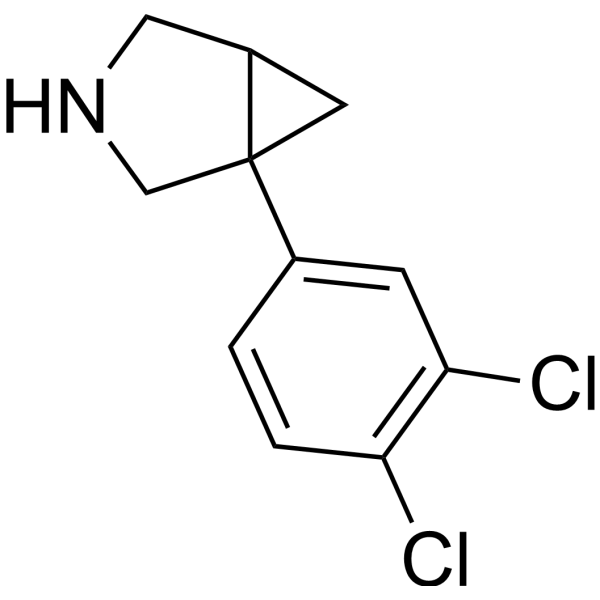
(S)-Duloxetine-d7 hydrochloride; LY248686-d7 hydrochloride
|
Isotope-Labeled Compounds
Serotonin Transporter
|
Neurological Disease
Cancer
|
|
Duloxetine-d7 hydrochloride ((S)-Duloxetine-d7 hydrochloride) is the deuterium labeled Duloxetine hydrochloride (HY-B0161A). Duloxetine hydrochloride ((S)-Duloxetine hydrochloride) is a serotonin-norepinephrine reuptake inhibitor (SNRI) with a Ki of 4.6 nM, used for treatment of major depressive disorder and generalized anxiety disorder (GAD) .
|
-

- HY-17385
-
|
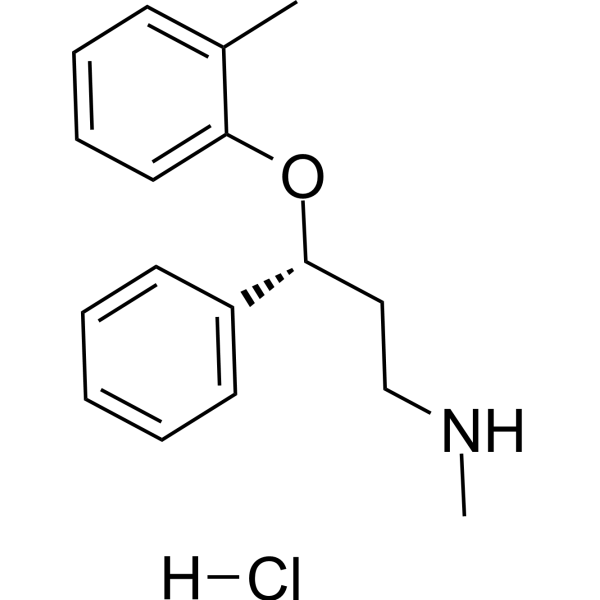
Tomoxetine hydrochloride; (R)-Tomoxetine hydrochloride; LY 139603
|
Adrenergic Receptor
Serotonin Transporter
Sodium Channel
|
Neurological Disease
Cancer
|
|
Atomoxetine (Tomoxetine) hydrochloride is a selective noradrenaline reuptake inhibitor with Ki values of 5 nM, 77 nM and 1451 nM for norepinephrine (NE), serotonin (5-HT) and dopamine (DA) transporters, respectively. Atomoxetine hydrochloride is a potent Na + channels (VGSCs) blocker. Atomoxetine hydrochloride can be used for attention-deficit hyperactivity disorder (ADHD) research .
|
-
- HY-B1287
-
|
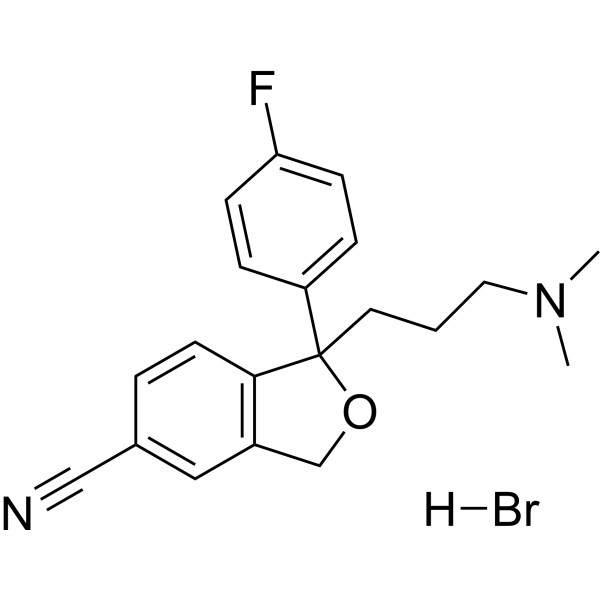
(±)-Citalopram hydrobromide; Lu 10-171
|
Serotonin Transporter
Autophagy
|
Neurological Disease
Cancer
|
|
Citalopram hydrobromide is a selective serotonin reuptake inhibitor (SSRI), with blood-brain barrier permeability. Citalopram hydrobromide inhibits 5-HT uptake into synaptosomes with an IC50 of 1.8 nM. Citalopram hydrobromideinhibits the 5-HT uptake in rabbit blood platelets with an IC50 of 14 nM. Antidepressant effect .
|
-
- HY-14262
-
|
EMD 68843; SB659746A
|
5-HT Receptor
Serotonin Transporter
|
Neurological Disease
|
|
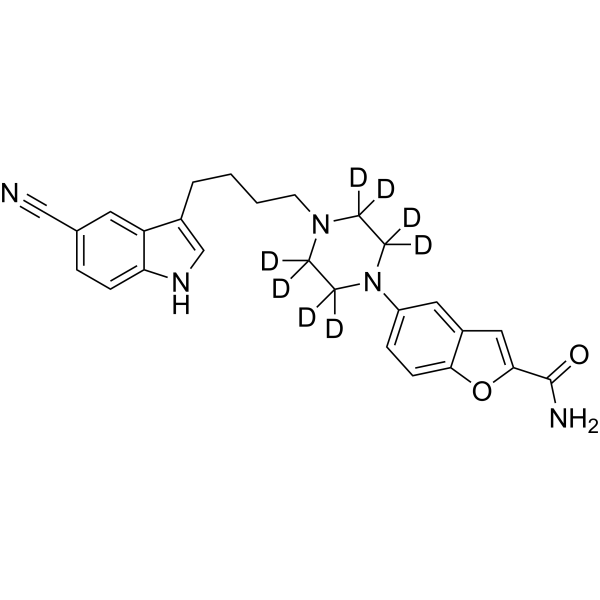
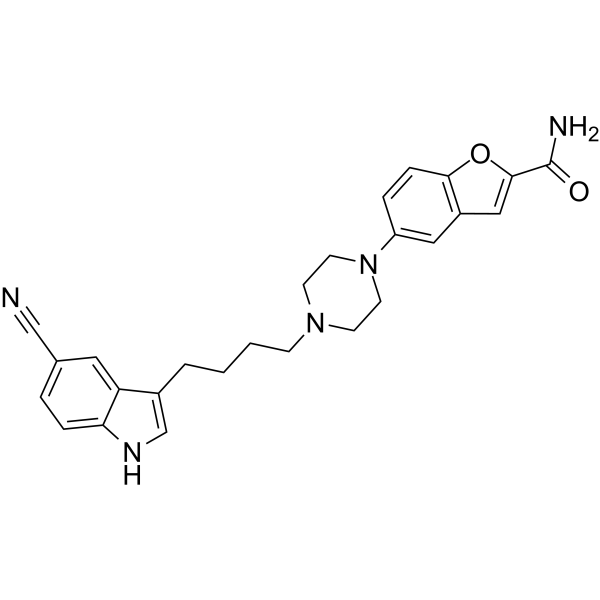
Vilazodone (EMD 68843; SB 659746A) is a potent, selective and orally active serotonin reuptake inhibitor (SSRI) and partial 5-HT1A receptor agonist. Vilazodone exhibits antidepressant efficacy in vivo can be used for the research of major depressive disorder (MDD) and affective disorders .
|
-
- HY-148718R
-
|
|
5-HT Receptor
Reference Standards
|
Neurological Disease
|
|
4-Chloro Trazodone (hydrochloride) (Standard) is the analytical standard of 4-Chloro Trazodone (hydrochloride). This product is intended for research and analytical applications. 4-Chloro Trazodone hydrochloride is an isomer of Trazodone hydrochloride (HY-B0478). Trazodone hydrochloride is an antidepressant belonging to the class of serotonin receptor antagonists and reuptake inhibitors for treatment of anxiety disorders .
|
-

- HY-116211
-
|
WIN-25978
|
Biochemical Assay Reagents
|
Neurological Disease
|
|
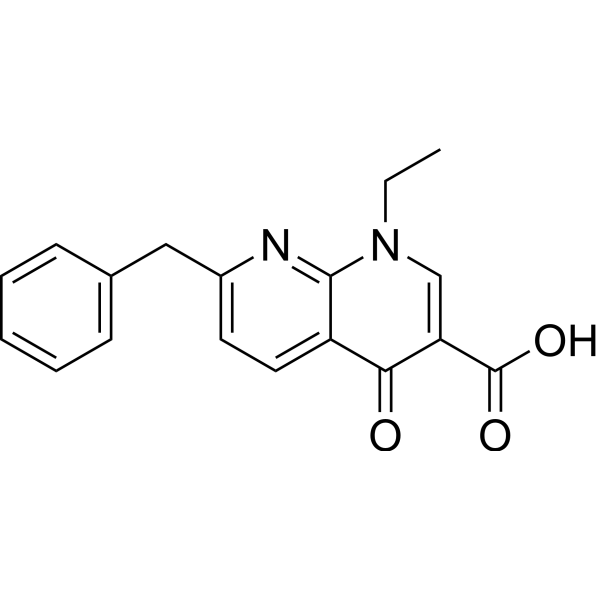
Amfonelic acid (WIN-25978) is a highly selective dopamine reuptake inhibitor. Amfonelic acid interferes with the in vitro neuronal uptake of norepinephrine in the iris of rats, but does not alter the concentrations of norepinephrine or dopamine in the whole mouse brain. Amfonelic acid can be used as a pharmacological tool to study the brain reward system, dopamine pathway and dopamine transporter .
|
-
- HY-120810
-
|
DDP-225 hydrate hydrochloride
|
5-HT Receptor
|
Neurological Disease
|
|
MCI-225 (DDP-225) hydrate hydrochloride is a selective and orally active noradrenaline (NA) reuptake inhibitor with 5-HT3 receptor antagonism. MCI-225 hydrate hydrochloride has antidepressant-like and anxiolytic-like properties. MCI-225 hydrate hydrochloride can be used for the study of anxiety disorder .
|
-

- HY-123044
-
-

- HY-14258
-
|
(S)-Citalopram; (S)-(+)-Citalopram
|
Serotonin Transporter
|
Neurological Disease
|
|
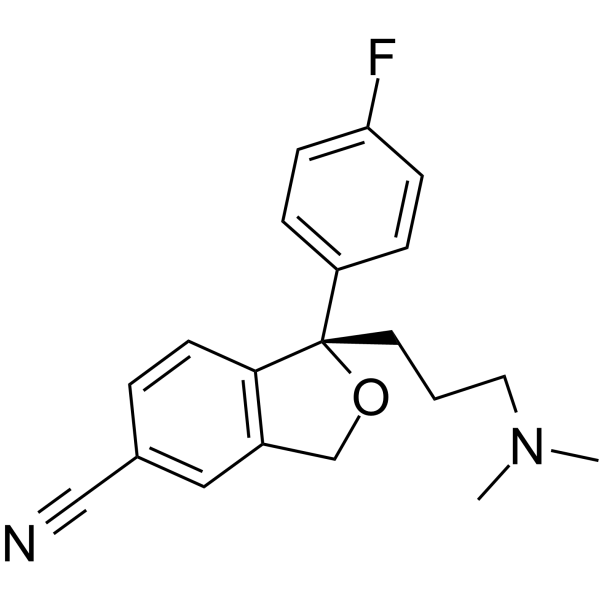
Escitalopram ((S)-Citalopram), the S-enantiomer of racemic Citalopram, is a selective serotonin reuptake inhibitor (SSRI) with a Ki of 0.89 nM. Escitalopram has ∼30 fold higher binding affinity than its R(-)-enantiomer and shows selectivity over both dopamine transporter (DAT) and norepinephrine transporter (NET). Escitalopram is an antidepressant for the research of major depression .
|
-
- HY-178249
-
|
|
Adrenergic Receptor
Dopamine Receptor
|
Neurological Disease
|
|
(1R,2S)-Dihydrobupropion is a norepinephrine-dopamine reuptake inhibitor. (1R,2S)-Dihydrobupropion is one of the active metabolites of Bupropion (HY-B0403). (1R,2S)-Dihydrobupropion can be used for the researches of neurological disease and inflammation .
|
-

- HY-B0478
-
|
AF-1161
|
5-HT Receptor
Serotonin Transporter
Histamine Receptor
Adrenergic Receptor
|
Neurological Disease
|
|
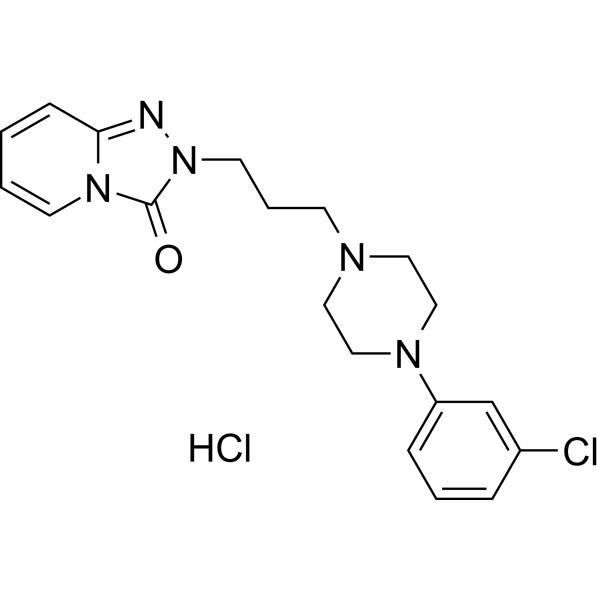
Trazodone hydrochloride (AF-1161) is a triazolopyridine derivative that belongs to the class of serotonin receptor antagonists and reuptake inhibitors (SARIs). Trazodone hydrochloride has anti-depressant and anti-insomnious activity. Trazodone hydrochloride exerts antagonistic properties against a1- and a2-adrenergic receptors and histamine H1 receptors, with minimal anticholinergic effects .
|
-
- HY-12242
-
|
|
Dopamine Transporter
|
Neurological Disease
|
|
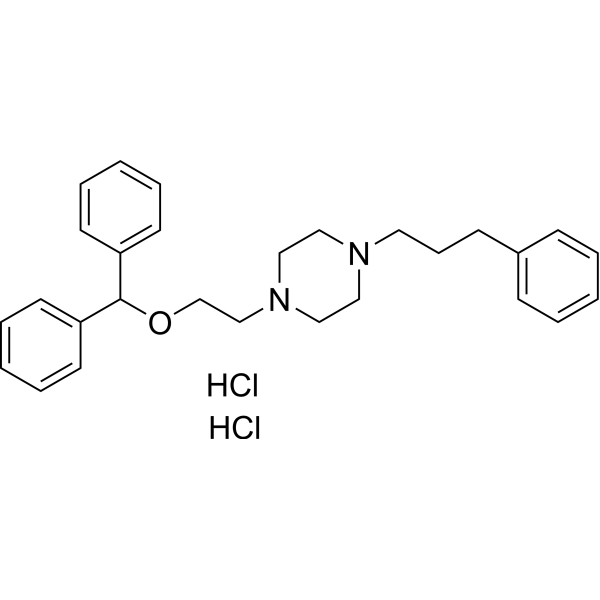
GBR 12935 dihydrochloride is a potent, and selective dopamine reuptake inhibitor, with the binding constant (Kd) of 1.08 nM in COS-7 cells. GBR 12935 dihydrochloride stimulates the locomotion activity in different mice strains but fails to induce stereotypy. Thus, GBR 12935 dihydrochloride also prevents the d-Fenfluramine-induced head-twitch response in mice .
|
-
- HY-124779A
-
|
(S)-GEA 654 hydrochloride; (S)-A03 hydrochloride
|
Serotonin Transporter
|
Neurological Disease
|
|
(S)-Alaproclate ((S)-A03) hydrochloride is a potent selective serotonin reuptake inhibitor (SSRI), which is used as an antidepressant agent. (S)-Alaproclate (hydrochloride) also produces a potent block of N-methyl-d-aspartate (NMDA) receptor currents in hippocampal neurons (IC50=1.1 μM) with a potent blocker of K + currents .
|
-

- HY-12242A
-
|
|
Dopamine Transporter
|
Neurological Disease
|
|
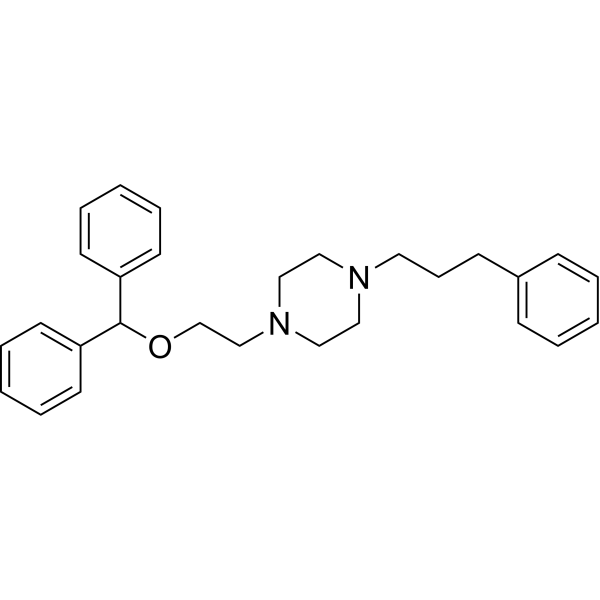
GBR 12935 is a potent, and selective dopamine reuptake inhibitor, with the binding constant (Kd) of 1.08 nM in COS-7 cells. GBR 12935 stimulates the locomotion activity in different mice strains but fails to induce stereotypy. Thus, GBR 12935 also prevents the d-Fenfluramine-induced head-twitch response in mice .
|
-
- HY-105699
-
|
|
Adrenergic Receptor
5-HT Receptor
|
Neurological Disease
|
|
Napamezole is an orally active α-2 adrenergic receptor antagonist and serotonin (5-HT Receptor) reuptake inhibitor, with Ki values of 28 nM and 93 nM for rat α-2 and α-1 adrenergic receptors, respectively. Napamezole can be used for the research of depression .
|
-

- HY-12242B
-
|
|
Dopamine Transporter
|
Neurological Disease
|
|
GBR 12935 fumarate is a potent, and selective dopamine reuptake inhibitor, with the binding constant (Kd) of 1.08 nM in COS-7 cells. GBR 12935 fumarate stimulates the locomotion activity in different mice strains but fails to induce stereotypy. Thus, GBR 12935 fumarate also prevents the d-Fenfluramine-induced head-twitch response in mice .
|
-

- HY-W982195
-
|
|
Adrenergic Receptor
5-HT Receptor
|
Neurological Disease
|
|
Napamezole hydrochloride is an orally active α-2 adrenergic receptor antagonist and serotonin (5-HT Receptor) reuptake inhibitor, with Ki values of 28 nM and 93 nM for rat α-2 and α-1 adrenergic receptors, respectively. Napamezole hydrochloride can be used for the research of depression .
|
-

- HY-110289
-
|
|
Serotonin Transporter
5-HT Receptor
|
Neurological Disease
|
|
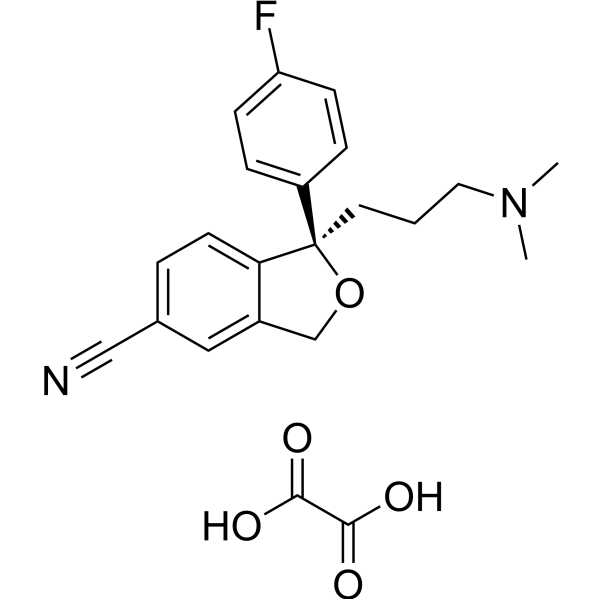
(R)-Citalopram oxalate, a R-(-) enantiomers of Citalopram (HY-121203), is a serotonin reuptake inhibitor. (R)-Citalopram oxalate is at least 20-fold weaker than S-citalopram (HY-14258) as inhibitor of the 5-HT transporter (SERT). (R)-Citalopram oxalate can be used for research of depression .
|
-
- HY-101755
-
-
- HY-14258A
-
|
(S)-Citalopram oxalate; (S)-(+)-Citalopram oxalate
|
Serotonin Transporter
|
Neurological Disease
Cancer
|
|
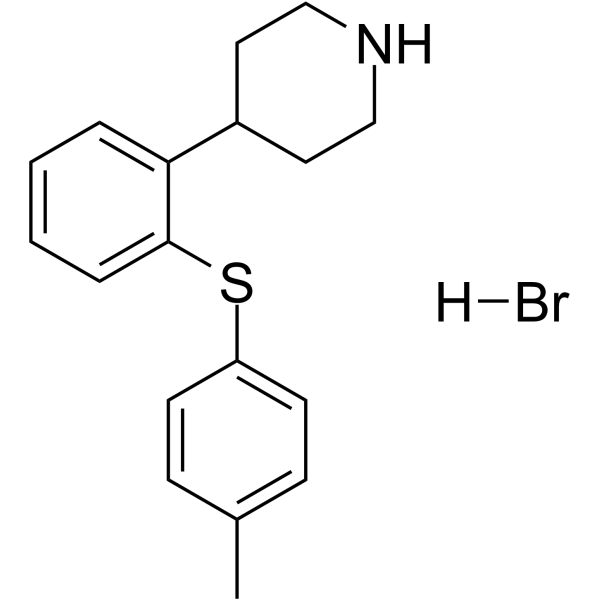
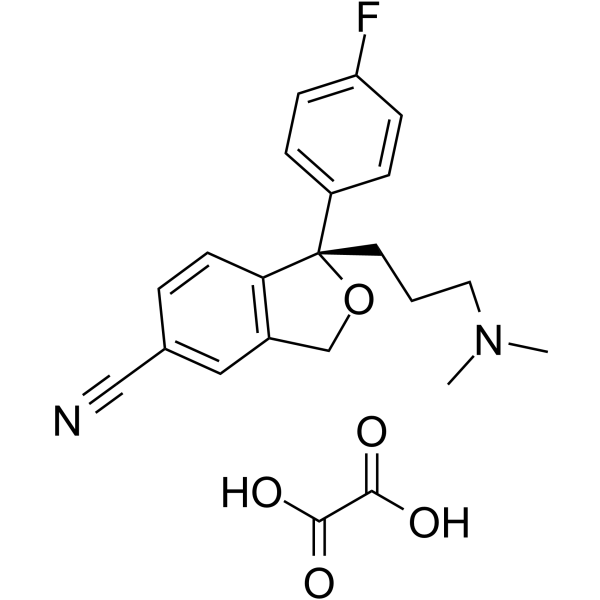
Escitalopram ((S)-Citalopram) oxalate, the S-enantiomer of racemic Citalopram, is a selective serotonin reuptake inhibitor (SSRI) with a Ki of 0.89 nM. Escitalopram oxalate has ∼30 fold higher binding affinity than its R(-)-enantiomer and shows selectivity over both dopamine transporter (DAT) and norepinephrine transporter (NET). Escitalopram oxalate is an antidepressant for the research of major depression .
|
-
- HY-138257A
-
|
AS1069562; (R)-YM-08054 benzenesulfonate
|
5-HT Receptor
Serotonin Transporter
|
Neurological Disease
Metabolic Disease
|
(R)-Indeloxazine benzenesulfonate (AS1069562) is an orally active 5-HT and NE reuptake inhibitor, with IC50 values of 0.35 μM and 3.3 μM, respectively. (R)-Indeloxazine benzenesulfonate (AS1069562) possesses curative-like analgesic effect. (R)-Indeloxazine benzenesulfonate (AS1069562) might improve nerve function impairment via the amelioration of neurotrophic support .
|
-

- HY-B0478A
-
|
AF-1161 free base
|
5-HT Receptor
Serotonin Transporter
Histamine Receptor
Adrenergic Receptor
|
Neurological Disease
|
|
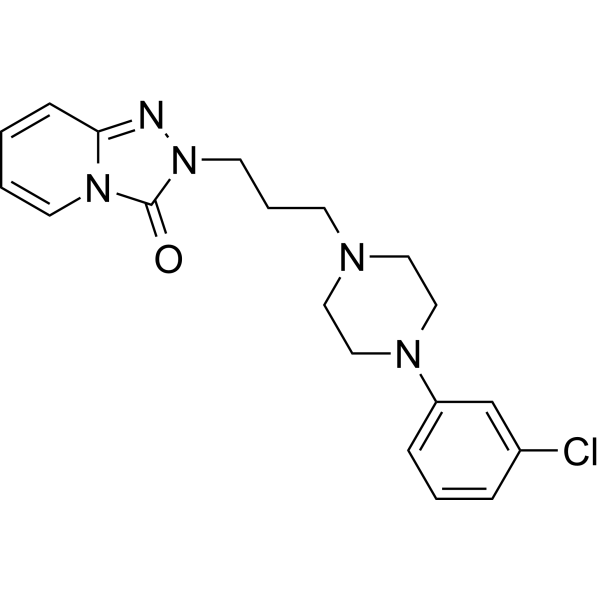
Trazodone (AF-1161 free base) is a triazolopyridine derivative that belongs to the class of serotonin receptor antagonists and reuptake inhibitors (SARIs). Trazodone has anti-depressant and anti-insomnious activity. Trazodone exerts antagonistic properties against a1- and a2-adrenergic receptors and histamine H1 receptors, with minimal anticholinergic effects .
|
-
- HY-B1287R
-
|
(±)-Citalopram hydrobromide(Standard); Lu 10-171 (Standard)
|
Reference Standards
Serotonin Transporter
Autophagy
|
Neurological Disease
Cancer
|
|
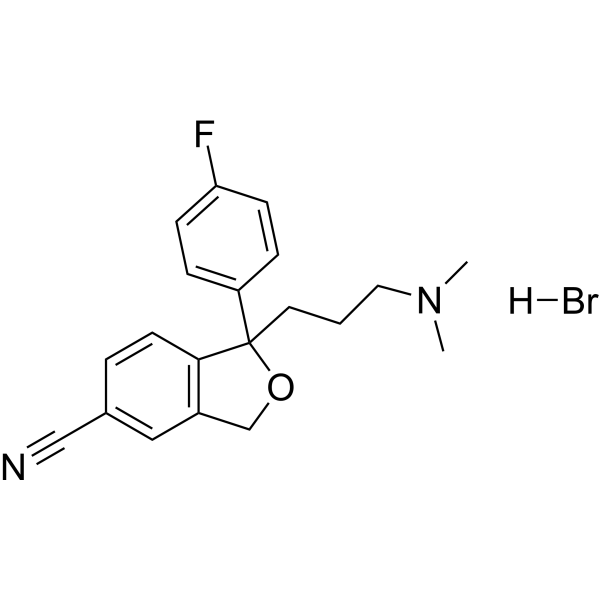
Citalopram (hydrobromide) (Standard) is the analytical standard of Citalopram (hydrobromide). This product is intended for research and analytical applications. Citalopram hydrobromide is a selective serotonin reuptake inhibitor (SSRI). Citalopram hydrobromide inhibits 5-HT uptake into synaptosomes with an IC50 of 1.8 nM. Citalopram hydrobromideinhibits the 5-HT uptake in rabbit blood platelets with an IC50 of 14 nM. Antidepressant effect .
|
-
- HY-145487A
-
|
|
5-HT Receptor
Adrenergic Receptor
|
Neurological Disease
|
|
5-Hydroxy-6-methoxy (S)-duloxetine maleate is an orally active and brain-penetrant serotonin (5-HT) and norepinephrine (NE) reuptake inhibitor with antidepressant and analgesic activities. 5-Hydroxy-6-methoxy (S)-duloxetine maleate is promising for research of psychiatric and neurological disorders such as depression, diabetic neuropathic pain, generalized anxiety disorder, and fibromyalgia .
|
-

- HY-B0602
-
|
O-Desmethylvenlafaxine
|
Environmental Pollutants
Serotonin Transporter
|
Neurological Disease
|
|
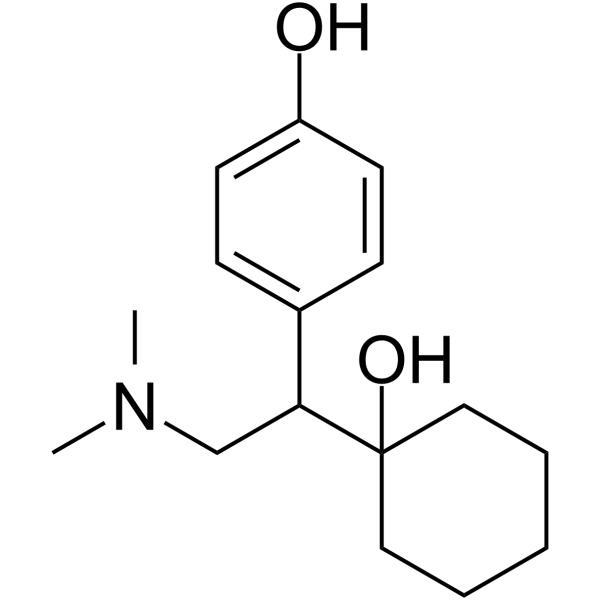
Desvenlafaxine, the succinate salt form of the isolated major active metabolite of Venlafaxine (HY-B0196), is an orally active and BBB penetrated 5-HT and norepinephrine reuptake inhibitor, with IC50 values of 47.3 nM and 531.3 nM for hSERT and hNET, respectively. Desvenlafaxine shows weak binding affinity (62% inhibition at 100 μM) at the human dopamine (DA) transporter .
|
-
- HY-B1287S
-
|
(±)-Citalopram hydrobromide-d3; Lu 10-171-d3
|
Isotope-Labeled Compounds
Serotonin Transporter
Autophagy
|
Neurological Disease
Cancer
|
|
Citalopram-d3 ((±)-Citalopram-d3) hydrobromide is deuterium labeled Citalopram (hydrobromide). Citalopram hydrobromide is a selective serotonin reuptake inhibitor (SSRI). Citalopram hydrobromide inhibits 5-HT uptake into synaptosomes with an IC50 of 1.8 nM. Citalopram hydrobromideinhibits the 5-HT uptake in rabbit blood platelets with an IC50 of 14 nM. Antidepressant effect .
|
-

- HY-107370
-
|
Tomoxetine; (R)-Tomoxetine
|
Serotonin Transporter
Sodium Channel
|
Neurological Disease
Cancer
|
|
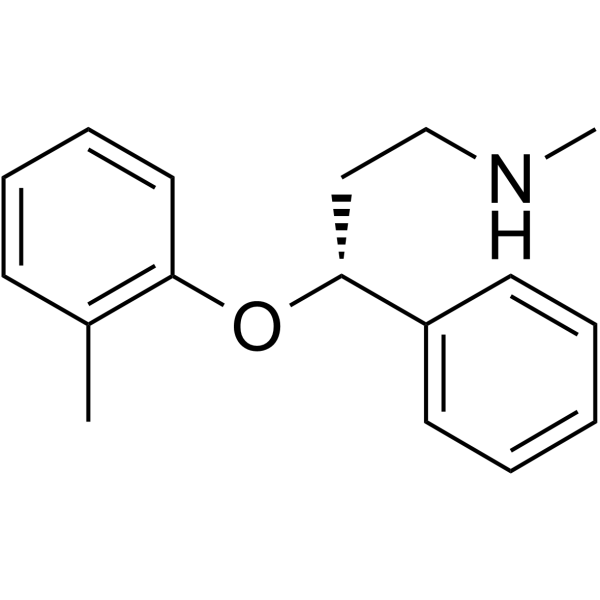
Atomoxetine (Tomoxetine) is a selective noradrenaline reuptake inhibitor with Ki values of 5, 77 and 1451 nM for norepinephrine (NE), serotonin (5-HT) and dopamine (DA) transporters, respectively. Atomoxetine (Tomoxetine) increases of DAEX and NEEX in the PFC and enhances catecholaminergic neurotransmission. Atomoxetine (Tomoxetine) is a potent Na + channels (VGSCs) blocker. Atomoxetine (Tomoxetine) can be used for attention-deficit hyperactivity disorder (ADHD) research .
|
-
- HY-B0602A
-
|
O-Desmethylvenlafaxine succinate hydrate
|
Serotonin Transporter
|
Neurological Disease
|
|
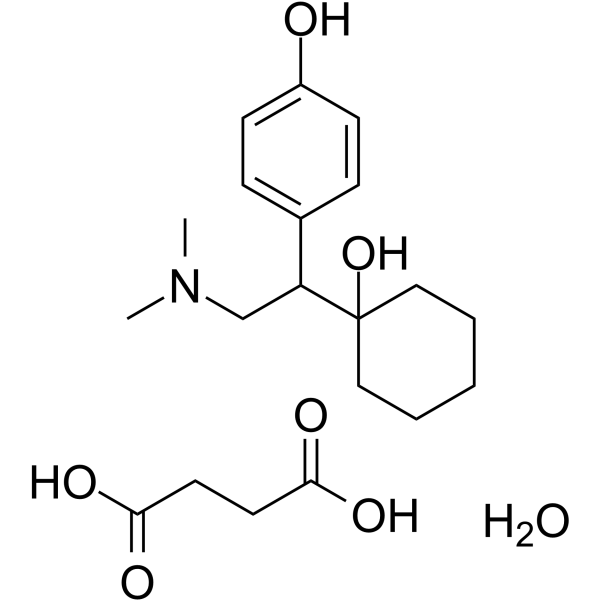
Desvenlafaxine succinate hydrate, the succinate salt form of the isolated major active metabolite of Venlafaxine (HY-B0196), is an orally active and BBB penetrated 5-HT and norepinephrine reuptake inhibitor, with IC50 values of 47.3 nM and 531.3 nM for hSERT and hNET, respectively. Desvenlafaxine succinate hydrate shows weak binding affinity (62% inhibition at 100 μM) at the human dopamine (DA) transporter .
|
-
- HY-14472
-
|
NS-2330
|
Dopamine Transporter
Serotonin Transporter
|
Metabolic Disease
|
|
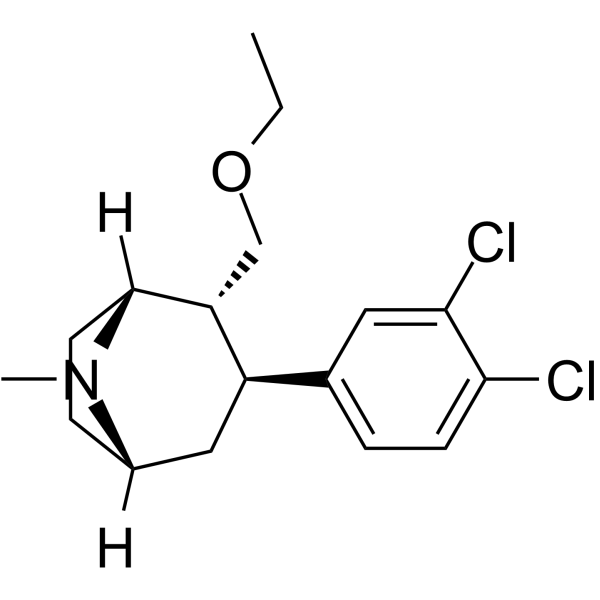
Tesofensine (NS-2330) is a triple monoamine reuptake inhibitor inducing a potent inhibition of the re-uptake process in the synaptic cleft of the neurotransmitters dopamine (DA; IC50=6.5 nM), norepinephrine (NE;IC50=1.7 nM), and serotonin (5-HT;IC50=11 nM), and with potentials as an anti-obesity agent . Tesofensine is a CNS acting anti-obesity agent .
|
-
- HY-14262R
-
|
EMD 68843 (Standard); SB659746A (Standard)
|
Reference Standards
5-HT Receptor
Serotonin Transporter
|
Neurological Disease
|
|
Vilazodone (Standard) is the analytical standard of Vilazodone. This product is intended for research and analytical applications. Vilazodone (EMD 68843; SB 659746A) is a potent, selective and orally active serotonin reuptake inhibitor (SSRI) and partial 5-HT1A receptor agonist. Vilazodone exhibits antidepressant efficacy in vivo can be used for the research of major depressive disorder (MDD) and affective disorders .
|
-

- HY-17385R
-
|
Tomoxetine hydrochloride (Standard); (R)-Tomoxetine hydrochloride (Standard); LY 139603 (Standard)
|
Reference Standards
Adrenergic Receptor
Serotonin Transporter
Sodium Channel
|
Neurological Disease
Cancer
|
|
Atomoxetine (hydrochloride) (Standard) is the analytical standard of Atomoxetine (hydrochloride). This product is intended for research and analytical applications. Atomoxetine (Tomoxetine) hydrochloride is a selective noradrenaline reuptake inhibitor with Ki values of 5 nM, 77 nM and 1451 nM for norepinephrine (NE), serotonin (5-HT) and dopamine (DA) transporters, respectively. Atomoxetine hydrochloride is a potent Na+ channels (VGSCs) blocker. Atomoxetine hydrochloride can be used for attention-deficit hyperactivity disorder (ADHD) research .
|
-

- HY-138257
-
|
(S)-AS1069562; (S)-YM-08054 benzenesulfonate
|
5-HT Receptor
|
Neurological Disease
|
|
(S)-AS1069562 is the S-enantiomer of AS1069562 (HY-138257A). AS1069562 is an orally active 5-HT and NE reuptake inhibitor, with IC50 values of 0.35 μM and 3.3 μM, respectively. AS1069562 possesses curative-like analgesic effect. AS1069562 might improve nerve function impairment via the amelioration of neurotrophic support .
|
-

- HY-14262S1
-
|
EMD 68843-d8; SB659746A-d8
|
5-HT Receptor
Serotonin Transporter
Isotope-Labeled Compounds
|
Neurological Disease
|
|
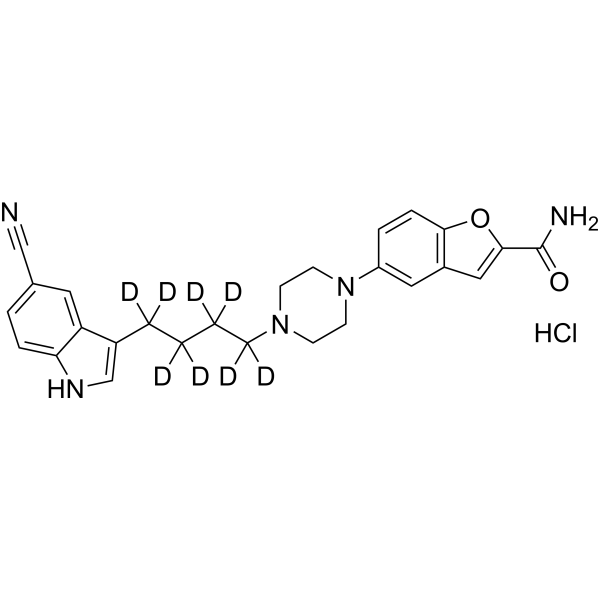
Vilazodone-d8 hydrochloride is deuterated labeled Vilazodone (HY-14262). Vilazodone (EMD 68843; SB 659746A) is a potent, selective and orally active serotonin reuptake inhibitor (SSRI) and partial 5-HT1A receptor agonist. Vilazodone exhibits antidepressant efficacy in vivo can be used for the research of major depressive disorder (MDD) and affective disorders .
|
-
- HY-16170
-
|
O-Desmethylvenlafaxine succinate; Wy-45233 succinate
|
Serotonin Transporter
|
Neurological Disease
Metabolic Disease
|
|
Desvenlafaxine succinate, the succinate salt form of the isolated major active metabolite of Venlafaxine (HY-B0196), is an orally active and BBB penetrated 5-HT and norepinephrine reuptake inhibitor, with IC50 values of 47.3 nM and 531.3 nM for hSERT and hNET, respectively. Desvenlafaxine succinate (DVS) shows weak binding affinity (62% inhibition at 100 μM) at the human dopamine (DA) transporter .
|
-

- HY-14258R
-
|
(S)-Citalopram (Standard); (S)-(+)-Citalopram (Standard)
|
Serotonin Transporter
Reference Standards
|
Neurological Disease
Cancer
|
|
Escitalopram (Standard) is the analytical standard of Escitalopram. This product is intended for research and analytical applications. Escitalopram ((S)-Citalopram), the S-enantiomer of racemic Citalopram, is a selective serotonin reuptake inhibitor (SSRI) with a Ki of 0.89 nM. Escitalopram has ~30 fold higher binding affinity than its R(-)-enantiomer and shows selectivity over both dopamine transporter (DAT) and norepinephrine transporter (NET). Escitalopram is an antidepressant for the research of major depression .
|
-

- HY-106838A
-
|
|
Adrenergic Receptor
|
Neurological Disease
|
|
Org 6906 is a monoamine reuptake inhibitor that promotes monoaminergic neurotransmission by inhibiting the reuptake of noradrenaline, dopamine, and serotonin. Org 6906 is also an α2 Adrenergic Receptor antagonist, with a pKi value of 6.3 (using the selective α2 adrenergic receptor ligand [ 3H]rauwolscine as a ligand). Org 6906 exhibits antidepressant activity and can be used in research related to neurological disorders .
|
-

- HY-106644A
-
|
FG4963
|
5-HT Receptor
|
Neurological Disease
|
|
Femoxetine hydrochloride is a serotonin (5-HT) inhibitor with antidepressant properties. Femoxetine hydrochloride increases serotonin levels in the brain by preventing serotonin from being reabsorbed by nerve cells, resulting in increased concentrations of the neurotransmitter in the synaptic gap, which enhances serotonin signaling. Femoxetine hydrochloride can be used to study the role of serotonin in depression and other emotional disorders, and how 5-HT reuptake inhibitors affect mood and behavior .
|
-

- HY-106644
-
|
FG4963 free acid
|
5-HT Receptor
|
Neurological Disease
|
|
Femoxetine is a serotonin (5-HT) inhibitor with antidepressant properties. Femoxetine increases serotonin levels in the brain by preventing serotonin from being reabsorbed by nerve cells, resulting in increased concentrations of the neurotransmitter in the synaptic gap, which enhances serotonin signaling. Femoxetine can be used to study the role of serotonin in depression and other emotional disorders, and how 5-HT reuptake inhibitors affect mood and behavior .
|
-

- HY-14790
-
|
(S,S)-(+)-Reboxetine
|
Adrenergic Receptor
|
Neurological Disease
|
|
Esreboxetine ((S,S)-Reboxetine) is a selective norepinephrine reuptake inhibitor with activity in increasing urethral resistance. Esreboxetine has been reported to be effective in patients with stress urinary incontinence in a Phase IIa clinical study, achieving this effect by increasing urethral closure. The mechanism of action of esreboxetine involves inhibition of norepinephrine transporters in the central and peripheral nervous systems. The peripheral selectivity of esreboxetine helps it significantly increase urethral resistance without penetrating the brain .
|
-

- HY-14258AS
-
|
|
Serotonin Transporter
|
Neurological Disease
|
|
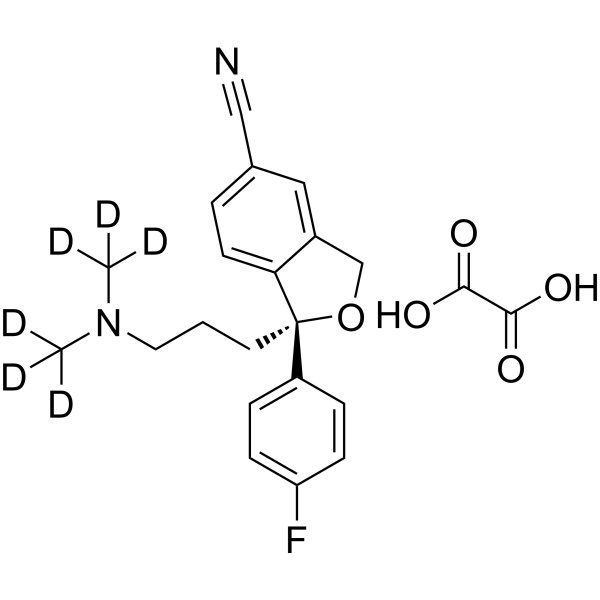
Escitalopram-d6 (oxalate) is the deuterium labeled Escitalopram oxalate. Escitalopram ((S)-Citalopram) oxalate, the S-enantiomer of racemic Citalopram, is a selective serotonin reuptake inhibitor (SSRI) with a Ki of 0.89 nM. Escitalopram oxalate has ~30 fold higher binding affinity than its R(-)-enantiomer and shows selectivity over both dopamine transporter (DAT) and norepinephrine transporter (NET). Escitalopram oxalate is an antidepressant for the research of major depression .
|
-
- HY-182247
-
|
|
Serotonin Transporter
Dopamine Transporter
|
Neurological Disease
|
|
D-473 is an orally active, blood-brain barrier penetrant and serotonin-preferring reuptake inhibitor. D-473 inhibits serotonin, dopamine and norepinephrine transporters, and significantly elevates the extracellular levels of these three neurotransmitters in rat brain regions. D-473 exhibits definite antidepressant-like activity without inducing motor activation. D-473 is widely used in studies related to major depressive disorder .
|
-

- HY-17385S1
-
|
Tomoxetine-d7 hydrochloride; (R)-Tomoxetine-d7 hydrochloride
|
Isotope-Labeled Compounds
Serotonin Transporter
Adrenergic Receptor
Sodium Channel
|
Neurological Disease
Cancer
|
|
Atomoxetine-d7 hydrochloride (Tomoxetine-d7 hydrochloride) is the deuterium labeled Atomoxetine hydrochloride (HY-17385). Atomoxetine (Tomoxetine) hydrochloride is a selective noradrenaline reuptake inhibitor with Ki values of 5 nM, 77 nM and 1451 nM for norepinephrine (NE), serotonin (5-HT) and dopamine (DA) transporters, respectively. Atomoxetine hydrochloride is a potent Na+ channels (VGSCs) blocker. Atomoxetine hydrochloride can be used for attention-deficit hyperactivity disorder (ADHD) research .
|
-

- HY-B0602S3
-
|
|
Isotope-Labeled Compounds
Serotonin Transporter
|
Neurological Disease
|
|
Desvenlafaxine-d10 is deuterium labeled Desvenlafaxine. Desvenlafaxine, the succinate salt form of the isolated major active metabolite of Venlafaxine (HY-B0196), is an orally active and BBB penetrated 5-HT and norepinephrine reuptake inhibitor, with IC50 values of 47.3 nM and 531.3 nM for hSERT and hNET, respectively. Desvenlafaxine shows weak binding affinity (62% inhibition at 100 μM) at the human dopamine (DA) transporter .
|
-

- HY-B0602S2
-
|
|
Isotope-Labeled Compounds
Serotonin Transporter
|
Neurological Disease
|
|
Desvenlafaxine-d6 is deuterium labeled Desvenlafaxine. Desvenlafaxine, the succinate salt form of the isolated major active metabolite of Venlafaxine (HY-B0196), is an orally active and BBB penetrated 5-HT and norepinephrine reuptake inhibitor, with IC50 values of 47.3 nM and 531.3 nM for hSERT and hNET, respectively. Desvenlafaxine shows weak binding affinity (62% inhibition at 100 μM) at the human dopamine (DA) transporter .
|
-

- HY-14258AS1
-
|
(S)-Citalopram-d4 oxalate; (S)-(+)-Citalopram-d4 oxalate
|
Isotope-Labeled Compounds
Serotonin Transporter
|
Neurological Disease
|
|
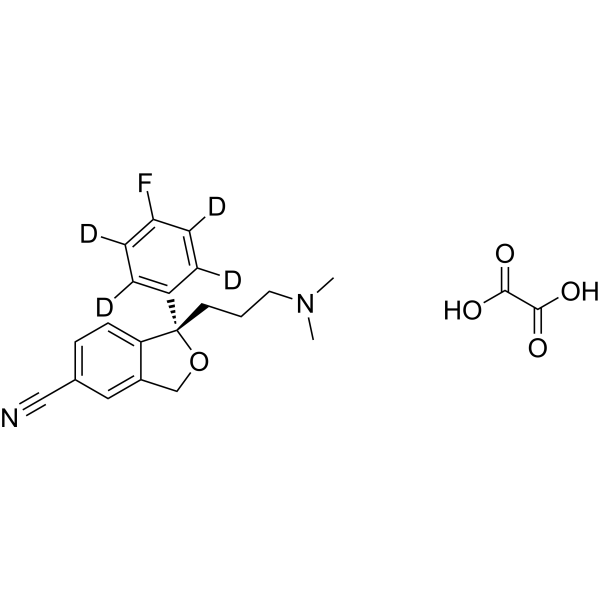
Escitalopram-d4 (oxalate) is deuterium labeled Escitalopram (oxalate). Escitalopram ((S)-Citalopram) oxalate, the S-enantiomer of racemic Citalopram, is a selective serotonin reuptake inhibitor (SSRI) with a Ki of 0.89 nM. Escitalopram oxalate has ~30 fold higher binding affinity than its R(-)-enantiomer and shows selectivity over both dopamine transporter (DAT) and norepinephrine transporter (NET). Escitalopram oxalate is an antidepressant for the research of major depression .
|
-
- HY-B1110
-
|
(±)-Nomifensine; Nomifensin
|
Dopamine Receptor
Adrenergic Receptor
|
Neurological Disease
|
|
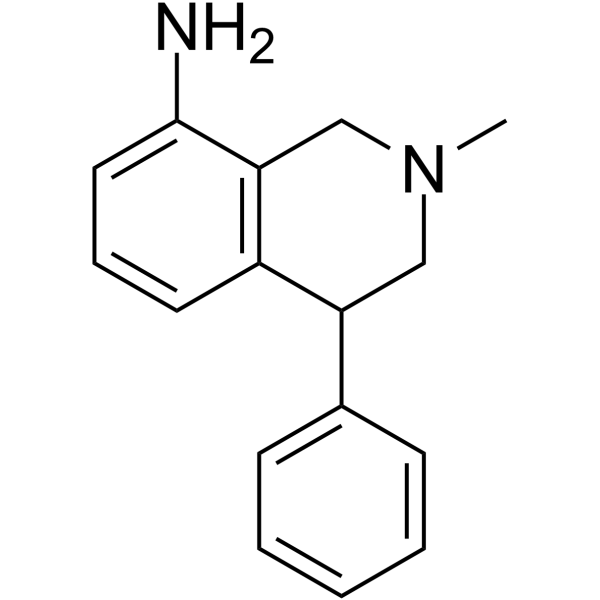
Nomifensine ((±)-Nomifensine) is a potent norepinephrine (NE) and dopamine (DA) reuptake inhibitor. Nomifensine inhibits uptake of NE, DA and 5-HT in rat brain synaptosomes, with IC50 values of 6.6 nM, 48 nM and 830 nM, and Ki values of 4.7 nM, 26 nM and 4000 nM, respectively. Nomifensine has antidepressant and analgesic effects. Nomifensine is used in neurodegenerative diseases, compound addiction, and pain research .
|
-
- HY-B1110A
-
|
(±)-Nomifensine maleate; Nomifensin maleate
|
Dopamine Receptor
Adrenergic Receptor
|
Neurological Disease
|
|
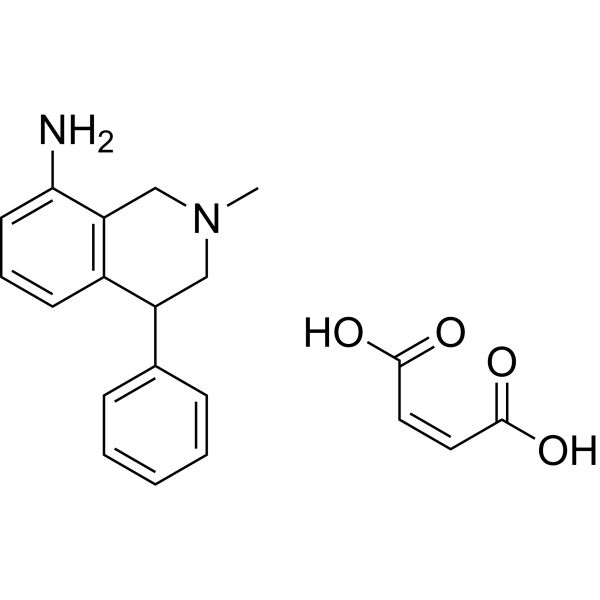
Nomifensine ((±)-Nomifensine) maleate is a potent norepinephrine (NE) and dopamine (DA) reuptake inhibitor. Nomifensine maleate inhibits uptake of NE, DA and 5-HT in rat brain synaptosomes, with IC50 values of 6.6 nM, 48 nM and 830 nM, and Ki values of 4.7 nM, 26 nM and 4000 nM, respectively. Nomifensine maleate has antidepressant and analgesic effects. Nomifensine maleate is used in neurodegenerative diseases, compound addiction, and pain research .
|
-
- HY-110289S1
-
|
|
Isotope-Labeled Compounds
Serotonin Transporter
5-HT Receptor
|
Neurological Disease
|
|
(R)-Citalopram-d4 (oxalate) is deuterium labeled (R)-Citalopram Oxalate. (R)-Citalopram oxalate, a R-(-) enantiomers of Citalopram (HY-121203), is a serotonin reuptake inhibitor. (R)-Citalopram oxalate is at least 20-fold weaker than S-citalopram (HY-14258) as inhibitor of the 5-HT transporter (SERT). (R)-Citalopram oxalate can be used for research of depression .
|
-
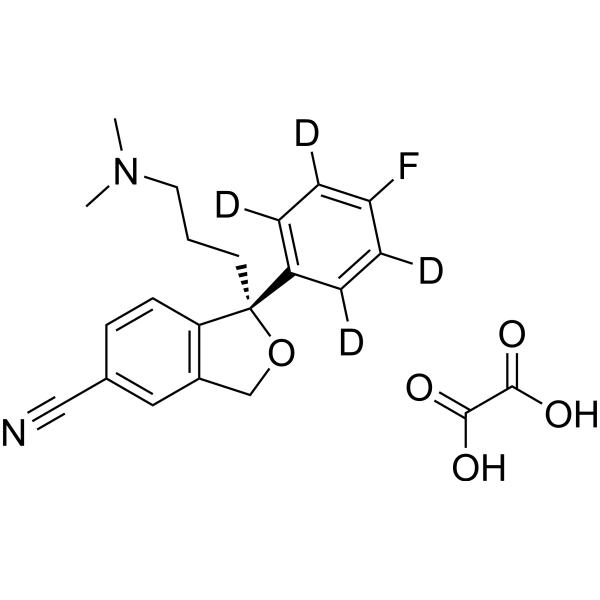
- HY-124186
-
|
|
Dopamine Receptor
5-HT Receptor
|
Neurological Disease
|
|
LR1143 is a dopamine transporter (DAT) and 5-HT uptake inhibitor, with IC50 values of 3.4 nM and 112 nM in rats, respectively. LR1143 binds to DAT labeled with the dopamine reuptake inhibitor GBR 12935 (HY-12242A), with an IC50 of 4.4 nM. LR1143 shows lower selectivity for DAT than for serotonin reuptake sites. LR1143 can be used in studies related to cocaine abuse .
|
-

- HY-19907
-
|
BMS-820836
|
Dopamine Transporter
Monoamine Transporter
Serotonin Transporter
|
Neurological Disease
|
|
Liafensine (BMS-820836) is an orally active, blood-brain barrier-permeable monoamine reuptake inhibitor, with an IC50 of 5.67 nM against DAT, 1.08 nM against SERT, and 7.99 nM against NET. Liafensine binds to DAT to block dopamine reuptake. Liafensine binds to SERT to block serotonin reuptake. Liafensine binds to NET to block norepinephrine reuptake. Liafensine can be used in studies related to depression .
|
-

- HY-14258AR
-
|
(S)-Citalopram oxalate (Standard); (S)-(+)-Citalopram oxalate (Standard)
|
Reference Standards
Serotonin Transporter
|
Neurological Disease
Cancer
|
|
Escitalopram (oxalate) (Standard) is the analytical standard of Escitalopram (oxalate). This product is intended for research and analytical applications. Escitalopram ((S)-Citalopram) oxalate, the S-enantiomer of racemic Citalopram, is a selective serotonin reuptake inhibitor (SSRI) with a Ki of 0.89 nM. Escitalopram oxalate has ∼30 fold higher binding affinity than its R(-)-enantiomer and shows selectivity over both dopamine transporter (DAT) and norepinephrine transporter (NET). Escitalopram oxalate is an antidepressant for the research of major depression .
|
-
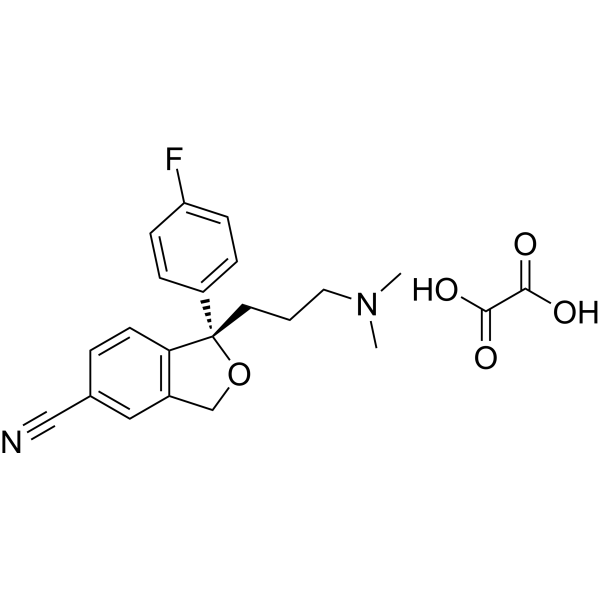
- HY-W011235
-
|
|
5-HT Receptor
Calcium Channel
Drug Metabolite
|
Cardiovascular Disease
Neurological Disease
|
|
Norfluoxetine hydrochloride is an active N-demethylated metabolite of Fluoxetine. Fluoxetine is a selective serotonin (5-HT) reuptake inhibitor that is metabolized to Norfluoxetine hydrochloride by cytochrome P450 (CYP) 2D6, CYP2C19, and CYP3A4. Norfluoxetine hydrochloride inhibits 5-HT uptake and inhibits CaV3.3 T current (IC50 = 5 μM). Norfluoxetine hydrochloride has anticonvulsant activity .
|
-
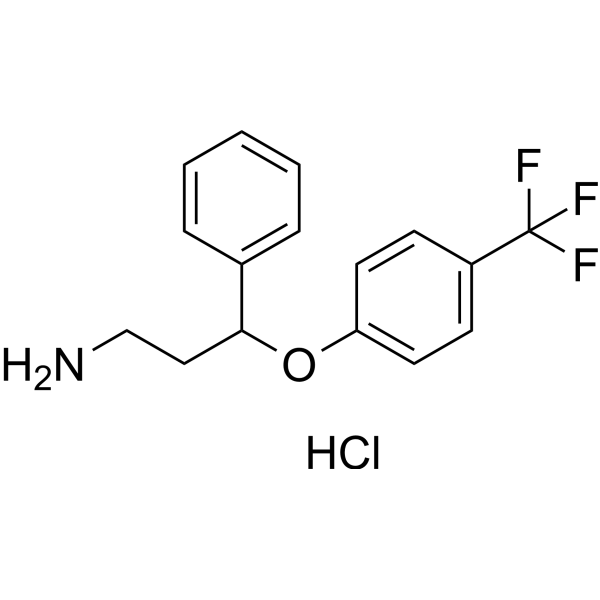
- HY-18332B
-
|
|
Dopamine Transporter
Adrenergic Receptor
5-HT Receptor
|
Neurological Disease
|
|
DOV-102,677 is an orally sctive triple monoamine neurotransmitter reuptake inhibitor that simultaneously inhibits the dopamine (DAT) (IC50 = 129 nM; Ki = 222 nM), norepinephrine (NET) (IC50 = 103 nM; Ki = 1030 nM), and serotonin (SERT) (IC50 = 133 nM; Ki = 740 nM) transporters. DOV-102,677 demonstrated significant antidepressant-like activity and sensory-motor gating regulatory effects in mouse experiments. DOV-102,677 can be used for research on depression .
|
-

- HY-B0478AR
-
|
AF-1161 free base (Standard)
|
Reference Standards
5-HT Receptor
Histamine Receptor
Adrenergic Receptor
Serotonin Transporter
|
Neurological Disease
|
|
Trazodone (AF-1161 free base) (Standard) is the analytical standard of Trazodone. This product is intended for research and analytical applications. Trazodone is a triazolopyridine derivative that belongs to the class of serotonin receptor antagonists and reuptake inhibitors (SARIs). Trazodone has anti-depressant and anti-insomnious activity. Trazodone exerts antagonistic properties against a1- and a2-adrenergic receptors and histamine H1 receptors, with minimal anticholinergic effects .
|
-

- HY-12242R
-
|
|
Dopamine Transporter
|
Neurological Disease
|
|
GBR 12935 (dihydrochloride) (Standard) is the analytical standard of GBR 12935 (dihydrochloride). This product is intended for research and analytical applications. GBR 12935 dihydrochloride is a potent, and selective dopamine reuptake inhibitor, with the binding constant (Kd) of 1.08 nM in COS-7 cells. GBR 12935 dihydrochloride stimulates the locomotion activity in different mice strains but fails to induce stereotypy. Thus, GBR 12935 dihydrochloride also prevents the d-Fenfluramine-induced head-twitch response in mice .
|
-

- HY-107370A
-
|
(Rac)-Tomoxetine hydrochloride; (Rac)-LY 139603
|
Serotonin Transporter
Sodium Channel
|
Metabolic Disease
Cancer
|
|
(Rac)-Atomoxetine hydrochloride ((Rac)-Tomoxetine (hydrochloride); (Rac)-LY 139603) is the racemic mixture of Atomoxetine hydrochloride (HY-17385). Atomoxetine hydrochloride is a selective noradrenaline reuptake inhibitor with Ki values of 5, 77 and 1451 nM for norepinephrine (NE), serotonin (5-HT) and dopamine (DA) transporters, respectively. Atomoxetine hydrochloride increases of DAEX and NEEX in the PFC and enhances catecholaminergic neurotransmission. Atomoxetine hydrochloride is a potent Na + channels (VGSCs) blocker. Atomoxetine hydrochloride can be used for attention-deficit hyperactivity disorder (ADHD) research .
|
-

- HY-110289R
-
|
|
Serotonin Transporter
5-HT Receptor
Reference Standards
|
Neurological Disease
|
|
(R)-Citalopram oxalate (Standard) is the analytical standard of (R)-Citalopram oxalate. This product is intended for research and analytical applications. (R)-Citalopram oxalate, a R-(-) enantiomers of Citalopram (HY-121203), is a serotonin reuptake inhibitor. (R)-Citalopram oxalate is at least 20-fold weaker than S-citalopram (HY-14258) as inhibitor of the 5-HT transporter (SERT). (R)-Citalopram oxalate can be used for research of depression .
|
-

- HY-124357
-
|
S-Norfluoxetine hydrochloride; LY 215229 hydrochloride
|
Dopamine Receptor
|
Neurological Disease
|
|
Seproxetine (S-Norfluoxetine) hydrochloride is a selective serotonin reuptake inhibitor (SSRI) that enhances serotonin levels in the brain by specifically inhibiting the serotonin uptake carrier. Seproxetine hydrochloride exhibits strong charge transfer interactions with π-electron acceptors, forming stable complexes that enhance its binding affinity to multiple receptors, including serotonin and dopamine receptors. Seproxetine hydrochloride demonstrates improved biological activity when interacting with charge transfer complexes, leading to increased stability and efficacy in therapeutic applications.
|
-

- HY-B0602R
-
|
O-Desmethylvenlafaxine (Standard)
|
Reference Standards
Serotonin Transporter
|
Neurological Disease
|
|
Desvenlafaxine (Standard) is the analytical standard of Desvenlafaxine. This product is intended for research and analytical applications. Desvenlafaxine, the succinate salt form of the isolated major active metabolite of Venlafaxine (HY-B0196), is an orally active and BBB penetrated 5-HT and norepinephrine reuptake inhibitor, with IC50 values of 47.3 nM and 531.3 nM for hSERT and hNET, respectively. Desvenlafaxine shows weak binding affinity (62% inhibition at 100 μM) at the human dopamine (DA) transporter .
|
-

- HY-N2426R
-
|
|
Reference Standards
Interleukin Related
|
Inflammation/Immunology
|
|
Desvenlafaxine (Standard) is the analytical standard of Desvenlafaxine. This product is intended for research and analytical applications. Desvenlafaxine, the succinate salt form of the isolated major active metabolite of Venlafaxine (HY-B0196), is an orally active and BBB penetrated 5-HT and norepinephrine reuptake inhibitor, with IC50 values of 47.3 nM and 531.3 nM for hSERT and hNET, respectively. Desvenlafaxine shows weak binding affinity (62% inhibition at 100 μM) at the human dopamine (DA) transporter .
|
-

- HY-14472R
-
|
NS-2330 (Standard)
|
Dopamine Transporter
Serotonin Transporter
Reference Standards
|
Metabolic Disease
|
|
Tesofensine (Standard) is the analytical standard of Tesofensine. This product is intended for research and analytical applications. Tesofensine (NS-2330) is a triple monoamine reuptake inhibitor inducing a potent inhibition of the re-uptake process in the synaptic cleft of the neurotransmitters dopamine (DA; IC50=6.5 nM), norepinephrine (NE;IC50=1.7 nM), and serotonin (5-HT;IC50=11 nM), and with potentials as an anti-obesity agent . Tesofensine is a CNS acting anti-obesity agent .
|
-

- HY-14794A
-
|
(1S,2R)-Milnacipran; F2695
|
Serotonin Transporter
Trk Receptor
PI3K
mTOR
P-glycoprotein
Akt
|
Neurological Disease
Inflammation/Immunology
|
|
Levomilnacipran ((1S,2R)-Milnacipran) is the enantiomer of Milnacipran (HY-B0168) and a strong substrate of P-gp that can cross the blood-brain barrier. Levomilnacipran is a serotonin and norepinephrine reuptake inhibitor, with IC50 values of 10.5 nM and 19.0 nM, and Ki values of 92.2 nM and 1.2 nM for human norepinephrine transporter (NET) and serotonin transporter (SERT), respectively. Levomilnacipran has antidepressant and anxiolytic activities. Levomilnacipran hydrochloride can be used for the research of depression .
|
-

- HY-B0168B
-
|
(1S,2R)-Milnacipran hydrochloride; F-2695 hydrochloride
|
Serotonin Transporter
Trk Receptor
PI3K
Akt
mTOR
P-glycoprotein
|
Neurological Disease
Inflammation/Immunology
|
|
Levomilnacipran ((1S,2R)-Milnacipran) hydrochloride is the enantiomer of Milnacipran (HY-B0168) and a strong substrate of P-gp that can cross the blood-brain barrier. Levomilnacipran hydrochloride is a serotonin and norepinephrine reuptake inhibitor, with IC50 values of 10.5 nM and 19.0 nM, and Ki values of 92.2 nM and 1.2 nM for human norepinephrine transporter (NET) and serotonin transporter (SERT), respectively. Levomilnacipran hydrochloride has antidepressant and anxiolytic activities. Levomilnacipran hydrochloride can be used for the research of depression .
|
-
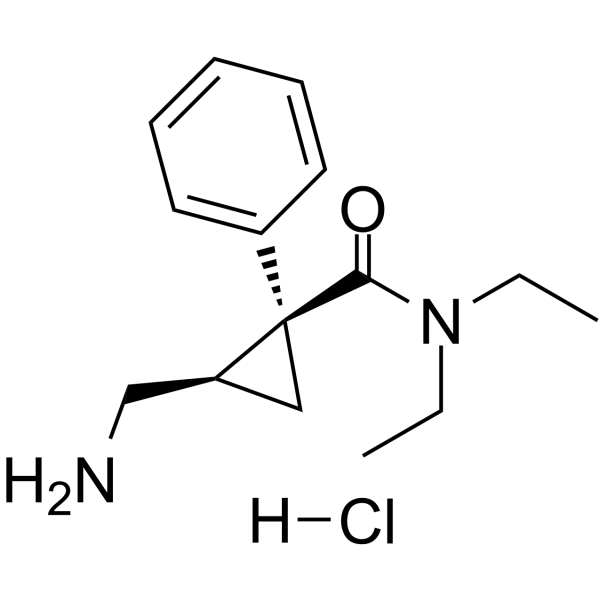
- HY-32329
-
|
Org-8282
|
5-HT Receptor
Adrenergic Receptor
|
Neurological Disease
|
|
Setiptiline (Org-8282) is a serotonin receptor antagonist. Setiptiline is a tetracyclic antidepressant (TeCA) which acts as a noradrenergic and specific serotonergic antidepressant (NaSSA). Setiptiline acts as a norepinephrine reuptake inhibitor, α2-adrenergic receptor antagonist, and serotonin receptor antagonist, likely at the 5-HT2A, 5-HT2C, and/or 5-HT3 subtypes, as well as an H1 receptor inverse agonist/antihistamine.
|
-
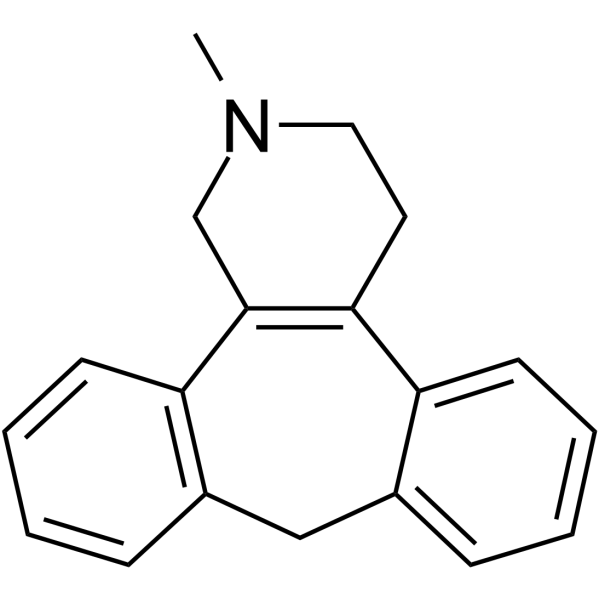
- HY-107370S
-
|
Tomoxetine-d7; (R)-Tomoxetine-d7
|
Isotope-Labeled Compounds
Serotonin Transporter
Sodium Channel
|
Neurological Disease
Cancer
|
|
Atomoxetine-d7 (Tomoxetine-d7) is deuterium labeled Atomoxetine. Atomoxetine (Tomoxetine) is a selective noradrenaline reuptake inhibitor with Ki values of 5, 77 and 1451 nM for norepinephrine (NE), serotonin (5-HT) and dopamine (DA) transporters, respectively. Atomoxetine (Tomoxetine) increases of DAEX and NEEX in the PFC and enhances catecholaminergic neurotransmission. Atomoxetine (Tomoxetine) is a potent Na + channels (VGSCs) blocker. Atomoxetine (Tomoxetine) can be used for attention-deficit hyperactivity disorder (ADHD) research .
|
-

- HY-101755R
-
|
Lu AA24530 hydrobromide (Standard)
|
Reference Standards
5-HT Receptor
Adrenergic Receptor
|
Neurological Disease
Endocrinology
|
|
Tedatioxetine hydrobromide (Standard) (Lu AA24530 hydrobromide (Standard)) is the analytical standard of Tedatioxetine hydrobromide (HY-101755). This product is intended for research and analytical applications. Tedatioxetine (Lu AA24530) hydrobromide acts as a serotonin and norepinephrine (NE)-preferring triple reuptake inhibitor (TRI) and 5-HT2A, 5-HT2C, 5-HT3 and α1A-adrenergic receptor antagonist .
,
|
-

- HY-B1110AR
-
|
(±)-Nomifensine maleate (Standard); Nomifensin maleate (Standard)
|
Dopamine Receptor
Adrenergic Receptor
Reference Standards
|
Neurological Disease
|
|
Nomifensine (maleate) (Standard) is the analytical standard of Nomifensine (maleate). This product is intended for research and analytical applications. Nomifensine ((±)-Nomifensine) maleate is a potent norepinephrine (NE) and dopamine (DA) reuptake inhibitor. Nomifensine maleate inhibits uptake of NE, DA and 5-HT in rat brain synaptosomes, with IC50 values of 6.6 nM, 48 nM and 830 nM, and Ki values of 4.7 nM, 26 nM and 4000 nM, respectively. Nomifensine maleate has antidepressant and analgesic effects. Nomifensine maleate is used in neurodegenerative diseases, compound addiction, and pain research .
|
-

- HY-107370S1
-
|
Tomoxetine-d5; (R)-Tomoxetine-d5
|
Isotope-Labeled Compounds
|
Neurological Disease
Cancer
|
|
Atomoxetine-d5 (Tomoxetine-d5) is deuterium labeled Atomoxetine. Atomoxetine (Tomoxetine) is a selective noradrenaline reuptake inhibitor with Ki values of 5, 77 and 1451 nM for norepinephrine (NE), serotonin (5-HT) and dopamine (DA) transporters, respectively. Atomoxetine (Tomoxetine) increases of DAEX and NEEX in the PFC and enhances catecholaminergic neurotransmission. Atomoxetine (Tomoxetine) is a potent Na + channels (VGSCs) blocker. Atomoxetine (Tomoxetine) can be used for attention-deficit hyperactivity disorder (ADHD) research .
|
-

- HY-B1110R
-
|
(±)-Nomifensine (Standard); Nomifensin (Standard)
|
Dopamine Receptor
Adrenergic Receptor
Reference Standards
|
Neurological Disease
|
|
Nomifensine (Standard) is the analytical standard of Nomifensine. This product is intended for research and analytical applications. Nomifensine ((±)-Nomifensine) is a potent norepinephrine (NE) and dopamine (DA) reuptake inhibitor. Nomifensine inhibits uptake of NE, DA and 5-HT in rat brain synaptosomes, with IC50 values of 6.6 nM, 48 nM and 830 nM, and Ki values of 4.7 nM, 26 nM and 4000 nM, respectively. Nomifensine has antidepressant and analgesic effects. Nomifensine is used in neurodegenerative diseases, compound addiction, and pain research .
|
-

- HY-118835
-
|
|
Serotonin Transporter
|
Neurological Disease
|
|
Zimelidine is an orally active selective serotonin reuptake inhibitor. Zimelidine competitively inhibits central 5-HT uptake and desensitizes 5-HT autoreceptors in dorsal raphe nucleus. Zimelidine time-dependently modulates 5-HT neuronal firing and hippocampal CA3 responses. Zimelidine strengthens central serotonergic neurotransmission and produces related behavioral changes. Zimelidine exerts anxiolytic, analgesic, feeding-suppressive and tolerance-attenuating effects. Zimelidine is used for the study of depressive disorders and analgesic tolerance .
|
-
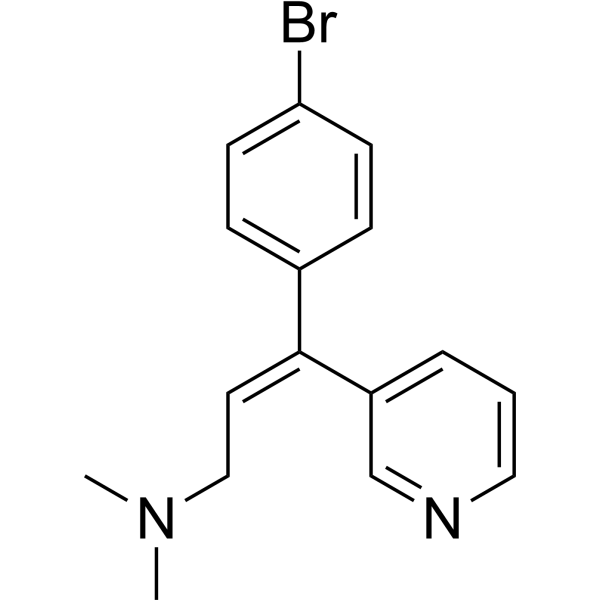
- HY-110023
-
|
|
Serotonin Transporter
|
Neurological Disease
|
|
Zimelidine dihydrochloride is an orally active selective serotonin reuptake inhibitor. Zimelidine dihydrochloride competitively inhibits central 5-HT uptake and desensitizes 5-HT autoreceptors in dorsal raphe nucleus. Zimelidine dihydrochloride time-dependently modulates 5-HT neuronal firing and hippocampal CA3 responses. Zimelidine dihydrochloride strengthens central serotonergic neurotransmission and produces related behavioral changes. Zimelidine dihydrochloride exerts anxiolytic, analgesic, feeding-suppressive and tolerance-attenuating effects. Zimelidine dihydrochloride is used for the study of depressive disorders and analgesic tolerance .
|
-
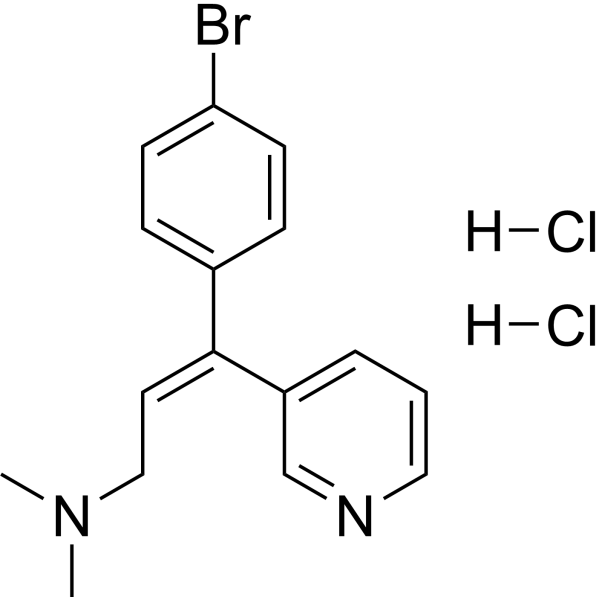
- HY-B1110S
-
|
(±)-Nomifensine-d3 maleate; Nomifensin-d3 maleate
|
Isotope-Labeled Compounds
Dopamine Receptor
Adrenergic Receptor
|
Neurological Disease
|
|
Nomifensine-d3 ((±)-Nomifensine-d3) maleate is the deuterium labeled Nomifensine maleate (HY-B1110A). Nomifensine ((±)-Nomifensine) maleate is a potent norepinephrine (NE) and dopamine (DA) reuptake inhibitor. Nomifensine maleate inhibits uptake of NE, DA and 5-HT in rat brain synaptosomes, with IC50 values of 6.6 nM, 48 nM and 830 nM, and Ki values of 4.7 nM, 26 nM and 4000 nM, respectively. Nomifensine maleate has antidepressant and analgesic effects. Nomifensine maleate is used in neurodegenerative diseases, compound addiction, and pain research .
|
-
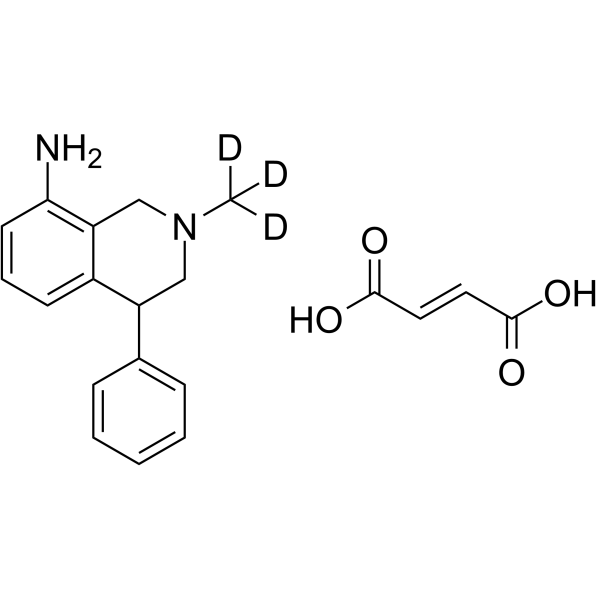
- HY-131527
-
|
N-Desmethyl Venlafaxine hydrochloride; Wy 45494
|
Serotonin Transporter
|
Metabolic Disease
|
|
Wy-45494 hydrochloride (N-Desmethyl Venlafaxine hydrochloride; Wy 45494) is a minor active metabolite of the selective norepinephrine and serotonin reuptake inhibitor (SNRI) venlafaxine. It is formed from venlafaxine via the cytochrome P450 (CYP) isomer CYP3A4.2. Wy-45494 hydrochloride inhibits norepinephrine and serotonin reuptake in rat synaptosomal preparations (IC50s of 4.7 and 1.6 μM, respectively). In vivo, Wy-45494 hydrochloride reversed reserpine-induced hypothermia in mice at a minimum effective dose (MED) of 10 mg/kg.
|
-

- HY-32329A
-
|
MO-8282
|
5-HT Receptor
|
Neurological Disease
|
|
Setiptiline maleate (MO-8282 maleate) is a serotonin receptor antagonist. Setiptiline maleate is a tetracyclic antidepressant (TeCA) which acts as a noradrenergic and specific serotonergic antidepressant (NaSSA). Setiptiline maleate acts as a norepinephrine reuptake inhibitor, α2-adrenergic receptor antagonist, and serotonin receptor antagonist, likely at the 5-HT2A, 5-HT2C, and/or 5-HT3 subtypes, as well as an H1 receptor inverse agonist/antihistamine .
|
-
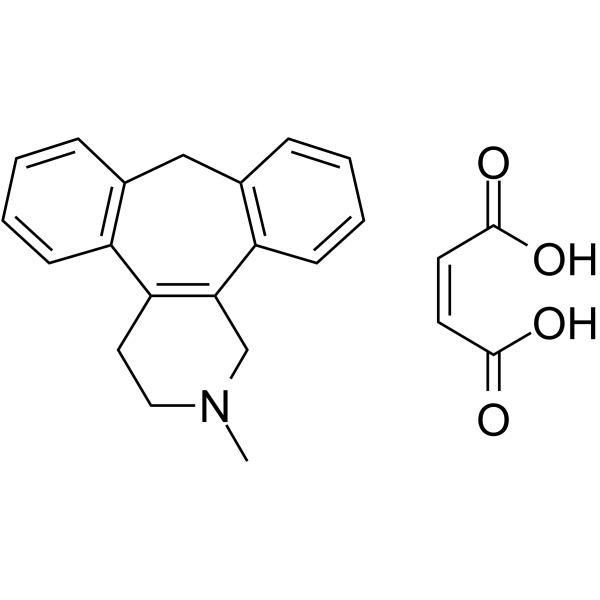
- HY-B0168
-
|
|
Serotonin Transporter
PERK
|
Neurological Disease
|
|
Milnacipran is an orally active Serotonin (HY-B1473A) and Norepinephrine (HY-13715) reuptake inhibitor. Milnacipran inhibits monoamine transporters, especially the norepinephrine transporter and the serotonin transporter (Ki values of 31 and 8.5 nM, respectively). Milnacipran inhibits pERK1/2 activation. Milnacipran has antidepressant, anxiolytic and analgesic properties. Milnacipran inhibits biting behavior in mice. Milnacipran can be used in the study of major depressive disorder, anxiety disorders, and neuropathic pain (e.g., fibromyalgia) .
|
-
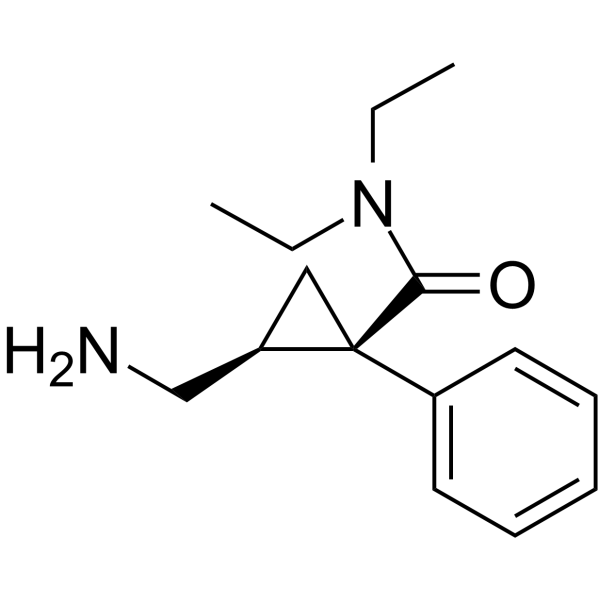
- HY-B0168A
-
|
|
Serotonin Transporter
PERK
|
Neurological Disease
|
|
Milnacipran hydrochloride is an orally active Serotonin (HY-B1473A) and Norepinephrine (HY-13715) reuptake inhibitor. Milnacipran hydrochloride inhibits monoamine transporters, especially the norepinephrine transporter and the serotonin transporter (Ki values of 31 and 8.5 nM, respectively). Milnacipran hydrochloride inhibits pERK1/2 activation. Milnacipran hydrochloride has antidepressant, anxiolytic and analgesic properties. Milnacipran hydrochloride inhibits biting behavior in mice. Milnacipran hydrochloride can be used in the study of major depressive disorder, anxiety disorders, and neuropathic pain (e.g., fibromyalgia) .
|
-
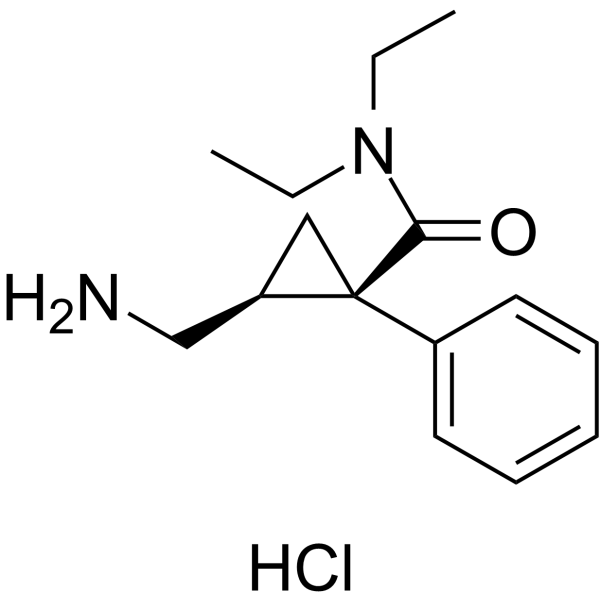
- HY-32329S
-
|
|
Isotope-Labeled Compounds
5-HT Receptor
Adrenergic Receptor
|
Neurological Disease
|
|
Setiptiline-d3 is the deuterium labeled Setiptiline. Setiptiline (Org-8282) is a serotonin receptor antagonist. Setiptiline is a tetracyclic antidepressant (TeCA) which acts as a noradrenergic and specific serotonergic antidepressant (NaSSA). Setiptiline acts as a norepinephrine reuptake inhibitor, α2-adrenergic receptor antagonist, and serotonin receptor antagonist, likely at the 5-HT2A, 5-HT2C, and/or 5-HT3 subtypes, as well as an H1 receptor inverse agonist/antihistamine .
|
-
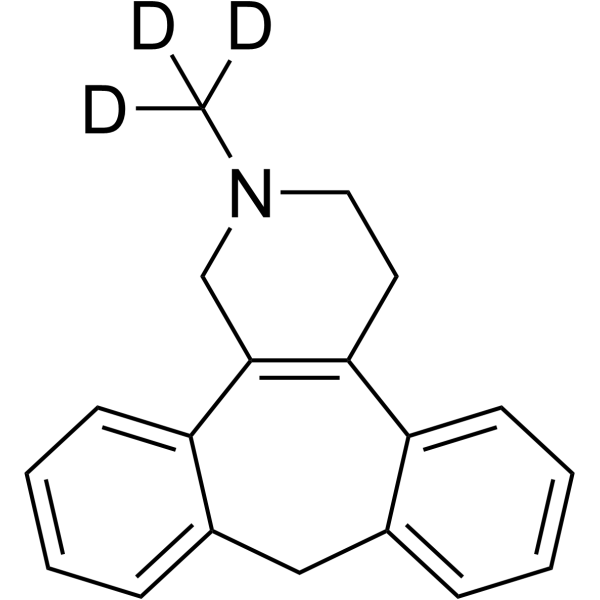
- HY-125784B
-
|
(S)-Viloxazin hydrochloride; (S)-Emovit hydrochloride
|
Drug Isomer
Adrenergic Receptor
|
Neurological Disease
|
|
(S)-Viloxazine hydrochloride is the isomer of Viloxazine hydrochloride (HY-125784). Viloxazine hydrochloride is the hydrochloride salt form of Viloxazine (HY-W380450). Viloxazine (Viloxazin) hydrochloride is a norepinephrine reuptake inhibitor and a potent 5-HT2C agonist agent and 5-HT2B antagonist,EC50 for 5-HT2C b> is 32 μM,and the IC50 for 5-HT2B is 27 μM. Viloxazine hydrochloride's mechanism of action primarily involves serotonergic and noradrenergic pathways. Viloxazine hydrochloride is used in antidepressant research .
|
-

- HY-32329R
-
|
Org-8282 (Standard)
|
5-HT Receptor
Adrenergic Receptor
Reference Standards
|
Neurological Disease
|
|
Setiptiline (Standard) is the analytical standard of Setiptiline. This product is intended for research and analytical applications. Setiptiline (Org-8282) is a serotonin receptor antagonist. Setiptiline is a tetracyclic antidepressant (TeCA) which acts as a noradrenergic and specific serotonergic antidepressant (NaSSA). Setiptiline acts as a norepinephrine reuptake inhibitor, α2-adrenergic receptor antagonist, and serotonin receptor antagonist, likely at the 5-HT2A, 5-HT2C, and/or 5-HT3 subtypes, as well as an H1 receptor inverse agonist/antihistamine.
|
-

- HY-119468
-
|
|
Dopamine Transporter
|
Neurological Disease
|
|
Medifoxamine is an orally active monoamine reuptake inhibitor and antidepressant. Medifoxamine preferentially inhibits presynaptic dopamine reuptake. Medifoxamine acts as an intraocular pressure-lowering agent to reduce intraocular pressure, and also functions as a miotic agent to decrease pupil diameter. Medifoxamine exhibits characteristic properties of antidepressant compounds, including preventing hypothermia induced by Reserpine (HY-N0480) or Apomorphine (HY-12723), potentiating the toxic effects of Yohimbine (HY-N0127) in mice, and reducing immobility behavior in mice and rats in the "behavioral despair" model. Medifoxamine has no anticholinergic activity. Medifoxamine can be used in research related to depression .
|
-
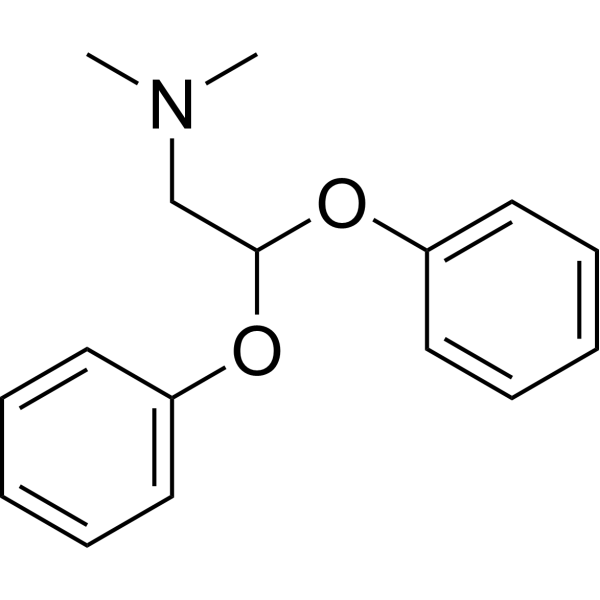
- HY-B0168S
-
|
|
Isotope-Labeled Compounds
Serotonin Transporter
PERK
|
Neurological Disease
|
|
Milnacipran-d10 (hydrochloride) is the deuterium labeled Milnacipran hydrochloride (HY-B0168A). Milnacipran hydrochloride is an orally active Serotonin (HY-B1473A) and Norepinephrine (HY-13715) reuptake inhibitor. Milnacipran hydrochloride inhibits monoamine transporters, especially the norepinephrine transporter and the serotonin transporter (Ki values of 31 and 8.5 nM, respectively). Milnacipran hydrochloride inhibits pERK1/2 activation. Milnacipran hydrochloride has antidepressant, anxiolytic and analgesic properties. Milnacipran hydrochloride inhibits biting behavior in mice. Milnacipran hydrochloride can be used in the study of major depressive disorder, anxiety disorders, and neuropathic pain (e.g., fibromyalgia) .
|
-
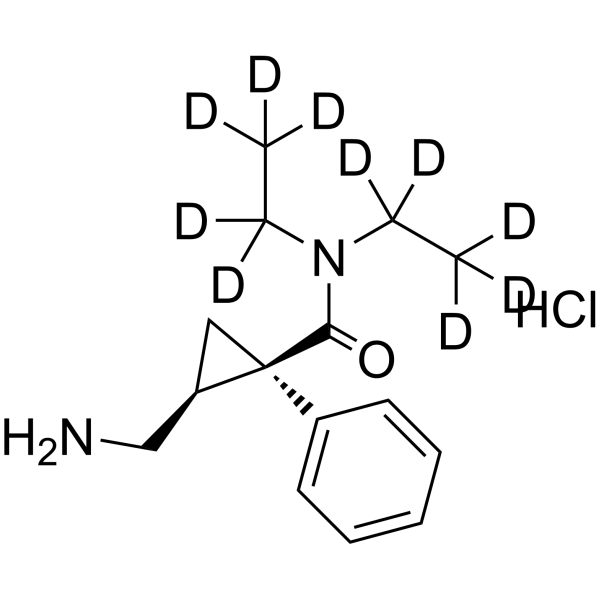
- HY-32329AR
-
|
MO-8282 (Standard)
|
5-HT Receptor
Reference Standards
|
Neurological Disease
|
|
Setiptiline (maleate) (Standard) is the analytical standard of Setiptiline (maleate). This product is intended for research and analytical applications. Setiptiline maleate (MO-8282 maleate) is a serotonin receptor antagonist. Setiptiline maleate is a tetracyclic antidepressant (TeCA) which acts as a noradrenergic and specific serotonergic antidepressant (NaSSA). Setiptiline maleate acts as a norepinephrine reuptake inhibitor, α2-adrenergic receptor antagonist, and serotonin receptor antagonist, likely at the 5-HT2A, 5-HT2C, and/or 5-HT3 subtypes, as well as an H1 receptor inverse agonist/antihistamine .
|
-

- HY-110023R
-
|
|
Reference Standards
Serotonin Transporter
|
Neurological Disease
|
|
Zimelidine dihydrochloride (Standard) is the analytical standard of Zimelidine dihydrochloride (HY-110023). This product is intended for research and analytical applications. Zimelidine dihydrochloride is an orally active selective serotonin reuptake inhibitor. Zimelidine dihydrochloride competitively inhibits central 5-HT uptake and desensitizes 5-HT autoreceptors in dorsal raphe nucleus. Zimelidine dihydrochloride time-dependently modulates 5-HT neuronal firing and hippocampal CA3 responses. Zimelidine dihydrochloride strengthens central serotonergic neurotransmission and produces related behavioral changes. Zimelidine dihydrochloride exerts anxiolytic, analgesic, feeding-suppressive and tolerance-attenuating effects. Zimelidine dihydrochloride is used for the study of depressive disorders and analgesic tolerance .
|
-

- HY-B0168AS
-
|
|
Isotope-Labeled Compounds
Serotonin Transporter
PERK
|
Neurological Disease
|
|
Milnacipran-d5 hydrochloride is deuterium labeled Milnacipran hydrochloride (HY-B0168A). Milnacipran hydrochloride is an orally active Serotonin (HY-B1473A) and Norepinephrine (HY-13715) reuptake inhibitor. Milnacipran hydrochloride inhibits monoamine transporters, especially the norepinephrine transporter and the serotonin transporter (Ki values of 31 and 8.5 nM, respectively). Milnacipran hydrochloride inhibits pERK1/2 activation. Milnacipran hydrochloride has antidepressant, anxiolytic and analgesic properties. Milnacipran hydrochloride inhibits biting behavior in mice. Milnacipran hydrochloride can be used in the study of major depressive disorder, anxiety disorders, and neuropathic pain (e.g., fibromyalgia) .
|
-
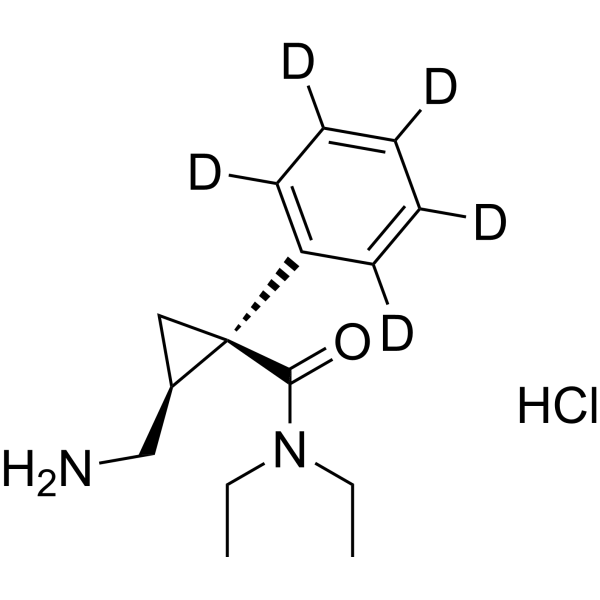
- HY-118835S
-
|
|
Isotope-Labeled Compounds
Serotonin Transporter
|
Neurological Disease
|
|
Zimeldine-d6 is the deuterium labeled Zimeldine (HY-118835) . Zimelidine is an orally active selective serotonin reuptake inhibitor. Zimelidine competitively inhibits central 5-HT uptake and desensitizes 5-HT autoreceptors in dorsal raphe nucleus. Zimelidine time-dependently modulates 5-HT neuronal firing and hippocampal CA3 responses. Zimelidine strengthens central serotonergic neurotransmission and produces related behavioral changes. Zimelidine exerts anxiolytic, analgesic, feeding-suppressive and tolerance-attenuating effects. Zimelidine is used for the study of depressive disorders and analgesic tolerance .
|
-

- HY-B0168BS
-
|
(1S,2R)-Milnacipran-d5 hydrochloride; F-2695-d5 hydrochloride
|
Isotope-Labeled Compounds
Serotonin Transporter
Trk Receptor
PI3K
Akt
mTOR
P-glycoprotein
|
Neurological Disease
Inflammation/Immunology
|
|
Levomilnacipran-d5 ((1S,2R)-Milnacipran-d5) hydrochloride is deuterium labeled Levomilnacipran hydrochloride (HY-B0168B). Levomilnacipran ((1S,2R)-Milnacipran) hydrochloride is the enantiomer of Milnacipran (HY-B0168) and a strong substrate of P-gp that can cross the blood-brain barrier. Levomilnacipran hydrochloride is a serotonin and norepinephrine reuptake inhibitor, with IC50 values of 10.5 nM and 19.0 nM, and Ki values of 92.2 nM and 1.2 nM for human norepinephrine transporter (NET) and serotonin transporter (SERT), respectively. Levomilnacipran hydrochloride has antidepressant and anxiolytic activities. Levomilnacipran hydrochloride can be used for the research of depression .
|
-
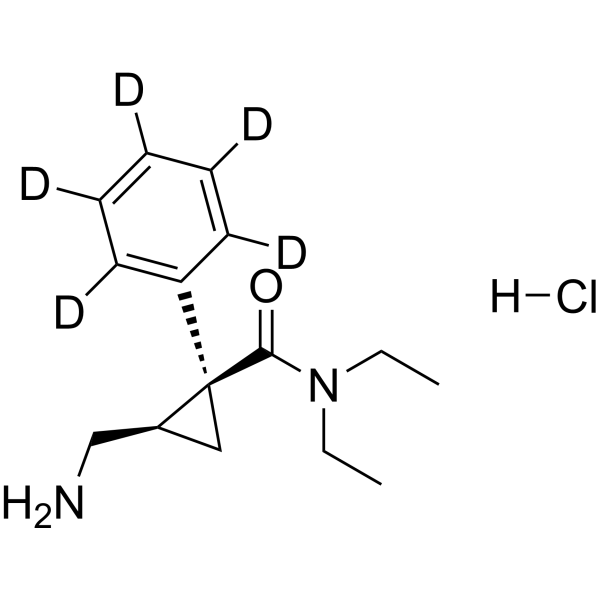
- HY-131527R
-
|
N-Desmethyl Venlafaxine hydrochloride (Standard); Wy 45494 (Standard)
|
Serotonin Transporter
Reference Standards
|
Metabolic Disease
|
|
Wy-45494 (hydrochloride) (Standard) is the analytical standard of Wy-45494 (hydrochloride). This product is intended for research and analytical applications. Wy-45494 hydrochloride (N-Desmethyl Venlafaxine hydrochloride; Wy 45494) is a minor active metabolite of the selective norepinephrine and serotonin reuptake inhibitor (SNRI) venlafaxine. It is formed from venlafaxine via the cytochrome P450 (CYP) isomer CYP3A4.2. Wy-45494 hydrochloride inhibits norepinephrine and serotonin reuptake in rat synaptosomal preparations (IC50s of 4.7 and 1.6 μM, respectively). In vivo, Wy-45494 hydrochloride reversed reserpine-induced hypothermia in mice at a minimum effective dose (MED) of 10 mg/kg.
|
-

- HY-B0168AR
-
|
|
Reference Standards
Serotonin Transporter
PERK
|
Neurological Disease
|
|
Milnacipran (hydrochloride) (Standard) is the analytical standard of Milnacipran hydrochloride (HY-B0168A). This product is intended for research and analytical applications. Milnacipran hydrochloride is an orally active Serotonin (HY-B1473A) and Norepinephrine (HY-13715) reuptake inhibitor. Milnacipran hydrochloride inhibits monoamine transporters, especially the norepinephrine transporter and the serotonin transporter (Ki values of 31 and 8.5 nM, respectively). Milnacipran hydrochloride inhibits pERK1/2 activation. Milnacipran hydrochloride has antidepressant, anxiolytic and analgesic properties. Milnacipran hydrochloride inhibits biting behavior in mice. Milnacipran hydrochloride can be used in the study of major depressive disorder, anxiety disorders, and neuropathic pain (e.g., fibromyalgia) .
|
-

- HY-N0913R
-
|
|
Reference Standards
Antifolate
Thymidylate Synthase
|
Others
|
|
Wy-45494 (hydrochloride) (Standard) is the analytical standard of Wy-45494 (hydrochloride). This product is intended for research and analytical applications. Wy-45494 hydrochloride (N-Desmethyl Venlafaxine hydrochloride; Wy 45494) is a minor active metabolite of the selective norepinephrine and serotonin reuptake inhibitor (SNRI) venlafaxine. It is formed from venlafaxine via the cytochrome P450 (CYP) isomer CYP3A4.2. Wy-45494 hydrochloride inhibits norepinephrine and serotonin reuptake in rat synaptosomal preparations (IC50s of 4.7 and 1.6 μM, respectively). In vivo, Wy-45494 hydrochloride reversed reserpine-induced hypothermia in mice at a minimum effective dose (MED) of 10 mg/kg.
|
-

- HY-14794AS
-
|
(1S,2R)-Milnacipran-d10 hydrochloride; F2695-d10 hydrochloride
|
Isotope-Labeled Compounds
Serotonin Transporter
Trk Receptor
PI3K
mTOR
P-glycoprotein
Akt
|
Neurological Disease
Inflammation/Immunology
|
|
Levomilnacipran-d10 ((1S,2R)-Milnacipran-d10) hydrochloride is deuterium labeled Levomilnacipran hydrochloride (HY-B0168B). Levomilnacipran ((1S,2R)-Milnacipran) hydrochloride is the enantiomer of Milnacipran (HY-B0168) and a strong substrate of P-gp that can cross the blood-brain barrier. Levomilnacipran hydrochloride is a serotonin and norepinephrine reuptake inhibitor, with IC50 values of 10.5 nM and 19.0 nM, and Ki values of 92.2 nM and 1.2 nM for human norepinephrine transporter (NET) and serotonin transporter (SERT), respectively. Levomilnacipran hydrochloride has antidepressant and anxiolytic activities. Levomilnacipran hydrochloride can be used for the research of depression .
|
-

- HY-116062A
-
|
|
Histone Methyltransferase
|
Neurological Disease
|
|
JNJ-7925476 is a triple reuptake inhibitor that selectively and potently inhibits the activity of the serotonin transporter (SERT), norepinephrine transporter (NET), and dopamine transporter (DAT). JNJ-7925476 is rapidly absorbed into the blood and its concentration in the brain is 7-fold higher than that in plasma. The occupancy ED(50) values of JNJ-7925476 for SERT, NET, and DAT in the rat brain are 0.18, 0.09, and 2.4 mg/kg, respectively. JNJ-7925476 rapidly induces a significant increase in the levels of extracellular serotonin, dopamine, and norepinephrine in the rat cerebral cortex in a dose-dependent manner. JNJ-7925476 exhibits potent antidepressant-like activity in the mouse tail suspension test. These results suggest that JNJ-7925476 has in vivo efficacy in biochemical and behavioral models of depression .
|
-

- HY-121562
-
|
|
5-HT Receptor
|
Neurological Disease
|
|
SB 714786 is a potent and selective 5-hydroxytryptamine 1D (5-HT1D) receptor antagonist. It was developed from the previously reported series of dual 5-HT1 selective 5-hydroxytryptamine reuptake inhibitors (5HT1-SSRIs). SB 714786 is the first reported highly potent and selective 5-HT1D receptor antagonist, providing an extremely useful pharmacological tool for further understanding the role of 5-HT1 receptor subtypes. It has no or very low intrinsic activity against all three receptors. SB 714786 has pKi values of 6.5, 6.7, 9.1 and 6.5 for 5-HT1A, 5-HT1B, 5-HT1D and SerT receptors, respectively, showing high selectivity for 5-HT1D receptors. These properties make SB 714786 a potential tool compound for studying the function of 5-HT1D receptors and the treatment of related diseases.
|
-

| Cat. No. |
Product Name |
Category |
Target |
Chemical Structure |
-
- HY-14258
-
|
(S)-Citalopram; (S)-(+)-Citalopram
|
Natural Products
Endogenous metabolite
Source Classification
|
Serotonin Transporter
|
|
Escitalopram ((S)-Citalopram), the S-enantiomer of racemic Citalopram, is a selective serotonin reuptake inhibitor (SSRI) with a Ki of 0.89 nM. Escitalopram has ∼30 fold higher binding affinity than its R(-)-enantiomer and shows selectivity over both dopamine transporter (DAT) and norepinephrine transporter (NET). Escitalopram is an antidepressant for the research of major depression .
|
-
-
- HY-14258R
-
|
(S)-Citalopram (Standard); (S)-(+)-Citalopram (Standard)
|
Structural Classification
Natural Products
Endogenous metabolite
Source Classification
|
Serotonin Transporter
Reference Standards
|
|
Escitalopram (Standard) is the analytical standard of Escitalopram. This product is intended for research and analytical applications. Escitalopram ((S)-Citalopram), the S-enantiomer of racemic Citalopram, is a selective serotonin reuptake inhibitor (SSRI) with a Ki of 0.89 nM. Escitalopram has ~30 fold higher binding affinity than its R(-)-enantiomer and shows selectivity over both dopamine transporter (DAT) and norepinephrine transporter (NET). Escitalopram is an antidepressant for the research of major depression .
|
-
-
- HY-N2426R
-
|
|
Clerodendrum trichotomum Thunb.
Flavonoids
Verbenaceae
Plants
Isoflavones
|
Reference Standards
Interleukin Related
|
|
Desvenlafaxine (Standard) is the analytical standard of Desvenlafaxine. This product is intended for research and analytical applications. Desvenlafaxine, the succinate salt form of the isolated major active metabolite of Venlafaxine (HY-B0196), is an orally active and BBB penetrated 5-HT and norepinephrine reuptake inhibitor, with IC50 values of 47.3 nM and 531.3 nM for hSERT and hNET, respectively. Desvenlafaxine shows weak binding affinity (62% inhibition at 100 μM) at the human dopamine (DA) transporter .
|
-
-
- HY-N0913R
-
|
|
Structural Classification
Polysaccharides
Microorganisms
other families
Plants
Saccharides
Source Classification
|
Reference Standards
Antifolate
Thymidylate Synthase
|
|
Wy-45494 (hydrochloride) (Standard) is the analytical standard of Wy-45494 (hydrochloride). This product is intended for research and analytical applications. Wy-45494 hydrochloride (N-Desmethyl Venlafaxine hydrochloride; Wy 45494) is a minor active metabolite of the selective norepinephrine and serotonin reuptake inhibitor (SNRI) venlafaxine. It is formed from venlafaxine via the cytochrome P450 (CYP) isomer CYP3A4.2. Wy-45494 hydrochloride inhibits norepinephrine and serotonin reuptake in rat synaptosomal preparations (IC50s of 4.7 and 1.6 μM, respectively). In vivo, Wy-45494 hydrochloride reversed reserpine-induced hypothermia in mice at a minimum effective dose (MED) of 10 mg/kg.
|
-
-
- HY-N9628
-
-
-
- HY-N17247
-
-
| Cat. No. |
Product Name |
Chemical Structure |
-
- HY-B0176AS
-
|
|
|
rel-Sertraline-d3 (hydrochloride) is the deuterium labeled Sertraline hydrochloride. Sertraline hydrochloride is an antidepressant of the selective serotonin reuptake inhibitor (SSRI) class. Sertraline hydrochloride is researched for a number of diseases, such as major depressive disorder and obsessive .
|
-
-
- HY-B0161S
-
|
|
|
Duloxetine-d7 ((S)-Duloxetine-d7) is the deuterium labeled Duloxetine. Duloxetine is a serotonin-norepinephrine reuptake inhibitor with a Ki of 4.6 nM, used for treatment of major depressive disorder and generalized anxiety disorder (GAD) .
|
-
-
- HY-B0304AS
-
|
|
|
Dapoxetine-d7 (hydrochloride) is the deuterium labeled Dapoxetine hydrochloride. Dapoxetine hydrochloride is a short-acting selective serotonin reuptake inhibitor (SSRI) .
|
-
-
- HY-B0492S1
-
|
|
|
Paroxetine-d4 (hydrochloride) is deuterium labeled Paroxetine (hydrochloride). Paroxetine hydrochloride is a potent selective serotonin-reuptake inhibitor, commonly prescribed as an and has GRK2 inhibitory ability with IC50 of 14?μM. Paroxetine hydrochloride can be used for the research of depressive disorder .
|
-
-
- HY-14258AS
-
|
|
|
Escitalopram-d6 (oxalate) is the deuterium labeled Escitalopram oxalate. Escitalopram ((S)-Citalopram) oxalate, the S-enantiomer of racemic Citalopram, is a selective serotonin reuptake inhibitor (SSRI) with a Ki of 0.89 nM. Escitalopram oxalate has ~30 fold higher binding affinity than its R(-)-enantiomer and shows selectivity over both dopamine transporter (DAT) and norepinephrine transporter (NET). Escitalopram oxalate is an antidepressant for the research of major depression .
|
-
-
- HY-121203S
-
|
|
|
Citalopram-d4 (hydrobromide) is the deuterium labeled Citalopram hydrobromide. Citalopram hydrobromide is a selective serotonin reuptake inhibitor (SSRI) .
|
-
-
- HY-14261S
-
1 Publications Verification
|
|
Vilazodone-d8 is the a deuterium labeled vilazodone, which is a combined serotonin specific reuptake inhibitor (SSRI) and 5-HT1A receptor partial agonist.
|
-
-
- HY-B0176AS1
-
|
|
|
(±)-cis-Sertraline-d3 (hydrochloride) is the deuterium labeled Sertraline hydrochloride. Sertraline hydrochloride is an antidepressant of the selective serotonin reuptake inhibitor (SSRI) class. Sertraline hydrochloride is researched for a number of diseases, such as major depressive disorder and obsessive .
|
-
-
- HY-121203S4
-
|
|
|
Citalopram-d3 hydrochloride is deuterated labeled Citalopram (HY-121203). Citalopram is a racemate mixture of the active S(+)-enantiomer (Escitalopram; HY-14258) and R(-)-enantiomer. Citalopram is an orally active selective serotonin reuptake inhibitor (SSRI). Citalopram is an antidepressant and enhances serotoninergic neurotransmission .
|
-
-
- HY-14262S1
-
|
|
|
Vilazodone-d8 hydrochloride is deuterated labeled Vilazodone (HY-14262). Vilazodone (EMD 68843; SB 659746A) is a potent, selective and orally active serotonin reuptake inhibitor (SSRI) and partial 5-HT1A receptor agonist. Vilazodone exhibits antidepressant efficacy in vivo can be used for the research of major depressive disorder (MDD) and affective disorders .
|
-
-
- HY-B0602S2
-
|
|
|
Desvenlafaxine-d6 is deuterium labeled Desvenlafaxine. Desvenlafaxine, the succinate salt form of the isolated major active metabolite of Venlafaxine (HY-B0196), is an orally active and BBB penetrated 5-HT and norepinephrine reuptake inhibitor, with IC50 values of 47.3 nM and 531.3 nM for hSERT and hNET, respectively. Desvenlafaxine shows weak binding affinity (62% inhibition at 100 μM) at the human dopamine (DA) transporter .
|
-
-
- HY-14258AS1
-
|
|
|
Escitalopram-d4 (oxalate) is deuterium labeled Escitalopram (oxalate). Escitalopram ((S)-Citalopram) oxalate, the S-enantiomer of racemic Citalopram, is a selective serotonin reuptake inhibitor (SSRI) with a Ki of 0.89 nM. Escitalopram oxalate has ~30 fold higher binding affinity than its R(-)-enantiomer and shows selectivity over both dopamine transporter (DAT) and norepinephrine transporter (NET). Escitalopram oxalate is an antidepressant for the research of major depression .
|
-
-
- HY-B0168S
-
|
|
|
Milnacipran-d10 (hydrochloride) is the deuterium labeled Milnacipran hydrochloride (HY-B0168A). Milnacipran hydrochloride is an orally active Serotonin (HY-B1473A) and Norepinephrine (HY-13715) reuptake inhibitor. Milnacipran hydrochloride inhibits monoamine transporters, especially the norepinephrine transporter and the serotonin transporter (Ki values of 31 and 8.5 nM, respectively). Milnacipran hydrochloride inhibits pERK1/2 activation. Milnacipran hydrochloride has antidepressant, anxiolytic and analgesic properties. Milnacipran hydrochloride inhibits biting behavior in mice. Milnacipran hydrochloride can be used in the study of major depressive disorder, anxiety disorders, and neuropathic pain (e.g., fibromyalgia) .
|
-
-
- HY-B0103AS1
-
|
|
|
Fluvoxamine-d4 (maleate) is the deuterium labeled Fluvoxamine maleate. Fluvoxamine maleate (DU-23000 maleate) is an antidepressant which functions pharmacologically as a selective serotonin reuptake inhibitor.
|
-
-
- HY-B0304AS1
-
|
|
|
Dapoxetine-d6 (LY-210448-d6) hydrochloride is the deuterium labeled Dapoxetine hydrochloride. Dapoxetine hydrochloride is a short-acting selective serotonin reuptake inhibitor (SSRI)
|
-
-
- HY-B0103AS2
-
|
|
|
Fluvoxamine- 13C, d3 maleate is 13C and deuterated labeled Fluvoxamine maleate (HY-B0103A). Fluvoxamine maleate (DU-23000 maleate) is an antidepressant which functions pharmacologically as a selective serotonin reuptake inhibitor.
|
-
-
- HY-B0161AS
-
|
|
|
Duloxetine-d3 (hydrochloride) is a deuterium labeled Duloxetine hydrochloride. Duloxetine hydrochloride is a serotonin-norepinephrine reuptake inhibitor (SNRI) with a Ki of 4.6 nM, used for treatment of major depressive disorder and generalized anxiety disorder (GAD) .
|
-
-
- HY-111124
-
|
|
|
Paroxetine-d2 (CTP 347) is a deuterium labeled Paroxetine (HY-122272). Paroxetine is an oral inhibitor that falls under the category of selective serotonin reuptake inhibitors (SSRIs). Paroxetine is also a very weak norepinephrine (NE) reuptake inhibitor, capable of inducing cell apoptosis and having anti-tumor activity. Paroxetine has antidepressant, anti-anxiety, and pain-relieving effects, and it can help improve conditions like obsessive-compulsive disorder, panic disorder, post-traumatic stress disorder, premenstrual anxiety, and chronic headaches .
|
-
-
- HY-B0304S
-
|
|
|
Dapoxetine-d6 is the deuterium labeled Dapoxetine . Dapoxetine (LY-210448) is an orally active and selective serotonin reuptake inhibitor (SSRI). Dapoxetine can be used for the research of premature ejaculation (PE) .
|
-
-
- HY-B0161ES
-
|
|
|
(±)-Duloxetine-d3 (hydrochloride) is deuterium labeled (±)-Duloxetine (hydrochloride). (±)-Duloxetine ((Rac)-Duloxetine) hydrochloride is the racemate of Duloxetine hydrochloride. Duloxetine hydrochloride, a serotonin-norepinephrine reuptake inhibitor, can be used for diabetic neuropathic pain and fibromyalgia as well as major depressive disorder research .
|
-
-
- HY-122272S
-
|
|
|
Paroxetine-d4 (BRL29060-d4) is deuterium labeled Paroxetine. Paroxetine is an oral inhibitor that falls under the category of selective serotonin reuptake inhibitors (SSRIs). Paroxetine is also a very weak norepinephrine (NE) reuptake inhibitor, capable of inducing cell apoptosis and having anti-tumor activity. Paroxetine has antidepressant, anti-anxiety, and pain-relieving effects, and it can help improve conditions like obsessive-compulsive disorder, panic disorder, post-traumatic stress disorder, premenstrual anxiety, and chronic headaches .
|
-
-
- HY-B0102S
-
|
|
|
Fluoxetine-d6 (LY-110140 (free base)-d6) is deuterium labeled Fluoxetine. Fluoxetine (LY-110140 free base) is a selective serotonin reuptake inhibitor (SSRI) class used for antidepressant research.
|
-
-
- HY-B0161S3
-
|
|
|
Duloxetine-d5 (oxalate) ((S)-Duloxetine-d5 (oxalate)) is deuterium labeled Duloxetine. Duloxetine is a serotonin-norepinephrine reuptake inhibitor with a Ki of 4.6 nM, used for treatment of major depressive disorder and generalized anxiety disorder (GAD) .
|
-
-
- HY-B0602S1
-
|
|
|
(S)-(+)-O-Desmethyl Venlafaxine-d6 is the deuterium labeled (S)-(+)-O-Desmethyl Venlafaxine. O-Desmethyl Venlafaxine is an active metabolite of Venlafaxine . Venlafaxine (HY-B0196) is an antidepressant of the serotonin-norepinephrine reuptake inhibitor (SNRI) class .
|
-
-
- HY-B0602S
-
|
|
|
(R)-(-)-O-Desmethyl Venlafaxine-d6 is the deuterium labeled (R)-(-)-O-Desmethyl Venlafaxine. O-Desmethyl Venlafaxine is an active metabolite of Venlafaxine . Venlafaxine (HY-B0196) is an antidepressant of the serotonin-norepinephrine reuptake inhibitor (SNRI) class .
|
-
-
- HY-122272S2
-
|
|
|
Paroxetine-d6-1 is a deuterated labeled Paroxetine . Paroxetine, a phenylpiperidine derivative, is a potent and selective serotonin reuptake inhibitor (SSRI). Paroxetine is a very weak inhibitor of norepinephrine (NE) uptake but it is still more potent at this site than the other SSRIs .
|
-
-
- HY-B0161AS1
-
|
|
|
Duloxetine-d7 hydrochloride ((S)-Duloxetine-d7 hydrochloride) is the deuterium labeled Duloxetine hydrochloride (HY-B0161A). Duloxetine hydrochloride ((S)-Duloxetine hydrochloride) is a serotonin-norepinephrine reuptake inhibitor (SNRI) with a Ki of 4.6 nM, used for treatment of major depressive disorder and generalized anxiety disorder (GAD) .
|
-
-
- HY-B1287S
-
|
|
|
Citalopram-d3 ((±)-Citalopram-d3) hydrobromide is deuterium labeled Citalopram (hydrobromide). Citalopram hydrobromide is a selective serotonin reuptake inhibitor (SSRI). Citalopram hydrobromide inhibits 5-HT uptake into synaptosomes with an IC50 of 1.8 nM. Citalopram hydrobromideinhibits the 5-HT uptake in rabbit blood platelets with an IC50 of 14 nM. Antidepressant effect .
|
-
-
- HY-B0602S3
-
|
|
|
Desvenlafaxine-d10 is deuterium labeled Desvenlafaxine. Desvenlafaxine, the succinate salt form of the isolated major active metabolite of Venlafaxine (HY-B0196), is an orally active and BBB penetrated 5-HT and norepinephrine reuptake inhibitor, with IC50 values of 47.3 nM and 531.3 nM for hSERT and hNET, respectively. Desvenlafaxine shows weak binding affinity (62% inhibition at 100 μM) at the human dopamine (DA) transporter .
|
-
-
- HY-110289S1
-
|
|
|
(R)-Citalopram-d4 (oxalate) is deuterium labeled (R)-Citalopram Oxalate. (R)-Citalopram oxalate, a R-(-) enantiomers of Citalopram (HY-121203), is a serotonin reuptake inhibitor. (R)-Citalopram oxalate is at least 20-fold weaker than S-citalopram (HY-14258) as inhibitor of the 5-HT transporter (SERT). (R)-Citalopram oxalate can be used for research of depression .
|
-
-
- HY-107370S
-
|
|
|
Atomoxetine-d7 (Tomoxetine-d7) is deuterium labeled Atomoxetine. Atomoxetine (Tomoxetine) is a selective noradrenaline reuptake inhibitor with Ki values of 5, 77 and 1451 nM for norepinephrine (NE), serotonin (5-HT) and dopamine (DA) transporters, respectively. Atomoxetine (Tomoxetine) increases of DAEX and NEEX in the PFC and enhances catecholaminergic neurotransmission. Atomoxetine (Tomoxetine) is a potent Na + channels (VGSCs) blocker. Atomoxetine (Tomoxetine) can be used for attention-deficit hyperactivity disorder (ADHD) research .
|
-
-
- HY-107370S1
-
|
|
|
Atomoxetine-d5 (Tomoxetine-d5) is deuterium labeled Atomoxetine. Atomoxetine (Tomoxetine) is a selective noradrenaline reuptake inhibitor with Ki values of 5, 77 and 1451 nM for norepinephrine (NE), serotonin (5-HT) and dopamine (DA) transporters, respectively. Atomoxetine (Tomoxetine) increases of DAEX and NEEX in the PFC and enhances catecholaminergic neurotransmission. Atomoxetine (Tomoxetine) is a potent Na + channels (VGSCs) blocker. Atomoxetine (Tomoxetine) can be used for attention-deficit hyperactivity disorder (ADHD) research .
|
-
-
- HY-B1110S
-
|
|
|
Nomifensine-d3 ((±)-Nomifensine-d3) maleate is the deuterium labeled Nomifensine maleate (HY-B1110A). Nomifensine ((±)-Nomifensine) maleate is a potent norepinephrine (NE) and dopamine (DA) reuptake inhibitor. Nomifensine maleate inhibits uptake of NE, DA and 5-HT in rat brain synaptosomes, with IC50 values of 6.6 nM, 48 nM and 830 nM, and Ki values of 4.7 nM, 26 nM and 4000 nM, respectively. Nomifensine maleate has antidepressant and analgesic effects. Nomifensine maleate is used in neurodegenerative diseases, compound addiction, and pain research .
|
-
-
- HY-32329S
-
|
|
|
Setiptiline-d3 is the deuterium labeled Setiptiline. Setiptiline (Org-8282) is a serotonin receptor antagonist. Setiptiline is a tetracyclic antidepressant (TeCA) which acts as a noradrenergic and specific serotonergic antidepressant (NaSSA). Setiptiline acts as a norepinephrine reuptake inhibitor, α2-adrenergic receptor antagonist, and serotonin receptor antagonist, likely at the 5-HT2A, 5-HT2C, and/or 5-HT3 subtypes, as well as an H1 receptor inverse agonist/antihistamine .
|
-
-
- HY-B0168AS
-
|
|
|
Milnacipran-d5 hydrochloride is deuterium labeled Milnacipran hydrochloride (HY-B0168A). Milnacipran hydrochloride is an orally active Serotonin (HY-B1473A) and Norepinephrine (HY-13715) reuptake inhibitor. Milnacipran hydrochloride inhibits monoamine transporters, especially the norepinephrine transporter and the serotonin transporter (Ki values of 31 and 8.5 nM, respectively). Milnacipran hydrochloride inhibits pERK1/2 activation. Milnacipran hydrochloride has antidepressant, anxiolytic and analgesic properties. Milnacipran hydrochloride inhibits biting behavior in mice. Milnacipran hydrochloride can be used in the study of major depressive disorder, anxiety disorders, and neuropathic pain (e.g., fibromyalgia) .
|
-
-
- HY-118835S
-
|
|
|
Zimeldine-d6 is the deuterium labeled Zimeldine (HY-118835) . Zimelidine is an orally active selective serotonin reuptake inhibitor. Zimelidine competitively inhibits central 5-HT uptake and desensitizes 5-HT autoreceptors in dorsal raphe nucleus. Zimelidine time-dependently modulates 5-HT neuronal firing and hippocampal CA3 responses. Zimelidine strengthens central serotonergic neurotransmission and produces related behavioral changes. Zimelidine exerts anxiolytic, analgesic, feeding-suppressive and tolerance-attenuating effects. Zimelidine is used for the study of depressive disorders and analgesic tolerance .
|
-
-
- HY-B0168BS
-
|
|
|
Levomilnacipran-d5 ((1S,2R)-Milnacipran-d5) hydrochloride is deuterium labeled Levomilnacipran hydrochloride (HY-B0168B). Levomilnacipran ((1S,2R)-Milnacipran) hydrochloride is the enantiomer of Milnacipran (HY-B0168) and a strong substrate of P-gp that can cross the blood-brain barrier. Levomilnacipran hydrochloride is a serotonin and norepinephrine reuptake inhibitor, with IC50 values of 10.5 nM and 19.0 nM, and Ki values of 92.2 nM and 1.2 nM for human norepinephrine transporter (NET) and serotonin transporter (SERT), respectively. Levomilnacipran hydrochloride has antidepressant and anxiolytic activities. Levomilnacipran hydrochloride can be used for the research of depression .
|
-
-
- HY-14794AS
-
|
|
|
Levomilnacipran-d10 ((1S,2R)-Milnacipran-d10) hydrochloride is deuterium labeled Levomilnacipran hydrochloride (HY-B0168B). Levomilnacipran ((1S,2R)-Milnacipran) hydrochloride is the enantiomer of Milnacipran (HY-B0168) and a strong substrate of P-gp that can cross the blood-brain barrier. Levomilnacipran hydrochloride is a serotonin and norepinephrine reuptake inhibitor, with IC50 values of 10.5 nM and 19.0 nM, and Ki values of 92.2 nM and 1.2 nM for human norepinephrine transporter (NET) and serotonin transporter (SERT), respectively. Levomilnacipran hydrochloride has antidepressant and anxiolytic activities. Levomilnacipran hydrochloride can be used for the research of depression .
|
-
-
- HY-B0102SA
-
|
|
|
Fluoxetine-d6 oxalate (LY-110140-d6 oxalate) is the deuterium labeled Fluoxetine oxalate. Fluoxetine oxalate is a selective serotonin reuptake inhibitor (SSRI) class used for antidepressant research.
|
-
-
- HY-170021
-
|
|
|
Dapoxetine-d7 (LY-210448-d7) is the deuterium labeled Dapoxetine (HY-B0304). Dapoxetine (LY-210448) is an orally active and selective serotonin reuptake inhibitor (SSRI). Dapoxetine can be used for the research of premature ejaculation (PE) .
|
-
-
- HY-17385S1
-
|
|
|
Atomoxetine-d7 hydrochloride (Tomoxetine-d7 hydrochloride) is the deuterium labeled Atomoxetine hydrochloride (HY-17385). Atomoxetine (Tomoxetine) hydrochloride is a selective noradrenaline reuptake inhibitor with Ki values of 5 nM, 77 nM and 1451 nM for norepinephrine (NE), serotonin (5-HT) and dopamine (DA) transporters, respectively. Atomoxetine hydrochloride is a potent Na+ channels (VGSCs) blocker. Atomoxetine hydrochloride can be used for attention-deficit hyperactivity disorder (ADHD) research .
|
-
Your information is safe with us. * Required Fields.
Inquiry Information
- Product Name:
- Cat. No.:
- Quantity:
- MCE Japan Authorized Agent:








