1. Search Result
Search Result
Results for "

antiparasitic agent

" in MedChemExpress (MCE) Product Catalog:

122

Inhibitors & Agonists

1

Peptides

12

Natural
Products

10

Isotope-Labeled Compounds

Cat. No. Product Name Target Research Areas Chemical Structure
  • HY-B0413
    Fenbendazole
    5+ Cited Publications

    Parasite HIF/HIF Prolyl-Hydroxylase Microtubule/Tubulin Antibiotic Infection Cancer
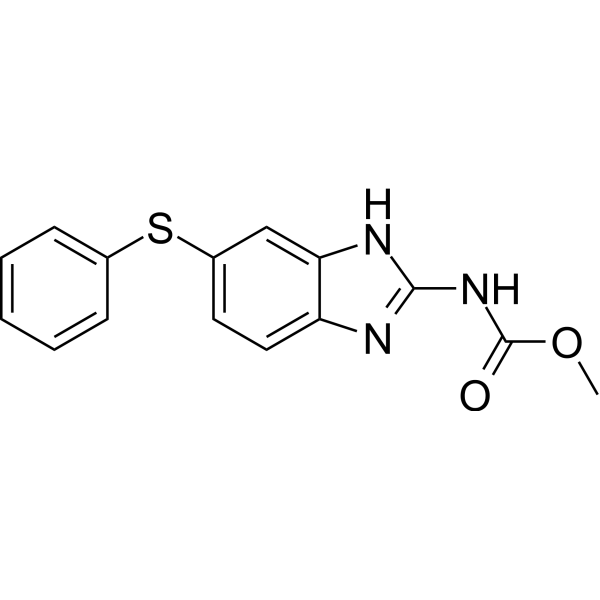
    Fenbendazole is an orally active benzimidazole anthelmintic agent, with a broad antiparasitic range. Fenbendazole is a microtubule destabilizing agent and acts on helminthes primarily by binding to tubulin and disrupting the tubulin microtubule equilibrium. Fenbendazole stabilizes the transcriptional activator HIF-1α. Fenbendazole possesses an efficient anti-proliferative activity and induces apoptosis. Fenbendazole causes cell-cycle arrest and mitotic cell death, and has antitumor activity in mice xenografted with wild-type p53 .
    Fenbendazole
  • HY-15308
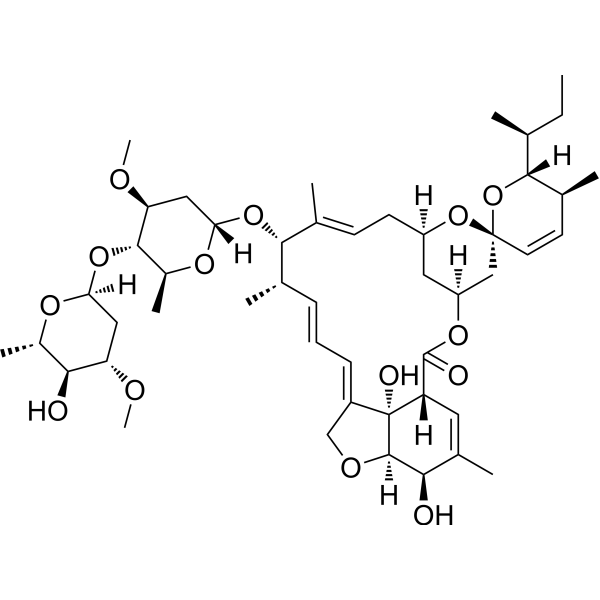
    Avermectin B1a
    1 Publications Verification

    Abamectin B1a

    Parasite Antibiotic Infection
    Avermectin B1a is an antiparasitic agent that paralyzes nematodes without causing hypercontraction or flaccid paralysis.
    Avermectin B1a
  • HY-128554
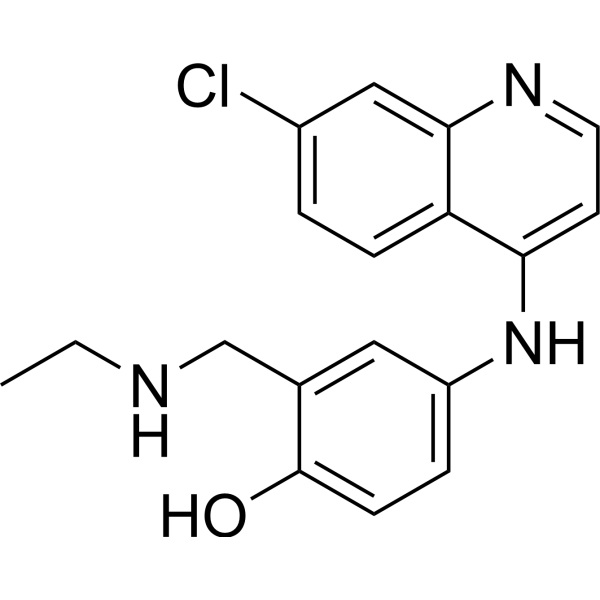
    N-Desethyl amodiaquine
    1 Publications Verification

    Parasite Infection
    N-Desethyl amodiaquine is the biologically active metabolite of Amodiaquine (HY-B1322A). N-Desethyl amodiaquine is an antiparasitic agent, has inhibitory for strains V1/S and 3D7 with IC50 values of 97 nM and 25 nM, respectively. N-Desethyl amodiaquine can be used for the research of malaria .
    N-Desethyl amodiaquine
  • HY-122975

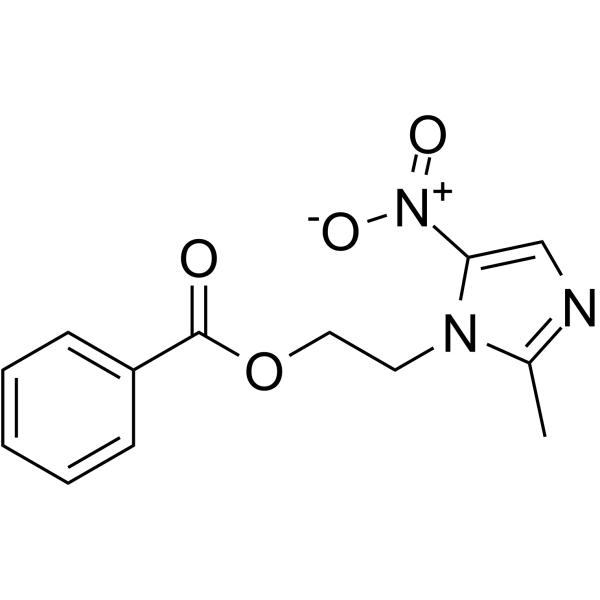
    Benzoyl metronidazole

    Bacterial Parasite Infection
    Metronidazole Benzoate, derives from a metronidazole and a benzoic acid, has a role as an antibacterial, antimicrobial, antiparasitic, and antitrichomonal agent .
    Metronidazole Benzoate
  • HY-14932
    Pafuramidine
    1 Publications Verification

    DB289

    Parasite Antibiotic Infection Neurological Disease
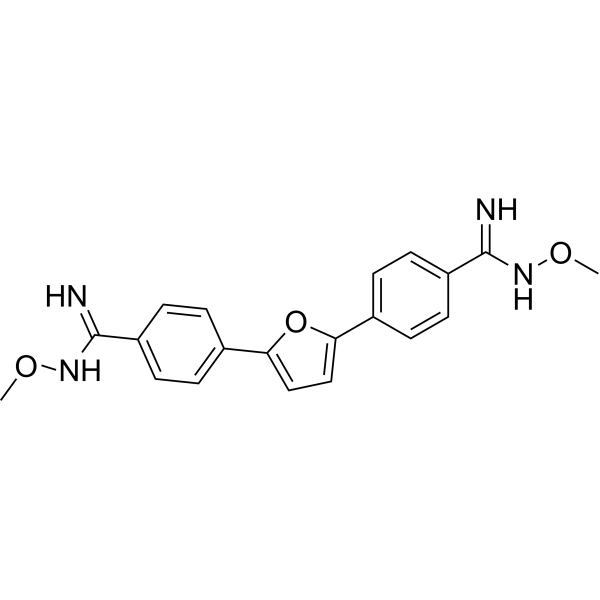
    Pafuramidine (DB289) is an orally active proagent of Furamidine (HY-110137A). Pafuramidine is a potent anti-parasitic agent, can be used to research trypanosomiasis, Pneumocystis pneumonia and malaria .
    Pafuramidine
  • HY-128554S

    Isotope-Labeled Compounds Parasite Infection
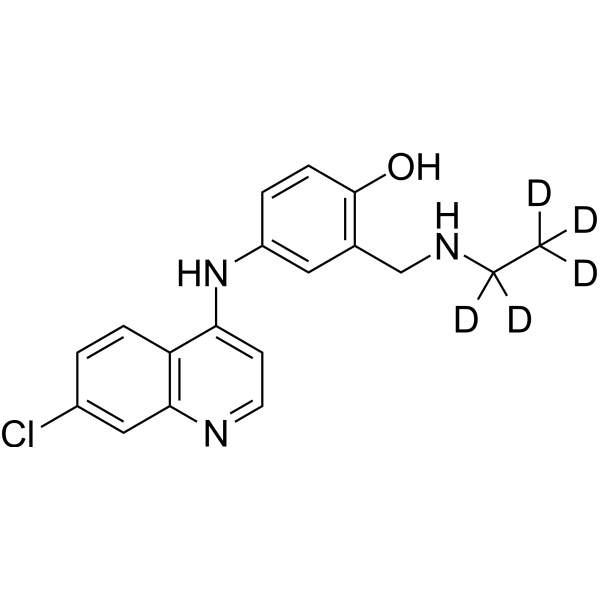
    N-Desethyl amodiaquine-d5 is the deuterium labeled N-Desethyl amodiaquine. N-Desethyl amodiaquine is the major biologically active metabolite of Amodiaquine. N-Desethyl amodiaquine is an antiparasitic agent. IC50 values for strains V1/S and 3D7 are 97 nM and 25 nM, respectively .
    N-Desethyl amodiaquine-d5
  • HY-B0413S
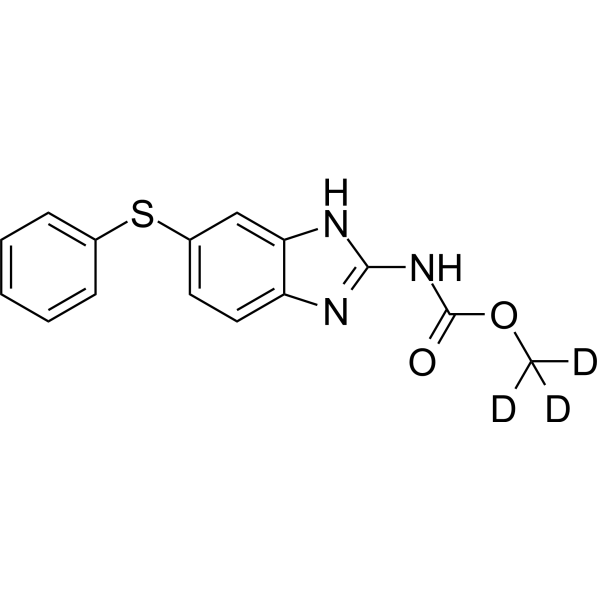
    Fenbendazole-d3
    5 Publications Verification

    HIF/HIF Prolyl-Hydroxylase Parasite Microtubule/Tubulin Antibiotic Infection
    Fenbendazole-d3 is a deuterium labeled Fenbendazole. Fenbendazole-d3 is a HIF-1α agonist and activates the HIF-1α-related GLUT1 pathway. Fenbendazole is an orally active benzimidazole anthelmintic agent, with a broad antiparasitic range. Fenbendazole is a microtubule destabilizing agent. Fenbendazole causes cell-cycle arrest and mitotic cell death, and has antitumor activity in mice xenografted with wild-type p53 .
    Fenbendazole-d3
  • HY-18715

    (S)-Ornidazole; Levornidazole

    Bacterial Parasite GABA Receptor Drug Isomer Infection Neurological Disease
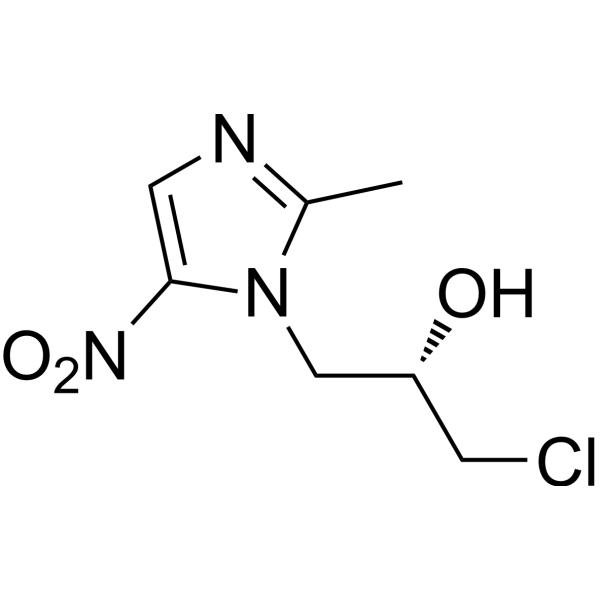
    Levo-ornidazole ((S)-Ornidazole) is the L-isomer of Ornidazole. Ornidazole (Levo-) increases GAD 65/67 expression and decreases brain Glu/GABA ratio. Ornidazole (Levo-) has a mild sedative effect. Levo-ornidazole can be used in the research of anti-anaerobic and anti-parasitic agents .
    Ornidazole (Levo-)
  • HY-128554A
    N-Desethyl amodiaquine dihydrochloride
    1 Publications Verification

    Parasite Infection
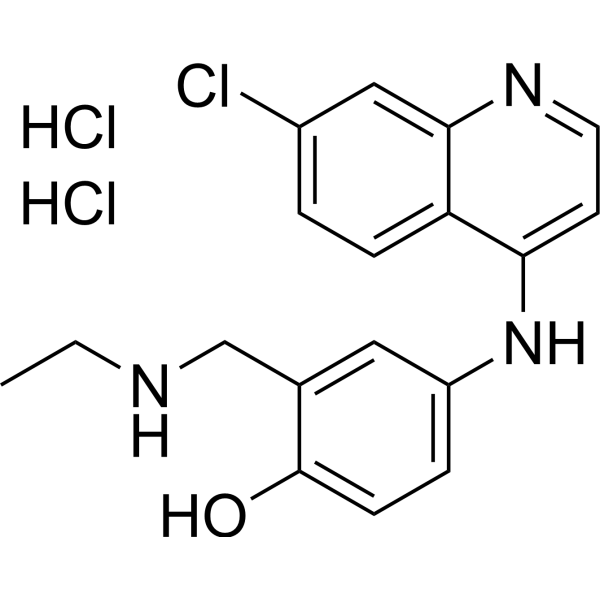
    N-Desethyl amodiaquine dihydrochloride is the biologically active metabolite of Amodiaquine (HY-B1322A). N-Desethyl amodiaquine dihydrochloride is an antiparasitic agent, has inhibitory for strains V1/S and 3D7 with IC50 values of 97 nM and 25 nM, respectively. N-Desethyl amodiaquine dihydrochloride can be used for the research of malaria .
    N-Desethyl amodiaquine dihydrochloride
  • HY-121241

    Parasite Infection
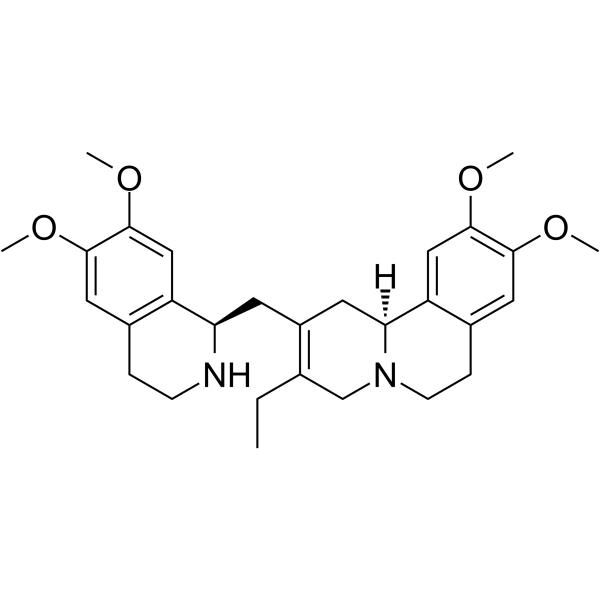
    Dehydroemetine is an orally active antiparasitic agent. Dehydroemetine can inhibit parasites such as Entamoeba histolytica, and it can also be used in the research of parasitic diseases like visceral leishmaniasis .
    Dehydroemetine
  • HY-B0945
    Nitromide
    1 Publications Verification

    3,5-Dinitrobenzamide

    Parasite Infection
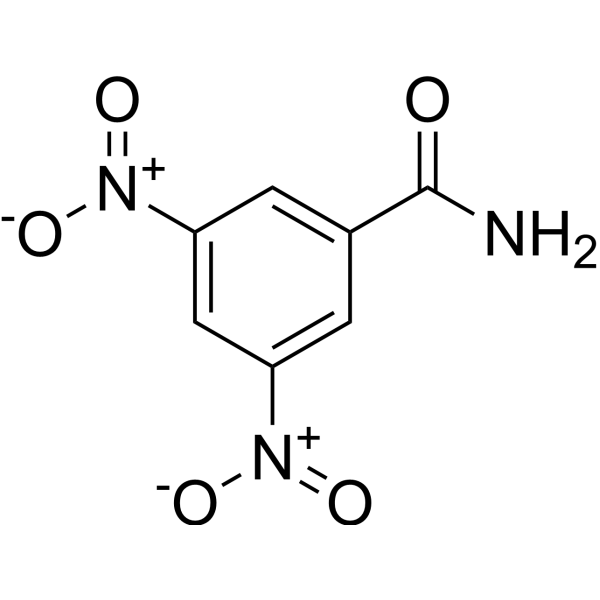
    Nitromide is an anti-parasitic agent.
    Nitromide
  • HY-N7227

    Glutathione S-transferase Parasite Infection Cancer
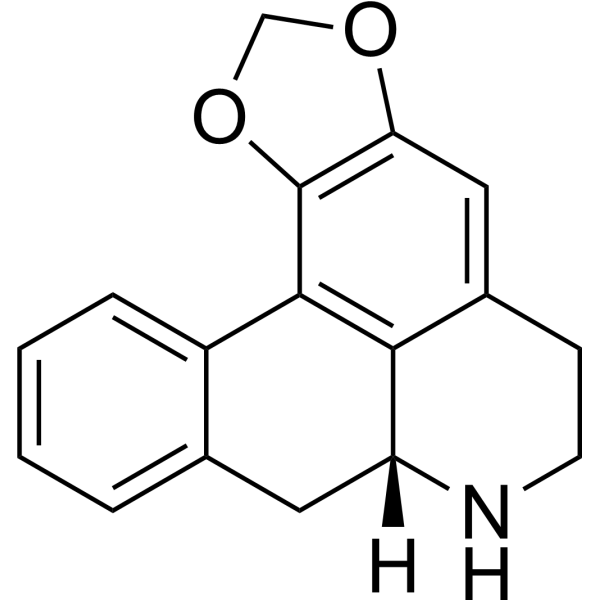
    Anonaine is an antiparasitic agent. Anonaine also is a glutathione S-transferase (GST) inhibitor .
    Anonaine
  • HY-B0263S

    2-(4-Thiazolyl)benzimidazole-d4

    Mitochondrial Metabolism Parasite Others
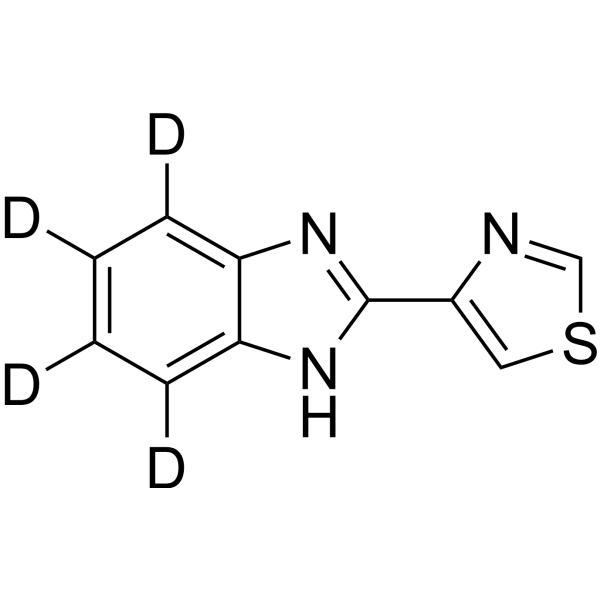
    Thiabendazole-d4 is a deuterated form of Thiabendazole, which is an antiseptic, antifungal and antiparasitic agent .
    Thiabendazole-d4
  • HY-21496

    4-Carboxybenzyl bromide

    Parasite Infection
    4-(Bromomethyl)benzoic acid (4-Carboxybenzyl bromide) is an antiparasitic agent with low activity against Leishmania amazonensis and Trypanosoma cruzi. 4-(Bromomethyl)benzoic acid has certain cytotoxicity to PBMCs, with an IC50 of 88.8 μM .
    4-(Bromomethyl)benzoic acid
  • HY-B0413R

    Reference Standards Parasite HIF/HIF Prolyl-Hydroxylase Microtubule/Tubulin Antibiotic Infection
    Fenbendazole (Standard) is the analytical standard of Fenbendazole. This product is intended for research and analytical applications. Fenbendazole is an orally active benzimidazole anthelmintic agent, with a broad antiparasitic range. Fenbendazole is a microtubule destabilizing agent and acts on helminthes primarily by binding to tubulin and disrupting the tubulin microtubule equilibrium. Fenbendazole stabilizes the transcriptional activator HIF-1α. Fenbendazole possesses an efficient anti-proliferative activity and induces apoptosis. Fenbendazole causes cell-cycle arrest and mitotic cell death, and has antitumor activity in mice xenografted with wild-type p53 .
    Fenbendazole (Standard)
  • HY-B2138
    Ethopabate
    1 Publications Verification

    Ethyl pabate

    Parasite Infection
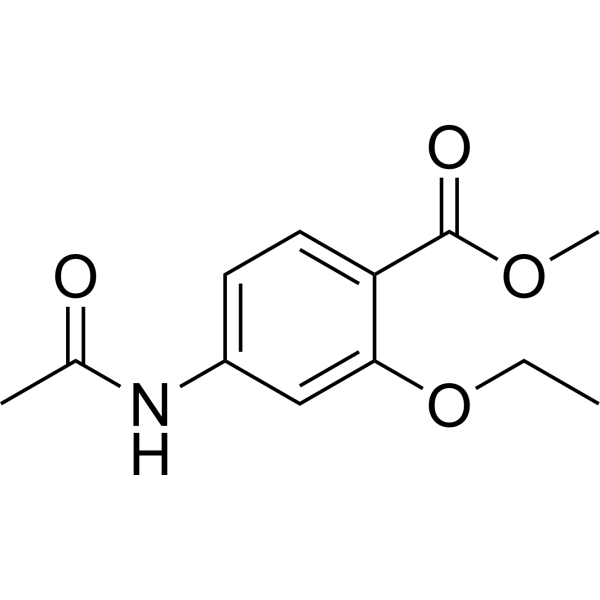
    Ethopabate (Ethyl pabate) is an orally active antiparasitic agent. Ethopabate is often used in combination with Amprolium hydrochloride (HY-B0937A) and others to prevent and treat poultry coccidiosis, leucosis, and other diseases .
    Ethopabate
  • HY-17532

    Parasite Infection
    Haloxon is an anti-parasitic agent. Haloxon can be used for the research of infections of Parascaris equorum, Oxyuris equi and Strongylus vulgaris. Haloxon also can be used in control of ascarids and hookworms in domesticated animals in combination with Bidimazium .
    Haloxon
  • HY-146045

    Parasite Infection
    Antiparasitic agent-7 (compound 5d) has selectively antiparasitic activity against Leishmania infantum (L. infantum) with an IC50 value of 2.85 μM. Antiparasitic agent-7 also has certain cytotoxicity against HepG2 (CC50 = 10.61 μM) .
    Antiparasitic agent-7
  • HY-179690

    Parasite Adenosine Kinase Infection
    Antiparasitic agent-30 is a potent adenosine kinase TbrAK modulator and antitrypanosomal agent. Antiparasitic agent-30 exhibits significant inhibitory activity against Trypanosoma brucei rhodesiense, while enhancing the activity of recombinant TbrAK(EC50=38 nM, Ka=75 nM-497 nM). Antiparasitic agent-30 exerts its pharmacological effects by eliminating intrinsic substrate inhibition and hyperactivating TbrAK in Trypanosoma brucei rhodesiense. Antiparasitic agent-30 serves as a valuable tool molecule for studying acute African human trypanosomiasis (sleeping sickness) .
    Antiparasitic agent-30
  • HY-125729

    Parasite SARS-CoV Infection
    Ivermectin B1b is the minor component of Ivermectin. Ivermectin, a potent anti-parasitic agent, inhibits the replication of SARS-CoV-2 in cell culture .
    Ivermectin B1b
  • HY-128554S1

    Isotope-Labeled Compounds Parasite Infection
    N-Desethyl amodiaquine-d5 dihydrochloride is the deuterium labeled N-Desethyl amodiaquine dihydrochloride. N-Desethyl amodiaquine dihydrochloride is the major biologically active metabolite of Amodiaquine. N-Desethyl amodiaquine dihydrochloride is an antiparasitic agent. IC50 values for strains V1/S and 3D7 are 97 nM and 25 nM, respectively .
    N-Desethyl amodiaquine-d5 dihydrochloride
  • HY-15308R

    Abamectin B1a (Standard)

    Reference Standards Parasite Antibiotic Infection
    Avermectin B1a (Standard) is the analytical standard of Avermectin B1a. This product is intended for research and analytical applications. Avermectin B1a is an antiparasitic agent that paralyzes nematodes without causing hypercontraction or flaccid paralysis.
    Avermectin B1a (Standard)
  • HY-175364

    Parasite Reactive Oxygen Species (ROS) Infection
    Antiparasitic agent-27 (Compound 2) is a potent antiparasitic agent targeting Leishmania infantum (IC50=3.1 μM). Antiparasitic agent-27 induces G0/G1 cell cycle arrest and reactive oxygen species (ROS) generation to trigger programmed cell death. Antiparasitic agent-27 is promising for research of visceral leishmaniasis (VL) .
    Antiparasitic agent-27
  • HY-149960

    Parasite Infection
    Antiparasitic agent-17 (compound 5u) is an orally active antiparasitic agent. Antiparasitic agent-17 inhibits Chloroquine sensitive (Pf3D7) and Chloroquine resistant (PfK1) strain with IC50s of 0.96 μM and 1.67 μM, respectively .
    Antiparasitic agent-17
  • HY-149078

    Parasite Infection
    Antiparasitic agent-14 is a potent antiparasitic agent. Antiparasitic agent-14 shows cytotoxicity and antiparasitic activity. Antiparasitic agent-14 inhibits the growth of trypomastigote and amastigote .
    Antiparasitic agent-14
  • HY-151133

    Parasite Infection
    Antiparasitic agent-9 (compound 47) is an orally active and potent antiparasitic agent. Antiparasitic agent-9 shows antiparasitic activity against the human parasite .
    Antiparasitic agent-9
  • HY-151433

    Parasite Infection
    Antiparasitic agent-10 (Compound 94) is an anti-parasitic agent, shows anti-schistosomal activity. Antiparasitic agent-10 shows activity against adults of Schistosoma mansoni, and can be used in Schistosomiasis research .
    Antiparasitic agent-10
  • HY-157028

    Others Infection
    Antiparasitic agent-19 (compound 40) is a compound with broad-spectrum antiparasitic activity. Antiparasitic agent-19 has minimal toxicity against Trypanosoma brucei, Leishmania Infantum, and Trypanosoma cruzi .
    Antiparasitic agent-19
  • HY-178064

    Parasite Mitochondrial Metabolism Infection
    Antiparasitic agent-29 (Compound 5) is a Trypanosome alternative oxidase (TAO) inhibitor with an IC50 of 1.3 nM in Trypanosoma brucei. Antiparasitic agent-29 has a broad-spectrum antiparasitic activity against Trypanosoma and Leishmania spp. Antiparasitic agent-29 accumulates in parasite mitochondria, selectively disrupting its energy metabolism and has potent membrane-perturbing activity with no cross-resistance. Antiparasitic agent-29 shows low ecotoxicity in zebrafish and Daphnia magna models. Antiparasitic agent-29 can be used for parasitic diseases like surra and dourine research .
    Antiparasitic agent-29
  • HY-147806

    Parasite Infection
    Antiparasitic agent-8 (Compound 9) is an antiparasitic agent against Hymenolepis nana with low cytotoxicity .
    Antiparasitic agent-8
  • HY-157466

    Parasite Infection
    Antiparasitic agent-21 (compound 28) has selectively antiparasitic activity against Naegleria fowleri with an EC50 of 0.92 μM. Antiparasitic agent-21 has excellent blood-brain barrier permeability .
    Antiparasitic agent-21
  • HY-149722

    Parasite Infection
    Antiparasitic agent-20 (Compound 1p) is a parasite inhibitor with broad antiparasitic activity. Antiparasitic agent-20 has inhibitory effects on T. brucei and T. cruzi with EC50 values of 0.09 μM and 14.1 μM respectively .
    Antiparasitic agent-20
  • HY-173356

    Parasite Reactive Oxygen Species (ROS) Infection Inflammation/Immunology
    Antiparasitic agent-26 (Compound 8) is an antiparasitic compound that potently inhibits the growth of Naegleria fowleri, with IC50 values of 22.87 μM (trophozoite stage) and 25.16 μM (cyst stage). Antiparasitic agent-26 exerts its antiparasitic activity by inducing programmed cell death, including cytoplasmic calcium accumulation, mitochondrial membrane potential collapse, ATP synthesis inhibition, ROS accumulation, and chromatin condensation. Antiparasitic agent-26 can be used in the research of primary amoebic meningoencephalitis (PAM) .
    Antiparasitic agent-26
  • HY-126295

    Parasite Infection
    Anti-parasitic agent 3 is an anti-parasitic agent which active against agent resistant parasites.
    Anti-parasitic agent 3
  • HY-149079

    Parasite Necroptosis Infection
    Antiparasitic agent-15, a pyridine-thiazolidinone, has anti-Trypanosoma cruzi and leishmanicidal activities. Antiparasitic agent-15 has IC50s of 0.9 μM and 0.64 μM against trypomastigote and amastigote forms of T. cruzi. Antiparasitic agent-15 has IC50s of 42.2 μM and 9.58 μM against trypomastigote and amastigote forms of L. amazonensis. Antiparasitic agent-15 induces parasite cell death through necrosis induction. Antiparasitic agent-15 induces morphological changes such as shortening, retraction and curvature of the parasite body and leakage of internal content with T. cruzi trypomastigotes .
    Antiparasitic agent-15
  • HY-149080

    Parasite Necroptosis Infection
    Antiparasitic agent-16, a pyridine-thiazolidinone, has anti-Trypanosoma cruzi and leishmanicidal activities. Antiparasitic agent-16 has IC50s of 1.0 μM and 0.6 μM against trypomastigote and amastigote forms of T. cruzi. Antiparasitic agent-16 has IC50s of 150.2 μM and 16.75 μM against trypomastigote and amastigote forms of L. amazonensis. Antiparasitic agent-16 induces parasite cell death through necrosis induction. Antiparasitic agent-16 induces morphological changes such as shortening, retraction and curvature of the parasite body and leakage of internal content with T. cruzi trypomastigotes .
    Antiparasitic agent-16
  • HY-146043

    Parasite Infection
    Antiparasitic agent-5 (compound 8h) has selectively antiparasitic activity against Leishmania infantum (L. infantum) with an IC50 value of 2.50 μM. Antiparasitic agent-5 also has certain cytotoxicity against HepG2 (CC50 = 6.78 μM) .
    Antiparasitic agent-5
  • HY-146044

    Parasite Infection
    Antiparasitic agent-6 (compound 5b) has selectively antiparasitic activity against Leishmania infantum (L. infantum) with an IC50 value of 3.89 μM. Antiparasitic agent-6 also has certain cytotoxicity against HepG2 (CC50 = 13.64 μM) .
    Antiparasitic agent-6
  • HY-118495

    Parasite Infection
    Cardol diene is a potent antiparasitic agent. Cardol diene shows schistosomicidal activity and inhibits cell viability .
    Cardol diene
  • HY-146042

    Parasite Infection
    Antiparasitic agent-4 (compound 4q) has highly antiparasitic activity against Leishmania infantum (L. infantum) and Trypanosoma cruzi (T. cruzi) with IC50s of 8.51 μM and 2.20 μM, respectively. Antiparasitic agent-4 also has certain cytotoxicity against HepG2 (CC50 = 18.97 μM) .
    Antiparasitic agent-4
  • HY-146041

    Parasite Infection
    Antiparasitic agent-2 (compound 8a) has highly antiparasitic activity against Leishmania infantum (L. infantum) and Trypanosoma cruzi (T. cruzi) with IC50s of 7.28 μM and 2.30 μM, respectively. Antiparasitic agent-2 also has certain cytotoxicity against HepG2 (CC50 = 26.79 μM) .
    Antiparasitic agent-2
  • HY-175648

    Parasite Infection
    Antiparasitic agent-28 is an orally active, selective inhibitor of Toxoplasma gondii phenylalanine tRNA synthetase (TgcPheRS) with blood-brain barrier penetration. Antiparasitic agent-28 inhibits the growth of T. gondii tachyzoites (TgME49-Fluc strain) an (EC50 = 1 nM) and T. gondii bradyzoites (Tg68nLuc strain) induced by alkaline (EC50 = 3 nM) and glutamine-rich medium (EC50 = 0.1 nM). Antiparasitic agent-28 demonstrates potent anti-toxoplasmosis efficacy in mice infected with TgME49-Fluc tachyzoites. Antiparasitic agent-28 can be used for the study of Toxoplasma gondii infection .
    Antiparasitic agent-28
  • HY-158379

    Parasite Infection
    Antiparasitic agent-22 (Compound 24) is a pan antiparasitic agent, that inhibits T. Brucei, L. infantum, L. tropica promastigotes (IC50 of 2.41, 5.95, 8.98 μM), L. infantum amastigotes (IC50 of 8.18 μM) and P. falciparum W2 strain (IC50 of 0.155 μM). Antiparasitic agent-22 exhibits low cytotoxicity against THP1, with CC50 of 64.16 μM .
    Antiparasitic agent-22
  • HY-173051

    Parasite Infection
    Antiparasitic agent-24 (Compound 14a) is an antiparasitic agent, with EC50s of 0.005 μM (L. maj), 0.069 μM (L. don), 0.82 μM (T. brucei), 4.1 μM (T. cruzi) respectively .
    Antiparasitic agent-24
  • HY-155281

    Parasite Infection
    Antiparasitic agent-18 (compound 3a) is active and selective against the T. brucei (EC50=0.4 μM), T. cruzi (EC50=0.21 μM), and L. donovani (EC50=0.26 μM). Antiparasitic agent-18 has potent antiprotozoal activity .
    Antiparasitic agent-18
  • HY-164052

    Parasite Infection
    Antiparasitic agent-23 (compound 14) is an anthelmintic and insecticide that inhibits insect or helminth parasitism .
    Antiparasitic agent-23
  • HY-115550

    Parasite Infection
    Chalcone 4 hydrate is an anti-parasitic agent. Chalcone 4 hydrate inhibits the growth and proliferation of Babesia and Theileria in vitro. Chalcone 4 hydrate reduces the viability of mammalian fibroblasts and kidney cells in vitro. Chalcone 4 hydrate can be used for the research of parasitic infections .
    Chalcone 4 hydrate
  • HY-14461

    Parasite Infection
    SJL 01 (Compound 8) is an anti-parasitic agent. SJL 01 (Compound 8) is cytotoxic to L-6 myocytes and exhibits antileishmaniasis activity both in vivo and in vitro. SJL 01 can be used for visceral leishmaniasis research .
    SJL 01
  • HY-B0226A

    (E)-Nitrofural

    Bacterial Parasite Infection
    (E)-Nitrofurazone ((E)-Nitrofural) is a topical broad-spectrum antibacterial agent effective against both Gram-negative and Gram-positive bacteria. (E)-Nitrofurazone also possesses antiprotozoal and antiparasitic activities. (E)-Nitrofurazone is commonly used in the research of superficial wounds, burns, skin infections, pyoderma, infectious skin diseases, trypanosomiasis, and acute bacillary dysentery .
    (E)-Nitrofurazone
  • HY-173050

    Parasite Infection
    NEU-1017 is a broad-spectrum antiparasitic agent. NEU-1017 inhibits T. brucei, L. major, and P. falciparum with EC50 values of 210 nM, 240 nM, and 3 nM, respectively . X
    NEU-1017

Inquiry Online

Your information is safe with us. * Required Fields.

Salutation


Country or Region *

Applicant Name *


Organization Name *

Department *


Email Address *


Product Name *

Cat. No.


Requested quantity *

Phone Number *


Remarks

Inquiry Online

Inquiry Information

Product Name:
Cat. No.:
Quantity:
MCE Japan Authorized Agent:

