



Triclabendazole sulfoxide

Based on 1 Customer Validation
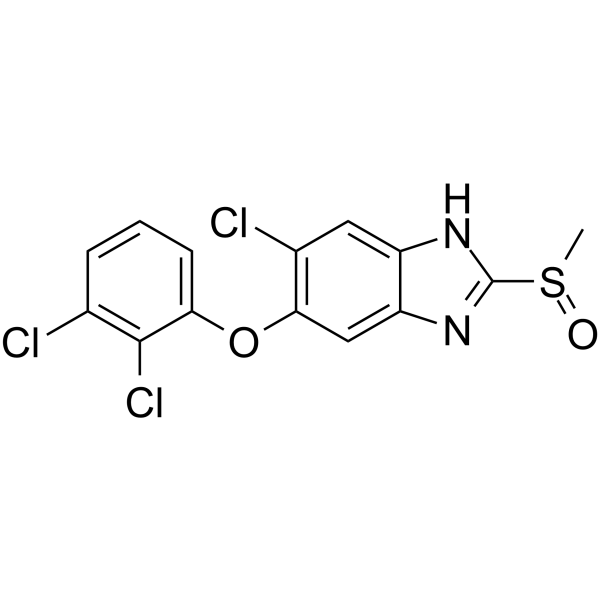
Triclabendazole sulfoxide (TCBZ-SO) is an orally active ABCG2 inhibitor with antiparasitic activity. Triclabendazole sulfoxide inhibits ABCG2-mediated active efflux and ATPase activity. Triclabendazole sulfoxide increases the intracellular accumulation of Mitoxantrone (HY-13502). Triclabendazole sulfoxide reduces the apical-directed transepithelial transport of Nitrofurantoin and Danofloxacin, while increasing their basolateral-directed transepithelial transport. Triclabendazole sulfoxide elevates the plasma levels of sulfasalazine in wild-type mice. Triclabendazole sulfoxide decreases ABCG2-mediated secretion of Nitrofurantoin into milk in wild-type lactating mice. Triclabendazole sulfoxide can be used in the research of insecticidal agents and cancers such as breast cancer.
For research use only. We do not sell to patients.
- Purity : 98.34%
- CAS No.: 100648-13-3
- Formula: C14H9Cl3N2O2S
- Molecular Weight:375.66
-
Storage:Powder -20°C, 3 years , 4°C, 2 years ; In solvent -80°C, 6 months , -20°C, 1 month

To place orders, for customer services and technical support, please contact: MedChemExpress USA
Tel: 609-228-6898 E-mail: [email protected] [email protected]


-
 Biological Activity
-
Chemical Information
-
Solvent & Solubility
- Purity & Documentation
- References
-
 Help & FAQs


-

HY-136450R
Triclabendazole sulfoxide (Standard) -
HY-B0263
Thiabendazole -

HY-Y1825
Benzimidazole -
HY-12757
YHO-13177 -
HY-106004
Zamicastat -
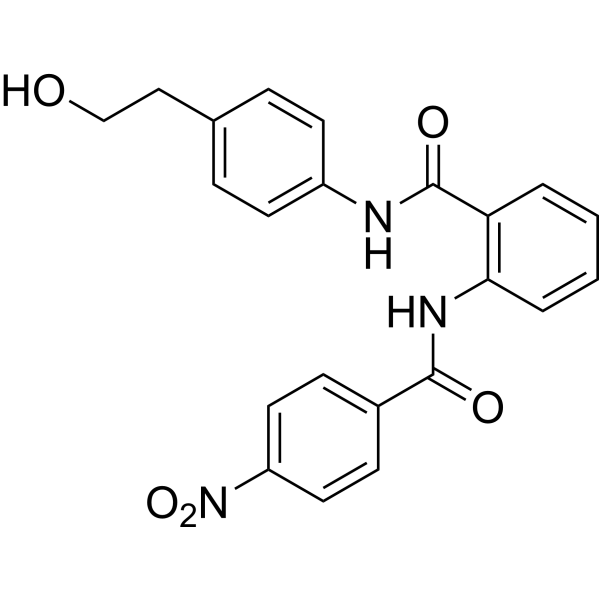
HY-19753
KS176 -
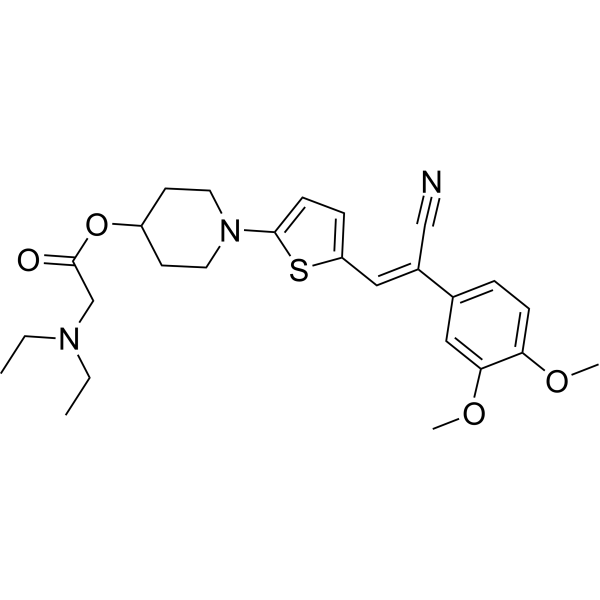
HY-12758A
YHO-13351 free base -
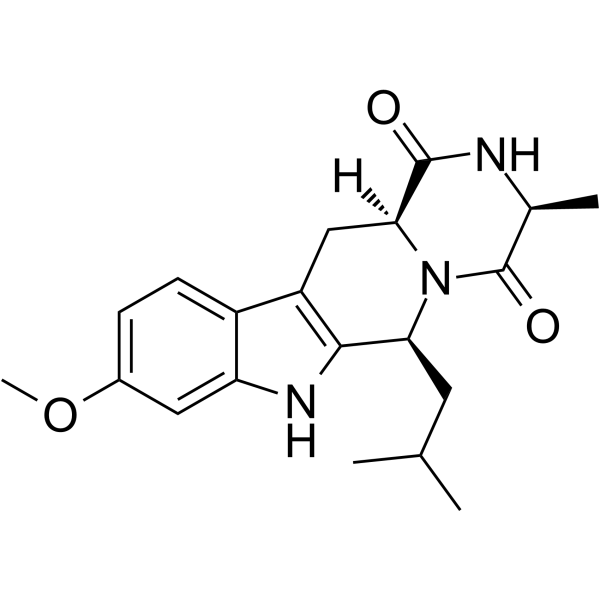
HY-100390
(S)-ML753286 -

HY-Y1825R
Benzimidazole (Standard) -
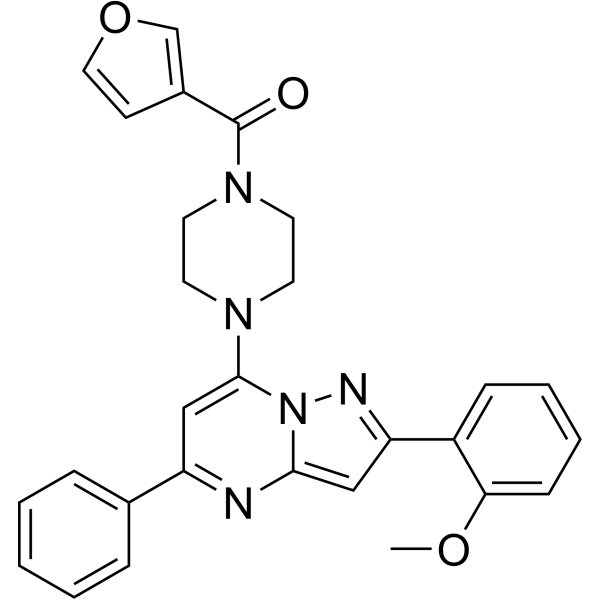
HY-112505
Efflux inhibitor-1 -
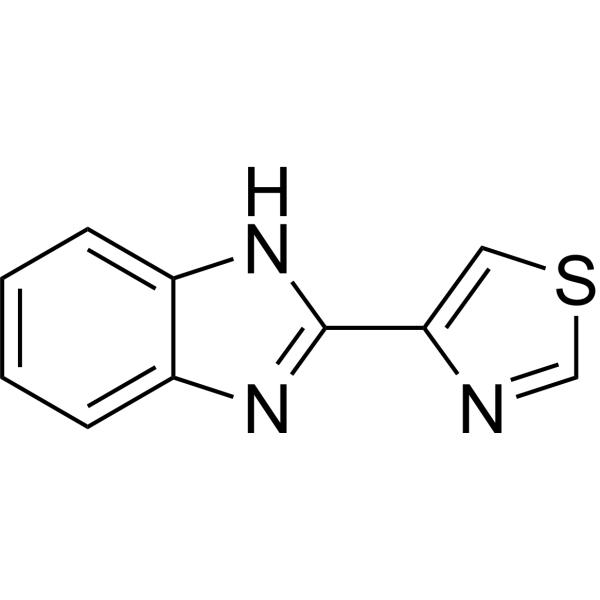
HY-B0263R
Thiabendazole (Standard) -
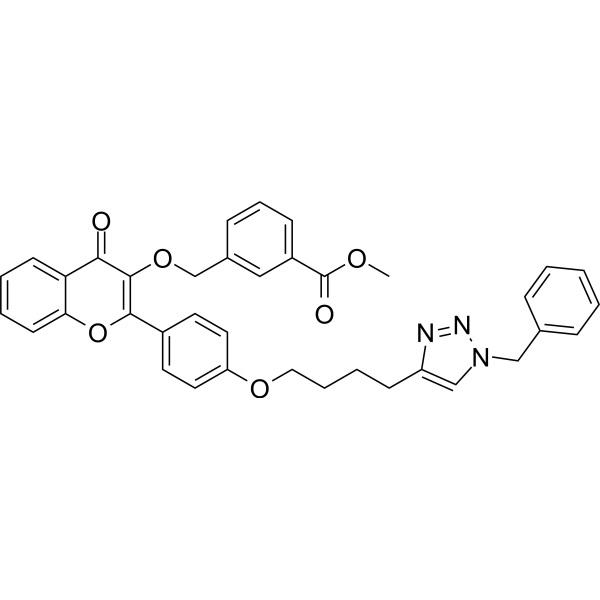
HY-132934
Ac32Az19
All Parasite Isoforms
More

Biological Activity
Description
In Vitro
Triclabendazole sulfoxide (0.01-10 μM; 1 h) inhibits human ABCG2 ATPase activity at concentrations above 1 μM[1].
Triclabendazole sulfoxide (0.01-25 μM) inhibits the activities of murine ABCG2 and human ABCG2 in MDCK-II cells, with maximum inhibitory efficacies of 40% (25 μM, murine cells) and 55% (10 μM, human cells)[1].
Triclabendazole sulfoxide (15 μM; 4 h) moderately inhibits mouse ABCG2-mediated transepithelial transport of Nitrofurantoin (HY-A0090) and Danofloxacin (HY-W011117), and almost completely suppresses human ABCG2-mediated transport of the aforementioned substrates in MDCK-II cell monolayers[1].
MedChemExpress (MCE) has not independently confirmed the accuracy of these methods. They are for reference only.
In Vivo
TCBZSO (50-100 mg/kg; i.p.; single dose) inhibits Abcg2-mediated nitrofurantoin secretion into milk by more than 2-fold and 4-fold, respectively, in wild-type lactating mice, reducing milk-to-plasma ratios by 3-fold and almost 4-fold[1].
MedChemExpress (MCE) has not independently confirmed the accuracy of these methods. They are for reference only.
-
Animal Model:FVB (male, wild-type and Abcg2-/-, 9 to 13 weeks old)[1]
-
Dosage:50 mg/kg
-
Administration:p.o.; single dose
-
Result:Increased plasma sulfasalazine concentrations in wild-type mice by more than 1.5-fold (0.63 μg/mL versus 0.40 μg/mL in vehicle controls; P < 0.05).
Caused no significant change in plasma sulfasalazine concentrations in Abcg2-/- mice.
-
Animal Model:FVB (lactating female, wild-type and Abcg2-/-, 9 to 13 weeks old)[1]
-
Dosage:50 mg/kg; 100 mg/kg
-
Administration:i.p.; single dose
-
Result:Reduced milk nitrofurantoin concentrations in wild-type mice by more than 2-fold at 50 mg/kg.
Reduced the milk-to-plasma ratio in wild-type mice by 3-fold at 50 mg/kg.
Reduced milk nitrofurantoin concentrations in wild-type mice by more than 4-fold at 100 mg/kg.
Reduced the milk-to-plasma ratio in wild-type mice by almost 4-fold at 100 mg/kg.
Caused no significant changes in nitrofurantoin plasma concentrations in wild-type mice at either dose.
Caused no changes in milk nitrofurantoin concentrations or milk-to-plasma ratios in Abcg2-/- mice at either dose.


Chemical Information
-
CAS No. 100648-13-3
-
Appearance Solid
-
Molecular Weight 375.66
-
Formula C14H9Cl3N2O2S
-
Color White to off-white
-
SMILES
O=S(C1=NC2=CC(OC3=CC=CC(Cl)=C3Cl)=C(Cl)C=C2N1)C
-
Synonyms
TCBZ-SO
-
Shipping
Room temperature in continental US; may vary elsewhere.
-
Storage
Powder -20°C 3 years 4°C 2 years In solvent -80°C 6 months -20°C 1 month


Solvent & Solubility
In Vitro:
DMSO : 100 mg/mL (266.20 mM; Need ultrasonic; Hygroscopic DMSO has a significant impact on the solubility of product, please use newly opened DMSO)
Please refer to the solubility information to select the appropriate solvent. Once prepared, please aliquot and store the solution to prevent product inactivation from repeated freeze-thaw cycles.
Storage method and period of stock solution: -80°C, 6 months; -20°C, 1 month. When stored at -80°C, please use it within 6 months. When stored at -20°C, please use it within 1 month.
Please refer to the solubility information to select the appropriate solvent. Once prepared, please aliquot and store the solution to prevent product inactivation from repeated freeze-thaw cycles.
Storage method and period of stock solution: -80°C, 6 months; -20°C, 1 month. When stored at -80°C, please use it within 6 months. When stored at -20°C, please use it within 1 month.
Concentration (start) × Volume (start) = Concentration (final) × Volume (final)
In Vivo:
Select the appropriate dissolution method based on your experimental animal and administration route.
- For the following dissolution methods, please ensure to first prepare a clear stock solution using an In Vitro approach and then sequentially add co-solvents:
- To ensure reliable experimental results, the clarified stock solution can be appropriately stored based on storage conditions. As for the working solution for In Vivo experiments, it is recommended to prepare freshly and use it on the same day.
- The percentages shown for the solvents indicate their volumetric ratio in the final prepared solution. If precipitation or phase separation occurs during preparation, heat and/or sonication can be used to aid dissolution.
Add each solvent one by one: 10% DMSO 90% (20% SBE-β-CD in Saline)
Solubility: ≥ 2.5 mg/mL (6.65 mM); Clear solution
This protocol yields a clear solution of ≥ 2.5 mg/mL (saturation unknown).
Taking 1 mL working solution as an example, add 100 μL DMSO stock solution (25.0 mg/mL) to 900 μL 20% SBE-β-CD in Saline, and mix evenly.
Preparation of 20% SBE-β-CD in Saline (4°C, storage for one week): 2 g SBE-β-CD powder is dissolved in 10 mL Saline, completely dissolve until clear.
In Vivo Dissolution Calculator
Please enter the basic information of animal experiments:
-
-
-
-
Recommended: Prepare an additional quantity of animals to account for potential losses during experiments.
Please enter your animal formula composition:
-
%DMSO +
Recommended: Keep the proportion of DMSO in working solution below 2% if your animal is weak.
-
%+
-
+%Tween-80 + +
-
%Saline +
The co-solvents required include: DMSO, . All of co-solvents are available by MedChemExpress (MCE). , Tween 80. All of co-solvents are available by MedChemExpress (MCE).
Working solution concentration: 0.22 mg/mL
Method for preparing stock solution: mg drug dissolved in μL DMSO. Stock solution concentration: mg/mL.
1. Take μL DMSO stock solution;
2. Add μL .
μL , mix evenly;
3. Then add μL Tween 80, mix evenly;
4. Then add μL
Please ensure that the stock solution in the first step is dissolved to a clear state, and add co-solvents in sequence. You can use ultrasonic heating (ultrasonic cleaner, recommended frequency 20-40 kHz), vortexing, etc. to assist dissolution.


Purity & Documentation
-
Data Sheet (275 KB)
-
SDS (396 KB)
- English - EN (396 KB)
- Français - FR (396 KB)
- Deutsch - DE (396 KB)
- Norwegian - NO (396 KB)
- Español - ES (396 KB)
- Swedish - SV (396 KB)
- Italian - IT (396 KB)
- Korean - KR (396 KB)
- Portuguese - PT (396 KB)
-
Handling Instructions (2659 KB)
References
[1]. Barrera B, et al. The anthelmintic triclabendazole and its metabolites inhibit the membrane transporter ABCG2/BCRP. Antimicrob Agents Chemother. 2012;56(7):3535-3543. [Content Brief]
[2]. Boix N, et al. Triclabendazole sulfoxide causes stage-dependent embryolethality in zebrafish and mouse in vitro. PLoS One. 2015;10(3):e0121308. Published 2015 Mar 20. [Content Brief]


Complete Stock Solution Preparation Table
Please refer to the solubility information to select the appropriate solvent. Once prepared, please aliquot and store the solution to prevent product inactivation from repeated freeze-thaw cycles.
Storage method and period of stock solution: -80°C, 6 months; -20°C, 1 month. When stored at -80°C, please use it within 6 months. When stored at -20°C, please use it within 1 month.
| Optional Solvent | Concentration Solvent Mass | 1 mg | 5 mg | 10 mg | 25 mg |
|---|---|---|---|---|---|
| DMSO | 1 mM | 2.6620 mL | 13.3099 mL | 26.6198 mL | 66.5495 mL |
| 5 mM | 0.5324 mL | 2.6620 mL | 5.3240 mL | 13.3099 mL | |
| 10 mM | 0.2662 mL | 1.3310 mL | 2.6620 mL | 6.6550 mL | |
| 15 mM | 0.1775 mL | 0.8873 mL | 1.7747 mL | 4.4366 mL | |
| 20 mM | 0.1331 mL | 0.6655 mL | 1.3310 mL | 3.3275 mL | |
| 25 mM | 0.1065 mL | 0.5324 mL | 1.0648 mL | 2.6620 mL | |
| 30 mM | 0.0887 mL | 0.4437 mL | 0.8873 mL | 2.2183 mL | |
| 40 mM | 0.0665 mL | 0.3327 mL | 0.6655 mL | 1.6637 mL | |
| 50 mM | 0.0532 mL | 0.2662 mL | 0.5324 mL | 1.3310 mL | |
| 60 mM | 0.0444 mL | 0.2218 mL | 0.4437 mL | 1.1092 mL | |
| 80 mM | 0.0333 mL | 0.1664 mL | 0.3327 mL | 0.8319 mL | |
| 100 mM | 0.0266 mL | 0.1331 mL | 0.2662 mL | 0.6655 mL |


Triclabendazole sulfoxide Related Classifications
HY-136450 Related Classifications
 Powered by Bioz