



Thiabendazole
Based on 4 publication(s) in Google Scholar
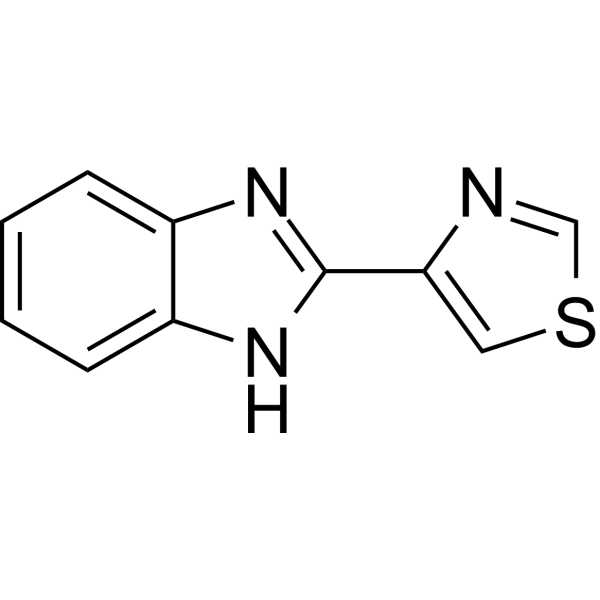
Thiabendazole is an orally available benzimidazole fungicide with repellent and anticancer activities. Thiabendazole can result in developmental malformations. Thiabendazole can be used for modeling.
For research use only. We do not sell to patients.
- Purity : 99.94%
- CAS No.: 148-79-8
- Formula: C10H7N3S
- Molecular Weight:201.25
-
Storage:Powder -20°C, 3 years , 4°C, 2 years ; In solvent -80°C, 2 years , -20°C, 1 year

To place orders, for customer services and technical support, please contact: MedChemExpress USA
Tel: 609-228-6898 E-mail: [email protected] [email protected]


-
 Biological Activity
-
Chemical Information
-
Solvent & Solubility
- Purity & Documentation
- References
-
 Help & FAQs


-
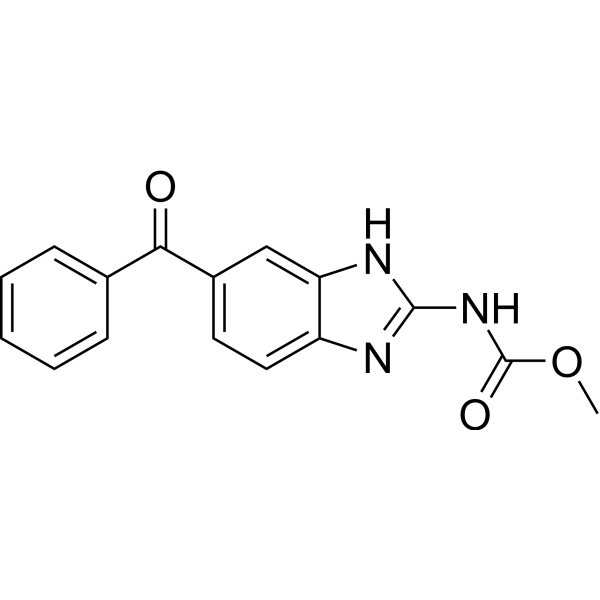
HY-17595
MebendazoleApoptosis Inducer -
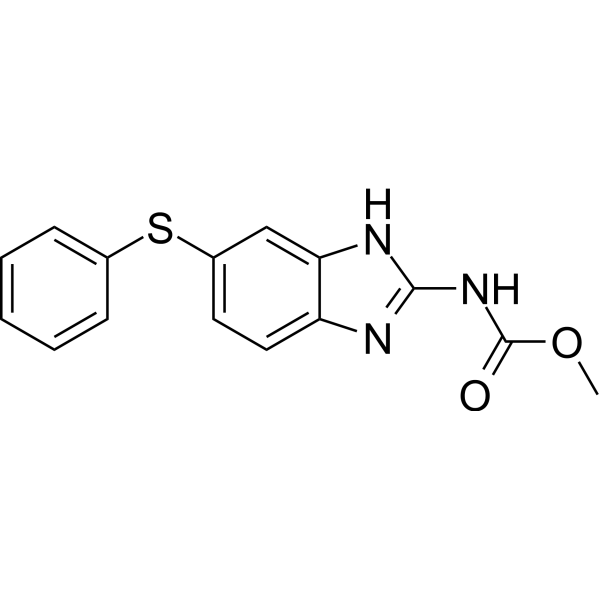
HY-B0413
FenbendazoleAntibiotic -
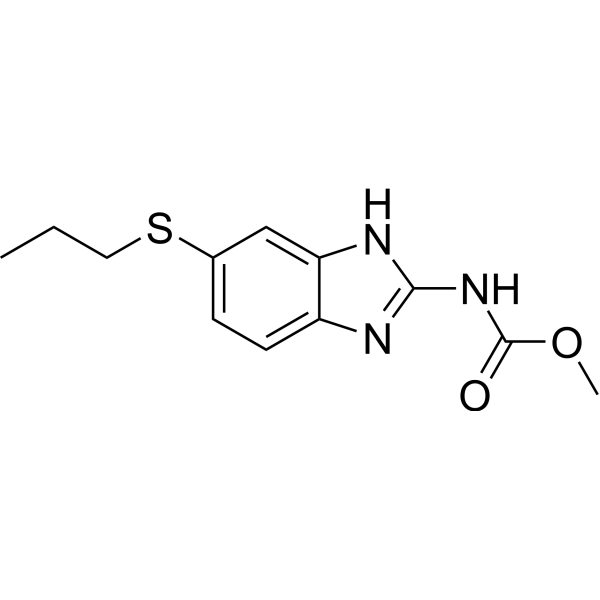
HY-B0223
AlbendazoleParasiticide -
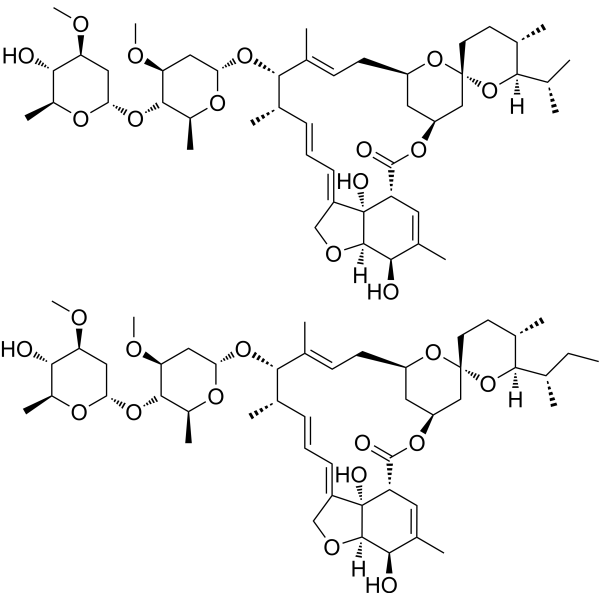
HY-15310
IvermectinAnti-parasite Agent -
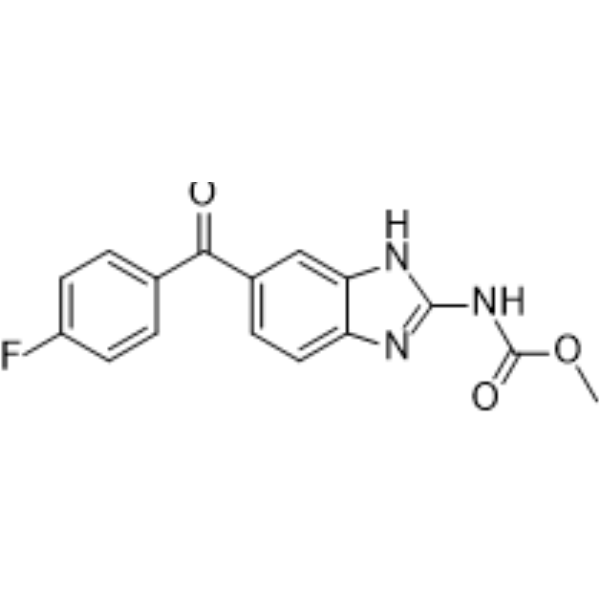
HY-B0294
FlubendazoleTubulin Polymerization Inhibitor -
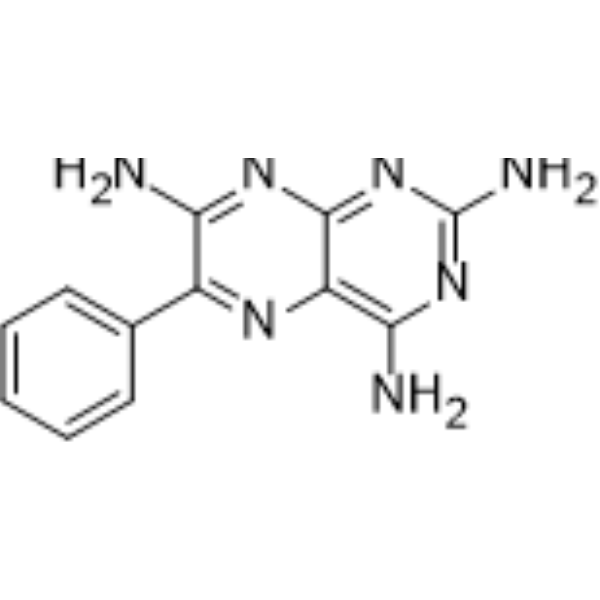
HY-B0575
TriamtereneSodium Channel Inhibitor -
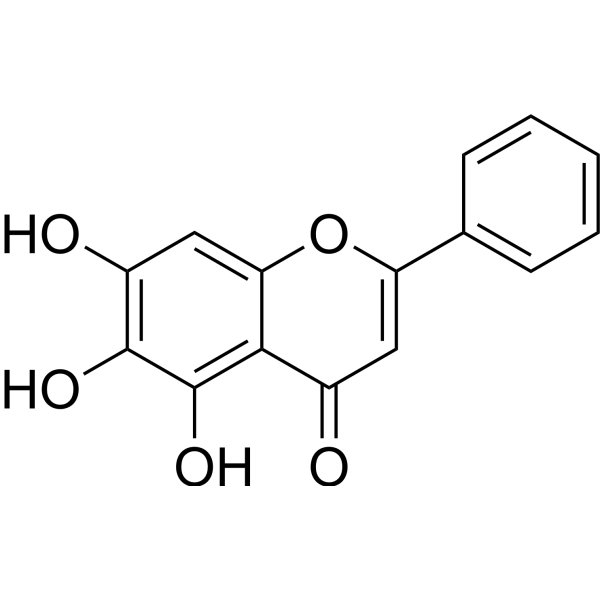
HY-N0196
BaicaleinXanthine Oxidase Inhibitor -
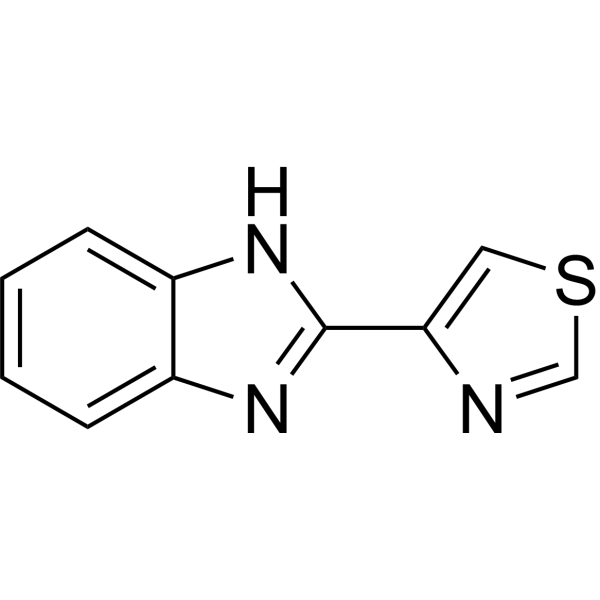
HY-B0263R
Thiabendazole (Standard)Anthelminthic Agent -
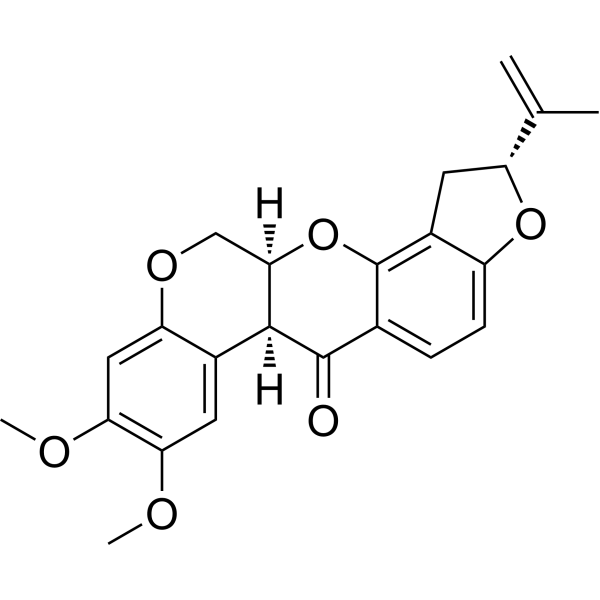
HY-B1756
RotenoneMitochondrial Complex I Inhibitor -
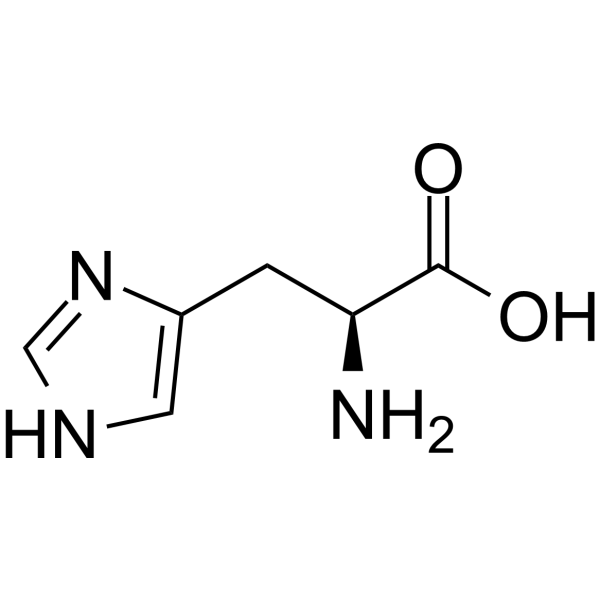
HY-N0832
L-HistidineEndogenous Metabolite -
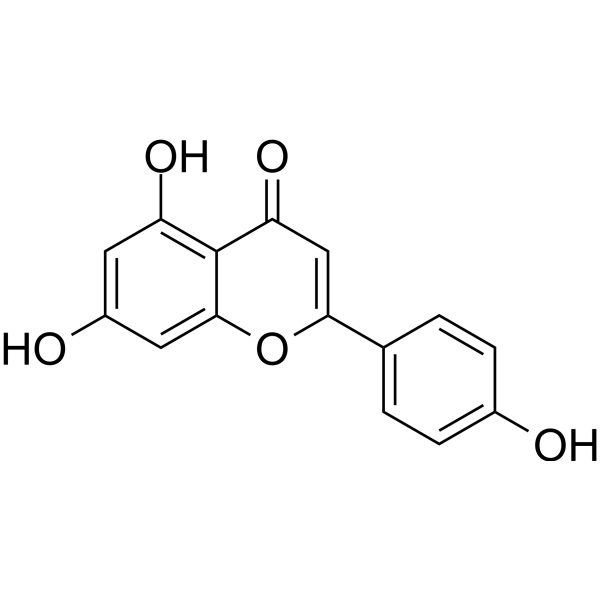
HY-N1201
ApigeninCytochrome P450 Inhibitor -
HY-103389
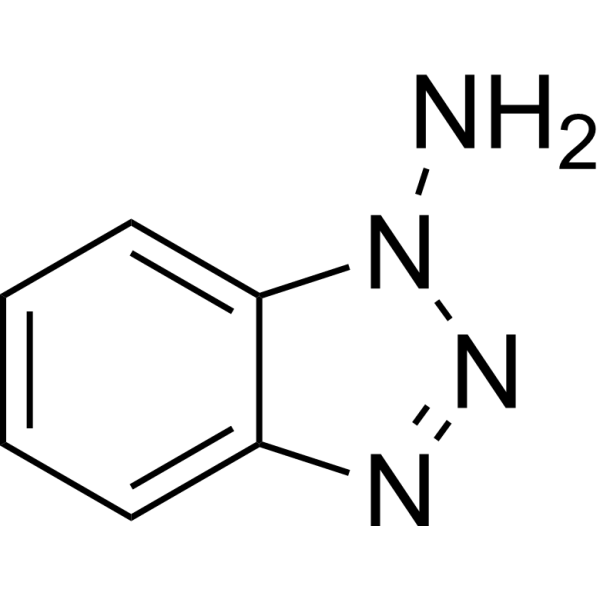
1-AminobenzotriazoleCytochrome P450 Inhibitor
Publications Citing Use of MedChemExpress (MCE) Thiabendazole
MoreAll Caspase Isoforms
MoreAll Parasite Isoforms
MoreAll VEGFR Isoforms
More

Biological Activity
Description
IC50 & Target
|
CDK2 |
CCNE1 |
bax |
Caspase-9 |
Caspase 3 |
IL-1β |
IL-10 |
IL-6 |
IL-13 |
IFN-gamma |
Cellular Effect
|
Cell Line

|
Type | Value | Description | References |
|---|---|---|---|---|
| CCRF-CEM | CC50 |
50 μM
Compound: TBZ
|
Concentration required to reduced HIV-1-induced cytopathic effect by 50% in CEM cells
Concentration required to reduced HIV-1-induced cytopathic effect by 50% in CEM cells
|
[PMID: 12431069] |
| CCRF-CEM | EC50 |
1.1 μM
Compound: TBZ
|
Effective concentration (anti-HIV activity) required to reduce HIV-1 induced cytopathic effect by 50%in CEM cells
Effective concentration (anti-HIV activity) required to reduce HIV-1 induced cytopathic effect by 50%in CEM cells
|
[PMID: 12431069] |
| CCRF-CEM | EC50 |
1.39 μM
Compound: TBZ
|
Anti-HIV-1 activity against mutant HIV-1 strain (HIV-1IIIB) in CEM cells
Anti-HIV-1 activity against mutant HIV-1 strain (HIV-1IIIB) in CEM cells
|
[PMID: 12431069] |
| CCRF-CEM | EC50 |
1.73 μM
Compound: TBZ
|
Anti-HIV-1 activity against mutant HIV-1 strain (138Glu-Lys) in CEM cells
Anti-HIV-1 activity against mutant HIV-1 strain (138Glu-Lys) in CEM cells
|
[PMID: 12431069] |
| CCRF-CEM | EC50 |
13.8 μM
Compound: TBZ
|
Anti-HIV-1 activity against mutant HIV-1 strain(181 Tyr-Cys) in CEM cells
Anti-HIV-1 activity against mutant HIV-1 strain(181 Tyr-Cys) in CEM cells
|
[PMID: 12431069] |
| CCRF-CEM | EC50 |
15.6 μM
Compound: TBZ
|
Anti-HIV-1 activity against mutant HIV-1 strain (103Lys-Asn) in CEM cells
Anti-HIV-1 activity against mutant HIV-1 strain (103Lys-Asn) in CEM cells
|
[PMID: 12431069] |
| CCRF-CEM | EC50 |
3.12 μM
Compound: TBZ
|
Anti-HIV-1 activity against mutant HIV-1 strain (100Leu-Ile) in CEM cells
Anti-HIV-1 activity against mutant HIV-1 strain (100Leu-Ile) in CEM cells
|
[PMID: 12431069] |
| CCRF-CEM | EC50 |
4.16 μM
Compound: TBZ
|
Anti-HIV-1 activity against mutant HIV-1 strain(188 Tyr-His) in CEM cells
Anti-HIV-1 activity against mutant HIV-1 strain(188 Tyr-His) in CEM cells
|
[PMID: 12431069] |
| HEK293 | IC50 |
>500 μM
Compound: thiabendazole
|
Inhibition of human MATE1-mediated ASP+ uptake expressed in HEK293 cells after 1.5 mins by fluorescence assay
Inhibition of human MATE1-mediated ASP+ uptake expressed in HEK293 cells after 1.5 mins by fluorescence assay
|
[PMID: 23241029] |
| HUVEC | EC50 |
>250 μM
Compound: Thiabendazole
|
Antiproliferative activity against HUVEC after 30 hrs by [3H]-thymidine incorporation assay
Antiproliferative activity against HUVEC after 30 hrs by [3H]-thymidine incorporation assay
|
[PMID: 23634668] |
| MT4 | CC50 |
19.2 μM
Compound: TBZ
|
Cytotoxic concentration (anti-HIV activity) required to reduce HIV-1 induced viability by 50% in MT-4 cells
Cytotoxic concentration (anti-HIV activity) required to reduce HIV-1 induced viability by 50% in MT-4 cells
|
[PMID: 12431069] |
| MT4 | EC50 |
0.352 μM
Compound: TBZ
|
Effective concentration (anti-HIV activity) required to reduce HIV-1 induced cytopathic effect by 50% in MT-4 cells
Effective concentration (anti-HIV activity) required to reduce HIV-1 induced cytopathic effect by 50% in MT-4 cells
|
[PMID: 12431069] |
| Sf9 | IC50 |
44.7 μM
Compound: Thiabendazole
|
Inhibition of human MetAP2 expressed in baculovirus infected Sf9 cells
Inhibition of human MetAP2 expressed in baculovirus infected Sf9 cells
|
[PMID: 20621724] |
In Vitro
Thiabendazole (0/50/100/200/300/400/500 μM, 24/48/72 h) time- and dose-dependently inhibits B16F10 and B16 cells proliferation[2].
Thiabendazole (250 μM, 16 h) inhibits angiogenesis in Xenopus embryos and disrupts newly established vasculature[3].
MedChemExpress (MCE) has not independently confirmed the accuracy of these methods. They are for reference only. .
-
Cell Line:B16F10, B16
-
Concentration:0/50/100/200/300/400/500 μM
-
Incubation Time:24/48/72 h
-
Result:Suggested that thiabendazole exhibited inhibitory effects to murine melanoma cell lines in vitro.
The IC50 values of B16 cells were 540.8, 410.7, 280.4 μM at 24, 48, and 72 h, respectively.
And the IC50 values of B16F10 cells were 532.4, 322.9, 238.5 μM at 24, 48, and 72 h, respectively.
In Vivo
Thiabendazole (0/0.5/1/2/4/5/10/20/ mg/L, 0-96 hpf) induces developmental defects in zebrafish through apoptosis, oxidative stress, and changes of PI3K/Akt and MAPK pathwayssup>[4].
MedChemExpress (MCE) has not independently confirmed the accuracy of these methods. They are for reference only.
-
Animal Model:Wistar rats (adult male, 173±4 g average weight)[6]
-
Dosage:90 mg/L, daily oral exposure for 90 days
-
Administration:p.o.
-
Result:Significantly changed the blood parameters in the sample.
(1) Significantly altered blood parameters in the samples.
(2) Red blood cells count and hemoglobin content were significantly reduced.
(3) Platelet count dropped significantly.
(4) The mean values of MCV (mean corpuscular volume) and MCH (mean corpuscular hemoglobin) were significantly increased.
(5) Eosinophil content was significantly reduced.
Significantly reduced the expression levels of immunoglobulins IgG and IgM.
Significantly up-regulated the inflammatory factors (TNF-α, INF-γ, IL-1β, IL-6, L-10 and IL-13) in spleen tissue.and the cytokines CD4 increased and CD8 decreased.
-
Animal Model:Wild-type zebrafish (AB strain) and transgenic zebrafish models, including flk1:eGFP, olig2:dsRed, and L-fabp:dsRed;elastase:GFP)[4]
-
Dosage:0/0.5/1/2/4/5/10/20 mg/L
-
Administration:Soak drug administration
-
Result:None of the embryos exposed to 20 and 50 mg/L of thiamendam survived.
Induced apoptosis and cell cycle arrest in zebrafish larvae.
Reduced the expression levels of antioxidant enzymes inducing ROS production and inflammatory response.
Induced cardiovascular defects in zebrafish larvae.
Caused motor neuron toxicity in zebrafish larvae.
Caused hepatotoxicity and pancreatic toxicity.


Chemical Information
-
CAS No. 148-79-8
-
Appearance Solid
-
Molecular Weight 201.25
-
Formula C10H7N3S
-
Color White to off-white
-
SMILES
C1(C2=CSC=N2)=NC3=CC=CC=C3N1
-
Synonyms
Tiabendazole; 2-(4-Thiazolyl)benzimidazole
-
Shipping
Room temperature in continental US; may vary elsewhere.
-
Storage
Powder -20°C 3 years 4°C 2 years In solvent -80°C 2 years -20°C 1 year


Publications (4)
-
Journal Impact Factor
-
Most Recent
-
ACS Environ Au
Machine Learning-Assisted Recognition of Environmental Sulfur-Containing Chemicals in Nontargeted Mass Spectrometry Analysis of Inadequate Mass Resolution. [Abstract]2025 Aug 5;5(6):573-582. PMID: 41277996 -
-
Anal Chem
Exposome-Scale Investigation of Cl-/Br-Containing Chemicals Using High-Resolution Mass Spectrometry, Multistage Machine Learning, and Cloud Computing. [Abstract]2025 Jun 3;97(21):11099-11109. PMID: 40401576 -
ACS Omega
2020 Oct 12;5(41):26551-26561. PMID: 33110983


Solvent & Solubility
In Vitro:
DMSO : 50 mg/mL (248.45 mM; Need ultrasonic; Hygroscopic DMSO has a significant impact on the solubility of product, please use newly opened DMSO)
H2O : < 0.1 mg/mL (insoluble)
Please refer to the solubility information to select the appropriate solvent. Once prepared, please aliquot and store the solution to prevent product inactivation from repeated freeze-thaw cycles.
Storage method and period of stock solution: -80°C, 2 years; -20°C, 1 year. When stored at -80°C, please use it within 2 years. When stored at -20°C, please use it within 1 year.
Please refer to the solubility information to select the appropriate solvent. Once prepared, please aliquot and store the solution to prevent product inactivation from repeated freeze-thaw cycles.
Storage method and period of stock solution: -80°C, 2 years; -20°C, 1 year. When stored at -80°C, please use it within 2 years. When stored at -20°C, please use it within 1 year.
Concentration (start) × Volume (start) = Concentration (final) × Volume (final)
In Vivo:
Select the appropriate dissolution method based on your experimental animal and administration route.
- For the following dissolution methods, please ensure to first prepare a clear stock solution using an In Vitro approach and then sequentially add co-solvents:
- To ensure reliable experimental results, the clarified stock solution can be appropriately stored based on storage conditions. As for the working solution for In Vivo experiments, it is recommended to prepare freshly and use it on the same day.
- The percentages shown for the solvents indicate their volumetric ratio in the final prepared solution. If precipitation or phase separation occurs during preparation, heat and/or sonication can be used to aid dissolution.
Add each solvent one by one: 10% DMSO 40% PEG300 5% Tween-80 45% Saline
Solubility: ≥ 2.5 mg/mL (12.42 mM); Clear solution
This protocol yields a clear solution of ≥ 2.5 mg/mL (saturation unknown).
Taking 1 mL working solution as an example, add 100 μL DMSO stock solution (25.0 mg/mL) to 400 μL PEG300, and mix evenly; then add 50 μL Tween-80 and mix evenly; then add 450 μL Saline to adjust the volume to 1 mL.
Preparation of Saline: Dissolve 0.9 g sodium chloride in ddH₂O and dilute to 100 mL to obtain a clear Saline solution.
In Vivo Dissolution Calculator
Please enter the basic information of animal experiments:
-
-
-
-
Recommended: Prepare an additional quantity of animals to account for potential losses during experiments.
Please enter your animal formula composition:
-
%DMSO +
Recommended: Keep the proportion of DMSO in working solution below 2% if your animal is weak.
-
%+
-
+%Tween-80 + +
-
%Saline +
The co-solvents required include: DMSO, . All of co-solvents are available by MedChemExpress (MCE). , Tween 80. All of co-solvents are available by MedChemExpress (MCE).
Working solution concentration: 0.22 mg/mL
Method for preparing stock solution: mg drug dissolved in μL DMSO. Stock solution concentration: mg/mL.
1. Take μL DMSO stock solution;
2. Add μL .
μL , mix evenly;
3. Then add μL Tween 80, mix evenly;
4. Then add μL
Please ensure that the stock solution in the first step is dissolved to a clear state, and add co-solvents in sequence. You can use ultrasonic heating (ultrasonic cleaner, recommended frequency 20-40 kHz), vortexing, etc. to assist dissolution.


Purity & Documentation
-
Data Sheet (282 KB)
-
SDS (459 KB)
- English - EN (459 KB)
- Français - FR (459 KB)
- Deutsch - DE (459 KB)
- Norwegian - NO (459 KB)
- Español - ES (459 KB)
- Swedish - SV (459 KB)
- Italian - IT (459 KB)
- Korean - KR (459 KB)
- Portuguese - PT (459 KB)
-
Handling Instructions (2659 KB)
References
[1]. Budetić M, et al. Review of Characteristics and Analytical Methods for Determination of Thiabendazole. Molecules. 2023 May 6;28(9):3926. [Content Brief]
[2]. Zhang, J., et al., Thiabendazole, a well-known antifungal drug, exhibits anti-metastatic melanoma B16F10 activity via inhibiting VEGF expression and inducing apoptosis. Pharmazie, 2013. 68(12): p. 962-8. [Content Brief]
[3]. Cha, H.J., et al., Evolutionarily repurposed networks reveal the well-known antifungal drug thiabendazole to be a novel vascular disrupting agent. PLoS Biol, 2012. 10(8): p. e1001379. [Content Brief]
[4]. Park J, et al. Developmental defects induced by thiabendazole are mediated via apoptosis, oxidative stress and alteration in PI3K/Akt and MAPK pathways in zebrafish. Environ Int. 2023 Jun;176:107973. [Content Brief]
[5]. Elgebaly SA, et al. Thiabendazole-induced suppression of renal damage in a murine model of autoimmune disease. Am J Pathol. 1984 May;115(2):204-11. [Content Brief]
[6]. Motwadie ME, et al. Modulation of immune functions, inflammatory response, and cytokine production following long-term oral exposure to three food additives; thiabendazole, monosodium glutamate, and brilliant blue in rats. Int Immunopharmacol. 2021 Sep;98:107902. [Content Brief]


Complete Stock Solution Preparation Table
Please refer to the solubility information to select the appropriate solvent. Once prepared, please aliquot and store the solution to prevent product inactivation from repeated freeze-thaw cycles.
Storage method and period of stock solution: -80°C, 2 years; -20°C, 1 year. When stored at -80°C, please use it within 2 years. When stored at -20°C, please use it within 1 year.
| Optional Solvent | Concentration Solvent Mass | 1 mg | 5 mg | 10 mg | 25 mg |
|---|---|---|---|---|---|
| DMSO | 1 mM | 4.9689 mL | 24.8447 mL | 49.6894 mL | 124.2236 mL |
| 5 mM | 0.9938 mL | 4.9689 mL | 9.9379 mL | 24.8447 mL | |
| 10 mM | 0.4969 mL | 2.4845 mL | 4.9689 mL | 12.4224 mL | |
| 15 mM | 0.3313 mL | 1.6563 mL | 3.3126 mL | 8.2816 mL | |
| 20 mM | 0.2484 mL | 1.2422 mL | 2.4845 mL | 6.2112 mL | |
| 25 mM | 0.1988 mL | 0.9938 mL | 1.9876 mL | 4.9689 mL | |
| 30 mM | 0.1656 mL | 0.8282 mL | 1.6563 mL | 4.1408 mL | |
| 40 mM | 0.1242 mL | 0.6211 mL | 1.2422 mL | 3.1056 mL | |
| 50 mM | 0.0994 mL | 0.4969 mL | 0.9938 mL | 2.4845 mL | |
| 60 mM | 0.0828 mL | 0.4141 mL | 0.8282 mL | 2.0704 mL | |
| 80 mM | 0.0621 mL | 0.3106 mL | 0.6211 mL | 1.5528 mL | |
| 100 mM | 0.0497 mL | 0.2484 mL | 0.4969 mL | 1.2422 mL |


Thiabendazole Related Classifications
HY-B0263 Related Classifications
 Powered by Bioz
Keywords
- Thiabendazole
- 148-79-8
- Tiabendazole
- 2-(4-Thiazolyl)benzimidazole
- Environmental Pollutants
- Caspase
- CDK
- Parasite
- MDM-2/p53
- Mitochondrial Metabolism
- VEGFR
- Interleukin Related
- Analytical methods
- VEGF
- B16F10
- B16
- Cell viability
- RT-PCR
- Apoptosis
- Anthelmintic
- Orally activity
- Oxidative stress
- PI3K/Akt
- MAPK
- Inhibitor
- inhibitor
- inhibit