



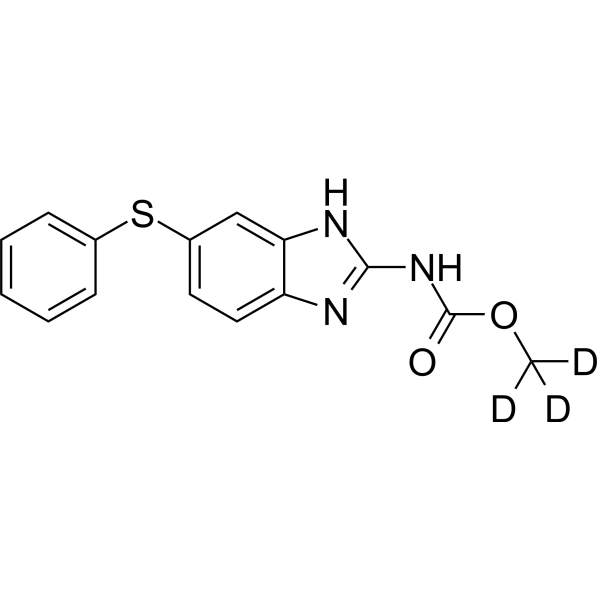
Fenbendazole-d3
Based on 6 publication(s) in Google Scholar
Fenbendazole-d3 is a deuterium labeled Fenbendazole. Fenbendazole-d3 is a HIF-1α agonist and activates the HIF-1α-related GLUT1 pathway. Fenbendazole is an orally active benzimidazole anthelmintic agent, with a broad antiparasitic range. Fenbendazole is a microtubule destabilizing agent. Fenbendazole causes cell-cycle arrest and mitotic cell death, and has antitumor activity in mice xenografted with wild-type p53.
Nur für Forschungszwecke. Wir verkaufen nicht an Patienten.
- Reinheit : 99.70%
- CAS. Nr.: 1228182-47-5
- Formel: C15H10D3N3O2S
- Molecular Weight:302.37
-
Speicherung:
4°C, protect from light
* In solvent : -80°C, 6 months; -20°C, 1 month (protect from light)

To place orders, for customer services and technical support, please contact: MedChemExpress USA
Tel: 609-228-6898 E-mail: [email protected] [email protected]


-
 Biologische Aktivität
-
Chemical Information
-
Lösungsmittel & Löslichkeit
- Protokoll
- Reinheit & Dokumentation
- Verweise
-
 Help & FAQs


-
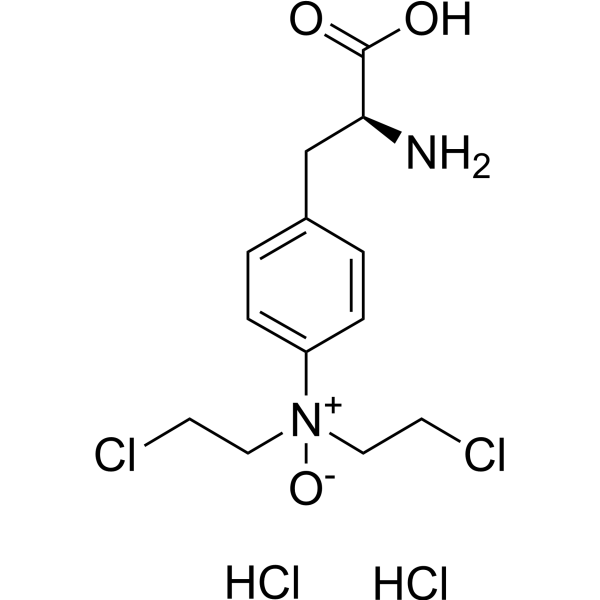
HY-10231
PX-478HIF-1α Inhibitor -
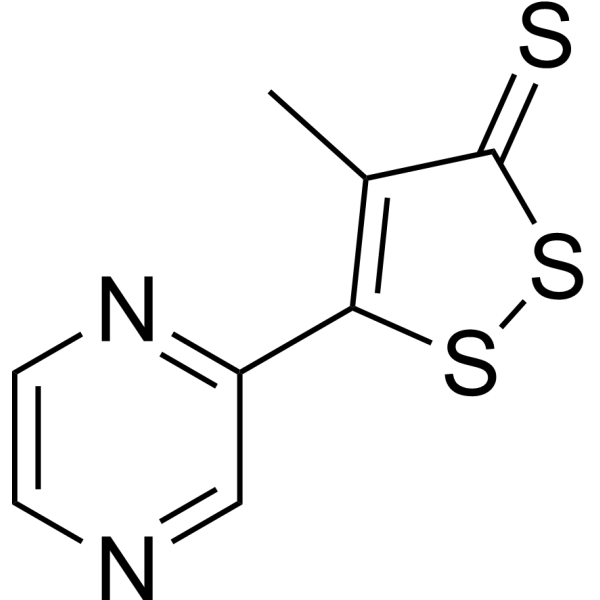
HY-12519
OltiprazHIF-1α Inhibitor -
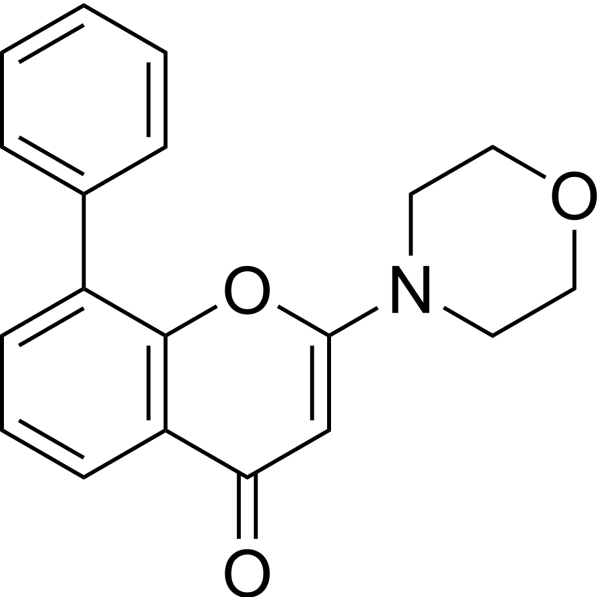
HY-10108
LY294002PI3K Inhibitor -
HY-13966
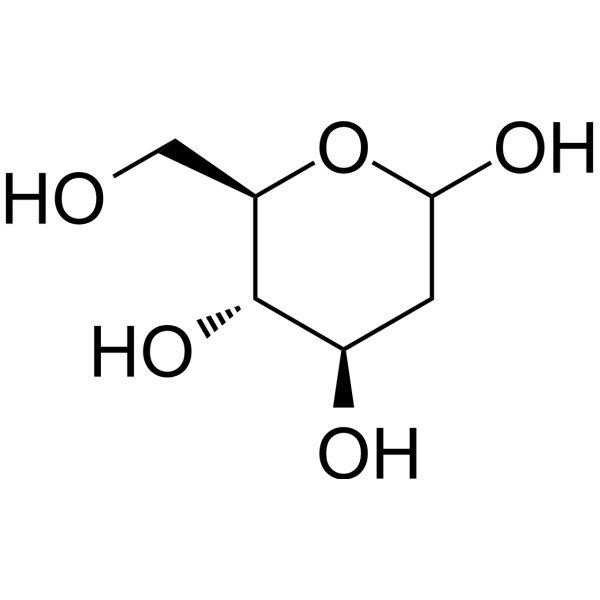
2-Deoxy-D-glucoseGlycolysis Inhibitor -
HY-100965
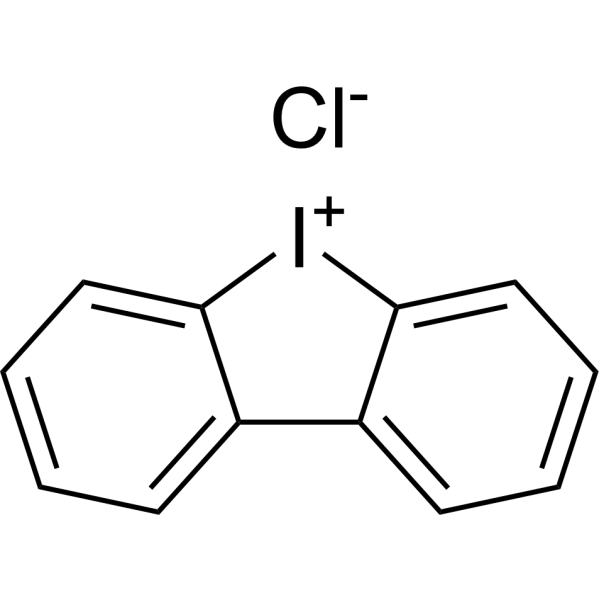
Diphenyleneiodonium chlorideNOX Inhibitor -
HY-B0648
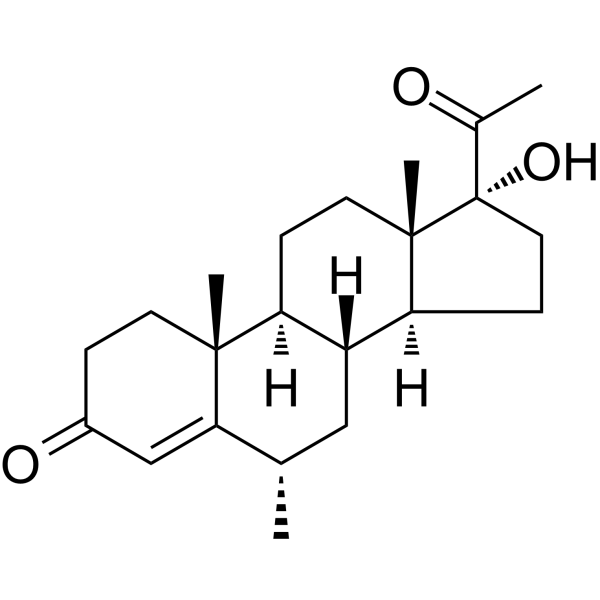
MedroxyprogesteroneProgesterone Receptor Agonist -
HY-16349
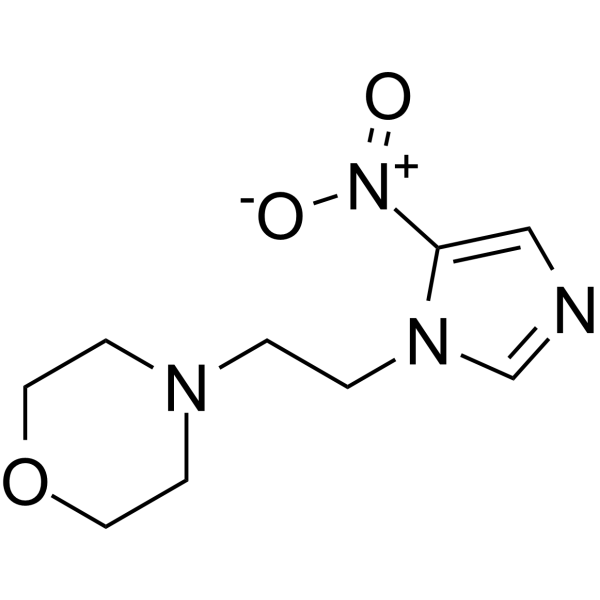
NimorazoleAntibiotic -
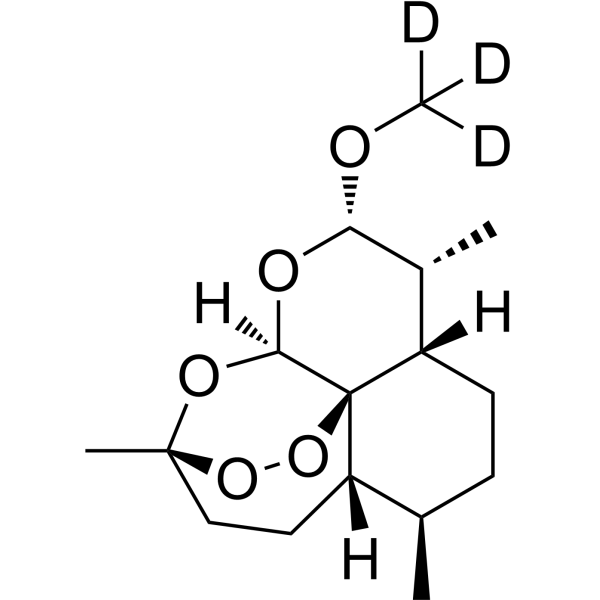
HY-N0402S
Artemether-d3Stable Isotope -
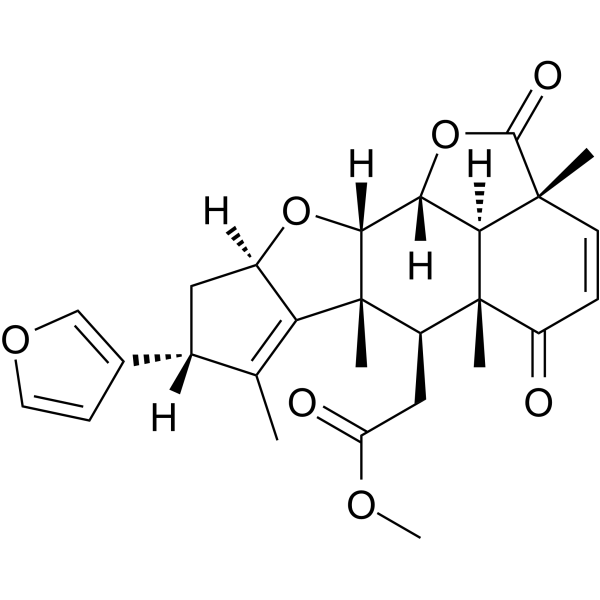
HY-116035
NimbolideCDK Inhibitor -
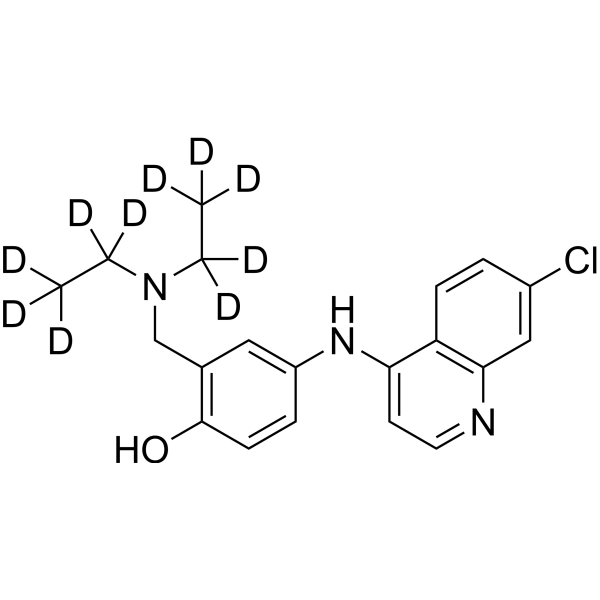
HY-B1322AS
Amodiaquine-d10Stable Isotope -
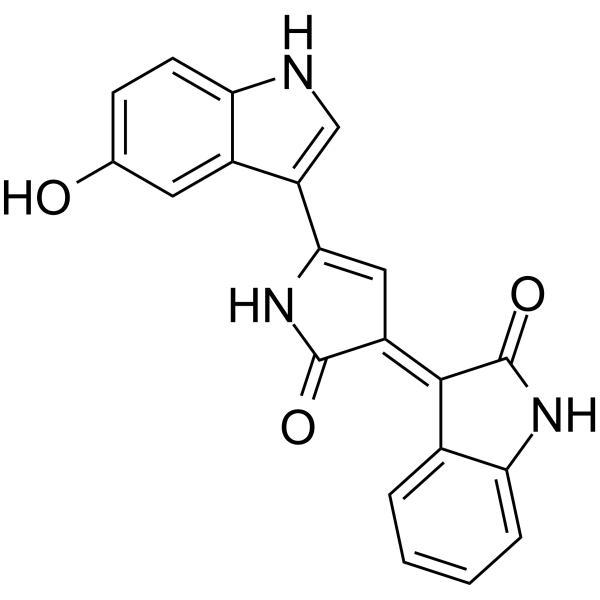
HY-119809
ViolaceinAnti-cancer Agent -
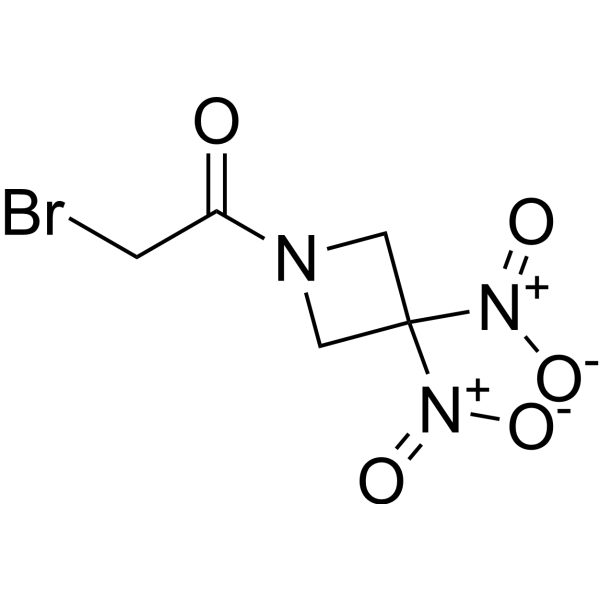
HY-16438
RRx-001Radiosensitizer/CD47 and SIRP-α Inhibitor
Publications Citing Use of MedChemExpress (MCE) Fenbendazole-d3
MoreAlle Parasite Isoform-spezifische Produkte anzeigen
MoreAlle Antibiotic Isoform-spezifische Produkte anzeigen
More

Biologische Aktivität
Beschreibung
In Vitro
Fenbendazole-d3 (20 µM; for 48 h) reverses the inhibiting influence exerted by miR-143-5p on proliferation, colony-forming capacity, and migration[1].
Fenbendazole-d3 (10 µM; for 48 h) elevates the protein expression levels of HIF-1α and GLUT1[1].
MedChemExpress (MCE) has not independently confirmed the accuracy of these methods. They are for reference only.
-
Cell Line:BT-549 and MCF-7 cells
-
Concentration:20 µM
-
Incubation Time:For 48 h
-
Result:Reversed the inhibiting influence exerted by miR-143-5p on proliferation, colony-forming capacity, and migration.
-
Cell Line:BT-549 and MCF-7 cells
-
Concentration:10 µM
-
Incubation Time:For 48 h
-
Result:Elevated the protein expression levels of HIF-1α and GLUT1.
Anwendung
1. This compound can be used as a tracer
2. This compound can be used as an internal standard for quantitative analysis by NMR, GC-MS, or LC-MS.


Chemical Information
-
CAS. Nr. 1228182-47-5
-
Unlabeled CAS 43210-67-9
-
Appearance Solid
-
Molecular Weight 302.37
-
Formel C15H10D3N3O2S
-
Color White to light yellow
-
SMILES
O=C(OC([2H])([2H])[2H])NC1=NC2=CC=C(SC3=CC=CC=C3)C=C2N1
-
Versand
Room temperature in continental US; may vary elsewhere.
-
Speicherung
4°C, protect from light
* In solvent : -80°C, 6 months; -20°C, 1 month (protect from light)


Publications (6)
-
Journal Impact Factor
-
Most Recent
-
Stem Cell Res Ther
MSC-exosomes pretreated by Danshensu extracts pretreating to target the hsa-miR-27a-5p and STAT3-SHANK2 to enhanced antifibrotic therapy. [Abstract]2025 Feb 4;16(1):40. PMID: 39901236 -
Chin Med
Jin-Gui-Shen-Qi Wan ameliorates diabetic retinopathy by inhibiting apoptosis of retinal ganglion cells through the Akt/HIF-1α pathway. [Abstract]2023 Oct 12;18(1):130. PMID: 37828620 -
J Neuroimmunol
Establishment of a passive-transfer mouse model of anti-NMDAR encephalitis and delineation of the PI3K-AKT-HIF-1α Axis in antibody-induced neuronal injury. [Abstract]2026 Aug:417:578943. PMID: 42048740 -
Brain Behav
KLF7 Blocks MKNK2/HIF-1 Pathway-Mediated M1 Microglia Polarization to Ameliorate Ischemic Stroke-Induced Neurological Injury. [Abstract]2025 Sep;15(9):e70850. PMID: 40923147 -
Oncol Lett
miR-143-5p suppresses breast cancer progression by targeting the HIF-1α-related GLUT1 pathway. [Abstract]2022 May;23(5):147. PMID: 35350590 -


Lösungsmittel & Löslichkeit
In Vitro:
DMSO : 5 mg/mL (16.54 mM; ultrasonic and warming and heat to 60°C; Hygroscopic DMSO has a significant impact on the solubility of product, please use newly opened DMSO)
Please refer to the solubility information to select the appropriate solvent. Once prepared, please aliquot and store the solution to prevent product inactivation from repeated freeze-thaw cycles.
Storage method and period of stock solution: -80°C, 6 months; -20°C, 1 month (protect from light). When stored at -80°C, please use it within 6 months. When stored at -20°C, please use it within 1 month.
Please refer to the solubility information to select the appropriate solvent. Once prepared, please aliquot and store the solution to prevent product inactivation from repeated freeze-thaw cycles.
Storage method and period of stock solution: -80°C, 6 months; -20°C, 1 month (protect from light). When stored at -80°C, please use it within 6 months. When stored at -20°C, please use it within 1 month.
Konzentration (Stammlösung) × Volumen (Stammlösung) = Konzentration (Ziellösung) × Volumen (Ziellösung)


Reinheit & Dokumentation
-
Data Sheet (274 KB)
-
SDS (623 KB)
- English - EN (623 KB)
- Français - FR (623 KB)
- Deutsch - DE (623 KB)
- Norwegian - NO (623 KB)
- Español - ES (623 KB)
- Swedish - SV (623 KB)
- Italian - IT (623 KB)
- Korean - KR (623 KB)
- Portuguese - PT (623 KB)
-
Handling Instructions (2659 KB)
Verweise
[1]. Jia Xu, et al. miR-143-5p suppresses breast cancer progression by targeting the HIF-1α-related GLUT1 pathway. Oncol Lett. 2022 May;23(5):147. [Content Brief]
[2]. Nilambra Dogra, et al. Fenbendazole acts as a moderate microtubule destabilizing agent and causes cancer cell death by modulating multiple cellular pathways. Sci Rep. 2018 Aug 9;8(1):11926. [Content Brief]
[3]. Hossein Aleyasin, et al. Antihelminthic benzimidazoles are novel HIF activators that prevent oxidative neuronal death via binding to tubulin. Antioxid Redox Signal. 2015 Jan 10;22(2):121-34. [Content Brief]
[4]. Qiwen Duan, et al. Fenbendazole as a potential anticancer drug. Anticancer Res. 2013 Feb;33(2):355-62. [Content Brief]


Complete Stock Solution Preparation Table
Please refer to the solubility information to select the appropriate solvent. Once prepared, please aliquot and store the solution to prevent product inactivation from repeated freeze-thaw cycles.
Storage method and period of stock solution: -80°C, 6 months; -20°C, 1 month (protect from light). When stored at -80°C, please use it within 6 months. When stored at -20°C, please use it within 1 month.
| Optional Solvent | Concentration Solvent Mass | 1 mg | 5 mg | 10 mg | 25 mg |
|---|---|---|---|---|---|
| DMSO | 1 mM | 3.3072 mL | 16.5360 mL | 33.0721 mL | 82.6802 mL |
| 5 mM | 0.6614 mL | 3.3072 mL | 6.6144 mL | 16.5360 mL | |
| 10 mM | 0.3307 mL | 1.6536 mL | 3.3072 mL | 8.2680 mL | |
| 15 mM | 0.2205 mL | 1.1024 mL | 2.2048 mL | 5.5120 mL |


Fenbendazole-d3 Related Classifications
HY-B0413S Related Classifications
 Powered by Bioz